


Product Monograph - Ixchiq
RECENT MAJOR LABEL CHANGES
| 1 Indications, 1.1 Pediatrics | December 2025, August 2025 |
|---|---|
| 2 Contraindications | December 2025 |
| 3 Serious Warnings And Precautions Box | December 2025 |
| 7 Warning and Precautions, 7.1.3 Pediatrics | December 2025, August 2025 |
Table of contents
Sections or subsections that are not applicable at the time of authorization are not listed.
RECENT MAJOR LABEL CHANGES ............................................................................................ 2
Table of contents .................................................................................................................... 2
Part i: Health Professional Information................................................................................... 4
1 Indications .................................................................................................................. 4
1.1 Pediatrics ................................................................................................................... 4
1.2 Geriatrics .................................................................................................................... 4
2 Contraindications ........................................................................................................ 4
3 Serious Warnings And Precautions Box ....................................................................... 4
4 Dosage And Administration ........................................................................................ 5
4.1 Dosing Considerations................................................................................................ 5
4.2 Recommended Dose and Dosage Adjustment ........................................................... 5
4.3 Reconstitution ............................................................................................................ 5
4.4 Administration ........................................................................................................... 6
4.5 Missed Dose ............................................................................................................... 6
5 Overdosage ................................................................................................................. 6
6 Dosage Forms, Strengths, Composition And Packaging ............................................... 7
7 Warnings And Precautions .......................................................................................... 8
7.1 Special Populations ............................................................................................... 9
7.1.1 Pregnant Women ............................................................................................. 9
7.1.2 Breast-feeding ................................................................................................ 10
7.1.3 Pediatrics ........................................................................................................ 10
7.1.4 Geriatrics ........................................................................................................ 10
8 Adverse Reactions ..................................................................................................... 10
8.1 Adverse Reaction Overview ..................................................................................... 10
8.2 Clinical Trial Adverse Reactions ................................................................................ 11
8.2.1 Clinical Trial Adverse Reactions – Pediatrics ................................................... 19
8.3 Less Common Clinical Trial Adverse Reactions ......................................................... 19
8.4 Abnormal Laboratory Findings: Hematologic, Clinical Chemistry and Other Quantitative Data ........................................................................................................... 20
8.5 Post-Market Adverse Reactions ............................................................................... 21
9 DRUG INTERACTIONS ................................................................................................ 22
9.2 Drug Interactions Overview ..................................................................................... 22
9.7 Drug Laboratory Test Interactions ........................................................................... 22
10 Clinical Pharmacology ............................................................................................... 22
10.1 Mechanism of Action ...................................................................................... 22
10.2 Pharmacodynamics ........................................................................................ 22
10.3 Pharmacokinetics ........................................................................................... 23
11 Storage, Stability And Disposal .................................................................................. 23
12 Special Handling Instructions .................................................................................... 23
Part 2: Scientific Information ................................................................................................ 24
13 Pharmaceutical Information ...................................................................................... 24
14 Clinical Trials ............................................................................................................. 24
14.1 Trial Design and Study Demographics ............................................................ 24
14.2 Study Results .................................................................................................. 26
15 Microbiology ............................................................................................................. 30
16 Non-Clinical Toxicology And Pharmacology ............................................................... 30
PATIENT MEDICATION INFORMATION .................................................................................. 32
Part i: Health Professional Information
1 Indications
IXCHIQ (chikungunya vaccine, live, attenuated) Powder for Solution for Intramuscular Injection is a live-attenuated vaccine, intended for active immunization in individuals 12 years and older for the prevention of disease caused by the chikungunya virus (CHIKV), as a single-dose immunization.
Please refer to the Committee to Advise on Tropical Medicine and Travel (CATMAT) for guidance on the use of the travel-related vaccines in Canada, including IXCHIQ.
1.1 Pediatrics
The safety and immunogenicity of IXCHIQ have not been established in individuals under 12 years of age. Therefore, Health Canada has not authorized an indication for individuals under 12 years of age.
1.2 Geriatrics
Clinical studies of IXCHIQ include participants 65 years of age and older and their data contribute to the overall assessment of safety and immunogenicity.
2 Contraindications
IXCHIQ is contraindicated in:
- Individuals with current or suspected immunodeficiency or immunosuppression (e.g., from malignancies such as hematologic cancers and solid tumors, recent chemotherapy, congenital immunodeficiency, long-term immunosuppressive therapy for chronic conditions such as autoimmune disorders or organ transplants, or poorly managed HIV infection with immunocompromised state).
- Patients who are hypersensitive to this vaccine or to any ingredient in the formulation or component of the container. For a complete listing, see 6 DOSAGE FORMS, STRENGTHS, COMPOSITION AND PACKAGING.
- Pregnancy. Women of child-bearing potential should be advised to avoid pregnancy for one month following vaccination (see also 7 WARNINGS AND PRECAUTIONS).
3 Serious Warnings And Precautions Box
- Available post-marketing data suggest that individuals 65 years of age and older who are medically frail with multiple chronic medical conditions may have an increased risk for serious and life-threatening adverse reactions following recent vaccination with IXCHIQ.
4 Dosage And Administration
4.1 Dosing Considerations
For intramuscular injection only.
4.2 Recommended Dose and Dosage Adjustment
One single dose of IXCHIQ, which is 0.5 mL after reconstitution.
4.3 Reconstitution
Reconstitute the Lyophilized IXCHIQ Powder only with the accompanying Sterile Water Diluent. A needle (22-25G) with appropriate length of preferably at least 40 mm (1 1/2") should be used for reconstitution of the vaccine. The reconstituted vaccine is a clear, colorless to slightly yellowish liquid solution [See 6 DOSAGE FORMS, STRENGTHS, COMPOSITION AND PACKAGING]. The reconstituted vaccine should be inspected visually for particulate matter and discoloration prior to administration. If either of these conditions exists, do not administer the vaccine. Follow the figure descriptions below for preparation.
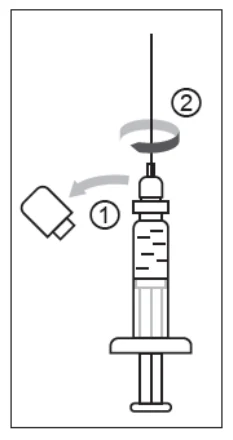
Figure 1
- 1) Remove the cap from the syringe of Sterile Water Diluent.
- 2) Attach a needle to the Luer lock of the syringe.
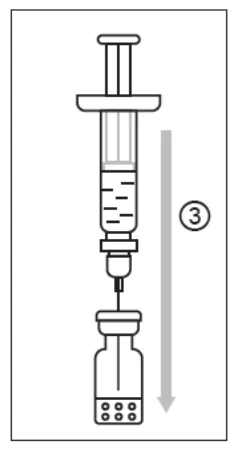
Figure 2
- 3) Cleanse the stopper of the vial of Lyophilized Powder. Slowly transfer the entire content of the prefilled syringe of diluent into the vial containing lyophilized powder
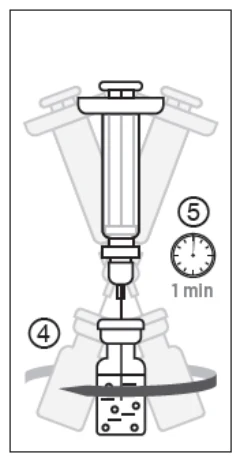
Figure 3
- 4) Gently swirl the vial to dissolve the lyophilized IXCHIQ. Avoid strong shaking or inverting of the vial.
- 5) Wait for at least one minute for complete reconstitution of the vaccine.
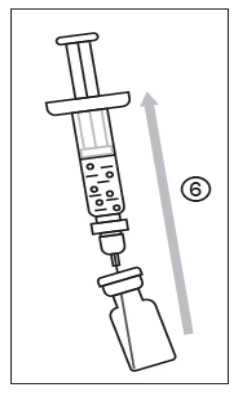
- 6)
After reconstitution, slightly tilt the vial to withdraw the entire contents of the reconstituted IXCHIQ into the same syringe. Avoid inverting the vial.
Changing needles between withdrawing the vaccine from the vial and injecting it into a recipient is not necessary unless the needle has been damaged or contaminated.
Dispose of used sharps and needles according to your local requirements.
4.4 Administration
Administer the reconstituted IXCHIQ vaccine intramuscularly (i.m.) into the deltoid muscle immediately. If not used immediately, store the reconstituted vaccine at room temperature and administer within 30 minutes.
Discard vaccine if not used within 30 minutes.
Any unused product or waste material should be disposed in accordance with local requirements.
Immunity following Chikungunya virus infection is thought to convey lifelong immunity. The need for a booster dose following immunization with the live-attenuated vaccine has not been established.
4.5 Missed Dose
Not applicable.
5 Overdosage
No case of overdose has been reported with IXCHIQ. In the event of overdose, monitoring of vital functions and possible symptomatic treatment is recommended.
For management of a suspected drug overdose, contact your regional poison control centre.
6 Dosage Forms, Strengths, Composition And Packaging
To help ensure the traceability of vaccines for patient immunization record-keeping as well as safety monitoring, health professionals should record the time and date of administration, quantity of administered dose (if applicable), anatomical site and route of administration, brand name and generic name of the vaccine, the product lot number and expiry date.
Table 1: Dosage Forms, Strengths, Composition and Packaging
IXCHIQ is supplied as a single-dose vial of lyophilized powder to be reconstituted with the supplied prefilled syringe of diluent (sterile water for injection). A single dose is 0.5 mL after reconstitution. Each 0.5 mL dose of the vaccine contains not less than 3.0 log10 TCID50 of live attenuated chikungunya virus.
The appearance of the lyophilized vaccine prior to reconstitution is white to slightly yellowish homogeneous powder. After reconstitution, the solution is a clear, colorless to slightly yellow.
| Route of Administration | Dosage Form / Strength/Composition | Non-medicinal Ingredients |
| Intramuscular | Powder for Solution for Injection/ Each 0.5 mL dose of the vaccine contains not less than 3.0 log10 TCID50 of live attenuated chikungunya virus. | D-Sorbitol (0.5% (w/w)), L-Methionine (10 mM), Magnesium Chloride (5 mM), Potassium Phosphate (5 mM), Recombinant Human Albumin (rHA) (0.01%), Sucrose (5% (w/w)), Trisodium citrate di-hydrate (25 mM) |
7 Warnings And Precautions
General
IXCHIQ should only be given when there is a significant risk of acquiring chikungunya infection, and after careful consideration of the potential risks and benefits (see 8 ADVERSE REACTIONS and 14 CLINICAL TRIALS).
During post-marketing use, serious adverse reactions following vaccination with IXCHIQ were most commonly reported in medically frail individuals with advanced chronic diseases, individuals at older age (i.e., ≥65 years of age, especially ≥75 years of age), and those with a high risk of having an undiagnosed immunocompromised condition (e.g., occult cancer or immunosenescence).
Severe reactogenicity or chikungunya-like adverse reactions in medically frail individuals with chronic diseases may lead to deterioration of general condition including malaise and decreased appetite, exacerbation of preexisting diseases, confusional state, encephalopathy, or encephalitis, leading to falls, hospitalisation and death. Vaccinees should be instructed to promptly seek medical attention if they experience, after vaccination, symptoms suggestive of severe reactogenicity or severe chikungunya-like adverse reactions.
As with other vaccines, vaccination with IXCHIQ should be postponed in individuals suffering from an acute severe febrile illness or infection.
Syncope (fainting) can occur following, or even before, any vaccination as a vasovagal response to the needle injection, in the context of an anxiety-related reaction. It is important that procedures are in place to avoid injury from fainting.
Vaccination with IXCHIQ may not protect all individuals. It is recommended to continue personal protection measures against mosquito bites after vaccination.
Acute Allergic Reactions
Appropriate medical treatment and supervision must be available to manage immediate allergic reactions in the event an acute anaphylactic reaction occurs following administration of IXCHIQ.
Driving and Operating Machinery
No studies on the effects of IXCHIQ on the ability to drive and use machines have been performed. However, some of the effects (e.g., severe systemic reactogenicity) mentioned under 8 ADVERSE REACTIONS may temporarily affect the ability to drive or use machines. Exercise caution when driving or operating a vehicle or potentially dangerous machinery.
Hematologic
As with other vaccines administered intramuscularly, IXCHIQ should be given with caution to individuals with thrombocytopenia or any coagulation disorder since bleeding may occur following an intramuscular administration to these individuals.
Musculoskeletal
Immune-mediated Arthritis
Available data in adults and adolescents with a history of immune-mediated or clinically relevant arthritis are not sufficient to determine the safety of IXCHIQ, as this condition was an exclusion criterion for participation in clinical trials.
Chikungunya-like Prolonged Arthralgia
During post-marketing, additional cases of prolonged chikungunya-like arthralgia occurred after vaccination with IXCHIQ with a range of duration from a few weeks to more than 5 months with a few cases requiring follow-up with rheumatology. Vaccinees should be instructed to promptly seek medical attention if experiencing, after vaccination, symptoms suggestive of prolonged arthralgia.
Neurologic
Encephalitis and encephalopathy
Encephalitis and encephalopathy (including with fatal outcome) have been reported during post-marketing use of IXCHIQ in individuals 74 years an older with multiple comorbidities. Vaccinees should be instructed to promptly seek medical attention if they experience, after vaccination, signs or symptoms suggestive of a neurological disorder.
Reproductive Health: Female and Male Potential
- Fertility
Reproductive and developmental toxicology of IXCHIQ was conducted in a single pre- and post-natal developmental toxicity study in pregnant rats which did not identify significant adverse effects in female fertility (See 16. NON-CLINICAL TOXICOLOGY AND PHARMACOLOGY section). No studies in male fertility were conducted.
- Teratogenic Risk
Reproductive and developmental toxicology of IXCHIQ was conducted in a single pre- and post-natal developmental toxicity study in pregnant rats which did not identify significant adverse effects in fetal examination (See 16. NON-CLINICAL TOXICOLOGY AND PHARMACOLOGY section).
7.1 Special Populations
7.1.1 Pregnant Women
Women of child-bearing potential should be advised to avoid pregnancy for one month following vaccination. Available data in pregnant women are not sufficient to determine the safety of IXCHIQ regarding pregnancy, embryofetal development, parturition and postnatal development.
No adequate and well-controlled studies of IXCHIQ have been performed among pregnant women. Human data available from clinical trials with IXCHIQ are insufficient to establish the presence or absence of vaccine-associated risk during pregnancy. One developmental toxicity study was performed in female rats, see 16 NON-CLINICAL TOXICOLOGY AND PHARMACOLOGY section).
Disease-associated maternal and/or embryo/fetal risk
Vertical transmission of CHIKV from mothers with viremia at delivery to their infants has been reported and can cause severe, potentially fatal neurological disease in neonates.
Fetal/neonatal adverse reactions
Vaccine viremia can occur 3 to 7 days after vaccination and is resolved by 14 days after vaccination [See 10.3 Pharmacokinetics]. The potential for transmission of the vaccine virus from mother to infant is unknown.
Pregnancy Exposure
Women who received IXCHIQ during pregnancy are encouraged to report any suspected exposure or adverse reactions to Valneva Canada, or ask their healthcare professional to do so, at 1-855-356-0831
7.1.2 Breast-feeding
It is unknown if IXCHIQ is excreted in human milk. Precaution should be exercised because many drugs can be excreted in human milk.
One developmental toxicity study performed in rats showed IXCHIQ-specific antibodies in the milk of vaccinated female rats from day 5 of lactation.
Human data are not available to assess the impact of IXCHIQ on milk production, its presence in breast milk, or its effects on the breastfed child. Vaccine viremia can occur 3 to 14 days after vaccination and is resolved by 14 days after vaccination [See 10.3 Pharmacokinetics]. The potential for transmission of the vaccine virus from mother to infant through breastmilk is unknown. To date, no infants have been found to be infected with CHIKV or vaccine virus through breastfeeding. The developmental and health benefits of breastfeeding should be considered along with the mother’s clinical need for IXCHIQ and any potential adverse effects on the breastfed child from IXCHIQ or from the underlying maternal condition.
7.1.3 Pediatrics
The safety and immunogenicity of IXCHIQ in children under 12 years of age have not yet been established. Therefore, Health Canada has not authorized the use of IXCHIQ under 12 years of age.
7.1.4 Geriatrics
Clinical studies of IXCHIQ include participants 65 years of age and older and their data contribute to the overall assessment of safety and immunogenicity (see 8 ADVERSE REACTIONS and 14 CLINICAL).
Available post-marketing data suggest that individuals 65 years of age and older who are medically frail with multiple chronic medical conditions may have an increased risk for serious and life-threatening adverse reactions following recent vaccination with IXCHIQ. During post-marketing use with IXCHIQ, serious chikungunya-like illness resulting in hospitalizations and one death has been reported [see 8.5 Post-marketing Adverse Reactions ]. The decision to vaccinate individuals 65 years of age and older needs to weigh the risks and benefits of vaccination.
8 Adverse Reactions
8.1 Adverse Reaction Overview
Adults
In clinical study VLA1553-301, the most common solicited injection site reaction in adults was tenderness (10.6%). The most common solicited systemic adverse reactions in the first 10 days after vaccination were headache (31.6%), fatigue (28.5%), myalgia/muscle pain (23.9%), arthralgia (17.2%), and fever (13.5%).
Adolescents 12 to <18 years of age
Chikungunya virus baseline seronegative adolescents
In clinical study VLA1553-321, the most common solicited injection site reactions in adolescents who received IXCHIQ and were baseline seronegative for prior exposure to CHIKV were tenderness (21.6%) and pain (18.6%). The most common solicited systemic adverse reactions in the first 10 days after vaccination were headache (54.7%), myalgia (28.7%), fever (28.2%), fatigue (24.8%), nausea (17.4%), and arthralgia (14.5%).
Chikungunya virus baseline seropositive adolescents
The proportion of participants that experienced solicited systemic AEs was lower in baseline seropositive participants vaccinated with IXCHIQ than in baseline seronegative participants vaccinated with IXCHIQ (44.7% and 67.9%, respectively). The most common solicited systemic adverse reactions in baseline seropositive IXCHIQ recipients within the first 10 days after vaccination were headache (35.1%), myalgia (19.1%), fatigue (11.7%), nausea (9.6%), arthralgia (6.4%) and fever (6.4%). The proportion of participants who experienced solicited local AEs and unsolicited AEs was similar in the IXCHIQ arms regardless of baseline serostatus.
8.2 Clinical Trial Adverse Reactions
Clinical trials are conducted under very specific conditions. The adverse reaction rates observed in the clinical trials, therefore, may not reflect the rates observed in practice and should not be compared to the rates in the clinical trials of another drug. Adverse reaction information from clinical trials may be useful in identifying and approximating rates of adverse drug reactions in real-world use.
Adults ≥18 years of age
The safety profile of IXCHIQ was evaluated from data generated from 3 randomized, multicenter clinical studies (VLA1553-301, VLA1553-302, and VLA1553-101) all conducted in North America in healthy adult participants 18 years of age and older. Study VLA1553-101 was done using an earlier formulation and was a supportive dose-escalation Phase I trial of IXCHIQ in 120 participants. Study VLA1553-301 was the pivotal double-blind placebo-controlled Phase III trial in 4,115 participants who received IXCHIQ or placebo (phosphate buffered saline or PBS) as a single dose (see 14 CLINICAL TRIALS). Study VLA1553-302 was a supportive non-placebo-controlled Phase III trial investigating the consistency of three lots of IXCHIQ given as a single dose in 408 participants.
The IXCHIQ safety data described herein were collected in 4,115 participants from the main VLA1553-301 clinical trial, randomized 3:1 to receive IXCHIQ or PBS (placebo). A total of 3,082 healthy adults 18 through 88 years of age received a single intramuscular dose (1×10⁴ TCID50) of IXCHIQ and 1,033 received placebo. Participants were followed-up for safety for 6 months post-vaccination. Overall, 54.7% of participants were female. Ethnicity was reported as 80.4% White, 13.9% Black or African American, 1.7% Asian, 0.8% American Indian/Alaska Native, 0.4% Native Hawaiian/Pacific Islander and 2.8% as other. The IXCHIQ and placebo groups were similar with regard to demographics.
Adolescents 12 to <18 years of age
The safety of IXCHIQ in adolescents aged 12 to <18 years was evaluated in a Phase III clinical trial (VLA1553-321) conducted in Brazil. This randomized, double-blind, placebo-controlled trial enrolled 754 participants who received either a single intramuscular dose (1×10⁴ TCID50) of IXCHIQ (n=502) or placebo (PBS; n=252), with a follow-up period of 6 months (see 14 CLINICAL TRIALS). At study entry,
18.4% of participants had pre-existing antibodies against CHIKV, while 81.4% were CHIKV-naïve. Randomization was stratified by CHIKV baseline serostatus.
In Study VLA1553-301 and Study VLA1553-321, solicited injection site adverse reactions (ARs) and eight solicited systemic ARs (fever, nausea, vomiting, headache, fatigue, myalgia, arthralgia and rash) were reported in 10 consecutive days after vaccination. Unsolicited ARs were captured in the entire post-vaccination period, i.e. up to Day 180 and Day 365 (after Day 180, only adverse events of special interest and serious adverse events were collected, and this was done in a subset of participants [n=348]) after vaccination in Study VLA1553-301 and Study VLA1553-321, respectively.
Solicited Adverse Reactions
Adults ≥18 years of age
Overall, 1,553/3,082 (50.4%) of IXCHIQ recipients vs 279/1,033 (27.0%) of placebo recipients experienced at least one solicited systemic adverse reaction (Table 2). The most common systemic adverse reactions of IXCHIQ recipients were headache (31.6%), fatigue (28.5%) myalgia (23.9%), arthralgia (17.2%), and fever (13.5%) of these most (>95%) were mild to moderate. Overall, 463/3,082 (15.0%) of IXCHIQ recipients vs 115 (11.1%) of placebo recipients experienced at least one injection site adverse reaction. The most common injection site adverse reaction (>10%) was tenderness (10.6%). The median day of onset was Day 2 after vaccination for local injection site adverse reactions (Day 1 was the day of vaccination). For systemic adverse reactions, the median onset was Day 5 after vaccination, which is two days after the observed peak in viremia on Day 3 after vaccination with IXCHIQ in adults in the phase I study (Study VLA1553-101) (see 10.3 Pharmacokinetics). Local and systemic adverse reactions resolved with a median duration of 2 days.
Adolescents 12 to <18 years of age
Chikungunya virus baseline seronegative adolescents
A total of 277/408 (67.9%) of baseline seronegative IXCHIQ recipients reported at least one solicited systemic adverse reaction, compared to 91/206 (44.2%) of baseline seronegative placebo recipients (Table 2). The most common solicited systemic adverse reactions among baseline seronegative IXCHIQ recipients were headache (54.7%), myalgia (28.7%), fever (28.2%), fatigue (24.8%), nausea (17.4%) and arthralgia (14.5%). The majority of solicited systemic adverse reactions (>94%) were of mild to moderate intensity.
175/408 (42.9%) of the baseline seronegative IXCHIQ recipients used analgesics and 31/408 (7.6%) used anti-inflammatory and antirheumatic products during the 10 days after vaccination. Of the baseline seronegative placebo recipients, 36/206 (17.5%) used analgesics and 9/206 (4.4%) used anti-inflammatory and antirheumatic products during the 10 days after vaccination.
One IXCHIQ recipient (0.2%) reported mild solicited arthralgia 7 days post-vaccination which lasted 13 days and resolved. During the same period, the individual also concomitantly experienced influenza, headache, myalgia, and eye pain and received analgesics and non-steroidal anti-inflammatory medications concomitantly to control symptoms.
Injection site adverse reactions were reported in 132/408 (32.4%) of baseline seronegative IXCHIQ recipients and 54/206 (26.2%) of baseline seronegative placebo recipients. The most common injection site reactions in baseline seronegative IXCHIQ recipients were tenderness (21.6%) and pain (18.6%). Solicited systemic and local adverse reactions resolved with a median duration of 1 to 2 days, depending on the type of adverse reaction.
Chikungunya virus baseline seropositive adolescents
The proportion of participants that experienced solicited systemic adverse reactions was lower in baseline seropositive participants vaccinated with IXCHIQ than in baseline seronegative participants vaccinated with IXCHIQ (42/94 participants [44.7%] and 277/408 participants [67.9%], respectively, see Table 2). The most common solicited systemic adverse reactions among baseline seropositive IXCHIQ recipients were headache (35.1%), myalgia (19.1%), fatigue (11.7%), nausea (9.6%), arthralgia (6.4%) and fever (6.4%). The majority of solicited systemic adverse reactions (>97%) were of mild to moderate intensity. 17/94 (18.1%) of the baseline seropositive IXCHIQ recipients used analgesics and 1/94 (1.1%) used anti-inflammatory and antirheumatic products during the 10 days after vaccination. Of the baseline seropositive placebo recipients, 3/45 (6.7%) used analgesics and none used anti-inflammatory and antirheumatic products during the 10 days after vaccination.
One (1.1%) baseline seropositive IXCHIQ recipient reported reoccurrence of arthralgia. The first episode started on Day 3 after vaccination, lasted 32 days, was mild in severity, and resolved. Other AEs around the time of arthralgia onset included solicited headache (Day 1-9), solicited nausea (Day 2-8), and unsolicited, unrelated pruritus (Day 3-18). No fever was documented in this participant. The second unsolicited arthralgia event started on Day 148 after vaccination and lasted 247 days. The event was assessed as unrelated to IXCHIQ vaccination. Despite the longer duration of this unsolicited arthralgia, this event is not considered chronic as it did not originate during the acute phase nor showed a continuous progression from acute to chronic symptoms (as observed with wild-type CHIKV infection).
The proportion of participants who experienced solicited injection site reactions was similar across both baseline serostatus groups in the IXCHIQ arm, with 29.8% in baseline seropositive participants and 32.4% in baseline seronegative participants.
Table 2: Solicited Systemic and Injection Site Adverse Reactions Within 10 Days After a Single Vaccination (Safety Population in Baseline Seronegative Adults in the Study VLA1553-301 and in Baseline Seronegative Adolescents and Baseline Seropositive Adolescents in the Study VLA1553-321)
| Adverse Reaction Category | Study VLA1553-301 | Study VLA1553-321 Baseline Seronegative | Study VLA1553-321 Baseline Seropositive | ||||||||||||||
|---|---|---|---|---|---|---|---|---|---|---|---|---|---|---|---|---|---|
| IXCHIQ (N=3,082) n (%) | Placebo (PBS) (N=1,033) n (%) | IXCHIQ (N=408) n (%) | Placebo (PBS) (N=206) n (%) | IXCHIQ (N=94) n (%) | Placebo (PBS) (N=45) n (%) | ||||||||||||
| Any Solicited Adverse Reactions | 1634 (53.0) | 332 (32.1) | 303 (74.3) | 105 (51.0) | 50 (53.2) | 17 (37.8) | |||||||||||
| Solicited Systemic Adverse Reactions | 1,553 (50.4) | 279 (27.0) | 277 (67.9) | 91 (44.2) | 42 (44.7) | 15 (33.3) | |||||||||||
| Headache | 973 (31.6) | 152 (14.7) | 223 (54.7) | 76 (36.9) | 33 (35.1) | 10 (22.2) | |||||||||||
| Fatigue | 879 (28.5) | 131 (12.7) | 101 (24.8) | 19 (9.2) | 11 (11.7) | 5 (11.1) | |||||||||||
| Myalgia/Muscle Pain | 737 (23.9) | 76 (7.4) | 117 (28.7) | 27 (13.1) | 18 (19.1) | 3 (6.7) | |||||||||||
| Arthralgia/Joint Pain | 529 (17.2) | 51 (4.9) | 59 (14.5) | 11 (5.3) | 6 (6.4) | 2 (4.4) | |||||||||||
| Fever (≥ 38°C adults, ≥ 37.8°C adolescents) | 415 (13.5) | 9 (0.9) | 115 (28.2) | 5 (2.4) | 6 (6.4) | 4 (8.9) | |||||||||||
| Nausea | 345 (11.2) | 58 (5.6) | 71 (17.4) | 29 (14.1) | 9 (9.6) | 2 (4.4) | |||||||||||
| Rash | 70 (2.3) | 5 (0.5) | 17 (4.2) | 1 (0.5) | 1 (1.1) | 1 (2.2) | |||||||||||
| Vomiting | 59 (1.9) | 10 (1.0) | 12 (2.9) | 9 (4.4) | 1 (1.1) | 0 | |||||||||||
| Solicited Injection Site Adverse Reactions | 463 (15.0) | 115 (11.1) | 132 (32.4) | 54 (26.2) | 28 (29.8) | 7 (15.6) | |||||||||||
| Tenderness | 328 (10.6) | 84 (8.1) | 88 (21.6) | 33 (16.0) | 12 (12.8) | 3 (6.7) | |||||||||||
| Pain | 191 (6.2) | 38 (3.7) | 76 (18.6) | 29 (14.1) | 21(22.3) | 4 (8.9) | |||||||||||
| Erythema/Redness | 46 (1.5) | 15 (1.5) | 10 (2.5) | 3 (1.5) | 1 (1.1) | 0 | |||||||||||
| Induration | 44 (1.4) | 8 (0.8) | 17 (4.2) | 9 (4.4) | 4 (4.3) | 2 (4.4) | |||||||||||
| Swelling | 21 (0.7) | 8 (0.8) | 7 (1.7) | 7 (3.4) | 0 | 0 | |||||||||||
All solicited injection site adverse reactions were graded as mild or moderate in severity, except for a single solicited injection site adverse reaction of pain (adult study), induration (one baseline seronegative adolescent), and erythema/redness (one baseline seronegative adolescent) graded as severe in the IXCHIQ group (See Section Serious Adverse Events for details).
Chikungunya-Like Adverse Reactions
Chikungunya-like adverse reactions (i.e. a cluster of symptoms consistent with typical symptoms of wild-type chikungunya infection) were defined by protocol as fever (≥38 °C in Study VLA1553-301 or ≥37.8 °C in Study VLA1553-321) and one or more of any of the following: arthralgia or arthritis, myalgia, headache, back pain (only in Study VLA1553-301), rash or certain skin symptoms, lymphadenopathy (only in Study VLA1553-301), or certain neurological, cardiac (only in Study VLA1553-301) or ocular symptoms that occurred with an onset within 30 days after vaccination, regardless of whether they occurred simultaneously or not. Severe chikungunya-like adverse reactions included symptoms that prevented daily activity and/or required medical intervention.
Adults ≥18 years of age
In Study VLA1553-301, the occurrence of chikungunya-like adverse reactions was evaluated in a post-hoc analysis. where 361 (11.7%) in the IXCHIQ group (n=3,082) reported chikungunya-like adverse reactions, including 48 participants (1.6%) who reported severe chikungunya-like adverse reactions. Six (0.6%) participants in the placebo group (n=1,033) reported chikungunya-like adverse reactions, none of which was severe.
The median onset of chikungunya-like adverse reactions in IXCHIQ recipients was 3 days (range 0 to 10 days) after vaccination. The median duration of chikungunya-like reactions in IXCHIQ recipients was 4 days (range 1 day to at least 6 months).
Twenty-two IXCHIQ recipients had prolonged chikungunya-like adverse reactions lasting longer than 14 days (median duration 33 days, range 15 days to at least 6 months) and 15 IXCHIQ recipients had chikungunya-like adverse reactions lasting longer than 28 days (median duration 94 days, range 29 days to at least 6 months).
Prolonged fatigue, myalgia, or headache (lasting longer than 14 days) were reported by 13 participants (nine of these participants had symptoms lasting longer than 28 days).
Prolonged arthralgia (lasting longer than 14 days) was reported by seven participants (five of these participants had arthralgia lasting longer than 28 days), including a 46-year-old male who reported severe arthralgia and back pain that lasted for at least 51 days after vaccination and a 50-year-old female who reported polyarthralgia and nodular swelling of joints in fingers and foot that lasted for at least 6 months after vaccination.
Additionally, a 62-year-old female with no recorded fever developed intermittent polyarthritis involving fingers for more than 8 months, including development of a trigger finger requiring surgical release 4-5 months after vaccination.
Adolescents 12 to <18 years of age
Chikungunya virus baseline seronegative adolescents
Among baseline seronegative participants, 110 participants (27.0%) in the IXCHIQ group (n=408) reported chikungunya-like adverse reactions, including 17 participants (4.2%) who reported severe chikungunya-like adverse reactions. Eight (3.9%) baseline seronegative participants in the placebo group (n=206) reported chikungunya-like adverse reactions, none thereof was severe.
15 IXCHIQ recipients (3.7%) and 3 placebo recipients (1.5%) had prolonged chikungunya-like adverse reactions lasting longer than 14 days (median duration 23 days, range 16 to 30 days).
Prolonged headache (lasting longer than 14 days) was reported in 2 baseline seronegative adolescents (23 days with moderate intensity and 29 days with mild intensity, respectively). There was one prolonged chikungunya-like symptom lasting 28 days or longer reported (mild headache lasting 29 days) in a IXCHIQ recipient.
Chikungunya virus baseline seropositive adolescents
The proportion of participants that experienced chikungunya-like adverse reactions was lower in baseline seropositive participants than in baseline seronegative participants vaccinated with IXCHIQ (6/94 participants [6.4%] and 110/408 participants [27.0%], respectively). One (1.1%) baseline seropositive IXCHIQ recipient reported a severe chikungunya-like adverse reaction. Four (8.9%) baseline seropositive participants in the placebo group reported chikungunya-like adverse reactions, one (2.2%) thereof was severe.
Two baseline seropositive participants (1 IXCHIQ recipient and 1 placebo recipient) had prolonged chikungunya-like adverse reactions lasting longer than 14 days (15 and 19 days, respectively).
No chikungunya-like symptoms lasting longer than 14 days were reported among baseline seropositive participants.
The frequencies of symptoms among the adult and adolescent IXCHIQ recipients with chikungunya-like adverse reactions are presented in Table 3.
Table 3. Frequency of Symptoms Among Participants With Chikungunya-Like Adverse Reactions (in the Adults in Study VLA1553-301 and in the Baseline Seronegative Adolescents in Study VLA1553-321)
| Chikungunya-Like Symptom | Study VLA1553-301 | Study VLA1553-321 |
|---|---|---|
IXCHIQ (N=361) n (%) | IXCHIQ (N=110) n (%) | |
| Pyrexia (any) | 361 (100) | 110 (100) |
| Headache (any) | 280 (77.6) | 96 (87.3) |
| Fatigue (any) | 264 (73.1) | 51 (46.4) |
| Myalgia (any) | 215 (59.6) | 62 (56.4) |
| Arthralgia (any) | 159 (44.0) | 33 (30.0) |
| Chills (any) | 29 (8.0) | 4 (3.6) |
| Rash (any) | 22 (6.1) | 11 (10.0) |
| Back pain (any) | 13 (3.6) | Not reported |
| Lymphadenopathy (any) | 9 (2.5) | Not reported |
| Dizziness (any) | 6 (1.7) | Not reported |
| Pain (any) | 4 (1.1) | Not reported |
| Paresthesia (any) | 3 (0.8) | 1 (0.9) |
| Hyperhidrosis (any) | 2 (0.6) | Not reported |
| Edema peripheral (any) | 2 (0.6) | Not reported |
| Asthenia (any) | 1 (0.3) | Not reported |
| Ataxia (any) | 1 (0.3) | Not reported |
| Atrial fibrillation (any) | 1 (0.3) | Not reported |
| Feeling abnormal (any) | 1 (0.3) | Not reported |
| Hypoesthesia (any) | 1 (0.3) | Not reported |
| Influenza like illness (any) | 1 (0.3) | Not reported |
| Neuropathy peripheral (any) | 1 (0.3) | Not reported |
| Rash erythematous (any) | 1 (0.3) | Not reported |
| Syncope (any) | 1 (0.3) | Not reported |
| Hand dermatitis (any) | Not reported | 1 (0.9) |
| Rash maculo-papular (any) | Not reported | 1 (0.9) |
N=number of participants with chikungunya-like adverse reactions; n=number of participants with chikungunya-like symptom.
Unsolicited Adverse Events
Adults ≥18 years of age
In Study VLA1553-301, unsolicited adverse events (AEs) that occurred within 28 days post-vaccination were reported overall in 21.8% of 3,082 participants receiving IXCHIQ compared with 13.3% of 1,033 participants receiving placebo. Overall, most unsolicited AEs were graded as mild or moderate. Eighteen participants (0.6%) in the IXCHIQ arm and six (0.6%) in the placebo arm experienced at least one unsolicited AE that was graded severe. Unsolicited AEs were significantly more frequently considered related to the vaccination in the IXCHIQ arm (9.2% participants) than in the placebo arm (3.7% participants).
Adolescents 12 to <18 years of age
In Study VLA1553-321, the proportion of participants who experienced unsolicited AEs within 28 days post-vaccination was similar in the IXCHIQ recipients regardless of serostatus.
Chikungunya virus baseline seronegative adolescents
Unsolicited AEs that occurred within 28 days post-vaccination were reported in 39.5% of 408 baseline seronegative participants receiving IXCHIQ and 31.1% of 206 baseline seronegative participants receiving placebo. Overall, most unsolicited AEs were graded as mild or moderate. Five baseline seronegative participants (1.2%) in the IXCHIQ arm and none (0%) in the placebo arm experienced at least one unsolicited AE that was graded severe. Unsolicited AEs were significantly more frequently considered related to the vaccination in the IXCHIQ arm (9.6% of baseline seronegative participants) than in the placebo arm (0.5% of baseline seronegative participants).
Chikungunya virus baseline seropositive adolescents
Unsolicited AEs that occurred within 28 days post-vaccination were reported in 38.3% of 94 baseline seropositive participants receiving IXCHIQ and 37.8% of 45 baseline seropositive participants receiving placebo. Overall, most unsolicited AEs were graded as mild or moderate. Five baseline seropositive participants (5.3%) in the IXCHIQ arm and three baseline seropositive participants (6.7%) in the placebo arm experienced at least one unsolicited AE that was graded severe. Unsolicited AEs considered related to vaccination occurred at similar rates in the IXCHIQ arm (1.1% of baseline seropositive participants) and the placebo arm (4.4% of baseline seropositive participants).
Specific categories of related unsolicited AEs of adults and adolescents are presented in Table 4 below.
Table 4. Related Unsolicited Adverse Events Within 28 Days After a Single Vaccination With a Frequency ≥1% in at Least One Study Arm (Safety Population in Adults in the Study VLA1553-301 and in Baseline Seronegative Adolescents in Study VLA1553-321)
| Preferred Term (PT) | Study VLA1553-301 | Study VLA1553-321 | ||||||||||
|---|---|---|---|---|---|---|---|---|---|---|---|---|
IXCHIQ (N=3,082) n (%) | Placebo (N=1,033) n (%) | IXCHIQ (N=408) n (%) | Placebo (N=206) n (%) | |||||||||
| Any Related Unsolicited Adverse Events | 283 (9.2) | 38 (3.7) | 39 (9.6) | 1 (0.5) | ||||||||
| Chills | 51 (1.7) | 2 (0.2) | 3 (0.7) | Not reported | ||||||||
| Neutropenia | 31 (1.0) | 1 (0.1) | 4 (1.0) | Not reported | ||||||||
| Fever | 2 (0.1) | 1 (0.1) | 5 (1.2) | Not reported | ||||||||
| Eye pain | 5 (0.2) | Not reported | 6 (1.5) | Not reported | ||||||||
| Headache | 7 (0.2) | 5 (0.5) | 4 (1.0) | Not reported | ||||||||
Serious Adverse Events
Adults ≥18 years of age
The proportions of participants who reported at least 1 serious adverse event within 6 months following administration was 1.5% (46/3,082) in the IXCHIQ group and 0.8% (8/1,033) in the placebo group. Overall, there were two serious adverse events (2/3,082 [0.1%]) requiring hospitalization that were considered to be related to IXCHIQ: 1 event of myalgia, and 1 event of hypovolemic hyponatremia and atrial fibrillation, both events showed full recovery.
A 58-year-old female with a history of fibromyalgia experienced severe myalgia, mild arthralgia, tachycardia and tachypnea, with onset 1 to 2 days after vaccination, was hospitalized 3 days after vaccination for 7 days, and fully recovered; myalgia resolved after 30 days.
A 66-year-old male experienced severe fever for 7 days, starting 4 days post-vaccination; he was hospitalized 9 days post-vaccination for 3 days and found to have atrial fibrillation, increased troponin, increased brain natriuretic peptide and hypovolemic hyponatremia, and fully recovered. This study participant was included in a subset of participants assessed for vaccine viremia 7 days after vaccination and was found to be viremic.
There were no related serious adverse events reported in the placebo group.
Adolescents 12 to <18 years of age
Chikungunya virus baseline seronegative adolescents
The proportions of baseline seronegative participants who reported at least one serious adverse event within 6 months following administration was 1.2% (5/408) in the IXCHIQ arm and 1.0% (2/206) in the placebo arm.
Chikungunya virus baseline seropositive adolescents
The proportions of baseline seropositive participants who reported at least one serious adverse event within 6 months following administration was 2.1% (2/94) in the IXCHIQ arm and 4.4% (2/45) in the placebo arm.
Overall, there was one serious adverse event (1/502 [0.2%]) requiring hospitalization that was considered to be related to IXCHIQ: 1 event of fever in a baseline seronegative participant who recovered fully.
A 13-year-old female who was baseline seronegative experienced fever of Grade 4 according to FDA grading scale (axillary body temperature: 40.2°C) starting two days after receiving IXCHIQ. The first normothermic temperature was reported four days after fever onset. As per protocol, any Grade 4 event required reporting as an SAE, no other seriousness criterion was met. This event was part of a chikungunya-like adverse reaction in combination with mild arthralgia in arms and hands, mild myalgia, and mild headache. The participant recovered without sequelae.
There were no related serious adverse events reported in the placebo group.
Deaths and Adverse Events leading to Withdrawal from Study
Three participants died during Study VLA1553-301 due to events independent of study procedures (coronary artery disease, COVID-19, and anoxic brain injury). None of the deaths was considered as related to IXCHIQ. Approximately 0.1% of participants who received IXCHIQ versus 0.2% in the placebo group discontinued their trial participation due to adverse events.
No participants died during the adolescent study VLA1553-321 up to 6 months post vaccination.
8.2.1 Clinical Trial Adverse Reactions – Pediatrics
Participants 11 years of age or younger were excluded from clinical trials with IXCHIQ.
8.3 Less Common Clinical Trial Adverse Reactions
Less common related, unsolicited adverse events, included:
Gastrointestinal: Diarrhoea.
General Disorders: Chills.
Haematologic Disorders: Neutropenia, leukopenia.
Immune system Disorders: Lymphadenopathy
Musculoskeletal and Connective Tissue Disorders: Back pain
Nervous System Disorders: Dizziness
8.4 Abnormal Laboratory Findings: Hematologic, Clinical Chemistry and Other Quantitative Data
Clinical Trial Findings
Laboratory data were analysed in the immunogenicity subset in Study VLA1553-301 in adults and Study VLA1553-321 in adolescents (see 14 CLINICAL TRIALS). Most hematology, chemistry and coagulation parameters were generally well balanced between the IXCHIQ and placebo arms in these studies. The exception were abnormal white cell counts, specifically leukocytes (all types of white blood cells), neutrophils and/or lymphocytes, which were more frequently observed in the IXCHIQ recipients compared with placebo recipients (Table 5 and Table 6). Most of these abnormal hematology parameters were of mild severity (grade 1) in both studies.
In Study VLA1553-301, of 186 participants with abnormal cell counts at the 7-day post-vaccination assessment, 92% (171/186) had available hematology results at the 28-day post-vaccination assessment, of which 88% (150 /171) were in the normal range. Three IXCHIQ recipients reported other significant non-serious severe adverse events: two events of neutropenia lasting for 13 or 20 days (both events were considered to be related to IXCHIQ) and one event of lymphopenia lasting for 22 days (the event was considered not related to IXCHIQ). All events resolved within 28-day post-vaccination.
Overall, changes in clinical laboratory test results were considered expected and consistent with a normal physiologic response to a live-attenuated viral vaccine.
Table 5. Abnormal Hematology Results by Maximum Grade Post-vaccination in Adults (Immunogenicity Subset in Study VLA1553-301)
| Laboratory Parameter | IXCHIQa (N=372) n (%) | Placeboa (N=125) n (%) |
|---|---|---|
| Leukocytes (decreased) | 116 (32.0) | 7 (5.8) |
| Neutrophils (decreased) | 153 (42.3) | 15 (12.4) |
| Lymphocytes (decreased) | 85 (23.5) | 9 (7.4) |
a Percentages are based on the number of individuals with at least one postbaseline result.
Table 6. Abnormal Hematology Results by Maximum Grade Post-vaccination in Baseline Seronegative Adolescents (Immunogenicity Subset in Study VLA1553-321)
| Laboratory Parameters | IXCHIQa (N=268) n (%) | Placeboa (N=48) n (%) |
|---|---|---|
| Leukocytes (decreased) | 46 (17.2) | 3 (6.3) |
| Neutrophils (decreased) | 109 (40.7) | 14 (29.2) |
| Lymphocytes (decreased) | 35 (13.1) | 4 (8.3) |
a Percentages are based on the number of individuals with at least one postbaseline result.
8.5 Post-Market Adverse Reactions
During post-marketing use, serious case reports were received from worldwide sources. Adverse events including those considered serious (medically important, leading to hospitalization or prolonging hospitalization) in individuals with onset within 30 days of receiving IXCHIQ are summarized in Table 7. Because post-marketing adverse events are reported voluntarily from a population of uncertain size, it is not always possible to reliably estimate the frequency or establish a causal relationship to vaccine exposure.
Table 7. Post-Market Adverse Reactions
| System/Organ Class | Adverse Event |
|---|---|
| Blood and lymphatic system disorder | Lymphadenopathy, thrombocytopenia (low platelets) |
| Cardiac disorders | Atrial flutter, heat palpitations, pericardial effusion, tachycardia, ventricular extrasystoles (extra beats) |
| Ear and labyrinth disorders | Tinnitus, vertigo |
| Eye disorders | Diplopia (double vision), photophobia (sensitivity to light) |
| Endocrine disorders | Exacerbation of secondary adrenal insufficiency |
| Gastrointestinal disorders | Anorexia, diarrhea |
| General disorders and administration site conditions | High fever, fatigue, sweats |
| Immune system disorders | Hemolytic uremic syndrome, pruritus (itching) |
| Injury, poisoning and procedural complications | Fall/injury |
| Investigations | Cerebral spinal fluid (CSF) positive by polymerase chain reaction (PCR) test for chikungunya virus in favour of vaccine strain, elevated C-reactive protein (CRP), elevated troponin |
| Metabolism and nutrition disorders | Dehydration, hyponatremia |
| Musculoskeletal and connective tissue disorders | Asthenia (physical weakness), arthritis (joint swelling), neck pain, neck stiffness, protracted joint pain, tendinitis |
| Nervous system disorders | Aseptic meningitis, Bell’s palsy, encephalopathy, encephalitis, migraine, light-headedness, meningismus, pyramidal syndrome, syncope, trigeminal neuralgia |
| Psychiatric disorders | Behaviour disorder, hallucinations |
| Renal and urinary disorders | Acute kidney injury, nephrotic syndrome |
| Respiratory, thoracic and mediastinal disorders | Acute respiratory decompensation, dyspnea, fluid in lungs, pneumonitis |
| Skin and subcutaneous tissue disorders | Peri-orbital edema, skin eruption |
| Vascular disorders | Hypotension, phlebitis |
During the vaccine campaign to address an outbreak in Réunion Island early in 2025, three deaths occurred within two weeks post-vaccination among frail elderly male individuals with multiple comorbidities (advanced neurological disorders and respiratory illness, pneumonia), due to medical decompensation (88 and 77 years of age) or confirmed encephalitis (84 years of age). One death was assessed as probably related to IXCHIQ vaccination by the local Heath Authority. No deaths were reported in individuals receiving IXCHIQ for the purpose of international travel.
9 DRUG INTERACTIONS
9.2 Drug Interactions Overview
- here are no data on the safety and immunogenicity following concomitant administration of IXCHIQ with other vaccines. During post-marketing use, some severe ICSR cases involved co-administration with other vaccines.
Administration of immune globulins, blood or plasma transfusions 3 months before or up to 1 month after IXCHIQ administration may interfere with the expected immune response
9.7 Drug Laboratory Test Interactions
Any laboratory testing within 2 weeks post-vaccination with IXCHIQ may result in transient abnormalities in results, especially among hematology parameters.
10 Clinical Pharmacology
10.1 Mechanism of Action
The exact mechanism of protection has not been determined. IXCHIQ elicits CHIKV-specific immune responses against all globally circulating chikungunya virus (CHIKV) genotypes.
10.2 Pharmacodynamics
Clinical studies with IXCHIQ included immunogenicity assessments to characterize the immune response to IXCHIQ. Immunogenicity endpoints were used as surrogate endpoints supporting the evaluation of clinical efficacy (see 13 CLINICAL TRIALS).
10.3 Pharmacokinetics
Viremia: The phase I study (Study VLA1553-101) assessed the kinetics of vaccine viremia on Day 3, Day 7 and Day 14 following single vaccination with IXCHIQ at three intramuscular dose levels (3.2x10³ TCID50, 3.2x10⁴ TCID50, and 3.2x10⁵ TCID50) in heathy adults (see 14 CLINICAL TRIALS). The middle dose (3.2x10⁴ TCID50 or 4.5 log10 TCID50) is within the approved dose range (3.6 - 4.6 log10 TCID50) of IXCHIQ. The viral titer in all study groups was the highest on Day 3, sharply dropped by about 85% on Day 7 and became undetectable on Day 14. The plasma viral titer was vaccine dose-dependent with mean viral RNA titer at 73,601.2 GCE/mL, 89,353.7 GCE/mL and 229,224.1 GCE/mL on Day 3 following vaccination at the three ascending dose level, respectively. Note: the administrated viral doses are too low to be detectable in plasma if the virus does not replicate in the body.
One participant shed virus in urine in the low dose group on Day 7.
11 Storage, Stability And Disposal
Store vial with lyophilized powder and diluent in a refrigerator at 2°C to 8°C. DO NOT FREEZE. Do not use the vaccine after the expiration date shown on the vial label. Store in the original package.
After reconstitution, administer IXCHIQ immediately. If not used immediately, store the reconstituted vaccine at room temperature and administer within 30 minutes. DO NOT FREEZE RECONSTITUTED VACCINE.
Discard reconstituted vaccine, if not used within 30 minutes.
12 Special Handling Instructions
Not applicable.
Part 2: Scientific Information
13 Pharmaceutical Information
Drug Substance
Proper name: Live Attenuated chikungunya La Reunion strain (LR-CHIKV clone LR2006 OPY1)
Product Characteristics:
IXCHIQ, chikungunya vaccine, live-attenuated, is a lyophilized powder reconstituted with sterile water to form a sterile solution for intramuscular injection. Each 0.5 mL dose of the vaccine contains not less than 3.0 log10 TCID50 of live attenuated chikungunya virus.
The vaccine is produced in Vero cells. Viral harvests are pooled, clarified, concentrated and purified. The purified virus solution is further sterile filtered, aliquoted and stored at deep frozen conditions until formulation. The Vero cells, Viral Harvests, Drug Substance and Excipients used in manufacturing are all tested to provide assurance that the final product is free of potential adventitious agents.
14 Clinical Trials
14.1 Trial Design and Study Demographics
Table 7: Summary of patient demographics for pivotal clinical trials for IXCHIQ
| Study # | Study design | Dosage, route of administration and duration | Study subjects (n) | Mean age (Range) | Sex (%) |
| VLA1553-301 | Double-blind, randomized placebo-controlled | IXCHIQ 1×10⁴ TCID50 per 0.5 mL, or placebo (phosphate buffered saline, PBS) Intramuscular injection Single dose, 6 month follow up | IXCHIQ: 3,093 (3,045 planned) Immunogenicity subset : 375 Placebo (phosphate buffered saline): 1,035 (1,015 planned) Immunogenicity subset : 126 | 45.0 years (18.0-94.0) | 1,864 M (45.3%) 2,251 F (54.7%) |
| VLA1553-321 | Double-blind, randomized placebo-controlled | IXCHIQ 1×10⁴ TCID50 per 0.5 mL, or placebo (phosphate buffered saline, PBS) Intramuscular injection Single dose, 12 month follow up | IXCHIQ baseline seronegative: 408 (400 planned) IXCHIQ baseline seropositive: 94 (100 planned) IXCHIQ baseline seronegative Immunogenicity subset: 268 IXCHIQ baseline seropositive Immunogenicity subset: 60 Placebo baseline seronegative: 206 (200 planned) Placebo baseline seropositive: 45 (50 planned) Placebo baseline seronegative Immunogenicity subset: 48 Placebo baseline seropositive Immunogenicity subset: 8 | 14.5 years (12.0-17.0) | 348 M (46.2%) 406 F (53.8%) |
Study VLA1553-301, conducted in United States, was a multicenter, prospective, randomized, double-blinded, placebo-controlled pivotal clinical study assessing the immunogenicity and safety in generally healthy individuals 18 years and above after vaccination with a single dose of IXCHIQ. Almost all participants were negative for CHIKV-specific neutralizing antibodies at baseline (99.9% in the VLA1553 group and 99.7% in the placebo group). 4,128 participants were randomized, allocated in approximately 3:1 ratio to VLA1553 arm (n=3,093) or placebo arm (n=1,035) and stratified by age, i.e. 18 to 64 years (n=3,652) and 65 years of age or above (n=463) . The first 501 randomized participants were included in the immunogenicity subset (IXCHIQ: n=375 and placebo: n=126).
Study VLA1553-321, conducted in Brazil, was a multicenter, prospective, randomized, double-blinded, placebo-controlled pivotal clinical trial, to evaluate immunogenicity and safety in healthy adolescents (12 to 17 years old) after vaccination with a single dose of IXCHIQ. According to 50% plaque reduction in a micro plaque reduction neutralization (µPRNT50) assay, 81.4% and 18.4% of the participants were seronegative and seropositive, respectively, for CHIKV-specific neutralizing antibodies at baseline. 754 participants were randomized in approximately 2:1 ratio to IXCHIQ (n=502) or placebo (n=252) and stratified according to baseline serostatus for CHIKV-specific neutralizing antibodies. The first 384 of the randomized participants were included in the immunogenicity subset (IXCHIQ-seronegative: n=268; placebo-seronegative: n=48; IXCHIQ-seropositive: n=60; placebo-seropositive: n=8) . 78 participants in the immunogenicity subset constituted the viremia subset (IXCHIQ-seronegative: n=43; placebo-seronegative: n=20; IXCHIQ-seropositive: n=9; placebo-seropositive: n=9). Treatment randomization was not stratified by immunogenicity and viremia subsets, rather, the subset inclusion was stratified based on treatment allocation.
Study VLA1553-301 in adults and Study VLA1553-321 in adolescents share the following study design features.
Vaccination was performed with a single intramuscular dose of IXCHIQ (1×10⁴ 50% tissue culture infectious dose [TCID50]) or placebo (phosphate buffered saline, PBS) on Day 1. In both studies, immunogenicity samples were collected from all participants at baseline and on Days 8, 29, 85, and 180 (samples were only analyzed for participants in the immunogenicity subset) and also on Day 365 in Study VLA1553-321 (only collected and analyzed in the immunogenicity subset). In both studies, clinical laboratory samples (clinical chemistry, hematology, urinalysis, coagulation) were collected only from participants in the immunogenicity subset at baseline (Day 1) and on Days 8, 29, 85, and 180. Viremia plasma samples were obtained from all participants on Days 1, 8, and 29 in both studies and also on Days 85, 180 and 365 (only in the immunogenicity subset) in Study VLA1553-321.
The primary endpoint was seroresponse rate (SRR), i.e. proportion of participants with a serum CHIKV-specific neutralizing antibody level defined as µPRNT50≥150 at 28 days post-vaccination. Based on the results of a study of passive transfer of human anti-IXCHIQ sera in non-human primates (see 16. NON-CLINICAL TOXICOLOGY AND PHARMACOLOGY), a CHIKV-specific neutralizing antibody level that is 150 µPRNT50 or higher is considered seroprotective. The primary immunogenicity analysis compared the SRR against a non-acceptance threshold of 70%. Safety data collection captured solicited AEs until Day 11 and unsolicited AEs up to Day 180 and Month 12 (after Day 180, only adverse events of special interest and serious adverse events were collected, and this was done in the immunogenicity subset) in Study VLA1553-301 and Study VLA1553-321, respectively.
Study VLA1553-303 is a prospective, multicenter, open-label Phase 3b, single arm clinical trial evaluating antibody persistence and long-term safety (SAEs only) in 363 adult participants who had participated in Study VLA1553-301 and voluntarily agreed to be recruited into Study VLA1553-303. All participants were asked to visit the trial site on Day 180 of VLA1553-301 and then have annual follow-up visits for 10 years for immunogenicity sampling. SAEs were also assessed until Year 2 in all participants. Data are available up to Year 2.
14.2 Study Results
Adults ≥18 years of age
Seroresponse was selected as a surrogate immunogenicity endpoint of efficacy. It is defined as achieving a virus neutralizing antibody μPRNT50 titer ≥150, which was considered to predict a clinical benefit. This is based on nonclinical data from a non-human primate pharmacology study showing that animals treated with immune sera from clinical samples collected in Study VLA1553-101 were protected against mild CHIKV disease induced by challenge with a WT CHIKV strain (See Study VAC1816 02 in 16. NON-CLINICAL TOXICOLOGY AND PHARMACOLOGY). Pre challenge neutralizing antibody titer level about 150 resulted in undetectable virus during 14 days after the challenge.
In Study VLA1553-301, the primary immunogenicity endpoint was the seroresponse rate (proportion of participants who had seroresponse in a study group) at 28 days post-vaccination. Key secondary immunogenicity endpoint was immune response as measured by CHIKV-specific neutralizing antibody titers on Day 8, Day 29, Day 85, and at Month 6 post-vaccination as determined in µPRNT50 in µPRNT assay.
Seroresponse Rate
The seroresponse rate 28 days post-vaccination after a single dose of IXCHIQ in adults is presented in Table 8. The seroresponse rate 180 days after a single dose of IXCHIQ was 96.3% (95% CI: 93.1, 98.3).
Table 8: Seroresponse Rates 28 days Post-vaccination, as Determined by µPRNT Assay, in Adults in Study VLA1553-301 (PP Population)
| Study | Study VLA1553-301 | ||||||
|---|---|---|---|---|---|---|---|
| Treatment | Placebo | IXCHIQ | |||||
| N=96 | N=266 | ||||||
| (n (%) [95%CI]) | (n (%) [95%CI]) | ||||||
| Day 29 (28 days post-vaccination) | 0 (0) [0.0, 3.8] | 263 (98.9) [96.7, 99.8]* | |||||
Abbreviations: CI=confidence interval; µPRNT=micro plaque reduction neutralization test; PP=per-protocol (population).
* Success criterion: lower bound of the 95% confidence interval for seroresponse rate >70%
Geometric Mean Titer (GMT)
The geometric mean titer 28 days and 6 months post-vaccination after a single dose of IXCHIQ in adults is presented in Table 9. GMT was 3361.6 on Day 29 (28 days post-vaccination) and dropped by about 78% to 752.1 at 6 months post-vaccination, remaining above the seroresponse threshold of ≥150 µPRNT50.
Table 9: GMT of Serum CHIKV-specific Neutralizing Antibodies up to 6 Months Post-vaccination, as Determined by µPRNT Assay, in Adults in Study VLA1553-301 (PP Population)
| Study | Study VLA1553-301 | |||||||
|---|---|---|---|---|---|---|---|---|
| Treatment | Placebo | IXCHIQ | ||||||
| N=96 | N=266 | |||||||
| GMT | GMT [95% CI] | |||||||
| Day 1 (baseline, pre-vaccination) | 10.0 | 10.0 [10.00, 10.00] | ||||||
| Day 29 (28 days post-vaccination) | 10.1 | 3,361.6 [2,993.83, 3,774.45] | ||||||
| Day 180 (6 months post-vaccination) | 10.0 | 752.1 [665.91, 849.52] | ||||||
Abbreviations: CHIKV=chikungunya virus; GMT=Geometric Mean Titer as measured in µPRNT50; µPRNT=micro plaque reduction neutralization test; PP=per-protocol (population).
Antibody persistence in adults
Persistence of the immune response was evaluated 12 and 24 months post-vaccination in VLA1553-303. GMTs and seroresponse rates at 12 and 24 months in adults are included in Table 10.
The proportion of participants with a CHIKV-specific neutralizing antibody level ≥150 µPRNT50 was 99.5% (183/184) and 97.1% (268/276), respectively at 12 and 24 months post-vaccination. GMT decreased from 3,361.6 at 28 days post-vaccination from study VLA1553-301 (Table 9) to 1,070.3 at 12 months and 819.5 at 24 months, with GMTs remaining above the seroresponse threshold of ≥150 µPRNT50 (Table 10). In contrast, CHIKV-specific antibodies elicited by wide-type CHIKV remained a high pre-vaccination level for a prolonged period in baseline seropositive adolescents after vaccination with placebo in Study VLA1553-321 (Table 13).
Note: Study VLA1553-301 was the parent study, from where all participants in Study VLA1553-303 were recruited to continue annual follow-up for ten years after vaccination in Study VLA1553-301 (see 14.1 Trial Design and Study Demographics).
Table 10. GMT of Serum CHIKV-specific Neutralizing Antibodies and Seroresponse Rate up to 24 Months Post-vaccination, as Determined by µPRNT Assay, in Adults in Study VLA1553-303 (PP Population)
| Study | Study VLA1553-303 | ||||||
|---|---|---|---|---|---|---|---|
| Treatment | IXCHIQ | ||||||
| N=339 | |||||||
| GMT (n [95%CI]) | Seroresponse (n (%) [95%CI]) | ||||||
| Year 1 (12 months post-vaccination) | 1,070.3 [935.35, 1224.64] | 183 (99.5) [97.0, 100.0] | |||||
| Year 2 (24 months post-vaccination) | 819.5 [731.74, 917.81] | 268 (97.1) [94.4, 98.7] | |||||
Abbreviations: CHIKV=chikungunya virus; GMT=Geometric Mean Titre as measured in µPRNT50; µPRNT= micro plaque reduction neutralization test; PP=per-protocol (population).
There was no meaningful difference in the seroresponse rate or GMTs in adults aged 18 to 64 years and those aged ≥65 years up to 24 months post-vaccination.
Adolescents 12 to <18 years of age
Seroresponse Rate in Baseline Seronegative Adolescents
The seroresponse rate 28 days post-vaccination after a single dose of IXCHIQ or placebo in baseline seronegative adolescents is presented in Table 11.
Table 11: Seroresponse Rates 28 days and 6 Months Post-vaccination, as Determined by µPRNT Assay, in Baseline Seronegative Adolescents in Study VLA1553-321 (PP Population)
| Study | Study VLA1553-321 | |||||||
|---|---|---|---|---|---|---|---|---|
| Treatment | Placebo | IXCHIQ | ||||||
| N=42 | N=251 | |||||||
| (n (%) [95%CI]) | ||||||||
| Day 29 (28 days post-vaccination) | 1 (2.4) [0.1, 12.6] | 248 (98.8) [96.5, 99.8]* | ||||||
| Day 180 (6 months post-vaccination) | 0 (0) [0.0, 9.0] | 232 (99.1) [96.9, 99.9] | ||||||
Abbreviations: CI=confidence interval; µPRNT=micro plaque reduction neutralization test; PP=per-protocol (population). * Success criterion: lower bound of the 95% confidence interval for seroresponse rate >70%
The seroresponse rate 180 days after a single dose of IXCHIQ in baseline seronegative adolescents was 99.1% (95% CI: 96.9, 99.9).
Geometric Mean Titer (GMT) in Baseline Seronegative Adolescents
The geometric mean titers 28 days and 6 months post-vaccination after a single dose of IXCHIQ or placebo in baseline seronegative adolescents are presented in Table 12.
Table 12: GMT of Serum CHIKVspecific Neutralizing Antibodies up to 6 Months Post-vaccination, as Determined by µPRNT Assay, in Baseline Seronegative Adolescents in Study VLA1553-321 (PP Population)
| Study | Study VLA1553-321 | ||||||||
|---|---|---|---|---|---|---|---|---|---|
| Treatment | Placebo | IXCHIQ | |||||||
| N=42 | N=251 | ||||||||
| GMT (95% CI) | GMT (95% CI) | ||||||||
| Day 1 (baseline, pre-vaccination) | 11.7 (10.46, 13.17) | 10.6 (10.31, 10.89) | |||||||
| Day 29 (28 days post-vaccination) | 12.3 (9.63, 15.79) | 3,855.9 (3432.05, 4331.98) | |||||||
| Day 180 (6 months post-vaccination) | 10.0 (10.00, 10.00) | 1,399.0 (1257.01, 1556.98) | |||||||
Abbreviations: CHIKV=chikungunya virus; GMT=Geometric Mean Titer as measured in µPRNT50; µPRNT=micro plaque reduction neutralization test; PP=per-protocol (population).
The GMT on Day 29 after a single dose of IXCHIQ (28 days post-vaccination) in baseline seronegative adolescents was 3855.9, which is at a similar level as the baseline GMT (3097.1) in the baseline seropositive adolescents (see Table 13). However, the GMT at 6 months post-vaccination in the baseline seronegative adolescents reduced to 1399.0, a 64% drop from the GMT value on 28 days post-vaccination.
Geometric Mean Titer (GMT) in Baseline Seropositive Adolescents
The geometric mean titer 28 days and 6 months post-vaccination after a single dose of IXCHIQ or placebo in baseline seropositive adolescents is presented in Table 13.
Table 13: GMT of Serum CHIKV-specific Neutralizing Antibodies up to 6 Months Post-vaccination, as Determined by µPRNT Assay, in Baseline Seropositive Adolescents in Study VLA1553-321 (PP Population)
| Study | Study VLA1553-321 | |||||||
|---|---|---|---|---|---|---|---|---|
| Treatment | Placebo | IXCHIQ | ||||||
| N=6 | N=52 | |||||||
| GMT (95%CI) | (GMT 95%CI) | |||||||
| Day 1 (baseline, pre-vaccination) | 3,409.0 (2244.36, 5178.13) | 3,097.1 (2324.90, 4125.89) | ||||||
| Day 29 (28 days post-vaccination) | 3,339.2 (2394.37, 4656.76) | 3,886.5 (3063.40, 4930.87) | ||||||
| Day 180 (6 months post-vaccination) | 4,745.8 (2837.32, 7938.13) | 3,504.7 (2623.29, 4682.28) | ||||||
Abbreviations: CHIKV=chikungunya virus; GMT=Geometric Mean Titer as measured in µPRNT50; µPRNT=micro plaque reduction neutralization test; PP=per-protocol (population).
GMT in the placebo group of baseline seropositive adolescents did not significantly change from the high baseline level (3,409) during the 6-month study period, suggesting there is a sustained high level of CHIKV-specific neutralizing antibodies against wide-type CHIKV after prior exposure to CHIKV.
The baseline GMT in the IXCHIQ group of baseline seropositive adolescents was 3,097.1. The GMTs on 28 days and 6 months post-vaccination in these adolescents were at a level similar to that at baseline, showing that there appears no boosting effect to elicit CHIKV-specific antibody response by vaccination with IXCHIQ in baseline seropositive adolescents.
15 Microbiology
No microbiological information is required for this drug product.
16 Non-Clinical Toxicology And Pharmacology
Animal Toxicology Studies
One repeat dose toxicity study in rabbits and one pre- and post-natal developmental study in female Sprague-Dawley rats (see below) were conducted in animal toxicology studies to investigate the safety of IXCHIQ vaccine. There were no significant safety issues identified in these studies. However, unlike humans, rats and rabbits have strong natural resistance against CHIVK infection.
General Toxicology: In a repeat dose toxicity study, the intramuscular injection of 3.8 x 10⁵ TCID50/dose of IXCHIQ to rabbits on 2 occasions at a 2-week interval was well-tolerated both systemically and locally. IXCHIQ was associated with an inflammatory response and reactions at the administration sites. The findings resolved after a 30-day recovery.
Carcinogenicity: IXCHIQ has not been evaluated for carcinogenic potential.
Genotoxicity: IXCHIQ has not been evaluated for mutagenic potential.
Reproductive and Developmental Toxicology
The effect of IXCHIQ vaccine on female fertility, reproductive performance, and pre-/post-natal development was evaluated in one pre- and post-natal developmental toxicity study using pregnant rats. The animals were intramuscularly administered with IXCHIQ (1.9 x 10⁴ TCID50/rat or 4.3 log10 TCID50/rat) or placebo once 15 days prior to gestation and once on gestation Day 6. No significant adverse effects on mating, fertility, pregnancy, parturition, lactation, embryo-fetal or pre-weaning development were observed except that the rate of post-implantation loss in IXCHIQ-treated animals in the littering phase was statistically higher than that in placebo control animals but within the history range of the parameter obtained in the testing facility.
Pharmacology Studies in Non-human Primates (NHPs)
A study in non-human primates, Macaca fascicularis, (Study PHY1802-02) compared viral replication, viral shedding, presence of viral RNA in relevant tissues, inflammatory responses, and clinical impacts between IXCHIQ and its wild-type (WT) CHIKV parent strain, LR2006-OPY1, following the same intramuscular dose of 3.2 x 10⁶ TCID50. This dose is vastly higher than the estimated maximum amount of CHIKV that one CHIKV-vector mosquito may deliver to human. The kinetic profiles of plasma viremia were similar for WT CHIKV and IXCHIQ with viral titers peaking on day 2 and dropping by >99.9% (about 4.2 logs) until day 6 after virus injection. However, the geometric mean peak titer for IXCHIQ was reduced by about 99.8% (2.8 logs) compared to that for WT CHIKV, indicating that replication of IXCHIQ in the NHPs was attenuated by about 99.8% compared to that of its parent WT CHIKV strain. The WT CHIKV-treated animals experienced fever and lymphopenia, the hallmarks of CHIKV illness, but only in mild to moderate severity and a short duration. Despite being heavily attenuated in replication in the animals compared to WT CHIKV, IXCHIQ induced fever and lymphopenia in a similar or slightly lesser extent in severity and/or duration, if any, compared to those seen in the WT CHIKV-treated animals.
A non-human primate pharmacology study (Study VAC1816 02) investigated protective effects of pooled human sera from IXCHIQ -vaccinated subjects in the Phase I clinical study (VLA1553-101) against CHIKV infection induced by challenge with WT CHIKV strain LR2006-OPY1. Challenge with a subcutaneous dose (1.5×10⁴ TCID50) of WT CHIKV in the animals resulted in a significant level of plasma viremia with a geometric mean peak titer of 1.3 × 10⁹ GCE/ml but only induced mild clinical signs of chikungunya disease, i.e. mild fever and lymphopenia with short duration (less than 2 days for lymphopenia). Intravenous transfer of pooled sera of IXCHIQ -vaccinated subjects in the Phase I clinical study (VLA1553-101) in the animals provided protection against CHIKV infection induced by subsequent challenge of WT CHIKV. In the animals who had plasma human CHIKV-specific neutralizing antibody titer around 150 µPRNT50, there was no detectable plasma CHIKV RNA, no clinical signs of chikungunya disease including fever or modification of blood parameters. and no inflammatory cytokine responses after the WT CHIKV challenge, indicating that human CHIKV-specific neutralizing antibody titer around 150 µPRNT50 in plasma of NHPs provided full protection against mild chikungunya disease induced by WT CHIKV in the animals.