


Product Monograph - Vimkunya
Recent Major Label Changes
| N/A |
|---|
Table of Contents
Certain sections (as indicated in section 2.1. of the PM Guidance) or subsections that are not applicable at the time of the preparation of the most recent authorized product monograph are not listed.
Recent Major Label Changes ................................................................................................... 2
Table of Contents ................................................................................................................... 2
Part 1: Healthcare Professional Information ........................................................................... 4
- 1.
Indications ....................................................................................................................... 4
1.1. Pediatrics .................................................................................................................. 4
1.2. Geriatrics .................................................................................................................. 4
- 2. Contraindications ............................................................................................................ 4
- 4.
Dosage and Administration ............................................................................................. 4
4.1. Dosing Considerations .............................................................................................. 4
4.2. Recommended Dose and Dosage Adjustment ......................................................... 4
4.4. Administration .......................................................................................................... 4
4.5. Missed Dose ............................................................................................................. 5
- 5. Overdose ......................................................................................................................... 5
- 6. Dosage Forms, Strengths, Composition, and Packaging ................................................... 6
- 7.
Warnings and Precautions ............................................................................................... 6
General ................................................................................................................................. 6
Driving and Operating Machinery ......................................................................................... 6
Hematologic ......................................................................................................................... 6
Immune ........................................................................................................................... 7
Reproductive health ............................................................................................................. 7
7.1. Special Populations .................................................................................................. 7
7.1.1. Pregnant Women ............................................................................................ 7
7.1.2. Breastfeeding .................................................................................................. 7
7.1.3. Pediatrics ......................................................................................................... 7
7.1.4. Geriatrics ......................................................................................................... 7
- 8.
Adverse Reactions ........................................................................................................... 8
8.1. Adverse Reaction Overview ...................................................................................... 8
8.2. Clinical Trial Adverse Reactions ................................................................................ 8
8.2.1. Clinical Trial Adverse Reactions – Pediatrics .................................................. 13
- 9.
Drug Interactions ........................................................................................................... 14
9.1. Drug Interactions Overview .................................................................................... 14
- 10.
Clinical Pharmacology ................................................................................................... 15
10.1. Mechanism of Action .............................................................................................. 15
10.2. Pharmacodynamics ................................................................................................ 15
- 11. Storage, Stability, and Disposal ...................................................................................... 15
Part 2: Scientific Information ................................................................................................ 16
- 13. Pharmaceutical Information .......................................................................................... 16
- 14.
Clinical Trials .................................................................................................................. 17
14.1. Clinical Trials by Indication. .................................................................................... 17
- 16. Nonclinical Toxicology ................................................................................................... 20
Patient Medication Information ........................................................................................... 21
Part 1: Healthcare Professional Information
1. Indications
VIMKUNYA (chikungunya vaccine, recombinant) suspension for intramuscular injection is indicated for active immunization for the prevention of disease caused by the chikungunya virus (CHIKV) in individuals 12 years of age and older.
Please refer to the Committee to Advise on Tropical Medicine and Travel (CATMAT) for guidance on the use of the travel-related vaccines in Canada, including VIMKUNYA.
1.1. Pediatrics
No data are available to Health Canada in pediatric patients <12 years of age; Health Canada has not authorized an indication for pediatric use in patients <12 years of age.
1.2. Geriatrics
Clinical studies of VIMKUNYA include participants 65 years of age and older and their data contribute to the overall assessment of safety and immunogenicity (see 8 Adverse Reactions and 14 Clinical Trials).
2. Contraindications
VIMKUNYA is contraindicated in patients who are hypersensitive to this vaccine or to any ingredient in the formulation, including any nonmedicinal ingredient, or component of the container. For a complete listing, see 6 Dosage Forms, Strengths, Composition, and Packaging.
4. Dosage and Administration
4.1. Dosing Considerations
- For intramuscular injection only. Administer in the deltoid muscle.
- Do not mix the content of the pre-filled syringe with any other product. If VIMKUNYA is to be given at the same time as another injectable vaccine(s), the vaccines should be administered in separate limbs.
4.2. Recommended Dose and Dosage Adjustment
A single dose (0.8 mL) of VIMKUNYA as an intramuscular injection.
4.4. Administration
Preparation for Administration
- Remove vaccine carton from refrigerator.
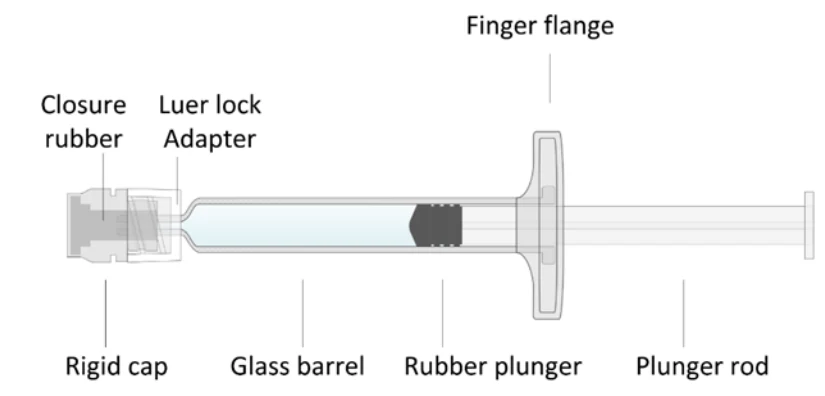
Inspect the pre-filled syringe (Figure 1).
- Remove the pre-filled syringe tray from carton.
- Take the pre-filled syringe out of the tray by holding the syringe barrel. Inspect the pre-filled syringe for any abnormal appearance or leakage. If any defects are found, do not use the pre-filled syringe.
Shake the pre-filled syringe vigorously immediately before use to obtain a homogeneous suspension. After shaking, the suspension should be a white, cloudy liquid with no visible
- foreign particulate matter. The vaccine should be inspected visually for particulate matter and discolouration prior to administration. Discard the pre-filled syringe if the solution is discoloured or visible particles are observed.
Figure 1. Pre-filled Syringe Components
Administration
- Hold the pre-filled syringe barrel with the nozzle facing up and gently unscrew the Luer lock cap of the pre-filled syringe. Do not attempt to snap or pull the tip off as this may damage the syringe.
- This package does not contain a needle. Attach a sterile needle to the pre-filled syringe and ensure the needle fits securely on the syringe.
- VIMKUNYA is a homogeneous white cloudy suspension. If the vaccine is not a homogenous suspension, shake the syringe vigorously to resuspend prior to administration.
- Smoothly depress the plunger rod and maintain pressure on the rod until the full contents of the syringe are expelled to complete the injection.
- Administer the entire dose as an intramuscular injection in the deltoid muscle. VIMKUNYA is for intramuscular administration only. Do not administer intravenously, intradermally, or subcutaneously.
- The injection must be administered within 2 hours of removal of this vaccine from the refrigerator. Discard this vaccine if not used within 2 hours.
- Discard the syringe after use.
- Disposal: Any unused vaccine or waste material should be disposed of in accordance with local requirements.
4.5. Missed Dose
Not applicable.
5. Overdose
No case of overdose has been reported in clinical trials. If an overdose occurs or is suspected, the patient’s vital signs should be monitored; symptomatic treatment is recommended.
For the most recent information in the management of a suspected drug overdose, contact your regional poison control centre or Health Canada’s toll-free number, 1-844 POISON-X (1-844-764-7669).
- 6. Dosage Forms, Strengths, Composition, and Packaging
To help ensure the traceability of vaccines for patient immunization record-keeping as well as safety monitoring, health professionals should record the time and date of administration, quantity of administered dose (if applicable), anatomical site and route of administration, brand name and generic name of the vaccine, the product lot number and expiry date.
VIMKUNYA is a sterile, preservative-free, white, cloudy suspension after shaking with no visible foreign particulates.
VIMKUNYA is supplied as a single-dose 1-mL glass pre-filled syringe with 0.8 mL deliverable dose volume. Each 0.8 mL dose of the vaccine contains 40 mcg of chikungunya virus (CHIKV) virus-like particles (VLPs) adsorbed on aluminum hydroxide (approximately 300 mcg of aluminum per 0.8 mL dose). The syringe stopper and cap are latex-free. The pre-filled syringe is protected by a tray and placed in a carton box. The package does not include needles. See Table 1 for a summary of dosage, composition, and packaging details.
Table 1 – Dosage Forms, Strengths, Composition, and Packaging
7. Warnings and Precautions
General
As with other vaccines, vaccination with VIMKUNYA should be postponed in individuals suffering from an acute severe febrile illness or infection.
Syncope (fainting) can occur as an anxiety-related reaction in association with administration of injectable vaccines. Procedures should be in place to avoid injury from fainting.
Appropriate medical treatment and supervision must be available to manage immediate allergic reactions in the event an acute anaphylactic reaction occurs following administration of VIMKUNYA.
Vaccination with VIMKUNYA may not protect all individuals. It is recommended to continue personal protection measures against mosquito bites after vaccination.
Driving and Operating Machinery
No studies on the effects of VIMKUNYA on the ability to drive and use machines have been performed. VIMKUNYA is unlikely to affect the ability to drive or use machines.
Hematologic
As with other intramuscular injections, the vaccine should be given with caution to individuals receiving anticoagulant therapy or those with thrombocytopenia or any coagulation disorder (such as
| Route of Administration | Dosage Form/ Strength/Composition | Nonmedicinal Ingredients |
| Intramuscular | Suspension for Injection Each 0.8 mL dose of the vaccine contains 40 mcg of CHIKV VLP | Potassium Phosphate Dibasic, Potassium Phosphate Monobasic, Sodium Citrate, Sucrose, Water for Injection, Aluminum Hydroxide |
haemophilia) because bleeding or bruising may occur following an intramuscular injection in these individuals.
Immune
The safety and efficacy of VIMKUNYA have not been assessed in patients with immunodeficiency and patients using systemic immunosuppressive therapies.
It is not known whether individuals with impaired immune responsiveness, including individuals receiving immunosuppressive therapy, will elicit the same response as immunocompetent individuals to the vaccine regimen.
Reproductive health
- Fertility
Reproductive and developmental toxicology of VIMKUNYA were evaluated in pregnant rats and rabbits, which did not identify adverse effects in female fertility (See 16 Nonclinical Toxicology). No studies in male fertility were conducted.
- Teratogenic Risk
Reproductive and developmental toxicology of VIMKUNYA were evaluated in pregnant rats and rabbits, which did not identify adverse effects on embryofetal perinatal development. Some postnatal effects of unknown clinical relevance were observed in rabbits only. (See 16 Nonclinical Toxicology)
7.1. Special Populations
7.1.1. Pregnant Women
There are no clinical studies of VIMKUNYA in pregnant women. Data on VIMKUNYA administered to pregnant women are insufficient to inform vaccine-associated risks in pregnancy.
7.1.2. Breastfeeding
It is not known whether vaccine antigens are excreted in human milk.
Human data are not available to assess the impact of VIMKUNYA on milk production, its presence in breast milk, or its effects on the breastfed child. The developmental and health benefits of breastfeeding should be considered along with the mother’s clinical need for VIMKUNYA and any potential adverse effects on the breastfed child from VIMKUNYA or from the underlying maternal condition.
7.1.3. Pediatrics
No data are available to Health Canada in pediatric patients <12 years of age, therefore, Health Canada has not authorized an indication for pediatric use in patients <12 years of age.
7.1.4. Geriatrics
Clinical studies of VIMKUNYA include participants 65 years of age and older and their data contribute to the overall assessment of safety and immunogenicity (see 8 Adverse Reactions and 14 Clinical Trials).
8. Adverse Reactions
8.1. Adverse Reaction Overview
Older Adults ≥65 Years of Age
In clinical study EBSI-CV-317-005 (Study-005), the most common solicited local reaction in participants who received VIMKUNYA in the first 7 days after vacation was injection site pain (5.4%). The most common solicited systemic adverse reactions in the first 7 days after vaccination with VIMKUNYA were fatigue (6.3%), myalgia (6.3%), and headache (4.4%). Overall, unsolicited adverse events (AEs) were similar in those who received VIMKUNYA or placebo.
Adults 18 to <65 Years of Age
In clinical study EBSI-CV-317-004 (Study-004), the most common solicited local reaction in adult participants who received VIMKUNYA in the first 7 days after vaccination was injection site pain (23.4%). The most common solicited systemic adverse reactions in the first 7 days after vaccination with VIMKUNYA were fatigue (19.6%), headache (17.4%), and myalgia (16.9%). Overall, unsolicited AEs were similar in those who received VIMKUNYA or placebo.
Adolescents 12 to <18 Years of Age
In clinical study EBSI-CV-317-004 (Study-004), the most common solicited local reaction in adolescent participants who received VIMKUNYA in the first 7 days after vaccination was injection site pain (27.7%). The most common solicited systemic adverse reactions in the first 7 days after vaccination with VIMKUNYA were myalgia (25.4%), headache (24.9%), and fatigue (24.4%). Overall, unsolicited AEs were similar in those who received VIMKUNYA or placebo. Safety for the adolescent participants is discussed in more detail in section 8.2.1 Clinical Trial Adverse Reactions – Pediatrics.
8.2. Clinical Trial Adverse Reactions
Clinical trials are conducted under very specific conditions. The adverse reaction rates observed in the clinical trials; therefore, may not reflect the rates observed in practice and should not be compared to the rates in the clinical trials of another drug.
Older Adults ≥65 Years of Age
The safety profile of VIMKUNYA in seniors (≥65 years of age) was evaluated using data generated from one Phase 3 randomized, multicentre clinical study (EBSI-CV-317-005 or NCT05349617) conducted in healthy older adult participants randomized 1:1 with a total of 206 adult participants receiving VIMKUNYA and 207 receiving placebo (i.e., formulation buffer containing 218 mM sucrose, 10 mM potassium phosphate, 25 mM sodium citrate, pH 7.0).
The mean age of the VIMKUNYA recipients was 71.5 years (range of 65 to 95 years); 77.2% (n = 159) were between 65 to <75 years of age, and 22.8% (n = 47) were ≥75 years of age. Overall, females comprised 60.7% (n = 125) of this study population. The majority of vaccine recipients in this overall age group were White (85.4%), 9.7% were Black or African American, 1.9% Asian, 1.9% Multiracial, 0.5% American Indian or Alaskan Native, 0% Native Hawaiian or Other Pacific Islander, and 0.5% Unknown or Not Reported; 45.1% were of Hispanic or Latino ethnicity. The VIMKUNYA and placebo groups were similar with regard to demographics.
Adults 18 to <65 Years of Age
The safety profile of VIMKUNYA in adults (18 to <65 years of age) was evaluated from data generated from one Phase 3 randomized, multicentre clinical study (EBSI-CV-317-004 or NCT05072080) conducted in healthy adolescent and adult participants with a total of 2573 adult participants receiving VIMKUNYA and 427 receiving placebo (i.e., formulation buffer containing 218 mM sucrose, 10 mM potassium phosphate, 25 mM sodium citrate, pH 7.0). The safety review was supported by information from one Phase 1 dose-escalation open-label clinical trial (VRC 311), one Phase 2 second dose randomized clinical trial (VRC 704), both using an unadjuvanted formulation, one Phase 2 dosing schedule randomized clinical trial (PXVX-CV-317-001) and two Phase 2 open label clinical trials (EBSI-CV-317-002 and EBSI-CV-317-010) in adults ranging from 18 to 65 years of age.
The mean age of the VIMKUNYA recipients was 40.6 years (range of 18 to 64 years); 24.1% (n = 619) were between 18 to <30 years of age, 39.4% (n = 1015) were 30 to <46 years of age and 36.5% (n = 939) were between 46 to <65 years of age. Overall, females comprised 52.0% (n = 1337) of this study population. The majority of vaccine recipients in this overall age group were White (72.5%), 20.0% were Black or African American, 3.0% Asian, 2.4% Multiracial, 1.0% American Indian or Alaskan Native, 0.2% Native Hawaiian or Other Pacific Islander, and 0.9% Unknown or Not Reported; 17.7% were of Hispanic or Latino ethnicity. The VIMKUNYA and placebo groups were similar with regard to demographics.
Solicited Adverse Reactions
Solicited adverse reactions were collected from trial vaccine administration until Day 8 (7 days post-vaccination) in Study-004 and Study-005. For both, solicited ARs were local events of pain, redness, and swelling at the injection site and systemic events of oral temperature ≥38.0 °C (≥100.4 °F), chills, fatigue, headache, myalgia, arthralgia, and nausea.
Older Adults ≥65 Years of Age
Overall, 25/205 (12.2%) of VIMKUNYA recipients vs 28/200 (14.0%) of placebo recipients from age ≥65 years of age experienced at last 1 solicited adverse reaction. The majority of participants experienced these events as mild (56.0%) or moderate (40.0%) with few graded as severe. The median onset of any reactogenicity event was 2.0 days for both VIMKUNYA and placebo recipients. The median duration of any reactogenicity event was 2.0 days for both VIMKUNYA and placebo recipients. Table 2 summarizes the solicited local and solicited systemic reactogenicity events reported by study participants within 7 days of administration of either VIMKUNYA or placebo in adults ≥65 years of age in Study-005.
Table 2 – Solicited Local and Systemic Adverse Reactions Within 7 Days After a Single Vaccination in Participants ≥65 Years of Age in the Safety Population of Study EBSI-CV-317-005
| Adverse Reaction Category | ≥65 Years of Age | 65 to <75 Years of Age | ≥75 Years of Age | |||||||||||||||||||
|---|---|---|---|---|---|---|---|---|---|---|---|---|---|---|---|---|---|---|---|---|---|---|
| Adverse Reaction Category | ≥65 Years of Age | 65 to <75 Years of Age | ≥75 Years of Age | |||||||||||||||||||
VIM (N=206) n (%) | Placebo (N=207) n (%) | VIM (N=159) n (%) | Placebo (N=159) n (%) | VIM (N=47) n (%) | Placebo (N=48) n (%) | |||||||||||||||||
VIM (N=206) n (%) | Placebo (N=207) n (%) | VIM (N=159) n (%) | Placebo (N=159) n (%) | VIM (N=47) n (%) | Placebo (N=48) n (%) | |||||||||||||||||
| Number Analyzed | 205 | 200 | 159 | 154 | 46 | 46 | ||||||||||||||||
| Any Solicited ARs | 25 (12.2) | 28 (14.0) | 18 (11.3) | 22 (14.3) | 7 (15.2) | 6 (13.0) | ||||||||||||||||
| Any Local Solicited AR | 11 (5.4) | 4 (2.0) | 8 (5.0) | 1 (0.6) | 3 (6.5) | 3 (6.5) | ||||||||||||||||
| Injection Site Pain | 11 (5.4) | 3 (1.5) | 8 (5.0) | 1 (0.6) | 3 (6.5) | 2 (4.3) | ||||||||||||||||
| Injection Site Redness | 0 | 1 (0.50) | 0 | 0 | 0 | 1 (2.2) | ||||||||||||||||
| Injection Site Swelling | 0 | 0 | 0 | 0 | 0 | 0 | ||||||||||||||||
| Any Systemic Solicited AR | 22 (10.7) | 27 (13.5) | 16 (10.1) | 22 (14.3) | 6 (13.0) | 5 (10.9) | ||||||||||||||||
| Fever | 0 | 2 (1.0) | 0 | 1 (0.6) | 0 | 1 (2.2) | ||||||||||||||||
| Chills | 6 (2.9) | 6 (3.0) | 3 (1.9) | 5 (3.2) | 3 (6.5) | 1 (2.2) | ||||||||||||||||
| Fatigue | 13 (6.3) | 12 (6.0) | 11 (6.9) | 9 (5.8) | 2 (4.3) | 3 (6.5) | ||||||||||||||||
| Headache | 9 (4.4) | 15 (7.5) | 7 (4.4) | 12 (7.8) | 2 (4.3) | 3 (6.5) | ||||||||||||||||
| Myalgia | 13 (6.3) | 13 (6.5) | 10 (6.3) | 9 (5.8) | 3 (6.5) | 4 (8.7) | ||||||||||||||||
| Arthralgia | 6 (2.9) | 8 (4.0) | 6 (3.8) | 7 (4.5) | 0 | 1 (2.2) | ||||||||||||||||
| Nausea | 6 (2.9) | 3 (1.5) | 2 (1.3) | 3 (1.9) | 4 (8.7) | 0 | ||||||||||||||||
AR = Adverse Reaction, VIM = VIMKUNYA. Percentages are based on the number of safety population participants in each treatment group who have completed any portion of the solicited event diary. Participants are counted at most once per reaction category.
Adults 18 to <65 Years of Age
Overall, 965/2552 (37.8%) of VIMKUNYA recipients vs 116/421 (27.6%) of placebo recipients from age 18 to <65 years of age experienced at last 1 solicited adverse reaction. The majority of participants experienced these events as mild (61.1%) or moderate (34.7%) with few graded as severe. The median onset of any reactogenicity event was 2.0 days for both VIMKUNYA and placebo recipients. The median duration of any reactogenicity event was 1.0 days for both VIMKUNYA and placebo recipients. Table 3 summarizes the solicited local and solicited systemic reactogenicity events reported by study participants within 7 days of administration of either VIMKUNYA or placebo in adults 18 to <65 years of age in Study-004.
Table 3 – Solicited Local and Systemic Adverse Reactions Within 7 Days After a Single Vaccination in Participants 18 to <65 Years of Age in the Safety Population of Study EBSI-CV-317-004
| Adverse Reaction Category | 18 to <65 Years of Age | 18 to <30 Years of Age | 30 to <46 Years of Age | 46 to <65 Years of Age | ||||||||||||||||||||||||||
|---|---|---|---|---|---|---|---|---|---|---|---|---|---|---|---|---|---|---|---|---|---|---|---|---|---|---|---|---|---|---|
VIMKUNYA (N=2573) n (%) | Placebo (N=427) n (%) | VIMKUNYA (N=619) n (%) | Placebo (N=100) n (%) | VIMKUNYA (N=1015) n (%) | Placebo (N=170) n (%) | VIMKUNYA (N=939) n (%) | Placebo (N=157) n (%) | |||||||||||||||||||||||
| Number Analyzed | 2552 | 421 | 614 | 99 | 1005 | 169 | 932 | 153 | ||||||||||||||||||||||
| Any Solicited AR | 965 (37.8) | 116 (27.6) | 293 (47.7) | 31 (31.3) | 383 (38.1) | 52 (30.8) | 288 (30.9) | 33 (21.6) | ||||||||||||||||||||||
| Any Local Solicited AR | 602 (23.6) | 44 (10.5) | 200 (32.6) | 17 (17.2) | 255 (25.4) | 14 (8.3) | 146 (15.7) | 13 (8.5) | ||||||||||||||||||||||
| Injection Site Pain | 597 (23.4) | 44 (10.5) | 200 (32.6) | 17 (17.2) | 252 (25.1) | 14 (8.3) | 145 (15.6) | 13 (8.5) | ||||||||||||||||||||||
| Injection Site Redness | 11 (0.4) | 0 | 2 (0.3) | 0 | 4 (0.4) | 0 | 3 (0.3) | 0 | ||||||||||||||||||||||
| Injection Site Swelling | 10 (0.4) | 0 | 3 (0.5) | 0 | 4 (0.4) | 0 | 3 (0.3) | 0 | ||||||||||||||||||||||
| Any Systemic Solicited AR | 805 (31.5) | 106 (25.2) | 243 (39.6) | 27 (27.3) | 313 (31.1) | 49 (29.0) | 249 (26.7) | 30 (19.6) | ||||||||||||||||||||||
| Fever | 21 (0.8) | 0 | 6 (1.0) | 0 | 6 (0.6) | 0 | 9 (1.0) | 0 | ||||||||||||||||||||||
| Chills | 208 (8.2) | 13 (3.1) | 52 (8.5) | 5 (5.1) | 90 (9.0) | 5 (3.0) | 66 (7.1) | 3 (2.0) | ||||||||||||||||||||||
| Fatigue | 499 (19.6) | 74 (17.6) | 163 (26.5) | 18 (18.2) | 199 (19.8) | 34 (20.1) | 137 (14.7) | 22 (14.4) | ||||||||||||||||||||||
| Headache | 445 (17.4) | 69 (16.4) | 137 (22.3) | 17 (17.2) | 168 (16.7) | 35 (20.7) | 140 (15.0) | 17 (11.1) | ||||||||||||||||||||||
| Myalgia | 432 (16.9) | 41 (9.7) | 143 (23.3) | 10 (10.1) | 166 (16.5) | 20 (11.8) | 123 (13.2) | 11 (7.2) | ||||||||||||||||||||||
| Arthralgia | 197 (7.7) | 31 (7.4) | 57 (9.3) | 8 (8.1) | 75 (7.5) | 15 (8.9) | 65 (7.0) | 8 (5.2) | ||||||||||||||||||||||
| Nausea | 181 (7.1) | 25 (5.9) | 50 (8.1) | 6 (6.1) | 72 (7.2) | 13 (7.7) | 59 (6.3) | 6 (3.9) | ||||||||||||||||||||||
AR = Adverse Reaction. Percentages are based on the number of safety population participants in each treatment group who have completed any portion of the solicited event diary. Participants are counted at most once per reaction category.
Unsolicited Adverse Events
Unsolicited AEs were collected from Day 1 through Day 29 (28 days post-vaccination) in Study-004 and Study-005.
Older Adults ≥65 Years of Age
In Study-005, unsolicited AEs in older adults (≥65 years of age) were experienced in 26/206 (12.6%) VIMKUNYA recipients and 32/207 (15.5%) placebo recipients, where 4 (1.9%) and 3 (1.4%) experienced unsolicited AEs considered treatment-related, respectively. Severe unsolicited AEs (Grade ≥3) were infrequent with 4 (1.9%) VIMKUNYA recipients and 3 (1.4%) placebo recipients experiencing these events.
Adults 18 to <65 Years of Age
In Study-004, unsolicited AEs in adults (18 to <65 years of age) were experienced in 393/2573 (15.3%) VIMKUNYA recipients and 57/427 (13.3%) placebo recipients, where 51 (2.0%) and 5 (1.2%) experienced unsolicited AEs considered treatment-related, respectively. Severe unsolicited AEs (Grade ≥3) were infrequent with 29 (1.1%) VIMKUNYA recipients and 1 (0.2%) placebo recipient experiencing these events.
Serious Adverse Events and Adverse Events of Special Interest
In both, Study-004 and Study-005, SAEs and Adverse Events of Special Interest (AESI) were collected from vaccination through 182 days post-vaccination (End of Study).
Adverse events of special interest (AESIs) were defined as newly diagnosed or worsening arthralgia that were medically attended.
Older Adults ≥65 Years of Age
In Study-005, SAEs in seniors (≥65 years of age) were infrequent being reported by 4/206 (1.9%) VIMKUNYA recipients and 3/207 (1.4%) placebo recipients with all SAEs considered not vaccine related. A single placebo recipient experienced an AESI with none among VIMKUNYA recipients.
Adults 18 to <65 Years of Age
In Study-004, SAEs in adults (18 to <65 years of age) were infrequent being reported by 22/2573 (0.9%) VIMKUNYA recipients and 1 (0.2%) placebo recipient with all SAEs considered not vaccine related. There were 6 (0.2%) VIMKUNYA recipients and 1 (0.2%) placebo recipients experiencing an AESI, but none were consistent with Chikungunya-like arthralgia.
Deaths and Adverse Events leading to Withdrawal from Study
Older Adults ≥65 Years of Age
In Study-005, there were 2 deaths in seniors (≥65 years of age) that occurred during the study that were considered not related to study vaccine. One VIMKUNYA recipient died from respiratory failure with pneumonia 86 days after vaccination, and 1 placebo recipient died from malignant lung neoplasm 177 days following administration. There were no additional withdrawals from the study due to an AE.
Adults 18 to <65 Years of Age
In Study-004, 1 death occurred in adults from 18 to <65 years of age, a road traffic accident occurring 124 days after vaccination with VIMKUNYA and considered not related to study vaccine. One additional VIMKUNYA recipient withdrew from the study due to an SAE, which was considered not related to the vaccine.
8.2.1. Clinical Trial Adverse Reactions – Pediatrics
Participants 11 years of age or younger were excluded from clinical trials with VIMKUNYA. The safety analysis among adolescents was limited by the relatively few pre-market exposures to VIMKUNYA.
Adolescents 12 to <18 Years of Age
The safety profile of VIMKUNYA in adolescents (12 to <18 years of age) was evaluated using data generated from one Phase 3 randomized, multicentre clinical study (EBSI-CV-317-004 or NCT05072080) conducted in healthy adolescent and adults, with a total of 217 adolescent participants receiving VIMKUNYA and 37 receiving placebo (i.e., formulation buffer containing 218 mM sucrose, 10 mM potassium phosphate, 25 mM sodium citrate, pH 7.0).
The mean age of the vaccine recipients was 14.5 years (range of 12 to 17 years). Overall, females comprised 45.2% (n = 98) of this study population. The majority of vaccine recipients in this age group were White (80.2%), 8.8% were Black or African American, 0.9% Asian, 6.9% Multiracial, 2.3% American Indian or Alaskan Native, 0.5% Native Hawaiian or Other Pacific Islander, and 0.5% Unknown or Not Reported; 23.0% were of Hispanic or Latino ethnicity. The VIMKUNYA and placebo groups were similar with regard to demographics.
Solicited Adverse Reactions
Overall, 94/213 (44.1%) of VIMKUNYA recipients vs 8/37 (21.6%) of placebo recipients from age 12 to <18 years of age experienced at last 1 solicited adverse reaction. The median onset of any adverse reaction was 2.0 days for VIMKUNYA recipients and 1.5 days for placebo recipients. The median duration of any adverse reaction was 2.0 days for VIMKUNYA recipients and 1.0 days for placebo recipients. Table 4 summarizes the solicited local and solicited systemic adverse reactions reported by study participants within 7 days of administration of either VIMKUNYA or placebo in adolescents 12 to <18 years of age in Study-004.
Table 4 – Solicited Local and Systemic Adverse Reactions Within 7 Days After a Single Vaccination in Participants 12 to <18 Years of Age in the Safety Population of Study EBSI-CV-317-004
| Adverse Reaction Category | 12 to <18 Years of Age | ||||||||
|---|---|---|---|---|---|---|---|---|---|
VIMKUNYA (N=217) n (%) | Placebo (N=37) n (%) | ||||||||
| Number Analyzed | 213 | 37 | |||||||
| Any Solicited Adverse Reactions | 94 (44.1) | 8 (21.6) | |||||||
| Any Local Solicited Adverse Reactions | 60 (28.2) | 5 (13.5) | |||||||
| Injection Site Pain | 59 (27.7) | 5 (13.5) | |||||||
| Injection Site Redness | 2 (0.9) | 0 | |||||||
| Injection Site Swelling | 0 | 0 | |||||||
| Any Systemic Solicited Adverse Reactions | 86 (40.4) | 8 (21.6) | |||||||
| Fever | 4 (1.9) | 1 (2.7) | |||||||
| Chills | 30 (14.1) | 2 (5.4) | |||||||
| Fatigue | 52 (24.4) | 4 (10.8) | |||||||
| Headache | 53 (24.9) | 7 (18.9) | |||||||
| Myalgia | 54 (25.4) | 3 (8.1) | |||||||
| Arthralgia | 17 (8.0) | 2 (5.4) | |||||||
| Nausea | 27 (12.7) | 5 (13.5) | |||||||
Percentages are based on the number of safety population participants in each treatment group who have completed any portion of the solicited event diary. Participants are counted at most once per reaction category.
Unsolicited Adverse Events
Among adolescent participants aged 12 to <18 years in Study-004, unsolicited AEs were experienced in 41/217 (18.9%) VIMKUNYA recipients and 3/37 (8.1%) placebo recipients, where 2 (0.9%) and 0 experienced unsolicited AEs considered treatment-related, respectively. Severe unsolicited AEs (Grade ≥3) were infrequent, with 3 (1.4%) VIMKUNYA recipients and 0 placebo recipients experiencing these events.
Serious Adverse Events and Adverse Events of Special Interest
Among adolescent participants in Study-004, there were no deaths, AESIs or AEs leading to withdrawal from the study. One VIMKUNYA recipient experiencing an SAE, 2 events of diabetic ketoacidosis on days 41 and 166 after vaccination which were considered not vaccine related.
9. Drug Interactions
9.1. Drug Interactions Overview
There are no data on the safety and immunogenicity following concomitant administration of VIMKUNYA with other vaccines. No interaction studies with other medicinal products have been performed.
10. Clinical Pharmacology
10.1. Mechanism of Action
VIMKUNYA is an adjuvanted virus-like particle (VLP) recombinant protein vaccine and cannot infect cells, replicate, or cause disease. VLPs are formed by the expression of viral structural proteins, which assemble into particles that imitate the structural symmetry of the wild-type chikungunya virus. VLPs can generate humoral and cell-mediated immune responses. While the mechanism of action still needs to be further characterized, it is thought that VIMKUNYA can induce antibodies against the viral proteins contained in VIMKUNYA resulting in neutralization of live chikungunya virus. VIMKUNYA elicits CHIKV-specific immune responses against all globally circulating chikungunya virus genotypes.
VIMKUNYA contains key viral structural proteins including the capsid protein (C), the envelope class II fusion protein (E1) that mediates membrane fusion during virus infection of cells, and the type I transmembrane envelope glycoprotein (E2) responsible for receptor binding to host cells during viral replication and has been shown to be the primary target of virus neutralizing antibodies produced as a result of natural infection.
10.2. Pharmacodynamics
Clinical studies with VIMKUNYA included immunogenicity assessments to characterize the immune response to VIMKUNYA. Immunogenicity endpoints were used as surrogate endpoints supporting the evaluation of clinical efficacy (see 14 Clinical Trials).
Pharmacology Studies in Nonhuman Primates
For phase 3 studies, a threshold of anti-CHIKV SNA NT80 titer ≥100, providing 80% neutralization of CHIKV as measured by an in vitro neutralizing assay, was selected as surrogate marker likely to predict protection from disease caused by CHIKV, referred to as seroresponse. This threshold was determined on the basis of a prospective sero-epidemiologic study in individuals with prior exposure to CHIKV and a challenge study in nonhuman primates (NHPs) using pooled sera from participants vaccinated with VIMKUNYA. NHPs with SNA titers ≥25.7 were protected against CHIKV challenge and had no detectable virus in blood 10 days after the challenge.
A conservative threshold titer (NT80) of ≥100 was used for phase 3 studies immunogenicity endpoint analyses.
- 11. Storage, Stability, and Disposal
Store carton containing single dose pre-filled syringe in a refrigerator at 2 °C to 8 °C. DO NOT FREEZE. Protect from light. Store in the original package.
Do not use the vaccine after the expiration date shown on the label.
Shake vigorously immediately before use. Use within 2 hours after removal of vaccine from refrigerator.
The pre-filled syringe is for single-use only. Discard syringe after use.
Part 2: Scientific Information
13. Pharmaceutical Information
Drug Substance
Non-proprietary name of the drug substance(s): Chikungunya vaccine, recombinant
Chemical name: Not applicable
Molecular formula and molecular mass: Not applicable
Structural formula: The drug substance is comprised of 3 recombinant CHIKV structural proteins derived from CHIKV Senegal strain 37997: Capsid (C, approximately 35 kDa), Envelope 1 (E1, approximately 55 kDa), and Envelope 2 (E2, approximately 50 kDa), which self-assemble to form the VLP. Comparison of the CHIKV VLP and the native virus by transmission electron microscopy and cryo-electron microscopy demonstrate that the particles are structurally indistinguishable.
Product Characteristics:
VIMKUNYA, chikungunya vaccine, recombinant, is a sterile suspension for intramuscular injection, supplied in a single-dose pre-filled syringe. Each 0.8 mL dose contains 40 mcg of CHIKV VLPs adsorbed on aluminum hydroxide (approximately 300 mcg aluminum per 0.8 mL dose). Each dose may contain residual amounts of HEK 293 cell protein, HEK 293 cell DNA, poloxamer 188, polyethyleneimine, valproic acid, Benzonase, and plasmid DNA, from the manufacturing process below relevant and/or detection limits.
The VLPs are produced by transfecting human embryonic kidney cells (HEK 293 suspension cells [VRC293]) with the expression plasmid encoding the CHIKV structural protein genes. The CHIKV VLP expression plasmid lacks CHIKV nonstructural genes and other viral genomic sequences required for replication. The expressed proteins self-assemble into VLPs, which are non-infectious in nature, that are then harvested and purified from the serum-free cell culture medium. After sterile filtration, the VLPs are mixed with sterile formulation buffer and adsorbed on sterile aluminum hydroxide adjuvant forming the suspension that is filled into syringes.
14. Clinical Trials
14.1. Clinical Trials by Indication.
Table 5 – Summary of Patient Demographics for Phase 3 Clinical Trials for VIMKUNYA
| Study # | Trial Design | Dosage, Route of Administration, and Duration | Study Participants (n) | Race and Ethnicity | Mean Age [Range] (Years) | Sex (%) |
| Study-004 | Double-blind, randomized, placebo-controlled, parallel-group | VIMKUNYA Single dose in a pre‑filled syringe, 40 µg CHIKV VLP and 300 µg aluminum hydroxide adjuvant, or placebo Intramuscular injection 6-month follow-up | 3258 randomized, 3254 dosed VIMKUNYA: 2790 (12 to <18 years, n=217; 18 to <46 years, n=1636; 46 to <65 years, n=941) Placebo: 464 (12 to <18 years, n=37; 18 to <46 years, n=270; 46 to <65 years, n=157) | 73.2% were White, 19.1% Black or African American, 2.9% Asian, 1.0% American Indian or Alaska Native, 0.3% Native Hawaiian or Pacific Islander, 2.6% multiple racial groups, 0.9% did not report race; and 17.7% were of Hispanic or Latino ethnicity | 39 [12 to 64] | 1591 males (48.8%) 1667 females (51.2%) |
| Study-005 | Double-blind, randomized, placebo-controlled, parallel-group | VIMKUNYA Single dose in a pre‑filled syringe, 40 µg CHIKV VLP and 300 µg aluminum hydroxide adjuvant, or placebo Intramuscular injection 6-month follow-up | 413 randomized and dosed VIMKUNYA: 206 (≥65 to <75 years, n=159; ≥75 years, n=47) Placebo: 207 (≥65 to <75 years, n=159; ≥75 years, n=48) | 83.3% were White, 11.9% Black or African American, 1.2% Asian, 0.5% American Indian or Alaska Native, 2.2% multiple racial groups, 1.0% did not report race; and 44.3% were of Hispanic or Latino ethnicity | 71 [65 to 95] | 171 males (41.4%) 242 females (58.6%) |
No direct efficacy data are available for VIMKUNYA; efficacy was inferred from a postvaccination CHIKV-specific neutralizing antibody threshold. A seroresponse was defined as an anti-CHIKV serum neutralizing antibody (SNA) NT80 titer ≥100, selected as a conservative surrogate for protection based on human seroepidemiologic data and a NHP study showing protection at NT80 titers ≥25.7.
Immunogenicity of a single 40 mcg dose was evaluated in 2 US phase 3 studies: Study 1 in participants aged 12 to <65 years and Study 2 in adults ≥65 years, with 6 months of follow-up. Coprimary endpoints at Day 22 (21 days after vaccination) were the difference in seroresponse rate (VIMKUNYA minus placebo) and geometric mean titer (GMT). Seroresponse rate was defined as the proportion achieving NT80 ≥100. Immunocompromised individuals and those who had received immunosuppressive medications within 6 months prior to screening were excluded. Refer to Table 5 above for a summary of the phase 3 studies.
Study-004 evaluated safety and assessed lot-to-lot consistency, in addition to comparing the Day 22 anti-CHIKV SNA response with placebo. Study-005 evaluated safety and compared the Day 22 anti‑CHIKV SNA response with placebo in adults ≥65 years. Refer to Table 6 below for results.
Table 6 – Results of Key Endpoints at Days 8, 15, 22, and 183 in Participants with Anti-CHIKV SNA Immune Response in Studies 1 and 2 in the Immunogenicity Evaluable Populationa
| Study | Study-004 | Study-005 | ||||
|---|---|---|---|---|---|---|
| Age Group | 12 to <65 Years of Age | ≥65 Years of Age | ||||
| Treatment | VIMKUNYA (N=2559) | Placebo (N=424) | VIMKUNYA vs Placebo % [95% CI] | VIMKUNYA (N=189) | Placebo (N=183) | VIMKUNYA vs Placebo % [95% CI] |
| Co-Primary Endpoints | ||||||
Day 22 SRR n/N (%)b | 2503/2559 (97.8%) | 5/424 (1.2%) | 96.6% [95.0%, 97.5%] | 165/189 (87.3%) | 2/183 (1.1%) | 86.2% [80.0%, 90.3%] |
Day 22 SNA GMT [95% CI]c | 1618.0 [1522.1, 1720.0] | 7.9 [7.0, 8.8] | 206.12 [183.17, 231.95] | 721.0 [582.3, 892.7] | 8.1 [6.5, 10.0] | 89.64 [68.62, 117.10] |
| Key Secondary Endpoints | ||||||
Day 8 SRR n/N (%)b | 1168/2510 (46.6%) | 2/419 (0.5%) | 46.1% [43.8%, 48.1%] | - | - | - |
Day 15 SRR n/N (%)b | 2355/2434 (96.8%) | 3/395 (0.8%) | 96.0% [94.3%, 96.8%] | 149/181 (82.3%) | 5/176 (2.8%) | 79.5% [72.3%, 84.6%] |
Day 183 SRR n/N (%)b | 1967/2301 (85.5%) | 6/401 (1.5%) | 84.0% [81.7%, 85.6%] | 139/184 (75.5%) | 2/173 (1.2%) | 74.4% [67.1, 80.1%] |
CHIKV = chikungunya virus, CI = confidence interval, GMT = geometric mean titer, LLOQ = lower limit of quantitation, SNA = serum neutralizing antibody, SRR = seroresponse rate.
Results below the LLOQ for the human SNA assay were set to half of the LLOQ for analysis purposes (LLOQ =15, imputed as 7.5).
a Immunogenicity evaluable population includes all exposed participants who were seronegative at baseline and had at least 1 post-injection anti-CHIKV SNA result, an evaluable Day 22 (window 19–27, inclusive) serum sample result, and had no important protocol deviation affecting immunogenicity.
b Seroresponse rate is calculated as the number of participants with a titer ≥100 (n) divided by the total number of participants (N) in the treatment group and converted to a percent. 95% CIs for seroresponse rate are based on the Wilson method.
Seroresponse rate difference is (VIMKUNYA minus placebo) and corresponding 95% CIs are based on the Newcombe hybrid score method. The success criterion for seroresponse rate difference is the lower bound of the 95% CI being ≥70%.
c GMT estimates, together with their 95% CIs, are derived from an ANOVA model that includes site and treatment group as fixed effects, assuming log-normality of the titers. Ratio of GMTs are derived from the same model and are derived as VIMKUNYA:Placebo. The success criterion for the GMT ratio is the lower bound of the 95% CI being >1.
The familywise error rate was fixed at a 2-sided alpha of 0.05 by the requirement that all coprimary immunogenicity endpoints had to be met for a successful outcome.
At Day 22, seroresponse rates (GMTs) were consistent across age groups within each study: 97.0–98.3% (1174.5–2501.6) in the 3 age subgroups in Study-004 and 85.0–87.9% (716.3–726.4) in the 2 age groups in Study-005.
- 16. Nonclinical Toxicology
General toxicology: Local tolerability and systemic toxicity of an unadjuvanted version of the vaccine were evaluated in a repeat-dose toxicology study. New Zealand White rabbits received 4 doses of the clinical dose (4 × 40 mcg) of vaccine over a period of 2 months. There were no safety signals, only injection site changes consistent with needle trauma (in both control and treated groups) and transient/sporadic elevated fibrinogen and C-reactive protein in treated animals consistent with low-grade inflammation and/or the induction of an immune response.
Genotoxicity: VIMKUNYA has not been evaluated for mutagenic potential.
Carcinogenicity: VIMKUNYA has not been evaluated for carcinogenic potential.
Reproductive and developmental toxicology: VIMKUNYA has not been evaluated for male infertility in animals. Developmental and reproductive toxicity studies were performed in female New Zealand White rabbits and Sprague-Dawley rats with up to 5 separate intramuscular injections of VIMKUNYA (each dose 40 mcg of VLP) at 28 and 14 days prior to mating, on day 7 and day 21 during gestation, and on lactation day 7. No vaccine-related adverse effects on fertility or peri- and embryofetal development were observed. A decrease in the postnatal survival index was observed in rabbits but not in rats; the human relevance of this finding is not known. All animals receiving VIMKUNYA developed antibody responses to the vaccine. Serum neutralizing antibody titers were also measured in the offspring, indicating maternal transfer of antibodies (See 7 Warnings and Precautions).