


Product Monograph - Jalyn
Recent Major Label Changes
| 2026-08 |
|---|
Table of Contents
Certain sections or subsections that are not applicable at the time of the preparation of the most recent authorized product monograph are not listed.
Recent Major Label Changes ................................................................................................. 2
Table of Contents ................................................................................................................. 2
Part 1: Healthcare Professional Information.......................................................................... 4
- 1.
Indications..................................................................................................................... 4
1.1. Pediatrics .................................................................................................................... 4
1.2. Geriatrics .................................................................................................................... 4
- 2. Contraindications .......................................................................................................... 4
- 3. Serious Warnings and Precautions Box ........................................................................... 4
- 4.
Dosage and Administration ............................................................................................ 5
4.2. Recommended Dose and Dosage Adjustment .......................................................... 5
4.4. Administration ........................................................................................................... 5
4.5. Missed Dose ............................................................................................................... 5
- 5. Overdose ....................................................................................................................... 5
- 6. Dosage Forms, Strengths, Composition, and Packaging .................................................. 6
- 7.
Warnings and Precautions ............................................................................................. 7
General ................................................................................................................................... 7
Cardiovascular ........................................................................................................................ 8
Endocrine and Metabolism .................................................................................................... 9
Hematologic ........................................................................................................................... 9
Hepatic .................................................................................................................................... 9
Hypotension ........................................................................................................................... 9
Monitoring and Laboratory Tests ......................................................................................... 10
Ophthalmologic .................................................................................................................... 10
Psychiatric ............................................................................................................................. 10
Renal ..................................................................................................................................... 11
Reproductive Health ............................................................................................................. 11
Sensitivity/Resistance ........................................................................................................... 12
7.1. Special Populations .................................................................................................. 12
7.1.1. Pregnancy ......................................................................................................... 12
7.1.2. Breastfeeding ................................................................................................... 12
7.1.3. Pediatrics .......................................................................................................... 12
7.1.4. Geriatrics .......................................................................................................... 12
- 8.
Adverse Reactions ....................................................................................................... 13
8.1. Adverse Reaction Overview ..................................................................................... 13
8.2. Clinical Trial Adverse Reactions ............................................................................... 13
8.5. Post-Market Adverse Reactions ............................................................................... 17
- 9.
Drug Interactions ......................................................................................................... 18
9.2. Drug Interactions Overview ..................................................................................... 18
9.4. Drug-Drug Interactions ............................................................................................ 19
9.5. Drug-Food Interactions ............................................................................................ 21
9.6. Drug-Herb Interactions ............................................................................................ 21
9.7. Drug-Laboratory Test Interactions........................................................................... 21
- 10.
Clinical Pharmacology .................................................................................................. 22
10.1. Mechanism of Action ............................................................................................... 22
10.2. Pharmacodynamics .................................................................................................. 23
10.3. Pharmacokinetics ..................................................................................................... 26
- 11. Storage, Stability, and Disposal .................................................................................... 29
- 12. Special Handling Instructions ....................................................................................... 29
Part 2: Scientific Information .............................................................................................. 30
- 13. Pharmaceutical Information ........................................................................................ 30
- 14.
Clinical Trials ............................................................................................................... 31
14.1. Clinical Trials by Indication ...................................................................................... 31
14.2. Comparative Bioavailability Studies ........................................................................ 37
- 16. Non-Clinical Toxicology ................................................................................................ 39
Patient Medication Information ......................................................................................... 45
Part 1: Healthcare Professional Information
1. Indications
JALYN (dutasteride/tamsulosin hydrochloride) modified release capsules are indicated for the treatment of moderate to severe symptomatic Benign Prostatic Hyperplasia (BPH) in men with enlarged prostates.
Dutasteride in combination with tamsulosin has been shown to reduce symptoms of BPH, improve urinary flow and reduce prostate size and was statistically significant to tamsulosin monotherapy. Dutasteride in combination with tamsulosin was statistically significant to tamsulosin monotherapy but not dutasteride monotherapy at reducing the relative risk of acute urinary retention (AUR) or BPH-related surgery (see 14. Clinical Trials).
Limitations of Use: Dutasteride-containing products, including JALYN, are not approved for the prevention of prostate cancer.
1.1. Pediatrics
BPH is not a disease of childhood. JALYN is contraindicated for use in pediatric patients. Safety and effectiveness in pediatric patients have not been established.
1.2. Geriatrics
Geriatrics (>65 years of age): Of the total number of patients in well-controlled studies of dutasteride in combination with tamsulosin (n=4844), 58% of patients were 65 years of age and older, of whom 13% patients were 75 years of age or older. No overall differences in effectiveness or safety were observed between the older subjects (aged 65 and older) and younger adult subjects (see 10.3. Pharmacokinetics, Special populations and conditions).
2. Contraindications
- JALYN is contraindicated for use in women and children (see 7.1. Special populations).
- JALYN is contraindicated in patients with known hypersensitivity to dutasteride, other 5 alpha-reductase inhibitors (5-ARI), tamsulosin hydrochloride (including tamsulosin-induced angioedema) or to any ingredient in the formulation. For a complete listing of ingredients, see 6. Dosage Forms, Strengths, Composition, and Packaging.
3. Serious Warnings and Precautions Box
|
|---|
As with all alpha1-adrenoceptor antagonists, a reduction in blood pressure can occur in individual cases during treatment with tamsulosin, as a result of which, there is a potential risk of syncope. At the first signs of orthostatic hypotension (dizziness, weakness), the patient should sit or lie down until the symptoms have disappeared.
Patients beginning treatment with JALYN (dutasteride / tamsulosin) should be cautioned to avoid situations where injury could result should syncope occur (see 8. Adverse Reactions)
4. Dosage and Administration
4.2. Recommended Dose and Dosage Adjustment
Adult males (including geriatric patients)
The recommended dose of JALYN is one capsule taken orally approximately 30 minutes after the same meal once daily (see 10.3. Pharmacokinetics, Absorption).
Hepatic Impairment
The effect of hepatic impairment on JALYN pharmacokinetics has not been studied. Caution should be used in the administration of JALYN to patients with liver disease (see 10.3. Pharmacokinetics, Special populations and conditions).
Renal Impairment
The effect of renal impairment on JALYN pharmacokinetics has not been studied. No adjustment in dose is anticipated for patients with renal impairment (see 10.3. Pharmacokinetics, Special populations and conditions).
4.4. Administration
JALYN should be taken approximately 30 minutes after the same meal each day (see 10.3. Pharmacokinetics, Absorption).
JALYN modified release capsules should be swallowed whole and not chewed or opened. Contact with the contents of the dutasteride soft gelatin capsule contained within the JALYN hard-shell capsule may result in irritation of the oropharyngeal mucosa (see 7. Warnings and Precautions, Exposure of Women-Risk to Male Fetus and 12. Special Handling Isntructions).
Although an improvement in symptoms may be observed after 3 months in some patients, it can take up to 6 months before a response to the treatment can be achieved (see 14. Clinical Trials).
4.5. Missed Dose
If a dose is missed, it can be taken later in the same day. Extra capsules taken for missed doses are not necessary. Do not take two doses in the same day.
5. Overdose
No data are available with regard to overdosage of JALYN (dutasteride / tamsulosin). The following statements reflect the information available for the individual components.
Dutasteride
In studies of healthy volunteers, single daily doses of dutasteride up to 40 mg/day (80 times the therapeutic dose) have been administered for 7 days without significant safety concerns. In clinical studies, doses of 5 mg/day have been administered to subjects for 6 months with no additional adverse effects to those seen at therapeutic doses of 0.5 mg.
There is no specific antidote for dutasteride. Therefore, in cases of suspected overdosage, symptomatic and supportive treatment should be given as appropriate, taking the long half-life of dutasteride in consideration.
Tamsulosin
In case of acute hypotension occurring after overdosage with tamsulosin, support of the cardiovascular system is of first importance. Restoration of blood pressure and normalization of heart rate may be accomplished by keeping the patient in the supine position. If this is inadequate, then administration of intravenous fluids should be considered. If necessary, vasopressors should be used. Renal function should be monitored and supported as needed. Laboratory data indicate that tamsulosin is 94% to 99% protein bound; therefore, dialysis is unlikely to be of benefit in removing tamsulosin from the body.
Acute overdose with 5 mg tamsulosin has been reported. Acute hypotension (systolic blood pressure 70 mmHg), vomiting and diarrhea were observed, which were treated with fluid replacement and the patient was discharged the same day. One patient reported an overdose of 30 x 0.4 mg tamsulosin capsules. Following ingestion, the patient reported a headache judged to be severe and probably drug-related that resolved the same day.
- 6. Dosage Forms, Strengths, Composition, and Packaging
To help ensure the traceability of biologic products, healthcare professionals should record both the brand name and the non-proprietary (active ingredient) name as well as other product-specific identifiers such as the Drug Identification Number (DIN) and the batch/lot number of the product supplied.
Table 1 – Dosage Forms, Strengths, and Composition
| For the most recent information in the management of a suspected drug overdose, contact your regional poison control centre or Health Canada’s toll-free number, 1-844 POISON-X (1-844-764-7669). |
|---|
| Route of Administration | Dosage Form/ Strength/Composition | Non-Medicinal Ingredients |
| Oral | Modified Release Capsule / 0.5 mg / 0.4 mg | Dutasteride soft gelatin capsule (0.5 mg): butylhydroxytoluene, gelatin, glycerol, iron oxide yellow, lecithin, medium chain triglycerides, mono-di-glycerides of caprylic/capric acid, titanium dioxide. Tamsulosin hydrochloride sustained release pellets (0.4 mg): microcrystalline cellulose, methacrylic acid – ethyl acrylate copolymer dispersion, talc, triethyl citrate. Hard-shell capsule: carrageenan, hypromellose, iron oxide red, potassium |
Description
Each capsule contains 0.5 mg dutasteride and 0.4 mg tamsulosin hydrochloride.
JALYN (dutasteride / tamsulosin hydrochloride) modified release capsules are oblong, hard-shell capsules with brown body and orange cap imprinted with GS 7CZ in edible black ink. Each JALYN (dutasteride / tamsulosin hydrochloride) modified release capsule contains one oblong, opaque, dull-yellow dutasteride soft gelatin capsule (0.5 mg dutasteride) and white to off-white tamsulosin hydrochloride sustained release pellets (0.4 mg tamsulosin hydrochloride).
Each JALYN (dutasteride / tamsulosin hydrochloride) modified release capsule contains the following non-medicinal ingredients:
JALYN is available in bottles of 30 capsules.
7. Warnings and Precautions
See 3. Serious Warnings and Precautions Box.
General
JALYN is not indicated for the treatment of hypertension.
Increased Risk of High-grade Prostate Cancer: Prior to treatment with JALYN, patients should be assessed thoroughly to rule out other urological diseases including prostate cancer. Dutasteride, a component of JALYN, may be associated with an increase in high grade prostate cancer. In men aged 50 to 75 years with a recent negative biopsy for prostate cancer and a serum prostate specific antigen (PSA) between 2.5 ng/mL and 10 ng/mL, taking dutasteride for 4 years, there was an increased incidence of Gleason score 8-10 prostate cancer compared with men taking placebo (see 8. Adverse Reactions). At this time it is unknown how therapy with dutasteride might influence the progression of prostate cancer or affect high grade prostate cancer. No causal relationship between dutasteride and high-grade prostate cancer has been established. In a 7-year placebo-controlled clinical trial with another 5 alpha-reductase inhibitor (finasteride 5 mg, PROSCAR1), similar results for Gleason score 8-10 prostate cancer were observed (finasteride 1.8% versus placebo 1.1%). 5 alpha-reductase inhibitors may increase the risk of development of high-grade prostate cancer. Whether the effect of 5 alpha-reductase inhibitors to reduce prostate volume, or study related factors, impacted the results of these studies has not been established. See 1. Indications and 8. Adverse Reactions.
Breast changes including breast enlargement, tenderness and cancer have been reported. Prescribers should instruct their patients to promptly report any changes in their breast tissue such as lumps or nipple discharge (see 8. Adverse Reactions).
1 PROSCAR is a registered trademark of Merck Sharp & Dohme Corp., a subsidiary of Merck & Co., Inc. Used under license.
| chloride, Sunset yellow FCF (E110 or FD&C yellow 6), titanium dioxide and imprinted in edible black ink. |
Patients with a large residual urinary volume and/or severely diminished urinary flow may not be proper candidates for 5 alpha-reductase inhibitor therapy and should be carefully monitored for obstructive uropathy.
No study has been conducted to determine if JALYN can be used for the control of BPH in asymptomatic patients.
The long-term (> 4 years) beneficial and adverse effects of JALYN have not been established.
Drug-Drug Interactions:
Do not use JALYN with other alpha adrenergic antagonists, as this may increase the risk of hypotension.
Do not use JALYN with strong inhibitors of cytochrome P450 (CYP) 3A4 (e.g., ketoconazole). Use caution in combination with moderate CYP3A4 inhibitors (e.g., erythromycin), a strong or moderate CYP2D6 inhibitor, a combination of both CYP3A4 and CYP2D6 inhibitors, or known poor metabolizers of CYP2D6. Concomitant use with known inhibitors can cause a marked increase in drug exposure.
Exercise caution with concomitant use of PDE-5 inhibitors, as this may increase the risk of hypotension.
Exercise caution with concomitant use of warfarin.
Cardiovascular
In two 4-year clinical studies, the incidence of cardiac failure (a composite term of reported events, primarily cardiac failure and congestive cardiac failure) was higher among subjects taking the combination of dutasteride and an alpha-blocker, primarily tamsulosin, than it was among subjects not taking the combination. The relative risk estimate for time to first cardiac failure event was 3.57 [95% CI: 1.17, 10.8] for combination treatment compared with dutasteride monotherapy and 1.36 [95% CI: 0.61, 3.07] compared with tamsulosin monotherapy. In these 2 studies, the incidence of cardiac failure was low (≤ 1 %) and variable between the studies. No imbalance was observed in the incidence of cardiovascular adverse events overall in either study. While no causal relationship between dutasteride (alone or in combination with an alpha-blocker) and cardiac failure has been established, patients with underlying risk factors for cardiovascular disease, including past or current cardiovascular conditions, advanced age, elevated resting heart rate, should be monitored for signs and symptoms of cardiac failure (see 8. Adverse Reactions).
No studies have been conducted to examine the effect of JALYN or tamsulosin, a component of JALYN, on cardiac repolarization. Prolonged QT effect has been observed in clinical studies with healthy male subjects for alfuzosin, another drug in the same class as tamsulosin (alpha1-adrenoreceptor antagonist). A clinical study with healthy male subjects was conducted with dutasteride, the other component of JALYN, no evidence of QT interval prolongation was shown during dutasteride administration whether at the therapeutic dose, or a dose ten-fold higher. Patients with congenital QTc prolongation, with a known history of acquired QTc prolongation or who are taking drugs known to increase the QTc interval should be evaluated before and during the administration of JALYN.
Co-administration of JALYN with a drug known to increase the QTc interval should be evaluated by the physician based on the individual patient’s condition.
QT interval prolongation has not been studied in patients with BPH. This population may suffer from other conditions and have a higher risk to develop QT interval prolongation due to concomitant risk factors or pre-existing cardiovascular disorders.
See 10.2. Pharmacodynamics, Electrophysiology.
Endocrine and Metabolism
Hormone Levels:
In healthy volunteers, 52 weeks of treatment with dutasteride 0.5 mg/day (n = 26) resulted in no clinically significant change compared with placebo (n = 23) in sex hormone binding globulin, estradiol, luteinizing hormone, follicle-stimulating hormone, thyroxine (free T4), and dehydroepiandrosterone. Statistically significant, baseline adjusted mean increases compared with placebo were observed for total testosterone at 8 weeks (3.37 nmol/L, p < 0.003) and thyroid-stimulating hormone (TSH) at 52 weeks (0.4 mcIU/mL, p < 0.05). The median percentage changes from baseline within the dutasteride group were 17.9% for testosterone at 8 weeks and 12.4% for TSH at 52 weeks. After stopping dutasteride for 24 weeks, the mean levels of testosterone and TSH had returned to baseline in the group of subjects with available data at the visit. In patients with BPH treated with dutasteride 0.5 mg/day for 4 years, the median decrease in serum DHT was 94% at 1 year, 93% at 2 years, and 95% at both 3 and 4 years. The median increase in serum testosterone was 19% at both 1 and 2 years, 26% at 3 years, and 22% at 4 years, but the mean and median levels remained within the physiologic range. In patients with BPH treated with dutasteride in a large Phase III trial, there was a median percent increase in luteinizing hormone of 12% at 6 months and 19% at both 12 and 24 months.
Hematologic
Men should not donate blood until at least 6 months have passed following their last dose of JALYN. The purpose of this deferred period is to prevent administration of dutasteride to a pregnant female transfusion recipient.
Hepatic
The effect of hepatic impairment on dutasteride pharmacokinetics has not been studied. Because dutasteride is extensively metabolized and has a half-life of 3 to 5 weeks, caution should be used in the administration of JALYN to patients with hepatic impairment.
Hypotension
As with other alpha-1 adrenergic blockers, orthostatic hypotension can occur in patients treated with tamsulosin, which in rare cases can result in syncope.
Patients in occupations in which orthostatic hypotension could be dangerous should be treated with caution.
Patients beginning treatment with JALYN should be cautioned to sit or lie down at the first signs of orthostatic hypotension (dizziness and vertigo) until the symptoms have resolved. If symptoms do not resolve, volume expansion with intravenous fluids or vasopressor therapy may be used. A transient hypotensive response is not a contraindication to further therapy with JALYN.
There have been no studies to investigate the effect of JALYN on the ability to perform tasks that require judgement, motor or cognitive skills. However, patients are to be informed about the possible occurrence of symptoms related to orthostatic hypotension, such as dizziness, when taking JALYN.
Caution is advised when alpha adrenergic blocking agents including tamsulosin are co-administered with PDE-5 inhibitors. Alpha adrenergic blockers and phosphodiesterase type 5 (PDE-5) inhibitors are both vasodilators that can lower blood pressure. Concomitant use of these two drug classes can potentially cause symptomatic hypotension (see 9. Drug Interactions).
Monitoring and Laboratory Tests
Effects on prostate specific antigen and Prostate Cancer Detection: Co-administration of dutasteride with tamsulosin resulted in similar changes to total PSA as dutasteride monotherapy. Digital rectal examination, as well as other evaluations for prostate cancer, should be performed on patients with BPH prior to initiating therapy with JALYN and periodically thereafter.
Dutasteride
In clinical studies, dutasteride reduced serum PSA concentration by approximately 50% within 3 to 6 months of treatment. This decrease was predictable over the entire range of PSA values in patients with symptomatic BPH, although it may vary in individuals. dutasteride may also cause decreases in serum PSA in the presence of prostate cancer. To interpret serial PSAs in men taking dutasteride, a new PSA baseline should be established at least 3 months after starting treatment and PSA monitored periodically thereafter. Any confirmed increase from the lowest PSA value while on dutasteride may signal the presence of prostate cancer and should be evaluated, even if PSA levels are still within the normal range for men not taking a 5 alpha-reductase inhibitor. Noncompliance with dutasteride may also affect PSA test results.
To interpret an isolated PSA value in a man treated with dutasteride for 3 months or more, the PSA value should be doubled for comparison with normal values in untreated men.
The ratio of free to total PSA (percent-free PSA) remains constant even under the influence of dutasteride. If clinicians elect to use percent-free PSA as an aid in the detection of prostate cancer in men undergoing JALYN therapy, no adjustment to its value is necessary.
Tamsulosin
No laboratory test interactions with tamsulosin are known. Treatment with tamsulosin for up to 3 months had no significant effect on PSA.
Ophthalmologic
Intraoperative Floppy Iris Syndrome:
Intraoperative Floppy Iris Syndrome (IFIS, a variant of small pupil syndrome) has been observed during cataract surgery in some patients treated with alpha-1 adrenoreceptor blockers, including tamsulosin. IFIS may increase the risk of eye complications during and after the operation.
During pre-operative assessment, cataract surgeons and ophthalmic teams should consider whether patients scheduled for cataract surgery are being or have been treated with JALYN in order to ensure that appropriate measures will be in place to manage IFIS if it occurs during surgery.
Discontinuing alpha-1 blocker therapy, including JALYN 1 to 2 weeks prior to cataract surgery is anecdotally considered helpful, but the benefit and duration of stopping of therapy prior to cataract surgery has not yet been established (see 8. Adverse Reactions).
Psychiatric
Mood alterations and depression
Cases of suicidal ideation have been reported in patients treated with oral 5-alpha reductase inhibitors. It is recommended that all patients be screened for suicidal ideation, self-harm, and depression and/or associated risk factors before treatment initiation. Clinical monitoring of all patients for signs and symptoms of psychiatric disorders should continue throughout treatment and after. Patients should be advised to seek medical advice if they experience any thoughts or behaviours of self-harm or suicide.
Renal
The effect of renal impairment on JALYN pharmacokinetics has not been studied; however, no adjustment in dosage is anticipated for patients with renal impairment. The treatment of patients with severe renal impairment (creatinine clearance of <10mL/min) should be approached with caution.
Reproductive Health
- Fertility
Dutasteride
The effects of dutasteride 0.5 mg/day on semen characteristics were evaluated in normal volunteers aged 18 to 52 (n=27 dutasteride, n=23 placebo) throughout 52 weeks of treatment and 24 weeks of post treatment follow-up. At 52 weeks, the mean percent reduction from baseline in total sperm count, semen volume, and sperm motility were 23%, 26%, and 18%, respectively, in the dutasteride group when adjusted for changes from baseline in the placebo group. Sperm concentration and sperm morphology were unaffected. After 24 weeks of follow-up, the mean percent change in total sperm count in the dutasteride group remained 23% lower than baseline. While mean values for all semen parameters at all time points remained within the normal ranges and did not meet predefined criteria for a clinically significant change (30%), two subjects in the dutasteride group had decreases in sperm count of greater than 90% from baseline at 52 weeks, with partial recovery at the 24-week follow-up. The clinical significance of the effect of dutasteride on semen characteristics for an individual patient’s fertility is not known.
Tamsulosin
Effects of tamsulosin hydrochloride on sperm counts or sperm function have not been evaluated.
Exposure of Women-Risk to Male Fetus:
Dutasteride, a component of JALYN, is absorbed through the skin. Therefore, women who are pregnant or may be pregnant should not handle JALYN Modified Release Capsules because of the possibility of absorption of dutasteride and the potential risk of a fetal anomaly to a male fetus. Pre-clinical data suggests that the suppression of circulating levels of dihydrotestosterone may inhibit the development of the external genital organs in a male fetus carried by a woman exposed to dutasteride (see 16. Non-Clinical Toxicology). In addition, women should use caution whenever handling JALYN Modified Release Capsules. If contact is made with leaking capsules, the contact area should be washed immediately with soap and water.
- Sexual Function
Patients should be informed that 5-alpha reductase inhibitors (5-ARIs) such as dutasteride, may cause sexual dysfunction (see 8.2 Clinical Trial Adverse Reactions) and there have been post-marketing reports of sexual dysfunction where the symptoms have continued despite discontinuation of 5-ARIs (see 8.5 Post-Market Adverse Reactions).
- Priapism
Priapism (persistent painful penile erection unrelated to sexual activity) has been associated (probably less than 1 in 50,000) with the use of alpha-adrenergic antagonists, including tamsulosin, which is a component of JALYN. Because this condition can lead to permanent impotence if not properly treated, patients must be advised about the seriousness of the condition.
Sensitivity/Resistance
Dutasteride-tamsulosin contains the colouring agent Sunset Yellow FCF (E110 or FD&C Yellow 6) which may cause allergic-type reactions.
Sulfa Allergy:
In patients with sulfa allergy, allergic reaction to tamsulosin has been rarely reported. If a patient reports a serious or life-threatening sulfa allergy, caution is warranted when administering tamsulosin-containing products, including JALYN.
7.1. Special Populations
7.1.1. Pregnancy
JALYN is contraindicated for use in women. There are no adequate and well-controlled studies in pregnant women of JALYN or its individual components.
Dutasteride
Dutasteride has not been studied in women because pre-clinical data suggests that the suppression of circulating levels of dihydrotestosterone may inhibit the development of the external genital organs in a male fetus carried by a woman exposed to dutasteride (see 16. Non-Clinical Toxicology).
Tamsulosin
Administration of tamsulosin to pregnant female rats and rabbits at higher than the human therapeutic dose showed no evidence of fetal harm. The potential risk from the use of tamsulosin during pregnancy in humans is unknown.
7.1.2. Breastfeeding
JALYN is contraindicated for use in women. It is not known whether dutasteride or tamsulosin are excreted in breast milk.
7.1.3. Pediatrics
JALYN is contraindicated for use in children. BPH is not a disease of childhood. Safety and effectiveness of dutasteride or tamsulosin in children have not been established. Dutasteride is absorbed through the skin and therefore contact with leaking capsules must be avoided. If contact is made with leaking capsules, the contact area should be washed immediately with soap and water.
7.1.4. Geriatrics
Dutasteride
No dose adjustment is necessary in the elderly. No overall differences in safety or efficacy were observed between these patients and younger patients. The pharmacokinetics and pharmacodynamics of dutasteride were evaluated in 36 healthy male subjects between the ages of 24 and 87 years following administration of a single 5 mg dose of dutasteride. In this single dose study, dutasteride half life increased with age (approximately 170 hours in men aged 20 to 49 years, approximately 260 hours in men aged 50 to 69 years, and approximately 300 hours in men older than 70 years). Of 2,167 men treated with dutasteride in the 3 pivotal studies, 60% were age 65 and over and 15% were age 75 and over.
Tamsulosin
Cross-study comparisons of overall exposure (AUC) and half-life indicate that the pharmacokinetic disposition of tamsulosin may be slightly prolonged in elderly males compared to young healthy male volunteers (see 10.3. Pharmacokinetics, Special populations and conditions).
8. Adverse Reactions
8.1. Adverse Reaction Overview
There have been no clinical trials conducted with JALYN (dutasteride / tamsulosin); however, the clinical efficacy and safety of combination therapy has been evaluated in the co-administration study (CombAT) of dutasteride and tamsulosin hydrochloride.
In studies of dutasteride and tamsulosin combination therapy, most adverse reactions were mild or moderate and generally resolved while on treatment. The most common adverse reactions reported in subjects receiving combination therapy were impotence, decreased libido, breast disorders (including breast enlargement and tenderness), ejaculation disorders, and dizziness. The percentages of subjects with ejaculation disorders, decreased libido and impotence were higher in the combination therapy group compared with either monotherapy groups.
In BPH monotherapy clinical trials, providing 3,374 patient-years of exposure to dutasteride, there were 2 cases of breast cancer reported in dutasteride-treated patients, one after 10 weeks and one after 11 months of treatment and 1 case in a patient who received placebo. In subsequent clinical trials in BPH and prostate cancer risk reduction providing 17,489 patient-years exposure to dutasteride and 5,027 patient-years exposure to dutasteride and tamsulosin combination, there were no additional cases in any of the treatment groups. The relationship between long term use of dutasteride and male breast cancer is unknown. The relationship between long-term use of Dutasteride and Leydig cell tumours of the testis, Hepatocellular adenomas, and the Gleason score (grade of malignancy) of prostate cancer in patients taking long term Alpha reductase inhibitors is currently unknown.
Study withdrawal due to adverse reactions occurred in 4% of subjects receiving dutasteride, 6% of subjects receiving JALYN and 4% of subjects receiving tamsulosin. The most common adverse event leading to withdrawal in all treatment groups was impotence.
Information on the adverse event profiles of the individual components of JALYN is also provided.
8.2. Clinical Trial Adverse Reactions
Clinical trials are conducted under very specific conditions. Therefore, the frequencies of adverse reactions observed in the clinical trials may not reflect frequencies observed in clinical practice and should not be compared to frequencies reported in clinical trials of another drug.
Dutasteride and Tamsulosin Combination Therapy (CombAT) Study
The CombAT study was a 4-year, multicenter, double-blind study in which over 4,844 male subjects with BPH were randomly assigned to receive combination therapy (dutasteride 0.5 mg/day plus tamsulosin 0.4 mg/day, n =1,610), dutasteride alone (n =1,623) or tamsulosin alone (n=1,611). Over the 4 years of treatment, 1,623 subjects received monotherapy with dutasteride; 1,611 subjects received monotherapy with tamsulosin; and 1,610 subjects received combination therapy. The population is aged 49 to 88 years (mean age 66 years) and 88% Caucasian. Table 2 summarizes adverse reactions reported in at least 1% of subjects in any treatment group over 4 years of treatment.
Table 2 – Adverse Reactions* Reported Over a 48 -Month Period in ≥ 1% of Subjects in Any Treatment Group (CombAT)
| Adverse Reaction | Adverse Reaction Time of Onset | |||||||||||||
| Year 1 | Year 2 | Year 3 | Year 4 | |||||||||||
| Months 0-6 | Months 7-12 | |||||||||||||
| Combinationa | (n = 1,610) | (n = 1,527) | (n = 1,428) | (n = 1,283) | (n = 1,200) | |||||||||
| AVODART | (n = 1,623) | (n = 1,548) | (n = 1,464) | (n = 1,325) | (n = 1,200) | |||||||||
| Tamsulosin | (n = 1,611) | (n = 1,545) | (n = 1,468) | (n = 1,281) | (n = 1,112) | |||||||||
| Impotenceb | ||||||||||||||
| Combination | 5.4% | 1.1% | 1.8% | 0.9% | 0.4% | |||||||||
| AVODART | 4.0% | 1.1% | 1.6% | 0.6% | 0.3% | |||||||||
| Tamsulosin | 2.6% | 0.8% | 1.0% | 0.6% | 1.1% | |||||||||
| Decreased libidob | ||||||||||||||
| Combination | 4.5% | 0.9% | 0.8% | 0.2% | 0.0% | |||||||||
| AVODART | 3.1% | 0.7% | 1.0% | 0.2% | 0.0% | |||||||||
| Tamsulosin | 2.0% | 0.6% | 0.7% | 0.2% | <0.1% | |||||||||
| Ejaculation disordersb | ||||||||||||||
| Combination | 7.8% | 1.6% | 1.0% | 0.5% | <0.1% | |||||||||
| AVODART | 1.0% | 0.5% | 0.5% | 0.2% | 0.3% | |||||||||
| Tamsulosin | 2.2% | 0.5% | 0.5% | 0.2% | 0.3% | |||||||||
| Breast disordersc | ||||||||||||||
| Combination | 1.1% | 1.1% | 0.8% | 0.9% | 0.6% | |||||||||
| AVODART | 0.9% | 0.9% | 1.2% | 0.5% | 0.7% | |||||||||
| Tamsulosin | 0.4% | 0.4% | 0.4% | 0.2% | 0.0% | |||||||||
| Dizziness | ||||||||||||||
| Combination | 1.1% | 0.4% | 0.1% | <0.1% | 0.2% | |||||||||
| AVODART | 0.5% | 0.3% | 0.1% | <0.1% | <0.1% | |||||||||
| Tamsulosin | 0.9% | 0.5% | 0.4% | <0.1% | 0.0% | |||||||||
aCombination = AVODART 0.5 mg once daily plus tamsulosin hydrochloride 0.4 mg once daily.
bThese sexual adverse events are associated with dutasteride treatment (including monotherapy and combination with tamsulosin). These adverse events may persist after treatment discontinuation. The role of dutasteride in the persistence is unknown.
cIncludes breast tenderness and breast enlargement.
Cardiovascular Disorders
In CombAT, after 4 years of treatment, the incidence of the composite term cardiac failure in the combination group (14/1,610, 0.9%) was higher than in either monotherapy group: dutasteride,
4/1,623 (0.2%) and tamsulosin, 10/1,611 (0.6%). The relative risk estimate for time to first cardiac failure event was 3.57 [95% CI: 1.17, 10.8] for combination treatment compared with dutasteride monotherapy and 1.36 [95% CI: 0.61, 3.07] compared with tamsulosin monotherapy, as shown in Table 3Table 3.
In a 4-year comparison of placebo and dutasteride in men at risk of developing prostate cancer, there was a higher incidence of the composite term cardiac failure in subjects taking dutasteride (30/4,105, 0.7%) versus placebo (16 /4,126, 0.4%) for a relative risk estimate for time to first cardiac failure event of 1.91 [95% CI: 1.04 , 3.50 ] (Table 3).
Table 3 – Number (%) of Subjects with Cardiac Failure Adverse Events in Study ARI40005 and Study ARI40006, Year 4
| Study | Dut + Tam (n/N (%)) | Dutasterid e (n/N (%)) | Tamsulosi n (n/N (%)) | Placebo (n/N (%)) | Relative risk estimate1 [95% CI] | ||
|---|---|---|---|---|---|---|---|
| Combination vs. Dutasteride | Combinatio n vs. Tamsulosin | Dutasterid e vs. Placebo | |||||
| ARI40005 | 14/1610 (0.9) | 4/1623 (0.2) | 10/1611 (0.6) | --- | 3.57 (1.17, 10.8) | 1.36 (0.61, 3.07) | --- |
| ARI40006 | --- | 30/4105 (0.7) | --- | 16 /4126 (0.4) | --- | --- | 1.91 (1.04 , 3.50 ) |
1 Relative risk (hazard ratio) based on Cox proportional hazards model
ARI40005 – CombAT study, a 4-year multicenter, double-blind study in which combination of dutasteride and tamsulosin administered randomly to male subjects with BPH
ARI40006 – 4-year comparison of placebo and AVODART in men at risk of developing prostate cancer
In a post-hoc analysis of concomitant alpha-blocker use, there was a higher incidence of the composite term cardiac failure in subjects taking dutasteride and an alpha-blocker concomitantly (12/1,152, 1.0%), compared with subjects not taking dutasteride and an alpha-blocker concomitantly: dutasteride and no alpha-blocker (18/2,953, 0.6%), placebo and an alpha-blocker (1/1,399, < 0.1%), placebo and no alpha-blocker (15 /2,727, 0.6 %).
No imbalance was observed in the incidence of overall cardiovascular adverse events in either study. No causal relationship between dutasteride (alone or in combination with an alpha-blocker) and cardiac failure has been established (see 7. Warnings and Precautions).
Long-Term Treatment (Up to 4 Years): High-grade Prostate Cancer
In a 4-year clinical study comparing placebo and dutasteride in 8,231 men aged 50 to 75 years with a serum PSA of 2.5 ng/mL to 10.0 ng/mL who had a undergone a negative prostate biopsy within six months of participation in the study, 1,517 men were diagnosed with prostate cancer. Classic Gleason scoring was used in this study (as compared to the current modified Gleason scoring). There were numerically more cases in the sub-set of Gleason 8-10 cancers in the dutasteride group (29, 0.9%) compared to the placebo group (19, 0.6%) (p=0.15). In Years 1-2, the number of subjects with Gleason 8-10 cancers was similar in the dutasteride group (17, 0.5%) and the placebo group (18, 0.5%). In Years 3-4, more Gleason 8-10 cancers were diagnosed in the dutasteride group (12, 0.5%) compared with the placebo group (1, <0.1%) (p=0.0035). No causal relationship between dutasteride and high grade prostate cancer has been established. In a 7-year placebo-controlled clinical trial with another 5 alpha-reductase inhibitor (finasteride 5 mg, PROSCAR2), similar results for Gleason score 8-10 prostate cancer were observed (finasteride 1.8% versus placebo 1.1%).
No clinical benefit has been demonstrated in patients with prostate cancer treated with dutasteride.
Dutasteride Monotherapy Studies
In three phase III placebo-controlled studies of dutasteride treatment (n=2,167) compared to placebo (n=2,158), adverse reactions after 1 and 2 years of therapy were similar in type and frequency to those observed in the dutasteride monotherapy arm of CombAT study (see Table 2). No change in the adverse reaction profile was apparent over a further 2 years in an open label extension of the phase III studies.
Tamsulosin Monotherapy Studies
GSK does not hold the safety database for any single ingredient tamsulosin product; therefore the adverse reactions and frequency provided are based on information available in the public domain.
In phase III placebo-controlled studies of tamsulosin monotherapy the following treatment-emergent adverse events occurred in patients receiving tamsulosin at an incidence higher than in patients receiving placebo:
Common (≥ 1%): infection, pain, asthenia, back pain, chest pain, diarrhea, tooth disorder, arthritis, dizziness, somnolence, insomnia, decreased libido, rhinitis, pharyngitis, increased cough, sinusitis, sweating, abnormal ejaculation, urinary tract infection.
Uncommon (< 1%): amblyopia.
As orthostasis was detected more frequently in the tamsulosin-treated subjects than in placebo recipients during clinical studies with tamsulosin monotherapy, there is a potential risk of syncope (see 7. Warnings and Precautions, Hypotension).
An open label extension study involving 609 male patients with lower urinary tract symptoms (LUTS) associated with BPH demonstrated sustained efficacy, safety and long-term tolerability of tamsulosin for up to 6 years.
8.5. Post-Market Adverse Reactions
The following events have been reported voluntarily during post-market use of the individual components of JALYN. Because these reactions are reported voluntarily from a population of uncertain size, it is not always possible to estimate their frequency or establish a causal relationship to drug exposure. These events have been chosen for inclusion due to their seriousness, frequency of reporting, potential causal connection to drug exposure or a combination of these factors.
Dutasteride
In post-marketing experience with dutasteride, adverse events related to allergic reactions, including rash, pruritus, urticaria, localized edema, serious skin reactions and angioedema, have been reported very rarely. Depressed mood as well as testicular pain and testicular swelling have also been reported very rarely. Alopecia (primarily body hair loss) and hypertrichosis have been reported rarely. Spontaneous reports of breast cancer in dutasteride-treated patients were reported in GSK worldwide
2 PROSCAR is a registered trademark of Merck Sharp & Dohme Corp., a subsidiary of Merck & Co., Inc. Used under license
safety database. The relationship between long-term use of dutasteride and male breast cancer is unknown.
Tamsulosin
GSK does not hold the safety database for any single ingredient tamsulosin product; therefore, the adverse reactions and frequency provided are based on information available in the public domain.
In post-marketing experience with tamsulosin, adverse events of dizziness and abnormal ejaculation were reported commonly. Palpitations, constipation, diarrhea, nausea, vomiting, asthenia, headache, rhinitis, rash, pruritus, urticaria and postural hypotension were reported uncommonly. Syncope and angioedema were reported rarely. Priapism and Stevens-Johnson syndrome were reported very rarely.
During post marketing surveillance, reports of Intraoperative Floppy Iris Syndrome (IFIS), a variant of small pupil syndrome, during cataract surgery have been associated with alpha-1 adrenergic blocker therapy, including tamsulosin (see 7. Warnings and Precautions, Ophthalmologic).
In addition, atrial fibrillation, arrhythmia, tachycardia, dyspnoea, epistaxis, vision blurred, visual impairment, erythema multiforme, dermatitis exfoliative and dry mouth have been reported in association with tamsulosin use.
9. Drug Interactions
9.2. Drug Interactions Overview
There have been no drug interaction studies using JALYN (dutasteride / tamsulosin). The following information reflects the information available for the individual components.
- Strong Inhibitors of CYP3A4: Tamsulosin-containing products, including JALYN, should not be co-administered with strong CYP3A4 inhibitors (e.g., ketoconazole) as this can significantly increase tamsulosin exposure.
- Inhibitors of CYP2D6 and Moderate Inhibitors of CYP3A4: Tamsulosin-containing products, including JALYN, should be used with caution when co-administered with moderate inhibitors of CYP3A4 (e.g., erythromycin), strong (e.g., paroxetine) or moderate (e.g., terbinafine) inhibitors of CYP2D6, or in patients known to be poor metabolizers of CYP2D6 as there is a potential for significant increase in tamsulosin exposure.
- Cimetidine: Caution is advised when tamsulosin-containing products, including JALYN, are co-administered with cimetidine.
- Other Alpha-adrenergic Antagonists: Tamsulosin-containing products, including JALYN, should not be co-administered with other alpha-adrenergic antagonists because of the increased risk of symptomatic hypotension.
- Phosphodiesterase-5 Inhibitors (PDE-5 Inhibitors): Caution is advised when alpha-adrenergic antagonist-containing products, including JALYN, are co-administered with PDE-5 inhibitors. Alpha-adrenergic antagonists and PDE-5 inhibitors are both vasodilators that can lower blood pressure. Concomitant use of these 2 drug classes can potentially cause symptomatic hypotension.
- Warfarin: Caution should be exercised with concomitant administration of warfarin and tamsulosin-containing products, including JALYN.
9.4. Drug-Drug Interactions
Cytochrome P450 Inhibitors:
Dutasteride
Dutasteride is extensively metabolized in humans by the CYP3A4 and CYP3A5 isoenzymes. The effect of potent CYP3A4 inhibitors on dutasteride has not been studied. Because of the potential for drug-drug interactions, use caution when prescribing a dutasteride-containing product, including JALYN, to patients taking potent, chronic CYP3A4 enzyme inhibitors (e.g., ritonavir).
Tamsulosin
Strong and Moderate Inhibitors of CYP3A4 or CYP2D6: Tamsulosin is extensively metabolized, mainly by CYP3A4 or CYP2D6. Concomitant treatment with ketoconazole (a strong inhibitor of CYP3A4) resulted in increases in the Cmax and AUC of tamsulosin by factors of 2.2 and 2.8, respectively. Concomitant treatment with paroxetine (a strong inhibitor of CYP2D6) resulted in increases in the Cmax and AUC of tamsulosin by factors of 1.3 and 1.6, respectively. A similar increase in exposure is expected in poor metabolizers (PM) of CYP2D6 as compared to extensive metabolizers (EM). Since CYP2D6 PMs cannot be readily identified and the potential for significant increase in tamsulosin exposure exists when tamsulosin 0.4 mg is co-administered with strong CYP3A4 inhibitors in CYP2D6 PMs, tamsulosin 0.4 mg capsules should not be used in combination with strong inhibitors of CYP3A4 (e.g., ketoconazole). The effects of co-administration of both a CYP3A4 and a CYP2D6 inhibitor with tamsulosin have not been evaluated. However, there is a potential for significant increase in tamsulosin exposure when tamsulosin 0.4 mg is co-administered with a combination of both CYP3A4 and CYP2D6 inhibitors (see 7. Warnings and Precautions).
Alpha-Adrenergic Blocking Agents:
Dutasteride
In a single sequence, crossover study in healthy volunteers, the administration of tamsulosin or terazosin in combination with dutasteride had no effect on the steady state pharmacokinetics of either alpha adrenergic blocker. The percent change in DHT concentrations was similar for dutasteride alone compared with the combination treatment.
A clinical trial was conducted in which dutasteride and tamsulosin were administered in BPH patients concomitantly for 24 weeks followed by 12 weeks of treatment with either the dutasteride and tamsulosin combination or dutasteride monotherapy. Results from the second phase of the trial revealed no excess of serious adverse events or discontinuations due to adverse events in the combination group compared to the dutasteride monotherapy group.
Tamsulosin
Tamsulosin-containing products, including JALYN, should not be used in combination with other alpha-adrenergic antagonists. The pharmacokinetic and pharmacodynamic interactions between tamsulosin and other alpha-adrenergic antagonists have not been determined. However, interactions may be expected.
Antihypertensives / Calcium Channel Antagonists:
Dutasteride
In a population pharmacokinetics analysis of phase II data, a decrease in clearance of dutasteride was noted when co-administered with the CYP3A4 inhibitors verapamil (-37 %, n = 6) and diltiazem (-44 %, n = 5). In contrast, no decrease in clearance was seen when amlodipine, another calcium channel antagonist that is not a CYP3A4 inhibitor, was co-administered with dutasteride (+7%, n = 4). The decrease in clearance and subsequent increase in exposure to dutasteride in the presence of verapamil and diltiazem is not considered to be clinically significant. No dose adjustment is recommended.
Tamsulosin
In three studies, no interactions were seen when tamsulosin hydrochloride (0.4 mg/day for seven days followed by 0.8 mg/day for seven days) was given concomitantly with atenolol, enalapril or nifedipine for 3 months; therefore, no dose adjustments are necessary when these drugs are co-administered with JALYN.
Cholestyramine:
Dutasteride
Administration of a single 5 mg dose of dutasteride followed 1 hour later by 12 g cholestyramine did not affect the relative bioavailability of dutasteride in 12 normal volunteers.
Cimetidine:
Tamsulosin
The effects of cimetidine at the highest recommended dose (400 mg every 6 hours for 6 days) on the pharmacokinetics of a single tamsulosin 0.4 mg capsules dose was investigated in ten healthy volunteers (age range 21-38 years). Treatment with cimetidine resulted in a moderate increase in tamsulosin AUC (44 %) due to a significant decrease (26 %) in the clearance of tamsulosin. Therefore, JALYN should be exercised with caution in combination with cimetidine.
Digoxin:
Dutasteride
In a study of 20 healthy volunteers, dutasteride did not alter the steady-state pharmacokinetics of digoxin when administered concomitantly at a dose of 0.5 mg/day for 3 weeks.
Tamsulosin
A single intravenous dose of digoxin 0.5 mg after administration of tamsulosin 0.4 mg/day for two days, followed by tamsulosin 0.8 mg/day for five to eight days resulted in no change in the pharmacokinetics of digoxin; therefore no dose adjustment is necessary.
Furosemide:
Tamsulosin
Concomitant administration of tamsulosin hydrochloride (0.8 mg/day) and a single intravenous (IV) dose of furosemide (20 mg) produced an 11 % to 12 % reduction in the Cmax and AUC of tamsulosin hydrochloride. These changes are expected to be clinically insignificant, and no dose adjustment is necessary.
PDE-5 Inhibitors:
Tamsulosin
Caution is advised when alpha-adrenergic antagonists, including tamsulosin-containing products such as JALYN, are co-administered with PDE-5 inhibitors. Alpha-adrenergic antagonists and PDE-5 inhibitors are both vasodilators that can lower blood pressure. Concomitant use of these 2 drug classes can potentially cause symptomatic hypotension.
Theophylline:
Tamsulosin
Concomitant administration of tamsulosin hydrochloride (0.4 mg/day for two days, followed by 0.8 mg/day for five to eight days) and a single IV dose of theophylline (5 mg/kg) resulted in no change in the pharmacokinetics of theophylline therefore, no dose adjustment is necessary.
Warfarin:
Dutasteride
In a study of 23 healthy volunteers, 3 weeks of treatment with dutasteride 0.5 mg/day did not alter the steady-state pharmacokinetics of the S- or R-warfarin isomers or alter the effect of warfarin on prothrombin time when administered with warfarin.
Tamsulosin
A definitive drug-drug interaction study between tamsulosin and warfarin was not conducted. Results from limited in vitro and in vivo studies are inconclusive. Therefore, caution should be exercised with concomitant administration of warfarin and JALYN.
Other Concomitant Therapy:
Dutasteride
Although specific interaction studies were not performed with other compounds, approximately 90% of the subjects in the 3 phase III pivotal efficacy studies receiving dutasteride were taking other medications concomitantly. No clinically significant adverse interactions could be attributed to the combination of dutasteride and concurrent therapy when dutasteride was co-administered with anti-hyperlipidemics, angiotensin converting enzyme (ACE) inhibitors, beta adrenergic blocking agents, calcium channel blockers, corticosteroids, diuretics, nonsteroidal anti-inflammatory drugs (NSAIDs), phosphodiesterase type V inhibitors, and quinolone antibiotics.
A drug interaction study with tamsulosin or terazosin administered in combination with dutasteride for two weeks showed no evidence of pharmacokinetic or pharmacodynamic interactions.
9.5. Drug-Food Interactions
The effects of CYP3A4 inhibitors found in foods on the pharmacokinetics of dutasteride or tamsulosin have not been studied. Patients should be instructed to avoid chronic consumption of grapefruit and grapefruit juice while taking JALYN.
9.6. Drug-Herb Interactions
The effects of herbal remedies on the pharmacokinetics of dutasteride or tamsulosin have not been studied. Patients should be instructed to avoid chronic consumption of herbal remedies containing CYP3A4 inhibitors (e.g., milk thistle) or herbal remedies which have been shown to induce CYP3A4 (e.g., St. John’s wort).
9.7. Drug-Laboratory Test Interactions
Effects on Prostate Specific Antigen (PSA):
There have been no clinical trials conducted with JALYN. However, in a study of dutasteride administrated in combination with tamsulosin, changes to total PSA for combination therapy were similar to those observed for dutasteride monotherapy.
Dutasteride
Dutasteride reduces serum PSA levels by approximately 50 % within 3 to 6 months of therapy, although it may vary for each individual. For patients undergoing PSA screening, increases in PSA levels while on treatment with dutasteride may signal the presence of prostate cancer and should be evaluated by a healthcare provider (see 7. Warnings and Precautions, Effects on prostate specific antigen (PSA) and Prostate Cancer Detection).
Tamsulosin
No laboratory test interactions with tamsulosin are known. Treatment with tamsulosin for up to 3 months had no significant effect on PSA.
10. Clinical Pharmacology
10.1. Mechanism of Action
JALYN (dutasteride / tamsulosin) is a combination of two drugs with complementary mechanisms of action to improve symptoms in patients with Benign Prostatic Hyperplasia (BPH): dutasteride, a dual 5-alphareductase inhibitor (5-ARI) and tamsulosin hydrochloride, an antagonist of alpha1A-adrenoreceptors. Treatment of BPH with 5-ARIs and alpha1-adrenoreceptor blocking agents results in an improvement in urine flow rate and a reduction in symptoms of BPH.
Dutasteride
Dutasteride, a synthetic 4-azasteriod compound, is a competitive and specific inhibitor of both type 1-and type 2-, 5alpha-reductase isoenzymes that affects the static component of BPH by inhibiting the conversion of testosterone to dihydrotestosterone (DHT) by the enzyme 5alpha-reductase. 5alpha-reductase exists as 2 isoforms, Type I and Type II, both of which are present in the prostate. It has been observed that compared to normal tissue, the expression of both isoenzymes are increased in BPH tissue. Dissociation from this complex has been evaluated under in vitro and in vivo conditions and is extremely slow. Dutasteride lowers DHT levels and leads to a reduction in prostatic volume, thereby treating an underlying cause of BPH. Dutasteride does not bind to the human androgen receptor.
Tamsulosin
Tamsulosin is an alpha1-adrenoreceptor blocking agent that affects the dynamic component of BPH by inhibiting alpha1-adrenoreceptors in the stromal prostatic smooth muscle and bladder neck. Blockade of these adrenoreceptors can cause smooth muscles in the bladder neck and prostate to relax. Specifically, tamsulosin exhibits selectivity for both alpha1A and alpha1D receptors over the alpha1B adrenoreceptor subtype. These three adrenoreceptor subtypes have a distinct distribution pattern in human tissue. Whereas approximately 75% of the alpha1-receptors in human prostate are of the alpha1A subtype, the human bladder contains predominantly the alpha1D subtype while blood vessels express predominantly alpha1B subtype. It is further believed that blockade of the alpha1D subtypes in the human obstructed bladder may be responsible for reducing detrusor overactivity and subsequent relief of storage symptoms.
10.2. Pharmacodynamics
The pharmacodynamic effects of JALYN as a fixed dose combination would not be expected to be different from those of dutasteride and tamsulosin co-administered as separate components.
Dutasteride
The maximum effect of daily doses of dutasteride on the reduction on DHT is dose dependent and is observed within 12 weeks. After 1 week and 2 weeks of daily dosing of dutasteride 0.5 mg, median serum DHT concentrations were reduced by 85% and 90%, respectively. In patients with BPH treated with dutasteride 0.5 mg/day for 4 years, the median decrease in serum DHT was 94% at 1 year, 93% at 2 years, and 95% at both 3 and 4 years. The median increase in serum testosterone was 19% at both 1 and 2 years, 26% at 3 years, and 22% at 4 years. The testosterone concentrations remained within the normal physiologic range. In patients with BPH treated with dutasteride in a large Phase III trial, there was a median percent increase in luteinizing hormone of 12% at 6 months and 19% at both 12 and 24 months.
In healthy volunteers, 52 weeks of treatment with dutasteride 0.5 mg/day (n = 26) resulted in no clinically significant change compared with placebo (n = 23) in sex hormone binding globulin, estradiol, luteinizing hormone, follicle-stimulating hormone, thyroxine (free T4), and dehydroepiandrosterone. Statistically significant, baseline-adjusted mean increases compared with placebo were observed for total testosterone at 8 weeks (3.37 nmol/L, p < 0.003) and thyroid-stimulating hormone (TSH) at 52 weeks (0.4 mcIU/mL, p < 0.05). The median percentage changes from baseline within the dutasteride group were 17.9% for testosterone at 8 weeks and 12.4% for TSH at 52 weeks. After stopping dutasteride for 24 weeks, the mean levels of testosterone and TSH had returned to baseline in the group of subjects with available data at the visit.
In BPH patients treated with 5 mg/day of dutasteride or placebo for up to 12 weeks prior to transurethral resection of the prostate (TURP), mean DHT concentrations in prostatic tissue were significantly lower in the dutasteride group compared with placebo (784 and 5,793 pg/g, respectively, p < 0.001). Mean prostatic tissue concentrations of testosterone were significantly higher in the dutasteride group compared with placebo (2,073 and 93 pg/g, respectively, p < 0.001).
In BPH patients (N=43) treated with dutasteride 0.5 mg/day or placebo for 3 months prior to transurethral resection of the prostate, the adjusted mean intraprostatic DHT level was significantly lower in the dutasteride group compared to the placebo group (0.209 ng/g and 3.23 ng/g, respectively, p<0.001).
In another study, men with localized prostate cancer received a loading dose of dutasteride 10 mg/day for 7 days followed by dutasteride 5 mg/day for up to 10 weeks prior to radical prostatectomy. Mean DHT concentrations in prostatic tissue were substantially lower in the dutasteride group compared with placebo (177 and 6,179 pg/g, respectively).
Tamsulosin
Tamsulosin increases maximum urinary flow rate by reducing smooth muscle tension in the prostate and urethra, thereby relieving obstruction. It also improves the complex of irritative and obstructive symptoms in which bladder instability and tension of the smooth muscles of the lower urinary tract play an important role. Alpha1-adrenoreceptor blockers can reduce blood pressure by lowering peripheral resistance.
Electrophysiology
No studies have been conducted to examine the effect of JALYN on cardiac repolarization.
Dutasteride
In a double-blind, placebo-controlled, randomized, parallel group study investigating changes in corrected QT interval following repeat oral doses of dutasteride (0.5 mg and 5 mg) in healthy male volunteers (N = 97), the analysis of the maximum categorical changes in QTc interval showed no evidence of clinically significant QTc interval prolongation, and no QT / QTc interval exceeded 500 msec. Pharmacokinetic analysis showed no concentration relationship of dutasteride to the QT interval. No evidence of QT interval prolongation was shown during dutasteride administration whether at the therapeutic dose, or a dose ten-fold higher.
Tamsulosin
No studies have been conducted to examine the effect of tamsulosin on cardiac repolarization. There are no known pharmacokinetic / pharmacodynamic studies of the effects of alpha-blockers, other than alfuzosin, on cardiac repolarization.
Small effect on the QT interval have been observed for a different alpha-blocker (alfuzosin) in a clinical trial and a post-marketing study while isolated spontaneous post-marketing cases of QT interval prolongation including Torsades de pointes have been reported; however a relationship has not been established. These observations should be considered in clinical decisions for patients with a known history of QT prolongation or patients who are taking medications which prolong the QT interval (see 7. Warnings and Precautions).
Detailed Pharmacology
Dutasteride
Following oral administration of a single 0.5 mg dose, dutasteride is rapidly absorbed with peak serum concentrations occurring within 1 to 3 hours. The absolute bioavailability is approximately 60% relative to a 2-hour intravenous infusion. The bioavailability and absorption of dutasteride is not affected by food. When dutasteride is administered with food, the maximum serum concentrations were reduced by 10% to 15%. This reduction is of no clinical significance.
Dutasteride has a large volume of distribution (300 to 500 L) and is highly bound to plasma proteins (> 99.5%). Following daily dosing, dutasteride serum concentrations achieve 65% of steady state concentration after 1 month and approximately 90% after 3 months. Steady state serum concentrations (Css) of approximately 40 ng/mL are achieved after 6 months of dosing 0.5 mg once a day. Similarly to serum, dutasteride concentrations in semen achieved steady state at 6 months. After 52 weeks of therapy, semen dutasteride concentrations averaged 3.4 ng/mL (range 0.4 to 14 ng/mL). Dutasteride partitioning from serum into semen averaged 11.5%.
In vitro, dutasteride is metabolized by the human cytochrome P450 enzyme CYP3A4 to two minor monohydroxylated metabolites, but is not metabolized by CYP1A2, CYP1A6, CYP2E1, CYP2C8, CYP2C9, CYP2C19, CYP2B6 or CYP2D6. In human serum, following dosing to steady state, unchanged dutasteride, 3 major metabolites (4'-hydroxydutasteride, 1,2-dihydrodutasteride and 6-hydroxydutasteride) and 2 minor metabolites (6,4'-dihydroxydutasteride and 15-hydroxydutasteride), as assessed by mass spectrometric response, have been detected.
Dutasteride is extensively metabolized in humans. Only trace amounts of unchanged dutasteride (less than 0.1% of the dose) are detected in human urine. Following oral dosing of dutasteride 0.5 mg/day to steady state in humans, 1.0% to 15.4% (mean of 5.4%) of the administered dose is excreted as dutasteride in the feces. The remainder is excreted in the feces as 4 major metabolites comprising 39%, 21%, 7%, and 7% each of drug-related material and 6 minor metabolites (less than 5% each).
At therapeutic concentrations, the terminal half-life of dutasteride is 3 to 5 weeks. Serum DHT concentrations which correlate to clinical effect, return to baseline (no clinical effect) within approximately 4 months after discontinuation of treatment.
Dutasteride pharmacokinetics can be described as first order absorption process and two parallel elimination pathways, one saturable (concentration dependent) and one non-saturable (concentration independent). At low serum concentrations (less than 3 ng/mL), dutasteride is cleared rapidly by both the concentration dependent and concentration independent elimination pathways. Single doses of 5 mg or less showed evidence of rapid clearance and a relatively short half-life of 3 to 9 days. At serum concentrations greater than 3 ng/mL, dutasteride is cleared slowly by linear elimination with a half-life of 3 to 5 weeks. At therapeutic concentrations, following repeat dosing of 0.5 mg/day, the slower clearance dominates, and the total clearance is linear and concentration-independent. Dose proportionality analysis across doses (0.5 mg - 5.0 mg) on Day 1 and Day 28 indicated that the pharmacokinetics of dutasteride were dose independent.
Tamsulosin Tamsulosin is absorbed from the intestine and is almost completely bioavailable. The rate of absorption of tamsulosin is reduced by a recent meal. Uniformity of absorption can be promoted by the patient always taking tamsulosin hydrochloride approximately 30 minutes after the same meal each day (see 4. Dosage and Administration).
The time to maximum concentration (Tmax) is reached by 4 to 5 hours under fasting conditions and by 6 to 7 hours when tamsulosin is administered with food. Taking tamsulosin under fasted conditions results in a 30% increase in bioavailability (AUC) and 40% to 70% increase in peak concentrations (Cmax) compared to fed conditions. The effects of food on the pharmacokinetics of tamsulosin are consistent regardless of whether tamsulosin is taken with a light breakfast or a high-fat breakfast.
The mean steady-state apparent volume of distribution of tamsulosin after intravenous administration to 10 healthy male adults was 16 L, which is suggestive of distribution into extracellular fluids in the body. Additionally, whole body autoradiographic studies in mice, rats and dogs indicate that tamsulosin is widely distributed to most tissues including kidney, prostate, liver, gall bladder, heart, aorta, and brown fat, and minimally distributed to the brain, spinal cord, and testes.
Tamsulosin exhibits linear kinetics, following single and multiple dosing, with achievement of steady state concentrations by the fifth day of a once-daily dosing regimen. Tamsulosin is extensively bound to human plasma proteins (94% to 99%), primarily alpha-1 acid glycoprotein (AAG), with linear binding over a wide concentration range (20 to 600 ng/mL).
The results of two-way in vitro studies indicate that the binding of tamsulosin to human plasma proteins is not affected by amitriptyline, diclofenac, glyburide, simvastatin plus simvastatin-hydroxy acid metabolite, warfarin, diazepam, propranolol, trichlormethiazide, or chlormadinenone. Likewise, tamsulosin had no effect on the extent of binding of these drugs.
There is no enantiomeric bioconversion from tamsulosin hydrochloride [R(-) isomer] to the S(+) isomer in humans. Tamsulosin hydrochloride is extensively metabolized by cytochrome P450 enzymes in the liver and less than 10% of the dose is recovered as unchanged (parent) compound in the urine. However, the pharmacokinetic profile of the metabolites in humans has not been established. In vitro results indicate that CYP3A4 and CYP2D6 are involved in metabolism of tamsulosin as well as some minor participation of other CYP isoenzymes. Inhibition of hepatic drug metabolizing enzymes may lead to increased exposure to tamsulosin. The metabolites of tamsulosin hydrochloride undergo extensive conjugation to glucuronide or sulfate prior to renal excretion.
Incubations with human liver microsomes showed no evidence of clinically significant interactions between tamsulosin and drugs which are known to interact or be metabolized by hepatic enzymes, such as amitriptyline, diclofenac, albuterol (beta agonist), glyburide (glibenclamide), finasteride (5 alpha-reductase inhibitor for treatment of BPH), and warfarin. No dose adjustment is warranted in hepatic insufficiency.
On administration of a dose of radiolabelled tamsulosin to four healthy volunteers, 97% of the administered radioactivity was recovered, with urine (76%) representing the primary route of excretion compared to feces (21%) over 168 hours. Tamsulosin undergoes restrictive clearance in humans, with a relatively low systemic clearance (2.88 L/h). Following intravenous or oral administration, the elimination half-life of tamsulosin in plasma ranged from 5 to 7 hours.
10.3. Pharmacokinetics
Bioequivalence was demonstrated between JALYN and co-administration of dutasteride with tamsulosin; the pharmacokinetics of dutasteride and tamsulosin from JALYN are equivalent to the pharmacokinetics of dutasteride and tamsulosin when administered separately. See 14.2. Comparative Bioavailability Studies.
Administration of tamsulosin in combination with dutasteride had no effect on the steady state pharmacokinetics of tamsulosin.
Absorption
Dutasteride
Following oral administration of a single 0.5 mg dose, dutasteride is rapidly absorbed with peak serum concentrations occurring within 1 to 3 hours. The absolute bioavailability is approximately 60% relative to a 2-hour intravenous infusion. The bioavailability and absorption of dutasteride is not affected by food.
Tamsulosin
Tamsulosin is absorbed from the intestine and is almost completely bioavailable. The rate of absorption of tamsulosin is reduced by a recent meal. Maximum serum concentration is reached by 4 to 5 hours under fasting conditions and by 6 to 7 hours when tamsulosin is administered with food. Uniformity of absorption can be promoted by the patient always taking tamsulosin hydrochloride approximately 30 minutes after the same meal each day (see 4. Dosage and Administration). The effects of food on the pharmacokinetics of tamsulosin are consistent regardless of whether tamsulosin is taken with a light breakfast or a high-fat breakfast.
The effects of food on the pharmacokinetics of JALYN are similar to those observed for dutasteride and tamsulosin when co-administered.
Distribution
Dutasteride
Dutasteride has a large volume of distribution (300 to 500 L) and is highly bound to plasma proteins (> 99.5%). The half-life of dutasteride is 3 to 5 weeks. Steady state serum concentrations (Css) of approximately 40 ng/mL are achieved after 6 months of dosing 0.5 mg once a day. Similarly to serum, dutasteride concentrations in semen achieved steady state at 6 months. After 52 weeks of therapy, semen dutasteride concentrations averaged 3.4 ng/mL (range 0.4 to 14 ng/mL).
Tamsulosin
Tamsulosin has a large volume of distribution with the mean steady-state apparent volume of distribution after intravenous administration of 16 L. Tamsulosin is extensively bound to human plasma proteins (94 % to 99 %), primarily alpha-1 acid glycoprotein (AAG), with linear binding over a wide concentration range (20 to 600 ng/mL).
Metabolism
Dutasteride
Dutasteride is extensively metabolized in humans. Studies showed that CYP3A4 isoenzymes are involved in metabolism of dutasteride. In vitro, dutasteride is metabolized by the human cytochrome P450 enzyme CYP3A4 to two minor monohydroxylated metabolites, but is not metabolized by CYP1A2, CYP2A6, CYP2E1, CYP2C8, CYP2C9, CYP2C19,CYP2B6 or CYP2D6 (see 10.2. Pharmacodynamics, Detailed Pharmacology).
Tamsulosin
Tamsulosin hydrochloride is extensively metabolized by cytochrome P450 enzymes in the liver. In vitro results indicate that CYP3A4 and CYP2D6 are involved in metabolism of tamsulosin as well as some minor participation of other CYP isoenzymes. Inhibition of hepatic drug metabolizing enzymes may lead to increased exposure to tamsulosin. No dose adjustment is warranted in hepatic insufficiency (see 10.2. Pharmacodynamics, Detailed Pharmacology).
Excretion
Dutasteride
Dutasteride and its metabolites were excreted mainly in feces. Only trace amounts of unchanged dutasteride were found in urine (< 0.1 %) (see 10.2. Pharmacodynamics, Detailed Pharmacology).
Tamsulosin
In a study of radiolabelled tamsulosin, 97% of the administered radioactivity was recovered, with urine (76%) representing the primary route of excretion compared to feces (21%) (see 10.2. Pharmacodynamics, Detailed Pharmacology).
Special populations and conditions
No pharmacokinetic studies have been conducted with JALYN in special patient populations. The following statements reflect the information available on the individual components of JALYN.
Pediatrics
JALYN is contraindicated for use in children (see 2. Contraindications and 7.1. Special populations).
Geriatrics
Dutasteride
No dose adjustment is necessary in geriatric patients. The pharmacokinetics and pharmacodynamics of dutasteride were evaluated in 36 healthy male subjects aged 24 to 87 following administration of a single 5 mg dose of dutasteride. In this single-dose study, dutasteride half-life increased with age (approximately 170 hours in men aged 20 to 49 years, approximately
260 hours in men aged 50 to 69 years, and approximately 300 hours in men older than 70 years). Of 2,167 men treated with dutasteride in the 3 pivotal studies, 60% were age 65 and over and 15% were age 75 and over. No overall differences in safety or efficacy were observed between these patients and younger patients.
Tamsulosin
Cross-study comparison overall exposure (AUC) and half-life of tamsulosin indicate that the pharmacokinetic disposition of tamsulosin may be slightly prolonged in geriatric males compared to young, healthy male volunteers. Intrinsic clearance is independent of tamsulosin binding to AAG, but diminishes with age, resulting in a 40 % overall higher exposure (AUC) in subjects aged 55 to 75 compared to subjects aged 20 to 32. However, tamsulosin capsules have been found to be a safe and effective alpha1 adrenoreceptor antagonist when administered at therapeutic doses to patients over the age of 65 years.
Sex
JALYN is contraindicated for use in women (see 2. Contraindications and 7.1. Special populations).
Dutasteride
Dutasteride has not been studied in women because pre-clinical data suggests that the suppression of circulating levels of dihydrotestosterone may inhibit the development of the external genital organs in a male fetus carried by a woman exposed to dutasteride (see 16. Non-Clinical Toxicology). It is not known whether dutasteride is secreted in human milk.
Tamsulosin
No information is available on the pharmacokinetics of tamsulosin in women. There are no adequate data on the use of tamsulosin in pregnant women; therefore, the potential risk from the use of tamsulosin during pregnancy in humans is unknown. Studies in pregnant rats and rabbits at daily doses of 300 and 50 mg/kg, respectively (30,000 and 5,000 times the anticipated human dose), revealed no evidence of harm to the fetus. It is not known whether tamsulosin is secreted in human milk.
Hepatic Insufficiency
Dutasteride
The effect of hepatic impairment on dutasteride pharmacokinetics has not been studied. Because dutasteride is extensively metabolized, exposure could be higher in patients with hepatic impairment.
Tamsulosin
The pharmacokinetics of tamsulosin have been compared in 8 subjects with moderate hepatic dysfunction and in 8 normal subjects. While a change in the overall plasma concentration of tamsulosin was observed as the result of altered binding to AAG, the unbound (active) concentration of tamsulosin does not change significantly with only a modest (32%) change in intrinsic clearance of unbound tamsulosin. Therefore, patients with mild to moderate hepatic dysfunction do not require an adjustment in tamsulosin dosage.
Tamsulosin has not been studied in patients with severe hepatic dysfunction.
Renal Insufficiency
Dutasteride
The effect of renal impairment on dutasteride pharmacokinetics has not been studied. However, less than 0.1 % of a steady-state 0.5 mg dose of dutasteride is recovered in human urine, so no adjustment in dosage is anticipated for patients with renal impairment.
Tamsulosin
The pharmacokinetics of tamsulosin have been compared in subjects with moderate (n=6) or severe renal impairment (n=6) and in normal subjects (n=6). While a change in the overall plasma concentration of tamsulosin was observed as the result of altered binding to AAG, the unbound (active) concentration of tamsulosin, as well as the intrinsic clearance, remained relatively constant. Therefore, patients with such renal impairment do not require an adjustment in tamsulosin dosing. Patients with end-stage renal disease (Clcr < 10 mL/min) have not been studied.
- Storage, Stability, and Disposal
Do not store above 30°C.
12. Special Handling Instructions
Dutasteride, a component of JALYN, is absorbed through the skin; therefore, women and children must avoid contact with leaking JALYN capsules. If contact is made with leaking capsules, the contact area should be washed immediately with soap and water (see 2. Contraindications, 7. Warnings and Precautions).
Part 2: Scientific Information
13. Pharmaceutical Information
Drug Substance
Non-proprietary name of the drug substance(s): Dutasteride
Chemical name: (5 alpha, 17 beta)-N-{2,5-bis(trifluoromethyl)phenyl}-
3-oxo -4-azaandrost-1- ene-17- carboxamide
Molecular formula and molecular mass: C27H30F6N2O2 528.5
Structural formula:
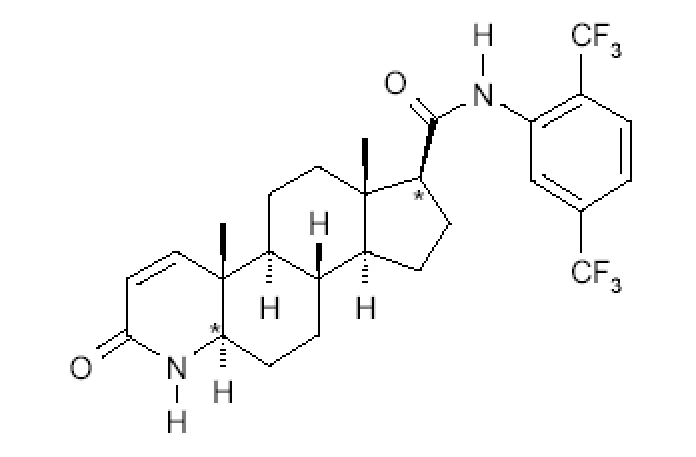
Physicochemical properties:
Dutasteride is a white to pale yellow powder with a melting point of 242 to 250°C. It is soluble in ethanol (44 mg/mL), methanol (64 mg/mL) and polyethylene glycol 400 (3 mg/mL), but it is insoluble in water.
Drug Substance
Non-proprietary name of the drug substance(s): Tamsulosin hydrochloride
Chemical name: (-)-(R)-5-(2-(2-(2-ethoxyphenoxyethyl)amino]propyl)-2methoxybenzensulfonamide hydrochloride
Molecular formula and molecular mass: C20H28N2O5S HCl 445
Structural formula:
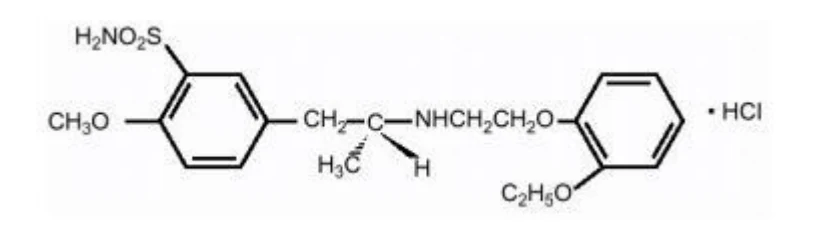
Physicochemical properties:
Tamsulosin hydrochloride occurs as white crystals that melt with decomposition at approximately
230°C. It is sparingly soluble in water and in methanol, slightly soluble in glacial acetic acid and in ethanol, and practically insoluble in ether.
pH (7.5 mg/mL): 5.20
pKa: 8.37 (secondary amine) ; 10.23 (sulfonamide)
14. Clinical Trials
14.1. Clinical Trials by Indication
Benign Prostatic Hyperplasia
Dutasteride in combination with Tamsulosin
The CombAT study was conducted with the individual components of JALYN (dutasteride / tamsulosin) administered as combination therapy. In a bioequivalence study of JALYN, both the dutasteride and tamsulosin components were bioequivalent to the co-administered 0.5 mg dutasteride capsule and the 0.4 mg tamsulosin capsule under fasted and fed conditions (see Table 6 and Table 7).
Study demographics and trial design:
The efficacy and safety of combination therapy (dutasteride 0.5 mg/day plus tamsulosin hydrochloride 0.4 mg/day, n=1,610) was compared with dutasteride alone (n=1,623) or tamsulosin hydrochloride alone (n=1,611) in a 4-year multicentre, randomized, double-blind study. The primary efficacy endpoint at Year 2 was the change from baseline in IPSS, and at Year 4 was time to first event of AUR or BPH-related surgery.
Eighty-eight percent (88%) of the study population was Caucasian. Approximately 52% of subjects had previous exposure to 5alpha-reductase inhibitor or alpha-blocker treatment. Subjects were at least 50 years of age with a serum PSA level of ≥ 1.5 ng/mL and < 10.0 ng/mL, and BPH diagnosed by medical history and physical examination, including enlarged prostate (≥ 30cc) and BPH symptoms that were moderate to severe according to the IPSS. Subjects with a history or evidence of prostate cancer or previous prostatic surgery were excluded. The majority of the 4,844 subjects randomly assigned to receive combination, dutasteride, or tamsulosin completed 4 years of double-blind treatment (69%, 67%, and 61%, respectively).
Study results:
Effect on Symptom Score: Symptoms were quantified using the first 7 questions of the IPSS (identical to the AUA-SI). The baseline score was approximately 16.4 units for each treatment group. Combination therapy was statistically superior to each of the monotherapy treatments in decreasing symptom score at Month 24, the primary time point for this endpoint. A statistically significant difference was seen with combination therapy from Month 9 and continued through to Month 48, compared with tamsulosin monotherapy, in which a declining change was seen over time. A statistically significant difference was also seen for combination therapy compared with dutasteride monotherapy from Month 3 and continued through to Month 48 (see Figure 1 and Table 4).
Figure 1 International Prostate Symptom Score (IPSS) Change from Baseline (CombAT study)
-8 -7 -6 -5 -4 -3 -2 -1 0 0 3 6 9 12 15 18 21 24 27 30 33 36 39 42 45 48 Month Ad j u ste d Me a n C h a n g e (u n i ts) TAM COMBO DUT p < 0.001 Combo vs Tam p < 0.001 Combo vs Dut
Table 4 – Change from Baseline in IPSS Over 48 Months
| Timepoint | Adjusted mean change from baseline (± SD) a | |||||||||||||||||||
|---|---|---|---|---|---|---|---|---|---|---|---|---|---|---|---|---|---|---|---|---|
| N | Combination | N | Dutasteride | N | Tamsulosin | |||||||||||||||
| Month 12 | 1575 | -5.6 ( 6.81) | 1592 | -4.2 ( 6.50) | 1582 | -4.5 ( 6.83) | ||||||||||||||
| Month 24 | 1575 | -6.2 ( 7.14) | 1592 | -4.9 ( 6.81) | 1582 | -4.3 ( 7.01) | ||||||||||||||
| Month 36 | 1575 | -6.3 ( 7.33) | 1592 | -5.2 ( 7.01) | 1582 | -4.0 ( 7.41) | ||||||||||||||
| Month 48 | 1575 | -6.3 ( 7.40) | 1592 | -5.3 ( 7.14) | 1582 | -3.8 ( 7.74) | ||||||||||||||
| Adjusted mean difference (combination therapy minus monotherapy [95% CI]) a | ||||||||||||||||||||
| Dutasteride | P-value b | Tamsulosin | P-value b | |||||||||||||||||
| Month 12 | -1.4 [-1.80, -1.01] | <0.001 | -1.1 [-1.53, -0.73] | <0.001 | ||||||||||||||||
| Month 24 | -1.3 [-1.69, -0.86] | <0.001 | -1.8 [-2.23, -1.40] | <0.001 | ||||||||||||||||
| Month 36 | -1.1 [-1.55, -0.68] | <0.001 | -2.3 [-2.76, -1.90] | <0.001 | ||||||||||||||||
| Month 48 | -0.96 [-1.40, -0.52] | <0.001 | -2.5 [-2.96, -2.07] | <0.001 | ||||||||||||||||
| ||||||||||||||||||||
Effect on Acute Urinary Retention or the Need for Surgery
Efficacy was assessed after 4 years of treatment by the incidence of AUR or BPH-related surgery. Combination therapy was associated with a statistically significantly lower incidence of AUR or BPH-related surgery when compared with tamsulosin monotherapy, but was not significantly lower when compared to AVODART. Similar outcomes were observed for the individual endpoints: AUR and BPH-related surgery (See Figure 2 and Figure 3).
Figure 2 Kaplan Meier estimates of time to the first episode of acute urinary retention or benign prostatic hyperplasia-related prostatic surgery
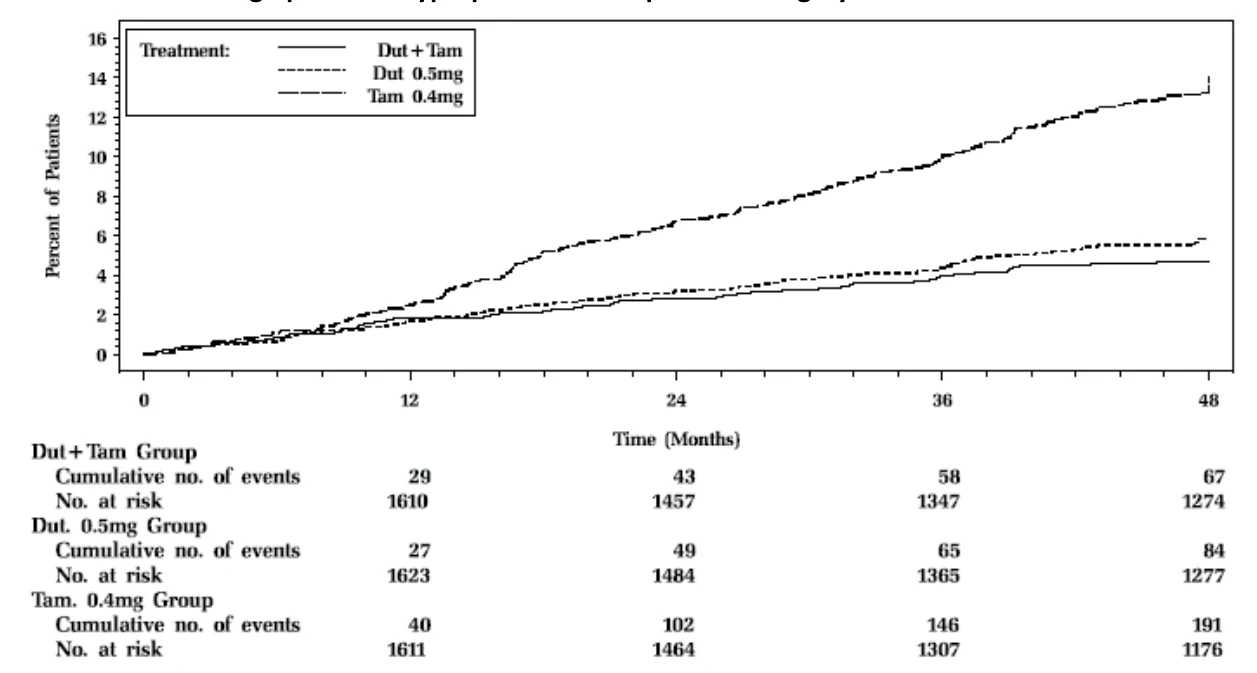
Figure 3 Incidence of AUR or BPH-Related Surgery and Clinical Progression Including Relative Risk Reduction Estimates (ITT)
Note: * p<0.001 vs combination, RRR = Relative Risk Reduction vs Combination (95% CI)
BPH Clinical Progression
Clinical progression was defined as a composite of worsening symptoms (IPSS ≥ 4 points), and BPH-related events of AUR, incontinence, UTI, and renal insufficiency. The rates of clinical progression for
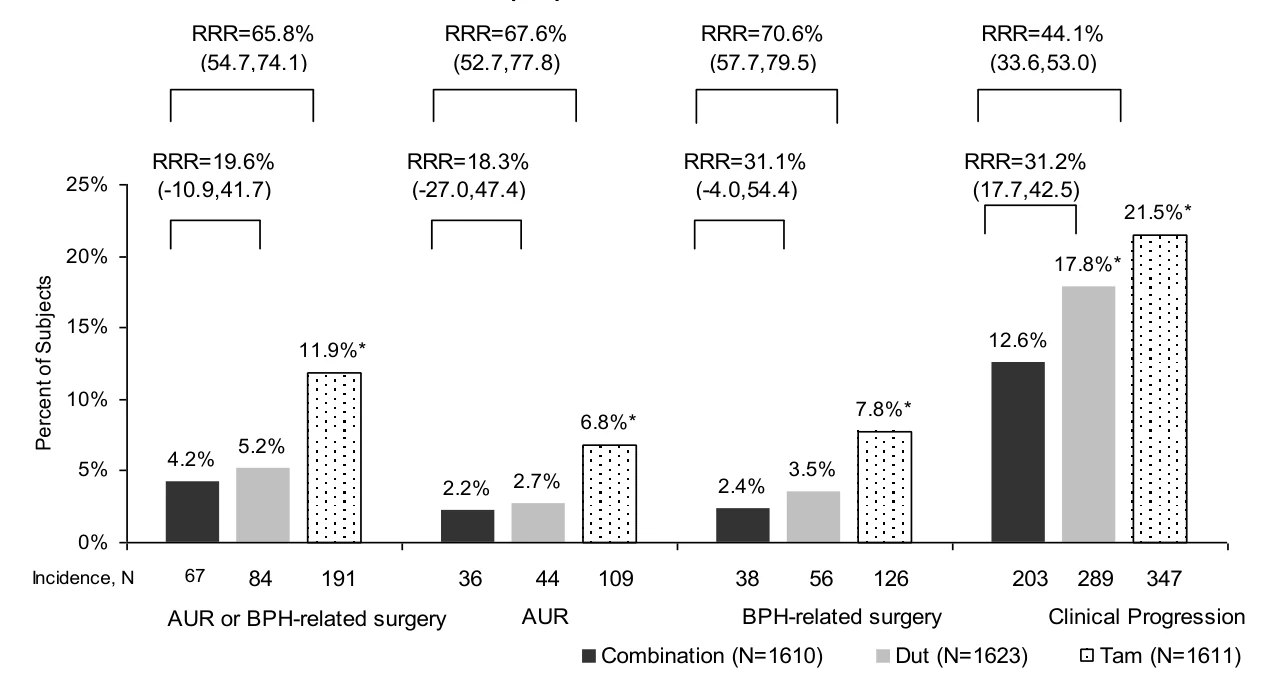
combination therapy, AVODART, and tamsulosin were: 12.6%, 17.8%, and 21.5%, respectively. Combination therapy was associated with a statistically significantly lower rate of clinical progression compared with tamsulosin after 4 years (see Figure 3).
Effect on Maximum Urine Flow Rate: The baseline Qmax was approximately 10.7 mL/sec for each treatment group. Combination therapy was statistically superior to each of the monotherapy treatments in increasing Qmax at Month 24, the primary timepoint for this endpoint (See Table 5). This difference was seen by Month 6 and continued through Month 24. Combination therapy continued to be statistically superior to tamsulosin through an additional 2 years of treatment (p<0.001); however, the improvement compared to monotherapy with dutasteride did not reach statistical significance at Month 48. See Figure 4 and Table 5.
Figure 4 Qmax Change from Baseline (CombAT study)
▲Dutasteride + tamsulosin (Combo)
n=13 88
n=14 77
n=14 92
n=14 95
n=149 5
Dutasteride
n=14 05
n=14 82
n=15 01
n=15 04
n=150 5
♦ Tamsulosin
n=14 43
n=15 10
n=15 19
n=15 21
n=152 3
Table 5 – Change from Baseline in Other Key Secondary Endpoints at Months 24 and 48
| Month 24 | ||||||
|---|---|---|---|---|---|---|
| Adjusted mean change from baseline (± SD) | ||||||
| N | Combinatio n | N | Dutasteride | N | Tamsulosin | |
| Qmax (mL/sec) | 1492 | 2.4 (5.26) | 1501 | 1.9 (5.10) | 1519 | 0.9 (4.57) |
| Prostate volume (cc) | 1427 | -26.9 (22.57) | 1451 | -28.0 (24.88) | 1465 | -0.0 (31.14) |
| Transition volume (cc) | 153 | -23.4 (5.63) | 164 | -22.8 (5.86) | 160 | 8.7 (8.22) |
| Adjusted mean difference of combination from monotherapy [95% CI] | ||||||
| Dutasteride | p-valuea | Tamsulosin | p-valuea | |||
| Qmax (mL/sec) | 0.52 [0.18, 0.86) | 0.003 | 1.53 [1.20, 1.87] | <0.001 | ||
| Prostate volume (cc) | 1.1 [-0.6, 2.8] | 0.19 | -26.9 [-28.9, -24.9] | <0.001 | ||
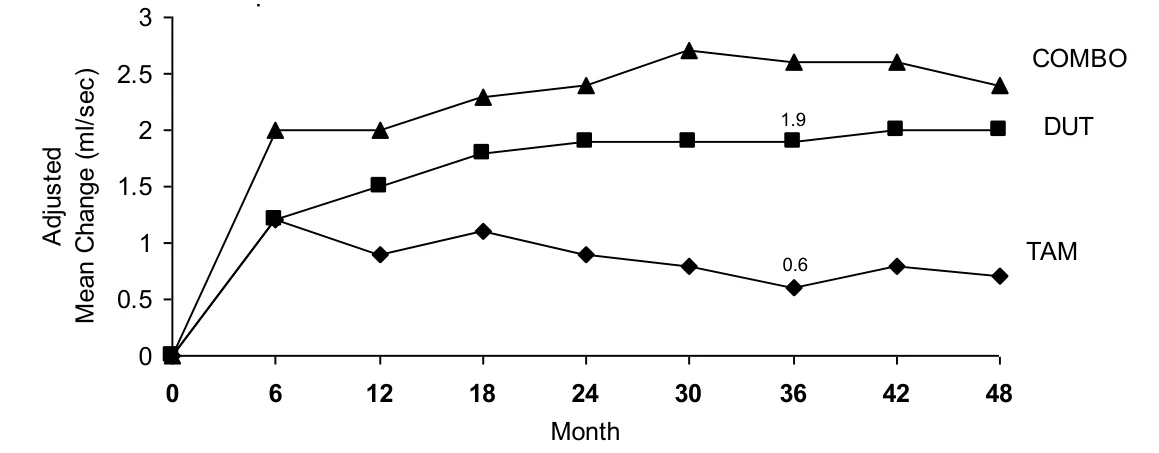
1.9
0.6
| Transition zone volume (cc) | -0.5 [-8.3, 7.2] | 0.90 | 8.7 [-42.6, -21.6] | <0.001 | |||||||||||||||||||
|---|---|---|---|---|---|---|---|---|---|---|---|---|---|---|---|---|---|---|---|---|---|---|---|
| Month 48 | |||||||||||||||||||||||
| Adjusted mean change from baseline (± SD) | |||||||||||||||||||||||
| N | Combinatio n | N | Dutasteride | N | Tamsulosin | ||||||||||||||||||
| Qmax (mL/sec) | 1495 | 2.4 (5.25) | 1505 | 2.0 (5.17) | 1523 | 0.7 (5.22) | |||||||||||||||||
| Prostate volume (cc) | 1430 | -27.3 (24.91) | 1455 | -28.0 (24.74) | 1468 | 4.6 (35.45) | |||||||||||||||||
| Transition volume (cc) | 155 | -17.9 (39.28) | 164 | -26.5 (62.07) | 163 | 18.2 (262.61) | |||||||||||||||||
| Adjusted mean difference of combination from monotherapy [95% CI] | |||||||||||||||||||||||
| Dutasteride | p-valuea | Tamsulosin | p-valuea | ||||||||||||||||||||
| Qmax (mL/sec) | 0.35 [0.00, 0.70] | 0.050 | 1.66 [1.31, 2.01] | <0.001 | |||||||||||||||||||
| Prostate volume (cc) | 0.7 [-1.1, 2.5] | 0.42 | -31.9 [-34.1,-29.7] | <0.001 | |||||||||||||||||||
| Transition zone volume (cc) | 8.6 [-0.1, 17.4] | 0.053 | -36.1 [-47.9,-24.3] | <0.001 | |||||||||||||||||||
Note: Adjusted change/difference values for prostate volume and transition zone volume are shown as percentage changes from baseline | |||||||||||||||||||||||
Effect on Prostate Volume: The mean prostate volume at study entry was approximately 55 cc. At Month 24, the primary time point for this endpoint, the mean percent changes from baseline in prostate volume was statistically significantly lower with combination therapy versus tamsulosin, but not lower than dutasteride monotherapy (Table 6). This change from baseline in prostate volume was seen starting at Month 12 and continued through to Month 48. After the first year, the tamsulosin group showed a trend for increased prostate volume over time. See Figure 5.
Similar responses were seen for changes in prostate transition zone volume for a subset (approximately 10% in each treatment arm) of patients. See Table 6.
Figure 5 Prostate Volume Percent Change from Baseline (CombAT study)
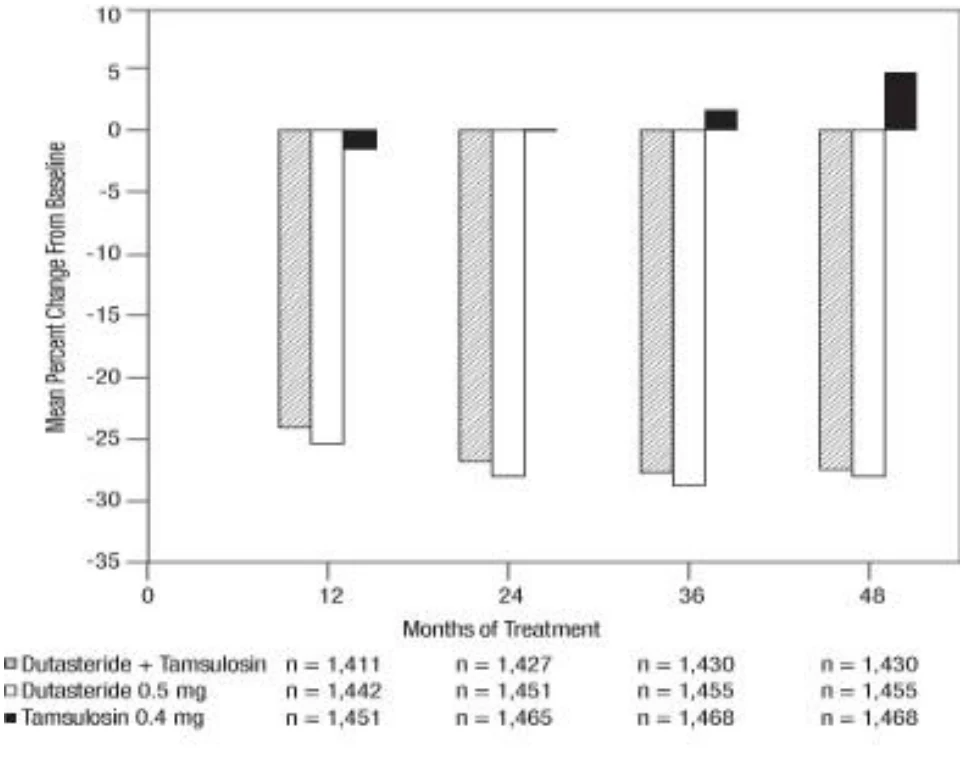
Health Outcomes:
Combination therapy was significantly superior (p < 0.001) to tamsulosin monotherapy and to dutasteride monotherapy for the improvement in health outcome parameters BPH-Impact Index (BII) and BPH-related Health Status (BHS) at 4 years. The adjusted mean improvement in BII from baseline was -2.2 units for the combination, -1.8 for dutasteride and -1.2 for tamsulosin. The adjusted mean improvement in BHS from baseline was -1.5 units for the combination, -1.3 for dutasteride and -1.1 for tamsulosin.
Dutasteride Monotherapy Studies
Dutasteride (AVODART) 0.5 mg/day or placebo was evaluated in 4,325 male subjects with enlarged prostates (greater than 30 cc) in three primary efficacy 2-year multicentre, placebo controlled, double-blind studies. Dutasteride was demonstrated to improve BPH-related symptoms, decrease prostate volume and increase maximum urinary flow rates; these data suggest that dutasteride arrests the disease process of BPH in men with an enlarged prostate. Pooled results across 3 pivotal studies comparing dutasteride to placebo at Months 6, 12, 18 and 24 showed that dutasteride was associated with a significantly greater change from baseline in AUA SI symptom scores (p < 0.001) and was consistent across the 3 studies. For those subjects who continued with dutasteride treatment during the additional 2 years of open-label extension studies the change in AUA-SI score from months 24 to 48 was statistically significant (p < 0.001).
Statistically significant differences in prostate volume for dutasteride vs. placebo were noted at Months 1, 3 or 6 in each study and continued through Month 24. At Month 24, the mean percent change in prostate volume for dutasteride vs. placebo across the 3 pooled studies was a mean difference of 24.5% (p < 0.001). The reduction in prostate volume seen during the first 2 years of double-blind treatment was maintained throughout an additional 2 years of open-label extension studies.
Differences between dutasteride and placebo were statistically significant for change in Qmax from baseline at Month 3 through to Month 24 for all 3 studies (p < 0.001). For those subjects who continued with dutasteride treatment the mean increase in Qmax from Months 24 to 48 was statistically significant (p ≤ 0.007).
The incidence of acute urinary retention (AUR) requiring catheterization and BPH-related urological surgical intervention were also assessed after 2 years of treatment. Compared with placebo, AVODART was associated with a statistically significantly lower incidence of AUR (p < 0.001; 57% reduction in risk) and with a statistically significantly lower incidence of surgery (p < 0.001; 48% reduction in risk). The pooled incidence of both AUR and BPH-related surgery on dutasteride treatment was low during the 24-month open-label phase (Months 24-48) for the previous placebo group (P/D group) and for the previous dutasteride group (D/D group).
Tamsulosin Monotherapy
Efficacy of tamsulosin has been evaluated in two double-blind, randomized, placebo-controlled studies of 12-weeks duration involving a total of 1840 male subjects, aged ≥ 45 years with symptoms diagnosed as LUTS suggestive of BPH. There was a statistically significant reduction (p < 0.001) in the IPSS vs. placebo in both studies indicating a reduction in symptom severity. This was due to a statistically significant improvement in both the irritative and obstructive subscores.
14.2. Comparative Bioavailability Studies
In a bioequivalence study of JALYN (dutasteride 0.5 mg/tamsulosin 0.4 mg) both the dutasteride and the tamsulosin components were bioequivalent to co-administered 0.5 mg dutasteride capsule and the 0.4 mg tamsulosin capsule.
In the fasted state, both the dutasteride and tamsulosin components of the JALYN were bioequivalent to the reference formulations administered in the fasted state. The 90% confidence intervals for both the AUC and Cmax comparisons were entirely contained within the interval of 0.8-1.25 (see Table 6). Similarly, in the fed state, both the dutasteride and tamsulosin components of the JALYN were bioequivalent to the reference formulations administered in the fed state (see Table 7).
Comparing each formulation in the fed or fasted condition, similar effects of food were seen with both components of the test and reference treatments. For dutasteride, both the JALYN and the dutasteride capsule showed no effect of food when compared under fasting conditions. Likewise for tamsulosin, both the tamsulosin capsule and the JALYN showed no effect on AUC. However, the mean tamsulosin Cmax for both showed a 30 % decrease under fed conditions, consistent with FLOMAX Product Monograph. In addition, although the proposed labelling for the JALYN will be to dose within 30 minutes of the same meal each day, the demonstration of bioequivalence under fasting conditions provides additional evidence that the rate and extent of absorption of dutasteride and tamsulosin from the JALYN formulation is the same as the separate components administered as dutasteride and tamsulosin capsules.
Table 6 – JALYN versus co-administered 0.5 mg dutasteride and 0.4 mg tamsulosin capsule under fasted condition
Dutasteride (GI198745) (1 x 0.5 mg) Tamsulosin (GI138525) (1 x0.4 mg) From measured and log transformed data uncorrected for potency Least Square Geometric Mean Arithmetic Mean (CV %) | ||||
| Parameter | Test (Dutasteride/Tamsulosin FDC Fasted) | Reference (AVODART+FLOMAX Fasted) * | % Ratio of Geometric Means | 90% Confidence Interval |
| Dutasteride | ||||
AUC(0-24) (ng.h/mL) | 18 22 (40.64) | 19 20 (46.41) | 96 | 92 - 101 |
AUC(0-t) (ng.h/mL) | 29 42 (57.84) | 29 37 (63.62) | 100 | 91 - 111 |
Cmax (ng/mL) | 2 2 (38.18) | 2 2 (39.55) | 98 | 88 - 108 |
| Tmax †(h) | 2.00 (4.00) | 2.00 (9.00) | ||
| Tamsulosin | ||||
AUC(0-24) (ng.h/mL) | 144 149 (44.48) | 143 156 (39.13) | 101 | 92 - 111 |
AUC(0-inf) (ng.h/mL) | 187 201 (56.56) | 185 210 (52.75) | 101 | 92 - 111 |
AUC(0-t) (ng.h/mL) | 182 195 (54.18) | 181 204 (49.59) | 101 | 92 - 111 |
Cmax (ng/mL) | 15 15 (39.38) | 14 15 (34.50) | 108 | 96 - 122 |
| Tmax †(h) | 5.00 (13.00) | 5.00 (6.00) | ||
| T½ ‡(h) | 12.26 (26.49) | 12.88 (31.00) | ||
* AVODART was sourced from GlaxoSmithKline and FLOMAX was sourced from Boehringer Ingelheim, USA
† expressed as the median (range) only
‡ expressed as the arithmetic mean (CV%) only
Table 7 – JALYN versus co-administered 0.5 mg dutasteride and 0.4 mg tamsulosin capsule under fed condition
Dutasteride (GI198745) (1 x 0.5 mg) Tamsulosin (GI138525) (1 x0.4 mg) From measured and log transformed data uncorrected for potency Least Square Geometric Mean Arithmetic Mean (CV %) | ||||
| Parameter | Test (Dutasteride/Tamsulosin FDC Fed) | Reference (AVODART+FLOMAX Fed)* | % Ratio of Geometric Means | 90% Confidence Interval |
| Dutasteride | ||||
AUC(0-24) (ng.h/mL) | 18 21 (39.82) | 19 21 (42.55) | 98 | 96 - 100 |
AUC(0-t) (ng.h/mL) | 31 40 (58.44) | 32 41 (58.21) | 97 | 92 - 103 |
Cmax (ng/mL) | 2 2 (35.93) | 2 2 (32.71) | 99 | 94 - 105 |
| Tmax† (h) | 3.00 (9.00) | 4.00 (5.03) | ||
| Tamsulosin | ||||
AUC(0-24) (ng.h/mL) | 124 131 (41.24) | 119 127 (45.18) | 104 | 99 – 110 |
AUC(0-inf) (ng.h/mL) | 179 197 (52.98) | 172 195 (60.02) | 104 | 99 – 110 |
AUC(0-t) (ng.h/mL) | 171 187 (51.13) | 166 186 (57.04) | 103 | 98 - 109 |
Cmax (ng/mL) | 11 11 (39.41) | 10 11 (40.32) | 108 | 101 - 116 |
| Tmax † (h) | 6.00 (22.00) | 7.00 (22.00) | ||
| T½ ‡ (h) | 13.53 (29.00) | 13.49 (31.08) | ||
* AVODART was sourced from GlaxoSmithKline and FLOMAX was sourced from Boehringer Ingelheim, USA
† expressed as the median (range) only
‡ expressed as the arithmetic mean (CV%) only
16. Non-Clinical Toxicology
No non-clinical studies have been conducted with JALYN. Dutasteride and tamsulosin individually have been extensively evaluated in animal toxicity test and findings were consistent with the known pharmacological actions of 5alpha-reductase inhibitors and alpha1-adrenoreceptor blockers. The following information is based on the information available for the individual components.
Carcinogenicity
Dutasteride and tamsulosin showed no evidence of genotoxicity in a wide range of in vitro and in vivo tests.
Dutasteride
A 2-year carcinogenicity study was conducted in B6C3F1 mice at doses of 3, 35, 250, and 500 mg/kg/day for males and 3, 35, and 250 mg/kg/day for females; an increased incidence of benign hepatocellular adenomas was noted at 250 mg/kg/day (290 fold the expected clinical exposure to a 0.5 mg daily dose) in females only. Two of the 3 major human metabolites have been detected in mice. The exposure to these metabolites in mice is either lower than in humans or is not known.
In a 2-year carcinogenicity study in Han Wistar rats, at doses of 1.5, 7.5, and 53 mg/kg/day for males and 0.8, 6.3, and 15 mg/kg/day for females, there was an increase in Leydig cell adenomas in the testes at 53 mg/kg/day (135-fold the expected clinical exposure). An increased incidence of Leydig cell hyperplasia was present at 7.5 mg/kg/day (52-fold the expected clinical exposure) and 53 mg/kg/day in male rats. A positive correlation between proliferative changes in the Leydig cells and an increase in circulating luteinizing hormone levels has been demonstrated with 5alpha-reductase inhibitors and is consistent with an effect on the hypothalamic-pituitary-testicular axis following 5alpha-reductase inhibition. At tumorigenic doses in rats, luteinizing hormone levels in rats were increased by 167%. In this study, the major human metabolites were tested for carcinogenicity at approximately 1 to 3 times the expected clinical exposure.
Tamsulosin
Rats administered doses up to 43 mg/kg/day in males and 52 mg/kg/day in females had no increases in tumour incidence with the exception of a modest increase in the frequency of mammary gland fibroadenomas in female rats receiving doses ≥ 5.4 mg/kg (p<0.015). The highest doses of tamsulosin evaluated in the rat carcinogenicity study produced systemic exposures (AUC) in rats 3 times the exposures in men receiving doses of 0.8 mg/day.
Mice were administered doses up to 127 mg/kg/day in males and 158 mg/kg/day in females. There were no significant tumour findings in male mice. Female mice treated for 2 years with the two highest doses of 45 and 158 mg/kg/day had statistically significant increases in the incidence of mammary gland fibroadenomas (p<0.0001) and adenocarcinomas (p<0.0075). The highest dose levels of tamsulosin evaluated in the mice carcinogenicity study produced systemic exposures (AUC) in mice 8 times the exposures in men receiving doses of 0.8 mg/day.
The increased incidences of mammary gland neoplasms in female rats and mice were considered secondary to tamsulosin-induced hyperprolactinemia. It is not known if tamsulosin elevates prolactin in humans. The relevance for human risk of the findings of prolactin-mediated endocrine tumours in rodents is not known.
Mutagenecity
Dutasteride
Dutasteride and the 4'-hydroxy metabolite of dutasteride, showed no evidence of mutagenic activity in the Ames test at concentrations up to 5,000 μg/plate in the presence or absence of S9 metabolic activation. Similarly, the 1,2-dihydro metabolite of dutasteride, demonstrated no mutagenic activity in a miniwell Ames test at concentrations up to 800 μg/well in the presence or absence of S9 metabolic activation.
Dutasteride did not show any evidence of clastogenic activity in vitro in Chinese Hamster Ovary cells at concentrations up to 1,150 μg/mL or in vivo in rat micronucleus tests at dose levels of up to 1,500 mg/kg/day for 6 days.
Tamsulosin
Tamsulosin produced no evidence of mutagenic potential in vitro in the Ames reverse mutation test, mouse lymphoma thymidine kinase assay, and chromosomal aberration assays in Chinese hamster ovary cells or human lymphocytes. There were no mutagenic effects in the in vivo sister chromatid exchange and mouse micronucleus assay.
Reproductive and developmental toxicology
Dutasteride
In a fertility study, male rats orally administered dutasteride (0.05 to 500 mg/kg/day) for up to 31 weeks showed reversible dose- and time-dependent decreases in fertility, reductions in the weights of seminal vesicles, prostate and epididymides and microscopic changes in these male reproductive organs. The effects are consistent with the pharmacological activity of dutasteride. No effects were noted in the testis, and sperm concentration and motility were unaffected by treatment. The decrease in fertility with dutasteride is likely to be related to a failure of copulatory plug formation as a consequence of the decreased weight of the seminal vesicles and prostate. As such a mechanism is not thought to be relevant to species that do not form copulatory plugs, this finding is considered to be of no clinical concern. Furthermore, the decreased fertility in the rat was not associated with an effect on spermatogenesis.
In an oral fertility study in female rats, the NOAEL for the F0 generation was 0.05 mg/kg/day. Fetal body weight was reduced at all dosages of dutasteride (0.05 to 30 mg/kg/day) and feminisation of male fetuses occurred at ≥ 2.5 mg/kg/day.
In an oral embryo-fetal development study in rats, the NOAEL for the F0 generation was 0.05 mg/kg/day. Fetal body weight was reduced at ≥ 2.5 mg/kg/day and feminisation of male fetuses and F1 male pups occurred at all dosages of dutasteride (0.05 to 30 mg/kg/day). Increased incidences of skeletal variations considered to be reversible delays in ossification associated with reduced body weight were noted at 12.5 and 30 mg/kg/day. In a rabbit oral embryofetal development study, the NOAEL for the F0 generation was 200 mg/kg/day.
Dutasteride produced feminisation of male fetuses at all dosages (30 to 200 mg/kg/day). Fusion of the jugal and zygomal bones was noted in a minority of fetuses at all dosages, but it is uncertain whether this was unequivocally related to treatment. In a further rabbit study, oral dosing at 0.05 to 30 mg/kg/day also produced feminisation of male fetuses at all dosages. Feminisation of male fetuses is an expected effect of the pharmacological activity of dutasteride, which as a 5AR inhibitor inhibits the conversion of testosterone to DHT.
In the male rat fertility study, low levels of dutasteride were detected in the serum of untreated female rats mated to treated males and, in humans, dutasteride was detected in semen at a maximum concentration of 14.0 ng/mL following repeated oral dosing for 12 months. To determine the effects of dutasteride on embryo-fetal development of male fetuses, an intravenous embryofetal development study was conducted in the rhesus monkey. IV administration of dutasteride at doses up to 2010 ng/animal/day during embryofetal development did not produce adverse maternal toxicity, fetal toxicity or feminisation of male offspring. The high dose represents at least a 186-fold multiple of the potential maximum daily dose from 5 mL semen from a man treated with dutasteride at 0.5 mg/day (assuming 100% absorption), for a 50 kg woman. Dutasteride is highly bound to proteins in human semen (> 96%), potentially reducing the amount of dutasteride available for vaginal absorption.
In an oral pre- and -post natal rat study, the NOAEL for the F0 generation was 0.05 mg/kg/day. Earlier onset of vaginal patency was noted in F1 females at 2.5, 12.5 and 30 mg/kg/day. Feminisation (decreased anogenital distance) was noted at all dosages (0.05 to 30 mg/kg/day) in F1 males. At ≥ 2.5 mg/kg/day, F1 males had increased incidences of hypospadia resulting in decreased fertility and increased occurrence of inflammation of the genitourinary tract and prostatitis. Prostate and seminal vesicle weights were reduced at ≥ 2.5 mg/kg/day in F1 males. These changes are expected effects of the pharmacological activity of dutasteride.
Tamsulosin
Studies in rats revealed significantly reduced fertility in males dosed with single or multiple daily doses of 300 mg/kg/day of tamsulosin (AUC exposure in rats about 50 times the human exposure at a dose of 0.8 mg/day). The mechanism of decreased fertility in male rats is considered to be an effect of the compound on the vaginal plug formation possibly due to changes of semen content or impairment of ejaculation. The effects on fertility were reversible showing improvement by 3 days after a single dose and 4 weeks after multiple dosing. Effects on fertility in males were completely reversed within nine weeks of discontinuation of multiple dosing. Multiple doses of 10 and 100 mg/kg/day tamsulosin (1/5 and 16 times the anticipated human AUC exposure) did not significantly alter fertility in male rats. Effects of tamsulosin on sperm counts or sperm function have not been evaluated.
Studies in female rats revealed significant reductions in fertility after single or multiple dosing with 300 mg/kg/day of the R-isomer or racemic mixture of tamsulosin, respectively. In female rats, the reductions in fertility after single doses were considered to be associated with impairments in fertilization. Multiple dosing with 10 or 100 mg/kg/day of the racemic mixture did not significantly alter fertility in female rats.
Administration of tamsulosin to pregnant female rats and rabbits at higher than the therapeutic dose showed no evidence of fetal harm.
Acute Toxicology
Dutasteride
In acute oral toxicity studies, the maximum non-lethal dose (MNLD) was > 2,000 mg/kg in mice and >1,500 mg/kg in rats, which is 200,000 and 150,000 times greater, respectively, than the proposed therapeutic dose of 0.01 mg/kg (0.5 mg/day assuming a 50 kg person). Intraperitoneal administration resulted in acute polyserositis due to the irritant properties of the vehicle (PEG 400 with 0.1% w/v Tween 80) and this was exacerbated by the presence of dutasteride, due to the physical properties of the compound. An intraperitoneal MNLD was therefore not identified in either species.
Acute oral and intraperitoneal administration of dutasteride to mice and rats produced no evidence of unequivocal target organ toxicity. Reduction in the size of the prostate and seminal vesicles with accompanying microscopic changes were noted predominantly in treated males and are consistent with a reduction in dihydrotestosterone (DHT) levels due to the pharmacological activity of dutasteride as a 5alpha-reductase (5AR) inhibitor.
Long Term Toxicity
Dutasteride
Repeat oral dose toxicity studies were conducted in rats for 5 and 26 weeks (up to 500 mg/kg/day in males and 100 or 30 mg/kg/day, respectively, in females) and in dogs for 26 and 53 weeks (up to 50 or 10 mg/kg/day, respectively, in males and females). The main findings consisted of changes in the male and female reproductive organs in both species and changes in the thyroid and other endocrine organs in dogs. These effects appear to be compatible with physiological changes in steroidogenic tissues and changes in the hypothalamic/pituitary/gonadal axis, which is typical of 5AR inhibition with subsequent decrease in DHT levels.
Treatment-related findings seen in male reproductive organs included decrease in size and related histopathological changes in the prostate of rats and dogs, epithelial atrophy and decreased secretion of the seminal vesicles in rats, decreased epididymis weight in the rat and histopathological changes consistent with atrophy in the epididymis in dogs. Effects on the testis were limited to an increase in testis weight in rats following dosing for 5 weeks. There were no significant changes in spermatogenesis in the rat or dog. Treatment-related findings seen in female reproductive organs included decreased ovary and uterus/cervix weights, increased incidence of dioestrus or increased occurrence of ovarian (follicular) cysts in rats, and microscopic changes in the uterus and shifts in the oestrus cycle to the luteal phase in dogs.
In dogs, there were changes in the thyroid consisting of a reversible increase in thyroid weight, with correlating microscopic changes of reduced colloid content and C-cell hyperplasia in the 26 week study and vacuolated follicular cells in the 53 week study. Other reversible changes in endocrine organs consisted of slight enlargement of chromophobes in the pars distalis of the pituitary and hypertrophy, cytoplasmic vacuolation and increased lipofuscin-like pigment in the adrenal cortex.
Clinical signs indicative of a non-specific, reversible centrally mediated toxicity were seen in some animals following repeat dosing. This was not associated with histopathological changes and occurred at exposures 425-fold in rats and 315-fold in dogs the clinical serum concentration at steady state (40 ng/mL).
Due to the expected dutasteride-related effects as a result of 5AR inhibition, it was not possible to establish no-observed-adverse-effect-level (NOAEL) in the repeat dose studies. However, in the 26 week rat and 53 week dog studies, there were no other toxicologically significant effects in female rats at up to 84-fold the clinical exposure of 40 ng/mL, in male rats at up to 17-fold the clinical exposure, in females dogs at up to 203-fold the clinical exposure or in male dogs at up to 117-fold the clinical exposure.
Special Toxicity:
Dutasteride Acute dermal application of dutasteride in rabbits caused slight but reversible irritancy. The estimated dermal LD50 of dutasteride in rabbits is > 2,000 mg/kg.
In an acute dermal absorption study in rabbits at doses of 0.1 to 40 mg/kg, dutasteride was detected in the serum. Slight to moderate dermal irritancy was observed in treated and control groups. However, additional findings (including subcutaneous hemorrhaging) predominately in treated animals and macroscopic observations (multiple red areas in the skin) in animals at 40 mg/kg suggest that dutasteride is a dermal irritant.
Acute ocular application of dutasteride in rabbits caused slight iridial irritation and slight to moderate conjunctival irritation, which were reversible within 72 hours.
Dermal application of dutasteride in guinea pigs demonstrated no sensitizing effect.
In vitro, dutasteride (0.0111 mg/mL) did not increase hemolysis or the level of free hemoglobin in human erythrocytes and did not increase protein flocculation, turbidity or precipitation in human plasma. Both dutasteride (0.0111 mg/mL) and the vehicle control (a complexing agent) produced minimal evidence of perivascular irritation in mice. Dutasteride produced no intravenous irritation in rabbits.