


Product Monograph - Jamp Calcitriol
INDICATIONS AND CLINICAL USE
JAMP Calcitriol (calcitriol capsules) is indicated in the management of:
- Hypocalcemia and osteodystrophy in patients with chronic renal failure undergoing dialysis.
Hypocalcemia and its clinical manifestations associated with:
- Post-surgical hypoparathyroidism.
- Idiopathic hypoparathyroidism.
- Pseudohypoparathyroidism.
- Vitamin D resistant rickets (familial hypophosphatemia).
Geriatrics (>65 years of age): Limited data are available in patients 65 years of age or older. Caution should be used when treating elderly patients.
Pediatrics (<18 years of age): The safety and efficacy of calcitriol capsules in children have not been sufficiently investigated. Use is not recommended in this patient population.
CONTRAINDICATIONS
- Patients who are hypersensitive to this drug, vitamin D or its analogues and derivatives, or to any ingredient in the formulation. For a complete listing, see the DOSAGE FORMS, COMPOSITION AND PACKAGING section of the product monograph.
- Hypercalcemia or evidence of vitamin D overdosage.
WARNINGS AND PRECAUTIONS
General
Since JAMP Calcitriol (calcitriol) is a potent cholecalciferol derivative with profound effects on intestinal absorption of dietary calcium and inorganic phosphate, it should not be used concomitantly with other vitamin D products or its derivatives.
The desired therapeutic margin of JAMP Calcitriol is narrow, therefore, the optimal daily dose must be carefully determined for each patient by dose titration to obtain satisfactory response in the biochemical parameters and clinical manifestations (see DOSAGE AND ADMINISTRATION section).
Cardiovascular
In patients on digitalis, hypercalcemia may precipitate cardiac arrhythmias; in such patients JAMP Calcitriol should be used with extreme caution.
Carcinogenesis and mutagenesis
See TOXICOLOGY section
Endocrine and Metabolism
Chronic hypercalcemia can lead to generalized vascular calcification, nephrocalcinosis, calcifications of the cornea or other soft tissues. During treatment with JAMP Calcitriol the serum total calcium (mg/dL) times serum inorganic phosphate product (Ca x P) should not exceed 70 mg2/dl2.
Dialysate calcium level of 7 mg% or above in addition to excessive dietary calcium supplements may lead to frequent episodes of hypercalcemia.
Patients need to adhere to prescribed calcium intake, dietary and supplementary, and avoid unapproved non-prescription drugs or medications. Patients should also be made aware of the symptoms of hypercalcemia and should seek medical attention if such symptoms are noted (see ADVERSE REACTIONS).
Patients with vitamin D resistant rickets (familial hypophosphatemia) should pursue their oral phosphate therapy. However, the possible stimulation of intestinal phosphate absorption by JAMP Calcitriol should be taken into account since this effect may modify the requirement for phosphate supplements (see DRUG INTERACTIONS).
Renal
In patients with normal renal function, chronic hypercalcemia may be associated with an increase in serum creatinine. While the elevation of serum creatinine is usually reversible, it is important in such patients to pay careful attention to those factors which may lead to hypercalcemia.
JAMP Calcitriol therapy should always be started at the lowest possible dose and increased with careful monitoring of serum calcium concentrations. An estimate of daily dietary calcium intake should be made and the intake adjusted when indicated.
Patients taking JAMP Calcitriol should avoid dehydration. Adequate fluid intake should be maintained.
Special Populations
Pregnant Women: The safety of calcitriol capsules in women who are or may become pregnant has not been established; use of JAMP Calcitriol in these cases may be considered only when the potential benefits have been weighed against possible hazards to mother and fetus.
Nursing Women: JAMP Calcitriol may be excreted in human milk. In view of the potential for hypercalcemia in the mother and for adverse reactions from JAMP Calcitriol in nursing infants, mothers may breastfeed while taking JAMP Calcitriol, provided that the serum calcium levels of the mother and infant are monitored.
Geriatrics (>65 years of age): Limited data are available in patients 65 years of age or older. Caution should be used when treating elderly patients.
Pediatrics (<18 years of age): The safety and efficacy of calcitriol capsules in children have not been sufficiently investigated. Use is not recommended in this patient population.
Monitoring and Laboratory Tests
Serum calcium, inorganic phosphorus, magnesium, alkaline phosphatase as well as 24-hour urinary calcium and phosphorus should be determined periodically during maintenance therapy with JAMP Calcitriol.
During the initial phase of the medication (dosage adjustment), serum calcium should be determined at least twice weekly. A fall in serum alkaline phosphatase values may indicate impending hypercalcemia. Should hypercalcemia develop, the drug should be discontinued immediately until the serum calcium level has normalized. This may take several days to a week.
Therapy with JAMP Calcitriol should only be considered when adequate laboratory facilities for monitoring of blood and urine chemistries are available. During treatment progressive hypercalcemia either due to hyper-responsiveness or overdosage may become so severe as to require emergency treatment.
Periodic ophthalmological examinations and radiological evaluation of suspected anatomical regions for early detection of ectopic calcifications are advisable.
ADVERSE REACTIONS
Adverse Drug Reaction Overview
Hypersensitivity reactions (pruritis, rash, urticaria, and very rarely severe erythematous skin disorders) may occur. The adverse effects of calcitriol capsules (calcitriol) are similar to those encountered with excessive vitamin D intake.
The early signs and symptoms associated with vitamin D intoxication and hypercalcemia are weakness, headache, somnolence, nausea, cardiac arrhythmias, excessive thirst, vomiting, dry mouth, constipation, muscle pain, bone pain, metallic taste, abdominal pain or stomachache. The late signs and symptoms are polyuria, polydipsia, urinary tract infections, anorexia, weight loss, nocturia, conjunctivitis (calcific), pancreatitis, photophobia, rhinorrhea, pruritus, hyperthermia, decreased libido, elevated BUN, elevated AST and/or ALT, albuminuria, hypercholesterolemia, ectopic calcification, hypertension, cardiac arrhythmias, and rarely, overt psychosis.
Clinical Trial Adverse Drug Reactions
Because clinical trials are conducted under very specific conditions the adverse reaction rates observed in the clinical trials may not reflect the rates observed in practice and should not be compared to the rates in the clinical trials of another drug. Adverse drug reaction information from clinical trials is useful for identifying drug-related adverse events and for approximating rates.
The following adverse reactions, based on clinical studies and post-market experience in various indications, have been reported in association with calcitriol capsules treatment. Where data are derived from spontaneous reporting, no estimates of frequency can be made, and the frequencies are described as ‘not known’.
The most commonly reported adverse reaction was hypercalcemia (20-30%).
The ADRs listed in the table below are presented by system organ class and frequency categories, defined using the following convention: Very common (≥1/10); common (≥1/100 to
<1/10); uncommon (≥1/1,000 to <1/100); rare (≥1/10,000 to <1/1,000); very rare (<1/10,000); not known (cannot be estimated from the available data). Within each frequency grouping, ADRs are presented in order of decreasing seriousness.
Table 1 Summary of ADRs Occurring in Patients Receiving Calcitriol Capsules
| System Organ Class | Very common | Common | Uncommon | Not known |
|---|---|---|---|---|
Immune System Disorders | Hypersensitivity, Urticaria | |||
| Metabolism and Nutrition Disorders | Hypercalcaemia | Decreased appetite | Polydipsia, Dehydration | |
| Psychiatric Disorders | Apathy Apprehension, Agitation, Insomnia | |||
| Nervous System Disorders | Headache | Muscular weakness, Sensory disturbance | ||
| Gastrointestinal Disorders | Abdominal pain, Nausea | Vomiting | Constipation, Upper abdominal pain | |
Skin and subcutaneous tissue disorders | Rash | Erythema, Pruritus |
| System Organ Class | Very common | Common | Uncommon | Not known |
|---|---|---|---|---|
Musculoskeletal and Connective Tissue Disorders | Growth retardation, Extremity pain | |||
Renal and Urinary Disorders | Urinary tract infection | Polyuria | ||
General disorders and administration site conditions | Calcinosis, Pyrexia, Thirst | |||
| Investigations | Blood creatinine increased | Weight decreased |
Abnormal Hematologic and Clinical Chemistry Findings
The following abnormal hematologic and clinical chemistry findings, based on clinical studies, have been reported in association with calcitriol capsules treatment: Elevated alkaline phosphatase, hypercalciuria, hypermagnesemia, hyperphosphatemia, elevated lymphocytes, elevated hematocrit, elevated neutrophils, elevated hemoglobin, elevated AST and/or ALT.
DRUG INTERACTIONS
Overview
First step of calcitriol catabolism is catalyzed by CYP24A1 a specific cytochrome P450 isoenzyme. Known inducers of CYP2C8, 2C, 2C19 and CYP3A do not modulate the activity of CYP24A1.
Since calcitriol also has an effect on phosphate transport in the intestine, kidneys and bones, the dosage of phosphate-binding agents must be adjusted in accordance with the serum phosphate concentration (normal values: 2-5 mg/100 ml, or 0.65-1.62 mmol/l).
Drug-Drug Interactions:
Anticonvulsant: The co-administration of phenytoin or phenobarbital will not affect plasma concentrations of calcitriol but may reduce endogenous plasma levels of 25(OH)D3 by inhibiting 25-hydroxylase in liver or increased CYP-mediated catabolism of 25(OH)D3. Higher doses of JAMP Calcitriol or Vitamin D supplementation may be necessary if anticonvulsants and JAMP Calcitriol are co-administered together.
Cholestyramine, Sevelamer and Mineral oil: Intestinal absorption of JAMP Calcitriol may be impaired by bile acid sequestrants including cholestyramine and sevelamer and by use of mineral oil as a laxative.
Digitalis: Hypercalcemia in patients on digitalis may precipitate cardiac arrhythmias.
Corticosteroids: A relationship of functional antagonism exists between vitamin D analogues, which promote calcium absorption, and corticosteroids, which inhibit calcium absorption.
Ketoconazole: Ketoconazole may inhibit both synthetic and catabolic enzymes of calcitriol. Reductions in serum endogenous calcitriol concentrations have been observed following the administration of 300 mg/day to 1200 mg/day ketoconazole for a week to healthy men. However, in vivo drug interaction studies of ketoconazole with calcitriol capsules have not been investigated.
Thiazides: Thiazides are known to induce hypercalcemia by the reduction of calcium excretion in urine. The concomitant administration of thiazides with calcitriol may cause hypercalcemia. Therefore, precaution should be taken when co-administration is necessary.
Calcium Supplements: Dietary instructions, especially concerning calcium supplements, should be strictly observed, and uncontrolled intake of additional calcium-containing preparations avoided.
Magnesium: Magnesium-containing drugs (e.g., antacids) may cause hypermagnesemia and should therefore not be taken during therapy with JAMP Calcitriol by patients on chronic renal dialysis.
Drug-Food Interactions:
Interactions with food have not been established
Drug-Herb Interactions:
Interactions with herbal products have not been established
Drug-Laboratory Test Interactions:
Interactions with laboratory tests have not been established
DOSAGE AND ADMINISTRATION
Dosing Considerations
The optimal daily dose of JAMP Calcitriol (calcitriol) must be carefully determined for each patient. The effectiveness of JAMP Calcitriol therapy is predicated on the assumption that each patient is receiving an adequate daily intake of calcium.
Because of improved calcium absorption from the gastrointestinal tract, some patients on JAMP Calcitriol may be maintained on a lower calcium intake or no supplementation at all.
Recommended Dose and Dosage Adjustment
Dialysis Patients:
Titration: The recommended initial dose of JAMP Calcitriol is 0.25 mcg/day. If a satisfactory response in the biochemical parameters and clinical manifestations of the disease state are not observed, dosage may be increased by 0.25 mcg/day at two to four week intervals. During this titration period, serum calcium levels should be obtained at least twice weekly, and if hypercalcemia is noted, the drug should be immediately discontinued until normocalcemia ensues.
Maintenance: Patients with normal or only slightly reduced serum calcium levels may respond to JAMP Calcitriol doses of 0.25 mcg every other day. Most patients undergoing hemodialysis respond to dosages between 0.5 and 1 mcg/day.
In order to decrease the risk of hypercalcemic episodes, a downward adjustment of the dose of JAMP Calcitriol may be advisable once a reduction in serum alkaline phosphatase has been achieved.
Hypoparathyroidism and Vitamin D Resistant Rickets
The recommended initial dose of JAMP Calcitriol is 0.25 mcg/day. If a satisfactory response in the biochemical parameters and clinical manifestations of the disease are not observed, the dose may be increased by 0.25 mcg/day at two to four-week intervals. During the dosage titration period, serum calcium levels should be measured at least twice weekly and, if hypercalcemia is present, JAMP Calcitriol should be immediately discontinued until normocalcemia ensues.
Consideration should also be given to lowering the calcium intake.
Malabsorption is occasionally noted in patients with hypoparathyroidism; hence, larger doses of JAMP Calcitriol may be needed.
Geriatrics (>65 years of age): Limited data are available in patients 65 years of age or older. Caution should be used when treating elderly patients. No dosage adjustments are required (see WARNINGS AND PRECAUTIONS).
Pediatrics (<18 years of age): The safety and efficacy of calcitriol capsules in children have not been sufficiently investigated to enable dosing recommendations.
Missed Dose
Missed dose should be taken as soon as it is remembered. The missed dose should be skipped if it is almost time for the next scheduled dose. No extra medicine should be taken to make up the missed dose.
Administration
Intermittent (Pulse) Therapy:
Oral intermittent (pulse) therapy with calcitriol capsules two or three times weekly has been shown to be effective even in patients refractory to continuous therapy. Serum calcium levels should be monitored during therapy.
OVERDOSAGE
Administration of JAMP Calcitriol (calcitriol) to patients in excess of their daily requirements can cause hypercalcemia, hypercalciuria and hyperphosphatemia. Conversely, high intake of calcium and phosphate concomitantly with therapeutic doses of JAMP Calcitriol may cause similar abnormalities. In dialysis patients, high levels of calcium in the dialysis bath may contribute to hypercalcemia. The serum calcium times phosphate (Ca x P) product should not be allowed to exceed 70mg2/dl2.
Treatment of Hypercalcemia and Overdosage
General treatment of hypercalcemia (more than 1 mg/dL or 0.25 mmol/L above the upper limit of the normal range) or serum creatinine is more than 120 mcmol/L, consists of immediate discontinuation of JAMP Calcitriol therapy, institution of a low calcium diet and withdrawal of calcium supplements. Serum calcium and phosphate levels should be determined daily until normocalcemia ensues. Hypercalcemia frequently resolves in two to seven days. When serum calcium levels have returned to within normal limits, JAMP Calcitriol therapy may be reinstituted at a dose of 0.25 mcg/day less than prior therapy. Serum calcium levels should be carefully monitored (at least twice weekly) during this period of dosage adjustment and subsequent dosage titration. In dialysis patients, persistent or markedly elevated serum calcium levels may be corrected by dialysis against a calcium-free dialysate.
Treatment of Accidental Overdosage
The treatment of acute accidental overdosage with JAMP Calcitriol should consist of general supportive measures. If drug ingestion is discovered within a relatively short time, induction of emesis or gastric lavage may be of benefit in preventing further absorption. If the drug has passed through the stomach, the administration of mineral oil may promote its fecal elimination. Serial serum electrolyte determinations (especially calcium ion) rate of urinary calcium excretion and assessment of electrocardiographic abnormalities due to hypercalcemia should be obtained. Such monitoring is critical in patients receiving digitalis. Discontinuation of supplemental calcium and low calcium diet are also indicated in accidental overdosage. Due to the relatively short pharmacological action of calcitriol, further measures are probably unnecessary. Should, however, persistent and markedly elevated serum calcium levels occur, there are a variety of therapeutic alternatives which may be considered, depending on the patient’s underlying condition. These include the use of drugs such as phosphates and corticosteroids as well as measures to induce an appropriate forced diuresis. The use of peritoneal dialysis against a calcium free dialysate has also been reported.
| For the most recent information in the management of a suspected drug overdose, contact your regional poison control centre or Health Canada’s toll-free number, 1-844 POISON-X (1-844-764-7669). |
|---|
ACTION AND CLINICAL PHARMACOLOGY
Mechanism of Action
Calcitriol is the most active known form of vitamin D3 in stimulating intestinal calcium transport.
The supply of vitamin D in man depends on dietary intake and/or exposure to the ultraviolet rays of the sun for conversion of 7-dehydrocholesterol to vitamin D3 (cholecalciferol). Vitamin D3 must be metabolized in the liver and the kidney before it is fully active on its target tissues. The initial transformation is catalyzed by a vitamin D3-25-hydroxylase enzyme (25-OHase) present in the liver, and the product of this reaction is 25-hydroxy-vitamin D3 (25-OH-D3). The latter undergoes hydroxylation in the mitochondria of kidney tissue. This reaction is activated by the renal 25-hydroxy-vitamin D3 -1 alphahydroxylase (alpha-OHase) to produce 1,25-(OH)2 D3 (calcitriol).
Pharmacodynamics
The two known sites of action of calcitriol are intestine and bone, but additional evidence suggests that it also acts on the kidney and the parathyroid gland.
In acutely uremic rats calcitriol has been shown to stimulate calcium absorption. This agent also promotes the intestinal absorption of phosphorus through stimulation of an active transport system distinct from the calcium transport process.
Calcitriol stimulates bone resorption which serves to mobilize calcium for the circulation, when an intestinal source of calcium is absent. This effect is related to the role of vitamin D in maintaining the homeostasis of calcium and phosphorus in plasma. In addition, calcitriol may interact directly with osteoblasts.
The effects of calcitriol on the renal transport of calcium and phosphate appear to be influenced by the presence or absence of the parathyroid glands, vitamin D status, volume expansion and the dose of vitamin D metabolite used. With the available information it is not possible to determine which vitamin D metabolite, if any, influences divalent ion transport by the renal tubule under physiologic conditions or if so, whether an interaction with parathyroid hormone is required.
The presence of a direct negative feedback effect of calcitriol on the parathyroid gland has been suspected. Some investigators have postulated that calcitriol may exert a direct influence on the parathyroids. Although inhibition of PTH secretion by calcitriol has been demonstrated in vitro, the data obtained from in vivo studies is more equivocal.
Pharmacokinetics
Absorption: In human studies, calcitriol is rapidly absorbed from the intestine. After an oral dose of tritiated calcitriol, the peak concentration of radioactivity in the serum was reached after 4 hours.
Distribution: Vitamin D metabolites are known to be transported in blood, bound to a specific alpha2 globulin.
Metabolism: See ACTION AND CLINICAL PHARMACOLOGY, Mechanism of Action section.
Excretion: The half-life of calcitriol elimination from serum was found to range from 9 to 10 hours. However, the duration of pharmacologic activity of a single dose of calcitriol lasts about 3-5 days.
Special Populations and Conditions
Geriatric (>65 years of age): Studies characterizing the pharmacokinetics of calcitriol in geriatric patients have not been performed.
Pediatrics (<18 years of age): The safety and efficacy of calcitriol capsules in children have not been sufficiently investigated.
Gender: Controlled studies examining the influence of gender on calcitriol have not been conducted.
Hepatic Insufficiency: Controlled studies examining the influence of hepatic disease on calcitriol have not been conducted.
Renal Insufficiency: Controlled studies examining the influence of renal disease on calcitriol have not been conducted.
STORAGE AND STABILITY
Store at 15-25°C, in the original container. Protect from light and moisture. Keep blister in the outer carton. Keep out of reach and sight of children.
DOSAGE FORMS, COMPOSITION AND PACKAGING
JAMP Calcitriol (calcitriol) is supplied as follows:
Capsules 0.25 mcg: Brown colour opaque on one side and white colour opaque on the other side, oval soft gelatin capsules containing clear oily liquid. Imprinted with “C25” on one side of the capsule with black ink. Available in blister packs of 30 capsules and in HDPE bottles of 100 capsules.
Capsules 0.50 mcg: Brown colour opaque oval soft gelatin capsules containing clear oily liquid. Imprinted with “C5” on one side of the capsule with the black ink. Available in blister packs of 30 capsules and HDPE bottles of 100 capsules.
Composition:
Capsules
(0.25 mcg and 0.50 mcg):
Butylated hydroxyanisole, butylated hydroxytoluene, gelatin, glycerol, iron oxide black, iron oxide yellow, iron oxide red, medium-chain triglycerides, propylene glycol, shellac, sodium lauryl sulfate, sorbitol, titanium dioxide.
PART II: SCIENTIFIC INFORMATION
PHARMACEUTICAL INFORMATION
Drug Substance
Proper name
: Calcitriol
Chemical name
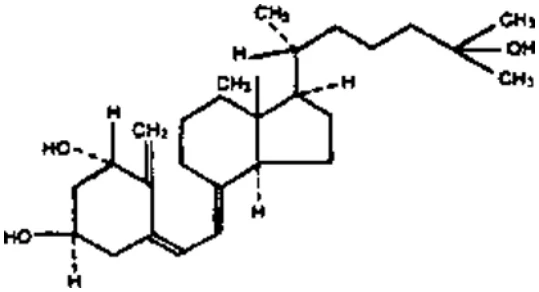
: 1α,25-dihydroxycholecalciferol; (5Z,7E)-9, 10-secocholesta-5,7,10 (19)-triene-1α,3β, 25-triol.
Molecular formula and molecular mass
: C27H44O3; 416.6 g/mol
Structural formula
:
Physicochemical properties
: Calcitriol is white or almost white crystals, anhydrous substance with a melting range of 112-115°C.
Solubility:
| Solvent | Solubility descriptive term |
|---|---|
| Water, pH 1.2 | practically insoluble |
| Water, pH 7 | practically insoluble |
| Water, pH 10 | practically insoluble |
| Ethanol | freely soluble |
| Acetone | sparingly soluble |
| Methanol | freely soluble |
| Ethyl acetate | sparingly soluble |
| Heptane | practically insoluble |
| Methyl-tbutyl ether (MTBE) | sparingly soluble |
CLINICAL TRIALS
Comparative Bioavailability Studies
A randomized, single-dose (4 x 0.5 mcg), two-treatment, two-sequence, four-period, replicated crossover comparative bioavailability study of PrJAMP Calcitriol capsules, 0.5 mcg (JAMP Pharma Corporation) and PrROCALTROL® capsules, 0.5 mcg (Hoffmann-La Roche Limited, Canada) was conducted in healthy, adult male and female subjects under fasting conditions. Comparative bioavailability data from 22 subjects that were included in the statistical analysis are presented in the following table:
SUMMARY TABLE OF THE COMPARATIVE BIOAVAILABILITY DATA
Calcitriol (4 x 0.5 mcg) From measured data corrected for baseline Geometric Mean Arithmetic Mean (CV%) | ||||
| Parameter | Test1 | Reference2 | % Ratio of Geometric Means | 90% Confidence Interval |
AUCT (pg·h/mL) | 1471.80 1671.27 (45.66) | 1561.65 1725.47 (43.88) | 94.2 | 81.7 - 108.7 |
Cmax (pg/mL) | 126.28 131.34 (24.10) | 126.12 131.39 (28.28) | 100.1 | 92.1 - 108.9 |
Tmax3 (h) | 3.50 (1.00 - 12.00) | 4.25 (1.00 - 6.00) | ||
1 PrJAMP Calcitriol (calcitriol) capsules, 0.5 mcg (JAMP Pharma Corporation)
2 PrROCALTROL® (calcitriol) capsules, 0.5 mcg (Hoffmann-La Roche Limited, Canada)
3 Expressed as the median (range) only
Note: AUCI and T1/2 could not be accurately calculated from the data obtained in this study.
Treatment with calcitriol does not affect serum magnesium levels which are already elevated in the majority of patients with severe chronic renal failure.
A number of recent reports have indicated that vitamin D analogues may cause a deterioration of renal function in chronic renal failure patients who are not on renal dialysis. One controlled study was conducted in 18 non-dialysed patients with creatinine clearances of less than 35 mL/min and mild osteodystrophy, who received daily doses of approximately 4,000 I.U. of vitamin D3 or
0.25 - 1.0 mcg of calcitriol for 6 months. Results indicated that the percentage fall in creatinine clearance was greater during treatment than during the preceding 6 months in all patients receiving calcitriol and in 7 out of 9 patients on vitamin D3. Therefore, before vitamin D analogues are used prophylactically, additional trials are necessary to show whether the benefits outweigh any hazard that may emerge.
DETAILED PHARMACOLOGY
The relative biological activity between the parent vitamin D3 and its metabolites is summarized in Table 1. Most studies of vitamin D metabolism have utilized naturally occurring cholecalciferol or vitamin D3, as the comparison standard.
Table 2 Relative Biological Effectiveness of Vitamin D3, 25-OH-D3 and Calcitriol
| Biological response | species | vitamin D3 | Relative activity* | |||||||
|---|---|---|---|---|---|---|---|---|---|---|
| 25-OH-D3 | Calcitriol | |||||||||
| Intestinal Ca2+ transport | Chick | 1.0 | 2.0 | 13 | ||||||
| Bone Ca2+ mobilization | Chick | 1.0 | 1.5 | 5-6 | ||||||
| Rat line test | Chick | 1.0 | 1.5 | 2-3 | ||||||
| Percent bone ash | Chick Chick | 1.0 1.0 | 1.6 - | 2 7-8 | ||||||
| Body growth | Chick | 1.0 | 1.0 | 5 | ||||||
* In each instance the response obtained with vitamin D3 was set equal to 1.0 and the responses obtained from an equal molar quantity of the other vitamin D3 metabolites calculated accordingly.
A single dose of calcitriol was administered orally to chicks. It was found to be at least 13 times as effective as D3 in stimulating the intestinal absorption of calcium and 5 to 6 times as effective as D3 in elevating the serum calcium level (bone calcium mobilization). In experiments where calcitriol was administered daily to chickens and rats it was equally, if not more, active than vitamin D3 bone ash, serum calcium levels and rate of growth tests.
In the intestinal cell, calcitriol and its cytoplasmic protein receptor become bound to the chromatin fraction of the cell nucleus. Thus, calcitriol directs the synthesis of new proteins or alters membrane structure in such a way as to facilitate the transcellular movement of calcium. Calcitriol also promotes resorption of bone and leads to calcium mobilization. The mechanism by which calcitriol produces mineralization of osteoids in the skeleton is uncertain but it is known that calcitriol becomes localized in the nuclei of bone cells. The mechanism whereby calcitriol acts on the kidney and parathyroid gland is obscure. It is believed that calcitriol may enhance the tubular reabsorption of calcium and phosphate. It may also have a negative feedback effect on the secretion of PTH by the parathyroid gland.
TOXICOLOGY
Acute Toxicity
Acute LD50 studies have been performed on both mice and rats.
Acute toxicity studies in mice and rats indicated that the approximate oral lethal dose of calcitriol ranged from 1.35 to 3.9 mg/kg. These values are several orders of magnitude higher than the proposed clinical dose of 0.25 mcg twice daily (approximately 8-10 ng/kg/day).
| Species | Route | LD50 Calcitriol mg/kg |
|---|---|---|
| Mice | p.o. | 2.0 |
| i.p. | 1.0 | |
| s.c. | 0.5 | |
| i.v. | 1.6 | |
| Rats | p.o. | > 5.0 |
Calcitriol (100 mcg/mL) was administered intramuscularly to rabbits. Volumes of 0.1 and
1.0 mL produced only very slight irritation (minor hemorrhage and necrosis). No hemolysis was produced following an intravenous injection of 0.2 mL/kg (20 mcg) in dogs, and no evidence of venous irritation was found 24 hours after injection.
Chronic Toxicity
Rats
Charies River CD rats received calcitriol by oral intubation daily for 26 weeks at dose levels of 0 (vehicle only), 0.02, 0.08 and 0.30 mcg/kg. A 5th group was sham intubated daily.
All rats were observed daily for signs of toxicity. Dose related changes occurred in groups receiving calcitriol. Reduction in body weight and food consumption, increased serum calcium, as well as slight changes other clinical chemistry values and organ weights were noted in the high and mid-dose groups; these were either absent or less extensive in the low-dose group.
Histologic examination of tissues from rats of all groups given calcitriol revealed calcification in kidney tubules and cardiac myofibers, as well as bone changes; in the low-dose group the changes consisted only of focal calcification and less severe bone changes. The bone changes in rats of the high-dose group consisted of alterations of the epiphyseal plate with disorganization of chondmcytes and evidence of bone resorption; there was thickening of the periosteum due to increased connective tissue.
Dogs
Calcitriol was administered orally to beagle dogs (6 dogs/group) at daily doses of 0 (vehicle only), 0.02 and 0.08 mcg/kg for 26 weeks. A 0.30 mcg/kg dosage was also included at the beginning of the study but had to be discontinued because of toxicity after 39 days.
Two dogs of the 0.30 mcg/kg/day group were sacrificed after 39 days and the remaining 4 dogs were observed for an additional 21 weeks. In these dogs, body weight loss slowly reversed and general condition improved but clinical laboratory measurements did not completely regress and soft tissue calcification was noted at autopsy. Two of the 6 dogs of the 0.08 mcg/kg/day group died. Marked anorexia, severe weight loss, deterioration of physical condition, increased serum calcium and urea nitrogen, as well as other alterations in clinical laboratory measurements, calcification of soft tissue, bone resorption with replacement by fibrous tissue and irregular calcium deposits in the epiphyseal cartilage plates were observed in the high and mid-dose group.
In the low-dose group (0.02 mcg/kg/day) inconsistent alterations in clinical laboratory measurements and pathological changes of limited extent were observed. Histopathologic changes in low-dose dogs were limited to a single calcified focus in the kidney of 1 dog, a calcified urinary bladder artery in a second and a slight bone abnormality in a third animal.
Subchronic toxicity studies in rats and dogs indicated that calcitriol at an oral dose of
20 ng/kg/day (twice daily the usual human dosage) for up to 6 months produced no or minimal adverse effects. A dose of 80 ng/kg/day (8 times the usual human dosage) for up to 6 months produced moderate adverse effects; changes seen appeared to be primarily the result of prolonged hypercalcemia.
Reproductive Studies
Fertility and General Reproductive Performance
Calcitriol was administered orally to rats at dose levels of 0, 0.02, 0.08 and 0.30 mcg/kg/day. No adverse effects on fertility, implantation, length of gestation, litter size, viability or lactation indices were noted in rat reproduction studies in which males were pretreated for 61 days and females for 14 days prior to mating and through sacrifice on either day 13 of gestation or through lactation day 21. Treatment of females resulted in a statistically significant greater weight gain. One pup from the 0.30 mcg/kg/day group appeared jaundiced. In the clinical laboratory measurements, increased serum calcium levels in the 0.30 mcg/kg dams, decreased serum phosphate levels in the 0.08 mcg/kg dams and increased blood urea nitrogen in the 0.02 mcg/kg pups were statistically significant.
Teratology
Calcitriol was administered orally to rabbits and rats at dose levels of 0, 0.02, 0.08 and
0.30 mcg/kg/day. Rabbits treated with 0.30 mcg/kg/day from day 7 through day 18 of gestation exhibited marked weight loss. Three of these fifteen animals died, two exhibiting tissue lesions suggestive of hypervitaminosis D. In the 0.30 mcg/kg/day group there was also a decreased litter size, an increased resorption rate, reduced fetal body weight and viability index, as well as increased neonatal mortality during the first postnatal day. Two litters of the 0.3 mcg/kg/day (7 fetuses) and one at the 0.08 mcg/kg/day (9 fetuses) dose levels had multiple external malformations, accompanied by skeletal visceral abnormalities. These anomalies
(16/177 fetuses) occurred at doses 4 to 15 times the dose recommended for human use.
In the rat, pregnant females were intubated from day 7 through day 15 of gestation. Maternal weight gain and average number of implantation sites were slightly reduced in the
0.30 mcg/kg/day group. A small number of isolated fetal abnormalities were seen in all groups. However, no significant differences were observed in the frequency and nature of abnormalities or skeletal variations between control and treated groups.
Perinatal and Postnatal Studies
Calcitriol was administered orally to rats at dose levels of 0, 0.02, 0.08, 0.30 mcg/kg/day. No adverse effects on average litter size, viability and lactation indices were noted in litters from female rats treated from day 15 of gestation through day 21 of lactation. One female of the
0.08 mcg/kg/day group became moribund and had to be sacrificed prior to delivery, a second had a mammary tumor, and 1 female of the 0.30 mcg/kg/day group had urinary calculi. Dams at 0.08 and 0.30 mcg/kg/day exhibited hypercalcemia and hypophosphatemia. Elevated blood urea nitrogens were noted only at 0.30 mcg/kg/day dose. Only elevated serum calcium was found in pups at 0.08 and 0.30 mcg/kg, and a slight elevation in bone ash only at 0.30 mcg/kg.
Mutagenicity
There was no evidence of mutagenicity as studied by the Ames Method.
REFERENCES
- 1. Coburn JW, Hartenbower DL, Brickman AS. Advances in vitamin D metabolism as they pertain to chronic renal disease. Am J Clin Nut 1976;29:1283-99.
- 2. Ponchon G, DeLuca H.F. The role of the liver in the metabolism of vitamin D. J Clin Invest 1969;48:1273-9.
- 3. Ponchon G, Kennan AL, DeLuca HF. Activation of vitamin D by the liver. J Clin Invest 1969;48:2032-7.
- 4. Midgett RJ, et al. Studies on calciferol metabolism VI. The renal production of the biologically active form of vitamin D, 1,25-dihydroxycholecalciferol; species, tissue and subcellular distribution. J Clin Endocrinol Metab 1973;36:1153-61.
- 5. Coburn, JW, Hartenbower DL, Norman AW. Metabolism and action of the hormone vitamin D. Its relation to diseases of calcium homeostasis. West J Med 1974;121:22-44.
- 6. Wong RG, et al. Biological Effects of 1,25-dihydroxycholecalciferol (a highly active vitamin D metabolite) in acutely uremic rats. J Clin Invest 1972;51:1287-91.
- 7. Gray RW, et al. The metabolism of vitamin D3 and 25-hydroxy-vitamin D3 in normal and anephric humans. J Clin Endocrinol Metab 1974;39:1045-56.
- 8. Mawer EB, et al. Failure of formation of 1,25-dihydroxy-cholecalciferol in chronic renal insufficiency. Lancet 1973;1:626-8.
- 9. Haussler M, McCain TA. Basic and clinical concepts related to vitamin D metabolism and action. New Eng J Med 1977;297:974-83.
- 10. Favus MJ. Vitamin D physiology and some clinical aspects of the vitamin D endocrine system. Med Clinics of NA 1978;62:1291-1317.
- 11. Sutton RAL, et al. Effects of vitamin D and parathyroid hormone on renal tubular calcium reabsorption. International Symposium on Urolithiasis Research. Davos, Switzerland; 1976 (Abstract).
- 12. Ahmed KY, et al. Long-term effects of small doses of 1,25-dihydroxycholecalciferol in renal osteodystrophy. Lancet 1978;1:629-32.
- 13. Myrtle JF, Norman AW. Vitamin D a cholecalciferol metabolite highly active in promoting intestinal calcium transport. Science 1971;171:79-82.
- 14. Norman AW, Wong RG. Biological activity of the vitamin D metabolite, 1,25-dihydroxycholecalciferol in chickens and rats. J Nutr 1972;102:1709-18.
- 15. Haussler MR, Norman AW. Chromosomal receptor for a vitamin D metabolite. Proc Natl Acad Sc (USA) 1969;62:155-62.
- 16. Tsai HC, Norman AW. Studies on calciferol metabolism VIII. Evidence for a cytoplasmic receptor for 1,25 dihydroxy-vitamin D3 in the intestinal Mucosa. J Biol Chem 1973;248:5967-75.
- 17. Tsai HC, Wong RG, Norman AW. Studies on calciferol metabolism IV. Subcellular localizatlon of 1,25-dihydroxy-vitamin D in intestinal mucosa and correlation with increased calcium transport. J Biol Chem 1972;247:5511-9.
- 18. Brickman AS, et al. Biological action of 1,25-dihydroxy-vitamin D3 in the rachitic dog. Endocrinology 1973;92:728-34.
- 19. Weber JC, Pons U, Kodicek E. The localization of 1,25-dihydroxycholecalciferol in bone cell nuclei of rachitic chicks. Biochem J 1971;125:147-153.
- 20. Puschett JB, et al. The acute renal tubular effects of 1,25-dihydroxycholecalciferol. Proc Soc Exp Biol Med 1972;141:379-84.
- 21. Brickman AS, et al. Therapy with 1,25-dihydroxy-vitamin D3 in the management of renal osteodystrophy. In: eds. Norman AW, et al. Vitamin D and Problems Related to Uremic Bone Disease. Berlin, New York: Walter De Gruyter, 1975:241-7.
- 22. Mawer BE, et al. Metabolic fate of administered 1,25-dihydroxycholecalciferol in controls and in patients with hypoparathyroidism. Lancet 1976;1:1203-6.
- 23. Avioli LV, Hadda JG. Vitamin D current concepts. Metabolism 1973;22:507.
- 24. Smith JE, Goodman DS. The turnover and transport of vitamin D and of a polar metabolite with the properties of 1,25-dihydroxycholecalciferol in human plasma. J Clin Invest 1971;50:2159-67.
- 25. Eisman JA, et al. 1,25-dihydroxy-vitamin D in biological fluids: a simplified and sensitive assay. Science 1976;193:1021-3.
- 26. Coburn JW, et al. Clinical efficacy of 1,25-dihydroxy-vitamin D3 in renal osteodystrophy. In: Norman AW, Schaefer K, ed. Vitamin D, Biochem Chemical and Clinical Aspects Related to Calcium Metab. 3rd Workshop, Asilomar, Cal. Jan. Berlin: De Gruyter, 1977:657-66.
- 27. Tougaard L, et al. Controlled trial of 1-hydroxycholecalciferol in chronic renal failure. Lancet 1976;1:1044-7.
- 28. Winterborn MH, et al. Impairment of renal function in patients on 1-hydroxycholecalciferol. Lancet 1978;2:150-1.
- 29. Christiansen C, et al. Deterioration of renal function during treatment of chronic renal failure with 1,25-dihydroxycholecalciferol. Lancet 1978;2:700-3.
- 30. Balsan S, et al. Metabolites and analogs of vit. D: therapeutic effects in D-deficiency and Pseudo-deficiency rickets. In: Norman AW, et al, eds. Vitamin and Problems Related to Uremic Bone Disease. Berlin: Walter De Gruyter, 1975:249-58.
- 31. Brickman AS, et al. Actions of 1,25-dihydroxycholecalciferol in patients with hypophatemic, vitamin D-resistant rickets. New Eng J Med 1973;289:495-8.
- 32. Davies M, et al. 1,25-dihydroxycholecalciferol in hypoparathyroidism. Lancet 1977;1:55-9.
- 33. Evans IM, et al. The clinical use of synthetic 1,25-dihydroxycholecalciferol. Calcif Tissue Res 1976;21(suppl)236-41.
- 34. Rosen JF, et al. 1,25-dihydroxycholecalciferol: its use in the long term management of idiopathic hypoparathyroidism in children. J Clin Endocrinol & Metabol 1977;45:457-68.
- 35.
Sinha TK, De Luca HF, Bell NH. Evidence for a defect in the formation of
1,25-dihydroxy-vitamin D in pseudohypoparathyroidism. Metabolism 1977;26:731-8.
- 36. Robitaille P, et al. Renal osteodystrophy in children treated with 1,25-dihydroxycholecalciferol. Acta Paediatr Scand 1984;73:315-24.
- 37. Chesney RW, et al. Influence of long-term oral 1,25-dihydroxy vitamin D in childhood renal osteodystrophy. Contr Nephrol 1980;18:55-71.
- 38. Glorieux FH, et al. Bone response to phosphate salts, ergocalciferol, and calcitriol in hypophosphatemic vitamin D-resistant rickets. New Eng J Med 1980;303:1023-31.
- 39. Delvin EE, et al. Vitamin D dependency: replacement therapy with calcitriol. J Ped 1981;99:26-34.
- 40. Caplan RH, Beguin EA. Hypercalcemia in a calcitriol-treated hypoparathroid woman during lactation. Obstet Gynecol 1990;76:485-489.
- 41. Briggs GG, et al. Vitamin D: Fetal risk summary and breast feeding summary. In: Drugs in Pregnancy and Lactation 1994;4:898-903.
- 42. Bell NH and Stern PH. Hypercalcemia and increases in serum hormone value during prolonged administration of 1,25-dihydroxyvitamin D. New Eng J Med 1978;298:1241- 1243.
- 43. Tsukamoto Y, et al. The oral 1,25 dihydroxyvitamin D3 pulse therapy in hemodialysis patients with severe secondary hyperparathyroidism. Nephron 1991;57:23-28.
- 44. Tsukamoto Y, et al. Pharmacological parathyroidectomy by oral 1,25 (OH)2D3 pulse therapy (letter). Nephron 1989;51:130-131.
- 45. Muramoto H, et al. Treatment of refractory hyperparathyroidism in patients on hemodialysis by intermittent oral administration of 1,25 (OH)2 Vitamin D3. Nephron 1991;58:288-294.
- 46. O’Loughlin PD, et al. Duration of action of calcitriol on calcium absorption. In: 8th Workshop on Vitamin D, July 5-10, 1991, Paris, France;31:Poster No:46.
- 47. Mason RS, Lissner D, Posen S, et al. Blood concentrations of dihydroxylated vitamin D metabolites after an oral dose. BMJ 1980;280:449-450.
- 48. Product Monograph PrROCALTROL® (calcitriol capsules 0.25 mcg and 0.5 mcg), Searchlight Pharma Inc., Submission Control No.: 247457, Date of Revision: January 26, 2021.