


Product Monograph - Rayaldee
RECENT MAJOR LABEL CHANGES
Not applicable.
TABLE OF CONTENTS
RECENT MAJOR LABEL CHANGES ........................................................................................ 2
TABLE OF CONTENTS ............................................................................................................. 2
PART I: HEALTH PROFESSIONAL INFORMATION ................................................................. 4
1 INDICATIONS ................................................................................................................. 4
Pediatrics ........................................................................................................................ 4 Geriatrics ......................................................................................................................... 4
2 CONTRAINDICATIONS .................................................................................................. 4
3 DOSAGE AND ADMINISTRATION ................................................................................ 5
Dosing Considerations .................................................................................................... 5 Recommended Dose and Dosage Adjustment ................................................................ 5 Administration .................................................................................................................. 5 Missed Dose.................................................................................................................... 5
4 OVERDOSAGE ............................................................................................................... 6
5 DOSAGE FORMS, STRENGTHS, COMPOSITION AND PACKAGING ......................... 7
6 WARNINGS AND PRECAUTIONS ................................................................................. 7
Endocrine and Metabolism: ............................................................................................. 7 Hypercalcemia ................................................................................................................ 7 Digitalis Toxicity .............................................................................................................. 8 Special Populations ......................................................................................................... 8 Pregnant Women ........................................................................................................... 8 Breast-feeding ................................................................................................................ 8 Pediatrics (< 18 years of age): ........................................................................................ 8 Geriatrics (≥ 65 years of age): ........................................................................................ 8
7 ADVERSE REACTIONS ................................................................................................. 8
Adverse Reaction Overview ............................................................................................ 8 Clinical Trial Adverse Reactions ...................................................................................... 9 Less Common Clinical Trial Adverse Reactions (<1.4%): .............................................. 10
8 DRUG INTERACTIONS ................................................................................................ 11
Overview ....................................................................................................................... 11 Drug-Drug Interactions .................................................................................................. 12 Drug-Food Interactions .................................................................................................. 13 Drug-Herb Interactions .................................................................................................. 13 Drug-Laboratory Test Interactions ................................................................................. 13
9 ACTION AND CLINICAL PHARMACOLOGY ............................................................... 13
Mechanism of Action ..................................................................................................... 13 Pharmacodynamics ....................................................................................................... 14 Pharmacokinetics .......................................................................................................... 14
10 STORAGE, STABILITY AND DISPOSAL ..................................................................... 15
11 PHARMACEUTICAL INFORMATION ........................................................................... 16
12 CLINICAL TRIALS ........................................................................................................ 17
Trial Design and Study Demographics........................................................................... 17 Study Results ................................................................................................................ 18
13 NON-CLINICAL TOXICOLOGY .................................................................................... 19
PATIENT MEDICATION INFORMATION ................................................................................. 21
PART I: HEALTH PROFESSIONAL INFORMATION
1 INDICATIONS
RAYALDEE (calcifediol modified-release capsules, 30 mcg) is a vitamin D3 analogue indicated for the treatment of secondary hyperparathyroidism (SHPT) in adults with Stage 3 or 4 chronic kidney disease (CKD) and low serum 25-hydroxyvitamin D levels [less than 75 nmol/L (30 ng/mL) at initiation].
RAYALDEE is not indicated for the treatment of secondary hyperparathyroidism in patients with stage 5 chronic kidney disease or in patients with end-stage renal disease on dialysis.
Pediatrics
Pediatrics (< 18 years of age): No data are available to Health Canada; therefore, Health Canada has not authorized an indication for pediatric use.
Geriatrics
Geriatrics (≥ 65 years of age): Evidence from clinical studies and experience suggests that use of RAYALDEE in the geriatric population is not associated with differences in safety or effectiveness.
2 CONTRAINDICATIONS
RAYALDEE is contraindicated
- in patients who are hypersensitive to this drug or to any ingredient in the formulation, including any non-medicinal ingredient, or component of the container. For a complete listing, see Dosage Forms, Strengths, Composition and Packaging.
- in patients with hypercalcemia or evidence of vitamin D toxicity
3 DOSAGE AND ADMINISTRATION
Dosing Considerations
- Ensure serum calcium is below 2.45 mmol/L (9.8 mg/dL) before initiating treatment (see Warnings and Precautions).
Recommended Dose and Dosage Adjustment
The initial dose of RAYALDEE is 30 mcg administered orally once daily at bedtime.
The maintenance dose of RAYALDEE should target serum total 25-hydroxyvitamin D levels between 75 and 250 nmol/L (30 and 100 ng/mL) , intact parathyroid hormone (PTH) levels within the desired therapeutic range, serum calcium (corrected for low albumin) within the normal range and serum phosphorus below 1.78 mmol/L (5.5 mg/dL).
Monitor serum calcium, serum phosphorus, serum total 25-hydroxyvitamin D and intact PTH levels at a minimum of 3 months after initiation of therapy or dose adjustment, and subsequently at least every 6 to 12 months.
Increase the dose to 60 mcg orally once daily at bedtime after approximately 3 months, if intact PTH remains above the desired therapeutic range. Prior to raising the dose, ensure serum calcium is below 2.45 mmol/L (9.8 mg/dL), serum phosphorus is below 1.78 mmol/L (5.5 mg/dL) and serum total 25-hydroxyvitamin D is below 250 nmol/L (100 ng/mL).
Suspend dosing if intact PTH is persistently and abnormally low to reduce the risk of adynamic bone disease (see Warnings and Precautions), if serum calcium is consistently above the normal range to reduce the risk of hypercalcemia (see Warnings and Precautions) or if serum total 25-hydroxyvitamin D is consistently above 250 nmol/L (100 ng/mL). Restart at a reduced dose after these laboratory values have normalized.
There are no special dosing recommendations for pediatrics as Health Canada has not authorized the use of RAYALDEE in this patient population.
Administration
RAYALDEE capsules should be swallowed whole. RAYALDEE should be taken once a day at bedtime.
Missed Dose
Patients should be instructed to skip a missed dose and resume taking the medicine at the next regularly scheduled time. An extra dose should not be administered to make up for a missed dose.
4 OVERDOSAGE
Excessive administration of RAYALDEE can cause hypercalciuria, hypercalcemia, hyperphosphatemia, or oversuppression of intact PTH. Common symptoms of vitamin D overdosage may include constipation, decreased appetite, dehydration, fatigue, irritability, muscle weakness, or vomiting.
Treatment of acute accidental overdosage with RAYALDEE should consist of general supportive measures. If the overdosage is discovered within a short time, induce emesis or perform gastric lavage to prevent further absorption. Obtain serial serum and urine calcium measurements, and assess any electrocardiographic abnormalities due to hypercalcemia. Discontinue supplemental calcium. Treat with standard medical care if persistent and markedly elevated serum calcium levels occur.
Calcifediol is not significantly removed by dialysis.
For management of a suspected drug overdose, contact your regional poison control centre.
5 DOSAGE FORMS, STRENGTHS, COMPOSITION AND PACKAGING
Table 1: Routes of Administration, Dosage Forms, Strengths and Composition
RAYALDEE capsules are presented as a blue oval soft capsule with a white to off-white to slightly blue waxy fill. RAYALDEE capsules are printed in white, pharmaceutically-acceptable ink with the letter “O”.
Packaging:
The container closure system used for RAYALDEE capsules (30 count and 60 count) consists of a High Density PolyEthylene (HDPE) bottle and a high impact polypropylene/copolymer child-resistant cap with an inner heat-seal liner.
6 WARNINGS AND PRECAUTIONS
Endocrine and Metabolism:
Hypercalcemia
Hypercalcemia may occur during RAYALDEE treatment (see Adverse Reactions). Acute hypercalcemia may increase the risk of cardiac arrhythmias and seizures and may potentiate the effect of digitalis on the heart (see Warnings and Precautions, Digitalis Toxicity ). Chronic hypercalcemia can lead to generalized vascular calcification and other soft-tissue calcification. Severe hypercalcemia may require emergency attention.
Hypercalcemia may be exacerbated by concomitant administration of high doses of calcium containing preparations, thiazide diuretics, or other vitamin D compounds. In addition, high intake of calcium and phosphate concomitantly with vitamin D compounds may lead to hypercalciuria and hyperphosphatemia. In these circumstances, frequent serum calcium monitoring and RAYALDEE dose adjustments may be required. Patients with a history of hypercalcemia prior to initiating therapy with RAYALDEE should be monitored more frequently for possible hypercalcemia during therapy.
Patients should be informed about the symptoms of elevated serum calcium, which include feeling tired, difficulty thinking clearly, loss of appetite, nausea, vomiting, constipation, increased thirst, increased urination, and weight loss.
| Route of Administration | Dosage Form / Strength/Composition | Non-medicinal Ingredients |
| oral | Capsule, 30 mcg [micrograms]/ calcifediol | Butylated hydroxytoluene, carrageenan, dehydrated alcohol, dibasic sodium phosphate, FD&C blue #1, hypromellose, lauroyl polyoxylglycerides, medium chain triglycerides, mineral oil, modified corn starch, mono- and di-glycerides, paraffin, propylene glycol, sorbitol sorbitan solution, titanium dioxide and water. |
Digitalis Toxicity
Hypercalcemia of any cause, including RAYALDEE ( See Warnings and Precautions, Hypercalcemia), increases the risk of digitalis toxicity. In patients using RAYALDEE concomitantly with digitalis compounds, monitor both serum calcium and patients for signs and symptoms of digitalis toxicity and increase the frequency of monitoring when initiating or adjusting the dose of RAYALDEE (see Dosage and Administration).
Adynamic Bone Disease
Adynamic bone disease with subsequent increased risk of fractures may develop if intact PTH levels are suppressed by RAYALDEE to abnormally low levels. Monitor intact PTH levels and adjust RAYALDEE dose, if needed (see Dosage and Administration).
Special Populations
Pregnant Women
Calcifediol has been shown to be teratogenic in rabbits when given in doses of 8 to 16 times the human dose of 60 mcg/day, based on body surface area.
There are no adequate and well-controlled studies in pregnant women. RAYALDEE should be used during pregnancy only if the potential benefit justifies potential risk to the fetus.
Breast-feeding
Limited available evidence indicates that calcifediol is poorly excreted in human milk. Caution should be exercised when RAYALDEE is administered to a nursing woman.
Pediatrics (< 18 years of age):
There are no special Warnings or Precautions applicable to pediatrics as Health Canada has not authorized the use of RAYALDEE in this patient population.
Geriatrics (≥ 65 years of age):
Of the total number of subjects in phase 3 placebo-controlled clinical studies of RAYALDEE, 63% were ≥ 65 years of age and 22% were ≥ 75 years of age. No overall differences in the safety or efficacy of RAYALDEE were observed between subjects 65 years and older and younger subjects.
7 ADVERSE REACTIONS
Adverse Reaction Overview
The clinical safety of RAYALDEE was evaluated in a 6-week Phase 2 study, two identical Phase 3 placebo-controlled pivotal studies performed in patients with either Stage 3 or 4 chronic kidney
disease and serum total 25-hydroxyvitamin D levels less than 75 nmol/L (30 ng/mL), and a long-term safety study.
Comparable proportions of subjects in both treatment groups and in both CKD stage 3 and 4 groups experienced at least one serious treatment emergent adverse event. A greater proportion of RAYALDEE treated subjects experienced a serious treatment emergent adverse event of congestive cardiac failure or increased blood creatinine. The majority of these events resolved while continuing treatment.
Clinical Trial Adverse Reactions
Because clinical trials are conducted under very specific conditions, the adverse reaction rates observed in the clinical trials may not reflect the rates observed in practice and should not be compared to the rates in the clinical trials of another drug. Adverse reaction information from clinical trials is useful for identifying drug-related adverse events and for approximating rates.
The data in Table 2 are derived from pivotal studies CTAP101-CL-3001 and CTAP101-CL-3002 (See Clinical Trials).These data reflect exposure of a total of 285 subjects to either RAYALDEE 30 or 60 mcg daily or placebo for up to 6 months (mean 24 weeks, range 1 to 31 weeks). The mean age of the pooled pivotal study population was 66 years (range 25-85 years). Half of the subjects were male, 65% were White, and 32% were African-American or Black. At baseline, subjects had secondary hyperparathyroidism; stage 3 (52%) or 4 (48%) CKD with a mean estimated Glomerular Filtration rate (GFR) at baseline of 31 mL/min/1.73m2 without macroalbuminuria and serum total 25-hydroxyvitamin D levels less than 30 ng/mL (75 nmol/L).
Table 2 shows common adverse reactions associated with the use of RAYALDEE in the pooled placebo-controlled trials. These adverse reactions were not present at baseline, occurred more commonly on RAYALDEE than on placebo, and occurred in at least 1.4% of patients treated with RAYALDEE.
Table 2: Adverse Reactions in Placebo-controlled Trials Reported in ≥ 1.4% of RAYALDEE-Treated Subjects By Term and Treatment Group
| System Organ Class/Preferred Term | Placebo N=144 n (%) | Rayladee N=285 n (%) |
| Blood and lymphatic system | ||
| Anaemia | 5 (3.5) | 14 (4.9) |
| Cardiac | ||
| Cardiac failure congestive | 1 (0.7) | 10 (3.5) |
| Gastrointestinal | ||
| Constipation | 4 (2.8) | 9 (3.2) |
| Infections and infestations | ||
| Bronchitis | 1 (0.7) | 8 (2.8) |
| Nasopharyngitis | 4 (2.8) | 14 (4.9) |
| Pneumonia | 1 (0.7) | 4 (1.4) |
| Injury, poisoning, and procedural complications |
| Contusion | 0 (0.0) | 5 (1.8) |
| Investigations | ||
| Blood creatinine increased | 2 (1.4) | 14 (4.9) |
| Metabolism and nutrition | ||
| Hyperkalaemia | 1 (0.7) | 7 (2.5) |
| Hyperuricaemia | 1 (0.7) | 5 (1.8) |
| Musculoskeletal and connective tissue | ||
| Osteoarthritis | 1 (0.7) | 6 (2.1) |
| Respiratory, thoracic and mediastinal | ||
| Chronic obstructive pulmonary disease | 0 (0.0) | 4 (1.4) |
| Cough | 3 (2.1) | 10 (3.5) |
| Dyspnoea | 4 (2.8) | 12 (4.2) |
Increase in Serum Calcium
Patients randomized to RAYALDEE experienced a greater mean increase in serum calcium than patients randomized to placebo, i.e., 0.05 mmol/L (0.2 mg/dL) on RAYALDEE versus 0.025 mmol/L (0.1 mg/dL) on placebo from baseline to trial end. Six subjects (2%) in the RAYALDEE treatment group and no subjects (0%) in the placebo group required dose reductions for protocol-defined hypercalcemia (two consecutive serum calcium values greater than 2.57 mmol/L (10.3 mg/dL). A total of 4.2% of RAYALDEE treated subjects and 2.1% of placebo treated subjects experienced at least 1 elevation in serum calcium above the upper limit of normal 2.62 mmol/L (10.5 mg/dL).
Increase in Serum Phosphorus
Patients randomized to RAYALDEE experienced a greater mean increase in serum phosphorus than patients randomized to placebo, i.e. 0.06 mmol/L (0.2 mg/dL) on RAYALDEE versus 0.03 mmol/L (0.1 mg/dL) on placebo from baseline to trial end. One subject (0.4%) in the RAYALDEE treatment group met protocol-defined hyperphosphatemia (two consecutive serum phosphorus values >1.78 mmol/L (5.5 mg/dL) deemed to be study drug related) compared to no subjects in the placebo group. A total of 45% of RAYALDEE treated subjects and 44% of placebo treated subjects experienced at least one elevation in serum phosphorus above the upper limit of normal 1.45 mmol/L (4.5 mg/dL).
Less Common Clinical Trial Adverse Reactions (<1.4%):
The following events were observed in <1.4% of 435 subjects treated with RAYALDEE in Phase 2 and 3 clinical studies.
Ear and labyrinth: Vertigo
Eye disorders: Cataract
Gastrointestinal disorders: Abdominal discomfort, abdominal pain upper, dry mouth, dyspepsia, frequent bowel movements, nausea, vomiting
General disorders and administration site conditions: Asthenia, chest pain, fatigue, oedema, pain
Infections and infestations: Anal abscess, gastroenteritis
Investigations: Aspartate aminotransferase increased, blood 1,25-dihydroxycholecalciferol increased, blood 25-hydroxycholecalciferol increased, blood glucose increased, blood parathyroid hormone increased, blood phosphorous increased, C-telopeptide increased, gamma-glutamyltransferase increased, serum procollagen type I N-terminal propeptide increased, weight decreased, weight increased
Metabolism and nutrition disorders: Decreased appetite, gout, hypervitaminosis D, hyperphosphataemia,, hypocalcaemia, thirst
Musculoskeletal and connective tissue disorders: Muscle twitching, muscle weakness, musculoskeletal stiffness
Neoplasms benign, malignant and unspecified (including cysts and polyps): Adenocarcinoma pancreas, breast cancer in situ
Nervous system disorders: Dizziness, dizziness postural, dysgeusia, headache, migraine, presyncope
Renal and urinary disorders: Pollakiuria, renal failure, renal failure chronic, urinary retention
Respiratory, thoracic and mediastinal disorders: Asthma, epistaxis
Skin and subcutaneous tissue disorders: Angioedema, pruritis, rash erythematous, seborrhoeic dermatitis
Vascular disorders: Hot flush, hypertension, phlebitis
Long-term safety:
The long term safety of RAYALDEE was evaluated in a 26-week open label long-term safety extension study which enrolled 298 patients who had completed either Phase 3 study. All patients received RAYALDEE regardless of prior treatment. Subjects who had previously received 26 weeks of RAYALDEE treatment continued to receive the same dose (either 30 or 60 mcg) administered daily at bedtime for a further 26 weeks. Thus, a total of 260 subjects completed the extension study, of whom 169 subjects completed 52-weeks of active treatment. No new adverse reactions were noted.
Post-Market Adverse Drug Reactions
There are currently no post-marketing data available.
8 DRUG INTERACTIONS
Overview
Calcifediol is converted to calcitriol by cytochrome P450 27B1 (CYP27B1), also called 1-alpha hydroxylase, primarily in the kidney. Co-administration of cytochrome P450 inhibitors, such as ketoconazole, may alter serum levels of calcifediol.
The results of an in vitro alcohol study indicate that alcohol does not affect the in vitro release of calcifediol from RAYALDEE capsules.
Drug-Drug Interactions
The drugs listed in this table are based on either drug interaction case reports or studies, or potential interactions due to the expected magnitude and seriousness of the interaction (i.e., those identified as contraindicated).
Table 3: Established or Potential Drug-Drug Interactions
| Common name | Source of Evidence | Effect | Clinical comment |
| Over the counter Vitamin D products | T | In combination with RAYALDEE, could produce increases in serum 25- hydroxyvitamin D to levels above 100 ng/mL (250 nmol/L) | Caution should be used when treating patients with both drugs, including monitoring more frequently for possible hypercalcemia. |
| Vitamin D receptor activators | T | Both RAYALDEE and Vitamin D receptor activators are effective in suppressing elevated plasma iPTH and their combined actions would be expected to be additive. | Caution should be used when treating patients with both drugs, including monitoring more frequently for possible hypercalcemia. |
Cytochrome P450 inhibitors,such as ketoconazole, atazanavir, clarithromycin, indinavir, itraconazole, nefazodone, nelfinavir, ritonavir, saquinavir, telithromycin or voriconazole as well as cobicistat containing products. | T | May inhibit enzymes involved in vitamin D metabolism (CYP24A1 and CYP27B1), and may alter serum levels of calcifediol. | Dose adjustment of RAYALDEE may be required, and serum 25-hydroxyvitamin D, intact PTH and serum calcium concentrations should be closely monitored if a patient initiates or discontinues therapy with a strong CYP3A4 inhibitor. |
| Thiazides | T | Thiazides are known to induce hypercalcemia by reducing excretion of calcium in the urine. | Concomitant administration of thiazides with RAYALDEE may cause hypercalcemia. Patients may require more frequent serum calcium monitoring in this setting. |
| Common name | Source of Evidence | Effect | Clinical comment |
| Cholestyramine | T | Has been reported to reduce intestinal absorption of fat-soluble vitamins and may impair the absorption of calcifediol, the active ingredient in RAYALDEE. | Dose adjustment of RAYALDEE may be required, and serum total 25-hydroxyvitamin D, intact PTH and serum calcium concentrations should be closely monitored if a patient initiates or discontinues therapy with cholestyramine. |
| Phenobarbital or other anticonvulsants or other compounds that stimulate microsomal hydroxylation | T | May cause reduction in the half-life of calcifediol. | Dose adjustment of RAYALDEE may be required, and serum total 25-hydroxyvitamin D, intact PTH and serum calcium concentrations should be closely monitored if a patient initiates or discontinues therapy with phenobarbital or other anticonvulsants. |
Legend: C = Case Study; CT = Clinical Trial; T = Theoretical
Drug-Food Interactions
High fat, high calorie meal may affect the absorption of a supratherapeutic dose of calcifediol, however, the clinical significance of this finding is unclear.
Drug-Herb Interactions
Interactions with herbal products have not been studied.
Drug-Laboratory Test Interactions
Interactions with laboratory tests are not expected due to the endogenous nature of the active ingredient of RAYALDEE, calcifediol.
9 ACTION AND CLINICAL PHARMACOLOGY
Mechanism of Action
Calcifediol (25-hydroxyvitamin D) is a prohormone of the active form of vitamin D3, calcitriol (1,25-dihydroxyvitamin D3). Calcifediol is converted to calcitriol by cytochrome P450 27B1 (CYP27B1), also called 1-alpha hydroxylase, primarily in the kidney. Calcitriol binds to the vitamin D receptor in target tissues and activates vitamin D responsive pathways that result in increased intestinal absorption of calcium and phosphorus and reduced parathyroid hormone synthesis.
Pharmacodynamics
In repeat-dose clinical studies with RAYALDEE, increased levels of serum total 25- hydroxyvitamin D were associated with corresponding increases in serum total 1,25-dihydroxyvitamin D concentrations and reductions in circulating plasma intact PTH observed within the first two weeks of RAYALDEE treatment (see Clinical Trials).
Pharmacokinetics
Table 4: Summary of Baseline-Adjusted Pharmacokinetic Parameters for Calcifediol
Cmax (ng/mL) | Tmax (days) | t½ (days) | AUC0-∞ (ng·h/mL) | CL (L/h) | Vd (L) | |
| Healthy Volunteers following a single dose (mean) | ||||||
| 900 mcg (n=10) | 35.87 | 0.9 | 11.28 | 9418.0 | 0.027 | 8.78 |
| Subject with Stage 3 CKD following repeat dose for 6 weeks (mean) | ||||||
| 30 mcg (n = 12) | 27.75 | 37.75 | 25.32 | 689.15 | NA | NA |
| 60 mcg (n = 16) | 60.33 | 41.13 | 32.67 | 1447.80 | NA | NA |
Absorption:
No food effect study was conducted with 30 mcg and 60 mcg doses of RAYALDEE. However, a food effect study with a supratherapeutic dose of 450 mcg in healthy subjects showed an approximately 5-fold increase in maximum serum calcifediol concentration (Cmax) and a 3.5-fold increase in AUC0-t when RAYALDEE was administered with a high fat, high calorie meal compared to fasting.
Exposure to calcifediol increased proportionally over the dose range of 30 to 90 mcg following repeated daily administration of RAYALDEE at bedtime to subjects with secondary hyperparathyroidism, chronic kidney disease and vitamin D insufficiency. Steady-state levels of serum total 25-hydroxyvitamin D are reached after approximately 3 months (see Clinical Trials).
Distribution:
Calcifediol is extensively bound to plasma proteins (>98%). The mean apparent volume of distribution is 8.8 L in healthy subjects following a single oral dose of modified release calcifediol, and 30.1 L in subjects with stage 3 or 4 chronic kidney disease following repeated dosing with RAYALDEE.
Metabolism:
Production of calcitriol from calcifediol is catalyzed by the 1-alpha-hydroxylase enzyme, CYP27B1, located in the kidney and other tissues. CYP24A1, located in all vitamin D- responsive tissues, catabolizes both calcifediol and calcitriol to inactive metabolites.
Elimination:
Excretion of calcifediol occurs primarily through the biliary fecal route.
Special Populations and Conditions
Based on a population pharmacokinetic analysis, age, gender and race had no meaningful impact on steady-state concentrations of calcifediol following RAYALDEE administration.
Hepatic Insufficiency:
The pharmacokinetics of RAYALDEE have not been investigated in patients with hepatic impairment.
Renal Insufficiency:
Based on the population pharmacokinetics analysis, there was no meaningful difference in calcifediol steady-state concentrations following repeated RAYALDEE administration in patients with stage 3 or stage 4 chronic kidney disease.
10 STORAGE, STABILITY AND DISPOSAL
Store at room temperature (15°C to 30°C). Do not freeze.
PART II: SCIENTIFIC INFORMATION
11 PHARMACEUTICAL INFORMATION
Drug Substance
Proper name: calcifediol
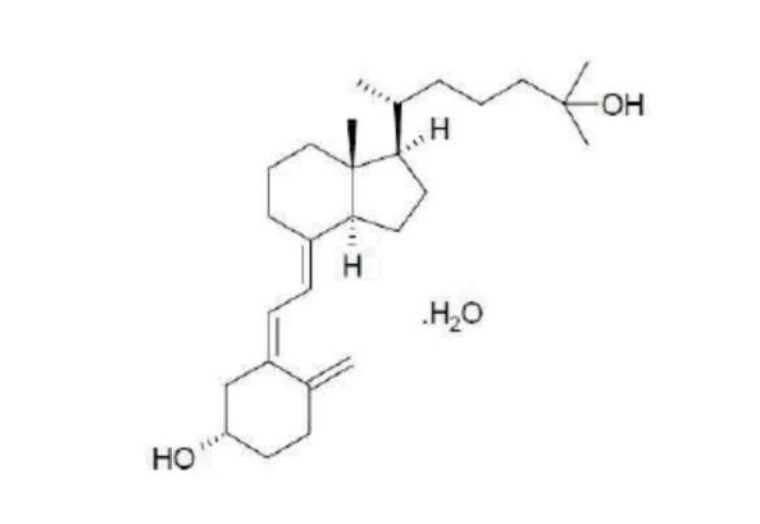
Chemical name: (3β, 5Z, 7E)-9,10-Secocholesta-5,7,10(19)-triene-3,25-diol monohydrate
Molecular formula and molecular mass: C27H44O2 · H2O, 418.65 g/mol
Structural formula:
Physicochemical properties:
Appearance: White to almost white crystals.
Solubility at 20°C: Calcifediol is practically insoluble in water; freely soluble in alcohol; soluble in fatty oils.
Isomers: A reversible isomerization of calcifediol to pre-calcifediol (pre-vitamin)
may take place in solution, depending on temperature and time.
Polymorphs: Calcifediol does not show polymorphism.
12 CLINICAL TRIALS
Trial Design and Study Demographics
The efficacy and safety of RAYALDEE were evaluated in two identical multicenter, randomized, placebo-controlled, double-blind trials in patients with secondary hyperparathyroidism, stage 3 or 4 chronic kidney disease and serum total 25-hydroxyvitamin D levels between 25 and 75 nmol/L (10 and 30 ng/mL). Subjects were stratified by chronic kidney disease (CKD) stage and randomized in a 2:1 ratio to receive RAYALDEE or matching placebo at bedtime over 26 weeks. The dose of RAYALDEE was 30 mcg once daily for the first 12 weeks and either 30 or 60 mcg once daily for the last 14 weeks. The dose was increased to 60 mcg at the start of week 13 if the plasma intact PTH (iPTH) level was greater than 7.4 pmol/L (70 pg/mL), the serum 25-hydroxyvitamin D level was less than 162 nmol/L (65 ng/mL) and the serum calcium level was less than 2.4 mmol/L (9.8 mg/dL).
Table 5: Summary of Patient Demographics for Clinical Trials in Patients with Secondary Hyperparathryroidism, Stage 3 or 4 CKD, and Serum Total 25- Hydroxyvitamin D levels between 10 and 30 ng/mL
| Study # | Trial design | Dosage, route of administration and duration | Study subjects (n) | Mean age (Range) | Sex |
CTAP10 1-CL- 3001 | Multicenter, randomized, placebo- controlled, double-blind | 30 mcg administered orally once daily for the first 12 weeks and either 30 or 60 mcg daily for the last 14 weeks. | 213 total; 72 received placebo and 141 received RAYALDEE | RAYALDEE: 64 (30 - 83) Placebo: 65 (25 – 85) | RAYALDEE: 71 female, 70 male Placebo: 33 female, 39 male |
CTAP10 1-CL- 3002 | Multicenter, randomized, placebo- controlled, double-blind | 30 mcg administered orally once daily for the first 12 weeks and either 30 or 60 mcg daily for the last 14 weeks. | 216 total; 72 received placebo and 144 received RAYALDEE | RAYALDEE: 67 (29-85) Placebo: 65 (35 – 84) | RAYALDEE: 71 female, 73 male Placebo: 39 female, 33 male |
The subjects’ mean age was 66 years (range 25-85); 50% were male, 65% White, 32% African-American or Black and 3% Other. At baseline, subjects had secondary hyperparathyroidism, and stage 3 (52%) or stage 4 (48%) CKD without macroalbuminuria. The most common causes of CKD were diabetes and hypertension and the mean estimated GFR was 31 mL/min/1.73m2. Mean baseline iPTH was 13.7 pmol/L (130 pg/mL) for subjects with stage 3 disease (n=222) and 17.6 pmol/L (166 pg/mL) for subjects with stage 4 disease (n=207). Mean serum calcium was 2.3 mmol/L (9.2 mg/dL), mean serum phosphorus was 1.2 mmol/L (3.7 mg/dL) and mean serum 25-hydroxyvitamin D was 50 nmol/L (20 ng/mL). Of the 429 subjects randomized, 354 (83%) completed the studies.
Study Results
The primary analysis in both CTAP101-CL-3001 and CTAP101-CL-3002 compared the proportion of individuals who experienced an at least 30% reduction in plasma iPTH from baseline to end of trial (average of weeks 20, 22, 24 and 26). A secondary efficacy analysis in both studies compared the number of subjects with mean serum total 25-hydroxyvitamin D ≥ 75 nmol/L (30 ng/mL) also in the last 6 weeks of the 26-week treatment period.
In Study CTAP101-CL-3001, 33% of the RAYALDEE treated group versus 8% (p<0.001) in the placebo group experienced a ≥ 30% reduction in PTH from baseline. Serum total 25-hydroxyvitamin D levels ≥ 75 nmol/L (30 ng/mL) were seen in 80% of the RAYALDEE treated group vs. 3% in the placebo group .
In Study CTAP101-CL-3002, 34% of the RAYALDEE treated group versus 7% in the placebo group (p<0.001) experienced a ≥ 30% reduction in PTH from baseline. Serum total 25-hydroxyvitamin D levels ≥75 nmol/L (30 ng/mL) were seen in 83% of the RAYALDEE treated group vs. 7% in the placebo group.
Table 6: Results of study CTAP101-CL-3001 and CTAP101-CL-3002 in Patients with Stage 3 or 4 CKD and serum total 25-hydroxyvitamin D Levels Between 10 and 30 ng/mL
| Primary Endpoint | Study | Associated value for RAYALDEE | Associated value for Placebo | Statistical Significance |
| ≥ 30% reduction in plasma intact PTH from baseline to end of trial | CTAP101-CL-3001 | 33% | 8% | p<0.001 |
| CTAP-101-CL-3002 | 34% | 7% | p<0.001 |
A description of mean (SE) percent change in plasma iPTH from baseline across study visits in the two trials combined is shown in Figure 1.
Figure 1: Mean (±SE) Percent Change from Baseline in Plasma Intact PTH in the Per Protocol Populations (Pooled Data from Two Phase 3 Studies)
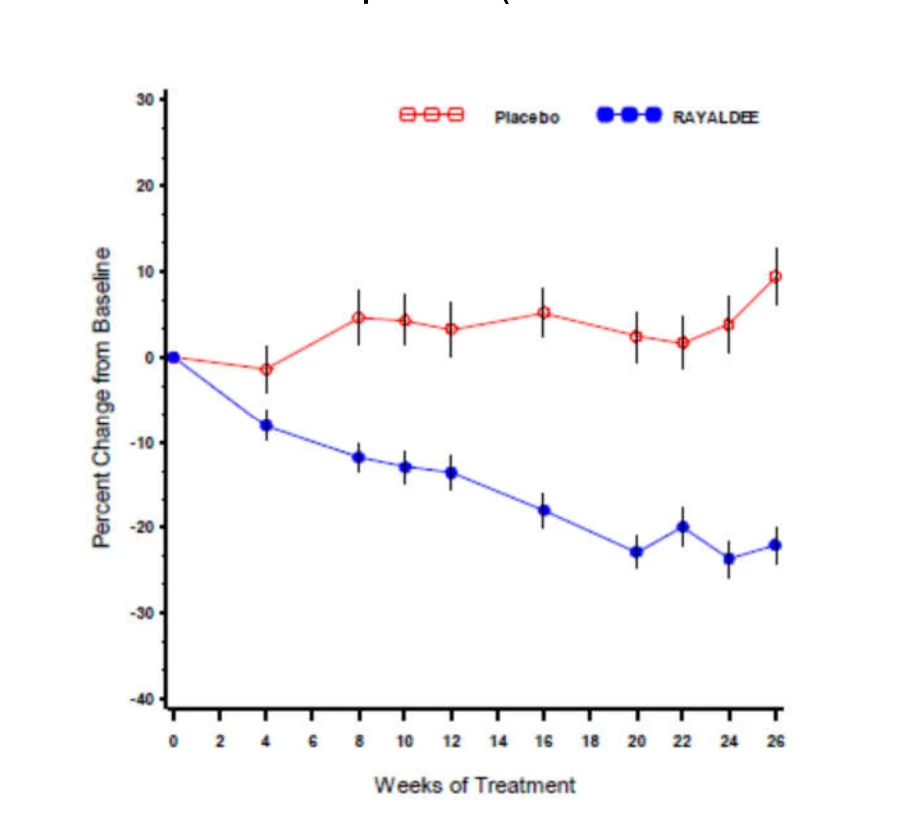
The Per Protocol (PP) population consisted of all subjects with at least 2 intact PTH values in the calculated baseline and EAP values and who did not have a major protocol deviation during the treatment period of the study. The PP population comprised 83% of randomized subjects.
Serum total 25-hydroxyvitamin D levels increased to at least 30 ng/mL (75 nmol/L) in 80% and 83% of subjects treated with RAYALDEE vs. 3% and 7% of subjects treated with placebo in the two studies, respectively. Average steady-state 25-hydroxyvitamin D levels were 125 and 140 nmol/L (50 and 56 ng/mL) for subjects receiving 30 mcg daily, and 167 and 172 nmol/L (67 and 69 ng/mL) for subjects receiving 60 mcg daily, in the first and second studies, respectively. The reduction in iPTH was maintained during the open-label extension study for additional 26 weeks.
13 NON-CLINICAL TOXICOLOGY
Repeat-Dose Toxicity:
In a 13-week oral toxicity study in Beagle dogs, calcifediol in RAYALDEE (extended-release) was administered at 1.5, 3.0 and 4.5 µg/kg/day once daily and calcifediol (immediate-release) was administered at 2.8 and 4.2 µg/kg/day once daily. There were no treatment-related findings at doses up to 4.5 µg/kg/day RAYALDEE (animal:human exposure margin based on mean Clast (ng/mL) = 2.9x in females and 2.1x in males) and 4.2 µg/kg/day immediate-release calcifediol (animal:human exposure margin based on mean Clast (ng/mL) = 2.4x in females and 2.2x in males).
In a separate 13-week dog study, performed at higher dose levels including those that exceeded the maximum tolerated dose, toxicities such as vessel and soft tissue mineralization were observed and are consistent with the exaggerated pharmacological effects of Vitamin D analogues.
Carcinogenicity:
In a 26-week rasH2 transgenic mouse study, calcifediol was administered once daily at 3, 10 and 33 µg/kg/day by subcutaneous injection. There were no calcifediol-related non-neoplastic or neoplastic findings at doses up to 33 µg/kg/day (animal:human exposure margin based on mean Clast (ng/mL) = 3.6x in females and 5.7x in males).
Genotoxicity:
In vitro and in vivo mutagenicity studies have not been performed with RAYALDEE.
Reproductive and Developmental Toxicity:
Reproductive and developmental toxicity studies have not been performed with RAYALDEE.