


Product Monograph - Jamp Cinacalcet
3 SUMMARY PRODUCT INFORMATION
| 3 | |
| INDICATIONS AND CLINICAL USE | 3 |
| CONTRAINDICATIONS | 3 |
| WARNINGS AND PRECAUTIONS | 4 |
| ADVERSE REACTIONS | 7 |
| DRUG INTERACTIONS | 10 |
| DOSAGE AND ADMINISTRATION | 12 |
| OVERDOSAGE | 13 |
| ACTION AND CLINICAL PHARMACOLOGY | 13 |
| STORAGE AND STABILITY | 14 |
| DOSAGE FORMS, COMPOSITION AND PACKAGING | 15 |
PART II: SCIENTIFIC INFORMATION
| 16 | |
| PHARMACEUTICAL INFORMATION | 16 |
| CLINICAL TRIALS | 16 |
| DETAILED PHARMACOLOGY | 20 |
| REFERENCES | 21 |
| PART III: CONSUMER INFORMATION | 23 |
Pr Jamp Cinacalcet
Cinacalcet Tablets
30 mg, 60 mg, 90 mg Cinacalcet (Cinacalcet Hydrochloride)
PART I: HEALTH PROFESSIONAL INFORMATION
SUMMARY PRODUCT INFORMATION
Route of Administration | Dosage Form/Strength | Clinically Relevant Nonmedicinal Ingredients |
| Oral | Tablets 30 mg, 60 mg, 90 mg | Crospovidone, FD&C blue #2, Hypromellose, Lactose Monohydrate, Magnesium stearate, Microcrystalline cellulose, Povidone, Titanium dioxide, Triacetin, and Yellow iron oxide. |
INDICATIONS AND CLINICAL USE
Jamp Cinacalcet is indicated for the treatment of secondary hyperparathyroidism (HPT) in patients with Chronic Kidney Disease (CKD) receiving dialysis.
Jamp Cinacalcet controls parathyroid hormone levels, calcium and phosphorous levels, and the serum calcium-phosphorous product (Ca x P), in patients with CKD receiving dialysis.
Jamp Cinacalcet is indicated for the reduction of hypercalcemia in patients with parathyroid carcinoma.
Jamp Cinacalcet is indicated for the reduction of clinically significant hypercalcemia, as defined by relevant treatment guidelines, in patients with primary HPT for whom parathyroidectomy is not clinically appropriate or is contraindicated.
Geriatrics (>65 years of age)
No overall differences in safety and efficacy of cinacalcet hydrochloride were observed in patients greater or less than 65 years of age (see WARNINGS AND PRECAUTIONS, Special Populations, Geriatrics and DOSAGE AND ADMINISTRATION).
Pediatrics (<18 years of age)
The safety and efficacy of cinacalcet hydrochloride in pediatric patients have not been established. Jamp Cinacalcet is not indicated for use in pediatric patients (see WARNINGS AND PRECAUTIONS, Endocrine and Metabolism, Hypocalcemia and Special Populations, Pediatrics).
CONTRAINDICATIONS
Jamp Cinacalcet is contraindicated in patients with hypersensitivity to any of the components of this product.
For a complete listing of the nonmedicinal ingredients see DOSAGE FORMS, COMPOSITION AND PACKAGING section.
WARNINGS AND PRECAUTIONS
General
Adynamic bone disease may develop if intact parathyroid hormone (iPTH) levels are suppressed below 11.0 pmol/L. If iPTH levels decrease below 11.0 pmol/L in patients receiving dialysis treated with Cinacalcet hydrochloride , the dose of cinacalcet and/or vitamin D sterols should be reduced or therapy discontinued.
Carcinogenesis and Mutagenesis
Cinacalcet hydrochloride, administered orally for 104 weeks, showed no evidence of carcinogenic potential in mice and rats. Doses administered to mice and rats resulted in total systemic exposure (AUCs) 2 times the exposures observed in humans. The nature, incidence, and distribution of tumours in rats and mice of both sexes did not indicate any cinacalcet hydrochloride-induced carcinogenesis. A decreased incidence of thyroid C-cell adenomas was observed in rats treated with cinacalcet hydrochloride.
Cinacalcet hydrochloride was negative in the Ames assay, chromosomal aberration assay, Chinese Hamster Ovary HGPRT forward mutation assay, and in the mouse micronucleus assay. These tests indicate that cinacalcet hydrochloride has no genetic toxicity either with respect to DNA damage, including gene mutations, large scale chromosomal damage, recombinations or numerical changes.
Cardiovascular
Hypotension and/or Worsening Heart Failure
In post-marketing safety surveillance, idiosyncratic cases of hypotension and/or worsening heart failure have been reported in patients with impaired cardiac function, in which a causal relationship to cinacalcet hydrochloride could not be completely excluded and may be mediated by reductions in serum calcium levels. Clinical trial data showed hypotension occurred in 7% of cinacalcet hydrochloride treated patients, 12% of placebo-treated patients, and heart failure occurred in 2% of patients receiving cinacalcet hydrochloride or placebo.
QT Prolongation and Ventricular Arrhythmias
Cases of QT prolongation and ventricular arrhythmia secondary to hypocalcemia have been reported in patients treated with cinacalcet hydrochloride (see WARNINGS AND PRECAUTIONS, Endocrine and Metabolism, Hypocalcemia).
Endocrine and Metabolism
Hypocalcemia
Life-threatening events and fatal outcomes associated with hypocalcemia have been reported in patients treated with cinacalcet hydrochloride including pediatric patients. Jamp Cinacalcet is not indicated for use in pediatric patients (see WARNINGS and PRECAUTIONS, Special Populations, Pediatrics).
Jamp Cinacalcet lowers serum calcium, and therefore patients should be carefully monitored for the occurrence of hypocalcemia (see Monitoring and Laboratory Tests). Potential manifestations of hypocalcemia include paresthesias, myalgias, cramping, tetany, and convulsions. Decreases in serum calcium can also prolong the QT interval, potentially resulting in ventricular arrhythmia. Cases of QT prolongation and ventricular arrhythmia secondary to hypocalcemia have been reported in patients treated with cinacalcet hydrochloride. Caution is advised in patients with other risk factors for QT prolongation such as patients with known congenital long QT syndrome or patients receiving drugs known to cause QT prolongation.
Jamp Cinacalcet treatment should not be initiated in patients with CKD receiving dialysis if serum calcium is <2.1 mmol/L. If serum calcium falls below 2.1 mmol/L but remains above 1.88 mmol/L or if symptoms of hypocalcemia occur, calcium-containing phosphate binders and/or vitamin D sterols can be used to raise serum calcium. If hypocalcemia or symptoms of QT prolongation/ventricular arrhythmia persist, reduce the dose or discontinue administration of cinacalcet (see DOSAGE AND ADMINISTRATION).
In CKD patients receiving dialysis who were administered cinacalcet hydrochloride, 29% of patients had at least one serum calcium value less than 1.88 mmol/L. In a randomized, double-blind, placebo-controlled study in patients with secondary HPT and CKD receiving dialysis, in which patients were treated for up to 64 months (median duration of treatment was 21 months in the cinacalcet hydrochloride group and 17 months in the placebo group), 21% and 33% of cinacalcet hydrochloride patients had at least one serum calcium less than 1.88 mmol/L within the first 6 months and overall, respectively (see ADVERSE REACTIONS). In this trial, 1.1% of patients in the cinacalcet hydrochloride group and 0.1% in the placebo group permanently discontinued study drug due to hypocalcemia.
Jamp Cinacalcet is not indicated for CKD patients not receiving dialysis. Investigational studies have shown that cinacalcet hydrochloride -treated CKD patients not receiving dialysis have an increased risk for hypocalcemia (serum calcium levels < 2.1 mmol/L) compared with cinacalcet hydrochloride-treated CKD patients receiving dialysis, which may be due to lower baseline calcium levels and/or the presence of residual kidney function.
Testosterone Levels
Testosterone levels are often below the normal range in patients with end stage renal disease. In a clinical study of CKD patients receiving dialysis, free testosterone levels decreased by a median of 31.3% in the cinacalcet hydrochloride-treated patients and by 16.3% in the placebo-treated patients after 6 months of treatment. The clinical significance of these reductions in serum testosterone is unknown. An open label extension of this study showed no further reductions in free and total testosterone concentrations over a period of 3 years in cinacalcet hydrochloride-treated patients.
Hepatic
Due to the potential for 2- to 4-fold higher plasma levels of cinacalcet hydrochloride, patients with moderate to severe hepatic impairment should be closely monitored when initiating treatment (see ACTION AND CLINICAL PHARMACOLOGY).
Malignancies
In a randomized, double-blind, placebo-controlled clinical study of 3,883 CKD patients receiving dialysis, neoplastic events were reported in 2.9 and 2.5 patients per 100 patient-years in the cinacalcet hydrochloride and placebo-treatment groups, respectively. Serious neoplastic events were reported in 2.0 and 1.8 patients per 100 patient-years, in the Cinacalcet hydrochloride and placebo-treatment groups, respectively. Fatal neoplastic events were reported in 0.6 patients per 100 patient-years for both groups. A causal relationship to cinacalcet hydrochloride has not been established.
Neurologic
Seizures
In clinical studies, seizures (primarily generalized or tonic-clonic) were observed in 1.4% (43/3049) of cinacalcet hydrochloride-treated patients and 0.7% (5/687) of placebo-treated patients. While the basis for the reported difference in seizure rate is not clear, the threshold for seizures is lowered by significant reductions in serum calcium levels. Therefore, serum calcium levels should be closely monitored in patients receiving cinacalcet hydrochloride, particularly in patients with a history of a seizure disorder.
Effect on the Ability to Drive and Use Machines
No effects on the ability to drive or operate machinery have been observed.
Sexual Function / Reproduction
Impairment of Fertility
Cinacalcet hydrochloride had no effect on fertility in animal studies.
Special Populations
Pregnant Women
There are no studies on the use of cinacalcet hydrochloride in pregnant women. Cinacalcet hydrochloride was not teratogenic in rabbits when given a dose of 0.4 times, on an area under the curve (AUC) basis, the maximum human dose for secondary HPT (180 mg once daily). There were no effects on fertility in males or females at exposures up to 4 times a human dose of 180 mg/day. In pregnant rats, there were slight decreases in body weight and food consumption at the highest dose. The non-teratogenic dose in rats was 4.4 times, on an AUC basis, the maximum dose for patients with secondary HPT (180 mg once daily). Decreased fetal weights were seen in rats at doses where dams had severe hypocalcemia. Cinacalcet hydrochloride has been shown to cross the placental barrier in rabbits. Although animal studies have shown no evidence of teratogenicity, cinacalcet should be used during pregnancy only if the potential benefit justifies the potential risk to the fetus.
Nursing Women
It is not known whether cinacalcet hydrochloride is excreted in human milk. Studies in rats have shown that cinacalcet hydrochloride is excreted in the milk with a high milk to plasma ratio. A decision should be made whether to discontinue nursing or discontinue cinacalcet, taking into account the importance of cinacalcet to the mother.
Pediatrics (<18 years of age)
The safety and efficacy of cinacalcet hydrochloride in pediatric patients have not been established. Jamp Cinacalcet is not indicated for use in pediatric patients. A fatal outcome was reported in a pediatric clinical trial patient with severe hypocalcemia (see WARNINGS and PRECAUTIONS, Endocrine and Metabolism, Hypocalcemia).
Geriatrics (>65 years of age)
Of the 1136 patients enrolled in the cinacalcet hydrochloride phase 3 clinical program, 26% were > 65 years old, while 9% were > 75 years old. No overall differences in safety and efficacy of cinacalcet hydrochloride were observed in patients greater or less than 65 years of age (see DOSAGE AND ADMINISTRATION).
Monitoring and Laboratory Tests
Patients with CKD and Secondary Hyperparathyroidism
Serum calcium should be measured within 1 week and iPTH should be measured 1 to 4 weeks after initiation or dose adjustment of cinacalcet. Once the maintenance dose levels have been established, serum calcium and serum phosphorus should be measured approximately monthly, and PTH (iPTH) every 1 to 3 months (see DOSAGE AND ADMINISTRATION). Either the intact PTH (iPTH) or bio-active PTH (biPTH) may be used to measure plasma PTH levels. Treatment with cinacalcet hydrochloride does not alter the relationship between iPTH and biPTH.
ADVERSE REACTIONS
Adverse Drug Reaction Overview
Studies were conducted in patients with secondary hyperparathyroidism (HPT) and Chronic Kidney Disease (CKD) receiving dialysis, parathyroid carcinoma or primary HPT. Cinacalcet Hydrochloride was safe and generally well tolerated.
Hypocalcemia
Cinacalcet hydrochloride lowers serum calcium, and therefore patients should be carefully monitored for the occurrence of hypocalcemia (see Monitoring and Laboratory Tests). Potential manifestations of hypocalcemia include paresthesias, myalgias, cramping, tetany, and convulsions. Decreases in serum calcium can also prolong the QT interval, potentially resulting in ventricular arrhythmia. Cases of QT prolongation and ventricular arrhythmia secondary to hypocalcemia have been reported in patients treated with cinacalcet hydrochloride. Caution is advised in patients with other risk factors for QT prolongation such as patients with known congenital long QT syndrome or patients receiving drugs known to cause QT prolongation (see WARNINGS AND PRECAUTIONS).
Clinical Trial Adverse Drug Reactions
Because clinical trials are conducted under very specific conditions the adverse reaction rates observed in the clinical trials may not reflect the rates observed in practice and should not be compared to the rates in the clinical trials of another drug. Adverse drug reaction information from clinical trials is useful for identifying drug-related adverse events and for approximating rates.
Secondary Hyperparathyroidism in Patients with CKD Receiving Dialysis
In three double-blind placebo-controlled clinical trials, 1126 CKD patients receiving dialysis received study drug (656 cinacalcet hydrochloride, 470 placebo) for up to six months. Adverse events reported during the studies were typical for the dialysis patient population. The most frequently reported adverse events (incidence of at least 5% in the cinacalcet hydrochloride-treated group) are provided in Table 1. The most frequently reported events in the cinacalcet hydrochloride group were nausea and vomiting which were generally mild to moderate in severity, brief in duration, and infrequently led to discontinuation of study drug.
Table 1. Adverse Event Incidence (>5%) in Patients Receiving Dialysis
| Preferred Term | Placebo (n = 470) % | Cinacalcet hydrochloride (n = 656) % |
|---|---|---|
| Nausea | 19 | 31 |
| Vomiting | 15 | 27 |
| Diarrhea | 20 | 21 |
| Headache | 17 | 16 |
| Myalgia | 14 | 15 |
| Pain Abdominal | 14 | 12 |
| Infection Upper Respiratory | 13 | 12 |
| Dizziness | 8 | 10 |
| Dyspnea | 9 | 9 |
| Preferred Term | Placebo (n = 470) % | Cinacalcet hydrochloride (n = 656) % |
|---|---|---|
| Pain Limb | 10 | 9 |
| Dyspepsia | 8 | 8 |
| Arthralgia | 9 | 7 |
| Fever | 10 | 7 |
| Fatigue | 7 | 7 |
| Hypertension | 5 | 7 |
| Hypotension | 12 | 7 |
| Edema Peripheral | 7 | 7 |
| Asthenia | 4 | 7 |
| Cough | 7 | 6 |
| Pruritus | 7 | 6 |
| Anorexia | 4 | 6 |
| Thrombosis Vascular Access | 7 | 6 |
| Pain Chest, Non-Cardiac | 4 | 6 |
| Access Infection | 4 | 5 |
The incidence of serious adverse events (29% vs 31%) and deaths (2% vs 3%) was similar in the cinacalcet hydrochloride and placebo groups, respectively.
Seizures were observed in 1.4% (13/910) of cinacalcet hydrochloride-treated patients and 0.7% (5/641) of placebo-treated patients across all completed placebo-controlled trials.
Seizures were observed in 1.2% (8/656) of cinacalcet hydrochloride-treated patients and 0.4% (2/470) of placebo-treated patients in the three double-blind placebo-controlled clinical trials in CKD patients receiving dialysis (see WARNINGS AND PRECAUTIONS).
12-Month Experience with Cinacalcet Hydrochloride in Secondary Hyperparathyroidism
Two hundred sixty-six patients from the two pivotal phase 3 studies continued to receive cinacalcet hydrochloride or placebo treatment in a 6-month double-blind extension study (12-month total treatment duration). The incidence and nature of adverse events in this study were similar in the two treatment groups, and comparable to those observed in the pivotal phase 3 studies.
Parathyroid Carcinoma and Primary Hyperparathyroidism (HPT)
One hundred sixty patients with primary HPT or parathyroid carcinoma participated in cinacalcet hydrochloride clinical trials with exposure for up to 5.5 years.
The safety profile of cinacalcet hydrochloride in these patient populations is generally consistent with that seen in patients with CKD receiving dialysis. The most frequent adverse drug reactions in these patient populations were nausea and vomiting.
Seizures were observed in 0.7% (1/140) of cinacalcet hydrochloride-treated patients and 0% (0/46) of placebo-treated patients in the clinical trials in patients with primary HPT or parathyroid carcinoma (see WARNINGS AND PRECAUTIONS).
Laboratory Values
Serum calcium levels should be monitored in patients receiving cinacalcet hydrochloride (see WARNINGS AND PRECAUTIONS and DOSAGE AND ADMINISTRATION). In the three phase 3 studies in patients with CKD receiving dialysis, 29% of patients receiving cinacalcet hydrochloride had at least one serum calcium value < 1.88 mmol/L. In a randomized, double-blind, placebo-controlled study in patients with secondary HPT and CKD receiving dialysis, in which patients were treated for up to 64 months (median duration of treatment was 21 months in the cinacalcet hydrochloride group and 17 months in the placebo group), 21% and 33% of cinacalcet hydrochloride patients had at least one serum calcium less than 1.88 mmol/L within the first 6 months and overall, respectively.
Post-Market Adverse Drug Reactions
Additional adverse events have been identified during post-marketing use of cinacalcet hydrochloride. These adverse events include, but are not limited to, the following (listed by body system):
| Cardiac disorders: | hypotension, worsening heart failure, QT prolongation and ventricular arrhythmia secondary to hypocalcemia |
| Gastrointestinal disorders: | abdominal pain upper, constipation |
| Immune system disorders: | hypersensitivity reactions (including angioedema and urticaria), severe hypersensitivity reaction |
| Metabolism and nutrition disorders: | hypocalcemia (some cases with fatal outcomes), hyperkalemia |
| Musculoskeletal and connective tissue disorders: | back pain, muscle spasms |
| Skin and subcutaneous tissue disorders: | rash |
DRUG INTERACTIONS
Drug-Drug Interactions
Effect of Cinacalcet hydrochloride on other drugs
Drugs metabolized by CYP450 2D6: Cinacalcet hydrochloride is an inhibitor of CYP2D6. Therefore, dose adjustments of concomitant medications that are predominantly metabolized by CYP2D6 (eg, metoprolol) and particularly those with a narrow therapeutic index (eg, flecainide, vinblastine, thioridazine and most tricyclic antidepressants) may be required.
Desipramine: Concurrent administration of 90 mg cinacalcet hydrochloride with 50 mg desipramine, a tricyclic antidepressant metabolized primarily by CYP2D6, increased desipramine exposure by approximately 3.6-fold in CYP2D6 extensive metabolizers.
Amitriptyline: Concurrent administration of 25 mg or 100 mg cinacalcet hydrochloride with 50 mg amitriptyline, a tricyclic antidepressant metabolized in part by CYP2D6, increased exposure to amitriptyline and its active metabolite nortriptyline by approximately 20% in extensive metabolizers of CYP2D6 enzymes. Dose reductions of amitriptyline may be required in some subjects receiving cinacalcet concurrently.
Drugs metabolized by other CYP enzymes
Based on in vitro data, cinacalcet hydrochloride is not an inhibitor of other CYP enzymes at concentrations achieved clinically, including CYP1A2, CYP2C9, CYP2C19, and CYP3A4. In vitro studies indicate that cinacalcet hydrochloride is not an inducer of CYP1A2, CYP2C19 and CYP3A4.
Midazolam: Co-administration of cinacalcet hydrochloride (90 mg) with orally administered midazolam (2 mg), a CYP3A4 and CYP3A5 substrate, did not alter the pharmacokinetics of midazolam. These data suggest that cinacalcet hydrochloride would not affect the pharmacokinetics of those classes of drugs that are metabolized by CYP3A4 and CYP3A5, such as certain immunosuppressants, including cyclosporine and tacrolimus.
Warfarin: Cinacalcet hydrochloride does not affect the pharmacokinetics or pharmacodynamics (as measured by prothrombin time and clotting factor VII) of warfarin.
The lack of effect of cinacalcet hydrochloride on the pharmacokinetics of R and S warfarin and the absence of auto induction upon multiple dosing in patients indicates that cinacalcet hydrochloride is not an inducer of CYP3A4, CYP1A2 or CYP2C9 in humans.
Effect of other drugs on Cinacalcet hydrochloride
Cinacalcet hydrochloride is metabolized by multiple cytochrome P450 enzymes, primarily CYP3A4 and CYP1A2, which limits the potential for other drugs to increase cinacalcet concentrations.
Ketoconazole: Cinacalcet hydrochloride is metabolized in part by the enzyme CYP3A4. Co-administration of 200 mg bid of ketoconazole, a strong inhibitor of CYP3A4, caused an approximate 2-fold increase in cinacalcet exposure. Dose adjustment of cinacalcet may be required if a patient initiates or discontinues therapy with a strong CYP3A4 inhibitor (eg, ketoconazole, erythromycin, itraconazole) or inducer (eg, rifampin, phenytoin) of this enzyme.
Calcium carbonate: Co-administration of calcium carbonate (single 1500 mg dose) did not alter the pharmacokinetics of cinacalcet hydrochloride.
Pantoprazole: Co-administration of pantoprazole (80 mg qd) did not alter the pharmacokinetics of cinacalcet hydrochloride.
Sevelamer HCl: Co-administration of sevelamer HCl (2400 mg tid) did not alter the pharmacokinetics of cinacalcet hydrochloride.
Drug-Food Interactions
After oral administration of cinacalcet hydrochloride, maximum plasma concentration is achieved in approximately 2 to 6 hours. Administration of cinacalcet with food results in an approximate 50 to 80% increase in bioavailability. Increases in plasma concentration are similar, regardless of the fat content of the meal.
Drug-Herb Interactions
Interactions with herbal products have not been established.
Drug-Laboratory Test Interactions
Interactions with laboratory tests have not been established.
DOSAGE AND ADMINISTRATION
Jamp Cinacalcet (cinacalcet hydrochloride) is administered orally. Tablets should be taken whole and should not be divided. Take cinacalcet with food or shortly after a meal (see DRUG INTERACTIONS).
Secondary Hyperparathyroidism in Patients with Chronic Kidney Disease (CKD) Receiving Dialysis
The recommended starting oral dose of cinacalcet is 30 mg once daily. Jamp Cinacalcet should be titrated every 2 to 4 weeks to a maximum dose of 180 mg once daily to achieve a target PTH between 1.5 to 5 times the upper limit of normal.
In CKD patients, PTH levels should be assessed at least 12 hours after dosing with cinacalcet.
During dose titration, serum calcium levels should be monitored frequently and if serum calcium levels decrease below the normal range, appropriate steps should be taken to increase serum calcium levels (see WARNINGS AND PRECAUTIONS). Calcium levels should be corrected for albumin or ionized calcium levels should be measured.
Parathyroid Carcinoma and Primary Hyperparathyroidism (HPT)
The recommended starting dose of cinacalcet for adults is 30 mg twice per day.
The dosage of cinacalcet should be titrated sequentially every 2 to 4 weeks through dosages of 30 mg twice daily, 60 mg twice daily, and 90 mg twice daily to reduce serum calcium levels. For further information on higher dosages (90 mg 3 or 4 times daily) see CLINICAL TRIALS: Parathyroid Carcinoma and Primary HPT for Whom Parathyroidectomy is not a Treatment Option.
Special Populations
Geriatric patients
Age does not alter the pharmacokinetics of cinacalcet hydrochloride; no dose adjustment is required for geriatric patients.
Patients with renal impairment
Renal impairment does not alter the pharmacokinetics of cinacalcet hydrochloride; no dosage adjustment is necessary for renal impairment.
Patients with hepatic impairment
Moderate to severe hepatic impairment (Child-Pugh classification) increases cinacalcet hydrochloride drug concentrations by approximately 2- to 4-fold. In patients with moderate-severe hepatic impairment, PTH and serum calcium concentrations should be closely monitored during dose titration of cinacalcet.
OVERDOSAGE
Doses titrated up to 300 mg once daily have been safely administered to patients receiving dialysis. Overdosage of Jamp Cinacalcet (cinacalcet hydrochloride) may lead to hypocalcemia. In the event of overdosage, patients should be monitored for signs and symptoms of hypocalcemia and appropriate measures taken to correct serum calcium levels (see WARNINGS AND PRECAUTIONS).
Since cinacalcet hydrochloride is highly protein bound, hemodialysis is not an effective treatment for overdosage of cinacalcet.
| For management of a suspected drug overdose, contact your regional Poison Control Centre. |
ACTION AND CLINICAL PHARMACOLOGY
Mechanism of Action
Secondary hyperparathyroidism is a progressive disease, which occurs in patients with chronic kidney disease and manifests as increases in parathyroid hormone levels and derangements in calcium and phosphorous metabolism. Increased PTH stimulates osteoclastic activity resulting in cortical bone resorption and marrow fibrosis. The calcium-sensing receptor on the surface of the chief cell of the parathyroid gland is the principal regulator of PTH secretion. Cinacalcet hydrochloride directly lowers PTH levels by increasing the sensitivity of the calcium-sensing receptor to extracellular calcium. The reduction in PTH is associated with a concomitant decrease in serum calcium levels.
Pharmacodynamics
Reduction in iPTH levels is correlated with cinacalcet concentration. The nadir in iPTH level occurs approximately 2 to 6 hours post dose, corresponding with the Cmax of cinacalcet. After steady state is reached, serum calcium concentrations remain constant over the dosing interval.
Pharmacokinetics
Absorption and Distribution
After oral administration of cinacalcet, maximum plasma concentration is achieved in approximately 2 to 6 hours. The absolute bioavailability of cinacalcet is approximately 25%.
Administration of cinacalcet with food results in an approximate 50 to 80% increase in bioavailability. Increases in plasma concentrations are similar regardless of the fat content of the meal.
After absorption, cinacalcet concentrations decline in a biphasic fashion with an initial half-life of approximately 6 hours and a terminal half-life of 30 to 40 hours. Steady state drug levels are achieved within 7 days with minimal accumulation. The AUC and Cmax of cinacalcet increase linearly over the dose range of 30 to 180 mg once daily. The pharmacokinetics of cinacalcet does not change over time. The volume of distribution is high (approximately 1000 L), indicating extensive distribution. Cinacalcet is approximately 97% bound to plasma proteins and distributes minimally into red blood cells.
Metabolism and Excretion
Cinacalcet is metabolized by multiple enzymes, primarily CYP3A4 and CYP1A2. The major circulating metabolites are inactive. After administration of a 75 mg radio-labeled dose to healthy volunteers, cinacalcet was rapidly and extensively metabolized by oxidation followed by conjugation. Renal excretion of metabolites was the prevalent route of elimination of radioactivity. Approximately 80% of the dose was recovered in the urine and 15% in the feces.
Special Populations and Conditions
Geriatric Patients
The pharmacokinetics of cinacalcet hydrochloride are similar in patients greater than, or less than, 65 years of age. No dosage adjustment based on age is necessary.
Pediatric Patients
The pharmacokinetics of cinacalcet hydrochloride have not been studied in patients < 18 years of age (see WARNINGS AND PRECAUTIONS).
Hepatic Insufficiency
Mild hepatic impairment did not notably affect the pharmacokinetics of cinacalcet hydrochloride. Compared to subjects with normal liver function, average AUC of cinacalcet was approximately 2-fold higher in subjects with moderate impairment and approximately 4-fold higher in subjects with severe impairment (see WARNINGS AND PRECAUTIONS). Because doses are titrated for each subject based on safety and efficacy parameters, no additional dose adjustment is necessary for subjects with hepatic impairment.
Renal Insufficiency
The pharmacokinetic profile of cinacalcet hydrochloride in patients with mild, moderate, and severe renal insufficiency, and those on hemodialysis or peritoneal dialysis is comparable to that in healthy volunteers. No dosage adjustment based on renal function is necessary.
STORAGE AND STABILITY
Store at 15 ºC to 30ºC. Keep in a safe place out of the reach and sight of children.
DOSAGE FORMS, COMPOSITION AND PACKAGING
Jamp Cinacalcet hydrochloride tablets 30 mg are yellowish–green colored, oval shaped, biconvex, film-coated tablets, debossed with ‘479’on one side and plain on the other side, available in bottle of 30 and 100 tablets.
Jamp Cinacalcet hydrochloride tablets 60 mg are yellowish–green colored, oval shaped, biconvex, film-coated tablets, debossed with ‘480’on one side and plain on the other side, available in bottle of 30 and 100 tablets.
Jamp Cinacalcet hydrochloride tablets 90 mg are yellowish–green colored, oval shaped, biconvex, film-coated tablets, debossed with ‘481’on one side and plain on the other side, available in bottle of 30 and 100 tablets.
Composition
Jamp Cinacalcet hydrochloride tablets contains the following non-medicinal ingredients:
Crospovidone, FD&C blue #2, Hypromellose, Lactose Monohydrate, Magnesium stearate, Microcrystalline cellulose, Povidone, Titanium dioxide, Triacetin, and Yellow iron oxide.
PART II: SCIENTIFIC INFORMATION
PHARMACEUTICAL INFORMATION
Drug Substance
| Proper name: | cinacalcet hydrochloride |
| Chemical name: | (N-[1-(R)-(-)-(l-naphthyl)ethyl]-3-[3-(trifluoromethyl)phenyl]-1-aminopropane hydrochloride |
| Molecular formula and molecular mass: | C22H22 F3N. HCl 393.87 g/mole (HCl Salt) |
| Structural formula: | 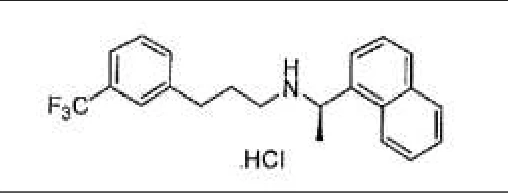 |
| Physicochemical properties: | |
| Physical Form: | White to off white coloured crystalline powder |
| Solubility: | Slightly soluble in water and in acetonitrile; freely soluble in methanol, ethanol, methylene chloride, and chloroform; very slightly soluble in hexane; sparingly soluble in isopropyl alcohol |
| pH | 4.91 |
| pKa | 7.73 |
| Partition coefficient (octanol: water) | 1.16 |
| Melting Point | 181°C |
CLINICAL TRIALS
Comparative Bioavailability
A randomized, blinded, two-Treatment, two-Period, two-Sequence, single dose, crossover, bioequivalence study of cinacalcet hydrochloride Tablets 90 mg with PrSensipar® (cinacalcet hydrochloride) Tablets 90 mg (by Amgen Canada Inc.) was conducted following a 1 x 90 mg dose in fifty-two (52) healthy male, volunteers under fasting conditions. The results obtained from the study are as follows.
SUMMARY TABLE OF THE COMPARATIVE BIOAVAILABILITY DATA
Cinacalcet (1 x 90 mg) From measured data Geometric Mean Arithmetic Mean (CV %) | ||||
|---|---|---|---|---|
| Parameter | Test * | Reference# | % Ratio of Geometric Means | 90% Confidence Interval |
Cmax (ng/mL) | 58.39 68.26 (59.04) | 53.71 61.37 (54.33) | 108.71 | 98.38 - 120.12. |
AUC0-72 (ng*hr/mL) | 457.98 544.11 (68.49) | 438.35 519.95 (75.53) | 104.48 | 95.73 - 114.02 |
Tmax$ (hr) | 5.25 (1.50 – 6.00) | 5.25 (1.50 – 7.00) | ||
T½€ (h) | 11.72 (29.52) | 11.39 (27.81) | ||
* : Cinacalcet hydrochloride Tablet 90 mg #: PrSENSIPAR® [cinacalcet hydrochloride] Tablets 90 mg by Amgen Canada Inc. Mississauga, Ontario, purchased in Canada $ : Expressed as the median (range) € : Expressed as the arithmetic mean (CV %) only | ||||
Secondary Hyperparathyroidism in Patients with Chronic Kidney Disease Receiving Dialysis
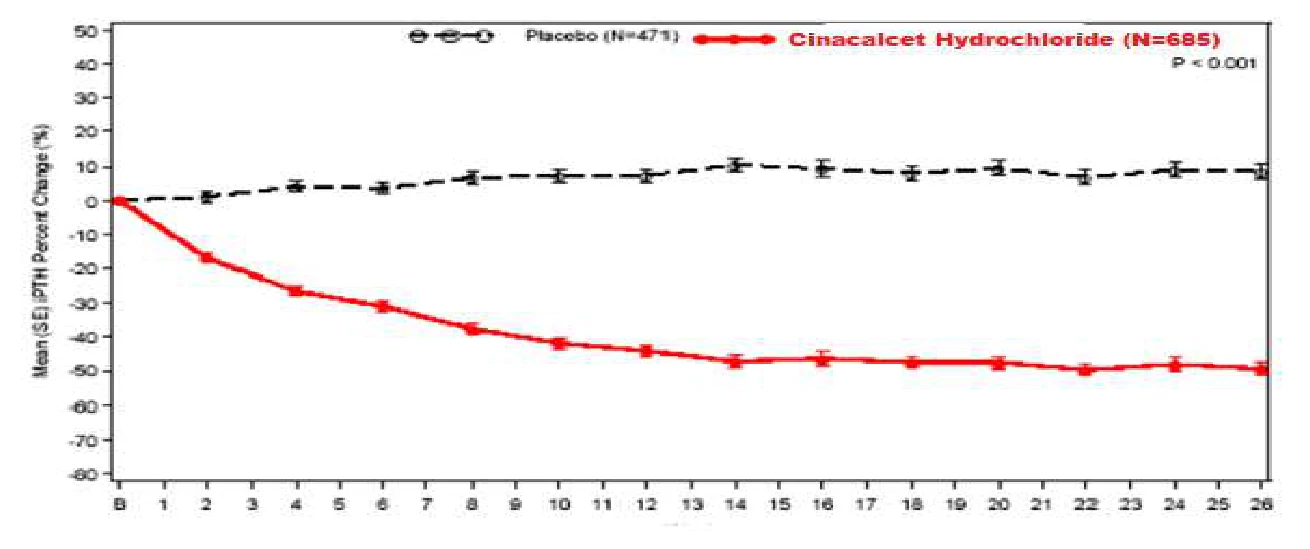
Three, 6-month, multicenter, randomized, double-blind, placebo-controlled clinical studies were conducted in CKD patients receiving dialysis with uncontrolled secondary HPT (n = 1136). The patient population consisted of both recently established and long-standing dialysis patients, with a duration of dialysis treatment that ranged from 1 to 359 months. Cinacalcet hydrochloride was administered either alone or in combination with vitamin D sterols; 34% of patients were not receiving vitamin D sterols at study entry. The majority (> 90%) of patients were receiving phosphate binders. Dose adjustments in phosphate binder therapy were permitted throughout the study. Vitamin D doses remained constant unless the patient developed hypercalcemia, hypocalcemia, or hyperphosphatemia. Patients continued on their previously prescribed drugs including: calcium channel blockers, ACE inhibitors, beta-blockers, hypoglycemics, and lipid lowering agents. Cinacalcet hydrochloride (or placebo) was initiated at a dose of 30 mg and titrated every 3 or 4 weeks to a maximum dose of 180 mg once daily to achieve an iPTH of 11 to 27.5 pmol/L (1.5 to 4 times the upper limit of normal). The severity of secondary HPT ranged from mild to severe (iPTH values of 29.8 to 1005.2 pmol/L), with mean (SE) baseline iPTH concentrations across the three studies of 78 (2.2) and 72 (2.0) pmol/L for the cinacalcet hydrochloride and placebo groups, respectively. Significant reductions in iPTH, serum calcium-phosphorus product (Ca x P), calcium, and phosphorus were observed in the cinacalcet hydrochloride-treated patients compared with placebo-treated patients receiving standard of care, and the results were consistent across the three studies (Table 2). Mean iPTH and Ca x P by treatment group for the overall study population during the 6-month treatment period are presented in Figures 1 and 2.
Table 2. Effects of Cinacalcet hydrochloride on iPTH, Ca x P, Serum Calcium, and Serum Phosphorus in 6-month Phase 3 Studies
(Patients Receiving Dialysis)
| Study 1 | Study 2 | Study 3 | ||||||||||||||||||||||
Placebo (n=205) | Cinacalcet (n=205) | Placebo (n = 165) | Cinacalcet (n = 166) | Placebo (n = 101) | Cinacalcet (n = 294) | |||||||||||||||||||
| iPTH | ||||||||||||||||||||||||
| Baseline (pmol/L) | 69 (2.9) | 67 (2.5) | 67 (2.5) | 69 (3.1) | 88 (5.1) | 90 (4.3) | ||||||||||||||||||
| Evaluation Phase (pmol/L) | 74 (3.5) | 41 (2.6) | 73 (3.4) | 38 (3.1) | 90 (5.8) | 56 (3.2) | ||||||||||||||||||
| Percent Change | 9.5 (2.8) | -38.4 (2.9) | 8.7 (2.8) | -47.5 (2.8) | 4.1 (3.4) | -40.3 (2.1) | ||||||||||||||||||
Patients Achieving Primary Endpoint (iPTH ≤ 250 pg/mL; 27.5 pmol/L) (%) | 4% | 41%** | 7% | 46%** | 6% | 35%** | ||||||||||||||||||
| Patients Achieving iPTH ≥ 30% Reduction in iPTH (%) | 11% | 61%** | 12% | 68%** | 10% | 59%** | ||||||||||||||||||
| Patients Achieving iPTH≤300pg/mL; (33pmol/L)(%) | 9% | 55%** | 11% | 56%** | 9% | 45%** | ||||||||||||||||||
| Ca x P | ||||||||||||||||||||||||
| Baseline (mmol2/L2) | 4.9 (0.09) | 5 (0.09) | 4.9 (0.01) | 4.9 (0.01) | 4.9 (0.11) | 4.8 (0.08) | ||||||||||||||||||
| Evaluation Phase (mmol2/L2) | 4.8 (0.08) | 4.2 (1.0) | 4.8 (0.01) | 4.0 (0.10) | 4.7 (0.10) | 4.0 (0.07) | ||||||||||||||||||
| Percent Change | 1.5 (1.8) | -13.0 (1.7)** | -0.7 (1.9) | -16.7 (2.1)** | -1.4 (2.4) | -12.8 (1.7)** | ||||||||||||||||||
| Calcium | ||||||||||||||||||||||||
| Baseline (mmol/L) | 2.48 (0.025) | 2.45 (0.025) | 2.48 (0.025) | 2.5 (0.025) | 2.5 (0.025) | 2.45 (0.0125) | ||||||||||||||||||
| Evaluation Phase (mmol/L) | 2.48 (0.025) | 2.3 (0.025) | 2.48 (0.025) | 2.3 (0.025) | 2.5 (0.025) | 2.28 (0.025) | ||||||||||||||||||
| Percent Change | 0.5 (0.3) | -6.3 (0.6)** | 0.3 (0.4) | -7.5 (0.6)** | 0.9 (0.5) | -6.5 (0.6)** | ||||||||||||||||||
| Phosphorus | ||||||||||||||||||||||||
| Baseline (mmol/L) | 2 (0.032) | 2.03 (0.032) | 2 (0.032) | 1.97 (0.1) | 1.97 (0.032) | 1.97 (0.032) | ||||||||||||||||||
| Evaluation Phase (mmol/L) | 1.94 (0.032) | 1.84 (0.032) | 1.94 (0.1) | 1.74 (0.032) | 1.87 (0.032) | 1.78 (0.032) | ||||||||||||||||||
| Percent Change | 1.1 (1.8) | -7.1 (1.7)** | -0.9 (1.9) | -9.9 (2.0)** | -2.2 (2.5) | -7.2 (1.6)* | ||||||||||||||||||
* p < 0.05; ** p < 0.001 compared to placebo
Figure 1. Mean (SE) Percent Change from Baseline in iPTH (Pooled Phase 3 Studies)
week
Figure 2. Mean (SE) Percent Change from Baseline in Ca x P (Pooled Phase 3 Studies)
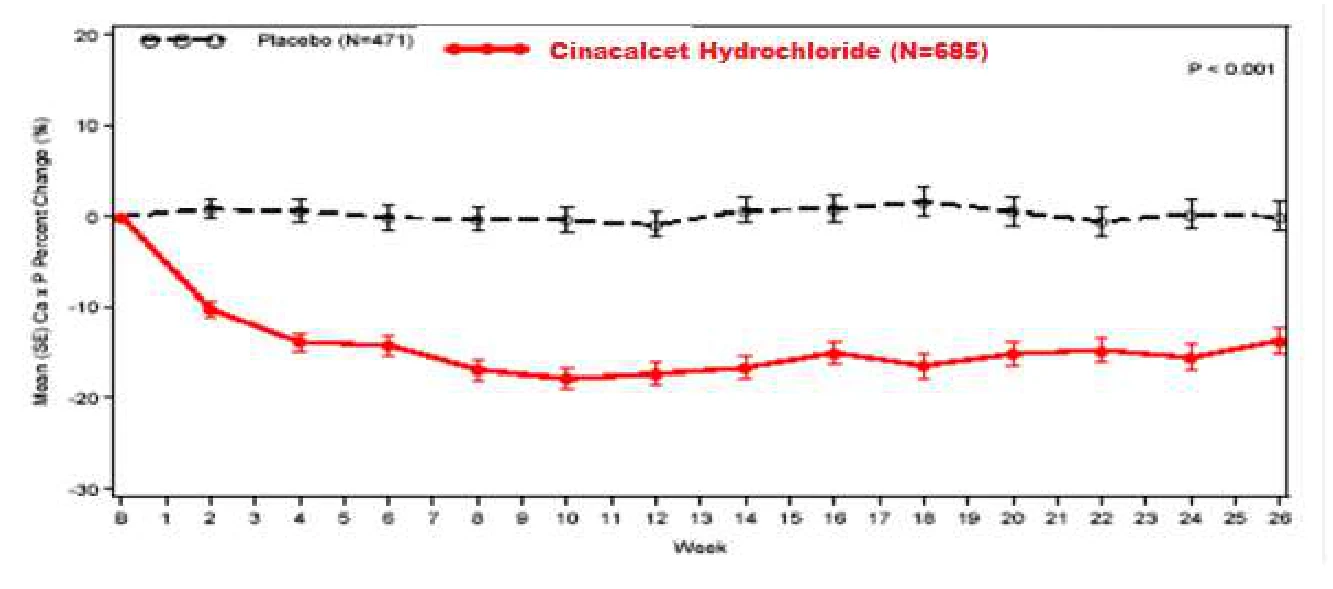
Reductions in iPTH and Ca x P occurred within 2 weeks and were maintained for up to 12 months of treatment. Cinacalcet hydrochloride decreased iPTH and Ca x P levels regardless of disease severity (ie, baseline iPTH value), dialysis modality (PD versus HD), duration of dialysis, and whether or not vitamin D sterols were administered. Approximately 60% of patients with mild (iPTH ≥ 33 to ≤ 55 pmol/L), moderate (iPTH > 55 to 88 pmol/L), or severe (iPTH > 88 pmol/L)secondary HPT achieved a ≥ 30% reduction in iPTH levels. Cinacalcet hydrochloride treatment reduced iPTH and Ca x P regardless of pre-treatment Ca x P levels.
Bone Health
In CKD patients with uncontrolled secondary HPT, reductions in PTH were associated with a favourable impact on bone specific alkaline phosphatase (BALP), N-telopeptide (N-Tx), bone turnover, bone fibrosis, and incidence of bone fracture.
Cardiovascular
A randomized, double-blind placebo-controlled study of 3,883 patients with secondary HPT and CKD receiving dialysis, evaluated cinacalcet hydrochloride vs. placebo for the reduction of the risk of all-cause mortality and cardiovascular events. The study did not meet its primary objective of demonstrating a reduction in risk of all-cause mortality or cardiovascular events including myocardial infarction, hospitalization for unstable angina, heart failure or peripheral vascular event (HR 0.93; 95% CI: 0.85, 1.02; p = 0.112).19
Parathyroid Carcinoma and Primary HPT for Whom Parathyroidectomy is not a Treatment Option
Forty-six patients participated in the clinical trial supporting the indications in patients with parathyroid carcinoma (29 patients) and primary HPT who had failed or had contraindications to surgery (17 patients), ie, for whom parathyroidectomy is not a treatment option. Patients were treated for as long as 3 years. The mean duration of follow-up was 328 days for patients with parathyroid carcinoma and 347 days for patients with primary HPT. Cinacalcet hydrochloride was administered at dosages ranging from 30 mg twice daily to 90 mg four times daily (13 patients received the 90 mg four times daily dosage). The primary endpoint of the study was a reduction of serum calcium of ≥ 1 mg/dL (0.25 mmol/L). Eighteen of 29 patients (62%) with parathyroid carcinoma and 15 of 17 patients (88%) with primary HPT achieved a reduction of serum calcium of ≥1 mg/dL (0.25 mmol/L). In patients with parathyroid carcinoma, mean serum calcium declined from 14.1 mg/dL at baseline to 12.4 mg/dL (3.5 mmol/L to 3.1 mmol/L) at the end of the titration phase (up to 16 weeks). In patients with primary HPT, serum calcium levels declined from 12.7 mg/dL at baseline to 10.4 mg/dL (3.2 mmol/L to 2.6 mmol/L) at the end of the titration phase (up to 16 weeks).
DETAILED PHARMACOLOGY
Preclinical Studies
Studies in a rat model of chronic renal insufficiency (CRI; 5/6 nephrectomy) assessed the effects of cinacalcet (HCl) treatment on parathyroid gland hyperplasia. Cinacalcet HCl treatment reduced intact PTH (iPTH) and parathyroid cell proliferation to levels comparable to vehicle treated, non-nephrectomized animals, demonstrating that cinacalcet HCl prevented the development of secondary HPT.
REFERENCES
- 1. Bilezikian JP. Management of acute hypercalcemia. N Engl J Med. 326:1196-1203 1992.
- 2. Block G, Port FK. Calcium phosphate metabolism and cardiovascular disease in patients with chronic kidney disease. Semin Dial. 16(2):140-7 2003.
- 3. Block GA, Hulbert-Shearon TE, Levin NW, Port FK. Association of serum phosphorus and calcium x phosphate product with mortality risk in chronic hemodialysis patients: A national study. Am J Kidney Dis. 31:607-617 1998.
- 4. Block GA, Martin KJ, de Francisco ALM, et al. Cinacalcet for Secondary Hyperparatyroidism in Patients Receiving Hemodialysis. N Engl J Med 350;15:1516-1525, 2004.
- 5. Block GA, Port FK. Re-evaluation of risks associated with hyperphosphatemia and hyperparathyroidism in dialysis patients: Recommendations for a change in management.Am J Kidney Dis. 35:1226-1237 2000.
- 6. Coburn JW, Maung HM. Calcimimetic agents and the calcium-sensing receptor. Curr Opin Nephrol Hypertens. 9(2):123-32 2000.
- 7. de Boer IH, Gorodetskaya I, Young B, Hsu CY, Chertow GM. The severity of secondary hyperparathyroidism in chronic renal insufficiency is GFR-dependent, race-dependent, and associated with cardiovascular disease. J Am Soc Nephrol. 13(11):2762-9 2002.
- 8. Drueke TB. The pathogenesis of parathyroid gland hyperplasia in chronic renal failure.Kidney Int. 48(1):259-72 1995.
- 9. Ganesh SK, Stack AG, Levin NW, Hulbert-Shearon T, Port FK. Association of elevated serum PO4, Ca x P product, and parathyroid hormone with cardiac mortality risk in chronic hemodialysis patients. J Am Soc Nephrol. 12:2131-2138 2001.
- 10. Goodman WG. Recent developments in the management of secondary hyperparathyroidism. Kidney Int. 59(3):1187-1201 2001.
- 11. Jones CA, McQuillan GM, Kusek JW, et al. Serum creatinine levels in the US population:third National Health and Nutrition Examination Survey. Am J Kidney Dis 1998;32:992-999.
- 12. Nemeth EF, Bennett SA. Tricking the parathyroid gland with novel calcimimetic agents. Nephrology Dialysis Transplantation. 13(8):1923-1925 1998.
- 13. Peacock M, Bilezikian JP, Klassen PS, et al. Cinacalcet hydrochloride maintains long-term normocalcemia in patients with primary hyperparathyroidism. J Clin Endocrinol Metab. 90(1):135-141, 2005.
- 14. Quarles LD. Extracellular calcium-sensing receptors in the parathyroid gland, kidney, and other tissues. Curr Opin Nephrol Hypertens. Jul; 12(4):349-55 2003.
- 15. Rostand SG, Drueke TB. Parathyroid hormone, vitamin D, and cardiovascular disease in chronic renal failure. Kidney Int. 56:383-392 1999.
- 16. Silverberg SJ, Rubin MR, Faiman C, et al. Cinacalcet hydrochloride reduces the serum calcium concentration in inoperable parathyroid carcinoma. J Clin Endocrinol Metab.92(10):3803-3808, 2007.
- 17. Slatopolsky E, Brown A, Dusso A. Pathogenesis of secondary hyperparathyroidism. Kidney Intl. 56:S14-S19 1999.
- 18. Spasovski GB, Bervoets ARJ, Behets GJS, et al. Spectrum of renal bone disease in end-stage renal failure patients not yet on dialysis. Nephrol Dial Transplan. 18:1159-1166, 2003.
- 19. The EVOLVE Trial Investigators. Effect of cinacalcet on cardiovascular disease in patients undergoing dialysis. N Engl J Med. 367:2482-2494, 2012.
- 20. United States Renal Data System. USRDS 2002 Annual Data Report: Atlas of End-Stage Renal Disease in the United States. Bethesda, MD: National Institutes of Health, National Institute of Diabetes and Digestive and Kidney Diseases; 2002.
- 21. Product Monograph for Pr Sensipar 30 mg, 60 mg and 90 mg (Submission Control No. 194491, date of revision: August 8, 2016).
- 22. Product Monograph for Pr Cinacalcet 30 mg, 60 mg and 90 mg (Submission Control No. 188594, date of revision: August 8, 2016).