


Product Monograph - Jamp Domperidone Tablets
RECENT MAJOR LABEL CHANGES
TABLE OF CONTENTS
Sections or subsections that are not applicable at the time of authorization are not listed.
RECENT MAJOR LABEL CHANGES ...........................................................................................2
TABLE OF CONTENTS..............................................................................................................2
PART I: HEALTH PROFESSIONAL INFORMATION ................................................................... 4
1 INDICATIONS ............................................................................................................ 4
1.1 Pediatrics ............................................................................................................... 4
1.2 Geriatrics ................................................................................................................ 4
2 CONTRAINDICATIONS............................................................................................... 4
3 SERIOUS WARNINGS AND PRECAUTIONS BOX ......................................................... 5
4 DOSAGE AND ADMINISTRATION .............................................................................. 5
4.1 Dosing Considerations ........................................................................................... 5
4.2 Recommended Dose and Dosage Adjustment ....................................................... 6
4.4 Administration ....................................................................................................... 6
4.5 Missed Dose ........................................................................................................... 6
5 OVERDOSAGE ........................................................................................................... 7
6 DOSAGE FORMS, STRENGTHS, COMPOSITION AND PACKAGING .............................. 7
7 WARNINGS AND PRECAUTIONS ............................................................................... 7
7.1 Special Populations ................................................................................................ 9
7.1.1 Pregnant Women ................................................................................................. 9
7.1.2 Breast-feeding ..................................................................................................... 9
7.1.3 Pediatrics .......................................................................................................... 10
7.1.4 Geriatrics ........................................................................................................... 10
8 ADVERSE REACTIONS ............................................................................................. 10
8.1 Adverse Reaction Overview ................................................................................. 10
8.2 Clinical Trial Adverse Reactions ............................................................................ 10
8.3 Less Common Clinical Trial Adverse Reactions ..................................................... 12

8.4 Abnormal Laboratory Findings: Hematologic, Clinical Chemistry and Other Quantitative Data ....................................................................................................... 12
8.5 Post-Market Adverse Reactions ........................................................................... 12
9 DRUG INTERACTIONS ............................................................................................. 12
9.1 Serious Drug Interactions ..................................................................................... 12
9.2 Drug Interactions Overview ................................................................................. 12
9.3 Drug-behavioural interactions ............................................................................. 13
9.4 Drug-Drug Interactions ........................................................................................ 13
9.5 Drug-Food Interactions ........................................................................................ 15
9.6 Drug-Herb Interactions ........................................................................................ 15
9.7 Drug-Laboratory Test Interactions ....................................................................... 15
10 CLINICAL PHARMACOLOGY .................................................................................... 15
10.1 Mechanism of Action ......................................................................................... 15
10.2 Pharmacodynamics ............................................................................................ 16
10.3 Pharmacokinetics ............................................................................................... 17
12 SPECIAL HANDLING INSTRUCTIONS ............................................................................. 18
PART II: SCIENTIFIC INFORMATION .................................................................................... 19
13 PHARMACEUTICAL INFORMATION ......................................................................... 19
14 CLINICAL TRIALS ..................................................................................................... 19
14.2 Comparative Bioavailability Studies ................................................................... 19
15 MICROBIOLOGY...................................................................................................... 20
16 NON-CLINICAL TOXICOLOGY ................................................................................... 20
17 SUPPORTING PRODUCT MONOGRAPHS ................................................................. 31
PATIENT MEDICATION INFORMATION ............................................................................... 32
PART I: HEALTH PROFESSIONAL INFORMATION
1 INDICATIONS
JAMP Domperidone Tablets (domperidone maleate) is indicated for:
- Symptomatic management of upper gastrointestinal motility disorders associated with chronic and subacute gastritis and diabetic gastroparesis.
- Prevention of gastrointestinal symptoms associated with the use of dopamine agonist antiparkinsonian agents.
1.1 Pediatrics
Pediatrics (<18 years of age): Based on the data submitted and reviewed by Health Canada, the safety and efficacy of domperidone in pediatric patients has not been established; therefore, Health Canada has not authorized an indication for pediatric use (see 7.1.3 Pediatrics).
1.2 Geriatrics
Geriatrics (> 60 years of age): Evidence from clinical studies and experience suggests that use in the geriatric population is associated with differences in safety or effectiveness (see 3 SERIOUS WARNINGS AND PRECAUTIONS BOX and 4.1 Dosing Considerations).
2 CONTRAINDICATIONS
JAMP Domperidone Tablets are contraindicated in:
- Patients who are hypersensitive to this drug or to any ingredient in the formulation, including any non-medicinal ingredient, or component of the container. For a complete listing, see 6 DOSAGE FORMS, STRENGTHS, COMPOSITION AND PACKAGING.
- Patients with known existing prolongation of cardiac conduction intervals, particularly QT;
- Patients who have significant electrolyte disturbances;
- Patients with underlying cardiac diseases, such as congestive heart failure;
- Patients with moderate or severe liver impairment.
- The co-administration of domperidone with QT-prolonging drugs.
- The co-administration of domperidone with potent CYP3A4 inhibitors such as azole antifungals (e.g., ketoconazole), macrolide antibiotic such as erythromycin, HIV protease inhibitors and nefazadone (see 7 WARNINGS AND PRECAUTIONS, Cardiovascular and 9.4 Drug-Drug Interactions).
- Whenever gastrointestinal stimulation might be dangerous, i.e., gastrointestinal hemorrhage, mechanical obstruction or perforation.
- Patients with a prolactin-releasing pituitory tumour (prolactinoma).
3 SERIOUS WARNINGS AND PRECAUTIONS BOX
Serious Warnings and Precautions
Cardiovascular adverse events: Recent epidemiological studies and review of postmarket safety data demonstrated that domperidone may be associated with an increased risk of serious ventricular arrhythmias or sudden cardiac death (see 8.5 Post-Market Adverse Reactions). The risk may be higher in patients older than 60 years or in patients taking a daily dose of more than 30 mg. Based on the above-mentioned products of serious ventricular arrhythmias and sudden cardiac death, domperidone should not be used:
Domperidone should be used at the lowest possible dose for the shortest duration necessary. One 10 mg tablet three times per day with a maximum dose of 30 mg per day is recommended for all indications as the risk of serious cardiac events may be increased in association with daily doses> 30 mg. (see 2 CONTRAINDICATIONS; 4 DOSAGE AND ADMINISTRATION; 8.5 Post-Market Adverse Reactions and 9.4 Drug-Drug Interactions). Patients at a higher risk of QT interval prolongation and/or cardiac arrhythmia should be considered for cardiac assessment including ECG before initiation of domperidone therapy and during the treatment. |
|---|
4 DOSAGE AND ADMINISTRATION
4.1 Dosing Considerations
Important considerations:
- The expected benefit of an increased dose should out weight the potential risks.
Recent post-market epidemiological studies and review of post-market safety data have shown that the risk of serious ventricular arrhythmias or sudden cardiac death may be
- higher in patients older than 60 years of age or in patients taking a daily dose of more than 30 mg. (see 3 SERIOUS WARNINGS AND PRECAUTIONS BOX; 8.5 Post-Market Adverse Reactions and 9.4 Drug-Drug Interactions).
- JAMP Domperidone Tablets should be used at the lowest possible dose for the shortest duration necessary.
4.2 Recommended Dose and Dosage Adjustment
One 10 mg tablet three times per day with a maximum dose of 30 mg per day is recommended for all indications as the risk of serious cardiac events may be increased in association with daily doses> 30 mg (see 2 CONTRAINDICATIONS and 3 SERIOUS WARNINGS AND PRECAUTIONS BOX).
Patients with renal impairment
Since very little unchanged drug is excreted via the kidneys, it is unlikely that a single administration needs to be adjusted in patients with renal insufficiency. However, on repeated administration, the dosing frequency should be reduced to once or twice daily, depending on the severity of the impairment, and the dose may need to be reduced. Generally, patients on prolonged therapy should be reviewed regularly (see 7 WARNINGS AND PRECAUTIONS, Renal).
Patients with hepatic impairment
JAMP Domperidone Tablets (domperidone maleate) is contraindicated in patients with moderate or severe liver impairment (see 2 CONTRAINDICATIONS).
Pediatrics (<18 years of age)
Health Canada has not authorized an indication for pediatric use.
4.4 Administration
JAMP Domperidone Tablets are for oral administration and should be taken 15 to 30 minutes before the meals.
4.5 Missed Dose
If the patient misses a dose, instruct the patient to take the dose as soon as they remember. If it is almost time for the next dose, inform the patient to skip the missed dose and continue the regular dosing schedule. Do not take a double dose to make up for the forgotten dose.
5 OVERDOSAGE
Symptoms
Based on the pharmacological properties of domperidone, symptoms of overdosage may include CNS effects (such as drowsiness, disorientation and extrapyramidal reactions, especially in children) and cardiovascular effects (arrhythmia, hypotension) might possibly occur.
Treatment
Anticholinergic, anti-parkinsonian drugs or antihistamines with anticholinergic properties may be helpful in controlling the extrapyramidal reactions. There is no specific antidote to domperidone but in the event of overdosage, gastric lavage as well as the administration of activated charcoal may be useful. Close observation including ECG monitoring and supportive therapy are recommended.
| For management of a suspected drug overdose, contact your regional poison control centre. |
|---|
6 DOSAGE FORMS, STRENGTHS, COMPOSITION AND PACKAGING
Table 1 – Dosage Forms, Strengths, Composition and Packaging
| Route of Administration | Dosage Form / Strength/Composition | Non-medicinal Ingredients |
|---|---|---|
| Oral | tablet 10 mg of domperidone maleate | Colloidal silicon dioxide, croscarmellose sodium, fumaric acid, hydroxypropyl methylcellulose, magnesium stearate, microcrystalline cellulose, polyethylene glycol and titanium dioxide. |
Each white, round, biconvex film coated tablets with ‘DM’ on one side and ‘10’ on other side, contains domperidone maleate equivalent to 10 mg of domperidone.
JAMP Domperidone Tablets are available in bottles of 500 tablets.
7 WARNINGS AND PRECAUTIONS
Please see 3 SERIOUS WARNINGS AND PRECAUTIONS BOX.
Carcinogenesis and Mutagenesis
See 16 NON-CLINICAL TOXICOLOGY, Carcinogenicity.
Cardiovascular
In an interaction study, when domperidone was administrated with ketoconazole, an increase in the QT interval was observed. The increase was greater than that observed when ketoconazole was administrated alone (See 9.4 Drug-Drug Interactions). Co-administration of ketoconazole with domperidone is contraindicated. QT prolongation was not observed at oral doses of domperidone of up to 160 mg/day, i.e., twice the maximum recommended daily therapeutic dose. It is noteworthy that cardiac arrhythmia and death were reported following very high parenteral doses of domperidone.
These results should be considered when domperidone is prescribed with other CYP3A4 inhibitors because they may increase plasma levels of domperidone.
Co-administration of domperidone with potent CYP3A4 inhibitors such as systemic azole antifungals, macrolide antibiotics such as erythromycin, clarithromycin and telitromycin, HIV protease inhibitors, nefazodone and grapefruit juice is contraindicated (see 2 CONTRAINDICATIONS and 9.4 Drug-Drug Interactions).
Concomitant use of domperidone with moderate CYP3A4 inhibitors such as diltiazem, verapamil and some macrolides is not recommended. Co-administration with QT prolonging drugs (see list below*) is contraindicated (see 2 CONTRAINDICATIONS and 9.4 Drug-Drug Interactions)
List of QT prolonging drugs:
- Antiarrhythmics class IA (e.g., disopyramide, hydroquinidine, quinidine),
- Antiarrhythmics class III (e.g., amiodarone, dofetilide, dronedarone, ibutilide, sotalol),
- Certain antipsychotics (e.g., haloperidol, pimozide, sentindole),
- Certain antidepressants (e.g., citalopram, escitalopram),
- Certain antibiotics (e.g., erythromycin, levofloxacin, moxifloxacin, spiramycin),
- Certain antifungal agents (e.g., pentamidine),
- Certain antimalarial agents (in particular halofantrine, lumefantrine),
- Certain gastrointestinal agents (e.g., cisapride, dolasetron, prucalopride),
- Certain antihistamines (e.g., mequitazine, mizolastine),
- Certain medicines used in cancer (e.g., toremifene, vandetanib, vincamine),
- Certain other medicines (e.g., bepridil, diphemanil, methadone)
*The list of examples of QT-prolonging drugs may not be exhaustive.
Endocrine and Metabolism
Prolactin Levels: Dopamine receptor blocking agents elevate prolactin levels; the elevation persists during chronic administration. Tissue culture experiments indicate that approximately one-third of human breast cancers are prolactin dependent in vitro, a factor of potential importance if the prescription of these drugs is contemplated in a patient with a previously detected breast cancer. Although disturbances such as galactorrhea, amenorrhea, gynecomastia, and impotence have been reported, the clinical significance of elevated serum prolactin levels is unknown for most patients. An increase in mammary neoplasms has been found in rodents after chronic administration of dopamine receptor blocking agents. Neither clinical studies nor epidemiologic studies conducted to date, however, have shown an association between chronic administration of these drugs and mammary tumorigenesis. The available evidence is considered too limited to be conclusive at this time.
In the event that the patient develops galactorrhea and/or gynecomastia, withdrawal of the drug will result in alleviation of these symptoms.
Hepatic/Biliary/Pancreatic
Use in Patients with Hepatic Impairment: Since domperidone is highly metabolized in the liver, it should not be used in patients with moderate to severe hepatic impairment (see 2_CONTRAINDICATIONS).
Renal
In patients with severe renal insufficiency (serum creatinine > 6 mg/100 ml or > 0.6 mmol/l) the elimination half-life of domperidone was increased from 7.4 hours to 20.8 hours, but plasma drug level were lower than in healthy volunteers. Since very little unchanged drug is excreted via the kidneys, it is unlikely that a single administration needs to be adjusted in patients with renal insufficiency.
However, on repeated administration, the dosing frequency should be reduced to once or twice daily, depending on the severity of the impairment, and the dose may need to be reduced.
Generally, patients on prolonged therapy should be reviewed regularly.
7.1 Special Populations
7.1.1 Pregnant Women
While animal studies have not shown drug related teratogenic or primary embryotoxic effects on animal fetuses (see 16 NON-CLINICAL TOXICOLOGY, Reproductive and Developmental Toxicology), comparable studies have not been performed in pregnant women. For this reason, JAMP Domperidone Tablets (domperidone maleate) should not be used in pregnant women unless the expected benefit outweighs the potential hazard.
7.1.2 Breast-feeding
Domperidone is excreted in breast milk in very low concentrations. Therefore, nursing is not recommended for mothers taking JAMP Domperidone Tablets unless the expected benefits outweigh any potential risk.
7.1.3 Pediatrics
Pediatrics (<18 years of age): No data are available to Health Canada; therefore, Health Canada has not authorized an indication for pediatric use.
7.1.4 Geriatrics
Geriatrics (> 60 years of age): Evidence from clinical studies and experience suggests that use in the geriatric population is associated with differences in safety or effectiveness (see 3 SERIOUS WARNINGS AND PRECAUTIONS BOX and 4.1 Dosing Considerations).
8 ADVERSE REACTIONS
8.1 Adverse Reaction Overview
In clinical studies with oral domperidone the overall incidence of side effects was <7%. Some of these side effects are an extension of the dopamine antagonist properties of domperidone.
Most side effects resolve spontaneously during continued therapy or are easily tolerated. The more serious or troublesome side effects (galactorrhea, gynecomastia, menstrual irregularities) are dose-related and gradually resolve after lowering the dose or discontinuing therapy.
Extrapyramidal phenomena are rare in adults; they reverse spontaneously as soon as treatment is stopped. When the blood-brain barrier is immature (as in infants) or impaired, the possible occurrence of neurological side effects cannot be excluded.
8.2 Clinical Trial Adverse Reactions
Clinical trials are conducted under very specific conditions. The adverse reaction rates observed in the clinical trials; therefore, may not reflect the rates observed in practice and should not be compared to the rates in the clinical trials of another drug. Adverse reaction information from clinical trials may be useful in identifying and approximating rates of adverse drug reactions in real-world use.
The safety of domperidone was evaluated in clinical trials included in the safety database. Adverse Reactions (ARs) - of patients treated with domperidone in these clinical trials are shown in Table 2.
Table 2 - Adverse Reactions Reported by Domperidone Treated Patients in Clinical Trials
System Organ Class Adverse Reactions | Domperidone % |
|---|---|
Cardiovascular Oedema Palpitations | 0.5 |
Central Nervous System Dry mouth Headache/migraine Insomnia Nervousness Dizziness Thirst Lethargy Irritability | 4.6 |
Endocrinological Hot flashes Breast pain Galactorrhea Gynecomastia Menstruation irregular | 1.3 |
Gastrointestinal Disorders Abdominal pain Diarrhoea Regurgitation Appetite disorder Nausea Dyspepsia Constipation | 2.4 |
Miscellaneous Drug intolerance | 0.1 |
Mucocutaneous Rash Pruritus Urticaria Stomatitis Conjunctivitis | 1.1 |
Musculoskeletal Muscle spasms Asthenia | 0.1 |
System Organ Class Adverse Reactions | Domperidone % |
|---|---|
Urinary Pollakiuria Dysuria | 0.8 |
8.3 Less Common Clinical Trial Adverse Reactions
Not applicable.
8.4 Abnormal Laboratory Findings: Hematologic, Clinical Chemistry and Other Quantitative Data
Clinical Trial Findings
Laboratory parameters: elevated serum prolactin, elevation of SGOT, SGPT and cholesterol (all <1.0%).
8.5 Post-Market Adverse Reactions
Cardiac disorders: torsade de pointes, serious ventricular arrhythmia (frequency unknown), sudden cardiac death (frequency unknown).
9 DRUG INTERACTIONS
9.1 Serious Drug Interactions
Serious Drug Interactions CYP3A4 inhibitors Co-administration of JAMP Domperidone Tablets with potent CYP3A4 inhibitors is contraindicated (see 2 CONTRAINDICATIONS; 7_WARNINGS_AND_PRECAUTIONS, Cardiovascular and 9.4 Drug- Drug Interactions). QT prolonging drugs Co-administration of JAMP Domperidone Tablets with drugs which prolong the QT interval is contraindicated (see 2 CONTRAINDICATIONS; 7 WARNINGS AND PRECAUTIONS Cardiovascular and 9.4 Drug-Drug Interactions). |
|---|
9.2 Drug Interactions Overview
Since domperidone enhances gastric and small intestinal motility, it may accelerate absorption of drugs from the small bowel while slowing absorption of drugs taken up from the stomach, particularly those with sustained release or enteric-coated formulations.
9.3 Drug-behavioural interactions
Interactions with behavior have not been established.
9.4 Drug-Drug Interactions
CYP3A4 inhibitors
In vivo interactions studies have shown that ketoconazole strongly inhibits the CYP3A4- dependent metabolism of domperidone. Pharmacokinetic studies showed 3 fold to 10 fold increase in the area under curve (AUC) and the peak concentration (Cmax) of domperidone when ketoconazole was co-administered.
Co-administration of domperidone and ketoconazole also resulted in a prolongation of the QT interval (maximum of 10 msec to 20 msec) which was greater than the prolongation observed with ketoconazole alone. QT prolongation was not observed at oral doses of domperidone of up to 160 mg/day, i.e., twice the maximum recommended daily therapeutic dose. It is important to note that cardiac arrhythmia and death were reported following high parenteral doses of domperidone.
Results of the interaction study should be considered when domperidone is prescribed with CYP3A4 inhibitors (which may increase plasma levels of domperidone) or with drugs that can cause QT prolongation or torsade de pointes, especially in patients at risk for torsade de pointes (see 2 CONTRAINDICATIONS, 7 WARNINGS AND PRECAUTIONS, Cardiovascular, and 9.4 Drug- Drug Interactions, Drug that cause QT prolongation).
The main metabolic pathway of domperidone is through CYP3A4. In vitro data suggest that the concomitant use of drugs that significantly inhibit this enzyme may result in increased plasma levels of domperidone. Examples of CYP3A4 inhibitors include the following:
- azole antifungals;
- macrolide antibiotics;
- HIV protease inhibitors; and
- nefazodone.
Co-administration of domperidone with potent CYP3A4 inhibitors is contraindicated (see 2 CONTRAINDICATIONS and 7 WARNINGS AND PRECAUTIONS, Cardiovascular).
Drugs that cause QT prolongation
Co-administration of domperidone with drugs which prolong the QT interval is contraindicated (see 2 CONTRAINDICATIONS).
List of QT prolonging drugs:
- Antiarrhythmics class IA (e.g., disopyramide, hydroquinidine, quinidine),
- Antiarrhythmics class III (e.g., amiodarorte, dofetilide, dronedarone, ibutilide, sotalol),
- Certain antipsychotics (e.g., haloperidol, pimozide, sentindole),
- Certain antidepressants (e.g., citalopram, escitalopram),
- Certain antibiotics (e.g., erythromycin, levofloxacin, moxifloxacin, spiramycin),
- Certain antifungal agents (e.g., pentamidine),
- Certain antimalarial agents (in particular halofantrine, lumefantrine),
- Certain gastrointestinal agents (e.g., cisapride, dolasetron, prucalopride),
- Certain antihistamines (e.g., mequipitazine, mizolastine),
- Certain medicines used in cancer (e.g., toremifene, vandetanib, vincamine),
- Certain other medicines (e.g., bepridil, diphemanil, methadone)
* The list of examples of QT-prolonging drugs may not be exhaustive.
The drugs listed in this table are based on either drug interaction case reports or studies, or potential interactions due to the expected magnitude and seriousness of the interaction (i.e., those identified as contraindicated).
Table 4 - Established or Potential Drug-Drug Interactions
Proper/Common name | Source of Evidence | Effect | Clinical comment |
|---|---|---|---|
| Antacids or H2- receptor blockers | T | The concomitant administration of domperidone with antacids or H2- receptor blockers does not decrease the absorption of domperidone. | |
| Anticholinergic drugs | T | The concomitant administration of anticholinergic drugs may compromise the beneficial effects of JAMP Domperidone Tablets. |
Proper/Common name | Source of Evidence | Effect | Clinical comment |
|---|---|---|---|
| CYP3A4 inhibitors | T | QT prolongation or torsade de pointes | Co-administration of JAMP Domperidone Tablets with potent CYP3A4 inhibitors is contraindicated (see 9.4 Drug-Drug Interactions, CYP3A4 Inhibitors above). |
| MAO Inhibitors | T | Care should be exercised when JAMP Domperidone Tablets is administered in combination with MAO inhibitors. | |
| QT prolonging drugs | T | QT prolongation | Co-administration of JAMP Domperidone Tablets with drugs which prolong the QT interval is contraindicated (see 9.4 Drug-Drug Interactions, Drugs that cause QT prolongation above). |
C = Case Study; CT = Clinical Trial; T = Theoretical
9.5 Drug-Food Interactions
Co-administration of JAMP Domperidone Tablets with grapefruit juice is contraindicated (see 7 WARNINGS AND PRECAUTIONS, Cardiovascular).
9.6 Drug-Herb Interactions
Interactions with herbal products have not been established.
9.7 Drug-Laboratory Test Interactions
Interactions with laboratory tests have not been established.
10 CLINICAL PHARMACOLOGY
10.1 Mechanism of Action
Domperidone is a peripheral dopamine antagonist structurally related to the butyrophenones with antiemetic and gastroprokinetic properties.
Domperidone effectively increases oesophageal peristalsis and lower oesophageal sphincter pressure (LESP), increases gastric motility and peristalsis, enhances gastroduodenal coordination and consequently facilitates gastric emptying and decreases small bowel transit time.
The mechanism of action of domperidone is related to its peripheral dopamine receptor blocking properties. Emesis induced by apomorphine, hydergine, morphine or levodopa through stimulation of the chemoreceptor trigger zone (situated outside the blood-brain barrier) can be blocked by domperidone. There is indirect evidence that emesis is also inhibited at the gastric level, since domperidone also inhibits emesis induced by oral levodopa, and local gastric wall concentrations following oral domperidone are much greater than those of the plasma and other organs. Domperidone does not readily cross the blood-brain barrier and therefore is not expected to have central effects.
10.2 Pharmacodynamics
A thorough QT study was performed in healthy subjects. This study included a placebo, active comparator and positive control and was conducted using 10 to 20 mg administered 4 times per day. The study found a maximal difference of QTc between domperidone and placebo in LS- mean in the change from baseline of 3.4 msec for 20 mg domperidone administered 4 times a day on Day 4. The 2-sided 90% CI (1.0 to 5.9 msec) did not exceed 10 msec. Although the results of the thorough QT study with domperidone indicate that it does not significantly prolong the QTc interval when administered to healthy subjects at 10 mg and 20 mg four times daily, there are limitations in the study that restrict the conclusions that can be drawn. The main limitation of the study was the absence of a supra-therapeutic dose (5-fold multiple over the recommended dose), which does not allow to predict the effect of higher drug concentration on the patient.
Domperidone elevates serum prolactin levels but has no effect on circulating aldosterone levels.
Domperidone is a dopamine antagonist which does not readily cross the blood-brain barrier and exerts its primary effect on peripheral dopamine receptors.
While 3H-domperidone binds specifically and selectively to mouse and rat striatal dopamine receptors in vitro, domperidone, administered in vivo, showed no displacement of 3H- spiperone in rat brain dopaminergic areas and did not increase rat brain homovanillic acid (HVA) concentrations. Accordingly, domperidone had no effect on behaviour, conditioned reflexes, intracranial self-stimulation or EEG tracings at concentrations up to 100 times in excess of the antiemetic dose. These studies indicate that domperidone does not cross the blood brain barrier.
In baboons and in the dog, domperidone given intravenously produced a dose-dependent increase in lower oesophageal sphincter pressure. Gastric relaxation studies in the dog showed that at i.v. doses of 1 and 3 mg/kg domperidone increased gastric tone. In the dog, dopamine- induced gastric relaxation was prevented by domperidone i.v. at a dose of 0.3 mg/kg.
In the isolated guinea-pig stomach-duodenum preparation, dopamine and noradrenaline produced gastric relaxations which could be antagonized in a dose-dependent manner by domperidone.
Domperidone also increased the amplitude and decreased the frequency of peristaltic waves in the same in vitro preparation. In female dogs, domperidone (1 mg/kg) increased the antral contraction pressure while decreasing the frequency. A dose of 0.3 mg/kg i.v. domperidone also prevented both the gastric relaxation and the reduced amplitude of phasic activity induced by dopamine. Domperidone also improved antroduodenal coordination (defined as the propagation of peristaltic waves from the stomach to the duodenum) in the isolated guinea-pig stomach-duodenum preparation. In the dog, intravenous administration of 0.31 mg/kg domperidone resulted in an increase in antroduodenal coordination from 35% to 80%. In dogs, 0.35 and 0.7 mg/kg i.v. domperidone significantly increased the distention of the pyloric sphincter.
Gastric emptying studies performed in the dog showed that domperidone 0.4 mg/kg i.v. significantly decreased the stationary phase of a solid meal by 50% and also increased the emptying rate. Domperidone also reversed the dopamine-induced prolongation of the stationary phase of both solid and semi-solid meals.
Domperidone was found to be a potent inhibitor of apomorphine-induced emesis in the dog. After a s.c. injection of 0.31 mg/kg apomorphine, the ED50 was 0.007 mg/kg s.c. and 0.031 mg/kg p.o. for domperidone. Domperidone was also highly effective in preventing emesis induced by hydergine, levodopa and morphine but ineffective in preventing copper sulfate induced emesis.
In rats, domperidone induced a significant rise in plasma prolactin levels. This effect could be reversed by apomorphine. In rats treated with 0.25 mg/kg/day domperidone for 14 days, prolactin levels were found to be significantly higher than those of untreated animals.
10.3 Pharmacokinetics
Clinically relevant human pharmacokinetic values for domperidone are available in section 14 CLINICAL TRIALS, 14.2 Comparative Bioavailability Studies.
Absorption
In man, peak plasma levels of domperidone occur within 10 to 30 minutes following intramuscular injection and 30 minutes after oral (fasted) administration. Plasma concentrations two hours after oral administration are lower than following intramuscular injection, and this is likely the result of hepatic first-pass and gut wall metabolism. Peak plasma concentrations are 40 ng/mL following an i.m. injection of 10 mg, 20 ng/mL after a single 10 mg tablet, and 70 ng/mL to 100 ng/mL after oral doses of 60 mg (tablets or oral drops). The half-life was calculated as approximately 7.0 hours in each case.
Distribution
The degree of human plasma protein binding was calculated from tritiated domperidone concentrations of 10 ng/mL and 100 ng/mL as 91.7% and 93.0%, respectively.
Metabolism
The major metabolic pathways for domperidone in man are hydroxylation and oxidative N- dealkylation, the products of which are hydroxy-domperidone and 2,3 dihydro-2-oxo-1-H- benzimidazole-1-propionic acid, respectively.
Elimination
After oral administration of 40 mg 14C-domperidone to healthy volunteers, 31% of the radioactivity is excreted in the urine and 66% in the feces over a period of 4 days.
Special Populations and Conditions
Hepatic Insufficiency: Since domperidone is highly metabolized in the liver, it should not be used in patients with moderate to severe hepatic impairment (see
2 CONTRAINDICATIONS)
- Renal Insufficiency: In patients with severe renal insufficiency (serum creatinine > 6mg/100mL, i.e.,> 0.6mmol/L) the elimination half-life of domperidone was increased from 7.4 hours to 20.8 hours, but plasma drug levels were lower than in healthy volunteers. In patients with renal insufficiency, the dosing frequency should be reduced (see 4.2 Recommended Dose and Dosage Adjustment).
11 STORAGE, STABILITY AND DISPOSAL
Store at room temperature 15-30ᵒC.
Protect from light and moisture.
JAMP Domperidone Tablets should never be disposed of in household trash. Disposal via a pharmacy take back program is recommended.
Keep out of reach and sight of children.
12 SPECIAL HANDLING INSTRUCTIONS
None.
PART II: SCIENTIFIC INFORMATION
13 PHARMACEUTICAL INFORMATION
Drug Substance
Proper name: domperidone maleate
Chemical name: 2H-benzimidazol-2-one, 5-chloro-1-[1-[3-(2, 3- dihydro-2-oxo-1H- benzimidazol-1-yl)-propyl]-4- piperidinyl]-1, 3-dihydro-, (Z)-2- butenedioate
Molecular formula and molecular mass: C26H28ClN5O6 and 542.0 g/mol
Structural formula:
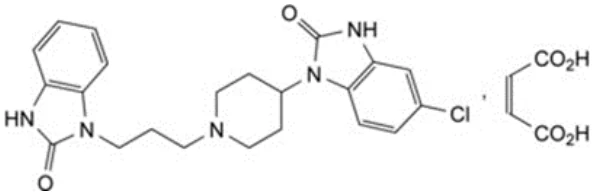
Physicochemical properties: Domperidone maleate is a white or almost white powder. Very slightly soluble in water, sparingly soluble in dimethylformamide, slightly soluble in methanol, very slightly soluble in ethanol (96 per cent).
14 CLINICAL TRIALS
14.2 Comparative Bioavailability Studies
A double blind, randomized, two-way, single dose, crossover oral bioequivalence study of JAMP Domperidone tablets, 10 mg (JAMP Pharma Corporation) and PrAPO-DOMPERIDONE tablets, 10 mg of (Apotex Inc.) was conducted in healthy, adult, Asian subjects under fasting conditions. A summary of the comparative bioavailability data from 31 subjects that were included in the statistical analysis are presented in following table.
SUMMARY TABLE OF THE COMPARATIVE BIOAVAILABILITY DATA
Domperidone (1 x 10 mg) Geometric Mean Arithmetic Mean (CV %) | ||||
| Parameter | Test1 | Reference2 | % Ratio of Geometric Means | 90% Confidence Interval |
AUCT (hr*ng /mL) | 63.98 66.84 (30.20) | 62.47 64.70 (28.57) | 102.4 | 97.3 - 107.7 |
AUCI (hr*ng /mL) | 68.95 72.22 (31.37) | 67.18 69.61 (28.87) | 102.6 | 96.9 - 108.6 |
Cmax (ng/mL) | 13.48 14.64 (43.25) | 13.63 14.86 (45.00) | 98.9 | 86.5 - 112.5 |
Tmax3 (hr) | 0.77 (0.50 - 4.00) | 0.75 (0.50 - 2.00) | ||
T½4 (hr) | 15.74 (23.21) | 15.69 (15.34) | ||
1 JAMP Domperidone (domperidone maleate) tablets, 10 mg (JAMP Pharma Corporation)
2 PrAPO-DOMPERIDONE (domperidone maleate) tablets, 10mg (Apotex Inc., Canada)
3 Expressed as the median (range) only
4 Expressed as the arithmetic mean (CV%) only
15 MICROBIOLOGY
No microbiological information is required for this drug product.
16 NON-CLINICAL TOXICOLOGY
General Toxicology:
Acute Toxicity:
| Species | Route of Administration | LD50 (mg/Kg) 7 days | |
|---|---|---|---|
| Mice | M | i.v. | 56.5 (43.2-73.8) |
| F | i.v. | 56.8 (43.5-74.2) | |
| Rats | M | i.v. | 56.3 (43.1-73.6) |
| F | i.v. | 68.8 (52.6-89.9) |
| Species | Route of Administration | LD50 (mg/Kg) 7 days | |
|---|---|---|---|
| Guinea-pigs | M | i.v. | 42.9 (32.8-56.1) |
| F | i.v. | 44.4 (34.0-58.0) | |
| Dogs | M & F | i.v. | 42.7 (32.7-55.9) |
| Mice | M | p.o. | >1280 |
| F | p.o. | >1280 | |
| Rats | M | p.o. | >1280 |
| F | p.o. | >1280 | |
| Guinea-pigs | M | p.o. | 796 (424-1493) |
| F | p.o. | >1280 | |
| Dogs | M &F | p.o. | >160 |
| Dogs | M & F | s.c. | >160 |
Signs of toxicity:
- 1. Following i.v administration:
in mice: ptosis (≥ 20 mg/kg), sedation (≥ 40 mg/kg), tremors and convulsions (> 80 mg/kg).
in rats: ptosis, sedation and catalepsy (≥ 5 mg/kg), convulsions (≥ 80 mg/kg).
in guinea pigs: ptosis and sedation (≥ 20 mg/kg) and dyspnea before death at 40 mg/kg.
in dogs: ataxia, sedation and vomiting starting at 10 mg/kg.
- 2. Following oral administration:
in mice: ptosis, sedation, and occasionally ataxia (≥ 320 mg/kg).
in rats: ptosis, sedation and catalepsy (≥ 40 mg/kg).
in guinea pigs: ptosis sedation and occasionally diarrhea (≥ 320 mg/kg).
in dogs: vomiting at 160 mg/kg.
- 3. Following subcutaneous administration:
in dogs: sedation and cataleptic immobility.
Subacute Toxicity
Intravenous toxicity study in Wistar rats (3 weeks)
Rats (10 M, 10 F/group) received intravenously 0, 2.5, 10 and 40 mg/kg domperidone once a day, six days a week. There was no effect on mortality, behaviour and appearance. At the high dose, food consumption and body weight gains were significantly lower in male animals only.
There was an increase of segmented heterophils and a decrease of lymphocytes in high dose animals. Serum analyses were normal except for an increase in alkaline phosphatase in all dosed female groups and an increase of haptoglobin in high dosed males and females.
At 40 mg/kg, a moderate to strong irritation of the tail with progressive necrosis was noted in both males and females. Also at this high dose, stimulation of the mammary glands was seen in several females. A decrease in spleen weight was noted in all groups of dosed males and females. At high dose, most of the organ weights decreased, especially in male animals where a lower terminal body weight was noted. Histopathology revealed the following: reduced number of corpora lutea in the ovary at 40 mg/kg, reduced eosinophilic infiltration of the uterine wall and more folded uterine mucosa at 40 mg/kg, mucification of the vagina at 40 mg/kg and rarely at lower dosages, atrophied and female aspect of the mammary gland in dosed males and glandular development with secretion in the dosed females in a dose-related fashion, more extended chromophobe tissue of the hypophysis at all dosages.
Intravenous toxicity study in Beagle dogs (3 weeks)
Dogs (3 M, 3 F/group) received intravenously 0, 1.25, 5 and 20 mg/kg domperidone once a day, six days a week. There was no effect on mortality. Emesis and reduced appetite were seen at the 20 mg/kg dose. Behaviour and appearance were otherwise unaffected. Body weight remained comparable between control and dosed groups. Heart rate, ECG and blood pressure remained normal in all groups.
At the high dose, there was a marginal decrease in hematocrit and hemoglobin. Serum analysis and urinalysis remained normal throughout the study.
Organ weights remained normal in all groups except for a slight increase in relative liver weight at high dose and a slight decrease in absolute and relative adrenal weight at all doses.
Histologically, both liver and adrenals were normal and comparable to controls. The following changes were seen histopathologically: reduced or absent spermatogenesis at high dose, atrophy of the prostate high dose, degranulation of the erythrosinophilic cells of the hypophysis at 5 and 20 mg/kg.
Oral toxicity study in Wistar rats (15 weeks)
Rats (10 M, 10 F/groups) received orally 0, 10, 40 and 160 mg/kg domperidone mixed in the diet.
At the high dose, a decrease in appetite and weight gain was observed as well as two deaths, both unrelated to drug administration. Food consumption was increased in low and medium dose females. Hematology and serum analysis were normal in all groups.
Urinalyses were normal except for a decrease in creatinine in all dosed females. Stimulation of the mammary glands was seen in all dosed females. Organ weights were comparable in all groups with following exceptions: increase in absolute liver weight in low dose females where body weight increased. At the high dose, the absolute weight of several organs was significantly lower than in the control group, due to lower total body weight in this group. Histopathology revealed the following changes: mucification of the vaginal epithelium, reduction in number of corpora lutea in all dosed females, female aspect with sometimes fluid secretion in the mammary gland of dosed male animals, marked development of grandular tissue filled with secretion in all dosed females, increased chromophobe or erythrosinophilic tissues and less active gonadotrophs in the hypophysis.
Oral toxicity study in Beagle dogs (3 months)
Dogs (3 M, 3 F/group) received orally 0, 2.5, 10 and 40 mg/kg domperidone once a day, six days a week. All animals survived the experiment. At the high dose, there was a decrease in appetite, and ocular discharge and ptosis were noted. Food consumption decreased at high dose, and there was a persistent body weight loss. Heart rate, ECG and blood pressure remained normal in all groups.
Hematological parameters were normal except for a decrease in hematocrit, hemoglobin and red blood cells at the high dose. Serum analysis and urinalysis remained normal in all groups.
Organ weights were normal except for a dose-related increase of the relative liver weight in all dosage groups.
At the high dose, an increase of most relative organ weights was expected from decreased total body weight. The following histopathological observations were noted: desquamation and some degeneration of germial epithelium with no spermatogenesis in 2/3 males at high dose; prostatic atrophy at 10 and 40 mg/kg; some thymus involution in 2/3 high dosed females; more extended erythrosinophilic tissue in the hypophysis in high dosed males and mid and high dosed females.
Chronic Toxicity
Oral toxicity study in Wistar rats (6-12-18 months)
Four groups of 10 male and 10 female rats received domperidone orally each day, seven days a week, at doses of 0, 10, 40 and 160 mg/kg during 6, 12 and 18 months, so that a total of 240 animals were used throughout the course of the study.
No dose-related effects on the mortality rate were observed in the 6, 12, and 18 month studies. The only effect on behaviour was an increased appetite observed in the 10 mg/kg dosed females, and also in the 40 mg/kg females, but to a lesser extent. This resulted in adipositas in several animals, especially in the 12 and 18 months studies. Stimulation of the mammary glands was noticed at all dose levels in the females and also in most of the high dosed males in the 18 month study. Food consumption was decreased at high dose for both males and females in the
6 month study, and in males of the 12 and 18 month studies. Increased food consumption was observed in the 10 mg/kg females of the 6, 12 and 18 month studies.
Decreased food consumption correlated with decreased body weight at 160 mg/kg in males and females (6 months) and in males (12 months). Hematology and biochemistry were normal except for the following findings: slight increase of non-segmented heterophils in the 40 and 160 mg/kg dosed females (12 months), marginal increase of monocytes in the 40 and 160 mg/kg dosed females (18 months), marginal increases of inorganic phosphorus in dosed females (12 months). Urinalysis was normal. Most of the necropsy findings occurring in dosed as well as undosed animals were related to aging process: pneumonia, lung abscesses, alopecia, thymus involution. Drug administration caused stimulation of the mammary glands in all dosed females of the 6, 12 and 18 month studies, and in several of the 160 mg/kg dosed males of the 18 month study. No adverse effect on organ weight was noted.
Histopathological changes were described as follows:
- enhanced prostatitis in many dosed rats at all dosages, but not at 10 mg/kg in the 6 month experiment;
- progestational aspect of the female genital tract at all dosages (6 and 12 month experiments);
- female aspect or atrophy of the mammary gland in males at all dosages;
- mammary glands stimulation in the females at all dosages after 6 and 12 months and at 160 mg/kg after 18 months;
- inverted or irregular gradient of fat in the adrenals of males at 160 and 40 mg/kg after 6 and 12 months, and at 160 mg/kg after 18 months in the males; absence of fat gradient at 160 mg/kg and 40 mg/kg in the females after 6 months;
- chronic stimulation of the chromophobe or erythrosinophilic tissues of the hypophysis at all dosages.
Oral toxicity study in Beagle dogs (12 months)
Four groups of 3 male and 3 female dogs received domperidone orally each day, seven days a week, at dosages of 0, 2.5, 10 and 40 mg/kg for a period of 12 months.
There was no mortality during the study, except for 1 animal at 40 mg/kg which died during week 8 with gastro-enteritis and peritonitis. This death was not considered to be drug related. Behaviour and appearance were unaffected, except for some temporary ocular lesions believed to be of an infectious origin which regressed during the study, and were observed in a few dogs. Some decreased food consumption was observed at the high dose, causing a lower terminal body weight. ECG, heart rate and blood pressure remained within normal values.
Hematological values remained normal except for a slight decrease of hematocrit, hemoglobin and red blood cells at 10 and 40 mg/kg and slight increase in monocytes and thrombocytes at 40 mg/kg. Serum analysis was normal in all groups except for a marginal to moderate increase of haptoglobin in the 10 and 40 dosage groups.
Urinalysis remained normal throughout the study. Gross pathology changes were limited to a small sized prostate in the 10 and 40 mg/kg dosed males. Organ weights were normal except at high dose, where the increased relative liver weight was considered a possible drug and dose related effect.
Histopathological changes were described as follows:
Testis: A tendency to more marked desquamation or to a looser germinal epithelium at 10 and 40 mg/kg, two dogs at these dosages showing more extended degeneration changes with impairment of spermatogenesis.
Prostate: Atrophy and/or fibrosis of the prostate characterized the 40 mg/kg dosed males and to a lesser extent the 10 mg/kg dosed one.
Eyes: Keratitis was noted in 10 and 40 mg/kg dosed animals; these changes were explained by the lowered resistance of these animals to some kennel infection at the time of the experiment.
Carcinogenicity
Oral carcinogenicity study in Albino Swiss mice
Four hundred Albino Swiss mice were divided into four groups of 50 males and 50 females. Each group received orally through the drinking water for 18 months, 0, 6.25 ppm (2.5 mg/kg body weight/day), 25 ppm (10 mg/kg/day) or 100 ppm (40 mg/kg/day) domperidone. No dose related effects on overall survival rate or on the time at which mortalities occurred were observed. There were no dose-related effects on health, appearance or behaviour. No dose- related effects on gross pathology were seen.
Histopathological examinations revealed no difference between groups with regard to the number of tumor-bearing mice. The incidences of the various tumor types in both males and females were comparable for each dosage group except for a dose related increase in mammary carcinomas which was significant in the high dose females. The latter finding was expected for a dopamine antagonist given at high dosages.
Oral carcinogenicity study in Wistar rats
Four hundred Wistar rats were divided into four groups of 50 males and 50 females. Each group received orally admixed in the diet for 24 months, 0, 2.5 mg/100 g food/day (2.5 mg/kg body weight/day), 10 mg/100 g food/day (10 mg/kg body weight/day) and 40 mg/100 g food/day (40 mg/kg body weight/day) domperidone.
No dose-related effects on survival rate were noticed and no dose-related effects on health, behaviour and physical appearance were observed. No dose-related effects on gross pathology were seen.
Histopathological examinations revealed that no statistical differences could be noted on the total incidence of tumor bearing rats when the various dosage groups of the males and females were compared. The incidence of various tumor types was not significantly different from the control values except for the males of the high dosage group which showed a marginally increased incidence of pituitary adenomas. In the high-dosed females, there was a slight tendency towards an increase in mammary carcinomas. The number of thyroid adenomas found in the mid-dosed females was quite high, but this was not so in the high-dosed females. These findings on pituitary and mammary glands tumourigenesis were expected for a dopamine-antagonist at high dosages.
Genotoxicity
Domperidone was shown to have no mutagenic potential in the following models: dominant lethal test in male and female mice, micronucleus test in mice, Salmonella typhimurium (Ames's test), in vitro chromosomal aberrations in human lymphocytes, sex-linked recessive lethal test in Drosophila melanogaster.
Reproductive and Developmental Toxicology
- A) Oral Embryotoxicity and Teratogenicity Studies in the Rat
Oral embryotoxicity and teratogenicity study in Wistar rats (Segment II)
Eighty female Wistar rats were divided in 4 groups of 20 animals each and received orally 0, 10, 40 and 160 mg/kg domperidone each day from day 6 to day 15 of gestation. Pregnancy rate was 65% in the high dose group as compared to 100% in the lower dosage groups and 90% in the control group. Administration of domperidone had no effect on the following parameters: number of implantations, pregnancies and pups, litter size and weight at birth, number of resorptions, live and dead fetuses, number of distribution of live, dead and resorbed embryos. No embryotoxic or teratogenic effects were seen.
Oral embryotoxicity and teratogenicity study in Wistar rats (Segment II)
Eighty female Wistar rats were divided in 4 groups of 20 animals each and received 0, 5, 20 or 80 mg/kg domperidone p.o. each day from day 6 to day 15 of gestation. Pregnancy rate was 80% at low dose, 100% at mid dose and 95% at high dose, compared to 95% in the control group. There was no embryotoxic or teratogenic effect and no effect on number of implantations, pregnancies and pups, litter size and weight at birth, number of resorptions, live and dead fetuses, number and distribution of live, dead and resorbed embryos.
Oral embryotoxicity and teratogenicity study in Wistar rats (Segment II)
Eighty female Wistar rats were divided in 4 groups of 20 animals each and received by gavage 0, 160, 320 and 640 mg/kg domperidone each day from day 6 to day 15 of gestation. Body weight gain was much lower in all dosage groups and was correlated to lower food consumption in these groups.
One female at 320 and 2 females at 640 mg/kg died during the study. These females were not pregnant and autopsy failed to reveal the cause of death. Rates of pregnancy were 95% in the control group, 85% in the 160 mg/kg group, 20% in the 320 mg/kg group and 25% in the 640 mg/kg groups. The percentage of resorptions increased with dose and was 100% in the high dose group. Litter size and weight of pups at delivery were also decreased in the low and mid dose groups. No drug related teratogenic effect was detected. However, at these high dosages, there was no evidence of maternal toxicity.
Oral three generation reproduction study in Wistar rats Exp. No. 913
Forty young and healthy adult males and one hundred and twenty young and healthy virgin females (Wistar rats) were used as the F0 generation. The animals were divided into 4 groups of equal size and dosed with domperidone at 0, 10, 40 and 160 mg/100 g food. The F0 generation was dosed from the age of 3 months onwards, i.e., from day 0 of mating and further through breeding and weaning. A total of 20 inseminated females per dosage group (i.e., 80/120) were followed during their gestation. Their progeny on days 1, 4, 14 and 21. After weaning at day 21 and a further 21/2 months growing period, a second generation was bred from the F1 litter.
The males and the females of the second generation were randomly chosen: at least 10 males and 20 females per dosage group. Upon reaching sexual maturity at 3 months, one was coupled with two females by excluding brother-sister mating. The inseminated females were isolated until 3 weeks after parturition. The pups of the F2 litter were weighed on days 1, 4, 14 and 21. After weaning at day 21 and a further 21/2 months growing period, a third generation was bred from the F2 litter in the same way as described above. The males and females of the third generation were randomly chosen: at least 10 males and 20 females per dosage group. Upon reaching sexual maturity at 3 months, one male was coupled with two females by excluding brother-sister mating. The inseminated females were isolated until sacrifice at day 22 of gestation. All delivered F3 pups were weighed.
The males and females of the second (F1) and third (F2) generations were dosed continuously at the same dose levels as the F0 generation.
Body weight gain was lower in the high dosage group of the three generations, but only in the first generation was this difference significant. This correlated with a decreased food consumption in that same group.
No mortality was recorded in each of the groups. No differences in pregnancy rates were observed between groups. The observed differences in gestation periods between groups in the first generation were not dose-related and were all within normal limits. No differences were seen in the second generation. There were some small differences between groups in litter size and number of live fetuses but all were considered to be within normal limits, except for the decrease seen in the high dosage group, which is attributed to maternal toxicity.
The same applies to birth-weight, weight at 2 and 3 weeks and survival rate. There was no difference in abnormalities between treated and untreated groups.
B) Intravenous Embryotoxicity and Teratogenicity Study in the Rat
Intravenous embryotoxicity and teratogenicity study in Wistar rats
Eighty female Wistar rats were divided into 4 groups of 20 animals each and received intravenously 0, 2.5, 10 and 40 mg/kg/day from day 6 to day 15 of gestation. Body weight increase was normal and no mortality occurred in all groups. Pregnancy rates were respectively 95%, 100%, 95% and 85% in the control, low, mid and high dose groups, The percentages of live, dead and resorbed fetuses were respectively 97.2%, 0% and 2.8% in the control group, 94.8% 0% and 5.2% in the low-dose group, 92.1%, 0% and 7.9% in the mid-dose group, 90.5%, 0% and 9.5% in the high dose group, indicating a slight increase in resorptions with increasing dosages. No differences in abnormalities were seen between treated and untreated groups.
C) Oral Embryotoxicity and Teratogenicity Studies in the rabbit
Oral embryotoxicity and teratogenicity study in New Zealand white rabbits
Sixty female New Zealand white rabbits were divided into three groups of 20 animals each and received 0, 10 and 40 mg/kg domperidone by gavage from day 6 through day 18 of gestation. There was one death at low dose and 9 deaths at the high dose. The cause of death was lobular pneumonia in 2 cases, enteritis in one case and pneumonia with mucoid enteritis in another case. Weight gain was apparent in all groups but was decreased in dosed animals. Rates of pregnancies were 85% in the control and low dose groups, and 70% in the high dose group. The average litter size was 6.2 in the control group, 5.7 in the low dose group and 5.5 in the high dose group. The percentage of live, dead and resorbed fetuses for all groups were respectively 83.9%, 0.8% and 15.3% (control group); 72.6%, 1.6% and 25.8% (low dose group); 76.6%, 2.6% and 20.8% (high dose group). Therefore the percentage of resorption increased in dosed groups. At resection the average birth weight of live pups at resection was 41.5 g (control), 40.7 g (low dose) and 36.3 g (high dose). The 24 hour survival rate of incubated pups was 75% in controls, 61.1% in low-dosed animals and 40.7% in high-dosed animals. No abnormalities were noted in any group.
In conclusion, it can be said that domperidone did not produce teratogenic effects at doses of 10 and 40 mg/kg.
There was, however, a slight increase in resorptions in dosed animals with evidence of maternal toxicity.
Oral embryotoxicity and teratogenicity study in New Zealand white rabbits
Sixty female New Zealand white rabbits were divided into three groups of 20 animals each and received 0, 5 and 20 mg/kg/day domperidone by gavage from day 6 through day 18 of gestation. There was no death in the control group, but three animals died in the 5 mg/kg groups and twelve died in the high dose group. Pregnancy rates were 60% for the control group,
70% for the low dose group and 40% for the high dose group.
The percentages of live, dead and resorbed foetuses were respectively 70.0%, 0% and 30% in the control group, 64.6%, 0% and 35.4% in the low dose group and 82.4%, 5.9% and 11.7% for the high dose group. At resection, the average birth weight of live pups was: 42.5 g (control),
39.0 g (5 mg/kg group) and 34.7 g (20 mg/kg group). Survival rate of incubated pups, 24 hours after delivery was: 54.3% (controls), 52.4% (5 mg/kg), and 14.3% (20 mg/kg). Survival rate was significantly decreased at 20 mg/kg. No teratogenic effect was seen. Maternal toxicity is evident at 5 and 20 mg/kg as pregnancy rate decreased (20 mg/kg), mortality rate increased and weight gain decreased (5 and 20 mg/kg).
D) Intravenous Embryotoxicity and Teratogenicity Studies in the Rabbit
Intravenous embryotoxicity and teratogenicity study in New Zealand white rabbits
Sixty female New Zealand rabbits were divided into three groups of 20 animals each and received intravenously 0, 0.63 and 1.25 mg/kg from day 6 through day 18 of gestation. Survival rate in the dams was 100% in the control group, 85% at low dose and 100% at high dose. Three animals died in the low dose group. Body weight gains were comparable in all groups.
Pregnancy rates were 100% in the control group. Pregnancy rates were 100% in the control group, 85% in the low dose group and 90% in the high dose group. Average litter size was comparable in all groups.
The percentages of live, dead and resorbed fetuses for all group were respectively 90.2%, 0% and 9.8% for the control, 99.2%, 0% and 0.8% in the low dose group and 97.1%, 0% and 2.9% in the high dose group. The average birth weight of live pups was: 34.6 g (controls), 35.3 g (low dose), and 36.9 g (high dose). Survival rate of incubated pups 24 hours after delivery was: 77.7% (controls), 76.7% (low dose) and 76.5% (high dose). Domperidone administered under these conditions did not produce any embryotoxic or teratogenic effects.
Intravenous embryotoxicity and teratogenicity study in New Zealand white rabbits
Sixty female New Zealand white rabbits were divided into four groups of 15 animals each and received by the intravenous route 0, 0.63, 1.25 and 2.5 mg/kg from day 6 through day 18 of gestation. There were 3 of 15 deaths in the control group, 1 of 15 in the low dose group, 2 of 15 in the mid dose group and 8 of 15 in the high dose group. The decreased survival rate in the high dose group was significant. No difference in pregnancy rates was seen among the various groups.
The average litter size was 4.9 in control group, 3.9 (0.63 mg/kg group), 3.9 (1.25 mg/kg group) and 1.7 (2.5 mg/kg group). The number of live, dead and resorbed fetuses per female for all groups were respectively: 4.3, 0.6, 1.7 (controls), 3.8, 0.1, 0.3 (0.63 mg/kg), 3.8, 0.1, 1.7 (1.25 mg/kg) and 1.7, 0.0, 2.5 (2.5 mg/kg). At resection. the average birth weight of live pups was:
42.6 g (control), 43.6 g (0.63 mg/kg), 46.7 g (1.25 mg/kg) and 41.6 g (2.5 mg/kg). Survival rate incubated pups, 24 hours after delivery was: 81.4% (control), 80.4% (0.63 mg/kg), 97.4% (1.25 mg/kg), and 60.0% (2.5 mg/kg).
Mean litter size was low in all groups, but no statistically significant differences between groups were noted. Also, no differences between groups were seen with regard to number of live, dead and resorbed fetuses, birth weight and 24 hour survival rate. No teratogenic or embryotoxic effects were observed in rabbit fetuses.
E) Oral Male and Female Fertility Study in Wistar Rats
Oral male and female fertility study in Wistar rats (Segment I)
Three hundred and twenty Wistar rats (160 males and 160 females) were used in this experiment.
Groups of 20 males and 20 females each received 0, 10, 40 and 160 mg/kg domperidone daily. Males received the drug a minimum of 60 days prior to mating with non-dosed females and females a minimum of 14 days prior to mating with non-dosed males and further throughout gestation. Body weight gain was normal in all dosed and non–dosed females, except for a lower weight gain (due to lower food consumption) in the high-dosed females.
Only two animals died during the study: one low-dosed female and one non–dosed female coupled with a high–dosed male died during the study. There was no difference in gestation between all groups of dosed and non–dosed females. No embryotoxic or teratogenic effect was seen and fertility was not affected in males and females.
F) Oral Embryotoxicity and Teratogenicity Study in Wistar Rats during the peri-and post-natal Period
Oral embryotoxicity and teratogenicity study in Wistar rats during the peri- and post-natal period (Segment III)
Eighty female Wistar rats were divided into four groups of 20 animals each and received 0, 10, 14 and 160 mg/kg domperidone orally from day 16 of gestation through a 3 week lactation period. There was significantly lower body weight gain in the high-dosed females with decreased food consumption. One low-dosed female died during the course of the experiment. Pregnancy rates were 95%, 90%, 70%, and 90% respectively in the control, low, mid and high dose groups. The percentage of live and dead foetuses at birth were respectively: 97.1%, 2.9% (control), 98,4%, 1.6% (low dose), 92.7%, 7.3% (mid dose) and 86.1%, 13.9% (high dose). No abnormalities were noted in any of groups. Pups of all groups showed normal body weight gain during a 3 week neonatal period. After 3 weeks, at weaning, survival rate of pups born to control dams was 85.5% as compared to 77.2% at 10 mg/kg, 72.1% at 40 mg/kg and 32.3% at 160 mg/kg dosed dams. The effects observed at high dose are probably due to maternal toxicity.
Special Toxicology
Information is not available.
Juvenile Toxicity
Information is not available.
17 SUPPORTING PRODUCT MONOGRAPHS
- 1. APO-DOMPERIDONE (Tablets, 10 mg), submission control 269174, Product Monograph, APOTEX INC. APR 18, 2023