


Product Monograph - Jamp Latanoprost
RECENT MAJOR LABEL CHANGES
| 7 WARNINGS AND PRECAUTIONS, Ophthalmologic | 10/2024 |
|---|
TABLE OF CONTENTS
Sections or subsections that are not applicable at the time of authorization are not listed.
RECENT MAJOR LABEL CHANGES ............................................................................................ 2
TABLE OF CONTENTS............................................................................................................... 2
PART I: HEALTH PROFESSIONAL INFORMATION ...................................................................... 4
1 INDICATIONS ............................................................................................................... 4
1.1 Pediatrics ........................................................................................................... 4
1.2 Geriatrics ........................................................................................................... 4
2 CONTRAINDICATIONS.................................................................................................. 4
4 DOSAGE AND ADMINISTRATION ................................................................................. 4
4.1 Dosing Considerations ........................................................................................ 4
4.2 Recommended Dose and Dosage Adjustment ..................................................... 4
4.4 Administration ................................................................................................... 5
4.5 Missed Dose ....................................................................................................... 5
5 OVERDOSAGE .............................................................................................................. 5
6 DOSAGE FORMS, STRENGTHS, COMPOSITION AND PACKAGING.................................. 5
7 WARNINGS AND PRECAUTIONS................................................................................... 6
7.1 Special Populations............................................................................................. 7
7.1.1 Pregnant Women ............................................................................................... 7
7.1.2 Breast-feeding .................................................................................................... 8
7.1.3 Pediatrics ........................................................................................................... 8
8 ADVERSE REACTIONS................................................................................................... 8
8.1 Adverse Reaction Overview ................................................................................ 8
8.2 Clinical Trial Adverse Reactions ........................................................................... 8
8.3 Less Common Clinical Trial Adverse Reactions ..................................................... 9
8.5 Post-Market Adverse Reactions .......................................................................... 9
9 DRUG INTERACTIONS .................................................................................................. 9
9.2 Drug interactions Overview ................................................................................ 9
9.4 Drug-Drug Interactions ..................................................................................... 10
9.5 Drug-Food Interactions ..................................................................................... 10
9.6 Drug-Herb Interactions ..................................................................................... 10
9.7 Drug-Laboratory Test Interactions..................................................................... 10
10 CLINICAL PHARMACOLOGY........................................................................................ 10
10.1 Mechanism of Action ........................................................................................ 10
10.3 Pharmacokinetics ............................................................................................. 11
11 STORAGE, STABILITY AND DISPOSAL.......................................................................... 12
12 SPECIAL HANDLING INSTRUCTIONS ........................................................................... 12
PART II: SCIENTIFIC INFORMATION ....................................................................................... 13
13 PHARMACEUTICAL INFORMATION ............................................................................ 13
14 CLINICAL TRIALS ........................................................................................................ 13
14.1 Clinical Trials by Indication ................................................................................ 13
15 MICROBIOLOGY......................................................................................................... 17
16 NON-CLINICAL TOXICOLOGY ...................................................................................... 17
17 SUPPORTING PRODUCT MONOGRAPHS ........................................................................ 23
PATIENT MEDICATION INFORMATION .................................................................................. 24
PART I: HEALTH PROFESSIONAL INFORMATION
1 INDICATIONS
JAMP Latanoprost (latanoprost) is indicated for the reduction of intraocular pressure in patients with open-angle glaucoma or ocular hypertension. JAMP Latanoprost may be used for the reduction of intraocular pressure in patients with chronic angle-closure glaucoma who underwent peripheral iridotomy or laser iridoplasty.
1.1 Pediatrics
Pediatrics (< 18 years of age): No data are available to Health Canada; therefore, Health Canada has not authorized an indication for pediatric use (see 7.1.3 Pediatrics).
1.2 Geriatrics
Geriatrics: Based on the data submitted and reviewed by Health Canada, there is no overall difference in the safety and efficacy of JAMP Latanoprost use in the geriatric patient population.
2 CONTRAINDICATIONS
Latanoprost is contraindicated in patients who are hypersensitive to this drug or to any ingredient in the formulation, including any non-medicinal ingredient, or component of the container. For a complete listing, see 6 DOSAGE FORMS, STRENGTHS, COMPOSITION AND PACKAGING.
4 DOSAGE AND ADMINISTRATION
4.1 Dosing Considerations
Contact lenses should be removed prior to the administration of JAMP Latanoprost, and may be reinserted 15 minutes after administration (see PATIENT MEDICATION INFORMATION).
JAMP Latanoprost may be used concomitantly with other topical ophthalmic products to further lower intraocular pressure. If more than one topical ophthalmic drug is being used, the drugs should be administered at least 5 minutes apart.
4.2 Recommended Dose and Dosage Adjustment
The recommended dose for adults, including the elderly (over 60 years of age), is one drop in the affected eye(s) once daily.
The dose of JAMP Latanoprost should not exceed once daily as it has been shown that more frequent administration decreases the IOP lowering effect. Reduction of IOP in humans starts about 3 to 4 hours after treatment and maximum effect is reached after 8 to 12 hours. Pressure reduction is maintained for at least 24 hours.
Health Canada has not authorized an indication for pediatric use (see 7.1.3 Pediatrics).
4.4 Administration
Optimal effect is obtained if JAMP Latanoprost (latanoprost) is administered in the evening.
4.5 Missed Dose
If one dose is missed, treatment should continue with the next dose the following day.
5 OVERDOSAGE
Apart from ocular irritation and conjunctival or episcleral hyperemia, no other ocular side effects of latanoprost administered at high doses are known. Intravenous infusion of up to 3 mcg/kg in healthy volunteers produced mean plasma concentrations 200 times higher than during clinical treatment and no adverse reactions were observed. Intravenous doses of 5.5 to 10 mcg/kg caused abdominal pain, dizziness, fatigue, hot flushes, nausea and sweating.
| For management of a suspected drug overdose, particularly accidental oral ingestion, contact your regional Poison Control Centre. |
|---|
6 DOSAGE FORMS, STRENGTHS, COMPOSITION AND PACKAGING
Table 1 – Dosage Forms, Strengths, Composition and Packaging
| Route of Administration | Dosage Form / Strength/Composition | Non-medicinal Ingredients |
|---|---|---|
| Ophthalmic | Solution / 50 mcg / mL / latanoprost | benzalkonium chloride as a preservative, disodium phosphate anhydrous, sodium chloride, sodium dihydrogen phosphate monohydrate, water for injection. Sodium hydroxide and hydrochloric acid are used for the adjustment of pH. |
JAMP Latanoprost (latanoprost) is a sterile, isotonic, buffered aqueous solution of latanoprost
50 mcg/mL. One drop contains approximately 1.5 mcg of latanoprost. JAMP Latanoprost is intended for topical administration on the eye.
JAMP Latanoprost is supplied in a 5 mL transparent LDPE bottle with a dropper insert, screw cap and tamper evident overcap.
Each bottle contains 2.5 mL of JAMP Latanoprost corresponding to approximately 80 drops of solution.
Each mL of JAMP Latanoprost contains 50 mcg latanoprost.JAMP Latanoprost is buffered to a pH of approximately 6.7 and is isotonic with lacrimal fluid.
7 WARNINGS AND PRECAUTIONS
General
Latanoprost ophthalmic solution has been reported to cause changes to pigmented tissues. The most frequently reported changes have been increased pigmentation of the iris, periorbital tissue (eyelid) and eyelashes, and growth of eyelashes. Pigmentation is expected to increase as long as JAMP Latanoprost is administered. After discontinuation of JAMP Latanoprost, pigmentation of the iris is likely to be permanent while pigmentation of the periorbital tissue and eyelash changes have been reported to be reversible in some patients. Patients who receive treatment should be informed of the possibility of increased pigmentation. The effects of increased pigmentation beyond 5 years are not known. Patients who are expected to receive treatment in only one eye should be informed about the potential for increased pigmentation in the treatment eye and thus, heterochromia between the eyes.
JAMP Latanoprost may gradually increase the pigmentation of the iris. This effect has predominantly been seen in patients with mixed coloured irides, i.e., blue-brown, grey-brown, green-brown or yellow-brown. The eye colour change is due to increased melanin content in the stromal melanocytes rather than to an increase in the number of melanocytes. This change may not be noticeable for several months to years. Typically, the brown pigmentation around the pupil spreads concentrically towards the periphery of the iris and the entire iris or parts of the iris become more brownish. Neither nevi nor freckles of the iris appear to be affected by treatment. While treatment with JAMP Latanoprost can be continued in patients who develop noticeably increased pigmentation, these patients should be examined regularly.
During clinical trials, the increase in brown iris pigment has not been shown to progress further upon discontinuation of treatment, but the resultant colour change may be permanent.
Hepatic/Biliary/Pancreatic
Latanoprost ophthalmic solution has not been studied in patients with hepatic impairment and should, therefore, be used with caution in such patients.
Ophthalmologic
Macular edema, including cystoid macular edema, has been reported during treatment with latanoprost ophthalmic solution. These reports have mainly occurred in aphakic patients, in pseudophakic patients with torn posterior lens capsule, or in patients with known risk factors for macular edema.
JAMP Latanoprost should be used with caution in patients who do not have an intact posterior capsule or who have known risk factors for macular edema.
There is no experience with latanoprost ophthalmic solution in patients with inflammatory ocular conditions, inflammatory glaucoma, neovascular glaucoma or congenital glaucoma, and only limited experience with pseudophakic patients and in patients with pigmentary glaucoma.
JAMP Latanoprost should be used with caution in patients with a history of intraocular inflammation (iritis/uveitis) and should generally not be used in patients with active intraocular inflammation.
JAMP Latanoprost should be used with caution in patients with a history of herpetic keratitis. JAMP Latanoprost should be avoided in cases of active herpes simplex keratitis and in patients with a history of recurrent herpetic keratitis specifically associated with prostaglandin analogues.
There have been reports of bacterial keratitis associated with the use of multiple-dose containers of topical ophthalmic products. These containers had been inadvertently contaminated by patients who, in most cases, had a concurrent corneal disease or a disruption of ocular epithelial surface (see PATIENT MEDICATION INFORMATION).
This product contains benzalkonium chloride as a preservative, which may be absorbed by soft contact lenses. Remove contact lenses before administration of JAMP Latanoprost. Contact lenses may be reinstalled 15 minutes after administering JAMP Latanoprost.
Renal
Latanoprost ophthalmic solution has not been studied in patients with renal impairment and should, therefore, be used with caution in such patients.
Reproductive Health: Female and Male Potential
Fertility
Latanoprost has not been found to have any effect on male or female fertility in animal studies.
Respiratory
There is no experience in patients with severe or uncontrolled asthma. Such patients should therefore be treated with caution until there is sufficient experience (see 8 ADVERSE REACTIONS).
Skin
Eyelid skin darkening, which may be reversible, has been reported in association with the use of latanoprost ophthalmic solution (see 7 WARNINGS AND PRECAUTIONS).
JAMP Latanoprost may gradually change eyelashes and vellus hair in the treated eye; these changes include increased length, thickness, pigmentation, the number of lashes or hairs, and misdirected growth of eyelashes. Eyelash changes are usually reversible upon discontinuation of treatment.
7.1 Special Populations
7.1.1 Pregnant Women
Reproduction studies have been performed in rats and rabbits. In rabbits an incidence of 4 of 16 dams had no viable fetuses at a dose that was approximately 80 times the maximum human dose, and the highest nonembryocidal dose in rabbits was approximately 15 times the maximum human dose (see 16 NON-CLINICAL TOXICOLOGY). JAMP Latanoprost should be used during pregnancy only if the potential benefit justifies the potential risk to the fetus.
7.1.2 Breast-feeding
The active substance in JAMP Latanoprost and its metabolites may pass into breast milk and JAMP Latanoprost should therefore be used with caution in nursing women (see 16 NON-CLINICAL TOXICOLOGY).
7.1.3 Pediatrics
Pediatrics (< 18 years of age): The safety and efficacy of the use of latanoprost ophthalmic solution in children has not been established; therefore, Health Canada has not authorized an indication for pediatric use.
8 ADVERSE REACTIONS
8.1 Adverse Reaction Overview
The most commonly reported (in 5% to 15% of patients) ocular adverse reactions in controlled clinical trials, that may be associated with latanoprost therapy were blurred vision, burning and stinging, conjunctival hyperemia, foreign body sensation, itching, increased iris pigmentation and punctate epithelial keratopathy (see 8.2 Clinical Trial Adverse Reactions).
The most commonly reported (in 4% of patients) systemic adverse reactions in controlled clinical trials, that may be associated with latanoprost therapy were upper respiratory tract infection/cold/flu (see 8.2 Clinical Trial Adverse Reactions).
8.2 Clinical Trial Adverse Reactions
Clinical trials are conducted under very specific conditions. The adverse reaction rates observed in the clinical trials; therefore, may not reflect the rates observed in practice and should not be compared to the rates in the clinical trials of another drug. Adverse reaction information from clinical trials may be useful in identifying and approximating rates of adverse drug reactions in real-world use.
The ocular adverse events and ocular signs and symptoms reported in 5 to 15% of the patients on latanoprost in the three 6 month, multi-centre, double-masked, active- controlled trials were blurred vision, burning and stinging, conjunctival hyperemia, foreign body sensation, itching, increased iris pigmentation and punctate epithelial keratopathy.
Local conjunctival hyperemia was observed: however, less than 1% of the latanoprost ophthalmic solution treated patients required discontinuation of therapy because of intolerance to conjunctival hyperemia.
In addition to the above listed ocular events/signs and symptoms, the following were reported in 1 to 4% of the patients: dry eye, excessive tearing, eye pain, lid crusting, lid edema, lid erythema, lid discomfort/pain and photophobia.
The most common systemic adverse events seen with latanoprost ophthalmic solution were upper respiratory tract infection/cold/flu which occurred at a rate of approximately 4%. Pain in muscle/joint/back, chest pain/angina pectoris and rash/allergic skin reaction each occurred at a rate of 1 to 2%.
8.3 Less Common Clinical Trial Adverse Reactions
The following events were reported in less than 1% of the patients:
Eye disorder: conjunctivitis, diplopia, discharge from the eye, retinal artery embolus, retinal detachment, and vitreous hemorrhage from diabetic retinopathy
8.5 Post-Market Adverse Reactions
| System Organ Class | Adverse Drug Reactions |
|---|---|
| Eye disorders | Macular oedema including cystoid macular oedema, corneal erosion, punctate keratitis, corneal oedema, uveitis, iritis, pseudopemphigoid of ocular conjunctiva, trichiasis, eyelash and vellus hair changes of the eyelid (increased length, thickness, pigmentation, and number of eyelashes), localised skin reaction on the eyelids, iris cyst, periorbital and lid changes resulting in deepening of the eyelid sulcus, darkening of the palpebral skin of the eyelids |
| Infections and infestations | Herpetic keratitis |
| Nervous system disorders | Dizziness, headache |
| Gastrointestinal disorders | Vomiting, nausea |
Respiratory, thoracic and mediastinal disorders | Acute asthma attacks, asthma aggravation, asthma, dyspnoea |
| Skin and subcutaneous tissue disorders | Pruritus |
Cases of corneal calcification have been reported very rarely in association with the use of phosphate-containing eye drops in some patients with significantly damaged corneas.
In a long-term observational cohort safety study evaluating hyperpigmentation changes in the eye, 100 paediatric glaucoma patients were followed for up to 10 years: 67 were treated with latanoprost, and 33 were not exposed to prostaglandin analogs (control group). The proportion of patients with hyperpigmentation was larger in the latanoprost group compared to the control group: iris colour darkening (13% vs 6%), localised iris pigmentation (6% vs 3%), and increase of nevi/freckles of iris, conjunctiva or choroid (12% vs 3%). Eyelash hyperpigmentation or darkening/thickening were also more frequently reported in the latanoprost group (4.5% to 12%) compared to the control group (0%). Health Canada has not authorized an indication for pediatric use (see 1.3 Pediatrics).
9 DRUG INTERACTIONS
9.2 Drug interactions Overview
In vitro studies have shown that precipitation occurs when eye drops containing thimerosal are mixed with latanoprost ophthalmic solution. If such drugs are used, they should be administered with an interval of at least 5 minutes between applications.
There have been reports of paradoxical elevations in IOP following the concomitant ophthalmic administration of two prostaglandin analogs. Therefore, the use of two or more prostaglandins, prostaglandin analogs, or prostaglandin derivatives is not recommended.
9.4 Drug-Drug Interactions
Table 2 - Established or Potential Drug-Drug Interactions
| [Proper/Common name] | Source of Evidence | Effect | Clinical comment |
|---|---|---|---|
Prostaglandin / prostaglandin analog / prostaglandin derivative | C | Elevations in Intraocular pressure following concomitant ophthalmic administration. | Use of two or more prostaglandins, prostaglandin analogs, or prostaglandin derivatives is not recommended. |
| Thimerosal | T | Precipitation occurs when mixed. | Thimerosal usage with latanoprost should be administered with an interval of at least 5 minutes between applications. |
Legend: C = Case Study; CT = Clinical Trial; T = Theoretical
9.5 Drug-Food Interactions
Interactions with food have not been established.
9.6 Drug-Herb Interactions
Interactions with herbal products have not been established.
9.7 Drug-Laboratory Test Interactions
Interactions with laboratory tests have not been established.
10 CLINICAL PHARMACOLOGY
10.1 Mechanism of Action
JAMP Latanoprost (latanoprost), a prostaglandin F2α (13,14-dihydro-17-phenyl-18,19,20-trinor-PGF2α isopropyl ester) analogue, is a selective prostanoid FP receptor agonist which reduces the intraocular pressure by increasing the outflow of aqueous humour. Studies indicate that the main mechanism of action is increased uveoscleral outflow.
Glaucoma is a disease with characteristic optic nerve damage and a corresponding visual field defect. Increased intraocular pressure (IOP) is one of the main risk factors. However, disturbances in blood flow may also play a role in some cases. In ocular hypertension, patients may have increased IOP but without changes in the visual field or corresponding optic nerve damage.
10.3 Pharmacokinetics
Table 3 - Summary of latanoprost Pharmacokinetic Parameters in aqueous humor in adults
| Cmax | Tmax | t½ (h) | AUC0-∞ | CL | Vd | |
|---|---|---|---|---|---|---|
| Single dose mean | 30 ng / mL | 2 hours | 2.3 | 206 ng·hr / mL | N/A | N/A |
Table 4 - Summary of latanoprost Pharmacokinetic Parameters in plasma in adults
| Cmax | Tmax | t½ (h) | AUC0-∞ | CL | Vd | |
|---|---|---|---|---|---|---|
| Single dose mean | 29 pg / mL | 5 minutes | 0.3 | 448 pg·min / mL | 7 mL / min / kg | 0.16 ± 0.02 L / kg |
JAMP Latanoprost is a sterile, isotonic, buffered aqueous solution with a pH of approximately 6.7. Each mL contains 50 mcg of latanoprost, a colourless to slightly yellow oil.
Absorption
Latanoprost is an isopropyl ester prodrug which is well absorbed through the cornea and upon entering the aqueous humour is rapidly and completely hydrolysed to the biologically active acid. Studies in humans indicate that the peak concentration in the aqueous humour is reached about two hours after topical administration.
Distribution
Following topical administration in monkeys, latanoprost is primarily distributed in the anterior segment, conjunctiva and eyelids with only minute quantities reaching the posterior segment. Reduction of IOP following a single dose in humans starts about 3 to 4 hours following topical administration, and the maximum effect is reached after 8 to 12 hours. Pressure reduction is maintained for at least 24 hours.
Metabolism
There is practically no metabolism of the acid of latanoprost in the eye. The plasma clearance is rapid and occurs in the liver. In animal studies, the main metabolites were the 1,2-dinor and the 1,2,3,4-tetranor metabolites which exerted only weak or no biologic activity.
Elimination
The plasma clearance is rapid and occurs in the liver. In humans, the half-life of the biologically active acid in plasma is approximately 17 minutes. In animal studies, the main metabolites were the 1,2-dinor and the 1,2,3,4-tetranor metabolites which exerted only weak or no biologic activity, and were excreted primarily in urine.
11 STORAGE, STABILITY AND DISPOSAL
Store unopened bottle under refrigeration (2 to 8°C). Protect from light. During shipment, the bottle may be maintained at temperatures between 2 to 8°C. Once opened, bottle may be stored at room temperature up to 25°C, for up to six weeks.
12 SPECIAL HANDLING INSTRUCTIONS
There are no special handling instructions for this drug product.
PART II: SCIENTIFIC INFORMATION
13 PHARMACEUTICAL INFORMATION
Drug Substance
Proper name: latanoprost
Chemical names: 1) Isopropyl-(Z)-7[(1R,2R,3R,5S)3,5-dihydroxy-2-[(3R)-3-hydroxy-5- phenylpentyl]cyclopentyl]-5-heptenoate
- 2) 13,14-dihydro-17-phenyl-18,19,20-trinor-PGF2 α-isopropyl ester
Molecular formula and molecular mass: C26H40O5 and 432.59 g / mol
Structural formula:
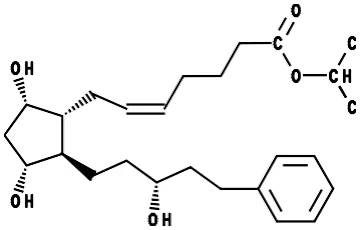
Physicochemical properties:
Physical Form Colourless to slightly yellow oil.
Solubility Very soluble in acetonitrile, freely soluble in methanol, and partially insoluble in water.
14 CLINICAL TRIALS
14.1 Clinical Trials by Indication
Reduction of intraocular pressure (IOP) in patients with open-angle glaucoma or ocular hypertension
In five controlled clinical trials of up to 6 months duration, reduction of IOP was evaluated in patients with open-angle glaucoma or ocular hypertension treated with either latanoprost ophthalmic solution dosed once a day or timolol dosed twice a day. The mean baseline IOP (mmHg) in these studies ranged from 23.1 to 29.9 and 23.1 to 28.7 for the groups treated with latanoprost ophthalmic solution and timolol, respectively. The results are shown below.
Table 5 - Summary of patient demographics for clinical trials in the reduction of intraocular pressure (IOP) in patients with open-angle glaucoma or ocular hypertension
| Study # | Study design | Dosage, route of administration and duration | Study subjects (n) | Mean age (Range) | Sex |
|---|---|---|---|---|---|
| Study 1 | Multi-center, randomized, active controlled | Fixed dose (Latanoprost ophthalmic solution once daily, timolol twice daily), ophthalmic, up to 6 months | Latanoprost ophthalmic solution: 128 Timolol: 140 | 61 (30 – 89) | 58M 70F |
| Study 2 | Multi-center, randomized, active controlled | Fixed dose (Latanoprost ophthalmic solution once daily, timolol twice daily), ophthalmic, up to 6 months | Latanoprost ophthalmic solution: 149 Timolol: 145 | 65 (39 – 88) | 191M 103F |
| Study 3 | Multi-center, randomized, active controlled | Fixed dose (Latanoprost ophthalmic solution once daily, timolol twice daily), ophthalmic, up to 6 months | Latanoprost ophthalmic solution: 183 Timolol: 84 | 67 (40 – 85) | 116M 151F |
| Study 4 | Multi-center, randomized, active controlled | Fixed dose (Latanoprost ophthalmic solution once daily, timolol twice daily), ophthalmic, up to 6 months | Latanoprost ophthalmic solution: 30 Timolol: 30 | 57 (20 – 92) | 38M 22F |
| Study 5 | Multi-center, randomized, active controlled | Fixed dose (Latanoprost ophthalmic solution once daily, timolol twice daily), ophthalmic, up to 3 months | Latanoprost ophthalmic solution: 76 Timolol: 78 | 57 (22 – 81) | 79M 75F |
Table 6 - Results of study 1 in the reduction of intraocular pressure (IOP) in patients with open-angle glaucoma or ocular hypertension*
| Primary Endpoint | Associated value and statistical significance for Drug at specific dosages | Associated value and statistical significance for Placebo or active control |
|---|---|---|
| Mean change in IOP from baseline (percent change)** | Latanoprost ophthalmic solution: -6.2 mmHg (25.4) Between group comparison p < 0.001 | Timolol: -4.5 mmHg (17.8) |
* Intent-to-treat (ITT) analysis
** Mean diurnal IOPs (mean of 3 different daytime readings)
Table 7 - Results of study 2 in the reduction of intraocular pressure (IOP) in patients with open-angle glaucoma or ocular hypertension*
| Primary Endpoint | Associated value and statistical significance for Drug at specific dosages | Associated value and statistical significance for Placebo or active control |
|---|---|---|
| Mean change in IOP from baseline (percent change)** | Latanoprost ophthalmic solution: -7.9 mmHg (30.9) Between group comparison p = 0.2 | Timolol: -7.4 mmHg (29.1) |
* Intent-to-treat (ITT) analysis
** Mean diurnal IOPs (mean of 3 different daytime readings)
Table 8 - Results of study 3 in the reduction of intraocular pressure (IOP) in patients with open-angle glaucoma or ocular hypertension*
| Primary Endpoint | Associated value and statistical significance for Drug at specific dosages | Associated value and statistical significance for Placebo or active control |
|---|---|---|
| Mean change in IOP from baseline (percent change)** | Latanoprost ophthalmic solution: -7.8 mmHg (30.7) Between group comparison p = 0.002 | Timolol: -6.6 mmHg (26.0) |
* Intent-to-treat (ITT) analysis
** Mean diurnal IOPs (mean of 3 different daytime readings)
Table 9 - Results of study 4 in the reduction of intraocular pressure (IOP) in patients with open-angle glaucoma or ocular hypertension*
| Primary Endpoint | Associated value and statistical significance for Drug at specific dosages | Associated value and statistical significance for Placebo or active control |
|---|---|---|
| Mean change in IOP from baseline (percent change)** | Latanoprost ophthalmic solution: -11.7 mmHg (39.1) Between group comparison p = 0.045 | Timolol: -8.5 mmHg (29.6) |
* Intent-to-treat (ITT) analysis
** Mean diurnal IOPs (mean of 3 different daytime readings)
Table 10 - Results of study 5 in the reduction of intraocular pressure (IOP) in patients with open-angle glaucoma or ocular hypertension*
| Primary Endpoint | Associated value and statistical significance for Drug at specific dosages | Associated value and statistical significance for Placebo or active control |
|---|---|---|
| Mean change in IOP from baseline (percent change)** | Latanoprost ophthalmic solution: -6.2 mmHg (26.8) Between group comparison p < 0.001 | Timolol: -4.4 mmHg (19.0) |
* Evaluated data for patients who completed the study as compared to the ITT analysis done for Studies 1-4
** Mean morning IOPs, representing trough values for both treatments
In latanoprost ophthalmic solution studies of up to 24 months duration, there was no evidence of long-term drift in IOP reduction; the mean diurnal IOP reduction remained constant in patients treated up to 24 months.
Similar results were obtained from a 3 month phase III clinical trial in Asian patients with chronic angle closure glaucoma. In this study, 137 patients received latanoprost once daily and 138 patients received timolol twice daily. Latanoprost reduced IOP by 30% from the untreated baseline of 25.2 mmHg. Timolol reduced IOP by 20% from a baseline of 25.9 mmHg. The p-value for the difference between the IOP reduction by latanoprost versus timolol was p<0.001. The benefit to patients from latanoprost was irrespective of their degree of angle closure.
A 3-year open-label prospective safety study with a 2-year extension phase was conducted to evaluate the progression of increased iris pigmentation with continuous use of latanoprost ophthalmic solution once- daily as adjunctive therapy in 519 patients with open-angle glaucoma. The analysis was based on observed-cases population of the 380 patients who continued in the extension phase.
Results showed that the onset of noticeable increased iris pigmentation occurred within the first year of treatment for the majority of the patients who developed noticeable increased iris pigmentation. Patients continued to show signs of increasing iris pigmentation throughout the five years of the study. Observation of increased iris pigmentation did not affect the incidence, nature or severity of adverse events (other than increased iris pigmentation) recorded in the study. In the study, IOP reduction was similar regardless of the development of increased iris pigmentation during the study.
Clinical trials have shown that latanoprost has no significant effect on production of aqueous humour and no effect on the blood-aqueous barrier. At clinical dose levels, latanoprost has negligible or no effects on intraocular blood circulation when studied in monkeys. However, mild to moderate conjunctival or episcleral hyperemia may occur as a result of topical administration.
Latanoprost has not induced fluorescein leakage in the posterior segment of pseudophakic human eyes during short term treatment.
Phase II clinical trials have also demonstrated that latanoprost ophthalmic solution is effective in combination with other drugs used for treatment of glaucoma. The IOP reducing effect of latanoprost ophthalmic solution is additive to that of beta-adrenergic antagonists (timolol), adrenergic agonists (dipivefrin, epinephrine), cholinergic agonists (pilocarpine) and carbonic anhydrase inhibitors (acetazolamide).
15 MICROBIOLOGY
No microbiological information is required for this drug product.
16 NON-CLINICAL TOXICOLOGY
General Toxicology
Toxicological studies performed in mice, rats, rabbits, dogs and monkeys indicate that there is a high therapeutic index with latanoprost with respect to systemic side effects. The maximum clinical daily dose is expected to be 1.5 mcg/eye/day.
Single Dose Toxicity
Oral and intravenous (i.v.) single dose toxicity was studied in mice and rats. Because of low solubility in water, the maximum concentration of latanoprost in saline was 40 mcg/mL and the maximum injected dose was 2 mg/kg, approximately 50,000 times the clinical dose. No mortality was observed. For oral single dose toxicity a solution of latanoprost in oil was used to achieve a higher concentration. The highest dose employed, 50 mg/kg (approx. 1 million times the clinical dose), did not induce any toxic symptoms. In an i.v. toxicity study in dogs, no mortality occurred at doses of 170, 340 or 680 mcg/kg. Clinical signs observed were similar to those reported after PGF2α.
Repeated Dose Toxicity
Topical administration on the eye - The effect of daily administration of the latanoprost formulation topically on the eye has been investigated in a subacute study in rabbits (4 weeks) and chronic studies in rabbits and cynomolgus monkeys (12 months) and rhesus monkeys (24 months).
Studies in rabbits - In the rabbit study, eye drops containing latanoprost were administered twice daily for a total of four consecutive weeks to Fauve de Bourgogne (pigmented) rabbits, the doses being 0, 1, 5 and 25 mcg per administration. The total daily dose was 0, 2, 10 and 50 mcg/eye. One eye was treated and the other served as control. No local ocular irritation and no effects of treatment on the pupillary or corneal reflexes were observed. No clinical changes were observed during the ophthalmological examination and no effects of treatment of toxicological significance were observed when clinical pathology parameters were examined. No treatment-related macroscopic or microscopic changes were observed.
In a 52-week study in Dutch belted rabbits, 4 groups of 10 rabbits of each sex received 0, 10, 30 and 100 mcg/day of latanoprost by two daily ocular administrations. Latanoprost eye drops or vehicle was instilled into the conjunctival sac. Control animals received vehicle in the right eye only. Treated groups received the test formulation in the right eye and the same quantity of vehicle in the left eye. Ophthalmoscopy, tonometry and pachymetry examinations were performed on all animals pre-dose and at weeks 14, 25 and 51. No evidence of local irritancy, ocular or systemic toxicity, or change in the pigmentation of iris were observed. A mild transient erythema and equivocal variations in intraocular pressure were observed. No treatment-related macroscopic or microscopic changes were seen.
Studies in monkeys - Two 12-month topical ocular studies were completed in cynomolgus monkeys. In the first study wild caught cynomolgus monkeys were divided into 4 groups receiving 0, 20, 50 and 100 mcg/day by two topical administrations. Treated animals received latanoprost solution in the right eye and the corresponding vehicle in the left eye. During the study some animals developed an increase in the iris pigmentation and an increase of the palpebral fissure and the study was therefore slightly modified. These changes started to appear in some animals after 2-3 months treatment. At the end of the treatment period, two treated males and one treated female were kept for a treatment-free period of 183 days (26 weeks); in one female the treatment was stopped on day 156 to evaluate the recovery of the ocular changes (iris pigmentation and eyelid effects) until the end of the treatment period for the other animals (week 53). No treatment-related signs of toxicity were seen at any dose level. The only treatment-related findings were reversible changes in the aspect of the palpebral fissure and a non-reversible increase in the iris pigmentation. These changes were attributed to the pharmacological action of latanoprost and were without a clear dose- relationship in frequency or intensity. No pathological changes were observed in any of the intra- or extraocular tissues at microscopic examination. The iridial stroma exhibited a more intense pigmentation of the melanocytes but remained morphologically normal. These findings were further confirmed in extended morphological studies of the treated and control cynomolgus monkey eyes.
In a 52-week study in domestic bred cynomolgus monkeys, lower doses compared with the above mentioned study were used since clinical studies had indicated that the maximum human dose would be 1-2 mcg/eye/day. The same experimental procedure as in the above mentioned study was employed. Two groups of five animals of each sex were treated with 2 and 6 mcg/day by twice daily applications. Six monkeys served as control and received the vehicle only. Also in this study no treatment-related signs of toxicity were observed at any dose level. The only treatment-related findings were the same local ophthalmological changes in the treated eye as described above. These consisted of a change in the aspect of the palpebral fissure (one male at 6 mcg/eye/day) and a slight increase in the iris pigmentation in the majority of animals. With the lower doses the changes appeared later, usually between 6- 12 months of treatment.
Another chronic study was conducted in domestic bred rhesus monkeys to investigate the toxicity of latanoprost following two daily ocular administrations for 104 consecutive weeks with an intermediate sacrifice after 52 weeks of treatment. To evaluate the regression of any toxic signs, some animals treated for 52 weeks were left for a two-year treatment-free period. The monkeys were divided into 4 groups receiving 0, 1, 3 or 10 mcg, by twice daily applications (i.e., 0, 2, 6 or 20 mcg/day). No treatment related signs of toxicity were observed at any dose level. The only treatment related findings were local ophthalmologic changes in the treated eye confirming observations made in the cynomologus monkey: a dose-dependent reversible slight increase of the palpebral fissure (6 and 20 mcg/day), and a slight increase in iris pigmentation in some animals from all dose groups without a dose-relationship in frequency and intensity, but with a trend regarding time of appearance. During the second year of treatment, new cases of pigmentation were observed only in the high dose group.
Microscopic examination revealed a slight increase in frequency and intensity in animals receiving 6 and 20 mcg/day. The iridial stroma exhibited a more intense pigmentation of the pigmented cells but remained morphologically normal. There were no signs of increased number of pigmented cells of the iris stroma. These changes were attributed to the pharmacological action of latanoprost, as no pathological changes were observed in any of the intra- or extraocular tissues.
Iris pigmentation - A number of studies have been performed to investigate the mechanism of latanoprost induced iris pigmentation. It is of particular interest that naturally occurring prostaglandins such as PGF2α and PGE2 also cause increased pigmentation of the iris. The effect is a class effect of prostaglandins. It has been shown that the human iridial melanocytes express FP receptors in their cell membrane, and since latanoprost is a very selective FP receptor agonist, it implies that the effect is mediated by FP receptors in the melanocytes.
Latanoprost binds only to a very small extent to melanin.
Morphometrical analysis of irides from monkeys in the chronic toxicity studies has demonstrated that there was no increase in the number of iridial melanocytes in the treated eyes compared to controls nor was latanoprost-induced increased iris pigmentation in sympathectomized rabbits associated with any increase in the number of stromal melanocytes or other cells in the iris. No proliferative effect of latanoprost acid has been demonstrated in in vitro studies on cultured human melanocytes and epidermal melanocytes and there was no uptake of 5-bromodeoxyuridine (5-BrU) or tritiated thymidine into melanocytes incubated with latanoprost acid, which strongly indicate that DNA synthesis has was not initiated during exposure to latanoprost. Additionally, latanoprost had no proliferative effect on human cultured uveal and cutaneous melanoma cell lines, implying that latanoprost does not enhance proliferation of malignant melanoma cells. The results of these in vivo and in vitro studies on monkey and human melanocytes clearly show that latanoprost has no proliferative effect on ocular melanocytes.
The melanogenic effect of latanoprost has been investigated in several studies. It has been shown that the eumelanin (physiological brown melanin) content of the iris stroma increased significantly during latanoprost treatment in cynomolgus monkeys, whereas the normally predominant pheomelanin (cystein-containing yellowish melanin) was unaffected by treatment. Since pheomelanin cannot be converted to eumelanin, the only possibility is the new syntheses of eumelanin.
A morphometrical analysis of iridial melanocytes from rhesus monkeys treated for two years with latanoprost demonstrated that there was an increase in the number of melanosomes and the area covered by melanosomes of the cytoplasm in the treated eye compared to the contralateral control eye.
Latanoprost has been shown to increase the transcription of tyrosinase, the rate-limiting enzyme in the biosynthesis of melanin, in iridial melanocytes in vivo in monkeys and also in cultured human melanocytes from mixed colour (hazel) and brown irides. These results also suggest that the basal transcription of tyrosinase may be of importance whether latanoprost treatment leads to an increase in tyrosinase expression and that latanoprost probably contributes to the variability of the latanoprost-induced iris pigmentation change. This may explain why increased pigmentation in blue eyed persons during latanoprost treatment only rarely is seen or is very slow.
Latanoprost has no melanogenic effect on melanocytes in the iridial and retinal pigment epithelium of the monkey eye.
The available data demonstrate that latanoprost induces melanogenesis thereby increasing the melanin content of the iridial melanocytes and exclude that proliferative changes occur during pigmentation. Decreased catabolism of melanin in the iridial melanocytes is considered an unlikely mechanism behind the latanoprost-induced increased iridial pigmentation, since there seems to be no or minimal catabolism of melanin in iridial melanocytes.
Light microscopical and ultrastructural examinations of human iridectomy and trabeculectomy specimens have demonstrated that the latanoprost-induced pigmentation change is not associated with any proliferative, inflammatory or degenerative changes in latanoprost- treated irides or hyperpigmentation in the trabecular meshwork.
Oral repeated dose administration - Subchronic oral administration of latanoprost was performed in mice and rats with latanoprost dissolved in saline and oil (neutral oil TG/10). Due to low solubility the maximum dose of latanoprost in saline was 200 mcg/kg/day, approximately 5000 times the clinical dose, and the maximum dose in oil solutions was 10 mg/kg/day, approx. 250,000 times the clinical dose. The studies in mice and rats were 28 days and 13 weeks, respectively. No toxic effects were seen.
Intravenous repeated dose administration - The studies were performed in rats and dogs, the duration of treatment being 4 and 13 weeks in each species. Latanoprost was dissolved in saline and in the 4 week study in rats injected in doses of 1, 10, 100 and 340 mcg/kg/day. In the 13 week study in rats the doses were 5, 35 and 250 mcg/kg/day. In the intravenous studies some mortalities occurred in rats given 250 mcg/kg/day (> 5000 times the clinical dose per body weight). The mortalities were most likely due to acute cardiovascular effects.
In the 4 week dose-finding study in the dog in which doses of 1, 10, 100 and 340 mcg/kg/day were tested, doses of 100 and 340 mcg/kg caused vomiting, hypersalivation and miosis. The doses selected for the 13 week study were 1, 10 and 100 mcg/kg/day. Hypersalivation and miosis were seen at the dose of 10 and 100 mcg/kg/day, and vomiting at the dose of 100 mcg/kg. No pathological changes were observed. It is evident that a doses of 250 mcg/kg/day causes some deaths due to cardiovascular effects in rats. The high doses employed are considerably higher (5000 - 10,000 times) than the clinical dose.
Carcinogenicity
For the evaluation of the carcinogenic potential, latanoprost dissolved in physiological saline was administered by gavage route to mice and rats. The duration of the study in mice was intended to be 80 weeks. However, owing to the good survival rate of the animals, the duration of the study was extended until survival had reached approximately 50% for each sex. The males were necropsied week 88, and the females week 92. The dose levels (2, 20 and 200 mcg/kg/day) were chosen based on the human therapeutic dose level and previous toxicity and pharmacokinetic studies. The highest dose is approx. 5000 times the human therapeutic dose when normalized for body weight and approaches the limit of solubility of latanoprost in water. In a toxicokinetic study in the same strain of mouse, latanoprost administered at 200 mcg/kg/day once daily by oral gavage resulted in a mean maximal plasma concentration of the acid of latanoprost 5 min after the last dose about 50 times higher than the maximal human plasma concentration after a clinical dose in both eyes.
There were no clinical signs attributable to treatment and no evidence to suggest that treatment had any effect on the incidence of palpable masses. Survival was not affected by treatment with the test article. The incidence and causes of morbidity and mortality in all groups were consistent with the expected profile in this strain of mouse. Body weight for high dose females tended to be slightly lower than for those of the control throughout the study.
There was no indication that red or white blood cell counts were affected by treatment. The spectrum of necropsy findings in treated animals was generally similar to that in controls.
There were no non-neoplastic findings of unusual nature or incidence attributable to the test article. There were no unusual tumour types or increased incidence of tumours attributable to the test article. It is therefore evident that the latanoprost has no carcinogenic potential in the mouse.
The design of the carcinogenicity study in rats was the same as in mice but with longer duration of the study. The dose levels were based on the human therapeutic dose level and previous toxicity and pharmacokinetic studies. The high dose, 200 mcg/kg/day, was approximately 5000 times the human therapeutic dose and approaches the limit of latanoprost solubility in water. In a toxicokinetic study in the same strain of rats, latanoprost was administered at 200 mcg/kg/ day once daily by oral gavage route, the maximal plasma concentration of the acid of latanoprost was about 13-17 times higher than the maximal human plasma concentration after a clinical dose on both eyes. Therefore in the rat a sufficient dose level was used.
There were no clinical signs attributable to treatment and no evidence to suggest that treatment had any effect on the incidence of palpable masses. There was no indication that survival had been adversely affected by treatment. The incidence and causes of morbidity and mortality in all groups were consistent with the expected profile in this strain of rat. Body weight and food consumption were not affected by treatment. There was no indication that red or white blood cell counts were affected by treatment. The spectrum of necropsy findings in treated animals was generally similar to that in controls. There were no unusual non- neoplastic findings or increased incidence of tumours attributable to the test article. It can therefore be concluded that the oral administration of latanoprost to the rat, for the major part of its life span, at dose levels up to 200 mcg/kg/day was well tolerated and produced no evidence of toxicity. There were no unusual tumour types attributable to the test article.
Therefore in the rat no carcinogenic potential was observed.
Reproductive and Developmental Toxicology
In order to reveal potential adverse effects on reproduction, latanoprost has been administered i.v. to male and female rats before and during pregnancy to study its effect on fertility, teratology and peri- and postnatal development. All studies were performed with intravenous injection of latanoprost since this route of administration was considered to give the highest systemic exposure. The duration of administration of latanoprost was selected to cover the periods where reproductive performance/fertility, embryogenesis and peri/postnatal development are known to be sensitive to drug effects in the respective species. The doses were selected based on dose-range finding studies in rats and rabbits and on the results from preliminary systemic toxicity studies in rats.
The fertility and the general reproductive performance were not affected in female or male rats. In the dose range study for peri- and postnatal toxicity, pup mortality was increased in the groups given 10 mcg/kg or more and this effect was particularly marked in the 100 mcg/kg/day group. The high dose selected was 10 mcg/kg in the main peri- and postnatal study in the rat. This study showed no treatment-related effects on peri- and postnatal development at the selected dose levels (1-10 mcg/kg/day) of latanoprost.
In the embryotoxicity study in rats, no embryotoxicity was observed at the doses (5, 50 and 250 mcg/kg/day) of latanoprost used. However, latanoprost induced embryolethal effects in rabbits in doses above 5 mcg/kg/day. The dose level of 5 mcg/kg/day caused a slight increase in foetal resorption and was selected as the high dose in the main study. This dose caused significant embryo-foetal toxicity characterized by increased incidence of late resorption and abortion and by reduced foetal weight. No consistent indications of embryo fetal toxicity were observed with the low and intermediate doses of 0.2 and 1 mcg/kg/day. The effects on the foetal development are probably due to a pronounced luteolytic effect in the rabbit which has been described as a pharmacologic property of prostaglandin F2α and its analogues and has been reported in several research and review papers.
The feto-placental transfer and lacteal secretion of latanoprost was investigated in rats. The concentrations of radioactivity of latanoprost and PhXA85 (acid of latanoprost) were measured in plasma and milk. The concentration of radioactivity was analysed in tissues after single intravenous administration of tritium labelled latanoprost at a dose of 200 mcg/kg to pregnant or lactating rats. On the 12th-gestation day, the concentration of radioactive latanoprost in the fetus was 0.00006% of the dose at 1 hour. The value of radioactivity in the fetus at
24 hours was below the limit of detection. On the 18th gestation day, the concentration of radioactive latanoprost in the fetus was 0.018% (at 1 hour) and 0.005% (at 4 hour). Again, at 24 hours there was no radioactivity measured. In the milk the concentration of radioactive latanoprost was shown to be eliminated more slowly than for plasma. Of the low levels remaining in milk at 2 hours and 8 hours, only 5.5% and 15% respectively was the acid of latanoprost. The more polar metabolites formed the rest of the radioactivity in the milk.
Mutagenicity
Studies on the mutagenic potential of latanoprost have been performed by using in vitro and in vivo methods.
The in vitro mutagenic potential was tested in bacteria (Salmonella typhimurium and Eschericia coli) and in the mouse lymphoma cells. No mutagenic effect was observed in these systems.
In vitro chromosome aberration studies in human lymphocytes showed an increase in numbers of aberrant cells at concentrations of 130 and 160 mcg/mL in the absence of S9. Treatment of cultures with latanoprost in the presence of S9 were negative. Normal frequencies of cells with aberrations were seen at a concentration of 100 mcg/mL. The cytotoxic effects of latanoprost were clearly reflected by the poor yield of cells from cultures receiving 160 mcg/mL in the absence of S9.
The in vivo micronucleus test in mice showed no signs of chromosome aberrations. As the aberrations in the mouse lymphoma occur predominantly in the absence of S9, the performed micronucleus test constitutes an appropriate in vivo assessment.
In order to further elucidate a potential genotoxic effect, an in vitro/in vivo unscheduled DNA test (UDS) was performed. This study did not indicate any mutagenic potential of latanoprost and as the test is a validated method it can be concluded that latanoprost has no mutagenic potential.
Special Toxicology
An eye irritation test was conducted in rabbits in order to study whether changes in the formulation of the eye drops resulted in any local irritating effect. The two formulations tested were non-irritant. It can be stated that the formulations have been well tolerated in all the topical eye studies.
The anaphylactic and sensitization studies in the guinea pig demonstrated that latanoprost did not have any sensitization properties.
17 SUPPORTING PRODUCT MONOGRAPHS
- 1. XALATAN®, (Latanoprost Ophthalmic Solution, 50 mcg/mL) submission control 286293, Product Monograph, BGP Pharma ULC (SEP 25, 2024)