


Product Monograph - Jamp Pentoxifylline SR
RECENT MAJOR LABEL CHANGES
| Not Applicable |
|---|
TABLE OF CONTENTS
Sections or subsections that are not applicable at the time of authorization are not listed.
RECENT MAJOR LABEL CHANGES ............................................................................................ 2
TABLE OF CONTENTS .............................................................................................................. 2
PART I: HEALTH PROFESSIONAL INFORMATION ...................................................................... 4
1 INDICATIONS .............................................................................................................. 4
- 1.1 Pediatrics ................................................................................................................... 4
- 1.2 Geriatrics ................................................................................................................... 4
- 2 CONTRAINDICATIONS ................................................................................................. 4
4 DOSAGE AND ADMINISTRATION ................................................................................. 4
- 4.1 Dosing Considerations .............................................................................................. 4
- 4.2 Recommended Dose and Dosage Adjustment ......................................................... 5
- 4.4 Administration .......................................................................................................... 5
- 4.5 Missed Dose .............................................................................................................. 5
- 5 OVERDOSAGE ............................................................................................................. 5
- 6 DOSAGE FORMS, STRENGTHS, COMPOSITION AND PACKAGING .................................. 6
7 WARNINGS AND PRECAUTIONS .................................................................................. 6
- 7.1 Special Populations ................................................................................................... 7
- 7.1.1 Pregnant Women ................................................................................................ 7
- 7.1.2 Breast-feeding ..................................................................................................... 7
- 7.1.3 Pediatrics ............................................................................................................. 7
- 7.1.4 Geriatrics ............................................................................................................. 7
8 ADVERSE REACTIONS .................................................................................................. 8
- 8.1 Adverse Reaction Overview ...................................................................................... 8
- 8.2 Clinical Trial Adverse Reactions ................................................................................ 8
- 8.3 Less Common Clinical Trial Adverse Reactions ......................................................... 8
8.5 Post-Market Adverse Reactions .............................................................................. 9
9 DRUG INTERACTIONS .................................................................................................. 9
- 9.2 Drug Interactions Overview ...................................................................................... 9
- 9.3 Drug-Behavioural Interactions .................................................................................. 9
- 9.4 Drug-Drug Interactions ............................................................................................. 9
- 9.5 Drug-Food Interactions ........................................................................................... 10
- 9.6 Drug-Herb Interactions ........................................................................................... 10
- 9.7 Drug-Laboratory Test Interactions .......................................................................... 10
10 CLINICAL PHARMACOLOGY ....................................................................................... 10
- 10.1 Mechanism of Action ........................................................................................ 10
- 10.2 Pharmacodynamics ........................................................................................... 11
- 10.3 Pharmacokinetics .............................................................................................. 11
- 11 STORAGE, STABILITY AND DISPOSAL ......................................................................... 12
- 12 SPECIAL HANDLING INSTRUCTIONS ........................................................................... 12
PART II: SCIENTIFIC INFORMATION ....................................................................................... 13
- 13 PHARMACEUTICAL INFORMATION ............................................................................ 13
14 CLINICAL TRIALS........................................................................................................ 14
- 14.1 Clinical Trials by Indication ................................................................................ 14
14.2 Comparative Bioavailability Studies .................................................................. 14
- 15 MICROBIOLOGY ........................................................................................................ 16
- 16 NON-CLINICAL TOXICOLOGY ..................................................................................... 17
- 17 SUPPORTING PRODUCT MONOGRAPHS……………………………………………………………………21
PATIENT MEDICATION INFORMATION .................................................................................. 22
PART I: HEALTH PROFESSIONAL INFORMATION
1 INDICATIONS
JAMP Pentoxifylline SR (pentoxifylline) is indicated for:
- symptomatic treatment of patients with chronic occlusive peripheral vascular disorders of the extremities. In such patients pentoxifylline may give relief of signs and symptoms of impaired blood flow, such as intermittent claudication or trophic ulcers.
1.1 Pediatrics
Pediatrics (<18 years): Based on the data submitted and reviewed by Health Canada, the safety and efficacy of pentoxifylline in pediatric patients has not been established; therefore, Health Canada has not authorized an indication for pediatric use.
1.2 Geriatrics
Geriatrics: Evidence from clinical studies and experience suggests that use in the geriatric population is associated with differences in safety or effectiveness. See 4 DOSAGE AND ADMINISTRATION. In general, dose selection for a geriatric patient should be cautious, usually starting at the low end of the dosing range, reflecting the greater frequency of decreased hepatic, renal, or cardiac function, and of concomitant disease or other drug therapy.
2 CONTRAINDICATIONS
JAMP Pentoxifylline SR is contraindicated in patients:
- who are hypersensitive to pentoxifylline or other xanthines such as caffeine, theophylline and theobromine, or to any ingredient in the formulation, including any non-medicinal ingredient, or component of the container. For a complete listing, see 6 DOSAGE FORMS, STRENGTHS, COMPOSITION AND PACKAGING.
- with acute myocardial infarction,
- with severe coronary artery disease when, in the physician's judgment, myocardial stimulation might prove harmful,
- with recent cerebral and/or retinal hemorrhage,
- with peptic ulcers or recent history thereof.
4 DOSAGE AND ADMINISTRATION
4.1 Dosing Considerations
Since pentoxifylline is extensively metabolized in the liver and eliminated through the kidneys, the use of this drug is not recommended in patients with marked impairment of kidney or liver function. Patients with less severe impairment of these organs should be closely monitored during pentoxifylline therapy and they may require lower doses.
4.2 Recommended Dose and Dosage Adjustment
The recommended starting dosage of JAMP Pentoxifylline SR is 400 mg twice daily after meals. The usual maintenance dose is 400 mg twice or three times daily. A maximum dose of 400 mg three times daily should not be exceeded.
JAMP Pentoxifylline SR may take up to two months to obtain full results.
Digestive and central nervous system side effects are dose related. If patients develop these effects it is recommended that the dosage be lowered to one tablet twice a day (800 mg/day). If side effects persist at this lower dosage, the administration of JAMP Pentoxifylline SR should be discontinued.
Considerations for Special Populations
Pediatrics: Health Canada has not authorized an indication for pediatric use.
Geriatrics: In general, dose selection for a geriatric patient should be cautious, usually starting at the low end of the dosing range, reflecting the greater frequency of decreased hepatic, renal, or cardiac function, and of concomitant disease or other drug therapy.
Renal Insufficiency: In patients with severe renal impairment (creatinine clearance below 30 mL/min) reduce dose to 400 mg once a day.
Hepatic Insufficiency: Dosing information cannot be provided for patients with hepatic impairment.
4.4 Administration
JAMP Pentoxifylline SR 400 mg tablets must be swallowed whole and taken after a meal.
4.5 Missed Dose
In the event that a dose is missed, the missed dose should be taken as soon as possible. However, if it is almost time for the next dose then skip the missed dose and take the next dose as scheduled. Do not take two doses at the same time.
5 OVERDOSAGE
Overdosage with pentoxifylline has been reported in children and adults. Symptoms appear to be dose related and usually occurred 4-5 hours after ingestion and lasted about 12 hours. The highest amount ingested was 80 mg/kg; flushing, hypotension, convulsions, somnolence, loss of consciousness, fever, and agitation occurred. All patients recovered.
No specific antidote is known. In addition to symptomatic treatment and gastric lavage, special attention must be given to supporting respiration, maintaining systemic blood pressure, and controlling convulsions with intravenous diazepam. Activated charcoal has been used to adsorb pentoxifylline in patients who have overdosed.
| For management of a suspected drug overdose, contact your regional poison control centre. |
|---|
6 DOSAGE FORMS, STRENGTHS, COMPOSITION AND PACKAGING
Table 1 – Dosage Forms, Strengths, Composition and Packaging
| Route of Administration | Dosage Form / Strength/Composition | Non-medicinal Ingredients |
|---|---|---|
| Oral | Tablet (Extended-Release) / 400 mg | FD&C Red No. 3 aluminum lake, hydroxyethyl cellulose, hypromellose, macrogol, magnesium stearate, povidone, talc and titanium dioxide. |
JAMP Pentoxifylline SR 400 mg tablets: bright pink, capsule shaped, biconvex, film coated, sustained release tablets, debossed with ‘PEN’ on one side and ‘400’ on other.
JAMP Pentoxifylline SR 400 mg tablets are available in bottles of 100 and 500 tablets.
7 WARNINGS AND PRECAUTIONS
Cardiovascular
Arrhythmias
Patients with severe cardiac arrhythmias should be closely monitored during pentoxifylline therapy.
Arterial Disease of the Limbs
Patients with chronic occlusive arterial disease of the limbs frequently show other manifestations of arteriosclerotic disease. Pentoxifylline has been used safely for treatment of peripheral arterial disease in patients with concurrent coronary artery and cerebrovascular diseases, but there have been occasional reports of angina, hypotension, and arrhythmia. Controlled trials do not show that pentoxifylline causes such adverse effects more often than placebo, but, as it is a methylxanthine derivative, it is possible some individuals will experience such responses.
Low, Labile Blood Pressure
Caution should be exercised when administering JAMP Pentoxifylline SR to patients with low or labile blood pressure. In such patients any dose increase should be done gradually and careful monitoring is required.
Hematologic
Patients on Warfarin should have more frequent monitoring of prothrombin times, while patients with other risk factors complicated by hemorrhage (e.g., recent surgery, peptic ulceration, cerebral and/or retinal bleeding) should have periodic examinations for bleeding including, hematocrit and/or hemoglobin.
Hepatic/Biliary/Pancreatic
Since pentoxifylline is extensively metabolized in the liver, the use of this drug is not recommended in patients with marked impairment of liver function. Patients with less severe impairment of liver function should be closely monitored during pentoxifylline therapy and they may require lower doses.
Immune
At the first sign of anaphylactic/anaphylactoid reaction, JAMP Pentoxifylline SR must be discontinued.
Renal
Since pentoxifylline is eliminated through the kidneys, the use of this drug is not recommended in patients with marked impairment of kidney function. Patients with less severe impairment of kidney function should be closely monitored during pentoxifylline therapy and they may require lower doses.
7.1 Special Populations
7.1.1 Pregnant Women
Reproduction studies have been performed in rats, mice and rabbits at doses up to 23, 2 and 11 times the maximum recommended daily human dose and have revealed no evidence of impaired fertility or harm to the fetus due to pentoxifylline. The drug has been shown to cross the blood-placenta barrier in mice. There is no adequate experience in pregnant women.
Therefore, pentoxifylline is not recommended for women who are, or may become, pregnant unless the expected benefits for the mother outweigh the potential risk to the fetus.
7.1.2 Breast-feeding
Pentoxifylline and its major metabolites are excreted in human milk, following a 400 mg single oral dose of pentoxifylline. The patient should be advised to discontinue nursing or to discontinue taking the drug depending on the importance of the drug to the mother.
7.1.3 Pediatrics
Based on the data submitted and reviewed by Health Canada, the safety and efficacy of pentoxifylline in pediatric patients has not been established; therefore, Health Canada has not authorized an indication for pediatric use.
7.1.4 Geriatrics
Pentoxifylline should be used with caution in geriatric patients as peak plasma levels of pentoxifylline and its metabolites are moderately higher in this age group. Geriatric patients had a slight increase in the incidence of some adverse effects. Careful dose adjustment is therefore recommended. See 4 DOSAGE AND ADMINISTRATION.
8 ADVERSE REACTIONS
8.1 Adverse Reaction Overview
The adverse events in the sections below were identified during clinical trials or post market use. The most frequent adverse effect reported with pentoxifylline is nausea (14%).
8.2 Clinical Trial Adverse Reactions
Clinical trials are conducted under very specific conditions. Adverse reaction information from clinical trials may be useful in identifying and approximating rates of adverse drug reactions in real-world use. The clinical trial adverse events below are considered common and occurred at a frequency of greater than 1%. Individual signs/symptoms marked with an asterisk occurred at an incidence between 1% and 3%.
Gastrointestinal disorders: Nausea (14%), vomiting (3.4%), abdominal discomfort*, bloating*, diarrhea*, dyspepsia*.
Nervous system disorders: Dizziness/light headedness (9.4%), headache (4.9%).
Vascular disorders: Flushing*.
8.3 Less Common Clinical Trial Adverse Reactions
The less common clinical trial adverse events listed below occurred at an incidence below 1%; for some adverse events (with the ± symbol), the causal relationship was uncertain.
Blood and lymphatic system disorders: Leukopenia±.
Cardiac disorders: Chest pain, dyspnea±, edema±.
Ear and labyrinth disorders: Earache±.
Eye disorders: Blurred vision±, scotoma±, lacrimation, conjunctivitis±.
Gastrointestinal disorders: Abdominal burning, abdominal pain, flatus, constipation±, heartburn, salivation±, dry mouth/thirst±, bad taste in mouth±.
General disorders and administration site conditions: Fever, weakness, sweating.
Hepatobiliary disorders: Cholecystitis±.
Investigations: Weight change±.
Metabolism and nutrition disorders: Anorexia±.
Musculoskeletal and connective tissue disorders: Muscle aches/spasms, backache, leg cramps.
Nervous system disorders: Drowsiness/ sleepiness, tremor, agitation, insomnia, restlessness, seizures±, aseptic meningitis±.
Psychiatric disorders: Anxiety±, confusion±, depression±.
Respiratory, thoracic and mediastinal disorders: Epistaxis, laryngitis, nasal congestion, sore throat/swollen neck glands±.
Skin and subcutaneous tissue disorders: Pruritus±, rash±, urticaria±, angioedema±.
Vascular disorders: Hypertension, hypotension±, haemorrhage.
8.5 Post-Market Adverse Reactions
A few rare events have been reported spontaneously worldwide since marketing in 1972. Although they occurred under circumstances in which a causal relationship with pentoxifylline could not be established, they are listed to serve as information for physicians.
Blood and lymphatic system disorders: Pancytopenia, purpura, thrombocytopenia, anemia, aplastic anemia.
Cardiac disorders: Arrhythmia, angina, tachycardia.
Hepatobiliary disorders: Hepatitis, jaundice, cholestasis.
Immune system disorders: Anaphylactic reaction, anaphylactoid reaction, anaphylactic shock.
Investigations: Increased liver enzymes, decreased serum fibrinogen.
9 DRUG INTERACTIONS
9.2 Drug Interactions Overview
The coadministration of cimetidine with pentoxifylline results in greater pentoxifylline plasma concentration, and this may be due to an increase in oral bioavailability resulting from cimetidine reducing apparent oral clearance. Concurrent use of CYP1A2 inhibitors, such as ciprofloxacin and fluvoxamine, may increase exposure to pentoxifylline. Using pentoxifylline together with anticoagulants may increase the risk of bleeding.
9.3 Drug-Behavioural Interactions
Interactions with behaviour have not been established.
9.4 Drug-Drug Interactions
The drugs listed in this section are based on either drug interaction case reports or studies, or potential interactions due to the expected magnitude and seriousness of the interaction (i.e., those identified as contraindicated).
Antihypertensive agents: Pentoxifylline may potentiate the action of antihypertensive agents. Patients receiving these agents require blood pressure monitoring and possibly a dose reduction of the antihypertensive agents.
Sympathomimetics: Combined use with other xanthines or with sympathomimetics may cause excessive CNS stimulation.
Theophylline: Concomitant administration of pentoxifylline and theophylline-containing drugs leads to increased theophylline levels and theophylline toxicity in some individuals. Monitor theophylline levels when starting pentoxifylline or changing dose.
Erythromycin: No data are available on the possible interaction of pentoxifylline and erythromycin. However concurrent administration of erythromycin and theomycin has resulted in significant elevation of serum theophylline levels with toxic reactions.
Hypoglycemic agents: In patients treated with hypoglycemic agents, a moderate adjustment in the dose of these agents may be required when pentoxifylline is prescribed.
Anticoagulants: There have been reports of bleeding and/or prolonged prothrombin time in patients treated with pentoxifylline with and without concomitant NSAIDs, anticoagulants or platelet aggregation inhibitors. Patients on warfarin should have more frequent monitoring of prothrombin time, while patients with other risk factors complicated by hemorrhage (e.g. recent surgery) should have periodic examinations for signs of bleeding, including hematocrit and hemoglobin.
Antacids: In patients with digestive side effects, antacids may be administered with pentoxifylline. In a comparative bioavailability study, no interference with absorption of pentoxifylline by antacids was observed.
Cimetidine: During concurrent use of cimetidine and pentoxifylline, cimetidine has been shown to significantly increase the steady-state plasma concentration of pentoxifylline, which may enhance the possibility of adverse effects.
CYP1A2 inhibitors: Concomitant administration of strong CYP1A2 inhibitors (including e.g. ciprofloxacin or fluvoxamine) may increase the exposure to pentoxifylline.
9.5 Drug-Food Interactions
Interactions with food have not been established.
9.6 Drug-Herb Interactions
Interactions with herbal products have not been established.
9.7 Drug-Laboratory Test Interactions
Interactions with laboratory tests have not been established.
10 CLINICAL PHARMACOLOGY
10.1 Mechanism of Action
Pentoxifylline is a xanthine derivative. It belongs to a group of vasoactive drugs which improve peripheral blood flow and thus enhance peripheral tissue oxygenation. The mechanism by which pentoxifylline achieves this effect has not been determined, but it is likely that the following factors are involved:
- 1. Pentoxifylline, as other xanthine derivatives, relaxes certain smooth muscles including those of the peripheral vessels, thus causing vasodilatation or preventing spasm. This action, however, may have a limited role in patients with chronic obstructive arterial disease when peripheral vessels are already maximally dilated.
- 2. Pentoxifylline improves flexibility of red blood cells. This increase in the flexibility of red blood cells probably contributes to the improvement of the ability of blood to flow through peripheral vessels (haemorheologic action). This property was seen during in-vitro and in-vivo experiments with pentoxifylline but the correlation between it and the clinical improvement of patients with peripheral vascular diseases has not been determined.
- 3. Pentoxifylline promotes platelet deaggregation.
Improvement of red blood cell flexibility and platelet deaggregation contribute to the decrease in blood viscosity.
10.2 Pharmacodynamics
The results of in vitro studies in which pentoxifylline was added to blood from human volunteers, and in vivo studies in which pentoxifylline was given orally or intravenously to patients with peripheral vascular disease indicate that pentoxifylline can improve impaired erythrocyte flexibility. The possible mechanisms involved in this effect are most likely related to intracellular adenosine triphosphate (ATP) in as much as ATP depleted cells have reduced flexibility and vice versa. Pentoxifylline raises erythrocyte intracellular ATP concentrations.
In humans, pentoxifylline inhibits ADP-stimulated platelet aggregation as measured by the Born method.
10.3 Pharmacokinetics
Absorption
Pentoxifylline is almost completely absorbed after oral administration. The pentoxifylline 400 mg sustained release tablet showed an initial peak plasma pentoxifylline concentration 2 to 3 hours post- administration.
Food intake before the administration of pentoxifylline delayed the absorption but did not decrease it.
Metabolism
The drug is extensively metabolized.
Elimination
Biotransformation products are almost exclusively eliminated by the kidneys.
11 STORAGE, STABILITY AND DISPOSAL
Store at room temperature (15-30°C).
12 SPECIAL HANDLING INSTRUCTIONS
None
PART II: SCIENTIFIC INFORMATION
13 PHARMACEUTICAL INFORMATION
Drug Substance
Proper name: pentoxifylline
Chemical name: 3,7–dihydro-3,7–dimethy1-1–(5–oxohexyl)-1H–purine- 2,6 dione
Molecular formula and molecular mass: C13H18N4O3 and 278.3 g/mol
Structural formula:
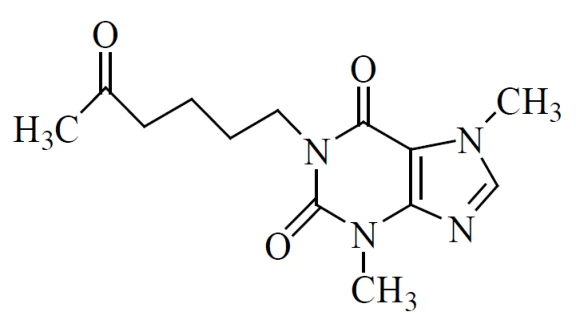
Physicochemical properties: Pentoxifylline is white or almost white crystalline powder, soluble in water, freely soluble in methylene chloride, sparingly soluble in ethanol (96%). It has a melting point range of 103 to 107⁰C.
14 CLINICAL TRIALS
14.1 Clinical Trials by Indication
The clinical trial data on which the original indication was authorized is not available.
14.2 Comparative Bioavailability Studies
Fasting Study
A randomized, two-way, four-period, single-dose, fully replicated crossover comparative bioavailability study of JAMP Pentoxifylline SR 400 mg extended-release tablets (JAMP Pharma Corporation) and PrPENTOXIFYLLINE SR 400 mg sustained-release tablets (AA Pharma Inc.) was conducted in healthy, adult, Asian Indian male (n=35) and female (n=4) subjects under fasting conditions. Comparative bioavailability data from the 39 subjects that were included in the statistical analysis are presented in the following table.
SUMMARY TABLE OF THE COMPARATIVE BIOAVAILABILITY DATA
Pentoxifylline (1 x 400 mg) Geometric Mean Arithmetic Mean (CV%) | ||||
| Parameter | Test1 | Reference2 | % Ratio of Geometric Means | 90% Confidence Interval |
AUCT (ng·h/mL) | 934.48 1220.68 (84.40) | 1020.73 1273.22 (82.73) | 91.6 | 82.0-102.2 |
AUCI (ng·h/mL) | 1201.38 1519.82 (74.32) | 1232.11 1496.16 (74.65) | 97.5 | 86.5-109.9 |
Cmax (ng/mL) | 177.12 207.48 (61.82) | 216.23 246.20 (53.45) | 81.9 | 74.1-90.6 |
Tmax3 (h) | 1.00 (0.25 - 9.00) | 0.83 (0.25 – 4.00) | ||
T½ 4 (h) | 6.69 (90.08) | 5.94 (58.43) | ||
1 JAMP Pentoxifylline SR (pentoxifylline) extended-release tablets, 400 mg (JAMP Pharma Corporation)
2 PENTOXIFYLLINE SR (pentoxifylline) sustained-release tablets, 400 mg (AA Pharma Inc.)
3 Expressed as the median (range) only.
4 Expressed as the arithmetic mean (CV %) only.
Fed study
A randomized, two-way, four-period, single-dose, fully replicate crossover comparative bioavailability study of JAMP Pentoxifylline SR 400 mg extended-release tablets (JAMP Pharma Corporation) and PrPENTOXIFYLLINE SR 400 mg sustained-release tablets (AA Pharma Inc.) was conducted in healthy, adult, Asian Indian male subjects under high-fat, high-calorie fed conditions. Comparative bioavailability data from the 28 subjects that were included in the statistical analysis are presented in the following table.
SUMMARY TABLE OF THE COMPARATIVE BIOAVAILABILITY DATA
Pentoxifylline (1 x 400 mg) Geometric Mean Arithmetic Mean (CV%) | ||||
| Parameter | Test1 | Reference2 | % Ratio of Geometric Means | 90% Confidence Interval |
AUCT (ng·h/mL) | 1010.10 1314.78 (118.71) | 999.36 1355.70 (114.39) | 101.1 | 88.7-115.2 |
AUCI (ng·h/mL) | 1260.29 1693.11 (119.01) | 1145.98 1511.59 (103.21) | 110.0 | 94.7-127.7 |
Cmax (ng/mL) | 184.52 236.06 (83.11) | 213.57 282.01 (86.70) | 86.4 | 73.4-101.7 |
Tmax3 (h) | 4.00 (0.17 - 12.00) | 3.50 (0.33 – 12.00) | ||
T½ 4 (h) | 7.81 (250.15) | 4.92 (79.48) | ||
1 JAMP Pentoxifylline SR (pentoxifylline) extended-release tablets, 400 mg (JAMP Pharma Corporation)
2 PENTOXIFYLLINE SR (pentoxifylline) sustained-release tablets, 400 mg (AA Pharma Inc.)
3 Expressed as the median (range) only.
4 Expressed as the arithmetic mean (CV %) only.
Three comparative bioavailability studies were performed using healthy human volunteers – one under fasting conditions (1 x 400 mg), one after a meal (1 x 400 mg), and one at steady-state (1 x 400 mg every 8 hours for a total of 13 doses). The rate and extent of absorption of pentoxifylline were measured and compared following single (Table 2- Fasting study and Table 3 – Food study) or multiple oral dosing (Table 4 - Steady-State Study) of either PENTOXIFYLLINE SR or Trental. The results from measured data are summarized as follows:
Table 2 - Fasting Study:
Geometric Mean Arithmetic Mean (CV%) | |||
|---|---|---|---|
| Parameter | PENTOXIFYLLINE SR | Trental* | Ratio of Means (%)** |
| AUCT | 443 | 434 | 101.9 |
| (ng.hr/mL) | 488 (49) | 460 (35) | |
| Cmax | 67.6 | 67.4 | 100.6 |
| (ng/mL) | 72.1 (38) | 70.8 (32) | |
| Tmax (hr) | 3.26 (95) | 2.72 (114) | - |
|---|---|---|---|
| T1/2 (hr)*** | 0.72 (91) | 0.42 (90) | - |
* Trental (Hoechst-Roussel) was purchased at a Canadian retail pharmacy.
** Based on the least square estimate of the geometric means.
*** Estimated by fitting the data to a one-compartment model.
Table 3 - Food Study:
Geometric Mean Arithmetic Mean (CV%) | |||
|---|---|---|---|
| Parameter | PENTOXIFYLLINE SR | Trental* | Ratio of Means (%)** |
| AUCT | 497 | 493 | 98.2 |
| (ng.hr/mL) | 559 (55) | 557 (52) | |
| Cmax | 93.9 | 84.4 | 107.1 |
| (ng/mL) | 100 (35) | 92.2 (41) | |
| Tmax (hr) | 3.27 (69) | 4.08 (68) | - |
| T1/2 (hr)*** | 0.85 (76) | 1.10 (91) | - |
* Trental (Hoechst-Roussel) was purchased at a Canadian retail pharmacy.
** Based on the least square estimate of the geometric means.
*** Estimated by fitting the data to a one-compartment model.
Table 4 - Steady-State Study:
Geometric Mean Arithmetic Mean (CV%) | |||
|---|---|---|---|
| Parameter | PENTOXIFYLLINE SR | Trental* | Ratio of Means (%)** |
| AUCT | 554 | 543 | 102.0 |
| (ng.hr/mL) | 612 (50) | 625 (54) | |
| Cmax | 140 | 125 | 112.1 |
| (ng/mL) | 159 (55) | 138 (46) | |
| Cmin | 22.5 | 27.5 | 84.3 |
| (ng/mL) | 30.0 (91) | 32.3 (83) | |
| Tmax (hr) | 1.81 (56) | 2.50 (54) | - |
| Fluctuation (%) | 169 (28) | 151 (35) | - |
* Trental (Hoechst-Roussel) was purchased at a Canadian retail pharmacy.
** Based on the least square estimate of the geometric means.
15 MICROBIOLOGY
No microbiological information is required for this drug product.
16 NON-CLINICAL TOXICOLOGY
General Toxicology:
Table 5 - Acute Toxicity
| SPECIES | ROUTE | LD50 (MG/KG) |
|---|---|---|
| Mouse | p.o. | 1385 |
| i.v. | 197 | |
| i.p. | 239 | |
| Rat (SD) | p.o. | 1772 |
| i.v. | 231 |
Toxicity was characterized by hypersalivation in orally dosed animals, increased or irregular respiration, tonic-clonic convulsions and paresis.
Rabbits survived 50 mg i.v.; signs and symptoms of toxicity were similar to those seen in rats. Dogs survived 160 mg i.v. and 320 mg p.o. They showed aggression and ataxia after oral dosing and aggression, fear, vomiting, diarrhea after i.v. dosing.
Subacute and Chronic Toxicity
Mouse, i.v., 14 days
Groups of 8 female 12 week old mice were given daily doses of 0, 12.5, 25, 50 or 100 mg/kg of pentoxifylline. One mouse of the highest dosage group died after 6 days. Death was preceded by dyspnea and clonic convulsions. The other animals of this group showed a decrease in spontaneous activity and had their eyes closed.
Mouse, p.o., 78 weeks
Four groups of 20 males and females were given pentoxifylline in diet at 0, 50, 150 or 450 mg/kg/day. Five animals per sex per group were killed after 26 weeks and another 5 at 52 weeks. After 78 weeks the remaining animals were observed for 13 weeks, without exposure to the compound. High dose males showed a greater frequency of bronchiectasis, renal cysts, testicular atrophy, urinary bladder dilatation and bone marrow hyperplasia than controls. High dose females showed a greater frequency of bronchiectasis, fatty degeneration of the liver, fatty degeneration/amyloidosis in the kidneys, splenic hyperplasia, hyperplasia and fibrosis of bone marrow and osteoporosis than controls.
There was an increased incidence of benign ovarian and uterine tumours, and angiosarcoma of the liver was observed in 1 animal of each sex in the high dose group.
Rat, i.v.,14 days
Groups of 10 females were given pentoxifylline at daily doses of 0, 12.5, 25, 50 or 100 mg/kg. Four of the 10 rats given 100 mg/kg showed depressed spontaneous activity, staggering gait, closed eyelids, salivation and clonic and tonic convulsions and died. There were pulmonary hemorrhages in these 4 rats.
Rat, i.v., 30 days
Groups of 10 males and 10 females were given pentoxifylline in doses of 0, 10, 25 or 50 mg/kg/day. There was a slight decrease in cholesterol and esterified cholesterol in the 25 and 50 mg/kg male groups and a slight increase in the mean blood glucose level in the 25 and 50 mg/kg female groups. Perilobular hyaline droplet degeneration of the liver occurred in all groups, but appeared to be more severe in the male rats of the two highest dosage groups.
Females on top dose displayed increased incidence of renal tubule calcification.
Rat, p.o., 78 weeks
Groups of 70 males and 70 females were given pentoxifylline in their diet at 0, 50, 150 or 450 mg/kg/day. Five animals per sex per group were killed at 52 weeks and another 5 at 78 weeks. After 78 weeks, the remaining animals were observed for 26 weeks without additional exposure to pentoxifylline. In the middle-dose group, the body weight gain was significantly decreased; at the end of the 6–month follow-up period the body weights were normal. In the high-dosage group the body weight gain was decreased. At the end of the 6–month follow-up period the female weights had returned to normal but the males had not. The mortality rate was significantly increased for the males in the high-dose group. The cause of death was similar in treated and untreated animals, but in the treated animals there was an increase in congestive streaks of the liver, cardiosclerosis and scars in the heart, dilatation of the uterus, and thyroid atrophy (females only). There were more interstitial cell tumours of the testicles in the high dosage group but the difference was not significant. There was a significant increase in fibroadenomas of the mammary gland (females) in the high dose group.
Dog, i.v., 30 days
Groups of 3 male and 3 female beagles were given pentoxifylline in doses of 0, 10, 25 and 63 mg/kg 5 days/week for 6 weeks. There was licking of the lips, vomiting, incoordination, uneasiness and dose- related heart rate increase following the injection. Some tubular renal degeneration occurred at 25 and 63 mg/kg. There was also congestion of liver at these doses and congestion of spleen at the highest dose.
Dog, p.o., 1 year
Groups of 3 male and 3 female beagles were given pentoxifylline in doses of 0, 32, 100, 320 or 400 mg/kg/day. There was in coordination, salivation and altered temperament following drug administration. Deaths occurred at doses of 320 and 400 mg/kg due to extensive or focal pulmonary oedema and hemorrhages, and marked congestion in mucosa of the intestinal tract. Acetone was detected in urine at 2 weeks to 26 weeks in some dogs of the 3 highest dose groups. At 52 weeks acetone was no longer detected. Giant cell formation in the testicles was observed in 2 dogs which died in the 320 mg/kg group. Granuloma in the lymph nodes occurred in 1 dog of the control group, and 2 in the 320 mg/kg group.
Reproductive and Developmental Toxicology:
Mouse. i.v.
Mice were given 0, 12.5, 25 or 50 mg/kg pentoxifylline from day 15 of gestation through day 21 of lactation. Between days 21 and 23 all the animals were killed. Some of the F1 offspring were reared and mated. The females and F2 offspring were raised to weaning, and then killed. All other F1 offspring were killed at 10 weeks. There was no significant effect on pregnancy and on the fetal development.
Rat, p.o.
Groups of 10 males and 20 females were given 0, 57, 170 or 570 mg/kg/day pentoxifylline for 10 weeks before mating and then continuously through gestation and lactation. Fifty percent of the females were killed on the 13th day of gestation and the remaining animals were allowed to raise their young to weaning.
The number of resorptions, particularly early resorption, was greater in the high dose group. The number of young reared to weaning was lower for the high dose group.
Rat, p.o. and i.v.
Groups of 20 females were given pentoxifylline 0, 57, 100 or 570 mg/kg orally or 0.8, 3.2 or 12.5 mg/kg i.v. from the 6th or 7th day to the 16th day of gestation. Two control groups were used in the i.v. study. One group was given a volume of physiological NaCI similar to the treatment groups and the other group was not treated at all. On the 20th day of pregnancy the fetuses were removed by Caesarean section. There was a significant reduction in the number of fetuses in the highest oral dosage group and the number of resorption sites was increased. There were no fetal abnormalities. The highest i.v. dose caused a slight reduction in number of fetuses and increase in resorption.
Rat, p.o.
Groups of 20-24 pregnant animals were given pentoxifylline 0, 57, 170 or 570 mg/kg by stomach tube from day 17 of gestation to day 21 postpartum. Between days 21 and 23, all animal were killed. There were no drug effects.
Rabbit, i.v. and p.o.
Groups of 10 pregnant females were given pentoxifylline at 0, 0.26, 5.80 or 265 mg/kg/day orally or 1.0, 3.2, or 10 mg/kg i.v./day. There were no drug effects.
Pharmacology:
In dogs, 10 mg/kg i.v. pentoxifylline produced a short but significant drop in BP. 5-15 mg/kg i.v. pentoxifylline produced a dose related increase in heart rate and a decrease in peripheral resistance for 30-60 minutes. In dogs, cats, and rats, after 1-3 mg/kg pentoxifylline i.v. the blood pressure, heart rate and respiration remained practically unchanged, whereas higher doses of pentoxifylline (14-25 mg/kg i.v.) caused a transient decrease in blood pressure and an increase in heart rate. In rabbits, pentoxifylline (2-10 mg/kg i.v.) produced a dose related fall in BR In rabbits, cats and dogs the respiration was slightly stimulated. The blood pressure response in cats and rabbits after epinephrine was slightly inhibited by pentoxifylline. The i.v. administration of pentoxifylline or aminophylline in doses of 3-10 mg/kg to cats resulted in a 20 and 35% increase in dp/dt respectively.
Femoral musculature circulation in cats, measured indirectly by heat–conduction probe, was increased by pentoxifylline (10-50 mg/kg p.o. and 1-20 mg/kg i.v.) and papaverine (1 mg/kg i.v.) while aminophylline (1-10 mg/kg i.v.) was without effect. In hepatic circulation in cat, pentoxifylline (2 mg/kg i.v.) was as effective as papaverine (1 mg/kg i.v.) in increasing blood flow.
In carotid artery blood of anesthetized cats, pentoxifylline (5 mg/kg i.v.) produced a 5.8 mmHg increase in P02 whereas papaverine, (1 mg/kg i.v.) produced a 4.0 mmHg increase, aminophylline 3 mg/kg i.v. produced a 1 mmHg increase in P02 and 5 mg/kg i.v. reduced 02 tension 1 mmHg.
Reserpine pretreatment did not influence the positive chronotropic effect of pentoxifylline in rats.
On isolated rabbit hind limb, pentoxifylline-induced vasodilation was comparable to acetylcholine- induced vasodilation at equal doses.
In isolated guinea pig heart preparation, pentoxifylline (30-600 mcg) produced no significant effect on contractility or heart rate and small increase in coronary flow while aminophylline (30-808 mcg) produced a biphasic effect on coronary flow, slight negative inotropism and no rate alteration. The activity of pentoxifylline on coronary flow was not influenced by propranolol (7.5 mcg). In isolated guinea pig tracheal chain, the bronchodilator activity of pentoxifylline was significantly greater than aminophylline. The presence of propranolol 10-6 g/mL did not affect results.
Contractions induced in isolated guinea pig seminal vesicle by epinephrine were reduced by pentoxifylline and by aminophylline in the same concentration range.
Bronchospasm induced by i.v. acetylcholine in guinea pigs was inhibited by 97%, and that induced by i.v. histamine inhibited by 100%, at pentoxifylline doses of 50 mg/kg i.v. and 20 mg/kg i.v. respectively.
On rabbit aorta strip preparation both pentoxifylline and aminophylline inhibited the NE- induced contraction.
The histamine-induced increase of capillary permeability in rats was not influenced by 10 or 25 mg/kg pentoxifylline i.p.
Pentoxifylline given orally (25-100 mg/kg) to rats had no influence on blood sugar, while in rabbits given i.v. (10-50 mg/kg) the higher dose pentoxifylline increased blood sugar from 100 to 187 mg% at 1 hour post–dosing.
In comparison to aminophylline, the central stimulatory effect of pentoxifylline in rats was significantly milder. Pentoxifylline (40 and 200 mg/kg, p.o.) did not prevent convulsions induced by nicotine in mice. Pentoxifylline does not influence significantly the motility of mice and rats, food consumption of rats, sleeping time after hexobarbital in rats and mice, ptosis, sedation and hypothermia of mice caused by reserpine, catalepsy in rats induced by perphenazine, or fighting behaviour in mice. It has no anticonvulsive, anti-inflammatory, and local anaesthetic activity and exhibits only a slight analgesic, choleretic, diuretic and antitussive effect.
In another in vitro study using rat erythrocytes, pentoxifylline has been shown to decrease intracellular Ca++ concentrations and increase phosphorylation of the proteins in the erythrocyte membrane by facilitating Mg++ dependent phosphoprotein phosphatase and transglutaminase activity. This results in an increased membrane phosphoprotein concentration which is believed to increase red blood cell flexibility.
In an in vivo rat study designed to test platelet deaggregation properties of drugs, pentoxifylline at doses of 3, 6 and 12 mg/kg i.v. reduced platelet aggregation to "sticky" cancer cells (Walker 256 carcinosarcoma) and inhibited their attachment to endothelium. Monkeys given pentoxifylline 6, 12, 18 and 24 mg/kg i.v. exhibited dose related reduction in platelet aggregation index.
Epinephrine-induced lipolysis (rat epididymal adipose tissue) was increased by pentoxifylline and aminophylline at 10-3 and 10 M in vitro. In vivo, epinephrine-induced glycerine production (same tissue) was significantly inhibited by both compounds (10 mg/kg/i.p.) and FFA was decreased.
Pharmacokinetics:
Beagle dogs were given 3.0 mg/kg p.o. pentoxifylline-14C and radioactivity measured in plasma and body tissues. Mean maximal blood levels (2.1 mcg/mL) were reached 1 hour post-dosing. Plasma concentration/time curve displayed a biphasic elimination profile with ty, 0.8 hours and 30 hours. Over 80% of the radioactivity was found in urine within 24 hours. At maximal blood levels time, highest concentrations were found in the gallbladder (110.0 mcg/g), kidney, liver and bladder (4.8 mcg/g); lowest concentrations were found in brain (0.40 mcg/g), fat, heart and gonads (1.3 mcg/g).
17 SUPPORTING PRODUCT MONOGRAPHS
- 1. PrPENTOXIFYLLINE SR (Sustained-Release Tablets, 400 mg), submission control 254072, Product Monograph, AA PHARMA INC. JAN 27, 2022.