


Product Monograph - Ketek
Summary Product Information
| Route of Administration | Dosage Form / Strength | Clinically Relevant Nonmedicinal Ingredients |
| Oral | Reduced size tablet 400 mg | New formulation without lactose and corn starch. For a complete listing see Dosage Forms, Composition and Packaging section. |
INDICATIONS AND CLINICAL USE
When prescribing telithromycin, consideration should be given to guidance on the appropriate use of antibacterial agents, and the local prevalence of resistance.
KETEK® (telithromycin) tablets are indicated for the treatment of community-acquired pneumonia (of mild to moderate severity) due to Streptococcus pneumoniae, including multi-drug resistant strains (MDRSP)*, Haemophilus influenzae, Moraxella catarrhalis, Chlamydophila (Chlamydia) pneumoniae, Legionella pneumophila, Mycoplasma pneumoniae, Staphylococcus aureus, in patients 18 years old and older.
*MDRSP: Multi-drug resistant Streptococcus pneumoniae are isolates resistant to two or more of the following antibiotics: penicillin (penicillin-resistant Streptococcus pneumoniae or PRSP), macrolides (erythromycin/macrolide-resistant Streptococcus pneumoniae or ERSP/MRSP), 2nd generation cephalosporins (e.g., cefuroxime), tetracyclines and trimethoprim-sulfamethoxazole.
To reduce the development of drug-resistant bacteria and maintain the effectiveness of KETEK and other antibacterial drugs, KETEK should be used only to treat infections that are proven or strongly suspected to be caused by susceptible bacteria. When culture and susceptibility information are available, they should be considered in selecting or modifying antibacterial therapy. In the absence of such data, local epidemiology and susceptibility patterns may contribute to the empiric selection of therapy.
CONTRAINDICATIONS
KETEK (telithromycin) is contraindicated in patients with myasthenia gravis.
Exacerbations of myasthenia gravis have been reported in patients and sometimes occurred within a few hours of the first dose of telithromycin. Reports have included death and life-threatening acute respiratory failure with a rapid onset and progression.
- KETEK is contraindicated in patients with a previous history of hepatitis and/or jaundice associated with the use of KETEK tablets, or any macrolide antibiotic.
- KETEK is contraindicated in patients who are hypersensitive to telithromycin, any ingredient in the formulation, or to any macrolide antibiotic. For a complete listing, see the Dosage Forms, Composition and Packaging section of the Product Monograph.*
Concomitant administration of KETEK with any of the following drugs is contraindicated:
cisapride*, pimozide, astemizole*, terfenadine* and ergot alkaloids.
WARNINGS AND PRECAUTIONS
General
Telithromycin is a strong inhibitor of CYP3A4 and a mild inhibitor of CYP2D6. Thus it is reasonable to expect that the concomitant administration of KETEK and drugs primarily metabolized by these enzymes (i.e. CYP3A4 substrates) may result in increased plasma concentration levels of those drugs that could increase or prolong their therapeutic effect and/or increase adverse reactions. Caution should be exercised during concomitant administration of KETEK and other drugs that are CYP3A4 substrates, especially those drugs with low bioavailability.
Telithromycin is primarily metabolized by cytochrome P450 3A4 (CYP3A4) and to a lesser extent by cytochrome P450 1A (CYP1A). Concomitant administration of CYP3A4 inducers is likely to result in subtherapeutic levels of telithromycin and loss of effect. Concomitant administration of potent CYP3A4 inhibitors may lead to increases in plasma levels of telithromycin (see DRUG INTERACTIONS, Drug-Drug Interactions).
Cardiovascular
KETEK has the potential to prolong the QTc interval of the electrocardiogram in some patients as observed with some macrolides. QTc interval prolongation may lead to an increased risk for ventricular arrhythmias, including Torsades de Pointes (TdP). Thus, KETEK should be avoided in patients with congenital prolongation of the QTc interval, history of long QT syndrome, and in patients with ongoing proarrythmic conditions such as uncorrected hypokalemia or hypomagnesaemia, clinically significant bradycardia (<50 bpm) and in patients receiving Class IA (e.g. quinidine and procainamide) or Class III (e.g. amiodarone, sotalol) antiarrhythmic agents.
KETEK should be avoided in patients who experienced a confirmed cardiogenic syncope, ventricular tachyarrhythmia or TdP while taking a medicinal product with QT-prolonging potential, such as a macrolide or quinolone antibiotic, or other non-antibiotic suspected of prolonging the QT interval.
* No longer marketed in Canada
In clinical trials the effect on QTc interval was small (mean approximately 1 millisecond). There were no reports of TdP or other serious ventricular arrhythmias or related syncope in the clinical program and no subgroups at risk were identified.
In clinical trials no increased cardiovascular morbidity or mortality attributable to the QTc interval prolongation occurred with KETEK treatment in 4780 patients, including 204 patients having a prolonged QTc interval at baseline.
Cases of torsades de pointes have been reported in post-marketing experience with KETEK.
Statins
The risk of myopathy and rhabdomyolysis may be increased with high statin plasma levels. Therefore, concomitant administration of telithromycin with statins primarily metabolized by CYP3A4 should be avoided.
Gastrointestinal
Clostridium difficile-associated disease (CDAD)
Clostridium difficile-associated disease (CDAD) has been reported with use of many antibacterial agents, including KETEK. CDAD may range in severity from mild diarrhea to fatal colitis. It is important to consider this diagnosis in patients who present with diarrhea or symptoms of colitis, pseudomembranous colitis, toxic megacolon, or perforation of the colon subsequent to the administration of any antibacterial agent. CDAD has been reported to occur over 2 months after the administration of antibacterial agents.
Treatment with antibacterial agents may alter the normal flora of the colon and may permit overgrowth of Clostridium difficile. C. difficile produces toxins A and B, which contribute to the development of CDAD. CDAD may cause significant morbidity and mortality. CDAD can be refractory to antimicrobial therapy.
If the diagnosis of CDAD is suspected or confirmed, appropriate therapeutic measures should be initiated. Mild cases of CDAD usually respond to discontinuation of antibacterial agents not directed against Clostridium difficile. In moderate to severe cases, consideration should be given to management with fluids and electrolytes, protein supplementation, and treatment with an antibacterial agent clinically effective against Clostridium difficile. Surgical evaluation should be instituted as clinically indicated since surgical intervention may be required in certain severe cases (see ADVERSE REACTIONS).
Hepatic/Biliary/Pancreatic
Hepatotoxicity
Acute hepatic failure and severe liver injury, in some cases fatal have been reported in patients treated with KETEK. These hepatic reactions included fulminant hepatitis and hepatic necrosis leading to liver transplant, and were observed during or immediately after treatment with
KETEK. Liver injury progressed rapidly and occurred after administration of only a few doses of KETEK (see ADVERSE REACTIONS).
In addition, less severe hepatic dysfunction associated with increased liver enzymes, hepatitis and in some cases jaundice was reported with the use of KETEK. These events associated with less severe forms of liver toxicity were reversible.
Physicians and patients should monitor for the appearance of signs or symptoms of hepatitis, such as fatigue, malaise, anorexia, nausea, jaundice, bilirubinuria, acholic stools, liver tenderness, hepatomegaly or pruritus. Patients with signs or symptoms of hepatitis must be advised to discontinue KETEK and immediately seek medical evaluation, which should include liver function tests. (See ADVERSE REACTIONS) If clinical hepatitis or transaminase elevations combined with other systemic symptoms occur, KETEK should be permanently discontinued.
KETEK must not be re-administered to patients with a previous history of hepatitis and/or jaundice associated with the use of KETEK tablets, or any macrolide antibiotic (see CONTRAINDICATIONS).
Use in patients with hepatic impairment
No dose adjustment is needed in patients with severe hepatic impairment, unless renal function is severely impaired. Experience in patients with impaired hepatic function is limited; hence, KETEK should be used with caution in these patients (see DOSAGE AND ADMINISTRATION, Dosing Considerations and ACTION AND CLINICAL PHARMACOLOGY, Special Populations and Conditions).
In patients with severely impaired renal and/or hepatic function, concomitant administration of KETEK and strong CYP3A4 inhibitors, such as protease inhibitors or ketoconazole, is not recommended (see ACTION AND CLINICAL PHARMACOLOGY, Special Populations and Conditions).
Immune
Hypersensitivity reactions
Serious allergic reactions, including anaphylaxis and angioedema have been very rarely reported in patients on KETEK therapy. If an allergic reaction occurs, KETEK should be discontinued and appropriate therapy should be instituted.
Neurologic
Loss of Consciousness
There have been post-marketing adverse event reports of loss of consciousness, including syncope, sometimes associated with vagal syndrome.
Ophthalmologic
Visual disturbances
KETEK may cause visual disturbances particularly in slowing the ability to accommodate and the ability to release accommodation. Visual disturbances included blurred vision, difficulty focusing, and diplopia. Most events were mild to moderate however, severe cases have been reported (see ADVERSE REACTIONS, Less Common Clinical Trial Adverse Drug Reactions, Eye disorders).
Renal
Use in patients with renal insufficiency
No dose adjustment is needed in patients with mild to moderate renal impairment. In the presence of severe renal impairment (creatinine clearance < 30 mL/min), the dose should be reduced to 400 mg once daily (see DOSAGE AND ADMINISTRATION, Dosing Considerations, ACTION AND CLINICAL PHARMACOLOGY, Special Populations and Conditions and WARNINGS AND PRECAUTIONS, Hepatic/Biliary/Pancreatic, Use in patients with hepatic impairment).
In patients with severely impaired renal and/or hepatic function, concomitant administration of KETEK and strong CYP3A4 inhibitors, such as protease inhibitors or ketoconazole, is not recommended (see ACTION AND CLINICAL PHARMACOLOGY, Special Populations and Conditions).
Special Populations
Pregnant women: There are no adequate and well-controlled studies in pregnant women. Studies in animals have shown embryofetal toxicity only at doses inducing maternal toxicity. The effects occurred at doses of 300 mg/kg/day in rats and 60 mg/kg/day in rabbits, which correspond to 18.8 and 3.75 times the recommended human clinical dose, respectively. The potential risk for humans is unknown. KETEK should not be used during pregnancy unless the expected benefit to the mother outweighs any possible risk to the foetus (also see TOXICOLOGY, Reproduction and Teratology).
Nursing women: It is not known whether telithromycin is excreted in human milk; however, it is excreted in the milk of lactating animals at concentrations about five times those of maternal plasma. Preweaned rats, exposed indirectly via consumption of milk from dams treated with 200 mg/kg/day for 3 weeks, were not adversely affected, despite data indicating higher drug levels in milk than in plasma. Because animal data are not always predictive of human response, KETEK should not be used during lactation unless the expected benefit to the mother outweighs any possible risk to the baby.
Pediatrics (birth to 18 years old): The safety of KETEK in pediatric populations less than 13 years of age has not been established. A total of 124 subjects aged 13 to 18 years were treated with KETEK in 16 Phase III trials. Efficacy and safety were similar to that observed in older patients.
Geriatrics: In the 16 Phase III clinical trials (n=4780 analysed for safety), KETEK was administered to 694 patients who were 65 years and older, including 231 patients who were 75 years and older.
Efficacy and safety were similar to that observed in younger patients. However, greater sensitivity of older individuals to KETEK or telithromycin cannot be ruled out.
No dosage adjustment is required based on age alone; however, a dosage adjustment is recommended in elderly patients with severe renal impairment (CLCR < 30 mL/min) (see DOSAGE AND ADMINISTRATION, Dosing Considerations and ACTION AND CLINICAL PHARMACOLOGY, Special Populations and Conditions, Geriatrics).
Monitoring and Laboratory Tests
There are no reported laboratory test interactions.
Occupational Hazards
Visual disturbances
KETEK may cause visual disturbances particularly in slowing the ability to accommodate and the ability to release accommodation. Visual disturbances included blurred vision, difficulty focusing, and diplopia. Most events were mild to moderate; however severe cases have been reported. If a patient experiences these events, a healthcare professional should be consulted and consideration may be given to taking KETEK at bedtime (see ADVERSE REACTIONS, Less Common Clinical Trial Adverse Drug Reactions, Eye disorders).
Loss of Consciousness
There have been post-marketing adverse event reports of loss of consciousness, including syncope sometimes associated with vagal syndrome.
Driving a vehicle or operating machinery
Because of potential visual difficulties, loss of consciousness, confusion or hallucination, patients should attempt to minimize activities such as driving a motor vehicle, operating heavy machinery or engaging in other hazardous activities during treatment with KETEK. If patients experience visual disorders, loss of consciousness, confusion or hallucination, while taking KETEK, patients should not drive a motor vehicle, operate heavy machinery or engage in other potentially hazardous activities.
ADVERSE REACTIONS
Adverse Drug Reaction Overview
During clinical trials, some patients experienced adverse reactions inherent to the use of antibacterials. Most of these events were mild to moderate in severity and transient. In all Phase III studies, discontinuation due to a possibly related treatment-emergent adverse event occurred in 2.3% of KETEK (telithromycin) treated patients. Most discontinuations in the KETEK groups were due to treatment-emergent adverse events in the gastrointestinal body system, primarily diarrhea (0.5%), nausea (0.4%), and vomiting (0.5%).
Clinical Trial Adverse Drug Reactions
Because clinical trials are conducted under very specific conditions the adverse reaction rates observed in the clinical trials may not reflect the rates observed in practice and should not be compared to the rates in the clinical trials of another drug. Adverse drug reaction information from clinical trials is useful for identifying drug-related adverse events and for approximating rates.
The safety of KETEK 800 mg once daily was evaluated in a total of 4780 patients (N=2702 in controlled trials) treated for 5 days or for 7 to 10 days (see CLINICAL TRIALS for details).
Treatment-emergent adverse reactions judged by investigators to be at least possibly drug related and occurring in ≥1.0 % of all KETEK-treated patients in all Phase III trials are listed in the table below:
Possibly-Related Treatment-Emergent Adverse Events Reported in All Phase III Clinical Trials (Percent
Incidence)
| Adverse Event System Organ Class/ Preferred Term | KETEK (all studies) n=4,780 (% of subjects) | KETEK (controlled studies) n= 2,702 (% of subjects) | Comparator n= 2,139 (% of subjects) |
| Gastrointestinal Disorders | |||
| Diarrhea NOS | 8.1 | 10.0 | 8.0 |
| Nausea | 5.5 | 7.0 | 4.1 |
| Vomiting NOS | 1.9 | 2.4 | 1.4 |
| Loose stools | 1.5 | 2.1 | 1.4 |
| Abdominal pain NOS | 1.0 | 1.3 | 0.7 |
| Flatulence | 0.9 | 1.4 | 0.9 |
| Dyspepsia | 0.9 | 1.4 | 1.0 |
| Nervous System Disorders | |||
| Dizziness (excl. vertigo) | 1.9 | 2.8 | 1.5 |
| Headache | 1.5 | 2.0 | 2.5 |
| Dysgeusia | 1.1 | 1.5 | 3.6 |
NOS: not otherwise specified.
Visual Adverse Events
The following table provides the incidence of treatment-emergent visual adverse events, by age and gender, in all controlled Phase III studies.
Incidence, by Age and Gender, of All Treatment-emergent Visual Adverse Events in All Controlled Phase III Studies
| Phase III Studies | ||
| Gender/Age | Telithromycin | Comparators* |
| Female ≤ 40 | 2.05% (14/682) | 0.00% (0/534) |
| Female > 40 | 1.00% (7/703) | 0.35% (2/574) |
| Male ≤ 40 | 1.24% (7/563) | 0.48% (2/417) |
| Male > 40 | 0.27% (2/754) | 0.33% (2/614) |
| Total | 1.11% (30/2702) | 0.28% (6/2139) |
* Includes all comparators combined
For Phase III studies, the group with the highest incidence of visual adverse events was females 40 years of age or less, while males over the age of 40 had rates of visual events similar to comparator-treated patients.
In clinical trials, increases in liver enzymes (AST, ALT, ALP) have been reported. The overall frequency of transaminase increases was similar to that seen in comparators. Elevations above 3x ULN were uncommon. Liver enzyme increases were usually asymptomatic and reversible.
Less Common Clinical Trial Adverse Drug Reactions
All studies
In the controlled studies including the large trial in a usual care setting, additional events, judged by investigators to be at least possibly drug related that occurred in ≥0.1% and <1% of KETEK-treated patients were:
Blood and lymphatic system disorders: anemia, eosinophilia, leukopenia, neutropenia, thrombocythaemia.
Cardiac disorders: bundle branch block, palpitations.
Ear and labyrinth disorders: vertigo.
Eye disorders: visual adverse events most often included blurred vision, difficulty focusing and diplopia. Most events were mild to moderate however, severe cases have been reported. Some patients discontinued therapy due to these adverse events. Visual adverse events were reported as having occurred after any dose during treatment, but most adverse events occurred after the first
or second dose. Visual events lasted several hours and recurred upon subsequent dosing in some patients. For patients who continued treatment, some resolved on therapy while others continued to have symptoms until they completed the full course of treatment. These events have not been associated with signs of ocular abnormality.
Gastrointestinal disorders: abdominal distension, abdominal pain, abdominal pain (lower), abdominal pain (upper), abdominal tenderness, antibiotic associated colitis, aphthous stomatitis, aptyalism, constipation, dry lips, dry mouth, dyspepsia, eructation, flatulence, frequent bowel movements, gastritis, gastrointestinal disorder, gastrointestinal upset, gastro-oesophageal reflux disease, glossitis, glossodynia, mouth ulceration, pharyngolaryngeal pain, reflux oesophagitis, stomach discomfort, stomatitis, vomiting, watery stools.
General disorders and administration site conditions: asthenia, fatigue, oedema peripheral.
Hepatobiliary disorders: cholestasis, hepatitis, hepatocellular damage. Symptomatic hepatic injury, with or without jaundice, was rare and reversible.
Immune system disorders: drug hypersensitivity, hypersensitivity.
Infections and infestations: fungal infections NOS (NOS = not otherwise specified), gastroenteritis, oral candidiasis, sinusitis, vaginal candidiasis, vaginitis, vaginosis fungal.
Metabolism and nutrition disorders: anorexia, appetite decreased, hypokalemia.
Musculoskeletal and connective tissue disorder: back pain, muscle cramps.
Nervous system disorders: ageusia, disturbance in attention, dysgeusia, paresthesia, paresthesia oral, somnolence.
Psychiatric disorders: abnormal dreams, anxiety, insomnia, nervousness, nightmare.
Renal and urinary disorder: chromaturia, creatinine renal clearance decreased, polyuria.
Reproductive system and breast disorders: dysmenorrhea, vaginal irritation.
Skin and subcutaneous tissue disorders: allergic dermatitis, eczema, pruritus, rash, sweating increased, urticaria.
Vascular disorders: flushing.
Other rare events included (<0.1%): alkaline phosphatase increased, bradycardia, coagulopathy (coagulation disorder), elevated blood bilirubin, erythema multiforme, face edema, hyperkalemia, hypotension, QT interval prolonged, sinus (atrial) arrhythmia.
Abnormal Hematologic and Clinical Chemistry Findings
Clinically noteworthy changes in clinical chemistry and hematologic variables were assessed for all Phase III studies and their incidence was compared between studies in patients with community-acquired pneumonia (CAP) and non-CAP studies.
Common clinically noteworthy changes in clinical chemistry and hematologic variables in controlled Phase III
CAP and non-CAP studies
| Clinically noteworthy change | CAP studies (% of subjects) | Non-CAP studies (% of subjects) | |||
| Clinical chemistry | Ketek | Comparator | Ketek | Comparator | |
| Creatinine clearance ↓ | < 50 mL/min | 4.0 | 5.7 | 4.2 | 4.9 |
| SGPT/ALAT ↑ | > 3 ULN | 2.5 | 2.8 | 1.2 | 1.1 |
| SGOT/ASAT ↑ | > 3 ULN | 2.4 | 2.2 | 0.6 | 0.8 |
| Hematology | |||||
| Eosinophils ↑ | > 1000/mm3 | 1.6 | 1.5 | 0.8 | 1.2 |
| Leucocytes ↓ | < 3000/mm3 | 1.1 | 1.7 | 0.8 | 0.2 |
| Neutrophils ↓ | < 1500/mm3 | 3.0 | 4.0 | 2.0 | 1.7 |
| Potassium ↑ | > 5.5 mmol/L | 3.6 | 3.8 | 1.1 | 1.1 |
ULN = upper limit of normal, using the laboratory normal range
A higher incidence of clinically noteworthy changes in hepatic analytes was observed in CAP studies, which is due to the severity of the underlying disease. The increase in hepatic analytes was more common in subjects with elevated levels at baseline. Similarly, decreases in creatinine clearance were more commonly seen in subjects with clearances below the extended normal range at study entry. None of these changes are considered clinically significant.
Post-Market Adverse Drug Reactions
The following adverse events have been reported during post-marketing surveillance: exacerbation of myasthenia gravis, severe allergic reactions including anaphylaxis and angioedema, pancreatitis, torsades de pointes, loss of consciousness including syncope, sometimes associated with vagal syndrome (see CONTRAINDICATIONS and WARNINGS AND PRECAUTIONS), confusion, hallucination, anosmia, arthralgia and myalgia.
Severe and in some cases fatal hepatotoxicity, including fulminant hepatitis, hepatic necrosis and hepatic failure have been reported in some patients treated with KETEK. These hepatic reactions were observed during or shortly after treatment. In some of these cases, liver injury progressed rapidly and occurred after administration of only a few doses of KETEK (see CONTRAINDICATIONS and WARNINGS AND PRECAUTIONS). Severe reactions, in some but not all cases, have been associated with serious underlying diseases or concomitant medications. Data from post-marketing reports and clinical trials show that most cases of hepatic dysfunction were mild to moderate.
Spontaneous cases of toxic epidermal necrolysis (TEN) and Stevens Johnson syndrome (SJS) have been reported; however, a causal association between the administration of KETEK and development of SJS and TEN has not been established.
DRUG INTERACTIONS
Telithromycin, like certain other macrolides, is primarily metabolized by CYP3A4 and inhibits CYP3A4. The concomitant administration of telithromycin and other drugs mainly metabolized by this enzyme may lead to increased plasma concentrations of the co-administered drugs (see Drug-Drug Interactions).
Overview
Drug-Drug
KETEK (telithromycin) is primarily metabolized by cytochrome P450 3A4 (CYP3A4) and to a lesser extent by cytochrome P450 1A (CYP1A).
Effects of telithromycin on other drugs
In vitro drug interaction studies have demonstrated that telithromycin is a strong inhibitor of CYP3A4 and a mild inhibitor of CYP2D6. Thus it is reasonable to expect that the concomitant administration of KETEK and drugs primarily metabolized by these enzymes (i.e. CYP3A4 substrates) may result in increased plasma concentration levels of those drugs that could increase or prolong their therapeutic effect and/or increase adverse reactions. Caution should be exercised during concomitant administration of KETEK and other drugs that are CYP3A4 substrates, especially those drugs with low bioavailability.
In vivo studies with midazolam, simvastatin and cisapride have demonstrated a potent inhibition of intestinal CYP3A4 and a moderate inhibition of hepatic CYP3A4 by telithromycin. The degree of inhibition with different CYP3A4 substrates is difficult to predict. Hence, patients taking medicinal products that are CYP3A4 substrates and have a narrow therapeutic window, should be clinically monitored while taking KETEK. Concomitant administration of drugs mainly metabolized by this enzyme may lead to increased plasma concentrations, possibly resulting in increased adverse events. Telithromycin is a mild inhibitor of CYP2D6.
Effects of other drugs on telithromycin
Concomitant administration of CYP3A4 inducers (such as rifampin, phenytoin, carbamazepine, phenobarbital, St John's wort) is likely to result in subtherapeutic levels of telithromycin and loss of effect.
Concomitant administration of potent CYP3A4 inhibitors (such as ritonavir and ketoconazole) may lead to increases in plasma levels of telithromycin.
Drug-Drug Interactions
Established or Predicted Drug-Drug Interactions
| Proper Name | Ref | Effect | Clinical Comments |
| CYP3A4 inhibitors | |||
| Itraconazole | CT | ↑telithromycin plasma conc. | This interaction does not necessitate a dosage adjustment for telithromycin. A multiple-dose interaction study with itraconazole, a CYP3A4 inhibitor, and KETEK showed that maximum plasma concentrations of telithromycin were increased by 22% and AUC by 54% when coadministered with itraconazole. |
| Ketoconazole | CT | ↑telithromycin plasma conc. ↓ketoconazole plasma conc. | This interaction does not necessitate a dosage adjustment for telithromycin. A multiple-dose interaction study with ketoconazole, a CYP3A4 inhibitor, and KETEK showed that maximum plasma concentrations of telithromycin were increased by 51% and AUC by 95%. The maximum ketoconazole plasma concentrations and AUC were both decreased by 20% when coadministered with KETEK. |
| CYP3A4 inducers | |||
| Rifampin | CT | ↓telithromycin conc. | Concomitant treatment of KETEK with rifampin should be avoided. During concomitant administration of rifampin and telithromycin in repeated doses, Cmax and AUC of telithromycin were decreased by 79% and 86%, respectively. The induction gradually decreases during 2 weeks after cessation of treatment with rifampin. |
| Proper Name | Ref | Effect | Clinical Comments |
| CYP3A4 substrates | |||
| Benzodiazepines | CT | ↑midazolam conc. | Oral or intravenous administration of midazolam concomitant with KETEK is associated with an increase in plasma levels of midazolam. Therefore, dosage of midazolam should be adjusted as necessary and patient should be clinically monitored. Similar precautions should be used with other benzodiazepines, which are metabolized by CYP3A4, for example triazolam and to a lesser extent alprazolam. Concomitant administration of KETEK with intravenous or oral midazolam resulted in 2- and 6-fold increases respectively, in the AUC of midazolam due to inhibition of CYP3A4-dependent metabolism of midazolam. For those benzodiazepines that are not metabolized by CYP3A4 (temazepam, nitrazepam, lorazepam) interaction with KETEK is unlikely. |
| Cisapride | CT | ↑cisapride plasma conc. | The concomitant administration of KETEK and cisapride is contraindicated (see CONTRAINDICATIONS). Steady-state peak plasma concentrations of cisapride (an agent with the potential to increase QT interval) were increased by 95% when co-administered with repeated doses of KETEK, resulting in significant increases in QTc. |
| Ergotamine or dihydroergotamine | T | Acute ergot toxicity characterized by severe peripheral vasospasm and dyesthesia has been reported when macrolide antibiotics were co-administered with vasoconstrictive ergot alkaloids. Without further data, the co-administration of KETEK and these drugs is contraindicated (see CONTRAINDICATIONS). | |
| Pimozide | T | risk of ↑pimozide plasma conc. | The use of KETEK is contraindicated with pimozide (see CONTRAINDICATIONS). Although there are no studies looking at the interaction between KETEK and pimozide (an agent with the potential to increase QT intervals), there is a potential risk of increased pimozide plasma levels by inhibition of CYP3A4 pathways by KETEK as with macrolides. |
| Proper Name | Ref | Effect | Clinical Comments |
| Statins | CT T T T | ↑simvastatin conc. ↑simvastatin acid conc. ↑ lovastatin and atorvastatin conc. ↑ pravastatin conc. ↑ rosuvastatin conc. | High levels of simvastatin may increase the risk of myopathy and rhabdomyolisis. Therefore, concomitant administration of telithromycin with simvastatin or other statins primarily metabolized by CYP3A4 should be avoided. If KETEK is prescribed, consideration should be given to either suspending therapy of these statins for the duration of treatment, or to separating the administration of both products by 12 hours. Patients should be carefully monitored to detect any signs or symptoms of myopathy or rhabdomyolisis. When simvastatin was co-administered with telithromycin, there was a 5.3-fold increase in simvastatin C max and an 8.9-fold increase in simvastatin AUC, a 15-fold increase in simvastatin acid C max and a 12-fold increase in simvastatin acid AUC. In another study, when simvastatin and telithromycin were administered 12 hours apart, there was a 3.4-fold increase in simvastatin C max , a 3.8-fold increase in simvastatin AUC, a 3.2-fold increase in the active metabolite Cmax and a 4.3-fold increase in the active metabolite AUC. These levels are approximately one-half of the levels reported when simvastatin and telithromycin were administered concomitantly. Simvastatin levels were increased due to CYP3A4 inhibition by telithromycin. Similarly, an interaction may be expected with lovastatin and to a lesser extent atorvastatin. Although pravastatin is not metabolized by CYPs, hepatic cell OATP1 transporters play an important role in its elimination from the body. In vitro OATP1 transporter inhibition has been demonstrated for macrolides and telithromycin. Telithromycin slightly inhibits the in vitro transporter uptake of pravastatin. The in vivo relevance of this in vitro finding has not been established for telithromycin. Fluvastatin is essentially metabolized by CYP2C9 rather than CYP3A4, and in vitro transporter inhibition was shown not to be significantly increase fluvastatin exposure in patients. Therefore, no drug interaction is expected with this product. Rosuvastatin is mainly excreted unchanged (only 10% is metabolized by CYP2C9). Although it is known to be a substrate of OATP1B1 in vitro, alternate transporting proteins are thought to be involved. Given the current available information, the relevance of these findings for drug-drug interaction with telithromycin has not been established. |
| CYP2D6 substrates | |||
Paroxetine CT There was no pharmacokinetic effect on paroxetine, when
KETEK was co-administered.
| Proper Name | Ref | Effect | Clinical Comments |
| Metoprolol | CT | ↑metoprolol conc. | When metoprolol was co-administered with KETEK, there was an increase of approximately 38% on the Cmax and AUC of metoprolol, however, there was no effect on the elimination half-life of metoprolol. Telithromycin exposure is not modified with concomitant single-dose administration of metoprolol. In patients with heart failure, the increased exposure to metoprolol, a CYP2D6 substrate, may be of clinical importance. Therefore, coadministration of KETEK and metoprolol in patients with heart failure should be considered with caution. |
| CYP1A2 substrates | |||
| Theophylline | CT | There was no clinically relevant pharmacokinetic effect on theophylline when KETEK was co-administered. However, the administration of both drugs should be separated by one hour in order to decrease the likelihood of gastrointestinal side effects. | |
| Other drug interactions | |||
| Digoxin | CT | ↑digoxin plasma conc. | Monitoring of digoxin side effects or serum levels should be considered during concomitant administration of digoxin and KETEK. KETEK has been shown to increase the plasma concentrations of digoxin. The plasma peak and trough levels were increased by 73% and 21%, respectively, in healthy volunteers. There were no significant changes in ECG parameters and no signs of digoxin toxicity were observed. However, pharmacokinetic interactions in healthy volunteers have been observed after co-administration of KETEK tablets with digoxin. |
| Sotalol | CT | ↓sotalol conc. | KETEK has been shown to decrease the Cmax of sotalol by 34% and to decrease the AUC of sotalol by 20% due to decreased absorption. |
| Warfarin | C, CT | During concomitant administration of telithromycin and warfarin, INR should be closely monitored, and if necessary, the oral anticoagulant dosage should be adjusted as appropriate. There are reports of increased anticoagulant effects when telithromycin and warfarin are used concurrently. However, there were no pharmacodynamic or pharmacokinetic effects on racemic warfarin in healthy subjects. | |
| Oral contraceptives | CT | Based on a pharmacokinetic/pharmacodynamic interaction study, KETEK did not interfere with the antiovulatory effect of oral contraceptives containing ethinyl estradiol and levonorgestrel. | |
| Ranitidine, antacids | CT | There was no clinically relevant pharmacokinetic interaction of ranitidine or antacids containing aluminium and magnesium hydroxide on KETEK. | |
C=Case Study; CT= Clinical Trial; T= Theoretical
No specific drug interaction studies have been performed to evaluate the following potential drug-drug interactions between KETEK and drugs metabolized by cytochrome P450 systems, such as: carbamazepine, cyclosporine, disopyramide, hexobarbital, phenytoin, quinidine, and triazolam. However, drug interactions have been observed with macrolide products. Elevation of serum levels of these drugs may be observed when co-administered with telithromycin.
Drug-Food Interactions
Studies have shown that there is no interaction with food for the regular size tablet † and that the reduced-size tablet is bioequivalent to the regular size tablet in the fasted state. KETEK tablets can be taken with or without food.
When KETEK was given with 240 mL of grapefruit juice after an overnight fast to healthy subjects, the pharmacokinetics of telithromycin were not affected.
Drug-Herb Interactions
Interactions with herbal products have not been established (for information on St John's wort see WARNINGS AND PRECAUTIONS, General and DRUG INTERACTIONS, Overview, Drug-Drug).
Drug-Laboratory Interactions
There are no reported laboratory test interactions.
DOSAGE AND ADMINISTRATION
Dosing Considerations
KETEK (telithromycin) tablets can be administered with or without food (see DRUG INTERACTIONS- Drug-Food Interactions).
Consideration may be given to taking telithromycin at bedtime, to reduce the potential impact of visual disturbances and loss of consciousness (see WARNINGS AND PRECAUTIONS-Occupational Hazards).
- Impaired renal function: No dosage adjustment for KETEK is necessary in patients with mild to moderate renal impairment. In the presence of severe renal impairment (creatinine clearance < 30 mL/min), the dose should be reduced to 400 mg once daily. For hemodialysis patients, on dialysis days, KETEK 800 mg should be given after each dialysis session (see also WARNINGS AND PRECAUTIONS, Renal and ACTION AND CLINICAL PHARMACOLOGY, Special Populations and Conditions).
† Regular size tablet was the previous formulation, no longer available on Canadian market.
- Impaired hepatic function: No dosage adjustment is required in patients with mild, moderate, or severe hepatic impairment, unless renal function is severely impaired in which case the dose of KETEK should be reduced to 400 mg once daily. Experience in patients with impaired hepatic function is limited; hence, KETEK should be used with caution in these patients (see also WARNINGS AND PRECAUTIONS, Hepatic/Biliary/Pancreatic and ACTION AND CLINICAL PHARMACOLOGY, Special Populations and Conditions).
Recommended Dose and Dosage Adjustment
Recommended Dose and Dosage Adjustment
| Infection | Daily Dose and Route of Administration | Frequency of Administration | Duration of Treatment |
| Community-acquired pneumonia - Adults 18 years and older: | 800 mg oral (2 x 400 mg tablets) | once daily | 7 to 10 days |
Missed Dose
If a dose is missed, it should be taken as soon as possible. However, if it is almost time for the next dose, no additional dose should be taken and the regular dosing schedule should be resumed. No more than one dose of KETEK (2 tablets) should be taken in a 24-hour period.
OVERDOSAGE
For management of a suspected drug overdose, contact your regional Poison Control Centre.
Administration of activated charcoal may be considered.
The patient should be carefully observed (e.g. ECG, electrolytes) and given symptomatic and supportive treatment. Adequate hydration should be maintained. The effectiveness of hemodialysis in an overdose situation with KETEK is unknown.
Post-market reports indicate that an overdose with KETEK (telithromycin) may produce gastrointestinal symptoms, such as nausea, vomiting and diarrhea.
In animal studies, telithromycin had low acute toxicity with an LD50 value in the range of 1500-2000 mg/kg in the mouse and a minimum lethal dose of greater than 2000 mg/kg in the rat. No clinical signs were observed in rats; in mice, hypotonia was seen at 1500 mg/kg and above, with tremors prior to death.
ACTION AND CLINICAL PHARMACOLOGY
Mechanism of Action
KETEK (telithromycin) is a novel antimicrobial that belongs to a new chemical family, the ketolides. Ketolides are recent additions to the macrolide-lincosamide streptogramin (MLS) class.
Telithromycin exerts its antimicrobial effects by inhibiting bacterial protein synthesis. This occurs not only by directly blocking translation of the bacterial 23S ribosomal RNA but also by inhibiting the assembly of new bacterial ribosomes.
Telithromycin blocks protein synthesis by binding to two sites on the 50S ribosomal subunit: domain II and V of the 23S rRNA. The affinity of telithromycin for the 23S rRNA has been measured to be 10 times greater than that of erythromycin A in erythromycin-susceptible strains and 25 times greater in macrolide-resistant strains. The difference in binding strength can be attributed to the C11-12 carbamate side chain. It allows telithromycin to maintain binding at domain II, even in the presence of resistance that alters the domain V binding site.
Pharmacokinetics
Telithromycin displays non-linear kinetics over a wide dose range.
The mean pharmacokinetic characteristics of telithromycin after administration of single and multiple (7 days) once-daily 800 mg doses to healthy adult subjects are shown in the table below.
Summary of Telithromycin’s Pharmacokinetic Parameters in Healthy Adult Subjects (single and multiple [7 days] once-daily 800 mg doses)
| Cmax (μg/mL) | Tmax (h)* | t½ (h) | AUC0-24 (μg•h/mL) | C24h (μg/mL) | |
| Single oral dose, mean (n=18) | 1.9 | 1 | 7.16 | 8.25 | 0.03 |
Multiple oral doses, mean (n=18) | 2.27 | 1 | 9.81 | 12.5 | 0.07 |
* Median values
Cmax=Maximum plasma concentration
Tmax=Time to Cmax
AUC=Area under concentration vs. time curve
t1/2=Terminal plasma half-life
C24h =Plasma concentration at 24 hours postdose
In a patient population, mean peak and trough plasma concentrations were 2.9 μg/mL (±1.55), (n=219) and 0.2 μg/mL (±0.22) (n=204) respectively, after 3 to 5 days of KETEK 800 mg once daily.
Absorption: Following oral administration, telithromycin reached maximal concentration at about 1 hour (0.5 to 4 hours). It has an absolute bioavailability of approximately 57% in both young and elderly subjects after a single dose of 800 mg (undergoes first-pass metabolism).
The rate and extent of absorption of the regular- size tablet‡ are unaffected by food intake. Under fasting conditions in adult healthy volunteers the “reduced-size” tablet was found to be equivalent to the “regular-sized” tablet, and thus KETEK tablets can be given without regard to food.
In fasting healthy adult subjects, peak plasma telithromycin concentrations of approximately 2 μg/mL are attained within a median of 1 hour after an 800 mg oral dose.
‡ Regular size tablet was the previous formulation, no longer available on Canadian market.
Steady-state plasma concentrations are reached within 2 to 3 days of once-daily dosing with telithromycin 800 mg and are approximately 1.5 times the single-dose concentration after 7 days of dosing.
Comparative Bioavailability Study
In a 2-way crossover comparative bioavailability study, the reformulated 400 mg reduced-size tablet vs the 400 mg regular size tablet of telithromycin, after a single oral dose of 2 x 400 mg telithromycin under fasting conditions in adult healthy volunteers, was found to be bioequivalent with the regular size telithromycin tablets.
Summary table of the comparative bioavailability data for telithromycin
Telithromycin
(2 x 400 mg)
From measured data
Geometric Mean
Arithmetic Mean (CV %)
Parameter Test* Reference† % Ratio of
Geometric Means
Confidence Interval (90%)
AUCT
(ng.h/mL)
6136
6723 (48)
6807
7359 (42) 90.1 84.1; 96.6
AUCI
(ng.h/mL)
6492
7030 (46)
7023
7558 (41) 92.4 86.7; 98.6
CMAX
(ng/mL)
1067
1161 (43)
1188
1276 (39) 89.8 82.1; 98.3
TMAX
(h)
—
2.5
—
3.0
T½
(h)
7.87 8.10 (25)
7.36 7.51 (21)
* Telithromycin 400 mg regular-size tablets, Quintiles, Kansas City. (Identical to the telithromycin regular-size tablets no longer available on the Canadian market.) † Telithromycin 400 mg reduced size tablets, Quintiles, Kansas City. (Identical to the telithromycin regular-size tablets currently available on the Canadian market.)
Distribution: Over a clinically relevant concentration range, total in vitro protein binding is approximately 60% to 70% and is primarily due to human serum albumin. Protein binding is not modified in elderly subjects and in patients with hepatic impairment.
Telithromycin is widely distributed throughout the body and the distribution is similar between young and elderly subjects. Rapid distribution of telithromycin into tissues results in significantly higher telithromycin concentrations in most target tissues than in plasma (see DETAILED PHARMACOLOGY, Human Pharmacology for details).
Metabolism: Telithromycin is primarily metabolized by the liver.
After oral administration, two-thirds of the dose is eliminated as metabolites and one third unchanged. The main circulating compound in plasma is telithromycin. Its main circulating metabolite represented 12.6% of the AUC of telithromycin and has little antimicrobial activity compared with the parent medicinal product. Three other plasma metabolites were detected in plasma, urine and faeces, each representing 3% or less of the AUC of telithromycin. It is estimated that approximately 50% of telithromycin's metabolism is mediated by cytochrome P450 (3A4) and the remaining 50% is cytochrome P450 independent.
Excretion: Prior to entering the systemic circulation, 33% of the dose of telithromycin undergoes metabolism by a first-pass effect and 57% reaches the systemic circulation. The unchanged dose reaching the systemic circulation is eliminated by multiple pathways as follows: 7% of the dose is excreted unchanged in faeces by biliary and/or intestinal secretion; 13% is excreted unchanged in urine by renal excretion; and 37% is metabolized by the liver.
The main elimination half-life of telithromycin is 2-3 hours and the terminal elimination half-life is about 10 hours at a dose of 800 mg once daily.
Special Populations and Conditions
Pediatrics: The pharmacokinetics of telithromycin in pediatric populations, 12 years of age and under, have not been studied. In clinical trials, population pharmacokinetic analysis, including limited data (n=18) obtained in pediatric patients 13 to 17 years of age, showed that telithromycin concentrations in this age group were similar to the concentrations in patients 18 to 60 years of age (n=1329).
Geriatrics: In patients with respiratory infections, aged greater than 65 years (n = 20), plasma telithromycin Cmax and AUC were increased 30% and 40%, respectively, compared to patients less than 65 years of age (n = 142). In subjects aged 65 to 92 years (n=14), plasma telithromycin Cmax and AUC were increased 100% and 120%, respectively, compared to healthy adults aged 19 to 29 (n=12) after once daily dosing of 800 mg for 10 days. There was no statistically significant change in the elimination half-life.
No dosage adjustment is required based on age alone; however, a dosage adjustment is recommended in elderly patients with severe renal impairment (CLCR <30 mL/min) (see WARNINGS AND PRECAUTIONS, Renal and DOSAGE AND ADMINISTRATION, Dosing Considerations).
Gender: In 18 healthy young volunteers (20 to 34 years of age ) and in 14 healthy elderly volunteers (65 to 92 years of age) given single and multiple doses of 800 mg KETEK, there was no statistical difference between males and females in mean AUC, Cmax and elimination half-life.
Hepatic Insufficiency: In a single-dose study (800 mg) in 12 patients and a multiple-dose study (800 mg) in 13 patients with mild to severe hepatic insufficiency (Child Pugh Class A, B and C), the Cmax, AUC and t1/2 of telithromycin were similar compared to those obtained in age- and sex-
matched healthy subjects. In both studies, an increase in renal elimination was observed in hepatically impaired patients indicating that this pathway may compensate for some of the decrease in metabolic clearance.
No dosage adjustment is necessary in patients with mild, moderate, or severe hepatic impairment, unless renal function is severely impaired. Experience in patients with impaired hepatic function is limited; hence, KETEK should be used with caution in these patients (see WARNINGS AND PRECAUTIONS, Hepatic/Biliary/Pancreatic and DOSAGE AND ADMINISTRATION, Dosing Considerations).
Renal Insufficiency: In 20 patients with mild to severe renal impairment, increases in Cmax and AUC values ranged from 37 to 38% and 41 to 52%, respectively, compared to normal healthy subjects.
In the presence of severe renal impairment (creatinine clearance <30 mL/min), the dose should be reduced to 400 mg once daily (see DOSAGE AND ADMINISTRATION, Dosing Considerations).
In a single-dose study in patients with end-stage renal failure on hemodialysis (n=10), the mean Cmax and AUC values were similar to normal healthy subjects when telithromycin was administered 2 hours post-dialysis (see WARNINGS AND PRECAUTIONS, Renal and DOSAGE AND ADMINISTRATION, Dosing Considerations).
Multiple Insufficiency: The effects of impairment of multiple elimination pathways were studied in 12 subjects ≥60 years of age, with diminished renal function (CLCR= 24 to 80 mL/min) and given ketoconazole to block the CYP3A4 pathway. In this study, when severe renal insufficiency (CLCR < 30 mL/min) and concomitant impairment of hepatic metabolism were present, telithromycin exposure was at the highest end of values observed in Phase III clinical studies. In the presence of severe renal impairment (CLCR < 30 mL/min), with or without coexisting hepatic impairment, a reduced dosage of KETEK is recommended (see WARNINGS AND PRECAUTIONS, Renal, Hepatic/Biliary/Pancreatic and DOSAGE AND ADMINISTRATION, Dosing Considerations).
STORAGE AND STABILITY
Store at room temperature between 15-30°C. Protect from exposure to heat and light and keep in a safe place out of the reach of children.
DOSAGE FORMS, COMPOSITION AND PACKAGING
Reduced size tablets (New formulation without lactose and corn starch)
KETEK (telithromycin) 400 mg tablets are supplied as light-orange, oval, film-coated tablets (approx. 8.7 x 13.9 mm), imprinted “H3647” on one side and “400” on the other side in bottles of
60.
Core tablet: Telithromycin, microcrystalline cellulose, povidone, croscarmellose sodium, magnesium stearate.
Tablet coating: polyethylene glycol, hydroxypropyl methylcellulose, talc, titanium dioxide, yellow ferric oxide, red ferric oxide.
PART II: SCIENTIFIC INFORMATION
PHARMACEUTICAL INFORMATION
Drug Substance
Proper name: telithromycin
Chemical name: erythromycin, 3-de[(2,6-dideoxy-3-C-methyl-3-O-methyl-a-L-ribo-hexopyranosyl)oxy]-11,12-dideoxy-6-O-methyl-3-oxo-12,11-[oxycarbonyl[[4-[4-(3-pyridinyl)-1H-imidazol-1-yl]butyl]imino]-
Molecular formula: C43 H65 N5 O10
Structural formula:
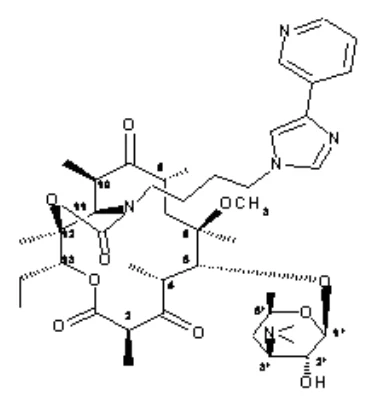
Molecular weight: 812.0
Physical form: white to practically white powder
Solubility: Freely soluble in Dichloromethane, Ethanol, Methanol, Acetonitrile and Acetone; very slightly soluble in Water
pKa: 2.4 (pyridinium ring), 5.1 (imidazole ring), 8.7 (dimethylamine function)
Partition coefficient: c = 3.05 mg/ 0.1 mL of octanol at 25°C
CLINICAL TRIALS
Community-acquired Pneumonia
KETEK (telithromycin) was studied for the treatment of community-acquired pneumonia in eight clinical trials.
Study demographics and trial design
Summary of Patient Demographics for Clinical Trials in Community-acquired Pneumonia
| Study # | Trial Design | Dosage and Duration | Patients (n) | Age (years) | Gender |
| 3006 (ref 8) | Randomized, multicenter, double-blind, parallel group, active-controlled | KETEK 800 mg q.d. vs. Clarithromycin 500 mg b.i.d. 10 days | KETEK - 162 Clarithromycin - 156 | 18-92 | M/F |
| 3009 * (ref 16) | Randomized, multicenter, double-blind, parallel group, active-controlled | KETEK 800 mg q.d. vs. Trovafloxacin 200 mg q.d. 7-10 days | KETEK - 80 Trovafloxacin - 86 | 17-99 | M/F |
| 3001 (ref 11) | Randomized, multicenter, double-blind, parallel group, active-controlled | KETEK 800 mg q.d. vs. Amoxicillin 1000 mg t.i.d. 10 days | KETEK - 149 Amoxicillin - 152 | 16-88 | M/F |
| 4003 (ref 17) | Randomized, multicenter, double-blind, parallel-group, active-controlled | KETEK 800 mg q.d. for 7 days vs. Clarithromycin 500 mg b.i.d. for 10 days | KETEK - 161 Clarithromycin - 146 | 15-88 | M/F |
| 3000 (ref 6) | Open-label, multicenter | KETEK 800 mg q.d. 7-10 days | 197 | 18-79 | M/F |
| 3009OL (ref 18) | Open Label, multicenter | KETEK 800 mg q.d. 7-10 days | 187 | 18-89 | M/F |
| 3010 | Open Label, multicenter | KETEK 800 mg q.d. 7 days | 357 | 13-92 | M/F |
| 3012 | Open Label, multicenter | KETEK 800 mg q.d. 7 days | 723 | 13-90 | M/F |
*This study was discontinued prematurely after trovafloxacin was restricted to inpatient use for severe infections as a result of safety concerns that arose during post-marketing surveillance.
Study results
Community-acquired Pneumonia: Clinical Cure Rate by Study at Posttherapy Follow-up (17-24 days)
| Study | Results - KETEK | Results - Comparator | 95% Confidence Interval |
| 3006 | 88.3% | 88.5% | [-7.8; 7.5]a |
| 3009* | 90.0% | 94.2% | [-13.6; 5.2]a |
| 3001 | 94.6% | 90.1% | [-2.1; 11.1]a |
| 4003 | 88.8% (7-day) | 91.8% | [-10.2; 4.3] a |
| 3000 | 92.9% | Not applicable | [88.4; 96.1]b |
| 3009 OL | 93.6% | Not applicable | [90.0; 97.1]b |
| 3010 | 93.0% | Not applicable | [90.3; 95.6 ]b |
| 3012 | 89.3% | Not applicable | [87.1; 91.6]b |
*This study was discontinued prematurely after trovafloxacin was restricted to inpatient use for severe infections as a result of safety concerns that arose during post-marketing surveillance.
a 95% confidence interval of the difference in cure rates between the treatment groups
bTwo-sided 95% confidence interval
The overall clinical outcome for KETEK treated patients and for high risk subsets from the eight CAP studies is displayed in the table below.
Community-acquired Pneumonia: Clinical Cure Rate in High Risk* Patients at Posttherapy Follow-up (17-24 Days)
| KETEK- Clinical Outcome (% cure) | |
Total CAP Patients Treated Age ≥65 Pneumonia Severity Index (Fine score) >III Pneumococcal bacteremia | 1977/2175 (90.9%) 295/335 (88.1%) 306/342 (89.5%) 83/95 (87.4%) |
* KETEK is not indicated for the treatment of severe CAP or suspected pneumococcal bacteremia
Clinical cure rate for KETEK against the most common pathogens, including atypical pathogens from the eight CAP clinical trials is displayed in the table below.
Community-acquired Pneumonia: Clinical Cure Rate by Pathogen in Microbiologically Evaluable Patients at Posttherapy Follow-up (17-24 days)
Pathogen Clinical Cure Rate
Streptococcus pneumoniae 335/357 (93.8%)
Multi-drug resistant (MDRSP) a 35/38 (92.1%)
Haemophilus influenzae 248/278 (89.2%)
Moraxella catarrhalis 48/56 (85.7%)
Staphylococcus aureus 44/55 (80.0%)
Atypical Pathogens
Chlamydophila (Chlamydia) pneumoniae 23/25 (92.0%)
Mycoplasma pneumoniae 34/36 (94.4%)
Legionella pneumophila 14/14 (100 %)
a Multi-drug resistant Streptococcus pneumoniae (MDRSP) are isolates resistant to two or more of the following antibiotics: penicillin (penicillin-resistant Streptococcus pneumoniae or PRSP), macrolides (erythromycin- / macrolide-resistant Streptococcus pneumoniae or ERSP/MRSP), 2nd generation cephalosporins (e.g., cefuroxime), tetracyclines and trimethoprim-sulfamethoxazole.
Clinical cure rates for KETEKagainst strains of pencillin-, macrolide- or multi-drug resistant Streptococcus pneumoniae from the eight CAP clinical trials are displayed in the table below.
KETEK Clinical Cure Rates for Patients with Antibiotic-Resistant Isolates in CAP Studies
| Screening Susceptibility | Clinical Cure Rate in MDRSP Patients |
All Streptococcus pneumoniae Penicillin-resistant Macrolide-resistant (erythromycin-resistant) Multi-drug resistant (MDRSP) a MDRSP including penicillin-resistant MDRSP including macrolide-resistant MDRSP including cefuroxime-resistant MDRSP including trimethoprim- sulfamethoxazole-resistant MDRSP including tetracycline-resistant b | 335/357 (93.8%) 20/23 (87.0%) 32/36 (88.9%) 35/38 (92.1%) 20/23 (87.0%) 25/28 (89.3%) 22/24 (91.7%) 26/29 (89.7%) 11/13 (84.6 %) |
a Multi-drug resistant Streptococcus pneumoniae (MDRSP) are isolates resistant to two or more of the following antibiotics: penicillin (penicillin-resistant Streptococcus pneumoniae or PRSP), macrolides (erythromycin- / macrolide-resistant Streptococcus pneumoniae or ERSP/MRSP), 2nd generation cephalosporins (e.g., cefuroxime), tetracyclines and trimethoprim-sulfamethoxazole.
b Includes isolates resistant to tetracycline or doxycycline.
KETEK clinical cure rates against MDRSP are comparable to those for the overall CAP population (90.9%) as well as to those against Streptococcus pneumoniae in CAP studies (93.8%). Furthermore, cure rates against MDRSP were similar irrespective of the class of antibiotic to which the organism exhibited resistance
DETAILED PHARMACOLOGY
Animal Pharmacology
General introduction
In safety pharmacology studies, telithromycin was evaluated at doses up to 300 mg/kg p.o. (approximately 23 times the clinical dose) and 15 mg/kg i.v. (a maximum dose limited by solubility); in vitro studies investigated concentrations up to 500 μM (the maximum free concentration in plasma in the clinic is approximately 1 μM). Principal effects were seen on the central nervous, digestive and cardiovascular systems.
Central nervous system effects
Studies on the central nervous system showed few effects of telithromycin, and only at high doses. In combination with ketamine, oxotremorine and yohimbine in mice, 100 and 300 mg/kg of telithromycin given by oral route caused mortality; this was also seen after intravenous dosing in combination with ketamine, but not yohimbine or oxotremorine. A similar effect was already described with some but not all other macrolides. No interaction was seen in combining telithromycin with hexobarbital or isoflurane. Studies designed to investigate these observations failed to completely elucidate the underlying mechanism, although a facilitation of cholinergic systems appears to be responsible for the oxotremorine interaction.
Gastrointestinal effects
Telithromycin was given orally to dogs at 5, 15 and 30 mg/kg; emesis was noted sporadically at 5 and 30 mg/kg, with a much lower incidence than in the other macrolides given under similar conditions; it did not induce diarrhea in this species.
Cardiovascular effects
Cardiovascular studies in the dog showed telithromycin to increase heart rate and increase QTc at free plasma concentrations approximately 10 or more times those in the clinic. A comparative study with two other macrolides, all compounds administered to conscious dogs at 15 mg/kg as an intravenous bolus, showed qualitatively and quantitatively similar effects for all three compounds. Studies in isolated rabbit Purkinje fibres with telithromycin showed an increase in the duration of action potentials at concentrations of 10 μM and above; such increases were also observed with comparator macrolides at concentrations similar to or slightly above those of telithromycin. Telithromycin inhibited the HERG (Human ether-a-go-go-related gene) and Kv1.5 cloned potassium channels with inhibition of 50% of the HERG channel at 42.5 μM, and of 56% of the Kv1.5 channel at 100 μM, with an overall similar magnitude of effects as for the other comparator macrolides.
Drug metabolism and pharmacokinetics
Telithromycin was rapidly absorbed after oral administration to animals with bioavailability of 53, 36 and 54 % in the mouse, rat and dog respectively. Corresponding volumes of distribution in
these species were 1.4, 10.6 and 4.9 L/kg. Radioactivity was widely distributed in rats after oral and intravenous dosing, although levels in the central nervous system were low. Levels of radioactivity in tissues decreased in parallel to plasma levels with almost complete elimination of radioactivity by 24 hours after dosing. Studies on metabolism showed that RU 76363, the principal circulating metabolite in man, resulting from loss of the aryl rings, circulated little or not at all in rats and dogs but was present in monkeys. Telithromycin also represented the major fraction identified in rat and dog urine and faeces, with other identified compounds being present only at low levels. In vitro protein binding showed differences between species — 90, 60, 45, 50 and 70 % at approximately 1 mg/L in mouse, rat, dog, monkey and human, respectively. Binding was saturable at high concentrations and was primarily to albumin and, to a lesser extent, to α1-acid glycoprotein. Faecal elimination predominated (≥80%) in rats and dogs. A study in rats after intravenous dosing showed 58% of administered radioactivity to be excreted in the bile within 24 hours and 16% to appear in the faeces as a result of direct secretion into the gut lumen.
Enzymatic activity
In vitro studies to identify cytochrome P450 isoenzymes involved in the metabolism of telithromycin showed CYP3A4 to be the major pathway involved in human liver microsomes, indicating a potential for drug-drug interactions. Studies also showed inhibition of CYP3A4 and CYP2D6, with respective Ki values of 58 and 46 μM.
Human Pharmacology
Pharmacokinetics
The pharmacokinetics of telithromycin are described under ACTION AND CLINICAL PHARMACOLOGY. Details regarding the distribution of telithromycin are given below.
Distribution
Telithromycin is widely distributed throughout the body.
Concentrations of telithromycin observed in respiratory tissues, white blood cells, and alveolar macrophages are greater than the MIC for telithromycin against the indicated respiratory pathogens. The drug persisted 48 hours after dosing in epithelial lining fluid and alveolar macrophages.
The concentrations of telithromycin observed in respiratory tissues, including bronchial mucosa and epithelial lining fluid, after 800 mg once-daily dosing for 5 days are presented in the following table.
Penetration and Persistence of Telithromycin into Respiratory Tissues
Tissue Type Hours Post-dose Mean Telithromycin
Concentration (μg/mL)
Tissue or fluid Plasma Ratio
Healthy subjects
Epithelial lining fluid 2 5.4 1.07 4.8 8 4.2 0.605 6.5 24 1.17 0.073 14.3
Patients
Epithelial lining fluida 2 14.9 1.86 8.57 12 3.27 0.23 13.8 24 0.84 0.08 14.4 Bronchial mucosa 2 3.88* 1.86 2.11 12 1.41* 0.23 6.33 24 0.78* 0.08 12.1 *Units in mg/kg
a tissue obtained from patients with bronchial inflammation eligible for bronchial fibroscopy
Telithromycin is highly concentrated in white blood cells (WBC) and is eliminated more slowly from white blood cells than from plasma. Mean white blood cell concentrations of telithromycin peaked at 72.1 μg/mL at 6 hours and remained at 14.1 μg/mL 24 hours after 5 days of repeated dosing of 600 mg once daily. After 10 days, repeated dosing of 600 mg once daily, white blood cell concentrations remained at 8.9 μg/mL 48 hours after the last dose. The high concentration of telithromycin in white blood cells and alveolar macrophages may contribute to drug distribution to inflamed tissues.
Similarly, telithromycin is eliminated slowly from alveolar macrophages with concentrations of 41 μg/mL at 24 hours after repeated doses of 800 mg once daily. The optimal dose is 800 mg once daily (see DOSAGE AND ADMINISTRATION, Recommended Dose and Dosage Adjustment).
The mean concentration of telithromycin in white blood cells (WBC) and alveolar macrophages is summarized in the table below.
Mean Concentrations of Telithromycin in WBC and Alveolar Macrophages
Cell type
Hours
post-
dose Dose (mg) n Concentration (μg/mL) Ratio Intracellular Plasma
Healthy subjects
White blood cells (WBC) 2 600 5 64.6 0.775 87 6 600 5 72.1 0.201 380 12 600 5 39.4 0.049 1046 24 600 5 14.1 0.014 1085
Alveolar macrophages 2 800 5 65 1.07 55 8 800 6 100 0.605 180 24 800 6 41 0.073 540
Patients
Alveolar macrophagesa 2 800 6 69.3 1.86 40.9 12 800 6 318 0.23 1204 24 800 7 162 0.08 2160 a tissue obtained from patients with bronchial inflammation eligible for bronchial fibroscopy
MICROBIOLOGY
KETEK (telithromycin) is a novel antimicrobial that belongs to a new chemical family, the ketolides. Ketolides are recent additions to the macrolide-lincosamide streptogramin (MLS) class. Telithromycin exerts its antibacterial effects by inhibiting bacterial protein synthesis. This occurs not only by directly blocking translation of the bacterial 23S ribosomal RNA but also by inhibiting the assembly of new bacterial ribosomes.
Telithromycin has been shown to bind more tightly to the bacterial ribosome than erythromycin A, 10-fold more tightly in erythromycin A susceptible ribosomes and > 20-fold more tightly in MLSB-resistant ribosomes (data from Escherichia coli). This enhanced binding appears to be related to the presence of the C11-12 side chain, and correlates with the distinctly different modes of interaction that telithromycin and erythromycin A exhibit in domain II of the 23S ribosomal RNA. It may also explain the high activity of telithromycin against common pathogens and its ability to overcome cross-resistance in gram-positive cocci.
The individual activity of telithromycin against various bacterial isolates is provided in the following table:
Antibacterial Spectrum of Activity
In Vitro Activity of Telithromycin
| Telithromycin MIC (μg/mL) | ||||
| N | 50 | 90 | range | |
| Aerobic gram-positives | ||||
| Enterococcus spp. | ||||
| E. faecalis | 100 | ≤ 0.03 | 4 | 0.03 - 64 |
| E. faecium | 100 | ≤ 0.03 | 4 | ≤0.03 - 32 |
| E. avium | 12 | 0.06 | 0.12 | 0.03 - 1.0 |
| E. casseliflavus | 77 | ≤0.03 | 0.06 | ≤0.03 - 8.0 |
| E. raffinosus | 11 | 0.06 | 8.0 | 0.015 - > 128 |
| E. gallinarum | 124 | ≤0.03 | ≤0.03 | ≤0.03 - 8.0 |
| Staphylococcus spp. | ||||
| S. aureus | ||||
| MSSA* | 376 | 0.06 | 0.12 | ≤0.03 - 64 |
| MRSA** | 172 | > 64 | > 64 | 0.06 - > 64 |
| Coagulase-negative staphylococci | ||||
| S. epidermidis OXA-S | 264 | ≤0.06 | > 16 | ≤0.06 - > 16 |
| S. epidermidis OXA R | 136 | > 16 | > 16 | ≤0.06 - > 16 |
| S. saprophyticus | 75 | 0.12 | 0.25 | ≤0.06 - > 16 |
| S. haemolyticus OXA-S | 19 | ≤0.06 | 0.12 | ≤0.06 - 0.12 |
| S. haemolyticus OXA R | 56 | ≤0.06 | > 16 | ≤0.06 - > 16 |
| S. hominis | 75 | ≤ 0.06 | 0.25 | < 0.06 - > 16 |
| S. simulans OXA-S | 30 | ≤ 0.06 | 0.25 | ≤ 0.06 - > 16 |
| S. simulans OXA R | 45 | > 16 | > 16 | ≤ 0.06 - > 16 |
| S. warnerii OXA-S | 76 | 0.12 | > 16 | ≤0.06 - > 16 |
| Streptococcus spp. | ||||
| Streptococcus agalactiae | 206 | ≤0.03 | 0.12 | ≤0.03 - 2.0 |
| Streptococcus pyogenes | 238 | ≤0.03 | ≤0.03 | ≤0.03 - 2 |
| Group C streptococci | 19 | 0.03 | 0.06 | ≤0.08 - 0.25 |
| Group G streptococci | 46 | 0.03 | 0.06 | ≤0.06 - 0.15 |
| Group F streptococci | 35 | 0.015 | 0.03 | ≤ 0.008 - 0.03 |
| Streptococcus pneumoniae | 611 | ≤0.06 | ≤0.06 | ≤0.06 - 0.5 |
| Peni-S S. pneumoniae | 373 | ≤0.03 | 0.06 | ≤0.03 - 0.5 |
| Peni-I S. pneumoniae | 93 | ≤0.03 | 0.25 | ≤0.03 - 1.0 |
| Peni-R S. pneumoniae | 110 | 0.12 | 1 | ≤0.03 - 2.0 |
| Ery S, clin S S. pneumoniae | 537 | ≤0.06 | 0.06 | ≤ 0.06 - ≤ 0.06 |
| Ery R, clin R S. pneumoniae | 24 | ≤ 0.06 | ≤0.06 | ≤0.06 - 0.25 |
| Ery R, clin S S. pneumoniae | 47 | 0.25 | 0.5 | ≤ 0.06 - 0.5 |
| Viridans group streptococci | 223 | 0.12 | 0.5 | 0.03 - 4.0 |
| Streptococcus salivarius | 14 | 0.12 | 0.5 | 0.03 - 0.5 |
| Streptococcus mitis | 106 | 0.12 | 0.5 | 0.03 - 4.0 |
| Streptococcus sanguis | 48 | 0.12 | 0.5 | 0.03 - 1 |
| Aerobic gram-negatives | ||||
| Neisseria meningitidis | 10 | 0.015 | 0.5 | ≤ 0.008 - 0.5 |
| Neisseria gonorrhoeae | 30 | 0.25 | 0.50 | 0.12 - 1 |
| Neisseria weaverii | 15 | 0.125 | 0.25 | ≤0.016 - 1.0 |
| Telithromycin MIC (μg/mL) | ||||
| N | 50 | 90 | range | |
| Moraxella catarrhalis | 148 | 0.06 | 0.12 | ≤0.015 - 0.25 |
| Haemophilus influenzae | 100 | 2.0 | 4.0 | 0.03 - 8.0 |
| Haemophilus parainfluenzae | 41 | 2.0 | 8.0 | 0.12 - 8.0 |
| Gram-positive bacilli | ||||
| Corynebacterium. jeikeium | 20 | 0.12 | 0.25 | 0.12 - 0.5 |
| Corynebacterium spp. | 14 | ≤0.016 | ≤0.016 | ≤0.016 - 0.03 |
| Listeria monocytogenes | 55 | ≤0.06 | ≤0.06 | ≤ 0.06 - 4.0 |
| Leuconostoc spp. | 15 | 0.03 | 0.06 | 0.03 - 0.06 |
| Pediococcus spp. | 25 | ≤ 0.03 | ≤0.03 | ≤ 0.03- 2.0 |
| Lactobacillus spp. | 10 | ≤0.03 | ≤0.03 | ≤0.03 |
| Other microorganisms | ||||
| Legionella pneumophila | 46 | 0.06 | 0.12 | 0.06 - 0.12 |
| Legionella spp. other than pneumophila | 43 | 0.06 | 0.12 | 0.004 - 0.3 |
| Pasteurella multocida | 12 | 1.0 | 1.0 | 0.25 - 1.0 |
| EF-4b | 20 | 0.25 | 1 | 0.125 - 1.0 |
| Eikenella corrodens | 19 | 0.5 | 1 | 0.03 - 1 |
| Weeksella zoohelcum | 10 | 0.5 | 0.5 | 0.25 - 1.0 |
| Chlamydophila (Chlamydia) pneumoniae | 19 | 0.06 | 0.25 | 0.03 - 2.0 |
| Mycoplasma pneumoniae | 46 | 0.06 | 0.12 | 0.06 - 0.12 |
| Mycoplasma hominis | 43 | 32 | 32 | 16 - 32 |
| Ureaplasma urealyticum | 33 | 0.06 | 0.25 | 0.06 - 0.25 |
| Anaerobic bacteria | ||||
| Actinomyces spp. | 16 | ≤0.015 | ≤0.015 | ≤0.015 - ≤0.015 |
| Bacteroides gracilis | 11 | 0.5 | 1.0 | 0.125 - 2.0 |
| Bacteroides. urealyticus | 17 | 0.5 | 1.0 | 0.125 - 2.0 |
| Bacteroides tectum | 22 | 0.25 | 0.5 | 0.125 - 0.5 |
| Prevotella bivia | 21 | 0.25 | 0.5 | ≤0.015 - 4.0 |
| Prevotella melaninogenica group | 18 | 0.25 | 2.0 | 0.06 - 16 |
| Prevotella intermedia | 11 | 0.03 | 0.06 | ≤0.015 - 0.25 |
| Prevotella. oris-buccae | 22 | 0.25 | 1.0 | 0.125 - 8.0 |
| Prevotella heparinolytica | 16 | 0.25 | 0.5 | 0.06 - 0.5 |
| Porphyromonas asaccharolytica | 11 | 0.015 | > 32 | 0.015 - > 32 |
| Porphyromonas gingivalis | 13 | 0.03 | 0.06 | ≤ 0.015 - 0.06 |
| Porphyromonas spp.. | 11 | 0.03 | 0.03 | 0.015 - 0.125 |
| Porphyromonas levii | 10 | 0.008 | 0.016 | 0.002 - 0.016 |
| Porphyromonas canoris | 10 | 0.06 | 0.125 | ≤0.015 - 0.125 |
| Porphyromonas macacae | 13 | 0.03 | 0.06 | 0.03 - 0.06 |
| Bilophila wadsworthia | 16 | 2.0 | 4.0 | 0.5 - 4.0 |
| Fusobacterium nucleatum | 30 | 2.0 | 4.0 | 0.01 - 8.0 |
| Fusobacterium varium | 17 | > 32 | > 32 | 4.0 - > 32 |
| Fusobacterium russii | 12 | 0.5 | 16 | ≤ 0.015 - 32 |
| F. group I | 19 | 2 | 4 | < 0.015 - 8.0 |
| F. group II | 12 | 32 | > 32 | 2- >32 |
*MSSA: methicillin-susceptile S. aureus **MRSA: methicillin-resistant S. aureus
MIC: minimum inhibitory concentration
Peni: penicillin G; clin: clindamycin; Ery: erythromycin A; OXA-S: oxacillin-(methicillin-) susceptible; OXA-R: oxacillin-(methicillin-) resistant
Telithromycin exhibits activity against S. pneumoniae irrespective of their susceptibility to other antibacterial classes, such as penicillins and macrolides, including organisms expressing the two most common mechanisms of macrolide resistance, antibiotic efflux (mef) and ribosomal methylation (erm). In addition, telithromycin exhibits activity against S. pneumoniae resistant to cephalosporins, cotrimoxazole, clindamycin, tetracyclines and the fluoroquinolones.
Among common respiratory pathogens, telithromycin does not induce MLSB resistance in vitro, an attribute related to its 3 keto function.
It has been shown in vitro that resistance to telithromycin due to spontaneous mutation occurs very rarely.
Telithromycin is highly concentrated in phagocytes and has good activity against intracellular and atypical respiratory pathogens.
In vitro, bactericidal activity has been demonstrated against isolates of: Streptococcus pneumoniae (including penicillin G and/or macrolide resistant strains), Streptococcus pyogenes, Haemophilus influenzae, Chlamydophila (Chlamydia) pneumoniae, Legionella pneumophila and Mycoplasma pneumoniae.
In vitro, telithromycin has been shown to be affected by erm(B)- and mef(A)-related macrolide resistance mechanisms but to a lesser extent than erythromycin. While exposure to telithromycin did select for pneumococcal mutants with increased minimum inhibitory concentrations (MICs), the MICs remained within the susceptibility range approved by the Clinical Laboratory Standards Institute (CLSI; formerly called the NCCLS). Selection of mutants resistant to telithromycin among strains of S. pneumoniae lacking an inducible erm (B) gene was very uncommon (1.5 X 10⁻⁸ at 0.1 μg/mL; < 4.8 X 10⁻⁹ at 0.2 μg/mL). By comparison, selection of resistant mutants to telithromycin occurred more frequently among pneumococci containing an inducible erm(B) gene (1.4 X 10⁻⁷ to 9 X 10⁻⁸ at 0.1 μg/mL; 3.5 X 10⁻⁸ to 2 X 10⁻⁹ at 0.2 μg/mL). In vitro, telithromycin has demonstrated a lower propensity to select for antibiotic resistant mutants to itself or to other related antibacterial agents, potentially reducing the impact of antibiotic resistance among Streptococcus pneumoniae to these compounds.
Susceptibility Tests
Dilution techniques:
Quantitative methods are used to determine antimicrobial minimum inhibitory concentrations (MICs). These MICs provide estimates of the susceptibility of bacteria to antimicrobial compounds. The MICs should be determined using a standardized procedure. Standardized procedures are based on dilution method1 (broth or agar dilution), or equivalent, with
1 National Committee for Clinical Laboratory Standards. Performance
Standards for Antimicrobial Susceptibility Testing: Twelfth Informational
Supplement; Approved Standard, NCCLS Document M2-A7 and M7-A5, Vol
21, No 1, NCCLS, Wayne, PA, January 2002.
standardized inoculum concentrations and standardized concentrations of telithromycin powder. The MIC values should be interpreted according to the following criteria:
For testing Staphylococcus aureus:
For testing Streptococci including Streptococcus pneumoniaea:
MIC (μg/mL)
≤1.0
2.0
≥4.0
Interpretation Susceptible (S) Intermediate (I) Resistant (R) aThis interpretive standard is applicable to tests performed following NCCLS guidelines using cation-adjusted Mueller-Hinton broth with 2 to 5% lysed horse blood.
For testing Haemophilus influenzaeb (irrespective of ß-lactamase production):
MIC (μg/mL)
≤ 4.0
8.0
≥16.0
Interpretation Susceptible (S) Intermediate (I) Resistant (R) bThis interpretive standard is applicable to test performed on Haemophilus Test Medium (HTM) broth incubated at 35°C in ambient air for 20 to 24 hours.
A report of “Susceptible” indicates that the pathogen is likely to be inhibited if the antimicrobial compound in blood reaches the concentrations usually achievable. A report of “Intermediate” indicates that the result should be considered equivocal, and if the microorganism is not fully susceptible to alternative clinically feasible drugs, the test should be repeated. This category implies possible clinical applicability in body sites where the drug is physiologically concentrated or in situations where high dosage of drug can be used. This category also provides a buffer zone that prevents small/uncontrolled technical factors from causing major discrepancies in interpretation. A report of “Resistant” indicates that the pathogen is not likely to be inhibited if the antimicrobial compound in the blood reaches the concentrations usually achievable; other therapy should be selected.
Standardized susceptibility test procedures require the use of laboratory control microorganisms to control the technical aspects of the laboratory procedures. Standard telithromycin powder should provide the following MIC values:
MIC (μg/mL)
≤ 0.25
Interpretation Susceptible (S)
MIC Values of Telithromycin with Control Microorganisms
Microorganism ATCC Strain MIC (μg/mL) Staphylococcus aureus ATCC 29213 0.06 – 0.25 Enterococcus faecalis ATCC 29212 0.016 – 0.12 Streptococcus pneumoniae ATCC 49619c 0.004 – 0.03 Haemophilus influenzae ATCC 49247d 1.0 – 4.0 cThis quality control range is applicable to only S. pneumoniae ATCC 49619 tested on cation-adjusted Mueller-Hinton broth with 2-5% lysed-horse blood (LHB) incubated at 35°C in ambient air for 20-24 hours.
dThis quality control range is applicable to only H. influenzae ATCC 49247 tested on Haemophilus Test Medium (HTM) broth incubated at 35°C in ambient air for 20 to 24 hours.
Diffusion techniques:
Quantitative methods that require measurement of zone diameters also provide reproducible estimates of the susceptibility of bacteria to antimicrobial compounds. One such standardized procedure2 requires the use of standardized inoculum concentrations. This procedure uses paper disks impregnated with 15 μg telithromycin to test the susceptibility of microorganisms to telithromycin.
Reports from the laboratory providing results of the standard single-disk susceptibility test with a 15 μg telithromycin disk should be interpreted according to the following criteria:
The following zone diameter interpretive criteria should be used for testing Staphylococcus aureus:
Zone diameter (mm)
≥22
Interpretation Susceptible (S)
For testing Streptococcus pneumoniaee:
Zone diameter (mm)
≥19
16-18
≤15
Interpretation Susceptible (S) Intermediate (I) Resistant (R)
eThis interpretive standard is applicable to test performed on Mueller-Hinton agar with 5% sheep blood and incubated in 5% CO2.
2 National Committee for Clinical Laboratory Standards. Performance
Standards for Antimicrobial Susceptibility Testing: Twelfth Informational
Supplement; Approved Standard, NCCLS Document M2-A7 and M7-A5, Vol 21, No 1, NCCLS, Wayne, PA, January 2002.
For testing Haemophilus influenzaef (irrespective of β-lactamase production):
Zone diameter (mm)
≥ 15
12-14
11
Interpretation Susceptible (S) Intermediate (I) Resistant (R) fThis interpretive standard is applicable to test performed on HTM agar and incubated in 5% CO2.
Interpretation should be as stated above for results using dilution techniques. Interpretation involves correlation of the diameter obtained in the disk test with the MIC for telithromycin.
As with standardized dilution techniques, diffusion methods require the use of laboratory control microorganisms that are used to control the technical aspects of the laboratory procedures. For the diffusion technique, the 15 μg telithromycin disk should provide the following zone diameters in these laboratory test quality control strains:
Zone Diameters Using 15 μg Telithromycin Disk and Control Microorganisms Microorganism ATCC Strain Zone Diameter (mm) Staphylococcus aureus ATCC 25923 24 – 30 Streptococcus pneumoniae ATCC 49619g 27 - 33 Haemophilus influenzae ATCC 49247h 17 - 23
gThese quality control limits are applicable to only S. pneumoniae ATCC 49619 tested on Mueller-Hinton agar with 5% sheep blood and incubated in 5% CO2.
hThese quality control limits are applicable to only H. influenzae ATCC 49247 tested on HTM agar and incubated in 5% CO2.
TOXICOLOGY
Acute Toxicity Studies
The results of the acute toxicity studies are outlined in the following tables.
Multidose Toxicity Studies
The results of the multidose toxicity studies are outlined in the following tables.
Carcinogenicity Studies
Long-term studies in animals to determine the carcinogenic potential of telithromycin have not been conducted.
Mutagenicity Studies
Telithromycin showed no evidence of genotoxicity in four tests: gene mutation in bacterial and mammalian cells, chromosome aberration in human lymphocytes, and the micronucleus test in the mouse.
Reproduction and Teratology
A study to investigate possible effects on fertility and early embryonic development was carried out in the rat at doses of 0, 50, 150, 300 mg/kg/day. No evidence of impaired fertility was observed at doses estimated to be 3.8 times (50 mg/kg/day) the daily human dose of 800 mg.
Slight reductions in fertility indices were seen in rats at parentally toxic doses higher than 150 mg/kg.
Teratogenic Effects: Telithromycin was not teratogenic in the rat or rabbit. Reproduction studies have been performed in the rat (doses of 0, 50, 150, 300 mg/kg/day), and rabbit (doses of 0, 20, 60, 180 mg/kg/day), with effects on pre/post natal development studied in the rat (doses of 0, 50, 125, 200 mg/kg/day). At doses estimated to be 11.5 times (150 mg/kg) and 1.5 times (20 mg/kg) the daily human dose of 800 mg in the rat and rabbit, respectively, no evidence of fetal harm was observed. At doses higher than 150 mg/kg and 20 mg/kg in rats and rabbits, respectively, maternal toxicity resulted in delayed fetal maturation. No adverse effects on prenatal and neonatal development of rat pups was observed at 9.6 times (125 mg/kg/day) the daily human dose.
Other toxicity
Repeated dose toxicity studies of 1, 3 and 6 months duration with telithromycin conducted in rat, dog and monkey showed that the liver was the principal target for toxicity with elevations of liver enzymes in all 3 test species, and histological evidence of damage in rats. In addition, phospholipidosis-associated changes were seen in the rat and dog. All these effects showed a tendency to regress after cessation of treatment. Plasma exposures based on free fraction of drug, at the no observed adverse effect levels ranged from 0.16 to 9.5 times the expected clinical exposure.
Pharmacology studies showed an effect in prolonging both QTc in dogs and on action potential duration in rabbit Purkinje fibres in vitro. These effects were observed at concentrations of free drug 8 to 13 times those circulating in clinical use.
Acute Toxicity Studies
| Species/Strain | Route | Dose (mg/kg) | Findings |
Mouse/Swiss OF1 5 M + 5 F Report 95/8198/TX | Oral | 1000, 1500, 2000 | Median lethal dose: M + F 1000-1500 mg.kg-1 Clinical signs: none in M at 1000; in other groups hypotonia at 1-5 hr postdose; tremors in some animals prior to death. |
Mouse/Swiss OF1 5 M + 5 F Report 95/8215/TX | Intravenous | 0, 30, 40, 50, 60 | Median lethal dose: M + F 51 (45-61) mg.kg-1 Clinical signs: Dose-related incidence in all treated groups of polypnea at end of injection, most severe 2 to 20 minutes after dosing. Lethargy, convulsive starts, tremors and convulsions at ≥50 in M, ≥40 in F. Behavior generally normal by 30 minutes. Body weight: gain reduced in M. Macroscopy: congested appearance of lungs in animals dying after injection. |
Rat/Sprague Dawley 5 M + 5 F Report 95/8197/TX | Oral | 2000 | Median lethal dose: M + F >2000 mg.kg-1 |
Rat/Sprague Dawley 5 M + 5 F Report 95/8214/TX | Intravenous | 0, 55, 70, 90, 100 | Median lethal dose: M + F 77 (68-84) mg.kg-1. The cause of deaths is likely pulmonary emboli formed following precipitation of HMR 3647 in blood vessels. Clinical signs: 55 mg.kg-1 induced slight to moderate breathing difficulties, no mortality. At ≥70 mg.kg-1, dyspnea starts and convulsions from immediately after injection; behavior normal in survivors from 15 mins post injection. Body weight: slight retardation in gain in M at ≥55. Macroscopy: congested appearance of lungs in animals dying after injection. |
Juvenile Rat (Crj:CD/SD) 4–8 M + 4–8 F Report SBL 78-83 | Oral | 0, 125, 250, 500, 1000, 2000 | Mortality: 100% mortality in M + F at 1000 and 2000 mg.kg-1; 62.5% in M at 500 mg.kg-1, 75% in F at 500 mg.kg-1, 37.5% in M+F at 250 mg.kg-1, 0% at 125 mg.kg-1. Clinical signs: in dead animals decrease in activity, blanching of skin or hypothermia: in survivors, unkempt hair. Macroscopy: dark red colouration of lungs in 1M and 1F dead at 500 mg.kg-1, correlating with congestion and oedema at histology. Colouration of liver in 2M and 1F at 250 mg.kg-1. |
Juvenile Dog/Beagle 1 M +1 F Report SBL 78-81 | Oral | 0, 500, 1000, 2000 | Mortality: 1M at 1000 mg.kg-1, 1F at 2000 mg.kg-1 Clinical signs: vomiting, decreased activity, diarrhea, tremor in survivors together with, in dead animals, tachypnea, bradypnea, bradycardia, coma, hypothermia, cyanosis, mydriasis. Macroscopy: congestion in mucosa of jejunum and ileum in dead M at 1000 mg.kg-1. Microscopy: cell debris in the lumen, inflammatory cell infiltration, congestion and hemorrhage in the lamina propria or necrosis of lymphocytes in the lymph follicle of the jejunum and ileum were observed. |
Multidose Toxicity Studies
| Species/ Strain | No. of animals per group | Dose (mg.kg-1.day-1) | Route | Duration | Findings |
Rat/Sprague Dawley/OFA Report 95/7828/TX | 5 M + 5 F | 0, 100, 200, 400 | Oral | 15 days | Clinical signs: alopecia, broken vibrissae, polyuria at higher doses. Food and water consumption: slightly increased water, reduced food. Body weight: reduced. Hematology: slight neutrophilia and eosinophilia at higher doses. Biochemistry: increased ALAT, increased ASAT, increased alkaline phosphatase, increased GGT, increased phosphatemia, increased cholesterol and phospholipids at higher doses. Macroscopy: increased size of caecae, food filled stomach, discoloured and/or enlarged liver at higher doses. Organ weights: increased liver, decreased thymus. Histology: hepatocellular necrosis, bile duct hyperplasia, intraalveolar foam cells at highest dose. |
Rat/Sprague Dawley/OFA Report 96/8486/TX | 15 M + 15 F-control, mid and high dose 10 M + 10 F-low dose | 0, 50, 150, 300 | Oral | 30 days | Clinical signs: partial alopecia, broken vibrissae, swollen abdomen related to increased caecae, piloerection at higher doses - all at least partially reversible. Food consumption: reduced. Body weight: reduced – reversible. Hematology: slight leucocytosis, corresponding to neutrophilia; reversible. Biochemistry: increased ALAT, increased ASAT and LAP, increased phosphatemia – all reversible. Macroscopy: increase in size of caecae, stomach filled with food and/or hair, discoloured liver, increased liver size. Organ weights: increased liver, increased lung, decreased thymus – all at least partially reversible. Histology: liver : hepatocellular necrosis foci. Histopathological changes compatible with phospholipidosis in lungs, liver, mesenteric lymph nodes, jejunum/ileum and spleen. Most lesions reversed after discontinuation of treatment. NOAEL = 50 mg.kg-1.day-1 |
Multidose Toxicity Studies
| Species/ Strain | No. of animals per group | Dose (mg.kg-1.day-1) | Route | Duration | Findings |
Rat/Sprague Dawley/OFA Report 96/9255/TX | 15 M + 15 F | 0, 20, 50, 150 | Oral | 13 weeks | Clinical signs: partial alopecia and/or broken vibrissae, transient ptyalism and/or soiled hair under mouth. Body weight: slightly reduced. Biochemistry: slight increase in ALAT, ASAT, cholesterol, phospholipids; slight decrease in γ-globulins at highest dose. Macroscopy: dose-related increase in size of caecum; decreased thymus. Organ weights: increased liver, kidneys and adrenals, decreased thymus, increased filled caecum. Histology: increase in number and size of mononuclear cell foci, sometimes associated with single cell or small foci of necrosis in liver. Histopathological changes compatible with phospholipidosis in lungs, liver, mesenteric lymph nodes, jejunum/ileum and spleen. NOAEL = 50 mg.kg-1.day-1 |
Rat/Long Evans Report 98/10533/TX | 15 M + 15 F | 0, 150 | Oral | 6 months | Clinical signs: transient ptyalism, alopecia Body weight: slightly reduced. Biochemistry: slight increase in ASAT and ALAT, alkaline phosphatase, calcium, phosphorus, cholesterol and phospholipids. Macroscopy: enlarged caecae. Organ weights: slightly increased absolute and relative liver. Histology: bile duct cell vacuolation and multinucleated hepatocytes. |
| Rat/Sprague Dawley/Hsd Report 99.0273 | 25 M + 25 F | 0, 20, 50, 150 | Oral | 6 months | Clinical signs : transient salivation. Food consumption : slightly increased. Body weight : slightly non-dose dependent increase. Ophthalmology : opacity and cataract. Biochemistry : slightly increased ASAT and ALAT, alkaline phosphatase and calcium and phosphorus, slightly increased cholesterol and phospholipids, all reversible. Macroscopy : enlarged stomach and caecae. Organ weights : slightly increased relative liver, reversible. Histology : Histopathological changes compatible with phospholipidosis in lungs, liver, mesenteric lymph nodes, spleen and thymus. Lesions tended to reverse after discontinuation of treatment. Retinal atrophy in all dose groups including control. NOAEL = 20 mg.kg-1.day-1 |
Rat/Sprague Dawley Report 14704 TSR | 6 M + 6 F | 0, 10, 30, 60, 90 | Intravenous | 2 weeks | Mortality: 4 M, non dose-related and probably related to dosing procedure Haematology: slightly increased leukocytes, increased neutrophils, moderately reduced APTT and moderately increased fibrinogen. Histology: local intolerance at injection sites. |
Multidose Toxicity Studies
| Species/ Strain | No. of animals per group | Dose (mg.kg-1.day-1) | Route | Duration | Findings |
Rat/Sprague Dawley Report 14687 TSR | 12 M + 12 F | 0, 10, 30, 90 | Intravenous | 30 days | Hematology: moderate neutrophilia and increased fibrinogen, slight decrease in hemoglobin and APTT. Biochemistry: reduced iron, slight decrease in albumen/globulin ratio. Urinalysis: slightly increased volume. Macroscopy: scabs at injection sites. Organ weights: increased liver at highest dose. Histology: skin ulceration at injection site, slight hepatocellular hypertrophy at highest dose. NOAEL = 90 mg.kg-1.day-1 |
Multidose Toxicity Studies
| Species/ Strain | No. of animals per group | Dose (mg.kg-1.day-1) | Route | Duration | Findings | ||||
Juvenile Rat/Crj:CD (SD) Report SBL 78-85 | 8 M + 8 F | 0, 50, 100 | Oral | 10 days | Clinical signs: unkempt hair. Body weight: slightly reduced. Haematology: low lymphocyte ratios, increased neutrophils, reduced haemoglobin, MCH and MCHC. Biochemistry: slightly reduced ASAT, slightly increased alkaline phosphatase. Organ weights: reduced spleen. All observations occurred at highest dose. | ||||
Dog/Beagle Report 96/8485/TX | 3 M + 3 F | 0, 50, 150, 300 | Oral | 30 days | Mortality: 1 F, cause – renal failure related, at least in part, to phospholipidosis. Clinical signs: vomiting, ptyalism, hypomotility, often associated with dehydration. Food consumption: reduced. Body weight: reduced. Heart rate: increased. Ophthalmology: loss of reflectivity of tapetum lucidum. Hematology: slight increase in erythrocytes, slight dose-dependent increase in hemoglobin and packed cell volume, slight increase in fibrinogen. Biochemistry: slight increase in ALAT, slight increase in ASAT, slight increase in urea and/or creatinine, increased phosphatemia. Urinalysis: granulous casts. Macroscopy: slight yellow discoloration of renal cortex and/or corticomedullary junction. Organ weights: decreased thymus. Histology: Histopathological changes compatible with phospholipidosis in lungs, liver, thoracic and mesenteric lymph nodes, spleen, thymus, kidneys, gallbladder and gastro-intestinal tract, epidydymi, bone marrow, trachea and urethra. NOAEL = 50 mg.kg-1.day-1 | ||||
| Dog/Beagle Report 14869 TCC | 6 M + 6 F control and high dose 4 M + 4 F all doses | 0, 20, 50, 150 | Oral | 13 weeks | Mortality: 1 M, renal failure related, at least in part, to phospholipidosis. Clinical signs: excessive salivation, vomiting. Food consumption: transient reduction. Body weight gain: slightly reduced. ECG, blood pressure: increased heart rate. Ophthalmology: brown coloration of tapetal fundus. Biochemistry: slight increase in ALAT and ASAT. Organ weights: increased liver. Histology: Histopathological changes compatible with phospholipidosis in lungs, liver, mesenteric and mandibular lymph nodes, spleen, thymus, kidneys, gallbladder, bone marrow and gastrointestinal tract. Lesions tended to reverse after discontinuation of treatment. NOAEL = 50 mg.kg-1.day-1 | ||||
| Dog/Beagle Report 14703 | 1 M + 1 F | 0, 10, 30, 60, 90 | Intravenous | 2 weeks | |||||
Clinical signs: slight to moderate vomiting and ptyalism. Histology: local intolerance at injection sites.
Multidose Toxicity Studies
Species/ Strain TSC | No. of animals per group | Dose (mg.kg-1.day-1) | Route | Duration | Findings |
| Dog/Beagle Report 14688 TSC | 3 M + 3 F | 0, 10, 30, 90 | Intravenous | 30 days | Clinical signs: vomiting, ptyalism during and until 60 min post infusion, head tremor during and until 50 min post infusion. ECG, heart rate slightly increased. Organ weights: slight decrease in thymus related to stress due to infusion. Histology: slight lymphoid depletion in thymus. NOAEL = 90 mg.kg-1.day-1. |
Juvenile Dog/Beagle Report 95/7829/TX | 3 M + 3 F | 0, 100 | Oral | 10 days | Clinical signs: transient hypomotility, sporadic vomiting. Body weight: increase in body weight gain. Hematology: slight decrease in leucocytes. Biochemistry: slight increase in phosphatemia and GGT. |
Juvenile Dog/Beagle Report SBL 78-82 | 1 M + 1 F | 0, 150, 300 | Oral | 2 weeks | Clinical signs: vomiting, paralytic gait, reduced activity, tremor, salivation, diarrhea. Haematology: slightly increased leucocytes, slightly increased neutrophils, slightly decreased lymphocytes. Biochemistry: slightly increased ALAT, very slightly increased alkaline phosphatase. |
Monkey/ Cynomolgus Report 1453-552-036 | 1 M + 1 F | 100, 200, 300 | Oral | 14 days | Mortality: 1 M considered due to dehydration following diarrhea. Clinical signs: emesis, diarrhea, emaciation, soft faeces, hypothermia, salivation. Biochemistry: increased GLDH, ASAT, ALAT, increased bilirubin. Histology: moderate tubular atrophy in surviving animals. Food, bodyweight: reduced. |
Monkey/ Cynomolgus Report 1485-552-037 | 5 M + 5 F | 0, 30, 60, 120 | Oral | 28 days | Clinical signs: emesis, soft faeces, poor physical condition. Food consumption, body weight: reduced. Biochemistry: increased ALAT and ASAT. Organ weights: slightly increased liver. NOEL = 60 mg.kg-1.day-1 |
Mutagenicity Studies
| Study type | Doses | Findings |
| In vitro reverse gene mutation in bacteria Report 13611 MMJ | -S9: 0.01-10 μg/plate for S. typhimurium; 0.3-100 μg/plate for E. coli. +S9: 0.01-30 μg/plate for S. typhimurium; 0.3-100 μg/plate for E. coli. | No genotoxic activity. |
| In vitro gene mutation test in mammalian cells Report 14108 MLY | -S9: 15-750 mg.L-1 +S9: 62-2000 mg.L-1 | No genotoxic activity. |
| In vitro gene mutation test in mammalian cells Report 18860 MLY | -S9: 31-1000 mg.L-1 +S9: 31-2000 mg.L-1 | No genotoxic activity. |
| In vitro clastogenic activity in human cells Report 14722 MLH | -S9: 5.86-750 mg.L-1 +S9: 5.86-750 mg.L-1 | No genotoxic activity. |
| In vitro clastogenic activity in human cells Report 18861 MLH | 15.6-1000 mg.L-1 | No genotoxic activity. |
| In vivo clastogenic activity in mouse micronucleus Report 13610 MAS | 0, 250, 500, 1000 mg.kg-1 | No genotoxic activity. |
-S9: without metabolic activation system
+S9: with metabolic activation system (prepared from liver microsomal fraction (S9 fraction))
Reproduction Toxicity Studies
| Species/ Strain | Route | Dosage/Duration (mg.kg-1.day-1) | No. of Animals/ Group | Findings |
| Segment I: Fertility Study | ||||
Rat/Sprague Dawley Report 13973 RSR | Oral | 0, 50, 150, 300 Male: daily throughout premating (29 days), mating period and until final sacrifice. Females: throughout premating (15 days), mating, during pregnancy until implantation (day 7 post-coitum) | 24 M + 24 F | Mortality: 1 M + 1 F at 300. Clinical signs: ptyalism, poor clinical condition and/or difficult breathing. Food, body weight: reduced food and body weight. Male fertility: mating index unaffected but male fertility index slightly to moderately reduced at ≥150. Testicular head sperm count and daily sperm production rate slightly reduced at ≥150. Female fertility: estrous cycle and mating index unaffected. Moderate decrease in fertility index at ≥150. Moderate decrease in corpora lutea at 300. NOAEL (male and female parental tolerance) = 150 mg.kg-1.day-1 NOEL (maturation of gametes and fertilization) = 50 mg.kg-1.day-1. NOEL (mating behaviour and pre-/post-implantation losses) 300 mg.kg-1.day-1 |
| Segment II: Teratology Study | ||||
Rat/Sprague Dawley Report 96/9297/TX | Oral | 0, 50, 150, 300 From day 6 to day 17 post-coitum | 8 F | Dams: Piloerection, decreased food consumption, increased water consumption and decreased bodyweight gain at 300mg.kg-1.day-1. Fetuses: Reduced fetal bodyweight in 300 mg.kg-1.day-1 group. |
Rat/Sprague Dawley Report 96/9298/TX | Oral | 0, 50, 150, 300 From day 6 to day 17 post-coitum | 25 F | Dams: At 300 mg.kg-1.day-1 piloerection with decreased food consumption and weight gain throughout treatment period: reduced placenta and uterus weights. Fetuses: At 300 mg.kg-1.day-1 external examinations revealed acaudate fetuses (2/310) and protruding tongue (5/310); visceral examination showed 1 fetus with fused kidney and skeletal examination showed anomalies (incomplete ossification of cranium, cervix vertebrae and extremities of paws) and bent ribs. NOAEL (maternal tolerance) = 50 mg.kg-1.day-1. NOEL (embryofetal development) = 150 mg.kg-1.day-1. |
| Rabbit/New Zealand white Report 15276 RSL | Oral | 0, 30, 100, 300 From Day 6 to Day 18 post-coitum | 6 F | Dams: Maternal toxicity was seen at 300 mg.kg-1.day-1 with bodyweight loss, abortion (1 F) and death (3 F). Fetuses: Total resorption in surviving 2 F at 300 mg.kg-1.day-1. |
Segment II: Teratology Study (cont’d)
Reproduction Toxicity Studies
| Species/ Strain | Route | Dosage/Duration (mg.kg-1.day-1) | No. of Animals/ Group | Findings |
| Rabbit/New Zealand white Report 15277 RSL | Oral | 0, 20, 60, 180 From Day 6 to Day 18 post-coitum | 20 F | Dams: Reduced food consumption and bodyweight gain at 60 and 180 mg.kg-1.day-1. Fetuses: Retarded fetal development as indicated by slightly delayed ossification at 60 mg.kg-1.day-1. Toxic effect on the maternal embryonic unit at 180 mg.kg-1.day-1, as indicated by abortion in 2 animals. Reduced fetal bodyweight at 180 mg.kg-1.day-1 which correlated with delayed ossification. There were a few rare malformations which were within range of historical data: absent anus and tail in combination with unilateral or bilateral absence of kidney or ureter. NOEL (embryofetal development and maternal toxicity) = 20 mg.kg-1.day-1 NOAEL = 60 mg.kg-1.day-1 |
Rabbit/ Himalayan Report 98.0407 | Oral | 0, 20, 60, 180 From Day 6 to Day 18 of pregnancy | 24 F | Dams : Reduced food consumption and bodyweight gain. Fetuses : Slight reduction in bodyweight at 180 mg.kg-1.day-1 NOAEL (maternal toxicity) = <20 mg.kg-1.day-1 NOAEL (embryofoetal development) = 60 mg.kg-1.day-1 |
| Segment III: Perinatal and Postnatal Study | ||||
Rat/Sprague Dawley Report 16218 RSR | Oral | 0, 50, 125, 200 From Day 6 post-coitum to Day 21 post-partum | 25 F | Dams: Ptyalism. Reduced food consumption and bodyweight gain. F1 pups: Slight intrauterine growth retardation and reduced bodyweight at 200 mg.kg-1.day-1. Slightly higher early post-natal mortality at 200 mg.kg-1.day-1. NOAEL (dams) = 50 mg.kg-1.day-1. NOEL (development and fertility of pups) = 200 mg.kg-1.day-1. |
Other Toxicity Studies
| Species/Strain | Route | Dosage/Duration | No. of Animals per Group | Findings |
| Auditory Function | ||||
| Rat/Sprague Dawley Report 17920 TSR | Oral | 0, 150 mg.kg-1.day-1 2 weeks | 5 M + 5 F | Clinical signs: ptyalism Macroscopy: enlarged caecae. |
| Rat/Sprague Dawley Report 18116 TSR | Oral | 0, 50, 150 mg.kg-1.day-1 4 weeks | 10 M + 10 F | Clinical signs: ptyalism Body weight: moderate increase Biochemistry: slightly increased ALAT Macroscopy: distended caecae |
| Antigenicity | ||||
| Guinea pig/ Hartley Report 97103 | Oral, intravenous or subcutaneous | 0, 1, 4, 16 mg.kg-1 Oral: 3 weeks Subcutaneous: 3 weeks Intravenous: single dose | 3 M | Oral dosing: bodyweight gain suppressed dose dependently with a decrease in bodyweight at 16; distended caecae at 1, 4, 16. Subcutaneous dosing: transient weight loss on day 1; distended caecae at 4, 16. Intravenous dosing: transient weight loss; distended caeca. |
| Guinea pig/ Hartley Report 016631 | Oral or subcutaneous | 1, 4, 16 mg.kg-1 Oral: 3 weeks Subcutaneous: 3 weeks | 5M | Telithromycin (HMR 3647) was not antigenic under these experimental conditions. |
| Nephrotoxicity | ||||
| Rabbit/New Zealand Report 97/9744/TX | Oral | 0, 100, 200, 400 mg.kg-1 Single dose | 3 F | There were no treatment-related changes in any parameter. |
Rat/Wistar Report SBL 78-80 | Oral | 0, 400, 800 mg.kg-1 Single dose | 6 M + 6 F | Telithromycin (HMR 3647) alone had very little effect on renal parameters or pathology. |
| Local Tolerance | ||||
| Rabbit, New Zealand white Report 97/9567/TX | Intravenous | 100 mg Single 30-minute infusion | 3 M | No signs of local intolerance were seen on macroscopic or microscopic examination. |
REFERENCES
- 1. Arpin C, Canron MH, Maugein J, Quentin C. Incidence of mefA and mefE genes in viridans group streptococci. Antimicrob Agents Chemother 1999;43(9):2335-6.
- 2. Barry AL, Fuchs PC, Brown SD. Antipneumococcal activity of a ketolide (HMR3647), a streptogramin (quinupristine-dalfopristin, a macrolide (erythromycin) and a lincosamide (clindamycin). Antimicrob Agents Chemother 1998;42(4):945-6.
- 3.
Barry AL, Fuchs PC, Brown SD. In vitro activities of the ketolide HMR 3647 against recent
Gram-positive clinical isolates and Haemophilus influenzae. Antimicrob Agents Chemother 1998;42(8):2138-40.
- 4.
Boswell FJ, Andrews JM, Ashby JP, Fogarty C, Brenwald NP, Wise R. The in vitro activity of
HMR 3647, a new ketolide antimicrobial agent. J Antimicrob Chemother 1998;42(6):703-9.
- 5. Canu A, Malbruny B, Coquemont M, Davies TA, Appelbaum PC, Leclercq R. Diversity of ribosomal mutations conferring resistance to macrolides, clindamycin, streptogramin, and telithromycin in S. pneumoniae. Antimicrob Agents Chemother 2002;46:125–31.
- 6. Carbon C, Moola S, Velancsics I, Leroy B, Rangaraju M, Decosta P. Telithromycin 800 mg once daily for seven to ten days in an effective and well-tolerated treatment for community-acquired pneumonia. Clin Microbiol Infect 2003;9(7):691-703 (Study 3000).
- 7. Carbon C. A pooled analysis of telithromycin in the treatment of community-acquired respiratory tract infections in adults. Infection 2003;31(5):308-317. (Studies 3000-3009, 3009OL).
- 8. Dunbar LM, Hassman J, Tellier G. Efficacy and tolerability of once-daily oral telithromycin compared with clarithromycin for the treatment of community-acquired pneumonia in adults. Clinical Therapeutics 2004; 26(1): 48-62 (Study 3006).
- 9. Edlund C, Alván G, Barkholt L, Vacheron F, Nord CE. Pharmacokinetics and comparative effects of telithromycin (HMR 3647) and clarithromycin on the oropharyngeal and intestinal microflora. JAntimicrob Chemother 2000;46:741–9.
- 10.
Goldstein EJC, Citron DM, Merriam CV, Warren Y, Tyrrell K. Activities of telithromycin (HMR
3647, RU 66647) compared to those of erythromycin, azithromycin, clarithromycin, roxithromycin, and other antimicrobial agents against unusual anaerobes. Antimicrob Agents Chemother 1999;43(11):2801-5.
- 11. Hagberg L, Torres A, Van Rensburg D, Leroy B, Rangaraju M, Ruuth E. Efficacy and tolerability of once-daily therapy with telithromycin compared with high-dose amoxicillin for the treatment of community-acquired pneumonia. Infection 2002 30(6):378-386 (Study 3001).
- 12.
Jones RN, Biedenbach DJ. Antimicrobial activity of RU-66647, a new ketolide. Diagn Microbiol
Infect Dis 1997;27:7-12.
- 13.
Pankuch GA, Hoellman DB, Lin G, Bajaksouzian S, Jacobs MR, Appelbaum PC. Activity of
HMR 3647 compared to those of five agents against Haemophilis influenzae and Moraxella catarrhalis by MIC determination and time-kill assay. Antimicrob Agent Chemother 1998;42(11):3032-4.
- 14.
Performance Standards, for Antimicrobial Susceptibility Testing: Twelfth Informational
Supplement; Approved Standard NCCLS Document M2-A7 and M7-A5, Vol 21, No 1, NCCLS, Wayne, PA, January 2002.
- 15. Piper KE, Rouse MS, Steckelberg JM, Wilson WR, Patel R. Ketolide Treatment of Haemophilus influenzae Experimental Pneumonia. Antimicrob Agent Chemother 1999;43(3):708.
- 16. Pullman J, Champlin J, Vrooman P. Efficacy and tolerability of once-daily oral therapy with telithromycin compared with trovafloxacin for the treatment of community-acquired pneumonia in adults. Int J Clin Practice 2003;57(5):377-384 (Study 3009).
- 17. Tellier, G, Chang, J, Asche, C, Lavin, B, Stewart, J, Sullivan, S. Comparison of hospitalization rates in patients with community-acquired pneumonia treated with telithromycin for 5 or 7 days or clarithromycin for 10 days. Current Medical Research & Opinion 2004;20 (5):739-47 (Study 4003).
- 18. Van Rensburg, DJ, Matthews, PA, Leroy, B. Efficacy and safety of telithromycin in community-acquired pneumonia. Current Medical Research & Opinion 2002;18(7):397-400. (Study 3009OL).