


Product Monograph - Eryc Delayed-Release Capsules (Pfizer Canada, 250 mg)
INDICATIONS AND CLINICAL USE
ERYC (Erythromycin Capsules) is indicated for the treatment of the following infections caused by susceptible strains of the designated microorganisms:
- Upper Respiratory Tract Infections: those of mild to moderate severity caused by Streptococcus pyogenes (group A beta-hemolytic streptococci); Streptococcus pneumoniae (Diplococcus pneumoniae); and Hemophilus influenzae. Not all strains of Hemophilus influenzae are susceptible to erythromycin with usual therapeutic doses.
Lower Respiratory Tract Infections: those of mild to moderate severity when caused by Streptococcus pyogenes (group A beta-hemolytic streptococci); Streptococcus pneumoniae (Diplococcus pneumoniae); and Mycoplasma pneumoniae (Eaton's agent).
Pertussis (Whooping Cough): caused by Bordetella pertussis. Erythromycin is effective in eliminating the organism from the nasopharynx of infected individuals, rendering them non-infectious. Clinical studies suggest that erythromycin may be helpful in the prophylaxis of pertussis in exposed susceptible individuals.
Diphtheria: As an adjunct to antitoxin in infections due to Corynebacterium diphtheriae, to prevent establishment of carriers and to eradicate the organism in carriers.
Legionnaires' Disease: caused by Legionella pneumophila. Controlled clinical efficacy studies have not been conducted. In vitro and limited preliminary clinical data suggest that erythromycin can be effective in the treatment of Legionnaires' disease.
Skin and Soft Tissue Infections: those of mild to moderate severity when caused by Streptococcus pyogenes and Staphylococcus aureus (resistance of staphylococci may emerge during treatment).
Erythrasma: in the treatment of infections due to Corynebacterium minutissimum.
The treatment of Acne vulgaris.
Sexually Transmitted Diseases:
Primary Syphilis: caused by Treponema pallidum. Erythromycin is an alternate choice for treatment for primary syphilis in patients allergic to the penicillins. Spinal fluid should be examined before treatment and as part of the follow-up after therapy.
Chlamydia Trachomatis Infection: Erythromycin is an alternate choice in the treatment of the following infections when caused by Chlamydia trachomatis:
- a)
In infants and children (9 years and older) for conjunctivitis.
NOTE: Topical therapy alone for conjunctivitis is NOT adequate.
- b) In pregnant women and nursing mothers for urethral, endocervical or rectal infections.
- c) In youths and adults, for urethral, endocervical or rectal infections.
- a)
To reduce the development of drug-resistant bacteria and maintain the effectiveness of ERYC and other antibacterial drugs, ERYC should be used only to treat infections that are proven or strongly suspected to be caused by susceptible bacteria. When culture and susceptibility information are available, they should be considered in selecting or modifying antibacterial therapy. In the absence of such data, local epidemiology and susceptibility patterns may contribute to the empiric selection of therapy.
Specimens for bacteriologic culture should be obtained prior to therapy in order to isolate and identify the causative organisms and to determine their susceptibility to erythromycin. Therapy may be instituted before results of susceptibility studies are known; however, antibiotic treatment should be re-evaluated when the results become available or if the clinical response is not adequate.
CONTRAINDICATIONS
ERYC (Erythromycin Capsules) should not be used in patients with known hypersensitivity to erythromycin or the product’s components, with infections caused by microorganisms that are resistant to the drug.
ERYC (Erythromycin Capsules) is contraindicated in patients taking terfenadine, astemizole, pimozide, ergotamine, dihydroergotamine or cisapride. There have been post-marketing reports of drug interactions when erythromycin is co-administered with cisapride, astemizole, pimozide or terfenadine resulting in cardiac arrhythmias (QT prolongation, ventricular tachycardia, ventricular fibrillation, and torsades de pointes) most likely due to inhibition of hepatic metabolism of these drugs by erythromycin. Fatalities have been reported (see PRECAUTIONS, Drug Interactions).
Do not use ERYC (Erythromycin Capsules) concomitantly with 3-hydroxy-3-methylglutaryl-coenzyme A (HMG-CoA) reductase inhibitors (statins) that are extensively metabolized by cytochrome P450 isoform 3A4 (lovastatin or simvastatin), due to the increased risk of myopathy, including rhabdomyolysis (see PRECAUTIONS, General and PRECAUTIONS, Drug Interactions).
WARNINGS
QT prolongation, ventricular tachycardia, and torsades de pointes have been reported with macrolides, including erythromycin (see ADVERSE EFFECTS, CONTRAINDICATIONS and PRECAUTIONS, Drug Interactions).
Erythromycin should be administered with caution to any patient who has demonstrated some form of allergy to drugs. If an allergic reaction to erythromycin occurs, administration of the drug should be discontinued. Serious hypersensitivity reactions may require epinephrine, antihistamines, or corticosteroids.
Infants born to women treated during pregnancy with oral erythromycin for early syphilis should be treated with an appropriate penicillin regimen since erythromycin does not reach the fetus in adequate concentration.
There have been reports of hepatic dysfunction, with or without jaundice, occurring in patients receiving erythromycin products, particularly erythromycin estolate. If findings suggestive of significant hepatic dysfunction occur, therapy with ERYC (Erythromycin Capsules) should be discontinued.
Clostridium difficile-associated disease (CDAD):
Clostridium difficile-associated disease (CDAD) has been reported with use of many antibacterial agents, including ERYC (erythromycin). CDAD may range in severity from mild diarrhoea to fatal colitis. It is important to consider this diagnosis in patients who present with diarrhoea, or symptoms of colitis, pseudomembranous colitis, toxic megacolon, or perforation of colon subsequent to the administration of any antibacterial agent. CDAD has been reported to occur over 2 months after the administration of antibacterial agents.
Treatment with antibacterial agents may alter the normal flora of the colon and may permit overgrowth of Clostridium difficile. C. difficile produces toxins A and B, which contribute to the development of CDAD. CDAD may cause significant morbidity and mortality. CDAD can be refractory to antimicrobial therapy.
If the diagnosis of CDAD is suspected or confirmed, appropriate therapeutic measures should be initiated. Mild cases of CDAD usually respond to discontinuation of antibacterial agents not directed against Clostridium difficile. In moderate to severe cases, consideration should be given to management with fluids and electrolytes, protein supplementation, and treatment with an antibacterial agent clinically effective against Clostridium difficile. Surgical evaluation should be instituted as clinically indicated, as surgical intervention may be required in certain severe cases. (see ADVERSE EFFECTS)
The risk of myopathy during treatment with certain HMGCoA reductase inhibitors is increased with concomitant administration of erythromycin. Physicians considering combined therapy should carefully weigh the potential benefits and risks and monitor patients for any signs and symptoms of muscle pain, tenderness or weakness. (See PRECAUTIONS, Drug Interactions).
There have been reports of infantile hypertrophic pyloric stenosis (IHPS) occurring in infants following erythromycin therapy. Since erythromycin may be used in the treatment of conditions in infants which are associated with significant mortality or morbidity (such as pertussis or chlamydia), the benefit of erythromycin therapy needs to be weighed against the potential risk of developing IHPS.
Susceptibility/Resistance
Prescribing ERYC in the absence of a proven or strongly suspected bacterial infection is unlikely to provide benefit to the patient and risks the development of drug-resistant bacteria.
PRECAUTIONS
General
Prolonged or repeated use of ERYC (Erythromycin Capsules) may result in an overgrowth of non-susceptible bacteria or fungi and organisms initially sensitive to erythromycin. If superinfection occurs, ERYC should be discontinued and appropriate therapy instituted.
Exacerbation of symptoms of myasthenia gravis and new onset of symptoms of myasthenic syndrome has been reported in patients receiving erythromycin therapy.
Rhabdomyolysis with or without renal impairment has been reported in seriously ill patients receiving erythromycin concomitantly with statins.
Since erythromycin is principally excreted by the liver, caution should be exercised when ERYC is administered to patients with impaired hepatic function.
Laboratory Tests: Erythromycin interferes with the fluorometric determination of urinary catecholamines.
Drug Interactions
Terfenadine: Terfenadine undergoes metabolism in the liver by a specific cytochrome P450 isoenzyme. This metabolic pathway may be impaired in patients who are taking erythromycin, an inhibitor of this isoenzyme. Interference with this enzyme can lead to elevated terfenadine plasma levels which may be associated with QT prolongation, and increased risk of ventricular tachyarrhythmias (such as torsades de pointes, ventricular tachycardia, and ventricular fibrillation). (see CONTRAINDICATIONS).
Astemizole: Concomitant administration of astemizole with erythromycin is contraindicated because erythromycin is known to impair the Cytochrome P450 enzyme system which also influences astemizole metabolism. There have been two reports to date of syncope with torsades de pointes requiring hospitalization in patients taking astemizole with erythromycin. In each case the QT intervals were prolonged beyond 650 milliseconds at the time of the event; one patient also received ketoconazole and the other patient also had hypokalemia. (see CONTRAINDICATIONS)
Rare cases of serious cardiovascular adverse events, including death, cardiac arrest and other ventricular arrhythmias have been observed.
Theophylline: The concomitant administration of erythromycin and high doses of theophylline may be associated with increased serum theophylline levels and possible theophylline toxicity. The dose of theophylline may require reduction while patients are receiving ERYC.
Carbamazepine: Erythromycin administration in patients receiving carbamazepine has been reported to cause increased serum levels of carbamazepine with subsequent development of signs of carbamazepine toxicity.
Digoxin/Phenytoin: Concomitant administration of erythromycin and digoxin or phenytoin has been reported to result in elevated serum levels of these agents, leading to toxicity in some patients.
Oral Anticoagulants: There have been reports of increased prothrombin time when erythromycin and oral anticoagulants were used concomitantly. Increased anticoagulation effects due to this drug may be more pronounced in the elderly (see PRECAUTIONS, Geriatrics).
Ergotamine/dihydroergotamine: There are reports that ischemic reactions may occur when erythromycin is given concurrently with ergotamine-containing drugs.
Cyclosporin: A rise in plasma cyclosporin levels has been reported during concomitant administration of erythromycin.
Lincomycin/Clindamycin/Chloramphenicol: Erythromycin should be used with caution if administered concomitantly with lincomycin, clindamycin, or chloramphenicol. In vitro experiments have demonstrated that binding sites for erythromycin, lincomycin, clindamycin and chloramphenicol overlap and competitive inhibition may occur.
Triazolam/Midazolam: Erythromycin has been reported to decrease the clearance of triazolam and midazolam and thus may increase the pharmacologic effect of these drugs.
Alfentanil: The concomitant use of erythromycin with alfentanil can significantly inhibit the clearance of alfentanil and may increase the risk of prolonged or delayed respiratory depression.
Lovastatin/Simvastatin: Erythromycin has been reported to increase concentrations of HMG-CoA reductase inhibitors (e.g. lovastatin or simvastatin) (see CONTRAINDICATIONS). Rare reports of rhabdomyolysis have been reported in patients taking these drugs concomitantly.
Cisapride/Pimozide: Rare cases of serious cardiovascular adverse events, including death, cardiac arrest, torsades de pointes, and other ventricular arrhythmias have been observed in patients taking cisapride concomitantly with macrolide antibiotics including erythromycin.
Atorvastatin: In healthy individuals, coadministration of erythromycin (500 mg QID) was associated with higher plasma concentrations of atorvastatin.
Quinidine: Drug interaction occurring with the concomitant administration of erythromycin and quinidine in their usual oral forms, resulting in QT prolongation, torsades de pointes and cardiac arrest has been reported. Caution and close monitoring is recommended when the drugs are administered concomitantly.
Verapamil: Hypotension, bradyarrhythmias and lactic acidosis have been observed in patients receiving concurrent verapamil, a calcium-channel blocker.
Cimetidine: Cimetidine may inhibit the metabolism of erythromycin, which may lead to an increased plasma concentration.
Zopiclone: Erythromycin has been reported to decrease the clearance of zopiclone and thus may increase the pharmacodynamic effects of this drug.
The use of erythromycin in patients taking concurrent drugs which are metabolized by cytochrome P450 (3A4) system may be associated with elevations in serum levels of these other drugs (e.g. pimozide, ergotamine, dihydroergotamine) (see CONTRAINDICATIONS). There have been reports of interactions of erythromycin with cyclosporine, tacrolimus, hexobarbital and phenytoin. Serum concentrations of drugs metabolized by the cytochrome P450 system should be monitored closely in patients concurrently receiving erythromycin.
Pregnancy
The safety of ERYC for use during pregnancy has not been established. Erythromycin crosses the placental barrier.
Nursing Mothers
The safety of ERYC for use during breast feeding has not been established. Erythromycin is excreted in breast milk.
Neonates
The safety of ERYC for use in neonates has not been established.
Geriatrics:
Clinical studies with ERYC did not include sufficient numbers of subjects aged 65 and over to determine whether they respond differently from younger subjects. In general, dose selection for an elderly patient should be cautious, usually starting at the low end of the dosing range, reflecting the greater frequency of the decreased hepatic, renal, or cardiac function, and of concomitant disease or other drug therapy.
There have been reports of prolonged QT syndrome in geriatric patients receiving erythromycin products.
Elderly patients may experience increased effects of oral anticoagulant therapy while undergoing treatment with erythromycin (see PRECAUTIONS, Drug Interactions.)
ADVERSE EFFECTS
Cardiovascular
QT prolongation, ventricular tachycardia, and torsades de pointes have been reported with macrolides, including erythromycin (see CONTRAINDICATIONS, WARNINGS and PRECAUTIONS, Drug Interactions).
Gastrointestinal
Abdominal cramping and discomfort have been observed. Nausea, vomiting and diarrhea are also observed, but less frequently. Clostridium difficile-associated disease, pseudomembranous colitis and pyloric stenosis have been observed (see WARNINGS).
Pancreatitis
There has been a report of a case of erythromycin-induced pancreatitis following erythromycin overdose.
Skin
Stevens-Johnson syndrome and toxic epidermal necrolysis have been reported.
Allergic Reactions
Urticaria, mild skin eruptions and anaphylaxis have been reported.
Hepatotoxicity
There have been reports of hepatic dysfunction, with or without jaundice, occurring in patients receiving erythromycin products.
Renal
Tubulointerstitial nephritis has been reported.
Miscellaneous
During prolonged or repeated therapy, there is a possibility of overgrowth of nonsusceptible bacteria or fungi and organisms initially sensitive to erythromycin (e.g. Staphylococcus aureus, Hemophilus influenzae). If such infections occur, erythromycin should be discontinued and appropriate therapy instituted.
Occasionally there have been reports of reversible hearing loss occurring chiefly in patients with renal insufficiency and in patients receiving high doses of erythromycin. Deafness has been reported.
There have been isolated reports of transient central nervous system side effects including confusion, hallucinations, seizures and vertigo: however, a cause and effect relationship has not been established.
SYMPTOMS AND TREATMENT OF OVERDOSAGE
With oral doses of over 2 grams per day, hearing loss, abdominal discomfort, nausea or diarrhea may occur. There has been a report of a case of erythromycin-induced pancreatitis following erythromycin overdose. There is no specific treatment for accidental overdosage. ERYC should be discontinued and prompt elimination of unabsorbed drug and all other appropriate measures should be considered which may include use of activated charcoal; otherwise, treatment should be symptomatic. Erythromycin is not removed by peritoneal dialysis or hemodialysis.
For management of suspected drug overdose, contact your Regional Poison Control Centre.
DOSAGE AND ADMINISTRATION
Administration
Blood levels obtained upon administration of ERYC (enteric-coated erythromycin pellets) in the presence of food are above minimum inhibitory concentrations (MIC's) of most organisms for which erythromycin is indicated. However, maximum blood levels are obtained in the fasting state (at least 30 minutes and preferably 2 hours before or after a meal).
Adults: The usual dose is 250 mg every 6 hours or 333 mg every 8 hours. If twice-a-day dosage is desired, the recommended dose is 500 mg every 12 hours. Dosage may be increased up to 4 g per day, depending on the severity of infection. Twice-a-day dosing is not recommended when doses larger than 1 g daily are administered.
Children: Age, weight, and severity of the infection are important factors in determining the proper dosage. The usual dosage is 30-50 mg/kg/day in equally divided doses. For the treatment of more severe infections, this dosage may be doubled.
Dosage
Upper and Lower Respiratory Tract and Skin and Soft Tissue Infections: A therapeutic dosage of oral erythromycin should be administered for at least 10 days. The recommended dosage is 1 g per day given in divided doses (2, 3, or 4 times a day), depending on the erythromycin preparation chosen. Depending on the severity of infection, doses up to 4 g may be considered; however, a single dose should not exceed 1 g.
Pertussis: Although optimum dosage and duration of therapy have not been established, doses of erythromycin utilized in reported clinical studies were 40 to 50 mg/kg/day, given in divided doses for 5 to 14 days.
Legionnaires' Disease: Large doses of up to 4 g daily in divided doses are necessary for the treatment of known or suspected Legionella infections.
Acne Vulgaris: Initially, up to 1 g per day is given in divided doses. Depending on clinical response this may then be reduced to 333 to 500 mg per day as a maintenance dose. Extended administration of erythromycin requires regular evaluation, particularly of liver function.
Chlamydia Trachomatis Infections:
- 1.
Conjunctivitis in infants:
Infants > 2000 g: 30 mg/kg/day orally in divided doses for at least 14 days.
Infants > 1 week to 1 month: 40 mg/kg/day orally in divided doses for at least 14 days.
Children 9 years or older as alternative treatment: 40 mg/kg/day orally in divided doses (max. 500 mg qid for 7 days or 250 mg qid for 14 days).
NOTE: Topical therapy alone for conjunctivitis is NOT adequate.
- 2. Urethral, endocervical, rectal infection in pregnant women and nursing mothers: 2 g/day orally in divided doses for 7 days.
- 3. Youth and adults: urethral, endocervical, rectal infection: 2 g/day orally in divided doses for 7 days.
NOTE: Erythromycin dosages refer to the use of erythromycin base. Equivalent dosages of other formulations (EXCEPT the estolate which is contraindicated in pregnancy) may be substituted. If erythromycin has been used for treatment, repeat testing after completion of therapy is advisable.
As with all sexually transmitted diseases, follow up cultures after termination of therapy are recommended in order to assess the microbiological response.
Primary Syphilis: 2-4 g per day given in divided doses either 2, 3 or 4 times-a-day depending on the erythromycin preparation chosen, over a period of 10 to 15 days.
Prophylaxis: For continuous prophylaxis against recurrence of streptococcal infections in adults with a history of rheumatic heart disease, the recommended dose is 250 mg twice-a-day.
See PRECAUTION regarding Alfentanil.
Patient Instructions
ERYC 250 mg and ERYC 333 mg capsules are not recommended for sprinkling, since the capsules are very full and some of the medication may be lost through spillage. If, however, the capsule is to be opened, care must be taken to open the capsule over food so as not to lose any of the pellets.
- 1. Hold the capsule with the clear end down. Gently twist off the orange cap to open.
- 2. Sprinkle the ENTIRE contents of the capsule on a spoonful of applesauce, fruit jellies, ice cream, etc. The pellets should not be chewed or crushed.
- 3. Have your child swallow the spoonful of applesauce, fruit jellies, or ice cream. Your child should drink some water to make sure all the pellets are swallowed.
- 4.
If the pellets are accidentally spilled, start over with a new capsule.
AVAILABILITY OF DOSAGE FORMS
ERYC 250 is a two-tone clear and opaque orange capsule containing 250 mg erythromycin base as enteric-coated pellets. Non-medicinal ingredients: cellulose acetate phthalate, diethyl phthalate, lactose, methanol, methylene chloride, potassium phosphate monobasic and povidone. Capsule shell: FD&C Yellow No. 6, gelatin and titanium dioxide. Gluten-, paraben- and tartrazine-free. Imprinted "ERYC 250mg" and "Pfizer". Available in bottles of 100.
ERYC 333 is a two-tone clear and opaque yellow capsule containing 333 mg erythromycin base as enteric-coated pellets. Non-medicinal ingredients: cellulose acetate phthalate, diethyl phthalate, lactose, methanol, methylene chloride, potassium phosphate monobasic and povidone. Capsule shell: D&C Yellow No. 10, D&C Red No. 33, gelatin and titanium dioxide. Gluten-, paraben- and tartrazine-free. Imprinted "ERYC 333 mg" and "Pfizer". Available in bottles of 100.
Store at room temperature below 30oC. Protect from moisture and light.
PHARMACEUTICAL INFORMATION
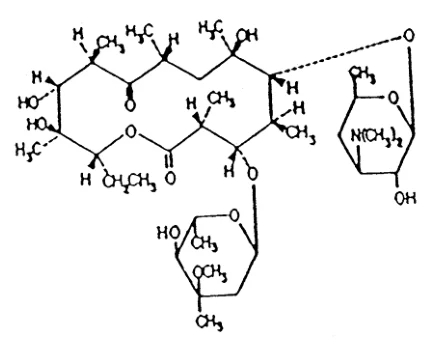
Structural Formula:
Chemical Name:
(3R*,4S*,5S*,6R*,7R*,9R*,11R*,12R*,13S*,14R*)-4-[(2,6-Dideoxy-3-C-methyl-3-O-methyl- L-ribo-hexopyranosyl)-oxy]-14-ethyl-7,12,13-trihydroxy-3,5,7,9,11,13-hexamethyl-6-[[3,4,6-trideoxy-3-(dimethylamino)-b-D-xylo-hexopyranosyl]oxy]oxacyclotetradecane-2,10-dione.
Molecular Formula: C37H67NO13
Molecular Weight: 734
Description: Erythromycin is produced by a strain of Streptomyces erythraeus and belongs to the macrolide group of antibiotics. It is basic and readily forms salts with acids. It occurs as white or slightly yellow, odorless or almost odorless, slightly hygroscopic crystals or powder with a bitter taste. It is freely soluble in methanol, ethanol, acetone and chloroform. It is soluble in water at 2 mg/mL. The melting point is 135-140oC.
MICROBIOLOGY
The in vitro activity of erythromycin against various microorganisms is shown in Table 1 below:
TABLE 1: In Vitro Spectrum of Erythromycin Activity
______________________________________________________________________________
Typical Minimum Inhibitory
Concentration (mcg/mL)
Organism Mean Range
______________________________________________________________________________
Gram-positive cocci:
Staphylococcus aureus 0.4 0.005 - >100
Streptococcus pyogenes 0.04 0.005 - 0.8
Streptococcus pneumoniae 0.05 0.006 - 0.2
Streptococcus viridans 0.06 0.02 - 0.1
Enterococcus 1.5 0.1 - >400
Gram-positive bacilli:
Clostridium perfringens 0.5 0.5 - 5
Corynebacterium diphtheriae 0.02 0.006 - 0.2
Listeria monocytogenes 0.16 0.1 - 0.3
Gram-negative cocci and bacilli:
Neisseria gonorroheae 0.1 0.005 - 0.4
Neisseria meningitidis 0.4 0.1 - 0.8
Hemophilus influenzae 3.1 0.1 - 6
Bordetella pertussis 0.3 0.02 - 1.56
Bacteroides fragilis 1.5 0.12 - >128
Brucella species 5 0.3 - 10
Legionella pneumophila <0.5 -
Others:
Actinomyces israelii 0.5 0.2 - 0.5
Nocardia asteroides 25 0.2 - >200
Mycoplasma pneumoniae 0.005 0.001 - 0.01
Mycobacterium kansasii 1 0.5 - 2
______________________________________________________________________________
Many strains of Hemophilus influenzae are resistant to erythromycin alone.
Staphylococci resistant to erythromycin may emerge during a course of erythromycin therapy. Culture and sensitivity testing should be performed prior to and during therapy.
Erythromycin is usually bacteriostatic but may be bactericidal in high concentrations. The bactericidal activity is greatest against a small number of rapidly dividing microorganisms and increases markedly as the pH of the medium is raised over the range of pH 5.5 to 8.5.
Susceptibility Testing
The standard single-disc susceptibility test using a 15 mg erythromycin disc and the dilution susceptibility test should be interpreted according to the criteria in Table 2:
| TABLE 2 | ||
Zone Diameter (mm) | Approximate MIC Correlate (mg/L) | |
| Susceptible | >18 | <2 |
| Intermediate* | 14 - 17 | - |
| Resistant | <13 | >8 |
| * Indicates that the test results are equivocal; therefore, dilution tests may be indicated. | ||
N.B. These criteria and the definition are in agreement with NCCLS Order Code M2A3.
Control limits for monitoring erythromycin susceptibility tests are given in Table 3.
| TABLE 3 | ||
| Zone Diameter (mm) | MIC (mg/L) | |
| S. aureus ATCC 29213 | 22 – 30 | 0.12 -0.50 |
| S. faecalis ATCC 29212 | 1.0 -4.0 | |
PHARMACOLOGY
The enteric coating of pellets in ERYC capsules protects the erythromycin base from inactivation by gastric acidity. Because of their small size and enteric coating, the pellets may pass intact from the stomach to the small intestine and dissolve efficiently to allow absorption of erythromycin in a uniform manner.
Following oral administration, erythromycin base is readily absorbed from the upper part of the small intestine in the microbiologically active form. The drug is largely bound to plasma proteins, and the freely dissociating bound fraction after administration of erythromycin base represents 90% of the total erythromycin absorbed. After absorption, erythromycin diffuses readily into most body fluids. In the absence of meningeal inflammation, low concentrations are normally achieved in the spinal fluid, but passage of the drug across the blood-brain barrier increases in meningitis. Erythromycin is excreted in breast milk. The drug crosses the placental barrier, but fetal plasma levels are low.
In the presence of normal hepatic function erythromycin is concentrated in the liver and is excreted in the bile. The effect of hepatic dysfunction on biliary excretion of erythromycin is not known. After oral administration less than 5% of the administered dose can be recovered in the active form in the urine.
The half-life (t½) for erythromycin is approximately 2 hours.
Bioavailability
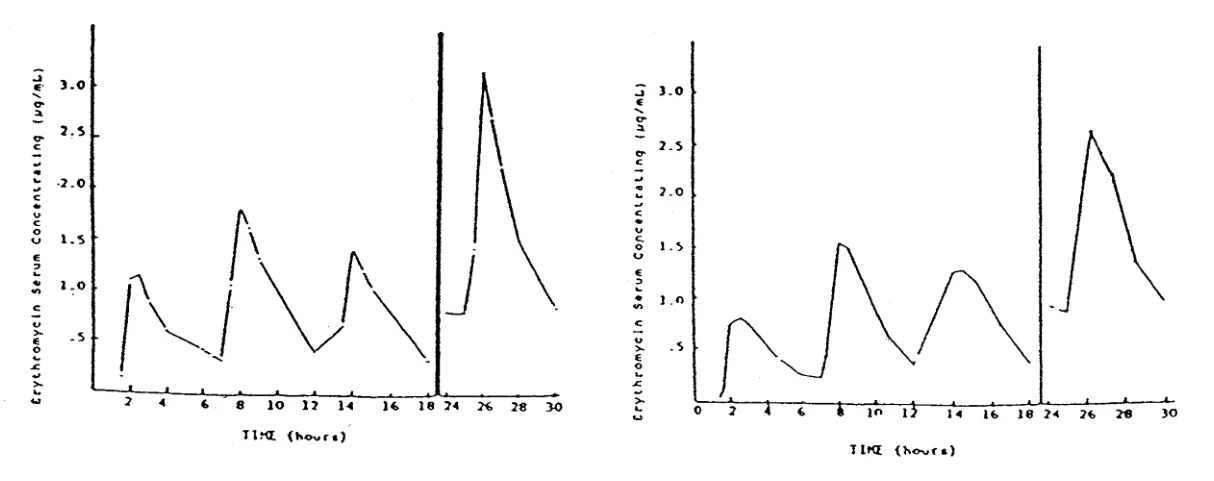
Effect of Fasting: Bioavailability studies of ERYC capsules have been conducted in the fasting and non-fasting states. Single 250 mg doses were administered at 0, 6, 12, 18 and 24 hours. In one group (n=24), doses 1,2,3 and 5 were taken one hour before meals; the fourth dose was taken without food (Figure 1A). In a second group dosing similarly occurred five times at 6 hour intervals, but immediately before or after eating (Figure 1B). It was found that ERYC capsules, when taken immediately before or after meals, demonstrate a decrease in bioavailability compared with the levels achieved when they are taken during fasting states.
Figure 1: Serum Concentrations of Erythromycin
Following Administration of ERYC Capsules, 250 mg
1A: FASTING 1B: NON-FASTING
Effect of Dosage Form: Three comparative multiple-dose bioavailability studies were performed to evaluate the efficacy and reliability in absorption of erythromycin from ERYC capsules versus enteric-coated tablets and film-coated stearate tablets. Five doses of 250 mg were given 6-hours apart and serum levels of erythromycin were analyzed in 24-26 volunteers in each study. ERYC capsules gave a better and more reliable absorption than enteric-coated tablets and film-coated stearate tablets, whether the stearate was given 1 hour before food or immediately before a meal. Significant inter-individual variations in the absorption of erythromycin were observed and some patients did not achieve maximal serum levels.
ERYC 250: Erythromycin serum levels were determined in 27 subjects following oral administration of a single 250 mg or 500 mg dose of ERYC 250 under fasting conditions. Mean pharmacokinetic parameters are reported in Table 4.
TABLE 4: Mean (SD) Pharmacokinetic Parameters After
Administration of ERYC 250 Capsules in the Fasting State
______________________________________________________________________________
Parameter ERYC 250 Treatment
1x250 mg Capsule 2x250 mg Capsules
______________________________________________________________________________
AUC0-16 (hr.mg/mL) 4.85 (1.71) 11.60 (4.43)
Cmax (mg/mL) 1.39 (0.43) 2.73 (0.84)
Tmax (hr) 3.67 (1.35) 4.00 (1.06)
Kel (hr-1) 0.403 (0.098) 0.389 (0.063)
t1/2 (hr) 1.81 (0.41) 1.83 (0.31)
0______________________________________________________________________________
ERYC 333: A multidose study in 23 subjects receiving 1 capsule of ERYC 333 every 8 hours (5 doses) or 1 capsule of ERYC 250 every 6 hours (6 doses) produced average steady-state concentrations (0.89 vs. 0.92 mg/L) and normalized AUC's (10.69 vs. 11.06 mg•hr/L) which were not significantly different for the 2 dosing regimens.
TOXICOLOGY
The acute toxicity of erythromycin base (LD50) is reported to be as follows in Table 5:
Table 5: Acute Toxicity of Erythromycin Base (LD50)
______________________________________________________________________________
Animal Species Route of Administration LD50 Value (mg/kg)
______________________________________________________________________________
Mouse P.O. 3112
S.C. >2500
Rat P.O. >3000
S.C. >2000
Guinea Pig I.P. 413
Hamster P.O. 3018
______________________________________________________________________________
Chronic Toxicity
A chronic toxicity study with erythromycin base was performed in dogs and rats. Dogs were administered doses ranging up to 100 mg/kg/day for a period up to 90 weeks. Rats were given up to 4 g/kg/day for a period up to 85 weeks.
A review of the clinical signs and symptoms, weight curves, clinical laboratory values and gross and microscopic findings showed no drug-related toxicity in dogs or rats at the dose levels indicated.
Teratology Studies
There was no evidence of teratogenicity or other adverse effects on reproduction in female rats fed erythromycin base (up to 0.25% of diet) prior to and during mating, during gestation and through weaning of 2 successive litters.
BIBLIOGRAPHY
- 1. Altemeier, WA and Ayoub, EM: Erythromycin prophylaxis for pertussis. Pediatrics, 59(4):623-625, 1977.
- 2. Am Heart Assoc and Am Dental Assoc "Prevention of Bacterial Endocarditis." Circulation 1984; 70(6):1123A-1127A.
- 3. Anderson RC, Harris PN and Chen KK: The toxicity and distribution of "Ilotycin". J. Am. Ph. Assoc. (Scient. Ed.) 41:555, 1952.
- 4. Anon: Acute rheumatic fever: Sore throat in children should not be ignored. CMAJ, 112:362-363, 1975.
- 5. Bachmann K, Schwartz JI, Forney R, et al: The effect of erythromycin on the disposition kinetics of warfarin. Pharmacology 28:171-176, 1984.
- 6. Baciewicz AM: Carbamazepine drug interactions. Therap. Drug Monitor 8:305-317, 1986.
- 7. Bartle WR: Possible warfarin-erythromycin interaction. Arch. Intern. Med. 140:985-987, 1980.
- 8. Bartowski RR, Goldberg ME, Larijani GE, et al. Inhibition of alfentanil metabolism by erythromycin. Clin Pharmacol Ther 1989; 46(1):99-102.
- 9. Beach MW et al: Erythromycin in the treatment of diphtheria and diphtheria carrier state. Pediatrics, 16:335-343, 1955.
- 10. Berkow R (ed). Pneumonia in The Merck Manual of Diagnosis and Therapy, ed 14. Rahway NJ. Merck, Sharp & Dohme Res Labs 1982; p. 601.
- 11. Berrettini WH: A case of erythromycin-induced carbamazepine toxicity. J. Clin. Psychiatry 47(3):147, 1986.
- 12. Blagg, NA and Gleckman, RA: Erythromycin new indications and toxicities. Post-Grad. Med. 69:59-68, 1981.
- 13. Canadian Guidelines on Sexually Transmitted Infections (Updated January 2008).
- 14. Carranco E, Kareus J, et al: Carbamazepine toxicity induced by concurrent erythromycin therapy. Arch. Neurol. 42:187-188, 1985.
- 15. CDC Sexually Transmitted Diseases Treatment Guidelines 1998.
- 16. Center for Disease Control, Legionnaires' Disease: Diagnosis and Management. Ann. Intern. Med. 88:363-365, 1978.
- 17. Cummins, LH et al: Erythromycin's effect on theophylline blood levels. Letter to the Editors. Pediatric 59(1):144, 1977.
- 18. Edelstein, PH and Meyer, RD: Legionnaires' Disease: A Review. Chest 85:114-120, 1984.
- 19. Eichenwald HF. Adverse reactions to erythromycin. Pediatr Infect Dis 1986; 5(1):147-150.
- 20. Friedman HS: Erythromycin-induced digoxin toxicity. Chest 82:202, 1982.
- 21. Goldstein, EJC, et al: Erythromycin for anaerobic pleuropulmonary and soft tissue infections. JAMA 242(5):435-438, 1979.
- 22. Gould JC. Symposium: Erythromycin - Introduction. Scot Med J 1977; 22:349-351.
- 23. Gould, JC: The clinical use of erythromycin with particular reference to respiratory tract infections. Symposium: Erythromycin. Edited by R.W. Lacey, 1981.
- 24. Goulden KJ, Camfield P, Dooley JM, et al: Severe carbamazepine intoxication after coadministration of erythromycin. Clin. Lab. Observ. 109(1):135-138, 1986.
- 25. Grau E, Fontcuberta J and Felez J: Erythromycin oral anticoagulants interaction. Arch. Intern. Med. 146:1639, 1986.
- 26. Griffith, RS and Black, HR: Erythromycin. Med. Clinic. North Am. 54(4):1199-1215, September 1970.
- 27. Grob PR. Prophylactic erythromycin for whopping-cough contacts. Lancet April 1981; pp 772-773.
- 28. Guidelines of American Heart Association. Circ. 70:1123A-1126A, 1984.
- 29. Hansten PD: Erythromycin and warfarin. Drug Inter. Newsletter 5(9):37-40, 1985.
- 30. Hassell D and Utt JK: Suspected interaction: warfarin and erythromycin. South. Med. J. 78(8):1015-1016, 1985.
- 31. Hedrick R, Williams F, Morin R, et al: Carbamazepine-erythromycin interaction leading to carbamazepine toxicity in four epileptic children. Therap. Drug. Monit. 5(4):405-407, 1983.
- 32. Hourmant M, LeBigot JF et al.: Coadministration of erythromycin results in an increase of blood cyclosporin to toxic levels. Transplant. Proc. 17:2723-2727 (1985).
- 33. Islur, J et al: The whooping cough syndrome. A continuing pediatric problem. Clin. Pediatr. 14(2):171-176, 1975.
- 34. Jackson, FW: Effectiveness of erythromcyin in a variety of infections: a study of 100 patients. Curr. Therap. Res. 8(12):607-613, 1966.
- 35. Josefsson K, Levitt MJ et al: Erythromycin absorption from enteric-coated pellets given in multiple doses to volunteers, in comparison with enteric-coated tablets and film-coated stearate tablets. Curr. Ther. Res. 39:131-142, 1986.
- 36. Kessler JM: Erythromycin-carbamazepine interaction. S. Afr. Med. J. 67:1038, 1985.
- 37. Kingery FAJ: Imitators of athlete's foot. JAMA 193:181, 1965.
- 38. Knight R. The chemotherapy of amoebiasis. J Antimicrob Chemother 1980; 6(5):577-593.
- 39. Lacey, RW: A new look at erythromycin. Post-Grad. Med. J. 53:195-200, 1977.
- 40. LaForce CF, Miller MF and Chai H: Effect of erythromycin on theophylline clearance in asthmatic children. J. Pediatrics 99(1):153-156, 1981.
- 41. Lindenbaum J, Rund DG, Butler VP, et al: Inactivation of digoxin by the gut flora: reversal by antibiotic therapy. New Eng. J. Med. 305(14):789-794, 1981.
- 42. Linnemann CC, Heaton CL, Ritchey M. Treatment of Chlamydia trachomatis infections: comparison of 1- and 2- g doses of erythromycin daily for seven days. Sex Transm Dis 1987; 14 (2):102-106.
- 43. Liss, RH, Norman, JC, Goldmann, DA: Comparative study of erythromycin, amoxicillin and ampicillin antimicrobial activity against human respiratory tract pathogens. Scand. J. Infec. Dis. Supp. 20, 1979.
- 44. Martell R, Heinrichs D, Stiller CR, et al. The effects of erythromycin in patients treated with cyclosporine. Ann Intern Med 1986; 104(5):660-661.
- 45. McCloskey, RV et al: Treatment of diphtheria carriers. Ann. Int. Med. 81:788-791, 1974.
- 46. McKendrick MW, Geddes AM. Erythromycin in Legionnaires' disease. Br Med J 1979; 1(6157):196.
- 47. Morton MR, Cooper JW. Erythromycin-induced digoxin toxicity. DICP 1989; 23(9):668-670.
- 48. New warning issued on astemizole. Drug Ther. Jan 1993; pp.75-76.
- 49. Nicholas P: Erythromycin: Clinical Review I. Clinical Pharmacology. N.Y. State J. Med. 77(14):2088-2094, 1977.
- 50. Nicholas, P: Erythromycin: Clinical Review II. Therapeutic Uses, N.Y. State J. Med. 77:2243-2246, 1977.
- 51. Olkkola KT, Aranko K, Luurila H, et al. A potentially hazardous interaction between erythromycin and midazolam. Clin Pharmacol Ther 1993; 53(3):298-305.
- 52. Pfeifer HJ et al: Effects of three antibiotics on theophylline kinetics. Clin. Pharmacol. Ther. 26(1):36-40, 1979.
- 53. Philipson A, Sabath LD, Charles D. Transplacental passage of erythromycin and clindamycin. N Engl J Med 1973; 288:1219-1221.
- 54. Potentially fatal interaction between terfenadine and erythromycin or ketoconazole. Sci Am Med 1992; 15(9):1.
- 55. Ravich RBM, Jennis F, Carruthers DE. The "first-visit" antibiotic problem. Ann Gen Pract 1971; 16:53-58.
- 56. Righter, J: Erythromycin: An update. Mod. Med. Canada. 36:649-653, 1981.
- 57. Robinson, MM: Hepatic dysfunction associated with triacetyloleandomycin and propionyl erythromycin ester lauryl sulfate. Am. J. Med. Sci. 243:502-510, 1962.
- 58. Sandstrom I. Neonate conjunctivitis caused by Chlamydia trachomatis. Acta Otolaryngol (Stockh) 1984; Suppl 407:67-69.
- 59. Schachter J, Sweet RL, Grossman M, et al. Experience with the routine use of erythromycin for chlamydial infections in pregnancy. N Engl J Med 1986; 314 (5):276-279.
- 60. Schroeter, AL et al: Treatment for early syphillis and reactivity of serologic tests. JAMA 221(5):471-476, 1972.
- 61. Spach DH, Bauwens JE, Clark CD, Burke WG. Rhabdomyolysis associated with lovastatin and erythromycin use. Western J Med 1991; 154(2):213-215.
- 62. Straughan J. Erythromycin-carbamazepine interaction. S Afr Med J Mar 1982; pp. 420-421.
- 63. Sullivan D, Csuka ME and Blanchard B: Erythromycin ethylsuccinate hepatotoxicity. JAMA 243:1074, 1980.
- 64. The Use of Antibiotics. Kucers A, Bennett NMck eds. 4th edition. 1989:821.
- 65. Treatment of Syphilis and Gonorrhea. Med. Letter 19(26):105-107, December 30, 1977.
- 66. Washington II JA, Wilson WR. Erythromycin: a microbial and clinical perspective after 30 years of clinical use. Mayo Clin Proc 1985; 60:189-203, 271-278.
- 67. Watson, GI: The treatment of mycoplasma pneumoniae infections. Scot. Med. J. 22:361-365, 1977.
- 68. Weisblum, B and Davies, J: Antibiotic inhibitors of the bacterial ribosome. Bacterial Rev. 32:493-528, 1968.
- 69. Welling PG: Pharmacology of erythromycin. Erythromycin - an update review. Ed. R.W. Lacey, Symposium by Abbott Laboratory, 1981.
- 70. Wroblewski BA, Singer WD and Whyte J; Carbamazepine-erythromycin interaction. JAMA 255(9):1165-1167, 1986.
- 71. Wysowski DK, Bacsany J. Cisapride and fatal arrhythmia. New Engl J Med 1996; 335(4):290-291.
- 72. Zitelli BJ, Howrie DL, Altman H, et al. Erythromycin-induced drug interactions. Clin Pediatr 1987; 26(3):117-119.