


Product Monograph - Erythro-S (AA Pharma, 250 mg)
INDICATIONS
S. pyogenes (Group A beta hemolytic streptococcus): Upper and lower respiratory tract, skin, and soft tissue infections of mild to moderate severity.
Injectable benzathine penicillin G is considered by the American Heart Association to be the drug of choice in the treatment and prevention of streptococcal pharyngitis and in long term prophylaxis of rheumatic fever. When oral medication is preferred for treatment of the above conditions, penicillin G, V, or erythromycin are alternate drugs of choice.
When oral medication is given, the importance of strict adherence by the patient to the prescribed dosage regimen must be stressed. A therapeutic dose should be administered for at least 10 days.
Alpha hemolytic streptococci (viridans group): Short term prophylaxis of bacterial endocarditis prior to dental or other operative procedures in patients with a history of rheumatic fever or congenital heart disease who are hypersensitive to penicillin.
(Erythromycin is not suitable prior to genitourinary surgery where the organisms likely to lead the bacteremia are gram negative bacilli or the enterococcus group of streptococci).
S. aureus: Acute infections of skin and soft tissue of mild to moderate severity. Resistant organisms may emerge during treatment.
S. pneumoniae: Upper respiratory tract infections (e. g. otitis media, pharyngitis) and lower respiratory tract infections (e.g. pneumonia) of mild to moderate degree.
M. pneumoniae (Eaton agent, PPLO): Primary atypical pneumonia, when due to this organism.
N. gonorrhoeae and T. pallidum: Erythromycin is an alternate choice of treatment for gonorrhea and primary syphilis in patients allergic to the penicillins. Before treatment of gonorrhea, patients who are suspected of also having syphilis should have a microscopic examination for T. pallidum (by immunofluorescence or darkfield) before receiving erythromycin, and monthly serologic tests for a minimum of 4 months. In the treatment of primary syphilis, spinal fluid examinations should be done before treatment and as part of follow up after therapy.
C. diphtheriae and C. minutissimum: As an adjunct to antitoxin, to prevent establishment of carriers, and to eradicate the organism in carriers.
Treatment of erythrasma.
To reduce the development of drug-resistant bacteria and maintain the effectiveness of erythromycin and other antibacterial drugs, erythromycin should be used only to treat infections that are proven or strongly suspected to be caused by susceptible bacteria. When culture and susceptibility information are available, they should be considered in selecting or modifying antibacterial therapy. In the absence of such data, local epidemiology and susceptibility patterns may contribute to the empiric selection of therapy.
CONTRAINDICATIONS
Erythromycin is contraindicated in patients with known hypersensitivity toto this antibiotic.
Erythromycin is contraindicated in persons patients taking terfenadine, astemizole, cisapride, pimozide, ergotamine, or dihydroergotamine. (See PRECAUTIONS -Drug Interactions)
Do not use erythromycin concomitantly with HMG CoA reductase inhibitors (statins) that are extensively metabolized by CYP 3A4 (lovastatin or simvastatin), due to the increased risk of myopathy, including rhabdomyolysis.
WARNINGS
Hepatotoxicity
There have been reports of hepatic dysfunction, including increased liver enzymes, and hepatocellular and/or cholestatic hepatitis, with or without jaundice, occurring in patients receiving oral erythromycin products.
QT Prolongation
Erythromycin has been associated with prolongation of the QT interval and infrequent cases of arrhythmia. Cases of torsades de pointes have been spontaneously reported during postmarketing surveillance in patients receiving erythromycin. Fatalities have been reported. Erythromycin should be avoided in patients with known prolongation of the QT interval, patients with ongoing proarrhythmic conditions such as uncorrected hypokalemia or hypomagnesemia, clinically significant bradycardia, and in patients receiving Class IA (quinidine, procainamide) or Class III (dofetilide, amiodarone, sotalol) antiarrhythmic agents. Elderly patients may be more susceptible to drug-associated effects on the QT interval.
Syphilis in Pregnancy
There have been reports suggesting that erythromycin does not reach the fetus in adequate concentration to prevent congenital syphilis. Infants born to women treated during pregnancy with oral erythromycin for early syphilis should be treated with an appropriate penicillin regimen.
Clostridium difficile Associated Diarrhea
Clostridium difficile associated diarrhea (CDAD) has been reported with use of nearly all antibacterial agents, including ERYTHRO-S tablets, and may range in severity from mild diarrhea to fatal colitis. Treatment with antibacterial agents alters the normal flora of the colon leading to overgrowth of C. difficile.
C. difficile produces toxins A and B which contribute to the development of CDAD. Hypertoxin producing strains of C. difficile cause increased morbidity and mortality, as these infections can be refractory to antimicrobial therapy and may require colectomy. CDAD must be considered in all patients who present with diarrhea following antibiotic use. Careful medical history is necessary since CDAD has been reported to occur over two months after the administration of antibacterial agents.
If CDAD is suspected or confirmed, ongoing antibiotic use not directed against C. difficile may need to be discontinued. Appropriate fluid and electrolyte management, protein supplementation, antibiotic treatment of C. difficile, and surgical evaluation should be instituted as clinically indicated.
PRECAUTIONS
General
Prescribing ERYTHRO-S tablets in the absence of a proven or strongly suspected bacterial infection or a prophylactic indication is unlikely to provide benefit to the patient and increases the risk of the development of drug-resistant bacteria.
Since erythromycin is principally excreted by the liver, caution should be exercised when erythromycin is administered to patients with impaired hepatic function. (See CLINICAL PHARMACOLOGY and WARNINGS.)
Exacerbation of symptoms of myasthenia gravis and new onset of symptoms of myasthenic syndrome has been reported in patients receiving erythromycin therapy.
There have been reports of infantile hypertrophic pyloric stenosis (IHPS) occurring in infants following erythromycin therapy. In one cohort of 157 newborns who were given erythromycin for pertussis prophylaxis, seven neonates (5%) developed symptoms of non-bilious vomiting or irritability with feeding and were subsequently diagnosed as having IHPS requiring surgical pyloromyotomy. A possible dose-response effect was described with an absolute risk of IHPS of 5.1% for infants who took erythromycin for 8 to14 days and 10% for infants who took erythromycin for 15 to 21 days.5 Since erythromycin may be used in the treatment of conditions in infants which are associated with significant mortality or morbidity (such as pertussis or neonatal Chlamydia trachomatis infections), the benefit of erythromycin therapy needs to be weighed against the potential risk of developing IHPS. Parents should be informed to contact their physician if vomiting or irritability with feeding occurs.
Prolonged or repeated use of erythromycin may result in an overgrowth of non susceptible bacteria or fungi. If super-infection occurs, erythromycin should be discontinued and appropriate therapy instituted.
When indicated, incision and drainage or other surgical procedures should be performed in conjunction with antibiotic therapy.
Observational studies in humans have reported cardiovascular malformations after exposure to drug products containing erythromycin during early pregnancy.
Information for Patients
Patients should be counseled that antibacterial drugs including ERYTHRO-S tablets should only be used to treat bacterial infections. They do not treat viral infections (e.g., the common cold). When ERYTHRO-S tablets are prescribed to treat a bacterial infection, patients should be told that although it is common to feel better early in the course of therapy, the medication should be taken exactly as directed. Skipping doses or not completing the full course of therapy may (1) decrease the effectiveness of the immediate treatment and (2) increase the likelihood that bacteria will develop resistance and will not be treatable by ERYTHRO-S tablets or other antibacterial drugs in the future.
Diarrhea is a common problem caused by antibiotics which usually ends when the antibiotic is discontinued. Sometimes after starting treatment with antibiotics, patients can develop watery and bloody stools (with or without stomach cramps and fever) even as late as two or more months after having taken the last dose of the antibiotic. If this occurs, patients should contact their physician as soon as possible.
Drug Interactions
Theophylline
Erythromycin use in patients who are receiving high doses of theophylline may be associated with an increase in serum theophylline levels and potential theophylline toxicity. In case of theophylline toxicity and/or elevated serum theophylline levels, the dose of theophylline should be reduced while the patient is receiving concomitant erythromycin therapy.
There have been published reports suggesting that when oral erythromycin is given concurrently with theophylline there is a decrease in erythromycin serum concentrations of approximately 35%. The mechanism by which this interaction occurs is unknown. The decrease in erythromycin concentrations due to co-administration of theophylline could result in subtherapeutic concentrations of erythromycin.
Hypotension, bradyarrhythmias, and lactic acidosis have been observed in patients receiving concurrent verapamil, belonging to the calcium channel blockers drug class.
Concomitant administration of erythromycin and digoxin has been reported to result in elevated digoxin serum levels.
There have been reports of increased anticoagulant effects when erythromycin and oral anticoagulants were used concomitantly. Increased anticoagulation effects due to interactions of erythromycin with oral anticoagulants may be more pronounced in the elderly.
Erythromycin is a substrate and inhibitor of the 3A isoform subfamily of the cytochrome p450 enzyme system (CYP3A). Coadministration of erythromycin and a drug primarily metabolized by CYP3A may be associated with elevations in drug concentrations that could increase or prolong both the therapeutic and adverse effects of the concomitant drug. Dosage adjustments may be considered, and when possible, serum concentrations of drugs primarily metabolized by CYP3A should be monitored closely in patients concurrently receiving erythromycin.
The following are examples of some clinically significant CYP3A based drug interactions. Interactions with other drugs metabolized by the CYP3A isoform are also possible. The following CYP3A based drug interactions have been observed with erythromycin products in post-marketing experience:
Ergotamine/dihydroergotamine
Post-marketing reports indicate that co-administration of erythromycin with ergotamine or dihydroergotamine has been associated with acute ergot toxicity characterized by vasospasm and ischemia of the extremities and other tissues including the central nervous system. Concomitant administration of erythromycin with ergotamine or dihydroergotamine is contraindicated (see CONTRAINDICATIONS).
Triazolobenzodiazepines (such as triazolam and alprazolam) and related benzodiazepines.
Erythromycin has been reported to decrease the clearance of triazolam and midazolam, and thus, may increase the pharmacologic effect of these benzodiazepines.
HMG-CoA Reductase Inhibitors
Erythromycin has been reported to increase concentrations of HMG-CoA reductase inhibitors (e.g., lovastatin and simvastatin). Rare reports of rhabdomyolysis have been reported in patients taking these drugs concomitantly.
Rhabdomyolysis with or without renal impairment has been reported in seriously ill patients receiving erythromycin concomitantly with lovastatin. Therefore, patients receiving concomitant lovastatin and erythromycin should be carefully monitored for creatine kinase (CK) and serum transaminase levels.
Sildenafil (Viagra)
Erythromycin has been reported to increase the systemic exposure (AUC) of sildenafil. Reduction of sildenafil dosage should be considered. (See Viagra package insert.)
There have been spontaneous or published reports of CYP3A based interactions of erythromycin with cyclosporine, carbamazepine, tacrolimus, alfentanil, disopyramide, rifabutin, quinidine, methyl-prednisolone, cilostazol, vinblastine, and bromocriptine. Concomitant administration of erythromycin with cisapride, pimozide, astemizole, or terfenadine is contraindicated. (See CONTRAINDICATIONS.)
In addition, there have been reports of interactions of erythromycin with drugs not thought to be metabolized by CYP3A, including hexobarbital, phenytoin, and valproate.
Erythromycin has been reported to significantly alter the metabolism of the nonsedating antihistamines terfenadine and astemizole when taken concomitantly. Rare cases of serious cardiovascular adverse events, including electrocardiographic QT/QTc interval prolongation, cardiac arrest, torsades de pointes, and other ventricular arrhythmias, have been observed. (See CONTRAINDICATIONS.)
In addition, deaths have been reported rarely with concomitant administration of terfenadine and erythromycin.
There have been post-marketing reports of drug interactions when erythromycin was co-administered with cisapride, resulting in QT prolongation, cardiac arrhythmias, ventricular tachycardia, ventricular fibrillation, and torsades de pointes, most likely due to the inhibition of hepatic metabolism of cisapride by erythromycin. Fatalities have been reported. (See CONTRAINDICATIONS).
Colchicine
Colchicine is a substrate for both CYP3A4 and the efflux transporter P-glycoprotein (P-gp). Erythromycin is con sidered a moderate inhibitor of CYP3A4. A significant increase in colchicine plasma concentration is anticipated when co-administered with moderate CYP3A4 inhibitors such as erythromycin. If co-administration of colchicine and erythromycin is necessary, the starting dose of colchicine may need to be reduced, and the maximum colchicine dose should be lowered. Patients should be monitored for clinical symptoms of colchicine toxicity.
Serious adverse reactions have been reported in patients taking erythromycin concomitantly with CYP3A4 substrates. These include colchicine toxicity with colchicine; rhabdomyolysis with simvastatin, lovastatin, and atorvastatin; and hypotension with calcium channel blockers metabolized by CYP3A4 (e.g., verapamil, amlodipine, diltiazem).
There have been post-marketing reports of colchicine toxicity with concomitant use of erythromycin and colchicine. This interaction is potentially life-threatening, and may occur while using both drugs at their recommended doses.
Drug/Laboratory Test Interactions
Erythromycin interferes with the fluorometric determination of urinary catecholamines.
Carcinogenesis, Mutagenesis, Impairment of Fertility
Long-term oral dietary studies conducted with erythromycin stearate in rats up to 400 mg/kg/day and in mice up to about 500 mg/kg/day (approximately 1 to 2 fold of the maximum human dose on a body surface area basis) did not provide evidence of tumorigenicity. Erythromycin stearate did not show genotoxic potential in the Ames, and mouse lymphoma assays or induce chromosomal aberrations in CHO cells. There was no apparent effect on male or female fertility in rats treated with erythromycin base by oral gavage at 700 mg/kg/day (approximately 3 times the maximum human dose on a body surface area basis).
Pregnancy
There is no evidence of teratogenicity or any other adverse effect on reproduction in female rats fed erythromycin base by oral gavage at 350 mg/kg/day (approximately twice the maximum recommended human dose on a body surface area) prior to and during mating, during gestation, and through weaning. No evidence of teratogenicity or embryo-toxicity was observed when erythromycin base was given by oral gavage to pregnant rats and mice at 700 mg/kg/day and to pregnant rabbits at 125 mg/kg/day (approximately 1 to 3 times the maximum recommended human dose).
Labor and Delivery
The effect of erythromycin on labor and delivery is unknown.
Nursing Mothers
Erythromycin is excreted in human milk. Caution should be exercised when erythromycin is administered to a nursing woman.
Geriatric Use
Elderly patients, particularly those with reduced renal or hepatic function, may be at increased risk for developing erythromycin-induced hearing loss. (See ADVERSE EFFECTS).
Elderly patients may be more susceptible to the development of torsades de pointes arrhythmias than younger patients. (See WARNINGS).
Elderly patients may experience increased effects of oral anticoagulant therapy while undergoing treatment with erythromycin. (See PRECAUTIONS - Drug Interactions).
The geriatric population may respond with a blunted natriuresis to salt loading. This may be clinically important with regard to such diseases as congestive heart failure.
ADVERSE EFFECTS
Cardiovascular
QT prolongation, ventricular tachycardia, and torsades de pointes have been reported with macrolides, including erythromycin.
Gastrointestinal
Abdominal cramping and discomfort have been observed. Nausea, vomiting and diarrhea are also observed, but less frequently. Clostridium difficile-associated disease has been observed (see WARNINGS).
Pancreatitis
There has been a report of a case of erythromycin-induced pancreatitis following erythromycin overdose.
Allergic Reactions
Urticaria, mild skin eruptions and anaphylaxis have been reported. Skin reactions ranging from mild eruptions to erythema multiforme, Stevens-Johnson syndrome, and toxic epidermal necrolysis have been reported rarely.
Hepatotoxicity
There have been reports of hepatic dysfunction, with or without jaundice, occurring in patients receiving erythromycin products.
Miscellaneous
During prolonged or repeated therapy, there is a possibility of overgrowth of nonsusceptible bacteria or fungi and organisms initially sensitive to erythromycin (e.g. Staphylococcus aureus, Hemophilus influenzae). If such infections occur, erythromycin should be discontinued and appropriate therapy instituted.
There have been isolated reports of transient central nervous system side effects including confusion, hallucinations, seizures and vertigo: however, a cause and effect relationship has not been established.
There have been reports of interstitial nephritis coincident with erythromycin use.
There have been isolated reports of reversible hearing loss occurring chiefly in patients with renal insufficiency and in patients receiving high doses of erythromycin.
SYMPTOMS AND TREATMENT OF OVERDOSAGE
Symptoms: In oral doses of over 2 g per day, abdominal discomfort, nausea or diarrhea may occur.
Treatment: No specific treatment for accidental over dosage has been proposed.
In case of overdosage, erythromycin should be discontinued. Overdosage should be handled with the prompt elimination of unabsorbed drug and all other appropriate measures should be instituted.
Erythromycin is not removed by peritoneal dialysis or hemodialysis.
| For management of suspected drug overdose, contact your Regional Poison Control Centre. |
DOSAGE AND ADMINISTRATION
Oral:
When given orally, erythromycin stearate is susceptible to inactivation by acid in the stomach. This can be reduced by administering before meals.
The usual dose (Note: all doses expressed in term of erythromycin base) of erythromycin is 1 g daily (i.e. 500 mg every 12 hours or 250 mg every 6 hours) taken prior to meals. If the twice daily dosage regimen is employed in moderate to severe infections, it is recommended that a loading dose of 1 g be given initially, followed by 500 mg every 12 hours.
In the treatment of beta hemolytic streptococcal infections, adequate erythromycin dosage should be administered for a full 10 days to reduce the nonsuppurative complications of rheumatic fever and glomerulonephritis. In the presence of a well established history of rheumatic fever and clinical rheumatic heart disease, continuous prophylaxis with erythromycin may be achieved with 250 mg twice a day.
When erythromycin is used prior to surgery to prevent endocarditis caused by alpha hemolytic streptococci (viridans group), a recommended schedule for adults is 500 mg before the procedure and 250 mg every 8 hours for 4 doses afterward; for children, 30 to 50 mg/kg per day divided into 3 or 4 evenly spaced doses.
Primary Syphilis: 30 to 40 g given in divided doses over a period of 10 to 15 days.
Gonorrhea: Adults, 500 mg orally 4 times daily for 5 days.
AVAILABILITY
Each 250 mg film-coated tablet contains 250 mg of erythromycin as the stearate.
Each bright pink, round, biconvex, film-coated tablet engraved 250 on one side, other side plain. Available in bottles of 100 tablets.
ERYTHRO-S contains the following non-medicinal ingredients: carnauba wax, colloidal silicon dioxide, croscarmellose sodium, erythrosine lake, hydroxypropyl methylcellulose, magnesium stearate, methyl cellulose, microcrystalline cellulose, polyethylene glycol, and titanium dioxide.
Store at room temperature (15°C to 30°C) in a tightly closed container.
Keep out of reach and sight of children.
PHARMACEUTICAL INFORMATION
Common name: Erythromycin stearate
Structural Formula:
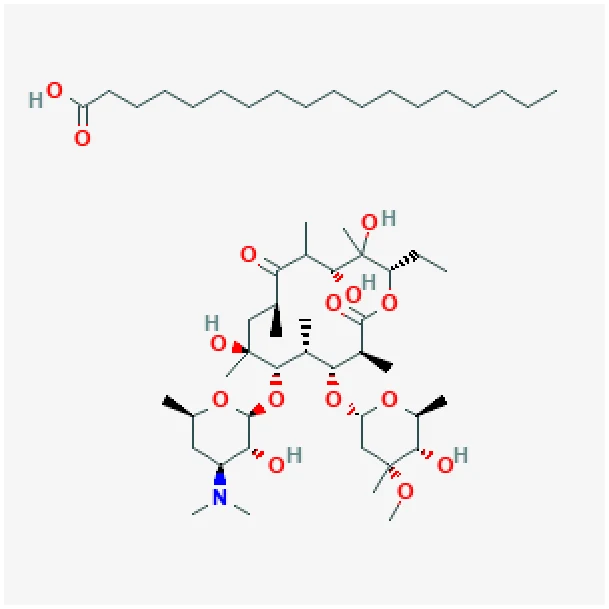
Molecular Formula: C37H67NO13 • C18H36O2
Molecular Weight: 1018.40 g/mol
Description: Erythromycin is produced by a strain of Saccharopolyspora erythraea (formerly Streptomyces erythraeus) and belongs to the macrolide group of antibiotics. It is basic and readily forms salts with acids. Erythromycin is a white crystalline powder, slightly soluble in water, and soluble in alcohol, chloroform, and ether.
CLINICAL PHARMACOLOGY
Erythromycin inhibits protein synthesis by binding to the 50S ribosomal subunit. It is usually bacteriostatic but may be bactericidal in high concentrations or against highly susceptible organisms. Its spectrum of activity is similar to that of penicillin G. Resistance to erythromycin of some strains of H. influenza and staphylococci has been demonstrated. If the Kirby-Bauer method of disc susceptibility is used, a 15 mcg erythromycin disc should give a zone diameter of at least 18 mm when tested against an erythromycin susceptible organism.
Erythromycin stearate dissociates in the duodenum to erythromycin base before absorption. Erythromycin stearate is acid labile and should be administered on an empty stomach.
Orally administered erythromycin base and its salts are readily absorbed in the microbiologically active form. Interindividual variations in the absorption of erythromycin are, however, observed, and some patients do not achieve optimal serum levels. Erythromycin is largely bound to plasma proteins. After absorption, erythromycin diffuses readily into most body fluids. In the absence of meningeal inflammation, low concentrations are normally achieved in the spinal fluid but the passage of the drug across the blood-brain barrier increases in meningitis. Erythromycin crosses the placental barrier, but fetal plasma levels are low. The drug is excreted in human milk. Erythromycin is not removed by peritoneal dialysis or hemodialysis.
In the presence of normal hepatic function, erythromycin is concentrated in the liver and is excreted in the bile; the effect of hepatic dysfunction on biliary excretion of erythromycin is not known. After oral administration, less than 5% of the administered dose can be recovered in the active form in the urine.
Microbiology
Mechanism of Action:
Erythromycin acts by inhibition of protein synthesis by binding 50S ribosomal subunits of susceptible organisms. It does not affect nucleic acid synthesis.
Mechanism of Resistance:
The major route of resistance is modification of the 23S rRNA in the 50S ribosomal subunit to insensitivity while efflux can also be significant.
Interactions with Other Antibiotics:
Antagonism exists in vitro between erythromycin and clindamycin, lincomycin, and chloramphenicol.
Erythromycin has been shown to be active against most isolates of the following bacteria both in vitro and in clinical infections as described in the INDICATIONS AND USAGE section.
Gram-positive Bacteria:
Corynebacterium diphtheriae, Corynebacterium minutissimum, Listeria monocytogenes, Staphylococcus aureus (resistant organisms may emerge during treatment), Streptococcus pneumoniae, Streptococcus pyogenes
Gram-negative Bacteria:
Bordetella pertussis, Haemophilus influenzae, Legionella pneumophila, Neisseria gonorrhoeae
Other Microorganisms:
Chlamydia trachomatis, Entamoeba histolytica, Mycoplasma pneumoniae, Treponema pallidum, Ureaplasma urealyticum
The following in vitro data are available, but their clinical significance is unknown.
At least 90% of the following bacteria exhibit in vitro minimum inhibitory concentration (MIC) less than or equal to the susceptible breakpoint for erythromycin. However, the efficacy of erythromycin in treating clinical infections due to these bacteria has not been established in adequate and well controlled clinical trials.
Gram-positive Bacteria:
Viridans group streptococci
Gram-negative Bacteria:
Moraxella catarrhalis
Susceptibility Test Methods
When available the clinical microbiology laboratory should provide the results of in vitro susceptibility test results for antimicrobial drug products used in resident hospitals to the physician as periodic reports that describe the susceptibility profile of nosocomial and community-acquired pathogens. These reports should aid the physician in selecting an antibacterial drug product for treatment.
Dilution Techniques: Quantitative methods are used to determine antimicrobial minimum inhibitory concentrations (MIC’s). These MICs provide estimates of the susceptibility of bacteria to antimicrobial compounds. The MICs should be determined using a standardized test method1, 2 (broth and/or agar). The MIC values should be interpreted according to criteria provided in Table 1.
Diffusion techniques: Quantitative methods that require measurement of zone diameters can also provide reproducible estimates of the susceptibility of bacteria to antimicrobial compounds. The zone size provides an estimate of the susceptibility of bacteria to antimicrobial compounds. The zone size should be determined using a standardized test method.2,3 This procedure uses paper disks impregnated with 15 mcg erythromycin to test the susceptibility of microorganisms to erythromycin. The disc diffusion interpretive criteria are provided in Table 1.
Table 1. In Vitro Susceptibility Test Interpretive Criteria for Erythromycin
| Minimum Inhibitory Concentrations (mcg/mL) | Disk Diffusion (zone diameters in mm) | |||||||||||
| Pathogen | S | I | R | S | I | R | ||||||
| Staphylococcus aureus | ≤0.5 | 1-4 | ≥8 | ≥23 | 14-22 | ≤13 | ||||||
| Streptococcus pneumoniae | ≤0.25 | 0.5 | ≥1 | ≥21 | 16-20 | ≤15 | ||||||
| Streptococcus pyogenes | ≤0.25 | 0.5 | ≥1 | ≥21 | 16-20 | ≤15 | ||||||
A report of “Susceptible” indicates that the antimicrobial is likely to inhibit growth of the pathogen if the antimicrobial compound reaches the concentrations at the site of infection necessary to inhibit growth of the pathogen. A report of “Intermediate” indicates that the result should be considered equivocal, and, if the microorganism is not fully susceptible to alternative, clinically feasible drugs, the test should be repeated. This category implies possible clinical applicability in body sites where the drug product is physiologically concentrated or in situations where high dosage of drug can be used. This category also provides a buffer zone which prevents small uncontrolled technical factors from causing major discrepancies in interpretation. A report of “Resistant” indicates that the antimicrobial is not likely to inhibit growth of the pathogen if the antimicrobial compound reaches the concentrations usually achievable at the infection site; other therapy should be selected.
Quality Control: Standardized susceptibility test procedures require the use of laboratory controls to monitor and ensure the accuracy and precision of supplies and reagents used in the assay, and the techniques of the individuals performing the test.1, 2, 3, 4 Standard erythromycin powder should provide the following range of MIC values noted in Table 2. For the diffusion technique using the 15 mcg disk, the criteria in Table 2 should be achieved.
Table 2. Acceptable Quality Control Ranges for Erythromycin
| QC Strain | Minimum Inhibitory Concentrations (mcg/mL) | Disk Diffusion (zone diameters in mm) |
| Staphylococcus aureus ATCC 29213 | 0.25-1 | NA |
| Staphylococcus aureus ATCC 25923 | NA | 22-30 |
| Enterococcus faecalis ATCC 29212 | 1-4 | NA |
| Streptococcus pneumoniae ATCC 49619 | 0.03-0.12 | 25-30 |
BIBLIOGRAPHY
- 1. Eichenwald HF. Adverse reactions to erythromycin. Pediatr Infect Dis 1986; 5(1):147-150.
- 2. Gould, JC: The clinical use of erythromycin with particular reference to respiratory tract infections. Symposium: Erythromycin. Edited by R.W. Lacey, 1981.
- 3. Grau E, Fontcuberta J and Felez J: Erythromycin oral anticoagulants interaction. Arch. Intern. Med. 146:1639, 1986.
- 4. Olkkola KT, Aranko K, Luurila H, et al. A potentially hazardous interaction between erythromycin and midazolam. Clin Pharmacol Ther 1993; 53(3):298-305.
- 5. Straughan J. Erythromycin-carbamazepine interaction. S Afr Med J Mar 1982; pp. 420-421.
- 6. Pfizer Canada Inc; ERYC Prescribing Information (198682) dated March 29, 2017.
- 7. ERYTHROCIN® STEARATE, ERYTHROMYCIN STEARATETABLETS, USP, Arbor Pharmaceuticals, LLC Atlanta, R1-Rev. July, 2013.