


Product Monograph - Erythrocin I.V.
RECENT MAJOR LABEL CHANGES
Warnings and Precaution, Immune (7) AUG, 2018
Adverse Reactions, Adverse Reaction Overview (8.1) AUG, 2018
Patient Medication Information, Serious side effects and what to do about them AUG, 2018
Contraindications (2) DEC, 2020
Serious Warnings & Precautions (3) DEC, 2020
Warnings And Precautions, Gastrointestinal (7) DEC, 2020
Adverse Reactions, Adverse Reaction Overview (8.1) DEC, 2020
Drug Interactions, Drug-Drug Interactions (9.3) DEC, 2020
Patient Medication Information, Serious Warnings and Precautions DEC, 2020
Patient Medication Information, Do not use ERYTROCIN® I.V. if DEC, 2020
Patient Medication Information, Serious side effects and what to do about them DEC, 2020
TABLE OF CONTENTS
PART I: HEALTH PROFESSIONAL INFORMATION ........................................................... 4
- 1. INDICATIONS .............................................................................................................. 4
1.1 Pediatrics ................................................................................................................... 4
1.2 Geriatrics.................................................................................................................... 4
- 2. CONTRAINDICATIONS ......................................................................................................... 5
- 3. SERIOUS WARNINGS AND PRECAUTIONS BOX ......................................................... 5
- 4.
DOSAGE AND ADMINISTRATION ...................................................................................... 6
4.1 Dosing Considerations .......................................................................................... 6
4.2 Recommended Dose and Dosage Adjustment ................................................ 6
4.3 Administration .......................................................................................................... 6
4.4 Reconstitution .......................................................................................................... 6
4.5 Missed Dose .............................................................................................................. 7
- 5. OVERDOSAGE ........................................................................................................................ 7
- 6. DOSAGE FORMS, STRENGTHS, COMPOSITION AND PACKAGING ....................... 8
- 7.
WARNINGS AND PRECAUTIONS ...................................................................................... 8
- 7. 1 Special Populations ............................................................................................. 10
7.1.1 Pregnant Women: ............................................................................................... 10
7.1.2 Breast-feeding ..................................................................................................... 10
7.1.3 Pediatrics .............................................................................................................. 10
7.1.4 Geriatrics .............................................................................................................. 10
- 8.
ADVERSE REACTIONS ...................................................................................................... 10
8.1 Adverse Reaction Overview ............................................................................... 10
- 9.
DRUG INTERACTIONS........................................................................................................ 12
9.1 Serious Drug Interactions Box ........................................................................... 12
9.2 Overview .................................................................................................................. 12
9.3 Drug-Drug Interactions ........................................................................................ 12
9.4 Drug-Food Interactions ........................................................................................ 18
9.5 Drug-Herb Interactions ......................................................................................... 18
9.6 Drug-Laboratory Interactions ............................................................................. 18
- 10.
ACTION AND CLINICAL PHARMACOLOGY ............................................................... 18
- 10. 1 Mechanism of Action ......................................................................................... 18
- 10. 2 Pharmacodynamics ........................................................................................... 19
- 10. 3 Pharmacokinetics ............................................................................................... 19
- 11. STORAGE, STABILITY AND DISPOSAL ...................................................................... 19
- 12. SPECIAL HANDLING INSTRUCTIONS.......................................................................... 19
PART II: SCIENTIFIC INFORMATION ................................................................................... 20
- 13. PHARMACEUTICAL INFORMATION ............................................................................. 20
- 15. MICROBIOLOGY ................................................................................................................ 20
- 16. NON-CLINICAL TOXICOLOGY........................................................................................ 21
PATIENT MEDICATION INFORMATION .............................................................................. 22
PART I: HEALTH PROFESSIONAL INFORMATION
1. INDICATIONS
ERYTHROCIN® I.V. (erythromycin lactobionate for injection) should be used in the treatment of patients when oral administration is not possible or when it is desirable to obtain higher serum levels of erythromycin than achievable with orally administered preparations. Intravenous erythromycin should be replaced by an oral form of erythromycin as soon as possible.
ERYTHROCIN® I.V. (erythromycin lactobionate for injection) is indicated for:
the treatment of infections caused by susceptible strains of the designated microorganisms in the diseases listed below:
- Lower respiratory tract infections of mild to moderate severity caused by S. pyogenes (Group A beta-hemolytic streptococci), S. pneumoniae and M. pneumoniae.
Skin and soft tissue infections of mild to moderate severity caused by S.pyogenes and S. aureus.
N.B. Resistance of staphylococci may emerge during treatment.
- Legionnaires' disease caused by L. pneumophila. Although no controlled clinical efficacy studies have been conducted, in vitro and limited clinical data suggest that erythromycin can be effective in treating Legionnaires' disease. Clinical evidence suggests that erythromycin is the preferred antibiotic for treating Legionnaires' Diseases.
- Erythromycin should not be used for the treatment of syphilis in pregnancy because it cannot be relied upon to cure an infected fetus (see PRECAUTIONS, Pregnancy).
Specimens for bacteriologic culture should be obtained prior to therapy in order to isolate and identify the causative organisms and to determine their susceptibility to erythromycin. Therapy may be instituted before results of susceptibility studies are known; however, antibiotic treatment should be re-evaluated when the results become available or if the clinical response is not adequate.
To reduce the development of drug-resistant bacteria and maintain the effectiveness of ERYTHROCIN® I.V. (erythromycin lactobionate for injection) and other antibacterial drugs, ERYTHROCIN® I.V. (erythromycin lactobionate for injection) should be used only to treat infections that are proven or strongly suspected to be caused by susceptible bacteria. When culture and susceptibility information are available, they should be considered in selecting or modifying antibacterial therapy. In the absence of such data, local epidemiology and susceptibility patterns may contribute to the empiric selection of therapy."
1.1 Pediatrics
Pediatrics <Neonates>: Based on the data submitted and reviewed by Health Canada, the safety and efficacy of ERYTHROCIN® I.V in neonates has not been established; therefore, Health Canada has not authorized an indication for neonates use. (See DOSAGE AND ADMINISTRATION)
Pediatrics <1 month-18 years of age >: Based on the data submitted and reviewed by Health Canada, the safety and efficacy of ERYTHROCIN® I.V in pediatric patients has been established; therefore, Health Canada has authorized an indication for pediatric use. (see DOSAGE AND ADMINISTRATION)
1.2 Geriatrics
Geriatrics (> 65 years of age): There is no specific information available for comparing use of erythromycin in elderly with use in other age groups. Nevertheless, special care is advised in this age group due to age associated changes such as the decrease in renal function and alteration of hematological parameters.
2. CONTRAINDICATIONS
Erythromycin lactobionate for injection is contraindicated in patients who are hypersensitive to erythromycin, clarithromycin, other macrolide antibacterial agents or to any ingredient in the formulation, including any non-medicinal ingredient, or component of the container. For a complete listing, see the DOSAGE FORMS, STRENGTHS, COMPOSITION AND PACKAGING section of the product monograph.
- Erythromycin is also contraindicated as concurrent therapy with astemizole*, terfenadine∗, cisapride*, pimozide*, and ergotamine or dihydroergotamine (see DRUG INTERACTIONS).
- Erythromycin should not be given to patients with a history of QT prolongation (congenital or documented acquired QT prolongation) or ventricular cardiac arrhythmia, including torsades de pointes (see WARNINGS AND PRECAUTIONS and DRUG INTERACTIONS)
- Erythromycin should not be given to patients with electrolyte disturbances (hypokalaemia, hypomagnesaemia due to the risk of prolongation of QT interval)
- Erythromycin should not be used concomitantly with HMG-CoA reductase inhibitors (statins) that are extensively metabolized by CYP3A4 (lovastatin or simvastatin), due to the increased risk of myopathy, including rhabdomyolysis (see DRUG INTERACTIONS and ADVERSE REACTIONS) ERYTHROCIN® I.V. (erythromycin lactobionate for injection) must be administered by continuous or intermittent intravenous infusion only. I.V. bolus/push is an unacceptable route of administration.
- SERIOUS WARNINGS AND PRECAUTIONS BOX
∗Astemizole, terfenadine, cisapride and pimozide are no longer marketed in Canada.
Serious Warnings and Precautions
Cardiovascular Events
Prolongation of the QT interval, reflecting effects on cardiac repolarisation imparting a risk of developing cardiac arrhythmia and torsades de pointes, have been seen in patients treated with macrolides including erythromycin (see CONTRAINDICATIONS, DRUG INTERACTIONS and ADVERSE REACTIONS).
.
. Fatalities have been reported.
Erythromycin should be used with caution in the following;
Patients with coronary artery disease, severe cardiac insufficiency, conduction disturbances or clinically relevant bradycardia.
Patients concomitantly taking other medicinal products associated with QT prolongation (see CONTRAINDICATIONS and DRUG INTERACTIONS).
Elderly patients may be more susceptible to drug-associated effects on the QT interval (see ADVERSE REACTIONS).
Epidemiological studies investigating the risk of adverse cardiovascular outcomes with macrolides have shown variable results. Some observational studies have identified a rare short-term risk of arrhythmia, myocardial infarction and cardiovascular mortality associated with macrolides including erythromycin. Consideration of these findings should be balanced with treatment benefits when prescribing erythromycin.
4. DOSAGE AND ADMINISTRATION
4.1 Dosing Considerations
ERYTHROCIN® I.V. (erythromycin lactobionate for injection) should be used in the treatment of patients when oral administration is not possible or when it is desirable to obtain higher serum levels of erythromycin than achievable with orally administered preparations. Intravenous erythromycin should be replaced by an oral form of erythromycin as soon as possible.
4.2 Recommended Dose and Dosage Adjustment
The doses are expressed in terms of the base.
Adults: The recommended intravenous dose is 15 to 20 mg/kg/day. In severe infections, doses of up to 4 g of erythromycin may be given daily in divided doses.
For treatment of Legionnaires' Disease: Optimal dosages have not been established; however, the larger doses (eg. 4 g daily) should be considered for known or suspected Legionella infections. Doses utilized in reported clinical data were 1 to 4 grams daily in divided doses.
Children (1 month to 18 years): Age, weight, and severity of the infection are important factors in determining the proper dosage. The recommended dose is 15 to 20 mg/kg/day.Health Canada has not authorized an indication for neonates use. (See INDICATIONS).
4.3 Administration
ERYTHROCIN® I.V. (erythromycin lactobionate for injection) must be administered by continuous or intermittent intravenous infusion only. Due to the irritative properties of ERYTHROCIN® I.V., (erythromycin lactobionate for injection) intravenous push is not an acceptable method of administration.
Continuous infusion of erythromycin lactobionate is preferable due to the slow infusion rate and lower concentration of erythromycin; however, intermittent infusion at intervals not greater than every 6 hours may also be used.
Continuous Intravenous Infusion: For slow continuous infusion, erythromycin lactobionate solutions should be diluted to give a final concentration of 1 g per litre (1 mg/mL).
Intermittent Intravenous Infusion: One-fourth of the total daily dose of erythromycin lactobionate should be administered by intravenous infusion in 20 to 60 minutes at intervals not greater than every 6 hours. The erythromycin lactobionate solutions should be diluted to give a final concentration of 1 to 5 mg/mL. No less than 100 mL of i.v. diluent should be used. Infusion should be sufficiently slow to minimize pain along the vein.
4.4 Reconstitution
Vial Reconstitution
Reconstitute with Sterile Water for Injection USP only as indicated in Table 1. Use of other diluents may cause precipitation during reconstitution. Do not use diluents containing preservatives or inorganic salts.
Table 1 - Reconstitution
| Vial Size | Volume of Diluent to be Added to Vial | Nominal Concentration per mL |
| 500 mg | 10 mL | 50 mg/mL |
| 1 g | 20 mL | 50 mg/mL |
Stability and Storage Recommendation for stock solution:
The reconstituted stock solution is stable under refrigeration for 96 hours, or for 24 hours between 15ºC to 25ºC. The stock solution must be diluted before use (see Dilution).
Dilution:
For Continuous Intravenous Infusion dilute the reconstituted stock solution in 0.9% Sodium Chloride Injection USP, Lactated Ringer's Injection USP, or NORMOSOL-R* to give a concentration of approximately 1 mg/mL.
For Intermittent Intravenous Infusion dilute the reconstituted stock solution to a final concentration of 1 to 5 mg/mL in 0.9% Sodium Chloride Injection USP, Lactated Ringer's Injection USP, or NORMOSOL-R*.
The following solutions may also be used for continuous or intermittent intravenous infusion provided they are first buffered by the addition of 1 mL of 4% sodium bicarbonate per 100 mL of solution.
- 5% Dextrose Injection USP
- 5% Dextrose and Lactated Ringer's Injection
- 5% Dextrose and 0.9% Sodium Chloride Injection USP
Sodium bicarbonate must be added to these solutions so that their pH is in the optimum range for erythromycin lactobionate stability. Acidic solutions of erythromycin are unstable and lose their potency rapidly. A pH of at least 5.5 is desirable for the final diluted solution of erythromycin lactobionate.
No drug or chemical agent should be added to an ERYTHROCIN® - I.V. (erythromycin lactobionate for injection) fluid admixture unless its effect on the chemical and physical stability of the solution has first been determined.
The pH of intravenous solutions in plastic containers tends to be lower than that of the same solutions in glass containers. The concurrent use of additives that will result in an erythromycin lactobionate admixture with a pH below 5.5 should be avoided.
Stability of Diluted Solution:
The final diluted solution of erythromycin lactobionate is not suitable for storage and should be completely administered within 8 hours in order to assure proper potency.
4.5 Missed Dose
If a dose is missed, it should be taken as soon as remembered unless it is almost time for the next dose. The dose should not be doubled to make up for a missed dose.
- 5. OVERDOSAGE
Symptoms and treatment of overdosage
Symptoms
Hearing loss, severe nausea, vomiting and diarrhoea may occur.
Recently there has been a report of a case of erythromycin-induced pancreatitis following erythromycin overdose.
Treatment
There is no specific treatment for overdosage. Erythromycin should be discontinued, and gastric lavage considered, if appropriate; otherwise, the treatment should be symptomatic.
Erythromycin is not removed by peritoneal dialysis or hemodialysis.
| For management of a suspected drug overdose, contact your regional poison control centre. |
6. DOSAGE FORMS, STRENGTHS, COMPOSITION AND PACKAGING
Table 2 – Dosage Forms, Strengths, Composition and Packaging.
Each vial contains 500 mg or 1 g erythromycin base in the form of erythromycin lactobionate for injection as sterile lyophilized powder. ERYTHROCIN® - I.V. (erythromycin lactobionate for injection) vials contain a soluble salt of erythromycin without preservative suitable for intravenous administration.
ERYTHROCIN® I.V. (erythromycin lactobionate for injection) are available in packages of 10 vials.
7. WARNINGS AND PRECAUTIONS
Please see the Serious Warnings and Precautions Box at the beginning of Part I: Health Professional Information.
Susceptibility/resistance
Development of Drug Resistant Bacteria
Prescribing ERYTHROCIN® I.V. (erythromycin lactobionate for injection) in the absence of a proven or strongly suspected bacterial infection is unlikely to provide benefit to the patient and risks the development of drug-resistant bacteria.
General
There have been post-marketing reports of colchicine toxicity with concomitant use of erythromycin and colchicine (see DRUG INTERACTIONS).
Carcinogenesis, Mutagenesis, Impairment of Fertility
Long-term (two-year) oral studies conducted in rats up to about 400 mg/kg/day and in mice up to about 500 mg/kg/day with erythromycin stearate did not provide evidence of tumorigenicity. Mutagenicity studies conducted did not show any genotoxic potential, and there was no apparent effect on male or female fertility in rats treated with erythromycin base by oral gavage at 700 mg/kg/day.
Driving and Operating Machinery
Due caution should be exercised when driving or operating a vehicle or potentially dangerous machinery.
Gastrointestinal
Clostridium difficile-associated disease
Clostridium difficile-associated disease (CDAD) has been reported with use of many antibacterial agents, including ERYTHROCIN® I.V. (erythromycin lactobionate for injection). CDAD may range in severity from mild diarrhea to fatal colitis. It is important to consider this diagnosis in patients who present with diarrhea, or symptoms of colitis, pseudomembranous colitis, toxic megacolon, or perforation of colon subsequent to the administration of any
| Route of Administration | Dosage Form / Strength/Composition | Non-medicinal Ingredients |
| Intravenous | Powder for solution, 500 mg and 1 g | Acid Lactobionic (Lactobionate powder source) Charcoal activated Nitrogen Water for Injection |
antibacterial agent. CDAD has been reported to occur over 2 months after the administration of antibacterial agents.
Treatment with antibacterial agents may alter the normal flora of the colon and may permit overgrowth of Clostridium difficile. C. difficile produces toxins A and B, which contribute to the development of CDAD. CDAD may cause significant morbidity and mortality. CDAD can be refractory to antimicrobial therapy.
If the diagnosis of CDAD is suspected or confirmed, appropriate therapeutic measures should be initiated. Mild cases of CDAD usually respond to discontinuation of antibacterial agents not directed against Clostridium difficile. In moderate to severe cases, consideration should be given to management with fluids and electrolytes, protein supplementation, and treatment with an antibacterial agent clinically effective against Clostridium difficile. Surgical evaluation should be instituted as clinically indicated, as surgical intervention may be required in certain severe cases. (see ADVERSE REACTIONS).
Pseudomembranous colitis has been reported with nearly all antibacterial agents, including macrolides, and may range in severity from mild to life-threatening (see ADVERSE REACTIONS).
There have been reports of infantile hypertrophic pyloric stenosis (IHPS) occurring in infants following erythromycin therapy. Epidemiological studies including data from meta-analyses suggest a 2-3-fold increase in the risk of IHPS following exposure to erythromycin in infancy. This risk is highest following exposure to erythromycin during the first 14 days of life. Available data suggests a risk of 2.6% (95% CI: 1.5 -4.2%) following exposure to erythromycin during this time period. The risk of IHPS in the general population is 0.1-0.2%. Since erythromycin may be used in the treatment of conditions in infants which are associated with significant mortality or morbidity (such as pertussis or chlamydia), the benefit of erythromycin therapy needs to be weighed against the potential risk of developing IHPS. Parents should be informed to contact their physician if vomiting or irritability with feeding occurs.
Hepatic/Biliary/Pancreatic
Hepatic dysfunction, including increased liver enzymes and hepatocellular and/or cholestatic hepatitis, with or without jaundice, has been infrequently reported with erythromycin. If findings suggestive of significant hepatic dysfunction occur, therapy with erythromycin products should be discontinued.
Since erythromycin is principally excreted by the liver, caution should be exercised when erythromycin is administered to patients with impaired hepatic function.
Immune
Erythromycin should be administered with caution to any patient who has demonstrated some form of allergy to drugs. If an allergic reaction to erythromycin occurs, administration of the drug should be discontinued. Serious hypersensitivity reactions may require epinephrine, antihistamines, or corticosteroids.
Prolonged or repeated use of erythromycin may result in an overgrowth of non-susceptible bacteria or fungi and organisms initially sensitive to erythromycin. If superinfection occurs, erythromycin should be discontinued and appropriate therapy instituted.
As with other macrolides, rare serious allergic reactions, including acute generalised exanthematous pustulosis (AGEP) have been reported. If an allergic reaction occurs, the drug should be discontinued and appropriate therapy should be instituted. Physicians should be aware that reappearance of the allergic symptoms may occur when symptomatic therapy is discontinued.
Monitoring and Laboratory Tests
Erythromycin interferes with the fluorometric determination of urinary catecholamines.
Musculoskeletal
Rhabdomyolysis with or without renal impairment has been reported in seriously ill patients receiving erythromycin concomitantly with lovastatin.
There have been reports erythromycin may aggravate the weakness of patients with myasthenia gravis.
Ophthalmologic
There is a risk of developing visual impairments after exposure to erythromycin. For some patients, a pre-existing dysfunction in mitochondrial metabolism from genetic causes such as Leber’s hereditary optic neuropathy (LHON) and autosomal dominant optic atrophy (ADOA) might play a contributing role.
- 7. 1 Special Populations
7.1.1 Pregnant Women:
Pregnancy
There are no adequate and well-controlled studies in pregnant women. However, observational studies in humans have reported cardiovascular malformations after exposure to medicinal products containing erythromycin during early pregnancy.
Erythromycin should not be used by women during pregnancy unless clearly needed.
Erythromycin has been reported to cross the placental barrier in humans, but fetal plasma levels are generally low.
No evidence of teratogenecity or embryotoxicity was observed in the following studies in animals:
Reproductive toxicity in rats with 350 mg/kg/day (7 times the human dose) and 700 mg/kg/day (14 times the human dose) of erythromycin base prior to and during mating, during gestation, and through weaning.
Reproductive toxicity in Swiss Webster mice with 700 mg/kg/day (14 times the human dose) of erythromycin base during the period of embryo-fetal organogenesis (gestational day 6-15).
There have been reports suggesting erythromycin does not reach the fetus in adequate concentrations to prevent congenital syphilis. Infants born to women treated during pregnancy with oral erythromycin for early syphilis should be treated with an appropriate penicillin regimen.
Labour and Delivery
The effect of erythromycin on labour and delivery is unknown.
7.1.2 Breast-feeding
The safety of erythromycin for use during breast feeding has not been established. Erythromycin is excreted in breast milk.
7.1.3 Pediatrics
(Neonates): No data are available to Health Canada; therefore, Health Canada has not authorized an indication for use in neonates
(1 month-18 years of age): See DOSAGE AND ADMINISTRATION
7.1.4 Geriatrics
(> 65 years of age) There is no specific information available for comparing use of erythromycin in elderly with use in other age groups. Nevertheless, special care is advised in this age group due to age associated changes such as the decrease in renal function and alteration of hematological parameters.
8. ADVERSE REACTIONS
8.1 Adverse Reaction Overview
Blood and lymphatic system disorders: Eosinophilia
Immune system disorders: Hypersensitivity, Anaphylactic reaction
Psychiatric disorders: Hallucinations
Nervous system disorders: dizziness, central nervous system side effects including seizures, Confusional state, convulsions, and vertigo have been reported occasionally in patients; however, a cause and effect relationship has not been established. There have also been rare reports of convulsions.
Eye disorders: Visual Impairment (see WARNING AND PRECAUTIONS)
Ear and labyrinth disorders: Deafness, tinnitus. Occasionally there have been reports of reversible hearing loss occurring chiefly in patients with renal insufficiency and patients receiving high doses of erythromycin.
Cardiac disorders: Occasional case reports of cardiac arrhythmias such as ventricular tachycardia have been documented in patients receiving erythromycin therapy. There have been isolated reports of other cardiovascular symptoms such as chest pain, and palpitations; however, a cause and effect relationship has not been established. As with other macrolides, Electrocardiogram QT prolonged, ventricular tachycardia, and Torsades de Pointes have been reported with erythromycin (see CONTRAINDICATIONS).
Cardiac arrest, ventricular fibrillation (frequency not known)
Vascular disorders: Hypotension.
Gastrointestinal disorders: Abdominal discomfort, nausea, vomiting, diarrhea anorexia and infantile hypertrophic pyloric stenosis are also observed but less frequently. Pseudomembranous colitis has been occasionally reported to occur in association with erythromycin therapy (see WARNINGS). There have been rare reports of pancreatitis. There has also been a report of a case of erythromycin-induced pancreatitis following erythromycin overdose.
Hepatobiliary disorders: Symptoms of hepatitis, Hepatitis cholestatic, jaundice, Hepatic function abnormal, Hepatomegaly, hepatic failure, hepatic dysfunction and/or Liver function test abnormal results may occur (see WARNINGS)
Skin and subcutaneous tissue disorders: Rash, pruritus, uticaria, mild skin eruptions Skin reactions ranging from mild eruptions to erythema multiform, Stevens-Johnson syndrome and toxic epidermal necrolysis have rarely been reported.
Not known: Acute generalised exanthematous pustulosis (AGEP)
During prolonged or repeated therapy, there is a possibility of overgrowth of non-susceptible bacteria or fungi and organisms initially sensitive to erythromycin (e.g. Staphylococcus aureus, Hemophilus influenzae). If such infections occur, erythromycin should be discontinued and appropriate therapy instituted.
Musculoskeletal and connective tissue disorders: Rhabdomyolysis (see CONTRAINDICATIONS AND DRUG INTERACTIONS).
Renal and urinary disorders: There have been reports of Tubulointerstitial nephritis coincident with erythromycin use.
General disorders and administration site conditions: Phlebitis has been encountered occasionally during intravenous administration of erythromycin. If the infusion is given slowly, in dilute solution, preferably by continuous intravenous infusion or intermittent infusion over no less than 20 to 60 minutes, pain and vessel trauma are minimized.
Investigations: Hepatic enzyme increased
9. DRUG INTERACTIONS
9.1 Serious Drug Interactions Box
Serious Drug Interactions
|
*No longer marketed in Canada
9.2 Overview
Many categories of drugs are metabolized by CYP3A4 or CYP1A2. Some drugs may inhibit or induce the activities of these two isoenzymes. Administration of such inhibitors or inducers may impact upon the metabolism of co-administered medication(s). In some cases serum concentrations may be increased and in others decreased. Care must therefore be exercised when co administering such drugs.
Effects of erythromycin on other drugs
Erythromycin is an inhibitor of the cytochrome P450 isoenzymes CYP1A2 and CYP3A4. This inhibition may lead to increased or prolonged serum levels of those drugs metabolized by either of these two isoenzymes when co-administered with erythromycin. For such drugs the monitoring of their serum concentration may be necessary.
Erythromycin should be used with caution in patients receiving treatment with other drugs known to be CYP3A4 and/or CYP1A2 substrates, especially if the substrate has a narrow safety margin and/or the substrate is extensively metabolized by CYP3A4 or CYP1A2.
Dosage adjustments may be considered, and when possible, serum concentrations of these drugs should be monitored closely in patients concurrently receiving erythromycin.
Effects of other drugs on erythromycin
Drugs that induce CYP3A4 (such as rifampicin, phenytoin, carbamazepine, phenobarbital, St John’s Wort) may induce the metabolism of erythromycin. This may lead to sub-therapeutic levels of erythromycin and a decreased effect. The induction decreases gradually during two weeks after discontinued treatment with CYP3A4 inducers. Erythromycin should not be used during and two weeks after treatment with CYP3A4 inducers.
9.3 Drug-Drug Interactions
The drugs listed in this table are based on either drug interaction case reports or studies, or potential interactions due to the expected magnitude and seriousness of the interaction (i.e., those identified as contraindicated).
Table 3. Established or Potential Drug-Drug Interactions
| Proper name | Ref | Effect | Clinical comments |
| CYP3A4 inducers | |||
| Rifabutin | T | ↓erythromycin levels | Rifabutin is an inducer of the cytochrome P450 isoenzyme CYP3A4. Rifabutin may therefore affect the pharmacokinetic behaviour of drugs metabolised by the enzymes belonging to this subfamily. Studies with the macrolide antibiotic clarithromycin demonstrated that the level of clarithromycin was reduced by approximately half when the medicines were concomitantly administered. An upward adjustment of the dose of clarithromycin and other antibiotics in the macrolide class (e.g. erythromycin) may be required when the medicines are administered in combination with rifabutin. |
| CYP3A4 substrates | |||
| Alfentanil | CT | ↑alfentanil levels | Alfentanil is metabolised in the liver by cytochrome P450 isoenzyme CYP3A4. Increased blood concentrations of alfentanil have been reported in patients co-administered erythromycin. This may increase the risk of prolonged or delayed respiratory depression. |
| Astemizole* | C | ↑astemizole levels | Astemizole is metabolised in the liver by the cytochrome P450 isoenzyme CYP3A4. Concomitant administration of astemizole with erythromycin is contraindicated because erythromycin is known to impair the cytochrome P450 enzyme system which also influences astemizole metabolism. Erythromycin significantly alters the metabolism of astemizole when taken concomitantly. Rare cases of serious cardiovascular adverse events including cardiac arrest, torsade de pointes and other ventricular arrhythmias have been observed. (see CONTRAINDICATIONS and ADVERSE REACTIONS). |
| Bromocriptine | CT | ↑bromocriptine levels | Bromocriptine is metabolised in the liver by cytochrome P450 isoenzyme CYP3A4. Increased blood concentrations of bromocriptine have been reported in patients co-administered erythromycin. This appears to be a result of decreased hepatic metabolism of bromocriptine due to the inhibition of CYP3A4 by erythromycin. |
| Carbamazepine | C | ↑carbamazepine levels | Carbamazepine is a substrate of CYP3A4 and macrolides such as erythromycin have been reported to cause substantial elevations of serum concentrations of carbamazepine and symptoms of carbamazepine toxicity. |
| Cilostazol | CT | Cilostazol is metabolised in the liver by cytochrome P450 isoenzyme CYP3A4. Increased blood concentrations of cilostazol have been reported in patients co-administered erythromycin. This appears to be a result of decreased hepatic metabolism of cilostazol due to the inhibition of CYP3A4 by erythromycin. | |
| Cisapride* | C | ↑cisapride levels | Elevated cisapride levels have been reported in patients receiving erythromycin and cisapride concomitantly. This may result in QT prolongation and cardiac arrhythmias including ventricular tachycardia, ventricular fibrillation and torsade de pointes. |
| Colchicine | C | ↑colchicine levels | There have been post-marketing reports of colchicine toxicity with concomitant use of erythromycin and colchicine. |
| Cyclosporin | C | ↑cyclosporin levels | Cyclosporin is metabolised in the liver by cytochrome P450 isoenzyme CYP3A4. Increased blood concentrations of cyclosporin have been reported in patients co-administered erythromycin. This appears to be a result of decreased hepatic metabolism of cyclosporin due to the inhibition of CYP3A4 by erythromycin. |
| Disopyramide | C | ↑disopyramide levels | Disopyramide is metabolised in the liver by cytochrome P450 isoenzyme CYP3A4. Increased blood concentrations of disopyramide have been reported in patients co-administered erythromycin. This appears to be a result of decreased hepatic metabolism of disopyramide due to the inhibition of CYP3A4 by erythromycin. |
Ergotamine/ Dihydroergotamine | C | ↑ergotamine/ dihydroergotamine | There are reports that ischemic reactions may occur when erythromycin is given concurrently with ergotamine-containing drugs. Post-marketing reports indicate that co-administration of erythromycin with ergotamine or dihydroergotamine has been associated with acute ergot toxicity characterized by vasospasm and ischemia of the extremities and other tissues including the central nervous system. (see CONTRAINDICATIONS). |
| HMG-CoA Reductase Inhibitors | C,CT | ↑statin levels | Erythromycin has been reported to increase concentrations of HMG-CoA Reductase inhibitors (e.g., lovastatin and simvastatin). Rare reports of rhabdomyolysis have been reported in patients taking erythromycin concomitantly with HMG-CoA Reductase inhibitors. |
| Phenytoin | T | ↑phenytoin levels | The metabolism of phenytoin is complex and is believed to be mediated by several cytochrome enzymes, particularly cytochrome P450 CYP2C9 and to a lesser extent the CYP 2C19 and CYP3A4 isoenzymes. Increased blood concentrations of phenytoin have been reported in patients co-administered erythromycin. This appears to be a result of decreased hepatic metabolism of phenytoin due to the inhibition of CYP3A4 by erythromycin. |
| Pimozide* | T | ↑pimozide levels | Pimozide is a substrate for cytochrome P450 isoenzyme CYP3A4. Elevated pimozide levels have been observed with concomitant administration with clarithromycin, another macrolide antiobiotic. This may result in QT prolongation and cardiac arrhythmias including ventricular tachycardia, ventricular fibrillation and torsade de pointes. |
| Quinidine | C | ↑quinidine levels | Quinidine is metabolised in the liver by cytochrome P450 isoenzyme CYP3A4. Increased blood concentrations of quinidine have been reported in patients co-administered erythromycin. This appears to be a result of decreased hepatic metabolism of quinidine due to the inhibition of CYP3A4 by erythromycin. |
| Sildenafil | C | ↑sildenafil levels | Sildenafil is metabolised in the liver by cytochrome P450 isoenzyme CYP3A4. Increased blood concentrations of sildenafil have been reported in patients co-administered erythromycin. This appears to be a result of decreased hepatic metabolism of sildenafil due to the inhibition of CYP3A4 by erythromycin. |
| Tacrolimus | C | ↑tacrolimus levels | Tacrolimus is metabolised in the liver by cytochrome P450 isoenzyme CYP3A4.Increased blood concentrations of tacrolimus have been reported in patients co-administered erythromycin. |
| Terfenadine* | C | ↑terfenadine levels | Terfenadine undergoes metabolism in the liver by the specific cytochrome P450 isoenzyme, CYP3A4. This metabolic pathway may be impaired in patients who are taking erythromycin, an inhibitor of this isoenzyme. Interference with this enzyme can lead to elevated terfenadine plasma levels which may be associated with QT prolongation. Rare cases of serious cardiovascular adverse events including death, cardiac arrest, torsades de pointes and other ventricular arrhythmias (such as ventricular tachycardia, and ventricular fibrillation) have been observed. (see CONTRAINDICATIONS and ADVERSE REACTIONS). |
| Triazolobenzodiazepines (such as tria-zolam and alprazolam) and related benzodiazepines | C | ↑triazolobenzodiazepines | Erythromycin has been reported to decrease the clearance of triazolam and related benzodiazepines, and thus may increase the pharmacologic effects of these benzodiazepines. |
| Verapamil | C | ↑verapamil levels | Verapamil is metabolised in the liver by cytochrome P450 isoenzyme CYP3A4. Increased blood concentrations of verapamil have been reported in patients co-administered erythromycin. This appears to be a result of decreased hepatic metabolism of verapamil due to the inhibition of CYP3A4 by erythromycin. Hypotension, bradyarrhythmias, and lactic acidosis have been observed in patients receiving concurrent verapamil, belonging to the calcium channel blockers drug class. |
| Vinblastine | T | ↑vinblastine levels | Vinblastine is metabolised in the liver by cytochrome P450 isoenzyme CYP3A4. Concomitant administration of vinblastine and erythromycin has been demonstrated to increase the toxicity of vinblastine. This appears to be a result of decreased hepatic metabolism of vinblastine due to the inhibition of CYP3A4 by erythromycin. |
| Zopiclone levels | CT | ↑zopiclone | Erythromycin has been reported to decrease the clearance of zopiclone and thus may increase the pharmacodynamic effects of this drug. |
| CYP1A2 substrates | |||
| Theophylline | CT | ↑theophylline levels | Recent data from studies of erythromycin in patients reveal that its use in patients who are receiving high doses of theophylline may be associated with an increase in serum theophylline levels and potential theophylline toxicity. In case of theophylline toxicity and/or elevated serum theophylline levels, the dose of theophylline should be reduced while the patient is receiving concomitant erythromycin therapy. There have been published reports suggesting that when oral erythromycin is given concurrently with theophylline there is a significant decrease in erythromycin serum concentrations. This decrease could result in subtherapeutic concentrations of erythromycin. |
| Other drug interactions | |||
| Digoxin | C | ↑digoxin levels | There have been reports that there is a rise in plasma digoxin levels during concomitant administration of erythromycin |
| Lincomycin, Clindamycin, Chloramphenicol | T | ↓effect of coadministered | Erythromycin should be used with caution if administered concomitantly with these drugs. In vitro experiments have demonstrated that binding sites for erythromycin, lincomycin, clindamycin and chloramphenicol overlap and competitive inhibition may occur. |
| Methylprednisolone | CT | ↑methylprednisolone levels | Concurrent administration of erythromycin and methylprednisolone has been shown to decrease the clearance of methylprednisolone and increase the half-life. The mechanistic basis of this interaction is uncertain, but may involve enzymes in the Cytochrome P450 system. |
| Oral Anticoagulants | C | ↑prothrombin time | Published reports indicate that caution should be observed when erythromycin and oral anticoagulants (e.g. rivaroxaban) are used concurrently since prothrombin time may by prolonged. |
| Valproate | C | ↑valproate levels | Increased blood concentrations of valproate have been reported in patients co-administered erythromycin. The mechanistic basis of this interaction is uncertain, but may involve enzymes in the Cytochrome P450 system. |
Legend: C = Case Study; CT = Clinical Trial; T = Theoretical *No longer marketed in Canada. | |||
9.4 Drug-Food Interactions
Interactions with food have not been established.
9.5 Drug-Herb Interactions
Interactions with herbal products have not been established.
9.6 Drug-Laboratory Interactions
Erythromycin interferes with the fluorometric determination of urinary catecholamines.
10. ACTION AND CLINICAL PHARMACOLOGY
- 10. 1 Mechanism of Action
Erythromycin exerts its antibacterial action by binding to the 50S ribosomal subunit of susceptible bacteria and suppressing protein synthesis. Erythromycin is usually bacteriostatic but may be bactericidal in high concentrations or against highly susceptible organisms.
Intravenous infusion of 500 mg erythromycin lactobionate at a constant rate over 1 hour in fasting adults produced a mean serum erythromycin level of approximately 7 μg/mL at 20 minutes, 10 μg/mL at 1 hour, 2.6 μg/mL at 2.5 hours, and 1 μg/mL at 6 hours.
Erythromycin diffuses readily into most body fluids. Only low concentrations are normally achieved in the spinal fluid, but passage of the drug across the blood-brain barrier increases in meningitis.
- 10. 2 Pharmacodynamics
(see MICROBIOLOGY)
Pharmacotherapeutic group: Macrolides
- 10. 3 Pharmacokinetics
Absorption:
Erythromycin base is unstable in gastric acid, and absorption is therefore variable and unreliable. Consequently, the base is usually given in film- or enteric-coated preparations, or one of the more acid-stable salts or esters is used. Food may reduce absorption of the base or the stearate, although this depends to some extent on the formulation; the esters are generally more reliably and quickly absorbed and their absorption is little affected by food, so that the timing of doses in relation to food intake is unimportant.
Distribution:
Erythromycin is widely distributed throughout body tissues and fluids, although it does not cross the blood-brain barrier well and concentrations in CSF are low. Relatively high concentrations are found in the liver and spleen, and some is taken up into polymorphonuclear lymphocytes and macrophages. Erythromycin is largely bound to plasma proteins (over 70% to 75%), but after doses as the estolate the propionate ester is stated to be about 95% protein bound. Erythromycin crosses the placenta: fetal plasma concentrations are variously stated to be 5 to 20% of those in the mother. It is distributed into breast milk.
Metabolism:
Erythromycin is partly metabolised in the liver by the cytochrome P450 isoenzyme CYP3A4 via N-demethylation to inactive, unidentified metabolites.
Elimination:
In the presence of normal hepatic function, erythromycin is concentrated in the liver and is excreted in the bile and undergoes intestinal reabsorption. The effect of hepatic dysfunction on biliary excretion of erythromycin is not known. About 2 to 5% of an oral dose is excreted unchanged in the urine and as much as 12 to 15% of an intravenous dose may be excreted unchanged by the urinary route. The half-life of erythromycin is usually reported to be about 1.5 to 2.5 hours, although this may be slightly longer in patients with renal impairment and has been reported to be between 4 to 7 hours in severe impairment.
Erythromycin is not removed by haemodialysis or peritoneal dialysis.
11. STORAGE, STABILITY AND DISPOSAL
ERYTHROCIN® I.V. (erythromycin lactobionate for injection) powder should be stored between 15°C to 25°C and protected from heat.
Others:
Keep in a safe place out of the reach and sight of children.
12. SPECIAL HANDLING INSTRUCTIONS
There are no special handling instructions.
PART II: SCIENTIFIC INFORMATION
13. PHARMACEUTICAL INFORMATION
Drug Substance
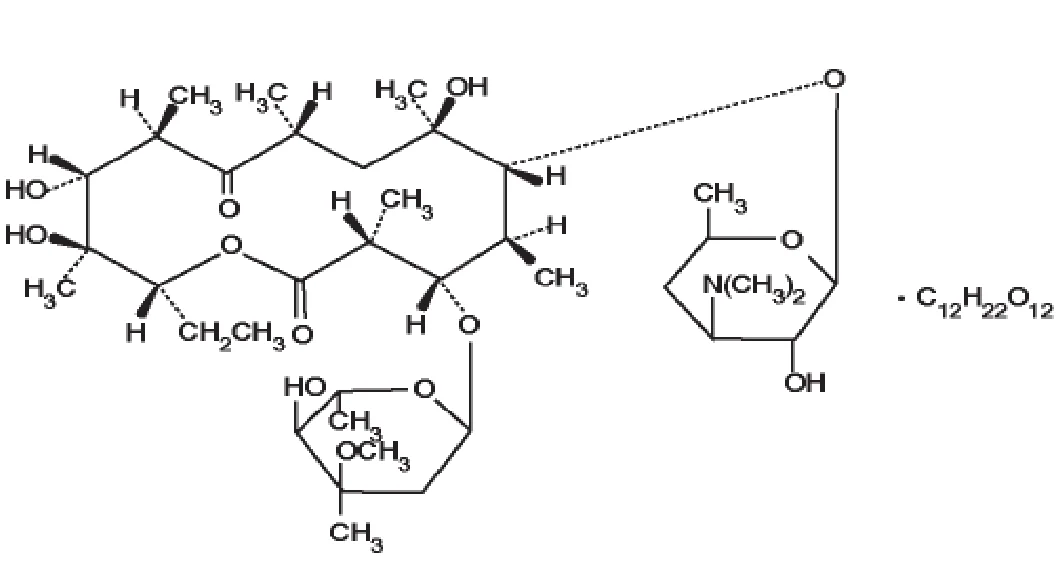
Erythromycin is produced by a strain of Streptomyces erythraeus and belongs to the macrolide group of antibiotics.
Proper name: Erythromycin Lactobionate
Chemical Name: erythromycin mono (4-O-beta-D- galactopyranosyl-D-glucinate)
Molecular formula and molecular mass: C37H67NO13•C12H22O12
1092.23
Structural formula:
Physicochemical properties:
It is basic and readily forms salts with acids. It occurs as white or slightly yellow, odourless or almost odourless, slightly hygroscopic crystals or powder with a bitter taste. It is freely soluble in methanol, ethanol, acetone and chloroform. It is soluble in water at 2 mg/mL. The melting point is 135 to 140°C. Erythromycin lactobionate is a white amorphous salt of erythromycin freely soluble in methanol and ethanol. It is soluble in water at 200 mg/mL.
15. MICROBIOLOGY
Many strains of Hemophilus influenzae are resistant to erythromycin alone.
Staphylococci resistant to erythromycin may emerge during a course of erythromycin therapy. Culture and sensitivity testing should be performed prior to and during therapy.
Erythromycin is usually bacteriostatic but may be bactericidal in high concentrations or against highly susceptible organisms. The bactericidal activity is greatest against a small number of rapidly dividing microorganisms and increases markedly as the pH of the medium is raised over the range of pH 5.5 to 8.5.
Biochemical tests demonstrate that erythromycin inhibits protein synthesis of the pathogen without directly affecting nucleic acid synthesis. Antagonism has been demonstrated between clindamycin, lincomycin and chloramphenicol and erythromycin.
16. NON-CLINICAL TOXICOLOGY
Susceptibility Testing
Disc Susceptibility Tests: Quantitative methods that require measurement of zone diameters give the most precise estimates of antibiotic susceptibility1,212. One recommended procedure uses erythromycin class discs for testing susceptibility; interpretations correlate zone diameters of this disc test with MIC values for erythromycin. With this procedure, a report from the laboratory of "susceptible" indicates that the infecting organism is likely to respond to therapy. A report of "resistant" indicates that the infecting organism is not likely to respond to therapy. A report of "intermediate susceptibility" suggests that the organism would be susceptible if higher doses were used.
NOTE: Many strains of Hemophilus influenzae are resistant to erythromycin alone, but are susceptible to erythromycin and sulfonamides together.
Staphylococci resistant to erythromycin may emerge during a course of erythromycin therapy. Culture and susceptibility testing should be performed.
The standard single disc susceptibility test (using the 15 μg erythromycin disc) and the dilution susceptibility test3should be interpreted according to the criteria in Table 4
Control limits for monitoring erythromycin susceptibility tests are given in Table 5.
Table 5 Control Limits for Monitoring Erythromycin Susceptibility Tests | ||
| Zone Diameter (mm) | MIC (mg/L) | |
| S. aureus ATCC 29213 | 22-30 | 0.12 - 0.5 |
| S. faecalis ATCC 29212 | 1.0 - 4.0 | |
1 Clinical and Laboratory Standards Institute. Methods for Dilution Antimicrobial Susceptibility Tests for Bacteria That Grow Aerobically; Approved Standard-9th Edition. Clinical and Laboratory Standards Institute document M07-A9. Clinical and Laboratory Standards Institute, 950 West Valley Road, Suite 2500, Wayne, Pennsylvania 19087-1898 USA, 2012.
2 Clinical and Laboratory Standards Institute. Performance Standards for Antimicrobial Disk Susceptibility Tests; Approved Standard-11th Edition. Clinical and Laboratory Standards Institute document M02-A11. Clinical and Laboratory Standards Institute, 950 West Valley Road, Suite 2500, Wayne, Pennsylvania 19087-1898 USA, 2012.
3 Clinical and Laboratory Standards Institute. Performance Standards for Antimicrobial Susceptibility Testing; 22nd Informational Supplement. CLSI document M100-S22. Clinical and Laboratory Standards Institute, 950 West Valley Road, Suite 2500, Wayne, Pennsylvania 19087-1898 USA, 2012.
Table 4 Criteria for Interpreting Standard Single Disc Susceptibility Test and The Dilution Susceptibility Test | ||
| Zone Diameter (mm) | Approximate MIC Correlate (mg/L) | |
| Susceptible | ≥ 23 | ≤ 0.5 |
| Intermediate* | 14-22 | 1-4 |
| Resistant | ≤ 13 | ≥ 8 |
* Indicates that the test results are equivocal; therefore, dilution tests may be indicated. N.B.: These criteria and the definition are in agreement with NCCLS Order Code M2A3. | ||