


Product Monograph - Clarithromycin (Ranbaxy Pharmaceuticals Canada)
SUMMARY PRODUCT INFORMATION
| Route of Administration | Dosage Form / Strength | All Non-medicinal Ingredients |
| oral | film-coated tablets / 250 mg & 500 mg | croscarmellose sodium, D&C yellow #10 aluminum lake, hydroxypropyl cellulose, hypromellose, magnesium stearate, microcrystalline cellulose, povidone, propylene glycol, purified talc, silica, colloidal anhydrous; stearic acid and titanium dioxide. |
INDICATIONS AND CLINICAL USE
RAN-CLARITHROMYCIN (clarithromycin tablets, USP) may be indicated in the treatment of mild to moderate infections caused by susceptible strains of the designated microorganisms in the diseases listed below:
Upper Respiratory Tract
Pharyngitis/tonsillitis, caused by Streptococcus pyogenes (Group A beta-hemolytic streptococci).
Acute maxillary sinusitis caused by Streptococcus pneumoniae (S. pneumoniae), Haemophilus influenzae (H. influenzae), and Moraxella (Branhamella) catarrhalis [M. (Branhamella) catarrhalis]
Lower Respiratory Tract
Acute bacterial exacerbation of chronic bronchitis caused by S. pneumoniae, H. influenzae (including beta-lactamase producing strains), M. (Branhamella) catarrhalis (including beta- lactamase producing strains).
Pneumonia caused by S. pneumoniae and Mycoplasma. pneumoniae (M. pneumoniae).
Uncomplicated Skin and Skin Structure Infections
Uncomplicated Skin and Skin Structure Infections caused by Streptococcus pyogenes (S. pyogenes), Staphylococcus aureus (S. aureus).
Mycobacterial Infections
RAN-CLARITHROMYCIN (clarithromycin tablets, USP) is indicated for the prevention of disseminated Mycobacterium avium complex (MAC) disease in patients with advanced HIV infection (see CLINICAL TRIALS, Mycobacterial Infections), and for the treatment of disseminated mycobacterial infections due to Mycobacterium avium (M. avium) and Mycobacterium intracellulare (M. intracellulare).
Eradication of Helicobacter pylori
RAN-CLARITHROMYCIN (clarithromycin tablets, USP) in the presence of acid suppression (with omeprazole) with another antibiotic (amoxicillin) is indicated for the eradication of Helicobacter pylori (H. pylori) that may result in decreased recurrence of duodenal ulcer in patients with active duodenal ulcers and who are H. pylori positive. See (CLINICAL TRIALS, Eradication of Helicobacter pylori, Triple Therapy: clarithromycin/omeprazole/amoxicillin) and (CLINICAL TRIALS, Eradication of Helicobacter pylori, Dual Therapy: clarithromycin/omeprazole).
(For additional information on the use of clarithromycin in triple therapy for the treatment of H. pylori infection and active duodenal ulcer recurrence, refer to the Hp-PAC® Product Monograph.)
| Pediatrics: | Not for use in children < 12 years of age. See DOSAGE AND ADMINISTRATION, For a brief discussion see WARNINGS AND PRECAUTIONS, Special Populations, Pediatrics. |
| Geriatrics (> 65 years of age): | Dosage adjustment should be considered in elderly patients with severe renal impairment. For a brief discussion see WARNINGS AND PRECAUTIONS, Special Populations, Geriatrics. |
CONTRAINDICATIONS
RAN-CLARITHROMYCIN (clarithromycin tablets, USP) is contraindicated in patients with a known hypersensitivity to clarithromycin, erythromycin, other macrolide antibacterial agents or to any ingredient in the formulation or component of the container. See (DOSAGE FORMS, COMPOSITION AND PACKAGING).
Clarithromycin is contraindicated in patients with a history of cholestatic jaundice/hepatic dysfunction associated with prior use of clarithromycin.
Clarithromycin is contraindicated in patients with history of QT prolongation or ventricular cardiac arrhythmia, including torsades de pointes. See (WARNINGS AND PRECAUTIONS) and (DRUG INTERACTIONS, Drug-Drug Interactions).
Clarithromycin is contraindicated as concurrent therapy with astemizole, terfenadine, cisapride, pimozide. There have been post-marketing reports of drug interactions when clarithromycin and/or erythromycin are co-administered with astemizole, terfenadine, cisapride or pimozide resulting in cardiac arrhythmias (QT prolongation, ventricular tachycardia, ventricular fibrillation, and torsades de pointes) most likely due to inhibition of hepatic metabolism of these drugs by erythromycin and clarithromycin. Fatalities have been reported. See (DRUG INTERACTIONS, Drug-Drug Interactions, Table 11).
Clarithromycin is contraindicated with HMG-CoA reductase inhibitors (statins) that are extensively metabolized by CYP3A4 (lovastatin or simvastatin), due to an increased risk of myopathy, including rhabdomyolysis. See (DRUG INTERACTIONS, Drug-Drug Interactions, Table 11).
Clarithromycin is contraindicated as concurrent therapy with ergotamine or dihydroergotamine as may result in ergot toxicity. See (DRUG INTERACTIONS, Drug-Drug Interactions, Table 11).
Clarithromycin is contraindicated as concurrent therapy with colchicine in patients with renal or hepatic impairment due to the risk of life threatening and fatal colchicine toxicity. This risk may be further increased with concomitant medications metabolized by P-glycoprotein or strong CYP3A inhibitors. See (WARNINGS AND PRECAUTIONS, Colchicine) and (DRUG
INTERACTIONS, Drug-Drug Interactions, Table 11).
WARNINGS AND PRECAUTIONS
Serious Warnings and Precautions
|
General
Clarithromycin should be administered with caution to any patient who has demonstrated some form of drug allergy, particularly to structurally related-drugs. If an allergic reaction to clarithromycin occurs, administration of the drug should be discontinued. Serious hypersensitivity reactions may require epinephrine, antihistamines, or corticosteroids. See (WARNINGS AND PRECAUTIONS, Immune, Hypersensitivity).
Long-term use may, as with other antibiotics, result in colonization with increased numbers of non-susceptible bacteria and fungi. If superinfections occur, appropriate therapy should be instituted.
Patients Infected with Human Immunodeficiency Virus
Several studies of Human Immunodeficiency Virus (HIV)-positive patients receiving clarithromycin for treatment of MAC infection have shown poorer survival in those patients randomized to receive doses higher than 500 mg twice daily. The explanation for the poorer survival associated with doses higher than 500 mg twice daily has not been determined.
Treatment or prophylaxis of MAC infection with clarithromycin should not exceed the approved dose of 500 mg twice daily.
Myasthenia Gravis
Exacerbation of symptoms of myasthenia gravis and new onset of symptoms of myasthenic syndrome has been reported in patients receiving clarithromycin therapy.
Use of Clarithromycin with Other Drugs
Use of clarithromycin with other drugs may lead to drug-drug interactions.
Colchicine
Life-threatening and fatal drug interactions have been reported in patients treated with clarithromycin and colchicine. Clarithromycin is a strong CYP3A4 inhibitor and this interaction may occur while using both drugs at their recommended doses. If co-administration of clarithromycin and colchicine is necessary in patients with normal renal and hepatic function, the dose of colchicine should be reduced. Patients should be monitored for clinical symptoms of colchicine toxicity. See (CONTRAINDICATIONS).
There have been post-marketing reports of colchicine toxicity with concurrent use of clarithromycin and colchicine. In patients with impaired renal and/or hepatic function and/or who are elderly, colchicine and clarithromycin should not be used concurrently due to the risk of colchicine toxicity. Deaths have been reported in some patients. See (DRUG INTERACTIONS, Drug-Drug Interactions, Table 11) and (ADVERSE REACTIONS, Post-Market Adverse Drug Reactions, Colchicine).
Oral Hypoglycemic Agents/Insulin
The concomitant use of clarithromycin and oral hypoglycaemic agents and/or insulin can result in significant hypoglycaemia. With certain hypoglycaemic drugs such as nateglinide, pioglitazone, repaglinide and rosiglitazone, inhibition of CYP3A enzyme by clarithromycin may be involved and could cause hypoglycaemia when used concomitantly. Careful monitoring of glucose is recommended. See (DRUG INTERACTIONS, Drug-Drug Interactions, Table 11).
Oral Anticoagulants
There is a risk of serious hemorrhage and significant elevations in International Normalized Ratio (INR) and prothrombin time when clarithromycin is co-administered with warfarin. INR and prothrombin times should be frequently monitored while patients are receiving clarithromycin and oral anticoagulants concurrently. See (DRUG INTERACTIONS, Drug- Drug Interactions, Table 11).
HMG-CoA Reductase Inhibitors
Concomitant use of clarithromycin with lovastatin or simvastatin is contraindicated. See (CONTRAINDICATIONS) as these statins are extensively metabolized by CYP3A4 and concomitant treatment with clarithromycin increases their plasma concentration, which increases the risk of myopathy, including rhabdomyolysis. Reports of rhabdomyolysis have been received for patients taking clarithromycin concomitantly with these statins. If treatment with clarithromycin cannot be avoided, therapy with lovastatin or simvastatin must be suspended during the course of treatment.
Caution should be exercised when prescribing clarithromycin with statins. In situations where the concomitant use of clarithromycin with atorvastatin or pravastatin cannot be avoided, atorvastatin dose should not exceed 20 mg daily and pravastatin dose should not exceed 40 mg daily. Use of a statin that is not dependent on CYP3A metabolism (e.g., fluvastatin) can be considered. It is recommended to prescribe the lowest registered dose of statin if concomitant use cannot be avoided. See (DRUG INTERACTIONS, Drug-Drug Interactions, Table 11).
Triazolobenzodiazepines and Related Benzodiazepines
Caution is advised regarding the concomitant administration of clarithromycin with triazolobenzodiazepines (such as triazolam and alprazolam), or with other benzodiazepines (such as midazolam) due to the serious risk of central nervous system (CNS) effects (e.g., somnolence and confusion). See (DRUG INTERACTIONS, Drug-Drug Interactions, Table 11).
Calcium Channel Blockers
Caution is advised regarding the concomitant administration of clarithromycin and calcium channel blockers metabolized by CYP3A4 (e.g., verapamil, amlodipine, diltiazem) due to the risk of hypotension. See (DRUG INTERACTIONS, Drug-Drug Interactions, Table 11).
Hypotension, bradyarrhythmias, and lactic acidosis have been observed in patients receiving concurrent verapamil, belonging to the calcium channel blockers drug class. See (DRUG INTERACTIONS, Drug-Drug Interactions, Table 11).
Other Drugs
For other established or potential drug-drug interactions and their mechanisms, see
(CONTRAINDICATIONS) and (DRUG INTERACTIONS, Drug-Drug Interactions).
Carcinogenesis and Mutagenesis
Long-term studies in animals have not been performed to evaluate the carcinogenic potential of clarithromycin.
The following in vitro mutagenicity tests have been conducted with clarithromycin: Salmonella/mammalian microsome test, bacterial induced mutation frequency test, in vitro chromosome aberration test, rat hepatocyte DNA synthesis assay, mouse lymphoma assay, mouse dominant lethal study, mouse micronucleus test. All tests had negative results except the in vitro chromosome aberration test which was weakly positive in one test and negative in another. In addition, a Bacterial Reverse-Mutation Test (Ames Test) has been performed on clarithromycin metabolites with negative results.
Cardiovascular
Clarithromycin should be used with caution in patients with a medical condition associated with a potential risk of QT prolongation and torsades de pointes. See (CONTRAINDICATIONS) and (DRUG INTERACTIONS, Drug-Drug Interactions).
Gastrointestinal
Clostridium difficile-Associated Disease
Clostridium difficile-associated disease (CDAD) has been reported with use of many antibacterial agents, including clarithromycin. CDAD may range in severity from mild diarrhea to fatal colitis. It is important to consider this diagnosis in patients who present with diarrhea, or symptoms of colitis, pseudomembranous colitis, toxic megacolon, or perforation of colon subsequent to the administration of any antibacterial agent. CDAD has been reported to occur over 2 months after the administration of antibacterial agents.
Treatment with antibacterial agents may alter the normal flora of the colon and may permit overgrowth of Clostridium difficile. Clostridium difficile produces toxins A and B, which contribute to the development of CDAD. CDAD may cause significant morbidity and mortality. CDAD can be refractory to antimicrobial therapy.
If the diagnosis of CDAD is suspected or confirmed, appropriate therapeutic measures should be initiated. Mild cases of CDAD usually respond to discontinuation of antibacterial agents not directed against Clostridium difficile. In moderate to severe cases, consideration should be given to management with fluids and electrolytes, protein supplementation, and treatment with an antibacterial drug clinically effective against Clostridium difficile. Surgical evaluation should be instituted as clinically indicated, as surgical intervention may be required in certain severe cases. See (ADVERSE REACTIONS).
Hepatic/Biliary/Pancreatic
Clarithromycin is principally excreted by the liver and kidney. In patients with both hepatic and renal impairments or in the presence of severe renal impairment, decreased dosage of clarithromycin or prolonged dosing intervals might be appropriate. See (DOSAGE AND ADMINISTRATION, Recommended Dose and Dosage Adjustment).
Hepatic dysfunction, including increased liver enzymes, and hepatocellular and/or cholestatic hepatitis, with or without jaundice, has been reported with clarithromycin. This hepatic dysfunction may be severe and is usually reversible. In some instances, hepatic failure with fatal outcomes has been reported and generally has been associated with serious underlying diseases and/or concomitant medications. Discontinue clarithromycin immediately if signs and symptoms of hepatitis occur, such as anorexia, jaundice, dark urine, pruritus, or tender abdomen.
Immune
Hypersensitivity Reactions
Severe acute hypersensitivity reactions, such as anaphylaxis, Stevens - Johnson syndrome, toxic epidermal necrolysis, DRESS, and Henoch-Schonlein purpura have been reported. In the event of severe acute hypersensitivity reactions, clarithromycin therapy should be discontinued immediately and appropriate treatment should be urgently initiated.
Renal
Caution is advised in patients with severe renal insufficiency.
Clarithromycin is principally excreted by the liver and kidney. In patients with both hepatic and renal impairments or in the presence of severe renal impairment, decreased dosage of clarithromycin or prolonged dosing intervals might be appropriate. See (DOSAGE AND ADMINISTRATION, Recommended Dose and Dosage Adjustment).
For the eradication of H. pylori, amoxicillin and clarithromycin should not be administered to patients with renal impairment since the appropriate dosage in this patient population has not yet been established.
Sensitivity/Resistance
The development of resistance (11 out of 19 breakthrough isolates in 1 study) has been seen in HIV positive patients receiving clarithromycin for prophylaxis and treatment of MAC infection.
In view of the emerging resistance of Streptococcus pneumoniae, Staphylococcus aureus and Streptococcus pyogenes to macrolides, it is important that sensitivity testing be performed when prescribing clarithromycin for community-acquired pneumonia and uncomplicated skin and skin structure infections.
To avoid failure of the eradication treatment with a potential for developing antimicrobial resistance and a risk of failure with subsequent therapy, patients should be instructed to follow closely the prescribed regimen.
Antibiotic Resistance in Relation to Helicobacter pylori Eradication
Use of any antimicrobial therapy, such as clarithromycin, to treat H. pylori infection may select for drug-resistant organisms.
Triple and Dual Therapy with Omeprazole
Among the 113 triple therapy recipients with pretreatment H. pylori isolates susceptible to clarithromycin, 2/102 patients (2%) developed resistance after treatment with omeprazole, clarithromycin, and amoxicillin. Among patients who received triple therapy, 6/108 (5.6%) patients had pretreatment H. pylori isolates resistant to clarithromycin. Of these 6 patients, 3 (50%) had H. pylori eradicated at follow-up, and 3 (50%) remained positive after treatment. In 5/113 (4.4%) patients, no susceptibility data for clarithromycin pretreatment were available. Twenty-six of 104 patients (25%) with pretreatment isolates susceptible to clarithromycin developed resistance after treatment with omeprazole and clarithromycin. Development of clarithromycin resistance should be considered as a possible risk especially when less efficient treatment regimens are used.
Special Populations
Pregnant Women
There are no adequate and well-controlled studies in pregnant women. The benefits against risk, particularly during the first 3 months of pregnancy should be carefully weighed by a physician. See (WARNINGS AND PRECAUTIONS, Serious Warnings and Precautions).
Four teratogenicity studies in rats (3 with oral doses and 1 with intravenous doses up to 160 mg/kg/day administered during the period of major organogenesis) and 2 in rabbits (at oral doses up to 125 mg/kg/day or intravenous doses of 30 mg/kg/day administered during gestation days 6 to 18) failed to demonstrate any teratogenicity from clarithromycin. Two additional oral studies in a different rat strain at similar doses and similar conditions demonstrated a low incidence of cardiovascular anomalies at doses of 150 mg/kg/day administered during gestation days 6 to 15. Plasma levels after 150 mg/kg/day were 2 times the human serum levels.
Four studies in mice revealed a variable incidence of cleft palate following oral doses of 1000 mg/kg/day during gestation days 6 to 15. Cleft palate was also seen at 500 mg/kg/day. The 1000 mg/kg/day exposure resulted in plasma levels 17 times the human serum levels. In monkeys, an oral dose of 70 mg/kg/day produced fetal growth retardation at plasma levels that were 2 times the human serum levels.
Embryonic loss has been seen in monkeys and rabbits. See (TOXICOLOGY, Reproduction and Teratology).
Nursing Women
The safety of clarithromycin for use during breast-feeding of infants has not been established. Clarithromycin is excreted in human milk.
Preweaned rats, exposed indirectly via consumption of milk from dams treated with 150 mg/kg/day for 3 weeks, were not adversely affected, despite data indicating higher drug levels in milk than in plasma.
Pediatrics (≥ 12 years of age): Not for use in children less than 12 years of age.
Use of clarithromycin tablets in children under 12 years of age has not been studied.
Neonatal and juvenile animals tolerated clarithromycin in a manner similar to adult animals. Young animals were slightly more intolerant to acute overdosage and to subtle reductions in erythrocytes, platelets and leukocytes, but were less sensitive to toxicity in the liver, kidney, thymus and genitalia.
Increased valproate and phenobarbital concentrations and extreme sedation were noted in a 3-year old patient coincident with clarithromycin therapy. Cause and effect relationship cannot be established. However, monitoring of valproate and phenobarbital concentrations may be considered.
Geriatrics (> 65 years of age)
Dosage adjustment should be considered in elderly patients with severe renal impairment. In a steady-state study in which healthy elderly subjects (age 65 to 81 years old) were given 500 mg every 12 hours, the maximum concentrations of clarithromycin and 14-OH-clarithromycin were increased. The AUC was also increased. These changes in pharmacokinetics parallel known age-related decreases in renal function. In clinical trials, elderly patients did not have an increased incidence of adverse events when compared to younger patients.
ADVERSE REACTIONS
Adverse Drug Reaction Overview
The majority of side effects observed in clinical trials involving 3563 patients treated with clarithromycin were of a mild and transient nature. Fewer than 3% of adult patients without mycobacterial infections discontinued therapy because of drug-related side-effects. The most common drug-related adverse reactions in adults taking clarithromycin were nausea, diarrhea, abdominal pain, dyspepsia, headache, taste perversion and vomiting.
Clinical Trial Adverse Drug Reactions
Because clinical trials are conducted under very specific conditions, the adverse reaction rates observed in the clinical trials may not reflect the rates observed in practice and should not be compared to the rates in the clinical trials of another drug. Adverse drug reaction information from clinical trials is useful for identifying drug-related adverse events and for approximating rates.
Patients with Respiratory Tract or Skin Infections
Table 1 provides a listing of adverse reactions from clinical trials or post-marketing surveillance as well as adverse events reported during post-marketing surveillance. Adverse events reported during post-marketing surveillance may include patients treated for various infections and are not limited to patients with respiratory tract or skin infections.
Table 1 Adverse Events/Adverse Drug Reactions in Patients with Respiratory Tract or Skin Infections or Other Infections Treated with Clarithromycin | |
| System Organ Class | Adverse Reaction/Adverse Event |
| General disorders and administration site conditions | Asthenia Pain Chest pain |
| Infections and infestations | Infection Colitis pseudomembranous Candidiasis Rhinitis Pharyngitis Vaginal candidiasis Vaginal infection |
| Musculoskeletal and connective tissue disorders | Back pain Myalgia |
| Investigations | Increased liver enzymes |
| Cardiac disorders* | Electrocardiogram QT prolonged Ventricular tachycardia Torsades de pointes |
| Gastrointestinal disorders | Constipation Flatulence Dry mouth Glossitis Stomatitis Gastrointestinal disorder Tongue discolouration Tooth discolouration Pancreatitis |
| Metabolism and nutrition disorders | Anorexia Hypoglycemia** |
| Hepatobiliary disorders | Hepatomegaly Hepatic function abnormal Hepatitis Hepatitis cholestatic Jaundice (cholestatic and hepatocellular) Hepatic failure *** |
| Nervous system disorders | Dizziness Somnolence Convulsion Parosmia Dysgeusia Ageusia |
| Ear and labyrinth disorders | Vertigo Tinnitus Ear disorder Deafness**** |
| Psychiatric disorders | Nervousness Anxiety Insomnia Nightmare Depression Confusional state Disorientation Depersonalisation Hallucination Psychotic disorder |
| Respiratory, thoracic and mediastinal disorders | Cough Dyspnea Asthma |
| Skin and subcutaneous tissue disorders | Pruritus Rash Hyperhidrosis Urticaria Stevens-Johnson syndrome Toxic epidermal necrosis |
| Immune system disorders | Anaphylactic reaction Myasthenia gravis |
| Eye disorders | Visual disturbance Conjunctivitis |
| Renal and urinary disorders | Hematuria Nephritis interstitial |
| Reproductive system and breast disorders | Dysmenorrhea |
| Blood and lymphatic system disorders | Eosinophilia Anemia Leukopenia Thrombocythemia Thrombocytopenia |
* As with other macrolides, QT prolongation, ventricular tachycardia, and torsades de pointes have been reported with clarithromycin. ** There have been reports of hypoglycemia, some of which have occurred in patients on concomitant oral hypoglycemic agents or insulin. *** Hepatic dysfunction may be severe and is usually reversible. Hepatic failure with fatal outcome has been reported and generally has been associated with serious underlying diseases and/or concomitant medications. **** There have been reports of hearing loss with clarithromycin which is usually reversible upon withdrawal of therapy. | |
In studies of adults with pneumonia comparing clarithromycin to erythromycin base or erythromycin stearate, there were significantly fewer adverse events involving the digestive system in patients treated with clarithromycin.
Abnormal Laboratory Values
Changes in laboratory values with possible clinical significance reported during clinical studies or during post-marketing surveillance are displayed in Table 2.
Table 2 Abnormal Hematologic and Clinical Chemistry Findings in Patients with Respiratory Tract or Skin Infections Treated with Clarithromycin | ||
| System Organ Class | Laboratory Values | Frequency |
| Investigations | Alanine aminotransferase increased Aspartate aminotransferase increased Gamma-glutamyltransferase increased Blood alkaline phosphatase increased Blood lactate dehydrogenase increased Blood bilirubin increased Blood creatinine increased White blood cell count decreased | Uncommon (Less than 1%) |
Prothrombin time prolonged Blood urea increased | 1% 4% | |
Patients with Mycobacterial Infections
In patients with acquired immune deficiency syndrome (AIDS) and other immunocompromised patients treated with the higher doses of clarithromycin over long periods of time for prevention or treatment of mycobacterial infections, it was often difficult to distinguish adverse events possibly associated with clarithromycin administration from underlying signs of HIV disease or intercurrent illness.
Prophylaxis
Discontinuation due to adverse events was required in 18% of AIDS patients receiving clarithromycin 500 mg twice daily, compared to 17% of patients receiving placebo in a randomized, double-blind study. Primary reasons for discontinuation in the clarithromycin-treated patients include headache, nausea, vomiting, depression and taste perversion. The most frequently reported adverse events with an incidence of 2% or greater, excluding those due to the patient's concurrent condition, are listed in Table 3. Among these events, taste perversion was the only event that had significantly higher incidence in the clarithromycin-treated compared to the placebo-treated group.
Table 3 Percentage of Adverse Events* in Immunocompromised Adult Patients Receiving Prophylaxis Against M. avium Complex | |||
| System Organ Class‡ | Adverse Reaction | Clarithromycin (n=339) % | Placebo (n = 339) % |
| Gastrointestinal disorders | Abdominal pain | 5.0% | 3.5% |
| Nausea | 11.2% | 7.1% | |
| Diarrhea | 7.7% | 4.1% | |
| Vomiting | 5.9% | 3.2% | |
| Dyspepsia | 3.8% | 2.7% | |
| Flatulence | 2.4% | 0.9% | |
| Nervous system disorders | Dysgeusia | 8.0% | 0.3% |
| Headache | 2.7% | 0.9% | |
| Skin and subcutaneous tissue disorders | Rash | 3.2% | 3.5% |
* Includes those events possibly or probably related to study drug and excludes concurrent conditions. ‡ ≥ 2% Adverse Event Incidence Rates for either treatment group. | |||
Abnormal Laboratory Values
In immunocompromised patients receiving prophylaxis against M. avium, those laboratory values outside the extreme high or low limit for the specified test were analyzed (Table 4).
Table 4 Percentage of Patients* Exceeding Extreme Laboratory Value in Immunocompromised Patients Receiving Prophylaxis Against M. avium Complex | |||||
System Organ Class | Laboratory Values | Clarithromycin 500 mg b.i.d. | Placebo | ||
| Investigations | Hemoglobin decreased < 8 g/dL | 4/118 | 3% | 5/103 | 5% |
Platelet count decreased < 50 × 109/L | 11/249 | 4% | 12/250 | 5% | |
White blood cell count decreased < 1 × 10⁹/L | 2/103 | 4% | 0/95 | 0% | |
Aspartate aminotransferase increased > 5 × ULN | 7/196 | 4% | 5/208 | 2% | |
Alanine aminotransferase increased > 5 × ULN | 6/217 | 3% | 4/232 | 2% | |
Blood alkaline phosphatase increased > 5 × ULN | 5/220 | 2% | 5/218 | 2% | |
* Includes only patients with baseline values within the normal range or borderline high (hematology variables) and within the normal range or borderline low (chemistry variables). Legend: b.i.d. = twice daily; ULN = Upper Limit of Normal | |||||
Treatment of Patients with Mycobacterial Infections
Excluding those patients who discontinued therapy due to complications of their underlying non-mycobacterial diseases (including death), approximately 14% of the patients discontinued therapy due to drug-related adverse events.
In adult patients, the most frequently reported adverse events with an incidence of 3% or greater, excluding those due to the patient's concurrent condition, are listed in Table 5 by the total daily dose the patient was receiving at the time of the event. A total of 867 patients were treated with clarithromycin for mycobacterial infections. Of these, 43% reported one or more adverse events. Most of these events were described as mild to moderate in severity, although 14% were described as severe.
Incidence of adverse events was higher in patients taking 4000 mg total daily doses compared to lower doses (Table 5).
Table 5 Percentage of Adverse Events* in Immunocompromised Adult Patients Treated with Clarithromycin for Mycobacterial Infections | ||||
| Presented by Total Daily Dose at Time of the Event | ||||
| System Organ Class | Adverse Reaction | 1000 mg (n=463) | 2000 mg (n=516) | 4000 mg (n=87) |
| Gastrointestinal disorders | Nausea | 11% | 16% | 40% |
| Vomiting | 7% | 9% | 24% | |
| Abdominal Pain | 5% | 7% | 20% | |
| Diarrhea | 4% | 6% | 17% | |
| Flatulence | 1% | 2% | 7% | |
| Constipation | 1% | < 1% | 5% | |
| Dry Mouth | < 1% | 0% | 5% | |
| Nervous system disorders | Dysgeusia | 6% | 7% | 29% |
| Headache | 2% | 2% | 7% | |
Skin and subcutaneous tissue disorders | Rash | 4% | 3% | 2% |
| Investigations | Aspartate aminotransferase increased | 2% | 2% | 11% |
Alanine aminotransferase increased | 1% | 1% | 9% | |
Respiratory, thoracic and mediastinal disorders | Dyspnea | < 1% | < 1% | 7% |
| Psychiatric disorders | Insomnia | < 1% | < 1% | 6% |
| Ear and labyrinth disorders | Hearing impaired** | 3% | 2% | 5% |
* Related adverse events considered to be definitely, probably, possibly or remotely related to study events. ** Sum of patients with deafness, ear disorder, partial transitory deafness, and/or tinnitus. n = Number of adverse events. | ||||
Abnormal Laboratory Values
In immunocompromised patients treated with clarithromycin for mycobacterial infections, evaluations of laboratory values were made by analysing those values outside the seriously abnormal level (i.e., the extreme high or low limit) for the specified test (Table 6).
Table 6 Percentage of Immunocompromised Adult Patients Treated with Clarithromycin for Mycobacterial Infections who had On-Treatment Laboratory Values that Were Outside the Seriously Abnormal Level | |||||
| Presented by Total Daily Dose | |||||
| System Organ Class | Laboratory Values | Seriously Abnormal Level | 1000 mg | 2000 mg | 4000 mg |
| Investigations | Aspartate aminotransferase increased | > 5 × ULN | 3% | 2% | 4% |
Alanine aminotransferase increased | > 5 × ULN | 2% | 2% | 7% | |
| Platelet count decreased | < 50 × 109/L | 2% | 2% | 4% | |
White blood cell count decreased | < 1 × 10⁹/L | 0% | 2% | 0% | |
| Blood urea increased | > 50 mg/dL | < 1% | < 1% | 4% | |
| Legend: ULN = Upper Limit of Normal. | |||||
Patients with Helicobacter pylori Infection
Triple Therapy: clarithromycin/omeprazole/amoxicillin
A summary of drug-related adverse event incidence rates is presented in Table 7.
Table 7 Summary of Drug-Related Adverse Event Incidence Rates by System Organ Class | ||
| System Organ Class | Patients With Drug-Related Adverse Events (% of Patients Treated)* | |
Omeprazole + Clarithromycin + Amoxicillin (n=137) | Omeprazole + Clarithromycin (n=130) | |
| Gastrointestinal disorders | 24 (18%) | 21 (16%) |
| General disorders and administration site conditions | 5 (4%) | 0 (0%) |
| Nervous system disorders | 15 (11%) | 30 (23%) |
| Cardiac disorders | 0 (0%) | 1 (1%) |
| Investigations | 9 (7%) | 0 (0%) |
| Infections and infestations | 1 (1%) | 1(1%) |
| Hepatobiliary disorders | 2(1%) | 0 (0%) |
| Psychiatric disorders | 1(1%) | 1(1%) |
| Ear and labyrinth disorders | 1(1%) | 2 (2%) |
| Respiratory, thoracic and mediastinal disorders | 1(1%) | 0 (0%) |
| Skin and subcutaneous tissue disorders | 3 (2%) | 1 (1%) |
| Eye disorders | 0 (0%) | 1 (1%) |
| Reproductive system and breast disorders | 1 (1%) | 0 (0%) |
* Patients with more than 1 event within a system organ class are counted only once in the total for that system organ class Note: There is a statistical difference (Fisher’s exact two-sided, p-value = 0.009) between omeprazole + clarithromycin + amoxicillin (11%) versus omeprazole + clarithromycin (23%) in regard to nervous system disorders. | ||
Dual Therapy: clarithromycin/omeprazole
Of 346 patients, 156 (45%) reported at least 1 adverse event. Adverse events associated with the Gastrointestinal disorders, Nervous system disorders, and Infections and infestations system organ class (SOC) were the most commonly reported adverse events among clarithromycin/omeprazole-treated patients. One hundred and two patients (29%) reported gastrointestinal disorder events. The most common adverse events reported in the Gastrointestinal disorder SOC were nausea (5%) diarrhea (4%), vomiting (3%), and abdominal pain (3%). Eighty-three patients (24%) reported adverse events in the Nervous system disorders SOC. Dysgeusia (15%), headache (5%), and dizziness (2%) were the most frequently reported events in the Nervous system disorders SOC. Twenty-nine patients (8%) reported adverse events in the Infections and infestations SOC. Infection (3%) was the most frequently reported adverse event in the Infections and infestations SOC.
Adverse events by system organ class for all patients treated with clarithromycin and omeprazole are presented in Table 8.
Table 8 Summary of Adverse Event Incidence by System Organ Class all Patients Treated with Clarithromycin/Omeprazole | ||||
| System Organ Class* | Number (%) of Patients (N=346) | |||
| Infections and infestations | 29 (8%) | |||
Neoplasma benign, malignant and unspecified | 2 (< 1%) | |||
| Metabolism and nutrition disorders | 1 (< 1%) | |||
| Psychiatric disorders | 12 (3%) | |||
| Nervous system disorders | 83 (24%) | |||
| Eye disorders | 2 (< 1%) | |||
| Ear and labyrinth disorders | 1 (< 1%) | |||
| Cardiac disorders | 6 (2%) | |||
| Vascular disorders | 1 (< 1%) | |||
Respiratory, thoracic and mediastinal disorders | 5 (1%) | |||
| Gastrointestinal disorders | 102 (29%) | |||
| Hepatobiliary disorders | 1 (< 1%) | |||
| Skin and subcutaneous tissue disorders | 11 (3%) | |||
Musculoskeletal and connective tissue disorders | 12 (3%) | |||
| Renal and urinary disorders | 2 (< 1%) | |||
General disorders and administration site conditions | 24 (7%) | |||
| Investigations | 8 (2%) | |||
Injury, poisoning and procedural complications | 3 (1%) | |||
| TOTAL** | 156 (45%) | |||
* Patients with more than one event within a system organ class are counted only once in the total for that system organ class. ** Patients with event in more than one system organ class are counted only once in the total. | ||||
The most commonly reported adverse events for the 346 patients who received clarithromycin and omeprazole were: taste perversion (15%), nausea (5%), headache (5%), diarrhea (4%), vomiting (3%), abdominal pain (3%), and infection (3%).
Table 9 presents adverse events reported by 1% or more of clarithromycin/omeprazole-treated patients.
Table 9 Rank-Order of Adverse Events for Patients who Received Clarithromycin and Omeprazole | ||
| System Organ Class | Adverse Event* | Number (%) of Patients |
| Nervous system disorders | Dysgeusia | 53 (15%) |
| Headache | 16 (5%) | |
| Dizziness | 7 (2%) | |
| Gastrointestinal disorders | Nausea. | 18 (5%) |
| Diarrhea | 15 (4%) | |
| Vomiting | 12 (3%) | |
| Abdominal Pain | 11 (3%) | |
| Tongue Discoloration | 8 (2%) | |
| Constipation | 5 (1%) | |
| Dry Mouth | 4 (1%) | |
| Infections and infestations | Infection | 9 (3%) |
| Rhinitis | 7 (2%) | |
| Pharyngitis | 5 (1%) | |
| General disorders and administration site conditions | Pain | 6 (2%) |
| Asthenia | 4 (1%) | |
| Chills | 4 (1%) | |
| Influenza | 4 (1%) | |
| Musculoskeletal and connective tissue disorders | Back Pain | 5 (1%) |
| Skin and subcutaneous tissue disorders | Rash | 4 (1%) |
| * Events reported in at least 1% of the clarithromycin/omeprazole population. | ||
Twelve (4%) of the clarithromycin/omeprazole-treated patients prematurely discontinued from study drug therapy due to adverse events. The most frequently reported adverse events leading to withdrawal included taste perversion, nausea, and headache. Three patients treated with clarithromycin and omeprazole died during follow-up periods; none of the deaths were considered by the investigator to be related to study drug administration.
Few laboratory abnormalities were observed among clarithromycin/omeprazole-treated patients.
The incidence of possibly clinically significant hematology and serum chemistry variables was < 1% for any variable evaluated.
Less Common Clinical Trial Adverse Drug Reactions (<1%) for Clarithromycin
The following adverse drug reactions are applicable to all indications approved for this formulation.
Blood and Lymphatic System Disorders: | eosinophilia and neutropenia |
| Gastrointestinal Disorders: | abdominal distension |
General Disorders and Administration Site Conditions: | chest pain, chills, fatigue and malaise |
| Hepatobiliary Disorders: | cholestasis, gamma-glutamyltransferase increased and hepatitis |
| Investigations: | blood alkaline phosphatase increased and blood lactate dehydrogenase increased |
Other adverse reactions have been observed in different patient populations and during post-marketing surveillance. See ADVERSE REACTIONS, Clinical Trial Adverse Drug Reactions, Table 1.
Post-Market Adverse Drug Reactions
The following list of adverse events is a compilation of adverse reactions from Post-marketing Surveillance and Post-marketing Clinical Studies for all clarithromycin formulations.
Table 10 Post-Market Adverse Drug Reactions | |
| System Organ Class | Adverse Event |
| Blood and lymphatic system disorders | Leukopenia |
| Thrombocytopenia | |
| Agranulocytosis | |
| Cardiac disorders1 | Atrial fibrillation |
| Cardiac arrest | |
| Extrasystoles | |
| Electrocardiogram QT prolonged | |
| Ventricular tachycardia | |
| Torsades de pointes | |
| Palpitations | |
| Gastrointestinal disorders | Abdominal pain |
| Constipation | |
| Dyspepsia | |
| Dry mouth | |
| Eructation | |
| Esophagitis | |
| Flatulence | |
| Vomiting | |
| Glossitis | |
| Gastritis | |
| Stomatitis | |
| Tongue discolouration | |
| Tooth discolouration | |
| Pancreatitis | |
| General disorders and administration site conditions | Asthenia |
| Infections and infestations | Candidiasis |
| Cellulitis | |
| Pseudomembranous colitis | |
| Vaginal infection | |
| Hepatobiliary disorders | Hepatitis |
| Hepatitis cholestatic | |
| Hepatic failure2 | |
| Jaundice (cholestatic and hepatocellular) | |
| Investigations | Albumin globulin ratio abnormal |
| Alanine aminotransferase increased | |
| Aspartate aminotransferase increased | |
| Liver function test abnormal | |
| Increased liver enzymes | |
| Blood creatinine increased | |
| Blood urea increased | |
| International normalized ration (INR) increased6 | |
| Prothrombin time prolonged6 | |
| Urine color abnormal7 | |
| Metabolism and nutrition disorders | Hypoglycemia3 |
| Anorexia | |
| Decreased appetite | |
| Musculoskeletal and connective tissue disorders | Myalgia |
| Myopathy | |
| Rhabdomyolysis4 | |
| Musculoskeletal stiffness | |
| Nervous system disorders | Dizziness |
| Tremor | |
| Alteration of sense of smell | |
| Convulsions | |
| Ageusia | |
| Anosmia | |
| Loss of consciousness | |
| Parosmia | |
| Somnolence | |
| Dysgeusia | |
| Dyskinesia | |
| Headache | |
| Paraesthesia | |
| Psychiatric disorders | Anxiety |
| Insomnia | |
| Bad dreams | |
| Confusion | |
| Disorientation | |
| Hallucination | |
| Psychosis | |
| Depersonalization | |
| Depression | |
| Respiratory, thoracic and mediastinal disorders | Asthma |
| Pulmonary embolism | |
| Skin and subcutaneous tissue disorders | Acne |
| Dermatitis bullous | |
| Pruritus | |
| Hyperhidrosis | |
| Urticaria | |
| Rash | |
| Stevens Johnson syndrome | |
| Toxic epidermal necrosis | |
| Drug rash with eosinophilia and systemic symptoms (DRESS) | |
| Henoch-Schonlein purpura | |
| Immune system disorders | Anaphylaxis |
| Anaphylactic reaction | |
| Anaphylactoid reaction | |
| Hypersensitivity | |
| Myasthenia gravis | |
| Ear and labyrinth disorders | Tinnitus |
| Hearing loss5 | |
| Deafness | |
| Hearing impaired | |
| Vertigo | |
| Renal and urinary disorders | Interstitial nephritis |
| Renal failure | |
| Vascular disorders | Hemorrhage6 |
| Vasodilation | |
5 There have been reports of hearing loss with clarithromycin which is usually reversible upon withdrawal of therapy
7 Symptom of hepatic failure. | |
Colchicine
There have been post-marketing reports of colchicine toxicity with concomitant use of clarithromycin and colchicine, especially in the elderly, some of which occurred in patients with renal insufficiency. Deaths have been reported in some patients. See (CONTRAINDICATIONS), (WARNINGS AND PRECAUTIONS, General) and (DRUG INTERACTIONS, Drug-Drug Interactions).
DRUG INTERACTIONS
Serious Drug Interactions
|
Overview
Many categories of drugs are metabolized by CYP3A and/or transported by P-gp located in the liver and in the intestine. Some drugs may inhibit or induce the activities of CYP3A and/or P-gp. Administration of such inhibitors or inducers may impact upon the metabolism. In some cases serum concentrations may be increased and in others decreased. Care must therefore be exercised when co-administering such drugs.
Effects of clarithromycin on Other Drugs
Clarithromycin is an inhibitor of CYP3A and P-gp. This inhibition may lead to increased or prolonged serum levels of those drugs also metabolized by CYP3A or transported by P-gp when co-administered with clarithromycin. For such drugs the monitoring of their serum concentrations may be necessary.
Clarithromycin should be used with caution in patients receiving treatment with other drugs known to be CYP3A and/or P-gp substrates, especially if the CYP3A/P-gp substrate has a narrow safety margin (e.g., carbamazepine) and/or the substrate is extensively metabolized by CYP3A or transported by P-gp. Dosage adjustments may be considered, and when possible, serum concentrations of these drugs should be monitored closely in patients concurrently receiving clarithromycin.
With certain drugs, co-administration of clarithromycin is contraindicated or should be avoided (Table 11).
Effects of Other Drugs on Clarithromycin
Clarithromycin is a substrate of CYP3A. Co-administration of strong inducers of the cytochrome
P450 metabolism system may accelerate the metabolism of clarithromycin and thus lower exposure to clarithromycin while increasing exposure to its metabolite 14-OH-clarithromycin which could impair the intended therapeutic effect. Furthermore, it might be necessary to monitor the plasma levels of the CYP3A inducer, which could be increased owing to the inhibition of CYP3A by clarithromycin (see also the relevant product information for the CYP3A4 inhibitor administered). Co-administration of potent CYP3A inhibitors may lead to increased exposure to clarithromycin and decreased exposure to its metabolite 14-OH-clarithromycin. Clarithromycin dosage adjustment or consideration of alternative treatments may be required.
Bi-Directional Drug Interactions
Bi-directional drug interactions are complex and may occur if both of the interacting drugs are substrates and inhibitors/inducers of CYP3A.
Additional Mechanisms
Interactions with clarithromycin have been reported with drugs metabolized by cytochrome P450 isoforms other than CYP3A system. Additional mechanisms, such as effects upon absorption, may also be responsible for interaction between drugs, including zidovudine and clarithromycin.
Drug-Drug Interactions
Some of the drug-drug interactions which have been reported between clarithromycin-macrolides and other drugs or drug categories are listed in Table 11. The drugs listed in this table are based on drug interactions case reports, clinical trials, or potential interactions due to the expected mechanism of the interaction.
Table 11 Established or Potential Drug-Drug Interactions with Clarithromycin | |||
| Concomitant Medication | Ref | Effect | Clinical Comments |
| Astemizole* / Terfenadine | CT | terfenadine-acid metabolite concentrations increase ↑ QT interval | Macrolides have been reported to alter the metabolism of terfenadine resulting in increased serum levels of terfenadine which has occasionally been associated with cardiac arrhythmias such as QT prolongation, ventricular tachycardia, ventricular fibrillation and torsade de pointes. See (CONTRAINDICATIONS). In a study involving 14 healthy volunteers, the concomitant administration of clarithromycin tablets and terfenadine resulted in a 2- to 3-fold increase in the serum levels of the acid metabolite of terfenadine, MDL 16, 455, and in prolongation of the QT interval. Similar effects have been observed with concomitant administration of astemizole and other macrolides. |
| Atazanavir | CT | ↑ clarithromycin levels ↑ atazanavir AUC | Both clarithromycin and atazanavir are substrates and inhibitors of CYP3A, and there is evidence of a bi-directional drug interaction. Co-administration of clarithromycin (500 mg twice daily) with atazanavir (400 mg once daily) resulted in a 2-fold increase in exposure to clarithromycin and a 70% decrease in exposure to 14-OH-clarithromycin, with a 28% increase in the AUC of atazanavir. Because of the large therapeutic window for clarithromycin, no dosage reduction should be necessary in patients with normal renal function. For patients with moderate renal function (creatinine clearance 30 to 60 mL/min), the dose of clarithromycin should be decreased by 50%. For patients with creatinine clearance < 30 mL/min, the dose of clarithromycin should be decreased by 75% using an appropriate clarithromycin formulation. Doses of clarithromycin greater than 1000 mg per day should not be co-administered with protease inhibitors. |
| Carbamazepine | C | ↑ levels of carbamazepine | Clarithromycin administration in patients receiving carbamazepine has been reported to cause increased levels of carbamazepine. Blood level monitoring of carbamazepine should be considered. |
Cisapride*/ Pimozide | C | ↑ levels of cisapride ↑ levels of pimozide | Elevated cisapride levels have been reported in patients receiving clarithromycin and cisapride concomitantly. This may result in QT prolongation and cardiac arrhythmias including ventricular tachycardia, ventricular fibrillation and torsade de pointes. Similar effects have been observed in patients taking clarithromycin and pimozide concomitantly. See (CONTRAINDICATIONS). |
| Colchicine | C | Potential colchicine toxicity | Colchicine is a substrate for both CYP3A and the efflux transporter, P-gp. Clarithromycin and other macrolides are known to inhibit CYP3A and P-gp. When clarithromycin and colchicine are administered together, inhibition of P-gp and/or CYP3A by clarithromycin may lead to increased exposure to colchicine. Patients should be monitored for clinical symptoms of colchicine toxicity. See (CONTRAINDICATIONS), (WARNINGS AND PRECAUTIONS, General) and (ADVERSE REACTIONS, Post-Market Adverse Drug Reactions). |
| Cyclosporine | C | ↑ levels of cyclosporine | There have been reports of elevated cyclosporine serum concentrations when clarithromycin and cyclosporine are used concurrently. Cyclosporine levels should be monitored and the dosage should be adjusted as necessary. Patients should also be monitored for increased cyclosporine toxicity. |
| Didanosine | CT | No change in didanosine pharmacokinetics in HIV-infected patients (n=12) | Simultaneous administration of clarithromycin tablets and didanosine to 12 HIV-infected adult patients resulted in no statistically significant change in didanosine pharmacokinetics. |
| Digoxin | C | ↑ levels of digoxin | Digoxin is thought to be a substrate for the efflux transporter, P-gp. Clarithromycin is known to inhibit P-gp. When clarithromycin and digoxin are administered together, inhibition of P-gp by clarithromycin may lead to increased exposure to digoxin. Elevated digoxin serum concentrations have been reported in patients receiving clarithromycin tablets and digoxin concomitantly. In post-marketing surveillance some patients have shown clinical signs consistent with digoxin toxicity, including potentially fatal arrhythmias. Serum digoxin levels should be carefully monitored while patients are receiving digoxin and clarithromycin simultaneously. |
Disopyramide / Quinidine | C | ↑ levels of disopyramide, resulting in ventricular fibrillation & QT prolongation (rarely reported) Torsades de pointes | Increased disopyramide plasma levels, resulting in ventricular fibrillation and QT prolongation, coincident with the co-administration of disopyramide and clarithromycin have rarely been reported. There have been post-marketed reports of torsades de pointes occurring with concurrent use of clarithromycin and quinidine or disopyramide. Electrocardiograms should be monitored for QTc prolongation during co-administration of clarithromycin with these drugs. Serum levels of these medications should be monitored during clarithromycin therapy. |
Ergotamine / Dihydroergotamine | C | Potential ischemic reactions Potential ergot toxicity | Post-marketing reports indicate that co-administration of clarithromycin with ergotamine or dihydroergotamine has been associated with acute ergot toxicity characterized by severe peripheral vasospasm, dysesthesia, and ischemia of the extremities and other tissues including the central nervous system. Concomitant administration of clarithromycin and these medicinal products is contraindicated. See (CONTRAINDICATIONS) |
| Etravirine | CT | ↓ clarithromycin ↑14-OH-clarithromycin | Clarithromycin exposure was decreased by etravirine; however, concentrations of the active metabolite, 14- OH-clarithromycin, were increased. Because 14-OH-clarithromycin has reduced activity against Mycobacterium avium complex (MAC), overall activity against this pathogen may be altered; therefore alternatives to clarithromycin should be considered for the treatment of MAC. |
| Fluconazole | CT | ↑ clarithromycin Cmin & AUC | Concomitant administration of fluconazole 200 mg daily and clarithromycin 500 mg twice daily to 21 healthy volunteers led to increases in the mean steady-state clarithromycin Cmin and AUC of 33% and 18%, respectively. Steady-state concentrations of 14-OH-clarithromycin were not significantly affected by concomitant administration of fluconazole. No clarithromycin dose adjustment is necessary. |
| Itraconazole | CT, P | ↑ levels of clarithromycin ↑ levels of itraconazole | Both clarithromycin and itraconazole are substrates and inhibitors of CYP3A, leading to a bi-directional drug interaction. Clarithromycin may increase the plasma levels of itraconazole, while itraconazole may increase the plasma levels of clarithromycin. Patients taking itraconazole and clarithromycin concomitantly should be monitored closely for signs or symptoms of increased or prolonged pharmacologic effect. |
Lansoprazole / Omeprazole | CT | Mild change of lansoprazole and 14-OH-clarithromycin concentrations ↑ omeprazole Cmax & AUC0-24 ↑ levels of clarithromycin | One study demonstrated that concomitant administration of clarithromycin and lansoprazole resulted in mild changes of serum concentrations of lansoprazole and 14-OH-clarithromycin. However, no dosage adjustment is considered necessary based on these data. Clarithromycin 500 mg three times daily was given in combination with omeprazole 40 mg once daily to healthy subjects. The steady-state plasma concentrations of omeprazole were increased (i.e., Cmax, AUC0-24, and t1/2 increased by 30%, 89%, and 34%, respectively), by concomitant administration of clarithromycin. The mean 24-hour gastric pH value was 5.2 when omeprazole was administered alone and 5.7 when co- administered with clarithromycin. To a lesser extent, omeprazole administration increases the serum concentrations of clarithromycin. Omeprazole administration also increases tissue and mucus concentrations of clarithromycin. |
HMG-CoA Reductase Inhibitors Lovastatin / Simvastatin Atorvastatin Rosuvastatin | C C | Rhabdomyolysis (rarely reported) | Concomitant use of clarithromycin with lovastatin or simvastatin is contraindicated. See (CONTRAINDICATIONS) and (WARNINGS AND PRECAUTIONS, HMG-CoA Reductase Inhibitors). Rhabdomyolysis coincident with the co-administration of clarithromycin and the HMG-CoA reductase inhibitors, lovastatin and simvastatin, has rarely been reported. Rare reports of rhabdomyolysis have also been reported in patients taking atorvastatin or rosuvastatin concomitantly with clarithromycin. Concurrent use of atorvastatin and clarithromycin may result in increased atorvastatin exposure. |
Oral Hypoglycemic Agents Insulin | C P | Hypoglycemia | The concomitant use of clarithromycin and oral hypoglycaemic agents and/or insulin can result in significant hypoglycaemia. With certain hypoglycaemic drugs such as nateglinide, pioglitazone, repaglinide and rosiglitazone, inhibition of CYP3A enzyme by clarithromycin may be involved and could cause hypoglycaemia when used concomitantly. Careful monitoring of glucose is recommended. |
| Rifabutin | C | ↓ clarithromycin ↑ rifabutin | Clarithromycin has been reported to increase serum and tissue concentration of rifabutin and thus may increase the risk of toxicity. Clarithromycin levels decrease when co-administered with rifabutin. Concomitant administration of clarithromycin and rifabutin in the treatment of Mycobacterial Avium complex infections resulted in rifabutin-associated uveitis. A case control study in AIDS patients showed that concomitant administration of rifabutin and clarithromycin resulted in an approximately 50% reduction in serum clarithromycin |
| concentration, approximately 77% increase in the area under the plasma concentration-time curve of rifabutin, and a 236% increase in the area under the plasma concentration-time curve of rifabutin’s active metabolite. The increase in rifabutin and/or its metabolite contributed to the development of uveitis (the incidence of uveitis was 14% in patients weighing >65 kg, 45% in patients between 55 and 65 kg, and 64%in patients <55 kg). | |||
Ritonavir / Indinavir | CT | ↑ clarithromycin Cmax, Cmin, & AUC ↑ indinavir AUC ↑ clarithromycin AUC | A pharmacokinetic study demonstrated that the concomitant administration of ritonavir 200 mg every 8 hours and clarithromycin 500 mg every 12 hours resulted in a marked inhibition of the metabolism of clarithromycin. The clarithromycin Cmax increased by 31%, Cmin increased 182% and AUC increased by 77% with concomitant administration of ritonavir. An essentially complete inhibition of the formation of 14-[R]-hydroxy-clarithromycin was noted. Because of the large therapeutic window for clarithromycin, no dosage reduction should be necessary in patients with normal renal function. However, for patients with renal impairment, the following dosage adjustments should be considered: For patients with creatinine clearance 30 to 60 mL/min the dose of clarithromycin should be reduced by 50%. For patients with creatinine clearance < 30 mL/min the dose of clarithromycin should be decreased by 75%. Doses of clarithromycin greater than 1g/day should not be co-administered with ritonavir. Similar dose adjustments should be considered in patients with reduced renal function when ritonavir is used as a pharmacokinetic enhancer with other HIV protease inhibitors including atazanavir and saquinavir. One study demonstrated that the concomitant administration of clarithromycin and indinavir resulted in a metabolic interaction; the clarithromycin AUC increased by 53% and the indinavir AUC was increased by 20%, but the individual variation was large. No dose adjustment is necessary with normal renal function. |
| Saquinavir | CT | ↑ saquinavir AUC and Cmax ↑ clarithromycin AUC | Both clarithromycin and saquinavir are substrates and inhibitors of CYP3A, and there is evidence of a bi-directional drug interaction. Concomitant administration of clarithromycin (500 mg twice daily) and saquinavir (soft gelatin capsules, 1200 mg three times daily) to 12 healthy volunteers resulted in steady-state AUC and Cmax values of saquinavir which were 177% and 187% higher than those seen with saquinavir alone. Clarithromycin AUC and Cmax values were approximately 40% higher than those seen with clarithromycin alone. No dose adjustment is required when the 2 drugs are co-administered for a limited time at the doses/formulations studied. Observations from drug interaction studies using the soft gelatin capsule formulation may not be representative of the effects seen using the saquinavir hard gelatin capsule. Observations from drug interaction studies performed with saquinavir alone may not be representative of the effects seen with saquinavir/ritonavir therapy. When saquinavir is co-administered with ritonavir, consideration should be given to the potential effects of ritonavir on |
| clarithromycin. | |||
| Tacrolimus | P | Potential ↑ in tacrolimus concentrations | Concomitant administration of tacrolimus and clarithromycin may result in increased plasma levels of tacrolimus and increased risk of toxicity. |
| Theophylline | P | Potential ↑ in theophylline concentrations | Clarithromycin use in patients who are receiving theophylline may be associated with an increase of serum theophylline concentrations. Monitoring of serum theophylline concentrations should be considered for patients receiving high doses of theophylline or with baseline concentrations in the upper therapeutic range. |
| Tolterodine | P | ↑ serum tolterodine concentrations | The primary route of metabolism for tolterodine is via the 2D6 isoform of cytochrome P450 (CYP2D6). However, in a subset of the population devoid of CYP2D6, the identified pathway of metabolism is via CYP3A. In this population subset, inhibition of CYP3A results in significantly higher serum concentrations of tolterodine. A reduction of tolterodine dosage may be necessary in the presence of CYP3A inhibitors, such as clarithromycin in the CYP2D6 poor metabolizer population. |
Calcium Channel Blockers Verapamil Amlodipine Diltiazem | C | Potential ↑ in verapamil concentrations | Hypotension, bradyarrhythmias, and lactic acidosis have been observed in patients receiving concurrent verapamil, belonging to the calcium channel blockers drug class. |
Oral Anticoagulants Warfarin / Acenocoumarol | C | ↑ anticoagulant effect | There have been reports of increased anticoagulant effect when clarithromycin and oral anticoagulants are used concurrently. Anticoagulant parameters should be closely monitored. Adjustment of the anticoagulant dose may be necessary. Clarithromycin has also been reported to increase the anticoagulant effect of acenocoumarol. There is a risk of serious hemorrhage and significant elevations in International Normalized Ratio (INR) and prothrombin time when clarithromycin is co-administered with warfarin. INR and prothrombin times should be frequently monitored while patients are receiving clarithromycin and oral anticoagulants concurrently. See (WARNINGS AND PRECAUTIONS, Use with Other Drugs, Oral Anticoagulants). |
| Zidovudine | C | Potential ↓ in zidovudine concentrations | Simultaneous oral administration of clarithromycin tablets and zidovudine to HIV-infected adult patients may result in decreased steady-state zidovudine concentrations. Clarithromycin appears to interfere with the absorption of simultaneously administered oral zidovudine, and therefore, this interaction can be largely avoided by staggering the doses of clarithromycin and zidovudine. This interaction does not appear to occur in pediatric HIV-infected patients taking clarithromycin suspension with zidovudine or dideoxyinosine. Similar interaction studies have not been conducted with clarithromycin extended-release (ER) and zidovudine. |
Phosphodiesterase inhibitors | P | ↑ phosphodiesterase inhibitor exposure | Sildenafil, tadalafil, and vardenafil are metabolized, at least in part, by CYP3A, and CYP3A may be inhibited by concomitantly administered clarithromycin. Co-administration of clarithromycin with sildenafil, tadalafil or vardenafil would likely result in |
| increased phosphodiesterase inhibitor exposure. Reduction of sildenafil, tadalafil and vardenafil dosages should be considered when these drugs are co-administered with clarithromycin. | |||
Triazolobenzodiaz-epines (e.g., triazolam, alprazolam) Other related benzodiazepines (e.g., midazolam) | CT, C, P | ↑ midazolam AUC | When midazolam was co-administered with clarithromycin tablets (500 mg twice daily), midazolam AUC was increased 2.7-fold after intravenous administration of midazolam and 7-fold after oral administration. Concomitant administration of oral midazolam and clarithromycin should be avoided. If intravenous midazolam is co-administered with clarithromycin, the patient must be closely monitored to allow dose adjustment of midazolam. The same precautions should also apply to other benzodiazepines that are metabolized by CYP3A, including triazolam and alprazolam. For benzodiazepines which are not dependent on CYP3A for their elimination (temazepam, nitrazepam, lorazepam), a clinically important interaction with clarithromycin is unlikely. There have been post-marketing reports of drug interactions and central nervous system (CNS) effects (e.g., somnolence and confusion) with the concomitant use of clarithromycin and triazolam. Monitoring the patient for increased CNS pharmacological effects is suggested. |
Other drugs metabolized by CYP3A (e.g., alfentanil, bromocriptine, cilostazol, methylprednisolone, vinblastine) | C, P | Potential increase in serum concentration | Interactions with erythromycin and/or clarithromycin have been reported with a number of other drugs metabolized by CYP3A, such as alfentanil, bromocriptine, cilostazol, methylprednisolone, or vinblastine. Serum concentrations of drugs metabolized by CYP3A should be monitored closely in patients concurrently receiving erythromycin or clarithromycin. |
Other drugs metabolized by cytochrome P450 isoforms other than CYP3A (e.g., hexobarbital, phenytoin, and valproate) | C, P | Potential change in serum concentration | Interactions with erythromycin and/or clarithromycin have been reported with drugs metabolized by other cytochrome P450 isoforms (i.e., not CYP3A), such as hexobarbital, phenytoin, and valproate. Serum concentrations of these drugs should be monitored closely in patients concurrently receiving erythromycin or clarithromycin. |
Other drug inducers of the cytochrome P450 system (e.g, efavirenz, nevirapine, rifampin, rifabutin, rifampicin, phenobarbital, rifapentine) | CT, P | ↓ levels of clarithromycin | Strong inducers of the cytochrome P450 metabolism system such as efavirenz, nevirapine, rifampin, rifabutin, rifampicin, phenobarbital and rifapentine* may accelerate the metabolism of clarithromycin and thus lower the plasma levels of clarithromycin, while increasing those of 14-OH-clarithromycin, a metabolite that is also microbiologically active. Since the microbiological activities of clarithromycin and 14-OH-clarithromycin are different for different bacteria, the intended therapeutic effect could be impaired during concomitant administration of clarithromycin and enzyme inducers. |
Legend: C = Case Study; CT = Clinical Trial; P = Potential Interactions with other drugs have not been established. * not marketed in Canada. | |||
Combination Therapy with Omeprazole and/or Amoxicillin
For more information on drug interactions for omeprazole and amoxicillin, refer to their respective Product Monographs, under DRUG INTERACTIONS.
Drug-Food Interactions
Clarithromycin tablets may be given with or without meals.
Drug-Herb Interactions
St. John’s Wort (Hypericum perforatum) is an inducer of CYP3A and may induce the metabolism of clarithromycin. This may result in sub-therapeutic levels of clarithromycin leading to reduced efficacy.
Drug-Laboratory Interactions
Interactions with laboratory tests have not been established.
Drug-Lifestyle Interactions
Effects on Ability to Drive and Use Machines
There are no data on the effect of clarithromycin on the ability to drive or use machines. The potential for dizziness, vertigo, confusion and disorientation, which may occur with the medication, should be taken into account before patients drive or use machines.
DOSAGE AND ADMINISTRATION
RAN-CLARITHROMYCIN tablets cannot be used in children less than 12 years old and the tablet cannot be divided or split in half.
Dosing Considerations
RAN-CLARITHROMYCIN tablets may be given with or without meals.
In patients with both hepatic and renal impairments or in the presence of severe renal impairment, decreased dosage of clarithromycin or prolonged dosing intervals might be appropriate. See (DOSAGE AND ADMINISTRATION, Recommended Dose and Dosage Adjustment).
In children with renal impairment and a creatinine clearance < 30 mL/min, the dosage of clarithromycin should be reduced by one-half, i.e., up to 250 mg once daily, or 250 mg twice daily in more severe infections. Dosage should not be continued beyond 14 days in these patients.
Recommended Dose and Dosage Adjustment
Adults with Respiratory Tract or Skin Infections
The adult dosage of RAN-CLARITHROMYCIN is 250 mg to 500 mg every 12 hours (Table 12) for 7 to 14 days. For infections caused by less susceptible organisms, the upper dosage should be used.
Table 12 Adult Dosage Guidelines | ||
| Infection | Dosage (b.i.d.) | Duration |
Upper Respiratory Tract Pharyngitis/tonsillitis Acute maxillary sinusitis | 250-500 mg 250 mg 500 mg | 10 days 7 to 14 days |
Lower Respiratory Tract Acute exacerbation of chronic bronchitis and pneumonia | 250-500 mg 250-500 mg | 7 to 14 days |
Uncomplicated Skin and Skin Structure Infections | 250 mg | 7 to 14 days |
| Legend: b.i.d. = twice daily | ||
In the treatment of Group A streptococcus infections, therapy should be continued for 10 days. The usual drug of choice in the treatment of streptococcal infections and the prophylaxis of rheumatic fever is penicillin administered by either the intramuscular or the oral route.
Clarithromycin is generally effective in the eradication of S. pyogenes from the nasopharynx; however, data establishing the efficacy of clarithromycin in the subsequent prevention of rheumatic fever are not presently available.
Renal Impairment
In patients with renal impairment and a creatinine clearance < 30 mL/min., the dosage of clarithromycin tablets should be reduced by one-half, i.e., 250 mg once daily, or 250 mg twice daily in more severe infections. Dosage should not be continued beyond 14 days in these patients. The safety and efficacy of 500 mg clarithromycin in patients with severe renal impairment has not been established.
Hepatic Impairment
In patients with both hepatic and renal impairments or in the presence of severe renal impairment, decreased dosage of clarithromycin or prolonged dosing intervals may be appropriate. Clarithromycin may be administered without dosage adjustment in the presence of hepatic impairment if there is normal renal function.
Eradication of Helicobacter Pylori
Triple Therapy: Clarithromycin/omeprazole/amoxicillin
The recommended dose is clarithromycin 500 mg twice daily in conjunction with omeprazole 20 mg daily and amoxicillin 1 g twice daily for 10 days. See (CLINICAL TRIALS, Eradication of Helicobacter pylori, Triple Therapy: clarithromycin/omeprazole/amoxicillin).
For more information on omeprazole or amoxicillin, refer to their respective Product Monographs, under DOSAGE AND ADMINISTRATION.
(For additional information on the use of clarithromycin in triple therapy for the treatment of H. pylori infection and active duodenal ulcer recurrence, refer to the Hp-PAC® Product Monograph.)
Dual Therapy: Clarithromycin/omeprazole
In patients who are sensitive to penicillin-based therapy (e.g. amoxicillin), dual therapy with clarithromycin and omeprazole may provide a feasible alternative.
The recommended dose is clarithromycin 500 mg three times daily plus omeprazole 40 mg once daily for 14 days, followed by 20 mg omeprazole once daily for 14 days. See (CLINICAL TRIALS, Eradication of Helicobacter pylori, Dual Therapy: clarithromycin/omeprazole).
Optimal therapeutic regimens consisting of a shorter treatment duration for the eradication of H. pylori are yet to be determined.
Adults with Mycobacterial Infections
Prophylaxis
The recommended dose of clarithromycin tablets for the prevention of disseminated M. avium disease is 500 mg twice daily.
Treatment
Clarithromycin is recommended as the primary agent for the treatment of disseminated infection due to MAC. Clarithromycin should be used in combination with other antimycobacterial drugs which have shown in vitro activity against MAC, including ethambutol and rifampin. Although no controlled clinical trial information is available for combination therapy with clarithromycin, the U.S. Public Health Service Task Force has provided recommendations for the treatment of MAC.
The recommended dose for mycobacterial infections in adults is 500 mg twice daily.
Treatment of disseminated MAC infections in AIDS patients should continue for life if clinical and mycobacterial improvement are observed.
Renal Impairment
Based on a study done with clarithromycin, patients with severe renal impairment (creatinine clearance < 30 mL/min) have greater clarithromycin exposure than patients with normal renal function (creatinine clearance ≥ 80 mL/min). Clarithromycin Cmax was about 3.3 times higher and AUC was about 4.2 times higher in the patients with severe renal impairment. The maximum daily clarithromycin dose for patients with severe renal impairment is 500 mg. The safety and efficacy of 500 mg clarithromycin in patients with severe renal impairment has not been established.
In the same study, patients with moderate renal impairment (creatinine clearance 30 to 79 mL/min) had greater clarithromycin exposure than patients with normal renal function, but the elevations were much less than those observed in severe renal impairment. Compared to the subjects with normal renal function, the clarithromycin Cmax was about 52% higher and the AUC was about 74% higher in the patients with moderate renal impairment. No clarithromycin dose adjustment is required for patients with moderate renal impairment.
Hepatic Impairment
Based on studies done with clarithromycin, no adjustment of dosage is necessary for subjects with moderate or severe hepatic impairment but with normal renal function.
Children with Mycobacterial Infections
Clarithromycin is recommended as the primary agent for the treatment of disseminated infection due to MAC. Clarithromycin should be used in combination with other antimycobacterial drugs which have shown in vitro activity against MAC, including ethambutol and rifampin. Although no controlled clinical trial information is available for combination therapy with clarithromycin, the U.S. Public Health Service Task Force has provided recommendations for the treatment of MAC.
RAN-CLARITHROMYCIN tablets cannot be used in children less than 12 years old and the tablet cannot be divided or split in half. In children, the recommended dose is 7.5 mg/kg twice daily up to 500 mg twice daily clarithromycin per day in 2 divided doses.
Note: RAN-CLARITHROMYCIN is available as a tablet. Therefore, when the oral suspension treatment is recommended, the product monograph for clarithromycin oral suspension should be consulted.
Treatment of disseminated MAC infections in AIDS patients should continue for life if clinical and mycobacterial improvement are observed.
Missed Dose
If a dose of clarithromycin is missed, the patient should take the dose as soon as possible and then return to their normal scheduled dose. However, if a dose is skipped, the patient should not double the next dose.
Administration
RAN-CLARITHROMYCIN tablets cannot be used in children less than 12 years old and the tablet cannot be divided or split in half.
RAN-CLARITHROMYCIN tablets may be taken with or without food.
OVERDOSAGE
| For management of a suspected drug overdose, contact your regional Poison Control Centre immediately. |
Reports indicate that the ingestion of large amounts of clarithromycin can be expected to produce gastrointestinal symptoms. Adverse reactions accompanying overdosage should be treated by the prompt elimination of unabsorbed drug and supportive measures.
Clarithromycin is protein bound (70%). No data are available on the elimination of clarithromycin by hemodialysis or peritoneal dialysis.
ACTION AND CLINICAL PHARMACOLOGY
Mechanism of Action
General
Clarithromycin exerts its antibacterial action by binding to the 50S ribosomal subunit of susceptible bacteria and suppressing protein synthesis.
Pharmacodynamics
Eradication of Helicobacter pylori
H. pylori is now established as a major etiological factor in duodenal ulcer disease. The presence of H. pylori may damage the mucosal integrity due to the production of enzymes (catalase, lipases, phospholipases, proteases, and urease), adhesins and toxins; the generated inflammatory response contributes to mucosal damage.
The concomitant administration of an antimicrobial(s) such as clarithromycin and an antisecretory agent, improves the eradication of H. pylori as compared to individual drug administration. The higher pH resulting from antisecretory treatment optimizes the environment for the pharmacologic action of the antimicrobial agent(s) against H. pylori.
Pharmacokinetics
A summary of clarithromycin pharmacokinetic parameters following the administration of clarithromycin film-coated tablets is provided in Table 13. For details see DETAILED PHARMACOLOGY, Pharmacokinetics in PART II of the Product Monograph.
Table 13 Clarithromycin Pharmacokinetic Parameters following the Administration of Clarithromycin Film-coated Tablets | |||||||||
| Single dose* | Cmax (mg/L) | tmax (hr) | t½ (hr) | AUC0-t (mg●hr/L) | |||||
250 mg Mean | 1 | 1.5 | 2.7 | 5.47 | |||||
500 mg Mean | 1.77 | 2.2 | --- | 11.66 | |||||
| Multiple Doses** | |||||||||
250 mg b.i.d. Mean | 1 | --- | 3 to 4 | 6.34 | |||||
500 mg b.i.d. Mean | 3.38 | 2.1 | 5 to 7 | 44.19 | |||||
* Single doses (from Table 33 and Table 34) ** Multiple doses (from Table 34) Legend: b.i.d. = twice daily | |||||||||
Absorption
The absolute bioavailability of 250 mg and 500 mg clarithromycin tablets is approximately 50%. Food slightly delays the onset of clarithromycin absorption but does not affect the extent of bioavailability. Therefore, clarithromycin tablets may be given without regard to meals.
In fasting healthy human subjects, peak serum concentrations are attained within 2 hours after oral dosing. Steady-state peak serum clarithromycin concentrations, which are attained within 2 to 3 days, are approximately 1 mg/L with a 250 mg dose twice daily and 2 to 3 mg/L with a 500 mg dose twice daily. The elimination half-life of clarithromycin is about 3 to 4 hours with 250 mg twice daily dosing but increases to about 5 to 7 hours with 500 mg administered twice daily.
Clarithromycin displays non-linear pharmacokinetics at clinically relevant doses, producing greater than proportional increases in AUC with increasing dose. The degree of non-linearity is reduced on chronic clarithromycin administration (i.e., at steady-state). The non-linearity of the pharmacokinetics of the principle metabolite, 14-OH-clarithromycin, is slight at the recommended doses of 250 mg and 500 mg administered twice daily. With 250 mg twice daily, 14-OH-clarithromycin attains a peak steady-state concentration of about 0.6 mg/L and has an elimination half-life of 5 to 6 hours. With a 500 mg twice daily dose, the peak steady-state of 14 OH-concentrations of clarithromycin are slightly higher (up to 1 mg/L) and its elimination half-life is about 7 hours. With either dose, the steady-state concentration of this metabolite is generally attained within 2 to 3 days.
Adult Patients with HIV
Steady-state concentrations of clarithromycin and 14-OH-clarithromycin observed following administration of 500 mg doses of clarithromycin twice a day to adult patients with HIV infection were similar to those observed in healthy volunteers. However, at the higher clarithromycin doses which may be required to treat mycobacterial infections, clarithromycin concentrations can be much higher than those observed at 500 mg clarithromycin doses. In adult HIV-infected patients taking 2000 mg/day in two divided doses, steady-state clarithromycin Cmax values ranged from 5 to10 mg/L. Cmax values as high as 27 mg/L have been observed in HIV-infected adult patients taking 4000 mg/day in two divided doses of clarithromycin tablets.
Elimination half-lives appeared to be lengthened at these higher doses as well. The higher clarithromycin concentrations and longer elimination half-lives observed at these doses are consistent with the known non-linearity in clarithromycin pharmacokinetics.
Clarithromycin and omeprazole
Clarithromycin 500 mg three times daily and omeprazole 40 mg once daily were studied in fasting healthy adult subjects. When clarithromycin was given alone as 500 mg every 8 hours, the mean steady-state Cmax value was approximately 3.8 mcg/mL and the mean Cmin value was approximately 1.8 mcg/mL. The mean AUC0-8 for clarithromycin was 22.9 mcg•hr/mL. The Tmax and half-life were 2.1 hours and 5.3 hours, respectively, when clarithromycin was dosed at 500 mg three times daily. When clarithromycin was administered with omeprazole, increases in omeprazole half-life and AUC0-24 were observed. For all subjects combined, the mean omeprazole AUC0-24 was 89% greater and the harmonic mean for omeprazole t½ was 34% greater when omeprazole was administered with clarithromycin than when omeprazole was administered alone. When clarithromycin was administered with omeprazole, the steady-state Cmax, Cmin, and AUC0-8 of clarithromycin were increased by 10%, 27%, and 15%, respectively over values achieved when clarithromycin was administered with placebo.
Distribution
Clarithromycin distributes readily into body tissues and fluids, and provides tissue concentrations that are higher than serum concentrations. Examples from tissue and serum concentrations are presented in Table 14.
Table 14 Representative Clarithromycin Tissue and Serum Concentrations Following the Administration of 250 mg b.i.d of Clarithromycin Film-Coated Tablets | |||||
| Tissue Type | Concentrations | ||||
| Tissue (mcg/g) | Serum (mg/L) | ||||
Tonsil Lung Leukocytes* | 1.6 8.8 9.2 | 0.8 1.7 1.0 | |||
* in vitro data. Legend: b.i.d. = twice daily | |||||
Metabolism
Clarithromycin is principally excreted by the liver and kidney. The major metabolite found in urine is 14-OH-clarithromycin.
Excretion
At 250 mg twice daily, approximately 20% of an orally administered dose of clarithromycin film-coated tablet is excreted in the urine as the unchanged parent drug. The urinary excretion of unchanged clarithromycin is somewhat greater (approximately 30%) with 500 mg twice daily dosing. The renal clearance of clarithromycin is, however, relatively independent of the dose size and approximates the normal glomerular filtration rate. The major metabolite found in urine is 14-OH-clarithromycin which accounts for an additional 10 to 15% of the dose with twice daily dosing at either 250 mg or 500 mg. Most of the remainder of the dose is eliminated in the feces, primarily via the bile. About 5 to 10% of the parent drug is recovered from the feces. Fecal metabolites are largely products of N-demethylation, 14-hydroxylation or both.
Special Populations and Conditions
Pediatrics
RAN-CLARITHROMYCIN cannot be used in children less than 12 years old.
Geriatrics
Dosage adjustment should be considered in elderly with severe renal impairment. In a steady-state study in which healthy elderly subjects (age 65 to 81 years old) were given 500 mg of clarithromycin every 12 hours, the maximum concentrations of clarithromycin and 14-OH-clarithromycin were increased. The AUC was also increased. These changes in pharmacokinetics parallel known age-related decreases in renal function. In clinical trials, elderly patients did not have an increased incidence of adverse events when compared to younger patients.
Hepatic Insufficiency
The steady-state concentrations of clarithromycin in subjects with impaired hepatic function did not differ from those in normal subjects; however, the 14-OH-clarithromycin concentrations were lower in the hepatically impaired subjects. The decreased formation of 14-OH-clarithromycin was at least partially offset by an increase in renal clearance of clarithromycin in subjects with impaired hepatic function when compared to healthy subjects. See (WARNINGS AND PRECAUTIONS, Hepatic/Biliary/Pancreatic) and (DOSAGE AND ADMINISTRATION, Recommended Dose and Dosage Adjustment).
Renal Insufficiency
The elimination of clarithromycin was impaired in patients with impaired renal function. The daily dose of clarithromycin should be limited to 500 mg in patients with severe renal impairment (creatinine clearance < 30 mL/min). See (WARNINGS AND PRECAUTIONS, Renal) and (DOSAGE AND ADMINISTRATION, Recommended Dose and Dosage Adjustment).
STORAGE AND STABILITY
Store film-coated tablets between 15° C and 25° C in a tightly closed container. Protect from light.
DOSAGE FORMS, COMPOSITION AND PACKAGING
DOSAGE FORMS AND COMPOSITION
Medicinal Ingredient:
Each yellow, oval-shaped, biconvex, film-coated tablet, debossed with ‘C1’ on one side and plain on other side contains 250 mg of clarithromycin for oral administration.
Each light yellow, oval-shaped, biconvex, film-coated tablet, debossed with ‘C2’ on one side and plain on other side contains 500 mg of clarithromycin for oral administration.
Non-Medicinal Ingredients: Each RAN-CLARITHROMYCIN tablet also contains the following non-medicinal ingredients:
| 250 mg tablet: | croscarmellose sodium, D&C yellow #10 aluminum lake, hydroxypropyl cellulose, hypromellose, magnesium stearate, microcrystalline cellulose, povidone, propylene glycol, purified talc, silica, colloidal anhydrous; stearic acid and titanium dioxide. |
| 500 mg tablet: | croscarmellose sodium, D&C yellow #10 aluminum lake, hydroxypropyl cellulose, hypromellose, magnesium stearate, microcrystalline cellulose, povidone, propylene glycol, purified talc, silica, colloidal anhydrous; stearic acid and titanium dioxide. |
PACKAGING
RAN-CLARITHROMYCIN (clarithromycin tablets, USP) 250 mg and 500 mg are supplied in HDPE bottles of 100 and 500.
PART II: SCIENTIFIC INFORMATION
PHARMACEUTICAL INFORMATION
Drug Substance
| Proper name: | Clarithromycin |
| Chemical name: | (3R*, 4S*, 5S*, 6R*, 7R*, 9R*, 11R*, 12R*, 13S*, 14R*)-4-[(2,6-dideoxy-3-C-methyl-3-0-methyl-alpha-L-ribo-hexopyranosyl)oxy]-14-ethyl-12,13- dihydroxy-7-methoxy-3,5,7,9,11,13-hexamethyl-6-[[3,4,6-trideoxy-3- (dimethylamino)-beta-D-xylo- hexopyranosyl]oxy]oxacyclotetradecane-2-10- dione. |
| Molecular formula: | C38H69NO13 |
| Molecular mass: | 748 g/mol |
| Structural formula: | Clarithromycin O O HO H CH3 H3C H3C CH3 O H CH3 H H3CO H H H CH3 OH H H CH3 O O CH3 CH3 OCH3 CH3 N CH3 OH OO HO H3C |
| Physicochemical properties: | Clarithromycin is a white or almost white crystalline powder. It is practically insoluble in water, soluble in acetone and in methylene chloride, slightly soluble in methanol. The pKa of clarithromycin is 8.48; the pH of a 0.2% (Methanol: Water, 5:95) slurry is 8.8. The partition coefficient of clarithromycin is influenced by the pH of the water phase and polarity of the organic phase. For octanol (dipole moment = 0.25): water, the partition co-efficient varies from 5.63 to 46.0 for pH water increases from 2 to 8. The melting point of clarithromycin is approximately 225°C. |
CLINICAL TRIALS
Comparative Bioavailability Studies
A blinded, balanced, randomized, two-treatment, two-period, two-sequence, single-dose, crossover, bioequivalence study comparing RAN-CLARITHROMYCIN 500 mg film-coated tablets (Ranbaxy Pharmaceuticals Canada Inc.) with PrBIAXIN® BID (containing clarithromycin 500 mg) (Abbott Laboratories Limited, Canada) in 24 healthy, adult, male, human subjects under fasting condition was conducted.
Table 15 Summary Table Of The Comparative Bioavailability Data Clarithromycin (1 x 500 mg Tablets) From measured data Least Square Geometric Mean/Arithmetic Mean (CV %) | ||||
|---|---|---|---|---|
| Parameter | Test* | Reference† | % Ratio of LS Geometric Means | 90% Confidence Interval |
| AUC0-T (µg*hr/mL) | 22.90/ 23.50 (21.9) | 24.60/ 25.89 (34.6) | 93.08 | 85.28-101.60 |
| AUC0-I (µg*hr/mL) | 25.24/ 25.68 (19.2) | 26.20/ 27.68 (35.9) | 94.46 | 86.77-102.84 |
| Cmax (µg/mL) | 2.72/ 2.88 (36.4) | 2.85/ 2.99 (32.4) | 95.43 | 83.44-109.15 |
| Tmax~ (h) | 1.62 (0.75-8.00) | 2.00 (1.25-6.00) | - | - |
| T½ $(h) | 5.68 (15.3) | 5.60 (17.9) | - | - |
*Pr RAN-CLARITHROMYCIN tablets 500 mg (Ranbaxy Pharmaceuticals Canada Inc.)
† PrBIAXIN® BID (clarithromycin tablets, USP) 500 mg (Abbott Laboratories Limited, Canada) was purchased in Canada.
~ Expressed as Median (Range) only
$ Expressed as Arithmetic Mean (CV %) only
Mycobacterial Infections
Prophylaxis
Table 16 Summary of Demographics and Trial Design Prophylaxis Against M. avium Complex | ||||
| Study # | Trial design | Dosage, route of administration and duration | Study subjects Immunocompromised patients with CD4 counts < 100 cells/µL | Mean age (Range) |
| 561 | Double-blind | clarithromycin 500 mg b.i.d (≈ 10.6 months) Placebo b.i.d (8.2 months) | 341 341 | Adult |
| Legend: b.i.d. = twice daily | ||||
More patients in the placebo arm than the clarithromycin arm discontinued prematurely from the study (75.6% and 67.4%, respectively). However, if premature discontinuations due to Mycobacterium avium complex (MAC) or death are excluded, approximately equal percentages of patients on each arm (54.8% on clarithromycin and 52.5% on placebo) discontinued study drug early for other reasons.
Table 17 Summary of Efficacy Results in Immunocompromised Adult Patients Receiving Prophylaxis Against M. avium Complex | |||||
| Clarithromycin | Placebo | Hazard Ratio (95% CI) | p-value | Risk reduction | |
| MAC bacteremia | |||||
# patients developed MAC | 19/333 (5.7%) | 53/334 (15.9%) | 0.307 (0.177, 0.533) | < 0.001* |
|
| Survival | |||||
| # patients died | 106/341 (31.1%) | 136/341 (39.9%) | 0.710 (0.533, 0.934) | 0.014* | 28.2% |
| Emergence of MAC Signs/Symptoms | |||||
# meeting criterion/total | # meeting criterion/total | ||||
| Wt. loss >10% | 5/333 (2%) | 23/322 (7%) | 0.179 (0.067, 0.481) | 0.001* | 82.1% |
| Moderate/severe pyrexia | 2/332 (< 1%) | 10/329 (3%) | 0.191 (0.041, 0.883) | 0.034* | 80.9% |
Moderate/severe night sweats | 1/325 (< 1%) | 7/327 (2%) | 0.130 (0.016, 1.081) | 0.059 | 87.0% |
Mod./severe night sweats or pyrexia | 2/325 (< 1%) | 13/326 (4%) | 0.140 (0.031, 0.632) | 0.011* | 86.0% |
| Moderate/severe anemia | 0/319 (0%) | 0 | |||
| Grade 3 or 4 LFT | 3/325 (< 1%) | 0.739 (0.118, 4.649) | 0.747 | ||
| Quality of Life Subscores (time to first decrease of ≥ 10 points) | |||||
# meeting criterion/total | # meeting criterion/total | ||||
| Overall health | 180/317 (57%) | 184/318 (58%) | 0.809 (0.645, 1.015) | 0.068 | |
| Physical function | 210/299 (70%) | 236/306 (77%) | 0.781 (0.637, 0.956) | 0.017* |
|
| Role function | 111/189 (59%) | 131/211 (62%) | 0.922 (0.690, 1.233) | 0.585 | |
| Social function | 187/327 (57%) | 197/331 (60%) | 0.823 (0.662, 1.024) | 0.08 | |
| Cognitive function | 174/336 (52%) | 170/339 (50%) | 0.990 (0.790, 1.240) | 0.929 | |
| Pain | 201/331 (61%) | 217/336 (65%) | 0.902 (0.731, 1.113) | 0.355 | |
| Mental Health | 179/336 (53%) | 184/338 (54%) | 0.842 (0.672, 1.055) | 0.134 | |
| Energy/fatigue | 208/328 (63%) | 217/335 (65%) | 0.784 (0.636, 0.966) | 0.022* |
|
| Health distress | 170/335 (51%) | 191/335 (57%) | 0.807 (0.647, 1.007) | 0.057 | |
| Quality of life | 199/330 (60%) | 199/333 (60%) | 0.902 (0.727, 1.120) | 0.352 | |
| Hospitalization | |||||
# patients hospitalized | 166/339 (49%) | 189/330 (57%) | 0.764 (0.610, 0.955) | 0.018* | 23.6% |
On an intent-to-treat basis, the 1-year cumulative incidence of MAC bacteremia was 5.0% for patients randomized to clarithromycin and 19.4% for patients randomized to placebo (Table 18). While only 19 of the 341 patients randomized to clarithromycin developed MAC, 11 of these cases were resistant to clarithromycin. The patients with resistant MAC bacteremia had a median baseline CD4 count of 10 cells/mm3 (range 2 to 25 cells/mm3). Information regarding the clinical course and response to treatment of the patients with resistant MAC bacteremia is limited. The 8 patients who received clarithromycin and developed susceptible MAC bacteremia had a median baseline CD4 count of 25 cells/mm3 (range 10 to 80 cells/mm3). Comparatively, 53 of the 341 placebo patients developed MAC; none of these isolates were resistant to clarithromycin. The median baseline CD4 count was 15 cells/mm3 for placebo patients that developed MAC.
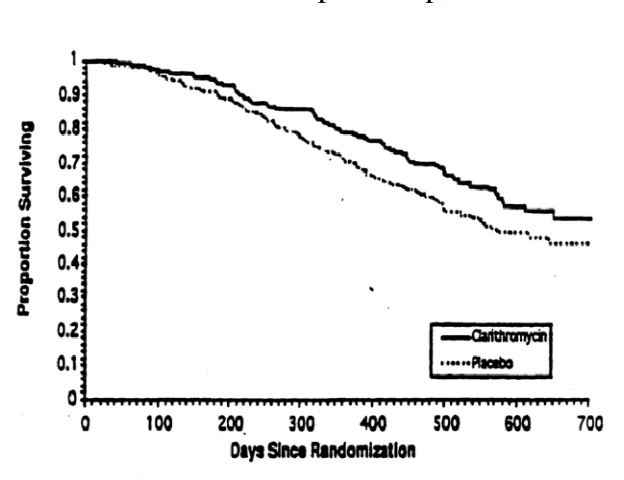
Figure 1: Survival of All Randomized Immunocompromized Adult Patients Receiving Clarithromycin in Prophylaxis Against M. avium Complex or Placebo
Table 18 Cumulative Incidence of MAC Bacteremia and Mortality in Immunocompromised Adult Patients Receiving Prophylaxis Against M. avium Complex | |||||||||
| Cumulative Incidence of MAC Bacteremia* | Cumulative Mortality | ||||||||
| Clarithromycin | Placebo | Clarithromycin | Placebo | ||||||
| 6 month | 1.0 % | 9.5 % | 6.4 % | 9.3 % | |||||
| 12 month | 5.0 % | 19.4 % | 20.8 % | 29.7 % | |||||
| 18 month | 10.1 % | 26.8 % | 36.8 % | 46.8 % | |||||
| * from Kaplan-Meier estimates. | |||||||||
Since the analysis at 18 months includes patients no longer receiving prophylaxis the survival benefit of clarithromycin may be underestimated.
Treatment of Mycobacterial Infections
Three studies summarized in Table 19 were designed to evaluate the following end points:
- Change in MAC bacteremia or blood cultures negative for M. avium.
- Change in clinical signs and symptoms of MAC infection including one or more of the following: fever, night sweats, weight loss, diarrhea, splenomegaly, and hepatomegaly.
Table 19 Summary of Demographics and Trial Design Efficacy of Clarithromycin in the Treatment of Mycobacterial Infections | ||||
| Study # | Trial design | Dosage, route of administration and duration | Study subjects (n=number) | Mean age (Range) |
| 500 | Randomized, double-blind | 500 mg b.i.d 1000 mg b.i.d 2000 mg b.i.d. | CDC-defined AIDS and CD4 counts < 100 cells/µL (n=154) | Adult |
| 577 | Open - label* | 500 mg b.i.d 1000 mg b.i.d | CDC-defined AIDS and CD4 counts < 100 cells/µL (n=469) | Adult |
| 521 | Pediatric Study | 3.75 mg/kg b.i.d. 7.5 mg/kg b.i.d. 15 mg/kg b.i.d. | CDC-defined AIDS and CD4 counts < 100 cells/µL (n=25) | 1-20 mo |
*compassionate use. Legend: b.i.d. = twice daily | ||||
The results of the Study 500 are described below. The Study 577 results were similar to the results of the Study 500. Results with the 7.5 mg/kg twice daily dose in the pediatric study were comparable to those for the 500 mg twice daily regimen in the adult studies.
MAC Bacteremia
Decreases in MAC bacteremia or negative blood cultures were seen in the majority of patients in all dose groups. Mean reductions in colony forming units (CFU) are shown below. Included in the table are results from a separate study with a 4-drug regimen (ciprofloxacin, ethambutol, rifampicin, and clofazimine). Since patient populations and study procedures may vary between these 2 studies, comparisons between the clarithromycin results and the combination therapy results should be interpreted cautiously (Table 20).
Table 20 Mean Reductions in Log CFU from Baseline (After 4 Weeks of Therapy) | |||
| 500 mg b.i.d. | 1000 mg b.i.d. | 2000 mg b.i.d. | Four Drug Regimen |
| (N=35) | (N=32) | (N=26) | (N=24) |
| 1.5 | 2.3 | 2.3 | 1.4 |
| Legend: b.i.d. = twice daily | |||
Although the 1000 mg and 2000 mg twice daily doses showed significantly better control of bacteremia during the first 4 weeks during therapy, no significant differences were seen beyond that point. The percent of patients whose blood was sterilized as shown by 1 or more negative cultures at any time during acute therapy was 61% (30/49) for the 500 mg twice daily group and 59% (29/49) and 52% (25/28) for the 1000 and 2000 mg twice daily groups, respectively. The percent of patients who had 2 or more negative cultures during acute therapy that were sustained through study Day 84 was 25% (12/49) in both the 500 and 1000 mg twice daily groups and 8% (4/48) for the 2000 mg twice daily group. By Day 84, 23% (11/49), 37% (18/49), and 56% (27/48) of patients had died or discontinued from the study, and 14% (7/49), 12% (6/49), and 13% (6/48) of patients had relapsed in the 500, 1000, and 2000 mg twice daily dose groups, respectively. All of the isolates had a minimum inhibitory concentration (MIC) < 8 mcg/mL at pretreatment. Relapse was almost always accompanied by an increase in MIC. The median time to first negative culture was 54, 41, and 29 days for the 500, 1000, and 2000 mg twice daily groups, respectively.
Clinically Significant Disseminated MAC Disease
Among patients experiencing night sweats prior to therapy, 84% showed resolution or improvement at some point during the 12 weeks of clarithromycin at 500 to 2000 mg twice daily doses. Similarly, 77% of patients reported resolution or improvement in fevers at some point. Response rates for clinical signs of MAC are given in Table 21.
Table 21 Response Rates for Clinical Signs of MAC | |||||
| Resolution of Fever | Resolution of Night Sweats | ||||
b.i.d. dose (mg) | % ever afebrile | % afebrile ≥ 6 weeks | b.i.d dose (mg) | % ever resolving | % resolving ≥ 6 weeks |
| 500 | 67 | 23 | 500 | 85 | 42 |
| 1000 | 67 | 12 | 1000 | 70 | 33 |
| 2000 | 62 | 22 | 2000 | 72 | 36 |
| Weight Gain > 3% | Hemoglobin Increase > 1 g | ||||
b.i.d. dose (mg) | % ever gaining | % gaining ≥ 6 weeks | b.i.d. dose (mg) | % ever increasing | %increasing ≥ 6 weeks |
| 500 | 33 | 14 | 500 | 58 | 26 |
| 1000 | 26 | 17 | 1000 | 37 | 6 |
| 2000 | 26 | 12 | 2000 | 62 | 18 |
| Legend: b.i.d. = twice daily | |||||
The median duration of response, defined as improvement of resolution of clinical signs and symptoms, was 2 to 6 weeks.
Since the study was not designed to determine the benefit of monotherapy beyond 12 weeks, the duration of response may be underestimated for the 25 to 33% of patients who continued to show clinical response after 12 weeks.
Survival
Median survival time from study entry (Study 500) was 249 days at the 500 mg twice daily dose compared to 215 days with the 1000 mg twice daily dose. However, during the first 12 weeks of therapy, there were 2 deaths in 53 patients in the 500 mg twice daily group versus 13 deaths in 51 patients in the 1000 mg twice daily group. The reason for this apparent mortality difference is not known. Survival in the 2 groups was similar beyond 12 weeks. The median survival times for these dosages were similar to recent historical controls with MAC when treated with combination therapies.
Median survival time from study entry in Study 577 was 199 days for the 500 mg twice daily dose and 179 days for the 1000 mg twice daily dose. During the first 4 weeks of therapy, while patients were maintained on their originally assigned dose, there were 11 deaths in 255 patients taking 500 mg twice daily and 18 deaths in 214 patients taking 1000 mg twice daily.
Eradication of Helicobacter pylori
Triple Therapy: clarithromycin/omeprazole/amoxicillin
In a well controlled double-blind study, Helicobacter pylori (H. pylori) infected duodenal ulcer patients received triple therapy with clarithromycin 500 mg twice daily, omeprazole 20 mg daily and amoxicillin 1000 mg twice daily for 10 days or dual therapy with clarithromycin 500 mg three times daily and omeprazole 40 mg daily for 14 days. H. pylori was eradicated in 90% of the patients receiving clarithromycin triple therapy and in 60% of the patients receiving dual therapy.
A summary of the Trial Design is presented in Table 22.
Table 22 Summary of the Trial Design Efficacy of Clarithromycin in the Eradication of Helicobacter pylori— Triple Therapy | |||||||||
| Study # | Trial design | Dosage, route of administration and duration | Study subjects (n=number) | Mean age (Range) | |||||
| 183 | Phase III, randomized, double-blind, multicenter | Treatment 1 Clarithromycin 500 mg b.i.d. with Omeprazole 20 mg q.d. and Amoxicillin 1000 mg b.i.d. Treatment 2 Clarithromycin 500 mg b.i.d. with Omeprazole 40 mg q.d. | 267 patients | 18 to 75 years | |||||
| oral | |||||||||
Treatment 1: 10 days Treatment 2: 14 days | |||||||||
| Legend: b.i.d. = twice daily; q.d. = once daily | |||||||||
The ulcer healing rates and corresponding 95% confidence intervals are presented in Table 23.
Table 23 Ulcer Healing [95% C.I.] at 4- to 6-Week Follow-up | |||
| Patient Subset | Clarithromycin + Omeprazole + Amoxicillin | Clarithromycin + Omeprazole | p-value |
| Clinically Evaluable | 93% (118/127) [87.0, 96.7] | 91% (104/114) [84.5, 95.7] | 0.641 |
| Intent-to-Treat #1 | 93% (122/131) [87.4, 96.8] | 92% (111/121) [85.3, 96.0] | 0.812 |
| Intent-to-Treat #2 | 90% (122/136) [83.3, 94.3] | 85% (111/130) [78.1, 91.0] | 0.353 |
| |||
Intent-to-Treat #1: Intent-to-Treat #2: | excluded patients with no confirmed evidence of H. pylori pretreatment, patients who had no duodenal ulcer pretreatment, and patients who did not return for a particular visit or did not have a particular procedure performed (e.g., endoscopy). excluded patients with no confirmed evidence of H. pylori pretreatment and patients with no duodenal ulcer pretreatment, but included as failures patients who did not return for a particular visit or did not have a particular procedure performed (e.g., endoscopy). | ||
The H. pylori eradication rates and corresponding 95% confidence intervals are summarized in Table 24.
For all patient subsets, triple therapy with clarithromycin, omeprazole, and amoxicillin achieved a statistically higher eradication rate than dual therapy (p < 0.001). These differences were also observed when the eradication rates were adjusted for potentially influential factors such as ulcer characteristics, age, and smoking. In addition, the eradication rates within each treatment group were similar for smokers and non-smokers.
Table 24 Global Eradication [95% C.I.] at 4- to 6-Week Follow-up | |||
| Clarithromycin + Omeprazole + Amoxicillin | Clarithromycin + Omeprazole | p-value | |
Bacteriologically Evaluable | 91% (115/127) [84.1, 95.0] | 59% (68/115) [49.6, 68.2] | < 0.001 |
| Intent-to-Treat #1 | 90% (120/133) [83.9, 94.7] | 60% (72/120) [50.7, 68.8] | < 0.001 |
| Intent-to-Treat #2 | 88% (120/136) [81.6, 93.1] | 55% (72/130) [46.4, 64.1] | < 0.001 |
| |||
| |||
| |||
Intent-to-Treat #1: Intent-to-Treat #2: | excluded patients with no confirmed evidence of H. pylori pretreatment, patients who had no duodenal ulcer pretreatment, and patients who did not return for a particular visit or did not have a particular procedure performed (e.g., endoscopy). | ||
| excluded patients with no confirmed evidence of H. pylori pretreatment and patients with no duodenal ulcer pretreatment, but included as failures patients who did not return for a particular visit or did not have a particular procedure performed (e.g., endoscopy). | |||
International, Randomized, Double-Blind, Placebo-Controlled Study
In an international, randomized, double-blind, placebo-controlled study involving more than 100 patients in each of 6 treatment groups, patients with proven duodenal ulcer disease were randomized to treatment twice daily for 1 week with omeprazole, 20 mg (O), plus either placebo (P) or combinations of 2 of the following antimicrobials: amoxicillin, 1g (A), clarithromycin, 250 mg or 500 mg (C250, C500), or metronidazole, 400 mg (M). H. pylori eradication rates for the “all-patients-treated” analysis were 96% (OAC500), 95% (OMC250), 90% (OMC500), 84% (OAC250), 79% (OAM), and 1% (OP).
Independent, Open and Non-Randomized Study
In an independent, open, and non-randomized study, H. pylori infected patients received eradication therapy with clarithromycin 500 mg twice daily in conjunction with amoxicillin 1000 mg twice daily and omeprazole 20 mg once daily (Group A) or omeprazole 20 mg twice daily (Group B) for 7 days. In those patients not previously treated with anti-H. pylori therapy, H. pylori was eradicated in 88% of patients in Group A and 86% of patients in Group B.
(For additional information on the use of clarithromycin in triple therapy for the treatment of H. pylori infection and active duodenal ulcer recurrence, refer to the Hp-PAC® Product Monograph).
Dual Therapy: Clarithromycin/omeprazole
H. pylori is strongly associated with peptic ulcer disease. Ninety to 100% of patients with duodenal ulcers are infected with this pathogen. Eradication of H. pylori has been shown to reduce the rate of duodenal ulcer recurrence, thereby reducing the need for maintenance anti-secretory therapy.
In 4 well controlled, double-blind studies, H. pylori infected duodenal ulcer patients received eradication therapy with clarithromycin 500 mg three times daily and omeprazole 40 mg daily for 14 days followed by omeprazole 40 mg (study A) or omeprazole 20 mg (studies B, C and D) daily for an additional 14 days; patients in each control group received omeprazole alone for 28 days.
European Studies
A summary of the Trial Design is presented in Table 25.
Table 25 Summary of the Trial Design Efficacy of Clarithromycin in the Eradication of Helicobacter pylori-Dual Therapy | |||
| Study # | Trial design | Dosage, route of administration and duration | Study subjects (n=number) |
| A | Phase III, randomized, controlled, double-blind, multicenter study | Treatment (1): Clarithromycin 500 mg t.i.d + omeprazole 40 mg q.d. for 14 days, followed by omeprazole 40 mg q.d. for 14 days. | H. pylori infected duodenal ulcer patients (n=69)* |
| Treatment (2): Placebo (no clarithromycin) + omeprazole 40 mg q.d. for 14 days, followed by omeprazole 40 mg q.d. for 14 days. | H. pylori infected duodenal ulcer patients (n=75)* | ||
* Number of evaluable patients as per Table 26. Legend: t.i.d. = three times daily; q.d. = once daily | |||
Results of Study A are displayed in Table 26.
Table 26 Study A: Efficacy of Clarithromycin in the Eradication of Helicobacter pylori-Dual | |||
| Results | Treatment (1) Clarithromycin + Omeprazole* | Treatment (2) Omeprazole* | Statistical Significance |
| Ulcer Healing Rates at Post-Treatment | 100% (65/65) | 99% (72/73) | > 0.999 |
Ulcer Prevalence Rate 6-Month Follow-up Visit 12-Month Follow-Up Visit | 4% (2/53) 4% (2/48) | 54% (37/69) 78% (49/63) | < 0.001 < 0.001 |
H. pylori Global Eradication Rate 4- to 6-Week Follow-up Visit | 83% (57/69) | 1% (1/75) | < 0.001 |
| * For details of treatment see Table 25 | |||
A summary of the Trial Design is presented in Table 27.
Table 27 Summary of the Trial Design Efficacy of Clarithromycin in the Eradication of Helicobacter pylori - Dual Therapy | |||
| Study # | Trial design | Dosage, route of administration and duration | Study subjects (n=number) |
| B | Phase III, randomized, controlled, double-blind, multicenter study | Treatment (1): Clarithromycin 500 mg t.i.d + omeprazole 40 mg q.d. for 14 days, followed by omeprazole 20 mg q.d. for 14 days. | H. pylori infected duodenal ulcer patients (n=93)* |
| Treatment (2): Placebo (no clarithromycin) + omeprazole 40 mg q.d. for 14 days, followed by omeprazole 20 mg q.d. for 14 days. | H. pylori infected duodenal ulcer patients (n=96)* | ||
* Number of evaluable patients as per Table 28 Legend: t.i.d. = three times daily; q.d. = once daily | |||
Results of Study B are displayed in Table 28.
Table 28 Study B: Efficacy of Clarithromycin in the Eradication of Helicobacter pylori - Dual Therapy | |||
| Results | Treatment (1) Clarithromycin + Omeprazole* | Treatment (2) Omeprazole* | Statistical Significance |
Ulcer Healing Rates at Post-Treatment | 99% (86/87) | 95% (84/88) | 0.368 |
Ulcer Prevalence Rate 6-Month Follow-up Visit 12-Month Follow-Up Visit | 11% (9/79) N/A | 52% (45/86) N/A | < 0.001 N/A |
H. pylori Global Eradication Rate 4- to 6-Week Follow-up Visit | 74% (69/93) | 4% (4/96) | < 0.001 |
N/A No information available. * For details of treatment see Table 27 | |||
North American Studies
A summary of the Trial Design is presented in Table 29.
Table 29 Summary of Demographics and Trial Design Efficacy of Clarithromycin in the Eradication of Helicobacter pylori - Dual Therapy | |||||||
| Study # | Trial design | Dosage, route of administration and duration | Study subjects (n=number) | ||||
| C | Controlled, double-blind study | Treatment (1): Clarithromycin 500 mg t.i.d. + omeprazole 40 mg q.d. for 14 days, followed by 20 mg omeprazole q.d. for 14 days. | H. pylori infected duodenal ulcer patients (n=69)* | ||||
| Treatment (2): Clarithromycin 500 mg t.i.d. for 14 days + placebo q.d. (no omeprazole) for 28 days. | H. pylori infected duodenal ulcer patients (n=70)* | ||||||
| Treatment (3): Placebo t.i.d. (no clarithromycin) + omeprazole 40 mg q.d. (14 days), followed by omeprazole 20 mg q.d. (14 days). | H. pylori infected duodenal ulcer patients (n=65)* | ||||||
* Number of evaluable patients as per Table 30 Legend: t.i.d. = three times daily; q.d. = once daily | |||||||
Results of the Study C are displayed in Table 30.
Table 30 Study C: Efficacy of Clarithromycin in the Eradication of Helicobacter pylori - Dual Therapy | |||||
| Results | Treatment (1) Clarithromycin + Omeprazole | Treatment (2) Clarithromycin | Treatment (3) Omeprazole | Treatment (1) vs Treatment (2) p-value | Treatment (1) vs Treatment (3) p-value |
Ulcer Healing Rates at Post-Treatment | 87% (60/69) | 63% (44/70) | 85% (55/65) | 0.002 | 0.806 |
Ulcer Prevalence Rate 6-Month Follow-up Visit | 53% (30/57) | 65% (44/68) | 72% (41/57) | 0.203 | 0.053 |
H. pylori Global Eradication Rate 4- to 6-Wk Follow-up Visit 3-Month Follow-up Visit | 74% (43/58) 77% (37/48) | 34% (15/44) 37% (13/35) | 0% (0/55) 3% (1/38) | < 0.001 < 0.001 | < 0.001 < 0.001 |
A summary of the Trial Design is presented in Table 31.
Table 31 Summary of Demographics and Trial Design Efficacy of Clarithromycin in the Eradication of Helicobacter pylori-Dual Therapy | |||
| Study # | Trial design | Dosage, route of administration and duration | Study subjects (n=number) |
| D | Controlled, double-blind study | Treatment (1): Clarithromycin 500 mg t.i.d + omeprazole 40 mg q.d. for 14 days, followed by 20 mg omeprazole q.d. for 14 days. | H. pylori infected duodenal ulcer patients (n=82)* |
| Treatment (2): Clarithromycin 500 mg t.i.d. for 14 days + placebo q.d. (no omeprazole) for 28 days. | H. pylori infected duodenal ulcer patients (n=86)* | ||
| Treatment (3): Placebo t.i.d. (no clarithromycin) + omeprazole 40 mg q.d. (14 days), followed by omeprazole 20 mg q.d. (14 days). | H. pylori infected duodenal ulcer patients (n=88)* | ||
* Number of enrolled patients Legend s: t.i.d. = three times daily; q.d. = once daily | |||
Results of the Study D are displayed in Table 32.
Table 32 Study D: Efficacy of Clarithromycin in the Eradication of Helicobacter pylori-Dual Therapy | |||||
| Results | Treatment (1) Clarithromycin + Omeprazole | Treatment (2) Clarithromycin | Treatment (3) Omeprazole | Treatment (1) vs Treatment (2) p-value | Treatment (1) vs Treatment (3) p-value |
Ulcer Healing Rates at Post-Treatment | 94% (60/64) | 71% (50/70) | 89% (62/70) | < 0.001 | 0.371 |
Ulcer Prevalence Rate 6-Month Follow-up Visit | 30% (18/60) | 49% (32/65) | 76% (50/66) | 0.031 | < 0.001 |
H. pylori Global Eradication Rate 4- to 6-Wk Follow-up Visit 3-Month Follow-up Visit | 64% (41/64) 72% (41/57) | 38% (18/48) 40% (19/48) | 0% (0/62) 0% (0/44) | 0.007 0.001 | < 0.001 < 0.001 |
Overall summary
In study A, H. pylori was eradicated in over 80% of patients who received clarithromycin and omeprazole and in only 1% of patients receiving omeprazole alone. In studies B, C, and D, the combined eradication rate was over 70% in patients receiving clarithromycin and omeprazole and less than 1% in patients receiving omeprazole alone. In each study, the rate of ulcer recurrence at 6 months was statistically lower in the clarithromycin and omeprazole treated patients when compared to patients receiving omeprazole alone.
DETAILED PHARMACOLOGY
General
Helicobacter pylori
The presence of H. pylori may damage the mucosal integrity and defenses so that exposure to acid/pepsin, even in normal concentrations, produces ulceration.
H. pylori displays potent urease activity which may produce an alkaline environment around the organism. Excess ammonia produced by urea hydrolysis is toxic to mucosal cells and may lead to parietal cell failure and/or to a disturbance of the normal negative feedback of acid to the antral G-cells which secrete gastrin. In addition, H. pylori produces catalases, lipases, phospholipases, proteases, adhesins and toxins. These enzymes may further degrade the mucous layer and damage the epithelial cell membrane. Also, the presence of H. pylori stimulates an active inflammatory response which contributes to mucosal damage.
Gustavson et al. (1995) showed that concentrations of 39.3, 23.1 and 25.2 mcg/g clarithromycin were achieved in the gastric mucosa 2, 4, and 6 hours respectively after administering 500 mg clarithromycin three times daily and that corresponding concentrations of the 14-OH metabolite were 3.2, 1.1, and 4.1 mcg/g respectively. Similar results were obtained whether or not clarithromycin was given alone or together with 40 mg omeprazole once daily (Logan et al., 1995). Although the activity of the 14-OH metabolite is about half of the parent drug and its concentrations are lower, it may still contribute antibacterial activity.
Pharmacokinetics
Pharmacokinetics for clarithromycin and 14-OH-clarithromycin metabolite following the oral administration of a single dose or multiple doses of clarithromycin are outlined below.
Pharmacokinetics for clarithromycin and 14-OH-clarithromycin metabolite was first studied following the oral administration of a single dose of 250 mg or 500 mg or multiple doses of clarithromycin 250 mg tablet.
Single Dose
Plasma levels were determined in 20 subjects following oral administration of a single-dose of 250 mg or 500 mg of clarithromycin under fasting conditions. Cmax occurred at 1.00 and 1.77 (mg/L) and Tmax were 1.5 and 2.2 hours, respectively for the 250 mg and 500 mg (Table 33, Figure 2 and Figure 3).
Table 33 Mean (± SD) Pharmacokinetic Parameters for Clarithromycin Administered as a Single Dose in the Absence of Food | ||
| Variable | Clarithromycin Dose | |
| 250 mg | 500 mg | |
Number of male evaluable patients Cmax (mg/L) Cmax/100 mg1 Tmax (hr) AUC (mg•hr/L) AUC/100 mg1 | 20 1.00 ± 0.34 0.40 1.5 ± 0.8 5.47 ± 1.932 2.19 | 20 1.77 ± 0.65 0.35 2.2 ± 0.7 11.66 ± 3.673 2.33 |
1 Cmax/100 mg = Cmax × 100 mg; AUC/100 mg = AUC × 100 mg dose dose 2 AUC0-12 hr 3AUC0-14 hr | ||
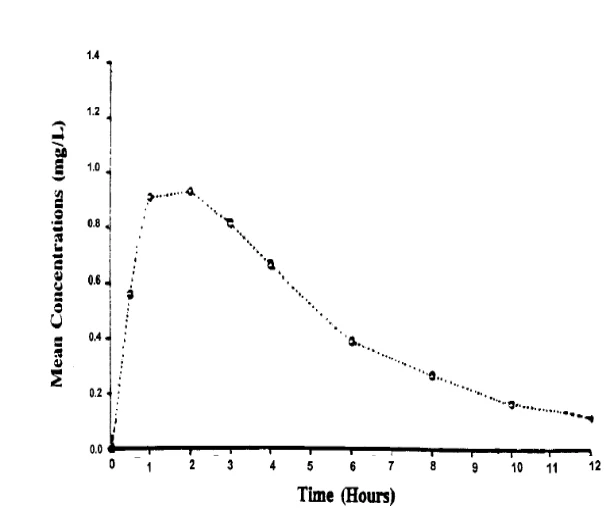
Figure 2: Plasma Clarithromycin Concentration (mg/mL) vs Time Following Oral Administration of a Single Dose of Clarithromycin 250 mg
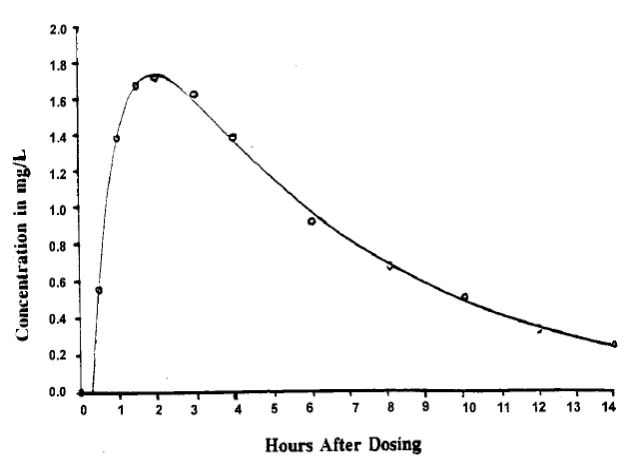
Figure 3: Plasma Clarithromycin Concentration (mg/L) vs Time Following Oral Administration of a Single Dose of Clarithromycin 500 mg
Multiple Dose
Representative estimated pharmacokinetic parameters for clarithromycin and 14-OH-clarithromycin metabolite after a single oral 250 mg dose and after the 5th dose of clarithromycin administered orally at 250 mg twice daily are listed in Table 34.
Table 34 Representative Estimated Single and Multiple-Dose Pharmacokinetic Parameters for Clarithromycin and 14-OH-Clarithromycin | ||||
| Variables | Single Dose (250 mg) | Multiple Dose after 5th Dose (250 mg b.i.d.) | ||
| Clari. | 14-OH | Clari. | 14-OH | |
Cmax (mg/L) t½ (hr) AUC0-12 (mg•h/L) | 0.74 ± 0.24 2.7 4.27 ± 1.52 | 0.61 ± 0.17 4.2 4.91 ± 1.12 | 1.00 ± 0.29 3.5 6.34 ± 1.82 | 0.63 ± 0.19 4.7 4.72 ± 1.29 |
| Legend: Clari. = clarithromycin; 14-OH = 14-OH-clarithromycin; b.i.d. = twice daily | ||||
The pharmacokinetics of clarithromycin and its 14-OH metabolite indicate that the steady-state concentration is achieved by the 5th dose using 250 mg of clarithromycin twice daily.
The mean plasma concentration-time along the predicted curves for clarithromycin and 14-OH-clarithromycin metabolite are shown in Figure 4.
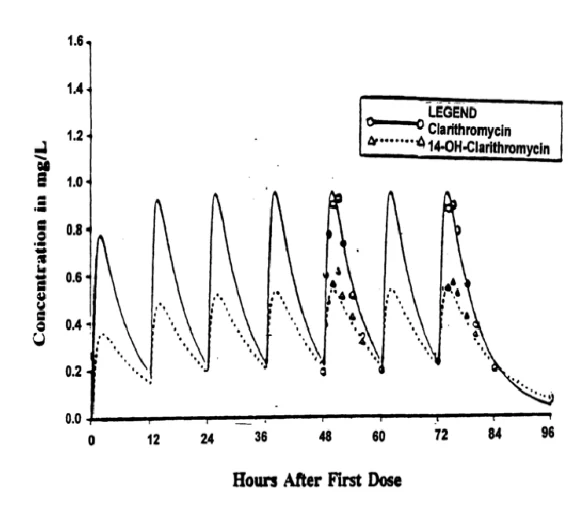
Figure 4: Mean Plasma Concentrations of Clarithromycin and 14-OH-Clarithromycin vs Time Following Seven 250 mg B.I.D. Oral Doses of Clarithromycin
At 250 mg twice daily, approximately 20% of an orally administered dose is excreted in the urine as the unchanged parent drug. The urinary excretion of unchanged clarithromycin is somewhat greater (approximately 30%) with 500 mg twice daily dosing. The renal clearance of clarithromycin is, however, relatively independent of the dose size and approximates the normal glomerular filtration rate. The major metabolite found in urine is 14-OH-clarithromycin which accounts for an additional 10 to 15% of the dose with twice daily dosing at either 250 mg or 500 mg.
Most of the remainder of the dose is eliminated in the feces, primarily via the bile. About 5 to 10% of the parent drug is recovered from the feces. Fecal metabolites are largely products of N-demethylation, 14-hydroxylation or both.
The steady-state concentrations of clarithromycin in subjects with impaired hepatic function did not differ from those in normal subjects; however, the 14-OH-clarithromycin concentrations were lower in the hepatically impaired subjects. The decreased formation of 14-OH-clarithromycin was at least partially offset by an increase in renal clearance of clarithromycin in the subjects with impaired hepatic function when compared to healthy subjects.
The pharmacokinetics of clarithromycin were also altered in subjects with impaired renal function. See (WARNINGS AND PRECAUTIONS, Renal) and (DOSAGE AND ADMINISTRATION, Recommended Dose and Dosage Adjustment).
Clarithromycin and Omeprazole
A pharmacokinetic study was conducted with clarithromycin 500 mg three times daily and omeprazole 40 mg once daily. When clarithromycin was given alone at 500 mg every 8 hours, the mean steady-state Cmax value was approximately 31% higher and the mean Cmin value was approximately 119% higher than when clarithromycin is compared with a previous study at 500 mg every 12 hours. The mean AUC0-24 for clarithromycin was 65% greater when 500 mg clarithromycin was given every 8 hours rather than every 12 hours. Neither Tmax nor half-life values appeared substantially different between the every-8-hour and every-12-hour regimens.
When clarithromycin was administered with omeprazole, increases in omeprazole half-life and AUC0-24 were observed. For all subjects combined, the mean omeprazole AUC0-24 was 89% greater and the harmonic mean for omeprazole t½ was 34% greater when omeprazole was administered with clarithromycin than when omeprazole was administered alone. When clarithromycin was administered with omeprazole, the steady-state Cmax, Cmin, and AUC0-8 of clarithromycin were increased by 10%, 27%, and 15%, respectively over values achieved when clarithromycin was administered with placebo.
At steady-state, clarithromycin gastric mucus concentrations 6 hours post dosing were approximately 25-fold higher in the clarithromycin/omeprazole group compared with the clarithromycin alone group. Six hours post-dosing, mean clarithromycin gastric tissue concentrations were approximately 2-fold higher when clarithromycin was given with omeprazole than when clarithromycin was given with placebo.
Clarithromycin distributes readily into body tissues and fluids, and provides tissue concentrations that are higher than serum concentrations. Examples from tissue and serum concentrations are presented in Table 35.
Table 35 Representative Clarithromycin Tissue and Serum Concentrations | ||
| Tissue Type | Concentrations (after 250 mg b.i.d.) | |
| Tissue (mcg/g) | Serum (mcg/mL) | |
Tonsil Lung Leukocytes* | 1.6 8.8 9.2 | 0.8 1.7 1.0 |
* in vitro data. Legend: b.i.d. = twice daily | ||
MICROBIOLOGY
Clarithromycin exerts its antimicrobial action by binding to the 50S ribosomal subunit of susceptible microorganisms resulting in inhibition of protein synthesis.
Clarithromycin is active in vitro against various aerobic and anaerobic gram-positive and gram-negative organisms as well as most MAC microorganisms. The in vitro activity of clarithromycin is presented in Table 36.
Additionally, the 14-OH-clarithromycin metabolite also has significant antimicrobial activity which may be additive to the activity of the parent compound. Against Haemophilus influenzae, 14-OH clarithromycin is twice as active as the parent compound in vitro. However, for MAC isolates, the 14-OH metabolite was 4 to 7 times less active than clarithromycin. The clinical significance of this activity against MAC is unknown.
Clarithromycin is bactericidal to H. pylori; this activity is greater at neutral pH than at acid pH.
The ranges of MICs of clarithromycin, 14-OH-clarithromycin metabolite and the MICs required to inhibit 50% (MIC50) and 90% (MIC90) of bacteria are presented in Table 37 and Table 38. Beta-lactamase production should not have any effect on clarithromycin activity.
Cross-resistance to azithromycin has been documented. Attention should be paid to the possibility of cross resistance between clarithromycin and other macrolide drugs, as well as lincomycin and clindamycin.
The in vitro data indicate enterobacteriaceae, pseudomonas species and other non-lactose fermenting gram negative bacilli are not sensitive to clarithromycin.
Table 36
In Vitro Susceptibility® of Strains of Gram-Positive and Gram-Negative Bacteria to Clarithromycin
| Microorganisms | Number of Strains | Cumulative % of Strains Inhibited at MIC (mg/L) | |||||||||||
| .031 | .062 | .125 | .250 | .500 | 1.00 | 2.00 | 4.00 | 8.00 | 16.0 | 32.0 | 64.0 | ||
| Gram Positive | |||||||||||||
| Staphylococcus aureus | 25 | - | 4 | 4 | 8 | 8 | 12 | 12 | 12 | 12 | 12 | 12 | 100 |
| methicillin resistant | |||||||||||||
| Staphylococcus aureus | 126 | - | 20 | 75 | 84 | 86 | 87 | 87 | 87 | 88 | 88 | 88 | 100 |
| methicillin susceptible | |||||||||||||
| All Staphylococcus aureus | 151 | - | 17 | 63 | 72 | 73 | 74 | 74 | 74 | 75 | 75 | 75 | 100 |
| Staphylococcus epidermidis | 59 | - | 18 | 37 | 42 | 44 | 45 | 47 | 50 | 50 | 54 | 54 | 100 |
| Other coagulase negative | 27 | - | 14 | 44 | 44 | 48 | 48 | 48 | 55 | 55 | 59 | 59 | 100 |
| staphylococcus | |||||||||||||
| Streptococcus pyogenes (GrA) | 48 | 89 | 91 | 93 | 97 | 97 | 97 | 100 | - | - | - | - | - |
| Enterococcus | 97 | 1 | 4 | 8 | 25 | 59 | 61 | 63 | 63 | 64 | 64 | 68 | 100 |
| Streptococcus pneumoniae | 26 | 38 | 84 | 84 | 84 | 100 | - | - | - | - | - | - | - |
| Streptococcus agalactiae (GrB) | 41 | 95 | 95 | 95 | 95 | 95 | 97 | 100 | - | - | - | - | - |
| Streptococcus viridans | 15 | 86 | 86 | 86 | 93 | 93 | 93 | 93 | 93 | 93 | 93 | 93 | 100 |
| Other β-hemolytic Streptococcus | 19 | 78 | 78 | 78 | 84 | 84 | 84 | 89 | 89 | 94 | 94 | 94 | 100 |
| Corynebacterium species | 11 | 27 | 45 | 54 | 63 | 63 | 63 | 81 | 81 | 90 | 100 | - | - |
| Listeria monocytogenes | 7 | 28 | 100 | - | - | - | - | - | - | - | - | - | |
| Gram Negative | |||||||||||||
| Neisseria gonorrhoeae | 39 | 23 | 35 | 64 | 100 | - | - | - | - | - | - | - | - |
| Haemophilus influenzae | 56 | 3 | 3 | 3 | 7 | 16 | 37 | 80 | 100 | - | - | - | - |
| Neisseria meningitides | 6 | - | 33 | 50 | 83 | 100 | - | - | - | - | - | - | - |
| Campylobacter species | 30 | - | 10 | 10 | 43 | 80 | 93 | 100 | - | - | - | - | - |
* MICs do not take into account the antimicrobial activity of the 14-OH-clarithromycin metabolite.
Table 37
In vitro Susceptibility of Different Bacteria to Clarithromycin
Number of strains | MIC (mg/L) | ||||||||||||
| Microorganisms | Range | 50% | 90% | ||||||||||
| Mycoplasma pneumoniae | 30 | ≤0.004-0.125 | ≤0.004 | ≤0.031 | |||||||||
| Bordetella pertussis | 18 | ≤0.008-0.06 | ≤0.008 | 0.03 | |||||||||
| Legionella pneumophila | 14 | 0.12-0.25 | 0.12 | 0.25 | |||||||||
| Haemophilus influenzae | 22 | 2-8 | 4 | 8 | |||||||||
| Moraxella catarrhalis | 17 | 0.03-0.25 | 0.06 | 0.25 | |||||||||
| Chlamydia trachomatis | 11 | 0.002-0.008 | 0.004 | 0.008 | |||||||||
| Neisseria gonorrhoea | 26 | 0.0625-4 | 0.125 | 0.5 | |||||||||
| Mycobacterium avium | 30 | 4-32 | 8 | 16 | |||||||||
| Mycobacterium avium- | 124 | < 0.25-4 | 1 | 2 | |||||||||
| intracellulare | |||||||||||||
| Mycobacterium chelonae | 137 | -- | -- | 0.25 | |||||||||
| Mycobacterium fortuitum | 86 | -- | 2.0 | >8.0 | |||||||||
| Mycobacterium kansassi | 24 | ≤0.125-0.25 | ≤0.125 | 0.25 | |||||||||
| Pasteurella multocida | 10 | 1.0-4 | 1.0 | 2.0 | |||||||||
| Bacteriodes melaninogenicus | 12 | ≤0.125-0.2 | ≤0.125 | ≤0.125 | |||||||||
| Clostridium perfringens | 10 | 0.25-0.5 | 0.5 | 0.5 | |||||||||
| Staphylococcus aureus | 20 | 0.06-0.25 | 0.17 | 0.24 | |||||||||
| (methicillin sensitive) | |||||||||||||
| Streptococcus pyogenes | 10 | ≤0.06 | ≤0.06 | ≤0.06 | |||||||||
| Chlamydia pneumoniae | 49 | 0.004-0.025 | 0.016 | 0.031 | |||||||||
| Helicobacter pylori † | 13 | 0.03-0.06 | 0.03 | 0.03 | |||||||||
| † Hardy DJ, Hanson CW, Hensey DM, Beyer JM, Fernandes PB. Susceptibility of Campylobacter pylori to macrolides and fluoroquinolones. J Antimicrob Chemother 1988;22:631-636. | |||||||||||||
Table 38
In vitro Susceptibility of Different Bacteria to 14-OH-Clarithromycin
Number of strains | MIC (mg/L) | |||
| Microorganisms | Range | 50% | 90% | |
| Streptococcus pyogenes | 15 | 0.015-0.03 | 0.015 | 0.03 |
| Streptococcus pneumoniae | 13 | ≤0.004-0.015 | 0.008 | 0.015 |
| Streptococcus agalactiae | 15 | 0.03-0.06 | 0.06 | 0.06 |
| Listeria monocytogenes | 14 | 0.25-0.5 | 0.5 | 0.5 |
| Moraxella catarrhalis | 17 | 0.03-0.12 | 0.06 | 0.12 |
| Neisseria gonorrhoeae | 15 | 0.06-1 | 0.25 | 0.5 |
| Campylobacter jejuni | 12 | 0.25-2 | 0.5 | 2 |
| Legionella pneumophila | 14 | 0.12-0.5 | 0.25 | 0.5 |
| Haemophilus influenzae | 22 | 1-4 | 2 | 4 |
| Bordetella pertussis | 18 | ≤0.008-0.06 | 0.015 | 0.06 |
| Bacteroides fragilis | 10 | 0.5->128 | 1 | 1 |
| Clostridium perfringens | 10 | 0.5-0.5 | 0.5 | 0.5 |
| Propionibacterum acnes | 12 | 0.03->128 | 0.03 | 0.06 |
Clarithromycin Kill Kinetics Against Helicobacter pylori
Figure 5 illustrates the kill kinetics of clarithromycin and 14-OH-clarithromycin against H. pylori at 8 × MIC and at pH 8.0; and Figure 6 illustrates the kill kinetics of clarithromycin and amoxicillin against H. pylori at pH 6.5.
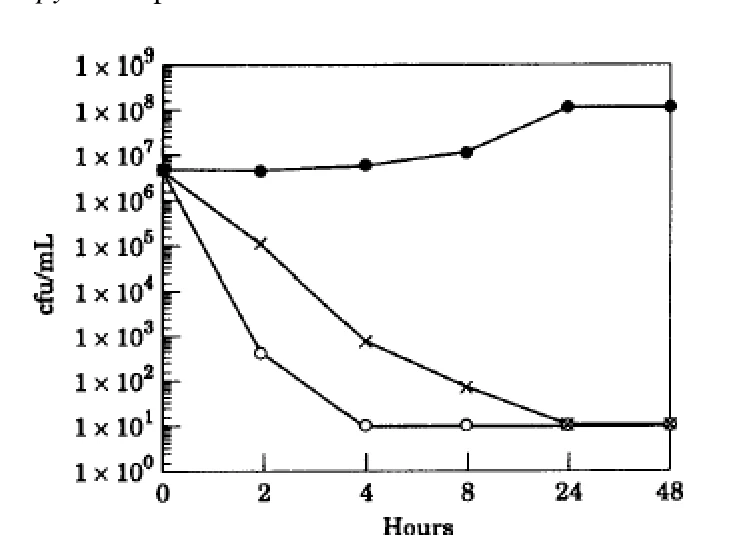
Figure 5: Kill kinetics of clarithromycin and 14-OH-clarithromycin against H. pylori strain 2597 at 8 × MIC and at pH 8.0. A flask was inoculated to produce a starting inoculum of approximately 106 cfu/mL. The flask was then incubated in an anaerobe jar with CampyPak® and shaken gently at 37 0C. Counts were done at 0, 2, 4, 8, 24, and 48 h in physiological saline after 72 h incubation. ●, No antimicrobial; o, clarithromycin (0.12 mg/L); x, 14-OH-clarithromycin (0.24 mg/L).
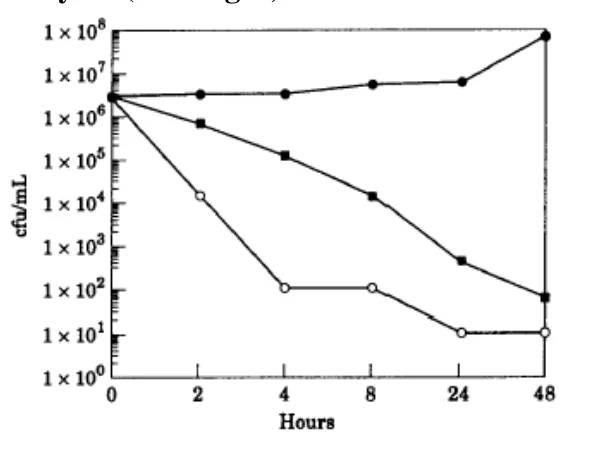
Figure 6: Kill kinetics of clarithromycin and amoxicillin against H. pylori strain 2597 at pH 6.5. Counts were done at 0, 2, 4, 8, 24, and 48 h in physiological saline after 72 h incubation. ●, No antimicrobial; o, clarithromycin (3 mg/L); ■, amoxicillin (3 mg/L)
Susceptibility Testing excluding Mycobacteria and Helicobacter
Dilution Techniques
Quantitative methods are used to determine antimicrobial minimal inhibitory concentrations (MICs). These MICs provide estimates of the susceptibility of bacteria to antimicrobial compounds. The MICs should be determined using a standardized procedure. Standardized procedures are based on a dilution method43 (broth or agar) or equivalent with standardized inoculum concentrations and standardized concentrations of clarithromycin powder.
The standard single disc susceptibility test (using the 15 mcg clarithromycin disc) and the dilution susceptibility test should be interpreted according to the criteria in Table 39.
Table 39 Criteria for the Interpretation of Standard Single Disc and Dilution Susceptibility Tests except for H. influenzae and H. pylori | |||||||
| Zone Diameter (mm) | Appropriate MIC Correlate (mg/L) | ||||||
| Susceptible | ≥ 18 | ≤ 2 | |||||
| Intermediate* | 14 to 17 | 4 | |||||
| Resistant | ≤ 13 | ≥ 8 | |||||
* Indicates that the test results are equivocal; therefore, dilution tests may be indicated. N.B. These criteria and the definition are in agreement with NCCLS. Documents M2-A644 and M100-S845. | |||||||
The standard single disc susceptibility test (using the 15 mcg clarithromycin disc) for H.Influenzae should be interpreted according to the criteria in Table 40.
Table 40 Criteria for the Interpretation of Standard Single Disc and Dilution Susceptibility Tests for H. influenzae | ||
| Zone Diameter (mm) | Appropriate MIC Correlate (mg/L) | |
| Susceptible | ≥ 13 | ≤ 8 |
| Intermediate* | 11 to 12 | 16 |
| Resistant | ≤ 10 | ≥ 32 |
* Indicates that the test results are equivocal; therefore, dilution tests may be indicated. N.B. According to the revised NCCLS 1997 and 1998 Guidelines, the zone diameter and MIC values reflect both the activities of the parent compound and 14-OH metabolite. | ||
A report of "Susceptible" indicates that the pathogen is likely to respond to monotherapy with clarithromycin.
A report of "Intermediate" indicates that the result be considered equivocal, and if the microorganism is not fully susceptible to alternative clinically feasible drugs, the test should be repeated. This category implies possible clinical applicability in body sites where clarithromycin is physiologically concentrated or in situations where high clarithromycin dosages can be used. This category provides a buffer zone which prevents small uncontrolled technical factors from causing major discrepancies in interpretations.
A report of "Resistant" indicates that achievable drug concentrations are unlikely to be inhibitory, and other therapy should be selected.
Diffusion Techniques
Quantitative methods that require measurement of zone diameters also provide reproducible estimates of the susceptibility of bacteria to antimicrobial compounds. One such standardized procedure44 requires the use of standardized inoculum concentrations. This procedure uses paper disks impregnated with 15-mcg clarithromycin to test the susceptibility of microorganisms to clarithromycin.
Reports from the laboratory providing results of the standard single-disk susceptibility test with a 15-mcg clarithromycin disk should be interpreted according to the criteria in Table 39.
Standardized Dilution Techniques
Standardized susceptibility test procedures require the use of laboratory control microorganisms to control the technical aspects of the laboratory procedures. Standard clarithromycin powder should provide the following MIC values for S. aureus and H. influenzae (Table 41).
Table 41 Standard Clarithromycin Powder MIC Values | ||
| Microorganisms | MIC (mcg/mL) | |
| S. aureus | ATCC 29213 | 0.12 to 0.5 |
| H. influenzae | ATCC 49247 | 4 to 16 |
Standardized Diffusion Techniques
As with standardized dilution techniques, diffusion methods require the use of laboratory control microorganisms that are used to control the technical aspects of the laboratory procedures. For the diffusion technique, the 15-mcg clarithromycin disk should provide the following zone diameters for S. aureus and H. influenzae (Table 42).
Table 42 Zone Diameter for the 15 mcg Clarithromycin Disc | ||
| Microorganisms | Zone Diameter (mm) | |
| S. aureus | ATCC 25923 | 26 to 32 |
| H. influenzae | ATCC 49247 | 11 to 17 |
In vitro Activity of Clarithromycin against Mycobacteria
Clarithromycin has demonstrated in vitro activity against MAC microorganisms isolated from both AIDS and non-AIDS patients. While gene probe techniques may be used to distinguish M. avium species from M. intracellulare, many studies only reported results on MAC isolates.
Various in vitro methodologies employing broth or solid media at different pH's, with and without oleic acid-albumin-dextrose-catalase (OADC), have been used to determine clarithromycin MIC values for mycobacterial species. In general, MIC values decrease more than 16-fold as the pH of Middlebrook 7H12 broth increases from 5.0 to 7.4. At pH 7.4, MIC values determined with Mueller-Hinton agar were 4- to 8-fold higher than those observed with Middlebrook 7H12 media. Utilization of OADC in these assays has been shown to further alter MIC values.
Clarithromycin activity against 80 MAC isolates from AIDS patients and 211 MAC isolates from non-AIDS patients was evaluated using a microdilution method with Middlebrook 7H9 broth. Results showed MIC values of ≤ 4.0 mcg/mL in 81% and 89% of the AIDS and non-AIDS MAC isolates, respectively. Twelve percent of the non-AIDS isolates had an MIC value ≤ 0.5 mcg/mL. Clarithromycin activity was evaluated against phagocytized MAC in mouse and human macrophage cell cultures as well as in the beige mouse infection model.
Clarithromycin activity was evaluated against Mycobacterium tuberculosis microorganisms. In 1 study utilizing the agar dilution method with Middlebrook 7H10 media, 3 of 30 clinical isolates had an MIC of 2.5 mcg/mL. Clarithromycin inhibited all isolates at > 10.0 mcg/mL.
Susceptibility Testing for Mycobacterium avium Complex
The disk diffusion and dilution techniques for susceptibility testing against gram-positive and gram-negative bacteria should not be used for determining clarithromycin MIC values against mycobacteria. In vitro susceptibility testing methods and diagnostic products currently available for determining MIC values against MAC organisms have not been standardized nor validated. Clarithromycin MIC values will vary depending on the susceptibility testing method employed, composition and pH of the media, and the utilization of nutritional supplements. Breakpoints to determine whether clinical isolates of M. avium or M. intracellulare are susceptible or resistant to clarithromycin have not been established.
In vitro Activity of Clarithromycin against Helicobacter pylori
Clarithromycin has demonstrated in vitro activity against H. pylori isolated from patients with duodenal ulcers. In vitro susceptibility testing methods (broth microdilution, agar dilution, E-test, and disk diffusion) and diagnostic products currently available for determining MICs and zone sizes have not been standardized, validated, or approved for testing H. pylori. The clarithromycin MIC values and zone sizes will vary depending on the susceptibility testing methodology employed, media, growth additives, pH, inoculum concentration tested, growth phase, incubation atmosphere, and time.
Susceptibility Test for Helicobacter pylori
In vitro susceptibility testing methods and diagnostic products currently available for determining MICs and zone sizes have not been standardized, validated, or approved for testing H. pylori microorganisms. MIC values for H. pylori isolates collected during 2 U.S. clinical trials evaluating clarithromycin plus omeprazole were determined by broth microdilution MIC methodology (Hachem CY et al., 1996). Results obtained during the clarithromycin plus omeprazole clinical trials fell into a distinct bimodal distribution of susceptible and resistant clarithromycin MICs.
If the broth microdilution MIC methodology published in Hachem CY et al., 1996 is used and the following tentative breakpoints are employed, there should be reasonable correlation between MIC results and clinical and microbiological outcomes for patients treated with clarithromycin plus omeprazole (Table 43).
Table 43 Susceptibility Testing for Helicobacter pylori in Patients Treated with Clarithromycin and Omeprazole | ||||||
| MIC (mcg/mL) | Interpretation | |||||
| ≤ 0.06 | Susceptible (S) | |||||
| 0.12 to 2.0 | Intermediate (I) | |||||
| ≥ 4 | Resistant (R) | |||||
These breakpoints should not be used to interpret results obtained using alternative methods.
TOXICOLOGY
Acute Toxicity
The acute toxicity of clarithromycin administered by a variety of routes, was studied in mice and rats. The median lethal dose by the oral route ranged from 2.7 to > 5.0 g/kg. Acute toxicity did not differ markedly between sexes (Table 44).
Table 44 Acute LD50 values of Clarithromycin | |||
| Species | Sex | Route | LD50 value (g/kg) |
| Mice | M | p.o. | 2.74 |
| F | p.o. | 2.7 | |
| M | s.c. | > 5.0 | |
| F | s.c. | > 5.0 | |
| M | i.p. | 1.03 | |
| F | i.p. | 0.85 | |
| M | i.v. | 0.17 | |
| F | i.v. | 0.2 | |
| Rats | M | p.o. | 3.47 |
| F | p.o. | 2.7 | |
| M | s.c. | > 5.0 | |
| F | s.c. | > 5.0 | |
| M | i.p. | 6.69 | |
| F | i.p. | 7.58 | |
| Legend: i.p. = intraperitoneal; i.v. = intravenous; p.o. = oral; s.c. = subcutaneous | |||
The primary signs of toxicity included reduction in activities, behaviours, weight gains, respiration rates and sedation. The emetic activity of clarithromycin prevented the determination of the lethal dose in dog.
The acute oral toxicity of clarithromycin in very young mice and rats was determined. The median lethal dose (1.2 g/kg) was about 2-fold that seen in the older rodents.
Subchronic Toxicity
Studies were conducted in rats, dogs and monkeys with clarithromycin administered orally. The duration of administration ranged from 14 days to 42 days.
Rats
One study in rats (with oral doses up to 800 mg/kg/day) failed to show adverse effects in rats exposed to 50 mg/kg/day for 4 weeks. The clinical signs observed at toxic doses were reduced motility, piloerection, hypothermia and perineal urine staining. Changes occurred in biochemical parameters at 200 and 800 mg/kg/day indicative of hepatotoxicity which was confirmed by histopathologic findings of hepatocyte necrosis.
Other pathologic findings at the top 2 dose levels included swelling of the renal cortical tubular epithelia and atrophic changes to the lymphatic and genital systems. The same toxicity profile was observed in immature rats following the daily administration of oral doses up to 150 mg/kg/day of clarithromycin for 6 weeks. At 150 mg/kg/day, there was an increase in relative weights of liver and kidneys.
Dogs
Dogs were dosed orally with 0, 6.25, 25, 100 or 400 mg/kg/day of clarithromycin daily for 28 days. Emesis occurred sporadically in the treated dogs. No other adverse effects were seen in dogs exposed to 6.25 mg/kg/day. The clinical signs at higher dosages included loose stools, lacrimation and conjunctivitis.
Slight anorexia was noted in dogs receiving 100 mg/kg/day or more. Dogs at 400 mg/kg/day exhibited reduced red blood cell count, hematocrit, hemoglobin concentration, serum albumin, and mean urine pH and specific gravity. Increases were seen in serum transaminase, alkaline phosphatase, and total bilirubin concentrations.
Bilirubin was detected in the urine. Other pathologic changes at 400 mg/kg/day included biliary hyperplasia, gastric glandular atrophy, renal tubule epithelial atrophy, edema of the iris, ciliary body and choroid, capillary proliferation in the cornea, suppression of spermatogenesis, and adrenal medullary degeneration.
Monkeys
Monkeys were treated daily for 1 month with oral doses of 0, 25, 100 or 400 mg/kg/day. Two animals out of 10 receiving 400 mg/kg/day died. Salivation was recorded at all dosage levels. No other adverse effects were seen in animals treated daily with 25 mg/kg/day.
The clinical signs observed at higher doses and most frequently at 400 mg/kg/day were vomiting, emesis, sunken eyes, dehydration, emaciation, low rectal temperature, body weight loss, reduced food consumption, cloudiness of the cornea and reduction in intra-ocular pressure. Yellow discoloured feces were passed on a few isolated occasions by some animals given a dose of 400 mg/kg/day. As with the other species, the liver was the primary target at toxic doses as shown by early elevation of serum concentration of glucose, BUN, creatinine, ALT, AST, LDH, amylase and/or triglyceride; an electrolyte imbalance and low levels of protein, cholesterol, phospholipid; elevated leucine aminopeptidase (LAP).
Principal histopathologic changes were seen mainly in high dose monkeys, but some mid-dose monkeys exhibited similar alterations. Changes included necrosis and vacuolation of hepatocytes, vacuolation of renal cortical tubules, no spermatogenesis, thymic regression and single cell necrosis of the stomach. In man the recommended dose is 500 to 1000 mg/day or 7.1 to 14.3 mg/kg/day (70 kg person).
Chronic Toxicity
Rats (20/sex/group) were treated daily with oral doses of 0, 15, 37.5, 75 or 150 mg/kg/day for 3 months. There were 8 incidental deaths, but none of them were considered treatment related.
Clinical signs included increased salivation, dehydration, hyperactivity and were observed in a dose-related manner. The only toxic effect noted, was some variation in body weight gain. No toxicologically significant changes occurred in hematology, biochemistry or urinalysis results.
Post mortem, there was an increase in mean relative liver and kidney weights at the top dose level. No microscopic changes were detected in the kidneys, but in the liver, there was a sex/dose-related increase in multinucleated hepatocytes. Effects were only seen in females at 150 mg/kg/day but in males occurred as low as 37.5 mg/kg/day.
A 6-month oral study was performed in rats (20 to 27/sex/group) at dosages of 0, 1 to 6, 8, 40 or 200 mg/kg/ day. Seven male and female rats from the control group and the 40 and 200 mg/kg/day groups were allowed a 63-day non-dosed recovery period. No mortalities occurred. Body weight and food intake were reduced at high doses during the dosing phase but normalized during recovery.
Water intake and urine volume increased in males and females of the 40 and 200 mg/ kg/day groups. Dose-related hematological changes included reduced erythrocytes and HCT with increased MCV, MCH and MCHC and relative eosinophil counts. Biochemical changes were mainly restricted to the high dose group and included increased ALP and decreased phospholipids; decreased total cholesterol and triglycerides, and increased AST and ALT in males only and decreased albumin in females only.
Organ weight increases were found to include cecum, adrenals, liver, and spleen. Histopathological examinations showed drug-related, recovery-reversible increases in multinucleated hepatocytes associated with minimal and focal necrosis in livers of both sexes at the top 2 dose levels. No relevant pathology was found in the cecum, adrenals or spleen to account for the increased weights. After recovery only the 200 mg/kg/day group had increased multinucleated hepatocytes.
Dogs (7/sex/group) were administered daily with oral doses of 0, 10, 30, or 100 mg/kg/day of clarithromycin for 3 months. Emesis occurred at levels of 30 mg/kg and above. One male high-dose dog was killed in extremis on day 69. Drug-related lesions were seen in the liver, gall bladder, thymus and stomach.
Hematological and biochemical changes at the high dose level included, decreased RBC and HCT, increased ALT, ALP, GGT, and decreased total protein and albumin. No significant organ weight changes were recorded, but treatment-related microscopic alterations in the liver and stomach of mild- and high-dose dogs were seen, as well as changes in gall bladder, spleen and thymus of high-dose animals.
A 6-month oral study was also performed in dogs (4 to 5/sex/group) at dosages of 0, 0.8, 4, 20 or 100 mg/kg/day. At the 0 and 100 mg/kg levels, 1 male and 1 female dog were allowed a 1-month, non-dosed, recovery period. One male-high dose dog died on day 174. This death was considered to be as a direct result of clarithromycin administration. Histopathologic examination revealed hepatic parenchymal damage, identifying the cause of clinical jaundice. Clinical signs during the dosing phase of the study were restricted to the top 2 dose levels and included emesis and ocular signs. Food consumption and water intake were reduced at 20 and 100 mg/kg/day.
Hematologic changes at 100 mg/kg were indicative of subclinical anemia. Biochemical alterations at the same level were associated with liver damage. Ocular changes were only apparent at the top dose level.
Increase in the weights of lung, liver, spleen, adrenals and kidneys were found at 100 mg/kg/day. Histopathologic examination of these organs showed degeneration of liver parenchyma, and toxic effects in adrenals. The thymus weight was reduced at 100 mg/kg/day. At the end of the recovery period all findings had regressed or reduced.
Monkeys (5 to 6/sex/group) were similarly administered clarithromycin at levels of 0, 25, 50 or 100 mg/kg/day for 6 months. At the 0 and 100 mg/kg levels, 1 male and 1 female monkey were allowed a one-month recovery period. One high-dose female died in week 25. Inhalation of vomit was considered to be the cause of death. Clinical signs were restricted to a dose-related incidence of emesis and salivation. No treatment-related effects were found in food consumption, ophthalmoscopy or hematology. Weight loss was restricted to 1 high-dose female. Minor serum chemistry changes were seen at the 100 mg/kg level, particularly in plasma proteins. Urinalysis revealed a dose-related lowering of pH and SG at 13 weeks only. Organ weight increases in liver, adrenal and kidneys were seen at high doses, but pathology was restricted to minimal liver changes consisting of cytoplasmic rarefaction of centrilobular hepatocytes. All changes were reversed during the recovery period.
Carcinogenicity
Long-term studies in animals have not been performed to evaluate the carcinogenic potential of clarithromycin.
Mutagenicity
The following in vitro mutagenicity tests have been conducted with clarithromycin: Salmonella/mammalian microsome test, bacterial induced mutation frequency test, in vitro chromosome aberration test, rat hepatocyte DNA synthesis assay, mouse lymphoma assay, mouse dominant lethal study, mouse micronucleus test.
All tests had negative results except the in vitro chromosome aberration test which was weakly positive in one test and negative in another. In addition, a Bacterial Reverse-Mutation Test (Ames Test) has been performed on clarithromycin metabolites with negative results.
Reproduction and Teratology
Fertility and reproduction studies have shown that daily doses of 150 to160 mg/kg/day to male and female rats caused no adverse effects on the estrous cycle, fertility, parturition, or number and viability of offspring. Plasma levels in rats after 150 mg/kg/day were 2 times the human serum levels.
In the 150 mg/kg/day monkey studies, plasma levels were 3 times the human serum levels. When given orally after 150 mg/kg/day, clarithromycin was shown to produce embryonic loss in monkeys. This effect has been attributed to marked maternal toxicity of the drug at this high dose.
In rabbits, in utero fetal loss occurred at an intravenous dose of 33 mg/m2, which is 17 times less than the maximum proposed human oral daily dose of 618 mg/m2.
Special Studies
Acute Renal Toxicity
There was no evidence of nephrotoxicity of clarithromycin in the rat at doses up to 500 mg/kg/day.
Hepatotoxicity
In the in vitro and in vivo hepatotoxicity studies comparing clarithromycin with erythromycin, it was found that clarithromycin caused no greater cytotoxicity than erythromycin stearate and much less toxicity than erythromycin estolate. Hepatic enzyme induction was not found in doses below 500 mg/kg/day. In cynomolgus monkeys, the closest metabolic model for humans, elevations of ALT and LDH were identified at 200 mg/kg/day.
In dogs, a rise of ALT has been seen at 100 mg/kg/day, and in Wistar rats, a similar elevation of enzymes was seen at 200 mg/kg/day. Morphologic lesions related to prolonged exposure to clarithromycin (up to 6 months) have been consistent with reportedly reversible changes in rat, dog and monkey studies. Such doses are many times beyond the therapeutic range in humans, which is within 8 to 10 mg/kg/day.
Ocular Toxicity
Ocular lesions appear confined to dogs and monkeys receiving lethal doses, which were large multiples of the human therapeutic dose. Radiolabelled clarithromycin studies indicate the eye is not selectively burdened by drug deposits and that clearance from this tissue follows that seen in other tissues. Opacities occur in the cornea following widespread extraocular tissue changes which are detectable via numerous diagnostic methods. Reduced intraocular pressure precedes corneal opacity in a relatively predictive manner. Some evidence for transient opacity and at least partial resolution was noted in animal studies, but most animals succumbed to other organ dysfunctions shortly after opacities were observed.
Animals given doses close to the therapeutic dose had no ocular changes. No ophthalmologic effects were noted in rabbits treated at doses of 40 and 160 mg/kg/day for 28 days.
Ototoxicity
No effects on pinna reflex were seen in guinea pigs at a dose of 400 mg/kg/day but inner and outer hair cells disappeared suggesting toxic damage. No evidence of damage was reported at 200 mg/kg/day.
REFERENCES
- 1. Barry AL, Thornsberry C, Jones RN. In vitro activity of a new macrolide, A-56268, compared with that of Roxithromycin, Erythromycin, and Clindamycin. Antimicrob Agents Chemother 1987;31:343-345.
- 2. Bazzoli F, Zagari RM, Fossi S et al. Efficacy and tolerability of a short-term, low-dose triple therapy for eradication of Helicobacter pylori. Eur J Gastroenterol & Hepatol. 1994;6:773-777.
- 3. Benson C, Segreti J, Kessler H, Hines D, Goodman L, Kaplan R, Trenholme. Comparative in vitro activity of A-56268, (TE-031) against gram-positive and gram-negative bacteria and Chlamydia trachomatis. Eur J Clin Microbiol 1987:173-178.
- 4. Benson CA, Segreti J, Beaudette FE, Hines DW, Goodman LJ, Kaplan RL, Trenholme GM. In vitro activity of A-56268 (TE-031) a new macrolide compared with that of erythromycin and clindamycin against selected gram-positive and gram-negative organisms. Antimicrob Agents Chemother 1987;31:328-330.
- 5. Bergeron MG, Bernier M, L'Ecuyer J. In vitro activity of clarithromycin of clarithromycin and its 14-hydroxy-metabolite against 203 strains of Haemophilus influenzae. Infection 1992;20(3):164-167.
- 6. Biehle J, Cavalieri SJ. In vitro susceptibility of Mycobacterium kansasii to clarithromycin. Antimicrob Agents Chemother 1992;36(9):2039-2041.
- 7. Brown BA, Wallace RJ, Onyi GO, DeRosas V, Wallace RJ III. Activities of four macrolides, including clarithromycin against Mycobacterium fortuitum, Mycobacterium chelonae, and Mycobacterium chelonae-like organisms. Antimicrob Agents Chemother 1992; 36(1):180- 184.
- 8. Cassell GH, Drnec J, Waites KB, Pate MS, Duffy LB, Watson HL, McIntosh JC. Efficacy of clarithromycin against Mycoplasma pneumoniae. J Antimicrob Chemother 1991;27(Suppl A):47-59.
- 9. Cederbrant G, Schalen C, Kamme C. Clarithromycin combined with its 14-hydroxymetabolite A-62671 against Helicobacter pylori. University Hospital. Lund, Sweden; Nov 22, 1993.
- 10. Cutler AF, Schubert TT. Patient Factors Affecting Helicobacter pylori Eradication with Triple Therapy. Am J Gastroenterol. 1993;88(4):505-509.
- 11. Dabernat H, Delmas C, Seguy M, Fourtillan JB, Girault J, Lareng MB. The activity of clarithromycin and its 14-hydroxy metabolite against Haemophilus influenzae, determined by in vitro and serum bactericidal tests. J Antimicrob Chemother 1991;27:19-30.
- 12. DeCross AJ, Marshall BJ. The role of Helicobacter pylori in acid-peptic disease. Am J Med Sci. 1993;306(6):381-392.
- 13. Eliopoulos GM, Reizner E, Ferraro MJ, Moellering RC. Comparative in vitro activity of A- 56268 (TE-031), a new macrolide antibiotic. J Antimicrob Chemother 1988;21:671-675.
- 14. Fernandes PB, Bailer R, Swanson R, Hanson CW, McDonald E, Ramer N, Hardy D, Shipkowitz N, Bower RR, Gade E. In vitro and in vivo evaluation of A-56268 (TE-031) a new macrolide. Antimicrob Agents Chemother 1986;30:865-873.
- 15. Fernandes PB, Hardy D, Bailer R, McDonald E, Pintar J, Ramer N, Swanson R, Gade E. Susceptibility testing of macrolides antibiotics against Haemophilus influenzae and correlation of in vitro results with in vivo efficacy in a mouse septicemia model. Antimicrob Agents Chemother 1987;31:1243-1250.
- 16. Flamm RK, Beyer J, Tanaka SK, Clement J. Kill kinetics of five antibiotics against Helicobacter pylori. J Antimicrob Chemother. 1996;38:719-725.
- 17.
Floyd-Reising S, Hindler JA, Young LS. In vitro activity of A-56268 (TE-031), a new macrolide antibiotic, compared with that of erythromycin and other antimicrobial agents.
Antimicrob Agents Chemother 1987;31:640-642.
- 18. Fukuda Y, Yamamoto I, Okui M et al. Combination therapies with proton pump inhibitor for Helicobacter pylori-infected gastric ulcer patients. J Clin Gastroenterol. 1995:20 (Suppl. 2): S132-135.
- 19. Goddard A, Logan R. One-week low-dose triple therapy: new standards for Helicobacter pylori treatment. Eur. J Gastroenterol & Hepatol. 1995;7:1-3.
- 20. Goldman RC, Zakula D, Flamm R, et al. Tight binding of clarithromycin, its 14(R)-hydroxy metabolite, and erythromycin to Helicobacter pylori ribosomes. Antimicrob Agents Chemother. 1994;38:1496-1500.
- 21. Graham DY, Lew GM, Klein PD et al. Effect of treatment of Helicobacter pylori infection on the long-term recurrence of gastric or duodenal ulcer. Annuls Intern Med. 1992;116:705-708.
- 22. Gustavson LE, Kaiser JF, Edmonds AL et al. Effect of omeprazole on concentrations of clarithromycin in plasma and gastric tissue at steady-state. Antimicrob Agents Chemother. 1995;39:2078-2083.
- 23. Guay DRP, Craft JC. Overview of the pharmacology of clarithromycin suspension in children and a comparison with that in adults. Pediat Infect Dis J 1993;12(12): S106-111.
- 24. Hachem CY, Clarridge RR, Flamm R, Evans DG, Tanaka SK, Graham DY. Antimicrobial Susceptibility Testing of Helicobacter pylori. Comparison of E-Test, Broth Microdilution, and Disk Diffusion for Ampicillin, Clarithromycin, and Metronidazole. Diagn Microbiol Infect Dis. 1996;24:37-41.
- 25. Hamilton-Miller JMT. In vitro activities of 14-, 15-, and 16-membered macrolides against Gram-positive cocci. J Antimicrob Chemother 1992;29:141-147.
- 26. Hanson CW, Bailer R, Gade E, Rode RA, Fernandes PB. Regression analysis, proposed interpretative zone size standards and quality control guidelines for a new macrolide antimicrobial agent, A-56268 (TE-031). J Clin Microbiol 1987;25:1079-1082.
- 27. Hardy DJ, Guay DRP, Jones RN. Clarithromycin, a Unique Macrolide. A Pharmacokinetic, Microbiological, and Clinical Overview. Diagn Microbiol Infect Dis 1992;15:39-53.
- 28. Hardy DJ, Hensey DM, Beyer JM, Vojtko C, McDonald EJ, Fernandes PB. Comparative in vitro activities of new 14-, 15-, and 16-membered macrolides. Antimicrob Agents Chemother 1988;32(11): 1710-1719.
- 29. Hardy DJ, Hanson CW, Hensey DM, Beyer JM, Fernandes PB. Susceptibility of Campylobacter pylori to macrolides and fluoroquinolones. J Antimicrob Chemother 1988;22:631-636.
- 30. Harris AW, Gummett PA, Logan RPH et al. Eradication of Helicobacter pylori with lansoprazole and clarithromycin. Aliment Pharmacol Ther. 1995;9:201-204.
- 31. Hartzen SH, Andersen LP, Bremmelgaard A, Colding H, et al. Antimicrobial Susceptibility Testing of 230 Helicobacter pylori Strains: Importance of Medium, Inoculum, and Incubation Time. Antimicrob Agents Chemother. Dec. 1997:2634-2639.
- 32. Hazel SL, Lee A, Brady L et al. Campylobacter pyloridis and gastritis: association with intercellular spaces and adaptation to an environment of mucus as important factors in colonization of the gastric epithelium. J Infect Dis. 1986;153:658-663.
- 33. Katelaris PH, Patchett SE, Zhang ZW, Domizio P, Parthing MJG. A randomized prospective comparison of clarithromycin versus amoxicillin in combination with omeprazole for eradication of Helicobacter pylori. Aliment Pharmacol Ther. 1995;9:205-208.
- 34. Kemper CA, et al. Treatment of Mycobacterium avium Complex bacteremia in AIDS with a four-drug oral regimen. Ann Intern Med 1992;116:466-472.
- 35. Labenz J, O’Morain C. Eradication. Current Opinion in Gastroenterol. 1995;11 (suppl. 1):47-51.
- 36. Levi S, Beardshall K, Haddad G et al. Campylobacter pylori and duodenal ulcers, the gastrin link. Lancet. 1989;1:1167-1168.
- 37. Liebers DM, Baltch AL, Smith RP, Hammer MC, Conroy JV, Shayegani M. Comparative in vitro activities of A-56268 (TE-031) and erythromycin against 306 clinical isolates. J Antimicrob Agents Chemother 1988;21:565-570.
- 38. Lind T, Velhuyzen van Zanten S, Unge P et al. Eradication of Helicobacter pylori Using One-Week Triple Therapies Combining Omeprazole with Two Antimicrobials: The MACH I Study. HELICOBACTER; 1996;1(3):138-144.
- 39. Logan RPH, Bardhan KD, Celestin LR et al. Eradication of Helicobacter pylori and prevention of recurrence of duodenal ulcer: a randomized, double-blind, multi-centre trial of omeprazole with or without clarithromycin. Aliment Pharmacol Ther. 1995;9:417-423.
- 40. Logan RPH, Gummett PA, Hegarty BT, Walker MM, Baron JH, Misiewicz JJ. Clarithromycin and omeprazole for Helicobacter pylori. Lancet 1992;340:239.
- 41. Logan RPH, Gummett PA, Schaufelberger HD, et al. Eradication of Helicobacter pylori with clarithromycin and omeprazole. Gut 1994;35:323-326.
- 42. National Institutes of Health Consensus Development Conference Statement. Helicobacter pylori in peptic ulcer disease. JAMA. 1994;272(1):65-69.
- 43. National Committee for Clinical Laboratory Standards, Methods for Dilution Antimicrobial Susceptibility Tests for Bacteria that Grow Aerobically - Fourth Edition. Approved Standard NCCLS Document M7-A4, Vol. 17, No. 2, NCCLS, Wayne, PA, January, 1997.
- 44. National Committee for Clinical Laboratory Standards, Performance Standards for Antimicrobial Disk Susceptibility Tests - Sixth Edition. Approved Standard NCCLS Document M2-A6, Vol. 17, No. 1, NCCLS, Wayne, PA, January, 1997.
- 45. National Committee for Clinical Laboratory Standards, Performance Standards for Antimicrobial Susceptibility Testing. Eight Informational Supplement, Approved Standard NCCLS Document M100-S8, Vol. 18, No. 1, NCCLS, Wayne, PA, January, 1998.
- 46. O’Morain CA, Dettmer A, Rambow A et al. Dual Therapy with Clarithromcyin and Omeprazole for the Treatment of Active Duodenal Ulcer.7th Workshop on Gastroduodenal Pathology and Helicobacter pylori;1994;Houston, TX.
- 47. Piscitelli SC, Danziger LH, Rodvold KA. Clarithromycin and azithromycin: new macrolide antibiotics. Clin Pharm 1992;11:137-152.
- 48. Public Health Service Task Force on Prophylaxis and Therapy for Mycobacterium avium Complex. Recommendations on Prophylaxis and Therapy for Disseminated Mycobacterium avium Complex Disease in Patients Infected with the Human Immunodeficiency Virus. New England J Med 1993;329:898-904.
- 49. Sarosiek J, Slomiany A, Slomiany B. Evidence for weakening of gastric mucus integrity by Campylobacter pylori. Scan J Gastroenterol. 1988;23:585-590.
- 50. Segreti J, Kessler HA, Kapell KS, Trenholme GM. In vitro activity of A-56268 (TE-031) and four other antimicrobial agents against Chlamydia trachomatis. Antimicrob Agents Chemother 1987;31:100-101.
- 51. Soll AH: Pathogenesis of peptic ulcer and implications for therapy. N Engl J Med. 1990;322:909-916.
- 52.
Soll AH. Gastric, duodenal, and stress ulcer. In: Sleisenger MH, Fordtran JS, eds. Gastrointestinal disease: pathophysiology/diagnosis/management. 5th edition. Volume 1.
Philadelphia: WB Saunders Co., 1993:580-679.
- 53. Takimoto T, Kenichi I, Taniguchi Y et al. Efficacy of Lansoprazole in Eradication of Helicobacter pylori. J Clin Gastroenterol. 1995;20 (suppl.2):S121-S124.
- 54. Tytgat GNJ, Noach LA, Rauws EAJ. Helicobacter pylori infection and duodenal ulcer disease. Helicobacter pylori Infection. 1993;22:127-139.
- 55. Tytgat GN. Review article: Treatments that Impact Favourably Upon the Eradication of Helicobacter pylori and ulcer recurrence. Aliment Pharmacol Ther. 1994;8:359-368.
- 56. Wexler HM, Finegold SM. Comparative in vitro activity of the new macrolide A-56268 against anaerobic bacteria. Eur J Clin Microbiol 1987;6:492-494.
- 57.
Williams JD, Sefton AM. Comparison of macrolide antibiotics. J Antimicrob Chemother
1993;31(Suppl. C):11-26.
- 58. Product Monograph of PrBIAXIN BID® (clarithromycin tablets, USP); Date of Revision: December 20, 2012; Manufacturer Abbott Laboratories, Limited; Control No.159167.