


Patient Medication Information: uses, side effects, how to take - Ketorolac
What is KETOROLAC used for?
KETOROLAC is used to prevent and treat inflammation in your eyes after having cataracts removed. A cataract is the clouding of the lens of the eye.
How does KETOROLAC work?
KETOROLAC belong to a family of drugs known as non-steroidal anti-inflammatory drugs (NSAIDs). These drugs reduce certain substances (called prostaglandins). When prostaglandin levels are reduced, the intensity of pain, and inflammation is reduced as well.
What are the ingredients in KETOROLAC?
Medicinal ingredients: Ketorolac tromethamine
Non-medicinal ingredients: Benzalkonium chloride 0.01% w/v as the preservative, edetate disodium, octoxynol 40, sodium chloride, sodium hydroxide or hydrochloric acid solution to adjust pH, and water for injection.
KETOROLAC comes in the following dosage forms:
Ophthalmic solution, 0.5% w/v
Do not use KETOROLAC if:
- you are allergic to ketorolac tromethamine or any of the other ingredients (see section above What are the ingredients in KETOROLAC?)
To help avoid side effects and ensure proper use, talk to your healthcare professional before you use KETOROLAC. Talk about any health conditions or problems you may have, including if you:
- are allergic to acetylsalicylic acid (e.g. Aspirin®) or to any of the other non-steroidal anti-inflammatory drugs (NSAID).
- have a past medical history of asthma.
are pregnant or are planning to become pregnant. KETOROLAC is not recommended during pregnancy.
are breast-feeding, or are planning to breast-feed. KETOROLAC is not recommended for
- nursing mothers.
- have had recent eye surgery or are planning for eye surgery.
- have medical conditions such as diabetes mellitus, dry eye syndrome, rheumatoid arthritis or any issues with your cornea (the front part of your eye).
- have bleeding problems, as KETOROLAC may cause bleeding in the eyes when associated with eye surgery.
Other warnings you should know about:
KETOROLAC may cause blurred vision. Do not drive or use heavy machinery until your vision clears.
Tell your healthcare professional about all the medicines you take, including any drugs, vitamins, minerals, natural supplements or alternative medicines.
The following may interact with KETOROLAC:
- Non-steroidal anti-inflammatory drugs (NSAID) such as aspirin.
How to take KETOROLAC:
- Remove your contact lenses before using KETOROLAC. You may re-insert them 15 minutes after taking KETOROLAC.
- KETOROLAC contains benzalkonium chloride, which may discolour soft contact lenses.
- Always use KETOROLAC exactly as your doctor has instructed you.
- If you use KETOROLAC with another eye drop, leave at least five minutes between putting in KETOROLAC and then the other drops.
- To help prevent infections, do not let the tip of the bottle touch your eye or anything else. Put the cap back on and close the bottle immediately after you have used it.
- KETOROLAC should only be applied to the eye.
- You must not use the bottle if the tamper-proof seal on the bottle neck is broken before you first use it.
Follow these steps to use KETOROLAC properly:
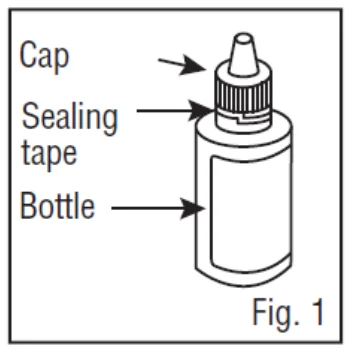
- 1. Before using the medication for the first time, be sure the sealing tape on the bottle is unbroken (Fig.1).
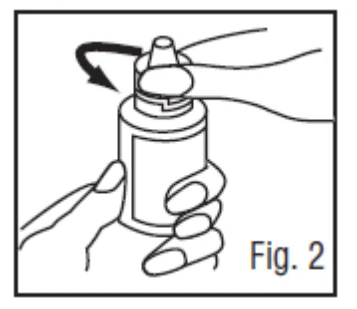
- 2. To open the bottle, unscrew the cap by turning as indicated by the arrow (Fig.2).
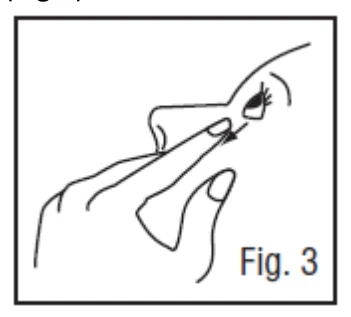
- 3. Wash your hands. Tilt your head back and look at the ceiling. With clean hands, gently pull your lower eyelid down slightly to create a small pocket between your eyelid and your eye (Fig.3).
- 4. Turn the bottle upside down and squeeze it gently to release one drop into each eye that needs treatment (Fig. 4).
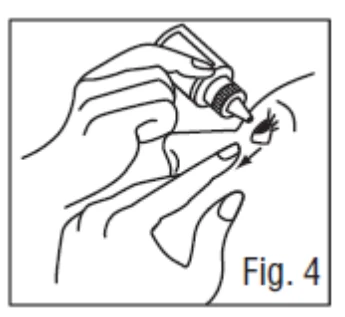
DO NOT TOUCH YOUR EYE OR EYELID WITH THE DROPPER TIP.
If a drop misses your eye, try again.
- 5.
Let go of the lower lid, and close your eye for 30 seconds. Do not blink.
Immediately after applying the eye drops, wash your hands to remove any medicine that may be on them.
- 6. Repeat steps 2, 3 and 4 with the other eye if instructed to do so by your doctor.
- 7. Replace the cap by turning until it is firmly touching the bottle. Do not over tighten the cap.
Usual dose:
Instill 1 or 2 drops in your affected eye(s) 3 or 4 times daily or as directed by your doctor.
Overdose:
If ingested accidentally, drink a lot of fluids.
| If you think you, or a person you are caring for, have taken too much KETOROLAC, contact a healthcare professional, hospital emergency department, or regional poison control centre immediately, even if there are no symptoms. |
|---|
Missed Dose:
If you forget to apply KETOROLAC at your normal time, simply apply it as soon as you remember, and then go back to your regular routine. Do not take two doses to make up for the one that you missed.
What are possible side effects from using KETOROLAC?
These are not all the possible side effects you may have when taking KETOROLAC. If you experience any side effects not listed here, tell your healthcare professional.
Common with KETOROLAC:
- Irritation of the eye (stinging, burning, redness)
- Itchy and/or swollen eye
- Blurred vision after instillation of the eye drops
- Eye pain
- Conjunctivitis (pink eye)
Serious side effects and what to do about them
| Symptom / effect | Talk to your healthcare professional | Stop taking drug and get immediate medical help | |
| Only if severe | In all cases | ||
| RARE | |||
| delay wound healing in those with serious eye conditions including corneal thinning, erosion, perforation or ulceration, and cause these conditions to worsen and may affect sight | √ | ||
| bronchospasm (shortness of breath) and worsen asthma symptoms | √ | ||
If you have a troublesome symptom or side effect that is not listed here or becomes bad enough to interfere with your daily activities, tell your healthcare professional.
Reporting Side Effects
You can report any suspected side effects associated with the use of health products to Health Canada by:
NOTE: Contact your health professional if you need information about how to manage your side effects. The Canada Vigilance Program does not provide medical advice. |
|---|
Storage:
Store at 15°C to 30°C. Protect from light. Discard unused solution 28 days after opening.
Keep out of reach and sight of children.
If you want more information about KETOROLAC:
- Talk to your healthcare professional.
- Find the full product monograph that is prepared for healthcare professionals and includes this Patient Medication Information by visiting the Health Canada website: (https://www.canada.ca/en/health-canada/services/drugs-health-products/drug-products/drug-product-database.html); the manufacturer’s website (https://www.aapharma.ca/en/) or by calling 1-877-998-9097.
L4K 4N7.