


Patient Medication Information: uses, side effects, how to take - Nevanac
ABOUT THIS MEDICATION
What the medication is used for:
NEVANAC is used to manage eye pain and inflammation following cataract surgery on the eye.
What it does:
NEVANAC, as a nonsteroidal anti-inflammatory drug (NSAID), can reduce the substances produced by your body, such as prostaglandins, which cause pain and swelling in your eye.
When it should not be used:
NEVANAC should not be used if you are:
- allergic (hypersensitive) to nepafenac or any of the other ingredients in NEVANAC (see What the important nonmedicinal ingredients are).
- Allergic to other NSAIDs.
Tell your doctor if you have allergies.
What the medicinal ingredient is:
Nepafenac
What the important nonmedicinal ingredients are:
Preservative: benzalkonium chloride.
Other ingredients: carbomer 974P, edetate disodium, mannitol, purified water, sodium chloride and tyloxapol. Tiny amounts of hydrochloric acid or sodium hydroxide are sometimes added during the manufacture of the product to adjust to the proper pH.
What dosage forms it comes in:
NEVANAC contains tiny yellow particles suspended in a clear liquid. It is supplied as 5 mL of suspension in an 8 mL plastic DROP-TAINER® bottle with a screw cap.
WARNINGS AND PRECAUTIONS
BEFORE you use NEVANAC, talk to your doctor or pharmacist if you:
- have any allergies to NEVANAC or any of its ingredients (see What the important nonmedicinal ingredients are).
- bruise easily or have bleeding problems.
take any medicines that may make you bleed more like acetylsalicylic acid or warfarin.
- have an eye disorder called dry eye syndrome, a corneal ulcer, a corneal denervation or a corneal epithelial defect.
- have diabetes.
- have rheumatoid arthritis.
- have had many eye surgeries within a short period of time.
- have had complicated eye surgeries.
- wear contact lenses.
- apply other NSAID or steroid medications to your eye since these may slow the healing of your eye.
- are using any other medications in the eye.
- have ever had an allergic reaction to nonsteroidal anti-inflammatory drugs including acetylsalicylic acid, as you may be allergic to NEVANAC.
Pregnancy or breast-feeding
If you are pregnant, or might get pregnant, talk to your doctor before you use NEVANAC. You should not use NEVANAC if you are pregnant. If you are breast-feeding, do not use NEVANAC since it may get into your milk.
Other Medications
Please tell your doctor or pharmacist if you are taking (or recently took) any other medicines. Remember to mention also medicines that you bought without prescription, over the counter.
While taking NEVANAC
Tell your doctor if you are not getting any relief or if problems develop.
If you wear contact lenses
There is a preservative in NEVANAC (benzalkonium chloride) that can discolour soft lenses and may cause eye irritation. Wearing contact lenses is not recommended after cataract surgery. Do not wear contact lenses while using NEVANAC.
Driving and using machines
You may find that your vision is blurred for a time just after you use NEVANAC. Do not drive or use machines until your vision is clear.
INTERACTIONS WITH THIS MEDICATION
Tell your doctor or pharmactist about all the medications you are taking, recently took or planning to use, including those without a prescription.
Do not use acetylsalicylic acid, phenylacetic acid or other nonsteroidal anti-inflammatories with NEVANAC if you have previously developed reactions to the use of these products (see When it should not be used).
Taking a topical NSAID, like NEVANAC, at the same time with a topical steroid may delay healing. Taking NEVANAC at the same time as other drugs that prolong bleeding time may also increase the risk of bleeding problems.
PROPER USE OF THIS MEDICATION
Always use NEVANAC exactly as your doctor has told you.
Usual adult dose:
One drop of NEVANAC should be applied to the affected eye(s) three times a day – morning, mid-afternoon, and prior to bed. Use at the same time each day. Begin 1 day before cataract surgery. Continue on the day of surgery. Then use it for as long as your doctor told you to. This may be up to 2 weeks after your operation.
How to Use:
1 2 3
- Get the NEVANAC bottle and a mirror.
- Wash your hands.
- Shake well before use.
- Twist off the bottle cap.
- After cap is removed: if security snap collar is loose, remove before using product.
- Hold the bottle, pointing down, between your thumb and fingers.
- Tilt your head back.
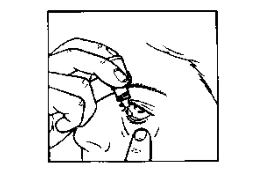
- Pull down your lower eyelid with a clean finger until there is a ‘pocket’ between the eyelid and your eye. The drop will go in here (picture 1).
- Bring the bottle tip close to the eye. Do this in front of a mirror if it helps.
- Do not touch your eye or eyelid, surrounding areas or other surfaces with the dropper. It could infect the drops.
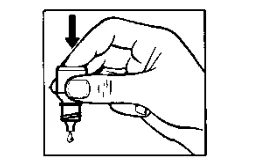
- Gently press on the base of the bottle to release one drop of NEVANAC at a time.
- Do not squeeze the bottle: it is designed so that a gentle press on the bottom is all that it needs (picture 2).
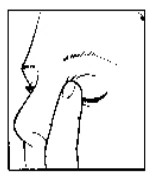
- After using NEVANAC, press a finger into the corner of your eye, by the nose (picture 3). This helps to stop NEVANAC getting into the rest of the body.
- If you use drops in both eyes, repeat the steps for your other eye.
- Close the bottle cap firmly immediately after use.
Use up one bottle before opening the next bottle
If a drop misses your eye, try again.
If you use drops in both eyes, repeat the steps for your other eye. Close the bottle cap firmly immediately after use.
If you are using other eye drops wait at least 5 minutes between putting in NEVANAC and the other drops.
Overdose:
If you use more NEVANAC than you should, rinse it all out with warm water. Don’t put in any more drops until it’s time for your next regular dose. If accidentally ingested, contact your local poison control centre or doctor.
Missed Dose:
If you forget to use NEVANAC, use a single dose as soon as you remember. If it is almost time for the next dose, leave out the missed dose and continue with the next dose of your regular routine. Do not use a double dose to make up for a missed dose. Do not use more than one drop in the affected eye(s) 3 times daily.
SIDE EFFECTS AND WHAT TO DO ABOUT THEM
A small number of people who use NEVANAC may get side effects. They can be unpleasant, but most of them disappear rapidly.
Do not stop taking NEVANAC without speaking to your doctor. You can usually continue using the drops, unless the effects are serious. If you're worried, talk to a doctor or pharmacist.
The most common side effects include eye pain, blurred vision, eye itching, dry eye, increased tear production, abnormal sensation in the eye, crusty eyelids, inflammation inside the eye, and headache.
Less common side effects include deposits on the eye surface, fluid in the back of the eye, eye discharge, sensitivity to light, eye irritation, eye allergy, eyelid swelling or drooping, eye redness, increased skin allergy, nausea, dry mouth, and allergy.
Additional side effects may also affect people using NEVANAC including inflammation (pain, redness, swelling) of the eye or eyelid, reduced vision, dizziness, vomiting and increased blood pressure.
| SERIOUS SIDE EFFECTS, HOW OFTEN THEY HAPPEN AND WHAT TO DO ABOUT THEM | ||
|---|---|---|
| Symptom / effect | Talk with your doctor or pharmacist | Stop taking drug and call your |
In case of drug overdose, contact a health care practitioner, hospital emergency department or regional Poison Control Centre immediately, even if there are no symptoms.
| Only if severe | In all cases | doctor or pharmacist | |
|---|---|---|---|
| Eyes get redder or more painful | ✓ | ||
| Cornea (protective outer layer of the eye) disorders including ulcers, surface changes, injury and damage including thinning or perforation and impaired healing, scarring, clouding: blurred vision, eye pain and redness. | ✓ | ||
This is not a complete list of side effects. For any unexpected effects while taking NEVANAC, contact your doctor or pharmacist.
HOW TO STORE IT
Store at 2oC - 30°C. Keep out of reach and sight of children. Discard 28 days after opening.
Reporting Side Effects
You can report any suspected side effects associated with the use of health products to Health Canada by:
NOTE: Contact your health professional if you need information about how to manage your side effects. The Canada Vigilance Program does not provide medical advice. |
MORE INFORMATION
This document plus the full product monograph, prepared for health professionals can be found at:
www.novartis.ca or by contacting the sponsor, Novartis Pharmaceuticals Canada Inc., at: 1-800-363-8883.
Last revised: January 18, 2018
NEVANAC is a registered trademark