


Product Monograph - Nevanac
SUMMARY PRODUCT INFORMATION
| Route of Administration | Dosage Form / Strength | Clinically Relevant Nonmedicinal Ingredients |
| Ophthalmic (topical) | Suspension/ 0.1% | Benzalkonium chloride as preservative. For a complete listing see Dosage Forms, Composition and Packaging section. |
INDICATIONS AND CLINICAL USE
NEVANAC® (nepafenac) ophthalmic suspension, 0.1% is indicated for management of pain and inflammation associated with cataract surgery.
Geriatrics (> 65 years of age):
No overall differences in safety and effectiveness have been observed between elderly and younger patients.
Pediatrics (< 18 years of age):
The safety and effectiveness of NEVANAC in pediatric patients have not been established. Its use is not recommended in these patients until further data become available.
CONTRAINDICATIONS
NEVANAC is contraindicated in patients who are:
- hypersensitive to nepafenac, to any ingredient in the formulation or component of the container (for a complete listing see the Dosage Forms, Composition and Packaging section of the Product Monograph).
- hypersensitive to other nonsteroidal anti-inflammatory drugs (NSAIDs).
WARNINGS AND PRECAUTIONS
General
Benzalkonium chloride, the preservative in NEVANAC, has been reported to cause punctate keratopathy and/or toxic ulcerative keratopathy. Close monitoring is required with frequent and/or prolonged use of this product. Benzalkonium chloride is also known to discolour soft contact lenses and may cause eye irritation.
There is a potential for cross-sensitivity of nepafenac to acetylsalicylic acid, phenylacetic acid derivatives, and other NSAIDs. Therefore, caution should be used when treating individuals who have previously exhibited sensitivities to these drugs.
Topical NSAIDs may slow or delay healing. Topical corticosteroids are also known to slow or delay healing. Concomitant use of topical NSAIDs and topical steroids may increase the potential for healing problems.
Carcinogenesis and Mutagenesis
See Toxicology section for animal data.
Hematologic
With some NSAIDs, including NEVANAC, the potential exists for increased bleeding time due to interference with thrombocyte aggregation. There have been reports that ophthalmic NSAIDs may cause increased bleeding of ocular tissues (including hyphemas) in conjunction with ocular surgery.
It is recommended that NEVANAC be used with caution in patients with known bleeding tendencies or who are receiving medications which may prolong bleeding time.
Ophthalmologic
Use of topical NSAIDs may result in keratitis. In some susceptible patients, continued use of topical NSAIDs may result in epithelial breakdown, corneal thinning, corneal erosion, corneal ulceration or corneal perforation. These events may be sight-threatening. Patients with evidence of corneal epithelial breakdown should immediately discontinue use of NEVANAC and should be closely monitored for corneal health.
Postmarketing experience with topical NSAIDs suggests that patients with complicated ocular surgeries, corneal denervation, corneal epithelial defects, diabetes mellitus, ocular surface diseases (e.g., dry eye syndrome), rheumatoid arthritis, or repeat ocular surgeries within a short period of time may be at increased risk for corneal adverse events which may become sight-threatening. Topical NSAIDs should be used with caution in these patients. Post-marketing experience also suggests that prolonged use of topical NSAIDs may increase patient risk for occurrence and severity of corneal adverse reactions.
Contact lens wear is not recommended during the postoperative period following cataract surgery; therefore, contact lenses should not be worn during treatment with NEVANAC.
Sexual Function/Reproduction
Nepafenac did not impair fertility when administered orally to male and female rats at 3 mg/kg (approximately 90 and 380 times the plasma exposure to the parent drug, nepafenac, and the active metabolite, amfenac, respectively, at the recommended human topical ophthalmic dose). There are no adequate data regarding the use of NEVANAC on human fertility.
Driving and Using Machinery
Temporary blurred vision or other visual disturbances may affect the ability to drive or use machines. If blurred vision occurs at application, the patient must wait until the vision clears before driving or using machinery.
Special Populations
Pregnant Women:
No adequate and well-controlled studies have been conducted in pregnant women. Because animal reproduction studies are not always predictive of human response, NEVANAC should not be used during pregnancy.
Because of the known effects of prostaglandin biosynthesis inhibiting drugs on the fetal cardiovascular system (closure of the ductus arteriosus), the use of NEVANAC during late pregnancy should be avoided.
Nursing Mothers: It is unknown whether nepafenac is excreted in human milk after topical ocular administration. Animal studies have shown excretion of nepafenac in the milk of pregnant rats after oral administration. Caution should be exercised when NEVANAC is administered to a nursing woman.
Pediatric Use: The safety and effectiveness of NEVANAC in pediatric patients have not been established. Its use is not recommended in these patients until further data become available.
Geriatric Use: No overall differences in safety and effectiveness have been observed between elderly and younger patients.
ADVERSE REACTIONS
Adverse Drug Reaction Overview
In clinical studies with over 800 patients receiving NEVANAC, approximately 5% of patients experienced adverse reactions. These events led to discontinuation in 0.5% of patients, which was less than placebo-treated patients (1.3%) in these same studies. No serious adverse events related to NEVANAC were reported in these studies.
Clinical Trial Adverse Drug Reactions
Because clinical trials are conducted under very specific conditions the adverse reaction rates observed in the clinical trials may not reflect the rates observed in practice and should not be compared to the rates in the clinical trials of another drug. Adverse drug reaction information from clinical trials is useful for identifying drug-related adverse events and for approximating rates.
In 11 clinical studies, NEVANAC was administered to 811 patients at a dose of one drop one, two, three or four times daily. The most frequent adverse drug reactions (>0.1%) in patients with exposure to NEVANAC are presented in Table 1. No treatment-related adverse drug reactions were reported at a frequency of ≥1% in patients with exposure to NEVANAC.
| Table 1: Treatment-Related Adverse Drug Reactions > 0.1% | |||||||||
| MedDRA Preferred Term (Version 9.0) | NEVANAC 0.1% n= 811 (% ) | Placebo n= 529 (% ) | Ketorolac 0.5% n=73 (% ) | Ketorolac 0.4% n=163 (% ) | Diclofenac 0.1% n=44 (% ) | ||||
| Eye Disorders | |||||||||
| eyelid margin crusting | 0.6 | 1.4 | |||||||
| eye pain | 0.5 | 0.9 | 2.5 | ||||||
| punctate keratitis | 0.5 | 0.6 | 1.4 | ||||||
| vision blurred | 0.5 | 0.2 | |||||||
| foreign body sensation | 0.4 | 1.5 | |||||||
| dry eye | 0.4 | 0.2 | |||||||
| eye pruritus | 0.4 | ||||||||
| lacrimation increased | 0.2 | 0.2 | |||||||
| Nervous System Disorders | |||||||||
| Headache | 0.4 | ||||||||
Less Common Clinical Trial Adverse Drug Reactions (≤0.1%)
Eye disorders: allergic conjunctivitis, choroidal effusion, conjunctival hyperaemia, corneal deposits, eye discharge, eye irritation, eyelid disorder, iritis, keratitis, ocular discomfort, photophobia
Gastrointestinal disorders: dry mouth, nausea
Immune system disorders: hypersensitivity
Abnormal Hematologic and Clinical Chemistry Findings
NEVANAC had no clinically relevant effect on laboratory parameters.
Post Market Adverse Drug Reactions
Adverse reactions identified from post-marketing experience (i.e. spontaneous reporting and subsequent clinical trials) that have not been reported previously in clinical trials with NEVANAC include the following: corneal perforation, ulcerative keratitis, corneal epithelium defect/disorder, corneal abrasion, anterior chamber inflammation, impaired healing (cornea), reduced visual acuity, corneal scar, corneal opacity, blepharitis, corneal thinning, eye swelling, ocular hyperemia, dizziness, vomiting, dermatitis allergic and blood pressure increased.
DRUG INTERACTIONS
Overview
Neither nepafenac nor amfenac inhibits any of the major human cytochrome P450 (CYP1A2, CYP2C9, CYP2C19, CYP2D6, CYP2E1, and CYP3A4) metabolic activities in vitro at concentrations up to 300 ng/mL. Therefore, drug-drug interactions involving CYP-mediated metabolism of concomitantly administered drugs are unlikely. Drug-drug interactions mediated by protein binding are also unlikely.
Drug-Drug Interactions
NEVANAC may be administered in conjunction with other topical ophthalmic medications such as beta-blockers, carbonic anhydrase inhibitors, alpha-agonists, cycloplegics, and mydriatics.
The administration of NEVANAC in conjunction with prostaglandin analogues was not evaluated in clinical trials. Interactions between NEVANAC and prostaglandin analogues are not anticipated following topical ocular administration.
There is a potential cross-sensitivity to acetylsalicylic acid, phenylacetic acid derivatives, and other nonsteroidal anti-inflammatory agents.
Concomitant use of topical NSAIDs and topical steroids may increase the potential for healing problems. Concomitant use of NEVANAC with medications that prolong bleeding time may increase the risk of haemorrhage.
Drug-Food Interactions
Interactions with food are not anticipated following topical ocular administration.
Drug-Herb Interactions
Interactions with herbal products are not anticipated following topical ocular administration.
Drug-Laboratory Interactions
Interactions with laboratory tests are not anticipated following topical ocular administration.
DOSAGE AND ADMINISTRATION
Dosing Considerations
NEVANAC has not been studied in patients with hepatic disease or renal impairment. Nepafenac is eliminated primarily through biotransformation and the systemic exposure is very low following topical ocular administration. No dose adjustment is warranted in these patients.
Recommended Dose and Dosage Adjustment
Shake well before use. One drop of NEVANAC should be applied to the affected eye(s) three-times-daily beginning 1 day prior to cataract surgery, and continued on the day of surgery and through the first 2 weeks of the postoperative period.
Missed Dose
If a dose is missed, a single drop should be applied as soon as possible before reverting to regular routine. Do not use a double dose to make up for the one missed.
Administration
NEVANAC has been safely administered in conjunction with other ophthalmic medications such as antibiotics, anesthetics, beta-blockers, carbonic anhydrase inhibitors, alpha-agonists, cycloplegics, and mydriatics. Because the administration of NEVANAC in conjunction with prostaglandin analogues has not been studied, use only if the benefit outweighs any potential risk.
If more than one topical ophthalmic medication is being used, the medicines must be administered at least 5 minutes apart.
Contact lens wear is not recommended during the postoperative period following cataract surgery; therefore, contact lenses should not be worn during treatment with NEVANAC.
To prevent contamination of the dropper tip and solution, care must be taken not to touch the eyelids, surrounding areas or other surfaces with the dropper tip of the bottle. Keep bottle tightly closed when not in use.
OVERDOSAGE
A topical overdosage may be flushed from the eye(s) with warm tap water.
There is minimal risk of adverse effects due to accidental ingestion of a 5 ml bottle of NEVANAC (total dose of 5 mg) by a child. The recommended adult dose of amfenac sodium (FENAZOX), marketed in Japan since 1986, is one to four 50 mg tablets daily. This translates to 1 to 4 mg/kg per day for a 50 kg person. If a 20 kg child ingested the entire contents of a 5 ml bottle of NEVANAC, it would translate to a dose of 0.25 mg/kg or only 6% to 25% of the recommended adult dose.
ACTION AND CLINICAL PHARMACOLOGY
Mechanism of Action
Nepafenac is a nonsteroidal anti-inflammatory and analgesic prodrug. After topical ocular dosing, nepafenac penetrates the cornea and is converted by ocular tissue hydrolases to amfenac, a nonsteroidal anti-inflammatory drug. Amfenac inhibits the action of prostaglandin H synthase (cyclooxygenase), an enzyme required for prostaglandin production.
Pharmacodynamics
For management of a suspected drug overdose, contact your regional Poison Control Centre.
In rabbits, nepafenac has been shown to inhibit blood-retinal-barrier breakdown, concomitant with suppression of PGE2 synthesis. Ex vivo, a single topical ocular dose of nepafenac was shown to inhibit prostaglandin synthesis in the iris/ciliary body (85% - 95%) and the retina/choroid (55%) for up to 6 hours and 4 hours, respectively. Topical nepafenac inhibits choroidal neovascularisation and ischemia induced retinal neovascularisation. A decreased production of vascular endothelial growth factor was noted in these studies.
The majority of hydrolytic conversion is in the retina/choroid followed by the iris/ciliary body and cornea consistent with the degree of vascularised tissue. The enhanced permeability of nepafenac, combined with rapid bioactivation, make it a target-specific NSAID for inhibiting prostaglandin formation in the anterior and posterior segments of the eye.
Results from clinical studies indicate the NEVANAC has no significant effect on intraocular pressure.
Pharmacokinetics
| Cmax (ng/mL) | Tmax (h) | AUC0-8 (ng•h/mL) | t½ (h) | |
|---|---|---|---|---|
| Nepafenac | 0.310 ± 0.104 | 0.25 ± 0.10 | 0.368 ± 0.106 | 0.9 ± 0.2 |
| Amfenac | 0.422 ± 0.121 | 0.55 ± 0.14 | 0.976 ± 0.284 | 1.6 ± 0.3 |
Absorption: Following bilateral topical ocular three-times-daily dosing of NEVANAC, low but quantifiable plasma drug concentrations were observed in the majority of subjects at 2 hours (nepafenac) and 5 hours (amfenac) post-dose. The mean steady-state plasma Cmax for nepafenac and for amfenac were 0.310 ± 0.104 ng/mL and 0.422 ± 0.121 ng/mL, respectively, following ocular administration.
Distribution: Amfenac has high affinity toward serum albumin proteins. In vitro, the percent bound to human albumin and human serum was 95.4% and 99.1%, respectively.
Studies in rats have shown that radioactive drug-related materials distribute widely in the body following single and multiple oral doses of 14C-nepafenac.
Metabolism: Nepafenac undergoes relatively rapid bioactivation to amfenac via intraocular hydrolases. Subsequently, amfenac undergoes extensive metabolism to more polar metabolites involving hydroxylation of the aromatic ring leading to glucuronide conjugate formation.
Radiochromatographic analyses before and after β-glucuronidase hydrolysis indicated that all metabolites were in the form of glucuronide conjugates, with the exception of amfenac. Amfenac was the major metabolite in plasma, representing approximately 13% of total plasma radioactivity. The second most abundant plasma metabolite was identified as 5-hydroxy nepafenac, representing approximately 9% of total radioactivity at Cmax.
Excretion: After oral administration of 14C-nepafenac to healthy volunteers, urinary excretion was found to be the major route of radioactivity elimination, accounting for approximately 85% of the dose while fecal excretion represented approximately 6% of the dose. Nepafenac and amfenac were not quantifiable in the urine.
Special Populations and Conditions
Pediatrics: NEVANAC has not been evaluated in the pediatric population.
Geriatrics: No overall differences in safety and effectiveness have been observed between elderly and younger patients.
Gender: Gender differences in the plasma pharmacokinetics of nepafenac and amfenac were small and not clinically relevant.
Race: A comparison of the single- and steady-state pharmacokinetic data for nepafenac and amfenac in healthy Japanese and non-Japanese subjects indicate that there are no clinically meaningful ethnic differences in the systemic exposure of either nepafenac or amfenac following topical ocular administration of NEVANAC.
Hepatic or Renal Insufficiency: NEVANAC has not been studied in patients with hepatic disease or renal impairment. The systemic exposure is very low following topical ocular administration and no dose adjustment is warranted in these patients.
STORAGE AND STABILITY
Store at 2oC - 30°C. Discard 28 days after opening.
SPECIAL HANDLING INSTRUCTIONS
None.
DOSAGE FORMS, COMPOSITION AND PACKAGING
NEVANAC contains the active ingredient nepafenac (1 mg/ml) 0.1%, the preservative benzalkonium chloride 0.005%, and the inactive ingredients mannitol, carbomer 974P, sodium chloride, tyloxapol, edetate disodium, sodium hydroxide and/or hydrochloric acid (to adjust pH) and purified water.
NEVANAC is supplied in an 8 mL round low density polyethylene bottle with a natural low density polyethylene dispensing plug and white polypropylene cap. Tamper evidence is provided by a closure with an extended skirt that locks to the bottle finish on application and breaks away from the closure on opening. After cap is removed: if tamper evident snap collar is loose, remove before using product.
Net contents are 5 mL supplied in an 8 mL bottle.
PART II: SCIENTIFIC INFORMATION
PHARMACEUTICAL INFORMATION
Drug Substance
Common name: nepafenac
Chemical name: 2-amino-3-benzoylbenzeneacetamide
2-(2-amino-3-benzoylphenyl)acetamide
Molecular formula and molecular mass: C15 H14 N2 O2; 254.28
Structural formula:
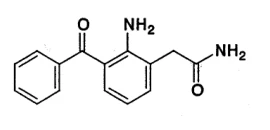
Physicochemical properties: Nepafenac drug substance is provided as a yellow crystalline or powder material.
CLINICAL TRIALS
Study demographics and trial design
A summary of the patient demographics for each of the 4 pivotal studies relevant to the evaluation of the efficacy and safety of NEVANAC® (nepafenac) ophthalmic suspension, 0.1% is provided in Table 2. The study population consisted of patients, 18 years of age and older, requiring cataract extraction with planned implantation of a posterior chamber intraocular lens. Overall, the demographics of the patient population in these studies are representative of the population that would be expected to receive the drug product once on the market. Approximately 78% of the patients were over 65 years of age and about 86% were Caucasian. There was a slight predominance of female patients (~59%), which is typical of an elderly population.
| Table 2: Summary of patient demographics for pivotal clinical trials in cataract surgery patients | ||||||
| Study # | Trial design | Dosage, route of administration and duration | Study subjects (n=number) | Mean Age (Range) | Gender | Race |
C-02-53 Posology/ Safety & Efficacy | prospective, randomized, double-masked, placebo-controlled | One drop nepafenac 0.1% or placebo dosed QD, BID, or TID / topical ocular / 16 days1 | n = 212 intent to treat patients | 70.3 yrs (47–91 yrs) | 91 M 121 F | A=3 B=10 C=168 H=n/a O=31 |
C-03-32 Safety & Efficacy | prospective, randomized, double-masked, placebo-controlled | One drop TID nepafenac 0.1% or placebo / topical ocular / 16 days1 | n = 476 intent to treat patients | 69.9 yrs (27–90 yrs) | 209 M 267 F | A=4 B=19 C=426 H=25 O=2 |
C-04-65 Safety & Efficacy | prospective, randomized, double masked, active- and placebo-controlled | One drop TID nepafenac 0.1% or ketorolac 0.5% or placebo / topical ocular / 23 days1 | n = 225 intent to treat patients | 72.1 yrs (42-90 yrs) | 90 M 135 F | A=3 B=3 C=217 H=2 O=0 |
C-04-41 Safety & Efficacy | prospective, randomized, observer and patient-masked, active-controlled | One drop TID nepafenac 0.1% or one drop QID ketorolac 0.4% / topical ocular / up to 30 days1 | n = 264 intent to treat patients | 69.4 yrs (32-89 yrs) | 111 M 153 F | A=1 B=12 C=243 H=8 O=0 |
A=Asian; B=Black; C=Caucasian; H=Hispanic; O=Other
1Dosing started 1 day prior to surgery.
Study results
In each of the 4 pivotal efficacy studies (C-02-53, C-03-32, C-04-65 and C-04-41), aqueous cells and flare, which are the hallmark of ocular inflammation, served as the basis for evaluating the efficacy of the drug product. Aqueous cells and flare were evaluated using slit-lamp biomicroscopy. Aqueous cells were graded by the investigator on a 5-point scale and aqueous flare was graded by the investigator on a 4-point scale. The scales were designed to distinguish between the various degrees of anterior segment inflammation encountered following cataract surgery, and to describe when inflammation is cured (i.e., a score of 0 for cells indicates that no cells are observed and a score of 0 for flare indicates that no flare is observed).
Subjective assessment of ocular pain, rated by the investigator on a 6-point scale was evaluated as a secondary efficacy variable in all 4 of the efficacy studies. The scales were designed to differentiate between the various degrees of ocular pain that may be encountered following cataract surgery and also served as an element in determining treatment failures.
| Table 3: Results of Study C-02-53 | |
|---|---|
| Endpoints | Associated value and statistical significance for Drug at specific dosages, placebo or active control. |
C-02-53: The primary efficacy variable was the percentage of patients declared a treatment failure (aqueous cells score ≥ 3, aqueous flare score = 3 and/or ocular pain score ≥ 4) at Day 14. Secondary efficacy variables included the percentage of treatment responders (aqueous cell score ≤ 1 and aqueous flare score = 0), mean aqueous cells score, mean aqueous flare score and clinical cure rate (cells + flare = 0). | The lowest cumulative rate of treatment failure was nepafenac three times a day (19.6%) followed by nepafenac one time a day (25.0%), nepafenac two times a day (30.0%), and placebo (60.3%) at postoperative Day 14. Nepafenac three times a day was superior to placebo following surgery from Day 3 through study exit (Day 14), P≤0.0080. All nepafenac posologies resulted in numerically lower mean aqueous cells plus flare score compared to placebo at all post-surgical visits. Additonally, all nepafenac posologies were superior to placebo for the mean aqueous cells plus flare scores from Day 3 through study exit (Day 14), P≤0.0330. Three times a day dosing was associated with the lowest mean cells plus flare scores at Days 3, 7 and 14. All nepafenac posologies were associated with a greater percentage of treatment responders compared to placebo at all visits. Three times a day dosing with nepafenac resulted in statistically significant greater percentage of treatment responders at the Day 3 (41.1%, P=0.0081), Day 7 (53.6%, P=0.0001) and Day 14 (66.1%, P=0.0002) visits compared to placebo (19.0%, 20.7% and 32.8%, respectively, P≤0.0081). A patient was a treatment responder at a given visit only if he/she was a responder at that visit and all subsequent visits. Nepafenac three times a day was superior to placebo in treating inflammation as demonstrated by statistically significantly lower mean aqueous cells scores from postoperative Day 3 through study exit (Day 14), P≤0.0071. Nepafenac three times a day was superior to placebo in treating ocular inflammation as demonstrated by statistically significantly lower mean aqueous flare scores from postoperative Day 3 through study exit (Day 14), P≤0.0052. All nepafenac posologies (one, two and three times a day) demonstrated statistically significant higher cumulative cure rates at Day 14 compared to placebo (P≤0.0133). Nepafenac three times a day dosing resulted in an earlier significantly greater cure rate at Day 7 compared to placebo (P=0.0144). A patient was a cure at a given visit only if he/she was a cure at that visit and all subsequent visits. |
| Table 4: Results of study C-03-32 | |
| Endpoints: | Associated value and statistical significance for Drug at specific dosages, placebo or active control. |
C-03-32: The primary efficacy variable was the percentage of patients declared a cure of ocular inflammation (aqueous cells score + flare score = 0) at Day 14. Secondary efficacy variables included the percentage of patients declared a treatment failure (cells score ≥ 3, flare score = 3, and/or ocular pain score ≥ 4) at each visit, the percentage of patients with clinically significant inflammation (aqueous cells + flare score ≥ 4), and the percentage of patients reporting no ocular pain. | Nepafenac 0.1% dosed three times a day was superior to placebo for percentage of patients cured at Day 14 (62.6% vs 17.2%, respectively; P<0.0001). Additionally, nepafenac 0.1% was superior to placebo for cures at all other postoperative visits (Day 1, 0.4%; Day 3, 6.6%; and Day 7, 29.6%) compared to placebo (0.0%, 3.0%, and 3.0%, respectively; P≤0.0050). A patient was considered cured at a given visit only if he/she was free of ocular inflammation at that visit and all subsequent visits. The use of nepafenac 0.1% resulted in statistically significantly lower percentages of treatment failures at all scheduled postoperative visits compared to placebo (P<0.0001). The use of nepafenac 0.1% resulted in statistically significantly higher percentages of patients with no ocular pain at all scheduled postoperative visits compared to placebo (P<0.0001). Nepafenac 0.1% resulted in statistically significantly lower incidences of patients with clinically significant inflammation at all scheduled post-operative visits compared to placebo (P<0.0001). |
| Table 5: Results of study C-04-65 | |
| Endpoints: | Associated value and statistical significance for Drug at specific dosages, placebo or active control. |
C-04-65: The primary efficacy variable was the percentage of patients declared cured of ocular inflammation (aqueous cells score + flare scores = 0) at Day 14. Secondary efficacy variables included:
| Nepafenac dosed three times a day was superior to placebo and equal to ketorolac 0.5% for the prevention and treatment of ocular pain and inflammation associated with cataract surgery. At Day 14 there is a statistically significantly higher cure rate for patients treated with nepafenac dosed three times a day compared to placebo (76.3% vs 59.2%; P=0.0241). A patient was considered cured at a postoperative visit if they were free of ocular inflammation and remained free of ocular inflammation at all subsequent visits. Nepafenac dosed 3 times daily is non-inferior (equal) to ketorolac 0.5% dosed three times a day for the treatment of ocular inflammation associated with cataract extraction and IOL implantation surgery as evidenced by similar mean aqueous cells plus flare scores at Day 14. The use of nepafenac 0.1% resulted in statistically significantly lower percentages of treatment failures at Days 3 and 7 compared to placebo (P≤0.0496). The use of nepafenac 0.1% resulted in statistically significantly lower percentages of patients with significant postoperative inflammation at Day 3 and Day 7 compared to placebo (p≤0.0284). Nepafenac patients had a statistically significantly lower postoperative mean scores for patient reported and investigator rated ocular pain compared to placebo (P≤0.0103). Patients treated with nepafenac experienced significantly better comfort (less burning and stinging) upon instillation of their eye drops compared to those treated with ketorolac 5% (P=0.0158). |
| Table 6: Results of study C-04-41 | |
| Endpoints: | Associated value and statistical significance for Drug at specific dosages, placebo or active control. |
C-04-41: The primary efficacy variable was the percentage of patients who were a clinical success [aqueous cells score = 0 (none) or 1 (1 to 5 cells) and flare score = 0] at Day 14. Secondary efficacy variables included:
| Nepafenac 0.1% was statistically non-inferior for the incidence of patients declared a clinical success for ocular inflammation compared to ketorolac 0.4% at Day 14. Three times a day dosed nepafenac 0.1% resulted in similar percentages of cured patients when compared to four times a day dosed ketorolac 0.4% (P>0.05) at Day 14. Ocular discomfort to the study drop was rated by patients on a 5 point scale (0=none to 4=very severe) upon first application (1 day prior to surgery) and at 7 days following surgery. Nepafenac 0.1% was statistically significantly more comfortable upon instillation compared to Ketorolac 0.4% one day prior to and seven days following surgery (P≤0.0003). Satisfaction with the study drop (nepafenac 0.1% or ketorolac 0.4%) was rated by patients on a 5 point scale (1-Strongly agree to 5-Strongly disagree). Nepafenac 0.1% was associated with significantly less burning (P<0.0001), stinging (P<0.0001), and redness (P=0.0479) and was significantly more soothing upon instillation (P=0.0067) compared to ketorolac 0.4%. |
DETAILED PHARMACOLOGY
Human Pharmacodynamics
Nepafenac is an amide prodrug of amfenac, a potent nonsteroidal anti-inflammatory drug (NSAID). Following topical ocular administration, nepafenac undergoes amide hydrolysis by intraocular hydrolases to form the pharmacologically active amfenac. Amfenac inhibits both cyclooxygenase COX-1 and COX-2 activity.
Comparing aqueous humor levels at the time of maximum observed mean concentrations relative to cyclooxygenase-1 (COX-1) and cyclooxygenase-2 (COX-2) IC50 values, amfenac had higher mean ratios for both COX-1 and COX-2 than those for ketorolac and nepafenac. The concentration to COX-1 and COX-2 IC50 ratios for amfenac (0.649 and 1.07) were approximately 200% and 900% higher, respectively, than those for ketorolac (0.302 and 0.116). The ratio for nepafenac to COX-1 IC50 was much lower (>50-fold) than that for amfenac. These findings suggest superior anti-inflammatory activity with NEVANAC compared with Ketorolac Tromethamine Ophthalmic Solution, 0.4%.
Animal Pharmacodynamics
Following a single topical ocular dose, nepafenac distributes locally both to the iris/ciliary body and retina/choroid where, upon bioactivation (hydrolysis), it effectively suppresses ex vivo prostaglandin synthesis. Sustained suppression of prostaglandin synthesis is seen for a period of more than 6 hours in the iris/ciliary body. Similar inhibitory effects, although slightly lower in magnitude, are observed ex vivo in tissue of the retina/choroid. As a consequence of its unique ocular biodistribution and bioactivation by intraocular tissues, a single topical prophylactic dose of nepafenac effectively inhibits trauma-induced aqueous humor PGE2 accumulation and concomitant breakdown of the blood aqueous barrier. Maximum efficacy (60% inhibition) is noted with a single administration of a 0.3 mg/ml formulation of nepafenac that is maintained throughout the highest concentration tested (3 mg/ml). Drug efficacy is also observed in a more stringent Concanavalin A-induced panretinal inflammation model where topical nepafenac administration leads to significant reductions in retinal edema and blood-aqueous and blood-retinal barrier leakage.
Secondary pharmacology studies examined the ability of nepafenac to inhibit VEGF expression and signal transduction as well as VEGF-induced retinal vascular permeability in the rabbit. Further, the effect of topically administered nepafenac on the development of preretinal neovascularization was studied in several animal models, including a rat model of oxygen-induced retinopathy; a mouse model of laser-induced choroidal neovascularization; and a rabbit model of lipid peroxide induced choroidal neovascularization. Nepafenac’s effect on diabetic retinopathy was examined in a rat streptozotocin-induced diabetes model.
Safety pharmacology studies investigated the effects of nepafenac on the central and autonomic nervous, cardiovascular, pulmonary, gastrointestinal, metabolic and renal systems. In in vitro studies, 1, 10 and 100 µM concentrations of nepafenac did not interact with 21 different receptors and binding sites including steroid receptors and 1 µM and 10 µM concentrations had no statistically significant effect on guinea pig ileum (smooth muscle) responses to acetylcholine, histamine and barium chloride. The active metabolite of nepafenac, amfenac, had no effect on the HERG tail current (a measure of cardiac repolarization) at concentrations up to 100 ng/ml.
In vivo studies showed that nepafenac (3 mg/kg) had no effect on general behavior, body temperature, or electroshock-induced convulsions (a measure of nepafenac’s ability to alter CNS function). At the same concentration, nepafenac produced a statistically significant increase in barbiturate-induced sleep time, but, the increase was not considered clinically meaningful. Three mg/kg of nepafenac had no effect on phenylquinone-induced writhing (a measure of its analgesic activity) and 1 mg/kg administered subcutaneously had no effect on pulmonary or cardiovascular function including the lead II ECG. Likewise, the sodium salt of amfenac at 1.08 mg/kg IV (cumulative dose 1.55 mg/kg) had no effect on BP, HR or lead II ECG, including QTc interval, in anesthetized dogs. Nepafenac (0.1 to 3 mg/kg) also did not significantly affect gastrointestinal motility, urine output, pH or electrolyte concentrations. Oral doses of 3 mg/kg showed no gastric ulcer potential and topical ocular doses up to 500 µg showed no anesthetic activity in rabbits. These data suggest that Nepafenac Ophthalmic Suspension, 0.1% is unlikely to produce side effects when administered as recommended.
Human Pharmacokinetics
In Vitro Studies
Bioactivation of nepafenac to amfenac was demonstrated in the cornea, iris-ciliary body and retinal-choroidal tissues. In human ocular tissue preparations (obtained within 10 hours post-mortem), the specific activity of hydrolase in the iris-ciliary body was greater than that in the cornea. Bioactivation results showed that production of amfenac in target ocular tissues increases linearly in a concentration- and time-dependent manner. The rate of amide hydrolysis increases with increasing nepafenac concentrations.
Nepafenac protein binding was moderate and independent of concentration (range 10 to 1000 ng/mL). The mean protein binding of 14C-nepafenac in human plasma was 83.5 ± 0.8%. Amfenac, on the other hand, exhibits high affinity binding to albumin. The percentages bound in vitro to human albumin and to human serum were 95.4% and 99.1%, respectively.
14C-Amfenac partitioning into blood cells is minimal. The ratio of radioactivity in the blood to plasma was <0.09 and <0.04 at the 0.2 μg/mL and 2.0 μg/mL concentrations, respectively. The results indicate only slight distribution of radioactivity into blood cells. Given the limited 14C-amfenac concentration range examined, slight partitioning of radioactivity into blood cells did not indicate concentration dependency.
Potential inhibitory effects of nepafenac on the metabolism of isozyme specific substrates of human cytochrome P450 (CYP) enzymes (CYP1A2, CYP2C9, CYP2C19, CYP2D6, CYP2E1, and CYP3A4) were assessed. The results demonstrate that nepafenac up to 1000 ng/ml does not inhibit catalytic activities of the 6 major CYP isozymes studied. Based on these observations, nepafenac plasma concentrations up to 1000 ng/mL, approximately 3,000 fold greater than the mean steady state Cmax (0.310 ± 0.104 ng/ml) observed in subjects who received TID Nepafenac Ophthalmic Suspension, 0.1%, are unlikely to result in drug-drug interaction involving CYP mediated metabolism of concomitantly administered drugs.
In Vivo Studies
Single-Dose
Following topical ocular administration of nepafenac, quantifiable plasma concentrations of nepafenac (≥0.025 ng/mL) and amfenac (≥0.05 ng/mL) were observed at the first sampling time (10 min) in the majority of subjects, and plasma Cmax was reached within 30 min. This indicated that the absorption of nepafenac is rapid (plasma Cmax was reached within 30 min) after topical ocular administration. Following bilateral topical ocular TID administration of nepafenac 0.1% or nepafenac 0.3%, low but quantifiable plasma concentrations of nepafenac and amfenac were observed in the majority of subjects out to 2 and 5 hours post-dose, respectively. After the first dose in one study, nepafenac and amfenac reached plasma Cmax, on average within 0.21 ± 0.08 hours and 0.48 ± 0.10 hours post-dose, respectively. The mean plasma Cmax values were 0.276 ± 0.146 ng/mL and 0.293 ± 0.107 ng/mL for nepafenac and amfenac, respectively. The plasma concentrations declined with a mean t1/2 of 1.1 ± 0.4 hours for nepafenac and 1.5 ± 0.5 hours for amfenac.
Steady-State
Pharmacokinetic steady state was achieved by Day 2 post-dose and there was no unexpected plasma accumulation of nepafenac or amfenac after TID administration of nepafenac 0.1% or nepafenac 0.3%. The mean AUC and Cmax values for nepafenac and amfenac increased in a dose-proportional manner following a single or multiple TID administration of nepafenac 0.1% and 0.3%. At steady-state, nepafenac and amfenac reached plasma Cmax, on average at 0.25 ± 0.10 hours and 0.55 ± 0.14 hours post-dose, respectively. The mean plasma Cmax values were 0.310 ± 0.104 ng/mL and 0.422 ± 0.121 ng/mL for nepafenac and amfenac, respectively. After the peak, plasma concentrations of nepafenac and amfenac declined with a mean t1/2 of 0.9 ± 0.2 hours and 1.6 ± 0.3 hours, respectively. The mean steady-state amfenac Cmax (0.422 ± 0.121 ng/mL) following bilateral topical TID dosing of nepafenac 0.1% is approximately 1600 times lower than the mean Cmax (700 ng/mL) observed in subjects who received multiple 50-mg oral doses of amfenac sodium.
Animal Pharmacokinetics
Nepafenac and amfenac plasma levels decline rapidly with half-lives of approximately 1 hour or less following intravenous doses to rats, rabbits and monkeys. The absolute oral bioavailability of nepafenac is relatively low, approximately 6%, and is likely the result of first pass metabolism. However, the percent of dose reaching the systemic circulation as amfenac is higher, estimated to be in the range of 30% to 40%. The percent of a radiolabeled dose of nepafenac absorbed is substantially higher at approximately 85%.
Topical ocular administration of a 14C-nepafenac ophthalmic suspension to non-pigmented
New Zealand white rabbits and pigmented Dutch belted rabbits found both Cmax levels and half-lives in corresponding tissues, such as iris-ciliary body, choroid and retina to be similar between the two rabbit strains, indicating that nepafenac and its metabolites do not bind to melanin pigmented tissues.
Multiple dosing (3 mg/kg daily oral doses for 14 days) show minimal accumulation in normal male rats. Systemic tissue distribution studies in normal male and pregnant female rats show that radioactive drug equivalents distribute widely in the body, including to the fetus.
In rats, approximately 90% of the dose is excreted within the first 24 hours following intravenous administration.
Radioactivity was found in the milk of lactating rats. However, the milk:plasma ratios were less than unity and the concentrations of radioactivity in milk and plasma declined with similar half-lives.
Nepafenac is metabolized to amfenac and to more polar metabolites involving hydroxylations of the aromatic ring and glucuronide conjugate formation. Except for nepafenac and amfenac, the circulating plasma metabolites in human and monkey are primarily in the form of glucuronide conjugates whereas those in rats are not conjugated. The most abundant plasma metabolite in all species is amfenac. In humans, amfenac represented approximately 13% of total plasma radioactivity whereas all other metabolites were <10%. Apart from amfenac, the most abundant human plasma metabolite has been identified as 5-hydroxy amfenac amide which represents about 9.5% of total radioactivity at Cmax. This metabolite is also observed in rat and monkey plasma. In rat plasma the 5-hydroxy metabolite is not conjugated whereas in monkeys and humans it is conjugated.
In no observed adverse effect level (NOAEL) toxicokinetic studies with rats dosed orally 10 mg/kg/day for 6 months and with monkeys dosed four times a day for 3 months by the topical ocular route, maximal plasma levels of 5-hydroxy amfenac amide are estimated to be 31 ng/ml and 7.5 ng/ml, respectively. In humans dosed three times per day for 14 days by the topical ocular route with Nepafenac Ophthalmic Suspension, 0.1%, the maximal level of 5- hydroxy amfenac amide is estimated to be about 0.07 ng/ml. These estimated levels indicate safety margins in humans to be about 450-fold compared to rats and 110-fold compared to monkeys based on the NOAEL doses.
In all toxicokinetic studies, a substantial margin of safety was demonstrated by both Cmax and AUC pharmacokinetic parameters. Safety margins based on Cmax and AUC were 56-fold and 96-fold, respectively, for nepafenac and 63-fold and 49-fold, respectively, for amfenac in monkeys administered NOAEL doses of 10 mg/ml nepafenac suspension QID for 3 months.
MICROBIOLOGY
Not applicable.
TOXICOLOGY
Single Dose Studies
Single dose toxicity studies using the Up and Down procedure to approximate the LD50 were conducted in mice and rats by the oral and intraperitoneal routes (see Table 7). Rats showed greater lethality than mice and the LD50 in this species was similar for the PO and IP routes of administration. Systemic exposure to high dose nepafenac (greater than 50,000-fold the maximum proposed clinical dose) resulted in no evidence of toxicity.
| Table 7: Single-Dose Toxicity of Nepafenac | |||
| Species | Route / Doses (mg/kg) | LD50 (mg/kg) | Findings |
| Mouse/ICR | Oral 1000 mg/kg 2000 mg/kg | > 2000 | None of the animals treated orally with 2.0 g/kg of nepafenac were noted with any significant signs of toxicity during the study. |
Intraperitoneal 1000 mg/kg 2000 mg/kg | > 1000 | Clinical signs included decreased activity, hunched gait, and swollen abdomen. | |
| Rat/Sprague Dawley | Oral 100 mg/kg 500 mg/kg 1000 mg/kg | Male LD50 > 100 Female LD50 > 500 | Clinical signs noted include swollen abdomens, red exudates on face, little or no stool and less active behavior. |
Intraperitoneal 100 mg/kg 250 mg/kg 500 mg/kg | Male LD50 > 250 mg/kg; Female LD50 > 100 mg/kg; | Clinical signs noted include swollen abdomens, red exudates on face, little or no stool and less active behavior. | |
Repeat-Dose Oral Studies: Oral repeat-dose studies conducted with nepafenac are summarized in Table 8. The daily dose levels of nepafenac evaluated in these studies are significantly higher than the recommended daily dose of NEVANAC.
| Table 8: Repeat-Dose Systemic Studies of Nepafenac | |||||||
| Species/No. per Group | Dose/Routea | Duration of Treatment | Findings | ||||
Sprague-Dawley rats/ 10 male, 10 female | 0, 2.5, 7.5, 25 mg/kg/day orally by gavage. | 2 weeks | Decreases in RBC, hemoglobin and hematocrit were noted in the 25 mg/kg group. There was no evidence that oral dose levels of 25 mg/kg/day of the test material resulted in histomorphological changes usually associated with NSAID’s toxicity. | ||||
Sprague Dawley rats/ 10 male, 10 female | 0,1 (male), 5 (female), 15 mg/kg/day orally by gavage | 3 months | Renal papillary necrosis (a common finding with NSAID) was observed in 2 of 10 females receiving 15 mg/kg/day. For males, a slight decrease in the mean body weight was noted in the mid- and high-dose groups (<10%). The 5 and 1 mg/kg/day were considered to represent the NOEL in female and male Sprague Dawley rats. | ||||
Fischer F344 rats / 25 male, 25 female | Vehicle, 1, 3, and 10 mg/kg/day orally by gavage | 6 months | The most common finding was alopecia of the forelimbs, discoloration around the nose, eyes, paws and mouth and inguinal area. Red blood cell parameters (red cell counts, haemoglobin and hematocrit) were slightly reduced in the high dose males after 26 weeks of treatment compared to controls, but were within the normal range. Absolute kidney and liver weights were elevated in the high dose female rats compared to vehicle controls. Thymus weights (absolute and relative) were significantly reduced in the low and mid dose females, compared to vehicle controls. No differences in male organ weights. The no observable adverse effect level for nepafenac was greater than 10 mg/kg/day. | ||||
a Underlined values indicate the no observed adverse effect level or the no observable effect level
Repeat-Dose Ocular Studies: Ophthalmic solutions of nepafenac were evaluated in repeat-dose topical ocular studies in rabbits (NZW/pigmented) and Cynomolgus monkeys (see Table 9).
| Table 9: Results of Topical Ocular Repeat-Dose Studies of Nepafenac | ||||||||
| Species/No. per Group | Dose/Route | Duration of Treatment | Findings | |||||
| Rabbits (New Zealand white) / 4 male, 4 female | Vehicle, 0.1%, 0.3%, 1.0% or sham. Four drops unilateral per day / topical ocular. | 7 days prior to corneal incision and 27 days post incision. | Low ocular irritation potential; no postoperative ocular complications, no ocular irritation or delayed wound healing. | |||||
| Rabbits (New Zealand white) / 4 male, 4 female | Untreated control, vehicle, 0.1%, 0.3%, 1.0%. Four daily doses bilateral (1 drop/dose) / topical ocular. | 1 month | Minimal conjunctival congestion (hyperemia) was noted in all treatment and control groups. | |||||
| Rabbits (New Zealand white) / 4 male, 4 female | Untreated control, vehicle, 0.1%, 0.3%, 1.0%. Four daily doses bilateral (1 drop/dose) / topical ocular. | 3 months | Minimal conjunctival congestion (hyperemia) was noted in all treatment and control groups. | |||||
Rabbits (Pigmented) / 7 male, 7 female | Untreated control, vehicle, 0.3%, 1.0% or 1.5%. Three daily doses unilateral (2 drops/dose) / topical ocular. | 6 months | Low ocular irritation potential; and did not elicit any signs of ocular or systemic toxicity. | |||||
| Cynomolgus monkeys / 4 male, 4 female | Vehicle, 0.1%, 0.3% or 1.0% unilateral. Four daily doses (2 drops/dose) / topical ocular. | 3 months | Low ocular irritation potential; and did not elicit any signs of ocular or systemic toxicity. | |||||
a Underlined values indicate the no observed adverse effect level or the no observable effect level
Toxicokinetic Studies
The toxicokinetics of nepafenac and amfenac were characterized in repeat dose oral and topical ocular studies. Maximal plasma concentrations (Cmax), areas under the concentration-time curves (AUC) and exposure margins were determined (see Table 10 and Table 11).
| Table 10: Nepafenac Plasma Cmax and AUC Values from Highest NOAEL Doses in Toxicology Studies | ||||||
| Species | Route, Frequency, Duration | Dose (Nepafenac) | Cmax (ng/ml) | AUC0-t (ng*h/ml) (Interval 0-t) | Cmax Exposure Margin a | AUC Exposure Margin b |
| Rat | Oral, QD, 6 months | 10 mg/kg/day | 118 ± 32 | 189 ± 22 (0 – 4 hours) | 381 | 509 |
Rat Segment II | Oral, QD, Gestation days 6-17 | 10 mg/kg/day (NOEL dose)c Data from Day 17 | 242 ± 196 | 207 ± 51 (0 - 6 hours) | 781 | 558 |
| Rabbit Segment II | Oral, QD, Gestation days 6-18, | 10 mg/kg/day (NOEL dose)c Data from Day 18 | 40.2 ± 59.6 | 28.4 ± 40.9 (0 – 6 hours) | 130 | 77 |
| Rabbit | Topical Ocular, TID, 6 months | Nepafenac 1.5% Ophthalmic Suspension (3.6 mg/day) | 6.01 ± 6.03 | 6.01 ± 5.98 (0 - 2.25 hours) | 19 | 16 |
| Monkey | Topical Ocular, QID, 3 months (97 days) | Nepafenac 1.0% Ophthalmic Suspension (3.2 mg/day) | 17.4 ± 5.8 | 35.7 ± 12.7 (0 – 3 hours) | 56 | 96 |
aCmax divided by clinical Cmax of 0.310 ng/ml observed at the end of 4 days of TID dosing of Nepafenac 0.1% Ophthalmic Suspension.
b AUC divided by clinical AUC0-inf estimated at the end of 4 days of TID dosing of Nepafenac 0.1% Ophthalmic Suspension.
cRetrospective TK, no toxicological evaluations were performed during this study.
| Table 11: Amfenac Plasma Cmax and AUC Values from Highest NOAEL Doses in Toxicology Studies | ||||||
|---|---|---|---|---|---|---|
| Species | Route, Frequency, Duration | Dose (Nepafenac) | Cmax (ng/ml) | AUC 0-t (ng*h/ml) (interval 0-t) | Cmax Exposure Margin a | AUC Exposure Margin b |
| Rat | Oral, QD, 6 months | 10 mg/kg/day | 670 ± 137 | 1550 ± 106 (0 – 4 hours) | 1,588 | 1,505 |
Rat Segment II | Oral, QD, Gestation Days 6-17 | 10 mg/kg/day (NOEL dose) c Data from Day 17 | 1710 ± 1620 | 4190 ± 620 (0 – 6 hours) | 4,052 | 4,068 |
| Rabbit Segment II | Oral, QD, Gestation Days 6-18 | 10 mg/kg/day (NOEL dose) c Data from Day 18 | 666 ± 608 | 663 ± 453 (0 – 6 hours) | 1,578 | 644 |
| Rabbit | Topical Ocular, TID, 6 months | Nepafenac 1.5% Ophthalmic Suspension (3.6 mg/day) | 45.4 ± 18.0 | 50.6 ± 21.2 (0 - 2.25hours) | 146 | 49 |
| Monkey | Topical Ocular QID, 3 months (97 days) | Nepafenac 1.0% Ophthalmic Suspension (3.2 mg/day) | 26.4 ± 14.5 | 45.5 ± 16.1 (0 – 3 hours) | 63 | 44 |
aCmax divided by clinical Cmax of 0.422 ng/ml observed at the end of 4 days of TID dosing of Nepafenac 0.1% Ophthalmic Suspension (C-04-08).
bAUC divided by clinical AUC0-inf of 1.03 ng*h/ml estimated at the end of 4 days of TID dosing of Nepafenac 0.1% Ophthalmic Suspension (C-04-08).
cRetrospective TK, no toxicological evaluations were performed during this study.
Mutagenicity: Increased chromosomal aberrations were observed in Chinese hamster ovary cells exposed in vitro to nepafenac suspension. However, nepafenac was not mutagenic in vitro in the Ames assay or in a forward mutation assay. Additionally, oral doses up to 5,000 mg/kg did not result in an increase in the formation of micronucleated polychromatic erythrocytes in vivo in the mouse micronucleus assay in the bone marrow of mice.
Carcinogenicity: Nepafenac has not been evaluated in long-term carcinogenicity studies.
Reproduction and Teratology: Reproduction studies performed with nepafenac in rabbits and rats at oral doses up to 10 mg/kg/day have revealed no evidence of teratogenicity due to nepafenac, despite the induction of maternal toxicity. At this dose, the animal plasma exposure to nepafenac and amfenac was approximately 260 and 2400 times human plasma exposure at the recommended human topical ophthalmic dose for rats and 80 and 680 times human plasma exposure for rabbits, respectively. In rats, maternally toxic doses ≥ 10 mg/kg were associated with dystocia, increased postimplantation loss, reduced fetal weights and growth, and reduced fetal survival. Nepafenac has been shown to cross the placental barrier in rats.