


Product Monograph - Voltaren Ophtha
RECENT MAJOR LABEL CHANGES
| 7 WARNINGS AND PRECAUTIONS, Reproductive Health: Female and Male Potential | 04/2023 |
|---|---|
| 7 WARNINGS AND PRECAUTIONS, 7.1.1 Pregnant Women | 04/2023 |
Sections or subsections that are not applicable at the time of authorization are not listed.
TABLE OF CONTENTS
RECENT MAJOR LABEL CHANGES ............................................................................................ 2
TABLE OF CONTENTS .............................................................................................................. 2
PART I: HEALTH PROFESSIONAL INFORMATION ...................................................................... 4
1 INDICATIONS ............................................................................................................... 4
1.1 Pediatrics ............................................................................................................... 4
1.2 Geriatrics ................................................................................................................ 4
2 CONTRAINDICATIONS ................................................................................................. 4
4 DOSAGE AND ADMINISTRATION ................................................................................. 4
4.2 Recommended Dose and Dosage Adjustment ....................................................... 4
4.4 Administration ....................................................................................................... 5
4.5 Missed Dose ........................................................................................................... 5
5 OVERDOSAGE .............................................................................................................. 5
6 DOSAGE FORMS, STRENGTHS, COMPOSITION AND PACKAGING ................................. 5
7 WARNINGS AND PRECAUTIONS .................................................................................. 6
7.1 Special Populations ................................................................................................ 7
7.1.1 Pregnant Women ................................................................................................... 7
7.1.2 Breast-feeding ........................................................................................................ 8
7.1.3 Pediatrics ............................................................................................................... 8
7.1.4 Geriatrics ................................................................................................................ 8
8 ADVERSE REACTIONS .................................................................................................. 8
8.1 Adverse Reaction Overview ................................................................................... 8
8.2 Clinical Trial Adverse Reactions .............................................................................. 9
8.5 Post-Market Adverse Reactions ............................................................................. 9
9 DRUG INTERACTIONS ................................................................................................ 10
9.3 Drug-behavioural Interactions ............................................................................. 10
9.4 Drug-Drug Interactions ........................................................................................ 10
9.5 Drug-Food Interactions ........................................................................................ 10
9.6 Drug-Herb Interactions ........................................................................................ 10
9.7 Drug-Laboratory Test Interactions ....................................................................... 11
10 CLINICAL PHARMACOLOGY ....................................................................................... 11
10.1 Mechanism of Action ........................................................................................... 11
10.2 Pharmacodynamics .............................................................................................. 11
10.3 Pharmacokinetics ................................................................................................. 11
11 STORAGE, STABILITY AND DISPOSAL ......................................................................... 11
12 SPECIAL HANDLING INSTRUCTIONS ........................................................................... 12
PART II: SCIENTIFIC INFORMATION ....................................................................................... 13
13 PHARMACEUTICAL INFORMATION ............................................................................ 13
14 CLINICAL TRIALS ........................................................................................................ 13
14.1 Clinical Trials by Indication .................................................................................... 13
Indication 1: Post-traumatic inflammation ..................................................................... 13
Indication 2: Post-operative anti-inflammatory agent ................................................... 14
15 MICROBIOLOGY ........................................................................................................ 14
16 NON-CLINICAL TOXICOLOGY ..................................................................................... 14
PATIENT MEDICATION INFORMATION .................................................................................. 22
PART I: HEALTH PROFESSIONAL INFORMATION
1 INDICATIONS
VOLTAREN®OPHTHA (diclofenac sodium ophthalmic solution) 0.1% w/v is indicated for:
- Post-operative inflammation after cataract surgery
- Non-chronic post-traumatic inflammation in non-penetrating wounds
1.1 Pediatrics
Pediatrics (under 18 years of age):
No data are available to Health Canada; therefore, Health Canada has not authorized an indication for pediatric use(see 7.1.3 Pediatrics).
1.2 Geriatrics
Geriatrics (over 65 years of age): VOLTAREN OPHTHA was well tolerated by elderly patients (see 7.1.4 Geriatrics).
2 CONTRAINDICATIONS
- Diclofenac sodium ophthalmic solution is contraindicated in patients with known hypersensitivity to diclofenac sodium or to any ingredient in the formulation or any component of the medication. For a complete listing, see 6 DOSAGE FORMS, STRENGTHS, COMPOSITION AND PACKAGING.
- As with other non-steroidal anti-inflammatory agents, diclofenac sodium ophthalmic solution is contraindicated in patients in whom attacks of asthma, urticaria, acute rhinitis or other allergic manifestations are precipitated by acetylsalicylic acid or by other drugs with prostaglandin synthesis inhibiting activity. There is the potential for cross-sensitivity to acetylsalicylic acid, phenylacetic acid derivatives, and other non-steroidal anti-inflammatory agents.
4 DOSAGE AND ADMINISTRATION
4.2 Recommended Dose and Dosage Adjustment
- Cataract surgery procedures:
Pre-operatively: instill 1 drop in the conjunctival sac up to 5 times during the 3 hours preceding surgery.
Post-operatively: instill 1 drop in the conjunctival sac 15, 30 and 45 minutes following surgery, then 3 to 5 times daily, for up to 4 weeks.
- Non chronic post-traumatic inflammation in non-penetrating wounds:
Instill 1 drop in the conjunctival sac 4 to 5 times daily, depending upon the severity of the disease. Eye swab for culture should be taken before initiation of therapy.
Health Canada has not authorized an indication for pediatric use in children under 18 years of Age (see 1.1 Pediatrics and 7.1.3 Pediatrics).
4.4 Administration
In surgery, VOLTAREN OPHTHA has been combined with such standard pre-treatment measures as mydriatics and topical antibiotics.
To reduce systemic absorption and increase local activity, nasolacrimal occlusion or eyelid closure is recommended for 2 minutes after instillation.
To prevent the active substances from being washed out when additional ophthalmic medication is used, leave an interval of at least 5 minutes between each application.
Soft contact lenses should not be worn during treatment. The lenses must be removed before application of the drops and not reinserted earlier than 15 minutes after use.
4.5 Missed Dose
If a dose of VOLTAREN OPHTHA is missed, the patient can continue with the next dose as planned. However, if it is almost time for the next dose, the missed dose should be skipped and then return to the next scheduled time. A double quantity should not be applied.
5 OVERDOSAGE
There has been limited experience with diclofenac sodium overdosage, even when given systemically. The risk of an acute toxic response is highly remote, as a 5 mL bottle of VOLTAREN OPHTHA contains a total of only 5 mg diclofenac sodium, equivalent to just 3% of the normal recommended oral adult dose.
If VOLTAREN OPHTHA is accidentally ingested, fluids should be taken to dilute the medication.
| For management of a suspected drug overdose, contact your regional poison control centre. |
|---|
6 DOSAGE FORMS, STRENGTHS, COMPOSITION AND PACKAGING
Table 1– Dosage Forms, Strengths, Composition and Packaging
| Route of Administration | Dosage Form / Strength/Composition | Non-medicinal Ingredients |
| Topical Ophthalmic | Ophthalmic solution diclofenac sodium 0.1% | Boric acid, Edetate Disodium, Polyoxyl 35 castor oil, Purified water, Sorbic Acid, Tromethamine (TRIS). |
VOLTAREN OPHTHA is available in dropper bottles of 5 mL preserved with sorbic acid.
7 WARNINGS AND PRECAUTIONS
General
Eye drops are not for injection. They should never be injected subconjunctivally, nor should they be directly introduced into the anterior chamber of the eye.
The anti-inflammatory activity of ophthalmic diclofenac may mask the onset and/or progression of ocular infections; physicians should be alerted of the development of infection and closely monitor patients receiving the drug.
In the presence of infection or if there is a risk of infection, appropriate therapy (antibiotics) should be given concurrently with VOLTAREN OPHTHA.
Driving and Operating Machinery
Patients experiencing visual disturbances, in particular blurred vision, should refrain from driving a vehicle or operating machines.
Hematologic
Patients receiving other medications which may prolong bleeding time, or with known hemostatic defects, may experience exacerbation with VOLTAREN OPHTHA.
With some non-steroidal anti-inflammatory drugs, there exists the potential for increased bleeding time due to interference with thrombocyte aggregation. There have been reports that ocularly applied non-steroidal anti-inflammatory drugs may cause increased bleeding of ocular tissues (including hyphema) in conjunction with ocular surgery. Caution should be exercised when using NSAIDs postoperatively as well as in conjunction with agents that prolong bleeding time(see 9.4 Drug-Drug Interactions).
Ophthalmologic
Patients with evidence of corneal epithelial breakdown should immediately discontinue use of VOLTAREN OPHTHA and should be monitored closely for corneal health.
All topical non-steroidal anti-inflammatory drugs (NSAIDs) may slow or delay healing. Topical corticosteroids are also known to slow or delay healing. Concomitant use of topical NSAIDs, such as VOLTAREN OPHTHA, and topical steroids may increase the potential for healing problems. It should also be noted that concomitant use of VOLTAREN OPHTHA and topical corticosteroids in patients with significant pre-existing corneal inflammation may increase the risk of developing corneal complications. The concomitant use of diclofenac sodium with topical corticosteroids should be undertaken with caution (see 9.4Drug-Drug Interactions).
Post-marketing experience with topical NSAIDs suggests that patients experiencing
| w/v |
complicated ocular surgeries, corneal denervation, corneal epithelial defects, diabetes mellitus, ocular surface disease (e.g., dry eye syndrome), rheumatoid arthritis, or repeat ocular surgeries within a short period of time may be at increased risk for corneal adverse events (keratitis, epithelial breakdown, corneal thinning, corneal infiltrates, corneal erosion, corneal ulceration, and corneal perforation); these events may be sight threatening. Topical NSAIDs, such as VOLTAREN OPHTHA, should be used with caution in these patients. Post-marketing experience with topical NSAIDs also suggest that use more than 24 hours prior to surgery or use beyond 14 days post-surgery may increase patient risk for occurrence and severity of corneal adverse events.
It is recommended that physicians conduct periodic examinations of the eye, including measurement of intraocular pressure (IOP). A slight and transient elevation in IOP has been observed in some patients, following surgery, even with the use of VOLTAREN OPHTHA.
Soft contact lenses should not be worn during treatment. The lenses must be removed before application of the drops and not reinserted earlier than 15 minutes after use.
Reproductive Health: Female and Male Potential
- Fertility
Studies have not been performed to evaluate the effect of topical ocular administration of VOLTAREN OPHTHA on human fertility.
Diclofenac administered to male and female rats at 4 mg/kg/day (41 times the maximum recommended ophthalmic human dose (MROHD) based on body surface area (BSA) comparison) did not affect fertility. (see 16 NON-CLINICAL TOXICOLOGY).
The use of VOLTAREN OPHTHA , as with any drug known to inhibit cyclooxygenase/prostaglandin synthesis, may impair female fertility and is not recommended in women attempting to conceive. Therefore, in women who have difficulties conceiving or who are undergoing investigation of infertility, withdrawal of VOLTAREN OPHTHA should be considered. VOLTAREN OPHTHA has negligible absorption after administration, compared to oral administration.(see 10.3 Pharmacokinetics).
7.1 Special Populations
7.1.1 Pregnant Women
The safety of VOLTAREN OPHTHA in pregnancy has not been established and its use is therefore not recommended in pregnant women, unless the potential benefit to the mother outweighs the possible risk to the child.
Diclofenac has been shown to cross the placental barrier in humans.
Due to the known effects of prostaglandin biosynthesis inhibition on the fetal cardiovascular system by systemic NSAIDs, including the closure of ductus arteriosus, use of VOLTAREN OPHTHA should not be used during the third trimester of pregnancy.
Caution is recommended in prescribing VOLTAREN OPHTHA during the first and second trimesters of pregnancy, particularly from the middle to end of the second trimester of pregnancy (onset at approximately 20 weeks) due to possible fetal renal dysfunction leading to oligohydramnios and, in some cases, neonatal renal impairment or failure by systemic NSAIDs.
VOLTAREN OPHTHA should not be used during the first two trimesters of pregnancy unless the expected benefits to the mother outweigh the risks to the fetus.
If diclofenac is used by a woman attempting to conceive, or during the first and second trimester of pregnancy, the dose should be kept as low and duration of treatment as short as possible.
Diclofenac is not detected (<10 ng/mL) systemically following topical ocular administration, and maternal use is not expected to result in fetal exposure to the drug (see section 10.3 Pharmacokinetics).
7.1.2 Breast-feeding
It is not known whether diclofenac sodium is excreted in breast milk after topical (ocular) use. However, studies in animals detected diclofenac in milk after oral administration. Diclofenac was detected in a low concentration (100 ng/mL) in breast milk in one nursing mother after oral use. Precaution should be exercised because many drugs are excreted in human milk.
Use of VOLTAREN OPHTHA is not recommended in lactating women, unless the potential benefit to the mother outweighs the possible risk to the child.
7.1.3 Pediatrics
Pediatrics (under 18 years of age):
No data are available to Health Canada; therefore, Health Canada has not authorized an indication for pediatric use.
7.1.4 Geriatrics
Geriatrics (over 65 years of age): VOLTAREN OPHTHA was well tolerated by patients presenting with post-traumatic ocular inflammatory conditions and inflammatory responses of the eye resulting from surgical intervention for cataracts, including elderly patients with senile cataracts requiring lens extraction and re-implantation.
8 ADVERSE REACTIONS
8.1 Adverse Reaction Overview
The most frequently observed adverse reaction is a transient, mild to moderate eye irritation.
Other less frequently observed reactions are eye pain, eye pruritus, ocular hyperemia and blurred vision immediately after instillation of the eye drops.
Punctate keratitis or corneal disorders have been observed, usually after frequent application.
In rare cases dyspnea and exacerbation of asthma have been reported.
8.2 Clinical Trial Adverse Reactions
Because clinical trials are conducted under very specific conditions. Therefore, the adverse reaction rates observed in the clinical trials may not reflect the rates observed in practice and should not be compared to the rates in the clinical trials of another drug. Adverse reaction information from clinical trials may be useful in identifying and approximating rates of adverse drug reactions in real-world use.
When instilled into the eye, VOLTAREN OPHTHA has been associated with a mild to moderate burning sensation in 5 to 15% of patients studied. This symptom was transient in nature and almost never necessitated discontinuation of treatment. In addition, there has been one report each of the following symptoms: sensitivity to light, bad taste, feeling of pressure and a stainable cornea. There have also been 2 reports of an allergic reaction. The incidence of these latter five symptoms was 0.2 to 0.3% of all patients studied.
In cataract surgery studies, keratitis was reported in up to 28% of patients receiving VOLTAREN OPHTHA, although in many of these cases keratitis was initially noted prior to the initiation of treatment.
Elevated intraocular pressure following cataract surgery was reported in approximately 15% of patients undergoing cataract surgery.
Lacrimation complaints were reported in approximately 30% of cases studies undergoing incisional refractive surgery.
The following adverse reactions were reported in approximately 5% or less of the patients: abnormal vision, acute elevated IOP, blurred vision, conjunctivitis, corneal deposits, corneal edema, corneal opacity, corneal lesions, discharge, eyelid swelling, injection, iritis, irritation, itching, lacrimation disorder and ocular allergy.
The following adverse reactions were reported in 3% or less of the patients: abdominal pain, asthenia, chills, dizziness, facial edema, fever, headache, insomnia, nausea, pain, rhinitis, viral infection and vomiting.
8.5 Post-Market Adverse Reactions
In patients with risk factors for corneal disorders such as during the use of corticosteroids or with concomitant diseases such as infections and rheumatoid arthritis, diclofenac has been associated with ulcerative keratitis, corneal thinning, punctate keratitis, corneal epithelial defect and corneal edema, which might become sight-threatening.
Allergic conditions have been reported such as conjunctival hyperemia, conjunctivitis allergic, erythema of eyelid, eye allergy, eye irritation, eye discharge, eyelid irritation eyelid edema, conjunctival edema, conjunctival follicles, eyelid pruritus, ocular hyperemia, urticaria, rash, eczema, erythema, pruritus, hypersensitivity, asthma, dyspnea, cough and rhinitis.
Other observed reactions include: ocular discomfort, impaired healing, corneal perforation, and eyelid margin crusting.
9 DRUG INTERACTIONS
9.3 Drug-behavioural Interactions
Interactions with individual behavioural risks have not been established .
9.4 Drug-Drug Interactions
- Ocular diclofenac at 0.1% has been used safely in clinical studies in combination with antibiotics for ocular use.
- If more than one topical ophthalmic medicinal product is being used, the medicines must be administered at least 5 minutes apart. Eye ointments should be administered last.
Table 2 - Established or Potential Drug-Drug Interactions
| [Proper/Common name] | Source of Evidence | Effect | Clinical comment |
| topical corticosteroids | C | May increase the risk of developing corneal complications, such as slowed or delayed corneal healing, in patients with significant pre-existing corneal inflammation. | caution should be exercised |
| medications that prolong bleeding time | C | May increase the risk of hemorrhage. | Caution should be exercised |
C = Case Study see 7 WARNINGS AND PRECAUTIONS
9.5 Drug-Food Interactions
Interactions with food have not been established.
9.6 Drug-Herb Interactions
Interactions with herbal products have not been established.
9.7 Drug-Laboratory Test Interactions
Interactions with laboratory tests have not been established.
10 CLINICAL PHARMACOLOGY
10.1 Mechanism of Action
Diclofenac sodium is a nonsteroidal anti-inflammatory drug with analgesic properties. The mode of action is not fully known, but it does not act through the pituitary-adrenal axis, even when given systemically. Diclofenac sodium inhibits prostaglandin synthesis by interfering with the action of prostaglandin synthetase. Prostaglandins play a critical role in many inflammatory processes of the eye and appear to play a role in the miotic response during ocular surgery. Topically applied diclofenac sodium significantly reduces prostaglandin-synthetase activity in inflamed eyes, but does not appear to suppress the immune system.
10.2 Pharmacodynamics
In clinical studies VOLTAREN OPHTHA has been found to inhibit miosis during cataract surgery, to reduce inflammation following surgical interventions, trauma, and in other non-infected inflammatory conditions. VOLTAREN OPHTHA reduced the frequency and intensity of cystoid macular edema when administered prophylactically to patients undergoing cataract lens extraction with intraocular lens implantation.
Epithelialization was not adversely affected or delayed. A slight and transient elevation in the intraocular pressure (IOP) has been observed in some patients, following surgery, even with the use of VOLTAREN OPHTHA.
10.3 Pharmacokinetics
In man, the drug promptly passed into the aqueous humour following the topical application of 3-16 drops of 0.1% diclofenac sodium to the eye. Levels of unchanged diclofenac in the aqueous humour were highly variable, ranging from 10 to 505 ng/g. There were no detectable levels of drug in plasma, indicating that no measurable systemic absorption occurs following a single instillation of the ophthalmic drops.
Hepatic/Renal Insufficiency
The effect of hepatic impairment on diclofenac pharmacokinetics is not well understood; however, there were no detectable levels of drug in plasma, indicating that no measurable systemic absorption occurs following a single instillation of the ophthalmic drops.
11 STORAGE, STABILITY AND DISPOSAL
VOLTAREN OPHTHA in bottles should be stored at 20 to 25oC with excursions permitted to 15o to 30o C. Protect from light.
Keep in a safe place out of reach of children.
12 SPECIAL HANDLING INSTRUCTIONS
Patients should be advised to avoid touching the tip of the bottle to the eye or any surface, as this may contaminate the solution.
PART II: SCIENTIFIC INFORMATION
13 PHARMACEUTICAL INFORMATION
Drug Substance
Proper name: VOLTAREN® OPHTHA (diclofenac sodium ophthalmic solution), 0.1% w/v
Chemical name: Sodium 2-[(2,6-dichlorophenyl) amino] phenylacetate
Molecular formula and molecular mass: C14H10Cl2NO2Na, 318.1
Structural formula:
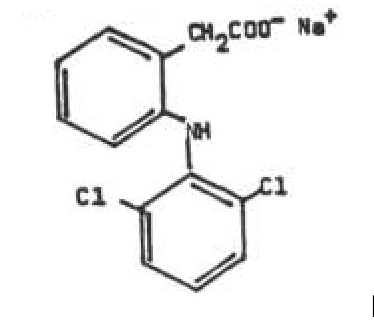 l
Physicochemical properties:
Description: Diclofenac sodium is a white to off-white powder, with a salty bitter taste. At 25 ºC, diclofenac sodium is 2% soluble in water (pH 7.7). It is practically insoluble in aqueous acidic solutions.
14 CLINICAL TRIALS
14.1 Clinical Trials by Indication
Indication 1: Post-traumatic inflammation
VOLTAREN OPHTHA (diclofenac sodium) 0.1% w/v ophthalmic solution has been studied in the treatment of post-traumatic inflammation resulting from non-penetrating wounds and as a prophylactic treatment against inflammatory responses of the eye resulting from cataract surgery.
Post-traumatic inflammations of the eye responded promptly to VOLTAREN OPHTHA and re-epithelialization was not delayed.
Inflammations of the eye are associated with 4 major target symptoms: conjunctival injection, ciliary injection, pain and corneal involvement. These symptoms were regularly monitored in a series of 147 patients presenting with acute and chronic inflammatory conditions. Within 4-5 days of the start of VOLTAREN OPHTHA therapy, from 90 to 96% of these patients showed considerable improvement. Among these same patients, 96% were considered clinically cured after an average of 4-15 days of VOLTAREN OPHTHA treatment.
Indication 2: Post-operative anti-inflammatory agent
VOLTAREN OPHTHA proved to be equally useful as a post-operative anti-inflammatory agent in patients undergoing cataract surgery. In general, VOLTAREN OPHTHA treatment was initiated 3-4 hours prior to surgery and was continued post-operatively (up to 4 weeks) at the usual anti-inflammatory dose as required.
VOLTAREN OPHTHA was effective in reducing or eliminating such post-operative inflammatory responses as anterior chamber turbidity, corneal edema, elevated protein levels, ciliary injection and conjunctival hyperaemia. In addition, post-operative pain was consistently reduced. VOLTAREN OPHTHA was also associated with a significant anti-miotic effect, which was apparent during the surgery itself, as well as during the first post-operative day.
VOLTAREN OPHTHA was well tolerated by patients presenting with post-traumatic ocular inflammatory conditions and inflammatory responses of the eye resulting from surgical intervention for cataracts, including elderly patients with senile cataracts requiring lens extraction and re-implantation. Of the more than 500 patients who participated in clinical trials of VOLTAREN OPHTHA, 5 to 15% complained of mild transient burning at the time of instillation. Treatment did not have to be interrupted for reasons of either intolerance or poor patient acceptance.
15 MICROBIOLOGY
Not applicable.
16 NON-CLINICAL TOXICOLOGY
Diclofenac sodium is a phenyl-acetic acid derivative possessing anti-inflammatory, analgesic and antipyretic activities as shown in various pharmacological models.
Non-Clinical Pharmacology
Anti-inflammatory Activity
RatsThe anti-inflammatory potency was assessed by testing inhibition of paw edema (carrageenin solution and kaolin suspension) and reduction of adjuvant arthritis (Freund's adjuvant),following oral administration.
Table 3: Inhibition of edema induced by
Carrageenin Kaolin
Preparation (ED50 mg/kg) (ED50 mg/kg)
p.o.* p.o.*
Diclofenac sodium 2.1 1.2
*Determined by graphic interpolation from 3 or more doses
Ocular inflammations were induced in rats using various chemical agents, including carrageenin, formalin, albumin, yeast and mustard. Diclofenac sodium 0.1% was instilled in the eye at various times up to 4 hours prior to chemical challenge. The percent maximum inhibition of chemically-induced edema by diclofenac sodium was superior to most nonsteroidal anti-inflammatory agents, including the standard, indomethacin.
Irritant % Inhibition
0.1% diclofenac 0.1% indomethacin
Carrageenin 31.9% Not available
Yeast 29.2% 21.2%
Albumin 24.4% 22.0%
Mustard 20.7% 19.6%
_____________________________________________________________________________
Rabbits
Ocular Paracentesis:
Following primary anterior chamber paracentesis, the rabbit eye becomes congested and there is protein influx into the aqueous humour. Paracentesis-induced ocular irritation in rabbits, therefore, is a good model for the study of ophthalmic anti-inflammatory agents.
Different concentrations of diclofenac sodium (0.01% to 1%) were instilled prophylactically at various time points (15 min to 1 hour) prior to induction of primary and/or secondary paracentesis in rabbits. Instillation of diclofenac resulted in dose-related inhibition of protein influx ranging from 72 to 100%. The optimal effect was reached with 100-300 nmol/mL and the ID50 was 5.4 nmol/eye (equivalent to 0.0017%); this inhibitory effect was slightly more potent than that achieved with indomethacin.
The effectiveness of diclofenac sodium was related to its high degree of lipid solubility, which enhances penetration to the intraocular tissues.A time course of the inhibitory effect was also determined by increasing the length of the interval between the instillation and paracentesis. The half-life of the inhibitory effect was approximately 10 hours.
In another group of rabbits subjected to primary and secondary paracentesis, a volume of 50 µl of diclofenac sodium was instilled in concentrations of 0-20 mM, one hour prior to the first paracentesis. Concentrations above 2 mM significantly reduced protein concentrations, leukocyte accumulations in the secondary aqueous and IOP (p<0.001), but had no anti-miotic effect.
In a study in which primary paracentesis was followed by chemically-induced leukotaxis, diclofenac sodium at concentrations ≥ 0.064% decreased both protein concentrations and leukocyte accumulations in the aqueous humour and strongly inhibited the increase in IOP.
Endotoxin-induced Uveitis:
Uveitis was induced in rabbits by injecting Shigella endotoxin into the centre of the vitreous humour of each eye. Fifteen minutes before the endotoxin injection, the animals were pre-treated with 10 µl diclofenac sodium in concentrations ranging from 0.0625 to 1% or with the vehicle alone to serve as control. Subsequent instillations were made 5, 12 and 23 hours after the challenge. At concentrations up to 0.25%, diclofenac sodium drops significantly inhibited the leukocyte influx and prostaglandin synthetase activity (p<0.01) and reduced the protein content in the aqueous humour (p<0.05). The optimum concentration was 0.25%; higher concentrations apparently induced an irritant effect of their own.
Uveitis has also been induced in the rabbit eye by injecting bovine serum albumin into the vitreous humour. After recovery, the animals were re-challenged with an i.v. injection of 10 mg/kg bovine serum albumin to produce a secondary response. Groups of animals received either 100 µl of 0.25% diclofenac sodium or 0.5% indomethacin applied to the cornea 3 times over 24 hours, starting 30 minutes before the i.v. challenge. Another group received diclofenac sodium drops, 100 µl t.i.d. for 48 hours starting 24 hours after the i.v. challenge.
Diclofenac sodium drops were effective in significantly reducing the ocular reaction to the immunological response when given either before or after the challenge. By contrast, protein and leukocyte concentrations were only slightly affected by indomethacin. Both diclofenac and indomethacin inhibited prostaglandin synthetase activity (p<0.05), which was significantly elevated over the normal values by the intervention.
Experimental Alkali Burns of the Eye:
Diclofenac sodium drops (1.0%), substantially reduced vascularization of the cornea and intravascular injection when instilled 3 times daily into both eyes of rabbits which had received mild alkali burns to the anterior segment. Lactate and glucose levels of the corneal stroma were sharply reduced, revealing that disturbances of the blood aqueous humour were normalized and that leukocyte concentrations were reduced.
Corneal Regeneration:
The corneal epithelium was removed from the eyes of 3 groups of rabbits. One group was treated with 2-4 drops of 0.1% diclofenac sodium daily for 7 days, while the second group received vehicle only and the third group received no treatment. At the end of the treatment period, regeneration of the corneal epithelium was complete in all 3 groups. The animals receiving the vehicle healed the fastest, while those receiving no treatment were the slowest.
It was therefore concluded that the diclofenac sodium drops slightly delayed but did not inhibit corneal re-epithelialization.
The results were corroborated in another study in which rabbits underwent a partial corneal de-epithelialization. Diclofenac sodium drops (0.01%, 0.1% and 0.5%) effectively inhibited polymorphonuclear leukocyte release into the tear fluid, but did not affect the rate of corneal regeneration.
Guinea Pigs:
In a guinea pig model of virus (Herpes simplex virus type 1)-induced keratitis and conjunctivitis, 5 daily instillations of 0.1% diclofenac sodium from days 3-10 after the inoculation, was not effective in reducing HSV-induced conjunctivitis, suggesting that this may not be a prostaglandin-mediated condition.
Anti-miotic Activity
The anti-miotic effect of 0.1% diclofenac sodium and 0.1% atropine eye drops was studied in groups of rabbits undergoing paracentesis of the anterior chamber.
Diclofenac sodium when administered at a concentration of 0.1% at various starting at 2 hours prior to surgery, was effective in inhibiting the surgically-induced miotic response, with significant contralateral effects. Atropine also showed a strong anti-miotic effect, but with no contralateral effect. When the two drugs were combined, diclofenac sodium appeared to enhance the effect of atropine.
Prostaglandin Inhibition
A close correlation exists between certain febrile reactions and increased prostaglandin levels in the brain. Diclofenac (0.5 µg/mL) reduced prostaglandin E2 formation, which parallels antipyresis, but does not induce hypothermia in the afebrile animal. The inhibition of prostaglandin synthesis in vitro (IC50 µM/L) was 1.6.
Platelet Adhesiveness
At 15 µg/mL, diclofenac reduced collagen-induced aggregation in rabbit platelets by 50%. ADP-induced adhesiveness at the same dosage was similarly affected. At 10 mg/kg p.o., diclofenac protected rabbits against the lethal action of thrombokinase without untoward effects.
Non-Clinical Pharmacokinetics
Following a single subconjunctival instillation of 0.5 mL of 0.1% diclofenac sodium in rabbits, levels of unchanged diclofenac could be detected in the aqueous humour from 1 to 4 hours after administration. The mean maximum concentration of 649 ng/g occurred 2 hours after administration; at 4 hours, the mean concentration of the drug in the aqueous humour was 45 ng/g.
Rabbits were given a single 50 u l application of 50 µ g 14C-labelled diclofenac sodium in both eyes. The external tissues in direct contact with the solution, the cornea and conjunctiva, showed the highest concentrations of the drug, reached 30 minutes after application. The drug penetrated the cornea and was found in measurable levels in all the tissues of the eye for at least 6 hours. The difference in concentration between the external and intraocular tissues was about one order of magnitude. Small concentrations of diclofenac sodium were also absorbed into the bloodstream and could be detected in the blood up to 6 hours after topical application.
Table 5: Mean Concentrations of diclofenac sodium in blood and ocular tissues of rabbits after topical application of 50 µg per eye
Tissue* Time Interval
0.5 hour 1.0 hour 3.0 hour 6.0 hour
Blood 0.053 0.015 0.009 0.010
Cornea 8.366 3.451 1.120 2.126
Conjunctiva 4.722 0.933 0.428 0.600
Nictitating Mem. 2.814 0.461 0.460 0.196
Ciliary body 0.564 0.211 0.067 0.161
Sclera 0.470 0.105 0.60 0.086
Choroid/retina 0.451 0.099 0.041 0.040
Iris 0.358 0.228 0.116 0.275
Aqueous humour ** 0.168 0.050 **
Optic nerve 0.071 0.076 0.076 **
Vitreous humour 0.025 0.007 ** **
Lens 0.014 0.008 0.006 0.012
*Concentrations expressed as µg/g **Not available
In man, the drug promptly passed into the aqueous humour following the topical application of 3-16 drops of 0.1% diclofenac sodium to the eye. Levels of unchanged diclofenac in the aqueous humour were highly variable, ranging from 10 to 505 ng/g.
There were no detectable levels of drug in plasma, indicating that no measurable systemic absorption occurs following a single instillation of the ophthalmic drops.
General Toxicology:
Acute Toxicity
The acute oral toxicity of the 0.1% diclofenac sodium ophthalmic solution was studied in rats and mice. A single oral dose was administered by gavage with the following results:
Species Volume Diclofenac-Na Dose Equivalent Mortality
(mL/kg) (mg/kg)
Mice 5 5 0/10
(Males & 30 30 0/10
Females) 50 50 7/10
100 30 3/15
Rats 30 30 0/10
(Males & 50 50 1/10
Females)
The oral LD50 in mice was calculated to be 103.8 mg/kg in females and between 30 and 50 mg/kg in males. Signs of toxicity were ptosis, reduced motor activity and diarrhea.
In rats, the maximum oral dose was limited by the volume of solution which could be administered. 50% mortality was not achieved and the LD50 is considered to be >50 mg/kg. Signs of toxicity in rats were salivation, hypothermia, reduced motor activity and cachexia.
Long-Term Toxicity
General Toxicity of Diclofenac Sodium
Male and female rats have been treated with diclofenac sodium orally for 59 to 98 weeks in doses ranging from 0.25 to 2.0 mg/kg/day. Ulceration of the gastrointestinal tract occurred in a dose-dependent manner. However, bodyweight gains and feed consumption of the treated groups were similar to that of the controls. Hematologic patterns showing neutrophilic leucocytosis and anemia were seen in high- and intermediate-dose groups, particularly in females. Female animals also tended to develop enlarged adrenals, depressed glucose and elevated alkaline phosphatase levels.
Long term oral administration of 0 to 50 mg/kg/day diclofenac sodium to baboons also resulted in gastrointestinal ulceration. Constipation, with occasional episodes of diarrhea, was a marked feature. In all animals, there was a dose-related fall in serum albumin; anemia and an increased ESR were observed with the high dose. All physical and haematological parameters returned to normal values during subsequent recovery period.
Diclofenac sodium had no mutagenic effects and was not carcinogenic in rodent models.
Local Irritation Studies
1-Week Study in Rabbits
For 5 consecutive days, 0.1 mL diclofenac sodium solution (0.3% or 0.5%) or vehicle placebo was administered into the conjunctival sac of the rabbit eye. The left eye was treated, while the right served as control. Slit lamp evaluations, performed 6 and 24 hours after each instillation, revealed that both strengths of diclofenac sodium were virtually non-irritant.
2-Week Study in Rabbits
Solutions of 0.25% and 0.5% diclofenac sodium (50 u L) were instilled 8 times daily into the lower conjunctival sac of the rabbit eye. One group received a saline solution to act as the control. After 2 weeks of treatment, there were no signs of irritation or alterations in the ophthalmic structures or tissues of the eyelid. IOP in the treated eye and control groups was comparable.
4-Week Study in Rabbits
0.1% diclofenac sodium was instilled into the conjunctival sac 5 times per day for 4 consecutive weeks. Ophthalmic examinations, performed twice daily throughout the treatment period, remained normal. At the conclusion of treatment, there were no haematological or biochemical abnormalities and histopathological examinations failed to reveal any treatment-related systemic or macroscopic abnormalities.
3-Month Studies in Rabbits
Rabbits received 5 daily instillations of either a 0.1% or 0.05% diclofenac sodium ophthalmic solution in the conjunctival sac for 3 months. A third group received saline only. In each animal, the left eye was treated, allowing the right eye to act as a control.
Clinical examinations revealed no systemic or local abnormalities. Detailed ophthalmologic observations and laboratory and pathological examinations of the ophthalmic structures confirmed that diclofenac sodium 0.1% solution is safe when administered topically to the rabbit eye for protracted periods.
Reproductive and Developmental Toxicology:
Reproduction toxicity has been assessed in Segment I (fertility and early embryonic development) and III studies (peri-natal and post-natal development) in rats and a variety of Segment II studies (embryo-fetal development) in mice, rats and rabbits. Almost all studies included treatment at toxic dosages and death of the dams, usually attributed to peritonitis, a common finding. Segment II reproductive and developmental studies in animals demonstrated that diclofenac administration during organogenesis did not produce teratogenicity despite the induction of maternal toxicity and fetal toxicity in mice at oral doses up to 20 mg/kg/day (approximately 102 times the MROHD of Voltaren Eye Drops, Solution, 0.8 mg/day, based on BSA comparison), and in rats and rabbits at oral doses up to 10 mg/kg/day (approximately 102 and 203 times, respectively, the MROHD based on BSA comparison). In mice, oral doses of 10 and 20 mg/kg/day administered from Gestation Day 0 to 17 resulted in fetal toxicity (reductions in foetal numbers and reduced ossification) associated with severe maternal toxicity. Similar data were observed in rats. There were some minor contradictory findings at 4 mg/kg/day but none at 2 mg/kg/day and clear effects at higher doses, including reduced ossification, that were attributed to maternal toxicity. Pregnant female rabbits treated with oral doses up to 10 mg/kg/day (approximately 203 times the MROHD based on BSA) throughout the gestation period showed a dose-dependent increase in resorption rates, diminished fetus weights, and abnormal skeletal findings. Embryotoxicity was observed at the highest dose although there was no evidence to suggest teratogenicity. In a segment I study, male and female rats were orally administered diclofenac during premating, mating, gestation, and lactation periods, and in a segment III study, pregnant rats were orally administered diclofenac from Gestation Day 15 through Lactation Day 21, at doses of 2 and 4 mg/kg/day (20 and 41 times the MROHD based on BSA). Maternal mortality caused by gastrointestinal ulceration and peritonitis was noted in both studies. Treatment with diclofenac sodium in these studies was generally associated with a slight increase in gestation and occasional dystocia resulting in increased peri-natal mortality. Even without dystocia, there was usually an increase in embryo-foetal and/or perinatal losses. Birth weight was reduced. Foetal changes extended to the lowest dose examined, 2 mg/kg/day, in both studies. Other than deaths associated with dystocia, postnatal survival was not affected. There was no noticeable effect on fertility at doses of 2 and 4 mg/kg/day when diclofenac was given orally to male and female rats.
Administration of NSAIDs (including diclofenac) inhibited ovulation in the rabbit and implantation and placentation in the rat, and led to premature closure of the fetal ductus arteriosus. Maternally toxic doses of diclofenac were associated with dystocia, prolonged gestation, decreased fetal survival, and intrauterine growth retardation in rats. The slight effects of diclofenac on reproduction parameters and delivery as well as constriction of the ductus arteriosus in utero are pharmacologic consequences of this class of prostaglandin synthesis inhibitors.