


Product Monograph - Ratio-Ketorolac
INDICATIONS AND CLINICAL USE
ratio-KETOROLAC (ketorolac tromethamine) ophthalmic solution 0.5% is indicated for the prophylaxis and the relief of postoperative ocular inflammation in patients undergoing cataract extraction with or without implantation of an intraocular lens.
CONTRAINDICATIONS
ratio-KETOROLAC (ketorolac tromethamine) ophthalmic solution 0.5% should not be used in patients who have previously exhibited hypersensitivity to any of the ingredients in the formulation.
WARNINGS
General
With some non-steroidal anti-inflammatory drugs, there exists the potential for increased bleeding time due to interference with thrombocyte aggregation. There have been reports that ocularly applied non-steroidal anti-inflammatory drugs may cause increased bleeding of ocular tissues (including hyphemas) in conjunction with ocular surgery.
Use in Nursing Mothers
Ketorolac tromethamine ophthalmic solution is not recommended for treatment of nursing mothers. Secretion of ketorolac tromethamine in human milk after systemic administration is limited. The milk-to-plasma ratio of ketorolac tromethamine concentrations ranged between 0.015 and 0.037 in a study of 10 women.
PRECAUTIONS
General
It is recommended that ratio-KETOROLAC (ketorolac tromethamine) ophthalmic solution 0.5% be used with caution in surgical patients with known bleeding tendencies or who are receiving other medications which may prolong bleeding time.
All topical non-steroidal anti-inflammatory drugs (NSAIDs) may slow or delay wound healing. Postmarketing experiences suggest that topical non-steroidal anti-inflammatories (NSAIDs) used by patients with complicated ocular surgeries, corneal denervation, corneal epithelial defects, diabetes mellitus, ocular surface disease, rheumatoid arthritis, or repeat ocular surgeries within a short period of time may be at an increased risk of corneal adverse events. These may include keratitis, epithelial breakdown, corneal thinning, corneal errosion, corneal ulceration or corneal perforation.
The potential for cross sensitivity to acetylsalicylic acid, phenylacetic acid and other nonsteroidal anti-inflammatory drugs exists although it has not been reported. ratio-KETOROLAC (ketorolac tromethamine) ophthalmic solution 0.5% therefore should be used with caution in patients who have previously exhibited sensitivities to these drugs.
Use in Pregnancy, Labour and Delivery
Use of ratio-KETOROLAC (ketorolac tromethamine) ophthalmic solution 0.5% is not recommended during pregnancy, labour or delivery.
Because of the known effects of prostaglandin-inhibiting drugs on the fetal cardiovascular system of rats (closure of the ductus arteriosus), the use of ketorolac tromethamine ophthalmic solutions du ring late pregnancy should be avoided.
Drug Interactions
There have been no reports of interactions of ratio-KETOROLAC (ketorolac tromethamine) ophthalmic solution 0.5% with topical or injectable drugs used in ophthalmology, pre-, intra-, or post-operatively including antibiotics (e.g., gentamicin, tobramycin, neomycin, polymyxin), sedatives (e.g., diazepam, hydroxyzine, lorazepam, promethazine HCl), miotics, mydriatics, cycloplegics (e.g., acetylcholine, atropine, epinephrine, physostigmine, phenylephrine, timolol maleate), hyaluronidase, local anesthetics (e.g., bupivicaine HCl, cyclopentolate HCl, lidocaine HCl, tetracaine), or corticosteroids.
Carcinogenesis, Mutagenesis, and Impairment of Fertility
Long-term studies in mice and rats have shown no evidence of carcinogenicity, teratogenicity, or impairment of fertility, with ketorolac tromethamine. No mutagenic potential of ketorolac was found in the Ames bacterial or the micronucleus test for mutagenicity.
Use in Children
Safety and effectiveness of ketorolac tromethamine ophthalmic solution in pediatric patients below the age of 3 have not been established.
Use in the Elderly
No overall differences in safety or effectiveness have been observed between elderly and younger patients.
Ophthalmology
Blurred and/or diminished vision has been reported with the use of ratio-KETOROLAC and other non-steroidal anti-inflammatory drugs. These symptoms should diminish over time. However, if they persist, this drug should be discontinued and an ophthalmologic examination performed.
ADVERSE REACTIONS
Since other nonsteroidal anti-inflammatory drugs have been known to irritate the eye upon topical application, ketorolac tromethamine was studied for its ocular irritation potential in animals and man.
In two multi-dose studies in healthy volunteers, one drop of 0.5% ketorolac tromethamine ophthalmic solution was applied three times daily for 21 days. Mild to moderate transient ocular burning/stinging was reported.
Most ocular complaints reported in clinical studies could not be distinguished from adverse events caused by the trauma of cataract surgery and the insertion of an intraocular lens.
Up to two drops (0.1 mL or 0.5 mg) of 0.5% ketorolac ophthalmic solution per eye every 6 to 8 hours have been administered postsurgically.
The most frequent adverse reactions were conjunctivitis (redness, scratchiness, foreign body sensation, 10%) eye pain (pain, ache and burn, 6%), ptosis (5%) and keratitis (corneal edema, 3%). Iritis, corneal lesion, eye disorder, photophobia pupillary disorder, blepharitis and elevated intraocular pressure were each reported with a prevalence of 2%.
Number (%) of Patients with Treatment-Related Adverse Events Reported During Treatment Period in the Pooled Phase 3 Studies
| BODY SYSTEM | Ketorolac | Vehicle |
| Preferred Term | N=156 | N=157 |
| (%) | (%) | |
| BODY AS A WHOLE | ||
| Headache | 1 (0.6%) | 3(1.9%) |
| DIGESTIVE SYSTEM | ||
| Nausea | 0 (0.0%) | 1(0.6%) |
| Vomiting | 0 (0.0%) | 1(0.6%) |
| SPECIAL SENSES | ||
| Pain eye | 2 (1.3%) | 4(2.5%) |
| Corneal infiltrates | 1 (0.6%) | 1(0.6%) |
| Edema eye | 1 (0.6%) | 0(0.0%) |
| Conjunctival hyperemia (NOS) | 1 (0.6%) | 0(0.0%) |
| Irritation | 0 (0.0%) | 1(0.6%) |
None of the typical adverse reactions reported with the systemic non-steroidal anti-inflammatory agents or ketorolac tromethamine have been observed at the doses used in topical ophthalmic therapy.
SYMPTOMS AND TREATMENT OF OVERDOSAGE
Overdosage
The absence of experience with acute overdosage systemically or topically precludes characterization of sequelae and assessment of antidotal efficacy at this time. If ingested accidentally, drink fluids to dilute.
DOSAGE AND ADMINISTRATION
The recommended dose of ratio-KETOROLAC (ketorolac tromethamine) ophthalmic solution 0.5% is one to two drops (0.25 mg - 0.5 mg) every six to eight hours beginning 24 hours before surgery and continuing for three to four weeks for prophylaxis and relief of postoperative ocular inflammation.
Information to be Provided to the Patient by the Physician
Contact lenses should be removed prior to instillation of ketorolac tromethamine ophthalmic solutions and may be re-inserted 15 minutes following administration. Patients should be advised that ratio-KETOROLAC tromethamine and both contain benzalkonium chloride, which may discolour soft contact lenses.
Patients should be instructed to avoid allowing the tip of the dispensing container to contact the eye, surrounding structures, fingers, or any other surface in order to avoid contamination of the solution by common bacteria known to cause ocular infections. Based on the pharmacodynamic profile, ketorolac is not expected to influence a patient’s ability to drive or operate machinery. As with any ocular medication, if transient blurred vision occurs at instillation, the patient should wait until the vision clears before driving or using machinery.
PHARMACEUTICAL INFORMATION
Proper Names: ketorolac tromethamine (USAN)
ketorolac trometamol (BAN)
ketorolac (INN)
Chemical Names:
(")-5-Benzoyl-2,3-dihydro-1H-pyrrolizine-1-carboxylic acid, 2-amino-2-
(hydroxymethyl)-1,3-propanediol
1H-Pyrrolizine-1-carboxylic acid, 5-benzoyl-2,3-dihydro-, (")-, 2-amino-2-
(hydroxymethyl)-1,3-propanediol
Structural Formula:
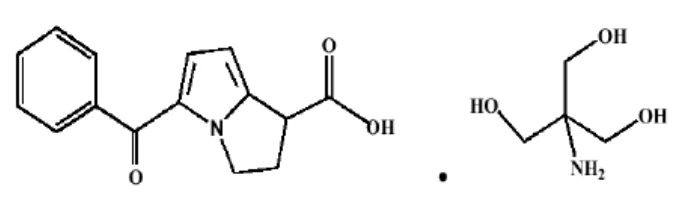
Molecular Formula: C19H24N2O6
Molecular Weight: 376.41
Description
Ketorolac tromethamine is off-white to white crystalline powder that melts at about 1621C with decomposition. It is freely soluble in water and methanol, slightly soluble in tetrahydrofuran, 190 proof and 200 proof ethanol and practically insoluble or insoluble in acetone, dichloromethane, toluene, ethylacetate, dioxane, hexane, butanol and acetonitrile.
Composition
ratio-KETOROLAC ophthalmic solution contains 0.5% ketorolac tromethamine as the action ingredient; non medicinal ingredients in the preserved multi dose bottles - sodium chloride, USP; edetate disodium, USP; octoxynol 40 (70% aqueous solution); benzalkonium chloride solution, NF (50% aqueous solution); sodium hydroxide and/or hydrochloric acid solution to adjust to pH 7.4; and purified water.
Stability and Storage Recommendations
Store in the original container at 25ºC, with excursions to 15°C - 30°C. Protect from light. DISCARD 28 days after opening.
AVAILABILITY OF DOSAGE FORMS
ratio-KETOROLAC (ketorolac tromethamine) ophthalmic solution 0.5%, preserved, is supplied in a white opaque plastic bottle (5 mL and 10 mL fill sizes) with a controlled dropper tip.
INFORMATION FOR THE PATIENT
INFORMATION ON THE USE OF ratio-KETOROLAC (ketorolac tromethamine) OPHTHALMIC SOLUTION 0.5%.
What kind of medication is ratio-KETOROLAC and how does it work?
(Page 9 of the current Product Monograph for ACULAR® manufactured by Allergan Inc., dated January 06, 2004)
ratio-KETOROLAC is the product name for ketorolac tromethamine, a medicine used for the prevention and relief of post-operative eye inflammation. Ketorolac tromethmine belongs to a family of drugs known as non-steroidal anti-inflammatory drugs (NSAIDs) or anti-prostaglandin drugs.
Research shows that ketorolac tromethamine works by reducing the production of certain substances (called prostaglandins) that the body normally produces to help control such functions as muscle contraction, inflammation, and numerous other body processes.
Clinical studies indicate that when prostaglandin levels are reduced, the intensity of pain, and inflammation is reduced as well.
What is ratio-KETOROLAC for?
ratio-KETOROLAC is used to prevent and lessen eye inflammation in patients undergoing cataract extraction with or without implantation of an intraocular lens.
What is ratio-KETOROLAC made up of?
ratio-KETOROLAC ophthalmic solution in the preserved multi dose bottle contains 0.5% ketorolac tromethamine as the active ingredient, with benzalkonium chloride 0.01% as the preservative. Inactive ingredients include sodium chloride, edetate disodium, octoxynol 40, purified water, and sodium hydroxide and/or hydrochloric acid solution to adjust the pH to 7.4. Product is supplied in a white opaque plastic bottle with a controlled dropper tip.
What are some possible side effects of ratio-KETOROLAC?
Along with its needed effects, a medicine may cause some unwanted effects.
In clinical studies with ketorolac tromethamine, the unwanted effects that were reported most often included transient stinging and burning, redness, itching and/or swelling and visual blurring after instillation of the eye drops.
Your vision may become blurred temporarily; if so, you should wait until your vision clears before driving or using machinery.
Who should not use ratio-KETOROLAC?
Do not use ratio-KETOROLAC:
If you are allergic to acetylsalicylic acid or to any of the other non-steroidal anti-inflammatory drugs (e.g. diclofenac, diflunisal, fenoprofen, flurbiprofen, ibuprofen, indomethacin, ketoprofen, mefenamic acid, piroxicam, sulindac, tiaprofenic acid, tolmetin) used to treat arthritis or other muscle and joint conditions, do not take ratio-KETOROLAC without first consulting your doctor.
If you are pregnant or if you may become pregnant. ratio-KETOROLAC is not recommended during pregnancy, labour or delivery.
If you are breast-feeding.
Before using ratio-KETOROLAC you should discuss with your doctor the following:
If you have ever had any unusual or allergic reaction to ratio-KETOROLAC.
If you are allergic to any substance. Most medicines contain more than their active ingredient. Your doctor, nurse or pharmacist can help you avoid products that may cause a problem.
If you are pregnant or intend to become pregnant.
If you are breast-feeding or intend to be breast-feeding.
If you have any medical problems.
If you are taking any other prescription or nonprescription (over-the-counter (OTC)) medicine.
How to use ratio-KETOROLAC:
ratio-KETOROLAC should only be applied to the eye.
With ratio-KETOROLAC, you should put one or two drops in each eye that needs treatment, three or four times every day, depending on the directions your doctor has given you.
Follow the instructions for use below. Always use ratio-KETOROLAC exactly as your doctor has instructed you. If you use ratio-KETOROLAC with another eye drop, leave at least five minutes between putting in ratio-KETOROLAC and then the other drops.
You must not use the bottle if the tamper-proof seal on the bottle neck is broken before you first use it.
Follow the following steps to help you use ratio-KETOROLAC properly:
- 1. Wash your hands. Tilt your head back and look at the ceiling.
- 2. Gently pull down the lower eyelid to create a small pocket.
- 3. Turn the bottle upside down and squeeze it gently to release one drop into each eye that needs treatment.
- 4. Let go of the lower lid, and close your eye for 30 seconds.
If a drop misses your eye, try again.

To help prevent infections, do not let the tip of the bottle touch your eye or anything else. Put the cap back on and close the bottle immediately after you have used it.
If you forget to take ratio-KETOROLAC, use one dose as soon as you remember, and then go back to your regular routine. Do not take two doses to make up for the one that you
missed.
Contact lenses should be removed prior to instillation of ketorolac tromethamine ophthalmic solutions and may be re-inserted 15 minutes following administration. ratio-KETOROLAC contains benzalkonium chloride, which may discolour soft contact lenses.
Storing ratio-KETOROLAC
Keep out of reach of children.
Store in the original container at 25ºC, with excursions to 15°C - 30°C Protect from light. DISCARD 28 days after opening.
IMPORTANT! Your doctor may give you different instructions better suited to your specific needs. If you need more information about how to take ratio-KETOROLAC properly, double-check with your doctor or pharmacist.
PHARMACOLOGY
Animal Pharmacology
Several studies have been conducted in animals with ketorolac acid or ketorolac tromethamine solutions demonstrating: minimal eye irritation; anti-inflammatory activity in several models of ocular inflammation; prevention of arachidonic acid induced increases in intraocular pressure with no affect on normal intraocular pressure; no impairment of corneal wound healing; no potentiation of ocular infections; and no effects on the proliferation of endothelial cells.
Metabolism and Pharmacokinetics
A series of studies were conducted with ophthalmic formulations of ketorolac acid and ketorolac tromethamine in rabbits and cynomolgus monkeys. Two different preservatives were used throughout these studies, namely a thimerosal (THIM) or a benzalkonium chloride (BAC) system. The benzalkonium chloride system was the final form selected for development due to its greater preservative efficacy and acceptability.
Single dose studies were performed using topical application, intracameral injection or intravenous administration in rabbits and/or cynomolgus monkeys. In the rabbit studies topical doses of 0.5% ketorolac tromethamine were delivered via microliter syringe drop-wise onto the eye (50 FL (0.25 mg) per eye). Intracameral injections consisted of 20 FL (0.25 mg) of the dose solution injected directly into the anterior chamber. Intravenous doses were delivered via the marginal ear vein.
In those studies involving monkeys the target dose for intravenous administration was 0.25 mg/kg. The topical ocular dose consisted of 100 FL per eye of 0.5% ketorolac tromethamine.
Ocular Absorption and Kinetics
Ocular absorption studies were conducted in female New Zealand white rabbits. Each topical formulation (50 FL, 0.25 mg), containing either BAC or THIM preservative systems, was applied to both eyes of six rabbits. An equivalent dose (0.25 mg per eye) was injected intracamerally to both eyes of six additional rabbits. The rabbits were kept anesthetized throughout the study.
Peak concentrations of 14C-ketorolac were 100-fold greater after intracameral injection compared with topical administration. The ocular absorption of the BAC formulation was 93% relative with the thimerosal formulation. The ocular bioavailability of the topical formulations averaged 4%.
After topical ocular doses, the half-life of total radioactivity in aqueous humor using the BAC formulation (3.8 - 6.4 hours) was longer than after intracameral injection (2.1 hours). This suggests that topical dosing may lead to a Areservoir@ effect in the corneal epithelium and continued flux of drug from the reservoir into the aqueous humor. In the anterior chamber, clearance of 14C-ketorolac averaged 11 FL/min while the apparent volume of distribution averaged 1.93 mL.
Systemic Absorption
The extent of systemic absorption of the ocular dose in the rabbit was estimated using both plasma AUC and urinary excretion data. Plasma concentrations of total radioactivity and intact ketorolac were measured in the rabbit after topical (n=6), intracameral (n=6), and intravenous (n=3) administration of 14C-ketorolac tromethamine.
After a single ophthalmic dose (50 FL) in the rabbit, intact ketorolac was absorbed rapidly into the systemic circulation (Tmax, 15 minutes). The plasma half-life after ophthalmic doses (6.9 hours) was longer than after i.v. administration (1.1 hour), suggesting that removal of drug from the eye into the venous circulation may be rate-limiting. By comparison of drug levels in aqueous humor after intracameral injection vs. plasma levels after i.v. administration, ketorolac was shown to clear more rapidly in plasma (6 mL/min) than in the anterior chamber (11 FL /min).
In a study involving 3 cynomolgus monkeys, 14C-ketorolac tromethamine solution was administered intravenously and in a topical ocular solution. Peak plasma levels of ketorolac occurred at 1.1 hour after the ophthalmic dose. The plasma half-life of ketorolac was similar after ophthalmic (1.8 hours) and i.v. doses (1.6 hours).
The majority of the ophthalmic dose was excreted in urine (66% in rabbit (n=24) and 75% in monkey (n=3)) and a small amount in feces (11% in rabbit (n=24) and 2% in monkey (n=3)). The extent of systemic absorption based upon urinary data after ophthalmic dosing averaged 73% (n=3) and 74% (n=24) in rabbit and 76% (n=3) in the cynomolgus monkey. The systemic absorption estimated from the AUC data were 40% (n=3) and 64% (n=24) in rabbit and 73% in the cynomolgus monkey.
Concentrations of ketorolac tromethamine in aqueous humor and plasma were determined in a six-month ocular toxicity study in the cynomolgus monkey. Two drops (100 FL) per eye of the ophthalmic solution were applied 3, 6 and 9 times daily over 8 hours to groups of 12 cynomolgus monkeys. Plasma concentrations of ketorolac tromethamine were determined on day 1 and at the end of 3 and 6 months. Aqueous humor was also assayed at 3 and 6 months. Concentrations of ketorolac in the aqueous humor confirmed drug absorption in the eye of monkeys and were directly proportional to the administered dose. Relative to the 3X/day dose, concentrations of ketorolac in the aqueous humor after the 6X and 9X daily dose averaged 2.1 and 3.1 times higher respectively at the end of 3 months, and 1.8 and 2.7 fold higher levels respectively at the end of 6 months. A dose-proportional increase in plasma trough levels was demonstrated at the end of 6 months. Mean plasma levels of ketorolac were 2.2-fold and 3.3-fold higher after the 6X and 9X daily dose, respectively, compared with the 3X daily dose. The results indicted that there was no accumulation of drug levels in aqueous humor and in plasma with repeated ophthalmic dosing.
In a similar study two drops (100 FL) per eye of the ophthalmic solution were applied 3 or 9 times daily over 8 hours for one month to groups of 4 cynomolgus monkeys. Plasma concentrations were determined on day 1 and at the end of the study, and aqueous humor concentrations of ketorolac were measured at 1 month. Relative to the 3X/day dose, concentrations of ketorolac in the aqueous humor after the 9X/dose averaged 5.3-fold higher at the end of 1 month. Plasma levels a 1 month were 5-fold higher in the 9X/day
dose relative to the 3X/day dose. The results of the one-month study also showed a low degree of systemic exposure and relatively higher levels in the aqueous humor compared to plasma levels of ketorolac.
Ocular Distribution
The intraocular distribution of 14C-ketorolac tromethamine was determined in the rabbit (n=24) after topical application of 50 FL of 0.5% 14C-ketorolac tromethamine optical solution containing benzalkonium chloride as the preservative. Peak concentrations of radioactivity were achieved within 1 hour in the ocular tissues and were highest in the cornea (6.06 Fg-eg/mL). At 1 hour, the majority of the radioactivity (0.9% of administered dose) was recovered in the sclera (0.58%) and cornea (0.26%), vitreous humor (0.023%), retina-choroid (0.018%), iris-ciliary body (0.007%) and lens (0.002%).
Relative to plasma AUC values, the AUCs were higher for cornea (104-fold), sclera (27-fold), iris-ciliary body (5.8-fold), retina-choroid (5.6-fold), aqueous humor (3.3-fold) and approximately one-half in the vitreous humor and lens. When compared with an intravenous dose equivalent to twice the ophthalmic dose of 14C-ketorolac tromethamine administered via the marginal ear vein (n=3), concentrations of drug-related radioactivity were higher in the ocular tissues and lower in plasma after ophthalmic administrations.
Animal Metabolism
The metabolite profile in aqueous humor was determined in the rabbit, while plasma and urinary metabolite profiles were determined in both the rabbit and cynomolgus monkey after ophthalmic and i.v. dosing.
After ophthalmic administration in rabbits, ketorolac represented the major component (>90%) of radioactivity in aqueous humor and plasma and the p-hydroxy metabolite accounted for 5% of radioactivity in plasma. Ketorolac was also the major component (96%) of plasma radioactivity after ophthalmic dosing in monkeys (n=3).
After ophthalmic dosing in the rabbit, 72%, 17% and 6% of the total radioactivity in urine was comprised of intact ketorolac, p-hydroxy ketorolac and other polar metabolites. After i.v. dosing, the relative proportions of total radioactivity averaged 6% as intact ketorolac, 68% as p-hydroxy ketorolac an ~ 22% as polar metabolites.
In the monkey, intact ketorolac and its polar metabolite (possibly the glucuronide conjugate of ketorolac) accounted for 32% and 65% of the total radioactivity in urine, respectively after ophthalmic dosing, and 50% and 49% of the radioactivity in urine, respectively after i.v. dosing. Thus, the metabolism of ketorolac was qualitatively very similar after ophthalmic and i.v. administration in the monkey.
Clinical Studies
Pharmacokinetics
The penetration of ketorolac ophthalmic solution into the anterior chamber of the eye was studied in patients undergoing unilateral cataract extraction with intra-ocular lens implantation. The average concentration of ketorolac in the aqueous humor was 95 ng/mL following the instillation of two drops of the 0.5% solution approximately 12 hours and 1 hour before surgery. The concentration of ketorolac in the aqueous humor was below the detection limit of the assay (40 ng/mL) when 2 drops of 0.1% solution were instilled into the eyes of another group of patients undergoing the same surgical procedure.
Concentrations of PGE2 in the aqueous humor were depressed following the instillation of both the 0.1% and 0.5% ketorolac solutions. However, compared to the vehicle-treated group, the depression of PGE was not statistically significant.
In a 21-day multiple (t.i.d.) dose study in healthy volunteers, five of the 26 subjects had detectable (>10 ng/mL) plasma levels of ketorolac (11 ng/mL to 22 ng/mL) following 10 days of instillation of one 0.5% ketorolac ophthalmic solution. One subject had detectable levels before the first morning dose on Day 10 and the other 4 subjects had detectable levels when tested 15 minutes after the morning dose on Day 10. None of the volunteers had detectable levels on Day 24, three days after the end of dosing.
To put these plasma levels into perspective, when 10 mg of ketorolac was given a single intramuscular or oral dose or as multiple doses, the plasma level of ketorolac was approximately 850 mg/mL 30 minutes after dosing.
TOXICOLOGY
Acute Toxicity
| Species | ||||||||||||
| Strain | ||||||||||||
| Regimen | Route | |||||||||||
| Group Size | Concentration* | Clinical | ||||||||||
| Preservative | (mg/mL) | Mortality | Ophthalmology | |||||||||
Rabbit New Zealand One dose in right eye followed by a 72-hour observation 3 females 0.01% BAC | Ocular 2.5 5.0 10.0 20.0 40.0 | 0/3 0/3 0/3 0/3 0/3 | NDE NDE NDE NDE NDE | |||||||||
Rabbit New Zealand One dose every one-half hour for a total of 12 doses to both eyes. Eyes were examined after the last dose and on days 1, 2, 3 and 6 following dosing 6 males 0.01% BAC | Ocular Saline control Vehicle control 5.0 | 0/6 0/6 0/6 | NDE | |||||||||
| NDE BAC | = No drug effect (no indications of irritation or toxicity) = Benzalkonium chloride | |||||||||||
| *Volume = 0.1 mL/eye | ||||||||||||
Long-term Toxicity
Ketorolac ophthalmic solution was evaluated in rabbits (pigmented and non-pigmented) in studies up to 6 weeks, and in monkeys in studies lasting up to 12 months.
The results of the preclinical toxicology studies indicate no adverse drug-related effects to ketorolac tromethamine. No adverse effects were observed in monkeys following 6 months of treatment with a thimerosal-preserved formulation. However, in studies with the BAC (benzalkonium chloride) formulation, corneal fluorescein staining, accompanied by thinning of the epithelium, was seen in vehicle-treated and drug-treated animals. The Dutch Belted rabbit was most sensitive to these effects, with the New Zealand rabbit and the monkey
showing decreasing sensitivities. Since the effects were seen primarily in vehicle and low-dose groups and since similar effects have been reported for BAC, the corneal changes were attributed to the preservative. The difference in sensitivity shown by the rabbit compared to the primate may be explained physiologically because of the greater blinking rate and lacrimal response to irritation in primates, including humans. In fact, formulations containing 0.01% BAC are well tolerated by humans and are approved as over-the-counter ophthalmic medications.
BIBLIOGRAPHY
- 1. Cherng-Chyi FR and Lidgate DM. In vitro rabbit corneal permeability study of ketorolac tromethamine, a non-steroidal anti-inflammatory agent. Drug Dev & Ind Pharm 1986; 12:2403-2430.
- 2. Mahoney JM and Waterbury LD. Drug effects on the neovascularization response to silver nitrate cauterization of the rat cornea. Current Eye Research 1985; 4(5):531-535.
- 3. Waterbury L, Kunysz EA and Beuerman R. Effect of steroidal and non-steroidal anti-inflammatory agents on corneal wound healing. J Ocular Pharmaco 1987; 3:43-54.
- 4. Fraser-Smith EB, Matthews TR. Effects of ketorolac on Candida albicans ocular infection in rabbits. Arch Ophthalmol 1987; 105:264-267.
- 5. Ling TL and Combs DL. Ocular bioavailability and tissue distribution of (14C) ketorolac tromethamine in rabbits. J Pharm Sc 1987; 76:(4)289-294.
- 6. Flach AJ, Kraff MC, Sanders DR and Tanenbaum L. The quantitative effect of 0.5% ketorolac tromethamine solution and 0.1% dexamethasone sodium phosphate solution on postsurgical blood-aqueous barrier. Arch Ophthalmol 1988; 106:480-483.
- 7. Flach AJ, Graham J, Kruger LP, Stegman RC and Tanenbaum L. Quantitative assessment of postsurgical breakdown of the blood-aqueous barrier following administration of 0.5% ketorolac tromethamine solution a double-masked, paired comparison with vehicle-placebo solution study. Arch Ophthalmol 1988; 106:344-347.
- 8. Flach AJ, Dolan BJ and Irvine AR. Effectiveness of ketorolac tromethamine 0.5% ophthalmic solution for chronic aphakic and pseudophakic cystoid macular edema. Amer J Ophthal 1987; 103:479-486.
- 9. Product Monograph ACULAR7 (ketorolac tromethamine) ophthalmic solution 0.5%. Date of revision January 6, 2004 Allergan Inc.