


Product Monograph - Acular
Recent Major Label Changes
None at the time of the most recent authorization.
Table of Contents
Certain sections or subsections that are not applicable at the time of the preparation of the most recent authorized product monograph are not listed.
Recent Major Label Changes ................................................................................................... 2
Table of Contents ................................................................................................................... 2
Part 1: Healthcare Professional Information ........................................................................... 4
- 1.
Indications ....................................................................................................................... 4
1.1. Pediatrics .................................................................................................................. 4
1.2. Geriatrics .................................................................................................................. 4
- 2. Contraindications ............................................................................................................ 4
- 4.
Dosage and Administration ............................................................................................. 4
4.1. Dosing Considerations .............................................................................................. 4
4.2. Recommended Dose and Dosage Adjustment ......................................................... 4
4.4. Administration .......................................................................................................... 4
4.5. Missed Dose ............................................................................................................. 5
- 5. Overdose ......................................................................................................................... 5
- 6. Dosage Forms, Strengths, Composition, and Packaging ................................................... 5
- 7.
Warnings and Precautions ............................................................................................... 5
General ................................................................................................................................. 5
Carcinogenesis and Genotoxicity .......................................................................................... 6
Driving and Operating Machinery ......................................................................................... 6
Hematologic ......................................................................................................................... 6
Ophthalmologic .................................................................................................................... 6
Perioperative Considerations ............................................................................................... 6
7.1. Special Populations .................................................................................................. 6
7.1.1. Pregnancy ........................................................................................................ 6
7.1.2. Breastfeeding .................................................................................................. 7
7.1.3. Pediatrics ......................................................................................................... 7
7.1.4. Geriatrics ......................................................................................................... 7
- 8.
Adverse Reactions ........................................................................................................... 7
8.1. Adverse Reaction Overview ...................................................................................... 7
8.2. Clinical Trial Adverse Reactions ................................................................................ 7
8.3. Less Common Clinical Trial Adverse Reactions ......................................................... 8
8.5. Post-Market Adverse Reactions ............................................................................... 8
- 9.
Drug Interactions ............................................................................................................. 8
9.2. Drug Interactions Overview ...................................................................................... 8
9.3. Drug-Behaviour Interactions .................................................................................... 8
9.4. Drug-Drug Interactions ............................................................................................. 8
9.5. Drug-Food Interactions............................................................................................. 8
9.6. Drug-Herb Interactions ............................................................................................. 8
9.7. Drug-Laboratory Test Interactions ........................................................................... 9
- 10.
Clinical Pharmacology ..................................................................................................... 9
10.1. Mechanism of Action ................................................................................................ 9
10.2. Pharmacodynamics .................................................................................................. 9
10.3. Pharmacokinetics ..................................................................................................... 9
- 11. Storage, Stability, and Disposal ...................................................................................... 11
- 12. Special Handling Instructions ......................................................................................... 11
Part 2: Scientific Information ................................................................................................ 12
- 13. Pharmaceutical Information .......................................................................................... 12
- 14.
Clinical Trials .................................................................................................................. 12
14.1. Clinical Trials by Indication ..................................................................................... 12
Prophylaxis and Relief of Postoperative Ocular Inflammation ............................................ 12
- 15. Microbiology ................................................................................................................. 12
- 16. Non-Clinical Toxicology .................................................................................................. 13
Patient Medication Information ........................................................................................... 15
Part 1: Healthcare Professional Information
1. Indications
ACULAR® (ketorolac tromethamine ophthalmic solution 0.5% w/v) is indicated for:
- the prophylaxis and the relief of postoperative ocular inflammation in patients undergoing cataract extraction with or without implantation of an intraocular lens.
1.1. Pediatrics
Pediatrics (< 18 years of age): No data are available to Health Canada; therefore, Health Canada has not authorized an indication for pediatric use.
1.2. Geriatrics
Geriatrics (> 65 years of age): No overall differences in safety or effectiveness have been observed between elderly and younger patients.
2. Contraindications
ACULAR is contraindicated in:
- Patients who are hypersensitive to this drug or to any ingredient in the formulation, including any non-medicinal ingredient, or component of the container. For a complete listing, see 6. Dosage Forms, Strengths, Composition, and Packaging.
4. Dosage and Administration
4.1. Dosing Considerations
- There are no data specific for patients with hepatic or renal impairment and therefore specific dosage recommendations cannot be made.
4.2. Recommended Dose and Dosage Adjustment
- The recommended dose of ACULAR is one to two drops (0.25 mg to 0.5 mg) every six to eight hours beginning 24 hours before surgery and continuing for three to four weeks for prophylaxis and relief of postoperative ocular inflammation.
- Health Canada has not authorized an indication for pediatric use.
4.4. Administration
ACULAR is administered topically to the eye.
Patients should be instructed to avoid allowing the tip of the dispensing container to contact the eye, surrounding structures, fingers, or any other surface in order to avoid eye injury and contamination of the solution by common bacteria known to cause ocular infections.
ACULAR should not be administered while wearing contact lens(es).
Contact lenses should be removed prior to instillation of ketorolac tromethamine ophthalmic solutions and may be re-inserted 15 minutes following administration. Patients should be advised that ACULAR contains benzalkonium chloride (BAC), which may discolour soft contact lenses. See 7. Warnings and Precautions, Ophthalmologic.
If more than one topical ophthalmic medication is being used, each one should be administered at least 5 minutes apart.
4.5. Missed Dose
A missed dose should be applied as soon as the patient remembers. The regular dosing schedule should then be resumed with the next dose. Patients should not apply more than one dose at a time in an effort to catch up on missed doses.
5. Overdose
The absence of experience with acute overdosage systemically or topically precludes characterization of sequelae and assessment of antidotal efficacy at this time. If ingested accidentally, drink fluids to dilute.
| For the most recent information in the management of a suspected drug overdose, contact your regional poison control centre or Health Canada’s toll-free number, 1-844 POISON-X (1-844-764-7669). |
|---|
- 6. Dosage Forms, Strengths, Composition, and Packaging
Table 1 – Dosage Forms, Strengths, and Composition
Description
ACULAR is a sterile solution and is supplied in a white opaque plastic bottle with a controlled dropper tip. ACULAR is available in 5 mL.
7. Warnings and Precautions
General
There have been post-marketing reports of bronchospasm or exacerbation of asthma, in patients, who have either a known hypersensitivity to acetylsalicylic acid/nonsteroidal anti-inflammatory drugs (NSAIDs) or a past medical history of asthma, associated with the use of ACULAR, which may be
| Route of Administration | Dosage Form/ Strength/Composition | Non-Medicinal Ingredients |
| Ophthalmic | Solution Ketorolac tromethamine 0.5% w/v | Edetate disodium, octoxynol 40, sodium chloride, sodium hydroxide and/or hydrochloric acid to adjust pH to 7.4 and purified water. Benzalkonium chloride 0.01% w/v as preservative. |
contributory. Caution is recommended in the use of ACULAR in these individuals. See 8.5 Post-Market Adverse Reactions.
Carcinogenesis and Genotoxicity
Long-term studies in mice and rats have shown no evidence of carcinogenicity, teratogenicity, or impairment of fertility, with ketorolac tromethamine. No mutagenic potential of ketorolac was found in the Ames bacterial or the micronucleus test for mutagenicity.
Driving and Operating Machinery
Based on the pharmacodynamic profile, ketorolac is not expected to influence a patient’s ability to drive or operate machinery. As with any ocular medication, if transient blurred vision occurs at instillation, the patient should wait until the vision clears before driving or using machinery.
Hematologic
With some NSAIDs, there exists the potential for increased bleeding time due to interference with thrombocyte aggregation. There have been reports that ocularly applied NSAIDs may cause increased bleeding of ocular tissues (including hyphemas) in conjunction with ocular surgery.
Ophthalmologic
All topical NSAIDs may slow or delay wound healing. Concomitant use of topical NSAIDs and topical steroids may increase the potential for healing problems.
Post-marketing experiences suggest that topical NSAIDs used by patients with complicated ocular surgeries, corneal denervation, corneal epithelial defects, diabetes mellitus, ocular surface disease (e.g., dry eye syndrome), rheumatoid arthritis, or repeat ocular surgeries within a short period of time may be at an increased risk of corneal adverse events which may become sight threatening. These adverse events may include keratitis, epithelial breakdown, corneal thinning, corneal erosion, corneal ulceration or corneal perforation. Patients with evidence of corneal epithelial breakdown should immediately discontinue use of topical NSAIDs and should be closely monitored for corneal health. It is also suggested that if used more than 24 hours prior to surgery or used beyond 14 days post-surgery, the patient risk for the occurrence and severity of corneal adverse events increases.
Blurred and/or diminished vision has been reported with the use of ketorolac tromethamine ophthalmic solution and other NSAIDs. These symptoms should diminish over time. However, if they persist, this drug should be discontinued, and an ophthalmic examination should be performed.
Perioperative Considerations
It is recommended that ketorolac tromethamine ophthalmic solutions be used with caution in surgical patients with known bleeding tendencies or who are receiving other medications which may prolong bleeding time.
7.1. Special Populations
7.1.1. Pregnancy
Use of ketorolac tromethamine ophthalmic solutions is not recommended during pregnancy, labour or delivery due to no adequate and well controlled studies.
Because of the known effects of prostaglandin-inhibiting drugs on the fetal cardiovascular system of rats (closure of the ductus arteriosus), the use of ketorolac tromethamine ophthalmic solutions during late pregnancy should be avoided.
7.1.2. Breastfeeding
Ketorolac tromethamine ophthalmic solutions are not recommended for treatment of nursing mothers. Secretion of ketorolac tromethamine in human milk after systemic administration is limited. The milk-to-plasma ratio of ketorolac tromethamine concentrations ranged between 0.015 and 0.037 in a study of 10 women.
7.1.3. Pediatrics
Pediatrics (< 18 years of age): No data are available to Health Canada; therefore, Health Canada has not authorized an indication for pediatric use.
7.1.4. Geriatrics
Geriatrics (> 65 years of age): No overall differences in safety or effectiveness have been observed between elderly and younger patients.
8. Adverse Reactions
8.1. Adverse Reaction Overview
The most frequent adverse reactions in patients using ACULAR, were conjunctivitis (redness, scratchiness, foreign body sensation, 10%), eye pain (pain, ache and burn, 6%), ptosis (5%) and keratitis (corneal edema, 3%). Iritis, corneal lesion, eye disorder, photophobia, pupillary disorder, blepharitis and elevated intraocular pressure were each reported with a prevalence of 2%.
8.2. Clinical Trial Adverse Reactions
Clinical trials are conducted under very specific conditions. Therefore, the frequencies of adverse reactions observed in the clinical trials may not reflect frequencies observed in clinical practice and should not be compared to frequencies reported in clinical trials of another drug.
Adverse reaction information from clinical trials may be useful in identifying and approximating rates of adverse drug reactions in real-world use.
Since other NSAIDs have been known to irritate the eye upon topical application, ketorolac tromethamine was studied for its ocular irritation potential in animals and man.
In two multi-dose studies in healthy volunteers, one drop of 0.5% ketorolac tromethamine ophthalmic solution was applied three times daily (t.i.d) for 21 days. Mild to moderate transient ocular burning/stinging was reported. Most ocular complaints reported in clinical studies with ACULAR could not be distinguished from adverse events caused by the trauma of cataract surgery and the insertion of an intraocular lens.
Up to two drops (0.1 mL or 0.5 mg) of 0.5% ketorolac ophthalmic solution per eye every 6 to 8 hours have been administered post-surgically.
None of the typical adverse reactions reported with the systemic non-steroidal anti-inflammatory agents or ketorolac tromethamine have been observed at the doses used in topical ophthalmic therapy.
8.3. Less Common Clinical Trial Adverse Reactions
Eye disorders: conjunctival hyperaemia (NOS), corneal infiltrates, edema eye, irritation.
Gastrointestinal: nausea, vomiting.
8.5. Post-Market Adverse Reactions
The following adverse reactions have been identified during post-marketing use of ACULAR. Because these reactions are reported voluntarily from a population of uncertain size, it is not always possible to reliably estimate their frequency or establish a causal relationship to drug exposure.
Eye disorders: eye irritation, eyelid oedema, ocular hyperaemia, eye swelling, eye pruritus, ulcerative keratitis.
Respiratory disorders: bronchospasm or exacerbation of asthma.
9. Drug Interactions
9.2. Drug Interactions Overview
No interaction studies were conducted.
9.3. Drug-Behaviour Interactions
The interaction of ACULAR with individual behavioural risks (e.g. cigarette smoking, cannabis use, and/or alcohol consumption) has not been studied.
9.4. Drug-Drug Interactions
There have been no reports of interactions of ketorolac tromethamine ophthalmic solution 0.5% with topical or injectable drugs used in ophthalmology pre-, intra, or post-operatively, including antibiotics (e.g., gentamicin, tobramycin, neomycin, polymyxin), sedatives (e.g., diazepam, hydroxyzine, lorazepam, promethazine HCl), miotics, mydriatics, cycloplegics(e.g., acetylcholine, atropine, epinephrine, physostigmine, phenylephrine, timolol maleate), hyaluronidase, local anesthetics (e.g., bupivicaine HCl, cyclopentolate HCl, lidocaine HCl, tetracaine), or corticosteroids.
The potential for cross sensitivity to acetylsalicylic acid, and other NSAIDs exists. Ketorolac tromethamine ophthalmic solutions therefore should be used with caution in patients who have previously exhibited sensitivities to these drugs.
9.5. Drug-Food Interactions
Interactions with food have not been established.
9.6. Drug-Herb Interactions
Interactions with herbal products have not been established.
9.7. Drug-Laboratory Test Interactions
Interactions with laboratory tests have not been established.
10. Clinical Pharmacology
10.1. Mechanism of Action
Ketorolac tromethamine is a non-steroidal, anti-inflammatory agent demonstrating analgesic and anti-inflammatory activity mediated by peripheral effects. Ketorolac inhibits the synthesis of prostaglandins through inhibition of the cyclo-oxygenase enzyme system. Prostaglandins play a critical role in many inflammatory processes of the eye and appear to play a role in the miotic response during ocular surgery.
Ketorolac tromethamine has demonstrated anti-inflammatory activity when applied topically in several animal models of ocular inflammation. The compound significantly inhibited the inflammatory responses to silver nitrate-induced cauterization of the corneas of rat eyes at concentrations of 0.25% and 0.5%. Concentrations of ketorolac ranging from 0.02% to 0.5% blocked vascular permeability changes caused by endotoxin-induced uveitis in the eyes of rabbits. Using the same model, ketorolac also blocked endotoxin-induced elevation of aqueous humor prostaglandin E2 (PGE2). It prevented the development of increased intraocular pressure induced in rabbits with topically applied arachidonic acid. Ketorolac did not inhibit rabbit lens aldose reductase in vitro.
10.2. Pharmacodynamics
Ketorolac tromethamine given systemically does not cause pupil constriction. Results from clinical studies indicate that ketorolac tromethamine ophthalmic solution has no significant effect upon intraocular pressure, although changes in intraocular pressure may occur following refractive surgery.
10.3. Pharmacokinetics
Absorption
In human studies, penetration of the drug is rapid after application to the eye. The relationship between the concentrations of solution administered and the amount of drug that penetrates the cornea is roughly linear.
Two drops (0.1 mL) of 0.5% ketorolac tromethamine ophthalmic solution, instilled into the eyes of patients 12 hours and 1 hour prior to cataract extraction, achieved measurable levels in 8 of 9 patients' eyes. The mean ketorolac concentration was 95 ng/mL in the aqueous humor, and the range was 40 ng/mL to 170 ng/mL. The mean concentration of PGE2 was 80 pg/mL in the aqueous humor of eyes receiving vehicle and 28 pg/mL in the eyes receiving 0.5% ketorolac tromethamine ophthalmic solution.
One drop (0.05 mL) of 0.5% ketorolac tromethamine ophthalmic solution was instilled into one eye and one drop of the vehicle into the other eye t.i.d. for 21 days in 26 healthy subjects. Only 5 of 26 subjects had detectable amount of ketorolac in their plasma (range 10.7 ng/mL and 22.5 ng/mL) when tested 15 minutes after the morning dose on day 10.
When ketorolac was given systemically to relieve pain, the average plasma level following chronic systemic treatment was approximately 850 ng/mL.
Distribution
Animal studies have shown that 14C-labelled ophthalmic solution 0.5% was found to be extensively distributed in ocular tissues with major portions retained in the cornea and sclera.
Ocular Distribution
The intraocular distribution of 14C-ketorolac tromethamine was determined in rabbit (n=24) after topical application of 50 mcL of 0.5% 14C-ketorolac tromethamine optical solution containing BAC as the preservative. Peak concentrations of radioactivity were achieved within 1 hour in the ocular tissues and were highest in the cornea (6.06 mcg-eg/mL). At 1 hour, the majority of the radioactivity (0.9% of administered dose) was recovered in sclera (0.58%) and cornea (0.26%), vitreous humor (0.023%), retina-choroid (0.018%), iris-ciliary body (0.007%) and lens (0.002%).
Relative to plasma AUC values, the AUCs were higher for cornea (104-fold), sclera (27-fold), iris-ciliary body (5.8-fold), retina-choroid (5.6-fold), aqueous humor (3.3-fold) and approximately one-half in the vitreous humor and lens. When compared with an intravenous dose equivalent to twice the ophthalmic dose of 14C-ketorolac tromethamine administered via the marginal ear vein (n=3), concentrations of drug-related radioactivity were higher in the ocular tissues and lower in plasma after ophthalmic administrations.
Metabolism
Although no studies have been conducted regarding the sites of metabolism for ophthalmic ketorolac, studies of systemic administration have shown that the drug is metabolized in the liver.
Animal
A series of studies were conducted with ophthalmic formulations of ketorolac acid and ketorolac tromethamine in rabbits and cynomolgus monkeys. Two different preservatives were used throughout these studies, namely a THIM or a BAC system. The BAC system was the final form selected for development due to its greater preservative efficacy and acceptability.
Single dose studies were performed using topical application, intracameral injection or intravenous administration in rabbits and/or cynomolgus monkeys. In the rabbit studies topical doses of 0.5% ketorolac tromethamine were delivered via microliter syringe drop-wise onto the eye (50 mcL (0.25 mg) per eye). Intracameral injections consisted of 20 mcL (0.25 mg) of the dose solution injected directly into the anterior chamber. Intravenous doses were delivered via the marginal ear vein.
In those studies involving monkeys the target dose for intravenous administration was 0.25 mg/kg. The topical ocular dose consisted of 100 mcL per eye of 0.5% ketorolac tromethamine.
The metabolite profile in aqueous humor was determined in the rabbit, while plasma and urinary metabolite profiles were determined in both the rabbit and cynomolgus monkey after ophthalmic and i.v. dosing.
After ophthalmic administration in rabbits, ketorolac represented the major component (>90%) of radioactivity in aqueous humor and plasma and the p-hydroxy metabolite accounted for 5% of radioactivity in plasma. Ketorolac was also the major component (96%) of plasma radioactivity after ophthalmic dosing in monkeys (n=3).
After ophthalmic dosing in the rabbit, 72, 17 and 6% of the total radioactivity in urine was comprised of intact ketorolac, p-hydroxy ketorolac and other polar metabolites. After i.v. dosing, the relative proportions of total radioactivity averaged 6% as intact ketorolac, 68% as p-hydroxy ketorolac and ~ 22% as polar metabolites.
In the monkey, intact ketorolac and its polar metabolite (possibly the glucuronide conjugate of ketorolac) accounted for 32 and 65% of the total radioactivity in urine, respectively after ophthalmic dosing, and 50 and 49% of the radioactivity in urine, respectively after i.v. dosing. Thus, the metabolism of ketorolac was qualitatively very similar after ophthalmic and i.v. administration in the monkey.
Elimination
Results of studies in rabbits and cynomolgus monkeys suggest that the major route of drug elimination from the eye is probably through intraocular blood flow after distribution from the aqueous humor to the iris-ciliary body.
- 11. Storage, Stability, and Disposal
ACULAR: Store in the original container at 25°C, with excursions to 15 – 30 °C. Protect from light. Discard 28 days after opening.
12. Special Handling Instructions
Patients should be advised to avoid touching the tip of the bottle to the eye or any surface, as this may contaminate the solution. Refer to 4.4 Administration for more detailed information.
Part 2: Scientific Information
13. Pharmaceutical Information
Drug Substance
Non-proprietary name of the drug substance: ketorolac tromethamine (USAN)
ketorolac trometamol (BAN)
ketorolac (INN)
Chemical name: (±)-5-Benzoyl-2,3-dihydro-1H-pyrrolizine-1-carboxylic acid, compound with 2-amino-2-(hydroxymethyl)-1,3-propanediol (1:1) 1H-Pyrrolizine-1-carboxylic acid, 5-benzoyl-2,3-dihydro, (±)-, compound with 2-amino-2-(hydroxymethyl) 1,3-propanediol (1:1)
Molecular formula and molecular mass: C19H24N2O6 and 376.41
Structural formula:
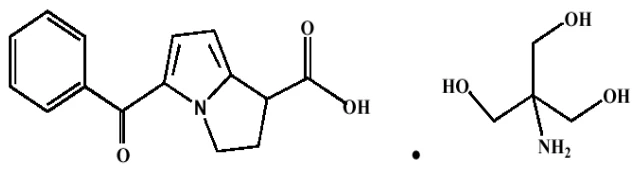
Physicochemical properties: Ketorolac tromethamine is an off-white to white crystalline powder that melts at about 162°C with decomposition. It is freely soluble in water and methanol, slightly soluble in tetrahydrofuran, 190 proof and 200 proof ethanol and practically insoluble or insoluble in acetone, dichloromethane, toluene, ethyl acetate, dioxane, hexane, butanol and acetonitrile.
14. Clinical Trials
14.1. Clinical Trials by Indication
Prophylaxis and Relief of Postoperative Ocular Inflammation
Data is not available because ACULAR was approved as a C-REF NDS and no data was submitted.
15. Microbiology
No microbiological information is required for this drug product.
16. Non-Clinical Toxicology
General toxicology:
Table 4 – Acute Toxicity
Species Strain Regimen Group Size Preservative | Route Concentration*(mg/mL) | Mortality | Clinical Ophthalmology |
|---|---|---|---|
Rabbit New Zealand One dose in right eye followed by a 72-hour observation 3 females 0.01% BAC | Ocular 2.5 5.0 10.0 20.0 40.0 | 0/3 0/3 0/3 0/3 0/3 | NDE NDE NDE NDE NDE |
Rabbit New Zealand One dose every one-half hour for a total of 12 doses to both eyes. Eyes were examined after the last dose and on days 1, 2, 3 and 6 following dosing 6 males 0.01% BAC | Ocular Saline control Vehicle control 5.0 | 0/6 0/6 0/6 | NDE |
*Volume = 0.1 mL/eye NDE: No drug effect (no indications of irritation or toxicity) BAC: Benzalkonium chloride | |||
Long-term Toxicity: Ketorolac ophthalmic solution was evaluated in rabbits (pigmented and non-pigmented) in studies up to 6 weeks, and in monkeys in studies lasting up to 12 months.
The results of the preclinical toxicology studies indicate no adverse drug-related effects to ketorolac tromethamine. No adverse effects were observed in monkeys following 6 months of treatment with a THIM-preserved formulation. However, in studies with the BAC formulation, corneal fluorescein staining, accompanied by thinning of the epithelium, was seen in vehicle-treated and drug-treated animals. The Dutch Belted rabbit was most sensitive to these effects, with the New Zealand rabbit and the monkey showing decreasing sensitivities. Since the effects were seen primarily in vehicle and low-dose groups and since similar effects have been reported for BAC, the corneal changes were attributed to the preservative. The difference in sensitivity shown by the rabbit compared to the primate may be explained physiologically because of the greater blinking rate and lacrimal response to irritation in primates, including humans. In fact, formulations containing 0.01% BAC are well tolerated by humans and are approved as over-the-counter ophthalmic medications.
Genotoxicity: Ketorolac tromethamine was not mutagenic in vitro in the Ames assay or in forward mutation assays. Similarly, it did not result in an in vitro increase in unscheduled DNA synthesis or an in vivo increase in chromosome breakage in mice. However, ketorolac tromethamine did result in an increased incidence in chromosomal aberrations in Chinese hamster ovary cells.
Carcinogenicity: Ketorolac tromethamine (trometamol) was not carcinogenic in rats given up to 5 mg/kg/day orally for 24 months (151 times the maximum recommended human topical ophthalmic dose, on a mg/kg basis, assuming 100% absorption in humans and animals) nor in mice given 2 mg/kg/day orally for 18 months (60 times the maximum recommended human topical ophthalmic dose, on a mg/kg basis, assuming 100% absorption in humans and animals).
Reproductive and developmental toxicology: Ketorolac tromethamine, administered during organogenesis, was not teratogenic in rabbits and rats at oral doses up to 109 times and 303 times the maximum recommended human topical ophthalmic dose, respectively, on a mg/kg basis assuming 100% absorption in humans and animals. When administered to rats after Day 17 of gestation at oral doses up to 45 times the maximum recommended human topical ophthalmic dose, respectively, on a mg/kg basis, assuming 100% absorption in humans and animals, ketorolac tromethamine resulted in dystocia and increased pup mortality.