


Product Monograph - Korsuva
RECENT MAJOR LABEL CHANGES
Not applicable.
TABLE OF CONTENTS.
Sections or subsections that are not applicable at the time of authorization are not listed.
RECENT MAJOR LABEL CHANGES..............................................................................................2
TABLE OF CONTENTS................................................................................................................2
PART I: HEALTH PROFESSIONAL INFORMATION .......................................................................4
1 INDICATIONS ................................................................................................................4
1.1 Pediatrics ............................................................................................................4
1.2 Geriatrics.............................................................................................................4
2 CONTRAINDICATIONS ...................................................................................................4
4 DOSAGE AND ADMINISTRATION...................................................................................4
4.1 Dosing Considerations .........................................................................................4
4.2 Recommended Dose and Dosage Adjustment.......................................................4
4.3 Reconstitution .....................................................................................................6
4.4 Administration.....................................................................................................6
4.5 Missed Dose ........................................................................................................7
5 OVERDOSAGE ...............................................................................................................7
6 DOSAGE FORMS, STRENGTHS, COMPOSITION AND PACKAGING ...................................8
7 WARNINGS AND PRECAUTIONS ....................................................................................8
7.1 Special Populations ..............................................................................................9
7.1.1 Pregnant Women .......................................................................................... 9
7.1.2 Breast-feeding..............................................................................................10
7.1.3 Pediatrics .....................................................................................................10
7.1.4 Geriatrics .....................................................................................................10
8 ADVERSE REACTIONS .................................................................................................. 10
8.1 Adverse Reaction Overview................................................................................ 10
8.2 Clinical Trial Adverse Reactions .......................................................................... 11
8.3 Less Common Clinical Trial Adverse Reactions .................................................... 13
8.4 Abnormal Laboratory Findings: Hematologic, Clinical Chemistry and Other Quantitative Data ........................................................................................................ 14
8.5 Post-Market Adverse Reactions.......................................................................... 15
9 DRUG INTERACTIONS.................................................................................................. 15
9.2 Drug Interactions Overview................................................................................ 15
9.3 Drug-Behavioural Interactions............................................................................ 16
9.4 Drug-Drug Interactions ...................................................................................... 16
9.5 Drug-Food Interactions ...................................................................................... 16
9.6 Drug-Herb Interactions ...................................................................................... 16
9.7 Drug-Laboratory Test Interactions ...................................................................... 16
10 CLINICAL PHARMACOLOGY ......................................................................................... 16
10.1 Mechanism of Action.................................................................................... 16
10.2 Pharmacodynamics ...................................................................................... 17
10.3 Pharmacokinetics ......................................................................................... 17
11 STORAGE, STABILITY AND DISPOSAL ........................................................................... 19
12 SPECIAL HANDLING INSTRUCTIONS............................................................................. 20
PART II: SCIENTIFIC INFORMATION ........................................................................................ 21
13 PHARMACEUTICAL INFORMATION............................................................................. 21
14 CLINICAL TRIALS.......................................................................................................... 22
14.1 Clinical Trials by Indication............................................................................ 22
Chronic Kidney Disease-Associated Pruritus in Patients on Hemodialysis (HD)............... 22
15 MICROBIOLOGY .......................................................................................................... 26
16 NON-CLINICAL TOXICOLOGY ....................................................................................... 26
PATIENT MEDICATION INFORMATION ................................................................................... 31
PART I: HEALTH PROFESSIONAL INFORMATION
1 INDICATIONS
KORSUVA (difelikefalin) is indicated for:
- the treatment of moderate to severe pruritus associated with chronic kidney disease in adult patients on hemodialysis (HD).
1.1 Pediatrics
Pediatrics (<18 years of age): No data are available to Health Canada; therefore, Health Canada has not authorized an indication for pediatric use.
1.2 Geriatrics
Geriatrics (≥ 65 years of age): Evidence from clinical studies suggests that use in the geriatric population is associated with differences in safety. See 7.1.4 Geriatrics.
2 CONTRAINDICATIONS
KORSUVA is contraindicated in patients who are hypersensitive to this drug or to any ingredient in the formulation, including any non-medicinal ingredient, or component of the container. For a complete listing, see 6 DOSAGE FORMS, STRENGTHS, COMPOSITION AND PACKAGING.
4 DOSAGE AND ADMINISTRATION
4.1 Dosing Considerations
- KORSUVA is intended for use only in hemodialysis centres and by health care professionals trained in hemodialysis administration.
- Causes of pruritus other than chronic kidney disease should be excluded before initiating treatment with KORSUVA.
- KORSUVA should be administered by intravenous (IV) bolus injection only at the end of the hemodialysis treatment.
- KORSUVA has not been studied in patients on peritoneal dialysis.
4.2 Recommended Dose and Dosage Adjustment
KORSUVA is administered 3 times per week by intravenous bolus injection into the venous line of the dialysis circuit at the end of the hemodialysis treatment during rinse-back or after rinse-back.
The recommended dose of KORSUVA is 0.5 micrograms/kg dry body weight (i.e., the target post-dialysis weight). The total dose volume (mL) required from the vial should be calculated as follows: 0.01 × dry body weight (kg), rounded to the nearest tenth (0.1 mL).
For patients with a dry body weight equal to or above 195 kg, the recommended dose is 100 micrograms (2 mL).
Recommended injection volumes based on target dry body weight are provided in Table 1, below.
Table 1: KORSUVA Injection Volumes Based on Target Dry Body Weight
| Target dry body weight range (kg) | Injection Volume (mL)* |
| 40 - 44 | 0.4 |
| 45 - 54 | 0.5 |
| 55 - 64 | 0.6 |
| 65 - 74 | 0.7 |
| 75 - 84 | 0.8 |
| 85 - 94 | 0.9 |
| 95 - 104 | 1.0 |
| 105 - 114 | 1.1 |
| 115 - 124 | 1.2 |
| 125 - 134 | 1.3 |
| 135 - 144† | 1.4 |
| 145 - 154† | 1.5 |
| 155 – 164† | 1.6 |
| 165 – 174† | 1.7 |
| 175 – 184† | 1.8 |
| 185 – 194† | 1.9 |
| ≥ 195† | 2.0 |
*More than 1 vial may be necessary if an injection volume of more than 1mL is required.
†The maximum target dry body weight of patients treated with difelikefalin evaluated in the placebo-controlled Phase 3 clinical trials was 135.0 kg. Population pharmacokinetic simulations demonstrated comparable difelikefalin exposure up to 200 kg.
Extra treatment
In the pivotal Phase 3 clinical trials conducted with KORSUVA, patients were permitted to receive up to 4 doses of KORSUVA per week if they required 4 hemodialysis treatments in a particular week. A 4th dose is unlikely to lead to accumulation of difelikefalin that would be of concern for safety, as the majority of remaining difelikefalin from the previous treatment will be cleared by hemodialysis. See 10.3 Pharmacokinetics – Elimination. However, only a limited number [74, 17.4%] of patients in the double-blind phase of the placebo-controlled Phase 3 clinical trials received a 4th dose of KORSUVA within a one-week period (i.e., 1 single extra dose during 12 weeks), and only 5 patients (1.2%) received a 4th dose of KORSUVA in a week 3 times during 12 weeks. The safety and efficacy of a 4th dose has therefore not been fully established due to insufficient data.
If a 4th hemodialysis treatment in a week is performed, KORSUVA should be administered at the end of hemodialysis per the recommended dose. No more than 4 doses per week should be administered even if the number of hemodialysis treatments in a week exceeds 4.
Patients with incomplete hemodialysis treatment
For incomplete hemodialysis treatments less than 1 hour, administration of KORSUVA should be withheld until the next hemodialysis session.
For incomplete hemodialysis treatments of 1 hour or more, clinical judgement should be used to determine if the benefits of KORSUVA administration following the incomplete hemodialysis treatment outweigh the potential risks.
As the remaining plasma concentrations of difelikefalin at the time of pre-dialysis is largely cleared by each hemodialysis treatment, patients whose dialysis treatment is interrupted prematurely may not have complete removal of difelikefalin. Subsequent dosing could therefore produce higher plasma levels than would be reached following a complete hemodialysis treatment. See 10.3 Pharmacokinetics.
Following administration of difelikefalin in hemodialysis subjects, up to 70% is eliminated from the body prior to the next hemodialysis session. Difelikefalin plasma level remaining at the time of the next hemodialysis is reduced by about 40-50% within one hour of hemodialysis. See 10.3 Pharmacokinetics.
Pediatric population (<18 years of age)
Health Canada has not authorized an indication for pediatric use. See 7.1.3 Pediatrics.
Geriatric population (≥65 years of age)
Dosing recommendations for geriatric patients are the same as for younger adult patients. See 7.1.4 Geriatrics.
Patients with hepatic impairment
Metabolism by hepatic enzymes does not significantly contribute to elimination of difelikefalin. While faecal excretion contributes to elimination, it is not known whether hepatic impairment has a clinically relevant effect on overall difelikefalin clearance in hemodialysis patients. Evaluation of available population pharmacokinetic data in HD patients concluded that no adjustment of intravenous KORSUVA dosage is needed in patients with mild to moderate hepatic impairment; however, clinical data following IV dosing in patients with moderate hepatic impairment is currently limited. The influence of severe hepatic impairment on the pharmacokinetics of difelikefalin in HD patients has not been evaluated; therefore, use in this population is not recommended. See 10.3 Pharmacokinetics - Hepatic Insufficiency.
4.3 Reconstitution
KORSUVA is supplied as a ready-to-use vial and does not need to be reconstituted.
4.4 Administration
- Inspect KORSUVA for particulate matter and discoloration prior to administration. The solution should be clear and colourless. Do not use KORSUVA vials if particulate matter or discolouration is observed.
- KORSUVA should not be diluted and should not be mixed with other medicinal products.
- Prepare a sterile syringe with the recommended dose volume. See Table 1.
- A sterile, single-use syringe cap should be used for temporary holding to keep the product sterile. The dose must be administered within 60 minutes of the completion of the syringe preparation. See 11 STORAGE, STABILITY AND DISPOSAL.
Administer KORSUVA by intravenous bolus injection into the venous line of the dialysis circuit at the end of each hemodialysis session. KORSUVA is removed by the dialyzer membrane and must be administered after blood is no longer circulating through the dialyzer. KORSUVA may be given either during or after rinse back of the dialysis circuit:
-If the dose is given after rinse back, administer KORSUVA into the venous line followed by at least 10 mL of sodium chloride 9 mg/mL (0.9%) solution.
-If the dose is given during rinse back, no additional sodium chloride 9 mg/mL (0.9%) solution is needed to flush the line.
- KORSUVA is supplied in a single-dose vial. Discard any unused product. See 11 STORAGE, STABILITY AND DISPOSAL.
4.5 Missed Dose
If a regularly scheduled hemodialysis treatment is missed, KORSUVA should be administered at the next hemodialysis treatment at the same dose.
5 OVERDOSAGE
Single doses of KORSUVA up to 12 times and multiple doses of KORSUVA up to 5 times the clinical dose of 0.5 mcg/kg were administered in clinical studies in patients undergoing hemodialysis. A dose-dependent increase in adverse events including dizziness, somnolence, mental status changes, paresthesia, fatigue, hypertension, and vomiting was observed.
In the event of overdose, provide appropriate medical attention based on the patient’s clinical status.
Hemodialysis has not been studied as a treatment for KORSUVA overdose; however, hemodialysis for 4 hours using a high-flux dialyzer effectively cleared approximately 70-80% of difelikefalin from plasma, and difelikefalin was not detectable in plasma at the end of the second of two dialysis cycles. See 10.3 Pharmacokinetics - Elimination.
| For management of a suspected drug overdose, contact your regional poison control centre. |
6 DOSAGE FORMS, STRENGTHS, COMPOSITION AND PACKAGING
Table 2: Dosage Forms, Strengths, Composition and Packaging
*KORSUVA contains less than 1 mmol sodium per vial, that is to say essentially sodium-free.
KORSUVA 50 mcg/1.0 mL vials are supplied as a sterile, preservative-free, ready-to-use, clear and colorless solution in single use, glass vials. KORSUVA is supplied in a single-use 2 mL glass vial (type I), with a rubber stopper, an aluminium seal, and a blue flip-off plastic cap.
7 WARNINGS AND PRECAUTIONS
Cardiovascular
Cardiac failure and atrial fibrillation
KORSUVA has not been studied in patients with New York Heart Association Class IV heart failure. In the pooled data from two Phase 3 placebo-controlled clinical trials, a numerical imbalance of cardiac failure events and cardiac arrhythmia events, including atrial fibrillation, was observed in patients treated with KORSUVA compared to placebo, in particular among patients with a medical history of atrial fibrillation, some of whom had discontinued or missed their atrial fibrillation treatment. The clinical significance of these findings is unknown as a causal relationship was not established.
Driving and Operating Machinery
Dizziness, somnolence, and mental status changes have occurred in patients taking KORSUVA. KORSUVA may impair the mental or physical abilities needed to perform potentially hazardous activities such as driving a car and operating machinery. See 7 WARNINGS AND PRECAUTIONS - Neurologic and 8 ADVERSE REACTIONS.
Advise patients not to drive or operate dangerous machinery until the effect of KORSUVA on a patient’s ability to drive or operate machinery is known.
Monitoring and Laboratory Tests
Hyperkalemia
In the two Phase 3 placebo-controlled clinical trials, adverse events of hyperkalemia were more commonly reported in patients treated with KORSUVA (4.7%; 20 / 424 patients) compared to placebo (3.5%; 15 / 424 patients). The incidence of hyperkalemia was higher in patients who took concomitant opioids regardless of study treatment and was almost doubled in the KORSUVA group (11.7%) compared to the placebo group (6.2%). The clinical relevance of these
| Route of Administration | Dosage Form / Strength/Composition | Non-medicinal Ingredients |
| Intravenous injection | 50 mcg difelikefalin (as acetate) per 1 mL solution in a 2 mL single-use glass vial. | Acetic acid Sodium acetate trihydrate Sodium chloride* Water for injections |
findings is unknown as a causal relationship was not established. See 8 ADVERSE REACTIONS. Frequent monitoring of potassium levels is recommended.
Neurologic
Dizziness and Somnolence Dizziness and somnolence have occurred in patients taking KORSUVA and may subside over time with continued treatment. See 8 ADVERSE REACTIONS.
Compared to placebo, the incidence of somnolence was higher in KORSUVA-treated patients 65 years of age and older (7.0%) than in KORSUVA-treated patients less than 65 years of age (2.8%). Concomitant use of sedating antihistamines, opioid analgesics or other CNS depressants may increase the likelihood of these adverse reactions and should be used with caution during treatment with KORSUVA. See 9 DRUG INTERACTIONS.
Gait Disturbances, Including Falls
Gait disturbances, including falls, have occurred in patients taking KORSUVA. In some patients, these events may have been a consequence of concurrent events such as dizziness and somnolence observed at the time of the event. See 8.2 Clinical Trial Adverse Reactions.
Mental Status Changes
Mental status changes, including confusional state, have occurred in patients taking KORSUVA. See 8.2 Clinical Trial Adverse Reactions.
Patients with Impaired Blood-Brain Barrier
Difelikefalin is a peripherally acting kappa opioid receptor agonist with restricted access to the central nervous system (CNS). The blood-brain barrier (BBB) integrity is important for minimizing difelikefalin uptake into the CNS.
Patients with clinically important disruptions to the BBB (e.g., primary brain malignancies, CNS metastases or other inflammatory conditions, active multiple sclerosis, advanced Alzheimer’s disease) may be at risk for difelikefalin entry into the CNS. KORSUVA should be prescribed with caution in such patients, taking into account whether the benefits of KORSUVA outweigh the potential risks for the individual, and ensuring observation for potential CNS effects.
Reproductive Health: Female and Male Potential
- Fertility
There are no data on the effect of KORSUVA on fertility in humans. In rat studies with difelikefalin, there was no effect on fertility. See 16 NON-CLINICAL TOXICOLOGY, Reproductive and Developmental Toxicology.
7.1 Special Populations
7.1.1 Pregnant Women
There are no data regarding the use of KORSUVA in pregnant women.
Animal studies do not indicate direct or indirect harmful effects with respect to reproductive toxicity. See 16 NON-CLINICAL TOXICOLOGY, Reproductive and Developmental Toxicology.
As a precautionary measure, it is preferable to avoid the use of KORSUVA during pregnancy.
7.1.2 Breast-feeding
It is unknown whether difelikefalin is excreted in human milk. The safety of KORSUVA when used during breastfeeding has not been evaluated in humans.
A risk to newborns/infants cannot be excluded. A decision should be made whether to discontinue breast-feeding or discontinue/abstain from KORSUVA therapy, taking into account the benefit of breast feeding for the child and the benefit of KORSUVA for the mother.
Studies in rats showed difelikefalin is transferred into the milk in lactating rats; however, difelikefalin was not detectable in the plasma of the nursing pups and no developmental effects were observed in the pups. See 16 NON-CLINICAL TOXICOLOGY, Reproductive and Developmental Toxicology.
7.1.3 Pediatrics
Pediatrics (<18 years of age): No data are available to Health Canada; therefore, Health Canada has not authorized an indication for pediatric use.
7.1.4 Geriatrics
Geriatrics (≥65 years of age): Of the 848 patients in the placebo-controlled Phase 3 trials who received KORSUVA, 278 patients (32.8%) were ≥65 years old and 98 patients (11.6%) were ≥75 years old. No overall differences in safety or effectiveness of KORSUVA have been observed between patients 65 years of age and older and younger adult patients, with the exception of the incidence of somnolence, which was higher in KORSUVA-treated patients 65 years of age and older (7.0%) than in KORSUVA-treated patients less than 65 years of age (2.8%) and was comparable in both placebo age groups (3.0% and 2.1%, respectively). No differences in plasma concentrations of KORSUVA were observed between patients 65 years of age and older and younger adult patients. See 10 CLINICAL PHARMACOLOGY and 4 DOSAGE AND ADMINISTRATION.
8 ADVERSE REACTIONS
8.1 Adverse Reaction Overview
A total of 1306 adult patients with chronic kidney disease (CKD) who had moderate-to-severe CKD-associated pruritus and who were undergoing hemodialysis were treated with at least 1 dose of KORSUVA in placebo-controlled and uncontrolled Phase 3 trials. Of these patients, 711 were continuously treated for at least 6 months and 400 were continuously treated for at least one year.
The results from two placebo-controlled Phase 3 trials (KALM 1 and KALM 2) conducted in patients undergoing hemodialysis who had moderate-to-severe pruritus were pooled to evaluate the safety of KORSUVA in comparison to placebo for up to 12 weeks. In total, 848 patients who had received at least one dose of their assigned study treatment were evaluated (424 in the KORSUVA group and 424 in the placebo group).
In the pooled analyses from KALM-1 and KALM-2, the incidence of treatment-emergent adverse events (TEAEs) considered by the study investigators to be related to study drug was greater in the KORSUVA group compared to the placebo group (8.0% and 6.4%, respectively). The most common TEAEs determined by the study investigators to be related to study drug in the KORSUVA group were somnolence (1.9% for KORSUVA vs. 0.9% for placebo) and dizziness (1.4% vs. 0.2%, respectively). The incidence of these 2 related TEAEs in the pooled KORSUVA group was at least twice that in the placebo group.
In the placebo-controlled pooled analyses, a greater percentage of patients in the KORSUVA group discontinued study drug compared to placebo (6.8% vs. 4.0%). The most common TEAEs (≥0.5% of patients) leading to study drug discontinuation in the pooled KORSUVA group were dizziness (0.9% for KORSUVA and 0.2% for placebo), anxiety (0.5% and 0.2%, respectively), mental status changes (0.5% and 0.2%, respectively), insomnia (0.5% and 0.2%, respectively), nausea (0.5% and 0%, respectively), and headache (0.5% and 0%, respectively).
In the placebo-controlled pooled analyses, the percentage of patients who developed non-fatal serious TEAEs was 25.2% in the KORSUVA group and 22.6% in the placebo group. The most common (≥1.0% of patients) serious TEAEs with a greater incidence in the pooled KORSUVA group than in the pooled placebo group were chest pain (1.9% and 0.9%), mental status changes (1.2% and 0.5%), and chronic obstructive pulmonary disease (1.2% and 0.5%).
In the placebo-controlled pooled analyses, 3 patients (0.7%) in the KORSUVA group and 5 patients (1.2%) in the placebo group died as a result of a TEAE. Preferred terms of fatal TEAEs in the pooled difelikefalin group included anemia, cardiac arrest, cardiac failure, and staphylococcal sepsis (0.2% [1 patient] each). The fatal TEAEs reported in the placebo group were septic shock (0.5% [2 patients]), cardiac arrest, death, and sepsis (0.2% [1 patient] each) All fatal TEAEs were considered not related to study drug by the study investigators.
In the two Phase 3 placebo-controlled trials, patients who received at least 30 doses of study drug (either placebo or active) during the 12-week double-blind treatment period and who continued to meet other eligibility criteria had the option to receive open-label KORSUVA for an additional period of up to 52 weeks, regardless of the treatment received during the 12-week double-blind period. There were no additional safety issues identified for KORSUVA in the 52-week open-label extension periods of the trials.
8.2 Clinical Trial Adverse Reactions
Clinical trials are conducted under very specific conditions. The adverse reaction rates observed in the clinical trials, therefore, may not reflect the rates observed in practice and should not be compared to the rates in the clinical trials of another drug. Adverse reaction information from clinical trials may be useful for identifying and approximating rates of adverse drug reactions in real-world use.
Table 3 summarizes the treatment-emergent adverse events reported in ≥2% in the KORSUVA group and ≥1% higher than placebo group in pooled analyses for the 12-week placebo-controlled periods of KALM-1 and KALM-2, regardless of causality determination by the study investigators.
Table 3: Treatment-emergent Adverse Events Reported in ≥ 2% of KORSUVA-treated patients with moderate-to-severe CKD-associated pruritus undergoing hemodialysis and ≥ 1% higher than placebo during the 12-week Double-Blind Treatment in patients with Chronic Kidney Disease Associated Pruritus Undergoing Hemodialysis (KALM-1 and KALM-2 Trials)
MedDRA System Organ Class Treatment-emergent adverse events | KORSUVA (N=424) n (%) | Placebo (N=424) n (%) |
| Gastrointestinal disorders | ||
| Diarrhea | 38 (9.0) | 24 (5.7) |
| Nausea | 28 (6.6) | 19 (4.5) |
| General disorders and administration site conditions | ||
| Gait Disturbances* | 28 (6.6) | 23 (5.4) |
| Metabolism and nutrition disorders | ||
| Hyperkalemia | 20 (4.7) | 15 (3.5) |
| Musculoskeletal and connective tissue disorders | ||
| Back pain | 11 (2.6) | 4 (0.9) |
| Nervous system disorders | ||
| Dizziness | 29 (6.8) | 16 (3.8) |
| Headache | 19 (4.5) | 11 (2.6) |
| Somnolence | 18 (4.2) | 10 (2.4) |
| Paresthesia† | 10 (2.4) | 6 (1.4) |
| Psychiatric disorders | ||
| Mental Status Change‡ | 14 (3.3) | 6 (1.4) |
*Gait disturbances includes: preferred terms of falls and gait disturbances
†Paresthesia includes: preferred terms of paresthesia, hypoesthesia, paresthesia oral and hypoesthesia oral. A patient was counted only once for each preferred term if multiple events of the same preferred term were reported for the same patient.
‡Mental Status Change includes: preferred terms of confusional state and mental status change.
Dizziness
Dizziness was reported in 6.8% of patients randomized to KORSUVA compared to 3.8% of patients who received placebo and was considered by the study investigators to be related to study drug in 1.4% and 0.2% of cases in the KORSUVA and placebo groups, respectively. In most cases, dizziness occurred within the first 3 to 4 weeks of treatment, with a median duration of 1 day. Dizziness was serious in 0.2% of KORSUVA-treated patients compared to 0% of patients who received placebo, and led to discontinuation in 0.9% of KORSUVA-treated patients compared to 0.2% of patients who received placebo. The likelihood of dizziness may increase when KORSUVA is concomitantly used with other medicinal products. See 9.2 Drug Interactions Overview.
Gait Disturbances, Including Falls
In the placebo-controlled pooled analyses, gait disturbances, including falls, were reported in 6.6% of patients receiving KORSUVA compared to 5.4% of patients who received placebo. Falls were reported as serious adverse reactions in 0.7% of patients in the KORSUVA treatment group vs. 0.2% in the placebo group. One patient discontinued KORSUVA due to gait disturbance.
Hyperkalemia
Hyperkalemia was reported as a treatment-emergent adverse event in 4.7% of patients who received KORSUVA compared to 3.5% of patients who received placebo. The incidence of hyperkalemia adverse events was higher in patients who took concomitant opioids regardless of treatment and was almost doubled in the KORSUVA group (11.7%) compared to the placebo group (6.2%). The clinical relevance of this is unknown. See also 8.4 Abnormal Laboratory Findings: Hematologic, Clinical Chemistry and Other Quantitative Data for incidence of treatment-emergent abnormalities of potassium >7 mmol/L.
Mental Status Change
Mental status change (including confusional state) was reported as a treatment-emergent adverse event in 3.3% of patients randomized to receive KORSUVA compared to 1.4% of patients who received placebo. In most cases, mental status change occurred within the first 4 weeks of treatment, with a median duration of 4 days. Most events tended to subside with continued dosing. Treatment-emergent adverse events of mental status change (including confusional state) were serious in 1.4% of KORSUVA-treated patients compared to 0.5% of patients who received placebo and led to discontinuation in 0.7% of KORSUVA-treated patients compared to 0.2% of patients who received placebo.
Somnolence
Somnolence was reported in 4.2% of patients randomized to receive KORSUVA compared to 2.4% of patients who received placebo. In most cases, somnolence occurred within the first 2 to 4 weeks of treatment, with a median duration of 21 days and tended to subside with continued dosing. Somnolence was serious in 0.2% of KORSUVA-treated patients compared to 0% of patients who received placebo. There were no patients who discontinued KORSUVA due to a treatment-emergent adverse event of somnolence.
The likelihood of somnolence may increase when KORSUVA is concomitantly used with other medicinal products. See 9.2 Drug Interactions Overview.
8.3 Less Common Clinical Trial Adverse Reactions
The following less common treatment-emergent adverse events considered by the study investigators to be related KORSUVA treatment were also reported in the 12-week double-blind placebo-controlled periods of KALM-1 and KALM-2:
Gastrointestinal disorders: constipation, flatulence, small intestinal obstruction, vomiting.
General disorders and administration site conditions: non-cardiac chest pain.
Hepatobiliary disorders: bile duct stone.
Metabolism and nutrition disorders: decreased appetite.
Musculoskeletal and connective tissue disorders: pain in extremity.
Nervous system disorders: disturbance in attention, dysgeusia.
Psychiatric disorders: anxiety, delirium, insomnia, irritability.
Skin and subcutaneous tissue disorders: rash maculo-papular.
Vascular disorders: hot flush.
8.4 Abnormal Laboratory Findings: Hematologic, Clinical Chemistry and Other Quantitative Data
Clinical Trial Findings
Table 4: Treatment-Emergent Laboratory Abnormalities in Patients Undergoing Hemodialysis in pooled analyses from 12-week Double-blind placebo-controlled phase of KALM-1 and KALM-2
|
|
| ||
|
|
|
| |
|
|
|
|
|
|
|
|
|
|
Note: Entries are number of patients (n) with a low or high value at any time post-baseline/number of patients at risk (percentage). Number of patients at risk (nn) for specific abnormality (low or high) is the number of patients whose baseline value was not abnormally low (or high) and who had at least 1 post-baseline value. Numbers in parentheses are percentages based on the number of patients at risk. Hemoglobin: Low: <70; High: >140 g/L. Potassium: Low: <2.5; High: >7 mmol/L.
No patient with a treatment-emergent abnormality in hemoglobin of >140 g/L experienced a thromboembolic treatment-emergent adverse event during the 12-week placebo-controlled period of the pooled phase 3 trials. No patient with a treatment-emergent potassium of >7 mmol/L experienced a treatment-emergent adverse event in the System Organ Class of Cardiac Disorders at the time of the increased potassium during the same time-period during the 12-week placebo-controlled period of the pooled Phase 3 trials.
Serum Prolactin Levels
In Phase 1 ascending dose study in healthy volunteers, a single intravenous (IV) dose of difelikefalin caused a dose-dependent, rapid and measurable increase in serum prolactin concentrations, with peak concentrations at 45 minutes after dosing that returned to normal within 12 to 24 hours. In a Phase 2, placebo-controlled, randomized, double-blind study (14 day study drug administration period) conducted in Japanese patients with CKD and pruritus undergoing hemodialysis, there was a dose-dependent increase in incidence of treatment-emergent adverse events of increased blood prolactin level blood in patients administered IV difelikefalin three times per week (0.25 micrograms per kg [4.8% of patients], 0.50 micrograms per kg [4.8% of patients], 1.0 microgram per kg [5.3% of patients], 1.5 micrograms per kg [17.4% of patients]) compared to no events in patients administered placebo.
Serum prolactin was not assessed in the Phase 3 trials. In the pooled Phase 3 safety analyses, there was 1 treatment-emergent adverse event of blood prolactin increased in a patient treated with KORSUVA; however, there were no reported treatment-emergent adverse events potentially indicative of the clinical effects of hyperprolactinaemia (e.g., galactorrhoea, amenorrhoea, oligomenorrhoea, infertility, impotence, or decreased libido) reported in hemodialysis patients exposed to KORSUVA for up to 1 year. The clinical relevance of this is unknown.
Thyroid Stimulating Hormone (TSH) and Free Thyroxine Levels
In a Phase 2 placebo-controlled, randomized, double-blind study (14 day study drug administration period) conducted in Japanese patients with CKD and pruritus undergoing hemodialysis, dose-dependent decreases in serum TSH and free thyroxine levels were observed on the fourth dialysis day in patients administered IV difelikefalin three times per week at doses ranging from 0.25 micrograms per kg to 1.5 micrograms per kg, with a return to baseline levels following treatment discontinuation. There was also an increase in treatment-emergent adverse events of decreased TSH in patients administered IV difelikefalin (0.25 micrograms per kg [9.5% of patients], 0.50 micrograms per kg [0% of patients], 1.0 microgram per kg [31.6% of patients], 1.5 micrograms per kg [30.4% of patients]), compared to no events in patients administered placebo. Treatment-emergent adverse events of decreased free thyroxine were also reported in all IV difelikefalin dose groups (0.25 micrograms per kg [4.8% of patients], 0.50 micrograms per kg [4.8% of patients], 1.0 micrograms per kg [5.3% of patients], 1.5 micrograms per kg [8.7% of patients]) compared to no events in patients administered placebo.
TSH and free thyroxine were not assessed in the placebo-controlled Phase 3 trials. In pooled safety analyses from Phase 2/3 placebo-controlled studies in patients with CKD undergoing hemodialysis, there was one treatment-emergent adverse event of free thyroxine decreased in a patient treated with KORSUVA that was considered by the investigator to be related to study treatment; however, there was no overall imbalance in thyroid-related adverse events in hemodialysis patients treated with KORSUVA compared to placebo in the Phase 3 trials. The clinical relevance of this is unknown.
8.5 Post-Market Adverse Reactions
Not applicable.
9 DRUG INTERACTIONS
9.2 Drug Interactions Overview
No clinical drug interaction studies have been performed. Difelikefalin does not inhibit or induce CYP450 enzymes and is not a substrate of CYP450 enzymes. It is not an inhibitor of glucuronidating enzymes either. Difelikefalin is not a substrate or an inhibitor of human transporters. See 10 CLINICAL PHARMACOLOGY. Therefore, interactions of difelikefalin with other medicinal products are unlikely. Concurrent administration of medicinal products such as sedating antihistamines, opioid analgesics or other CNS depressants (e.g., clonidine, ondansetron, gabapentin, pregabalin, zolpidem, alprazolam, sertraline, trazodone) may increase the likelihood of dizziness and somnolence.
9.3 Drug-Behavioural Interactions
Drug-behavioural interactions have not been established.
9.4 Drug-Drug Interactions
Clinical drug-drug interactions have not been established.
Concurrent administration of medicinal products such as sedating antihistamines, opioid analgesics or other CNS depressants may increase the likelihood of dizziness and somnolence. See 9.2 Drug Interactions Overview.
9.5 Drug-Food Interactions
Drug-food interactions have not been established.
9.6 Drug-Herb Interactions
Drug-herb interactions have not been established.
9.7 Drug-Laboratory Test Interactions
Interactions with laboratory tests have not been established.
10 CLINICAL PHARMACOLOGY
10.1 Mechanism of Action
Difelikefalin is a targeted kappa opioid receptor agonist, with low central nervous system (CNS) penetration and with no binding or functional activity at mu-opioid receptors, which avoids mu-associated side effects, such as constipation, euphoria, dependence, and respiratory depression. The physicochemical properties of difelikefalin (hydrophilic, synthetic D-amino acid peptide with high polar surface area and charge at physiological pH) minimize its passive diffusion (permeability) and active transport across membranes (blood-brain barrier), thus limiting penetration into the CNS.
The pathophysiology of chronic kidney disease-associated pruritus is thought to be multifactorial, including systemic inflammation and an imbalance in the endogenous opioid system (e.g., overexpression of mu opioid receptors and concomitant downregulation of kappa opioid receptors). Opioid receptors are known to modulate itch signals and inflammation, with kappa opioid receptor activation reducing itch and producing immunomodulatory effects.
The activation of kappa opioid receptors on peripheral sensory neurons and immune cells by difelikefalin are considered mechanistically responsible for the antipruritic and anti-inflammatory effects.
10.2 Pharmacodynamics
Difelikefalin has antipruritic and analgesic activity. Due to its limited penetration into the central nervous system, difelikefalin does not demonstrate central nervous system adverse reactions known for other kappa opioid receptor agonists such as dysphoria, and hallucinations.
Given nonclinical and clinical abuse potential and dependence study results, difelikefalin is anticipated to have no meaningful abuse and dependence potential. There were no signals of abuse, misuse, diversion, dependence or withdrawal with difelikefalin in clinical studies.
Anti-inflammatory
In in vitro and in vivo animal studies, difelikefalin reduced secretion of IL-6, TNF-α, IL-1β, GM-CSF, IL-8, IL-2, MIP-1 beta, and IL-12 under stimulated conditions.
Cardiac Electrophysiology
In a placebo-controlled Thorough QT study in healthy volunteers administered a single clinical dose of 0.5 mcg/kg IV KORSUVA or a single dose 6 times the clinical dose (3 mcg/kg), KORSUVA did not prolong the heart rate corrected QT interval (QTcF).
10.3 Pharmacokinetics
The pharmacokinetics (PK) of difelikefalin in healthy subjects is linear with respect to time and dose, with a t½ of approximately 2 hours after single-dose intravenous administration.
A summary of the most clinically relevant PK parameters for difelikefalin in hemodialysis patients is provided in Table 5.
Table 5: Summary of Difelikefalin Pharmacokinetic Parameters in Hemodialysis Patients
| Difelikefalin | Cmax (pg/mL) Mean (SD) %CV | Tmax (h) Median | t½ (h) Mean (SD) %CV | AUCinf (h*pg/mL) Mean (SD) %CV | CLss (mL/h/kg) Mean (SD) %CV | Vd (mL/kg) Mean (SD) %CV |
|---|---|---|---|---|---|---|
| Day 1 | ||||||
| 0.5 mcg/kg (N=7) | 5434 (1351) 24.9 | 0.083 | 24.4 (12.6) 51.4 | 80976 (33414) 41.3 | - | - |
| 1.0 mcg/kg (N=7) | 9463 (2429) 25.7 | 0.083 | 31.1 (11.5) 36.8 | 209540 (68102) 32.5 | - | - |
| 2.5 mcg/kg (N=5) | 24360 (6236) 25.6 | 0.083 | 23.2 (6.6) 28.4 | 406001 (61336) 15.1 | - | - |
| Day 5 | ||||||
| 0.5 mcg/kg (N=7) | 5900 (1491) 25.3 | 0.083 | 26.4 (12.3) 46.5 | 97865 (44371) 45.3 | 7.49 (3.78) 50.4 | 238 (56) 23.4 |
| Difelikefalin | Cmax (pg/mL) Mean (SD) %CV | Tmax (h) Median | t½ (h) Mean (SD) %CV | AUCinf (h*pg/mL) Mean (SD) %CV | CLss (mL/h/kg) Mean (SD) %CV | Vd (mL/kg) Mean (SD) %CV |
|---|---|---|---|---|---|---|
| 1.0 mcg/kg (N=7) | 9923 (2681) 27.0 | 0.083 | 34.2 (9.9) 29.0 | 271971 (109795) 40.4 | 5.27 (1.47) 27.8 | 252 (84) 33.5 |
| 2.5 mcg/kg (N=7) | 23980 (5464) 22.8 | 0.083 | 30.9 (7.2) 23.3 | 488214 (159055) 32.6 | 6.98 (2.34) 33.5 | 307 (109) 35.5 |
AUCinf = Area under the plasma concentration-time curve (time 0 to infinity); CLss = total systemic clearance; Cmax = maximum plasma concentration; t1/2 = terminal elimination half-life; Tmax = time to maximum plasma concentration; Vd = volume of distribution in the terminal elimination phase.
Absorption
The pharmacokinetics of intravenous difelikefalin are dose proportional over a single and multiple dosage range of 0.5 to 2.5 mcg/kg (1 to 5 times the recommended dosage) in chronic kidney disease patients undergoing HD. Steady-state was reached after the second administered dosage and the mean accumulation ratio was up to 1.6.
Distribution
Plasma protein binding of difelikefalin is low to moderate, ranging from 24-32%, and remains unaffected by renal impairment. Mean volume of distribution at steady state ranged from 145 to 189 mL/kg in healthy subjects and from 214 to 301 mL/kg in hemodialysis patients with moderate-to-severe pruritus. Difelikefalin penetration into the central nervous system is limited (below limit of quantification) as shown by physico-chemical, in-vitro and animal data.
Metabolism
Difelikefalin is not metabolized by CYP450 enzymes nor by human hepatic microsomes or hepatocytes, or kidney microsomes. In an in vivo human ADME study, difelikefalin was the predominant component in plasma samples, representing >99% of circulating radioactivity in both healthy volunteer and hemodialysis subjects.
Elimination
Difelikefalin is eliminated primarily through the kidney. In a human absorption, distribution, metabolism and excretion (ADME) study in healthy volunteers, 80.5% and 11.3% of the dose was eliminated in urine and feces, respectively, while in chronic kidney disease patients on hemodialysis, 11.2%, 58.8% and 19.5% was excreted in urine, feces and dialysate fluid, respectively. Compromised renal function impacts the clearance of difelikefalin, with t½ increasing at least 10-fold in hemodialysis subjects with ranges of 5.3 to 7.5 mL/h/kg and 23 to 31 hours, respectively compared with subjects with normal renal function. In both healthy volunteers and subjects on hemodialysis, most of the dose excreted into urine and faeces was unchanged difelikefalin with minor quantities of putative metabolites, none exceeding 2.5%. Mean total clearance ranged from 54 to 71 mL/h/kg and mean half-lives from 2 to 3 hours. Difelikefalin concentrations observed 2 to 3 days after dosing and immediately prior to dialysis, were reduced by 70% to 80% at the end of dialysis treatment. Once treatment with KORSUVA is discontinued in hemodialysis subjects, plasma concentrations slowly decrease until cleared during dialysis and difelikefalin is not detectable in plasma after 2 dialysis cycles.
Special Populations and Conditions
Results of population pharmacokinetic analyses indicate that sex, race, and age (25 to 80 years of age) do not influence the pharmacokinetics of difelikefalin.
Pediatrics: The safety and efficacy of KORSUVA have not been established in children and Health Canada has not authorized an indication for pediatric use. See 1.1 Pediatrics; 7.1.3 Pediatrics.
Geriatrics: In population PK analyses, hemodialysis patients between 25 and 80 years of age showed similar difelikefalin exposure relative to the reference patient (hemodialysis patient of 58 years of age); thus, no dose adjustments are recommended in the elderly.
Sex: Population PK analyses showed no effect of sex on difelikefalin exposure.
Ethnic origin: Population PK analyses showed no effect of race on difelikefalin exposure.
Hepatic Insufficiency
Metabolism by hepatic enzymes does not significantly contribute to elimination of difelikefalin. While faecal excretion contributes to elimination, it is not known whether hepatic impairment has a clinically relevant effect on overall difelikefalin clearance in hemodialysis. Evaluation of available population pharmacokinetic data in HD patients concluded that no adjustment of intravenous KORSUVA dosage is needed in patients with mild to moderate hepatic impairment (National Cancer Institute (NCI) Organ Dysfunction Working Group (ODWG)); however, clinical data following IV dosing in patients with moderate hepatic impairment is currently limited. The influence of severe hepatic impairment (NCI ODWG) on the pharmacokinetics of difelikefalin in HD patients has not been evaluated; therefore, use in this population is not recommended.
Renal Insufficiency
The PK profile for patients with mild renal impairment (eGFR 60-89 mL/min) is comparable to that of normal healthy subjects. However, in patients with severe renal impairment (eGFR 15-29 mL/min), total body clearance of difelikefalin is reduced and plasma concentrations remains relatively constant until cleared during dialysis. Due to the reduced clearance, KORSUVA can be administered at lower doses and at longer dose intervals in hemodialysis patients to achieve the same or higher overall exposure as compared to subjects with normal renal function.
11 STORAGE, STABILITY AND DISPOSAL
KORSUVA is supplied in a single use 2 mL glass vial at a concentration of 50 micrograms difelikefalin per mL (total volume 1.15 mL).
Store at room temperature (15°C to 30°C). Do not freeze.
Keep out of reach and sight of children.
Patients must be dosed within 60 minutes of syringe preparation; prepared syringes can be stored at room temperature (15°C to 30°C) until dosing.
A sterile, single-use syringe cap should be used for the temporary holding to keep the product sterile.
Any unused medicinal product or waste material should be disposed of in accordance with local requirements.
12 SPECIAL HANDLING INSTRUCTIONS
None.
PART II: SCIENTIFIC INFORMATION
13 PHARMACEUTICAL INFORMATION
Drug Substance
Proper name: difelikefalin
Chemical name: D-phenylalanyl-D-phenylalanyl-D-leucyl-D-lysyl-gamma-(4-N-piperidinyl)-amino- carboxylic acid, acetate salt.
Molecular formula and molecular mass: C36H53N7O6•xAcOH (1.0≤ x ≤2.0); 679.4 g/mol (mono-isotopic; free base).
Structural formula:
Physicochemical properties: Difelikefalin is a white to off-white amorphous powder, freely soluble in water (at least 200 mg/mL), freely soluble in methanol (at least 100 mg/mL) and slightly soluble in ethanol (1 g/L < solubility < 10 g/L). The pH of a solution difelikefalin in water, at a concentration of 10 mg/mL: 6.0 - 8.0. pKa (calculated) N-terminal amino group: 7.3 D-Lys4 side chain: 8.9 C-terminal amino group: 10.2 C-terminal carboxyl group: 2.4.
14 CLINICAL TRIALS
14.1 Clinical Trials by Indication
Chronic Kidney Disease-Associated Pruritus in Patients on Hemodialysis (HD)
Table 6: Summary of Subject Demographics in the Pivotal Phase 3 Clinical Trials in Chronic Kidney Disease-Associated Pruritus (Intent-to-Treat Population)
| Study # | Study design | Dosage, route of administration and duration | Study patients (n) | Mean age (Range) | Sex |
|---|---|---|---|---|---|
KALM-1 (CLIN3102) | Phase 3, randomized, multicenter, double-blind, placebo-controlled | Intravenous injections of KORSUVA (difelikefalin) 0.5 mcg per kilogram of dry body weight or placebo three times per week for 12 weeks. | Difelikefalin (189) Placebo (189) | 57 years (range 22 to 88 years) | 61% males, 39% females |
KALM-2 (CLIN3103) | Phase 3, randomized, multicenter, double-blind, placebo-controlled | Intravenous injections of KORSUVA (difelikefalin) 0.5 mcg per kilogram of dry body weight or placebo three times per week for 12 weeks. | Difelikefalin (237) Placebo (236) | 60 years (range 23 to 90 years) | 58% males, 42% females |
The safety and efficacy of KORSUVA were evaluated in two randomized, multicenter, double-blind, placebo-controlled trials (KALM-1 and KALM-2) that enrolled a total of 851 patients 18 years of age and older undergoing hemodialysis who had moderate-to-severe pruritus not attributable to a cause other than end stage renal disease (ESRD). Patients received either placebo or 0.5 mcg/kg KORSUVA intravenously 3 times a week following hemodialysis for 12 weeks. If an extra dialysis was performed, the study drug was administered after each additional dialysis session up to a maximum of 4 times per week.
For inclusion in KALM-1 and KALM-2, patients were required to have a mean baseline score of >4 and ≥5, respectively, on the patient-reported daily 24-hour Worst Itching Intensity Numerical Rating Scale (WI-NRS). Patients were permitted to continue their current anti-pruritic therapies provided there had been no change within 14 days prior to screening. Patients receiving ongoing ultraviolet B (UVB) therapy were excluded.
Both trials included a double-blind phase and an open-label phase (52 weeks). The double-blind phase included a screening visit, a 7-day run-in period prior to randomization to confirm that each patient had moderate-to-severe pruritus and to establish a baseline itch intensity, as measured by the WI-NRS, and a 12-week double-blind treatment period. In KALM-1, the double-blind treatment period was followed by a 2-week discontinuation period designed to assess potential signs/symptoms of drug withdrawal, during which time patients did not receive any study drug.
Patients were stratified according to their use or non-use of concomitant medications to treat pruritus during the 7-day run-in period, as well as the presence or absence of specific medical conditions, including any or all of the following: history of fall or fracture (related to fall); confusional state or mental status change or altered mental status or disorientation; gait disturbance or movement disorder.
Patients who received at least 30 doses of study drug (either placebo or active) during the 12-week double-blind treatment period and who continued to meet other eligibility criteria had the option to receive KORSUVA in an open-label trial for an additional period of up to 52 weeks, regardless of the treatment received during the 12-week double-blind period.
Of the 851 patients in the Intent-to-treat (ITT) population, 60.8% were White, 29.3% were Black or African American, 5.3% were Asian and 4.7% were other races. The median prescription dry body weight was 81.0 kg (range 42.0 kg to 135.0 kg) in the KORSUVA group and 80.0 kg (range 42.0kg to 152.0 kg) in the placebo group. The majority of patients (67.2%) were age <65 years.
As shown in Table 7, disease characteristics at baseline were comparable in the KORSUVA and placebo arms in each of the two trials.
Table 7: Selected Baseline Characteristics in the Phase 3 Clinical Trials in Chronic Kidney Disease-Associated Pruritus (Intent-to-Treat Population)
| Baseline Characteristic | KALM-1 (n = 378) | KALM-2 (n = 473) | ||||||||||
| KORSUVA (n = 189) | Placebo (n = 189) | KORSUVA (n = 237) | Placebo (n = 236) | |||||||||
WI-NRS Mean (SD) | 7.06 (1.44) | 7.24 (1.61) | 7.26 (1.36) | 7.12 (1.36) | ||||||||
| Prior use of medication to treat pruritus*† | ||||||||||||
| Yes | 72 (38.1%) | 78 (41.3%) | 87 (36.7%) | 85 (36.0%) | ||||||||
| No | 117 (61.9%) | 111 (58.7%) | 150 (63.3%) | 151 (64.0%) | ||||||||
| Duration (years) of pruritus Mean (SD) | 3.19 (3.24) | 3.44 (3.36) | 3.21 (4.55) | 3.20 (3.18) | ||||||||
| Years since diagnosis of CKD Mean (SD) | 6.92 (5.93) | 7.01 (5.73) | 9.24 (7.62) | 9.76 (7.01) | ||||||||
| Years on chronic hemodialysis Mean (SD) | 4.37 (3.982) | 4.72 (4.208) | 4.82 (4.576) | 5.09 (4.327) | ||||||||
*Patients were permitted to continue with the use of antipruritic medications (e.g., antihistamines, corticosteroids, gabapentinoids) during the KALM-1 and KALM-2 trials.
†Use of UVB was not permitted
The primary efficacy endpoint for KALM-1 and KALM-2 was the proportion of patients who achieved at least a 3-point reduction (improvement) from baseline in the WI-NRS at 12 Weeks. The main secondary endpoints in both trials were the percentages of patients with an improvement in the WI-NRS of at least 4 points after 12 weeks, and the changes in itch severity and itch-related quality of life (QoL) as measured by the total Skindex-10 and 5-D Itch scale.
Study Results
In both KALM-1 and KALM-2, KORSUVA significantly improved itch severity over 12 weeks, based on the results for the primary endpoint (Table 8).
Table 8: Results of the Pivotal Phase 3 Trials (KALM-1 and KALM-2) in Chronic Kidney Disease-Associated Pruritus at Week 12 (Intent-to-Treat Population)
| Endpoint by end of week 12 | KALM-1 (n = 378) | KALM-2 (n = 473) | ||||||||||||
| KORSUVA (n = 189) | Placebo (n = 189) | KORSUVA (n = 237) | Placebo (n = 236) | |||||||||||
| Primary endpoint: | ||||||||||||||
| WI-NRS Observed ≥3-point NRS improvement*- n (%) Yes No Missing LS means estimate of percent with improvement† Percent (95% CI) LH odds ratio (95% CI) CHW P value | 82 (52.2) 75 (47.8) 32 51.0 (42.9, 58.9) 2.72 (1.72, 4.30) p < 0.001 | 51 (30.9) 114 (69.1) 24 27.6 (20.2, 36.6) | 95 (49.7) 96 (50.3) 46 54.0 (43.9, 63.9) 1.61 (1.08, 2.41) p = 0.02 | 77 (37.2) 130 (62.8) 29 42.2 (32.5, 52.5) | ||||||||||
| Secondary endpoints: | ||||||||||||||
| WI-NRS Observed ≥4-point NRS improvement*- n (%) Yes No Missing LS means estimate of percent with improvement† Percent (95% CI) LH odds ratio (95% CI) CHW P value | 64 (40.8) 93 (59.2) 32 38.9 (29.8, 48.7) 2.89 (1.75, 4.76) p < 0.001 | 35 (21.2) 130 (78.8) 24 18.0 (12.1, 26.0) | 72 (37.7) 119 (62.3) 46 41.2 (33.0, 50.0) 1.77 (1.14, 2.74) p = 0.01 | 52 (25.1) 155 (74.9) 29 28.4 (21.3, 36.7) | ||||||||||
| Skindex-10 LS means change from baseline (SE) (95% CI) P value | -17.2 (1.26) (-19.6, -14.7) p < 0.001 | -12.0 (1.24) (-14.5, -9.6) | -16.6 (1.35) (-19.3, -14.0) p = 0.171 | -14.8 (1.32) (-17.4, -12.2) | ||||||||||
| 5-D Itch LS mean change from baseline (SE) (95% CI) P value | -5.0 (0.33) (-5.7, -4.4) p < 0.001 | -3.7 (0.33) (-4.4, -3.1) | -4.9 (0.36) (-5.6, -4.2) (Not applicable) ‡ | -3.8 (0.36) (-4.5, -3.1) | ||||||||||
CHW = Cui, Hung, Wang; CI = confidence interval; LH = Lawrence, Hung; LS = least squares; NRS = numerical rating scale; SE = standard error
*Counts and percentages were based on non-missing data.
† Estimated percent, odds ratio, and P value used a logistic regression model with terms for treatment group, baseline Worst Itching Intensity numerical rating scale score, use of anti-itch medication during the week prior to randomization, and the presence of specific medical conditions. Missing values were imputed using multiple imputation under missing-at-random missing data assumption for interim patients and post-interim patients separately.
‡ Not tested based on the hierarchical testing order, as the prior secondary endpoint (total Skindex-10 Scale score at Week 12) was not statistically significant.
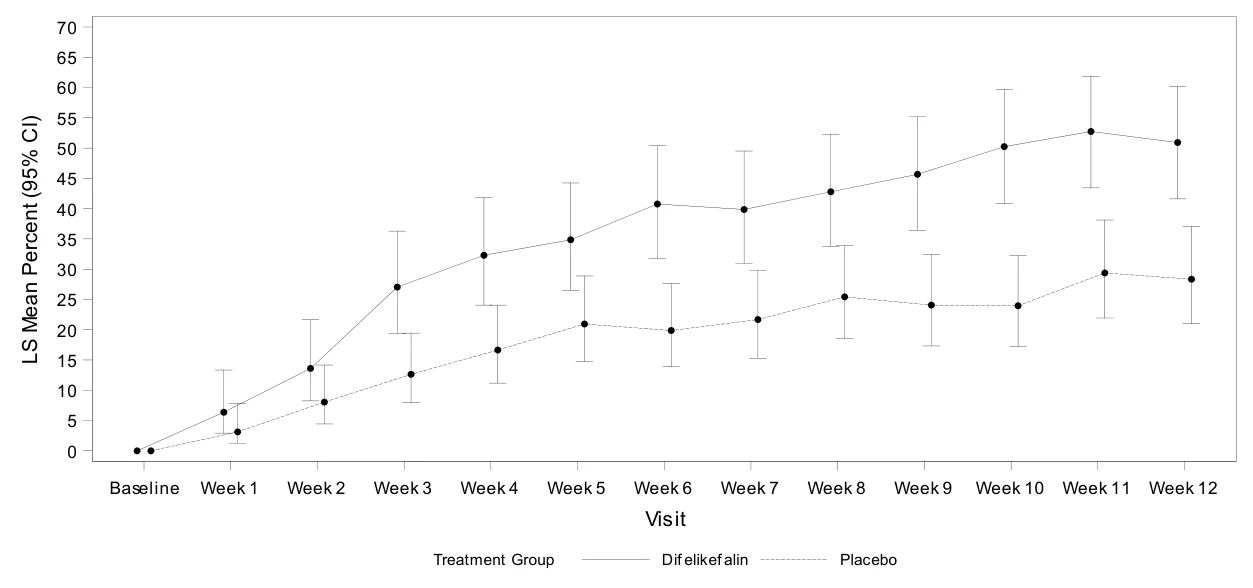
In KALM-1 at Week 12, the LS mean percentage of subjects with a ≥3-point improvement from baseline in the WI-NRS was 51.0% in the KORSUVA group compared with 27.6% in the placebo group. The odds ratio for a ≥3-point improvement from baseline with KORSUVA versus placebo was 2.72 (95% CI 1.72, 4.30), which was statistically significant (p < 0.001) (Table 8).
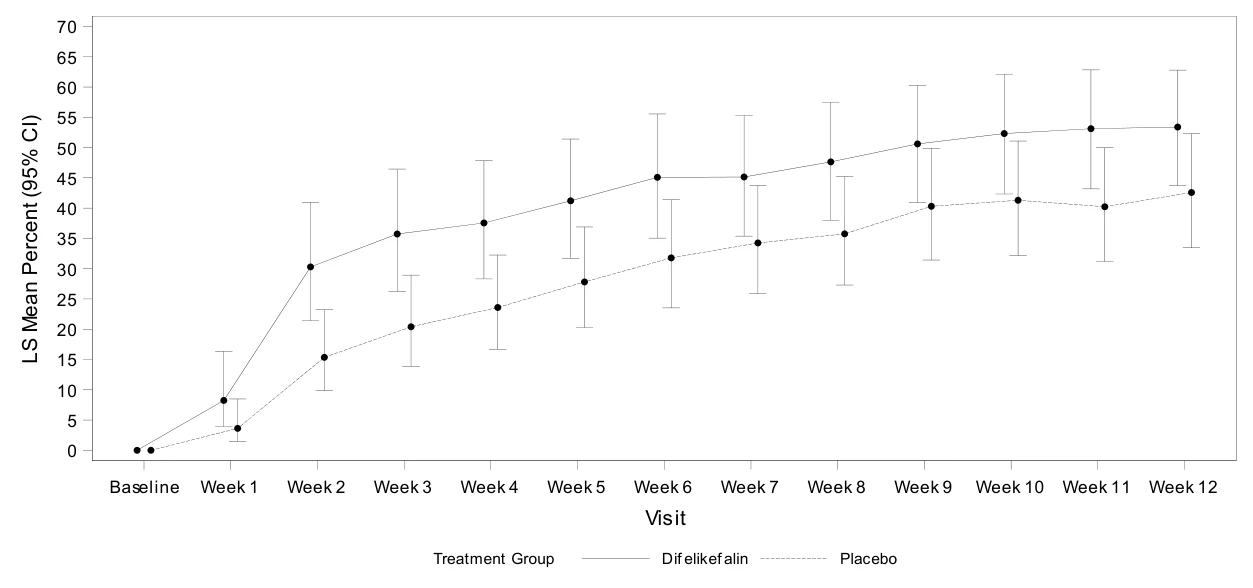
In KALM-2 at Week 12, the LS mean percentage of subjects with a ≥3-point improvement from baseline in the WI-NRS was 54.0% in the KORSUVA group compared with 42.2% in the placebo group. The odds ratio for a ≥3-point improvement from baseline with KORSUVA versus placebo was 1.61 (95% CI 1.08, 2.41), which was statistically significant (p = 0.02) (Table 8).
A treatment effect for KORSUVA versus placebo for a ≥3-point improvement in WI-NRS was observed by Week 2-3 of study treatment and continued at each subsequent visit through Week 12 (Figure 1).
In pooled placebo-controlled subgroup analyses (not controlled for multiplicity), in the subgroup of patients who previously used anti-pruritic medication, at week 12, 55.8% of those taking KORSUVA achieved a ≥3point improvement from baseline in WI-NRS scores, compared to 34.8% of those taking placebo (estimated odds ratio 2.37 [95% CI 1.46, 3.86]). In the subgroup of patients who had not previously used anti-pruritic medication, 48.0% of those taking difelikefalin achieved a ≥3-point improvement from baseline in WI-NRS scores at Week 12, compared to 34.4% of those taking placebo (estimated odds ratio 1.76 [95% CI 1.22, 2.54]).
Figure 1: Percentage of Patients with a ≥3-point Improvement from Baseline in the WI-NRS score by week in KALM-1 and KALM-2 (Intent-to-Treat Population)
KALM-1
KALM-2
15 MICROBIOLOGY
No microbiological information is required for this drug product.
16 NON-CLINICAL TOXICOLOGY
General Toxicology
Single-Dose Toxicity
In mice administered a single intravenous (IV) dose of difelikefalin ranging from 50 to 200 mg/kg, mortality was noted in all animals within 30 minutes at 200 mg/kg, resulting in a single dose maximum tolerated dose (MTD) of 100 mg/kg. In the dose range-finding IV study in rats, doses of difelikefalin at 50 to 100 mg/kg were associated with lethargy, decreased body weight gain, and reduced food consumption. A dose of 25 mg/kg/day was selected for the repeat dose, dose-range finding phase due to concerns about tolerability of repeat dosing at higher doses. When monkeys were administered a single IV dose of difelikefalin ranging from 0.5 to 16 mg/kg, clinical signs increasing in severity and duration were noted at ≥4 mg/kg and required veterinary intervention at 16 mg/kg in 1 animal. The MTD for the single dose monkey study was 8 mg/kg.
Repeat-Dose Toxicity
In repeat-dose toxicology studies in rats, animals were administered difelikefalin by IV injection at doses of 1 to 25 mg/kg/day for 28 days and 0.25 to 25 mg/kg/day for 13 and 26 weeks. The high dose of 25 mg/kg/day resulted in a mean exposure margin, based on AUC, that exceeded the 50-fold clinical exposure at the proposed therapeutic dose of 0.05 mcg/kg/dose. A consistent finding across all studies attributed to exaggerated pharmacodynamic and secondary effects were typically observed across all dose levels and included clinical observations,
primarily decreased spontaneous activity, lethargy, ataxia, and/or foreleg abduction, body weight loss/decreased body weight gain and lower body weights, and reduced food consumption when compared with vehicle control values. The findings were transient with clinical signs noted generally only through the first week of dosing, the body weight loss/decreased body weight gain noted during the first day to several days after initiation of dosing, and subsequent body weight effects and food consumption reduction observed up to several weeks after dosing. Difelikefalin-related testicular effects (bilateral seminiferous tubule atrophy/degeneration with cellular debris in the epididymal lumen) in rats were observed at a generally low incidence in rats predominantly at the high dose of 25 mg/kg.
In repeat dose studies in monkeys, animals were administered difelikefalin by IV injection at doses of 0.25 to 4 mg/kg/day for 28 days and 0.06 to 1 mg/kg/day for 13 and 39 weeks. The high dose of 1 mg/kg/day resulted in a mean exposure margin, based on AUC, that exceeded the 50-fold clinical exposure at the proposed therapeutic dose of 0.05 mcg/kg/dose. As in the rat, the most consistent difelikefalin-related effects noted across all studies were effects on clinical observations and body weight and food consumption parameters. Clinical signs (e.g., lethargy, hunched posture, decrease in general responsiveness, eyes partially closed/sunken, salivation, and/or uncoordinated movement) were typically noted at ≥0.25 mg/kg/day, were generally dose-dependent with respect to incidence, severity, and/or duration, and were transient being no longer apparent after 1 to 2 weeks. No difelikefalin-related clinical signs were observed at 0.06 mg/kg/day. In one of the 39-week studies, a one-day dosing holiday was required for the 1 mg/kg/day group because of the severity of the clinical signs. In addition, a single female at 1 mg/kg/day died prematurely, but the relationship to difelikefalin was uncertain. Generally, a dose-dependent body weight loss was observed, principally at ≥0.25 mg/kg/day, following the first dose (dosing intervals Day 0 to Day 1 and/or Day 1 to Day 3) that was associated with a reduction in food consumption. Mean body weights were, however, similar to control values within 3 days to 2 weeks after initiation of dosing.
The no observed adverse effect levels (NOAELs) for the IV studies in rats ranged from 2.5 to 25 mg/kg/day. The no observed effect level (NOEL) for bilateral testicular lesions and a conservative NOAEL for the 26-week study was 2.5 mg/kg/day. The NOAELs for the monkey IV studies ranged from 0.25 mg/kg/day to 1 mg/kg/day.
Carcinogenicity
Subcutaneous administration of difelikefalin at 3, 10, or 30 mg/kg/day to male and female transgenic rasH2 mice for 26 weeks did not result in the development of drug-related tumors at any dose (exposure multiple up to 1479-fold over the human exposure at the clinical dose of 0.5 mcg/kg based on AUC). Subcutaneous administration of difelikefalin at 0.25, 0.5, or 1.0 mg/kg/day for up to 104 and 93 weeks, in male and female rats, respectively, did not result in the development of drug-related tumors at any dose (exposure multiple >1790-fold over the human exposure at the clinical dose of 0.5 mcg/kg based on AUC).
Genotoxicity
In vitro, difelikefalin was negative for mutagenicity in the bacterial reverse mutation (Ames) assay in all bacterial strains tested at concentrations up to 5000 mcg/plate with or without S9 metabolic activation.
In vitro, difelikefalin was negative for clastogenicity in human peripheral blood lymphocytes (PBLs) under all test conditions at difelikefalin concentrations up to 5000 mcg/mL with or without metabolic activation.
In the in vivo bone marrow micronucleus assay in mice, difelikefalin did not inhibit erythropoiesis and did not result in a statistically significant increase in the incidence of micronucleated polychromatic erythrocytes (mPCEs) at any dose level (0, 25, 50, or 100 mg/kg) or time point (24 or 48 hours post dose).
Reproductive and Developmental Toxicology
Fertility and Early Embryonic Development
There was no effect on male or female fertility in rats following IV administration at doses up to 25 mg/kg/day difelikefalin (up to an exposure multiple of 2912- and 1905-fold in males and females, respectively, of human exposure AUC at the clinical dose). At doses of 2.5 and 25 mg/kg/day in the rat, increased incidence of persistent diestrus (≥4 to 6 days) was associated with an increase in the mean number of days to mating (3.4 and 3.0 days, respectively) compared with controls (2.4 days). All values for days to mating were within the historical control range for the testing facility, and the fertility and pregnancy indices (e.g., implantation and early embryonic development) were comparable across all groups including controls.
A conservative NOAEL for mating in female rats was 0.25 mg/kg. This dose represents a 15-fold multiple of the clinical exposure at 0.5 mcg/kg based on AUC. The NOAEL for male and female fertility and for early embryonic development was 25 mg/kg/day.
Embryofoetal Development
There was no adverse maternal reproductive or embryofoetal toxicity and no evidence of teratogenicity following IV administration of difelikefalin at doses up to 25 mg/kg/day administered to pregnant rats during the period of organogenesis. An increased incidence of the skeletal variations, wavy ribs and incompletely ossified ribs at 25 mg/kg (2133-fold multiple of clinical exposure) was considered potentially related to difelikefalin.
The NOAEL for maternal toxicity could not be determined based on the magnitude and persistence of body weight and food consumption reduction. The NOAEL for maternal reproductive function and embryofoetal development in the rat was considered to be 25 mg/kg/day. This dose represents a 2133-fold multiple of the clinical exposure at 0.5 mcg/kg based on AUC.
In the rabbit embryofoetal study, fewer pregnancies were noted following IV administration of 0.1 mg/kg/day (30-fold multiple of clinical exposure) during the period from implantation to hard palate closure, with most of the nonpregnant animals showing no evidence of implantation or pregnancy on histopathological evaluation. In addition, the 0.1 mg/kg/day dose resulted in notable maternal toxicity, and, therefore, any potential test article-related effect would likely be secondary to maternal and not to direct foetal effects. There was no embryofoetal toxicity and no evidence of teratogenicity at doses up to 0.1 mg/kg/day.
The NOAEL for maternal toxicity in rabbits could not be determined based on the magnitude and persistence of body weight and food consumption reduction. The NOAEL for maternal reproductive function was considered to be 0.05 mg/kg/day based on a potential relationship of fewer pregnancies to difelikefalin at 0.1 mg/kg/day. The NOAEL for embryofoetal development was 0.1 mg/kg/day. This dose represents a 30-fold multiple of the clinical exposure at 0.5 mcg/kg based on AUC.
Pre- and Post-natal Development
There were no effects on parental generation (F0) maternal reproductive function or on first pup generation (F1) developmental and reproductive parameters following IV administration of difelikefalin at doses up to 10 mg/kg/day in a pre and postnatal reproductive toxicity study in rats.
Data indicate that placental transfer of difelikefalin occurs with exposure of the foetus (i.e., foetal plasma levels of difelikefalin) but, based on results of the reproductive toxicity studies, was not associated with embryofoetal toxicity.
Difelikefalin was shown to be transferred into the milk, but there were no quantifiable levels of the test article in the plasma of nursing pups.
The NOAEL for F0 reproductive function and F1 pre and postnatal development was 10 mg/kg/day. This dose represents a 776-fold multiple of the clinical exposure at 0.5 mcg/kg based on AUC.
Special Toxicology
Phototoxicity
Difelikefalin, a small synthetic peptide comprised of D-amino acids, does not possess the physicochemical characteristics critical for association with a phototoxic and/or photoallergenic potential. Difelikefalin does not absorb UV light above 270 nm, is photostable, and does not generate reactive species upon exposure to light. Radiolabel distribution studies in rats demonstrated low skin concentration that was readily cleared.
Immunotoxicity
Immunotoxicity testing (peripheral blood immunophenotyping, spleen and thymus immunohistochemistry, and the anti-keyhole limpet haemocyanin [KLH] T-dependent antibody response [TDAR]) conducted as part of the 13-week monkey study did not identify any negative impact on immune cell number, cell type distribution, or immune function at doses up to 1 mg/kg/day. In addition, immunophenotyping in the rats administered difelikefalin for 13 weeks up to 25 mg/kg/day did not differ from results in the control rats.
Local Tolerance Studies
Very slight, reversible changes were reported in a perivascular irritancy study conducted in rabbits at concentrations of 0.1 and 10 mg/mL (0.2 mL/site) difelikefalin, which was characterized macroscopically by very slight to slight oedema and very slight erythema, both of which had resolved by Day 3. Very slight to slight hemorrhage, very slight oedema, very slight cellular infiltration, and/or very slight degeneration was noted on histopathological evaluation of the difelikefalin injection sites Day 3, which had resolved by Day 14.
Abuse Potential/Dependence
Difelikefalin did not produce place preference at IV doses of 0.32 to 3.2 mg/kg and failed to support self-administration behaviour in male rats previously trained to self-administer heroin at IV doses of 0.001 to 0.125 mg/kg/injection, indicating that difelikefalin did not exhibit a reinforcing drug effect under the conditions tested. Difelikefalin (0.05 to 0.5 mg/kg, IV) did not share discriminative stimulus effects with mixed KOR agonist and partial mu agonist, (-)-pentazocine, as indicated by weak partial generalization. Difelikefalin exhibited a trend for place aversion at a dose ≥1 mg/kg IV in a conditioned place preference study, an effect likely peripherally-mediated. Difelikefalin (5 mg/kg/day) after 28 days of daily IV injection did not induce physical dependence, whereas discontinuation of morphine resulted in a classical mu opioid agonist withdrawal symptomatology in rats.