


Patient Medication Information: uses, side effects, how to take - Ledaga
What is LEDAGA used for?
LEDAGA is a medicine used on the skin (topical) to treat adults:
- with Stage 1A and 1B mycosis fungoides-type cutaneous T-cell lymphoma (MF-CTCL) who have received previous skin treatment.
LEDAGA is not approved for use in children and adolescents under 18 years of age.
How does LEDAGA work?
LEDAGA belongs to a group of anticancer medications called “alkylating agents”. Alkylating agents work by stopping cancer cells from dividing and growing.
What are the ingredients in LEDAGA?
Medicinal ingredients: chlormethine hydrochloride
Non-medicinal ingredients: butylhydroxytoluene, diethylene glycol monoethyl ether, disodium edetate, glycerol, hydroxypropylcellulose, isopropyl alcohol, lactic acid, menthol racemic, propylene glycol, sodium chloride.
LEDAGA comes in the following dosage forms:
Gel, 160 microgram (mcg) chlormethine (as chlormethine hydrochloride) / g gel
Do not use LEDAGA if:
- you are allergic to chlormethine or any of the other ingredients of this medicine.
To help avoid side effects and ensure proper use, talk to your healthcare professional before you use LEDAGA. Talk about any health conditions or problems you may have, including if you:
- have ever had an allergic reaction to chlormethine, propylene glycol or butylhydroxytoluene
Other warnings you should know about:
Mucosal and/or eye injury:
Keep away from your eyes, nose, mouth and other mucous membranes.
- If LEDAGA gets in your eyes, it can cause pain, burning, swelling, redness, sensitivity to light, and blurred vision. It may cause blindness and permanent injury to your eyes. If LEDAGA gets in your eyes, rinse your eyes right away for at least 15 minutes with a large amount of water, normal saline or an eye wash solution. After rinsing your eyes, get medical help right away. See an eye doctor as soon as possible.
If LEDAGA gets in your mucous membranes, such as your mouth or nose, it can cause
pain, redness, and ulcers. If this happens, rinse the affected area right away for at least 15 minutes with a large amount of water. After rinsing the area, get medical help right away.
Skin reactions: LEDAGA can cause skin reactions, such as dermatitis (inflammation, redness and swelling), itching, blisters, ulcers and skin infections. Your risk of dermatitis is increased if LEDAGA is applied to your face, genital area, anus or skin folds. Your healthcare professional will check your skin for skin reactions during your treatment.
Allergic reactions, including anaphylaxis: Allergic reactions, including anaphylaxis, have been reported in patients treated with chlormethine. Tell your healthcare professional or get medical help right away if you develop an allergic reaction. See the Serious side effects and what to do about them table, below, for signs and symptoms to be aware of.
Skin cancers (abnormal growth of the cells in the skin): Skin cancers have occurred in patients treated with chlormethine, including LEDAGA. It is not known whether chlormethine causes this. Your healthcare professional will check your skin for skin cancers during and after treatment with LEDAGA. See the Serious side effects and what to do about them table, below, for signs and symptoms to be aware of.
Secondary exposure: Skin contact with LEDAGA should be avoided in individuals other than the patient, such as the caregiver. Risks of contact include dermatitis, injury to the eyes, mouth, or nose, and skin cancers. Caregivers should follow the recommended instructions when applying LEDAGA to prevent exposure, see How to apply LEDAGA below.
Pregnancy and Breastfeeding:
Female patients:
- If you are pregnant, able or planning to get pregnant or think you are pregnant, there are specific risks you should discuss with your healthcare professional.
- You should not use LEDAGA if you are pregnant. It can harm your unborn baby.
- Avoid becoming pregnant during treatment with LEDAGA. If you are able to become pregnant, use a barrier method of birth control, such as a male condom or spermicide.
- Tell your healthcare provider right away if you become pregnant during or think you may be pregnant during treatment with LEDAGA.
- Do not breastfeed during treatment with LEDAGA. It is not known if LEDAGA passes into your breast milk. LEDAGA can also harm your baby through contact with your treated skin. Talk to your healthcare professional about the best way to feed your baby during this time.
Male patients with female partners who are able to become pregnant:
- Avoid fathering a child while you are using LEDAGA.
- During your treatment with LEDAGA, use a barrier method of birth control, such as a male condom or spermicide.
- If, during your treatment with LEDAGA, your partner becomes pregnant, tell your healthcare professional right away.
Fertility: LEDAGA may affect your ability to have a child. If you have questions about this, talk to your healthcare professional.
Adults aged 65 and over: Patients aged 65 years and older may be at an increased risk of developing side effects during treatment.
LEDAGA contains propylene glycol and butylhydroxytoluene: Propylene glycol may cause skin irritation. Butylhydroxytoluene may cause local skin reactions like an itchy rash called contact dermatitis, or irritation to the eyes and mucous membranes (for example, the inside of your nose or mouth).
Tell your healthcare professional about all the medicines you take, including any drugs, vitamins, minerals, natural supplements or alternative medicines.
There are no known interactions with LEDAGA.
How to apply LEDAGA:
- LEDAGA is a cytotoxic drug. Handle with caution.
- LEDAGA is for topical use only. Use exactly as directed by your healthcare professional.
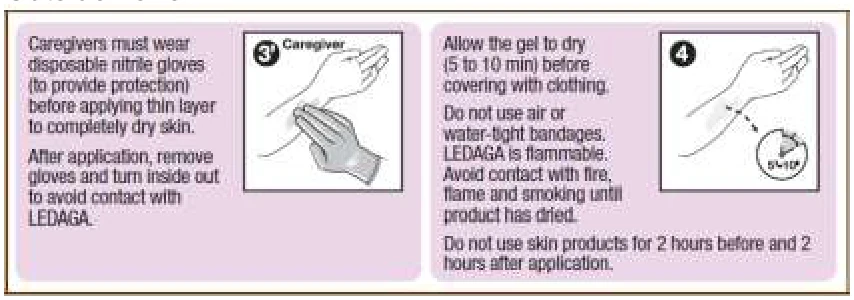
- Caregivers must wear disposable nitrile gloves when applying LEDAGA to patients for their protection. This is a special type of glove. Ask your healthcare professional if you have questions.
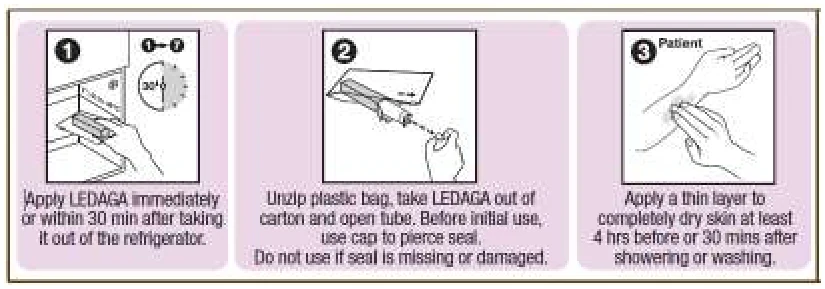
- Remove the cap from the tube just before use. Use the cap to pierce the seal. Do not use if seal is missing or damaged and contact your pharmacist.
- Apply LEDAGA immediately or within 30 minutes after removal from the refrigerator.
- Apply a thin layer to completely dry skin at least 4 hours before or 30 minutes after showering or washing.
- If non-affected areas of the skin come into contact with LEDAGA, wash the area with soap and water.
- Allow treated areas to dry for 5 to 10 minutes after application before covering with clothing.
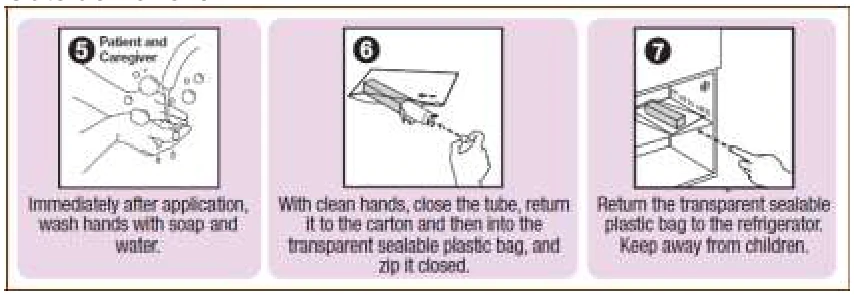
- For patients applying the gel, wash your hands with soap and water immediately after applying.
- For caregivers applying the gel, carefully remove gloves (turning them inside out during the removal to avoid contact with LEDAGA) and then, wash hands thoroughly with soap and water. If your skin accidently comes into contact with LEDAGA, wash the affected area with soap and water right away for at least 15 minutes and remove and wash any contaminated clothing.
With clean hands, close the tube. Place it back in the box it came in and the box in the child-resistant transparent, sealable, plastic bag. Zip it closed. Return it to the refrigerator right away after each use. It is important that LEDAGA is stored in the
- refrigerator to ensure that it will work as expected.
- You should not use air or water-tight bandages on the areas of the skin treated with LEDAGA.
- Avoid contact with fire, flame and smoking until LEDAGA has dried on the skin. LEDAGA is flammable.
- Moisturisers or any other skin products (including medicines applied to the skin) may be applied to the treated area 2 hours before or 2 hours after applying LEDAGA.
Usual dose:
Apply a thin layer of LEDAGA once daily to affected areas of the skin.
Your doctor may interrupt your treatment if you develop a skin reaction. When your skin reaction improves, your doctor may restart your treatment at a reduced frequency. If you tolerate LEDAGA well, your doctor may continue to adjust your dose.
Overdose:
| If you think you, or a person you are caring for, have used too much LEDAGA, contact your healthcare professional, hospital emergency department or regional poison control centre immediately, even if there are no symptoms. |
|---|
Missed Dose:
If you miss a dose of LEDAGA, wait for your next scheduled application and then continue with your regular routine. Do not use a double dose to make up for a forgotten dose.
What are possible side effects from using LEDAGA?
These are not all the possible side effects you may have when using LEDAGA. If you experience any side effects not listed here, contact your healthcare professional.
LEDAGA can decrease the amount of hemoglobin, white blood cells and platelets in your blood.
Serious side effects and what to do about them
| Symptom / effect | Talk to your healthcare professional | Stop using drug and get immediate medical help | |
|---|---|---|---|
| Only if severe | In all cases | ||
| VERY COMMON | |||
| Dermatitis: burning, dryness, itching pain, rash, redness, swelling |
| ||
| Skin infections: painful red lump or bump, hot, red and swollen skin, sores, crusts or blisters |
| ||
| Pruritus (itchy skin) |
| ||
| COMMON | |||
| Allergic reactions, including |
| ||
| anaphylaxis: skin reactions (such as dry skin, scaly skin, swelling, itchiness, hives or welts), feeling sick to your stomach and throwing up, runny nose, watery eyes, difficulty swallowing or breathing, wheezing, shortness of breath, fever | |||
|---|---|---|---|
| Blistering: pain, a raised lump filled with clear fluid or sometimes blood, a reddened and tender patch of skin, skin irritation, swelling |
| ||
| Skin cancer (abnormal growth of cells in the skin): a sore that doesn’t heal or comes back after healing, raised and scaly red patches, a growth with raised edges, a sore that is crusty or bleeds, a growth or area that is itchy, irritated or sore |
| ||
| Skin hyperpigmentation (irregular colouring of skin): patches or spots of darkened skin |
| ||
| Skin ulcers: clear, bloody, or pus-filled discharge from the ulcer, discolouration of the skin, dry or flaky skin around the ulcer, itching, pain or tenderness near the affected area, scabbing, swelling of the skin near the ulcer |
| ||
If you have a troublesome symptom or side effect that is not listed here or becomes bad enough to interfere with your daily activities, talk to your healthcare professional.
Reporting Side Effects
You can report any suspected side effects associated with the use of health products to Health Canada by:
NOTE: Contact your health professional if you need information about how to manage your side effects. The Canada Vigilance Program does not provide medical advice. |
Storage:
Store LEDAGA in a refrigerator (+2°C to +8°C) at all times. Keep the tube in its box inside the child-resistant, transparent, sealable, plastic bag to prevent accidental exposure and contact with food.
- Keep out of reach and sight of children.
- On the carton, write the date that LEDAGA was refrigerated in the space provided.
- Do NOT use an opened or unopened tube of LEDAGA after 60 days in the refrigerator.
- If left at room temperature for longer than one hour, talk to your healthcare professional before using it.
- Ask your pharmacist how to safely dispose of used nitrile gloves, the plastic bag and any unused LEDAGA. Do not throw these away in the household waste. These measures will help to prevent secondary exposure to LEDAGA. It will also help protect the environment.
If you want more information about LEDAGA:
- Talk to your healthcare professional
- Find the full product monograph that is prepared for healthcare professionals and includes this Patient Medication Information by visiting the Health Canada website (https://www.canada.ca/en/health-canada/services/drugs-health-products/drug-products/drug-product-database.html); the manufacturer’s website http://www.recordatirarediseases.com/ca, or by calling 1-877-827-1306.
Last Revised: February 10, 2023
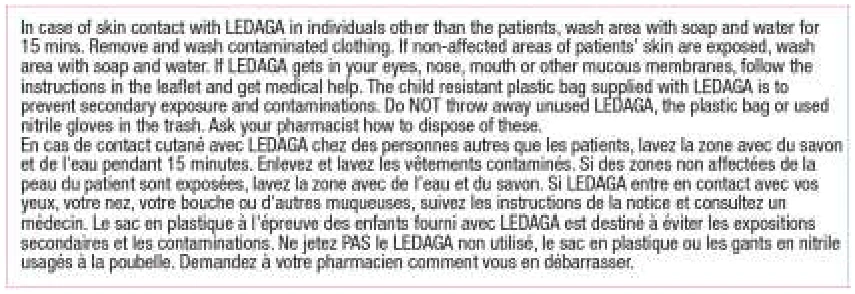
A copy of the patient card included in the LEDAGA carton is shown below.
| Outside Front Panel |
|---|
 |
| Outside Panel 1 |
 |
| Outside Panel 2 |
 |
| Outside Panel 3 |
 |
| Inside Panel |
 |