


Product Monograph - Ledaga
1 INDICATIONS
LEDAGATM (chlormethine gel) is indicated for:
The topical treatment of stage IA and IB mycosis fungoides‐type cutaneous T‐cell
Lymphoma (MF-CTCL) in adult patients who have received prior skin‐directed therapy.
1.1 Pediatrics
Pediatrics (≤ 18 years of age): Based on the data submitted and reviewed by Health
Canada, the safety and efficacy of LEDAGA in pediatric patients has not been established; therefore, Health Canada has not authorized an indication for pediatric use. See 7 WARNINGS AND PRECAUTIONS, Special Populations.
1.2 Geriatrics
Geriatrics (≥65 years of age): Of the 130 LEDAGA enrolled subjects, 22% were age 65 and over, while 6% were 75 and over. Among patients treated with either LEDAGA or the comparator in the clinical trial, there was a higher frequency of adverse events (AEs) in elderly patients and higher proportions of elderly patients discontinued due to an AE.
Evidence from clinical studies and experience suggests that overall there are no differences in effectiveness in elderly patients.
2. CONTRAINDICATIONS
LEDAGA is contraindicated in patients who are hypersensitive to this drug or to any ingredient in the formulation, including any non-medicinal ingredient, or component of the container. For a complete listing, see 6 DOSAGE FORMS, STRENGTHS, COMPOSITION AND PACKAGING.
4 DOSAGE AND ADMINISTRATION
4.1 Dosing Considerations
- LEDAGA is for topical use only.
- Treatment with LEDAGA should be initiated under the supervision of a physician experienced in the treatment of MF-CTCL.
4.2 Recommended Dose and Dosage Adjustment
A thin film of LEDAGA should be applied once daily to affected areas of the skin.
Treatment with LEDAGA should be stopped for any grade of skin ulceration or blistering, or moderately severe or severe dermatitis (e.g., marked skin redness with oedema). Upon improvement, treatment with LEDAGA can be restarted at a reduced frequency of once every 3 days. If reintroduction of treatment is tolerated for at least 1 week, the frequency of application can be increased to every other day for at least 1 week and then to once-daily application if tolerated.
Health Canada has not authorized an indication for pediatric use.
4.3 Administration
For topical application to the skin. LEDAGA is a cytotoxic drug (see 12 SPECIAL HANDLING INSTRUCTIONS). The following instructions should be followed by patients or caregivers when applying LEDAGA:
- Patients should apply LEDAGA to affected areas of the skin only. Patients must wash hands thoroughly with soap and water immediately after handling or applying LEDAGA. In case of LEDAGA exposure to non-affected areas of the skin, patients should wash the exposed area with soap and water thoroughly.
- Caregivers must wear disposable nitrile gloves when applying LEDAGA to patients. Caregivers should remove gloves carefully (turning them inside out during the removal to avoid contact with LEDAGA) and wash hands thoroughly with soap and water after removal of gloves. If there is accidental skin exposure to LEDAGA, caregivers must immediately wash exposed areas thoroughly with soap and water for at least 15 minutes. Remove and wash contaminated clothing.
- The opening of the tube is covered with a foil safety seal. The cap should be used to puncture the seal. The tube should not be used and the pharmacist should be contacted if the seal is missing, punctured, or lifted.
- LEDAGA should be applied immediately or within 30 minutes after removal from the refrigerator. The tube should be returned to the refrigerator immediately after each use. With clean hands, the tube should be placed back into the original box and the box should be placed in the supplied child-resistant, transparent, sealable, plastic bag for storage in the refrigerator.
- LEDAGA should be applied to completely dry skin at least 4 hours before or 30 minutes after showering or washing. The patient should allow treated areas to dry for 5 to 10 minutes after application before covering with clothing. Occlusive (air- or water-tight) dressings should not be used on areas of the skin where LEDAGA was applied.
- Emollients (moisturisers) or other topical products may be applied to the treated areas 2 hours before or 2 hours after application of LEDAGA.
- Fire, flame, and smoking must be avoided until LEDAGA has dried.
A patient card describing the correct way to apply LEDAGA will be included in the carton packaging at the time of dispensing. A copy of this card is found on the last page of the Product Monograph.
4.5 Missed Dose
If a dose of this medication is missed, it is not necessary to make up the missed dose. Skip the missed dose and continue with the next scheduled dose.
5 OVERDOSAGE
No cases of overdose after cutaneous use of LEDAGA were reported during the clinical development program or post-marketing period. In case of overdose the exposed area should be washed with soap and water.
| For management of a suspected drug overdose, contact your regional poison control centre. |
|---|
6 DOSAGE FORMS, STRENGTHS, COMPOSITION AND PACKAGING
Table 1 – Dosage Forms, Strengths, Composition and Packaging.
LEDAGA is a clear, colourless gel, supplied in an aluminum foil tube, sealed with an aluminum film with a white polypropylene resealable screw-on cap. Each tube contains 60 g of gel containing 160 micrograms of chlormethine (as chlormethine hydrochloride) per gram of gel (equivalent to 0.02% chlormethine hydrochloride).
The carton includes one LEDAGA tube and information for the patient in the form of a leaflet and a patient card.
A child-resistant transparent, sealable plastic bag is also supplied with the carton. The carton (with LEDAGA, the leaflet and the patient card) is dispensed inside the supplied plastic bag.
7 WARNINGS AND PRECAUTIONS
General
Mucosal and/or eye injury
Contact with mucous membranes, especially those of the eyes, must be avoided. Exposure of mucous membranes such as the oral mucosa or nasal mucosa causes pain, redness, and ulceration, and these may be severe. Exposure of the eyes to chlormethine causes pain, burns, inflammation, photophobia, and blurred vision. Blindness and severe irreversible anterior eye injury may occur.
Patients should be advised that if any mucous membrane exposure occurs:
- irrigation should be performed immediately for at least 15 minutes with copious amounts of water (or sodium chloride 9 mg/ml (0.9%) solution for injection, or a balanced salt ophthalmic irrigating solution may be used if there is eye exposure), and
- medical care should be obtained immediately (including ophthalmological consultation if there is eye exposure).
| Route of Administration | Dosage Form / Strength/Composition | Non-medicinal Ingredients |
| Topical | 160 micrograms chlormethine/g gel (equivalent to 0.02% chlormethine hydrochloride) | Butylhydroxytoluene Diethylene glycol monoethyl ether Disodium edetate Glycerol Hydroxypropylcellulose Isopropyl alcohol Lactic acid Menthol racemic Propylene glycol Sodium chloride |
Hypersensitivity
Hypersensitivity reactions, including isolated cases of anaphylaxis, have been reported in the literature after the use of topical formulations of chlormethine.
Excipients
This medicinal product contains propylene glycol and butylhydroxytoluene.
Propylene glycol may cause skin irritation.
Butylhydroxytoluene may cause local skin reactions (e.g., contact dermatitis), or irritation to the eyes and mucous membranes.
Carcinogenesis and Mutagenesis
Skin cancer
Skin-directed therapies of MF-CTCL have been associated with secondary skin cancers, although the specific contribution of chlormethine has not been established.
During the Study 201 and twelve months follow up period, the occurrence of skin cancer was observed with overall incidence of 4.3%. Non-melanoma skin cancer cases, for which a causal association was not established, were seen in LEDAGA (2% (3/128)) and comparator arms (6% (8/127)).
Some of these non-melanoma skin cancers occurred in patients who had received prior therapies known to cause non-melanoma skin cancer. Non-melanoma skin cancer may occur on any area of the skin, including untreated areas. Therefore, regular skin monitoring is strongly advised during and after discontinuation of the treatment with LEDAGA.
Sexual Health
Reproduction
Advise women to avoid becoming pregnant while using LEDAGA.
Based on case reports in humans, findings in animal reproduction studies, its mechanism of action, and genotoxicity findings, chlormethine may cause fetal harm. There are case reports of children born with malformations in pregnant women systemically administered chlormethine. Chlormethine was teratogenic and embryo-lethal after a single subcutaneous administration to animals.
Advise women of reproductive potential and men to use effective contraception during treatment with LEDAGA. A barrier method of contraception should be used to avoid direct exposure of reproductive organs to LEDAGA.
If the patient becomes pregnant while taking this drug, the patient should be apprised of the potential hazard to a fetus. See 16 NON-CLINICAL TOXICOLOGY.
Fertility
Based on animal data, chlormethine may impair fertility in males and females. See 16 NON-CLINICAL TOXICOLOGY.
Skin
Local skin reactions
Patients should be assessed during treatment for skin reactions such as dermatitis (e.g., redness, swelling, and inflammation), pruritus, blisters, ulceration, and skin infections. The face, genitalia, anus, and intertriginous skin are at increased risk of skin reactions to topical chlormethine.
Secondary exposure to LEDAGA
Direct skin contact with LEDAGA should be avoided in individuals other than the patient. Risks of secondary exposure may include skin reactions, mucosal injury, and skin cancers. Recommended application instructions should be followed to prevent secondary exposure. See 4 DOSAGE AND ADMINISTRATION.
7.1 Special Populations
7.1.1 Pregnant Women
LEDAGA is not recommended during pregnancy.
There are case reports of children born with malformations in pregnant women systemically administered chlormethine.
In animal reproduction studies, subcutaneous administration of mechlorethamine to pregnant rats and ferrets during organogenesis resulted in embryo-fetal mortality, alterations to growth, and structural abnormalities.
If LEDAGA is used during pregnancy or if the patient becomes pregnant while taking this drug, patient should be advised of the potential risk to the fetus. See 16 NON-CLINICAL TOXICOLOGY.
7.1.2 Breast-feeding
It is not known if chlormethine is excreted in human milk. A risk to newborns/infants cannot be excluded due to the potential for topical or systemic exposure of the breast-feeding child to chlormethine through contact with the mother’s skin.
Because of the potential for topical or systemic exposure to LEDAGA through exposure to the mother's skin and the potential for serious adverse reactions in the breastfed child from chlormethine, advise patients not to breastfeed during treatment with LEDAGA.
7.1.3 Pediatrics
Pediatrics (≤ 18 years of age): Safety and effectiveness in pediatric patients has not been established; therefore, Health Canada has not authorized an indication for pediatric use.
7.1.4 Geriatrics
Of the 130 LEDAGA enrolled subjects, 22% were age 65 and over, while 6% were 75 and over.
No overall differences in effectiveness were observed between these subjects and younger subjects, and other reported clinical experience has not identified differences in responses between the elderly and younger patients. However, results from the clinical trial revealed that the incidence of adverse events is higher in patients older than 65 years.
8 ADVERSE REACTIONS
8.1 Adverse Reaction Overview
The most frequent adverse reactions to LEDAGA were skin related: dermatitis (e.g., skin irritation, erythema, rash, urticaria, skin-burning sensation, pain of the skin), pruritus, skin infections, skin ulceration and blistering, skin hyperpigmentation, and cutaneous hypersensitivity reactions.
In the clinical trial, moderately-severe to severe skin-related adverse events were managed with treatment reduction, suspension, or discontinuation. Discontinuations due to adverse events occurred in 22% of patients treated with LEDAGA and 18% of patients treated with the comparator. Sixty-seven percent (67%) of the discontinuations for adverse reactions occurred within the first 90 days of treatment.
Temporary treatment suspension occurred in 34% of patients treated with LEDAGA and 20% of patients treated with the comparator. Reductions in dosing frequency occurred in 23% of patients treated with LEDAGA and 12% of patients treated with the comparator.
Reductions in hemoglobin, neutrophil count, or platelet count occurred in 13% of patients treated with LEDAGA and 17% treated with Comparator.
The following safety topics are discussed in greater detail in the Warnings and Precautions section of this product monograph:
- Mucous membrane or/and eye injury
- Local skin reactions
- Skin cancer
- Secondary exposure to LEDAGA
8.2 Clinical Trial Adverse Reactions
Because clinical trials are conducted under very specific conditions, the adverse reaction rates observed in the clinical trials may not reflect the rates observed in practice and should not be compared to the rates in the clinical trials of another drug. Adverse reaction information from clinical trials is useful for identifying drug-related adverse events and for approximating rates.
| Table 2 – Summary of Treatment-Emergent Adverse Events ≥ 2% in Study 201, by Modified SOC and Preferred Term (re-coded)a (Safety analysis set) | ||||||||||
Modified SOC Preferred Term, n (%) | Chlormethine Gel (N=128) n (%) | AP (N=127) n (%) | All Patients (N=255) n (%) | |||||||
| Skin and subcutaneous tissue disorders | ||||||||||
| Dermatitis | 70 (54.7) | 73 (57.5) | 143 (56.1) | |||||||
| Pruritus | 26 (20.3) | 21 (16.5) | 47 (18.4) | |||||||
| Skin infections | 15 (11.7) | 14 (11.0) | 29 (11.4) | |||||||
| Skin hyperpigmentation | 7 (5.5) | 9 (7.1) | 16 (6.3) | |||||||
| Skin ulceration or blistering | 8 (6.3) | 5 (3.9) | 13 (5.1) | |||||||
| Actinic keratosis | 5 (3.9) | 2 (1.6) | 7 (2.7) | |||||||
| Respiratory, thoracic and mediastinal disorders | ||||||||||
| Upper respiratory tract infection | 11 (8.6) | 10 (7.9) | 21 (8.2) | |||||||
| Nasopharyngitis | 1 (0.8) | 6 (4.7) | 7 (2.7) | |||||||
| Influenza | 2 (1.6) | 4 (3.1) | 6 (2.4) | |||||||
| Cough | 3 (2.3) | 3 (2.4) | 6 (2.4) | |||||||
| Pharyngolaryngeal pain | 3 (2.3) | 3 (2.4) | 6 (2.4) | |||||||
| Bronchitis | 2 (1.6) | 3 (2.4) | 5 (2.0) | |||||||
| Dyspnoea | 4 (3.1) | 0 (0.0) | 4 (1.6) | |||||||
| Pneumonia | 3 (2.3) | 0 (0.0) | 3 (1.2) | |||||||
| General disorders | ||||||||||
| Fatigue | 3 (2.3) | 6 (4.7) | 9 (3.5) | |||||||
| Influenza like illness | 2 (1.6) | 3 (2.4) | 5 (2.0) | |||||||
| Pyrexia | 3 (2.3) | 2 (1.6) | 5 (2.0) | |||||||
| Pain | 1 (0.8) | 3 (2.4) | 4 (1.6) | |||||||
| Oedema | 3 (2.3) | 1 (0.8) | 4 (1.6) | |||||||
| Xerosis | 3 (2.3) | 0 (0.0) | 3 (1.2) | |||||||
| Infections and infestations | ||||||||||
| Sinusitis | 6 (4.7) | 3 (2.4) | 9 (3.5) | |||||||
| Urinary tract infection | 4 (3.1) | 2 (1.6) | 6 (2.4) | |||||||
| Fungal infection | 0 (0.0) | 3 (2.4) | 3 (1.2) | |||||||
| Gastrointestinal disorders | ||||||||||
| Nausea | 6 (4.7) | 3 (2.4) | 9 (3.5) | |||||||
| Diarrhoea | 4 (3.1) | 3 (2.4) | 7 (2.7) | |||||||
| Abdominal pain | 3 (2.3) | 1 (0.8) | 4 (1.6) | |||||||
| Musculoskeletal and connective tissue disorders | ||||||||||
| Arthralgia | 5 (3.9) | 3 (2.4) | 8 (3.1) | |||||||
| Back pain | 5 (3.9) | 2 (1.6) | 7 (2.7) | |||||||
| Nervous system disorder | ||||||||||
| Headache | 4 (3.1) | 5 (3.9) | 9 (3.5) | |||||||
| Dizziness | 2 (1.6) | 3 (2.4) | 5 (2.0) | |||||||
| Paraesthesia | 1 (0.8) | 3 (2.4) | 4 (1.6) | |||||||
| Carpal tunnel syndrome | 0 (0.0) | 3 (2.4) | 3 (1.2) | |||||||
| Injury, poisoning and procedural complications | ||||||||||
| Excoriation | 0 (0.0) | 3 (2.4) | 3 (1.2) | |||||||
| Neoplasms benign (incl cysts and polyps) | ||||||||||
| Cyst | 3 (2.3) | 1 (0.8) | 4 (1.6) | |||||||
| Neoplasms malignant | ||||||||||
| Basal cell carcinoma | 2 (1.6) | 4 (3.1) | 6 (2.4) |
| Blood and lymphatic system disorders | |||
| Lymphadenopathy | 1 (0.8) | 4 (3.1) | 5 (2.0) |
| Immune system disorders | |||
| Hypersensitivity | 3 (2.3) | 2 (1.6) | 5 (2.0) |
| Drug hypersensitivity | 0 (0.0) | 3 (2.4) | 3 (1.2) |
a: Post-hoc analysis with pooling and re-coding of preferred terms AP = chlormethine HCl 0.02% compounded in Aquaphor® ointment; SOC = system organ class | |||
9 DRUG INTERACTIONS
9.2 Drug Interactions Overview
No drug interaction studies have been performed with LEDAGA. Systemic exposure has not been observed with topical administration of LEDAGA; therefore, systemic drug interactions are not likely.
9.3 Drug-Drug Interactions
Interactions with other drugs have not been established.
9.4 Drug-Food Interactions
Interactions with food have not been established.
9.5 Drug-Herb Interactions
Interactions with herbal products have not been established.
9.6 Drug-Laboratory Test Interactions
Interactions with laboratory tests have not been established.
10 ACTION AND CLINICAL PHARMACOLOGY
10.1 Mechanism of Action
Chlormethine is a bifunctional alkylating agent that inhibits rapidly proliferating cells.
Alkylation of DNA is the primary basis for the cytotoxic actions of chlormethine. Chlormethine binds to N7 positions in guanines via its reactive chloroethyl moieties, potentially binding also to N3 positions in adenines. The bifunctional nature of chlormethine along with its small molecular size allows it to form interstrand cross-links within DNA, by alkylation of guanine-N7 positions in opposite DNA strands. Monoadducts and intrastrand biadducts are also formed, but the formation of interstrand cross-links makes chlormethine a more effective tumor chemotherapeutic agent than monofunctional analogues. Unrepaired interstrand cross-links prevent transcription, replication, and segregation of DNA, and ultimately cause cell death.
10.2 Pharmacodynamics
Pharmacodynamic interactions following topical administration of chlormethine gel have not been investigated.
10.3 Pharmacokinetics
Systemic exposure was undetectable after topical administration of LEDAGA to patients in Study 201and 202. Blood samples were analyzed from 16 and 15 patients following treatment with LEDAGA (chlormethine gel 0.016%) and an identical formulation consisting of chlormethine 0.032% w/w, respectively. For patients who received chlormethine 0.016%, samples were collected to measure chlormethine concentrations prior to dosing, on day 1 (blood samples drawn at 1, 3 and 6 hours post-application), and at the first month visit. Following the topical administration of chlormethine 0.016%, there were no detectable plasma chlormethine concentrations observed in any of the patients. Patients who received chlormethine 0.032% had no measurable concentrations of chlormethine or its degradation product (half‐mustard) 1 hour post-application on day 1 or after 2, 4, or 6 months of treatment.
11 STORAGE, STABILITY AND DISPOSAL
Prior to dispensing, store unopened tube in the freezer (-15°C to -25°C).
After dispensing, advise patients to store under refrigeration (2°C to 8°C).
LEDAGA should be removed from the refrigerator just prior to application and returned to the refrigerator immediately after each use in its original box inside the child-resistant, transparent, sealable, plastic bag.
Unused refrigerated LEDAGA should be discarded after 60 days, together with the plastic bag.
LEDAGA is a cytotoxic drug, See 12 SPECIAL HANDLING INSTRUCTIONS.
Keep out of reach and sight of children.
12 SPECIAL HANDLING INSTRUCTIONS
The following instructions should be followed by patients or caregivers when applying LEDAGA.
Patients must wash hands thoroughly with soap and water after handling or applying LEDAGA. Caregivers must wear disposable nitrile gloves when applying LEDAGA to patients. Caregivers should remove gloves carefully (turning them inside out during the removal to avoid contact with LEDAGA) and wash hands thoroughly with soap and water after removal of gloves.
If there is accidental skin exposure to LEDAGA, caregivers must immediately wash exposed areas thoroughly with soap and water for at least 15 minutes. Remove and wash contaminated clothing.
LEDAGA is an alcohol-based product and is flammable. The recommended application instructions should be followed (see 6 DOSAGE AND ADMINISTRATION).
Store LEDAGA refrigerated at temperatures between 2°C to 8°C. Advise patients that adherence to the recommended storage condition will ensure LEDAGA will work as expected. Patients should consult a pharmacist prior to using LEDAGA that has been left at room temperature for longer than one hour per day. With clean hands, replace tube in the original box, then place in the refrigerator inside the child-resistant, transparent, sealable, plastic bag out of the reach of children and avoiding contact with food.
Unused refrigerated LEDAGA should be discarded after 60 days. Patients and caregivers should be advised to ask their pharmacist about how to properly dispose of unused LEDAGA and waste materials, including the plastic bag and the nitrile gloves used for application. These materials should not be disposed of in the regular trash to minimize secondary exposure.
PART II: SCIENTIFIC INFORMATION
13 PHARMACEUTICAL INFORMATION
Drug Substance
Proper name: Chlormethine Hydrochloride
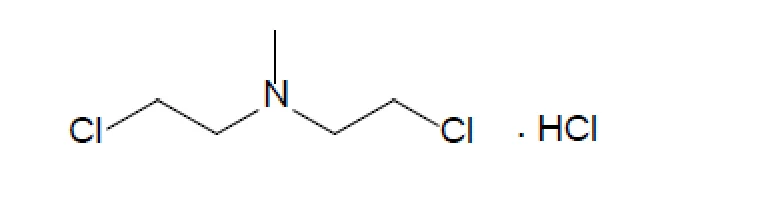
Chemical name: 2-chloro-N-(2-chloroethyl)-N-methylethanamine hydrochloride
Molecular formula and molecular mass: C5H11Cl2N, HCl; 192.51 g/mol
Structural formula:
Physicochemical properties:
Physical form: White to off-white crystalline solid
Solubility: Soluble in water, methanol and isopropanol; partially soluble in acetone pKa: 6.1
14 CLINICAL TRIALS
14.1 Trial Design and Study Demographics
Table 3 – Summary of patient demographics for clinical trials in topical chlormethine gel
| Study # | Trial design | Dosage, route of administration and duration | Study subjects (n) | Median age | Sex |
| 2005NMM F-201-US | Multi-center, randomized, third party (observer) blinded study | 160 micrograms chlormethine/g gel (PG) ointment (AP) once daily topical treatment for max. 12 months | 260 patients enrolled onto the trial 255 patients received at least one dose of study medication | 58 (11-88) years | PG/AP |
77 (59.2%) male 53 (40.8%) female | |||||
The baseline demographics and disease characteristics were balanced between treatment arms. The median age was 57 years in the LEDAGA arm and 58 years in the comparator arm. The majority of the patients were male (60% in LEDAGA arm, 59% in comparator arm) and white (75% in both treatment arms). The median number of prior therapies was 2 in both treatment arms. The most common prior therapy was topical corticosteroids (used in 86% of patients in both treatment arms). The median body surface area (BSA) involvement at baseline was 8.5% (range 1%, 61%) in the LEDAGA arm and 9% (range 1%, 76%) in the comparator arm.
14.2 Study Results
2005NMMF-201-US Study (Study 201)
The efficacy and safety of LEDAGA were assessed in a randomized, multicentre, observer-blinded, active-controlled, non-inferiority clinical trial of 260 adult patients with Stage IA (141), IB (115), and IIA (4) MF-CTCL who had received at least one prior skin-directed therapy. Qualifying prior therapies included topical corticosteroids, phototherapy, topical bexarotene, and topical nitrogen mustard. Patients were not required to be refractory to or intolerant of prior therapies. Patients were stratified based on stage (IA vs IB and IIA) and then randomized to receive either LEDAGA (equivalent to 0.02% chlormethine HCl) or the comparator (a petroleum-based 0.02% chlormethine HCl ointment).
Study medicinal product was to be applied topically once daily for 12 months. Dosing could be suspended or continued at reduced frequency in the case of skin reactions. The median daily usage of LEDAGA was 1.8 g. The maximum individual daily usage in the trial was 10.5 g of gel (i.e., 2.1 mg of chlormethine HCl).
In this trial the use of topical corticosteroids to treat dermatitis resulting from study treatment was not allowed per protocol.
The primary efficacy endpoint was the Composite Assessment of Index Lesion Severity (CAILS) response rate. Assessment was undertaken by a blinded observer. The CAILS score is obtained by adding the severity score of each of the following categories for up to 5 index lesions: erythema, scaling, plaque elevation, and surface area. Severity was graded from 0 (none) to 8 (severe) for erythema and scaling; 0 to 3 for plaque elevation; and 0 to 9 for surface area. A response was defined as an at least 50% improvement in the baseline CAILS score, confirmed at a subsequent visit at least 4 weeks later. A complete response was defined as a confirmed CAILS score of 0. A partial response was defined as an at least 50% reduction in the baseline CAILS score. Non-inferiority was considered to have been demonstrated if the lower bound of the 95% confidence interval around the ratio of response rates (LEDAGA/comparator) was greater than or equal to 0.75. The CAILS score was adjusted by removal of the pigmentation score and simplification of the plaque elevation scale.
As the main secondary endpoint, patients were also evaluated using the Severity Weighted Assessment Tool (SWAT), which was based on an assessment of all lesions. The SWAT score is derived by measuring each involved area as a percentage of total body surface area (%BSA) and multiplying it by a severity weighting factor (1=patch, 2=plaque, 3=tumor or ulcer). A response was defined as greater than or equal to 50% reduction in baseline SWAT score which was confirmed at the next visit at least 4 weeks later. Efficacy was evaluated in the Efficacy Evaluable (EE) population, which included all 185 patients who were treated for at least 6 months with no major protocol deviations [Table 4], and in the Intent-To-Treat (ITT) population, which included all 260 randomized patients.
Table 4 – CAILS and SWAT -confirmed response rates by 12 months in Study 201 (EE population)
| Response rates (%) | Ratio | 95% CI | ||||||
LEDAGA N=90 | Comparator N=95 | |||||||
CAILS Overall Response (CR+PR) Complete Response (CR) Partial Response (PR) | 76.7% 18.9% 57.8% | 58.9% 14.7% 44.2% | 1.301 | 1.065–1.609 | ||||
SWAT Overall Response (CR+PR) Complete Response (CR) Partial Response (PR) | 63.3% 8.9% 54.4% | 55.8% 4.2% 51.6% | 1.135 | 0.893–1.448 | ||||
| CAILS = Composite Assessment of Index Lesion Severity; CI = confidence interval; CR = Complete Response; PR = Partial Response; SWAT = Severity Weighted Assessment Tool | ||||||||
The ratio of response and the 95% confidence interval in the ITT population were 1.226 (0.974–1.552) for CAILS and 1.017 (0.783–1.321) for SWAT and therefore consistent with those in the EE population for both the overall CAILS and SWAT responses.
Reductions in mean CAILS scores were observed as early as at 4 weeks, with further reductions observed with continuing therapy.
In the EE population, the percentage of patients who achieved a confirmed response by CAILS was similar between disease stages IA (79.6 %) and IB–IIA (73.2%).
Results in other secondary endpoints (response in percentage of body surface area affected, time to first confirmed CAILS response, duration of first confirmed CAILS response and time to disease progression) were consistent with those for CAILS and SWAT.
16 NON-CLINICAL TOXICOLOGY
General:
Animal studies have shown chlormethine to be corrosive to skin and eyes, a powerful vesicant, irritating to the mucous membranes of the respiratory tract, and highly toxic by the oral route.
Carcinogenicity:
Chlormethine was carcinogenic in mice when injected intravenously with four doses of 2.4 mg/kg (0.1% solution) at 2-week intervals with observations for up to 2 years. An increased incidence of thymic lymphomas and pulmonary adenomas was observed.
Application of chlormethine on the skin of mice at a dose of 0.1 mg in 0.2 ml of 95% Ethanol once weekly for 33 weeks was not tumorigenic while an increase of the dose or of the application frequency resulted in the development of squamous cell carcinomas and papillomas.
In particular the application of 0.3 mg weekly resulted in skin tumours in 8 out of 24 mice [7 papilloma (P), 1 squamous cell carcinoma (SCC)], while the application of chlormethine at the dose of 0.1 mg 3 times per week in two different groups of animals resulted in skin tumours in 6(P) out 29 mice and 10 (1 P, 9 SCC) out 33 mice, respectively.
When mice were exposed to a topical solution of chlormethine 0.1mg in 0.1ml of 95% Ethanol two times a week, with or without UVB exposure three times a week, in comparison to 0.1ml of 95% Ethanol twice a week, with or without UVB exposure three times a week over 52 weeks, higher incidence and faster growing tumors (including squamous cell carcinomas) were observed in the mice treated with chlormethine, concomitantly with UVB.
Genotoxicity:
Chlormethine was genotoxic in multiple genetic toxicology studies, which included mutations in Drosophila, a variety of plants, fungi and rodents. Chlormethine induced mutation in the bacterial reverse mutation assay (Ames test) and chromosome aberrations in mammalian cells. Dominant lethal mutations were produced in ICR/Ha Swiss mice.
Reproductive and Development Toxicology:
The reproductive effects of chlormethine have not been studied; however, published literature indicates that fertility may be impaired by systemically administered chlormethine.
Chlormethine was shown to significantly impair fertility in male rats and cause mitochondrial damage in mice oocytes. Chlormethine impaired fertility in the male rats at a dose of 0.25 to 0.5 mg/kg when given intravenously every two weeks for up to 12 doses. When chlormethine was administered intraperitoneally to male and female mice for 4 consecutive days at a dose of 0.5 mg/kg the pregnancy rate decreased (from 80% to 12.5%) when treated males were paired with treated females. Treatment with intravenous chlormethine has been associated with delayed catamenia, oligomenorrhea, and temporary or permanent amenorrhea. Teratogenicity and embryo lethality were observed in mice and rats treated systemically with chlormethine HCl. Intraperitoneal administration of chlormethine in pregnant mice caused decrease in viable embryos, chromosomal aberrations and gross malformations in the fetuses. Similarly, a single subcutaneous injection of 1 mg/kg chlormethine in rats induced fetal mortality or resorption, general growth retardation and malformations in 90% of the fetuses.