


Product Monograph - Taro-Melphalan
RECENT MAJOR LABEL CHANGES
| 4 DOSAGE AND ADMINISTRATION, 4.1 Dosing Considerations | 01/2025 |
|---|---|
| 4 DOSAGE AND ADMINISTRATION, 4.3 Reconstitution | 01/2026 |
| 7 WARNINGS AND PRECAUTIONS | 01/2025 |
TABLE OF CONTENTS
Sections or subsections that are not applicable at the time of authorization are not listed.
RECENT MAJOR LABEL CHANGES ............................................................................................................. 2
TABLE OF CONTENTS ............................................................................................................................... 2
PART I: HEALTH PROFESSIONAL INFORMATION ....................................................................................... 4
1 INDICATIONS ................................................................................................................................... 4
1.1 Pediatrics ................................................................................................................................................. 4
1.2 Geriatrics ................................................................................................................................................. 4
2 CONTRAINDICATIONS .............................................................................................................................. 4
3 SERIOUS WARNINGS AND PRECAUTIONS BOX ....................................................................................... 5
4 DOSAGE AND ADMINISTRATION ............................................................................................................. 5
4.1 Dosing Considerations ............................................................................................................................ 5
4.2 Recommended Dose and Dosage Adjustment ...................................................................................... 5
4.3 Reconstitution ......................................................................................................................................... 6
4.4 Administration......................................................................................................................................... 6
4.5 Missed Dose ............................................................................................................................................ 7
5 OVERDOSAGE ........................................................................................................................................... 7
6 DOSAGE FORMS, STRENGTHS, COMPOSITION AND PACKAGING .......................................................... 7
7 WARNINGS AND PRECAUTIONS .............................................................................................................. 8
7.1 Special Populations ............................................................................................................................... 10
7.1.1 Pregnant Women .................................................................................................................................. 10
7.1.2 Breast-feeding ....................................................................................................................................... 10
7.1.3 Pediatrics ............................................................................................................................................... 11
7.1.4 Geriatrics ............................................................................................................................................... 11
8 ADVERSE REACTIONS ............................................................................................................................. 11
8.1 Adverse Reaction Overview .................................................................................................................. 11
9 DRUG INTERACTIONS ............................................................................................................................. 12
9.3 Drug-Behavioural Interactions.............................................................................................................. 12
9.4 Drug-Drug Interactions ......................................................................................................................... 12
9.5 Drug-Food Interactions ......................................................................................................................... 13
9.6 Drug-Herb Interactions ......................................................................................................................... 13
9.7 Drug-Laboratory Test Interactions ....................................................................................................... 13
10 CLINICAL PHARMACOLOGY .............................................................................................................. 13
10.1 Mechanism of Action ............................................................................................................................... 13
10.3 Pharmacokinetics .................................................................................................................................... 14
11 STORAGE, STABILITY AND DISPOSAL ............................................................................................... 15
12 SPECIAL HANDLING INSTRUCTIONS ........................................................................................... 15
PART II: SCIENTIFIC INFORMATION ............................................................................................................... 16
13 PHARMACEUTICAL INFORMATION .................................................................................................. 16
14 CLINICAL TRIALS ................................................................................................................................ 16
15 MICROBIOLOGY ................................................................................................................................ 16
16 NON-CLINICAL TOXICOLOGY ............................................................................................................ 16
17 SUPPORTING PRODUCT MONOGRAPHS .......................................................................................... 17
PATIENT MEDICATION INFORMATION ......................................................................................................... 18
PART I: HEALTH PROFESSIONAL INFORMATION
1 INDICATIONS
TARO-MELPHALAN (melphalan) is indicated for:
- the palliative treatment of multiple myeloma
- the palliation of nonresectable epithelial carcinoma of the ovary.
- TARO-MELPHALAN for injection has been administered by hyperthermic isolated limb perfusion as an adjuvant to surgery in the treatment of malignant melanoma. However, there have been no prospective controlled or uncontrolled trials evaluating dose and its relationship to disease response and/or toxicity.
1.1 Pediatrics
Pediatrics (<18 years): No data are available to Health Canada; therefore, Health Canada has not authorized an indication for pediatric use.
1.2 Geriatrics
Geriatrics (> 65 years): TARO-MELPHALAN is approved for use in the geriatric population. However, dosing precautions apply (see 4.2 Recommended Dose and Dosage Adjustment and 7.1.4 Geriatrics).
2 CONTRAINDICATIONS
TARO-MELPHALAN is contraindicated in:
- Patients who are hypersensitive to this drug or to any ingredient in the formulation, including any non-medicinal ingredient, or component of the container. For a complete listing, see 6 Dosage Forms, Strengths, Composition and Packaging.
Patients whose disease has demonstrated a prior resistance to this agent.
There may be cross-sensitivity (skin rash) between melphalan and chlorambucil.
- Patients who have recently been administered other similar chemotherapeutic agents or radiotherapy, or if neutrophil and/or platelet counts are depressed (see 7 WARNINGS and PRECAUTIONS, Hematologic).
- Patients who are receiving radiotherapy.
- Women who are breast-feeding (see 7.1.2 Breast-feeding).
3 SERIOUS WARNINGS AND PRECAUTIONS BOX
Serious Warnings and Precautions
TARO-MELPHALAN (melphalan) should be administered in carefully adjusted dosages by or under the supervision of experienced physicians who are familiar with the drug's actions and the possible complications of its use.
The major acute toxicities associated with melphalan are:
- Hypersensitivity reactions including anaphylaxis (See 7 Immune)
- Bone marrow suppression (See 7 Hematologic)
- Pulmonary toxicity (See 7 Respiratory and 5 OVERDOSAGE)
- Infertility (See 7 Reproduction)
- Secondary malignancies (See 7 Carcinogenesis and Mutagenesis)
- Mutagenicity and teratogenicity (See 7 Carcinogenesis and Mutagenesis)
4 DOSAGE AND ADMINISTRATION
4.1 Dosing Considerations
- Due to the risk of thromboembolism, the decision to take antithrombotic prophylactic measures should be made after careful assessment of an individual patient's underlying risk factors (See 7 Hematologic).
- Caution is recommended in patients with renal impairment (See 7 Renal).
4.2 Recommended Dose and Dosage Adjustment
Intravenous
Multiple Myeloma:
The usual intravenous dose is 16 mg/m2. Dosage reduction of up to 50% should be considered in patients with renal insufficiency (BUN ≥ 10.71 mmol/L[30 mg/dL]). The drug is administered in one dose and the length of infusion should be from 15 to 90 minutes. Melphalan is repeated at 2 -week intervals initially for 4 doses, then at 4-week intervals after adequate recovery from toxicity. Available evidence suggests about one-third to one-half of the patients with multiple myeloma show a favorable response to the drug. Experience with oral melphalan suggests that repeated courses should be given since improvement may continue slowly over many months, and the maximum benefit may be missed if treatment is abandoned prematurely. Dose adjustment on the basis of blood cell counts at the nadir prior to each dose should be considered.
Intra-arterial/Hyperthermic isolated limb Perfusion
Melanoma:
Only physicians experienced and well-trained in hyperthermic isolated limb perfusion should administer the drug in this fashion. Based on the recent literature, the usual doses of melphalan is 13 mg/L or 1.0 mg/kg in the upper limb and 10 mg/L or 1.5 mg/kg in the lower limb added to the perfusate. Perfusion lasts for approximately 60 minutes under mild hyperthermic conditions (final tissue temperatures, 39° to 41° C).
Pediatrics (< 18 years): Health Canada has not authorized an indication for pediatric use.
Geriatrics (> 65 years): In general, dose selection for an elderly patient should be cautious, usually starting at the low end of the dosing range, reflecting the greater frequency of decreased hepatic, renal, or cardiac function, and of concomitant disease or other drug therapy.
4.3 Reconstitution
Preparation of TARO-MELPHALAN injection solution:
TARO-MELPHALAN for injection must be reconstituted at room temperature using the supplied solvent-diluent (See 12 Special Handling Instructions). Prior to reconstitution, ensure that both the lyophilized powder and the supplied solvent-diluent are at room temperature (approximately 25oC). Warming the diluent in the hand may aid reconstitution.
- 1. Using a sterile syringe and a 20-guage or larger needle, rapidly transfer 10 mL of the supplied solvent-diluent into the vial containing the lyophilized powder as a single quantity.
- 2. Immediately shake the vial vigorously for at least 50 seconds (approximately 1 minute) until a clear solution, free of visible particles, is obtained. Rapid addition of the diluent followed by immediate vigorous shaking is important for proper dissolution.
Each vial must be reconstituted individually following this procedure (See 11 Storage, Stability, and Disposal).
The resulting solution contains the equivalent of 5 mg per mL anhydrous melphalan and has a pH of approximately 6.5.
Table 1 – Reconstitution
| Vial Size | Volume of Diluent to be Added to Vial | Approximate Available Volume | Concentration per mL |
|---|---|---|---|
| 50 mg | 10 mL | 10 mL | 5 mg/mL |
TARO-MELPHALAN injection solution has limited stability and should be prepared immediately before use. Any unused solution should be discarded. The reconstituted solution should be used immediately and should not be refrigerated as this will cause precipitation. It is stable for up to 2 hours at 30°C.
TARO-MELPHALAN injection solution has reduced stability when further diluted in an infusion solution and the rate of degradation increases rapidly with rise in temperature. In that case, only sodium chloride infusion, 0.9% w/v should be used. Solutions diluted to a concentration of 0.1 mg/mL to 0.45 mg/mL in 0.9% sodium chloride infusion should be used immediately and are stable for up to 50 minutes at 30°C and 3 hours at 20°C.
Parenteral Products:
Parenteral drug products should usually be inspected for particulate matter and discoloration prior to administration whenever solution and container permit. If either occurs, do not use this product.
4.4 Administration
Preparation for Administration/Stability:
Intravenous:
- 1. Reconstitute TARO-MELPHALAN for injection, as directed, with 10 mL of the supplied diluent. This provides a 5 mg/mL solution of melphalan.
- 2. Immediately dilute the dose to be administered in 0.9% sodium chloride injection, USP, to a concentration not greater than 0.45 mg/mL.
- 3. Administer the diluted product over a minimum of 15 minutes.
- 4. Complete administration within 50 minutes of reconstitution.
- 5. Discard any reconstituted and diluted solutions remaining after 50 minutes of reconstitution.
The reconstituted product is stable for up to 2 hours at 30°C. A precipitate forms if the solution is stored at 5°C. Do not refrigerate.
Solutions diluted to a concentration of 0.1 mg/mL to 0.45 mg/mL in 0.9% sodium chloride injection are stable for up to 50 minutes at 30°C and 3 hours at 20ºC.
4.5 Missed Dose
Missed/omitted doses should not be made up at the end of the cycle.
5 OVERDOSAGE
Overdose as high as 290 mg/m2 resulting in death has been reported. It has also been reported that a pediatric patient survived a 254 mg/m2 overdose treated with standard supportive care. The immediate effects are severe nausea and vomiting. Decreased consciousness, convulsions, muscular paralysis and cholinomimetic effects are less frequently seen. Severe mucositis, stomatitis, colitis, diarrhea, and hemorrhage of the gastrointestinal tract occur at high doses (>100 mg/m 2). Elevations in liver enzymes and veno-occlusive disease occur infrequently. Nephrotoxicity and adult respiratory distress syndrome have been reported rarely. The principal toxic effect is bone marrow suppression leading to leucopenia, thrombocytopenia and anemia. Hematologic parameters should be closely followed for 3 to 6 weeks. Administration of autologous bone marrow or hematopoietic growth factors (i.e., sargramostim, filgrastim) may shorten the period of pancytopenia. General supportive measures together with appropriate blood transfusions and antibiotics should be instituted as deemed necessary by the physician. This drug is not removed from plasma to any significant degree by hemodialysis or hemoperfusion.
For the most recent information in the management of a suspected drug overdose, contact your regional poison control centre or Health Canada’s toll-free number, 1-844 POISON-X (1-844-764-7669).
6 DOSAGE FORMS, STRENGTHS, COMPOSITION AND PACKAGING
Table 2 – Dosage Forms, Strengths, Composition and Packaging
Route of Administration | Dosage Form / Strength/Composition | Non-medicinal Ingredients |
|---|---|---|
| Intravenous and intra-arterial Perfusion | Injection / 50 mg/vial | Ethanol, hydrochloric acid (for pH control), povidone, propylene glycol, sodium citrate, water for injection. |
TARO-MELPHALAN (melphalan) for injection (freeze-dried) 50 mg:
Vial of 50 mg melphalan as the hydrochloride. TARO-MELPHALAN for injection is supplied as a 2-component pack comprising a vial containing a freeze-dried powder and a vial of solvent-diluent. The stopper is not made with natural rubber latex.
Each TARO-MELPHALAN vial contains the equivalent of 50 mg of melphalan, in the form of the hydrochloride, as a sterile, white to off-white, freeze-dried powder, 20 mg of povidone, and 0.051 mL of hydrochloric acid (for pH control).
Solvent-diluent for TARO-MELPHALAN for injection:
Each vial of solvent-diluent provides 10 mL of buffer solution containing sodium citrate 0.20 g, ethanol
0.52 mL, propylene glycol 6.00 mL, and water for injection, q.s.
7 WARNINGS AND PRECAUTIONS
Please see 3 SERIOUS WARNINGS AND PRECAUTIONS BOX.
General
TARO-MELPHALAN should be administered in carefully adjusted dosages by or under the supervision of experienced physicians who are familiar with the drug's actions and the possible complications of its use. The drug should not be administered by hyperthermic isolated limb perfusion unless the clinician is experienced and well-trained in this technique.
In all instances where the use of TARO-MELPHALAN for injection is considered for chemotherapy, the physician must evaluate the need and usefulness of the drug against the risk of adverse events. Melphalan should be used with extreme caution in patients whose bone marrow reserve may have been compromised by prior irradiation or chemotherapy, or whose marrow function is recovering from previous cytotoxic therapy. Dose reduction should be considered in patients with renal insufficiency receiving IV melphalan (See 7 Hematologic and Renal).
Carcinogenesis and Mutagenesis
Secondary malignancies, including acute nonlymphocytic leukemia, myeloproliferative syndrome, and carcinoma, have been reported in patients with cancer treated with alkylating agents (including melphalan) especially in elderly patients after long combination therapy and radiotherapy. Some patients also received other chemotherapeutic agents or radiation therapy. Precise quantitation of the risk of acute leukemia, myeloproliferative syndrome or carcinoma is not possible. Published reports of leukemia in patients who have received melphalan (and other alkylating agents) suggest that the risk of leukemogenesis increases with chronicity of treatment and with cumulative dose. In one study, the 10 - year cumulative risk of developing acute leukemia or myeloproliferative syndrome after melphalan therapy was 19.5% for cumulative doses ranging from 730 mg to 9652 mg. In this same study, as well as in an additional study, the 10-year cumulative risk of developing acute leukemia or
myeloproliferative syndrome after melphalan therapy was less than 2% for cumulative doses under 600 mg. This does not mean that there is a cumulative dose below which there is no risk of the induction of secondary malignancy.
The potential benefits from melphalan therapy must be weighed on an individual basis against the possible risk of the induction of a second malignancy notably if melphalan is used in combination with thalidomide or lenalidomide and prednisone considering increase leukaemogenic risk. Melphalan in combination with lenalidomide and prednisone and, to a lesser extent, thalidomide and prednisone has been also associated with the increased risk of solid second primary malignancy (SPM) in elderly newly diagnosed multiple myeloma patients.
Patient characteristics (e.g. age, ethnicity), primary indication and treatment modalities (e.g. radiation therapy, transplantation), as well as environmental risk factors (e.g., tobacco use) should be evaluated prior to melphalan administration. Doctors must examine the patient by usual measurements to ensure the early detection of cancer and initiate treatment if necessary.
Melphalan has been shown to cause chromatid or chromosome damage in man.
Driving and Operating Machinery
Due caution should be exercised when driving or operating a vehicle or potentially dangerous machinery.
Hematologic
Bone marrow suppression: As with other nitrogen mustard drugs, excessive dosage will produce marked bone marrow suppression. Bone marrow suppression is the most significant toxicity associated with TARO-MELPHALAN for injection in most patients. Therefore, the following tests should be performed at the start of therapy and prior to each subsequent dose of TARO-MELPHALAN: platelet count, hemoglobin, white blood cell count and differential. The occurrence of a platelet count below 50 x 109/L or an absolute neutrophil count below 0.5 x 10⁹/L is an indication to withhold further therapy until the blood counts have sufficiently recovered. Frequent blood counts are essential to determine optimal dosage and to avoid toxicity.
If the leukocyte count falls below 3 x 10⁹/L, or the platelet count below 100 x 109/L, the drug should be discontinued until the blood picture has had a chance to recover.
Blood counts may continue to fall for 6-8 weeks after initiation of treatment. So, at the first sign of abnormally large fall in leukocyte or platelet counts, treatment should be temporarily interrupted.
In one trial by Cornwell et al. (1982), melphalan administered intravenously without adjustment for renal failure increased incidence rates for severe leucopenia and thrombocytopenia by 35% in patients with renal insufficiency (BUN ≥ 30mg/dL).
Venous Thromboembolism: Melphalan in combination with lenalidomide and prednisone or in combination with thalidomide and prednisone or dexamethasone is associated with an increased risk of venous thromboembolism. Thromboprophylaxis should be administered for at least the first 5 months of treatment especially in patients with additional thrombotic risk factors. The decision to take antithrombotic prophylactic measures should be made after careful assessment of an individual patient's underlying risk factors.
If the patient experiences any thromboembolic events, treatment must be discontinued and standard anticoagulation therapy started. Once the patient has been stabilised on the anticoagulation treatment and any complications of the thromboembolic event have been managed, melphalan in combination with lenalidomide and prednisone or thalidomide and prednisone or dexamethasone may be restarted at the original dose dependent upon a benefit -risk assessment. The patient should continue anticoagulation therapy during the course of melphalan treatment.
Immune
Acute hypersensitivity reactions, including anaphylaxis, have occurred infrequently (See 8 ADVERSE REACTIONS). Treatment is symptomatic. The infusion should be terminated immediately, followed by the administration of volume expanders, pressor agents, corticosteroids, or antihistamines at the discretion of the physician.
Immunisation using a live organism vaccine has the potential to cause infection in immunocompromised hosts. Therefore, immunisations with live organism vaccines are not recommended.
Monitoring and Laboratory Tests
Periodic complete blood counts with differentials should be performed during the course of treatment with melphalan. At least one determination should be obtained prior to each dose. Patients should be observed closely for consequences of bone marrow suppression, which include severe infections, bleeding, and symptomatic anemia.
Renal
Systemic exposure of melphalan was positively correlated to the degree of renal insufficiency following either route of administration. In one trial by Cornwell et al. (1982), increased incidence rate of bone marrow suppression has been associated with impaired renal function in patients with intravenous administration without dose adjustment for renal failure. Dose adjustments should be considered for patients with significant renal dysfunction (BUN ≥ 30mg/dL) and these patients should be closely monitored for toxicity.
The use of high dose melphalan has the potential to cause acute kidney injury in patients, especially those with underlying renal impairment.
Reproductive Health: Female and Male Potential
Due to an increased risk of venous thromboembolism in patients undergoing treatment with melphalan in combination with lenalidomide and prednisone or in combination with thalidomide and prednisone or dexamethasone, combined oral contraceptive pills are not recommended. If a patient is currently using combined oral contraception, her partner should switch to a barrier method like condom. The risk of venous thromboembolism continues for 4−6 weeks after discontinuing combined oral contraception. Considering that Melphalan has been shown to cause chromatid or chromosome damage in man, it is recommended that men who are receiving treatment with Melphalan not father a child during treatment and up to 6 months afterwards.
As with all cytotoxic treatments, male and female patients who use melphalan should use effective and reliable contraceptive methods for a period of six months, following the cessation of treatment.
The final decision regarding the additional time period on contraception should be taken by the doctor and/or the patient.
Fertility
Melphalan causes suppression of ovarian function in premenopausal women, resulting in amenorrhea in a significant number of patients. Reversible and irreversible testicular suppression have also been reported. There is evidence from some animal studies that melphalan can have an adverse effect on spermatogenesis. It is recommended that men have a consultation on sperm preservation before treatment due to the possibility of irreversible infertility as a result of Melphalan treatment.
Respiratory
Rare reports of pulmonary fibrosis or interstitial pneumonitis (including fatal reports) have been seen in patients treated with TARO-MELPHALAN.
7.1 Special Populations
7.1.1 Pregnant Women
Safe use of melphalan has not been established with respect to adverse effects on fetal development. Therefore, it should be used in women of childbearing potential and particularly during early pregnancy only when, in the judgment of the physician, the potential benefits outweigh the possible hazards.
7.1.2 Breast-feeding
It is not known whether this drug is excreted in human milk. Because many drugs are excreted in human milk and because of the potential for serious adverse reactions in nursing infants from melphalan, a decision should be made whether to discontinue nursing or to discontinue the drug, taking into account the importance of the drug to the mother (see 2 CONTRAINDICATIONS).
7.1.3 Pediatrics
Pediatrics (< 18 years): The safety and effectiveness in children have not been established; therefore, Health Canada has not authorized an indication for pediatric use.
7.1.4 Geriatrics
Clinical experience with TARO-MELPHALAN has not identified differences in responses between the elderly and younger patients. In general, dose selection for an elderly patient should be cautious, usually starting at the low end of the dosing range, reflecting the greater frequency of decreased hepatic, renal, or cardiac function, and of concomitant disease or other drug therapy (see 7 Renal).
8 ADVERSE REACTIONS
8.1 Adverse Reaction Overview
The following information on adverse reactions is based on data from both oral and intravenous administration of melphalan as a single agent, using several different dose schedules for treatment of a wide variety of malignancies.
For this product, there is no modern clinical documentation which can be used as support for determining the frequency of undesirable effects. Undesirable effects may vary in their incidence depending on the indication and dose received and also when given in combination with other therapeutic agents.
Gastrointestinal: Gastrointestinal effects such as nausea and vomiting occur in up to 50% of patients receiving intravenous doses of melphalan. Diarrhea is noted to occur one week post high dose melphalan therapy. Oral ulceration and hepatic toxicity including veno-occlusive disease have been reported.
The incidence of diarrhea, vomiting and stomatitis becomes the dose-limiting toxicity in patients given high intravenous doses of melphalan in association with autologous bone marrow transplantation. Cyclophosphamide pretreatment appears to reduce the severity of gastrointestinal damage induced by high-dose melphalan and the literature should be consulted for details. Stomatitis at conventional doses is rare.
Hematologic: The most common side effect is bone marrow suppression leading to leukopenia, thrombocytopenia and anemia. Neutropenia and hemolytic anemia were also observed. Irreversible bone marrow failure has been reported. Bone marrow suppression is uncommon after limb perfusion.
Frequencies of severe myelosuppression and infections including fatal cases secondary to myelosuppression were much higher in patients with renal insufficiency (BUN ≥ 30mg/dL) than those with normal renal function who were treated with intravenous melphalan (See 7 Renal)
Hepatic: Hepatic disorders ranging from abnormal liver function tests to clinical manifestations such as hepatitis and jaundice have been reported. Veno-occlusive disease has been reported following high- dose intravenous treatment.
Elevation in liver function enzymes is usually mild.
Hyperthermic Isolated Limb Perfusion: Adverse reactions may be attributable to the surgical procedure as well as the heated perfusion with melphalan for Injection.
The local toxicity of hyperthermic perfusion appears to increase with increasing drug dose, duration of perfusion, and temperature. Muscle atrophy, muscle fibrosis, myalgia and increase in blood creatine phosphokinase were very commonly observed. Compartment syndrome has been commonly observed. Muscle necrosis and rhabdomyolysis have been seen at an unknown frequency. Severe nerve or muscle damage, severe skin or soft tissue reaction, or arterial thrombosis requiring amputation are rare, occurring in less than 1% of patients.
Systemic complications are uncommon, with reversible bone marrow suppression occurring in < 5% of patients. Wound complications, such as delayed healing or infection, occur in 5 to 10% of patients.
Hypersensitivity: Acute hypersensitivity reactions, including anaphylaxis, were reported in 2.4% of 425 patients receiving melphalan for injection for myeloma (See 7 Immune). These reactions were characterized by urticaria, pruritus, edema, skin rashes and in some patients, tachycardia, bronchospasm, dyspnea, and hypotension. Cardiac arrest had also been rarely reported in association with such events. These patients appeared to respond to antihistamine and corticosteroid therapy. Treatment with melphalan should be discontinued if a hypersensitivity reaction occurs.
Local Reactions: Mild pain and/or irritation at, or near, the site of injection occurred after approximately half of the infusions, resolving within few hours after the end of the injection, without a need for treatment. Skin ulceration at injection site and flushing were reported as well as subjective and transient sensation of warmth and/or tingling.
Miscellaneous: Other reported adverse reactions include: skin hypersensitivity, vasculitis, alopecia, allergic reaction, pulmonary fibrosis, stomatitis, maculopapular rashes and interstitial pneumonitis. Fatal reports of pulmonary fibrosis have been received. Flushing sensations were reported at high doses of melphalan.
Neoplasms benign, malignant and unspecified (including cysts and polyps): Secondary acute myeloid leukaemia and myelodysplastic syndrome.
Renal: Temporary significant elevation of the blood urea has been seen in the early stages of melphalan therapy in myeloma patients with renal damage. An increase in creatinine levels has been observed. Acute kidney injury has been reported particularly in patients with co-morbidities influencing renal function and concomitant use of medications which have nephrotoxic potential.
Reproductive system and breast disorders: Includes azoospermia and amenorrhoea
Vascular disorders: Deep vein thrombosis and pulmonary embolism
9 DRUG INTERACTIONS
9.3 Drug-Behavioural Interactions
Drug-Behavioural interactions have not been established.
9.4 Drug-Drug Interactions
The drugs listed in this table are based on either drug interaction case reports or studies, or potential interactions due to the expected magnitude and seriousness of the interaction (i.e., those identified as contraindicated).
Table 3 - Established or Potential Drug-Drug Interactions
| [Proper/Common name] | Effect | Clinical comment |
|---|---|---|
| Nalidixic acid | Hemorrhagic enterocolitis | Nalidixic acid together with high-dose intravenous melphalan has caused deaths in children due to hemorrhagic enterocolitis. |
| Cyclosporine | Impaired renal function | In bone marrow transplant patients who were conditioned with high-dose intravenous melphalan and who subsequently received cyclosporine to prevent graft-versus-host disease. |
| Live Viral Vaccines | Potential to cause infection in immunocompromised hosts | Vaccinations with live organism vaccines are not recommended in immunocompromised individuals (See 7 WARNINGS AND PRECAUTIONS). |
| Busulfan | Potential to influence the development of toxicities in pediatric population | In pediatric populations, for the Busulfan-Melphalan regimen it has been reported that the administration of melphalan less than 24 hours after the last oral busulfan administration may influence the development of toxicities. |
9.5 Drug-Food Interactions
Interactions with food have not been established.
9.6 Drug-Herb Interactions
Interactions with herbal products have not been established
9.7 Drug-Laboratory Test Interactions
Interactions with laboratory tests have not been established.
10 CLINICAL PHARMACOLOGY
10.1 Mechanism of Action
TARO-MELPHALAN (melphalan) is an alkylating agent of the bischloroethylamine type. As a result, its cytotoxicity appears to be related to the extent of its interstrand cross-linking with DNA, probably by binding at the N7 position of guanine. Like other bifunctional alkylating agents, it is active against both resting and rapidly dividing tumor cells.
10.3 Pharmacokinetics
Absorption
Mean (±SD) peak melphalan plasma concentrations in myeloma patients given melphalan intravenously at doses of 10 or 20 mg/m2 were 1.2 ± 0.4 and 2.8 ± 1.9 μg/mL, respectively. Studies in children as young as 1 year showed results similar to adults.
Distribution:
The steady-state volume of distribution of melphalan is 0.5 L/kg and approximates total body water. Penetration into cerebrospinal fluid (CSF) is low. The extent of melphalan binding to plasma proteins is ranging from 69% to 78%. There is evidence that the protein binding is linear in the range of plasma concentrations usually achieved at standard dose therapy, but that the binding may become concentration-dependent at the concentrations observed at high dose therapy. Serum albumin is the major binding protein, accounting for about 55% to 60% of the plasma protein binding, and 20% is bound to ∝1-acid glycoprotein. In addition, melphalan binding studies have revealed the existence of an irreversible component attributable to the alkylation reaction with plasma proteins. Interactions with immunoglobulins have been found to be negligible.
Melphalan displays limited penetration of the blood-brain barrier. Melphalan was found at concentrations of approximately 10% of the corresponding plasma concentration in the cerebrospinal fluid samples following high-dose intravenous melphalan in two studies.
Metabolism:
Melphalan is eliminated from plasma primarily by chemical hydrolysis to monohydroxy- and dihydroxy- melphalan. Aside from these hydrolysis products, no other melphalan metabolites have been observed in man.
In vivo Studies
Tattersall et al. using universally labelled 14C-melphalan, found substantially less radioactivity in the urine of those given it intravenously (35-65% in 7 days). Following either oral or intravenous administration, the pattern of label recovery was similar, with the majority being recovered in the first 24 hours. Following oral administration, peak radioactivity occurred in plasma at 2 hours and then disappeared with a half-life of approximately 160 hours. In one patient where parent drug (rather than just radiolabel) was determined, the melphalan half-disappearance time was 67 minutes.
In vitro Studies - Protein Binding and Dialysis
After incubating 14C-melphalan in human plasma at 37°C for 8 hours, Chang et al. found that only 70% of the carbon-14 label was removed by methanol extraction. Almost none of the methanol-extractable
14C-melphalan was in the form of parent drug at that time.
Equilibrium dialysis of 14C-melphalan in human plasma at 37°C (30 μg of melphalan per mL plasma) against 0.05 M phosphate buffer, pH 7.4, demonstrated that 30% of the carbon-14 remained undialyzable after equilibrium had been reached at 8 hours. These observations may indicate alkylation of plasma proteins by melphalan.
Elimination
Following injection, drug plasma concentrations declined rapidly in a biexponential manner with distribution phase and terminal elimination phase half-lives of approximately 10 and 70 minutes, respectively. Estimates of average total body clearance varied among studies, but typical values of approximately 7 to 9 mL/min/kg (250 to 325 mL/min/m2) were observed.
Melphalan clearance may be decreased in renal impairment. An increase in AUC (i.e. melphalan systemic exposure) was observed in patients with renal impairment when melphalan was administered by either route. One study noted an increase in the occurrence of severe leukopenia in patients with elevated BUN after 10 weeks of therapy (See 7 Hematologic).
The pharmacokinetics of melphalan administered by closed circuit limb perfusion have been studied by several investigators. Melphalan concentrations declined rapidly and biexponentially from circulating perfusate with average terminal half-lives reported from 26 min (n=4) to 53 min (n=48). Systemic exposure to melphalan during limb perfusion is generally very low. Peak melphalan concentrations in the closed circuit perfusate are typically 10 to 100 times greater than peak concentrations in plasma observed following standard dose systemic intravenous therapy for multiple myeloma.
11 STORAGE, STABILITY AND DISPOSAL
Injection: Store at controlled room temperature (15°C – 30°C). Protect from light.
12 SPECIAL HANDLING INSTRUCTIONS
As with other toxic compounds, caution should be exercised when handling and preparing the solution of TARO-MELPHALAN. Skin reactions associated with accidental exposure may occur. The use of gloves is recommended. If the solution of TARO-MELPHALAN contacts the skin or mucosa, immediately wash the skin or mucosa thoroughly with soap and water.
PART II: SCIENTIFIC INFORMATION
13 PHARMACEUTICAL INFORMATION
Drug Substance
Proper name: melphalan
Chemical name: 4-[bis(2-chloroethyl)amino]-L-Phenylalanine
Molecular formula and molecular mass: C13H18Cl2N2O2, 305.20
Structural formula:
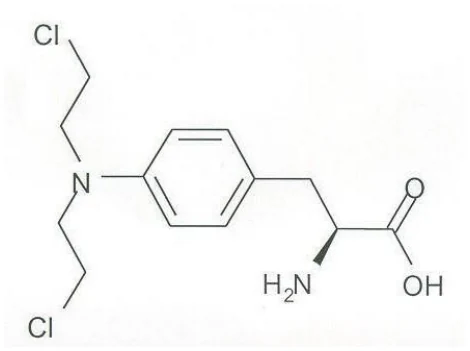
Physicochemical properties: A white to cream-coloured powder which melts with decomposition at about 175°C. Soluble in ethanol and propylene glycol. Practically insoluble in water.
14 CLINICAL TRIALS
The clinical trial data on which the original indication was authorized is not available.
15 MICROBIOLOGY
No microbiological information is required for this drug product.
16 NON-CLINICAL TOXICOLOGY
General Toxicology:
| Species | LD50 |
|---|---|
| Mouse | 21 mg/kg P.O. |
| Mouse | 10 mg/kg I.P. |
| Rat | 4 mg/kg I.P. |
No information is available on the acute effects of melphalan. However, chronic administration (by I.P. injection) produced lymphosarcomas and dose -related increase in lung tumours in mice and peritoneal tumours in rats.
Reproductive and Developmental Toxicology:
In mice, melphalan administered intraperitoneally at a dose of 7.5 mg/kg, showed reproductive effects attributable to cytotoxicity in specific male germ cell stages and induced dominant lethal mutations and heritable translocations in post-meiotic germ cells, particularly in mid to late stage spermatids.
A study was performed to measure the total reproductive capacity of melphalan in female mice. Females received a single intraperitoneal dose of 7.5 mg/kg melphalan and were then housed with an untreated male for most of their reproductive life span (a minimum of 347 days post -treatment). A pronounced reduction in litter size occurred within the first post -treatment interval, followed by an almost complete recovery. Thereafter, a gradual decline in litter size occurred. This was simultaneous with a reduction in the proportion of productive females, a finding associated with an induced reduction in the number of small follicles.
17 SUPPORTING PRODUCT MONOGRAPHS
- 1. PrALKERAN® (powder for solution, 50 mg / vial; tablets, 2 mg), Submission Control 285163, Product Monograph, Aspen Pharmacare Canada Inc. July 23, 2024.