


Product Monograph - Cyclophosphamide for Injection (DR Reddy's Laboratories)
RECENT MAJOR LABEL CHANGES
| Not applicable |
|---|
TABLE OF CONTENTS
Certain sections or subsections that are not applicable at the time of the preparation of the most recent authorized product monograph are not listed.
RECENT MAJOR LABEL CHANGES ....................................................................................... 2
TABLE OF CONTENTS ............................................................................................................ 2
PART I: HEALTH PROFESSIONAL INFORMATION ................................................................ 4
1 INDICATIONS .................................................................................................................. 4
1.1 Pediatrics ................................................................................................................. 5
1.2 Geriatrics ................................................................................................................. 5
2 CONTRAINDICATIONS ................................................................................................... 5
3 SERIOUS WARNINGS AND PRECAUTIONS BOX ......................................................... 6
4 DOSAGE AND ADMINISTRATION .................................................................................. 6
4.1 Dosing Considerations ............................................................................................. 6
4.2 Recommended Dose and Dosage Adjustment ......................................................... 7
4.3 Reconstitution .........................................................................................................21
4.4 Administration .........................................................................................................22
4.5 Missed Dose ...........................................................................................................22
5 OVERDOSAGE ...............................................................................................................23
6 DOSAGE FORMS, STRENGTHS, COMPOSITION AND PACKAGING .........................24
7 WARNINGS AND PRECAUTIONS .................................................................................24
7.1 Special Populations ................................................................................................32
7.1.1 Pregnant Women: ...................................................................................................32
7.1.2 Breast-feeding ........................................................................................................32
7.1.3 Pediatrics ................................................................................................................32
7.1.4 Geriatrics ................................................................................................................32
8 ADVERSE REACTIONS ..................................................................................................33
8.1 Adverse Reaction Overview ....................................................................................33
8.2 Clinical Trial Adverse Reactions..............................................................................33
8.5 Post-Market Adverse Reactions ..............................................................................33
9 DRUG INTERACTIONS ...................................................................................................36
9.2 Drug Interactions Overview .....................................................................................36
9.4 Drug-Drug Interactions ............................................................................................37
9.5 Drug-Food Interactions ...........................................................................................43
9.6 Drug-Herb Interactions ............................................................................................43
9.7 Drug-Laboratory Test Interactions ...........................................................................43
10 CLINICAL PHARMACOLOGY ........................................................................................44
10.1 Mechanism of Action ...............................................................................................44
10.3 Pharmacokinetics ...................................................................................................44
11 STORAGE, STABILITY AND DISPOSAL .......................................................................46
12 SPECIAL HANDLING INSTRUCTIONS ..........................................................................47
PART II: SCIENTIFIC INFORMATION .....................................................................................49
13 PHARMACEUTICAL INFORMATION .............................................................................49
14 CLINICAL TRIALS ..........................................................................................................50
15 MICROBIOLOGY ............................................................................................................50
16 NON-CLINICAL TOXICOLOGY ......................................................................................50
17 SUPPRORTING PRODUCT MONOGRAPH ...................................................................51
PATIENT MEDICATION INFORMATION ................................................................................. 52
PART I: HEALTH PROFESSIONAL INFORMATION
1 INDICATIONS
Cyclophosphamide for Injection, used alone or as a component of combination therapy is indicated in adults for:
A: Frequently responsive myeloproliferative and lymphoproliferative disorders
- 1.
Malignant lymphomas (See also 4 DOSAGE AND ADMINISTRATION)
- a)
Hodgkin's disease [Cotswold stages II & III (massive mediastinal disease) and IIIA1,2 - IV E]
Non-Hodgkin's lymphomas (Working Formulation. Low Grade A,B,C; Intermediate Grade D,E,F,G; High Grade H,I,J)
- b) Follicular lymphoma (B,C,D)
- c)
Lymphocytic lymphoma (A,B,E; mixed histiocytic, C,F)
** Note: Type A, small diffuse and well differentiated malignant lymphocytic lymphoma is consistent with chronic lymphocytic leukemia, to be considered a heterogenous group of chronic B-cell disorders.
- d) Diffuse histiocytic lymphoma (G,H)
- e) Lymphoblastic lymphoma (I)
- f) Burkitt's lymphoma (J)
- a)
- 2. Multiple Myelomas (Myeloma stages II, IIIA, IIIB) (See also 4 DOSAGE AND ADMINISTRATION)
- 3.
Leukemias (See also 4 DOSAGE AND ADMINISTRATION)
- a)
Chronic Lymphocytic Leukemia (CLL)
(Rai Stages II, III, IV) (Binet Stages B, C)
NOTE: Chronic lymphocytic leukemias are considered to be a heterogenous group of chronic B-cell disorders.
- b)
Chronic Myelogenous Leukemia (CML)
(Ineffective in acute blastic crises)
- c)
Acute Myelogenous Leukemia (AML) (M0-M7)
(Also called acute nonlymphocytic leukemia)
Acute Myelomonocytic Leukemia (AMML) (Type M4)
- a)
- 4. Mycosis Fungoides (Advanced disease) (Stages III, IVA, IVB) (See also 4 DOSAGE AND ADMINISTRATION)
B: Frequently responsive solid malignancies (See also 4 DOSAGE AND ADMINISTRATION)
- 1. Neuroblastoma (in patients with disseminated disease, Stage IV)
- 2. Carcinoma of the Breast (Stages II-IV)
- 3. Retinoblastoma (St.Jude Stages II-IV)
C: Malignant neoplasms of the lung (T N M Staging) (See also 4 DOSAGE AND ADMINISTRATION)
Frequently responsive
1.1 Pediatrics
Pediatrics (<18 years of age): No data are available to Health Canada; therefore, Health Canada has not authorized an indication for pediatric use.
1.2 Geriatrics
Geriatrics (> 65 years of age): In elderly patients, monitoring for toxicities and the need for dose adjustment should reflect the higher frequency of decreased hepatic, renal, cardiac, or other organ function, and concomitant diseases or other drug therapy in this population.
2 CONTRAINDICATIONS
Cyclophosphamide is contraindicated in:
- Patients who are hypersensitive to this drug or its metabolites, alone or as part of combination chemotherapy or to any ingredient in the formulation, including any non-medical ingredient, or component of the container. For a complete listing, See 6 DOSAGE FORMS, STRENGTHS, COMPOSITION AND PACKAGING.
- Patients with urinary outflow obstructions
- Patients with severe myelosuppression
- Patients with severe renal impairment
- Patients with severe hepatic impairment
- Patients with an active infection, particularly varicella zoster infection
- Patients with severe immunosuppression
- Pediatric population (<18 years of age)
- Pregnant women
- Breast feeding women
- Asian patients with ALDH2 mutation
In combined chemotherapy regimen, the contraindications for each individual drug must be identified.
3 SERIOUS WARNINGS AND PRECAUTIONS BOX
Serious Warnings and Precautions
- Cyclophosphamide is a potent drug and should be used only by physicians experienced with cancer chemotherapeutic drugs.
- Secondary Malignancy (see 7 Warnings and Precautions).
- The patient's hematologic, hepatic and urinary profile must regularly be monitored.
- Acute cardiac toxicity after a single dose of cyclophosphamide (see 7 Warnings and Precautions).
- Severe QT prolongation associated with ventricular tachyarrhythmia (see 7 Warnings and Precautions).
- Hepatotoxicity (see 7 Warnings and Precautions).
- Severe myelosuppression: Cyclophosphamide should not be administered to patients with a leukocyte count below 2500 cells/microliter (cells/ mm3) and / or a platelet count below 50,000 cells/microliter (cells/mm3) (see 7 Warnings and Precautions).
- Urotoxicity (see 7 Warnings and Precautions).
- Patients with renal impairment (see 7 Warnings and Precautions).
- Acute pulmonary toxicity after a single dose of cyclophosphamide (see 7 Warnings and Precautions).
- Fulminating anaphylaxis (with fatal outcome) (see 7 Warnings and Precautions).
- Drug-drug interaction with depolarizing muscle relaxants causes inhibition of cholinesterase activity (see 9 Drug-Drug Interactions section).
- Live vaccines may lead to vaccine-induced infection in patients on cyclophosphamide.
- Alcohol content (see 7 Warnings and Precautions).
4 DOSAGE AND ADMINISTRATION
4.1 Dosing Considerations
Cyclophosphamide should be administered only by physicians experienced with this drug.
Dosage must be individualized: Doses and duration of treatment and / or treatment intervals depend on the therapeutic indication, the scheme of a combination therapy, the patient’s general state of health and organ function, and the results of laboratory monitoring (in particular, blood cell monitoring). In combination with other cytostatics of similar toxicity, a dose reduction or extension of the therapy-free intervals may be necessary. Use of hematopoiesis stimulating agents (colony-stimulating factors and erythropoiesis stimulating agents) may be considered to reduce the risk of myelosuppressive complications and / or help facilitate the delivery of the intended dosing.
During or immediately after the administration, adequate amounts of fluid should be ingested or infused to force diuresis in order to reduce the risk of urinary tract toxicity. Therefore, cyclophosphamide should be administered in the morning. Prophylactic treatment with mesna is recommended for protection of the bladder.
Patients requiring dialysis: Cyclophosphamide and its metabolites are dialyzable, although there may be differences in clearance depending upon the dialysis system being used. In patients requiring dialysis, use of a consistent interval between cyclophosphamide administration and dialysis should be considered.
Geriatrics (> 65 years of age): In elderly patients, monitoring for toxicities and the need for dose adjustment should reflect the higher frequency of decreased hepatic, renal, cardiac, or other organ function, and concomitant diseases or other drug therapy in this population.
4.2 Recommended Dose and Dosage Adjustment
INITIAL LOADING DOSE: Cyclophosphamide for Injection
Patients with normal hematologic and bone marrow function:
Adults: i.v. 40-50 mg/Kg (1.5-1.8 g/m2) as 10 to 20 mg/Kg/day for 2-5 days
Patients with compromised bone marrow function due to prior radiation therapy, poly-chemotherapy, or tumour cell infiltration, must have their initial loading dose reduced by 30-50%. Dosage adjustment must also be considered for children and adults with concurrent disease or special conditions.
Morning administration of Cyclophosphamide for Injection is recommended.
The leukocyte count generally serves as a guide to dosage adjustments, and maintaining a range of 2500-4000 cells/mm3 is recommended to possibly avoid infection.
The above initial loading doses may lead to transient or more persistent reduction to 200 cells/mm3. The patient's hematologic profile must carefully be monitored.
MAINTENANCE DOSE: Cyclophosphamide for Injection
It is generally advisable to administer the largest maintenance dose that can reasonably be tolerated by the patient, unless the disease is unusually sensitive to cyclophosphamide.
Adults:
i.v.
i.v.
10-15 mg/Kg (350-550 mg/m2) every 7-10 days
3- 5 mg/Kg (110-185 mg/m2) twice weekly
Concurrent disease, special conditions including performance index must lead to dosage adjustment.
COMBINATION CHEMOTHERAPY REGIMEN
NOTE: These recommendations are not based on Phase III registration trials. Due to constant new developments in cancer chemotherapy, the following presentation can only be viewed as an example of effective treatments. Treatment centre-specific dose and schedule variations, addition of surgery, irradiation and other treatment modalities were not included; descriptions of treatment regimens involving chemotherapy with cyclophosphamide alone or as component of combination chemotherapy is the focus of this presentation.
When deciding upon a particular treatment regimen, the literature must carefully be reviewed.
As with monotherapy, it is advisable that treatment-related emergency measures and equipment, including pathology-specific antibiotics be physically present during combination chemotherapy.
It should be noted that regular and high-dose cyclophosphamide as monotherapy or as component of polychemotherapy are being effectively used in patients resistant to first line treatment such as melphalan or busulfan. Objective responses in a variety of different forms of cancer, plus its relative platelet-sparing effect make cyclophosphamide an alternate drug of choice. Cyclophosphamide as 60 mg/Kg i.v. for 2 days may be administered for bone marrow transplant conditioning. In patients with multiple transfusions, cyclophosphamide is not adequately IMMUNOSUPPRESSIVE, requiring the addition of AT to the retransplant cytoreduction conditioning.
HODGKIN'S DISEASE:
Patients with relapsed Hodgkin's disease and presenting marrow abnormality
C Cyclophosphamide 1.5 g/m2 i.v. daily for 4 consecutive days
- B Carmustine (BCNU) 300 mg/m2 i.v. for 1 day
V Etoposide (VP-16) 100-125 mg/m2 i.v. b.i.d. for 3 consecutive days
PSCT Autologous peripheral stem cell transplantation i.v. following CBV administration: All blood products were irradiated prior to use. Mesna or continuous bladder irrigation was used to prevent hemorrhagic cystitis.
Patients with relapsed Hodgkin's disease
- C Cyclophosphamide 1.5 g/m2 i.v. daily (days -6 to -3)
- B Carmustine(BCNU) 300 mg/m2 i.v. for 1 day (day -6)
V Etoposide (VP-16) 125 mg/m2 i.v. b.i.d. (days -6 to -4)
ABMT Autologous bone marrow transplantation i.v. on day 0, 3 days after end of chemotherapy
rhG-CSF 60 mcg/Kg/day (Continuous increase or decrease of AGC = Absolute granulocyte count requires dose adjustment of rhG-CSF) for a maximum of 28 days, beginning on day 1
Note: For this treatment regimen, all patients received 1 day prior to commencement of chemotherapy 1.0 g oral phenytoin sodium, followed by 300 mg daily for 4 days as prophylaxis against seizures.
Patients with resistant relapsed Hodgkin's disease
- C Cyclophosphamide 1.5 g/m2 i.v. daily (days 1-4)
- B Carmustine (BCNU) 300 mg/m2 i.v. on day 1
V Etoposide (VP-16) 150 mg/m2 i.v. daily (days 1-3)
ABMT Autologous bone marrow transplantation on day 7
Patients with resistant relapsed Hodgkin's disease
- C Cyclophosphamide 3.0 g/m2 i.v. days 1 and 2
- B Carmustine (BCNU) 200 mg/m2 i.v. days 1-4
V Etoposide (VP-16) 250 mg/m2 i.v. days 1-4
ABMT Autologous bone marrow transplantation on day 7
Patients with resistant relapsed Hodgkin's disease
- C Cyclophosphamide 1.8 g/m2 i.v. daily (days 1-4)
- B Carmustine (BCNU) 600 mg/m2 i.v. on day 5
V Etoposide (VP-16) 400 mg/m2 i.v. b.i.d. (days 1-3)
ABMT Autologous bone marrow transplantation on day 7
(With / without radiation therapy)
Patients with resistant relapsed Hodgkin's disease
- C Cyclophosphamide 1.8 g/m2 i.v. daily (days -7 to -4)
- B Carmustine(BCNU) 600 mg/m2 i.v. on day -3
V Etoposide(VP-16) 400 mg/m2 i.v. b.i.d. (days -7 to -4)
ABMT Autologous bone marrow transplant on day 0.
Patients with refractory Hodgkin's disease and non-Hodgkin's lymphoma
(Maximum-tolerated dose = MTD)
- C Cyclophosphamide 0.9 g/m2 i.v. b.i.d. (days -7 to -4)
- B Carmustine(BCNU) 450 mg/m2 i.v. bolus on day -7
V Etoposide(VP-16) 250 mg/m2 i.v. b.i.d. (days -7 to -4)
ABMT Unpurged autologous bone marrow transplant
Other treatments for Hodgkin's disease containing cyclophosphamide
CVPP
- C Cyclophosphamide 300 mg/m2 i.v. on days 1 and 8
V Vinblastine 10 mg/m2 i.v. on days 1, 8 and 15
P Procarbazine 100 mg/m2 p.o. on days 1 to 15
P Prednisone 40 mg/m2 p.o. on days 1 to 15
NOTE: Repeat the cycle every 28 days. Prednisone is given in cycles 1 and 4 only
14-year follow-up results:
CVPP
C Cyclophosphamide 300 mg/m2 i.v. on days 1 and 8
V Vinblastine 10 mg/m2 i.v. on days 1, 8, and 15
P Procarbazine 100 mg/m2 p.o. on days 1 to 15
P Prednisone 40 mg/m2 p.o. on days 1 to 15 (Cycles 1 and 4 only)
NOTE: Repeat cycles every 42 days for a minimum of six cycles. Patients in CR after 6 or more cycles of CVPP continue to receive CVPP at 2-4- month intervals as maintenance therapy for a median period of 34 months.
NON-HODGKIN'S LYMPHOMA
Since the acute risks of multi-agent systemic chemotherapy include myelosuppression, possible hemorrhage, and infection, use of transplantation of bone marrow, peripheral stem cell support, various colony-stimulating factors and pathology-specific antibiotics should be considered prior to chemotherapy, to speed up the patient's recovery.
COMP Induction
Cyclophosphamide 1.2 g/m2 i.v. day 1
Vincristine 2.0 mg/m2 i.v. (maximum dose, 2.0 mg) days 3, 10, 17, and 24
Methotrexate 6,25 mg/m2 i.th. days 5, 31, and 34
Methotrexate 300 mg/m2 i.v. (60% of dose as i.v. push, 40% as 4-h infusion on day 12)
Prednisone 60 mg/m2 p.o. (maximum dose 60 mg) days 3-30
COMP Maintenance
Cyclophosphamide 1 g/m2 i.v. day 1
Vincristine 1.5 g/m2 (maximum dose 2.0 mg) i.v. days 1 and 4
Methotrexate 6.25 mg/m2 i.th. day 1 (excluded from first maintenance cycle)
Methotrexate 300 mg/m2 i.v. (60% of dose as i.v. push, 40% as 4-h infusion) on day 15
Prednisone 60 mg/m2 p.o. (maximum dose 60 mg) days 1-5 (excluded from first maintenance cycle)
NOTE: Repeat maintenance cycle every 28 days
Adult advanced-stage intermediate- or high-grade Non-Hodgkin's lymphomas:
CHOP
C Cyclophosphamide 750 mg/m2 i.v. on day 1
H Hydroxydaunorubicin (Doxorubicin) 50 mg/m2 i.v. on day 1
O Oncovin (Vincristine) 1.5 mg/m2 i.v.(max.2 mg/m2) on day 1
P Prednisone 100 mg/m2 p.o. on days 1 to 5
In a large phase III comparison of CHOP vs. third-generation regimens (m-BACOD, ProMACE- CytaBOM, MACOP-B), CHOP resulted in similar failure-free and overall survival rates with lower severe toxicity.
LNH-84 Induction phase
Doxorubicin 75 mg/m2 i.v. on day 1
Cyclophosphamide 1.2 g/m2 i.v. on day 1
Vindesine 2 mg/m2 i.v. on days 1 and 5
Bleomycin 10 mg p.o. on days 1 and 5
Methylprednisolone 60 mg/m2 on days 1 and 5
Methotrexate 12 mg i.th. once per course
NOTE: Courses are given every 15 days, or when polymorphonuclear neutrophils exceed 1500/mcL. Total therapy (induction followed by consolidation and final intensification course) requires 8 months.
F-MACHOP
Vincristine 0.5 mg/m2 i.v. at time 0 and at 12 hours on day 1 Cyclophosphamide 800 mg/m2 i.v. at 36 hours (i.e., middle of day 2)
5-Fluorouracil 15 mg/Kg continuous i.v. infusion starting at 36 hours for 6 hours
Cytarabine 1 g/m2 by continuous i.v. infusion for 6 hours immediately following 5-FU infusion
Doxorubicin 60 mg/m2 i.v. at 48 hours (end of day 2)
Methotrexate 500 mg/m2 by continuous i.v. infusion for 6 hours beginning at hour 60 (middle of day 3)
Prednisone 60 mg/m2 orally from day 1 to day 14
Leucovorin 20 mg/m2 i.v. 18 hours after methotrexate infusion, and repeated every 12 hours for four doses
NOTE: Prophylactic i.th. methotrexate, 12 mg total dose, plus cytarabine, 30 mg/m2 is given to patients considered at high risk of CNS infiltration (advanced stage, marrow involvement, less than 30 years of age) on day 10 of each course. A course is administered every 3 or 4 weeks for a total of 6 cycles. During the last three cycles, the dose of doxorubicin is reduced to 40 mg/m2 and that of methotrexate to 300 mg/m2.
PRO-MACE-CYTABOM
Cyclophosphamide 650 mg/m2 i.v. on day 1
Doxorubicin 25 mg/m2 i.v. on day 1
Etoposide 120 mg/m2 i.v. over 60-minutes on day 1
Prednisone 60 mg/m2 p.o. on days 1 to 14
Cytarabine 300 mg/m2 i.v. on day 8
Bleomycin 5 mg/m2 i.v. on day 8
Vincristine 1.4 mg/m2 i.v. on day 8
Methotrexate 120 mg/m2 i.v. on day 8
Leucovorin rescue 25 mg/m2 orally every 6 hours for four doses beginning on day 9
NOTE: Since this regimen is associated with an increased incidence of interstitial pneumonia with four related deaths reported, all patients now receive prophylactic trimethoprim- sulfamethoxazole as 2 tablets or 1 double-strength tablet twice daily.
NOTE: The next cycle begins on day 22. At least 6 cycles, two cycles beyond a complete remission are given.
PRO-MACE-CYTABOM chemotherapy is reported to produce at least 84% complete response (CR) in adult patients with diffuse aggressive lymphoma. The corresponding relapse rate (RR) is reported in these patients as 25%. The percentage of long-term survival is given as 69% after a 4.5-month duration of treatment.
COP-BLAM
Cyclophosphamide 500 mg/m2 continuous i.v. infusion on day 1
Doxorubicin 50 mg/m2 continuous i.v. infusion on day 1
Vincristine 1 mg/m2 i.v. days 1-10
Prednisolone 40 mg/m2 p.o. days 1-10
Procarbazine 100 mg/m2 p.o. days 1-10
Bleomycin 10 mg/person continuous i.v. infusion on day 14
Lenograstim* 2mcg/Kg/day s.c. when granulocyte count <1000 x 109/L
Mean duration of administration of G-CSF for this trial was 5.4 days
* Glycosylated recombinant human G-CSF
NOTE: This regimen was repeated 6 times every 21 days
NOTE: Full dose of drugs for ≤ 70 years
80% of full dose of cyclophosphamide and doxorubicin for ages 71-75
70% of full dose of cyclophosphamide and doxorubicin for ages 76-79
60% of full dose of cyclophosphamide and doxorubicin for ages 79-83
Localized low grade lymphoma (Working Formulation "B"):
Risk-adapted COP / CHOP-Bleo combined modality
Cyclophosphamide 1000 mg/m2 i.v. on day 1
Vincristine 1.4 mg/m2 i.v.(max. 2.0 mg) on day 1
Bleomycin 15 units total i.v. on day 1
Prednisone 60 mg/m2 p.o. daily for 5 days
Patients with extranodal involvement, bulky disease (≥ 5cm), or LDH↑:
In addition to the above COP-Bleo
Doxorubicin 50 mg/m2 i.v. (max.450 mg/m2 or less if cardiac toxicity) on day 1
Cyclophosphamide↓ 750 mg/m2 i.v. on day 1
NOTE: Bleomycin was not given to patients >60 years old, or to those with existing pulmonary toxicity. Therapy-related pulmonary toxicity led to removal of bleomycin. Both cyclophosphamide and doxorubicin were reduced by 20% following abdominal radiation.
NOTE: COP / CHOP-Bleo for 3 cycles Initial chemotherapy IF(Involved field) radiotherapy to supradiaphragmatic fields at a rate of 2 Gy per fraction to a total of 40 Gy in 4 weeks.
COP / CHOP-Bleo for 7 cycles to a total of 10 cycles.
MULTIPLE MYELOMAS
CYP + PRED
Cyclophosphamide 150 to 250 mg/m2 (500 mg maximum) i.v. or p.o. per week
Prednisone 100 mg p.o. every other day.
M-2 (VMBCP)
Vincristine 0.03 mg/Kg i.v. on day 1
Carmustine 0.5 mg/Kg i.v. on day 1
Cyclophosphamide 10 mg/Kg i.v. on day 1
Melphalan 0.25 mg/Kg p.o. for 4 days
Prednisone 1.0 mg/Kg/day p.o. for 7 days, and then 0.5 mg/Kg/day p.o. for 7 days
NOTE: Repeat the cycle every 35 days
VMCP alternating with VCAP
V M C P
Vincristine 1.0 mg/m2 (maximum 1.5 mg) i.v. on day 1
Melphalan 6 mg/m2 p.o. on days 1 to 4
Cyclophosphamide 125 mg/m2 p.o. on days 1 to 4
Prednisone 60 mg/m2 p.o. on days 1 to 4
NOTE: Alternate every 3 weeks with the V C A P regimen
V C A P
Vincristine 1.0 mg/m2 (maximum 1.5 mg) i.v. on day 1
Cyclophosphamide 125 mg/m2 p.o. on days 1 to 4
Doxorubicin 30 mg/m2 i.v. on day 1
Prednisone 60 mg/m2 p.o. on days 1 to 4
Salvage treatment for VAD-resistant multiple myeloma:
HyperCVAD
Cyclophosphamide 300 mg/m2 (over 3 hrs) b.i.d. days 1 to 3 (total 1.8 g/m2) with at least 2 L oral fluids. Simultaneously, continuous infusion of 600 mg/m2/day mesna for 3 days.
12 hours after completion of cyclophosphamide:
Vincristine 2.0 mg continuous infusion over 48 hours
Doxorubicin 50 mg/m2 continuous infusion over 48 hours
Day 11:
Vincristine 2.0 mg rapid i.v. injection
Dexamethasone 20 mg/m2 p.o. as single morning dose for 5 days beginning on day 1, and for 4 days beginning on day 11
G-CSF 5 mcg/Kg/day s.c. starting on day 6, to be repeated daily until granulocyte level >2000/mcL
Between days 8 and 18:
Ciprofloxacin 500 mg p.o. b.i.d.
Fluconazole 100 mg p.o. daily
Acyclovir 300 mg p.o. t.i.d.
NOTE: Patients received a second cycle of HyperCVAD, provided there had been a 50% reduction in myeloma protein.
Maintenance for responding patients:
Cyclophosphamide 125 mg/m2 p.o. b.i.d. for 5 days every 5 weeks
Dexamethasone 20 mg/m2 each morning for 5 days every 5 weeks
NOTE: Myeloablative treatment with autologous blood stem cell transplantation may be needed for persistent resistant disease or remission consolidation.
High-dose cyclophosphamide + GCS-F →PBPC ↑ /Multiple myeloma
Hour Cyclophosphamide(CP) Mesna
-30 min 20% of total dose of CP as 30 min infusion
0 h 1 g/m2 (1 h infusion) Same total dose of CP, continuous infusion over 24 hrs
2 h 1 g/m2 (1 h infusion)
4 h 1 g/m2 (1 h infusion)
6 h 1 g/m2 (1 h infusion)
8 h 1 g/m2 (1 h infusion)
10 h 1 g/m2 (1 h infusion)
12 h 1 g/m2 (1 h infusion)
24 h 50% of total dose of CP continuous infusion over 24 hrs
24 h G-CSF 300 mcg/day s.c.
NOTE: Start of hyperhydration at least 12 hrs before CP. The treatment protocol for 4 g/m2 CP consists of 4 doses of CP.
Myelomatosis
ABCM
Adriamycin 30 mg/m2 i.v. on day 1 of each 6-week cycle
BCNU 30 mg/m2 i.v. on day 1 of each 6-week cycle
Followed on day 22 by
Cyclophosphamide 100 mg/m2/day p.o.
Melphalan 6 mg/m2/day p.o.
NOTE: If a neutrophil count of 1.8 x 10⁹/L and a platelet count of 80 x 109/L has not been reached within 5 weeks of the last block of chemotherapy, the patient is treated with the following CP-weekly regimen:
Cyclophosphamide 300 mg/m2 i.v. weekly on alternate days with
Prednisone 40 mg/m2 p.o. weekly on alternate days
LEUKEMIAS
Dosage and schedule variations within each drug regimen may be necessary, depending upon stage of disease and condition of patient.
A method used to “clean” (purge) bone marrow from contaminating tumour cells prior to autologous transplantation in patients with acute nonlymphocytic leukemia, is the incubation of marrow with 4-hydroperoxycyclophosphamide,87 or mafosfamide L-lysine salt.
Busulphan and total body irradiation combined with cyclophosphamide are frequently used as pretransplant regimen.
CBV as a conditioning regimen for allogeneic bone marrow transplantation for patients with acute leukemia.
C Cyclophosphamide 1.5 g/m2/day i.v. on day 1 to day 4
- B BCNU 300 mg/m2 i.v. on day 1
V Etoposide 100 mg/m2 i.v. every 12 hours for 6 doses
Allogeneic bone marrow transplant from HLA-identical sibling donors.
Chronic Lymphocytic Leukemia (CLL):
NOTE: CLL's are considered to be a heterogenous group of chronic B-cell disorders, now included in the low-grade (indolent) non-Hodgkin’s lymphomas.
CVP
Cyclophosphamide 400 mg/m2 p.o. on days 1 to 5
Vincristine 1.4 mg/m2 i.v. on day 1
Prednisone 100 mg/m2 p.o. on days 1 to 5
CHOP
- C Cyclophosphamide 750 mg/m2 i.v. on day 1
H Doxorubicin (Hydroxydaunorubicin) 50 mg/m2 i.v. on day 1
- O Vincristine (Oncovin) 1.4 mg/m2 i.v. on day 1
- P Prednisone 100 mg2 p.o. on days 1 to 5
COP
Cyclophosphamide 400 mg/m2 i.v. on day 1
Vincristine 1.0 mg/m2 i.v. on day 1
Prednisone 40 mg/m2 p.o. on days 1 to 10
Chronic Myelogenous Leukemia (CML)
(Ineffective in acute blastic crises)
NOTE: For patients under 50 years of age with an HLA-identical sibling, consider an allogeneic bone marrow transplant in the chronic phase.
Acute Myelogenous Leukemia (AML) (M0-M7)
Most centers suggest marrow transplantation for patients who have an appropriately matched HLA-compatible allogeneic sibling donor. Autologous marrow transplantation provides a potential transplant option for patients who lack a histocompatible donor. Whether ABMT offers an advantage over chemotherapy alone in children with AML in first remission is currently being assessed. DNA damage and repair in patients receiving high-dose (60 mg/Kg in the evenings of days 8 and 7 before transplant) cyclophosphamide and radiation (2 Gy TBI in the morning of days 5 to 0) must be assessed, to obtain a safe interval between cyclophosphamide and irradiation.
Adult Acute Lymphoblastic Leukemia (ALL)
Induction with additional options:
Prednisone 40-60 mg/m2/day p.o. for 21 days
Vincristine 1.4 mg/m2 i.v. days 1, 8, 15, and 22
Daunorubicin 45 mg/m2/day i.v. on days 1-3 or days 16-18
Cyclophosphamide 1 g/m2 i.v. on day 1
L-Asparaginase 5000 IU/m2/day i.m. for 10-14 days or 10000 IU/m2 s.c. weekly for 3 weeks
Cytarabine (ara-C) 1-3 g/m2 i.v. over 4-6 hours and given every 12 hours for 4-8 doses
Maintenance Course C of the French Multicentre Study (PAME):
Etoposide 200 mg/m2 i.v. on day 1
Cyclophosphamide 600 mg/m2 i.v. on day 1
Prednisone 40 mg/m2/day p.o. on days 15 to 21
6-Mercaptopurine 50 mg/m2/day p.o. on days 15 to 21
Reinduction Phase II of a German Multistudy Group:
Cyclophosphamide 650 mg/m2 (maximum 1000 mg) i.v. on day 29
Cytarabine 75 mg/m2 i.v. on days 31 to 34 and 38 to 41
Thioguanine 60 mg/m2 p.o. on days 29 to 34
MYCOSIS FUNGOIDES (Advanced disease, Stages III, IVA, IVB)
Combined topical and systemic therapy after initial conservative topical treatment failed:
Total electron-beam radiation therapy, using rotating dual fields of between 3000 to 3200 cGy total dose to the skin for 8 to 12 weeks (skin tolerance). During the above therapy, the following 21-day cycles of parenteral combination chemotherapy were added:
Cyclophosphamide 500 mg/m2 i.v. on day 1
Doxorubicin 50 mg/m2 i.v. on day 1
Etoposide 100 mg/m2 i.v. on days 1 to 3
Vincristine 1.4 mg/m2 (maximum 2 mg) i.v. on day 1
NOTE: A total of 8 cycles for patients with stage III and IVA. A total of 16 cycles for patients with stage IVB (visceral disease), doxorubicin was omitted from the regimen after a cumulative dose of 450 mg/m2 was reached, and cyclophosphamide was then increased to 750 mg/m2
Other treatment combinations in addition to topical therapy:
(In advanced disease, the polychemotherapy addition may not significantly improve the outcome)
CHOP, COP, CVP (See pp. 31 for regimen detail)
FREQUENTLY RESPONSIVE SOLID MALIGNANCIES
NEUROBLASTOMA (In patients with disseminated disease, Stages III, IV & IV.S) Combination chemotherapy regimen (myeloablative therapy included) with or without surgery and / or radiation therapy in children with disseminated neuroblastoma, included cyclophosphamide for both BMT conditioning and as regimen component, vincristine, doxorubicin, cisplatin, melphalan, vindesine, etoposide, teniposide and rescue with either allogeneic or autologous bone marrow.
The CVD regimen (cyclophosphamide, vincristine, dacarbazine) has been found active in advanced neuroblastoma, producing responses in 80% of children with metastatic disease. It should be noted that, based upon the neuroblastoma results, the CVD regimen has successfully been used in the treatment of advanced, malignant pheochromocytoma after optimization of antihypertensive therapy. Treatment strategy comparison was made, based upon the recognition that both tumours are neuroendocrine with similar clinical and biologic characteristics.
Treatment of neuroblastoma with intraspinal extension (NBL 90/SIOP):
4 alternating courses (AB) prior to surgery (removal of dumbbell neuroblastoma tumour), and 2 alternating courses postoperatively: Each course once every 21 days
Course A:
Carboplatin 200 mg/m2 i.v. per day x 3 days
Etoposide (VP-16) 150 mg/m2 i.v. per day x 3 days
Course B:
Cyclophosphamide 300 mg/m2 p.o. or i.v. per day x 5 days
Vincristine 1.5 (max 2.0 mg) mg/m2 i.v. per day on days 1 and 5
Doxorubicin 60 mg/m2 i.v. on day 5
Neuroblastoma CVD and CVDD regimen:
Cyclophosphamide 750 mg/m2 i.v. on day 1
Vincristine 1.5 mg/m2 i.v. on day 5 (maximum dose 2.0 mg)
Dacarbazine (DTIC) 250 mg/m2/day i.v. days 1 to 5
NOTE: This regimen was repeated every 22 days whenever possible.
Cyclophosphamide 750 mg/m2 i.v. on day 1
Vincristine 1.5 mg/m2 i.v. on day 5 (maximum dose 2.0 mg)
Dacarbazine (DTIC) 200 mg/m2/day i.v. days 1-5
Doxorubicin (adriamycin) 40 mg/m2 i.v. on day 3
NOTE: This regimen was repeated every 29 days whenever possible. Dose escalations for both cyclophosphamide and dacarbazine were allowed for.
OPEC
Vincristine 1.5 mg/m2 i.v. bolus on day 0
Cyclophosphamide 600 mg/m2 i.v. bolus on day 0
Cisplatin (sequentially timed) 100 mg/m2 after 24 h prehydration on day 1 as bolus and followed by 10% mannitol diuresis
Teniposide 150 mg/m2
(sequentially timed)
Pheochromocytoma CVD regimen:
Cyclophosphamide 750 mg/m2 i.v. on day 1
Vincristine l.4 mg/m2 i.v. on day 1
Dacarbazine l.4 mg/m2 i.v. on days 1 and 2
NOTE: 21-day cycle with either 1-week treatment delay, or appropriate dosage modifications for hematologic or neurologic toxicities. In the absence of significant hematologic toxicity, the dosage of cyclophosphamide and dacarbazine was increased by 10% each cycle until myelo-suppression was seen. All patients received their first treatment while hospitalized.
CARCINOMA OF THE BREAST
The following are standard and effective combination chemotherapy regimen, commonly used to treat breast cancer. Over 50% response rates in previously untreated patients are reported for CAF and CMF with / without additional drug components.
NOTE: Age < 50 years or > 50 years, pre- or postmenopausal status, and negative or positive axillary nodules must be part of each chemotherapy regimen design, in addition to the condition, the hematologic-, hepatic- and renal profile of the patient.
NOTE: Limited data suggest that adjuvant therapy (FAC, CMF) should be considered in male patients with primary breast cancer.
Cyclophosphamide 500 mg/m2 i.v. on day 1
Adriamycin (doxorubicin) 50 mg/m2 i.v. on day 1
5-Fluorouracil 500 mg/m2 i.v. on day 1
NOTE: Regimen is given every 21 days
High-dose CAF
C 600 mg/m2 i.v. on day 1
A 60 mg/m2 i.v. on day 1
F 600 mg/m2 i.v. on day 1
NOTE: Courses are repeated every 28 days for 4 courses. High-dose CAF produces neutropenia, one must anticipate.
Oophorectomy(O) plus CAF, metastatic breast cancer in premenopausal women
O + CAF (1st cycle of CAF within 28 days of O)
C 100 mg/m2 p.o. on days 1 to 14
A 30 mg/m2 i.v. on days 1 and 8
F 500 mg/m2 i.v. on days 1 and 8
NOTE: Each cycle restarted 29 days after the previous cycle (28 days). Cycles continued until 500 mg/m2 doxorubicin(A) were administered.
Maintenance therapy for patients who had reached the maximum of 500 mg/m2:
C 100 mg/m2 p.o. on days 1 to 14
Methotrexate 40 mg/m2 i.v. on days 1 and 8
F 600 mg/m2 i.v. on days 1 and 8
Fluoxymesterone (substituting for long-term use of prednisone, due to ADRs) 10 mg b.i.d. p.o. on days 1 to 28
FAC
5-Fluorouracil 500 mg/m2 i.v. on days 1 and 8
Adriamycin(doxorubicin) 50 mg/m2 i.v. on day 1
Cyclophosphamide 500 mg/m2 i.v. on day 1
NOTE: Repeat cycle every 21 days
CMF Adjuvant
< 60 years
Cyclophosphamide 100 mg/m2 p.o. on days 1 to 14
Methotrexate 40 mg/m2 i.v. on days 1 and 8
5-Fluorouracil 600 mg/m2 i.v. on days 1 and 8
> 60 years
Cyclophosphamide 100 mg/m2 p.o. on days 1 to 14
Methotrexate 30 mg/m2 i.v. on days 1 and 8
5-Fluorouracil 400 mg/m2 i.v. on days 1 and 8
NOTE: Repeat cycle every 28 days. This regimen can also be presented as follows:
C 100 mg/m2 p.o. days 1-14
M (40-60) mg/m2 i.v. days 1 and 8
F (400-700) mg/m2 i.v. days 1 and 8
(P) (40 mg/m2) (p.o.) (days 1 to 14)
C 100 mg/m2 p.o. on days 1 to 14
M 40 mg/m2 i.v. on days 1 and 8
F 600 mg/m2 i.v. on days 1 and 8
NOTE: This is referred to as "standard CMF" (Milan Group)
Doxorubicin followed by CMF
(4 courses doxorubicin followed by 8 courses of CMF vs 2 courses CMF alternated with 1 course of doxorubicin for a total of 12 courses)
Doxorubicin 75 mg/m2 i.v. bolus every 21 days for 4 courses
Beginning with course 5
Cyclophosphamide 600 mg/m2 i.v. day 1 and every 21 days for 8 courses
Methotrexate 40 mg/m2 i.v. day 1 and every 21 days for 8 courses
5-Fluorouracil 600 mg/m2 i.v. day 1 and every 21 days for 8 courses
NOTE: This regimen is suggested as adjuvant therapy for patients with resectable breast cancer with 4 or more positive axillary nodes. If the patient becomes too neutropenic or thrombocytopenic, a 1- or 2-week therapy postponement should be initiated.
CA or AC
Cyclophosphamide 200 mg/m2 p.o. days 3-6
Doxorubicin (Adriamycin) 40 mg/m2 i.v. on day 1
NOTE: Recycle every 3 to 4 weeks. Total doses of A should not exceed 450 mg/m2
Doxorubicin (Adriamycin) 45 mg/m2 i.v. on day 1
Cyclophosphamide 500 mg/m2 i.v. on day 1
NOTE: Recycle every 3 weeks. Toxicity is reported high. Total doses of A should not exceed 450 mg/m2
RETINOBLASTOMA (Stage II to IV)
Chemoreduction is often employed to reduce the tumour volume to an extent that allows for focal treatment (cryotherapy, thermotherapy, plaque radiotherapy) of tumour residues. Other clinical settings where chemotherapy is considered are a high risk for or presence of metastatic disease and extraocular extensions of the tumour. Combinations of cyclophosphamide and dactinomycin, and cyclophosphamide and doxorubicin have been associated with mixed or partial responses in patients with locally extensive, regional, or distant disease. Preirradiation chemotherapy has been used for children with extensive intraocular tumours. Primary concerns are preservation of patient's vision, inhibiting tumour progression along the optic nerve, and genetic counselling of patient and patient's family.
MALIGNANT NEOPLASMS OF THE LUNG
Frequently responsive:
Small-cell lung cancer (SCLC)
Effective commonly used polychemotherapy:
CAV
Cyclophosphamide 1 g to 1.5 g/m2 i.v. on day 1
Adriamycin (Doxorubicin) 45 to 70 mg/m2 i.v. on day 1 (max. total dose 450 mg)
Vincristine 1-2 mg/m2 (max. dose 2.0 mg) i.v. on day 1
NOTE: Repeat cycle every 3 weeks for up to 6 cycles
CAV alternating with EP
1 cycle of CAV at the lower of above doses with 1 cycle of EP every 3 weeks
Etoposide 100 mg/m2 i.v. days 1-3
Platinum (Cisplatin) 25 mg/m2 i.v. days 1-3
CAVE
Cyclophosphamide 1 g/m2 i.v. on day 1
Adriamycin (Doxorubicin) 50 mg/m2 i.v. on day 1
Vincristine 1.5 mg/m2 i.v. on day 1
Etoposide 60 mg/m2 i.v. days 1-5
NOTE: Repeat cycle every 3 weeks
CAE
Cyclophosphamide 1 g/m2 i.v. on day 1
Adriamycin (Doxorubicin) 45 mg/m2 i.v. on day 1
Etoposide 50 mg/m2 i.v. days 1-5
NOTE: Repeat cycle every 3 weeks
4.3 Reconstitution
There is no reconstitution for Cyclophosphamide for Injection. See Dilution for Intravenous Infusion below for further instructions.
After Dilution:
For Direct Intravenous Injection
Withdraw the prescribed amount of Cyclophosphamide for Injection from the vial with a syringe and add to the required amount of 0.9% sodium chloride solution to give a final concentration of 20 mg/mL of cyclophosphamide.
Table 1: Dilution for Direct Intravenous Injection
| Strength | Volume of concentrated Cyclophosphamide for Injection to be withdrawn | Dilute with 0.9% Sodium Chloride to the final volume | Cyclophosphami de Concentration |
| 500 mg/mL | 1 mL | 25 mL | 20 mg per mL |
| 1 g/2 mL | 2 mL | 50 mL | |
| 2 g/4 mL | 4 mL | 100 mL | |
For Intravenous Infusion
Withdraw the prescribed amount of Cyclophosphamide for Injection from the vial with a syringe and dilute Cyclophosphamide for Injection to a minimum concentration of 2 mg per mL with any of the following diluents:
- 5% Dextrose Injection, USP
- 5% Dextrose and 0.9% Sodium Chloride Injection, USP
- 0.9% Sodium Chloride Injection, USP
Table 2: Dilution for Intravenous Infusion
| Strength | Volume of concentrated Cyclophosphamide for Injection to be withdrawn | Dilute with diluent to the final volume | Cyclophosphamide Concentration |
| 500 mg/mL | 1 mL | 250 mL | 2 mg per mL |
| 1 g/2 mL | 2 mL | 500 mL | |
| 2 g/4 mL | 4 mL | 1000 mL | |
Cyclophosphamide for Injection should not be diluted with benzyl alcohol-preserved diluent solution such as bacteriostatic sodium chloride when used in children or infants, due to toxicity concerns in this age group (i.e., gasping syndrome in infants). Further, Cyclophosphamide for Injection should not be diluted with benzyl alcohol-containing diluents, as benzyl alcohol may catalyse the decomposition of cyclophosphamide. Therefore, it is recommended to dilute Cyclophosphamide for Injection with isotonic, sterile, Sodium Chloride Injection USP.
See 11 STORAGE AND STABILITY, Stability of Solutions
See 12 SPECIAL HANDLING INSTRUCTIONS
4.4 Administration
Parenteral drug products should be inspected visually for particulate matter and discoloration prior to administration, whenever solution and container permit. After dilution, this parenteral dosage form represents a colourless and clear solution. Solutions showing haziness, particulate matter, precipitate, discolouration or leakage should not be used. Discard unused portion.
Intravenous administration preferably should be conducted as an infusion. To reduce the likelihood of adverse reactions that appear to be administration rate-dependent (e.g., facial swelling, headache, nasal congestion, scalp burning), cyclophosphamide should be injected or infused very slowly. Duration of the infusion also should be appropriate for the volume and type of carrier fluid to be infused.
Since it has been reported that immersion of a needle with an aluminum component into cyclophosphamide resulted in a slight darkening of the aluminum and gas production after a few days at 24oC with protection from light, it is recommended to avoid the use of utensils, needles or parts of infusion pumps made of aluminum in the presence of cyclophosphamide.
4.5 Missed Dose
If the patient misses the scheduled treatment, the next treatment should be scheduled as soon as possible
5 OVERDOSAGE
Limited information on acute overdosage of cyclophosphamide is available.
Serious consequences of overdosage include manifestations of dose dependent toxicities such as myelosuppression, urotoxicity, cardiotoxicity (including cardiac failure), veno-occlusive hepatic disease, and stomatitis.
Patients who received an overdose should be closely monitored for the development of toxicities, and hematotoxicity in particular.
No specific antidote for cyclophosphamide is known.
Cyclophosphamide and its metabolites are dialyzable. Therefore, rapid hemodialysis is indicated when treating any suicidal or accidental overdose or intoxication.
Overdosage should be managed with supportive measures, including appropriate, state-of-the-art treatment for any concurrent infection, myelosuppression, or other toxicity, should it occur. Cystitis prophylaxis with mesna may be helpful in preventing or limiting urotoxic effects with cyclophosphamide overdose.
Cardiotoxicity may also occur with overdosage. In patients who received 4 to 10-day courses of cyclophosphamide with total dosage per course exceeding 140 mg/Kg or 5.2 g/m2, cardiac damage manifested by heart failure occurred within 15 days of the initial dose. Impairment of water excretion with hyponatremia, weight gain, and inappropriately concentrated urine has been reported after cyclophosphamide doses exceeding 50 mg/Kg (2 g/m2).
At least one fatal case of cyclophosphamide overdosage had been reported; potentially fatal cardiotoxicity was the most serious consequence of overdosage. The risk of overdose with high- dose cyclophosphamide concomitantly with radiation therapy or other potentially cardiotoxic drugs (e.g: anthracyclines) must carefully be taken into consideration.
If a cyclophosphamide solution is inadvertently administered by paravenous injection, there is usually no danger of cytostatic tissue damage since such damage is not expected before cyclophosphamide has been bioactivated in the liver. Nevertheless, if paravasation should occur, stop the infusion immediately and aspirate the paravasate with the cannula in place, irrigate the area with saline solution and immobilize the extremity.
For the most recent information in the management of a suspected drug overdose, contact your regional poison control centre or Health Canada’s toll-free number, 1-844 POISON-X (1-844-764-7669).
6 DOSAGE FORMS, STRENGTHS, COMPOSITION AND PACKAGING
Table 3 – Dosage Forms, Strengths, Composition and Packaging
| Route of Administration | Dosage Form / Strength / Composition | Nonmedicinal Ingredients |
|---|---|---|
| Intravenous | Solution: 500 mg/mL, 1 g/2 mL and 2 g/4 mL | ethanol anhydrous |
Cyclophosphamide for Injection is a clear, colorless to slight yellow sterile solution available as 500 mg/mL, 1 g/2 mL, and 2 g/4 mL in single-use vials for dilution prior to intravenous administration. Preservative free.
COMPOSITION
- Each 500 mg/mL vial contains 500 mg cyclophosphamide, and 513.5 mg ethanol anhydrous.
- Each 1 g/2 mL vial contains 1 g cyclophosphamide, and 1027 mg ethanol anhydrous.
- Each 2 g/4 mL vial contains 2 g cyclophosphamide, and 2054 mg ethanol anhydrous.
Cyclophosphamide for Injection 500 mg/mL and 1g/2 mL are packed in 2 mL clear USP Type – I tubular glass vials with a grey chloro butyl 13 mm teflon coated rubber stoppers and sealed with 13 mm red and mist grey color flip off seal respectively. It is available as one vial per carton.
Cyclophosphamide for Injection 2 g/4 mL is packed in 5 mL clear USP Type – I tubular glass vials with a grey chloro butyl 13 mm teflon coated rubber stoppers and sealed with 13 mm violet color flip off seal. It is available as one vial per carton.
Discard unused portion. The vial stopper is not made with natural-rubber latex.
See 11 STORAGE AND STABILITY
7 WARNINGS AND PRECAUTIONS
General
Risk factors for cyclophosphamide toxicities and their sequelae described here and in other sections may constitute contraindications if cyclophosphamide is not used for the treatment of a life-threatening condition. In such situations, individual assessment of risk and expected benefits is necessary.
Prior to initiating treatment with Cyclophosphamide for Injection, it is necessary to exclude or correct any electrolyte imbalances.
Each individual component of a cyclophosphamide-containing poly-chemotherapy regimen must have its precaution profile reviewed.
Since cyclophosphamide is highly toxic with a relatively low therapeutic index, and a therapeutic response is not likely to occur without some evidence of toxicity, the drug must only be used under constant supervision of the attending physician.
Alopecia occurs commonly in patients treated with even low doses of cyclophosphamide. With large parenteral doses, considerable hair loss (5-30%, with possible total alopecia) is to be expected. The hair can be expected to grow back after or even during continued treatment; it may, however be different in texture and / or colour.
If a patient who is to undergo surgery is receiving cyclophosphamide or has been treated with cyclophosphamide within 10 days of general anesthesia, the anesthetist should be so advised prior to surgery (See also 9 Drug-Drug Interactions section).
In case of accidental paravenous administration of cyclophosphamide, the infusion should be stopped immediately, the extravascular cyclophosphamide solution should be aspirated with the cannula in place, and other measures should be instituted as appropriate.
Carcinogenesis and Mutagenesis
As with cytotoxic therapy in general, treatment with cyclophosphamide involves the risk of secondary tumours and their precursors as late sequelae.
The risk of developing urinary tract cancer as well as myelodysplastic alterations partly progressing to acute leukemias, or non-malignant disease in which immune processes are believed to be involved pathologically is increased. Other malignancies reported after use of cyclophosphamide or regimens with cyclophosphamide include lymphoma, thyroid cancer, and sarcomas.
In some cases, the second malignancy developed several years after cyclophosphamide treatment had been discontinued. Malignancy has also been reported after in utero exposure.
Urinary bladder malignancies have usually occurred in patients who previously had hemorrhagic cystitis. Animal studies demonstrate that the risk of bladder cancer can be markedly reduced by an adequate administration of mesna.
Cardiovascular
Myocarditis and myopericarditis, which may be accompanied by significant pericardial effusion and cardiac tamponade, have been reported with cyclophosphamide therapy and have led to severe, sometimes fatal congestive heart failure.
Histopathologic examination has primarily shown hemorrhagic myocarditis. Hemopericardium has occurred secondary to hemorrhagic myocarditis and myocardial necrosis.
Acute cardiac toxicity has been reported with a single dose of less than 20 mg/kg cyclophosphamide.
Following exposure to treatment regimens that included cyclophosphamide, supraventricular arrhythmias (including atrial fibrillation and flutter) as well as ventricular arrhythmias (including severe QT prolongation associated with ventricular tachyarrhythmia) have been reported in patients with and without other signs of cardiotoxicity.
The risk of cyclophosphamide cardiotoxicity may be increased following high doses of cyclophosphamide, in patients with advanced age, and in patients with previous radiation treatment of the cardiac region and/or previous or concomitant treatment with other cardiotoxic agents.
Particular caution is necessary in patients with risk factors for cardiotoxicity and in patients with pre-existing cardiac disease.
Driving and Operating Machinery
Due to potential adverse effects of cyclophosphamide such as dizziness, blurred vision, visual impairment, nausea and vomiting which could be symptoms of vasomotor ataxia, caution should be advised when driving or operating machinery.
Alcohol Content
Each mL of Cyclophosphamide for Injection contains 513.5 mg of ethanol anhydrous. The alcohol content in a dose of cyclophosphamide regimen may affect the central nervous system and should be taken into account for patients in whom alcohol intake should be avoided or minimized, including high-risk groups such as patients with hepatic impairment or epilepsy. Some medications, such as CNS depressants, pain relievers and sleep aids may interact with the alcohol in the cyclophosphamide infusion and exacerbate depression or worsen the intoxicating effects. Product may also interact with the other alcohol containing chemotherapy drugs which could be administered concomitantly with cyclophosphamide.
Patients are advised to avoid driving, operating machinery, or performing other activities that are dangerous for one to two hours after the infusion of Cyclophosphamide for Injection.
Health care professionals should consider the alcohol content of Cyclophosphamide for Injection when prescribing or administering the drug to patients when using it in conjunction with other medications.
Endocrine and Metabolism
Cyclophosphamide has been shown to be more toxic in adrenalectomized dogs. Dose adjustments of Cyclophosphamide for Injection may be necessary for adrenalectomized patients.
Gastrointestinal
Administration of cyclophosphamide may cause nausea and vomiting.
Current guidelines on the use of antiemetics for prevention and amelioration of nausea and vomiting should be considered.
Alcohol consumption may increase cyclophosphamide-induced vomiting and nausea.
Administration of cyclophosphamide may cause stomatitis (oral mucositis).
Current guidelines on measures for prevention and amelioration of stomatitis should be considered.
Genitourinary
Prior to initiating treatment with Cyclophosphamide for Injection, it is necessary to exclude or correct any obstructions of the efferent urinary tract, cystitis, and infections.
Hemorrhagic cystitis, pyelitis, ureteritis, and hematuria have been reported with cyclophosphamide therapy. Bladder injury such as hemorrhagic cystitis / necrosis, fibrosis of the bladder and secondary cancer may develop in patients on long-term cyclophosphamide therapy. Should a cystitis in connection with micro-or macrohematuria appear during treatment with Cyclophosphamide for Injection, therapy must be interrupted until normalization.
Urotoxicity may mandate interruption or discontinuation of treatment.
Cystectomy may become necessary due to fibrosis, bleeding, or secondary malignancy.
Cases of urotoxicity with fatal outcomes have been reported.
Urotoxicity can occur with short-term and long-term use of cyclophosphamide. Hemorrhagic cystitis after single doses of cyclophosphamide has been reported.
Past or concomitant radiation or busulfan treatment may increase the risk for cyclophosphamide- induced hemorrhagic cystitis.
Secondary bacterial colonization of the initially abacterial cystitis may follow.
Urinary sediment should be checked regularly for the presence of erythrocytes and other signs of uro / nephrotoxicity. (See also 7 Monitoring and Laboratory Tests section)
Cyclophosphamide should not be used in patients with active urinary tract infections.
Adequate treatment with mesna and / or strong hydration to force diuresis can markedly reduce the frequency and severity of bladder toxicity. It is important to ensure that patients empty the bladder at regular intervals.
Cyclophosphamide therapy should be discontinued in instances of severe hemorrhagic cystitis.
Cyclophosphamide has also been associated with nephrotoxicity, including renal tubular necrosis.
Hyponatremia associated with increased total body water, acute water intoxication, and cases of a syndrome resembling SIADH (syndrome of inappropriate secretion of antidiuretic hormone), including those with fatal outcome, have been reported in association with cyclophosphamide administration.
Hepatic / Biliary / Pancreatic
Veno-occlusive liver disease (VOLD) has been reported in patients receiving cyclophosphamide.
A cytoreductive regimen in preparation for bone marrow transplantation that consists of cyclophosphamide in combination with whole-body irradiation, busulfan, or other agents has been identified as a major risk factor for the development of VOLD. After cytoreductive therapy, the clinical syndrome typically develops 1 to 2 weeks after transplantation and is characterized by sudden weight gain, painful hepatomegaly, ascites, and hyperbilirubinemia / jaundice.
VOLD has also been reported to develop gradually in patients receiving long-term low-dose immunosuppressive doses of cyclophosphamide.
As a complication of VOLD, hepatorenal syndrome and multiorgan failure may develop. Fatal outcome of cyclophosphamide-associated VOLD has been reported.
Risk factors predisposing a patient to the development of VOLD with high-dose cytoreductive therapy include
- preexisting disturbances of hepatic function,
- previous radiation therapy of the abdomen,
- low performance score.
The cytostatic effect of cyclophosphamide occurs after its activation, which takes place mainly in the liver.
Severe hepatic impairment may be associated with decreased activation of cyclophosphamide. This may alter the effectiveness of cyclophosphamide treatment and should be considered when selecting the dose and interpreting response to the dose selected.
The alcohol content of Cyclophosphamide Injection should be taken into account when given to patients with hepatic impairment as alternative alcohol-free cyclophosphamide medicinal products are available.
Immune
Treatment with Cyclophosphamide for Injection may cause myelosuppression and significant suppression of immune responses. Dose modification should be considered for patients who develop bacterial, fungal or viral infections in prior cycles. Patients with active infection should not be treated with Cyclophosphamide for Injection.
Cyclophosphamide-induced myelosuppression can cause leukopenia, neutropenia, thrombocytopenia (associated with a higher risk of bleeding events), and anemia.
Severe immunosuppression has lead to serious, sometimes fatal, infections. Sepsis and septic shock have also been reported. Infections reported with cyclophosphamide include pneumonias, as well as other bacterial, fungal, viral, protozoal, and parasitic infections.
Latent infections can be reactivated. Reactivation has been reported for various bacterial, fungal, viral, protozoal, and parasitic infections.
Live vaccines should not be administered to immunocompromised patients.
Antimicrobial prophylaxis may be indicated in certain cases of neutropenia at the discretion of the managing physician.
In case of neutropenic fever, antibiotics and / or antimycotics must be given.
Caution is indicated, when administering cyclophosphamide to patients with tumor cell infiltration of bone marrow (See 4 DOSAGE and ADMINISTRATION).
Cyclophosphamide should not be administered to patients with a leukocyte count below 2500 cells/microliter (cells/ mm3) and / or a platelet count below 50,000 cells/microliter (cells/mm3).
The fall in the peripheral blood cell and thrombocyte count and the time taken to recover may increase with increasing doses of cyclophosphamide.
The nadirs of the reduction in leukocyte count and thrombocyte count are usually reached in weeks 1 and 2 of treatment. The levels of peripheral blood cell counts normalize after approximately 20 days.
Severe myelosuppression must be expected particularly in patients pretreated with and / or receiving concomitant chemotherapy and / or radiation therapy.
Monitoring and Laboratory Tests
During treatment, the patient's hematologic profile (particularly neutrophils and platelets) should be monitored regularly, to determine the degree of hematopoietic suppression.
Leukocyte counts must be conducted regularly during treatment: at intervals of 5-7 days when starting treatment and every 2 days if the counts drop below 3000/mm³. Daily counts may be necessary under certain circumstances. In patients receiving long-term treatment, counts every two weeks are usually sufficient. If signs of myelosuppression become evident, it is recommended to check the red blood count and the platelet count. Platelet count and hemoglobin value should be obtained prior to each administration and at appropriate intervals after administration. Urinary sediment should also be checked regularly for the presence of erythrocytes and other signs of uro / nephrotoxicity.
Urine should be examined regularly for red cells, a possible indicator for hemorrhagic cystitis.
Frequent liver function tests (LFT's) and periodic monitoring of electrolytes are advised.
Because cyclophosphamide is associated with pneumonitis and pulmonary fibrosis, monitoring of PFT’s should be considered.
Due to potential QT-interval prolongation, periodic EKG’s are recommended.
Peri-Operative Considerations
Cyclophosphamide may interfere with normal wound healing.
Renal
In patients with renal impairment, particularly in patients with severe renal impairment, decreased renal excretion may result in increased plasma levels of cyclophosphamide and its metabolites. This may result in increased toxicity and should be considered when determining the dosage in such patients.
Reproduction Health: Female and Male Potentials
(See 7.1.1 Pregnant Women)
Fertility
Animal data indicate that exposure of oocytes during follicular development may result in a decreased rate of implantations and viable pregnancies, and in an increased risk of malformations. This effect should be considered in case of intended fertilization or pregnancy after discontinuation of cyclophosphamide therapy. The exact duration of follicular development in humans is not known, but may be longer than 12 months.
Cyclophosphamide interferes with oogenesis and spermatogenesis. It may cause sterility in both sexes.
Development of sterility appears to depend on the dose of cyclophosphamide, duration of therapy, and the state of gonadal function at the time of treatment.
Cyclophosphamide-induced sterility may be irreversible in some patients
Female patients
Amenorrhea, transient or permanent, associated with decreased estrogen and increased gonadotropin secretion develops in a significant proportion of women treated with cyclophosphamide.
For older women, in particular, amenorrhea may be permanent.
Oligomenorrhea has also been reported in association with cyclophosphamide treatment.
Girls treated with cyclophosphamide who have retained ovarian function after completing treatment are at increased risk of developing premature menopause (cessation of menses before age of 40 years).
Male patients
Men treated with cyclophosphamide may develop oligospermia or azoospermia, which are normally associated with increased gonadotropin but normal testosterone secretion.
Boys treated with cyclophosphamide during prepubescence may develop secondary sexual characteristics normally, but may have oligospermia or azoospermia.
Some degree of testicular atrophy may occur.
Cyclophosphamide-induced azoospermia is reversible in some patients, though the reversibility may not occur for several years after cessation of therapy.
Teratogenic Risk
Cyclophosphamide is genotoxic and mutagenic, both in somatic and in male and female germ cells.
Women of childbearing potential should not become pregnant and should use effective contraception during the treatment with Cyclophosphamide for Injection and for at least 1 years after the end of therapy
Men should not father a child and should use effective contraception during treatment with cyclophosphamide and for at least 6 months after the end of therapy.
Respiratory
Pneumonitis and pulmonary fibrosis have been reported during and following treatment with cyclophosphamide. Pulmonary veno-occlusive disease and other forms of pulmonary toxicity have also been reported. Pulmonary toxicity leading to respiratory failure has been reported. Prognosis for affected patients is poor.
Late onset of pneumonitis (greater than 6 months after start of cyclophosphamide) appears to be associated with a particularly high mortality. Pneumonitis may develop even years after treatment with cyclophosphamide.
Acute pulmonary toxicity has been reported after a single cyclophosphamide dose.
Sensitivity / Resistance
Anaphylactic reactions including those with fatal outcomes have been reported in association with cyclophosphamide.
Possible cross-sensitivity with other alkylating agents has been reported.
7.1 Special Populations
7.1.1 Pregnant Women:
Cyclophosphamide for Injection is contraindicated in pregnant women. Cyclophosphamide crosses the placental barrier. Treatment with cyclophosphamide has a genotoxic effect and may cause fetal damage when administered to pregnant women.
Malformations have been reported in children born to mothers treated with cyclophosphamide during the first trimester of pregnancy.
Exposure to cyclophosphamide in utero may cause miscarriage, fetal growth retardation, and fetotoxic effects manifesting in the newborn, including leukopenia, anemia, pancytopenia, severe bone marrow hypoplasia, and gastroenteritis.
Animal data suggest that an increased risk of failed pregnancy and malformations may persist after discontinuation of cyclophosphamide.
If the patient becomes pregnant while taking this drug or after treatment, the patient should be apprised of the potential hazard to a fetus.
7.1.2 Breast-feeding
Cyclophosphamide for Injection is contraindicated in breast-feeding women. Cyclophosphamide is passed into the breast milk. Neutropenia, thrombocytopenia, low hemoglobin, and diarrhea have been reported in children breast fed by women treated with cyclophosphamide.
7.1.3 Pediatrics
Pediatrics (<18 years of age): Cyclophosphamide for Injection is contraindicated in pediatric population.
7.1.4 Geriatrics
Geriatrics (> 65 years of age): While age-related renal and / or hepatic impairment may require cautious dose adjustment, no geriatrics-specific problems are expected to limit the usefulness of Cyclophosphamide for Injection in the elderly.
8 ADVERSE REACTIONS
8.1 Adverse Reaction Overview
Increased risk for and severity of pneumonias (including fatal outcomes), reactivation of latent infections, malignant and benign neoplasms, progression of underlying malignancies (including fatal outcomes), different degrees of myelosuppression (sometimes with life threatening infections), leucopenia, anemia, thrombocytopenia, fulminating anaphylaxis (with fatal outcome), hypersensitivity reactions, syndrome of inappropriate antidiuretic hormone secretion, tumor lysis syndrome, hematuria, confusion, neurotoxicity (both the central and peripheral nervous system), cardiotoxicity (with fatal outcomes), hearing disorders, arterial and venous occlusive disorders with and without embolization, gastrointestinal hemorrhages, acute pancreatitis, hepatotoxicity, hepatitis, toxic epidermal necrolysis, Stevens-Johnson syndrome, erythema multiforme, skin eruption, hemorrhagic cystitis, rhabdomyolysis, sterility in both sexes, fetal malformation and toxicity (including intra-uterine death), multiorgan failure, general physical deterioration, increased lactate dehydrogenase and C-reactive protein.
NOTE: Many side effects of cancer chemotherapy are unavoidable, since they represent the drug's pharmacologic action. Leukopenia and thrombocytopenia are used as guidelines, among others, to aid in individual dosage titration.
8.2 Clinical Trial Adverse Reactions
The list of adverse reactions to cyclophosphamide in this document is based on postmarketing data.
8.5 Post-Market Adverse Reactions
The following is a summary of adverse reactions reported with cyclophosphamide either alone or in combination with other chemotherapeutic agents in the post marketing experience, listed by MedDRA system Organ Class (SOC), then by Preferred Term in order of severity, where feasible. In the case of a polychemotherapy regimen, the adverse reaction profile of each drug component should be reviewed.
INFECTIONS AND INFESTATIONS:
The following manifestations have been associated with myelosuppression and immunosuppression caused by cyclophosphamide: increased risk for and severity of pneumonias (including fatal outcomes), other bacterial, fungal, viral, protozoal, parasitic infections; reactivation of latent infections, including viral hepatitis, tuberculosis, JC virus with progressive multifocal leukoencephalopathy (including fatal outcomes), Pneumocystis jiroveci, herpes zoster, Strongyloides, Sepsis and Septic shock (including fatal outcomes)
NEOPLASMS, BENIGN AND MALIGNANT AND UNSPECIFIED (INCL CYSTS AND POLYPS):
Acute leukemia (Acute myeloid leukemia, Acute promyelocytic leukemia), Myelodysplastic syndrome, Lymphoma (Non-Hodgkin’s lymphoma), Sarcomas, Renal cell carcinoma, Renal pelvis cancer, Bladder cancer, Ureteric cancer, Thyroid cancer, Treatment related secondary malignancy, Carcinogenic effect in offspring, Tumor lysis syndrome. Additionally, progression of underlying malignancies, including fatal outcomes, have been reported.
BLOOD AND LYMPHATIC SYSTEM DISORDERS:
Myelosuppression manifested as Bone marrow failure, Pancytopenia, Neutropenia, Agranulocytosis, Granulocytopenia, Thrombocytopenia (complicated by bleeding), Leukopenia, Anemia; Febrile neutropenia, Lymphopenia, Disseminated intravascular coagulation, Hemolytic uremic syndrome (with thrombotic microangiopathy), Hemoglobin decreased
IMMUNE SYSTEM DISORDERS:
Immunosuppression, Anaphylactic shock, Anaphylactic / Anaphylactoid reaction (including fatal outcomes), Hypersensitivity reaction
ENDOCRINE DISORDERS:
Water intoxication, Syndrome of inappropriate antidiuretic hormone secretion (SIADH) with fatal outcomes.
METABOLISM AND NUTRITION DISORDERS:
Hyponatremia with fatal outcomes, Fluid retention, Anorexia, Blood glucose increased, Blood glucose decreased, tumor lysis manifested by hyperkalemia, hyperuricemia
PSYCHIATRIC DISORDERS:
Confusional state
NERVOUS SYSTEM DISORDERS:
Encephalopathy, Convulsion, Dizziness, Neurotoxicity has been reported and manifested as Reversible posterior leukoencephalopathy syndrome, Myelopathy, Peripheral neuropathy, Polyneuropathy, Neuralgia, Dysesthesia, Hypoesthesia, Paresthesia, Tremor, Dysgeusia, Hypogeusia, Parosmia
EYE DISORDERS:
Blurring of Vision, Myopia, Visual impairment, Conjunctivitis, Lacrimation increased
EAR AND LABYRINTH DISORDERS:
Deafness, Hearing impaired, Tinnitus
CARDIAC DISORDERS:
Cardiac arrest, Ventricular fibrillation, Ventricular tachycardia, Cardiogenic shock, Pericardial effusion (progressing to cardiac tamponade), Myocardial hemorrhage, Myocardial infarction, Cardiac failure congestive (including fatal outcomes), Cardiac failure (including fatal outcomes),
Left ventricular failure, Left ventricular dysfunction, Cardiomyopathy, Myocarditis, Pericarditis, Carditis, Atrial fibrillation, Supraventricular arrhythmia, Ventricular arrhythmia, Bradycardia, Tachycardia, Palpitations, Electrocardiogram QT prolonged, Ejection fraction decreased
VASCULAR DISORDERS:
Pulmonary embolism, Venous thrombosis, Vasculitis, Peripheral ischemia, Hypertension, Hypotension, Flushing, Hot flush, Blood pressure decreased.
RESPIRATORY, THORACIC, AND MEDIASTINAL DISORDERS:
Pulmonary veno-occlusive disease, Acute respiratory distress syndrome, Interstitial lung disease as manifested by Pulmonary fibrosis, Respiratory failure (including fatal outcomes), Obliterative bronchiolitis, Organizing pneumonia, Alveolitis allergic, Pneumonitis;
Respiratory distress, Pulmonary hypertension, Pulmonary edema, Pleural effusion, Bronchospasm, Dyspnea, Hypoxia, Cough, Nasal congestion, Nasal discomfort, Oropharyngeal pain, Rhinorrhea, Sneezing
GASTROINTESTINAL DISORDERS:
Enterocolitis hemorrhagic, Gastrointestinal hemorrhage, Acute pancreatitis, Colitis, Enteritis, Cecitis, Mucosal ulceration, Stomatitis, Diarrhea, Vomiting, Constipation (sometimes severe), Nausea, Abdominal pain, Abdominal discomfort, Parotid gland inflammation.
HEPATOBILIARY DISORDERS:
Veno-occlusive liver disease with fatal outcomes, Cholestatic hepatitis, Cytolytic hepatitis, Hepatitis, Cholestasis; Hepatotoxicity with Hepatic failure, Hepatic encephalopathy, Ascites, Hepatomegaly, Jaundice, Blood bilirubin increased, Hepatic function abnormal, Hepatic enzymes increased (Aspartate aminotransferase increased, Alanine aminotransferase increased, Blood alkaline phosphatase increased, Gamma-glutamyltransferase increased)
SKIN AND SUBCUTANEOUS TISSUE DISORDERS:
Toxic epidermal necrolysis, Stevens-Johnson syndrome, Erythema multiforme, Palmar-plantar erythrodysesthesia syndrome, Radiation recall dermatitis, Toxic skin eruption, Urticaria, Dermatitis, Rash, Blister, Pruritus, Erythema, Skin discoloration, Nail discoloration, Nail disorder, Alopecia (See 7 WARNINGS AND PRECAUTIONS), Facial Swelling, Hyperhidrosis
MUSCULOSKELETAL AND CONNECTIVE TISSUE DISORDERS:
Rhabdomyolysis, Scleroderma, Muscle spasms, Myalgia, Arthralgia
RENAL AND URINARY DISORDERS:
Renal failure, Renal tubular necrosis, Renal tubular disorder, Renal impairment, Nephropathy toxic, Hemorrhagic cystitis resulting in death, Hemorrhagic ureteritis, Bladder necrosis, Cystitis ulcerative, Bladder fibrosis, Bladder contracture, Hematuria, Nephrogenic diabetes insipidus, Cystitis, Atypical urinary bladder epithelial cells, Blood creatinine increased, Blood urea nitrogen increased
PREGNANCY, PUERPERIUM, AND PERINATAL CONDITIONS:
Premature labor
REPRODUCTIVE SYSTEM AND BREAST DISORDERS:
Infertility, Ovarian failure (atrophy, fibrosis and complete absence of follicular structure), Ovarian disorder, Ovulation disorder, Amenorrhea, Oligomenorrhea, Testicular atrophy, Azoospermia, Oligospermia, Blood estrogen decreased, Blood gonadotrophin increased
CONGENITAL, FAMILIAL AND GENETIC DISORDERS:
Intra-uterine death, Fetal malformation, Fetal growth retardation, Fetal toxicity (including myelosuppression, gastroenteritis)
GENERAL DISORDERS AND ADMINISTRATIVE SITE:
Multiorgan failure, General physical deterioration, Influenza-like illness, Injection / infusion site reactions (thrombosis, necrosis, phlebitis, inflammation, pain, swelling, erythema), Pyrexia, Edema, Chest pain, Mucosal inflammation, Asthenia, Pain, Chills, Fatigue, Malaise, Headache
INVESTIGATIONS:
Blood lactate dehydrogenase increased, C-reactive protein increased
9 DRUG INTERACTIONS
9.2 Drug Interactions Overview
Cyclophosphamide is a pro-drug that is metabolized in the liver by cytochrome P450 (CYP) enzymes (See 10.3 Pharmacokinetics). Concomitant therapy with inducers of cyclophosphamide metabolizing enzymes (e.g. CYP 2B6, 2C9, 3A4) enhances the enzyme expression and may potentially increase the formation of metabolites responsible for cytotoxicity. In contrast, the inhibitors could interfere with cyclophosphamide activation and may alter the effectiveness of cyclophosphamide treatment.
Genetic polymorphism in the drug metabolizing enzymes CYP2B6, CYP2C9, CYP2C19, CYP3A4, CYP3A5, GSTA1, GSTP1, ALDH1A1, ALDH3A1 do not explain the inter individual variability in cyclophosphamide and 4 hydroxy cyclophosphamide pharmacokinetics. Renal impairment might increase the risk of toxicity due to increase in plasma level of cyclophosphamide and its metabolites. Severe hepatic impairment would decrease activation of cyclophosphamide.
Some medications, such as CNS depressants, pain relievers and sleep aids may interact with the alcohol in the cyclophosphamide infusion and exacerbate depression or worsen the intoxicating effects. Product may also interact with the other alcohol containing chemotherapy drugs which could be administered concomitantly with cyclophosphamide.
In some patients, alcohol may increase cyclophosphamide-induced vomiting and nausea.
Planned coadministration or sequential administration of other substances or treatments that could increase the likelihood or severity of toxic effects (by means of pharmacodynamic or pharmacokinetic interactions) requires careful individual assessment of the expected benefit and the risks. Patients being treated with cyclophosphamide and agents that reduce its activation should be monitored for a potential reduction of therapeutic effectiveness and the need for dose adjustment.
9.4 Drug-Drug Interactions
It is prudent to monitor, among others, the following drugs if administered concurrent with cyclophosphamide: Colchicine, Probenecid, Sulfinpyrazone, Chlorambucil, Mercaptopurine,
Combined or sequential use of cyclophosphamide and other agents with similar toxicities can cause combined (increased) toxic effects.
Table 4: Potential Drug-Drug Interactions
| Name / Class / Category | Ref | Effect | Clinical Comment | ||
|---|---|---|---|---|---|
| Name / Class / Category | Ref | Effect | Clinical Comment | ||
| Name / Class / Category | Ref | Effect | Clinical Comment | ||
| Name / Class / Category | Ref | Effect | Clinical Comment | ||
| Name / Class / Category | Ref | Effect | Clinical Comment | ||
| Name / Class / Category | Ref | Effect | Clinical Comment | ||
| Name / Class / Category | Ref | Effect | Clinical Comment | ||
Inducers of human hepatic and extrahepatic microsomal enzymes* (e.g., cytochrome P450 enzymes) | L | An increase of the concentration of cytotoxic metabolites may occur with inducers of CYP enzymes. | The potential for hepatic and extrahepatic microsomal enzyme induction must be considered in case of prior or concomitant treatment with substances known to induce an increased activity of such enzymes. | ||
Benzodiazepines, Carbamazepine, Chloral hydrate, Corticosteroids, Phenobarbital, Phenytoin, Rifampin | Patients receiving such combinations must be monitored closely for signs of toxicity to permit timely intervention. | ||||
Inhibitors of CYP isoforms* Aprepitant, Bupropion, Busulfan, Ciprofloxacin, Chloramphenicol, Fluconazole, Itraconazole, Prasugrel, Sulfonamides, Thiotepa | L | These substances may delay / reduce activation of cyclophosphamide. Reduced activation of cyclophosphamide may alter the effectiveness of cyclophosphamide treatment. | Patients receiving such combinations must be monitored closely for signs of toxicity to permit timely intervention. | ||
| ACE inhibitors | L | Increased hematotoxicity and / or immunosuppression may result from a combined effect of cyclophosphamide and | Patients receiving such combinations must be monitored closely for signs of toxicity to permit timely intervention. | ||
| ACE inhibitors. ACE inhibitors can cause leukopenia. Pancytopenia is a known ADR of the combination of cyclophosphamide and ACE-inhibitors. | |||||
| Allopurinol | L | Concurrent cyclophosphamide with allopurinol may enhance the bone marrow toxicity of cyclophosphamide. | If concurrent use is unavoidable, frequent monitoring for toxic effects is strongly recommended. | ||
| Amiodarone | L | Increased pulmonary toxicity may result from a combined effect of cyclophosphamide and amiodarone | Patients receiving such combinations must be monitored closely for signs of toxicity to permit timely intervention. | ||
| Amphotericin B | L | Increased nephrotoxicity may result from a combined effect of cyclophosphamide and amphotericin B | Patients receiving such combinations must be monitored closely for signs of toxicity to permit timely intervention. | ||
| Anthracyclines | L | Increased cardiotoxicity may result from a combined effect of cyclophosphamide and anthracyclines. | Patients receiving such combinations must be monitored closely for signs of toxicity to permit timely intervention. | ||
| Azathioprine | L | Increased risk of hepatotoxicity (liver necrosis) | Patients receiving such combinations must be monitored closely for signs of toxicity to permit timely intervention. | ||
| Buproprion | L | Cyclophosphamide metabolism by CYP2B6 may inhibit buproprion metabolism. | Patients receiving such combinations must be monitored closely for signs of toxicity to permit timely intervention. | ||
| Busulfan | L | Increased incidence of hepatic veno-occlusive disease and mucositis. Cyclophosphamide clearance has been reported to be reduced and half-life prolonged in patients who receive high-dose cyclophosphamide less than 24 hours after high-dose busulfan. | Patients receiving such combinations must be monitored closely for signs of toxicity to permit timely intervention. | ||
| Cimetidine | L | An increase of the concentration of cytotoxic metabolites may occur. | Patients receiving such combinations must be monitored closely for signs of toxicity to permit timely intervention. | ||
| Ciprofloxacin | L | When given prior to the | Patients receiving such combinations must | ||
| treatment with cyclophosphamide (used for conditioning prior to bone marrow transplantation), ciprofloxacin has been reported to result in a relapse of the underlying disease and reduced cyclophosphamide effectiveness. | be monitored closely for signs of toxicity to permit timely intervention. | ||||
| Coumarins | L | Both increased and decreased warfarin effect have been reported in patients receiving warfarin and cyclophosphamide. | Patients receiving such combinations must be monitored closely for signs of toxicity to permit timely intervention. | ||
| Cyclosporine | L | Lower serum concentrations of cyclosporine have been observed in patients receiving a combination of cyclophosphamide and cyclosporine than in patients receiving only cyclosporine. | This interaction may result in an increased incidence of graft-versus-host disease. Patients receiving such combinations must be monitored closely for signs of toxicity to permit timely intervention. | ||
| Cytarabine | L | Increased cardiotoxicity may result from a combined effect of cyclophosphamide and cytarabine. | Patients receiving such combinations must be monitored closely for signs of toxicity to permit timely intervention. | ||
| Depolarizing muscle relaxants (e.g., succinylcholine) | L | Cyclophosphamide treatment causes a marked and persistent inhibition of cholinesterase activity. Prolonged apnea may occur with concurrent depolarizing muscle relaxants | If a patient has been treated with cyclophosphamide within 10 days of general anesthesia, the anesthesiologist should be alerted. Patients receiving such combinations must be monitored closely for signs of toxicity to permit timely intervention. | ||
| Digoxin (e.g., β-acetyldigoxin) | L | Cytotoxic treatment has been reported to impair intestinal absorption of digoxin. | Patients receiving such combinations must be monitored closely for signs of toxicity to permit timely intervention. | ||
| Disulfiram | L | An increase of the concentration of cytotoxic metabolites may occur. | Patients receiving such combinations must be monitored closely for signs of toxicity to permit timely intervention. | ||
| Etanercept | L | Cyclophosphamide used concomitantly with Etanercept was associated with a higher | Patients receiving such combinations must be monitored closely for signs of toxicity to permit timely intervention. | ||
| incidence of non-cutaneous solid malignancies. | |||||
G-CSF, GM-CSF (granulocyte colony- stimulating factor, granulocyte macrophage colony-stimulating factor) | L | Reports suggest an increased risk of pulmonary toxicity in patients treated with cytotoxic chemotherapy that includes cyclophosphamide and G-CSF or GMCSF. | Patients receiving such combinations must be monitored closely for signs of toxicity to permit timely intervention. | ||
| Glyceraldehyde | L | An increase of the concentration of cytotoxic metabolites may occur with glyceraldehyde. | Patients receiving such combinations must be monitored closely for signs of toxicity to permit timely intervention. | ||
| Indomethacin | L | Cyclophosphamide use concomitantly with indomethacin may cause severe pulmonary edema and acute life-threatening water intoxication. | Appropriate supportive measures should be employed if water intoxication occurs. Patients receiving such combinations must be monitored closely for signs of toxicity to permit timely intervention. | ||
| Irraditation of the cardiac region | L | Increased cardiotoxicity may result from a combined effect of cyclophosphamide and irradiation of the cardiac region. | Patients receiving such combinations must be monitored closely for signs of toxicity to permit timely intervention. | ||
| Lovastatin | L | Concurrent use in cardiac transplant patients of cyclophosphamide with the antihyperlipidemic HMG-CoA reductase inhibitor lovastatin may be associated with an increased risk of rhabdomyolysis and acute renal failure. | Patients receiving such combinations must be monitored closely for signs of toxicity to permit timely intervention. | ||
| Methotrexate | L | Concurrent administration of methotrexate and cyclophosphamide may result in the inhibition of the metabolism of cyclophosphamide. | Patients receiving such combinations must be monitored closely for signs of toxicity to permit timely intervention. | ||
| Metronidazole | L | Acute encephalopathy has been reported in a patient receiving cyclophosphamide and | Causal association is unclear. In an animal study, the combination of cyclophosphamide with metronidazole was associated with increased | ||
| metronidazole. | cyclophosphamide toxicity. Patients receiving such combinations must be monitored closely for signs of toxicity to permit timely intervention. | ||||
| Natalizumab | L | Increased hematotoxicity and / or immunosuppression may result from a combined effect of cyclophosphamide and natalizumab. | Patients receiving such combinations must be monitored closely for signs of toxicity to permit timely intervention. | ||
| Ondansetron | L | There have been reports of a pharmacokinetic interaction between ondansetron and high-dose cyclophosphamide resulting in decreased cyclophosphamide AUC. | Patients receiving such combinations must be monitored closely for signs of toxicity to permit timely intervention. | ||
| Paclitaxel | L | Increased hematotoxicity and / or immunosuppression may result from a combined effect of cyclophosphamide and paclitaxel. Increased hematotoxicity has been reported when cyclophosphamide was administered after paclitaxel infusion. | Patients receiving such combinations must be monitored closely for signs of toxicity to permit timely intervention. | ||
| Pentostatin | L | Increased cardiotoxicity may result from a combined effect of cyclophosphamide and pentostatin. | Patients receiving such combinations must be monitored closely for signs of toxicity to permit timely intervention. | ||
| Phenobarbitone | L | Concomitant use of cyclophosphamide and phenobarbitone resulted in cyclophosphamide half-life decreased from 4.3 hours to 1.6 hours. In another study, cyclophosphamide biotransformation was increased 2 to 3 fold after phenobarbitone. In these studies, urinary excretion of metabolites over 48 hours was unchanged. | Patients receiving such combinations must be monitored closely for signs of toxicity to permit timely intervention. | ||
| Prednisone | L | Cyclophosphamide use concomitantly with prednisone may cause a fatal acute respiratory failure. | Patients receiving such combinations must be monitored closely for signs of toxicity to permit timely intervention. | ||
| Protease Inhibitors | L | Concomitant use of protease inhibitors may increase the concentration of cytotoxic metabolites. Increased incidence of mucositis. | Use of protease inhibitor-based regimens was found to be associated with a higher incidence of infections and neutropenia in patients receiving cyclophosphamide, doxorubicin, and etoposide (CDE) than use of a Non-nucleoside Reverse Transcriptase Inhibitor (NNRTI)-based regimen. Patients receiving such combinations must be monitored closely for signs of toxicity to permit timely intervention. | ||
| Sulfonyl ureas | L | The blood glucose- lowering effect of sulfonyl ureas may be intensified when administered concomitantly with cyclophosphamide. | Patients receiving such combinations must be monitored closely for signs of toxicity to permit timely intervention. | ||
| Tamoxifen | L | Concomitant use of tamoxifen and chemotherapy (including cyclophosphamide) may increase the risk of thromboembolic complications. | Patients receiving such combinations must be monitored closely for signs of toxicity to permit timely intervention. | ||
| Thiazide diuretics (e.g. hydrochlorothiazide) | L | Increased hematotoxicity and / or immunosuppression may result from a combined effect of cyclophosphamide and thiazide diuretics. | Patients receiving such combinations must be monitored closely for signs of toxicity to permit timely intervention. | ||
| Trastuzumab | L | Increased cardiotoxicity may result from a combined effect of cyclophosphamide and trastuzumab. | Patients receiving such combinations must be monitored closely for signs of toxicity to permit timely intervention. | ||
| Vaccines | L | The immunosuppressive effects of cyclophosphamide can be expected to reduce the response to vaccination. Use of live vaccines may lead to vaccine-induced infection. | Patients receiving such combinations must be monitored closely for signs of toxicity to permit timely intervention. | ||
| Verapamil | L | Cytotoxic treatment has been reported to impair intestinal absorption of orally administered verapamil | Patients receiving such combinations must be monitored closely for signs of toxicity to permit timely intervention. | ||
| Zidovudine | L | Increased hematotoxicity and / or immunosuppression may result from a combined effect of cyclophosphamide and zidovudine. | Patients receiving such combinations must be monitored closely for signs of toxicity to permit timely intervention. | ||
* This list provides some representative examples and is not an exhaustive list.
Legend: L = Literature
9.5 Drug-Food Interactions
Concomitant administration of grapefruit or grapefruit juice is not recommended since grapefruit contains a compound that may impair the activation of cyclophosphamide, and thereby its efficacy.
9.6 Drug-Herb Interactions
Inducers of human hepatic and extrahepatic microsomal enzymes (e.g., cytochrome P450 enzymes): The potential for increased formation of metabolites responsible for cytotoxicity and other toxicities (depending on the enzymes induced) must be considered in case of prior or concomitant treatment with, for example:
- St. John’s wort
9.7 Drug-Laboratory Test Interactions
The following laboratory alterations have been reported in the literature and are potentially clinically significant:
Positive reactions may be suppressed:
- Candida skin test
- Mumps skin test
- Trichophyton skin test
- Tuberculin PPD skin test
False-positive results may be produced:
- Papanicolaou (PAP) test
Serum concentrations may be decreased:
- Pseudocholinesterase
Blood and urine concentrations may be increased:
- Uric acid
10 CLINICAL PHARMACOLOGY
10.1 Mechanism of Action
Cyclophosphamide, a nitrogen mustard derivative, is a polyfunctional alkylating agent. The parent drug is inactive in vitro, when tested on cultures of human leukocytes or carcinomatous cells of human origin. The active metabolite of cyclophosphamide, phosphoramide mustard, exhibits the alkylating action. Phosphoramide mustard is formed, following the biological transformation through oxidation by hepatic microsomal enzymes under spontaneous ß-elimination of acrolein from aldophosphamide. The cytotoxic action of the active metabolite is primarily due to crosslinking of DNA and RNA strands, as well as inhibition of DNA synthesis. Cyclophosphamide is a potent immunosuppressive agent that also causes marked and persistent inhibition of cholinesterase activity. Alkylating metabolites of cyclophosphamide have been measured in cerebrospinal fluid, but, only a small fraction crosses the brain barrier.
10.3 Pharmacokinetics
Absorption
Cyclophosphamide is well absorbed from parenteral sites.
Bioavailability: The systemic availability, estimated from the ratio of areas under serum- concentration-time curves following oral and intravenous cyclophosphamide, was reported as 97% for a 100 mg, and 74% for a 300 mg dose.
In all the pharmacokinetic measurements in man, large inter-individual variations must be considered
Distribution
A mean apparent volume of distribution of cyclophosphamide was 0.56 L/Kg in adults and 0.67 L/Kg in children.
Tissue Distribution of cyclophosphamide after i.v. administration to cancer patients indicated that both unchanged parent drug and metabolites in small quantities penetrate the blood brain barrier; brain tissue concentrations being similar to those in blood. Biopsies, performed 2 hours after cyclophosphamide infusion, indicated approximately 30% more radioactivity in lymph nodes compared to muscle, adipose tissue or skin, but relative proportions of unchanged drug metabolites were not established.
Protein Binding: 12 to 14% of unchanged cyclophosphamide is protein-bound; the alkylating metabolites, however, are more extensively bound, namely 67% of the total plasma alkylating activity, and in another study, 39% of phosphamide mustard was protein-bound.
Metabolism
Cyclophosphamide is activated in liver to the active metabolite 4 hydroxy cyclophosphamide through phase I metabolism by cytochrome P450 (CYP) enzymes, including CYP2A6, 2B6, 2C8, 2C9, 2C19, 3A4 and 3A5. Detoxification is primarily through glutathione S transferases (GSTA1, GSTP1) and alcohol dehydrogenase (ALDH1, ALDH3).
While chemically not reactive, the primary metabolites 4- hydroxycyclophosphamide and aldophosphamide are cytotoxic in vitro, and may represent transport forms of the alkylating moiety, phosphoramide mustard. The two primary metabolites can be further oxidized into the major urinary metabolites 5-ketocyclophosphamide and carboxyphosphamide. Nor-nitrogen mustard, a decomposition product of carboxyphosphamide, is an active alkylating agent with cytotoxicity in vivo and in vitro, however, little antitumour activity could be demonstrated; yet, it may play a role in the hematopoietic and other toxicities of cyclophosphamide. Another metabolite formed from aldophosphamide is acrolein, which has been identified as the most urotoxic species.
Disposition Kinetics: The decline in cyclophosphamide plasma levels following an i.v. dose is biexponential with terminal half-life averaging 7 hours (1.8 to 12.4) for adults, and 4 hours (2.4 to 6.5) for children; daily administration of approximately 50 mg/Kg bid or qid (i.v. infusion) to children significantly decreased both plasma half life and urinary excretion of cyclophosphamide. With daily exposure or repeated high-dose administration (i.v.) of cyclophosphamide to adult patients, the half-life of cyclophosphamide decreased without an increase in urinary excretion, suggesting that the drug induces its own metabolism. After an i.v. dose, the NBP [4-(nitrobenzyl)-pyridine] plasma alkylating activity peaks 2 hours after administration, and declines with a half-life of 7.7 hours. Phosphoramide mustard in 3 patients, receiving 60-75 mg/Kg cyclophosphamide, peaked 2 to 3 hours after the administration of cyclophosphamide at levels 10 to 20% of the unchanged drug, and declined slowly with levels still detectable at 24 hours.
Even with doses as high as 80 mg/Kg, the plasma half-life of cyclophosphamide does not increase.
The t½ and AUC of cyclophosphamide after a 5-day continuous infusion schedule of 300-400 mg/m2/day, were similar to the t½ and AUC of a 1500 mg/m2 i.v. bolus. The AUC of the alkylating activity after 5-day i.v. infusion, however, was three times higher than the AUC of alkylating activity after 1500 mg/m2 i.v. bolus administration of cyclophosphamide. After cyclophosphamide administration to man and laboratory animals, significant differences in the pharmacokinetic parameters of the active metabolite 4-hydroxycyclophosphamide in both man and animals were found. In man, the active metabolite in blood was found at only low but longer lasting concentrations compared to the high and relatively short time concentration in blood of mice and rats, after a comparable dose.
Elimination
In man, a generally higher proportion of the administered cyclophosphamide is excreted as metabolites in urine. Urinary recovery of radioactivity after intravenously administered 14C-cyclophosphamide to patients ranged from 59 to 82% after 4 days, while not more than 20% of i.v. cyclophosphamide was excreted unchanged in urine at any dose level.
Renal clearance estimates of between 5.3 and 11 mL/min indicate substantial renal tubular reabsorption.
Special Populations and Conditions
- Hepatic Insufficiency: A patient with Hodgkin's disease showing jaundice, markedly elevated alkaline phosphatase and filling defects on liver scan had the longest cyclophosphamide half life (8.4 hrs) and lowest peak plasma alkylating metabolite level (4.2 µmoles/mL) of 12 patients having received 40 mg/Kg cyclophosphamide. Prior hepatic dysfunction and / or hepatotoxic medication might predispose the patient to oral cyclophosphamide toxicity by altering the balance between the enzymatic production of non-toxic metabolites (carboxyphosphamide) and the decomposition of aldophosphamide to the effective alkylating agent phosphoramide mustard.
Renal Insufficiency: Patients with severe renal function impairment have a normal biotransformation of cyclophosphamide, but impaired excretion of metabolites with significantly higher plasma alkylating activity. Dose modification of cyclophosphamide, related to the degree of renal dysfunction, may be advised. Patients with moderate to severe renal impairment receiving high doses of cyclophosphamide or those with severe renal impairment receiving conventional doses may require dose reduction, e.g., a dose reduction of 50% for a glomerular filtration rate below 10 mL/minute is recommended.
Cyclophosphamide is dialysable with a high extraction efficiency.
11 STORAGE, STABILITY AND DISPOSAL
Store vials at 2°C to 8°C. The vials must be refrigerated.
Stability of Solutions
Storage:
If not used immediately, cyclophosphamide solutions should be stored as described in the following table.
Table 5: Storage of Cyclophosphamide Solutions
| Diluent | Storage | |||||
| Diluent | Storage | |||||
| Room Temperature (15°C to 25°C) | Refrigerated (2°C to 8°C) | |||||
| Room Temperature (15°C to 25°C) | Refrigerated (2°C to 8°C) | |||||
| Diluted Solution for Direct Intravenous Injection | ||||||
| 0.9% Sodium Chloride Injection, USP | up to 24 hrs | Up to 3 days | ||||
| Diluted Solutions for Intravenous Infusion | ||||||
| 0.9% Sodium Chloride Injection, USP | up to 24 hrs | up to 3 days | ||||
| 5% Dextrose Injection, USP | up to 24 hrs | up to 36 hrs | ||||
| 5% Dextrose and 0.9% Sodium Chloride Injection, USP | up to 24 hrs | up to 36 hrs | ||||
Unless prepared under aseptic conditions, reconstituted solutions should be used within 8 hours after dilution.
12 SPECIAL HANDLING INSTRUCTIONS
Handling and Disposal
Cyclophosphamide for Injection is cytotoxic, carcinogenic, mutagenic and teratogenic. Avoid ingestion, inhalation, or skin and eye contact. Mandatory washing of hands before and after using gloves must be advised. If necessary, consult the Company's Material Safety Data Sheet.
Personnel, regularly handling these agents should have frequent hematologic examinations (CBC), and frequently be screened for urine mutagenesis.
Work-practice guidelines for personnel dealing with and handling cytotoxic and hazardous preparations must be respected, to minimize unnecessary exposure to cyclophosphamide in physicians, nurses, pharmacists, and technicians.
Appropriate Personal Protective Equipment (PPE) must be available in all areas where cyclophosphamide is handled. See the following table:
Table 6: Handling and Disposal of Personal Protective Equipment (PPE)
Activity (When to Wear) | Personal Protective Equipment (PPE) | |||
|---|---|---|---|---|
Activity (When to Wear) | Personal Protective Equipment (PPE) | |||
| Gloves: | Gown: | Eye Protection: | Mask: | |
| Gloves: | Gown: | Eye Protection: | Mask: | |
Surgical Latex (7-9 mil thickness) or material which provides equal or better protection. Gloves must be changed at least hourly or immediately if contaminated, torn or punctured. Wash hands with soap and water after removal of gloves | Moisture-resistant, long-sleeved gown with cuffs. Gowns must be changed daily, immediately if contaminated and immediately after spill clean-up. | Eye / face protection (e.g., chemical splash goggles) must be worn when there is hazard of eye contact. | ||
| Preparation | Always | Always | If preparing outside a biological safety cabinet | No |
| Administration | Always | Always | If hazard of eye contact | No |
| Spill Clean-up | Always | Always | Always | Yes |
| Waste Disposal | Always | If waste uncontained | If waste uncontained | No |
Preparation of Cyclophosphamide for Injection must take place in a Pharmacy or, in facilities where there is not a Pharmacy, in a Class II Type B or better, externally-vented biological safety cabinet. The biological safety cabinet should have airflow monitoring devices and should be certified at least annually. Only luer-lock connections should be used in the preparation of Cyclophosphamide for Injection.
Disposal of cyclophosphamide-contaminated clothing, gloves, utensils, broken glass etc. must be considered as hazardous waste. It must be deposited into a 4 mil thick polypropylene hospital trash bag (properly labelled), or be otherwise segregated and incinerated at above 1000°C. Chemical inactivation should, if possible, be avoided, since it is often ineffective and may produce byproducts that are more mutagenic than the parent drug.
Spills: Cleaning up immediately and decontaminating areas of spills and breakage by experienced and well-protected personnel is of utmost importance. Contaminated areas including hood interiors must have clearly worded warning labels posted. It is suggested that spill kits be easily accessible, and include replacement hood filters, a respirator (“P3" filter, Manufacturer's current recommendation for cyclophosphamide powder spills), chemical splash goggles, at least 2 pairs of protective gloves, at least 2 sheets (31cm x 33cm/12" x 13") of absorbent material, 250 mL and 1 Liter spill-control pillows, a small scoop, spatula, forceps or tweezers to collect glass fragments, and at least two large polypropylene hospital trash bags 4 mil or thicker, or other cytotoxic drug waste-disposal bags, puncture- and leak-resistant waste container for sharp or breakable objects or spilled liquid, and warning sign (e.g., “ Danger - Cytotoxic Agent Spill”). Absorbents should be incinerable.
PART II: SCIENTIFIC INFORMATION
13 PHARMACEUTICAL INFORMATION
Drug Substance
Proper name: Cyclophosphamide Monohydrate, Ph.Eur
Chemical name: (2RS)-N,N-bis(2-chloroethyl)tetrahydro-2H-1,3,2-Oxazaphosphorin-2-amine-2-oxide monohydrate
Molecular formula and molecular mass: C7H15Cl2N2O2P .H2O and 279.1 g / mol
Structural formula:
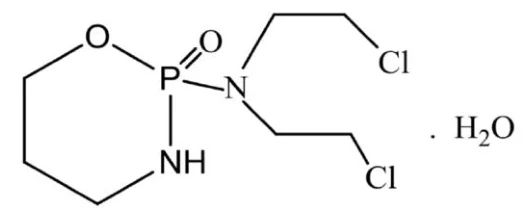
Physicochemical properties:
Physical Form: A white or almost white crystalline powder.
Solubility: Soluble in water and freely soluble in alcohol
pH Values: Between 4 and 6
14 CLINICAL TRIALS
Not Applicable
15 MICROBIOLOGY
No microbiological information is required for this drug product.
16 NON-CLINICAL TOXICOLOGY
General Toxicity:
Acute Toxicity
The following lethality studies were undertaken in male and female CDF1 mice, using single or multiple i.v. cyclophosphamide dose regimen.
| S I N G L E DOSE | M A L E | F E M A L E |
|---|---|---|
| LD90 | 828.01 mg/Kg | 652.92 mg/Kg |
| LD50 | 524.46 mg/Kg | 416.99 mg/Kg |
| LD10 | 332.19 mg/Kg | 265.10 mg/Kg |
| S I N G L E D O S E x 5 | M A L E | F E M A L E |
| LD90 | 191.69 mg/Kg | 131.30 mg/Kg |
| LD50 | 145.49 mg/Kg | 79.37 mg/Kg |
| LD10 | 110.43 mg/Kg | 47.98 mg/Kg |
Intravenous LD50 was reported as 40 mg/Kg for dogs, 130 mg/Kg for rabbits, 160 mg/Kg for rats, and 400 mg/Kg for guinea pigs.
Oral LD50 for cyclophosphamide in mice after:
in rats after:
24 h
780 mg / Kg
---
48 h
750 mg / Kg
720 mg / Kg
120 h
600-726 mg / Kg
235 mg / Kg
7 days
580 mg / Kg
142 mg / Kg
14 days
350 mg / Kg
94 mg / Kg
The 14-day LD50 for oral cyclophosphamide in dogs was reported as 44 mg/Kg.
Subcutaneous 100 mg/Kg chloramphenicol prior to 300 mg/Kg or 200 mg/Kg i.p. cyclophosphamide in adult rats is capable of partially protecting against the toxic and lethal effects of cyclophosphamide.
The efficacy of 50 mg/Kg i.p. cyclophosphamide in 150 to 200 newborn and adult Swiss male mice per experiment under depleted and supplemented condition of vitamin A (p.o. 100 and 250 IU/mouse/day) was scrutinized. Supplemental vitamin A helped to check progression of solid murine sarcoma 180 growth, and also increased the effectiveness of chemotherapy.
Cyclophosphamide titration in mice appears to enhance survival following treatment with cyclophosphamide up to, but not exceeding 450 mg/Kg. Hematuria was very much lower in the titrated group, also lung damage was less in the titrated mice.
Intraperitoneal injection of cyclophosphamide, acrolein and phosphamide mustard into mice was used, to determine, which of the metabolites is responsible for ovarian toxicity. Using follicle destruction, ovarian volume and uterine weight as toxicity parameters, the investigators found only phosphoramide mustard responsible for cyclophosphamide ovarian toxicity.
Chronic Toxicity
Studies, using rats that received up to 12 mg/Kg cyclophosphamide by stomach tube for 80 days, indicated that the highest dose produced a 75% mortality rate after 8 weeks. Leukopenia was observed in all animals after 4 weeks of treatment. A high incidence of hematuria and petechial hemorrhage was found in lungs, gastrointestinal tract and urinary bladder.
Dogs receiving cyclophosphamide p.o. of up to 5 mg/Kg 5 days a week for 6 weeks, presented a reduction in body weight, leukopenia and limited hemorrhagic lesions in lymph nodes, bladder, brain, lung, gastrointestinal tract and renal pelvis. Severity of bone marrow changes was related to dosage.
Chronic administration of toxic doses led to hepatic lesions manifested as fatty degeneration followed by necrosis. The intestinal mucosa was not affected. The threshold for hepatotoxic effects was 100 mg/Kg in the rabbit and 10 mg/Kg in the dog.
Carcinogenicity: The carcinogenic effect of cyclophosphamide have been demonstrated in animal studies on rats and mice.
Genotoxicity: Cyclophosphamide was mutagenic and clastogenic in multiple in vitro and in vivo genetic toxicology studies.
Reproductive and Developmental Toxicology: Reproductive and teratologic toxicity of cyclophosphamide in animals is well documented. Animal data indicate that exposure of oocytes during follicular development may result in a decreased rate of implantations and viable pregnancies, and in an increased risk of malformations.
17 SUPPRORTING PRODUCT MONOGRAPH
- 1. Pr PROCYTOX® (cyclophosphamide) tablets 25 mg, 50 mg and powder for injection 200 mg, 500 mg, 1000 mg, 2000 mg per vial, submission control number 155509, Product Monograph, Baxter Corporation. 2012-09-07.