


Product Monograph - Lidocaine HCl 0.2% and Dextrose 5% Inj
INDICATIONS AND CLINICAL USE
Intravenous administration of lidocaine hydrochloride is indicated in the treatment of ventricular tachycardia and premature ventricular beats of a life-threatening nature which may occur during cardiac manipulation such as surgery or catheterization or during acute myocardial infarction, digitalis toxicity or other cardiac diseases.
Lidocaine hydrochloride 0.4% and 0.8% injection in dextrose 5% is indicated when fluid restriction is desirable.
CONTRAINDICATIONS
Lidocaine hydrochloride is contraindicated in patients with:
- 1. Known hypersensitivity to local anesthetics of the amide type, such as prilocaine, mepivacaine or bupivacaine, or to other components of the solution;
- 2. Adams-Stokes syndrome, or severe degrees of sinoatrial, atrioventricular or intraventricular block.
Solutions containing dextrose may be contraindicated in patients with known allergy to corn or corn products.
The safety of lidocaine hydrochloride in the treatment of arrhythmias in children has not been established.
WARNINGS
Constant ECG monitoring is essential for the proper administration of intravenous lidocaine hydrochloride. If signs of excessive depression of cardiac conductivity occur, such as prolongation of the PR interval and QRS complex and appearance of aggravation of arrhythmias intravenous infusion of lidocaine hydrochloride should be discontinued immediately.
It is mandatory to have emergency resuscitative equipment and drugs immediately available to manage possible adverse reactions involving the cardiovascular, respiratory or central nervous systems.
Anaphylactic reactions may occur following administration of lidocaine hydrochloride.
PRECAUTIONS
Lidocaine hydrochloride should be used with caution in patients with, bradycardia, severe digitalis intoxication, first or second degree heart block in the absence of a pacemaker, or hypokalaemia (See CONTRAINDICATIONS and WARNINGS).
In unconscious patients circulatory collapse should be watched for, since CNS may not be apparent as an initial manifestation of toxicity.
Caution should be observed in patients with cardiac decompensation and hypotension or posterior diaphragmal infarction with a tendency towards development of heart block.
Intravenous administration of lidocaine hydrochloride may sometimes be accompanied by a hypotensive response which may be precipitous in the case of overdosage. For this reason, the intravenous dose should not exceed 100 mg in a single injection and no more than 200 – 300 mg in a one hour period (See DOSAGE and ADMINISTRATION).
When high doses are used and the patient’s myocardial function is impaired, combination with other drugs which reduce the excitability of cardiac muscle requires caution.
Repeated doses of lidocaine hydrochloride may cause significant increases in blood levels with each repeated dose because of slow accumulation of the drug or its metabolites. Tolerance to elevated blood levels varies with the status of the patient. Debilitated, elderly patients and acutely ill patients should be given reduced doses commensurate with their age and physical condition. Lidocaine hydrochloride should also be used with caution in patients with epilepsy, impaired cardiac conduction, bradycardia, impaired hepatic function or renal function and in severe shock.
Use in the Elderly
A reduction in dosage may be necessary for elderly patients, particularly those with compromised cardiovascular and/or hepatic function and/or prolonged infusion. Elderly patients should be given reduced doses corresponding to their age and physical status.
Impaired Renal Function
Caution should be employed in the repeated use of Lidocaine in patients with severe renal disease, since possible accumulation of lidocaine or its metabolites may lead to toxic phenomena.
Impaired Hepatic Function
Caution should be employed in the repeated use of Lidocaine in patients with severe liver disease, since possible accumulation of lidocaine or its metabolites may lead to toxic phenomena.
Use in Pregnancy
It is reasonable to assume that lidocaine has been used, mainly as a local anesthetic, by a large number of pregnant women and women of child-bearing age. No specific disturbances to the reproductive process have so far been reported, e.g., no increased incidence of malformations. However, care should be taken during early pregnancy when maximum organogenesis takes place.
There are no adequate and well-controlled studies with intravenous administration of lidocaine in pregnant women.
Use in Nursing Mothers
Lidocaine is excreted in the breast milk, but in such small quantities that there is generally no risk of affecting the infant at therapeutic dose levels.
Use in Neonates
Through their lower enzyme capacity, very rarely, neonates are at risk of methemoglobinemia. Methemoglobinemia can become clinically overt (cyanosis), and treatment with methylene blue may be considered necessary.
Use in Patients with Acute Porphyria
Theoretical evidence suggests that lidocaine may have porphyrogenic properties. The clinical significance of this is unknown. Caution should be exercised if intravenous lidocaine is administered to patients with acute porphyria.
Drug Interactions
Potential for the influence of lidocaine on the plasma levels/effect of other drugs
Lidocaine is metabolized by cytochromes P4501A2 (CYP1A2) and P4503A4 (CYP3A4) and thus has the potential to inhibit the metabolism of other drugs metabolized by these isoenzymes, resulting in increased plasma levels of these. This has so far not been reported for any CYP1A2 or CYP3A4 substrate.
Potential for the influence of other drugs on the plasma levels/effect of lidocaine
Concomitant treatment with drugs that are substrates, inhibitors, or inducers of CYP1A2 or CYP3A4 has the potential to influence the metabolism and hence the plasma levels and effect of lidocaine. Concomitant administration with the substrate amiodarone has resulted in increased plasma levels of lidocaine resulting in toxic effects.
During concomitant administration with carbamazepine, phenobarbital, and phenytoin which are inducers of CYP3A4, decreased plasma levels of lidocaine have been reported. Primidone has also been reported to induce the metabolism of lidocaine.
Cimetidine has an unspecific inhibitory effect on CYP (including CYP 3A4) mediated metabolism. It reduces liver blood flow and thus systemic clearance of drugs that are highly extracted by the liver. Clinical experiments showed that the concomitant administration of cimetidine reduces the systemic clearance of lidocaine and increases lidocaine serum concentration by as much as 50%. Thus, therapeutic serum levels of lidocaine may rise to toxic levels when cimetidine is used concomitantly. Ranitidine has not displayed this effect.
Coadministration with inhibitors of CYP1A2, such as fluvoxamine, drastically reduced the elimination of lidocaine in healthy subjects.
CYP1A2 is the isoenzyme shown most consistently to be decreased in human cirrhosis and hence makes smaller contribution in lidocaine metabolism than in patients with normal liver function.
Concomitant treatment with metoprolol, nadolol, and propranolol have also been reported to increase the plasma levels of lidocaine resulting in toxic effects. Administration of propranolol during infusion of lidocaine may increase the plasma concentration of lidocaine by about 30%. Patients already receiving propranolol tend to have higher lidocaine levels than controls. The combination should be avoided.
Carcinogenesis, Mutagenesis, Impairment of Fertility
Studies of lidocaine in animals to evaluate the carcinogenic and mutagenic potential or the effect on fertility have not been conducted.
ADVERSE REACTIONS
Adverse experiences following the administration of lidocaine are similar in nature to those observed with other amide type agents. These adverse experiences are, in general, dose related and may result from high plasma levels caused by excessive dosage or rapid absorption, or may result from a hypersensitivity, idiosyncrasy or diminished tolerance on the part of the patient.
Common adverse reactions are those from the central and peripheral nervous system. They occur in 5-10% of the patients and are mostly dose-related. The following definitions of frequencies are used: Very common (≥ 10%), common (1 – 9.9%), uncommon (0.1 – 0.9%), rare (0.01 – 0.09%) and very rare (< 0.01%).
Systemic reactions of the following types have been reported:
Central Nervous System
CNS manifestations are excitatory and/or depressant. Common adverse reactions are circumoral paresthesia, dizziness and drowsiness. Rare adverse reactions would include persistant dizziness, light-headedness, nervousness, apprehension, euphoria, confusion, hyperacusis, tinnitus, blurred vision, vomiting, sensations of heat, cold or numbness, twitching, tremors, convulsions, unconsciousness, apnea, respiratory depression and arrest. The excitatory manifestations may be brief or may not occur at all, in which case the first manifestation of toxicity may be drowsiness merging into unconsciousness and respiratory arrest.
Drowsiness following the administration of lidocaine is usually an early sign of high lidocaine plasma level and may occur as a consequence of rapid absorption.
Cardiovascular System
Rare cardiovascular manifestations are usually depressant and are characterized by bradycardia, hypotension, asystole and cardiovascular collapse which may lead to cardiac arrest. Arrhythmias, including ventricular tachycardia /ventricular fibrillation have also been reported.
Hematologic System
Very rarely, neonatal methemoglobinemia can occur (see Precautions).
Methemoglobinemia was also reported in adults.
Immune System
Allergic reactions, including anaphylactic reactions, are characterized by cutaneous lesions, urticaria, edema, or in the most severe and very rare instances, hypersensitivity including anaphylactic shock. Allergic reactions of the amide type are rare and may occur as a result of sensitivity either to the drug itself, or to other components of the formulation.
Idosyncratic reactions have been reported at low doses in some patients. Cross-sensitivity between lidocaine and procainamide or lidocaine and quinidine has not been reported.
SYMPTOMS AND TREATMENT OF OVERDOSAGE
Symptoms of overdosage or idiosyncratic reactions are as described under ADVERSE REACTIONS.
Symptoms
Central nervous system toxicity is a graded response, with symptoms and signs of escalating severity. The first symptoms are circumoral paresthesia, numbness of the tongue, lightheadedness, hyperacusis and tinnitus. Visual disturbance and muscular tremors are more serious and precede the onset of generalized convulsions. Unconsciousness and grand mal convulsions may follow, which may last from a few seconds to several minutes. Hypoxia and hypercarbia occur rapidly following convulsions due to the increased muscular activity, together with the interference with normal respiration. In severe cases apnea may occur. Acidosis increases the toxic effects.
Recovery is due to redistribution and metabolism of the drug. Recovery may be rapid unless large amounts of the drug have been administered.
Cardiovascular effects may be seen in cases with high systemic concentrations. Severe hypotension, bradycardia, arrhythmia and cardiovascular collapse may be the result in such cases.
Cardiovascular toxic effects are generally preceded by signs of toxicity in the central nervous system, unless the patient is receiving a general anesthetic or is heavily sedated with drugs such as a benzodiazepine or barbiturate.
Treatment
The first consideration is prevention, best accomplished by careful and constant monitoring of cardiovascular and respiratory vital signs and the patient's state of consciousness. At the first sign of change, oxygen should be administered.
The first step in the management of convulsions consists of immediate attention to the maintenance of a patent airway and assisted or controlled ventilation with oxygen and a delivery system capable of permitting immediate positive airway pressure by mask. Immediately after the institution of these ventilatory measures, the adequacy of the circulation should be evaluated, keeping in mind that drugs used to treat convulsions sometimes depress the circulation when administered intravenously.
An anticonvulsant should be given i.v. if the convulsions do not stop spontaneously in 15-20 seconds. Thiopental 100-150 mg i.v. will abort the convulsions rapidly. Alternatively, diazepam 5-10 mg i.v. may be used, although its action is slower. Succinylcholine will stop the muscle convulsions rapidly, but will require tracheal intubation and controlled ventilation, and should only be used by those familiar with these procedures.
Hypotension may be counteracted by giving sympathicomimetic drugs (e.g., adrenaline). Adrenergic agents of both α-adrenoceptor stimulating (e.g., metaraminol) and β-adrenoceptor stimulating type (e.g., isoprenaline) are generally effective. The bradycardia may be treated with parasympatholytic agents (e.g., atropine).
Should circulatory arrest occur, immediate cardiopulmonary resuscitation should be instituted. Optimal oxygenation and ventilation and circulatory support as well as treatment of acidosis are of vital importance, since hypoxia and acidosis will increase the systemic toxicity of local anesthetics. Epinephrine (0.1-0.2 mg as intravenous or intracardial injections) should be given as soon as possible and repeated, if necessary.
DOSAGE AND ADMINISTRATION
Therapy of ventricular arrhythmias is often initiated with a single I.V. bolus of 50 – 100 mg of lidocaine hydrochloride injection.
Following acute treatment by bolus in patients in whom arrhythmia tends to recur and who are incapable of receiving oral antiarrhythmic therapy, intravenous infusions of lidocaine hydrochloride may be administered at the rate of 1 to 2 mg per minute (approximately 15 to 30μg/kg/minute in the average 70 kg patient).
Precise dose is determined by patient response.
Intravenous infusions of lidocaine hydrochloride must be administered under constant ECG and blood pressure monitoring and with meticulous regulation of infusion rate, in order to avoid potential overdosage and toxicity.
Intravenous infusion should be terminated as soon as the patient’s basic cardiac rhythm appears to be stable or at the earliest signs of toxicity. It should rarely be necessary to continue intravenous infusions beyond 24 hours. As soon as possible, and when indicated, patients should be changed to an oral antiarrhythmic agent for maintenance therapy.
Lidocaine hydrochloride 0.4% and 0.8% solutions should be used only when fluid restriction is desirable.
When administering lidocaine hydrochloride by continuous intravenous infusion, it is necessary to use an infusion pump or a precision volume control I.V. set.
All injections in VIAFLEX plastic containers are intended for intravenous administration using sterile equipment. It is recommended that the intravenous administration apparatus be replaced at least once every 24 hours.
For management of a suspected drug overdose, contact your regional Poison Control Centre immediately.
Directions for use of VIAFLEX plastic containers:
Do not remove unit from overwrap until ready for use. The overwrap is a moisture barrier. The inner bag maintains the sterility of the product. After removing overwrap, check for minute leaks by squeezing inner bag firmly. If leaks are found, discard solution as sterility may be impaired.
Warning: Do not use plastic containers in series connections. Such use could result in air embolism due to residual air (approximately 15 mL) being drawn from the primary container before administration of the fluid from the secondary container is completed.
To Open
Tear overwrap down side at slit and remove solution container. Do not add supplementary medication.
Preparation for Administration
- 1. Suspend container from eyelet support.
- 2. Remove plastic protector from outlet port at bottom of container.
- 3. Attach administration set. Refer to complete directions accompanying set.
PHARMACEUTICAL INFORMATION
Drug Substance
Proper name: Lidocaine hydrochloride
Structural Formula:
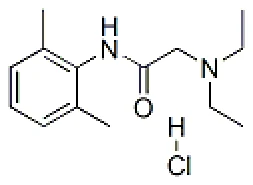
Molecular Formula: C14H22N2O.HCl
Molecular Weight: 270.82
Chemical Name: 2-(Diethylamino) -2’, 6’ – acetoxylidide monohydrochloride anhydrous
Description: Lidocaine hydrochloride is a white, odorless, crystalline powder which has a slightly bitter taste. It is very soluble in water and in alcohol, soluble in chloroform, and insoluble in ether.
Composition
Lidocaine hydrochloride in 5% dextrose solution is a sterile, nonpyrogenic solution prepared from lidocaine hydrochloride and dextrose in water for injection. The solution serves as a cardiac antiarrhythmic agent intended for intravenous use. The pH range is 3.5 to 6.0. The pH is adjusted with sodium hydroxide.
Stability and Storage Recommendations
Store at 15oC to 25oC.
For single use only. Discard unused portion.
AVAILABILITY OF DOSAGE FORMS
Lidocaine hydrochloride in 5% dextrose solution is supplied in VIAFLEX plastic containers, in the following sizes and concentrations:
| 250 mL | 500 mL | 1000 mL | |
0.2% lidocaine hydrochloride in 5% dextrose solution | JB0992 | JB0993 | JB0994 |
0.4% lidocaine hydrochloride in 5% dextrose solution | JB0972 | JB0973 | JB974 |
0.8% lidocaine hydrochloride in 5% dextrose solution | JB0962 | JB0963 |
0.2% lidocaine hydrochloride provides
2 mg of lidocaine hydrochloride per mL.
0.4% lidocaine hydrochloride provides
4 mg of lidocaine hydrochloride per mL.
0.8% lidocaine hydrochloride provides
8 mg of lidocaine hydrochloride per mL.
PHARMACOLOGY
Lidocaine hydrochloride is a well known anesthetic agent which has been used for many years for regional and topical anesthesia. However, it has been demonstrated to exert an antiarrhythmic effect by increasing the electrical stimulation threshold of the ventricle during diastole.
In decerebrated, vagotomized cats with stellate ganglia destroyed, lidocaine hydrochloride intravenous suppressed cardiac arrhythmias induced by faradic stimulation, barium chloride and epinephrine. The minimal effective dose was 0.5 mg per kg. This was 4 and 5 times less than the minimal doses of procaine and procainamide respectively.
In anesthetized open-chest dogs, lidocaine hydrochloride 5 mg per kg intravenously reduced the duration of methacholine-induced auricular arrhythmias by 55.5%. The effect of quinidine sulphate at the same dose was a reduction 46.5%. Ventricular arrhythmias induced by coronary ligation were controlled by total intravenous doses of 50 mg/kg. Convulsions and vomiting were produced and death occurred in 1 of 6 dogs at 75.5 mg/kg. In the same preparation, interruption of the arrhythmia was obtained by an injection of 15 mg/kg directly into the ventricle. In normothermic or hypothermic dogs the same effect was obtained in ventricular fibrillation induced by mechanical stimulation.
In anesthetized dogs, intravenous infusions of 40-80 mg converted digitalis-induced ventricular arrhythmia to sinus rhythm. Also, acetylstrophanthidin-induced ventricular tachycardia was suppressed at a minimal effective dose of lidocaine hydrochloride of 1 mg/kg intravenously. Digitalis-induced ventricular tachycardia, which failed to respond to electroshock was converted to normal sinus rhythm by intravenous injection of lidocaine hydrochloride 100 mg and ventricular tachycardia, induced by ouabain, was converted to
supraventricular tachycardia by intravenous injection of 1-2 mg/kg.
In unanesthetized dogs with ventricular arrhythmia induced by coronary occlusion, intravenous injections of 5-10 mg/kg suppressed the arrhythmia. This effect could be maintained by intravenous infusion with calculated lidocaine hydrochloride blood levels of 1-3 μg/mL.
Other effects in anesthetized intact dogs were depression of myocardial contractile force, heart rate and femoral arterial pressure with lidocaine hydrochloride 0.5 to 6 mg/kg intravenously. At 2.0 mg/kg intra-arterially the same effects were obtained but there was less diminution of contractile force. In both anesthetized and conscious dogs, lidocaine hydrochloride in rapid intravenous injection of 2, 4 and 8 mg/kg caused transient decrease of systolic arterial pressure, venous pressure, cardiac output, mean ejection rate, rate of development of arterial pressure, stroke work and calculated peripheral resistance. Heart rate was slightly increased. Effects were greatest at 8 mg/kg and were more pronounced and of longer duration in anesthetized dogs. There was return to basal levels in 3-5 minutes.
Absorption, Distribution and Excretion
In rats which received 14C-labelled lidocaine hydrochloride by intravenous injection, rapid uptake by all tissues was noted. Tissue distribution studies in monkeys have indicated: high affinity for lung, spleen, kidney, stomach and adipose tissue; moderate affinity for brain and most gastrointestinal organs; and low affinity for musculoskeletal tissue and skin. Similar distribution has been observed in the dog.
Studies on plasma binding in monkey and man have indicated approximately 60% plasma binding within the plasma concentration range usually seen in clinical use. However, plasma binding was markedly reduced at concentrations of lidocaine hydrochloride exceeding 10 μg/mL, presumably due to saturation of the binding sites.
Studies in rabbit and rat have demonstrated that the liver is the principal site of metabolism. In man, hepatic clearance studies have shown that approximately 70% of the lidocaine hydrochloride passing through the liver was extracted. Microsomal enzyme systems are primarily responsible for hepatic metabolism. The major degradative pathway appears to be by conversion to monoethylglycinexylidide, followed by hydrolysis to 2,6,-xylidine; further conversion to 4-hydroxy-2,6-xylidine appears to occur in man.
Up to 10% of administered lidocaine hydrochloride may be excreted in the urine as unchanged drug. Although biliary secretion and intestinal absorption of lidocaine hydrochloride metabolites have been reported in rats, there is no evidence of biliary secretion in man.
The pharmacokinetics of lidocaine hydrochloride has been studied in normal subjects and in patients.
Following a single intravenous injection, or termination of a continuous intravenous infusion, declining plasma concentration follows a biphasic curve. Plasma half-lives of 8 to 15 minutes have been reported for the initial phase. Various studies have reported the mean half-life at the terminal phase to be in the range 1.2 to 1.9 hours. The minimum effective antiarrhythmic plasma concentration of lidocaine hydrochloride has been reported to be in the range of 1.0 to 1.2 μg/mL; concentrations higher than 5-6 μg/mL are associated with an increased risk of toxicity.
TOXICOLOGY
Acute Toxicity
| SPECIES | SEX | ROUTE | LD50 (mg/kg) |
| mice | F | i.v. | 17.9 |
| mice | F | i.p. | 164 |
| mice | F | i.m. | 200 |
| mice | M | i.m. | 154 |
| rat | F | i.v. | 19.7 |
| rat | M | i.v. | 21.4 |
| dog | M & F | i.m. | 100 |
| guinea pig | F | i.m. | 73 |
| guinea pig | M | i.m. | 67 |
| rabbit | M | i.m. | 450 |
Acute intravenous studies were performed in rabbits which received six serial injections of 1, 2, 3, 4 or 5 mg/kg at 15 minute intervals. At the 2 mg/kg dose level, slight depression was seen, beginning with the third injection. At 3 mg/kg there was depression and rigid extension of limbs after the last 5 injections.At 5mg/kg there was severe depression and rigid limb extension after each injection; loss of righting reflex and convulsions began with the second injection and there was gasping for breath after each of the last injections.
Dogs were given intravenous incremental doses at 30 minute intervals until death occurred. Doses of 0.1 to 3.0 mg/kg were tolerated with minimal CNS or cardiovascular effects. Convulsions, mydriasis, salivation, urination and defecation were observed after 10 mg/kg. Respiratory arrest and death occurred in one dog after 30 mg/kg; cardiovascular collapse, respiratory arrest and death occurred in remaining animals after 100 mg/kg.Mean arterial blood pressure and heart rate increased briefly, beginning at 3.0 mg/kg, and decreased after 100 mg/kg. Myocardial conduction time was not significantly changed prior to 100 mg/kg administration.
Acute local responses were studied in rats and rabbits following single intramuscular injections of 2%, 4%, 6%, 8% and 10% solutions of lidocaine hydrochloride. Microscopic examination revealed inflammatory changes with all solutions. In general, reactions produced by 2% solutions were least, although lesions seen with all other concentrations were of similar degree.
In rabbits sacrificed seven days after intramuscular administration, there was evidence of marked muscle fiber regeneration; after 30 days there was virtually complete resolution of inflammatory changes at the site of injection.
Subacute Toxicity
In one study, dogs received daily intravenous injections according to the following schedule: 0.1 mg/kg for 7 days, 0.3 mg/kg for 7 days, 1 mg/kg for 7 days and 3 mg/kg for 21 days. Mild transient convulsions were seen in one dog at the high dose level. No other signs of toxicity were observed. Gross and microscopic examination at autopsy did not reveal any drug related effects.
In a second study, dogs received daily intravenous injections of 2.5, 5 or 10 mg/kg for 28 days. No overt symptoms were observed at the low dose level. At the 5 mg/kg level there was transient sedation, ataxia, head tremor, prostration and emesis. At the 10 mg/kg level there were severe tremors, muscular weakness, ataxia, prostration, and convulsions, although animals recovered within 5-10 minutes. No ECG or hemochemistry changes were seen. No evidence of drug-related pathology was seen at autopsy. Injection sites showed inflammatory changes in drug and saline-treated animals.
In rats which received daily intravenous doses of 1.5, 4.5 and 15.0 mg/kg) for 14 days, overt effects were observed at the 15.0 mg/kg level, at which convulsions and deaths occurred. Increased blood glucose levels were seen in male rats at all dose levels. At autopsy, no changes were attributed to drug treatment. Mild inflammatory changes were seen at injection sites.
BIBLIOGRAPHY
XYLOCARD® Product Monograph. AstraZeneca Canada Inc. Date of Revision: 20 September 2007.
Ahmad K
Distribution of lidocaine in blood and tissues after single doses and steady infusion. Research Communications in Chemical Pathology and Pharmacology 1971; 2(6):813-828.
Austin WG, Moran JM.
Cardiac and peripheral vascular effects of lidocaine and procainamide. Survey of Anesthesiol 1967;11:322-324.
Bassan MM.
Use of lidocaine by continuous infusion. Amer Heart J 1974;87:302-303.
Bedynek JL, Weinstein KN, Kah RE, Minton PR.
Ventricular tachycardia-control by intermittent intravenous administration of lidocaine hydrochloride. JAMA 1966;198:553.
Benowitz N et al.
Lidocaine disposition kinetics in monkey and man. Prediction by a perfusion model. Clin Pharm Ther 1974;16(1): 87-98.
Braid DP, Scott DB.
The systemic absorption of local analgesic drugs. Brit J Anaesth 1965;37:394.
Canstantino, RT, Crockett SE, Vasko JS.
Cardiovascular effects and dose .response relationships of lidocaine.
Circ 1967;36 (Suppl. 2): 89-90.
Collinsworth KA, et al.
The clinical pharmacology of lidocaine as an antiarrhythmic drug. Circ 1974;50: 1217-1230.
Conrad KA, Byers JM, Finley PR, Burnham, L.
Lidocaine elimination: Effects of metoprolol and of propranolol. Clinical Pharmacology Therapeutics 1983;33(2):133-138.
Crampton RS, Oriscello RG.
Petit and grand mal convulsions during lidocaine hydrochloride treatment of ventricular tachycardia. JAMA 1968;204:201.
Engelsson SE, Eriksson S, Wahlqvist, Ortengren B.
Differences in tolerance to intravenous Xylocaine and Citanest, a new local anesthetic. A double blind study in man. Proc 1st European Congress of Anesthesiology. Wien. 3.9 IX, 1962.
Ettinger E, Hayes J, Forde TP, Wanat FE, Killip T.
Lidocaine in ventricular arrhythmia. Clin Res 1967;15:201.
Feely J, Wilkinson GR, McAllister CB, Wood JJ.
Increased toxicity and reduced clearance of lidocaine by cimetidine. Annals of Internal Med 1982;96:592-594.
Fehmers MCO, Dunning AJ.
Intramuscularly and orally administered lidocaine in the treatment of ventricular arrhythmias in acute myocardial infarction. Amer J Cardiol 1972;29:514.
Galindo AH, Sprouse JH.
The effect of anesthesia on cardiac excitability produced by single pulse electrical stimulation. An experimental study. Anesth Analg 1962;41:659-669.
Gianelly RE, Spivak AP, von der Groeben J, Harrison DC.
Effect of lidocaine on ventricular arrhythmias in patients with coronary heart disease. N Eng Journ Med 1967;277(23):1216.
Graham CF, Turner WM, Jones, JK.
Lidocaine-Propranolol Interactions. New Eng J Med 1981;304(21):1301
Grossman J, Lubow LA, Frieden J, Rubin IL.
Lidocaine in cardiac arrhythmias. Arch Int Med 1968;121:396.
Ha et al.
Interaction between amiodarone and lidocaine. J Cardiovascular Pharmacol 1996; 28:533-539.
Harris AS, Guerra CA, Liptak RA, Brigham, JC.
Effects of certain local anesthetic drugs upon ventricular tachycardia resulting from myocardial infarction. J Appl Physiol 1956;8:499.
Harrison DC.
Antiarrhythmic actions of lidocaine. Annual Rev Med 1974;25:143-148
Harrison DC , Sprouse HJ, Morrow AG.
The antiarrhythmic properties of lidocaine and procaine amide: clinical and physiologic studies of their cardiovascular effects in man. Circulation 1963;28: 486.
Hitchcock P, Keown KK.
The management of cardiac arrhythmias during cardiac surgery. Southern Med J 1959;52:702.
Jewitt DE, Kishon Y, Thomas M.
Lignocaine in the management of arrhythmias after acute myocardial infarction. Lancet 1968;1(7537):266.
Katz MJ, Zitnik RS.
Direct current shock and lidocaine in the treatment of digitalis-induced ventricular tachycardia. Am J Card 1966;18:252.
Knapp AB, Maguire W, Keren G, Karmen A, Levitt B, Miura DS, Somberg JC.
The cimetidine-lidocaine interaction. Annals of Internal Med 1983;98:174-177.
Lewis KB.
Treatment of ventricular arrhythmias with intravenous lidocaine in non-surgical patients. Clin Res 1967;15:213.
Nattel et al.
Absence of pharmacokinetic interaction between amiodarone and lidocaine. Amer J Cardiol 1994; 73: 92-94
Orlando R, Piccoli P, De Martin S, et al.
Effect of the CYP 3A4 inhibitor erythromycin on the pharmacokinetics of lignocaine and its pharmacologically active metabolites in subjects with normal and impaired liver function. Br J Clin Pharmacology 2003; 55:86-93.
Orlando R, Piccoli P, De Martin S, et al.
Cytochrome P450 1A2 is a major determinant of lidocaine metabolism in vivo: effects of liver function. Clin Pharmacol Ther 2004; 75:80-88.
Paradise RR, Stoelting VK.
Comparison of B.W. 62-235 and lidocaine with respect to cardiovascular, anti-arrhythmic and local anesthetic actions. Arch Int Pharmacodyn 1966;161:17.
Ryden L, et al.
Effect of lignocaine on heart rate in patients with sinus bradycardia associated with proven suspected acute myocardial infarction. Cardiovascular Research 1972;6:664.
Scott DB.
Blood levels of lidocaine following various routes of administration. Editors: Scott DB, Julian DG. Lidocaine in the treatment of ventricular arrhythmias. Edinburgh and London 1971, E & S Livingstone, pp. 153-160.
Selden R, Sashara AA.
Central nervous system toxicity induced by lidocaine. Report of a case in a patient with liver disease. JAMA 1967;202:908-909.
Siegmund et al.
Amiodarone interaction with lidocaine. J Cardiovascular Pharmacol 1993; 21: 513-515
Southerworth JL, McKusick VA, Pierce EC, Rawson FL.
Ventricular fibrillation precipitated by cardiac catheterization. Complete recovery of the patient after forty-five minutes. JAMA 1950;143:717.
Spracklen FHW, Kimerling JJ, Besterman EMM, Litchfield JW.
Use of lignocaine in treatment of cardiac arrhythmias. Brit Med J 1968;1:89.
Steinhaus JE, Siebecker KL, Kimmey, JR.
Comparative effects of anesthetic agents on cardiac irritability during hypothermia. JAMA 1959;169:8.
Stenson RE et al.
Interrelationships of hepatic blood flow, cardiac output, and blood levels of lidocaine in men. Circ 1971;XLIII:205-211.
Sung CY, Truant AP.
The physiological disposition of lidocaine and its comparison in some respects with procaine. J Pharmacol Exp Ther 1954;112(4):432-443.
Tucker GT, Bax NDS, Lennard MS, Al-Asady S, Bharaj HS, Woods HF.
Effects of -adrenoceptor antagonists on the pharmacokinetics of lignocaine. Br J Clin Pharmac 1984;17:21S-28S.
Usubiaga JE, Gustafson W, Moya F, Goldstein B.
The effect of intravenous lignocaine on cardiac arrhythmias during electroconvulsive therapy. Brit J Anaesth 1967;39:867.
Wang J-S, Backman JT, Wen X, et al.
Fluvoxamine is a more potent inhibitor of lidocaine metabolism than ketoconazole and erythromycin in vitro. Pharmacol Toxicol 1999; 85: 201-205.
Wang J-S, Backman JT, Taavitsainen P, et al.
Involvement of CYP 1A2 and CYP 3A4 in lidocaine N-deethylation and 3-jhydoxylation in humans. Drug Metab Dispos 2000; 28:959-965.
Weiss WA.
Intravenous use of lidocaine for ventricular arrhythmias. Anesth Analg 1960;39:369.
Zeisler JA, Gaarder TC, De Mesquita SA.
Lidocaine excretion in breast milk. Drug Intel Clin Pharm 1986;20:691-693.
VIAFLEX is a Trademark of Baxter International Inc.
Baxter Corporation
Mississauga, Ontario, L5N 0C2