


Product Monograph - Teva-Mexiletine
RECENT MAJOR LABEL CHANGES
| None |
|---|
TABLE OF CONTENTS
Sections or subsections that are not applicable at the time of authorization are not listed.
RECENT MAJOR LABEL CHANGES ............................................................................................ 2
TABLE OF CONTENTS .............................................................................................................. 2
PART I: HEALTH PROFESSIONAL INFORMATION ...................................................................... 4
1 INDICATIONS ............................................................................................................... 4
1.1 Pediatrics ................................................................................................................ 4
1.2 Geriatrics ................................................................................................................ 4
2 CONTRAINDICATIONS ................................................................................................. 4
3 SERIOUS WARNINGS AND PRECAUTIONS BOX .................................................................. 4
4 DOSAGE AND ADMINISTRATION ................................................................................. 5
4.1 Dosing Considerations ............................................................................................ 5
4.2 Recommended Dose and Dosage Adjustment ....................................................... 5
4.4 Administration ........................................................................................................ 5
5 OVERDOSAGE .............................................................................................................. 6
6 DOSAGE FORMS, STRENGTHS, COMPOSITION AND PACKAGING ................................. 6
7 WARNINGS AND PRECAUTIONS .................................................................................. 7
7.1 Special Populations................................................................................................. 9
7.1.1 Pregnant Women ............................................................................................. 9
7.1.2 Breast-feeding .................................................................................................. 9
7.1.3 Pediatrics .......................................................................................................... 9
7.1.4 Geriatrics ........................................................................................................ 10
8 ADVERSE REACTIONS ................................................................................................ 10
8.1 Adverse Reaction Overview .................................................................................. 10
8.2 Clinical Trial Adverse Reactions ............................................................................ 10
8.5 Post-Market Adverse Reactions ........................................................................... 11
9 DRUG INTERACTIONS ................................................................................................ 13
9.2 Drug Interactions Overview .................................................................................. 13
9.4 Drug-Drug Interactions ......................................................................................... 13
9.5 Drug-Food Interactions ......................................................................................... 14
9.6 Drug-Herb Interactions ......................................................................................... 15
9.7 Drug-Laboratory Test Interactions ........................................................................ 15
10 CLINICAL PHARMACOLOGY ....................................................................................... 15
10.1 Mechanism of Action ...................................................................................... 15
10.2 Pharmacodynamics ........................................................................................ 15
10.3 Pharmacokinetics ........................................................................................... 17
11 STORAGE, STABILITY AND DISPOSAL ......................................................................... 18
12 SPECIAL HANDLING INSTRUCTIONS ........................................................................... 18
PART II: SCIENTIFIC INFORMATION ....................................................................................... 19
13 PHARMACEUTICAL INFORMATION ............................................................................ 19
14 CLINICAL TRIALS ........................................................................................................ 19
14.2 Comparative Bioavailability Studies ................................................................ 19
15 MICROBIOLOGY ........................................................................................................ 21
16 NON-CLINICAL TOXICOLOGY ..................................................................................... 21
17 SUPPORTING PRODUCT MONOGRAPHS .................................................................... 23
PATIENT MEDICATION INFORMATION .................................................................................. 24
PART I: HEALTH PROFESSIONAL INFORMATION
1 INDICATIONS
TEVA-MEXILETINE (mexiletine hydrochloride) is indicated for:
- the treatment of documented life-threatening ventricular arrhythmias, such as sustained ventricular tachycardia.
- the treatment of patients with documented symptomatic ventricular arrhythmias when the symptoms are of sufficient severity to require treatment. Because of the proarrhythmic effects of mexiletine, its use should be reserved for patients in whom, in the opinion of the physician, the benefit of treatment clearly outweighs the risks.
1.1 Pediatrics
The safety and efficacy of mexiletine in children has not been established. Therefore, Health Canada has not authorized an indication for pediatric use.
1.2 Geriatrics
No data are available.
2 CONTRAINDICATIONS
- TEVA-MEXILETINE is contraindicated in patients who are hypersensitive to this drug or to any ingredient in the formulation, including any non-medicinal ingredient, or component of the container. For a complete listing, see 6 DOSAGE FORMS, STRENGTHS, COMPOSITION AND PACKAGING.
- Hypersensitive to local anesthetics of amide type (e.g. lidocaine)
- Second or third degree Atrioventricular block (AV block) in the absence of a pacemaker
- Cardiogenic shock
3 SERIOUS WARNINGS AND PRECAUTIONS BOX
|
|---|
| hepatic necrosis have been reported in association with mexiletine treatment (see 7 WARNINGS AND PRECAUTIONS). |
|---|
4 DOSAGE AND ADMINISTRATION
4.1 Dosing Considerations
- A small proportion of patients and those with severe liver disease may require lower doses since these doses have been shown to produce effective plasma levels in some patients.
- When transferring from lidocaine to mexiletine, the lidocaine infusion should be stopped when the first oral dose of mexiletine is administered. The infusion line should be kept in place in case the arrhythmia reappears and requires additional lidocaine to suppress it. Consideration should be given to the similarity of the adverse effects of lidocaine and mexiletine and the possibility that they may be additive.
4.2 Recommended Dose and Dosage Adjustment
The optimal dosage should be determined individually based on the patient's response and tolerance.
The suggested initial dose is 200 mg 3 times daily. This can be raised to a maximum of
1200 mg daily, given in 3 or 4 divided doses. Titration of dose should occur in steps of 100 mg
3 times daily. At least 3 days are needed between each dosage change. The dose usually producing therapeutic response is between 600–900 mg daily. A small proportion of patients and those with severe liver disease may require lower doses such as 100 mg 3–4 times daily, since these doses have been shown to produce effective plasma levels in some patients.
In patients in whom rapid control of ventricular arrhythmia is needed, a loading dose of
400 mg may be given. This should be followed by 200 mg administered 3 times daily, beginning 8 hours after the administration of the loading dose.
Information on the appropriate regimen for the transfer from intravenous lidocaine to mexiletine is lacking.
4.4 Administration
- Mexiletine should be taken with ample liquid, food and/or an antacid.
- For patients with sustained ventricular tachycardia, mexiletine therapy should be initiated in the hospital. Hospitalization may also be required for certain other patients depending on their cardiac status and underlying cardiac disease.
4.5 Missed Dose
If patient misses a dose, it should be taken immediately unless the time is close to the next dose. In such an event, patient should wait for next scheduled dose and continue on the regular schedule. A double dose should not be taken to make up for a missed dose.
5 OVERDOSAGE
Symptoms of overdosage of mexiletine were nausea, hypotension, bradycardia, paresthesia, left bundle branch block, asystole convulsions and death. Treatment should be supportive and may include gastric lavage and atropine for cardiovascular complications.
Animal studies have indicated that benzodiazepines have a protective effect against mexiletine induced convulsions. Acidification of the urine enhances mexiletine elimination.
There have been 11 reports of overdose; 3 were fatal. One fatality involved a healthy 22 year old male who ingested about 4.4 g of mexiletine. His symptoms were paresthesias, nausea and generalized convulsions. On admission to the hospital, his pulse rate was 15 beats/min., blood pressure was not recordable and the ECG showed complete heart block with a slow escape rhythm followed by ventricular asystole. This patient did not respond to any treatment. The blood level of mexiletine was 34 to 37 µg/mL at the time of death.
Another fatality involved a male who started convulsing at home after taking an unknown quantity of mexiletine. The convulsions were uncontrolled by diazepam, phenytoin and phenobarbital and the patient died following aspiration and ventricular fibrillation. A post mortem at 26 hours found cardiac blood levels of mexiletine of 25 µg/mL.
Details of the third fatality are not available.
| For management of a suspected drug overdose, contact your regional poison control centre. |
|---|
6 DOSAGE FORMS, STRENGTHS, COMPOSITION AND PACKAGING
Table 1 – Dosage Forms, Strengths, Composition and Packaging
| Route of Administration | Dosage Form / Strength/Composition | Non-medicinal Ingredients |
| Oral | Capsule / 100 mg, 200 mg | Colloidal silicon dioxide, Magnesium stearate, Pregelatinized starch and Talc Capsule shell: 100 mg: D&C Red#33, FD&C Blue#1, FD&C |
Description
100 mg – White powder in opaque scarlet cap and opaque orange body, size #2 hard gelatin capsules with 'N' imprinted in white on the cap and '100' on the body. Available in bottles of 100.
200 mg – White powder in opaque scarlet cap and opaque scarlet body, size #1 hard gelatin capsules with 'N' imprinted in white on the cap and '200' on the body. Available in bottles of 100.
7 WARNINGS AND PRECAUTIONS
Carcinogenesis and Mutagenesis
Animal studies demonstrated that mexiletine is not carcinogenic. Ames test did not show any mutagenic activity by mexiletine. See 16 NON-CLINICAL TOXICOLOGY, Carcinogenicity.
Cardiovascular
Atrioventricular (AV) Block: If a ventricular pacemaker is operative, patients with second or third degree AV block may be treated with TEVA–MEXILETINE if continuously monitored. Caution should be exercised when TEVA–MEXILETINE is used in patients with first degree AV block.
Congestive Heart Failure or Hypotension: TEVA–MEXILETINE (mexiletine hydrochloride) should be used cautiously in patients with hypotension or congestive heart failure because of its potential for depressing myocardial contractility.
The results of the Cardiac Arrhythmia Suppression Trial (CAST) in post-myocardial infarction patients with asymptomatic ventricular arrhythmias showed a significant increase in mortality and in non-fatal cardiac arrest rate in patients treated with encainide or flecainide compared with a matched placebo-treated group. CAST was continued using a revised protocol with the moricizine and placebo arms only. The trial was prematurely terminated because of a trend towards an increase in mortality in the moricizine treated group.
The applicability of these results to other populations or other antiarrhythmic agents in uncertain, but at present it is prudent to consider these results when using an antiarrhythmic agent.
Intraventricular Conduction Abnormalities: Caution should be exercised when TEVA-
Red#3, FD&C Red#40, FD&C Yellow#6, Gelatin and Titanium dioxide 200 mg: D&C Red#33, FD&C Blue#1, FD&C Red#40, Gelatin and Titanium dioxide |
MEXILETINE is used.
Proarrhythmic Effects: Mexiletine has been reported to aggravate or induce arrhythmias in some patients. In the 398 patients studied in North American controlled clinical trials in whom evaluation was possible, mexiletine induced or aggravated pre-existing arrhythmias in 3.8%. The incidence as reported in the literature has ranged from 8 to 29%.
In the subgroup of patients with life-threatening arrhythmias subjected to programmed electrical stimulation or to exercise, 10 to 15% of the patients had exacerbation of their arrhythmias.
Sinus Node Dysfunction: Caution should be exercised when TEVA–MEXILETINE is used in patients with pre–existing sinus node dysfunction (e.g., sick sinus syndrome).
Driving and Operating Machinery
Because mexiletine can cause central nervous system effects such as light-headedness/ dizziness, tremor and coordination difficulty, patients should be warned about engaging in activities requiring mental alertness, judgement and physical coordination (such as driving an automobile or operating machinery) when these effects occur.
Genitourinary
Urinary pH: Since renal excretion of mexiletine is greatly increased with acidification of urine, concomitant drug therapy or dietary regimens which substantially change urinary pH should be avoided while being treated with TEVA–MEXILETINE.
Hematologic
Blood Dyscrasias: Blood dyscrasias were not seen in the controlled trials, but in the compassionate use program, leukopenia, neutropenia, agranulocytosis and thrombocytopenia have been reported in a small number of patients. Although causal relationship has not been clearly established, such a relationship cannot be excluded. Therefore, it is recommended that careful hematologic monitoring should be carried out in patients on mexiletine. Hemogram including WBC differential and platelet count should be performed prior to initiation of therapy. If significant hematologic changes are observed, the patients should be carefully evaluated, and, if warranted, mexiletine should be discontinued. Blood counts usually returned to normal within one month of discontinuation (see 8 ADVERSE REACTIONS).
Hypokalemia: Antiarrhythmic drugs may be ineffective in patients with hypokalemia. Therefore, any potassium deficit should be corrected as part of the management of ventricular arrhythmia.
Hepatic/Biliary/Pancreatic
Hepatic
Patients with Liver Disease: Since mexiletine is metabolized in the liver, and hepatic impairment has been reported to prolong the elimination half–life of mexiletine, patients with liver disease should be followed carefully while receiving TEVA–MEXILETINE. The same caution should be observed in patients with hepatic dysfunction secondary to congestive heart failure.
Liver Injury: Abnormalities of the liver function and rare instances of severe liver injury, including hepatic necrosis have been reported in association with mexiletine treatment. It is recommended that patients in whom an abnormal liver test has occurred, or who have signs or symptoms suggesting liver dysfunction, be carefully evaluated. If persistent or worsening elevation of hepatic enzymes is detected, considerations should be given to discontinuing therapy.
Monitoring and Laboratory Tests
Having an amphetamine-like chemical structure, mexiletine interferes with the assay used in some rapid urine drug screens, which can result in false positive readings, particularly for amphetamines. A positive result should usually be confirmed with a more specific method.
Neurologic
Seizures: TEVA–MEXILETINE should be used with caution in patients with known seizure disorders. In the compassionate use programme, seizures were reported in approximately 0.2% of the patients with or without a prior history of seizures. Therapy was discontinued in 28% of those patients.
7.1 Special Populations
7.1.1 Pregnant Women
The safe use of mexiletine during pregnancy has not been determined. The expected benefits of using TEVA–MEXILETINE when pregnancy is present or suspected must be weighed against possible risks to the fetus. Studies in animals showed no embryotoxic nor teratogenic effects.
7.1.2 Breast-feeding
Mexiletine is found in human milk in concentrations that are comparable to those observed in plasma. Thus, if mexiletine therapy is considered necessary, an alternative method of infant feeding should be considered.
7.1.3 Pediatrics
The safety and efficacy of mexiletine in children has not been established. Therefore, Health Canada has not authorized an indication for pediatric use.
7.1.4 Geriatrics
No data is available.
8 ADVERSE REACTIONS
8.1 Adverse Reaction Overview
The most common adverse reactions to mexiletine were upper gastrointestinal distress (22%), lightheadedness (8.6%) and tremor (8%). These were usually mild and were reversible with a reduction in dose or withdrawal of the drug. The most severe adverse effect was the induction or aggravation of pre–existing arrhythmia (see 7 WARNINGS AND PRECAUTIONS). About 16% of patients had mexiletine discontinued because of side effects. Upper gastrointestinal distress was the adverse effect most commonly responsible for discontinuation of mexiletine.
8.2 Clinical Trial Adverse Reactions
Clinical trials are conducted under very specific conditions. The adverse reaction rates observed in the clinical trials; therefore, may not reflect the rates observed in practice and should not be compared to the rates in the clinical trials of another drug. Adverse reaction information from clinical trials may be useful in identifying and approximating rates of adverse drug reactions in real-world use.
Adverse experiences (incidence ≥ 1%) were observed among 10,321 patients given mexiletine in controlled and open clinical trials. The majority of patients were seriously ill and undergoing multiple drug therapy.
Table 2 - Adverse Events (incidence ≥ 1%)
| Incidence Rate | Adverse Event | |
|---|---|---|
Cardiovascular (see 7 WARNINGS AND PRECAUTIONS) | 1 | Arrhythmia |
| 1 | Palpitations | |
| 1 | CHF | |
| Central Nervous System (see 7 WARNINGS AND PRECAUTIONS) | 8.6 | Light-headedness |
| 8 | Tremor | |
| 3.1 | Coordination difficulties | |
| 2.5 | Changes in sleep habits | |
| 2.3 | Weakness |
| 2.2 | Fatigue | |
| 1.8 | Nervousness | |
| 1.7 | Clouded sensorium | |
| 1.5 | Paresthesias | |
| 1.2 | Depression | |
| Gastrointestinal | 22 | Upper gastrointestinal distress |
| 2.3 | Changes in appetite | |
| 2 | Constipation | |
| 1.7 | Abdominal pain/cramps/ discomfort | |
| 1.2 | Diarrhea | |
| 1 | Dry mouth | |
| Respiratory | 1 | Dyspnea |
| Other | 2.1 | Vision problems |
| 1.7 | Rash | |
| 1.4 | Headache |
8.5 Post-Market Adverse Reactions
- Adverse effects occurring in less than 1% of patients are indicated below in decreasing order of incidence.
Drug Reactions with Eosinophilia and Systemic Symptoms (DRESS): Drug reactions with eosinophilia and systemic symptoms (DRESS) have been reported in patients taking Mexiletine. DRESS typically presents with eosinophilia, fever, rash, and/or lymphadenopathy in association with other organ involvement, such as hepatitis, nephritis, hematologic abnormalities, myocarditis, or myositis, sometimes resembling an acute viral infection. Discontinue Mexiletine if DRESS is suspected.
- Hepatic disorders:
- Acute Liver Injury: In post-marketing experience abnormal liver function tests have been reported, some in the first few weeks of therapy with Mexiletine hydrochloride. Most of these have been observed in the setting of congestive heart failure or ischemia and their relationship to Mexiletine hydrochloride has not been established.
- In foreign marketing experience, rare instances of severe liver injury, including hepatic necrosis, have been reported in association with mexiletine treatment (see 3 SERIOUS WARNINGS AND PRECAUTIONS BOX and 7 WARNINGS AND PRECAUTIONS).
SGOT Elevation and Liver Injury: In three month controlled trials, elevations of SGOT greater than three times the upper limit of normal occurred in about 1% of both Mexiletine-treated and control patients. Approximately 2% of patients in the Mexiletine compassionate use program had elevations of SGOT greater than or equal to three times the upper limit of normal. These elevations frequently occurred in association with identifiable clinical events and therapeutic measures such as congestive heart failure, acute myocardial infarction, blood transfusions and other medications. These elevations were often asymptomatic and transient, usually not associated with elevated bilirubin levels and usually did not require discontinuation of therapy. Marked elevations of SGOT (> 1000 U/L) were seen before death in four patients with end-stage cardiac disease (severe congestive heart failure, cardiogenic shock).
- Cardiovascular: Syncope and hypotension, each about 6 in 1000; bradycardia, about 4 in 1000; angina/angina-like pain, about 3 in 1000; edema, atrioventricular block/conduction disturbances and hot flashes, each about 2 in 1000; atrial arrhythmias, hypertension and cardiogenic shock, each about 1 in 1000.
- Central Nervous System: Short-term memory loss, about 9 in 1000 patients; hallucinations and other psychological changes, each about 3 in 1000; psychosis and convulsions/ seizures, each about 2 in 1000; loss of consciousness, about 6 in 10,000.
- Dermatological: (0.1% to 1%) diaphoresis, loss of hair, dry skin. Rare cases of exfoliative dermatitis and Stevens-Johnson Syndrome have been reported in association with mexiletine treatment.
- Digestive: (0.1% to 1%) abdominal gas/bloating, dysphagia, hiccups, altered taste, salivary changes. (< 0.1%) upper GI inflammation, upper GI bleeding, peptic ulcer, esophageal ulceration. There have been rare reports of severe hepatitis/acute hepatic necrosis.
- Genitourinary: (0.1% to 1%) impotence/decreased libido, urinary hesitancy/retention.
- (< 0.1%) renal failure.
- Hematological: thrombocytopenia (0.16%), neutropenia (0.16%), agranulocytosis (0.16%), leukopenia (0.11%). Agranulocytosis occurred in 8 patients (including 2 patients with myelofibrosis) in the emergency use program. It occurred mostly after 1 to 6 weeks of therapy. All patients were also taking procainamide and/or other agents known to be associated with hematological disorders. Four patients died. Systemic Lupus Erythematosus was also reported in the emergency use program at a ratio of 4/10 000.
- Other: Diaphoresis, about 6 in 1000; altered taste, about 5 in 1000; salivary changes, hair loss and impotence/decreased libido, each about 4 in 1000; malaise, about 3 in 1000; urinary hesitancy/retention, each about 2 in 1000; hiccups, dry skin, laryngeal and pharyngeal changes and changes in oral mucous membranes, each about 1 in 1000; SLE syndrome, about 4 in 10,000.
- In addition, there have been isolated reports of drowsiness, nystagmus, ataxia, dyspepsia, hypersensitivity reaction, and exacerbation of congestive heart failure in patients with pre-existing compromised ventricular function. There have been rare reports of pancreatitis associated with Mexiletine treatment.
- Laboratory: Abnormal liver function tests, about 5 in 1000; positive ANA and thrombocytopenia, each about 2 in 1000; leukopenia (including neutropenia and agranulocytosis), about 1 in 1000; myelofibrosis, about 2 in 10,000 patients.
- Respiratory:
In post-marketing experience there have been isolated, spontaneous reports of pulmonary changes including pulmonary fibrosis in association with other drugs or diseases known to produce pulmonary toxicity. A causal relationship to mexiletine therapy has not been established.
9 DRUG INTERACTIONS
9.2 Drug Interactions Overview
Since mexiletine hydrochloride is a substrate for the metabolic pathways involving CYP2D6 and CYP1A2 enzymes, inhibition or induction of either of these enzymes would be expected to alter mexiletine plasma concentrations. With involvement of CYP2D6, there can be either poor or extensive metabolizer phenotypes.
9.4 Drug-Drug Interactions
CYP2D6 and CYP1A2: Since mexiletine hydrochloride is a substrate for the metabolic pathways involving CYP2D6 and CYP1A2 enzymes, inhibition or induction of either of these enzymes would be expected to alter mexiletine plasma concentrations. In a formal, single-dose interaction study (n = 6 males) the clearance of mexiletine was decreased by 38% following the coadministration of fluvoxamine, an inhibitor of CYP1A2. In another formal study (n = 8 extensive and n = 7 poor metabolizers of CYP2D6), coadministration of propafenone did not alter the kinetics of mexiletine in the poor CYP2D6 metabolizer group. However, the metabolic clearance of mexiletine in the extensive metabolizer phenotype decreased by about 70% making the poor and extensive metabolizer groups indistinguishable. In this crossover steady state study, the pharmacokinetics of propafenone were unaffected in either phenotype by the coadministration of mexiletine. Addition of mexiletine to propafenone did not lead to further electrocardiographic parameters changes of QRS, QT, RR, and PR intervals than propafenone alone. When concomitant administration of either of these two drugs is initiated, the dose of mexiletine should be slowly titrated to desired effect.
Tocainide/Lidocaine: Concomitant use of mexiletine and lidocaine or tocainide may lead to potentiation of adverse effects involving the CNS.
Other Cardiovascular Agents: Mexiletine has been used clinically in combination with cardiac glycosides, other antiarrhythmic agents (quinidine, procainamide, and disopyramide), diuretics and anticoagulants without evidence of serious untoward effects. In some cases addition of another antiarrhythmic achieved improved control of ventricular ectopy. It is however possible that concurrent use may produce additive effects and dosage adjustments may be necessary.
Mexiletine has no effect on digoxin serum levels.
Hepatic Enzyme Inducers: Drugs which induce hepatic enzymes such as phenytoin, rifampicin and phenobarbital increase the non–renal clearance of mexiletine. Thus, a higher dose of TEVA–MEXILETINE may be needed when these agents are started while the patient is on mexiletine therapy. Likewise, discontinuation of therapy with these drugs may require a lowering of TEVA–MEXILETINE dose.
Cimetidine: Cimetidine has been reported to have a variety of effects on mexiletine absorption and plasma levels. During concomitant treatment, the patient should be carefully monitored for the emergence of adverse effects.
Theophylline: There have been rare reports of increased serum levels of theophylline after concurrent therapy with mexiletine. Adverse effects typical of elevated serum levels of theophylline (i.e., nausea, vomiting, tremor) have occurred. Therefore, patients should be observed during concurrent therapy with the two drugs and serum theophylline concentrations should be monitored. A decrease in theophylline dosage may be required.
Metoclopramide: Metoclopramide through its action on gastric motility, produces faster absorption and higher peak blood levels of mexiletine. No change in the maintenance dosage is required as bioavailability is not altered.
Agents Which Alter Gastrointestinal Activity: Narcotic analgesics, anticholinergics magnesium hydroxide and aluminum hydroxide delay the absorption of mexiletine. The bioavailability and clearance of mexiletine are not altered and therefore no change in the maintenance dosage of mexiletine is recommended in patients receiving these drugs.
9.5 Drug-Food Interactions
Interactions with food have not been established.
9.6 Drug-Herb Interactions
Interactions with herbal products have not been established.
9.7 Drug-Laboratory Test Interactions
Interactions with laboratory tests have not been established.
10 CLINICAL PHARMACOLOGY
10.1 Mechanism of Action
TEVA-MEXILETINE (mexiletine hydrochloride) is a class 1B antiarrhythmic agent, according to the Vaughan–Williams classification system, with local anesthetic properties, similar in structure and activity to lidocaine.
10.2 Pharmacodynamics
Mexiletine blocks the fast sodium channel in cardiac tissues, especially the Purkinje network, without involvement of the autonomic system. Mexiletine reduces the rate of rise and amplitude of the action potential and decreases automatically (increases the threshold of excitability) in the Purkinje fibers. It shortens the action potential duration and, to a lesser extent, decreases the effective refractory period in the Purkinje fibers. It does not usually alter conduction velocity, although it may slow conduction in patients with pre-existing conduction abnormalities. In those with pre-existing sick sinus syndrome, mexiletine produces a more pronounced depression of the sinus rate and/or prolongation of sinus node recovery time. It does not significantly affect resting membrane potential or sinus node automaticity, left ventricular function, systolic arterial blood pressure, atrioventricular (AV) conduction velocity, QRS or QT intervals.
Hemodynamic studies with oral mexiletine conducted in patients with normal or abnormal myocardial function have demonstrated that the drug usually has only minor effects on cardiac output, pulmonary capillary wedge pressure, left ventricular end–diastolic pressure, pulmonary diastolic pressure, blood pressure or heart rate.
Small increases in vascular resistance without significant negative inotropic effects have also been observed.
In Vitro:
Electrophysiological experiments in isolated tissues have shown that mexiletine, in therapeutic concentrations, produces a lengthening of sino–atrial conduction time (5 x 10⁻⁶M) and an increase in the atrial action potential duration (10-7M) with no effect on the spontaneous cycle length. Mexiletine produces a reduction in the rate of rise of the action potential (10-6M) and of the action potential duration in Purkinje fibres (5 x 10⁻⁶M). Studies have also demonstrated that conduction across the Purkinje fibre–ventricular muscle junction is significantly lengthened by mexiletine, but only at toxic concentrations (10-4M).
The mexiletine concentration required to reduce the frequency of the spontaneous beating rate of the isolated guinea pig atrium by 30% was approximately 37 mg/L and by 50%,
52 mg/L. In isolated rabbit atria, contraction amplitude decreased by 31% and 42% 2 hours following exposure to 3 and 5 µg/mL, respectively.
Mexiletine produced local anesthetic effects in the rabbit cornea model at a concentration of 0.5%.
In Vivo:
Intravenous doses of 2 and 4 mg/kg were injected in dogs. There were no alterations in intra–atrial or intra–ventricular conduction in spontaneously beating or paced hearts (120 beats/min.). A–V conduction time was prolonged by 17% by the 4mg/kg dose in spontaneously beating hearts and by 32% in paced hearts. Heart rate was reduced by 12% and 13%, respectively, at both doses.
Experiments in anesthetized dogs demonstrated that contractility (dp/dt max.) was decreased by 17% after 2 mg/kg and by 32% following 4 mg/kg mexiletine i.v.
In anesthetized cats and dogs, intravenous doses up to 1 mg/kg did not affect arterial pressure or flow volume. The left ventricular and diastolic pressure rose by 1.1 and 1.6 mm Hg at doses of 2 and 4 mg/kg, respectively, and the right ventricular systolic pressure was reduced by 4 and 2 mm Hg at these respective doses. Systolic and diastolic aortic pressures did not change at
2 mg/kg but decreased by 17% and 20%, respectively at 4 mg/kg. All other measured parameters remained unaltered.
Interactions between mexiletine and several other drugs were observed in mice. Superadditive effects on the LD50 were observed between i.v. mexiletine and lidocaine, oral mexiletine and oral verapamil, oral and i.v. mexiletine and oral and i.v. quinidine, i.v. mexiletine and i.v. propranolol, oral mexiletine and oral procainamide, i.v. mexiletine and i.v. procaine.
Protection against mexiletine–induced convulsions and death in chicks was provided by chlordiazepoxide, oxazepam, diazepam and phenobarbital.
The cardiovascular interaction of mexiletine and propranolol was observed in anesthetized dogs. Dogs were administered 0.3 mg/kg propranolol, 2 mg/kg mexiletine, 0.6 mg/kg propranolol and 4 mg/kg mexiletine sequentially, with the appropriate time interval between each i.v. dose. The following statistically significant changes were seen following mexiletine in addition to those produced by propranolol: reduction in heart rate by 8% (low dose), reduced left ventricular systolic pressure by 8% and 21% at low and high doses, raised left ventricular end–diastolic pressure by 29% and 313% at low and high doses, reduced maximal rate of increase in pressure (dp/dt max.) by 22% and 41% at low and high doses, reduced right ventricular systolic pressure by 8% at the low dose, reduced aortic systolic pressure by 6% and
19% at low and high doses, reduced aortic diastolic pressure by 22% at the high dose, decreased aortic flow by 19% and 30% at low and high doses, reduced femoral flow by 24% and 23% at low and high doses, longer isometric contraction time by 12% at the low dose and prolonged atrioventricular conduction time (PQ) by 4% at the low dose.
Mexiletine was shown to possess anticonvulsant activity in mice after maximum electroshock, having an oral ED50 of 19 to 28 mg/kg. Mexiletine 10 mg/kg i.p. also protected against convulsions produced by electrical and chemical stimulation of the amygdala.
Mexiletine does not antagonize alpha or beta adrenergic receptors and is not a calcium antagonist.
10.3 Pharmacokinetics
Absorption
Mexiletine is readily absorbed from the gastrointestinal tract. Peak plasma concentrations are attained within 2 to 4 hours after oral administration. The systemic bioavailability of mexiletine is about 90%. The apparent volume of distribution is large (5 to 10 L/kg) reflecting the extensive uptake of the drug by tissues. Protein binding has been estimated to be about 55 to 70%.
The optimal plasma range is approximately 0.5 to 2 µg/mL. The therapeutic efficacy as well as the frequency of side effects proportionately increases as the blood level rises. There is little therapeutic response with plasma concentrations less than 0.5 µg/mL and a significant rise in adverse reactions, particularly those in CNS, have been observed when plasma concentrations are greater than 2 µg/mL.
Elimination
Mexiletine is mainly eliminated by hepatic metabolism with approximately 10% being excreted unchanged in the urine. In humans, the major metabolites are 4–hydroxy–mexiletine, hydroxymethyl mexiletine, and their corresponding alcohols which are devoid of antiarrhythmic activity. The most active metabolite is N-methylmexiletine which is 20% as potent as mexiletine. The urinary excretion of this metabolite in man is less than 0.5%.
Mexiletine does not undergo any significant first pass elimination. In patients with ventricular arrhythmias, the elimination half–life (t1/2) is about 12.1 ± 4 hours (mean ± SD) as compared to 9.7 ± 1.9 hours in normal volunteers. Urinary acidosis increases the renal clearance of mexiletine.
Delayed and incomplete absorption as well as prolonged elimination (t1/2 about 24 hours) has been associated with an acute myocardial infarction.
Special Populations and Conditions
Hepatic / Renal Insufficiency
Prolongation of the t1/2 was also seen in patients with liver dysfunction (t1/2 approximately 25 hours), impaired renal function (creatinine clearance 10 mL/min: t1/2 = 15.7 hours, creatinine clearance 11 to 40 mL/min: t1/2 = 13.4 hours) and in patients free of hepatic or renal involvement but with severe left ventricular failure (t1/2 = about 15.4 hours ± 5.8 hours) (See 9 DRUG INTERACTIONS).
11 STORAGE, STABILITY AND DISPOSAL
Bottles should be stored between 15˚–30˚C.
12 SPECIAL HANDLING INSTRUCTIONS
Not applicable.
PART II: SCIENTIFIC INFORMATION
13 PHARMACEUTICAL INFORMATION
Drug Substance
Proper name: Mexiletine Hydrochloride
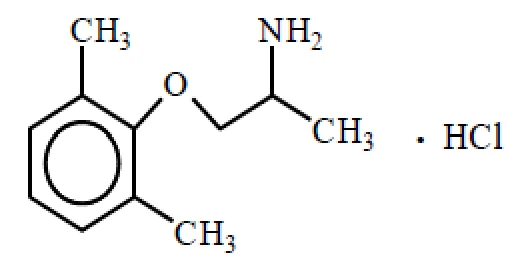
Chemical name: 1–Methyl–2–(2, 6–xylyloxy)ethylamine hydrochloride
Molecular formula and molecular mass: C11H17NO•HCl 215.72 g/mol
Structural formula:
Physicochemical properties: Mexiletine hydrochloride is a white to almost white, almost odourless, crystalline powder. It is freely soluble in water, methanol and ethanol, sparingly soluble in chloroform and practically insoluble in ether. The melting point range is 198˚–204˚C.
14 CLINICAL TRIALS
14.2 Comparative Bioavailability Studies
A comparative two-way single dose bioavailability study was conducted between TEVA–MEXILETINE (mexiletine hydrochloride) 200 mg capsules and Mexitil® 200 mg capsules, under fasted conditions. The pharmacokinetic plasma data calculated for the two formulations are tabulated below:
Analyte Name (1 x 200 mg) From measured data Geometric Mean Arithmetic Mean (CV %) | |||
| Parameter | Test* | Reference§ | % Ratio of Geometric Means |
AUCT (ng.h/mL) | 4064 4203 ± 27 | 3715 3909 ± 35 | 109 |
AUCI (ng.h/mL) | 5115 5299 ± 28 | 4722 4982 ± 34 | 108 |
CMAX (ng/mL) | 337 342 ± 16 | 305 310 ± 16 | 110 |
TMAXǂ (h) | 317 ± 0.65 | 3.13 ± 0.64 | |
| T½ǂ (h) | 9.31 ± 2.53 | 9.92 ± 3.29 | |
* TEVA-MEXILETINE 200mg Capsules (Teva Canada Limited)
§ MEXITIL® 200mg Capsules, Boehringer Ingelheim Ltd., Canada
ǂ Arithmethic mean ± SD
Another comparative two-way single dose bioavailability study was conducted between TEVA–MEXILETINE (mexiletine hydrochloride) 200 mg capsules and Mexitil® 200 mg capsules, under fed conditions. The pharmacokinetic plasma data calculated for the two formulations are tabulated below:
Analyte Name (1 x 200 mg) From measured data Geometric Mean Arithmetic Mean (CV %) | |||
| Parameter | Test* | Reference§ | % Ratio of Geometric Means |
AUCT (ng.h/mL) | 4137 4311 ± 29 | 3669 3769 ± 24 | 113 |
AUCI (ng.h/mL) | 4807 4961 ± 26 | 4263 4372 ± 23 | 113 |
Analyte Name (1 x 200 mg) From measured data Geometric Mean Arithmetic Mean (CV %) | |||
| Parameter | Test* | Reference§ | % Ratio of Geometric Means |
CMAX (ng/mL) | 326 332 ± 19 | 292 297 ± 18 | 112 |
TMAXǂ (h) | 4.1 ± 1.1 | 4.8 ± 2.5 | |
| T½ǂ (h) | 9.2 ± 2.1 | 8.6 ± 1.5 | |
* TEVA-MEXILETINE 200mg Capsules (Teva Canada Limited)
§ MEXITIL® 200mg Capsules, Boehringer Ingelheim Ltd., Canada
ǂ Arithmethic mean ± SD
15 MICROBIOLOGY
Not applicable.
16 NON-CLINICAL TOXICOLOGY
Table 3 - Acute Toxicity:
| Species | Route of Administration | LD50 (mg/kg) |
|---|---|---|
| Mouse | p.o. s.c. i.m. i.p. i.v. | 260 – 400 170 – 255 128 – 135 125 – 140 35 – 50 |
| Rat | p.o. s.c. i.m. i.p. i.v. | 330 – 630 500 – 720 190 – 260 76 – 79 27 – 30 |
| Dog | p.o. s.c. i.v. | 112 – 356 65 – 85 18 – 60 |
The symptoms of toxicity were ataxia, excitement, mydriasis and convulsions.
Subacute and Chronic Toxicity: A 13 week oral study in rats using doses of 15, 30, 60 and 150 mg/kg (increased to 175 mg/kg at week 7 and 200 mg/kg at week 9) was conducted. A decrease in body weight gain and a fatty degeneration of the liver cells was observed in the 2 highest dose groups.
Two 26 week experiments were carried out in rats using doses of 20, 40, 80 and 120 mg/kg. Convulsions occurred in animals receiving 80 mg/kg and most rats receiving the highest dose.
Mortality was greater in the 120 mg/kg group. There were increases in the adrenal weights in males and in the ovaries and thyroid of females.
Dogs were administered 3, 9 and 15 mg/kg (increased to 20 mg/kg on day 29 and 30_mg/kg on day 57) orally for 13 weeks. Vomiting occurred more frequently in the treated animals. Fatty changes of myocardial fibres were observed in the 2 highest dose groups and a peripheral fatty change in the liver was observed in one animal receiving the highest dose.
Two additional studies of 27 and 52 weeks duration were carried out using doses of 5, 10, 20 and 40 mg/kg. A transient increase in heart rate was noted and 3 out of 6 high dose animals died (after 36 weeks) in the 52 week study. Ataxia, tremors, excess salivation and convulsions occurred at 40_mg/kg. Fatty changes of the liver cells were observed in one animal receiving 20 mg/kg and 4 dogs in the 40 mg/kg group in one study.
Dogs were administered 1.5, 3, and 13.5 mg/kg i.v. for 4 weeks. Muscular incoordination, ataxia and convulsions were produced by the high dose. Heart rate was also transiently increased.
A 4 week experiment was performed in monkeys given 1.5, 4.5 and 12 mg/kg i.v. Ataxia, muscle incoordination and convulsions were observed in the high dose group.
An 18 month experiment was carried out in rats given 20, 40 and 240_mg/kg mexiletine orally. There was a decrease in appetite and in body weight gain in the high dose group. Elevations in SGPT and AP were also observed in this group. Histological evaluation did not show any drug–induced changes.
Oral doses of 5, 10, 20 and 40 mg/kg were given to dogs for a period of one year. There was frequent vomiting in the animals of the 2 high dose groups. In the group receiving the highest dose, excessive salivation, ataxia, tremors, convulsions and a transient increase in heart rate were observed and 3 animals in this group died. Fatty changes were observed in the livers of 1/6 controls, 2/6 low and 2/6 mid–dose dogs.
Mutagenicity: Ames tests in Salmonella typhimurium using up to 3000 µg/plate did not result in any sign of mutagenic activity by mexiletine.
Carcinogenicity: Eighteen month carcinogenicity experiments in mice and 2 year experiments in rats were conducted using oral doses of up to 160 mg/kg and 240 mg/kg, respectively. These studies showed that mexiletine does not possess tumorigenic or carcinogenic effects.
Reproductive and Developmental Toxicology: Fertility studies were performed in female rats given oral doses of 20, 40 and 60 mg/kg 2 weeks before mating and continuing throughout gestation. The results showed that mexiletine had no effect on spermatogenesis, oogenesis or fertility. A similar peri– and postnatal experiment using oral doses of up to 60 mg/kg/day given during gestation and lactation had no effect on development or behavior during rearing, or reproduction in the F1 generation.
Experiments were carried out in mice given 40 and 80 mg/kg, rats given 50 and 100 mg/kg and rabbits given 40 and 80 mg/kg to determine if mexiletine possesses teratogenic effects. Mexiletine was given from the 6th to 18th day of gestation. Although the highest doses produced toxic effects in pregnant females (usually convulsions), there was no sign of embryotoxic or teratogenic effects caused by mexiletine.
17 SUPPORTING PRODUCT MONOGRAPHS
- 1. Mexitil® Capsules, 100 mg and 200 mg, Product Monograph, Boehringer Ingelheim (Canada) Ltd., March 9, 1989.