


Product Monograph - Mar-Glycopyrrolate
SUMMARY PRODUCT INFORMATION
| Route of Administration | Dosage Form / Strength | Nonmedicinal Ingredients |
|---|---|---|
| Oral | Oral Solution, 1 mg/5 mL | Cherry flavor, citric acid monohydrate, glycerol, liquid sorbitol, methyl parahydroxybenzoate, propyl parahydroxybenzoate, propylene glycol, purified water, saccharin sodium, sodium citrate Composition of cherry flavour: Natural Anisyl Acetate, Natural Benzaldehyde, Natural Benzyl Acetate, Natural Benzyl Alcohol, Natural Cinnamaldehyde, Natural Ethyl Acetate, Natural Ethyl Butyrate, Natural gamma-Undecalactone, Natural Geraniol, Natural Isoamyl Butyrate, Natural Isobutyl Acetate, Natural Maltol, Natural p-Anisaldehyde, Natural Raspberry Ketone, Tolu Balsam, Propylene Glycol |
INDICATIONS AND CLINICAL USE
MAR-GLYCOPYRROLATE (glycopyrrolate) is indicated to reduce chronic severe drooling in patients aged 3 –18 years with neurologic conditions associated with problem drooling (e.g., cerebral palsy).
CONTRAINDICATIONS
MAR-GLYCOPYRROLATE is contraindicated in:
Medical conditions that preclude anticholinergic therapy, for example:
- Glaucoma
- Obstructive uropathy, or vesicoureteral reflux
- Obstructive disease of the gastrointestinal tract
- Paralytic ileus, or intestinal atony
- Unstable cardiovascular status
- Severe ulcerative colitis
- Toxic megacolon complicating ulcerative colitis
- Myasthenia gravis
- Patients taking solid oral dosage forms of potassium chloride. The passage of potassium chloride tablets through the gastrointestinal tract may be arrested or delayed with co- administration of MAR-GLYCOPYRROLATE (see DRUG INTERACTIONS).
Hypersensitivity to this drug or to any ingredient in the formulation or component of the
- container. For a complete listing, see the DOSAGE FORMS, COMPOSITION AND PACKAGING section.
WARNINGS AND PRECAUTIONS
General
Use MAR-GLYCOPYRROLATE with caution in patients with conditions that are exacerbated by anticholinergic drug effects including:
- Autonomic neuropathy
- Renal disease.
- Ulcerative colitis – Large doses may suppress intestinal motility, producing a paralytic ileus and may precipitate or aggravate “toxic megacolon”.
- Hyperthyroidism
- Coronary heart disease, congestive heart failure, cardiac tachyarrhythmias, tachycardia, and hypertension
- Hiatal hernia associated with reflux esophagitis since anticholinergic drugs may aggravate this condition
- Poorly controlled psychiatric conditions, and/or seizures
In the presence of high ambient temperature, heat prostration (fever and heat stroke due to decreased sweating) can occur with the use of anticholinergic drugs such as MAR-GLYCOPYRROLATE. Advise patients/caregivers to avoid exposure of the patient to hot or very warm environmental temperatures.
MAR-GLYCOPYRROLATE may produce drowsiness or blurred vision. As appropriate for a given age, warn the patient not to engage in activities requiring mental alertness such as operating a motor vehicle or other machinery, or performing hazardous work while taking MAR-GLYCOPYRROLATE.
Carcinogenesis and mutagenesis: See TOXICOLOGY.
MAR-GLYCOPRYRROLTE contains benzyl alcohol (0.1 mg / 5 mL).
Cardiovascular
MAR-GLYCOPYRROLATE is contraindicated in patients with unstable cardiac conditions.
Patients with cardiac arrhythmias, tachycardia, and/or clinically significant ECG abnormalities were excluded from the clinical trials therefore experience in these groups is limited.
Anticholinergic drugs may aggravate or precipitate these conditions. Use MAR-GLYCOPYRROLATE with caution in these patients. Cardiac function and status should be monitored as appropriate, if needed in these patients.
Gastrointestinal
Constipation is a common dose-limiting adverse reaction which sometimes leads to glycopyrrolate discontinuation (see ADVERSE REACTIONS). Assess patients for constipation, particularly within 4-5 days of initial dosing or after a dose increase. Intestinal pseudo-obstruction has been reported and may present as abdominal distention, pain, nausea or vomiting.
Diarrhea may be an early symptom of incomplete mechanical intestinal obstruction, especially in patients with ileostomy or colostomy. If incomplete mechanical intestinal obstruction is suspected, discontinue treatment with MAR-GLYCOPYRROLATE and evaluate for intestinal obstruction.
Renal
Renal Impairment
Because glycopyrrolate is largely renally eliminated, MAR-GLYCOPYRROLATE should be used with caution in patients with renal impairment, and should be avoided in those with severe renal impairment. Systemic exposure to glycopyrrolate can be markedly higher in patients with significant renal impairment as compared to those with normal renal function (see ACTION AND CLINICAL PHARMACOLOGY, Special Populations and Conditions, Renal Insufficiency).
Urinary Retention
MAR-GLYCOPYRROLATE is contraindicated in patients with urinary retention (e.g., obstructive uropathy). Patients should be instructed to contact a physician immediately if any signs of prostatic hyperplasia or bladder neck obstruction (i.e., difficulty passing urine, painful urination) develop.
Hepatic
Patients with clinically significant hepatic impairment were excluded from the clinical studies. Therefore, the safety and efficacy of MAR-GLYCOPYRROLATE is unknown in children with hepatic disease.
Special Populations
Pregnant Women:
Glycopyrrolate oral solution was not studied in pregnant women. It is also not known whether glycopyrrolate can cause fetal harm when administered to a pregnant woman or can affect reproduction capacity. In pregnant rats, daily oral administration of glycopyrrolate during organogenesis at doses of 200 and 400 mg/kg/day caused dose-related embryotoxicity. No adverse effects on embryo-fetal development were seen in a study of rabbits dosed intravenously during organogenesis (See TOXICOLOGY, Reproduction and Teratology). MAR-GLYCOPYRROLATE should be given to a pregnant woman only if absolutely needed, and the potential benefits of the drug clearly outweigh the possible harm to the embryo / fetus.
Nursing Women: It is not known whether this drug is excreted in human milk. Because many drugs are excreted in human milk, MAR-GLYCOPYRROLATE should not be administered to a nursing woman, unless the potential benefits of the drug for the mother clearly outweigh the possible harm to the infant. As with other anticholinergics, glycopyrrolate may cause suppression of lactation.
Pediatrics (<3 years of age): Glycopyrrolate oral solution has not been studied in subjects under the age of 3 years. MAR-GLYCOPYRROLATE is not indicated in children less than 3 years of age.
Geriatrics (≥ 65 years of age): Clinical studies of Glycopyrrolate oral solution did not include subjects aged 65 and over.
ADVERSE REACTIONS
Adverse Drug Reaction Overview
The known possible adverse effects of anticholinergics may include: xerostomia; urinary hesitancy/retention; blurred vision (mydriasis and/or cycloplegia); photophobia; increased ocular pressure including acute glaucoma; tachycardia; palpitation; decreased sweating and heat prostration; loss of taste; headache; nervousness; drowsiness; weakness; dizziness; insomnia; nausea; vomiting; impotence; suppression of lactation; constipation; allergic reaction or drug idiosyncrasies including anaphylaxis; some degree of mental confusion and/or excitement.
The most common adverse reactions reported with Glycopyrrolate oral solution are dry mouth, constipation and flushing. Adverse events leading to discontinuation most commonly involved the gastrointestinal system organ class (vomiting and constipation) and psychiatric disorders (abnormal behavior).
Dose is titrated based on therapeutic response and adverse reactions.
Clinical Trial Adverse Drug Reactions
Because clinical trials are conducted under very specific conditions the adverse reaction rates observed in the clinical trials may not reflect the rates observed in practice and should not be compared to the rates in the clinical trials of another drug. Adverse drug reaction information from clinical trials is useful for identifying drug-related adverse events and for approximating rates.
Study 1: 8-week efficacy/safety
This was a 8-week, double-blind, randomized, placebo-controlled trial to assess the efficacy and safety of Glycopyrrolate oral solution in 38 children with pathologic (chronic moderate to severe) drooling in pediatric patients 3 to 16 years of age with cerebral palsy or other neurologic conditions.
Drooling had to be present to the extent that the chin or clothing becomes wet most days. Patients with the following conditions were excluded: glaucoma, obstructive uropathy, vesicoureteral reflux, reactive airway disease, myasthenia gravis, hyperthyroidism, cardiac arrhythmias/tachycardia, or significant ECG abnormalities. Patients were also excluded if they had a history of intestinal obstruction, or had symptomatic gastroesophageal reflux disease, delayed gastric emptying, clinically significant hepatic or renal impairment, had poorly controlled seizures (daily seizures) or had unstable mental disease.
The median age was 10 years, and 58% of patients were males. The underlying condition for 75% of the patients was cerebral palsy. Discontinuation from study due to adverse events was reported in one patient in each group (abdominal distension). Adverse reactions were reported for 75% of patients with Glycopyrrolate oral solution (n=15) and 39% of those with placebo (n=7). The most frequently reported are presented in Table 1.
Table 1 presents adverse reactions reported by > 5% of Glycopyrrolate oral solution
-treated subjects and occurring at a greater frequency than placebo in Study 1 (8-week placebo- controlled trial).
Table 1 - Adverse Reactions occurring in >5% of Glycopyrrolate oral solution -treated subjects and at a greater frequency than placebo in Study 1
Glycopyrrolate oral solution (N=20) n(%) | Placebo (N=18) n(%) | |
|---|---|---|
| Dry Mouth | 8 (40%) | 2 (11%) |
| Vomiting | 8 (40%) | 2 (11%) |
| Constipation | 7 (35%) | 4 (22%) |
| Flushing | 6 (30%) | 3 (17%) |
| Headache | 3 (15%) | 1 (6%) |
| Urinary Retention | 3 (15%) | 0 |
| Heart Rate Increased | 2 (10%) | 1 (6%) |
Adverse reactions occurring in ≤5% of Glycopyrrolate oral solution -treated subjects and at a greater frequency than placebo in Study 1 included abdominal distention, agitation, dry lip, dry skin, dyspepsia, excitability, flatulence, irritability, nasal congestion, nasal dryness, and sinusitis.
Study 2: 24-week open label safety study
This was a six-month, multi-center, open-label study to assess the safety of Glycopyrrolate oral solution in 137 children age 3 to 18 years with pathologic (chronic moderate to severe) drooling and cerebral palsy or other neurologic conditions. All patients were to be treated with Glycopyrrolate oral solution at dosing regimen comparable to that previously described in Study 1. Patients’ selection criteria were also similar to those in Study 1. The average age was 11 years (range: 3 to 18), and 56% of patients were male. A total of 103 (75%) of patients completed the study, and among the 25% who discontinued, 19 patients discontinued the study due to adverse reactions (14%). Approximately 10% of patients experienced a serious adverse event(s); however, causal relationship with Glycopyrrolate oral solution was not clearly established.
The most common adverse reactions were: Constipation, dry mouth, vomiting, flushing, dysuria, diarrhea, epistaxis, urinary retention, lip dry, and urine output decreased.
Less Common Clinical Trial Adverse Drug Reactions (< 2% of patients receiving Glycopyrrolate oral solution) in the 24-week open-label Study 2 are listed below:
Blood and lymphatic system disorders: Anaemia
Gastrointestinal Disorders: Abdominal distention, abdominal pain, chapped lips, retching, stomach discomfort, tongue dry
General disorders and administration site conditions: Irritability, pain
Infections and infestations: Pneumonia, tracheostomy infection, upper respiratory tract infection, urinary tract infection
Investigations: Alanine aminotransferase increased, bacteria urine, blood albumin decreased, blood bilirubin increased, blood cholesterol increased, oxygen saturation decreased Metabolism and nutrition disorders: Dehydration
Nervous system disorders: Convulsion, dysgeusia, headache, nystagmus, somnolence Psychiatric disorders: Abnormal behaviour, aggression, crying, impulse-control disorder, moaning, mood altered, restlessness
Respiratory, thoracic and mediastinal disorders: Increased viscosity of bronchial secretion, nasal congestion, nasal dryness
Skin and subcutaneous tissue disorder: Dry skin, pruritus, rash
Vascular disorder: Pallor
DRUG INTERACTIONS
Drug-Drug Interactions
Drugs Affected by Reduced GI Transit Time
Glycopyrrolate reduces GI transit time, which may result in altered release of certain drugs when formulated in delayed- or controlled-release dosage forms.
- The passage of potassium chloride tablets through the GI tract may be arrested or delayed with coadministration of glycopyrrolate. Solid dosage forms of potassium chloride are contraindicated [see Contraindications (4)].
- Digoxin administered as slow dissolution oral tablets may have increased serum levels and enhanced action when administered with glycopyrrolate. Monitor patients receiving slow dissolution digoxin for increased action if glycopyrrolate is coadministered regularly. Consider the use of other oral dosage forms of digoxin (e.g., elixir or capsules).
Drugs Whose Plasma Levels May be Increased by Glycopyrrolate
Coadministration of glycopyrrolate may result in increased levels of certain drugs.
- Atenolol’s bioavailability may be increased with coadministration of glycopyrrolate. Monitor patients closely for signs/symptoms of excessive beta-blockade (e.g., reduced heart rate or blood pressure, bronchoconstriction). A reduction in the atenolol dose may be needed.
- Metformin plasma levels may be elevated with coadministration of glycopyrrolate, increasing metformin’s pharmacologic and toxic effects. Monitor clinical response to metformin with concomitant glycopyrrolate administration; consider a dose reduction of
- metformin if warranted.
Drugs Whose Plasma Levels May be Decreased by Glycopyrrolate
Coadministration of glycopyrrolate may result in decreased levels of certain drugs.
- Haloperidol’s serum level may be decreased when coadministered with glycopyrrolate, resulting in worsening of schizophrenic symptoms, and development of tardive dyskinesia. Closely monitor patients for signs/symptoms of reduced clinical response to haloperidol when concurrent use cannot be avoided.
- Levodopa’s therapeutic effect may be reduced with glycopyrrolate administration. Consider increasing the dose of levodopa.
Drugs that May Enhance the Effect of Glycopyrrolate
- Anticholinergic agents may enhance the anticholinergic effect of glycopyrrolate. Monitor patients closely for excessive anticholinergic effects.
- The anticholinergic effects of glycopyrrolate may be potentiated with concomitant administration of amantadine. Consider decreasing the dose of glycopyrrolate during coadministration of amantadine.
- Monoamine oxidase inhibitors (MAOI) may enhance the orthostatic hypotensive anticholinergic effect of glycopyrrolate. Carefully monitor for orthostatic hypotension with MAOI initiation, or dose increase in patients receiving glycopyrrolate. Gradual MAOI dose increases may help prevent hypotensive effects. A rapid return of blood pressure is often seen upon MAOI dose decrease or discontinuation.
Cannabinoids (dronabinol, nabilone)
Glycopyrrolate may enhance the tachycardic effect of cannabinoids. Monitor cardiovascular status closely.
Drug-Food Interactions
The presence of high fat food reduces the oral bioavailability of glycopyrrolate if taken shortly after a meal. Therefore, MAR-GLYCOPYRROLATE should be dosed at least one hour before or two hours after meals (see DOSAGE AND ADMINISTRATION).
Drug-Herb Interactions
Interactions with herbal products have not been studied.
Drug-Laboratory Test Interactions
Interactions with laboratory tests have not been studied.
DOSAGE AND ADMINISTRATION
Recommended Dose and Dosage Adjustment
MAR-GLYCOPYRROLATE must be measured and administered with an accurate measuring device.
Initiate dosing at 0.02 mg/kg orally three times daily and titrate in increments of 0.02 mg/kg every 5-7 days based on therapeutic response and adverse reactions. The maximum recommended dosage is 0.1 mg/kg three times daily not to exceed 1.5-3 mg per dose based upon weight. For greater detail, see Table 2.
The patient should be weighted regularly (especially younger children), to ensure that the dose received does not exceed the maximum allowed dose indicated in Table 2. Should the bodyweight decrease to a lower weight category, the dosing may have to be adjusted accordingly.
During the four-week titration period, dosing can be increased with the recommended dose titration schedule while ensuring that the anticholinergic adverse events are tolerable. Prior to each increase in dose, review the tolerability of the current dose level with the patient’s caregiver.
MAR-GLYCOPYRROLATE should be dosed at least one hour before or two hours after meals.
The presence of high fat food reduces the oral bioavailability of glycopyrrolate oral solution if taken shortly after a meal (see CLINICAL PHARMACOLOGY).
Table 2 - Recommended Dose Titration Schedule (each dose to be given three times daily)
| Weight | Dose Level 1 | Dose Level 2 | Dose Level 3 | Dose Level 4 | Dose Level 5 | ||||||
|---|---|---|---|---|---|---|---|---|---|---|---|
| kg | lbs | (~0.02 mg/kg) | (~0.04 mg/kg) | (~0.06 mg/kg) | (~0.08 mg/kg) | (~0.1 mg/kg) | |||||
| 13-17 | 27-38 | 0.3 mg | 1.5 mL | 0.6 mg | 3 mL | 0.9 mg | 4.5 mL | 1.2 mg | 6 mL | 1.5 mg | 7.5 mL |
| 18-22 | 39-49 | 0.4 mg | 2 mL | 0.8 mg | 4 mL | 1.2 mg | 6 mL | 1.6 mg | 8 mL | 2.0 mg | 10 mL |
| 23-27 | 50-60 | 0.5 mg | 2.5 mL | 1.0 mg | 5 mL | 1.5 mg | 7.5 mL | 2.0 mg | 10 mL | 2.5 mg | 12.5 mL |
| 28-32 | 61-71 | 0.6 mg | 3 mL | 1.2 mg | 6 mL | 1.8 mg | 9 mL | 2.4 mg | 12 mL | 3.0 mg | 15 mL |
| 33-37 | 72-82 | 0.7 mg | 3.5 mL | 1.4 mg | 7 mL | 2.1 mg | 10.5 mL | 2.8 mg | 14 mL | 3.0 mg | 15 mL |
| 38-42 | 83-93 | 0.8 mg | 4 mL | 1.6 mg | 8 mL | 2.4 mg | 12 mL | 3.0 mg | 15 mL | 3.0 mg | 15 mL |
| 43-47 | 94-104 | 0.9 mg | 4.5 mL | 1.8 mg | 9 mL | 2.7 mg | 13.5 mL | 3.0 mg | 15 mL | 3.0 mg | 15 mL |
| ≥ 48 | ≥ 105 | 1.0 mg | 5 mL | 2.0 mg | 10 mL | 3.0 mg | 15 mL | 3.0 mg | 15 mL | 3.0 mg | 15 mL |
Renal impairment
MAR-GLYCOPYRROLATE should be used with caution in patients with renal impairment, and should be avoided in those with severe renal impairment (see ACTION AND CLINICAL PHARMACOLOGY, Special Populations and Conditions, Renal Insufficiency).
Missed Dose
If a dose is missed by less than two hours, take the missed dose immediately, unless a meal has been consumed within the past two hours or if a meal will be consumed in the next hour. If a dose is missed by more than two hours, skip the dose and resume the regular dosing schedule.
OVERDOSAGE
Because glycopyrrolate is a quaternary amine which does not easily cross the blood-brain barrier, symptoms of glycopyrrolate overdosage are generally more peripheral in nature rather than central compared to other anticholinergic agents. In case of accidental overdose, therapy may include:
- Maintaining an open airway, providing ventilation as necessary.
- Managing any acute conditions such as hyperthermia, coma and/or seizures as applicable, and managing any jerky myoclonic movements or choreoathetosis, which may lead to rhabdomyolysis in some cases of anticholinergic overdosage.
- Administering a quaternary ammonium anticholinesterase such as neostigmine to help alleviate peripheral anticholinergic effects such as anticholinergic induced ileus.
- Administering activated charcoal orally as appropriate.
MAR-GLYCOPYRROLATE contains benzyl alcohol (0.1 mg/5 ml). Overdosage may result in serious adverse effects including respiratory failure, cardiovascular collapse problems ( “gasping syndrome”) in young children.
ACTION AND CLINICAL PHARMACOLOGY
Mechanism of Action
Glycopyrrolate is a competitive inhibitor of acetylcholine muscarinic receptors that are located on certain peripheral tissues, including salivary glands. Glycopyrrolate indirectly reduces the rate of salivation by preventing the stimulation of these receptors. Because it is a quaternary ammonium compound, glycopyrrolate does not easily cross the blood-brain barrier.
Glycopyrrolate effects are thus probably more peripheral than central, compared to other anticholinergic agents.
Pharmacodynamics
Glycopyrrolate inhibits the action of acetylcholine on salivary glands thereby reducing the extent of salivation.
No significant electrocardiogram effects of glycopyrrolate were observed in phase 3 studies, except for a clinically relevant increase (10 bpm) in heart rate observed. The data do not suggest that glycopyrrolate would be associated with a clinically marked increase in QTc duration.
Pharmacokinetics
Absorption: In a parallel study of children (n=6 per group) aged 7-14 years undergoing intraocular surgery, subjects received either intravenous (IV) or oral glycopyrrolate as a premedication, the mean absolute bioavailability of oral glycopyrrolate tablets was low (approximately 3%) and highly variable among subjects (range 1.3 to 13.3%). A similar pattern of low and variable relative bioavailability is seen in adults.
Mean Cmax after oral solution administration in the fasting state was 0.318 ng/mL, and mean AUC0-T was 1.74 ng∙hr/mL. Mean time to maximum plasma concentration for glycopyrrolate was 3.1 hours, and mean plasma half-life was 3.0 hours.
In healthy adults, a high fat meal was shown to significantly affect the absorption of glycopyrrolate oral solution (10 mL, 1 mg/5 mL). The mean Cmax under fed high fat meal conditions was approximately 74% lower than the Cmax observed under fasting conditions. Similarly, mean AUC0-T was reduced by about 78% by the high fat meal compared with the fasting AUC0-T. A high fat meal markedly reduces the oral bioavailability of glycopyrrolate. Therefore, MAR-GLYCOPYRROLATE should be dosed at least one hour before or two hours after meals.
Pharmacokinetic results (mean ± SD) are described in Table 3.
For the most recent information in the management of a suspected drug overdose, contact your regional poison control centre or Health Canada’s toll-free number, 1-844 POISON-X (1-844-764-7669).
Table 3 - Pharmacokinetic Parameters (mean±SD) for glycopyrrolate, Fasting and Fed, in Healthy Adults treated with a 2 mg single dose (10 mL)
| Cmax (ng/mL ) | Tmax (h) | AUC0-T (ng∙h/mL) | AUC0-inf (ng∙h/mL) | T½ (h) | |
|---|---|---|---|---|---|
| Fasting (n=37) | 0.318 ± 0.190 | 3.10 ± 1.08 | 1.74 ± 1.07 | 1.81 ± 1.09 | 3.0 ± 1.2 |
| Fed (n=36) | 0.084 ± 0.081 | 2.60 ± 1.12 | 0.38 ± 0.14 | 0.46 ± 0.13* | 3.2 ± 1.1* |
*n=35
Distribution: After IV administration, glycopyrrolate has a mean volume of distribution in children aged 1 to 14 years of approximately 1.3 to 1.8 L/kg, with a range from 0.7 to 3.9 L/kg. In adults aged 60-75 years, the volume of distribution was lower (0.42 L/kg ± 0.22).
Metabolism: In adult patients who underwent surgery for cholelithiasis and were given a single IV dose of tritiated glycopyrrolate, approximately 85% of total radioactivity was excreted in urine and <5% was present in T-tube drainage of bile. In both urine and bile, >80% of the radioactivity corresponded to unchanged drug. These data suggest a small proportion of IV glycopyrrolate is excreted as one or more metabolites.
Elimination: Approximately 65-80% of an IV glycopyrrolate dose was eliminated unchanged in urine in adults. In two studies, after IV administration to pediatric patients ages 1-14 years, mean clearance values ranged from 1.01- 1.41 L/kg/hr (range 0.32 -2.22 L/kg/hr). In adults, IV clearance values were 0.54 ± 0.14 L/kg/hr.
Special Populations and Conditions
Geriatrics: Glycopyrrolate pharmacokinetics have not been characterized in the elderly.
Gender: Population pharmacokinetic evaluation of adults and children administered IV or oral glycopyrrolate identified no effect of gender on glycopyrrolate clearance or systemic exposure.
Race: The pharmacokinetics of glycopyrrolate by race have not been characterized.
Hepatic Insufficiency: Glycopyrrolate is largely renally eliminated. The pharmacokinetics of glycopyrrolate have not been evaluated in patients with hepatic impairment.
Renal Insufficiency: In one study, glycopyrrolate 4 mcg/kg was administered IV in uremic patients undergoing renal transplantation surgery. Mean AUC (10.6 mcg·h/L), mean plasma clearance (0.43 L/hr/kg) and mean 3-hour urinary excretion (0.7%) for glycopyrrolate were significantly different than those of control patients (3.73 mcg·h/L, 1.14 L/hr/kg, and 50%, respectively). These results suggest that elimination of glycopyrrolate is severely impaired in patients with renal failure. MAR-GLYCOPYRROLATE should be used with caution in patients with renal impairment, and should be avoided in those with severe renal impairment (see WARNINGS AND PRECAUTIONS – Renal)
STORAGE AND STABILITY
Store between 15° - 25°C. Do not refrigerate or freeze. Discard 30 days after first opening.
DOSAGE FORMS, COMPOSITION AND PACKAGING
MAR-GLYCOPYRROLATE is available as 1 mg/5 mL clear, cherry-flavoured solution for oral administration in 150mL Type III amber glass bottle fitted with a tamper evident, child resistant plastic (polyethylene/polypropylene) cap with EPE liner.
Each mL of oral solution contains 0.2 mg of glycopyrrolate. Nonmedicinal ingredients: Citric acid monohydrate, cherry flavor, glycerol, liquid sorbitol, methyl parahydroxybenzoate, propyl parahydroxybenzoate, propylene glycol, purified water, saccharin sodium, sodium citrate
Composition of Cherry Flavour: Natural Anisyl Acetate, Natural Benzaldehyde, Natural Benzyl Acetate, Natural Benzyl Alcohol, Natural Cinnamaldehyde, Natural Ethyl Acetate, Natural Ethyl Butyrate, Natural gamma-Undecalactone, Natural Geraniol, Natural Isoamyl Butyrate, Natural Isobutyl Acetate, Natural Maltol, Natural p-Anisaldehyde, Natural Raspberry Ketone, Tolu Balsam, Propylene Glycol
PART II: SCIENTIFIC INFORMATION
PHARMACEUTICAL INFORMATION
Drug Substance
Proper name: Glycopyrrolate,
Glycopyrronium bromide
Chemical Abstract Service (CAS) Registry Number:
USP and Ph. Eur. : [51186-83-5]
Chemical name: Pyrrolidinium, 3-[(SR)-(cyclopentylhydroxyphenylacetyl)oxy]-1,1- dimethyl-, [RS-] bromide
(RS)-[3-(SR)-Hydroxy-1,1-dimethylpyrrolidinium bromide] α- cyclopentylmandelate
(3RS)-3-[(2SR)-(2-Cyclopentyl-2-hydroxyl-2-phenylacetyl)oxy]-1,1- dimethylpyrrolidinium bromide
Molecular formula: C19H28BrNO3
Molecular mass: 398.3 g/mol
Structural formula:
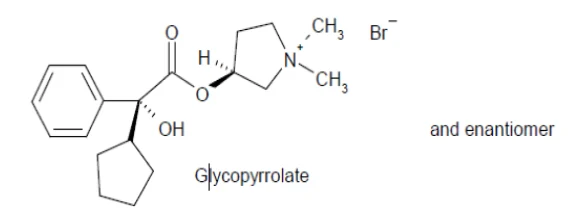
Physicochemical properties: Glycopyrrolate is a white or almost white, crystalline powder. It is freely soluble in water ; soluble in ethanol (96 per cent); very slightly soluble in methylene chloride. There are two asymmetric carbons in the molecule. The drug substance is a 50/50 % mixture of threo enantiomers. Thus, the product is not optically active.
CLINICAL TRIALS
Study demographics and trial design
Table 4 - Summary of the clinical trial design and patient demographics
| Study # | Trial design | Dosage, route of administration and duration | Study subjects | Mean age (Range) | Gender |
|---|---|---|---|---|---|
| 1 | Multi-centre, randomized, double-blind, placebo- controlled, parallel group study | Glycopyrrolate oral solution 0.02, 0.04, 0.06, 0.08, 0.1 mg/kg/dose (1 mg/5 mL) or placebo TID; oral; 8 weeks | n = 38 | 10 (3-23) | 22 M; 16 F |
F = female; M = male; TID = three times daily
Glycopyrrolate oral solution was evaluated in a multi-center, randomized, double-blind, placebo-controlled, parallel group, eight-week study for the control of pathologic drooling in children. The study enrolled 38 subjects aged 3-23 years; 36 subjects were aged 3-16 years and two patients were older than 16 years. Problem drooling was defined as drooling in the absence of treatment so that clothing became damp on most days (approximately five to seven days per week). Doses of the study medication were titrated over a 4-week period to the optimal response beginning at
0.02 mg/kg three times a day increasing doses in increments of approximately 0.02 mg/kg three times per day every 5-7 days, not to exceed the lesser of approximately 0.1 mg/kg three times per day or 3 mg three times per day.
Subjects were evaluated on the 9-point modified Teacher’s Drooling Scale (mTDS), which is presented below.
Modified Teacher’s Drooling Scale
1= Dry: never drools
2= Mild: only the lips are wet; occasionally
3= Mild: only the lips are wet; frequently
4= Moderate: wet on lips and chin; occasionally
5= Moderate: wet on the lips and chin; frequently
6= Severe: drools to the extent that clothing becomes damp; occasionally
7= Severe: drools to the extent that clothing becomes damp; frequently
8= Profuse: clothing, hands, tray, and objects became wet; occasionally
9= Profuse: clothing, hands, tray, and objects became wet; frequently
The mTDS evaluations were recorded by parents/caregivers 3 times daily approximately two hours post-dose on evaluation days during pre-treatment baseline and at Weeks 2, 4, 6 and 8 of therapy.
Study results
The underlying condition for 75% of the patients was cerebral palsy. Responders were defined as subjects with at least a 3-point reduction in mean daily mTDS scores from baseline to Week 8. The proportion of responders in the Glycopyrrolate oral solution treatment group was larger as compared to the placebo group. See Table 5.
Table 5 - Percentage of Responders at Week 8
Glycopyrrolate oral solution Group (N=20) | Placebo Group (N=18) |
|---|---|
| 15/20 (75%) | 2/18 (11%) |
Comparative Bioavailability Studies
A double-blind, randomized, two-way crossover, single dose (1 mg given as 5 mL x 1 mg/5 mL), oral bioequivalence study comparing MAR-GLYCOPYRROLATE (Glycopyrrolate Oral Solution), 1 mg/5 mL (Marcan Pharmaceuticals Inc.) to PrCUVPOSA™ (Glycopyrrolate Oral Solution), 1 mg/5 mL (Medexus Pharmaceuticals Inc.), was conducted in 74 healthy, adult, male subjects under fasting conditions.
The results of 72 subjects who completed the study is summarized in the table below.
SUMMARY TABLE OF THE COMPARATIVE BIOAVAILABILITY DATA
Glycopyrrolate (5 mL x 1 mg/5 mL) Geometric Mean Arithmetic Mean (CV%) | ||||
|---|---|---|---|---|
| Parameter | Test1 | Reference2 | % Ratio of Geometric Means | 90% Confidence Interval |
AUCT (pg.h/mL) | 1552.06 1695.47 (44.92) | 1502.97 1636.75 (39.81) | 103.3 | 96.9-109.9 |
AUCI (pg.h/mL) | 1639.30 1787.55 (44.41) | 1584.40 1723.74 (39.59) | 103.5 | 97.3-110.1 |
| Cmax (pg/mL) | 267.67 297.58 (51.19) | 257.98 286.97 (47.98) | 103.8 | 96.7-111.4 |
| Tmax3 (h) | 2.88 (0.67- 6.00) | 3.00 (1.50- 6.00) | ||
| T½4 (h) | 7.25 (22.83) | 7.00 (22.80) | ||
1 Mar-Glycopyrrolate (Glycopyrrolate Oral Solution), 1 mg/5 mL, (Marcan Pharmaceuticals Inc.)
2 PrCuvposaTM (Glycopyrrolate Oral solution), 1 mg/5 mL, (Medexus Pharmaceuticals Inc.), purchased in Canada
3 Expressed as the median (range) only
4 Expressed as the arithmetic mean (CV%) only
DETAILED PHARMACOLOGY
Animal Pharmacodynamics
A single IV dose of glycopyrrolate (5 mcg/kg) substantially reduced (by about 50%) methacholine-stimulated salivary secretion in the anesthetized dog. In this study, intravenous (IV) methacholine (11 µg/kg) was given once every 10 minutes for 50 minutes after a single IV injection of glycopyrrolate.
Animal Pharmacokinetics
Pharmacokinetics and metabolism studies were conducted in the mouse, rat, dog and cat using radiolabeled (14C)-glycopyrrolate. Oral bioavailability of glycopyrrolate was poor, with most radioactivity (80%) excreted in the feces. Only trace amount of glycopyrrolate crossed the blood- brain barrier or placenta, consistent with the quaternary ammonium structure. The main metabolic pathways appear to be hydroxylation and oxidation. With IV or intramuscular administration, excretion of radioactivity was greater in the urine than the feces. Based on the peaks observed in plasma and urinary excretion, there appears to be some enterohepatic recirculation of radioactivity.
Human Pharmacology
See ACTION AND CLINICAL PHARMACOLOGY.
TOXICOLOGY
Single-dose Toxicity
Single oral, intra-peritoneal or intravenous administration of glycopyrrolate to mice, rats, rabbits, and dogs was associated with typical muscarinic (anticholinergic) activity comprised of mydriasis, cycloplegia (paralysis of the ciliary muscle), and xerostomia (dry mouth). In rabbits all animals exhibited mydriasis, tachycardia and prostration. At high doses, more significant manifestations encountered were hypoactivity, hypersensitivity, labored respiration, tremors, convulsions, and death.
Table 6 - Acute Toxicity of Glycopyrrolate
| Species | Route | LD50 (mg/kg) |
|---|---|---|
| Mouse | Oral | 550 |
| IV | 14.7 | |
| IP | 107 | |
| IP | 112 | |
| Rat | Oral | 1150 |
| Oral | 1280 | |
| IV | 14.6 | |
| IP | 196 | |
| Rabbits | IV | 25 |
| Dogs | IV | 15-30 |
IP = intraperitoneal; IV = intravenous; LD50 = lethal dose 50
Table 7 - Repeat-dose Toxicity
| Study type | Species | Route | Dose (mg/kg/day) | Principal findings |
|---|---|---|---|---|
| Study type | Species | Route | Dose (mg/kg/day) | Principal findings |
| 14-day | Mouse, CD-1 | Oral gavage | 0, 30, 60, 120, 250, 500 | Severe clinical findings, adverse body weight loss and mortality occurred at 500 mg/kg/day. Test article-related findings in the 250 and 500 mg/kg/day groups included thinness, dermal atonia, decreased defecation and extremities cool to touch. Partial eye closure, consistent with dilated pupils, was noted in the 500 mg/kg/day group males. Yellow and/or brown material was noted on various body surfaces of the 500 mg/kg/day group males and females. Dilated pupils across all treated groups. |
| 13-week | Mouse, CD-1 | Oral gavage | 0, 30, 100 and 300 | Mortality occurred at 100 and 300 mg/kg. Clinical signs in dead/euthanized in extremis animals included impaired equilibrium, intermittent tremors, hypoactivity, prostration, thinness, dermal atonia, body/extremities pale, hypothermia, ptosis, abnormal respiration, swollen abdominal area, soft feces, decreased defecation and/or yellow material on body surfaces. Piloerection in all treated groups. Dilated pupils and lower body weights seen in dose related manner across all treated groups. Histopathology changes in the salivary gland (acinar cell hypertrophy), nasal tissues (degeneration, exudate, inflammation), gingiva (ulceration, inflammation) at ≥ 100 mg/kg/d and Haderian gland (increase in porphyrin pigment).at ≥ 30 mg/kg/d. |
| 14-day | Sprague Dawley Rat | Oral gavage | 0, 60, 120, 250, 500, 1000 | Mortality occurred at 1000 mg/kg/day. Pupil dilation and lower body weight across all test article groups. Low body weight gains and/or body weight losses, low food consumption, clinical observations of partial eye closure, dermal atonia, body cool to touch, rales, gasping, labored respiration, soft feces, decreased defecation and yellow/brown material on body surfaces in 500 and 1000 mg/kg/day, piloerection at 1000 mg/kg/day. |
| 13-week | Sprague Dawley Rat | Oral gavage | 0, 40, 120 and 360 | Pupil dilation and lower body weights across all test article groups, red material around eyes slightly increased in 360 mg/kg/day group, rales at 120 and 360 mg/kg/day. Slightly higher mean absolute monocyte counts, higher total urine volume with lower mean specific gravity, osmolality and creatine at 360 mg/kg/day. Histopathology changes including minimal to mild acute inflammation in nasal tissue, larynx, pharynx at 120 and 360 mg/kg/day, mesesnteric or mandibular lymph node abscesses at 360 mg/kg/day, mandibular salivary gland (acinar cell hypertrophy) at 120 and 360mg/kg/day, Harderian glands all doses (increased porphyrin pigment) NOAEL=40 mg/kg/day. |
NOAEL= No observed adverse effects level
Carcinogenesis and Mutagenesis
Glycopyrrolate was not carcinogenic in mice up to a dose level of 20 mg/kg/day (the safety margin was 5.1-fold, relative to the maximum recommended human dose [MRHD]), or in rats up to a dose level of 40 mg/kg/day (the safety margin was 21-fold, relative to the MRHD).
In male rats, although there was a notable increase in the incidence of thyroid C-cell adenomas, no linear dose-response trend was noted, and the C-cell adenomas were not locally invasive with no metastases reported. Also, no rats died as a consequence of C-cell tumor in the study. Finally in contrast to humans, the incidence of spontaneous C-cell tumors is known to be high in aging rats. Therefore, glycopyrrolate does not represent a significant carcinogenic risk to humans under the proposed condition of clinical use.
Glycopyrrolate did not elicit any genotoxic effects in the Ames mutagenicity assay, the human lymphocyte chromosome aberration assay, or the micronucleus assay.
Reproduction and Teratology
Glycopyrrolate was assessed for effects on fertility or general reproductive function in rats. Rats of both genders received glycopyrrolate at doses up to 100 mg/kg/day via oral gavage (approximately 50 times the MRHD). No treatment effects on fertility or reproductive parameters of both genders were observed in this study.
Daily oral administration of glycopyrrolate at 50, 200 and 400 mg/kg/day to pregnant rats during organogenesis led to maternal toxicity at all doses, decreased fetal body weights at 200 and 400 mg/kg/day and delays in ossification and embryo-fetal death at 400 mg/kg/day. The No Observed Adverse Effect Level (NOAEL) for developmental toxicity was 50 mg/kg/day (approximately 25 times the MRHD).
In a second study glycopyrrolate administered orally once a day at 50, 200 and 400 mg/kg/day to pregnant rats led to maternal toxicity and significant reduction in body weights of newborns, which persisted though lactation period, and up to approximately 6-11 weeks of postnatal period.
Reduced body weights were noted at all dose levels. The maternal and developmental NOAEL was less than 50 mg/kg/day. Maternal doses of glycopyrrolate as high as 400 mg/kg/day showed no adverse effects on the development of the F1 generation including functional observational battery, memory and learning, and the ability to produce an F2 generation.
In rabbits dosed intravenously during organogenesis up to 1 mg/kg no adverse effects on fetal development were seen even when maternal toxicity was noted. The NOAEL of glycopyrrolate for embryo-fetal development in rabbits is considered to be 1.0 mg/kg/day (approximately 1.1 times the MRHD).
REFERENCES
- 1. Ali-Melkkila T, Kaila T, Kanto J. Glycopyrrolate: pharmacokinetics and some pharmacodynamic findings. Anaesthiol Scand 1989; 33:513-517.
- 2. Ali-Melkkila T, Kaila T, Kanto J, Iisallo E. Pharmacokinetics of glycopyrronium in parturients. Anaesthesia 1990;45:634-637.
- 3. Bachrach SJ, Walter RS, Trzcinski K, Use of Glycopyrrolate and Other Anticholenergic Medications for Sialorrhea in Children with Cerebral Palsy. Clin Pediatr, 1998; 37: 485- 490.
- 4. Blasco PA, Stansbury JCK, Glycopyrrolate Treatment of Chronic Drooling. Arch Pediatr Adolesc Med, 1996; 150: 932-935.
- 5. Franko BV, Alphin RS, Ward JW, et al. Pharmacodynamic evaluation of glycopyrrolate in animals. Ann NT Acad Sci 1962; 99(1):131-149.
- 6. Franko BV, Ward JW, Gilbert DL, Woodard G. A condensed format for reporting toxicology data – results of studies on glycopyrrolate. Toxicol Appl Pharmacol 1970; 17: 361 – 365.
- 7. Kaltiala E, Penttila A, Vapaatalo H, et al. The fate of intravenous [3H] glycopyrrolate in man. J Pharm Pharmac 1974; 26:352-354.
- 8. Kirvela M, Ali-Melkkila T, Kaila T, et al. Pharmacokinetics of glycopyrronium in uremic patients. Br J Anaesthesia 1993; 71: 437-439.
- 9. Mier RJ, Bachrach SJ, Lakin RC, et al. Treatment of Sialorrhea with Glycopyrrolate. Arch Pediatri Adolesc Med, 2000; 154: 1213-1218.
- 10. Omega Laboratories Ltd. Glycopyrrolate Injection Product Monograph. April 2012.
- 11. Rautakorpi P, Ali-Melkkila T, Kaila T, et al. Pharmacokinetics of glycopyrrolate in children. J Clin Anesth 1994; 6:217-220.
- 12. Rautakorpi P, Manner T, Ali-Melkkila T, et al. Pharmacokinetics and oral bioavailability of glycopyrrolate in children. Pharmacol Toxicol 1998; 83:132-134.
- 13. Stern LM, Preliminary study of glycopyrrolate in the management of drooling. J Paediatr Child Health, 1997; 33: 52-54.
- 14. Zeller RS, Davidson J, Lee H-M, et al. Safety and efficacy of glycopyrrolate oral solution for management of pathologic drooling in pediatric patients with cerebral palsy and other neurologic conditions. Ther Clin Risk Manag. 2012; 8:25-32.
- 15. Zeller RS, Lee H-M, Cavanaugh PF, et al. Randomized Phase III evaluation of the efficacy and safety of a novel glycopyrrolate oral solution for the management of chronic severe drooling in children with cerebral palsy or other neurologic conditions. Ther Clin Risk Manag. 2012; 8:15-23.
- 16. PRCUVPOSATM , Glycopyrrolate Oral Solution 1 mg/5 mL, control:267854, product monograph, Medexus Inc. (2022-10-31) .