


Product Monograph - Mar-Metoclopramide
INDICATIONS AND CLINICAL USE
Metoclopramide hydrochloride is useful as an adjunct in the management of delayed gastric emptying associated with subacute and chronic gastritis or following vagotomy, pyloroplasty and other surgical procedures.
Metoclopramide has also been useful as an adjunct to facilitate small bowel intubation.
Metoclopramide has been found useful as an adjunct to facilitate gastroduodenal evacuation of barium meals and to improve radiological visualization of the gastroduodenal region in patients with gastric atonia, pylorospasm, spasm of the duodenal bulb, or with mechanical gastric outlet obstruction. Metoclopramide has also been shown to accelerate small bowel transit of the barium meal and to facilitate fluoroscopy of the terminal ileum.
Metoclopramide, when used pre-operatively by the oral route, may be useful in reducing postoperative vomiting induced by narcotics.
| Route of Administration | Dosage Form / Strength | All Non-medicinal Ingredients |
| Oral | Tablet: 5 mg, 10 mg | Cellulose, Microcrystalline (Avicel PH 101), Colloidal Anhydrous silica (Aerosil 200), Dried Maize starch, Stearic acid 50, Hydroxy Propyl Methyl Cellulose (HPMC E5), Polyethylene Glycol (PEG 6000), Pregelatinized starch (Starch 1500), Purified Talc, Titanium Dioxide |
CONTRAINDICATIONS
Metoclopramide hydrochloride should not be used whenever stimulation of gastrointestinal motility might be dangerous, i.e., in the presence of gastrointestinal hemorrhage, mechanical obstruction or perforation. Metoclopramide is contraindicated in patients with known sensitivity or intolerance to the drug.
Metoclopramide should not be used in epileptics or patients receiving other drugs which are likely to cause extrapyramidal reactions, since the frequency and severity of seizures or extrapyramidal reactions may be increased.
Metoclopramide is contraindicated in children less than one year of age.
WARNINGS AND PRECAUTIONS
Tardive Dyskinesia
Tardive dyskinesia may develop in patients treated with metoclopramide. Although the prevalence of the syndrome appears to be highest among the elderly, especially elderly women, it is not possible to predict which patients are likely to develop the syndrome.
Both risk of developing the syndrome and the likelihood that it will become irreversible are believed to increase with the duration of treatment and the total cumulative dose.
Less commonly, the syndrome can develop after relatively brief treatment periods at low doses; in these cases, symptoms appear more likely to be reversible. Prolonged treatment (greater than 12 weeks) with metoclopramide should be avoided unless therapeutic benefit is thought to outweigh the risks to the patient developing tardive dyskinesia.
There is no known treatment for established cases of tardive dyskinesia although the syndrome may remit, partially or completely, within several weeks to months after metoclopramide has been withdrawn.
Metoclopramide itself, however, may suppress (or partially suppress) the signs of tardive dyskinesia, thereby masking the underlying disease process. The effect of this symptomatic suppression upon the long term course of the syndrome is unknown.
WARNING
Tardive dyskinesia has been reported to occur during long-term treatment (over
12 weeks) and following discontinuation of long-term treatment with metoclopramide. The risk of developing tardive dyskinesia increases with the duration of treatment and the total cumulative dose. The elderly, especially elderly women are at increased risk of developing this condition.
Other Extrapyramidal Symptoms (EPS)
- Acute Dystonic Reactions
Acute dystonic reactions occur in approximately 1 in 500 patients treated with the usual adult dosages of 30-40 mg/day of metoclopramide. These usually are seen during the first 24-48 hours of treatment with metoclopramide, occur more frequently in pediatric patients and adult patients less than 30 years of age and are even more frequent at the higher doses used in prophylaxis of vomiting due to cancer chemotherapy. These symptoms may include involuntary movements of limbs and facial grimacing, torticollis, oculogyric crisis, rhythmic protrusion of tongue, bulbar type of speech, trismus, or dystonic reactions resembling tetanus. Rarely, dystonic reactions may present as stridor and dyspnea, possibly due to laryngospasm. If these symptoms should occur, immediate treatment by health care professionals should be initiated to treat this condition.
- Parkinsonian-like Symptoms
Parkinsonian-like symptoms, including bradykinesia, tremor, cogwheel rigidity, or mask-like facies, have occurred more commonly within the first 6 months after beginning treatment with metoclopramide, but occasionally after longer periods. These symptoms generally subside within 2-3 months following discontinuance of metoclopramide. Patients with pre-existing Parkinson's disease should be given metoclopramide cautiously, if at all, since such patients may experience exacerbation of parkinsonian symptoms when taking metoclopramide.
Neuroleptic Malignant Syndrome (NMS)
There have been rare reports of an uncommon but potentially fatal symptom complex sometimes referred to as Neuroleptic Malignant Syndrome (NMS) associated with metoclopramide. Clinical manifestations of NMS include hyperthermia, muscle rigidity, altered consciousness, and evidence of autonomic instability (irregular pulse or blood pressure, tachycardia, diaphoresis and cardiac arrhythmias). When these symptoms occur, treatment with metoclopramide and other drugs not essential to concurrent therapy should be discontinued immediately. Intensive symptomatic treatment and medical monitoring should be initiated.
Depression
Mental depression has occurred in patients with and without prior history of depression. Symptoms have ranged from mild to severe and have included suicidal ideation and suicide. Metoclopramide should be given to patients with a prior history of depression only if the expected benefits outweigh the potential risks.
Other
Metoclopramide elevates prolactin levels; the elevation persists during chronic administration. Tissue culture experiments indicate that approximately one-third of human breast cancers are prolactin-dependent in vitro, a factor of potential importance if the prescription of metoclopramide is contemplated in a patient with previously detected breast cancer. Although disturbances such as galactorrhea, amenorrhea, gynecomastia, and impotence have been reported, the clinical significance of elevated serum prolactin levels is unknown for most patients. An increase in mammary neoplasms has been found in rodents after chronic administration of neuroleptic drugs. Neither clinical studies nor epidemiologic studies conducted to date, however, have shown an association between chronic administration of these drugs and mammary tumorigenesis, the available evidence is considered too limited to be conclusive at this time.
Metoclopramide should not be used in patients with epilepsy or extrapyramidal symptoms unless the expected benefits outweigh the risk of increased frequency and severity of seizures or extrapyramidal reactions.
The recommended dosage of MAR-METOCLOPRAMIDE (Metoclopramide Hydrochloride) should usually not be exceeded since a further increase in dosage will not produce a corresponding increase in clinical response.
Use in Pregnancy
The safe use of metoclopramide hydrochloride in pregnancy has not been established. Therefore, metoclopramide should not be used in pregnant women, unless in the opinion of the physician the expected benefits to the patient outweigh the potential risks to the fetus.
Breastfeeding: Metoclopramide is excreted in human breast milk and could possibly harm the infant. Metoclopramide should only be used in breastfeeding women if the overall benefit outweighs the risk.
Use in Children
The daily dose should not exceed 0.5 mg/kg, since with higher doses extrapyramidal symptoms frequently occur.
Pediatrics
ADVERSE REACTIONS
In general, the incidence of adverse reactions correlates with the dose and duration of metoclopramide administration. Tardive dyskinesia, which in some cases appears to be irreversible, has been reported during long-term treatment (over 12 weeks) and following discontinuation of long-term metoclopramide therapy. Therefore, prolonged treatment with metoclopramide should be avoided. Tardive dyskinesia is characterized most frequently by involuntary movements of the tongue, face, mouth or jaw, and sometimes by involuntary movements of the trunk and/or extremities.
Metoclopramide is contraindicated in children less than one year of age.
Metoclopramide should not be used in children greater than 1 year of age unless the anticipated benefits clearly outweigh potential risks.
Extra pyramidal symptoms may also occur in children receiving the daily recommended dose of metoclopramide that should not exceed 0.5 mg/kg.
Drowsiness, fatigue and lassitude occur in approximately 10% of patients at the usual recommended dosage. Less frequent adverse reactions, occurring in approximately 5% of patients are insomnia, headache, dizziness and bowel disturbances. Galactorrhea and menstrual disorders have also been reported.
The more serious adverse reactions associated with the use of metoclopramide are parkinsonism and/or other extrapyramidal reactions. These consist often of a feeling of restlessness, facial spasms, involuntary movements and in some cases, torticollis, muscular twitching, trismus, oculogyric crisis and opisthotonus. Dystonic reactions resembling tetanus have been reported.
Extrapyramidal side effects appear to occur more frequently at higher than the usual recommended dosage. Tardive dyskinesia, which in some cases appears to be irreversible, has been reported after discontinuation of long-term metoclopramide therapy. Therefore, prolonged treatment with metoclopramide should be avoided.
Hypersensitivity reactions, including anaphylaxis, bronchospasm and cutaneous reactions (i.e. rash, urticaria) have been reported especially in patients with a history of asthma. Angioedema, including laryngeal, glossal, or periorbital edema, has been reported rarely.
CARDIOVASCULAR
Atrioventricular block and cardiac arrest has been reported in association with the use of metoclopramide.
DRUG INTERACTIONS
Anticholinergic drugs antagonize the effects of metoclopramide on gastrointestinal motility. Metoclopramide should not be used in conjunction with ganglioplegic or neuroleptic drugs since potentiation of effects might occur. The sedative effects of metoclopramide may be potentiated by sedatives, hypnotics, narcotics, and anxiolytics.
Metoclopramide may decrease the absorption of drugs from the stomach (e.g., digoxin) whereas absorption from the small bowel may be accelerated (e.g. acetaminophen, tetracyclines, levodopa, ethanol).
Care should be exercised when metoclopramide is administered in combination with a MAO inhibitor. In an animal study, pre-treatment with a MAO inhibitor increased the toxicity of i.v. metoclopramide.
In patients with pheochromocytoma, i.v. administered metoclopramide may cause a hypertensive crisis. These crises may be controlled by i.v. phenotolamine.
DOSAGE AND ADMINISTRATION
Note: The total adult and pediatric daily dosage must not exceed 0.5 mg/kg/body weight. For Delayed Gastric Emptying
Adults:
Tablets: 5 to 10 mg 3 or 4 times a day before meals, depending upon response and body weight.
Children (5 to 14 years):
Tablets: 2.5 to 5 mg 3 times a day before meals, depending upon response and body weight.
For Small Bowel Intubation
Adults:
Tablets: 10 mg by the oral route may be used, but has a greater period of latency than the i.v. route of administration.
Use in Diagnostic Radiology
Adults:
Tablets: 20 mg, 5 to 10 minutes before barium swallow.
For the Reduction of Post-Operative Vomiting Induced by Narcotics
Adults:
Tablets: 20 mg, 2 hours before anaesthesia.
Note: MAR-METOCLOPRAMIDE is only available as Tablets.
Use in Patients with Renal or Hepatic Impairment
Since metoclopramide is excreted principally through the kidneys, in those patients whose creatinine clearance is below 40 mL/min, therapy should be initiated at approximately one-half the recommended dosage. Depending upon clinical efficacy and safety considerations, the dosage may be increased or decreased as appropriate.
See OVERDOSAGE section for information regarding dialysis.
Metoclopramide undergoes minimal hepatic metabolism, except for simple conjugation. Its safe use has been described in patients with advanced liver disease whose renal function was normal.
OVERDOSAGE
Symptoms: Symptoms of overdosage may include drowsiness, disorientation, and extrapyramidal reactions. Anticholinergic or antiparkinson drugs or antihistamines with anticholinergic properties may be helpful in controlling the extrapyramidal reactions. Symptoms are self-limiting and usually disappear within 24 hours.
Treatment: Management of overdosage consists of gastric emptying, close observation and supportive therapy.
Hemodialysis removes relatively little metoclopramide, probably because of the small amount of the drug in blood relative to tissues. Similarly, continuous ambulatory peritoneal dialysis does not remove significant amounts of drug. It is unlikely that dosage would need to be adjusted to compensate for losses through dialysis. Dialysis is not likely to be an effective method of drug removal in overdose situations.
Methemoglobinemia has occurred in premature and full-term neonates who were given overdoses of metoclopramide (1-4 mg/kg/day orally, intramuscularly or intravenously for 1-3 or more days). Methemoglobinemia has not been reported in neonates treated with 0.5 mg/kg/day in divided doses. Methemoglobinemia can be reversed by the intravenous administration of methylene blue.
ACTION AND CLINICAL PHARMACOLOGY
Metoclopramide is a benzamide derivative, structurally related to procainamide and sulpiride. It has dopamine antagonist activity with selective affinity for D2 (non-adenylate cyclase linked) receptors. It has been suggested that the behavioural, motor and neuroendocrine effects of metoclopramide are linked to its anti-dopaminergic activity.
Metoclopramide has antiemetic properties, which are believed to result from its action on the chemoreceptor trigger zone. A peripheral mechanism of action may also be involved.
Metoclopramide increases resting pressure in the lower esophageal sphincter and the gastric fundus, and gives rise to an increase in the amplitude of peristaltic movements in the esophagus, gastric antrum and small intestine. These actions result in hastened esophageal clearance, accelerated gastric emptying and shortened transit time through the small bowel. These effects are blocked by atropine and opioids but not by vagotomy.
Metoclopramide elevates serum prolactin and also causes transient increases in circulating aldosterone levels. These effects are thought to be due to blockade of dopamine receptors at the pituitary and adrenocortical cellular level.
For management of a suspected drug overdose, contact your regional Poison Control Center immediately.
There is a first-pass effect after oral administration, and bioavailability varies between 30 and 70%. Metoclopramide is 15 to 20% bound to plasma proteins.
In some patients, metoclopramide may produce sedation, drowsiness, galactorrhea, menstrual disorders and extrapyramidal reactions. Extrapyramidal symptoms are more frequent at higher than recommended doses, but may occur with therapeutic doses, particularly in children and in patients with impaired renal or hepatic function. Tardive dyskinesia has been reported following discontinuation of long-term treatment with metoclopramide.
STORAGE AND STABILITY
Tablets: Store between 15° and 30°C. Protect from light.
Note: MAR-METOCLOPRAMIDE is only available as Tablets.
DOSAGE FORMS, COMPOSITION AND PACKAGING
Tablets
5 mg: White to off-white, circular, biconvex, film-coated tablets plain on both sides. Available in HDPE bottles of 100’s and 500’s.
10 mg: White to off-white, circular, biconvex film-coated tablets with breakline on both sides. Available in HDPE bottles of 100’s and 500’s.
Composition
Tablets: Each 5 and 10 mg tablet contains 5 mg and 10 mg metoclopramide hydrochloride respectively, and the following non-medicinal ingredients: Cellulose, Microcrystalline (Avicel PH 101), Colloidal Anhydrous silica (Aerosil 200), Dried Maize starch, Stearic acid 50, Hydroxy Propyl Methyl Cellulose (HPMC E5), Polyethylene Glycol (PEG 6000), Pregelatinized starch (Starch 1500), Purified Talc, Titanium Dioxide
Note: MAR-METOCLOPRAMIDE is only available as Tablets.
PART II: SCIENTIFIC INFORMATION
PHARMACEUTICAL INFORMATION
Drug Substance
Proper Name: Metoclopramide Hydrochloride
Chemical Name: 4-amino-5-chloro-N-[2-(diethylamino)ethyl]-2-methoxy benzamide, monohydrochloride, monohydrate;
or: 4-Amino-5-chloro-N-[2-diethylamino)ethyl]-o-anisamide monohydrochloride monohydrate
Structural Formula:
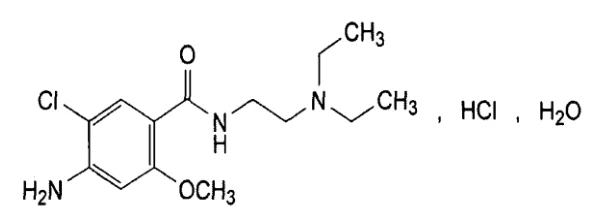
Molecular formula: C14H22ClN3O2. HCl. H2O
Molecular Weight: 354.3 g/mol
Description: White or almost white crystalline powder or crystals. Very soluble in water, freely soluble in ethanol (96%), sparingly soluble in methylene chloride. Melting point is 183°C.
Comparative Bioavailability Studies
A double blind, balanced, randomized, two-way, single dose, crossover comparative bioavailability study of MAR-METOCLOPRAMIDE 5 mg tablets (Marcan Pharmaceuticals Inc.) with PrMETONIATM 5 mg tablets (PENDOPHARM, Division of Pharmascience Inc.) was conducted in healthy, adult, male subjects under fasting conditions. Comparative bioavailability data from the 30 subjects that were included in the statistical analysis are presented in the following table:
SUMMARY OF THE COMPARATIVE BIOAVAILABILITY DATA
Metoclopramide (1 x 5 mg) Geometric mean Arithmetic Mean (CV %) | ||||
|---|---|---|---|---|
| Parameter | Test1 | Reference2 | % Ratio of Geometric Means | 90% Confidence Interval |
AUCT (ng∙hr/mL) | 129.87 133.42 (25.40) | 123.03 126.77 (25.91) | 105.6 | 102.2 – 109.0 |
AUCI (ng∙hr/mL) | 142.63 147.36 (28.06) | 134.75 139.44 (27.69) | 105.9 | 102.0 – 109.8 |
Cmax (ng/mL) | 21.59 22.18 (23.78) | 20.63 21.24 (25.09) | 104.7 | 98.5 – 111.2 |
| Tmax3 (hr) | 0.83 (0.67 – 2.00) | 0.83 (0.33 – 1.33) | ||
| T1/24 (hr) | 7.39 (19.92) | 7.51 (17.17) | ||
1 MAR-METOCLOPRAMIDE (metoclopramide) tablets, 5 mg (Marcan Pharmaceuticals Inc.)
2 PrMETONIATM (metoclopramide) tablets, 5 mg (PENDOPHARM, Division of Pharmascience Inc., Canada).
3Expressed as median (range) only
4Expressed as the arithmetic mean (CV%) only
DETAILED PHARMACOLOGY
Metoclopramide is a dopamine antagonist which appears to block preferentially the D-2 (non- adenylate cyclase linked) receptors.
In the rat, metoclopramide antagonizes apomorphine-induced stereotype, causes catalepsy, elevates prolactin, aldosterone and plasma renin levels, and enhances dopamine turnover in mesolimbic and striatal structures.
Metoclopramide antagonizes in vitro the dopamine-induced inhibition of potassium-evoked 3H acetylcholine release in striatal structures. In the rat, parenteral administration of metoclopramide decreases striatal acetylcholine levels. The extrapyramidal side effects caused by metoclopramide and other neuroleptics may be a consequence of this action.
Oral administration of metoclopramide to rats for 39 days induced behavioural supersensitivity to apomorphine and enhanced specific binding of 3H-spiroperidol to striatal membranes. These effects are induced by other neuroleptic drugs, and are associated with a potential to elicit tardive dyskinesia in man.
In experimental animals, metoclopramide enhances gastrointestinal motility, increasing both resting muscle tension and the amplitude of peristaltic movements. Metoclopramide also is a potent antagonist of vomiting induced by apomorphine, hydergine, tetrodotoxin and copper sulfate. Its mechanism of action appears to be by blockade of dopamine receptors in the chemoreceptor trigger zone. In the cat, spontaneous electrical discharges from this zone are stimulated by apomorphine and abolished by metoclopramide.
Metoclopramide is virtually inactive as an antagonist at the D-1 (adenylate cyclase linked) dopamine receptors, and is without potency in displacing radiolabeled ligands in receptor models designed to evaluate antipsychotic potential.
In the rat, intraventricular administration of metoclopramide and spiroperidol produce comparable dose-dependent depression of responding in electrical self-stimulation procedures. When administered by the intraperitoneal route, the potency of metoclopramide, but not that of spiroperidol, is decreased by a factor of 30.
TOXICOLOGY
Acute toxicity
| Animal species | Sex | Oral LD50 (and 95% probability inclusive of the 20% confidence limits) mg/kg |
| Albino mice* | F M Combined | 660 (410-1063) 385 (332-446) 390 (361-421) |
| Albino rats ** | F M Combined | 550 (327-924) 1000 (713-1402) 830 (699-986) |
* 14 groups, each with 5 animals/sex were treated with the test article at logarithmically spaced doses ** 6 groups, each with 5 animals/sex were treated with the test article at logarithmically spaced doses | ||
Mortality generally occurred over a 4-hour period post-dosing in mice and a 24-hour period in rats. Systemic toxicity was generally characterized by lethargy and reduced motor activity in mice and rats and dyspnea, occasional tremor, twitching, pupillary dilatation, piloerection, hunching of the back, red lacrimation and epistaxis in rats.
Necropsy of these animals generally revealed reddening or darkening of liver and/or lungs in mice and rats and darkening of kidneys in rats. Several animals in the rat study showed distention of the stomach and/or intestines with red or yellow-red viscous material. In many cases, there was external evidence of perineal staining, epistaxis, lacrimation and/or ptyalism. Animals killed routinely at the conclusion of the study generally revealed no visible abnormality, although in a few mice darkening of lungs, spleen and/or liver was noted.
Subacute and Chronic Toxicity
In rats, which received metoclopramide in the diet, at levels of 10, 20 and 40 mg/kg for 77 weeks, gross weights were decreased in the mid- and high-dose groups. In purebred beagles which received 10, 20 or 40 mg/kg/day for 5 days a week for 54 weeks, miosis and fine and coarse tremors were seen in all drug-treated animals. Sedation and/or hyperactivity occurred occasionally. Tolerance did not develop. In general, the signs observed at all drug levels lasted approximately 3 to 5 hours after dosing. The severity increased gradually during the first 2 months of the study, then remained fairly constant until the end of the study. Frequent swallowing, panting and ptyalism occurred. There was a slight decrease of body weight and food consumption.
In a drug interaction study, rabbits were pre-treated intramuscularly with either saline or phenylzine 15 mg/kg of body weight. (This dose of the MAO inhibitor is lethal in about 40% of rabbits). Twenty hours later, metoclopramide was administered intravenously at doses of 3.75, 7.50 and 15 mg/kg. Saline pre-treated rabbits showed only minimal symptomatology at the low- and mid-dose of metoclopramide; each of these doses of metoclopramide was lethal in 3 of 5 animals in phenylzine pre-treated rabbits. The high-dose metoclopramide was lethal in 2 of 5 of the saline pre-treated, and in 5 of 5 of the phenylzine pre-treated rabbits. Thus, pre-treatment with phenylzine appeared to potentiate the toxicity of metoclopramide.
Reproduction studies in mice and rats dosed orally with 1, 5 or 10 mg/kg from day 1 to day 17 or 18 of gestation, respectively, disclosed no abnormalities and no effects of metoclopramide on fetal size and fetal weight.
Rabbits of the Fauve de Bourgogne strain were dosed orally with 10 or 20 mg metoclopramide from day 1 to day 25 of gestation. There was an apparent reduction in litter size in the group treated with 10 mg/kg. No effects were observed in young delivered spontaneously and raised to weaning. New Zealand albino rabbits received 5, 10 or 20 mg of metoclopramide/day in capsules from the 8th to 16th day of gestation. Offspring were delivered by caesarean section on day 29 or
- 30. Metoclopramide did not cause any adverse effects.
REFERENCES
- 1. Alander T, Anden N-E, Grabowska-Anden M. Metoclopramide and sulpiride as selective blocking agents of pre- and postsynaptic dopamine receptors. Naunyn- Schmiedeberg's Arch Pharmacol 1980; 312: 145-150.
- 2. Albibi R, McCallum RW. Metoclopramide: pharmacology and clinical application. Ann Intern Med 1983; 98: 86-95.
- 3. Bar J. A propos d'une tentative de suicide sans conséquence fâcheuse avec le métoclopramide. Thérapie 1966; 21: 349-352.
- 4. Bateman DN. Clinical pharmacokinetics of metoclopramide. Clin Pharmacokinet 1983; 8: 523-529.
- 5. Bateman DN, Gokal R, Dodd TRP, Blain PG. The pharmacokinetics of single doses of metoclopramide in renal failure. Eur J Clin Pharmacol 1981; 19: 437- 441.
- 6. Brown RD, Wisgerhof M, Jiang N-S, Kao P, Hegstad R. Effect of metoclopramide on the secretion and metabolism of aldosterone in man. J Clin Endocrinol Metab 1981; 52: 1014-1018.
- 7. Carey RM, Thorner MO, Ortt EM. Dopaminergic inhibition of metoclopramide- induced aldosterone secretion in man. Dissociation of responses to dopamine and bromocriptine. J Clin Invest 1980; 66: 10-18.
- 8. Casteels-Van Daele M, Jaeken J, Van der Schueren P, Zimmerman A, Van den Bon P. Dystonic reactions in children caused by metoclopramide. Arch Dis Child 1970; 45: 130- 133.
- 9. Diamond MJ, Keeri-Szanto M. Reduction of postoperative vomiting by preoperative administration of oral metoclopramide. Canad Anaesth Soc J 1980; 27: 36-39.
- 10. Grimes JD, Hassan MN, Preston DN. Adverse neurological effects of metoclopramide. Can Med Assoc J 1982; 126: 23-25.
- 11. Guelrud M: Effect of intravenous metoclopramide on the incompetent lower esophageal sphincter. Am J Gastroenterol 1974; 61: 119-124.
- 12. Hancock BD, Bowen-Jones E, Dixon R, Dymock IW, Cowley DJ. The effect of metoclopramide on gastric emptying of solid meals. Gut 1974; 15: 462-467.
- 13. Herberg LJ, Wishart TB. Selective permeation of the blood-brain barrier as a cause of the anomalous properties of 'atypical' neuroleptics. Pharmacol Biochem Behavior 1980; 12: 871-873.
- 14. Johnson AG: The action of metoclopramide on the canine stomach, duodenum, and gall- bladder. Br J Surg 1969; 56: 696.
- 15. Kebabian JW, Calne DB. Multiple receptors for dopamine. Nature 1979; 277: 93-96.
- 16. Kreel L. The use of oral metoclopramide in the barium meal and follow-through examination. Br J Radiol 1970; 43: 31-35.
- 17. Lautin A, Wazer D, Stanley M, Rotrosen J, Gershon S. Chronic treatment with metoclopramide induces behavioral supersensitivity to apomorphine and enhances specific binding of 3H-spiroperidol to rat striata. Life Sci 1980; 27: 305-316.
- 18. Malagelada J-R. Gastric emptying disorders. Clinical significance and treatment. Drugs 1982; 24: 353-359.
- 19. McCallum RW, Sowers JR, Hershman JM, Sturdevant RAL. Metoclopramide stimulates prolactin secretion in man. Clin Res 1975; 23: 479A.
- 20. Nakra BRS, Bond AJ, Lader MH. Comparative psychotropic effects of metoclopramide and prochlorperazine in normal subjects. J Clin Pharmacol 1975; 15: 449-454.
- 21. Pearson MC, Edwards D, Tate A, Gilkes R, Saxton HM, Howland C. Comparison of the effects of oral and intravenous metoclopramide on the small bowel. Postgrad Med J 1973; 49 (Suppl 4): 47-50.
- 22. Pirola RC. Rapid duodenal intubation with metoclopramide. Am J Digest Dis 1967; 12: 913-915.
- 23. Product Monograph. APO-METOCLOP. Apotex Inc. Control number 174169. July 21, 2014.
- 24. Robinson OPW. Metoclopramide - side effects and safety. Postgrad Med J 1973; 49 (Suppl4): 77-80.
- 25. Rotrosen J, Stanley M, Lautin A, Wazer D, Gershon S. Discrimination of functionally heterogeneous receptor sub-populations: antipsychotic and antidopaminergic properties of metoclopramide. Psychopharmacol Bull 1981; 17: 110-113.
- 26. Tarsy D, Parkes JD, Marsden CD. Metoclopramide in parkinsonism. Lancet 1975; I: 1244-1245.
- 27. Product Monograph, PRMetoniaTM, PENDOPHARM, Division of Pharmascience Inc., Date of Revision: March 03, 2020