


Product Monograph - Mayzent
Recent Major Label Changes
| 7 Warnings and Precautions, Immune | 2026-08 |
|---|---|
| 7 Warnings and Precautions, Neoplasms | 2025-05 |
| 7 Warnings and Precautions, 7.1.1 Pregnancy [Removed] | 2026 08 |
Table of Contents
Certain sections or subsections that are not applicable at the time of the preparation of the most recent authorized product monograph are not listed.
Recent Major Label Changes ................................................................................................... 2
Table of Contents ................................................................................................................... 2
Part 1: Healthcare Professional Information ........................................................................... 5
1 Indications .................................................................................................................. 5
1.1 Pediatrics .............................................................................................................. 5
1.2 Geriatrics .............................................................................................................. 5
2 Contraindications ........................................................................................................ 5
4 Dosage and Administration ......................................................................................... 6
4.1 Dosing Considerations .......................................................................................... 6
4.2 Recommended Dose and Dosage Adjustment ..................................................... 8
4.4 Administration .................................................................................................... 10
4.5 Missed Dose ....................................................................................................... 10
5 Overdose................................................................................................................... 11
6 Dosage Forms, Strengths, Composition, and Packaging ............................................. 11
7 Warnings and Precautions ......................................................................................... 12
General ........................................................................................................................... 12
Carcinogenesis and Genotoxicity ................................................................................... 12
Cardiovascular ................................................................................................................ 12
Endocrine and Metabolism ............................................................................................ 15
Hepatic/Biliary/Pancreatic ............................................................................................. 16
Immune .......................................................................................................................... 16
Monitoring and Laboratory Tests ................................................................................... 20
Neoplasms ...................................................................................................................... 20
Neurologic ...................................................................................................................... 21
Ophthalmologic .............................................................................................................. 21
Psychiatric ...................................................................................................................... 22
Reproductive Health ...................................................................................................... 22
Respiratory ..................................................................................................................... 23
7.1 Special Populations ............................................................................................. 23
7.1.1 Pregnancy ....................................................................................................... 23
7.1.2 Breastfeeding ................................................................................................. 24
7.1.3 Pediatrics ........................................................................................................ 24
7.1.4 Geriatrics ........................................................................................................ 24
8 Adverse Reactions ..................................................................................................... 24
8.1 Adverse Reaction Overview ................................................................................ 24
8.2 Clinical Trial Adverse Reactions .......................................................................... 25
8.3 Less Common Clinical Trial Adverse Reactions ................................................... 29
8.4 Abnormal Laboratory Findings: Hematologic, Clinical Chemistry and Other Quantitative Data ........................................................................................................... 30
8.5 Post-Market Adverse Reactions ......................................................................... 30
9 Drug Interactions ...................................................................................................... 30
9.2 Drug Interactions Overview ................................................................................ 30
9.4 Drug-Drug Interactions ....................................................................................... 33
9.5 Drug-Food Interactions ....................................................................................... 33
9.6 Drug-Herb Interactions ....................................................................................... 33
9.7 Drug-Laboratory Test Interactions ...................................................................... 34
10 Clinical Pharmacology ............................................................................................... 34
10.1 Mechanism of Action .......................................................................................... 34
10.2 Pharmacodynamics ............................................................................................ 34
10.3 Pharmacokinetics ............................................................................................... 36
11 Storage, Stability, and Disposal ................................................................................. 39
Part 2: Scientific Information ................................................................................................ 40
13 Pharmaceutical Information ...................................................................................... 40
14 Clinical Trials ............................................................................................................. 40
14.1 Clinical Trials by Indication ................................................................................. 40
16 Non-Clinical Toxicology ............................................................................................. 44
Patient Medication Information ........................................................................................... 47
Part 1: Healthcare Professional Information
1 Indications
MAYZENT® (siponimod) is indicated for the treatment of patients with secondary progressive multiple sclerosis (SPMS) with active disease evidenced by relapses or imaging features characteristic of multiple sclerosis inflammatory activity, to delay the progression of physical disability.
MAYZENT should only be prescribed by neurologists who are experienced in the treatment of multiple sclerosis, and are knowledgeable of the efficacy and safety profile of MAYZENT and are able to discuss benefits/harms with patients.
1.1 Pediatrics
Pediatrics (< 18 years of age): No data are available to Health Canada; therefore, Health Canada has not authorized an indication for pediatric use.
1.2 Geriatrics
Geriatrics (≥ 65 years of age): Clinical studies of MAYZENT did not include patients over 65 years old. Therefore, it is not known whether the safety and efficacy differ in elderly patients compared to younger adults. Due to the greater frequency of reduced hepatic, renal, immune, pulmonary and cardiovascular function, other concomitant diseases and concomitant drug therapy, treatment with MAYZENT warrants caution and may necessitate additional or more frequent monitoring in patients 65 years of age and older.
2 Contraindications
Siponimod is contraindicated in:
- Patients who are hypersensitive to this drug, or to peanut or soya, or to any ingredient in the formulation, including any non-medicinal ingredient, or component of the container. For a complete listing, see 6 Dosage Forms, Strengths, Composition, and Packaging (see 7 Warnings and Precautions, General).
- Patients with a CYP2C9*3*3 genotype (see 7 Warnings and Precautions, Endocrine and Metabolism; and 10.3 Pharmacokinetics, Special Populations and Conditions – Genetic Polymorphism).
- Patients with increased risk of opportunistic infections, including those who are immunocompromised due to treatment (e.g., antineoplastic, immunosuppressive or immunomodulating therapies, total lymphoid irradiation or bone marrow transplantation) or disease (e.g., immunodeficiency syndrome).
- Patients with severe active infections including active bacterial, fungal or viral infections (e.g., hepatitis, tuberculosis), until resolution of the infection (see 7 Warnings and Precautions, Immune).
- Patients with known active malignancies, except localized basal cell carcinoma of the skin (see 7 Warnings and Precautions, Neoplasms).
Patients who in the last 6 months had myocardial infarction (MI), unstable angina pectoris, stroke/transient ischemic attack (TIA), decompensated heart failure (requiring inpatient treatment), or New York Heart Association Class III/IV heart failure (see 7 Warnings and
- Precautions, Cardiovascular).
- Patients with second degree Mobitz type II atrioventricular (AV) block, third degree AV block, or sick sinus syndrome, if they do not have a pacemaker (see 7 Warnings and Precautions, Cardiovascular).
- Women (including female adolescents) who are pregnant or of childbearing potential not using effective contraception. Pregnancy must be excluded before start of treatment as MAYZENT may cause fetal harm (see 7 Warnings and Precautions, Reproductive Health; and 7.1.1 Pregnancy).
4 Dosage and Administration
4.1 Dosing Considerations
Prior to initiating treatment with MAYZENT the following assessments should be done to guide patient selection and treatment:
CYP2C9 genotype
The CYP2C9 genotype has a significant impact on siponimod metabolism.
- Determine the CYP2C9 genotype of the patient to establish CYP2C9 metabolizer status. CYP2C9 genotyping prior to initiating treatment with siponimod will be offered by the manufacturer through its Patient Support Program.
- MAYZENT is contraindicated in patients with a CYP2C9*3*3 genotype (see 2 Contraindications; 7 Warnings and Precautions, Endocrine and Metabolism; and 10.3 Pharmacokinetics, Special Population and Conditions – Genetic Polymorphism).
- Dose adjustments are recommended for patients with CYP2C9*1*3 or a CYP2C9*2*3 genotype (see 4.2 Recommended Dose and Dosage Adjustment below; 9.2 Drug Interactions Overview, Pharmacokinetic interactions; and 9.4 Drug-Drug Interactions).
Immune system effects
MAYZENT causes a reduction in circulating lymphocyte counts to approximately 20% to 30% of baseline values via reversible retention in lymphoid organs and may increase the risk of infections. Prescribers should:
- Review a recent complete blood count (CBC) (i.e., within the last 6 months or after discontinuation of prior therapy) (see 7 Warnings and Precautions, Immune – Risk of Infections).
- Check varicella zoster virus (VZV) antibody status if there is no healthcare professional confirmed history of chicken pox or vaccination with varicella vaccine; VZV vaccination of antibody-negative patients is recommended, with a delay in treatment initiation for 1 month after vaccination to allow the full effect of vaccination to occur (see 7 Warnings and Precautions, Immune – Vaccination).
- Delay the start of MAYZENT in patients with severe active infection until resolved (see 2 Contraindications).
- Vaccination against human papilloma virus (HPV) should be considered before initiating treatment with MAYZENT (see 7 Warnings and Precautions, Immune – Risk of Infections).
Cardiac effects
Initiation of treatment with MAYZENT causes a transient decrease in heart rate and atrioventricular conduction delays. Prescribers should:
- Obtain an electrocardiogram (ECG) for all patients to determine whether pre-existing conduction abnormalities are present.
- Determine whether patients are taking concomitant medications that reduce heart rate or atrioventricular conduction (see 7 Warnings and Precautions, Cardiovascular - Bradyarrhythmia and Atrioventricular Conduction Delays; and 9.2 Drug Interactions Overview, Pharmacodynamic interactions).
- For patients with sinus bradycardia (heart rate (HR) <55 bpm), first or second-degree [Mobitz type I] atrioventricular block (AV block), or a history of myocardial infarction or heart failure (if not contraindicated), prepare to administer the first dose of MAYZENT in a clinical setting where they can be monitored for signs and symptoms of bradycardia, with hourly pulse and blood pressure measurements for at least 6 hours, and where symptomatic bradycardia can be managed (see 4.4 Administration).
- For patients with certain other pre-existing cardiac conditions, seek an evaluation from a cardiologist prior to initiating treatment, to assess suitability of treatment and to determine the most appropriate strategy for monitoring cardiac effects (see 7 Warnings and Precautions, Cardiovascular – Treatment initiation recommendations in patients with certain cardiovascular conditions).
- Use an up-titration scheme to help reduce cardiac effects when reaching the maintenance dose (see 4.2 Recommended Dose and Dosage Adjustment; 7 Warnings and Precautions, Cardiovascular; and 8.2 Clinical Trial Adverse Reactions, Bradyarrhythmia).
See 2 Contraindications and 7 Warnings and Precautions, Cardiovascular for more complete information regarding patients with certain cardiovascular conditions in which MAYZENT should not be used or may require additional monitoring.
Ophthalmologic evaluation
Patients with a history of diabetes mellitus, uveitis and underlying/co-existing retinal diseases are at increased risk of macular edema. It is recommended that patients with diabetes mellitus, uveitis or a history of retinal disorders undergo an ophthalmic evaluation prior to initiating MAYZENT therapy and during treatment (see 7 Warnings and Precautions, Ophthalmologic; and 8.2 Clinical Trial Adverse Reactions, Macular edema).
Liver function tests
Prescribers should obtain recent (i.e., within last 6 months) liver function test including transaminase and bilirubin levels prior to initiating treatment with MAYZENT (see 7 Warnings and Precautions, Hepatic/Biliary/Pancreatic).
Skin cancer
Skin cancers have been reported in patients treated with S1P modulators, including MAYZENT. Monitor for suspicious skin lesions before initiating treatment with MAYZENT, particularly in patients with risk factors for skin cancer (see 7 Warnings and Precautions, Neoplasms).
Pregnancy
MAYZENT is contraindicated in women (including female adolescents) who are pregnant or of childbearing potential not using effective contraception (see 7 Warnings and Precautions, Reproductive Health; and 7.1.1 Pregnancy).
A negative pregnancy test must be obtained before initiation of treatment in women of childbearing potential.
Current or prior medications
For patients taking antineoplastic, immunosuppressive, or immune-modulating therapies, including other disease modifying treatments for multiple sclerosis and corticosteroids, or if there is a history of prior use of such drugs, consider possible unintended additive immunosuppressive effects before initiating treatment with MAYZENT (see 7 Warnings and Precautions, Immune – Risk of Infections; and 7 Warnings and Precautions, Immune - Prior and concomitant treatment with immunosuppressive or immune-modulating therapies).
4.2 Recommended Dose and Dosage Adjustment
Treatment initiation
Treatment has to be initiated in all patients with a starter pack that lasts for 5 days (see 10.2 Pharmacodynamics, Heart rate and rhythm). The dose titration starts with 0.25 mg once daily on day 1 and day 2, followed by once daily doses of 0.5 mg on day 3 (two tablets of 0.25 mg), 0.75 mg on day 4 (three tablets of 0.25 mg), and 1.25 mg on day 5 (five tablets of 0.25 mg), to reach the maintenance dose of 2 mg* MAYZENT starting on day 6.
Table 1 - Dose titration regimen to reach MAYZENT maintenance dosage
| Titration | Titration dose | Titration regimen | Pack |
| Day 1 | 0.25 mg | 1 x 0.25 mg | |
| Day 2 | 0.25 mg | 1 x 0.25 mg | |
| Day 3 | 0.5 mg | 2 x 0.25 mg | STARTER |
| Day 4 | 0.75 mg | 3 x 0.25 mg | |
| Day 5 | 1.25 mg | 5 x 0.25 mg | |
| Day 6 | 2 mg* | 1 x 2 mg* | MAINTENANCE |
| *The recommended maintenance dose is 1 mg daily for patients with CYP2C9 *2*3 or *1*3 genotype (see CYP2C9 Genotypes below). | |||
During titration (when using the starter pack), the recommended daily dose should be taken once daily in the morning.
CYP2C9 Genotypes
In patients with a CYP2C9*2*3 or *1*3 genotype, the same starter pack should be used and treatment should be initiated as described above (see Table 1). On Day 6 the maintenance dose should be adjusted to 1 mg (see Maintenance Treatment below).
Maintenance treatment
The recommended maintenance dose of MAYZENT is 2 mg beginning on Day 6, taken once daily, at about the same time each day.
CYP2C9 Genotypes
For patients with a CYP2C9 *1*3 or *2*3 genotype, the recommended maintenance dose is 1 mg beginning on Day 6, taken once daily, at about the same time each day (see 7 Warnings and Precautions, Endocrine and Metabolism, and 10.3 Pharmacokinetics, Special Populations and Conditions – Genetic Polymorphism).
MAYZENT is contraindicated in patients with a CYP2C9*3*3 genotype (see 2 Contraindications; 7 Warnings and Precautions, Endocrine and Metabolism; and 10.3 Pharmacokinetics, Special Populations and Conditions – Genetic Polymorphism).
Table 2 - Recommended MAYZENT maintenance doses by CYP2C9 genotype
| CYP2C9 Genotype | Recommended maintenance dose |
|---|---|
| Extensive metabolizers | |
| CYP2C9*1*1 | 2 mg |
| CYP2C9*1*2 | 2 mg |
| Intermediate metabolizers | |
| CYP2C9*2*2 | 2 mg |
| CYP2C9*1*3 | 1 mg |
| Poor metabolizers | |
| CYP2C9*2*3 | 1 mg |
| CYP2C9*3*3 | Treatment is contraindicated |
Special populations
Renal impairment
No dose adjustments are required in patients with renal impairment (see 10.3 Pharmacokinetics, Special Populations and Conditions – Renal Insufficiency).
Hepatic impairment
No dose adjustments are required in patients with hepatic impairment (see 7 Warnings and Precautions, Hepatic/Biliary/Pancreatic; and 10.3 Pharmacokinetics, Special Populations and Conditions – Hepatic Insufficiency).
Pediatric patients (below 18 years)
The safety and efficacy of MAYZENT in children below the age of 18 have not been studied.
Geriatric patients (65 years or above)
The safety and efficacy of MAYZENT in geriatric patients, aged 65 years and over, have not been studied. Healthcare professionals who choose to treat geriatric patients should consider that treatment with MAYZENT, in the context of a greater frequency of other concomitant diseases and concomitant drug therapy, warrants caution.
4.4 Administration
MAYZENT tablets should be taken orally with or without food and swallowed whole with water.
Patients should be advised that MAYZENT remains in the blood for up to 10 days after the last dose. Residual pharmacodynamic effects, including decreased blood lymphocyte counts, may persist for up to 3 to 4 weeks after the last dose.
See 7 Warnings and Precautions, Monitoring and Laboratory Tests for recommendations regarding monitoring that should be performed during therapy with MAYZENT.
First-dose monitoring of MAYZENT
For patients with sinus bradycardia (heart rate (HR) <55 bpm), first or second-degree [Mobitz type I] atrioventricular block (AV block), or a history of myocardial infarction or heart failure (if not contraindicated):
- Obtain an ECG prior to dosing, and at the end of the 6-hour observation period.
- Monitor patients for signs and symptoms of bradycardia, with hourly pulse and blood pressure measurements.
- If symptoms of bradycardia or bradyarrhythmia or conduction related symptoms occur (e.g. atrioventricular block), initiate appropriate management, with continuous monitoring (e.g. continuous ECG monitoring) until the symptoms have resolved.
- Should a patient require pharmacological intervention during the first-dose observation period, continuous overnight monitoring (e.g. continuous ECG monitoring) in a medical facility should be instituted and the first-dose monitoring strategy should be repeated when the second dose of siponimod is administered.
Extended monitoring beyond 6 hours
Continued monitoring is required if any of the following abnormalities are present after 6 hours (in the presence or absence of symptoms), until the abnormality resolves:
- Heart rate at 6 hours post-dose is < 45 bpm;
- Heart rate at 6 hours post-dose is the lowest value post-dose, suggesting the maximum reduction in heart rate may not have occurred;
- ECG at 6 hours post-dose shows new onset second degree or higher AV block or QTc ≥500 msec.
4.5 Missed Dose
Re-initiation of therapy following treatment interruption during the dose titration phase
If a titration dose is missed on one day during the first 6 days of treatment (Day 1 to Day 6, from titration to the first day of the maintenance dose), treatment needs to be re-initiated with Day 1 of the titration regimen, using a new starter pack. When re-initiating treatment, first-dose monitoring must be completed in patients for whom monitoring is recommended (see 4.4 Administration).
Re-initiation of therapy following treatment interruption during the maintenance phase
If MAYZENT maintenance treatment is interrupted for 4 or more consecutive daily doses, treatment has to be re-initiated with Day 1 of the titration regimen, using a new starter pack (see 4.2 Recommended Dose and Dosage Adjustment - Treatment initiation). When re-initiating treatment, first-dose monitoring must be completed in patients for whom monitoring is recommended (see 4.4 Administration).
Treatment interruptions for up to 3 missed consecutive daily doses do not require re-titration and treatment should be continued at the maintenance dose level.
5 Overdose
Healthy subjects received siponimod as single doses (0.1 to 75 mg) or as multiple doses (0.25 to 20 mg). The single maximum tolerated dose was determined to be 25 mg based upon the occurrence of symptomatic bradycardia after single doses of 75 mg. The highest investigated multiple dose of 20 mg over 28 days was well tolerated (9 subjects receiving 100 mg on the last day of dosing and 5 subjects receiving up to 200 mg daily for a duration of 3 to 4 days). Some of the 9 subjects had asymptomatic mild to moderate transient elevations of liver function tests.
One patient (with a history of depression) took 84 mg siponimod. Aside from a slight elevation in liver transaminases, the patient did not experience any other adverse events from the overdose.
In patients with overdosage of MAYZENT, it is important to observe for signs and symptoms of bradycardia, which may include overnight monitoring in a medical facility. Regular measurements of pulse rate and blood pressure are required, and continuous ECG monitoring should be performed (see 7 Warnings and Precautions, Cardiovascular; and 10.2 Pharmacodynamics, Heart rate and rhythm).
There is no specific antidote to siponimod available. Neither dialysis nor plasma exchange would result in meaningful removal of siponimod from the body.
| For the most recent information in the management of a suspected drug overdose, contact your regional poison control centre or Health Canada’s toll-free number, 1-844 POISON-X (1-844-764-7669). |
|---|
6 Dosage Forms, Strengths, Composition, and Packaging
Table 3 - Dosage Forms, Strengths, and Composition
| Route of Administration | Dosage Form/ Strength/Composition | Non-medicinal Ingredients |
| Oral | Film-coated tablets / 0.25 mg, 1 mg and 2 mg siponimod | Colloidal silicon dioxide, crospovidone, glyceryl dibehenate, lactose monohydrate, microcrystalline cellulose. Tablet coating: iron oxide (red and black iron oxides for the 0.25 mg and 1 mg strengths, and red and yellow iron oxides for the 2 mg strength), lecithin (soya), polyvinyl alcohol, talc, titanium dioxide, xanthan gum |
Description
MAYZENT film-coated tablets are supplied as follows:
0.25 mg tablet: Pale red, round, biconvex, beveled-edged film-coated tablet with Novartis logo on one side and “T” on other side. Available in starter packs of 12 tablets (1 blister card of 12 tablets in a blister wallet), and in cartons of 60 (5 blister cards of 12 tablets) or 120 tablets (10 blister cards of 12 tablets).
1 mg tablet: Violet white, round, biconvex, beveled-edged film-coated tablet with Novartis logo on one side and “L” on other side. Available in cartons of 28 tablets (2 blister cards of 14 tablets).
2 mg tablet: Pale yellow, round, biconvex, beveled-edged film-coated tablet with Novartis logo on one side and “II” on other side. Available in cartons of 14 (1 blister card of 14 tablets) or 28 tablets (2 blister cards of 14 tablets).
7 Warnings and Precautions
General
MAYZENT tablets contain soya lecithin. Patients who are hypersensitive to peanut or soya should not take siponimod (see 2 Contraindications and 6 Dosage Forms, Strengths, Composition, and Packaging).
MAYZENT tablets contain lactose. Patients with rare hereditary problems of galactose intolerance, total lactase deficiency or glucose-galactose malabsorption should not take siponimod (see 2 Contraindications and 6 Dosage Forms, Strengths, Composition, and Packaging).
Carcinogenesis and Genotoxicity
See 16 Non-Clinical Toxicology. For specific neoplasm risks, see 7 Warnings and Precautions, Neoplasms.
Cardiovascular
Bradyarrhythmia and Atrioventricular Conduction Delays
Initiation of MAYZENT treatment results in a transient decrease in heart rate and atrioventricular conduction delays (see 10.2 Pharmacodynamics, Heart rate and rhythm).
See 4.1 Dosing Considerations for the cardiac assessments that should be performed before initiating treatment with MAYZENT. See 7 Warnings and Precautions, Monitoring and Laboratory Tests for the cardiac assessments that should be performed during therapy with MAYZENT.
In patients with certain cardiac conditions, first-dose monitoring is recommended and MAYZENT should therefore be administered in a clinical setting (see 4.1 Dosing Considerations and 4.4 Administration).
Reduction in Heart rate
After the first titration dose, the reduction in heart rate starts within an hour and the day 1 decline is maximal at approximately 3 to 4 hours. With continued up-titration, further heart rate decreases are seen on subsequent days with maximal decrease from day 1-baseline reached on day 5 to 6. The highest daily post-dose decrease in absolute hourly mean heart rate is observed on day 1 with the pulse declining, on average, 5 to 6 beats per minute (bpm). Post-dose declines on the following days are less pronounced. With continued dosing, heart rate starts increasing after day 6 and reaches placebo levels within 10 days after treatment initiation.
In the phase 3 clinical study in patients with SPMS, bradycardia adverse events (including bradycardia, sinus bradycardia and heart rate decreased) were reported for 6% of patients treated with MAYZENT and 2.6% on placebo during treatment initiation. Patients who experienced bradycardia were generally asymptomatic. Few patients experienced mild to moderate symptoms including dizziness or fatigue which resolved within 24 hours without intervention. Heart rates below 40 bpm were rarely observed (see 8.2 Clinical Trial Adverse Reactions, Bradyarrhythmia).
Atrioventricular Conduction Delays
Initiation of MAYZENT treatment has been associated with transient atrioventricular conduction delays that follow a similar temporal pattern as the observed decrease in heart rate during dose titration. In the phase 3 clinical trial in patients with SPMS, the atrioventricular conduction delays manifested in most cases as first-degree atrioventricular (AV) blocks (prolonged PR interval on electrocardiogram), which were reported in 5.1 % of patients treated with MAYZENT and 1.9 % of patients that received placebo at any time after the first dose during treatment initiation. Second degree AV blocks, usually Mobitz type I (Wenckebach) (Holter ECG/mobile cardiac telemetry), were reported at any time after the first dose during treatment initiation in 1.3% of patients treated with MAYZENT and 0.5% of patients that received placebo. The conduction abnormalities typically were transient, asymptomatic, resolved within 24 hours and were rarely serious or requiring treatment with atropine or discontinuation of MAYZENT treatment (see 8.2 Clinical Trial Adverse Reactions, Bradyarrhythmia).
QTc Prolongation
In a randomized, double-blind, parallel group, placebo- and positive-controlled multiple dose ECG assessment study in healthy adult subjects (92-95/group in the pharmacodynamic analysis), siponimod was upward titrated over days 1-5 to a therapeutic dose of 2 mg/day (Days 6-10), with subsequent upward titration over days 11-13 to a supratherapeutic dose of 10 mg/day (Days 14-18). Siponimod increased the placebo-corrected baseline-adjusted mean QTcF (ΔΔQTcF) with a maximum mean effect of 7.8 msec (90% CI 5.8, 9.9) on day 10 during treatment with the 2 mg dose and 7.2 msec (90% CI 4.7, 9.7) on day 18 during treatment with the 10 mg dose. For both doses, the maximum QTc prolongation effect occurred at 3 hours post-dose. Categorical analysis revealed no treatment-emergent QTc values above 480 msec and no QTc increases from baseline of more than 60 msec in these healthy subjects (see 10.2 Pharmacodynamics, Heart rate and rhythm).
Some drugs causing QTc prolongation have led to an increased risk of ventricular arrhythmias including torsade de pointes. Risk factors for torsade de pointes in the general population include, but are not limited to, the following: female gender; age ≥65 years; baseline prolongation of the QT/QTc interval; presence of genetic variants affecting cardiac ion channels or regulatory proteins, especially congenital long QT syndromes; cardiac disease (e.g., myocardial ischemia or infarction, congestive heart failure, cardiomyopathy, conduction system disease); history of arrhythmias; electrolyte disturbances (e.g., hypokalemia, hypomagnesemia, hypocalcemia) or conditions leading to electrolyte disturbances (e.g., persistent vomiting, eating disorders); and bradycardia. Hypokalemia, hypomagnesemia, and hypocalcemia should be corrected prior to MAYZENT administration. Particular care should be exercised when administering MAYZENT treatment to patients who are suspected to be at an increased risk of experiencing torsade de pointes during treatment with a QTc-prolonging drug.
When drugs that prolong the QTc interval are prescribed, healthcare professionals should counsel their patients concerning the nature and implications of the ECG changes, underlying diseases and disorders that are considered to represent risk factors, demonstrated and predicted drug-drug interactions, symptoms suggestive of arrhythmia, risk management strategies, and other information relevant to the use of the drug. Patients should be advised to contact their healthcare professional immediately to report any new chest pain or discomfort, changes in heartbeat, palpitations, dizziness, light-headedness, fainting, or changes in or new use of other medications.
Treatment initiation recommendations in patients with certain cardiovascular conditions
MAYZENT was not studied in patients who had:
- Myocardial infarction, unstable angina pectoris, stroke/transient ischemic attack, decompensated heart failure (requiring inpatient treatment), or New York Heart Association Class III/IV heart failure (see 2 Contraindications).
- Cardiac conduction or rhythm disorders, including complete left bundle branch block, sinus arrest or sino-atrial block, symptomatic bradycardia, sick sinus syndrome, Mobitz type II second degree AV block or higher grade AV block (either history or observed at screening), unless patient had a functioning pacemaker (see 2 Contraindications).
- Cardiac arrhythmias requiring treatment with Class Ia (e.g. disopyramide, procainamide) or Class III anti-arrhythmic drugs (e.g. amiodarone, sotalol). Class Ia and Class III anti-arrhythmic drugs have been associated with cases of torsades de pointes in patients with bradycardia.
- Significant QT prolongation (QTc greater than 500 msec).
MAYZENT should not be used in:
- Patients who in the last 6 months had myocardial infarction, unstable angina pectoris, stroke/transient ischemic attack, decompensated heart failure (requiring inpatient treatment), or New York Heart Association Class III/IV heart failure (see 2 Contraindications).
- Patients with second degree Mobitz type II atrioventricular (AV) block, third degree AV block, or sick sinus syndrome, if they do not have a pacemaker (see 2 Contraindications).
- Patients with arrhythmias requiring treatment with Class Ia (e.g. disopyramide, procainamide) or Class III anti-arrhythmic drugs (e.g. amiodarone, sotalol) during treatment initiation. MAYZENT should not be used concomitantly with these drugs during treatment initiation (see 9.2 Drug Interactions Overview, Pharmacodynamic interactions).
If treatment with MAYZENT is considered in the context of the following cardiac conditions, an evaluation from a cardiologist should be sought prior to initiating treatment, to assess suitability of treatment and to determine the most appropriate strategy for monitoring cardiac effects.
- Pre-existing significant QT prolongation (QTc >500 msec).
- Concurrent treatment with drugs that prolong the QTc interval. The use of MAYZENT with such drugs should be avoided because the risk of QTc interval prolongation is expected to be greater in patients who receive concomitant treatment with other drugs that prolong the QTc interval (see 9.2 Drug Interactions Overview, Pharmacodynamic interactions).
- A history of cardiac arrest with onset > 6 months prior to MAYZENT treatment initiation, cerebrovascular disease, uncontrolled hypertension or severe untreated sleep apnea. MAYZENT should not be used in these patients because significant bradycardia may be poorly tolerated.
- A history of recurrent syncope or symptomatic bradycardia.
Concurrent treatment with heart rate lowering drugs. Experience with MAYZENT is limited in patients receiving concurrent therapy with heart-rate lowering drugs, including but not limited to, beta blockers, calcium channel blockers (such as verapamil or diltiazem), cholinomimetics or other
- substances that may decrease heart rate (e.g. ivabradine or digoxin). Concomitant use of these substances during MAYZENT initiation may be associated with severe bradycardia and heart block. Because of the potential additive effect on heart rate, treatment with MAYZENT should generally not be initiated in patients who are concurrently treated with these substances.
Bradyarrhythmic effects are more pronounced when MAYZENT is added to beta-blocker therapy (see 9.2 Drug Interactions Overview, Pharmacodynamic interactions). For patients receiving a stable dose of beta-blocker, the resting heart rate should be considered before introducing MAYZENT treatment. If the resting heart rate is >50 bpm under chronic beta-blocker treatment, MAYZENT can be initiated. If resting heart rate is ≤50 bpm, initiation of treatment with MAYZENT is not recommended. Depending on the benefit-risk, the beta-blocker may be interrupted until the baseline heart-rate is >50 bpm. Treatment with MAYZENT can then be initiated and treatment with the beta-blocker can be re-initiated, after MAYZENT has been up-titrated to the target maintenance dose. If treatment with MAYZENT is considered in patients who are under chronic beta-blocker treatment, they should be monitored during treatment initiation according to procedures similar to those recommended above for patients with sinus bradycardia (heart rate (HR) <55 bpm), first or second-degree [Mobitz type I] atrioventricular block (AV block), or a history of myocardial infarction or heart failure (see 4.4 Administration).
If concomitant treatment with a drug that reduces heart rate is considered during initiation of treatment with MAYZENT, advice from a cardiologist should be sought regarding the switch to non-heart-rate lowering drugs or appropriate monitoring for treatment initiation because of the potential additive effect on heart rate reduction.
Blood pressure effects
Patients with hypertension that was not controlled by medication were excluded from clinical studies with siponimod.
In the phase 3 clinical study in patients with SPMS, treatment with siponimod resulted in an increase of systolic and diastolic blood pressure starting early after treatment initiation. The maximum effect on blood pressure was reached after approximately 6 to 12 months of treatment (average systolic maximum increase 3.7 mmHg, average diastolic maximum increase 1.2 mmHg) and remained stable thereafter with continued treatment. Treatment emergent hypertension was reported more frequently in patients treated with siponimod (12.6%) than on placebo (9.0%) (see 8.2 Clinical Trial Adverse Reactions). Blood pressure should be monitored during treatment with MAYZENT and managed appropriately.
Endocrine and Metabolism
Pharmacogenomics
Siponimod is metabolized mainly by CYP2C9 (see 10.3 Pharmacokinetics, Metabolism) and CYP2C9 genotype has a significant impact on siponimod metabolism (see 10.3 Pharmacokinetics, Special Populations and Conditions – Genetic Polymorphism).
Before initiating treatment with MAYZENT, patients should be genotyped for CYP2C9 to determine the CYP2C9 metabolizer status (see 2 Contraindications, 4.1 Dosing Considerations, and 10.3 Pharmacokinetics, Special Populations and Conditions – Genetic Polymorphism).
Hepatic/Biliary/Pancreatic
Liver function
Recent (i.e. within last 6 months) transaminase and bilirubin levels should be reviewed before initiation of treatment with MAYZENT. Multiple sclerosis patients with significant concomitant liver disease were excluded from clinical trials with MAYZENT.
In the phase 3 clinical study, transaminases and bilirubin were elevated in 10.1% of patients treated with MAYZENT compared to 3.7% that received placebo. Alanine aminotransferase (ALT) or aspartate aminotransferase (AST) three times the upper limit of normal (ULN) was observed in 5.6% of patients treated with MAYZENT 2 mg compared to 1.5% of patients receiving placebo. ALT or AST 5 times the ULN was observed in 1.4% of patients treated with MAYZENT and 0.5% of patients that received placebo. ALT or AST 8 times the ULN or 10 times the ULN was observed in 0.5% and 0.2% of patients receiving MAYZENT, respectively (see 8.2 Clinical Trial Adverse Reactions; and 8.4 Abnormal Laboratory Findings: Hematologic, Clinical Chemistry and Other Quantitative Data). In clinical trials, MAYZENT was discontinued if the elevation exceeded a 3-fold increase and the patient showed symptoms related to hepatic dysfunction or if the elevation exceeded a 5-fold increase and persisted for more than 2 weeks. Approximately 1% of patients treated with MAYZENT compared to none receiving placebo met one of these criteria and discontinued treatment in the phase 3 clinical study. Although the majority of elevations occurred within 6 months of initiating treatment, for some patients onset of liver transaminase elevations was observed as early as 1 month after initiating treatment with MAYZENT. However, onset of transaminase elevations was not limited to a specific period after treatment initiation. ALT and AST levels returned to normal levels within 1 to 3 months after discontinuation.
During treatment with MAYZENT, liver transaminases and bilirubin levels should be evaluated within the first 3 months after initiating treatment and periodically or as clinically indicated thereafter. For liver transaminase levels above 5 times the ULN, more frequent monitoring should be instituted, including serum bilirubin and alkaline phosphatase measurement. Treatment with MAYZENT should be interrupted with repeated confirmation of liver transaminases above 5 times the ULN and should only be re-initiated once liver transaminase levels have normalized.
Patients who develop symptoms suggestive of hepatic dysfunction, such as unexplained nausea, vomiting, abdominal pain, fatigue, anorexia, rash with eosinophilia or jaundice and/or dark urine during treatment, should have liver enzymes checked and MAYZENT should be discontinued if significant liver injury is confirmed.
There are no data to establish whether patients with pre-existing liver disease are at increased risk to develop elevated liver function test (LFT) values when taking MAYZENT. Caution should be exercised when using MAYZENT in patients with a history of significant liver disease (see 10.3 Pharmacokinetics, Special Population and Conditions – Hepatic Insufficiency).
Immune
Risk of Infections
A core pharmacodynamic effect of MAYZENT is a dose dependent reduction of peripheral lymphocyte count to 20 to 30% of baseline values, due to the reversible sequestration of lymphocytes in lymphoid tissues. The immune system effects of MAYZENT may increase the risk of infections, including serious and life-threatening infections, during treatment and for up to 1 month after discontinuation of treatment (see 8.2 Clinical Trial Adverse Reactions, Infections; and 10.2 Pharmacodynamics, Immune system).
Patients receiving MAYZENT should be instructed to promptly report symptoms of infections to their healthcare professional to facilitate early and effective diagnostic and therapeutic strategies. Suspension of treatment with MAYZENT should be considered if a patient develops a serious infection. Because residual pharmacodynamic effects, such as lowering effects on peripheral lymphocyte count, may persist for up to 3 to 4 weeks after discontinuation of MAYZENT, vigilance for infection should be continued throughout this period.
Assessments of CBC are also recommended periodically during treatment. Absolute lymphocyte counts <0.2 x 10⁹/L, if confirmed, should lead to dose reduction to 1 mg. In clinical studies the siponimod dose was reduced in patients with absolute lymphocyte counts <0.2 x 10⁹/L. Confirmed absolute lymphocyte counts <0.2 x 10⁹/L in a patient already receiving siponimod 1 mg should lead to interruption of siponimod therapy until the level reaches 0.6 x 10⁹/L when re-initiation of siponimod can be considered.
In the phase 3 clinical trial in patients with SPMS the overall rate of infections was similar between the patients treated with siponimod and those treated with placebo (49.0% vs. 49.1% respectively) but certain types of infections including, but not limited to, herpes infections, were more frequent in patients treated with siponimod (see Herpetic Infections below, and 8.2 Clinical Trial Adverse Reactions, Infections). Serious infections were reported in 2.9% of patients treated with siponimod and 2.5% of patients that received placebo.
Cryptococcal meningitis
Serious cases of cryptococcal meningitis (CM) have been reported with MAYZENT. Healthcare professionals should be vigilant for clinical symptoms or signs of CM. Patients with symptoms and signs of CM should undergo prompt diagnostic evaluation. MAYZENT treatment should be suspended until CM has been excluded. If CM is diagnosed, appropriate treatment should be initiated.
Herpetic Infections
Cases of herpes viral infection, including cases of meningitis or meningoencephalitis caused by varicella zoster virus (some of which were serious or disseminated), have occurred with MAYZENT at any time during treatment. Herpetic infections were reported in 4.6% of patients treated with MAYZENT and 3.0% of patients that received placebo in Study A2304. Herpes zoster infections, including two serious cases, were reported in 2.5% of patients treated with MAYZENT compared to 0.7% of patients that received placebo. One serious case of herpes zoster in a patient treated with siponimod involved an initial skin varicella zoster virus (VZV) infection that was later reactivated and disseminated to the CNS, leading to varicella zoster meningitis.
Healthcare professionals should be vigilant for clinical symptoms that may be suggestive of serious herpetic infections. For cases of disseminated herpes infection, treatment should follow current relevant guidelines.
Patients without a healthcare professional confirmed history of varicella (chickenpox) or without documentation of a full course of vaccination against VZV should be tested for antibodies to VZV before initiating MAYZENT (see Vaccination below).
Progressive Multifocal Leukoencephalopathy
Cases of progressive multifocal leukoencephalopathy (PML) have been reported for S1P receptor modulators, including MAYZENT, and other therapies for MS (multiple sclerosis), during postmarketing experience (see 8.5 Post-Market Adverse Reactions). PML is an opportunistic viral infection of the brain caused by the John Cunningham virus (JCV) that typically occurs in patients who are immunocompromised and may lead to death or severe disability. In some of the reported cases, PML has occurred in patients who were not previously treated with natalizumab, which has a known association with PML, and in patients who had not previously taken or were not concomitantly taking any immunosuppressive or immunomodulatory medications. The majority of cases of PML associated with S1P receptor modulators, including MAYZENT, have occurred in patients treated for at least 2 years. With another S1P modulator, the estimated risk of PML appears to increase with cumulative exposure over time. Healthcare professionals should be vigilant for clinical symptoms or MRI findings that may be suggestive of PML. If PML is suspected, MAYZENT treatment should be suspended until PML has been excluded. If confirmed, treatment with MAYZENT should be discontinued. Typical symptoms associated with PML are diverse, progress over days to weeks, and include progressive weakness on one side of the body or clumsiness of limbs, disturbance of vision, and changes in thinking, memory, and orientation leading to confusion and personality changes.
MRI findings suggestive of PML may be apparent before clinical signs or symptoms. Cases of PML, diagnosed based on MRI findings and the detection of JCV DNA in the cerebrospinal fluid in the absence of clinical signs or symptoms specific to PML, have been reported in patients treated with MS medications associated with PML. Therefore, monitoring with MRI for signs that may be consistent with PML may be useful, and any suspicious findings should lead to further investigation to allow for an early diagnosis of PML, if present. Before initiating treatment with MAYZENT, a recent MRI should be available. During routine MRI (in accordance with national and local recommendations), healthcare professionals should pay attention to PML suggestive lesions. Lower PML-related mortality and morbidity have been reported following discontinuation of another MS medication associated with PML in patients with PML who were initially asymptomatic compared to patients with PML who had characteristic clinical signs and symptoms at diagnosis. It is not known whether these differences are due to early detection and discontinuation of MS treatment or due to differences in disease in these patients.
Human papilloma virus
Human papilloma virus (HPV) infection, including papilloma, dysplasia, warts and HPV-related cancer, has been reported under treatment with another S1P receptor modulator during postmarketing experience. Due to the immunosuppressive properties of siponimod, vaccination against HPV should be considered prior to treatment initiation with MAYZENT taking into account vaccination recommendations (see 4.1 Dosing Considerations). Cancer screening, including Pap test, is recommended as per standard of care.
Vaccination
Patients without a healthcare professional confirmed history of chickenpox or without documentation of a full course of vaccination against VZV should be tested for VZV antibodies before initiating treatment with MAYZENT. A full course of vaccination for antibody-negative patients with varicella vaccine is recommended prior to commencing treatment with MAYZENT, following which initiation of treatment with MAYZENT should be postponed for 1 month to allow the full effect of vaccination to occur (see 8.2 Clinical Trial Adverse Reactions, Infections).
As with other drugs impacting the immune system, immunization recommendations for adults (routine and specific risk groups) from the Canadian Immunization Guide (https://www.canada.ca/en/public-health/services/publications/healthy-living/canadian-immunization-guide-part-3-vaccination-specific-populations.html) and local infectious disease experts should be considered when evaluating the need for other vaccinations, before commencing and during treatment with MAYZENT.
Live attenuated vaccines
The use of live attenuated vaccines should be avoided while patients are taking MAYZENT and for 4 weeks after stopping MAYZENT treatment (see 9.2 Drug Interactions Overview, Pharmacodynamic interactions – Vaccination).
Non-live attenuated vaccines
Non-live attenuated vaccines may be less effective if administered during MAYZENT treatment. This may be mitigated by discontinuing MAYZENT for 1 week prior and until up to 4 weeks after a planned vaccination. The decision whether to continue or pause the treatment with MAYZENT should be based on the benefit-risk assessment of the individual patient (see below Immune System Effects Following Discontinuation of MAYZENT; Neurologic, Increase in Disease Activity After Stopping MAYZENT; and 9.2 Drug Interactions Overview, Pharmacodynamic interactions - Vaccination). When MAYZENT maintenance treatment is interrupted for 4 or more consecutive daily doses, follow the dose titration and monitoring procedures for treatment initiation upon treatment re-initiation (see 4.2 Recommended Dose and Dosage Adjustment; and 4.4 Administration).
Prior and concomitant treatment with immunosuppressive or immune-modulating therapies
When switching to or from other disease modifying therapies with immunosuppressive or immune-modulating effects, the half-life and mode of action of MAYZENT and the other therapy must be considered to avoid unintended additive immunosuppressive effects while at the same time minimizing risk of disease reactivation. Caution is recommended when switching patients from long-acting therapies with immune effects such as ocrelizumab, natalizumab, teriflunomide or mitoxantrone.
Due to the characteristics and duration of alemtuzumab immune suppressive effects described in its Product Monograph, initiating treatment with MAYZENT after alemtuzumab is not recommended unless the benefits of MAYZENT treatment clearly outweigh the risks for the individual patient.
MAYZENT can generally be started immediately after discontinuation of beta interferon or glatiramer acetate.
MAYZENT has not been studied in combination with anti-neoplastic, immune-modulating or immunosuppressive therapies. Therefore, co-administration of anti-neoplastic, immune-modulating or immunosuppressive therapies is not recommended due to the risk of additive immune effects during such therapy and in the weeks following stopping administration of any of these drugs (see 9.2 Drug Interactions Overview, Pharmacodynamic interactions – Anti-neoplastic, immune-modulating or immunosuppressive therapies). For the same reason, corticosteroids should be co-administered with caution and specific decisions as to the dosage and duration of concomitant treatment should be based on clinical judgment. Co-administration of a short course of intravenous corticosteroids (up to 5 days) was permitted to treat relapses in the MS clinical trial protocols and, did not appear to increase the rate of infection in patients treated with siponimod in the phase 3 clinical trial of patients with SPMS.
Immune System Effects Following Discontinuation of MAYZENT
After stopping MAYZENT therapy in the setting of PML, monitor for development of immune reconstitution inflammatory syndrome (PML-IRIS) (see PML and IRIS (Immune Reconstitution Inflammatory Syndrome) below).
After stopping MAYZENT therapy siponimod remains in the blood for up to 10 days after the last dose. Starting other therapies during this interval will result in concomitant exposure to siponimod.
Lymphocyte counts typically return to the normal range (≥1 x 10⁹/L) in the majority of SPMS patients within 10 days of stopping therapy. Residual pharmacodynamic effects, including lowered peripheral lymphocyte count, may persist for up to 3 to 4 weeks after the last dose (see 10.2 Pharmacodynamics, Immune system). Use of immunosuppressants within this period may lead to an additive effect on the immune system and, therefore, caution should be applied 3 to 4 weeks after the last dose (see 9 Drug Interactions). Caution is also indicated when stopping siponimod therapy due to the risk of reactivation of the disease and a severe increase in disability (see 7 Warnings and Precautions, Neurologic - Increase in Disease Activity After Stopping MAYZENT).
PML and IRIS (Immune Reconstitution Inflammatory Syndrome)
Immune reconstitution inflammatory syndrome (IRIS) has been reported in patients treated with S1P receptor modulators, including MAYZENT, who developed PML and subsequently discontinued treatment. The time to onset of IRIS in patients with PML was generally within weeks to a few months after S1P receptor modulator discontinuation. IRIS presents as a worsening in neurological status that may be rapid, as a result of the sudden reconstitution of immune function. It can lead to serious neurological complications and may be fatal, and is often associated with characteristic changes on MRI. Monitoring for development of IRIS and appropriate treatment of the associated inflammatory reaction involving the brain should be undertaken.
Monitoring and Laboratory Tests
The following assessments should be done during treatment with MAYZENT.
- Monitor for signs and symptoms of infections regularly during treatment. Complete blood count should also be periodically monitored (see 7 Warnings and Precautions, Immune – Risk of Infections).
- Monitor for signs and symptoms of liver injury. See 7 Warnings and Precautions, Hepatic/Biliary/Pancreatic for detailed monitoring recommendations.
- Monitor for suspicious skin lesions regularly during treatment with MAYZENT, particularly in patients with risk factors for skin cancer (see 7 Warnings and Precautions, Neoplasms).
- An ophthalmic evaluation should be performed 3-4 months after treatment initiation in all patients, and at any time in any patient complaining of visual disturbances. Patients with diabetes mellitus or a history of uveitis are at increased risk for macular edema and should have regular ophthalmic evaluations while receiving MAYZENT (see 7 Warnings and Precautions, Ophthalmologic).
- Monitor blood pressure regularly in all patients (see 7 Warnings and Precautions, Cardiovascular – Blood pressure effects).
Neoplasms
For patients treated with immunosuppressive or immune-modulating drugs, including S1P receptor modulators, there is potential for an increased risk of malignancies, particularly of the skin. In the phase 3 clinical trial of patients with SPMS, basal cell carcinoma (BCC) was reported with a similar incidence in patients treated with MAYZENT (1.1%) and patients that received placebo (1.3%). For squamous cell carcinoma (SCC) related events (SCC, SCC in situ/Bowen’s disease) the incidence in the phase 3 study was also similar for MAYZENT-treated patients (0.2%) and for patients that received placebo (0.2%). Other skin malignancies, including malignant melanoma in situ (0.2%), were reported only in patients treated with MAYZENT. With longer exposure in open-label extension studies additional cases of BCC, SCC (including SCC in situ/Bowen’s disease) and malignant melanoma have been reported in MAYZENT-treated patients. Vigilance for cutaneous neoplasms is recommended in patients treated with MAYZENT.
Healthcare professionals and patients are advised to monitor for suspicious skin lesions before initiating treatment with MAYZENT and regularly during treatment, particularly for patients with risk factors for skin cancer. If a suspicious lesion is observed, it should be evaluated promptly.
Since there is a potential risk of malignant skin growths, patients treated with MAYZENT should be cautioned against exposure to sunlight and ultraviolet light without protection, and advised to wear protective clothing and use sunscreen with a high protection factor. Patients should not receive concomitant phototherapy with UV-B radiation or PUVA-photochemotherapy.
Neurologic
Posterior Reversible Encephalopathy Syndrome (PRES)
Rare cases of posterior reversible encephalopathy syndrome (PRES) have been reported for another S1P receptor modulator. Such events have not been reported for MAYZENT in the development program. However, should a patient on MAYZENT treatment develop any unexpected neurological or psychiatric symptoms/signs (e.g. cognitive deficits, behavioral changes, cortical visual disturbances or any other neurological cortical symptoms/signs) or any symptom/sign suggestive of an increase of intracranial pressure or accelerated neurological deterioration, the healthcare professional should promptly schedule a complete physical and neurological examination and should consider a magnetic resonance imaging (MRI). Symptoms of PRES are usually reversible but may evolve into ischemic stroke or cerebral hemorrhage. Delay in diagnosis and treatment may lead to permanent neurological sequelae. If PRES is suspected MAYZENT should be discontinued.
Seizures
Caution should be exercised when administering MAYZENT to patients with pre-existing seizure disorder. In the phase 3 clinical trial in adult patients with SPMS, cases of seizures (combined events of seizure, partial seizure, generalized tonic-clonic seizure, myoclonic epilepsy and epilepsy), were reported more frequently in patients treated with MAYZENT compared to those that received placebo (see 8.2 Clinical Trial Adverse Reactions, Seizures). It is not known whether these events were related to the effects of MS alone, to MAYZENT, or to a combination of both.
Increase in Disease Activity After Stopping MAYZENT
Severe exacerbation of disease, including disease rebound, has been reported rarely, during postmarketing experience, after discontinuation of MAYZENT. Therefore, caution is indicated when stopping MAYZENT therapy. Patients should be observed for a severe exacerbation or increase in disability upon discontinuation of MAYZENT and appropriate treatment should be instituted as required.
Ophthalmologic
Macular edema
Macular edema with or without visual symptoms was more frequently reported in patients treated with siponimod (1.8%) compared to placebo (0.2%) in the phase 3 clinical study. The majority of cases occurred within the first 3 to 4 months of therapy but, cases of macular edema have also occurred during longer term treatment (see 8.2 Clinical Trial Adverse Reactions, Macular edema). For some patients macular edema was associated with symptoms of blurred vision or decreased visual acuity but others were asymptomatic and only diagnosed on routine ophthalmic evaluation. An ophthalmic evaluation of the fundus, including the macula, is recommended 3 to 4 months after treatment initiation and, at any time patients report visual disturbances while on MAYZENT therapy.
Continuation of MAYZENT therapy in patients with macular edema has not been evaluated. Recurrence of macular edema upon rechallenge with siponimod is likely to occur (see 8.2 Clinical Trial Adverse Reactions, Macular edema). A decision on whether or not MAYZENT should be discontinued needs to take into account the potential benefits and risks for the individual patient.
Macular edema in patients with a history of uveitis or diabetes mellitus
Patients with a history of diabetes mellitus, uveitis or underlying/co-existing retinal diseases are at increased risk of macular edema and require careful assessment before initiating treatment and during treatment with MAYZENT. In the phase 3 clinical study of adult patients with SPMS, 43 patients treated with MAYZENT and 18 patients that received placebo had uveitis, a history of macular edema or diabetes mellitus; macular edema was reported in 4 of the 43 patients (9.3%) treated with MAYZENT and none of the patients that received placebo. It is recommended that patients with diabetes mellitus, uveitis or a history of retinal disorders undergo an ophthalmic evaluation prior to initiating MAYZENT therapy and have regular follow-up evaluations while receiving MAYZENT therapy.
Psychiatric
Suicidal ideation and suicidal behavior
Suicidal ideation and suicidal behavior were reported as adverse events more frequently in patients treated with MAYZENT than in patients that received placebo in the phase 3 clinical trial of patients with SPMS. In MAYZENT-treated patients suicidal ideation and suicidal behavior were reported for 0.5% and 0.3% of patients, respectively, compared to 0.2% and 0%, respectively, in patients that received placebo. Pre-existing depression was reported in the majority of cases. Worsening of serious suicidal ideation and new serious suicidal ideation as captured by the Columbia Suicide Severity Rating Scale (C-SSRS), category 4 or 5*, compared to baseline recent history was reported more frequently for patients on MAYZENT (worsening serious suicidal ideation 1.4% siponimod, 0.4% placebo; new serious suicidal ideation 1.1% siponimod, 0.2% placebo).
Patients, families and caregivers of patients being treated with MAYZENT should be advised to monitor for the emergence of any symptoms of depression and/or suicidal ideation or suicidal behavior and to report such symptoms immediately to healthcare professionals for prompt evaluation.
*C-SSRS Baseline recent history is defined as up to 24 months prior to baseline visit. C-SSRS suicidal ideation categories: 1 = Wish to be dead, 2 = non-specific active suicidal thoughts, 3 = Active suicidal ideation with any methods (not plan) without intent to act, 4 = Active suicidal ideation with some intent to act without specific plan, 5 = Active suicidal ideation with specific plan and intent
Reproductive Health
Women of childbearing potential/Contraception: MAYZENT is contraindicated in women (including female adolescents) who are pregnant or of childbearing potential not using effective contraception (see 2 Contraindications). Therefore, before initiation of treatment in women of childbearing potential, a negative pregnancy test must be available and counselling should be provided regarding the serious risk to the fetus. Women (including female adolescents) of childbearing potential should be advised that animal studies have shown that siponimod is harmful to the developing fetus. Women of childbearing potential must use effective contraception (methods that result in less than 1% pregnancy rates) to avoid pregnancy during treatment and for at least 10 days after stopping treatment with MAYZENT, since it takes approximately 10 days for siponimod to be eliminated from the body after stopping treatment and potential risks to the fetus may persist during this time. If a woman becomes pregnant while taking this drug, the patient must be informed of the risk to the fetus.
Fertility
There are no data with MAYZENT on fertility in humans.
Siponimod had no effect on male reproductive organs in rats and monkeys or fertility parameters in rats (see 16 Non-Clinical Toxicology, Fertility).
Respiratory
Pulmonary assessments during the phase 3 clinical trial in patients with SPMS indicated that MAYZENT treatment is associated with small reductions in forced expiratory volume in 1 second (FEV1) and in diffusing capacity of the lung for carbon monoxide (DLCO) values. In the phase 3 clinical trial in patients with SPMS a consistent, small, but statistically significant, mean reduction in FEV1 of 63-88 mL was observed in patients treated with MAYZENT compared to those on placebo between Months 3-24. Siponimod had similar effects on pulmonary function tests in the patients with mild or moderate asthma or chronic obstructive pulmonary disease that were included in the phase 3 clinical trial. Five patients treated with MAYZENT, compared to none receiving placebo in the phase 3 clinical trial, had decreases in pulmonary function tests that led to discontinuation of treatment (see 8.2 Clinical Trial Adverse Reactions, Respiratory effects; and 10.2 Pharmacodynamics, Pulmonary function). There is insufficient information to determine the reversibility of the decreases after treatment discontinuation.
Spirometric evaluation of respiratory function, including DLCO, should be performed during treatment with MAYZENT if clinically indicated.
7.1 Special Populations
7.1.1 Pregnancy
MAYZENT is contraindicated in women (including female adolescents) who are pregnant or of childbearing potential and not using effective contraception (see 2 Contraindications).
There are no adequate and well-controlled studies with MAYZENT in pregnant women to inform a drug-associated risk of adverse developmental outcomes. Clinical experience (post-marketing data and pregnancy registry information) suggests that use of another S1P receptor modulator is associated with an increased risk of overall major congenital malformation when administered during pregnancy in comparison with the prevalence observed in the general population. The pattern of malformation reported with the other S1P receptor modulator is similar to that observed in the general population, with an increase in the prevalence of congenital heart disease (e.g., atrial septal defects), renal abnormalities, and musculoskeletal abnormalities.
Based on animal data and its mechanism of action MAYZENT can cause fetal harm when administered to a pregnant woman. Reproductive and developmental studies in pregnant rats and rabbits have demonstrated siponimod induced embryotoxicity and fetotoxicity in rats and rabbits and teratogenicity in rats. Increased incidences of post-implantation loss and fetal abnormalities (external, urogenital, visceral and skeletal) were observed in rat following prenatal exposure to siponimod at the lowest dose tested, which was less than the human therapeutic dose, based on body weight. Embryo-fetal deaths, abortions and fetal variations (skeletal and visceral) were observed in rabbit following prenatal exposure to siponimod starting at a dose 1.7 times the exposure in humans at the therapeutic dose (2 mg/day), based on AUC (see 16 Non-Clinical Toxicology, Reproductive and Development Toxicology).
Pregnant women should be advised of a potential risk to the fetus if MAYZENT is used during pregnancy or if the patient becomes pregnant while taking this medicinal product. Because it takes approximately 10 days for siponimod to be eliminated from the body after stopping treatment, MAYZENT must be discontinued at least 10 days before planning a pregnancy. Medical advice should be given regarding the risk of harmful effects on the fetus associated with treatment and medical follow-up examination should be performed (e.g. ultrasonography examination). The possibility of severe exacerbation of disease should be considered in females discontinuing MAYZENT because of pregnancy or planned pregnancy (see 7 Warnings and Precautions, Neurologic - Increase in Disease Activity After Stopping MAYZENT).
7.1.2 Breastfeeding
It is not known if siponimod or its major metabolites are transferred to human milk. The effects of siponimod on the breastfed child or on milk production are not known. A study in lactating rats treated with siponimod showed excretion of siponimod and its metabolites in milk.
Since many drugs are transferred to human milk and because of the potential for adverse reactions in nursing infants from MAYZENT, a nursing woman should be advised on the potential risks to the child. Women receiving MAYZENT should not breastfeed.
7.1.3 Pediatrics
Pediatrics (< 18 years of age): The efficacy and safety of MAYZENT have not been evaluated in pediatric patients. MAYZENT is not indicated for treatment of patients under 18 years of age.
7.1.4 Geriatrics
Geriatrics (≥ 65 years of age): The safety and efficacy of MAYZENT in geriatric patients, aged 65 years and over, have not been studied. Healthcare professionals who choose to treat geriatric patients should consider that treatment with MAYZENT, in the context of a greater frequency of other concomitant diseases and concomitant drug therapy, warrants caution.
8 Adverse Reactions
8.1 Adverse Reaction Overview
A total of 1,737 multiple sclerosis (MS) patients have been treated with siponimod in doses of at least 2 mg daily. These patients were included in Study A2304, a Phase 3, randomized, double-blind, placebo-controlled study in patients with SPMS and Study A2201, a phase 2, randomized, double-blind, placebo-controlled study in patients with relapsing-remitting MS (RRMS). Study A2304 randomized 1,651 SPMS patients 2:1 to receive either MAYZENT 2 mg once daily or placebo. Median treatment duration was 18 months (range 0 to 37 months).
In Study A2304 66.7% of patients treated with siponimod and 59.0% of patients that received placebo completed the double-blind part of the study. Adverse events led to discontinuation of treatment for 8.5% of patients treated with siponimod and 5.1% that received placebo. The most common treatment emergent adverse events in the siponimod 2 mg group (incidence ≥10%) in Study A2304 were headache, hypertension, fall and liver function test elevations (combined terms).
8.2 Clinical Trial Adverse Reactions
Clinical trials are conducted under very specific conditions. The adverse reaction rates observed in the clinical trials, therefore, may not reflect the rates observed in practice and should not be compared to the rates in the clinical trials of another drug. Adverse reaction information from clinical trials may be useful in identifying and approximating rates of adverse drug reactions in real-world use.
Table 4 lists treatment emergent adverse events that occurred in greater than or equal to 1% of MAYZENT-treated patients and at greater than or equal to 1% higher rate than for placebo.
Table 4 - Treatment emergent adverse events reported in study A2304 during the core double-blind phase (occurring in greater than or equal to 1% of patients and reported for MAYZENT 2 mg at greater than or equal to 1% higher rate than for placebo)
| System organ class/preferred term | MAYZENT 2 mg (siponimod) N=1099 (%) | Placebo N=546 (%) |
|---|---|---|
| Blood and lymphatic system disorders | ||
| Lymphopenia* | 1.4 | 0.0 |
| Cardiac disorders | ||
| Bradycardia* | 6.2 | 3.1 |
| Atrioventricular block*(1st & 2nd degree) | 1.7 | 0.7 |
| Eye disorders | ||
| Macular edema* | 1.8 | 0.2 |
| Gastrointestinal disorders | ||
| Nausea | 6.8 | 3.5 |
| Diarrhea | 6.4 | 4.2 |
| General disorders and administration site conditions | ||
| Edema peripheral* | 8.1 | 4.4 |
| Asthenia | 2.5 | 1.5 |
| Infections and infestations | ||
| Herpes zoster* | 2.5 | 0.7 |
| Investigations | ||
| Liver function test increased* | 11.3 | 3.1 |
| Pulmonary function test decreased* | 1.6 | 0.5 |
| Musculoskeletal and connective tissue disorders | ||
| Pain in extremity* | 6.3 | 4.0 |
| Neoplasms benign, malignant and unspecified (incl. cysts and polyps) |
Description of selected treatment emergent adverse events
Infections
In the phase 3 clinical trial in patients with SPMS the overall rate of infections was comparable between the patients treated with siponimod and those treated with placebo (49.0% vs. 49.1% respectively). The overall rate of herpetic infections was greater in patients treated with MAYZENT than in those who received placebo in the phase 3 clinical trial (4.6% siponimod, 3% placebo). In patients treated with MAYZENT herpes zoster infections were the most frequently reported types of herpes infections (2.5% siponimod, 0.7% placebo). Cases of herpes viral infection, including cases of meningitis or meningoencephalitis caused by varicella zoster virus (some of which were serious or disseminated), have occurred with MAYZENT at any time during treatment. One serious herpes zoster infection in a patient treated with siponimod involved an initial skin varicella zoster virus (VZV) infection that was later reactivated and disseminated to the CNS, leading to varicella zoster meningitis.
Serious cases of cryptococcal meningitis have been reported with MAYZENT. See 7 Warnings and Precautions, Immune – Risk of Infections.
| Melanocytic nevus* | 5.0 | 2.9 |
|---|---|---|
| Nervous system disorders | ||
| Headache* | 15.2 | 13.9 |
| Dizziness | 6.8 | 4.8 |
| Seizure* | 1.7 | 0.4 |
| Tremor* | 1.6 | 0.5 |
| Vascular disorders | ||
| Hypertension* | 12.6 | 9.0 |
*Grouping of preferred terms (PTs) were considered for frequency determination: Bradycardia: bradycardia, sinus bradycardia, heart rate decreased Macular edema: macular edema, cystoid macular edema Edema peripheral: edema peripheral, joint swelling, peripheral swelling, fluid retention, swelling face Herpes zoster: herpes zoster, post-herpetic neuralgia, genital herpes, herpes zoster oticus and ophthalmic herpes zoster Liver function test increased: ALT increased, AST increased, GGT increased, blood alkaline phosphatase increased, hepatic enzyme increased, liver function test increased, hepatic function abnormal, liver function test abnormal, transaminases increased Pulmonary function test decreased: pulmonary function test decreased, carbon monoxide diffusion capacity decreased, forced expiratory volume decreased, total lung capacity decreased, forced vital capacity decreased Pain in extremity: pain in extremity, limb discomfort Melanocytic naevus: melanocytic naevus, dysplastic naevus, eye naevus Headache: headache, tension headache, sinus headache, cervicogenic headache, drug withdrawal headache, procedural headache Seizure: epilepsy, myoclonic epilepsy, seizure, partial seizure, generalized tonic-clonic seizure Tremor: tremor, head titubation, intention tremor Hypertension: hypertension, blood pressure increased, blood pressure systolic increased, blood pressure diastolic increased, essential hypertension | ||
Macular edema
Macular edema was reported more frequently in patients receiving siponimod (1.8%) than placebo (0.2%) in the phase 3 clinical study of patients with SPMS. The rate of treatment emergent macular edema was greater in patients who had uveitis, a history of macular edema, or diabetes mellitus and received siponimod (9.3%, 4/43 patients) compared to the rate in the overall study population (1.8%, 20/1099 patients).
Although the majority of cases of macular edema occurred within 3 to 4 months of commencing siponimod, cases were also reported in patients treated with siponimod for more than 6 to 12 months (see 7 Warnings and Precautions, Ophthalmologic). Some patients presented with blurred vision or decreased visual acuity, but others were asymptomatic and diagnosed on routine ophthalmic examination. The macular edema generally improved after drug discontinuation. In 4 of 10 patients with treatment emergent macular edema while on siponimod, macular edema recurred when siponimod was re-started after an interruption of treatment.
Bradyarrhythmia
Initiation of siponimod treatment results in a transient decrease in heart rate and may also be associated with atrio-ventricular conduction delays (see 7 Warnings and Precautions, Cardiovascular – Bradyarrhythmia and Atrioventricular Conduction Delays).
Approximately one-third of the patients included in the phase 3 clinical trial of patients with SPMS had one or more of the following cardiovascular conditions or risk factors, either in their medical history or ongoing: heart rate < 55 bpm; cardiac conduction disorders such as incomplete left bundle branch block or second degree AV block Mobitz type I (Mobitz I) as either history or observed at screening; certain electrocardiogram (ECG) findings at screening [PR interval >200 msec and ≤230 msec; QRS duration ≥120 msec; QTcF >430 msec and ≤450 msec (males); QTcF >450 msec and ≤470 msec (females)]; history of or current cardiac disease such as heart failure New York Heart Association (NYHA) class I, history of myocardial infarction prior to enrollment; treatment with beta-blockers; or, any other condition that had a potential for AV conduction suppression. Most patients in the study, regardless of their baseline cardiovascular status, were monitored closely during the first week of treatment initiation when the dose of MAYZENT was titrated from 0.25 mg/day on Day 1 to 2 mg/day on Day 6 (see 4.2 Recommended Dose and Dosage Adjustment). In-clinic monitoring on Days 1 and 7 included ECG (pre-dose and 3 and 6 hours post-dose) and pre-dose and hourly post-dose measurement of vital signs for 6 hours. Patients were also monitored outside the clinic during treatment initiation either by mobile cardiac telemetry (24 hours for 6 consecutive days, Days 1 through 6) or by Holter ECG (24 hours on Days 1 and 4, 6 hours on Day 7).
New heart rate less than 50 bpm or less than 40 bpm, at any time after the first dose during treatment initiation, was observed more frequently in patients treated with MAYZENT compared to those that received placebo. For patients with cardiac risk factors, 9.3% of MAYZENT-treated patients compared to 2.9% that received placebo had new heart rate less than 50 bpm; new heart rate less than 40 bpm during treatment initiation was reported for 0.6% treated with MAYZENT and none of the patients that received placebo. Among patients without cardiac conditions or risk factors, 4% of MAYZENT-treated patients compared to 0.3% on placebo had new heart rate less than 50 bpm; none of the patients without risk factors had new heart rate less than 40 bpm during treatment initiation.
On Day 1 treatment emergent adverse events of bradycardia, sinus bradycardia, heart rate decreased and bradyarrhythmias including conduction defects [first or second degree AV block (Mobitz I), ECG QT prolonged] were reported for 6.1% of the patients with cardiac risk factors who were treated with MAYZENT compared to 2.7% that received placebo in this subgroup. Among the patients without cardiac risk factors, 3.4% of MAYZENT-treated patients and 1.6% that received placebo had treatment emergent adverse events of bradycardia, sinus bradycardia, heart rate decreased and bradyarrhythmias including conduction defects [first or second degree AV block (Mobitz I)] on Day 1. In both cardiac subgroups the majority of events were reported as bradycardia.
Monitoring beyond 6 hours on Day 1 was required for 8.5% of patients treated with MAYZENT and 3.5% that received placebo among the patients with cardiac risk factors and for 9.2% of patients treated with MAYZENT and 4.3% that received placebo among the patients without cardiac risk factors. Low heart rate or decreasing heart rate were the most common reasons for extended monitoring in both patient subgroups.
Blood pressure
Treatment emergent adverse events of hypertension (includes hypertension, blood pressure increased, systolic blood pressure increased, diastolic blood pressure increased and essential hypertension) were reported more frequently in patients treated with siponimod (12.6%) than on placebo (9.0%) in the phase 3 clinical trial in patients with SPMS. Treatment with siponimod resulted in an increase of systolic and diastolic blood pressure starting early after treatment initiation, reaching maximum effect after approximately 6 to 12 months of treatment (systolic 3.7 mmHg, diastolic 1.2 mmHg) and staying stable thereafter. The effect on blood pressure persisted with continued treatment (see 7 Warnings and Precautions, Cardiovascular – Blood pressure effects).
Seizures
Cases of seizures (reported as seizure, partial seizure, tonic-clonic seizure, epilepsy and myoclonic epilepsy) were reported in 1.7% of patients treated with siponimod compared to 0.4% on placebo in the phase 3 clinical trial in patients with SPMS. It is not known whether these events were related to the effects of MS, to siponimod, or to a combination of both (see 7 Warnings and Precautions, Neurologic – Seizures).
Respiratory effects
Small reductions in forced expiratory volume in 1 second (FEV1) and in the diffusing capacity of the lung for carbon monoxide (DLCO) values were observed in patients treated with MAYZENT as early as one month after initiating treatment and persisted throughout treatment.
Absolute values below 80% of baseline at any visit were reported in 9.2% of patients on siponimod and 6.4% of patients on placebo for FEV1 and 21.7% of patients on siponimod compared to 10.9% of patients on placebo for DLCO. Absolute DLCO values below 80% of baseline at two consecutive visits were reported in 7.5% of patients treated with siponimod and 2.5% on placebo. Cough and dyspnea adverse events were reported at similar rates in patients treated with MAYZENT and patients that received placebo but treatment emergent adverse events of asthma were reported more frequently in MAYZENT-treated patients (0.4% MAYZENT, 0.2% placebo). Five patients (0.5%) treated with MAYZENT, compared to none receiving placebo, had decreases in pulmonary function tests that led to discontinuation of treatment during the phase 3 clinical trial (see 7 Warnings and Precautions, Respiratory; and 10.2 Pharmacodynamics, Pulmonary function).
Neoplasms
Cutaneous neoplasms including basal cell carcinoma, malignant melanoma and squamous cell carcinoma were reported in patients treated with MAYZENT (see 7 Warnings and Precautions, Neoplasms).
Seminoma was reported in two patients (0.2%) treated with MAYZENT and none that received placebo during the phase 3 clinical trial in patients with SPMS.
Vascular events
Rare cases of cerebrovascular accident, transient ischemic attack, ischemic stroke, brainstem infarction and myocardial infarction, including some fatal cases, have been reported in multiple sclerosis patients treated with siponimod in clinical trials. The relationship to MAYZENT remains uncertain. In the phase 3 clinical trial of patients with SPMS, rare cases of peripheral arterial occlusive disease occurred in patients treated with siponimod.
8.3 Less Common Clinical Trial Adverse Reactions
The following is a list of treatment-emergent adverse events reported by patients treated with MAYZENT at any dose in MS placebo-controlled trials (n= 1334) at an incidence of < 1% in any treatment group but at an incidence of ≥ 0.3% higher in the 2 mg treatment group (n=1148) than placebo (n=607). Events that have already been included in Table 4 have been excluded. Although the events reported occurred during treatment with MAYZENT, they were not necessarily caused by MAYZENT.
Events are listed by system organ class in decreasing order of incidence in MAYZENT-treated patients.
Blood and lymphatic system disorders: leukopenia, thrombocytopenia
Endocrine disorders: hypothyroidism
Eye disorders: eyelid oedema
Gastrointestinal disorders: abdominal discomfort, gastro-oesophageal reflux disease, aphthous ulcer, abdominal distension
General disorders and administrations site conditions: chills
Hepatobiliary disorders: hepatic steatosis
Infections and infestations: fungal skin infection, gastrointestinal infection, laryngitis, hordeolum, tooth abscess, tinea versicolor, herpes virus infection, appendicitis, nasal herpes
Injury, poisoning and procedural complications: rib fracture, accidental overdose, ankle fracture, eye contusion, road traffic accident
Investigations: blood bilirubin increased
Metabolism and nutrition disorders: decreased appetite, vitamin B12 deficiency
Musculoskeletal and connective tissue disorders: spinal pain
Neoplasms benign, malignant and unspecified (incl cysts and polyps): fibrous histiocytoma
Psychiatric disorders: major depression, nervousness, suicidal behavior
Renal and urinary disorders: dysuria, bladder dysfunction, hypertonic bladder
Reproductive system and breast disorders: amenorrhoea
Skin and subcutaneous tissue disorders: alopecia, urticaria, night sweats, decubitus ulcer, dermatitis atopic
Vascular disorders: varicose vein
8.4 Abnormal Laboratory Findings: Hematologic, Clinical Chemistry and Other Quantitative Data
Clinical Trial Findings
Liver function
Increased hepatic enzymes (mostly ALT elevation) have been reported in MS patients treated with siponimod. In the phase 3 trial in patients with SPMS, liver function test increases were more frequently observed in patients treated with siponimod (11.3%) than in those on placebo (3.1%), mainly due to liver transaminase (ALT/AST/GGT) elevations. Although the majority of elevations occurred within 6 months of starting treatment, onset was not limited to a specific period after treatment initiation. ALT levels returned to normal within 1 to 3 months after discontinuation of siponimod (see 7 Warnings and Precautions, Hepatic/Biliary/Pancreatic).
8.5 Post-Market Adverse Reactions
Infections and infestations: Progressive multifocal leukoencephalopathy (see 7 Warnings and Precautions, Immune – Risk of Infections).
Immune system disorders: Hypersensitivity reactions including rash, urticaria and angioedema.
9 Drug Interactions
9.2 Drug Interactions Overview
Pharmacodynamic interactions
Anti-neoplastic, immune-modulating or immunosuppressive therapies: MAYZENT has not been studied in combination with anti-neoplastic, immune-modulating or immunosuppressive therapies. Co-administration of anti-neoplastic, immune-modulating or immunosuppressive therapies is not recommended due to the risk of additive immune effects during such therapy and in the weeks following discontinuation of any of these drugs. Caution is recommended when switching patients from long-acting therapies with immune effects such as ocrelizumab, natalizumab, teriflunomide or mitoxantrone (see 7 Warnings and Precautions, Immune – Prior and concomitant treatment with immunosuppressive or immune-modulating therapies).
Co-administration of a short course of intravenous corticosteroids (up to 5 days) was permitted to treat relapses in the MS clinical trial protocols and, did not appear to increase the rate of infection in patients treated with siponimod during the phase 3 clinical trial of patients with SPMS. Patients should be reminded of the potential for increased risk of infection due to additive immune system effects of corticosteroids.
When switching to or from other disease modifying therapies with immunosuppressive or immune-modulating effects, the half-life and mode of action of MAYZENT and the other therapy must be considered to avoid unintended additive immunosuppressive effects while at the same time minimizing risk of disease reactivation.
Due to the characteristics and duration of alemtuzumab immune suppressive effects described in its Product Monograph, initiating treatment with MAYZENT after alemtuzumab is not recommended unless the benefits of MAYZENT treatment clearly outweigh the risks for the individual patient.
MAYZENT can generally be started immediately after discontinuation of beta interferon or glatiramer acetate.
Anti-arrhythmic Drugs and Other QTc-Prolonging Drugs: MAYZENT has not been studied in patients taking other QTc-prolonging drugs.
Because of potential additive effects on QTc interval prolongation (see 7 Warnings and Precautions, Cardiovascular – Bradyarrhythmia and Atrioventricular Conduction Delays; and 10.2 Pharmacodynamics, Heart rate and rhythm), treatment with MAYZENT should generally not be initiated in patients who are concurrently receiving Class Ia (e.g., disopyramide, procainamide) or Class III (e.g., amiodarone, sotalol) anti-arrhythmic drugs or other QTc-prolonging drugs. Class Ia and Class III antiarrhythmics were excluded from use in the multiple sclerosis clinical trials of MAYZENT. If treatment with MAYZENT is considered, advice from a cardiologist should be sought regarding the switch to non-QTc-prolonging drugs or appropriate monitoring (see 7 Warnings and Precautions, Cardiovascular – Treatment initiation recommendations in patients with certain cardiovascular conditions).
In addition to the Class Ia and Class III antiarrhythmic drugs, other drugs that have been associated with QTc interval prolongation and/or torsade de pointes include, but are not limited to, the examples found below. Chemical/pharmacological classes are listed if some, although not necessarily all, class members have been implicated in QTc prolongation and/or torsade de pointes:
Class 1c antiarrhythmics (e.g., flecainide, propafenone); antipsychotics (e.g., chlorpromazine, haloperidol); antidepressants (e.g., fluoxetine, tricyclic/tetracyclic antidepressants e.g., amitriptyline, imipramine, maprotiline); opioids (e.g., methadone); macrolide antibiotics and analogues (e.g., erythromycin, clarithromycin, tacrolimus); quinolone antibiotics (e.g., moxifloxacin, ciprofloxacin); antimalarials (e.g., quinine, chloroquine); azole antifungals (e.g., ketoconazole); domperidone; 5-HT3 receptor antagonists (e.g., ondansetron); kinase inhibitors (e.g., sunitinib); histone deacetylase inhibitors (e.g., vorinostat); beta-2 adrenoceptor agonists (e.g., salmeterol).
Current information sources should be consulted for more comprehensive lists of QTc-prolonging drugs.
Heart Rate-Lowering Drugs: MAYZENT treatment results in decreased heart rate during the early stages of treatment. Due to potential additive effects on reduction of heart rate or cardiac conduction, MAYZENT should not be initiated in patients receiving beta-blockers, Class Ia or III antiarrhythmics, heart-rate-lowering calcium channel blockers (such as verapamil or diltiazem), or other substances that may decrease heart rate (e.g. digoxin, cholinesterase inhibitors, pilocarpine, or ivabradine) because of the potential additive effects on heart rate reduction. If treatment with MAYZENT is considered necessary, advice from a cardiologist should be sought regarding the switch to a non-heart-rate lowering drug or for appropriate monitoring (e.g., at least overnight monitoring) during treatment initiation, if the heart-rate-lowering drugs cannot be discontinued (see 7 Warnings and Precautions, Cardiovascular – Treatment initiation recommendations in patients with certain cardiovascular conditions).
Beta-blockers: Caution should be applied when MAYZENT is initiated in patients receiving beta-blockers due to the additive effects on lowering heart rate (see 7 Warnings and Precautions, Cardiovascular – Treatment initiation recommendations in patients with certain cardiovascular conditions). Temporary interruption of the beta-blocker treatment may be needed prior to initiation of MAYZENT. Beta-blocker treatment can be initiated in patients receiving stable doses of MAYZENT (see 7 Warnings and Precautions, Cardiovascular – Treatment initiation recommendations in patients with certain cardiovascular conditions).
The negative chronotropic effect of co-administration of siponimod (2 mg/day) and propranolol (80 mg/day) was evaluated in a double-blind, placebo-controlled, parallel group study in healthy subjects (N=19/treatment group) who were randomized to receive i) siponimod upward titrated to 2 mg on days 1-10 followed by siponimod 2 mg + propranolol 80 mg on days 11-20, ii) propranolol 80 mg/day on days 1-10 following by propranolol 80 mg/day and siponimod upward titrated to 2 mg on days 11-20, iii) placebo from days 1-20, or iv) propranolol 80 mg/day from days 1-20. On day 20, the mean difference in Emax decrease in heart rate from propranolol 80 mg/day alone was larger for the treatment with siponimod added on to propranolol (7.28 bpm, 95% CI 3.65, 10.91) than for the treatment with propranolol added on to siponimod (5.41 bpm, 95% CI 1.78, 9.04).
Vaccines:
Live attenuated vaccines
The use of live attenuated vaccines may carry the risk of infection and should therefore be avoided while patients are taking MAYZENT and for 4 weeks after stopping MAYZENT treatment (see 7 Warnings and Precautions, Immune - Vaccination).
Non-live attenuated vaccines: Potential effects of siponimod on the immune response/immunogenicity of selected non-live attenuated vaccines were investigated in a dedicated study with two representative vaccines, a PPV-23 vaccine (T cell-independent vaccine) and a quadrivalent influenza vaccine (T cell-dependent vaccine). PPV-23 vaccination efficacy was not compromised by concomitant MAYZENT treatment and therefore no MAYZENT treatment pause is necessary with this vaccine. The efficacy of the influenza vaccination was not compromised when MAYZENT treatment was paused 1 week prior and until 4 weeks after vaccination. Shorter treatment pause from 10 days prior to 14 days after vaccination and concomitant MAYZENT treatment reduced responder rates by approximately 15% to 30% compared to placebo. The decision to suspend MAYZENT treatment for this, or other, non-live attenuated vaccine should be based on the benefit-risk assessment of the individual patient (see 7 Warnings and Precautions, Immune - Vaccination).
Pharmacokinetic interactions
Siponimod (and metabolites M3, M17) as a causative agent of interaction: In vitro investigations indicated that siponimod and its major systemic metabolites M3 and M17 do not show any clinically relevant drug-drug interaction potential at the therapeutic dose of 2 mg once daily for all investigated CYP enzymes and transporters.
Potential of other drugs to affect siponimod pharmacokinetics (PK): Siponimod is primarily metabolized by cytochrome P450CYP2C9 (79.3%) and to a lesser extent by CYP3A4 (18.5%). CYP2C9 is a polymorphic enzyme and CYP2C9 genotype influences the fractional contributions of the two oxidative metabolism pathways to overall elimination. Physiologically based PK (PBPK) modelling indicates a differential CYP2C9 genotype-dependent inhibition and induction of CYP3A4 pathways. With decreased CYP2C9 metabolic activity in the respective genotypes, a larger effect of CYP3A4 perpetrators on siponimod exposure is anticipated.
Co-administration of siponimod with CYP2C9 and CYP3A4 inhibitors: Because of a significant increase in exposure to siponimod, concomitant use of siponimod and drugs that cause moderate CYP2C9 and moderate or strong CYP3A4 inhibition is not recommended. The concomitant drug regimen can consist of a moderate CYP2C9/CYP3A4 dual inhibitor (e.g. fluconazole) (see 9.4 Drug-Drug Interactions below) or a moderate CYP2C9 inhibitor in combination with a separate moderate or strong CYP3A4 inhibitor. Evaluation of drug interaction potential using physiologically based PK (PBPK) modelling predicted a maximum 2-fold increase in siponimod exposure (AUC) across CYP2C9 genotypes with any type of CYP2C9 or CYP3A4 inhibitor, except for patients with a CYP2C9*2*2 genotype, who are predicted to have a 2.7-fold increase in siponimod AUC in the presence of moderate CYP2C9/CYP3A4 inhibitors.
Co-administration of siponimod with CYP2C9 and CYP3A4 inducers: Because of a significant reduction in siponimod exposure, concomitant use of siponimod and drugs that cause moderate CYP2C9 and strong CYP3A4 induction is not recommended for all patients. The concomitant drug regimen can consist of a moderate CYP2C9/strong CYP3A4 dual inducer (e.g. rifampin or carbamazepine) (see 9.4 Drug-Drug Interactions below) or a moderate CYP2C9 inducer in combination with a separate strong CYP3A4 inducer. Concomitant use of siponimod with a moderate or strong CYP3A4 inducer (e.g., efavirenz, modafinil) in patients with a CYP2C9*1*3 or CYP2C9*2*3 genotype is not recommended.
Strong CYP3A4/moderate CYP2C9 inducers (e.g. carbamazepine) and moderate CYP3A4 inducers (e.g., modafinil) are expected to significantly reduce siponimod exposure by up to 76% and up to 51%, respectively, based on clinical drug-drug interaction studies and evaluation of the drug interaction potential using physiologically based PK (PBPK) modelling.
9.4 Drug-Drug Interactions
The drugs listed in this table are based on either drug interaction case reports or studies, or potential interactions due to the expected magnitude and seriousness of the interaction (i.e., those identified as contraindicated).
Table 5 - Established or Potential Drug-Drug Interactions
| Non-proprietary name(s) of the drug product(s) | Source of evidence | Effect | Clinical comment |
| Oral contraceptive (ethinylestradiol (EE) and levonorgestrel (LVG)) | CT | No effect on EE exposure; LVG Cmax,ss and AUC,ss increased by 28% and 18% | An effect of siponimod on the efficacy of oral contraceptives is not expected. |
| Rifampin | CT | Siponimod Cmax reduced by 45% and AUC reduced by 57% | The concomitant use of siponimod and drugs that cause moderate CYP2C9 and strong CYP3A4 induction (e.g., rifampin) is not recommended. |
| Fluconazole | CT | Siponimod Cmax increased by 10%, AUC increased by 2-fold. | The concomitant use of siponimod and drugs that cause moderate CYP2C9 and moderate or strong CYP3A4 inhibition (e.g., fluconazole) is not recommended. |
Legend: CT = Clinical Trial
9.5 Drug-Food Interactions
Food does not have an appreciable effect on siponimod pharmacokinetics.
9.6 Drug-Herb Interactions
Interactions with herbal products have not been established.
9.7 Drug-Laboratory Test Interactions
Since siponimod reduces blood lymphocyte counts via re-distribution in secondary lymphoid organs, peripheral blood lymphocyte counts cannot be utilized to evaluate the lymphocyte subset status of a patient treated with MAYZENT.
Laboratory tests requiring the use of circulating mononuclear cells require large blood volumes due to reduction in the number of circulating lymphocytes.
10 Clinical Pharmacology
10.1 Mechanism of Action
Siponimod is a sphingosine-1-phosphate (S1P) receptor modulator. Siponimod binds with high affinity to S1P1 and S1P5 receptors. Siponimod binding to S1P1 receptors on lymphocytes prevents lymphocyte egress from lymph nodes. This reduces the number of lymphocytes in peripheral blood. The mechanism by which siponimod exerts its therapeutic effects in multiple sclerosis is not known, but may involve reduction of lymphocyte migration into the central nervous system.
10.2 Pharmacodynamics
Immune system
MAYZENT induces a dose-dependent reduction of the peripheral blood lymphocyte count within 6 hours of the first dose, due to the reversible sequestration of lymphocytes in lymphoid tissues.
With continued daily dosing the lymphocyte count continues to decrease and physiologically based pharmacokinetic (PBPK) modelling indicates that at steady state a nadir median (90% CI) lymphocyte count of approximately 0.560 (0.271 to 1.08) x 109 cells/L, corresponding to 20 to 30% of baseline, is reached in a typical CYP2C9*1*1 or *1*2, non-Japanese SPMS patient treated with 2 mg/day siponimod. Low lymphocyte counts are maintained with chronic daily dosing (see 7 Warnings and Precautions, Immune – Risk of Infections).
Based on PBPK modelling, lymphocyte counts are expected to return to the normal range (≥1.0 x 10⁹ cells/L) in the majority of SPMS patients within 10 days of stopping therapy. After stopping MAYZENT treatment residual lowering effects on peripheral lymphocyte count may persist for up to 3 to 4 weeks after the last dose (see 7 Warnings and Precautions, Immune – Immune System Effects Following Discontinuation of MAYZENT).
Based on the results of a dedicated study investigating the effects of siponimod on the immune response of selected vaccines, it is recommended to pause siponimod treatment 1 week prior to until 4 weeks after vaccination. Non-inferior responder rates demonstrated that with shorter treatment pauses from 10 days prior to until 14 days after vaccination and concomitant MAYZENT treatment there were reductions in influenza vaccination efficacy, with responder rates approximately 15% to 30% lower than on placebo.
Heart rate and rhythm
MAYZENT causes a transient reduction in heart rate and atrioventricular conduction upon treatment initiation (see 8.2 Clinical Trial Adverse Reactions, Bradyarrhythmia). The maximum decline in heart rate is seen in the first 6 hours post-dose. Autonomic responses of the heart, including diurnal variation of heart rate and response to physical exercise, are not affected by siponimod treatment.
A transient, dose-dependent decrease in heart rate was observed during the initial dosing phase of MAYZENT, that plateaued at doses ≥5 mg and bradyarrhythmic events (AV Blocks and sinus pauses) were detected at a higher incidence under MAYZENT treatment compared to placebo.
No second degree AV blocks of Mobitz type II or higher degree were observed. Most AV blocks and sinus pauses occurred above the therapeutic dose of 2 mg with notably higher incidence under non titrated conditions compared to dose titration conditions.
The decrease in heart rate induced by MAYZENT can be reversed by atropine or isoprenaline.
In a randomized, double-blind, parallel group, placebo- and positive-controlled multiple dose ECG assessment study in healthy adult subjects (92-95/group in the pharmacodynamic analysis), siponimod was upward titrated over days 1-5 to a therapeutic dose of 2 mg/day (Days 6-10), with subsequent upward titration over days 11-13 to a supratherapeutic dose of 10 mg/day (Days 14-18). Siponimod increased the placebo-corrected baseline-adjusted mean QTcF (ΔΔQTcF) with a maximum mean effect of 7.8 msec (90% CI 5.8, 9.9) on day 10 during treatment with the 2 mg dose and 7.2 msec (90% CI 4.7, 9.7) on day 18 during treatment with the 10 mg dose. For both doses, the maximum QTc prolongation effect occurred at 3 hours post-dose. Categorical analysis revealed no treatment-emergent QTc values above 480 msec, no QTc increases from baseline of more than 60 msec, and no corrected or uncorrected QT/QTc value above 500 msec in these healthy subjects.
Siponimod was associated with a reduction in heart rate during treatment with the 2 mg dose on Day 10. The 90% CI excluded zero at all time points from 0.5 to 24.0 hours, with the mean change from baseline ranging from approximately -2 to -4 bpm during the first four hours post-dosing. During treatment with the 10 mg dose on Day 18, no consistent effect on heart rate was observed.
Pulmonary function
MAYZENT treatment with single doses or multiple doses for 28 days was associated with mild to moderate effects on pulmonary function, as measured by increases in airway resistance as measured by forced expiratory volume in 1 second (FEV1) and forced expiratory flow (FEF) during expiration of 25 to 75% of the forced vital capacity (FEF25-75%). In healthy subjects treated with MAYZENT at doses ranging from 0.3 mg to 20 mg or placebo for 28 days, the mean time-matched treatment differences in FEV1 and FEF25-75% for siponimod compared to placebo were statistically significant at most assessments and ranged between -0.45 and -0.09 L (12.2% decrease to 2.4% decrease) for FEV1 and between -0.70 and + 0.10 L/sec (17.5% decrease to 2.5% increase) for FEF25-75%. The mean decreases were not dose or time dependent and were not associated with clinical signs of increased airway resistance (e.g., dyspnea, bronchoconstriction).
Pulmonary assessments during the phase 3 clinical trial in patients with SPMS indicated that MAYZENT treatment is associated with small reductions in forced expiratory volume in 1 second (FEV1) and in diffusing capacity of the lung for carbon monoxide (DLCO) values (see 7 Warnings and Precautions, Respiratory; and 8.2 Clinical Trial Adverse Reactions, Respiratory effects).
10.3 Pharmacokinetics
Table 6 - Summary of siponimod Pharmacokinetic Parameters in healthy subjects and multiple sclerosis patients
Cmax,ss (ng/mL) | AUCtau,ss (h*ng/mL) | Tmax,ss (h)2 | t½ (h)3 | CL/F (L/h)4 | Vd (L)5 | |||||
|---|---|---|---|---|---|---|---|---|---|---|
| 2 mg q.d. | ||||||||||
| Multiple dose mean1 | 30.4 | 558 | 4 | 22-36 | 3.11-3.15 | 124 | ||||
1 Geometric mean; 2 median; 3 Effective half-life based on drug accumulation at steady state (0.3-20 mg daily); 4 Estimated in Population PK analyses; 5 Following single i.v. dose
Absorption:
The time (Tmax) to reach maximum plasma concentrations (Cmax) after multiple oral administration of siponimod was about 4 hours (range 2 to 12 hours). Siponimod absorption is extensive (≥70%, based on the amount of radioactivity excreted in urine and the amount of metabolites in feces extrapolated to infinity). The absolute oral bioavailability of siponimod is approximately 84%. For 2 mg siponimod given once daily over 10 days, a mean Cmax of 30.4 ng/mL and mean AUCtau of 558 h*ng/mL were observed on day 10. Steady state was reached after approximately 6 days of multiple once daily administration of siponimod.
Food effect:
Co-administration of siponimod with a high calorie, high-fat meal delayed maximal siponimod absorption by up to 2 hours, but had no appreciable effect on the systemic exposure of siponimod (Cmax and AUC). Therefore, MAYZENT may be taken without regard to meals (see 4.4 Administration).
Distribution:
Siponimod is distributed to body tissues with a moderate mean volume of distribution of 124 L. Siponimod fraction found in plasma is 68% in humans. Animal studies show that siponimod readily crosses the blood-brain-barrier. Protein binding of siponimod is >99.9% in healthy subjects and in hepatic and renal impaired patients.
Metabolism:
Siponimod is extensively metabolized, mainly via CYP2C9 (79.3%), followed by CYP3A4 (18.5%).
The pharmacological activity of the main metabolites M3 and M17 is not expected to contribute to the clinical effect and the safety of siponimod in humans.
Elimination:
An apparent systemic clearance (CL/F) of 3.11 L/h was estimated in MS patients (see below Special Populations and Conditions - Genetic Polymorphism). The apparent elimination half-life is approximately 30 hours.
Siponimod is eliminated from the systemic circulation mainly due to metabolism, and subsequent biliary/fecal excretion. Unchanged siponimod was not detected in urine.
Linearity:
Siponimod concentration increases in an apparent dose proportional manner after multiple once daily doses of siponimod 0.3 mg to 20 mg.
Steady-state-plasma concentrations are reached after approximately 6 days of once daily dosing and steady-state levels are approximately 2 to 3-fold greater than after the initial dose. An up-titration regimen is used to reach the clinical therapeutic dose of siponimod of 2 mg after 6 days and 4 additional days of dosing are required to reach the steady-state-plasma concentrations.
Special Populations and Conditions
- Pediatrics: No studies have been performed in pediatric patients.
- Geriatrics: Results from population pharmacokinetics suggest that dose adjustment would not be necessary in elderly patients. However, the safety and efficacy of MAYZENT in geriatric patients, aged 65 years and over have not been studied.
- Sex: Gender has no influence on siponimod pharmacokinetics.
Genetic Polymorphism: The CYP2C9 genotype has a significant impact on siponimod metabolism. Subjects with CYP2C9*1*1 and CYP2C9*1*2 genotypes behave as extensive metabolizers; CYP2C9*1*3 and CYP2C9*2*2 genotypes are intermediate metabolizers; and CYP2C9*2*3 and CYP2C9*3*3 genotypes behave as poor metabolizers. Approximately 0.3 to 0.4% of Caucasians (and less in other racial groups) are homozygous for CYP2C9*3 (CYP2C9*3*3 genotype). Patients homozygous for CYP2C9*3 are contraindicated with MAYZENT (see 2 Contraindications). Use of MAYZENT in these patients results in substantially elevated siponimod plasma levels. The recommended maintenance dose of MAYZENT is 1 mg daily in patients with CYP2C9 *2*3 or *1*3 genotype to avoid an increased exposure to siponimod (see 4.2 Recommended Dose and Dosage Adjustment).
There are other less frequently occurring polymorphisms for CYP2C9. The pharmacokinetics of siponimod have not been evaluated in such subjects. Some polymorphisms such as *5, *6, *8 and *11 are associated with decreased or loss of enzyme function. It is estimated that CYP2C9 *5, *6, *8 and *11 alleles have a combined frequency of approximately 10% in populations with African ancestry, 2% in Latinos/Hispanics and < 0.4% in Caucasians and Asians.
After a single dose of 0.25 mg siponimod, both AUCinf and AUClast were approximately 2- and 4-fold higher in subjects with the CYP2C9*2*3 and CYP2C9*3*3 genotypes, respectively, while there was only a minor increase of Cmax by 21% and 16%, respectively, compared to extensive metabolizers (CYP2C9*1*1). The mean half-life was prolonged in CYP2C9*2*3 and CYP2C9*3*3 carriers (51 and 126 h).
An apparent systemic clearance (CL/F) of 3.11 L/h was estimated in CYP2C9 extensive metabolizer (CYP2C9*1*1 and CYP2C9*1*2) SPMS patients after multiple oral administrations of siponimod. As the apparent clearance estimated for subjects with the CYP2C9*1*2 genotype was comparable to that for subjects of the CYP2C9*1*1 genotype, similar siponimod exposure is expected for both genotypes. The effect of CYP2C9 genotype on the siponimod estimated CL/F and systemic exposure is summarized for other genotypes relative to CYP2C9*1*1 in Table 7.
Table 7 - Effect of CYP2C9 genotype on siponimod CL/F and systemic exposure
| CYP2C9 genotype | Estimated CL/F (L/h) | % of CYP2C9*1*1 CL/F | % exposure increase relative to CYP2C9*1*1 |
|---|---|---|---|
| Extensive metabolizers | |||
| CYP2C9*1*1 | 3.1-3.3 | 100 | - |
| CYP2C9*1*2 | 3.1-3.3 | 99-100 | - |
| Intermediate metabolizers | |||
| CYP2C9*2*2 | 2.5-2.6 | 80 | 25 |
| CYP2C9*1*3 | 1.9-2.1 | 62-65 | 61 |
| Poor metabolizers | |||
| CYP2C9*2*3 | 1.6-1.8 | 52-55 | 91 |
| CYP2C9*3*3 | 0.9 | 26 | 284 |
Due to the increased exposure in patients with CYP2C9*1*3, CYP2C9*2*3 and CYP2C9*3*3 genotypes, the CYP2C9 genotype should be established to determine CYP2C9 metabolizer status prior to treatment initiation (see 4.1 Dosing Considerations). Siponimod is contraindicated in patients with the CYP2C9*3*3 genotype and for patients with the CYP2C9*1*3 or CYP2C9*2*3 genotype a dose reduction is recommended (see 4.2 Recommended Dose and Dosage Adjustment; and 2 Contraindications).
- Ethnic Origin: The single dose PK parameters were not different between Japanese and Caucasian healthy subjects, indicating absence of ethnic sensitivity on the pharmacokinetics of siponimod.
Hepatic Insufficiency: A single dose study with siponimod 0.25mg in subjects with mild, moderate and severe hepatic impairment (n=8 each) in comparison to healthy control subjects (n=16) suggests that dose adjustments for siponimod are not required in patients with mild, moderate or severe hepatic impairment. Mean total siponimod Cmax increased by 16% for the mild impairment group and decreased by approximately 13%-16% for the moderate and severe impairment groups. Mean total AUC increased by 5% for the mild impairment group and 15% for the severe impairment group, and decreased by about 13% in the moderate impairment group. Mean siponimod half-life was comparable between subjects with hepatic impairment and healthy subjects.
The unbound siponimod Cmax and AUC were comparable in subjects with mild hepatic impairment and healthy control subjects, and increased by 15%-17% and 50% in subject with moderate and severe hepatic impairment compared to healthy control subjects, respectively.
Exposure to the main metabolite M3 was significantly increased in subjects with hepatic impairment compared to healthy control subjects. Cmax increased by 67%, 81% and 194% in mild, moderate and severe groups, respectively. M3 AUC increased by 95%, 159% and 455% in mild, moderate and severe groups, respectively. The increase in M3 systemic exposure, without significant changes in parent drug exposure, suggests that elimination of M3, rather than formation of the metabolite, is affected by hepatic impairment. The clinical significance of the observed increase in M3 exposure during chronic treatment with the recommended maintenance dose in patients with hepatic impairment is not known.
Renal Insufficiency: A single dose study with siponimod 0.25mg in subjects with severe renal impairment (n=8) in comparison to healthy control subjects (n=8) suggests that dose adjustments for siponimod are not required in patients with mild, moderate or severe renal impairment. Mean siponimod half-life and Cmax (total and unbound) were comparable between subjects with severe renal impairment and healthy subjects. Total AUC was slightly increased (23%) and unbound AUC was increased by 33%, compared to healthy subjects.
The effects of end-stage renal disease or hemodialysis on the pharmacokinetics of siponimod have not been studied. Due to the high plasma protein binding (>99.9%) of siponimod, hemodialysis is not expected to alter the total and unbound siponimod concentration and no dose adjustments are anticipated based on these considerations.
11 Storage, Stability, and Disposal
Store in a refrigerator between 2 to 8°C.
Store in the original package.
After dispensing to patient, product may be stored at room temperature (below 25°C) for up to 3 months.
MAYZENT must be kept out of the reach and sight of children.
Any unused product or waste material should be disposed of in accordance with local requirements.
Part 2: Scientific Information
13 Pharmaceutical Information
Drug Substance
Non-proprietary name of the drug substance: Siponimod (as a 2:1 co-crystal of siponimod and fumaric acid)
Chemical name: 1-[[4-[(1E)-1-[[[4-cyclohexyl-3 (trifluoromethyl)phenyl]methoxy]imino]ethyl]-2-ethylphenyl]methyl]-3-azetidinecarboxylic acid (2E)-2-butenedioate (2:1)
Molecular formula and molecular mass: C4H4O4•2C29H35F3N2O3
1149.29
Structural formula:
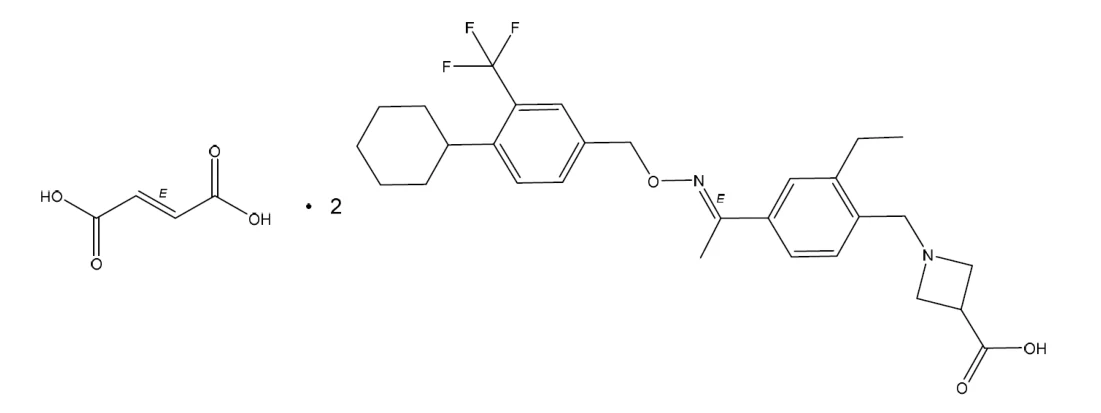
Physicochemical properties: White to almost white powder
Solubility: insoluble in water
pH value: pH of 0.1% suspension in water is 3.47.
14 Clinical Trials
14.1 Clinical Trials by Indication
Secondary Progressive Multiple Sclerosis
The efficacy of MAYZENT was demonstrated in a phase 3 study that evaluated once-daily doses of MAYZENT 2 mg in patients with SPMS.
Table 8 - Summary of Patient Demographics for Clinical Trials in SPMS
| Study # | Study design | Dosage, route of administration and duration | Study subjects (n) | Mean age (Range) | Sex |
| Study A2304 (EXPAND) | Randomized, double-blind, multi-center, parallel group, placebo-controlled study. | MAYZENT 2 mg or placebo, once-daily (oral). Duration: Variable, <1 month to 37 months. | MAYZENT 2 mg: n=1,105 Placebo: n=546 | 48.0 (21-61 years) | Male: 39.9 % Female: 60.1 % |
Study A2304 was a randomized, double-blind, placebo-controlled, time-to-event, phase 3 study in patients with SPMS i.e. who, following an initial relapsing-remitting course, had documented evidence of a progressive increase in disability of at least 6 months duration in the absence or independent of relapse. Patients also had documented evidence of disability progression in the prior 2 years, no evidence of relapse in the 3 months prior to study enrollment and an Expanded Disability Status Scale (EDSS) score of 3.0 to 6.5 at study entry.
Patients were randomized 2:1 to receive either once daily MAYZENT 2 mg or placebo and initiated treatment with a 6-day dose titration scheme (see 4.2 Recommended Dose and Dosage Adjustment). Evaluations were performed at screening and every 3 months and at the time of a suspected MS relapse. MRI evaluations were performed at screening and every 12 months.
The primary endpoint of the study was the time to 3-month confirmed disability progression (CDP), defined as an increase from baseline in EDSS of at least 1 point (0.5 point increase for patients with baseline EDSS of 5.5 or more), in the absence of relapse, sustained for 3 months. Key secondary endpoints were time to 3-month confirmed worsening of at least 20% from baseline in the timed 25-foot walk test (T25FW) and change from baseline in T2 lesion volume. The primary endpoint and two key secondary endpoints were analyzed according to a pre-specified hierarchical order. Additional secondary endpoints, including time to 6-month CDP, percent brain volume change, measures of inflammatory disease activity (annualized relapse rate, MRI lesions), were analyzed without correction for multiplicity or hierarchical testing.
Study duration was variable for individual patients (median study duration was 21 months, range 1 day to 37 months).
The study randomized 1,651 patients to either MAYZENT 2 mg (N=1,105) or placebo (N=546); 82% of MAYZENT-treated patients and 78% of patients that received placebo completed the study. Mean (median) age was 48.0 (49.0) years, 95% of patients were white and 60% were female. The median disease duration was 16.0 years and median EDSS score was 6.0 at baseline (56% of patients had a baseline EDSS score ≥ 6.0). Approximately 36% of patients had at least 1 relapse in the 2 years prior to study entry and 22% had gadolinium (Gd)-enhancing lesions on their baseline MRI scan; 78% of patients had been previously treated with a therapy for their MS. In the subset of patients (N=516 siponimod, N=263 placebo) with active disease (defined as patients with relapse in the 2 years prior to the study and/or presence of Gd-enhancing T1 lesions at baseline) the baseline characteristics were similar to the overall population, including the median EDSS score of 6.0.
Table 9 - Results of study A2304 in Secondary Progressive Multiple Sclerosis
| Efficacy Parameter | Statistic | Estimate (95% CI) | p-value |
|---|---|---|---|
| Primary endpoint | |||
| Time to 3-month CDP | Hazard ratio (1) | 0.79 (0.65,0.95) | 0.0134 |
Key secondary endpoints Time to 3-month confirmed deterioration > 20% from baseline in T25FW Change from baseline in T2 lesion volume (mm3) | Hazard ratio (1) Treatment difference (2) | 0.94 (0.80, 1.10) -695 (-877, -513) | 0.4398 <0.0001* |
All analyses are based on the full analysis set (FAS), which includes all randomized subjects who took at least one dose of study medication. p values are two-sided. Results are presented in the protocol-specified hierarchical statistical testing order. (1) Hazard ratio (siponimod/placebo), Cox proportional hazard model (2) Treatment difference in the average over mean changes at Months 12 and 24, repeated measures model *Nominal p-value due to p > 0.05 for time to 3-month confirmed deterioration > 20% from baseline in T25FW in the hierarchical testing strategy | |||
Figure 1 - Patients with 3-month CDP based on EDSS-Kaplan-Meier curves (FAS)
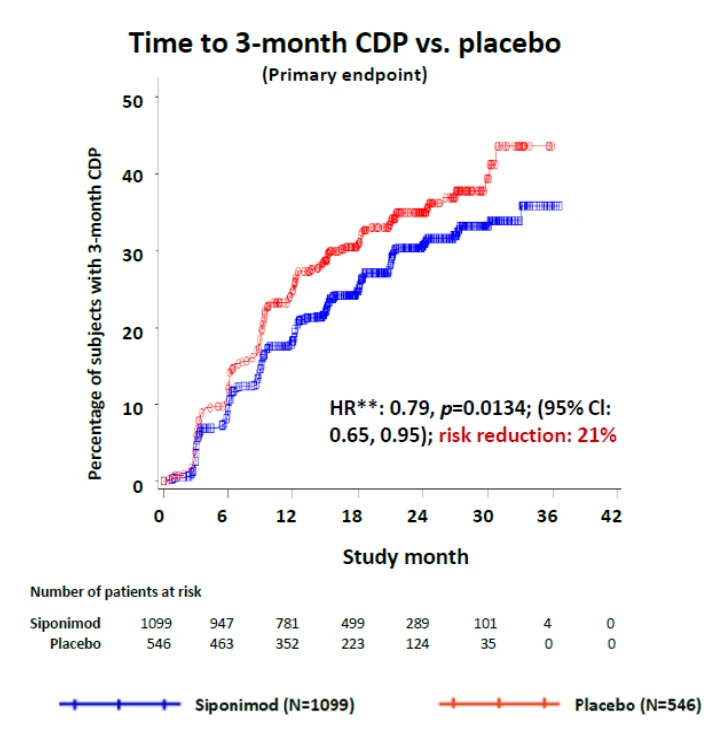
Figure 2 - Time to 3-month CDP in subgroups
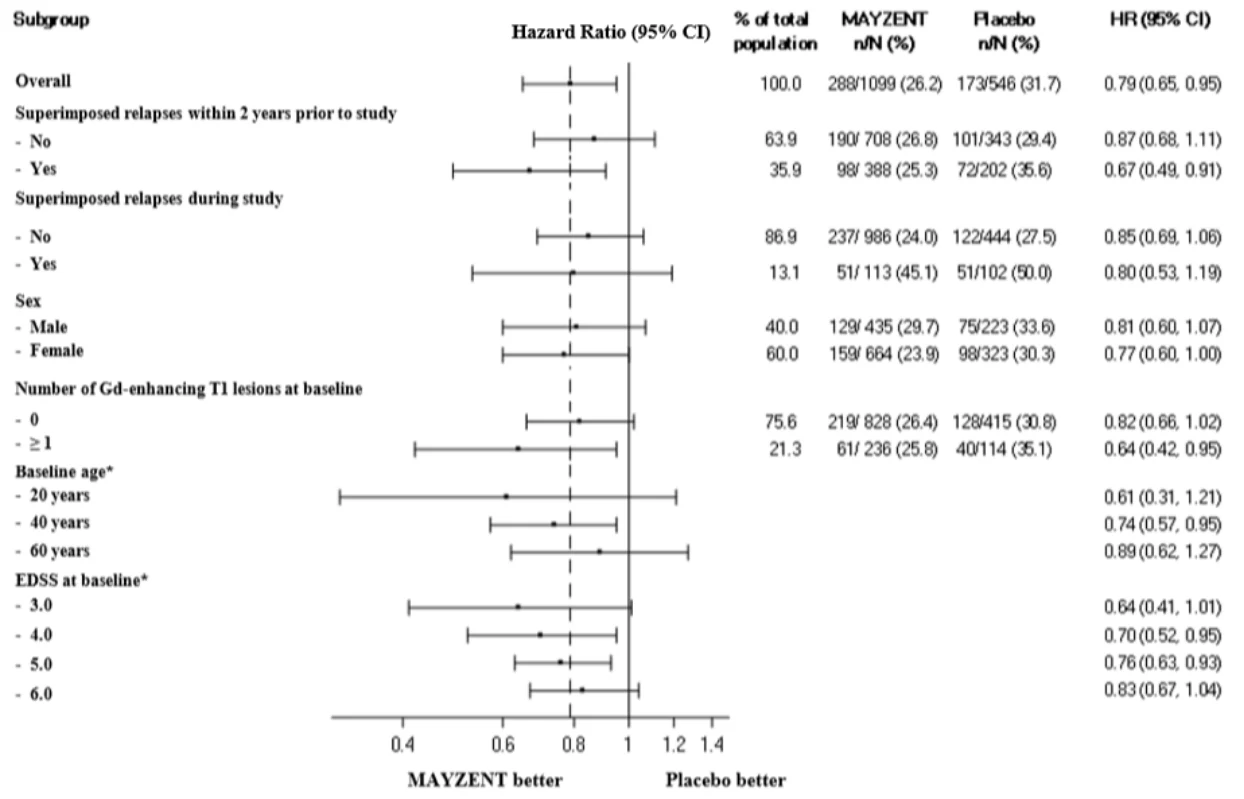
*HR 95% CI presented are model-based estimates for a range of values of age and EDSS scores at baseline.
Time to 3-month CDP (primary endpoint) was significantly delayed for patients treated with MAYZENT compared to those that received placebo. The risk of 3-month CDP was reduced by 21% with MAYZENT compared to placebo (hazard ratio (HR) 0.79, p=0.0134); 26% of patients treated with MAYZENT and 32% of patients on placebo had 3-month CDP (Table 9 and Figure 1). In the subset of MAYZENT-treated patients with signs and symptoms of active disease (defined as patients with an MS relapse in the 2 years prior to the study and/or presence of Gd-enhancing T1 lesions at baseline), time to 3-month CDP was significantly delayed with a 31% -risk reduction compared to placebo (hazard ratio 0.69, p= 0.0094). For patients who did not have signs and symptoms of active disease (patients without an MS relapse in the 2 years prior to the study or without Gd-enhancing T1 lesions at baseline) the time to 3-month CDP was not significantly delayed by MAYZENT. Figure 2 shows the reduction in risk of time to 3-month CDP in subgroups of patients with or without relapses in the 2 years prior to the study, with or without Gd-enhancing lesions at baseline, and in subgroups defined by other baseline characteristics.
MAYZENT did not significantly delay time to 3-month confirmed ≥20% deterioration in the T25FW (key secondary endpoint) compared to placebo (hazard ratio (HR) 0.94, p=0.4398). The change from baseline in T2 lesion volume was significantly less with MAYZENT compared to placebo (nominal p <0.0001) (Table 9).
Additional secondary endpoints included time to 6-month confirmed disability progression (CDP), annualized relapse rate (ARR), percent brain volume change and number of new/newly enlarging T2 lesion. MAYZENT reduced the risk of 6-month CDP by 26% compared to placebo (HR 0.74, 95% CI: 0.60, 0.92, nominal p-value = 0.0058). The ARR (confirmed relapses) was reduced by 55%, compared to placebo (ARR ratio 0.45 (95% CI: 0.337, 0.587); nominal p-value < 0.0001). The difference in percentage of brain volume change (average over months 12 and 24) compared to placebo was 0.15 (95% CI: 0.07, 0.23, nominal p-value = 0.0002). The relative rate reduction compared to placebo for the average number of new/newly enlarging T2 lesions over all available scans was 81% (rate ratio 0.19 (95% CI: 0.15, 0.24) nominal p-value < 0.0001).
In the subset of patients with active disease, time to 6-month CDP was significantly delayed by 37% for siponimod compared to placebo (HR 0.63; 95% CI: 0.47, 0.86). Other secondary endpoint results in the subset of patients with active disease were consistent with the results in the overall population.
16 Non-Clinical Toxicology
Siponimod was evaluated in safety pharmacology and repeated dose toxicity studies in mice, rats and cynomolgus monkeys, as well as in studies to assess genotoxicity, carcinogenicity, reproductive and developmental toxicity, local tolerability, photoreactive potential, immunotoxicity, abuse liability and an assessment to qualify impurities. Preclinical data revealed no special hazard for humans based on conventional studies of genotoxicity. Adverse effects in repeat-dose pivotal studies were seen in animals at exposure approximately 100 times the clinical exposure levels. The main concern revealed by the non-clinical safety data was related to embryo-fetal development (see Reproductive and Developmental Toxicology below).
Safety Pharmacology and Repeat-dose Toxicity: Respiratory and CNS safety pharmacology investigations in the rat demonstrated only minor effects on the respiratory function and no adverse neuropharmacological effects. Assessment of cardiovascular safety pharmacology in rat, guinea pig and monkey showed transient heart rate reduction.
Single and repeated oral dose toxicity studies were conducted in mice (up to 13 weeks), rats (up to 26 weeks) and monkeys (up to 52 weeks). Siponimod-related decreases in total lymphocyte counts were observed at all dose levels in repeat-dose toxicity studies across species. The effects were reversible or partially reversible and in line with the pharmacological mode of action of siponimod. Dose-limiting toxicities in animal species were nephrotoxicity in mice, decreased body weight gain in rats as well as adverse CNS effects (decreased activity, tremor) and gastro-intestinal effects (severe watery feces) in monkeys. The main target organs of toxicity identified by histopathology in rodents included the lung, liver, thyroid, kidney, uterus/vagina and, as expected, the lymphoid organs. In monkeys, the main target organs of toxicity identified included the gastrointestinal tract, muscle, bone marrow, skin, and the lymphoid organs. Findings in lungs (inflammation, fibrosis and alveolar macrophages) were observed in mice, rats and monkeys (generally with low incidences).
The no observed adverse effects levels (NOAELs) in rats were set at 50 and 15 mg/kg/day for males and females, respectively, and in monkeys at 10 mg/kg/day for both sexes. AUC-based exposure multiples of 190 to 342 in rats and of 171 to 222 in monkeys for systemic effects were calculated relative to the human exposure at a maintenance dose of 2 mg/day.
Siponimod has no phototoxic potential and no abuse liability.
Genotoxicity: In vitro genotoxicity tests (bacterial mutation, micronucleus test and chromosome aberration test with human lymphocytes) and an in vivo micronucleus study in rats did not reveal genotoxic potential of siponimod.
Carcinogenicity: In a carcinogenicity study in mice increased incidences of hemangiosarcomas and hemangiomas were observed at all dose levels doses in both sexes. Consistent with an immunomodulatory effect, siponimod induced increased incidences of malignant lymphoma in mice; the human relevance is unknown.
In a carcinogenicity study in rats, siponimod-related neoplastic changes (follicular cell adenoma/carcinoma) in the thyroid gland in males only and non-neoplastic, proliferative changes in the thyroid gland (males only) and in the liver (both sexes) were observed and considered to be rodent specific effect (‘liver-thyroid-axis’) with limited human relevance. A low incidence of uterine hemangiosarcoma was observed only in siponimod-exposed females. Other non-neoplastic uterine changes observed at various incidences and only in siponimod-exposed females were vascular hyperplasia, hemorrhages, dilatation, ulcerations as well as inflammation. In the testis, seminiferous tubule degeneration was observed with a higher incidence in siponimod-exposed males (all dose levels) compared to control animals. Pleural fibrosis was observed only in siponimod-exposed male and female lungs. Compared to control animals, many eye-related adverse findings, considered secondary to the chronic corneal inflammation, were observed at a higher incidence in male and female rats (all dose levels). In the brain, siponimod-related vascular inflammation was observed (all dose levels) and coincided with a high incidence of brain mineralization in siponimod-exposed males and females. These findings were observed at doses approximately 47-437 (males) and 15-146 (females) times the human maintenance dose of 2 mg/day based on body surface area.
Reproductive and developmental toxicology:
Fertility
In fertility studies in male and female rats, animals received oral doses of siponimod up to 200 mg/kg/day and 1 mg/kg/day respectively, before mating and until 2 weeks post mating for males, and until gestation day 6 for females.
There was no effect on mating or sperm parameters in males and on mating in female rats. Due to limitations in the studies, the effects of siponimod on the incidence of pre-implantation loss following dosing in males or females remains uncertain. Therefore, no conclusions could be established on the effect of siponimod on male or female fertility.
Development
In embryo-fetal development studies in rats and rabbits, pregnant animals received oral doses of siponimod up to 40 mg/kg/day and 5 mg/kg/day, respectively, during the period of organogenesis. A significant increase in embryo-fetal mortality occurred at dose levels that did not produce maternal toxicity.
In rats, fetal resorption and teratogenicity (skeletal malformations, e.g. cleft palate and misshapen clavicles, cardiomegaly and edema) were noted at the lowest dose tested (1 mg/kg/day). Therefore, no maternal reproductive and fetal NOAELs could be established.
In rabbits, siponimod resulted in a significant increase in embryo-fetal deaths and skeletal variations at doses ≥1 mg/kg/day, as well as abortions and increased visceral variations at 5 mg/kg/day. The maternal reproductive NOAEL was 1 mg/kg/day and the NOAEL for embryo-fetal development was 0.1 mg/kg/day. The maternal dose at which the embryo-fetal NOAEL was established (0.1 mg/kg/day) is approximately equivalent to the human therapeutic dose (2 mg) based on body weight.
In a pre- and post-natal development study in rats, pregnant animals received oral doses of siponimod up to 0.5 mg/kg/day during the period of organogenesis and until weaning. In the F0 generation dams, ≥0.15 mg/kg/day resulted in slight effects on body weight and food consumption, as well as an increase in gestation length. The numbers of dead and malformed pups were increased at all doses tested. Postnatal survival was significantly decreased in F1 generation pups at doses ≥0.15 mg/kg/day. Starting with the lowest dose tested (≥ 0.05 mg/kg/day), there was an increase in external, urogenital, skeletal and visceral anomalies, including malocclusions, flat cranium, decreased anogenital distance and presence of abdominal tissues of unknown etiology. In F1 generation adults, sexual maturation was delayed and pre-implantation loss was increased in mated pups of the high dose group. However, no effects on motor activity learning and memory were noted at 0.5 mg/kg/day.
Other Reproductive data
There were no relevant changes in reproductive organs in monkeys following chronic dosing. However, changes in reproductive organs were observed in female and male mice, rats and rabbits that received siponimod during chronic dosing studies. Changes in females included an increased incidence of non-neoplastic ovarian cysts in the mouse carcinogenicity study; ovarian cysts in one female rabbit in the embryo-fetal development study and in F1 generation rats in the pre- and postnatal development study; and, uterine hemangiosarcoma, vascular hyperplasia, hemorrhages, dilatation, ulcerations and inflammation in the rat carcinogenicity study. In the rat carcinogenicity study, siponimod-exposed males (all dose levels) had a higher incidence of seminiferous tubule degeneration compared to control animals.