


Product Monograph - Ponvory
Recent Major Label Changes
| 4 Dosage and Administration, 4.1 Dosing Considerations | 2024-04 |
|---|---|
| 4 Dosage and Administration, 4.4 Administration | 2024-04 |
| 7 Warnings and Precautions, Immune, Progressive Multifocal Leukoencephalopathy | 2024-04 |
| 7 Warnings and Precautions, Immune, PML and IRIS (Immune Reconstitution Inflammatory Syndrome) | 2024-04 |
| 7 Warnings and Precautions, Monitoring and Laboratory Tests | 2024-04 |
| 7 Warnings and Precautions, Neurologic | 2024-04 |
Table of Contents
Certain sections or subsections that are not applicable at the time of the preparation of the most recent authorized product monograph are not listed.
Recent Major Label Changes ................................................................................................. 2
Table of Contents ................................................................................................................. 2
Part 1: Healthcare Professional Information.......................................................................... 4
- 1.
Indications..................................................................................................................... 4
1.1. Pediatrics .................................................................................................................... 4
1.2. Geriatrics .................................................................................................................... 4
- 2. Contraindications .......................................................................................................... 4
- 4.
Dosage and Administration ............................................................................................ 5
4.1. Dosing Considerations ............................................................................................... 5
4.2. Recommended Dose and Dosage Adjustment .......................................................... 7
4.4. Administration ........................................................................................................... 8
4.5. Missed Dose ............................................................................................................... 9
- 5. Overdose ....................................................................................................................... 9
- 6. Dosage Forms, Strengths, Composition, and Packaging ................................................ 10
- 7.
Warnings and Precautions ........................................................................................... 11
7.1. Special Populations .................................................................................................. 20
7.1.1. Pregnancy ......................................................................................................... 20
7.1.2. Breast-feeding .................................................................................................. 20
7.1.3. Pediatrics .......................................................................................................... 20
7.1.4. Geriatrics .......................................................................................................... 21
- 8.
Adverse Reactions ....................................................................................................... 21
8.1. Adverse Reaction Overview ..................................................................................... 21
8.2. Clinical Trial Adverse Reactions ............................................................................... 21
8.3. Less Common Clinical Trial Adverse Reactions ........................................................ 23
8.4. Abnormal Laboratory Findings: Hematologic, Clinical Chemistry, and Other Quantitative Data ................................................................................................................. 24
- 9.
Drug Interactions ......................................................................................................... 25
9.2. Drug Interactions Overview ..................................................................................... 25
9.4. Drug-Drug Interactions ............................................................................................ 25
9.5. Drug-Food Interactions ............................................................................................ 28
9.6. Drug-Herb Interactions ............................................................................................ 28
9.7. Drug-Laboratory Test Interactions........................................................................... 29
- 10.
Clinical Pharmacology .................................................................................................. 29
10.1. Mechanism of Action ............................................................................................... 29
10.2. Pharmacodynamics .................................................................................................. 29
10.3. Pharmacokinetics ..................................................................................................... 30
- 11. Storage, Stability, and Disposal .................................................................................... 32
- 12. Special Handling Instructions ....................................................................................... 33
Part 2: Scientific Information .............................................................................................. 34
- 13. Pharmaceutical Information ........................................................................................ 34
- 14.
Clinical Trials ............................................................................................................... 34
14.1. Clinical Trials by Indication ...................................................................................... 34
Treatment of Adult Patients with Relapsing Remitting Multiple Sclerosis (RRMS). ....... 34
Trial Design and Study Demographics ............................................................................. 34
Study Results .................................................................................................................... 36
- 15. Microbiology ............................................................................................................... 39
- 16. Non-Clinical Toxicology ................................................................................................ 39
Patient Medication Information ......................................................................................... 41
Part 1: Healthcare Professional Information
1. Indications
PONVORY (ponesimod) is indicated for:
- The treatment of adult patients with relapsing remitting multiple sclerosis (RRMS).
PONVORY should only be prescribed by neurologists who are experienced in the treatment of multiple sclerosis and are knowledgeable of the efficacy and safety profile of PONVORY and are able to discuss benefits/harms with patients.
1.1. Pediatrics
Pediatrics (<18 years of age): The safety and efficacy of PONVORY have not been evaluated in pediatric patients. PONVORY is not indicated for treatment of patients under 18 years of age.
1.2. Geriatrics
Geriatrics (≥ 65 years of age): Clinical studies of PONVORY did not include patients aged 65 years and older. Therefore, it is not known whether the safety and efficacy differ in elderly patients compared to younger patients (see 10.3 Pharmacokinetics, Special Populations and Conditions, Geriatrics).
2. Contraindications
PONVORY is contraindicated in:
- Patients who are hypersensitive to this drug or to any ingredient in the formulation, including any non-medicinal ingredient, or component of the container. For a complete listing, see 6 Dosage Forms, Strengths, Composition, and Packaging.
- Patients with increased risk of opportunistic infections, including those who are immunocompromised due to treatment (e.g., antineoplastic, immunosuppressive or immunomodulating therapies, total lymphoid irradiation, or bone marrow transplantation) or disease (e.g., immunodeficiency syndrome).
- Patients with severe active infections including active bacterial, fungal or viral infections (e.g., hepatitis, tuberculosis), until resolution of the infection.
- Patients with known active malignancies, except localized basal cell carcinoma of the skin.
- Patients who have in the last 6 months experienced myocardial infarction, unstable angina, stroke, transient ischemic attack (TIA), decompensated heart failure requiring hospitalization, or Class III or IV heart failure (see 7 Warnings and Precautions, Cardiovascular, Bradyarrhythmia and Atrioventricular Conduction Delays).
- Patients with presence of Mobitz Type II second degree AV block or higher-grade AV block, sick-sinus syndrome, or sinoatrial heart block unless the patient has a functioning pacemaker (see 7 Warnings and Precautions, Cardiovascular).
- Patients with moderate or severe hepatic impairment (Child-Pugh Class B and C; see 7 Warnings and Precautions, Hepatic/Biliary/Pancreatic).
During pregnancy and in women of childbearing potential not using highly effective contraception
- (see 7 Warnings and Precautions, 7.1.1 Pregnancy, 7.1.2 Breast-feeding).
4. Dosage and Administration
4.1. Dosing Considerations
Prior to initiating treatment with PONVORY the following assessments should be done to guide patient selection and treatment:
Immune system effects
PONVORY causes a reduction in circulating lymphocyte counts to approximately 30-40% of baseline values via reversible retention in lymphoid organs and may increase the risk of infections. Prescribers should:
- Review results of a complete blood count (CBC) with differential White Blood Cell (WBC) count obtained within the last 6 months (see 7 Warnings and Precautions, Immune, Risk of Infections).
- Test patients for antibodies to varicella zoster virus (VZV) before initiating PONVORY; a full course of VZV vaccination for antibody-negative patients is recommended prior to commencing treatment with PONVORY (see 7 Warnings and Precautions, Immune, Risk of Infections).
- Consider vaccination against human papilloma virus (HPV) prior to treatment initiation with PONVORY (see 7 Warnings and Precautions, Immune, Risk of Infections).
- Delay the initiation of PONVORY in patients with severe active infection until resolved (see 2 Contraindications).
Cardiac effects
Initiation of PONVORY treatment results in a transient decrease in heart rate and atrioventricular (AV) conduction delays. Prescribers should:
- Obtain an electrocardiogram (ECG) in all patients to determine whether preexisting conduction abnormalities are present.
- For patients with sinus bradycardia (heart rate (HR) <55 bpm), first or second-degree [Mobitz type I] atrioventricular block (AV block), or a history of myocardial infarction or heart failure, prepare to administer the first dose of PONVORY in a clinical setting where they can be monitored for signs and symptoms of bradycardia, with hourly pulse and blood pressure measurements for at least 4 hours, and where symptomatic bradycardia can be managed (see 4.4 Administration, First Dose Monitoring for Patients with Certain Pre-existing Cardiac Conditions).
- For patients with certain other pre-existing cardiac conditions, seek an evaluation from a cardiologist prior to initiating treatment, to assess suitability of treatment and to determine the most appropriate strategy for monitoring cardiac effects measurements for at least 4 hours, and where symptomatic bradycardia can be managed (see 4.4 Administration, First Dose Monitoring for Patients with Certain Pre-existing Cardiac Conditions; 7 Warnings and Precautions, Cardiovascular).
See 2 Contraindications and 7 Warnings and Precautions, Cardiovascular for more complete information regarding patients with certain cardiovascular conditions in which PONVORY should not be used or may require additional monitoring.
Determine whether patients are taking drugs that could slow heart rate or atrioventricular (AV) conduction (see 4.4 Administration, First Dose Monitoring for Patients with Certain Pre-existing Cardiac Conditions; 7 Warnings and Precautions, Cardiovascular, Bradyarrhythmia and
- Atrioventricular Conduction Delays; 9.4 Drug-Drug Interactions, Anti-arrhythmic Drugs and Other QTc-Prolonging Drugs, Heart Rate-Lowering Drugs, Beta-Blockers).
Experience with PONVORY is limited in patients receiving concurrent therapy with drugs that decrease heart rate (e.g., beta blockers, non-dihydropyridine calcium channel blockers - diltiazem and verapamil, and other drugs that may decrease heart rate such as digoxin). Concomitant use of these drugs during PONVORY initiation may be associated with severe bradycardia and heart block. Because of the potential additive effect on heart rate, treatment with PONVORY should generally not be initiated in patients who are concurrently treated with these substances. If treatment is considered, advice from a cardiologist should be sought prior to initiation of treatment to assess suitability of treatment and to determine the most appropriate monitoring:
- Bradyarrhythmic effects are more pronounced when PONVORY is added to beta-blocker therapy (see 9.4 Drug-Drug Interactions, Beta-Blockers). For patients receiving a stable dose of a beta blocker, the resting heart rate should be considered before introducing PONVORY treatment. If the resting heart rate is >55 bpm under chronic beta blocker treatment, PONVORY can be introduced. If resting heart rate ≤ 55 bpm, initiation of treatment with PONVORY is not recommended. Depending on the benefit-risk, the beta-blocker may be interrupted until the baseline heartrate is >55 bpm. Treatment with PONVORY can then be initiated and treatment with a beta-blocker can be reinitiated after PONVORY has been up titrated to the target maintenance dosage (see 9.4 Drug-Drug Interactions, Beta-Blockers). If treatment with PONVORY is considered in patients who are under chronic beta-blocker treatment, they should be monitored during treatment initiation according to procedures similar to those recommended below for patients with pre-existing cardiac conditions (see 4.4 Administration).
- For patients taking other drugs that decrease heart rate, treatment with PONVORY should generally not be initiated without consultation from a cardiologist because of the potential additive effect on heart rate (see 4.4 Administration, 9.4 Drug-Drug Interactions, Anti-arrhythmic Drugs and Other QTc-Prolonging Drugs, Heart Rate-Lowering Drugs).
- In all patients, use the recommended dose titration for initiation of PONVORY treatment to mitigate cardiac effects (see 4.2 Recommended Dose and Dosage Adjustment)
Liver Function Tests
PONVORY is contraindicated in patients with moderate or severe hepatic impairment (Child-Pugh Class B and C). Review results of transaminase (ALT/AST) and bilirubin levels obtained within the last 6 months (see 7 Warnings and Precautions, Hepatic/Biliary/Pancreatic, Liver Injury).
Pregnancy Test
PONVORY is contraindicated during pregnancy and in women of childbearing potential not using highly effective contraception. Before initiation of treatment in women of childbearing potential, a negative pregnancy test result must be available (see 7 Warnings and Precautions).
Ophthalmic evaluation
PONVORY increases the risk of macular edema. Obtain an evaluation of the fundus, including the macula (see 7 Warnings and Precautions, Ophthalmologic, Macular Edema).
Skin cancer
Skin cancers have been reported in patients treated with S1P receptor modulators, including PONVORY. Monitor for suspicious skin lesions prior to initiating treatment with PONVORY, particularly in patients with risk factors for skin cancer (see 7 Warnings and Precautions, Neoplasms).
Current or Prior medications
PONVORY is contraindicated in patients with increased risk of opportunistic infections, including those who are immunocompromised due to treatment, e.g., antineoplastic, immunosuppressive or immunomodulating therapies. If there is a history of prior use of these drugs, consider possible unintended additive immunosuppressive effects before initiating treatment with PONVORY (see 7 Warnings and Precautions, Immune, Risk of Infections; 9.4 Drug-Drug Interactions, Anti-neoplastic, Immune-modulating, or Immunosuppressive Therapies).
4.2. Recommended Dose and Dosage Adjustment
PONVORY film-coated tablets for oral use are provided in the Initiation Pack of strengths of 2, 3, 4, 5, 6, 7, 8, 9, and 10 mg ponesimod. The Maintenance Pack includes ponesimod 20 mg tablets.
Up-Titration Dose:
The Initiation Pack must be used for patients initiating treatment with PONVORY (see 6 Dosage Forms, Strengths, Composition, and Packaging).
Initiate PONVORY treatment with a 14 day up-titration; start with administration of one 2 mg tablet orally once daily and progress with the titration schedule outlined in the Table 1 below (see 7 Warnings and Precautions, Cardiovascular, Reduction in Heart Rate).
Table 1 – Dose Titration Regimen
| Titration Day | Daily Dose |
|---|---|
| Day 1 and Day 2 | 2 mg once daily |
| Day 3 and Day 4 | 3 mg once daily |
| Day 5 and Day 6 | 4 mg once daily |
| Day 7 | 5 mg once daily |
| Day 8 | 6 mg once daily |
| Day 9 | 7 mg once daily |
| Day 10 | 8 mg once daily |
| Day 11 | 9 mg once daily |
| Day 12, Day 13 and Day 14 | 10 mg once daily |
If dose titration is interrupted, missed dose instructions must be followed (see 4.5 Missed Dose).
Maintenance Dose:
After dose titration is complete, the recommended maintenance dosage of PONVORY is one 20 mg tablet taken orally once daily.
Re-initiation of maintenance therapy after treatment interruption
Interruption during treatment, especially during up-titration, should be avoided, however:
- If less than 4 consecutive doses are missed, resume treatment with the first missed dose.
- If 4 or more consecutive doses are missed, reinitiate treatment with Day 1 (2mg) of the up-titration regimen.
If ponesimod therapy is discontinued for 4 or more consecutive days, the effects on heart rate and AV conduction may recur on reintroduction of ponesimod treatment and the same precautions as for the first dose should apply. During treatment initiation or maintenance, if treatment needs to be reinitiated with Day 1 of the titration regimen, first dose monitoring must be completed in patients for whom it is recommended (see 4.4 Administration).
Special Populations
Pediatric patients (below 18 years)
The safety and efficacy of PONVORY have not been established in pediatric patients aged 18 years and younger. PONVORY is not indicated for use in pediatric patients.
Geriatric patients (65 years or above)
Clinical studies of ponesimod did not include patients aged 65 years and older to determine whether they respond differently from younger subjects, therefore PONVORY should be used with caution in this population.
Renal Impairment
Based on clinical pharmacology studies, no dose adjustment is needed in patients with mild to severe renal impairment (see 10.3 Pharmacokinetics, Special Populations and Conditions, Renal Insufficiency/Impairment).
Hepatic Impairment
PONVORY is contraindicated in adult subjects with moderate or severe hepatic impairment (Child-Pugh class B and C, respectively), as the risk of adverse reactions may be greater (see 2 Contraindications). No dosage adjustment is necessary in patients with mild hepatic impairment (Child-Pugh class A) (see 10.3 Pharmacokinetics, Special Populations and Conditions, Hepatic Insufficiency/Impairment).
Based on clinical pharmacology studies in adult subjects with mild, moderate, or severe hepatic impairment, ponesimod AUC0-∞ was increased 1.3, 2.0- and 3.1-fold respectively, compared to healthy subjects (see 10.3 Pharmacokinetics, Special Populations and Conditions, Hepatic Insufficiency/Impairment).
4.4. Administration
PONVORY should be administered orally once daily. The tablet should be swallowed whole. PONVORY can be taken with or without food.
See 7 Warnings and Precautions, Monitoring and Laboratory Tests for recommendations regarding monitoring that should be performed during therapy with PONVORY.
First Dose Monitoring for Patients with Certain Pre-existing Cardiac Conditions
For patients with sinus bradycardia [HR less than 55 beats per minute (bpm)], first or second degree [Mobitz type I] AV block, or a history of myocardial infarction or heart failure occurring more than 6 months prior to treatment initiation and in stable condition (see 7 Warnings and Precautions,
Cardiovascular, Bradyarrhythmia and Atrioventricular Conduction Delays; 10.2 Pharmacodynamics)
- Administer the first dose of PONVORY in a setting where resources to appropriately manage symptomatic bradycardia are available.
- Obtain an ECG in these patients prior to dosing and at the end of the 4-hour observation period.
- Monitor patients for 4 hours after the first dose for signs and symptoms of bradycardia with a minimum of hourly pulse and blood pressure measurements.
- If post-dose symptomatic bradycardia, bradyarrhythmia, or conduction related symptoms occur, or if ECG 4 hours post-dose shows new onset second degree or higher AV block or QTc greater than or equal to 500 msec, initiate appropriate management, begin continuous ECG monitoring, and continue monitoring until the symptoms have resolved if no pharmacological treatment is required.
- If pharmacological treatment is required, continue monitoring overnight and repeat 4-hour monitoring after the second dose.
Extended monitoring beyond 4 hours
If any of the following abnormalities are present after 4 hours (in the presence or absence of symptoms), continue monitoring until the abnormality resolves:
- Heart rate is less than 45 bpm;
- Heart rate is at the lowest value post-dose, suggesting that the maximum pharmacodynamic effect on the heart may not have occurred;
- ECG at 4 hours post-dose shows new onset second-degree or higher AV block or QTc ≥ 500 msec
Advice from a cardiologist should be sought to determine the most appropriate monitoring strategy (which may include overnight monitoring) during treatment initiation, if treatment with PONVORY is considered in patients:
- With some pre-existing heart and cerebrovascular conditions (see 7 Warnings and Precautions, Cardiovascular, Bradyarrhythmia and Atrioventricular Conduction Delays).
- With a prolonged QTc interval before dosing or during the 4-hour observation, or at additional risk for QT prolongation, or on concurrent therapy with QT prolonging drugs with a known risk of Torsade de Pointes (see 7 Warnings and Precautions, Cardiovascular, Bradyarrhythmia and Atrioventricular Conduction Delays; 9.4 Drug-Drug Interactions, Anti-arrhythmic Drugs and Other QTc-Prolonging Drugs, Heart Rate-Lowering Drugs).
- Receiving concurrent therapy with drugs that slow heart rate or AV conduction (see 9.4 Drug-Drug Interactions, Anti-arrhythmic Drugs and Other QTc-Prolonging Drugs, Heart Rate-Lowering Drugs, Beta-Blockers).
Materials to assist healthcare professionals with patient management are available through Vanda Pharmaceuticals Inc., at: 1-833-433-4336
4.5. Missed Dose
See 4.2 Recommended Dose and Dosage Adjustment for missed dose or interruption during treatment.
5. Overdose
In patients with overdosage of PONVORY, especially upon initiation/re-initiation of treatment, it is important to observe for signs and symptoms of bradycardia as well as atrioventricular (AV) conduction blocks, which may include overnight monitoring. Regular measurements of pulse rate and blood pressure are required, and ECGs should be performed (see 7 Warnings and Precautions, Cardiovascular, Bradyarrhythmia and Atrioventricular Conduction Delays, Increased Blood Pressure, 10.2 Pharmacodynamics, Heart Rate and Rhythm).
There is no specific antidote to ponesimod. Neither dialysis nor plasma exchange would result in meaningful removal of ponesimod from the body. The decrease in heart rate induced by PONVORY can be reversed by atropine. In the event of overdose, PONVORY should be discontinued, and general supportive treatment given until clinical toxicity has been diminished or resolved. It is advisable to contact a poison control center to obtain the latest recommendations for the management of an overdose.
For the most recent information in the management of a suspected drug overdose, contact your regional poison control centre or Health Canada’s toll-free number, 1-844 POISON-X (1-844-764-7669).
- 6. Dosage Forms, Strengths, Composition, and Packaging
Table 2 – Dosage Forms, Strengths, Composition and Packaging
| Route of Administration | Dosage Form/ Strength/Composition | Non-Medicinal Ingredients |
| Oral | Initiation Pack: Film-coated tablets containing ponesimod: 2 mg (5.0mm white tablet debossed with “2” on one side and arch on the other side), 3 mg (5.0mm red tablet debossed with “3” on one side and arch on the other side), 4 mg (5.0mm purple tablet debossed with “4” on one side and arch on the other side), 5 mg (8.6mm green tablet debossed with “5” on one side and “A” on the other side), 6 mg (8.6mm white tablet debossed with “6” on one side and “A” on the other side), 7 mg (8.6mm red tablet debossed with “7” on one side and “A” on the other side), | Tablet Core: croscarmellose sodium, lactose monohydrate, magnesium stearate, microcrystalline cellulose, povidone K30, silica colloidal anhydrous and sodium laurilsulfate. Tablet Coating (Opadry II): hydroxypropyl methylcellulose, iron oxide red (included in 3 mg, 4 mg, 7 mg, 8 mg, 9 mg and 10 mg film-coated tablets), iron oxide black (included in 4 mg, 5 mg, 8 mg and 9 mg film-coated tablets), iron oxide yellow (included in 3 mg, 5 mg, 7 mg, 9 mg, 10 mg and 20 mg film-coated tablets), lactose monohydrate, polyethylene glycol 3350, titanium dioxide, and triacetin. |
PONVORY is available as round, biconvex, film-coated tablets for oral use in Initiation packs for the up-titration regimen and Maintenance Packs for maintenance dosage.
PONVORY Initiation Pack is supplied in blister packaging containing 14 tablets.
The Maintenance Pack is in blister packaging containing 28 tablets.
7. Warnings and Precautions
Cardiovascular
Bradyarrhythmia and Atrioventricular Conduction Delays
Since initiation of PONVORY treatment results in a transient decrease in heart rate and atrioventricular (AV) conduction delays, an up-titration scheme must be used to reach the maintenance dosage of PONVORY 20 mg (see 4.2 Recommended Dose and Dosage Adjustment; 10.2 Pharmacodynamics, Heart Rate and Rhythm).
PONVORY was not studied in patients who had:
- Myocardial infarction unstable angina pectoris, stroke/transient ischemic attack or unstable ischemic heart disease in the last 6 months (see 2 Contraindications)
- Cardiac failure (New York Heart Association class III-IV) or presence of any severe cardiac disease (see 2 Contraindications)
- Cardiac conduction or rhythm disorders (including complete left bundle branch block, sinus arrest, sinoatrial heart block, symptomatic bradycardia, atrial flutter or atrial fibrillation, ventricular arrhythmias, cardiac arrest) either in history or observed at screening
- Cardiac arrhythmias requiring treatment with Class Ia or III antiarrhythmic drugs
- Mobitz Type II second degree AV block or higher-grade AV block observed at screening (see 2 Contraindications)
- QTcF interval greater than 470 ms (females), and greater than 450 ms (males) observed at screening
- Resting HR < 50 bpm
Reduction in Heart Rate
8 mg (8.6mm purple tablet debossed with “8” on one side and “A” on the other side), 9 mg (8.6mm brown tablet debossed with “9” on one side and “A” on the other side) 10 mg (8.6mm orange tablet debossed with “10” on one side and “A” on the other side) Maintenance Pack: 20 mg ponesimod (8.6mm yellow tablet debossed with “20” on one side and “A” on the other side) |
After the first dose of PONVORY, the decrease in heart rate (HR) typically begins within an hour and reaches its nadir within 2-4 hours. The heart rate typically recovers to baseline levels 4-5 hours after administration of the first dose. The mean decrease in heart rate on Day 1 of dosing was 6 bpm. With up-titration after Day 1, the decrease in heart rate is less pronounced.
In the OPTIMUM study, bradycardia at treatment initiation (sinus bradycardia on ECG (HR less than 50 bpm)) occurred in 5.8% of PONVORY treated patients compared to 1.6% of patients receiving teriflunomide. Patients who experienced bradycardia were generally asymptomatic. Bradycardia resolved in all patients without intervention and did not require discontinuation of PONVORY treatment. On Day 1, 3 patients treated with PONVORY had asymptomatic post dose HR below or equal to 40 bpm; all 3 patients had baseline HRs below 55 bpm (see 8.2 Clinical Trial Adverse Reactions, Bradyarrhythmia; 9 Drug Interactions; 10.2 Pharmacodynamics, Heart Rate and Rhythm).
Atrioventricular Conduction Delays
Initiation of PONVORY treatment has been associated with transient atrioventricular conduction delays that follow a similar temporal pattern as the observed decrease in heart rate during dose titration. In the OPTIMUM study, the AV conduction delays manifested as first-degree AV block (prolonged PR interval on ECG), which occurred in 3.4% of PONVORY treated patients and in 1.2% of patients receiving teriflunomide. No second-degree AV blocks, Mobitz type I (Wenckebach), were observed in OPTIMUM. The conduction abnormalities typically were transient, asymptomatic, resolved within 24 hours, resolved without intervention, and did not require discontinuation of PONVORY treatment.
QTc Prolongation
In a thorough QT interval study, supratherapeutic doses of 40 and 100 mg tablets in healthy subjects showed that ponesimod was associated with QTc prolongation (see 10.2 Pharmacodynamics, Effect on QT/QTc Interval and Cardiac Electrophysiology).
If treatment with PONVORY is considered in patients with pre-existing significant QT prolongation, advice from a cardiologist should be sought prior to initiation of treatment in order to determine the most appropriate monitoring strategy.
Some drugs causing QTc prolongation have led to an increased risk of ventricular arrhythmias including Torsade de Pointes. Caution should be observed if PONVORY is administered to patients who have risk factors for Torsade de Pointes including the following: female gender; age ≥65 years; baseline prolongation of the QT/QTc interval; congenital long QT syndromes; cardiac disease (e.g., myocardial ischemia or infarction, congestive heart failure, cardiomyopathy, conduction system disease); history of arrhythmias; electrolyte disturbances (e.g., hypokalemia, hypomagnesemia, hypocalcemia) and bradycardia. Hypokalemia, hypomagnesemia, and hypocalcemia should be corrected prior to PONVORY administration. Particular care should be exercised when administering PONVORY treatment to patients who are suspected to be at an increased risk of experiencing Torsade de Pointes during treatment with a QTc-prolonging drug.
PONVORY has not been studied in patients with arrhythmias requiring treatment with Class Ia (e.g., disopyramide, procainamide) or Class III anti-arrhythmic drugs (e.g., amiodarone, sotalol). Class Ia and Class III anti-arrhythmic drugs have been associated with cases of Torsade de Pointes in patients with bradycardia. PONVORY should not be used concomitantly with these drugs during treatment initiation (see 9 Drug Interactions).
PONVORY has not been studied in patients treated with drugs that prolong the QTc interval. Because the risk of QTc interval prolongation is expected to be greater in patients who receive concomitant treatment with other drugs that prolong the QTc interval, the use of PONVORY with such drugs should be avoided. If treatment with PONVORY is considered, such patients should be evaluated by a cardiologist prior to initiation of treatment to assess suitability and to determine the most appropriate monitoring, which may include overnight (see 9 Drug Interactions).
If treatment with PONVORY is considered, advice from a cardiologist should be sought:
- In patients with significant QT prolongation (QTc greater than 500 msec).
- In patients with atrial flutter/fibrillation or arrhythmias treated with Class Ia or Class III anti-arrhythmic drugs (see 9.4 Drug-Drug Interactions, Anti-arrhythmic Drugs and Other QTc-Prolonging Drugs, Heart Rate-Lowering Drugs).
- In patients with unstable ischemic heart disease, cardiac decompensated failure occurring more than 6 months prior to treatment initiation, history of cardiac arrest, cerebrovascular disease (TIA, stroke occurring more than 6 months prior to treatment initiation), and uncontrolled hypertension (see 2 Contraindications).
PONVORY should not be used in:
- In patients who have in the last 6 months experienced myocardial infarction, unstable angina, stroke, transient ischemic attack (TIA), decompensated heart failure requiring hospitalization, or Class III or IV heart failure (see 2 Contraindications)
- Patients with presence of Mobitz Type II second degree AV block or higher-grade AV block, sick-sinus syndrome, or sinoatrial heart block unless the patient has a functioning pacemaker (see 2 Contraindications)
Increased Blood Pressure
In the OPTIMUM study, PONVORY treated patients had an average increase of 2.9 mmHg in systolic blood pressure and 2.8 mmHg in diastolic blood pressure compared to 2.8 mmHg and 3.1 mmHg in patients receiving teriflunomide, respectively. An increase in blood pressure with PONVORY was first detected after approximately 1 month of treatment initiation and persisted with continued treatment. The blood pressure values after PONVORY treatment discontinuation indicate reversibility. Hypertension was reported as an adverse reaction in 10% of PONVORY -treated patients and in 9.0% of patients receiving teriflunomide. One patient experienced a hypertensive crisis but had evidence of long-standing hypertensive heart disease. Blood pressure should be monitored during treatment with PONVORY and managed appropriately.
Dependence, Tolerance and/or Abuse Liability
No studies on the abuse liability of PONVORY have been performed.
Driving and Operating Machinery
No studies on the effects of PONVORY on the ability to drive or use machinery have been performed.
Hepatic/Biliary/Pancreatic
Liver Injury
Elevations of transaminases (AST/ALT) may occur in PONVORY -treated patients. Recent (i.e., within last 6 months) transaminase and bilirubin levels should be reviewed before initiation of PONVORY therapy (see 4.1 Dosing Considerations, Liver Function Tests).
During treatment with PONVORY, liver transaminases (ALT/AST) and bilirubin levels should be evaluated within the first 3 months of starting treatment, and periodically or as clinically indicated thereafter. Treatment with PONVORY should be interrupted with repeated clinically significant increases of these parameters and should only be re-initiated once levels have normalized. The benefits and risks of treatment should be re-assessed prior to re-initiation of treatment. When re-initiating treatment, consider all relevant assessments and monitoring for treatment initiation (see 4.1 Dosing Considerations; 4.4 Administration).
In the OPTIMUM study, ALT increased to three and five times the upper limit of normal (ULN) in 17.3% and 4.6% of PONVORY -treated patients, respectively, compared to 8.3% and 2.5% of patients receiving, teriflunomide, respectively. ALT increased eight times ULN in 0.7% PONVORY -treated patients compared to 2.1% in patients receiving teriflunomide. The majority of elevations occurred within 6 to 12 months of starting treatment. Most cases of ALT increases ≥3×ULN resolved on continued PONVORY treatment, and the remaining cases resolved upon treatment discontinuation. In clinical trials, PONVORY was discontinued if the elevation exceeded a 3-fold increase and the patient showed symptoms related to hepatic dysfunction.
Patients who develop symptoms suggestive of hepatic dysfunction, such as unexplained nausea, vomiting, abdominal pain, fatigue, anorexia, rash with eosinophilia, or jaundice and/or dark urine during treatment, should be monitored for hepatotoxicity. PONVORY should be discontinued if significant liver injury is confirmed.
Multiple sclerosis patients with significant concomitant liver disease were excluded from clinical trials with PONVORY. Although there are no data to establish that patients with pre-existing liver disease are at increased risk to develop elevated liver function test values when taking PONVORY, caution should be exercised when using PONVORY in patients with a history of significant liver disease (see 2 Contraindications; 10.3 Pharmacokinetics, Special Populations and Conditions, Hepatic Insufficiency/Impairment).
Immune
Risk of Infections
PONVORY causes a dose-dependent reduction in peripheral lymphocyte count to 30-40% of baseline values due to reversible sequestration of lymphocytes in lymphoid tissues.
PONVORY may therefore increase the risk of infections. No cases of fatal infections have been reported in PONVORY treated patients in the development program, however, life-threatening and rare fatal infections have been reported in association with other S1P receptor modulators.
In the Phase 3 OPTIMUM study, the overall rate of infections was comparable between the PONVORY treated patients and those receiving teriflunomide (54.2% vs 52.1% respectively). Nasopharyngitis and viral infections were more common in PONVORY treated patients (see 8.2 Clinical Trial Adverse Reactions).
Serious or severe infections occurred in 1.6% in PONVORY treated patients compared to 0.9% of patients receiving teriflunomide.
Before initiating treatment with PONVORY, results from a recent complete blood count with differential (i.e., within 6 months or after discontinuation of prior therapy) should be reviewed (see 4.1 Dosing Considerations, Immune System Effects). In addition, during treatment with PONVORY, the following should be considered:
Periodic assessments of CBC. Absolute lymphocyte counts <0.2 x 10⁹/L, if confirmed, should lead to interruption of PONVORY therapy until the level reaches >0.8x10⁹/L. Re-initiation of PONVORY can then be considered.
- Suspension of treatment with PONVORY should be considered if a patient develops a serious infection until resolution of the infection. Patients receiving PONVORY should be instructed to promptly report symptoms of infections to their physician to facilitate early and effective diagnostic and therapeutic strategies.
Initiation of treatment with PONVORY should be delayed in patients with severe active infection until resolution. In the development program, pharmacodynamic effects, such as lowering effects on peripheral lymphocyte count, were restored to normal within 1 week after discontinuation of PONVORY. In the OPTIMUM study, peripheral lymphocyte counts were restored to normal within 2 weeks after discontinuation of PONVORY, which was the first timepoint evaluated. Vigilance for signs and symptoms of infection should be continued for 1-2 weeks after PONVORY is discontinued (see 7 Warnings and Precautions, Immune, Immune System Effects After Discontinuation of PONVORY).
Herpes Viral Infections
Physicians should be vigilant for clinical symptoms that may be suggestive of serious herpetic infections. Cases of herpes viral infection have been reported in the development program of PONVORY.
In the OPTIMUM study, the proportion of patients with herpetic infections was 4.8% for both PONVORY treated patients and those receiving teriflunomide. Patients without a healthcare professional confirmed history of varicella (chickenpox) or without documentation of a full course of vaccination against varicella zoster virus (VZV) should be tested for antibodies to VZV before initiating PONVORY (see 7 Warnings and Precautions, Immune, Vaccinations).
Cryptococcal Infections
Cases of fatal cryptococcal meningitis (CM) and disseminated cryptococcal infections have been reported with other S1P receptor modulators. No cases of CM have been reported in PONVORY treated patients in the development program. Physicians should be vigilant for clinical symptoms or signs of CM. Patients with symptoms or signs consistent with a cryptococcal infection should undergo prompt diagnostic evaluation and treatment. PONVORY treatment should be suspended until a cryptococcal infection has been excluded. If CM is diagnosed, appropriate treatment should be initiated.
Progressive Multifocal Leukoencephalopathy
Progressive multifocal leukoencephalopathy (PML) is an opportunistic viral infection of the brain caused by the JC virus (JCV) that typically only occurs in patients who are immunocompromised, and that usually leads to death or severe disability. Typical symptoms associated with PML are diverse, progress over days to weeks, and include progressive weakness on one side of the body or clumsiness of limbs, disturbance of vision, and changes in thinking, memory, and orientation leading to confusion and personality changes.
No cases of PML have been reported in PONVORY-treated patients in the development program. However, PML has been reported in patients with MS treated with other S1P receptor modulators and other multiple sclerosis (MS) therapies and, has been associated with some risk factors (e.g., immunocompromised patients, polytherapy with immunosuppressants).
Physicians should be vigilant for clinical symptoms or MRI findings that may be suggestive of PML. MRI findings may be apparent before clinical signs or symptoms. Therefore, monitoring with MRI for signs that may be consistent with PML may be useful, and any suspicious findings should lead to further investigation to allow for an early diagnosis of PML, if present. Before initiating treatment with PONVORY, a recent MRI should be available. During routine MRI (in accordance with national and local recommendations), physicians should pay attention to PML suggestive lesions. If PML is suspected, treatment with PONVORY should be suspended until PML has been excluded. If PML is confirmed, treatment with PONVORY should be discontinued (see 7 Warnings and Precautions, Immune, Immune System Effects After Discontinuation of PONVORY).
Prior and Concomitant Treatment with Anti-neoplastic, Immune-modulating, or Immunosuppressive therapies
Anti-neoplastic, immune-modulating, or immunosuppressive therapies (including corticosteroids) should be co-administered with caution because of the risk of additive immune system effects (see 9.4 Drug-Drug Interactions, Anti-neoplastic, Immune-modulating, or Immunosuppressive Therapies).
Vaccinations
Patients without a healthcare professional confirmed history of chickenpox (varicella) or without documentation of a full course of vaccination against varicella zoster virus (VZV) should be tested for antibodies to VZV before initiating PONVORY treatment. A full course of vaccination for antibody negative patients with varicella vaccine is recommended prior to commencing treatment with PONVORY (see 4.1 Dosing Considerations, Immune System Effects). Delay treatment with PONVORY for 4 weeks after vaccination to allow the full effect of vaccination to occur.
No clinical data are available on the efficacy and safety of vaccinations in patients taking PONVORY. Vaccinations maybe less effective if administered during PONVORY treatment. The use of live attenuated vaccines should be avoided while patients are taking PONVORY. If the use of live attenuated vaccine immunization is required, PONVORY treatment should be paused from 1 week prior to 4 weeks after a planned vaccination (see 9.4 Drug-Drug Interactions, Vaccines).
Human papilloma virus (HPV) infections, including papilloma, dysplasia, warts and HPV-related cancer, have been reported under treatment with another S1P receptor modulator in post-marketing experience. Due to the immunosuppressive properties of PONVORY, vaccination against HPV should be considered prior to treatment initiation with PONVORY taking into account vaccination recommendations (see 4.1 Dosing Considerations, Immune System Effects).
Unintended Additive Immunosuppressive Effects from Prior Treatment with Immunosuppressive or Immune-modulating Therapies
When switching from drugs with prolonged immune effects, the half life and mode of action of these drugs must be considered in order to avoid unintended additive effects on the immune system while at the same time minimizing risk of disease reactivation, when initiating PONVORY.
Immune System Effects After Discontinuation of PONVORY
After stopping PONVORY therapy, ponesimod remains in the blood for up to 1 week. Pharmacokinetic/pharmacodynamic modeling indicates lymphocyte counts returned to the normal range in >90% of healthy subjects within 1 week of stopping therapy (see 10.2 Pharmacodynamics, Immune system).
In the ponesimod development program, pharmacodynamic effects, such as lowering of peripheral lymphocyte counts, were restored to normal within 1 week after the last dose.
Use of immunosuppressants may lead to an additive effect on the immune system, and therefore caution should be applied up to 1 week after the last dose of PONVORY.
PML and IRIS (Immune Reconstitution Inflammatory Syndrome)
After stopping PONVORY in the setting of PML, monitor for development of immune reconstitution inflammatory syndrome (PML-IRIS) (see 7 Warnings and Precautions, Immune, Progressive Multifocal Leukoencephalopathy).
No cases of PML or PML-IRIS were reported in PONVORY-treated patients in MS clinical trials. However, IRIS has been reported in patients treated with S1P receptor modulators who developed PML and subsequently discontinued treatment. The time to onset of IRIS in patients with PML was generally within weeks to a few months after S1P receptor modulator discontinuation. IRIS presents as worsening in neurological status that may be rapid, as a result of sudden reconstitution of immune function. It can lead to serious neurological complications and may be fatal. Monitoring for development of IRIS and appropriate treatment of the associated inflammatory reaction should be undertaken.
Monitoring and Laboratory Tests
The following assessments should be done during treatment with PONVORY
- Monitor for signs and symptoms of infections regularly during treatment. Complete blood count should also be periodically monitored (see 7 Warnings and Precautions, Immune, Risk of Infections).
- Monitor for signs and symptoms of liver injury. See 7 Warnings and Precautions, Hepatic/Biliary/Pancreatic for detailed monitoring recommendations.
- Monitor for suspicious skin lesions regularly during treatment with PONVORY, particularly in patients with risk factors for skin cancer (see 7 Warnings and Precautions, Neoplasms).
- An ophthalmic evaluation should be performed at any time in any patient complaining of visual disturbances. Patients with diabetes mellitus or a history of uveitis are at increased risk for macular edema and should have regular examinations of the fundus, including the macula, while receiving PONVORY (see 7 Warnings and Precautions, Ophthalmologic).
- Monitor blood pressure regularly in all patients (see 7 Warnings and Precautions, Cardiovascular, Increased Blood Pressure).
Neoplasms
One case of malignant melanoma and two cases of basal cell carcinoma were reported in PONVORY treated patients. An increased risk of cutaneous malignancies has been reported in association with another S1P receptor modulator. Physicians and patients should remain alert for the potential development of skin malignancies. Periodic cancer screenings are recommended as per standard of care. Patients should be informed against exposure to sunlight without protection and avoid concomitant phototherapy with UV-B radiation or PUVA-photochemotherapy.
Neurologic
Posterior Reversible Encephalopathy Syndrome
Rare cases of posterior reversible encephalopathy syndrome (PRES) have been reported in patients receiving a sphingosine 1 phosphate (S1P) receptor modulator. Such events have not been reported for PONVORY treated patients in the development program. However, should a PONVORY treated patient develop any unexpected neurological or psychiatric symptoms/signs (e.g., cognitive deficits, behavioral changes, cortical visual disturbances, or any other neurological cortical symptoms/signs), any symptom/sign suggestive of an increase of intracranial pressure, or accelerated neurological deterioration, the physician should promptly schedule a complete physical and neurological examination and should consider an MRI. Symptoms of PRES are usually reversible but may evolve into ischemic stroke or cerebral hemorrhage. Delay in diagnosis and treatment may lead to permanent neurological sequelae. If PRES is suspected, PONVORY should be discontinued.
Seizures
Caution should be exercised when administering PONVORY to patients with pre-existing seizure disorder. In the phase 3 clinical trial, seizures were reported in 1.4% of PONVORY patients, compared to 0.2% in patients receiving teriflunomide. It is not known whether these events were related to the effects of Multiple Sclerosis alone, to PONVORY or to a combination of both.
Severe exacerbation of disease after stopping PONVORY
Severe exacerbation of disease, including disease rebound, has been rarely reported after discontinuation of a S1P receptor modulator. The possibility of severe exacerbation of disease should be considered after stopping PONVORY treatment. Patients should be observed for a severe increase in disability upon PONVORY discontinuation and appropriate treatment should be instituted, as required.
Ophthalmologic
Macular Edema
PONVORY increases the risk of macular edema. An ophthalmic evaluation of the fundus, including the macula, is recommended in all patients before starting treatment and again at any time if a patient reports any change in vision while on PONVORY therapy (see 4.1 Dosing Considerations, Ophthalmic Evaluation; 7 Warnings and Precautions, Monitoring and Laboratory Tests).
In the clinical trial experience in patients with all doses of ponesimod, the rate of macular edema was 0.7%. Most cases occurred within the first 6 months of therapy.
In the OPTIMUM study, macular edema was reported in 1.1% of PONVORY treated patients compared to none of the patients receiving teriflunomide.
Continuation of PONVORY therapy in patients with macular edema has not been evaluated. A decision on whether PONVORY should be discontinued must take into account the potential benefits and risks for the individual patient.
Macular Edema in Patients with a History of Uveitis or Diabetes Mellitus
Patients with a history of retinal diseases, uveitis and patients with diabetes mellitus are at increased risk of macular edema during therapy with S1P receptor modulators. Therefore, these patients should have regular follow up examinations of the fundus, including the macula, during treatment with PONVORY.
Psychiatric
Depression and Suicide
Depression and suicidal ideation are known to occur at an increased frequency in MS patients. A relationship between the occurrence of depression and/or suicidal ideation and the use of PONVORY has not been established. However, patients treated with PONVORY should be advised to immediately report any symptoms of depression and/or suicidal ideation to their prescribing physicians.
Reproductive Health: Female and Male Potential
Fetal risk
Based on animal studies, PONVORY may cause fetal harm. Because it takes approximately 1 week to eliminate PONVORY from the body, women of childbearing potential should use highly effective contraception to avoid pregnancy during and for 1 week after stopping PONVORY treatment. (see 2 Contraindications, 7 Warnings and Precautions, 7.1.1 Pregnancy, 7.1.2 Breast-feeding; 16 Non-Clinical Toxicology, Reproductive and Developmental Toxicology).
Fertility
Females
PONVORY is contraindicated in women of childbearing potential not using highly effective contraception (see 2 Contraindications).
Before initiation of PONVORY treatment in women of childbearing potential, a negative pregnancy test result must be available, and women should be counseled on the potential for a serious risk to the fetus and the need for highly effective contraception during treatment with PONVORY (see 7 Warnings and Precautions, 7.1.1 Pregnancy, 7.1.2 Breast-feeding).
Since it takes approximately 1 week to eliminate the compound from the body after stopping treatment, the potential risk to the fetus may persist and women must use highly effective contraception during this period (see 7 Warnings and Precautions, Reproductive Health: Female and Male Potential, Fetal risk).
Males
Animal studies suggest that PONVORY does not affect male fertility (see 16 Non-Clinical Toxicology).
Respiratory
In the OPTIMUM study, the reduction from baseline in percent predicted Forced Expiratory Volume in 1 second (FEV1) at 2 years was 8.3% in PONVORY treated patients compared to 4.4% in patients receiving teriflunomide. Ponesimod effect on the Forced Vital Capacity (FVC) was less pronounced compared to its effect on FEV1. The reduction from baseline in mean percent predicted FVC at Week 108 was 2.8% in the PONVORY group compared to 2.9% in the teriflunomide group. The changes in FEV1 and FVC appear to be partially reversible after treatment discontinuation, but there is insufficient information to determine a complete reversibility.
In the OPTIMUM study, 7(1.2%) patients discontinued PONVORY because of pulmonary adverse events (dyspnea). No patients discontinued teriflunomide because of pulmonary adverse events. The overall incidence of pulmonary adverse events was rare and similar in both groups, except for dyspnea, which was the leading cause for treatment discontinuation in the PONVORY group. Dyspnea was reported in 5.3% (n=30) of PONVORY patients versus 1.2% (n=7) of patients in the teriflunomide group.
PONVORY has been tested in MS patients with mild to moderate asthma or chronic obstructive pulmonary disease. The changes in FEV1 were similar in this subgroup compared with the subgroup of patients without baseline lung disorders.
PONVORY should be used with caution in patients with severe respiratory disease, pulmonary fibrosis and chronic obstructive pulmonary disease (including untreated sleep apnea). Spirometric evaluation of respiratory function should be performed during therapy with PONVORY if clinically indicated.
7.1. Special Populations
7.1.1. Pregnancy
Based on animal studies, PONVORY may cause fetal harm. PONVORY is contraindicated during pregnancy (see 2 Contraindications). If a woman becomes pregnant during treatment, PONVORY must be immediately discontinued.
Based on human experience in patients receiving another sphingosine 1-phosphate (S1P) receptor modulator, post-marketing data suggest that its use is associated with an increased risk of major congenital malformations.
There are no adequate and well controlled studies of PONVORY in pregnant women.
Based on animal data and its mechanism of action, PONVORY can cause embryofetal harm when administered to a pregnant woman (see 16 Non-Clinical Toxicology, Reproductive and Developmental Toxicology).
Reproductive and developmental studies in pregnant rats and rabbits have demonstrated ponesimod-induced developmental toxicity, including embryo lethality and an increase in fetal malformations (skeletal and visceral).
The AUC0-24 in rats and rabbits at the no observed adverse effect level (NOAEL) (1 mg/kg/day in both species) are lower than the human systemic exposures at the recommended human dose (RHD) of 20 mg/day.
Clinical studies with ponesimod excluded pregnant women and breast-feeding women. Across all clinical studies 29 pregnancies were reported including 19 ponesimod-treated female subjects. All pregnancy cases were assessed as not related to the study treatment and resulted in protocol-mandated discontinuation of study treatment.
PONVORY Pregnancy Outcomes Enhanced Monitoring (POEM):
Women exposed to PONVORY during pregnancy are encouraged to join the PONVORY Pregnancy Outcomes Enhanced Monitoring (POEM) that monitors outcomes of pregnancy. Healthcare professionals will enroll patients by reporting patient pregnancies to the manufacturer Vanda Pharmaceuticals Inc., at: 1-833-433-4336. For questions and concerns go to: www.ponvorycanada.com
Materials to assist healthcare professionals with patient management are available through Vanda Pharmaceuticals Inc., at: 1-833-433-4336
7.1.2. Breast-feeding
There are no data on the presence of PONVORY in human milk, the effects on the breast-fed infant, or the effects of the drug on milk production.
A study in lactating rats has shown excretion of ponesimod in milk.
A risk to newborns/infants cannot be excluded. A decision must be made whether to discontinue breast-feeding or to abstain from PONVORY therapy considering the benefit of breast-feeding for the child and the benefit of therapy for the woman.
7.1.3. Pediatrics
The safety and efficacy of PONVORY has not been evaluated in pediatric patients. PONVORY is not indicated for treatment of patients under 18 years of age.
7.1.4. Geriatrics
Clinical studies of ponesimod did not include patients aged 65 and over to determine whether they respond differently from younger subjects, therefore PONVORY should be used with caution in this population.
8. Adverse Reactions
8.1. Adverse Reaction Overview
A total of 1438 MS patients have received PONVORY at doses of at least 2 mg daily. These patients were included in the OPTIMUM study, a Phase 3, active-controlled study of ponesimod versus teriflunomide, in a Phase 2 placebo controlled study and their uncontrolled extension studies in patients with MS (see 14 Clinical Trials).
8.2. Clinical Trial Adverse Reactions
Clinical trials are conducted under very specific conditions. The adverse reaction rates observed in the clinical trials; therefore, may not reflect the rates observed in practice and should not be compared to the rates in the clinical trials of another drug. Adverse reaction information from clinical trials may be useful in identifying and approximating rates of adverse drug reactions in real-world use.
In OPTIMUM, 82% of PONVORY -treated patients completed 2 years of study treatment, 12% stayed in study beyond safety follow-up. Median treatment duration was 108 weeks (25 months) with PONVORY and teriflunomide. The most common adverse reactions in PONVORY treated patients were alanine aminotransferase (ALT) increased, nasopharyngitis, and upper respiratory tract infection (Table 3).
Table 3 – Treatment-emergent Adverse Events in the Phase 3 OPTIMUM Study
(occurring in at least 2% of PONVORY Treated Patients and reported at ≥1% higher rate than in Teriflunomide-Treated Patients*)
System organ class Preferred term | PONVORY (ponesimod) N = 565 (%) | Teriflunomide n = 566 (%) | ||||
System organ class Preferred term | PONVORY (ponesimod) N = 565 (%) | Teriflunomide n = 566 (%) | ||||
| Infections and infestations | ||||||
| Nasopharyngitis | 109 (19) | 95 (17) | ||||
| Upper respiratory tract infection | 60 (11) | 59 (10) | ||||
| Urinary tract infection | 32 (6) | 29 (5) | ||||
| Bronchitis | 26 (5) | 25 (4) | ||||
| Influenza | 24 (4) | 23 (4) | ||||
| Respiratory tract infection viral | 18 (3) | 10 (2) | ||||
| Respiratory tract infection | 17 (3) | 16 (3) | ||||
| Pharyngitis | 14 (2) | 14 (2) | ||||
| Metabolism and nutrition disorders | ||||||
| Hypercholesterolemia | 13 (2) | 3 (1) | ||||
| Psychiatric disorders | ||||||
| Anxiety | 18 (3) | 16 (3) | ||||
| Nervous system disorders | ||||||
| Dizziness | 28 (5) | 15 (3) | ||||
| Somnolence | 18 (3) | 9 (2) | ||||
| Hypoesthesia | 14 (2) | 14 (2) | ||||
| Ear and labyrinth disorders | ||||||
| Vertigo | 13 (2) | 7 (1) | ||||
| Vascular disorders | ||||||
| Hypertension | 45 (8) | 44 (8) | ||||
| Respiratory, thoracic and mediastinal disorders | ||||||
| Dyspnea | 30 (5) | 7 (1) | ||||
| Cough | 20 (4) | 14 (2) | ||||
| Musculoskeletal and connective tissue disorders | ||||||
| Pain in extremity | 20 (4) | 17 (3) | ||||
| Arthralgia | 17 (3) | 16 (3) | ||||
| General disorders and administration site conditions | ||||||
| Pyrexia | 12 (2) | 7 (1) | ||||
| Investigations | ||||||
| Alanine aminotransferase (ALT) increased | 110 (19) | 53 (9) | ||||
| Aspartate aminotransferase (AST) increased | 36 (6) | 20 (4) | ||||
| C-reactive protein increased | 12 (2) | 7 (1) | ||||
| Hepatic enzyme increased | 13 (2) | 8 (1) | ||||
*Rounded percentages are presented in the table
The most common adverse reactions (incidence at least 5%) in PONVORY treated patients in the Phase
2 placebo-controlled study were fatigue, dyspnea, dizziness, and alanine aminotransferase increased. The following additional adverse reactions occurred in at least 2% of PONVORY 20 mg-treated patients and at a higher rate than in patients receiving placebo (but did not meet the ADR reporting rate criteria for inclusion in the OPTIMUM study): rhinitis, fatigue, chest discomfort, edema peripheral, joint swelling, blood cholesterol increased, migraine, insomnia, depression, dyspepsia, dry mouth, bradycardia, back pain, and sinusitis.
Additionally, in the uncontrolled extension trials the adverse reaction of pneumonia was reported.
Description of selected treatment emergent adverse events
During the OPTIMUM study, treatment-emergent (up to 108-week treatment period + 15 days post end of treatment) adverse events (TEAEs) of heart rate and rhythm were observed in 5.1% of subjects in the ponesimod 20 mg group versus 4.2% in the teriflunomide 14 mg group. The Relative Risk of heart rate and rhythm TEAEs relative to teriflunomide was 1.21 (95% CI: 0.714, 2.053) (see 7 Warnings and Precautions, Cardiovascular, Bradyarrhythmia and Atrioventricular Conduction Delays).
Bradyarrhythmia
In the OPTIMUM Study, at treatment initiation, sinus bradycardia on ECG (HR <50 bpm) was observed in 5.8% of subjects in the ponesimod 20 mg group versus 1.6% in the teriflunomide 14 mg group; first degree AV block was observed in 3.4% of subjects in the ponesimod 20 mg group versus 1.2% in the teriflunomide 14 mg group. On Day 1, in the subset of ponesimod 20 mg-treated subjects at risk for symptomatic bradyarrhythmia at baseline, the proportion of subjects with a new ECG finding of sinus bradycardia (HR <50 bpm) was 20.0%, compared to 3.0% (all asymptomatic) in the subset of subjects not at risk for symptomatic bradyarrhythmia.
Three subjects at risk for symptomatic bradyarrhythmia in the ponesimod 20 mg group (with HR <55 bpm prior to ponesimod treatment initiation) experienced asymptomatic post-first-dose HR ≤40 bpm compared to none in the subset of subjects not at risk for symptomatic bradyarrhythmia (see 7 Warnings and Precautions, Cardiovascular, Bradyarrhythmia and Atrioventricular Conduction Delays).
Blood pressure
Chronic treatment is associated with an increase in blood pressure.
PONVORY treated patients had an average increase of 2.9 mmHg in systolic blood pressure and 2.8 mmHg in diastolic blood pressure compared to 2.8 mmHg and 3.1 mmHg in patients receiving teriflunomide, respectively. An increase in blood pressure with PONVORY was first detected after approximately 1 month of treatment initiation and persisted with continued treatment. Treatment-emergent increases of ≥20 mmHg from baseline in SBP were reported for 24.6% of subjects in the ponesimod 20 mg group and 29.2% in the teriflunomide 14 mg group.
Treatment-emergent increases of ≥15 mmHg from baseline in DBP were reported for 26.2% of subjects in the ponesimod 20 mg group compared to 27.9% in the teriflunomide 14 mg group (see 7 Warnings and Precautions, Cardiovascular, Increased Blood Pressure).
8.3. Less Common Clinical Trial Adverse Reactions
Adverse reactions occurring in less than 2% of PONVORY treated patients and at least 1% higher frequency than in teriflunomide-treated patients were viral infection, herpes zoster, hyperkalemia, laryngitis, lymphocyte count decreased, lymphopenia, macular oedema, transaminases increased, and ligament sprain.
Seizures were reported in 1.4% of PONVORY treated patients, compared to 0.2% in patients receiving teriflunomide. It is not known whether these events were related to the effects of MS, to PONVORY, or to a combination of both (see 7 Warnings and Precautions, Neurologic).
Dose dependent reductions in forced expiratory volume over 1 second (FEV1) were observed in patients treated with PONVORY (see 7 Warnings and Precautions, Respiratory).
One case of malignant melanoma and two cases of basal cell carcinoma (0.4%) were reported in PONVORY treated patients compared to one case of basal cell carcinoma (0.2%) in patients receiving teriflunomide. An increased risk of cutaneous malignancies has been reported in association with another S1P modulator (see 7 Warnings and Precautions, Neoplasms).
Adverse events led to discontinuation of treatment in 8.7% of PONVORY treated patients, compared to 6.0% of teriflunomide treated patients, most commonly due to dyspnea, increased ALT and macular edema.
8.4. Abnormal Laboratory Findings: Hematologic, Clinical Chemistry, and Other Quantitative Data
Clinical Trial Findings
Liver function tests
Treatment with S1P receptor modulators is associated with an increase in blood levels of transaminases, mostly alanine aminotransferases (ALT). Majority of ALT elevations occurred within 6 or 12 months of initiating PONVORY treatment. Most cases of ALT increase ≥3XULN were single transient asymptomatic episodes which resolved either on continued PONVORY treatment or upon treatment discontinuation.
In the OPTIMUM study, liver enzyme abnormalities were reported more frequently in patients treated with PONVORY (22.7%) as compared to teriflunomide (12.2%), mainly due to increased ALT (17% versus 8%), Increased AST (5.5% versus 3.2 %), Increased hepatic enzyme (2.1% versus 1.4%) and Increased transaminases (1.6% versus 0.5%).
Triglycerides and Cholesterol
In the OPTIMUM study, mean changes from baseline in triglycerides ranged from 0.145 to 0.262 for patients treated with PONVORY compared to -0.127 to 0.015 mmol/L for patients treated with teriflunomide.
Treatment emergent increases in cholesterol from baseline to >7.75mmol/L were reported by 8% of patients treated with PONVORY compared to 3.5% treated with teriflunomide.
Lymphocyte counts
In OPTIMUM study, the mean percent decrease from baseline in lymphocyte count at last on-treatment timepoint was -61.17% in the ponesimod 20 mg group, compared to -12.49% in the teriflunomide group. The decrease in lymphocyte count was reversible.
Potassium
In the OPTIMUM study potassium levels above 5.5 mmol/L were observed in 57 (10.1%) and 50 (8.8%) of patients and above 6.0 mmol/L in 9 (1.6%) and 18 (3.2%) patients treated with PONVORY and teriflunomide, respectively.
Table 4 – Laboratory Abnormalities in PONVORY -treated patients and Occurring at a Higher Incidence than Teriflunomide (Between Arm Difference >5%)
| Laboratory abnormality | PONVORY N=565 % | Teriflunomide N=566 % |
|---|---|---|
| Alanine aminotransferase ≥3 ULN (U/L) | 20% | 11% |
9. Drug Interactions
9.2. Drug Interactions Overview
The metabolic profile of ponesimod includes multiple independent pathways, involving CYP enzymes (2J2, 3A4, 3A5, 4F3A and 4F12), and non-CYP enzymes, to form two main circulating metabolites, M12 and M13. PONVORY also undergoes direct glucuronidation (mainly via UGT1A1 and UGT2B7, but also to a lesser extent via UGT1A3, UGT1A4 and UGT2B4), in addition to other minor direct metabolic pathways.
9.4. Drug-Drug Interactions
Effect of Other Drugs on Ponesimod
Drugs that are inhibitors of major CYP or UGT enzymes are unlikely to impact the pharmacokinetics of ponesimod.
In a clinical trial in healthy adults comparing ponesimod exposure following the approved 15-day up-titration regimen to 20 mg/day, with or without co-administration of carbamazepine 300 mg twice daily (a strong CYP3A4 and UGT1A1 inducer) at steady-state, co-administration of carbamazepine decreased ponesimod Cmax by 19.6% and AUC by 25.7%. The geometric mean ratio (90% confidence interval) was 80.42% (73.05-88.52) for ponesimod Cmax and 74.31% (66.79-82.68) for ponesimod AUC24h. It is not known whether the observed decrease in ponesimod systemic exposure would be clinically relevant and caution is recommended during concomitant use.
Ponesimod is not a substrate of P-glycoprotein (P-gp), breast cancer resistance protein (BCRP) and organic anion transporting polypeptides 1B1 and 1B3 (OATP1B1 and OATP1B3).
M13 is a substrate of OATP1B1, OATP1B3 and BCRP. However, no interaction is expected with inhibitors of these transporters.
Effect of Ponesimod on Other Drugs
Based on in vitro data, ponesimod may act as an inhibitor of the efflux transporter BCRP at the intestinal level. This interaction has not been investigated in clinical trials. Caution should be used in the co-administration of ponesimod and drugs that are transported by BCRP.
Ponesimod and its metabolite M13 are not expected to inhibit P-gp, OATP1B1 and OATP1B3, organic anion transporters 1 and 3 (OAT1 and OAT3), organic cation transporters 1 and 2 (OCT1 and OCT2) and multidrug and toxin extrusion transporters 1 and 2 (MATE1 and MATE2-K) at clinically relevant concentrations.
In vitro investigations indicate that ponesimod and its metabolite M13 are not expected to inhibit the activity of CYP (CYP1A2, CYP2A6, CYP2B6, CYP2C8, CYP2C9, CYP2C19, CYP2D6, CYP2E1, CYP2J2 and CYP3A4) and UGT (UGT1A1 and UGT2B7) enzymes or induce the expression of CYP enzymes at the therapeutic dose of 20 mg once daily.
The potential for interaction for M12 has not been investigated as the exposure to this metabolite represents less than 10% of total drug-related exposure at the therapeutic dose of 20 mg once daily.
The drugs listed in Table 5 are based on either drug interaction case reports or studies, or potential interactions due to the expected magnitude and seriousness of the interaction.
Table 5 – Established or Potential Drug-Drug Interactions
| Common name | Source of evidence | Effect | Clinical comment |
| Atenolol | CT | Atenolol did not affect the PK parameters of PONVORY. Available data indicated that PONVORY did not affect the PK of atenolol. Concomitant treatment resulted in a stronger and prolonged heart rate reduction compared to PONVORY | Concomitant use of PONVORY should be with caution (see 4.1 Dosing Considerations, Cardiac Effects) |
| Diltiazem | CT | Diltiazem did not affect the PK parameters of PONVORY. Available data indicated that PONVORY did not affect the PK of diltiazem. Concomitant treatment resulted in a slightly less pronounced negative chronotropic response compared to PONVORY | Concomitant use of PONVORY should be with caution (see 4.1 Dosing Considerations, Cardiac Effects) |
| Propranolol | CT | No clinically relevant changes in PK of PONVORY, propranolol, or 4-hydroxypropranolol. Concomitant administration with propranolol once daily at steady state resulted in an additive effect on heart rate | Concomitant use of PONVORY should be with caution (see 4.1 Dosing Considerations, Cardiac Effects) |
| Oral Contraceptive (Ethinyl estradiol (EE) and norethindrone (NE)) | CT | PONVORY had no effect on EE exposure; NE Cmax and AUC decreased by 13% and 16%, respectively. | Concomitant use of PONVORY is not expected to decrease the efficacy of hormonal contraceptives. |
| Strong CYP3A4 and UGT1A1 inducers (e.g. rifampin, phenytoin, carbamazepine) | CT | Co-administration of carbamazepine 300 mg twice daily at steady-state decreased PONVORY Cmax by 19.6% and AUC by 25.7%. | Concomitant use of PONVORY should be with caution. |
BCRP substrates Chemotherapy agents (e.g. methotrexate, camptothecin derivatives) Tyrosine kinase inhibitors Rosuvastatin and sulfasalazine | T | Based on in vitro data, ponesimod has the potential to inhibit BCRP at the intestinal level. The systemic exposure to medications that are substrates of this transporter may be increased with concomitant use of PONVORY. | Concomitant use of PONVORY should be with caution. |
Legend: C = Case Study; CT = Clinical Trial; T = Theoretical
Anti-neoplastic, Immune-modulating, or Immunosuppressive Therapies
PONVORY has not been studied in combination with anti-neoplastic, immune-modulating, or immunosuppressive therapies. PONVORY is contraindicated in patients who are immunocompromised while on these therapies. Caution should be used when administering PONVORY in the weeks following the administration of these drugs (see 7 Warnings and Precautions, Immune, Risk of Infections).
When switching from drugs with prolonged immune effects, the half-life and mode of action of these drugs must be considered in order to avoid unintended additive effects on the immune system (see 7 Warnings and Precautions, Immune, Unintended Additive Immunosuppressive Effects from Prior Treatment with Immunosuppressive or Immune-modulating Therapies).
Anti-arrhythmic Drugs and Other QTc-Prolonging Drugs
In a thorough QT interval study, supratherapeutic doses of 40 and 100 mg as tablets in healthy subjects, PONVORY was associated with QTc prolongation (see 10.2 Pharmacodynamics, Effect on QT/QTc Interval and Cardiac Electrophysiology). PONVORY has not been studied in patients taking QT prolonging drugs. Class Ia antiarrhythmics (e.g., procainamide, disopyramide) and Class III antiarrhythmics (e.g., amiodarone, sotalol) may prolong the QTc interval and have been associated with cases of Torsade de Pointes and these drugs were excluded from use in multiple sclerosis clinical trials. Since initiation of PONVORY treatment results in both a decreased heart rate and a prolongation of QTc interval, the use of PONVORY with such drugs should be avoided. If treatment with PONVORY is considered, such patients should be evaluated by a cardiologist prior to initiation of treatment to assess suitability and to determine the most appropriate monitoring, which may include overnight (see 7 Warnings and Precautions, Cardiovascular, Bradyarrhythmia and Atrioventricular Conduction Delays).
In addition to the Class Ia and Class III antiarrhythmic drugs, other drugs that have been associated with QTc interval prolongation and/or Torsade de Pointes, current information sources should be consulted for more comprehensive lists of QTc-prolonging drugs.
Heart Rate-Lowering Drugs
Initiation of treatment with PONVORY causes a transient decrease in heart rate and atrioventricular conduction delays. For patients taking drugs that decrease heart rate, treatment with PONVORY should generally not be initiated without consultation from a cardiologist because of the potential additive effect on heart rate (e.g., antiarrhythmics, beta blockers, calcium channel blockers) (see 7 Warnings and Precautions, Cardiovascular).
Beta-Blockers
Bradyarrhythmic effects are more pronounced when PONVORY is added to beta-blocker therapy. Caution should be applied when PONVORY is initiated in patients receiving treatment with a beta-blocker. For patients receiving a stable dose of a beta blocker, the resting heart rate should be considered before introducing PONVORY treatment. Temporary interruption of the beta-blocker treatment may be needed prior to initiation of PONVORY (see 4.1 Dosing Considerations, Cardiac Effects). If treatment with PONVORY is considered in patients who are under chronic beta-blocker treatment, advice from a cardiologist should be sought prior to initiation of treatment and they should be monitored during treatment initiation according to procedures similar to those recommended for patients with pre-existing Cardiac Conditions (see 4.4 Administration, First Dose Monitoring for Patients with Certain Pre-existing Cardiac Conditions).
In a drug-drug interaction study, the up-titration regimen of ponesimod (see 4.2 Recommended Dose and Dosage Adjustment) was administered to subjects receiving propranolol (80 mg) once daily at steady state. No significant changes in pharmacokinetics of ponesimod or propranolol were observed.
Compared to ponesimod alone, the combination with propranolol after the first dose of ponesimod (2 mg) had a 12.4 bpm (90% CI: -15.6 to -9.1) decrease in mean hourly heart rate and at the first dose of ponesimod (20 mg) after up titration a 7.4 bpm (90% CI: -10.9 to -3.9) decrease in mean hourly heart rate.
Vaccines
Vaccinations may be less effective if administered while being treated with PONVORY and up to 1 week after its discontinuation.
Avoid the use of live attenuated vaccines while patients are taking PONVORY. If the use of live attenuated vaccine immunization is required, treatment should be paused from 1 week prior to 4 weeks after a planned vaccination. (see 7 Warnings and Precautions, Immune, Risk of Infections).
9.5. Drug-Food Interactions
Food does not have a clinically relevant effect on ponesimod pharmacokinetics, therefore PONVORY may be taken with or without food.
9.6. Drug-Herb Interactions
Interaction of ponesimod with herbs have not been established.
9.7. Drug-Laboratory Test Interactions
Interactions with laboratory tests have not been established.
10. Clinical Pharmacology
10.1. Mechanism of Action
Ponesimod is a sphingosine 1-phosphate (S1P) receptor modulator. Ponesimod activates with high potency the S1P receptor 1 subtype (S1P1).
The binding of ponesimod to S1P1 receptors on lymphocytes prevents lymphocyte egress from lymph nodes, reducing the number of lymphocytes in peripheral blood. The mechanism by which ponesimod exerts its therapeutic effects in multiple sclerosis is unknown but may involve reduction of lymphocyte migration into the central nervous system.
10.2. Pharmacodynamics
Immune system
In healthy volunteers, ponesimod induces a dose-dependent reduction of the peripheral blood lymphocyte count from a single dose of 5 mg onwards, with the greatest reduction observed 6 hours post dose, caused by reversible sequestration of lymphocytes in lymphoid tissues.
After 7 daily doses of 20 mg, the greatest decrease in absolute mean lymphocyte count was to 26% of baseline (650 cells/µL), observed 6 hours after administration. Peripheral blood B cells [CD19+] and T cells [CD3+], T-helper [CD3+CD4+], and T cytotoxic [CD3+CD8+] cell subsets are all affected, while NK cells are not. T helper cells were more sensitive to the effects of ponesimod than T cytotoxic cells.
PK/PD modeling indicates lymphocyte counts returned to the normal range (≥1.0 x 10⁹ cells/L) in >90% of healthy subjects within 1 week of stopping therapy. In the development program, peripheral lymphocyte counts returned to the normal range within 1 week after discontinuation of PONVORY.
Heart Rate and Rhythm
Ponesimod causes a transient dose dependent reduction in heart rate (HR) and AV conduction delays upon treatment initiation (see 7 Warnings and Precautions, Cardiovascular, Bradyarrhythmia and Atrioventricular Conduction Delays). The heart rate decreases plateaued at doses greater than or equal to 40 mg, and bradyarrhythmic events (AV blocks) were detected at a higher incidence under PONVORY treatment, compared to placebo. This effect starts within the first hour of dosing and is maximal at 2-4 hours post-dose and HR generally returns to pre dose values by 4-5 hours post-dose on Day 1 and the effect diminishes with repeated administration, indicating tolerance.
With the gradual up titration of ponesimod, the HR reduction is less pronounced. There were no second-degree AV blocks of Mobitz type II or higher degree observed.
The decrease in heart rate induced by ponesimod can be reversed by atropine.
Beta-Blockers
The negative chronotropic effect of co administration of ponesimod and propranolol was evaluated in a dedicated pharmacodynamics safety study. The addition of ponesimod to propranolol at steady state has an additive effect on HR effect. The largest difference in mean maximum difference in mean hourly HR from time-matched baseline (EmaxHR) between the combination of ponesimod with propranolol compared to ponesimod alone was -12.4 bpm (90% CI: -15.61 to -9.14 bpm) and this was observed on the first dose of ponesimod 2 mg plus 80 mg propranolol at steady-state. The difference between treatments decreased with subsequent doses reaching -7.4 bpm (90% CI: -10.89 to -3.88 bpm) on the first 20 mg dose of ponesimod (after up-titration) plus steady-state propranolol. The lowest value of the mean of the minimum of the mean hourly HR (HRnadir) in the combination arm was 48.9 bpm (95% CI: 46.43 to 51.27 bpm) observed on the third day of the ponesimod (3 mg) up-titration regimen and increased to 54.1 bpm (51.72 to 56.53 bpm) on first 20 mg dose of ponesimod.
Effect on QT/QTc Interval and Cardiac Electrophysiology
In a randomized, double-blind, parallel group, placebo- and positive-controlled multiple dose ECG assessment study in healthy adult subjects (58 subjects per treatment group), ponesimod was administered orally according to the following multiple dose up-titration; 10 mg on Days 2–4, 20 mg on Days 5-7, 40 mg on Days 8-12, 60 mg on Days 13-15, 80 mg on Days 16-18, and 100 mg on Days 19-23. Ponesimod increased the placebo-corrected baseline-adjusted mean QTcI (ΔΔQTcI) with a maximum mean effect of 6.9 msec (90% CI 2.5, 11.3) on 40 mg ponesimod and 9.1 ms (90% CI 4.1, 14) on 100 mg ponesimod. The maximum QTc prolongation effect occurred at 2.5 hours post-dose on 40 mg ponesimod and 8 hours post-dose on 100 mg ponesimod. There was no consistent signal of increased incidence of QTcI outliers associated with ponesimod treatment, either as absolute values (QTcI > 480 ms) or change (QTcI increase > 60 ms) from baseline.
The maximum observed reduction in mean HR from baseline of 9 bpm for both vital signs HR and 12-lead ECG HR was observed at 2.5 hours post-dose following the initial ponesimod dose of 10 mg.
Pulmonary Function
Dose dependent reductions in absolute forced expiratory volume over 1 second were observed in ponesimod treated subjects and were greater than in subjects taking placebo (see 7 Warnings and Precautions, Respiratory). The effects observed on pulmonary function can be reversed with administration of a short acting beta2 agonist.
10.3. Pharmacokinetics
Table 6 – Summary of ponesimod pharmacokinetic parameters in healthy control subjects
| Cmax | Tmax | t½ (h) | AUC0-∞ | CL | Vd | |
| Single Dose Mean* | 91.7 ng/mL | 2-4 h | 33 | 1318 h.ng/mL | 3.8 L/h | 160 L |
*Cmax, Tmax, T ½ and AUC were obtained from a single dose of 20 mg ponesimod. CL and Vd were determined with a 5 mg i.v. dose of ponesimod.
Absorption
The time to reach maximum plasma concentration of ponesimod is 2-4 hours post-dose. Ponesimod absorption is extensive. The absolute oral bioavailability of a 10 mg dose is 84%.
Following ponesimod oral dosing, Cmax and AUC increased approximately dose proportionally in the dose range studied (1-75 mg). Steady-state levels are approximately 2.0 to 2.6-fold greater than with a single dose and are achieved following 3 days of administration of the maintenance dose of ponesimod.
The pharmacokinetic profile of ponesimod is characterized by low inter-subject variability, approximately 25% across studies.
The pharmacokinetics of ponesimod is similar in healthy subjects and subjects with multiple sclerosis.
Food Effect
The PK profile of ponesimod was similar under fed and fasted condition. When compared to the fasted state, a slightly higher Cmax and delayed tmax were observed under fed condition, although these differences were not considered clinically significant.
Food does not have a clinically relevant effect on ponesimod pharmacokinetics, therefore PONVORY may be taken with or without food.
Distribution
Ponesimod is distributed to body tissues with a moderate mean volume of distribution of 160 L. Ponesimod and M13 are highly bound to plasma proteins (≥ 99%) and are mainly distributed in the plasma fraction of whole blood, with plasma partition coefficient values of 78.5% and virtually 100%, respectively.
Metabolism
Ponesimod is extensively metabolized prior to excretion in humans, though unchanged ponesimod was the main circulating component in plasma. One major metabolite, M13, and one minor metabolite, M12, have also been identified in human plasma, respectively representing 20% and 6% of total drug-related exposure. As both metabolites are more than 10-fold less active than ponesimod in in vitro potency assays, neither are expected to contribute meaningfully to activity at the therapeutic dose of ponesimod.
Metabolism of ponesimod to M13 occurs primarily through a combination of non-Cytochrome P450 (CYP450) enzymes. Multiple CYP450 (CYP2J2, CYP3A4, CYP3A5, CYP4F3A, and CYP4F12) and non-CYP450 enzymes catalyze the oxidation of ponesimod to M12. Non-CYP450 enzymes involved in the formation of M12 and M13 have not been conclusively identified. Ponesimod also undergoes direct glucuronidation (mainly via UGT1A1 and UGT2B7, but also via UGT1A3, UGT1A4 and UGT2B4).
Elimination
A systemic clearance of 3.8 L/hour was estimated in healthy subjects. The elimination half life after oral administration is approximately 33 hours.
Following a single oral administration of 14C ponesimod, 57% to 80% of the dose was recovered in feces (16% as unchanged ponesimod), and 10% to 18% in urine (no unchanged ponesimod), and 14% and 0.3% of the dose was recovered as M12 in the feces and urine, respectively and 1.7% and <1% of the dose was recovered as M13 in the feces and urine, respectively
Special populations and conditions
- Pediatrics: No studies have been performed with PONVORY in pediatric patients.
- Geriatrics: Results from population pharmacokinetics suggest that there was no significant effect of age on the pharmacokinetics of ponesimod, however clinical studies of ponesimod did not include patients aged 65 and over. PONVORY should be used with caution in this population.
- Sex: Gender has no clinically significant influence on ponesimod pharmacokinetics.
- Pregnancy and breast-feeding: Based on animal studies, PONVORY may cause fetal harm. PONVORY is contraindicated during pregnancy (see 2 Contraindications; 7 Warnings and Precautions, 7.1.1 Pregnancy, 7.1.2 Breast-feeding).
- Genetic polymorphism: There is no evidence that polymorphism would impact the metabolism of ponesimod from non-clinical studies. Genotyping testing of MS patients is not necessary as there is no major metabolism via polymorphic CYPs.
- Ethnic origin: No clinically relevant pharmacokinetic differences were observed between Japanese and Caucasian subjects.
Hepatic Insufficiency/Impairment:
A single dose study with ponesimod 10 mg in adult subjects with mild, moderate or severe hepatic impairment (n=8 each; Child-Pugh class A, B and C, respectively), showed no change in ponesimod Cmax, but ponesimod AUC0-∞ was increased by 1.3-, 2.0- and 3.1-fold respectively compared to healthy subjects. The elimination half-life of ponesimod was also increased 1.5-, 1.8- and 2.6-fold in these groups, respectively.
Hepatic impairment also altered the PK parameters of the M12 and M13 metabolites compared to healthy subjects. For M12, the elimination t½ was approximately 1.5-, 2.1-, and 2.5-fold greater in the mild, moderate, and severe hepatic impairment groups respectively, compared to healthy subjects. This resulted in increased exposure (AUC) to M12 of 1.3-, 4.3-, and 5.6-, respectively. For M13, the elimination half-life was 2.1-, 2.4-, and 3.1-fold greater in mild, moderate, and severe hepatic impairment groups respectively, compared to healthy subjects. This resulted in increased exposure (AUC) to M13 of 1.2-, 1.7-, and 2.1-fold, respectively.
PONVORY is contraindicated in patients with moderate and severe hepatic impairment, as the risk of adverse reactions may be greater (see 2 Contraindications). No dose adjustment is needed in patients with mild hepatic impairment (Child-Pugh class A).
Renal Insufficiency/Impairment:
A single oral dose study with 10 mg ponesimod in subjects with moderate and severe renal impairment (n=8 for each group) suggests that dose adjustments are not necessary in patients with renal impairment.
In adult subjects with moderate or severe renal impairment (estimated creatinine clearance (CrCl) as determined by the Cockroft Gault between 30-59 mL/min for moderate and <30 mL/min for severe), there were no significant changes in ponesimod Cmax and AUC compared to subjects with normal renal function (CrCl>90 mL/min).
The effect of dialysis on the PK of ponesimod has not been studied. Due to the high plasma protein binding (greater than 99%) of ponesimod, dialysis is not expected to alter the total and unbound ponesimod concentration and no dose adjustments are anticipated based on these considerations.
- Storage, Stability, and Disposal
Store at room temperature (15-30°C) in the original packaging.
PONVORY must be used within the shelf-life. See expiry date on the carton of the Initiation Pack and
Maintenance Pack.
PONVORY must be kept out of the reach and sight of children.
Any unused product or waste material should be disposed of in accordance with local requirements.
12. Special Handling Instructions
The Initiation and Maintenance Packs have child-lock blister wallets supplied within each carton. Press and hold blister wallets to open blister cards. Fold card and push back into sleeve firmly until locked.
Part 2: Scientific Information
13. Pharmaceutical Information
Drug Substance
Brand name: PONVORY
Non-proprietary name of the drug substance(s): ponesimod
Chemical name: (2Z,5Z)-5-[3-chloro-4-[(2R)-2,3-dihydroxypropoxy]benzylidene]-3- (2-methylphenyl)-2-(propylimino)-1,3-thiazolidin-4-one
Molecular formula and molecular mass:
molecular formula: C23H25ClN2O4S
molecular mass: 460.97 g/mol
Structure (for biologics)/Structural formula:
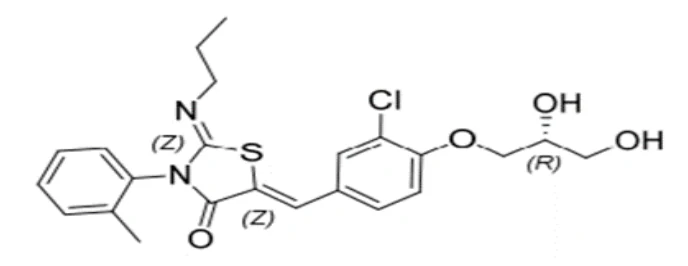
Physicochemical properties: The drug substance is a white to light yellowish color powder with solubility of 0.669µg/mL in water at 20°C and practically insoluble or insoluble in aqueous media with pH of 1.23 to 12.79.
14. Clinical Trials
The efficacy and safety of PONVORY (ponesimod) was demonstrated in the Phase 3 study, OPTIMUM, a multicenter, randomized, double blind, parallel group active controlled superiority study in patients with relapsing MS treated for 108 weeks (Trial Design and Study Demographics
Table 7).
14.1. Clinical Trials by Indication
Treatment of Adult Patients with Relapsing Remitting Multiple Sclerosis (RRMS).
Trial Design and Study Demographics
Table 7 – Summary of Patient Demographics for the OPTIMUM Study in relapsing MS
| Study # | Study design | Dosage, route of administration and duration | Study subjects (n) | Mean age (range) | Sex |
| AC-058-B301 (OPTIMU M) | Randomized, multicenter, double-blind, parallel group, active-controlled superiority study with teriflunomide as the active comparator. | PONVORY 20 mg or teriflunomide 14 mg, Once-daily (oral) for 108 weeks. | Total=1133 PONVORY (n=567) Teriflunomide (n=566) | 37 years (18-55) | Male: 35% Female: 65% |
In OPTIMUM, 1133 patients were randomized to receive either PONVORY (N=567) or teriflunomide (N=566), beginning with a 14-day dose titration starting with 2 mg. (see 4.2 Recommended Dose and Dosage Adjustment).
The study included patients with relapsing course of MS from onset (RRMS or SPMS with superimposed relapses and an Expanded Disability Status Scale (EDSS) score of 0 to 5.5, having experienced at least one relapse within the prior year, or two relapses within the prior two years, or having at least one gadolinium-enhancing (Gd+) lesion on a brain MRI within the prior 6 months or at baseline.
The mean (median) time since first MS symptoms to randomization in the study was 7.6 (5.7) years, and the baseline demographic and disease characteristics were balanced between the treatment groups (Table 8).
The mean treatment exposure was 96.7 weeks for PONVORY treated patients and 97.5 weeks for the teriflunomide treated patients.
Table 8 – Key Baseline Characteristics, Full Analysis Set
| Characteristics | PONVORY N=567 | Teriflunomide N=566 |
|---|---|---|
| Characteristics | PONVORY N=567 | Teriflunomide N=566 |
| Baseline EDSS (mean) | 2.57 (SD 1.17) | 2.56 (SD 1.22) |
| Number of relapses in last year prior to study entry (mean) | 1.2 | 1.3 |
Any DMT* received within 2 years prior to randomization
| 37.6% 62.4% | 37.3% 62.7% |
| Presence of Gd+T1 lesions at baseline | 39.9% | 45.4% |
Presence of T2 lesions at baseline
| 11% | 8% |
| 89% | 92% | |
Mean time since most recent relapse (months) at screening (Min, Max) | 5.4 (0.2, 44.9) | 5.0 (0.3, 26.2) |
Multiple Sclerosis subtype
| 97.4% 2.6% | 97.5% 2.5% |
| Highly active disease# | 35.6% | 35.3% |
*DMT= MS disease modifying agent; SD=standard deviation
# A subject was considered to have highly active disease if one or both of the following conditions were fulfilled:
- 1)
Any DMT for MS received within 12 months prior to randomization and one or both of the following:
- ≥1 relapse within 1 year prior to study entry and the baseline MRI read centrally showed either ≥1 Gd+ T1 lesion and/or ≥9 T2 lesions
- Number of relapses within 1 year prior to study entry ≥ number of relapses between 2 and 1 year prior to study entry, for subjects with at least one relapse within 2 years prior to study entry.
- 2) ≥2 relapses within the 1 year prior to study entry and baseline EDSS score >2 and baseline MRI read centrally showed ≥1 Gd+ T1 lesion
Neurological evaluations were performed every 12 weeks as well as at the time of a suspected relapse. Brain MRIs were performed at baseline and at Weeks 60 and 108. Of the randomized patients, 86.4% of PONVORY treated patients and 87.5% of teriflunomide treated patients completed the study as per protocol.
The primary endpoint of the study was the annualized relapse rate (ARR) from baseline up to end of study (EOS).
The pre-specified hierarchical fallback testing sequence included the primary endpoint and the following secondary endpoints:
- 1) Change from baseline to Week 108 in fatigue related symptoms as measured by the Symptoms domain of the Fatigue Symptoms and Impacts Questionnaire – Relapsing Multiple Sclerosis (FSIQ–RMS).
- 2) Cumulative number of combined unique active lesions (CUALs, defined as new Gd+ T1 lesions plus new or enlarging T2 lesions [without double-counting of lesions]) from baseline to Week 108.
- 3) Time to 12 week confirmed disability accumulation (CDA) from baseline to EOS. A 12-week CDA was defined as an increase of at least 1.5 in EDSS for subjects with a baseline EDSS score of 0 or an increase of at least 1.0 in EDSS for subjects with a baseline EDSS score of 1.0 to 5.0, which was confirmed after 12 weeks.
- 4) Time to 24-week CDA from baseline to EOS.
Other MRI-based exploratory efficacy endpoints, including percent change in brain volume, were analyzed without correction for multiplicity or hierarchical testing.
Study Results
Results are presented in Table 9.
Table 9 – Results of the OPTIMUM Study Efficacy
| PONVORY | Teriflunomide | |||||||||
|---|---|---|---|---|---|---|---|---|---|---|
| N=567 | N=566 | |||||||||
| Annualized Relapse Rate | ||||||||||
| Mean Annualized Relapse Ratea | 0.202 | 0.290 | ||||||||
| Relative ARR reduction | 30.5% (p=0.0003)* | |||||||||
| Patients with at least one confirmed relapse | 29.3% | 39.4% | ||||||||
| Fatigue Symptoms Score | N=449 | N=458 | ||||||||
| Mean change from Baseline in FSIQ-RMSb Symptoms to Week 108 | −0.01 | 3.56 | ||||||||
| Mean difference | −3.57 (p=0.0019)* | |||||||||
| Cumulative number of Combined Unique Active Lesions (CUALs) | N=539 | N=536 | ||||||||
| Mean number of CUALs per yearc | 1.41 | 3.16 | ||||||||
| Relative Rate reduction | 56% (p<0.0001)* | |||||||||
| Brain volume | N=436 | N=434 | ||||||||
| Mean % change from Baseline to Week 108 in brain volumed | -0.91% | -1.25% | ||||||||
| Mean difference | 0.34%#* | |||||||||
| Confirmed Disability Accumulation (CDA) | N=567 | N=566 | ||||||||
| Patientse with first 12-week CDA | 10.8% | 13.2% | ||||||||
| Relative risk reductionf | 17% (p = NS) | |||||||||
| Patientse with first 24-week CDA | 8.7% | 10.5% | ||||||||
| Relative risk reductionf | 16% (p = NS) | |||||||||
All analyses are based on the full analysis set (FAS), which includes all randomized patients. N refers to the number of patients included in each of the endpoint analysis, per treatment group.
a Defined as confirmed relapses per year up to EOS (Negative binomial regression model with stratification variables (EDSS ≤ 3.5 versus EDSS > 3.5; DMT within last 2 years prior to randomization [Yes/No]) and the number of relapses in the year prior to study entry (≤1, ≥2) as covariates)
b Fatigue Symptoms and Impact Questionnaire – Relapsing Multiple Sclerosis (FSIQ–RMS), assessed over a 7-day period on a scale normalized from 0-100. A negative change from baseline indicates an improvement in fatigue symptoms c Defined as new Gd+ T1 lesions plus new or enlarging T2 lesions [without double counting of lesions] per year from baseline to Week 108 (Negative binomial regression model with stratification factors and Gd+ T1 lesions (present/absent) at baseline as covariates)
d Mixed Effect Model with linear time effect adjusted for stratification factors, GD+ T1 lesions (present/absent) and normalized brain volume at baseline
e Based on time to first 12-Week/24-Week CDA event up to Week 108 (Kaplan-Meier estimates)
f Defined as time to 12-Week/24-Week CDA from baseline to EOS (Stratified Cox proportional hazard model, p value based on the stratified log rank test)
* Statistically significant, according to the predefined multiplicity testing strategy
p=NS: not statistically significant, treatment comparisons: Relative rate/risk (PONVORY vs Teriflunomide) and Mean difference (PONVORY - Teriflunomide).
# Nominally statistically significant (nominal p-value <0.0001)
Primary Endpoint:
Annualized Relapse Rate
PONVORY was statistically significantly superior to teriflunomide in relative reduction of the annualized relapse rate (ARR) up to EOS by 30.5% (p=0.0003) (Figure 1).
Figure 1 – Confirmed Relapses up to End of Study- Annualized Relapse Rate from Negative Binomial Regression (Full Analysis Set)
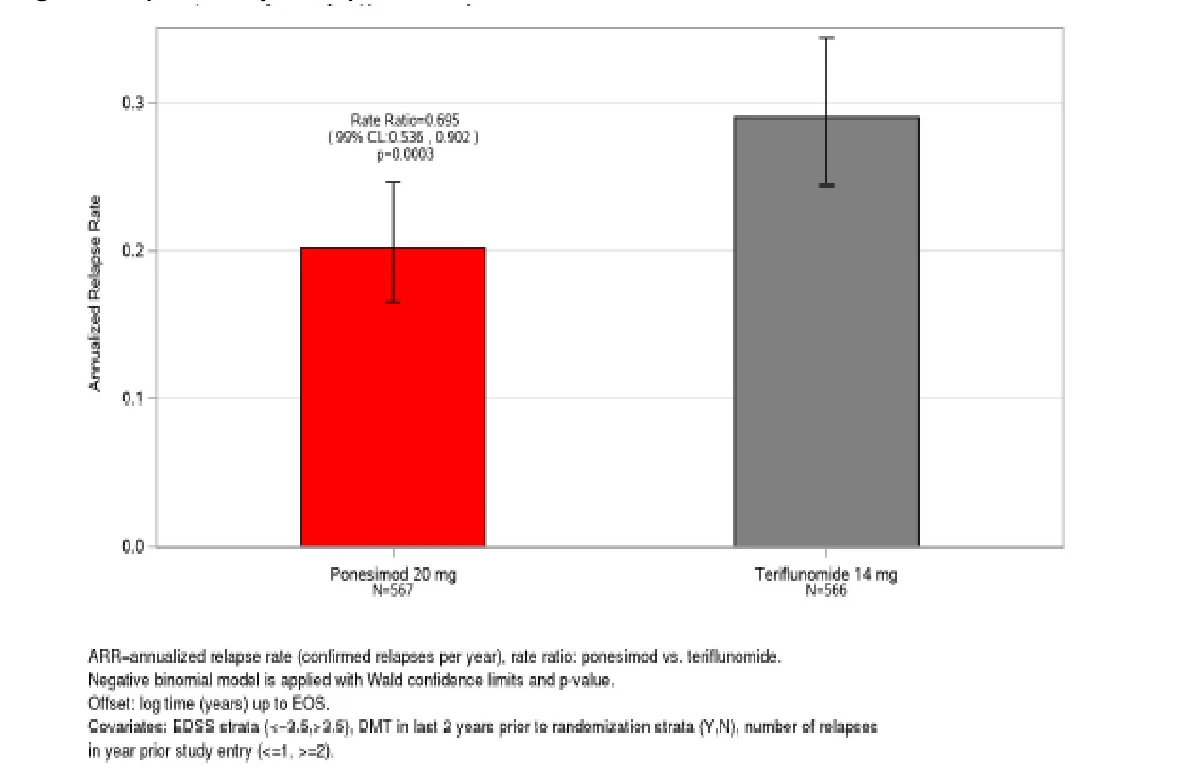
Secondary Endpoints:
Change from Baseline to Week 108 in Fatigue related Symptoms (FSIQ–RMS)
The FSIQ-RMS symptoms domain (FSIQ-RMS-S) consists of 7 items with a recall of 24 hours measured on an 11-point numeric rating scale, ranging from 0 = “Not at all” to 10 = “Very Severe”. Data are collected over 7 consecutive days to assess fatigue related symptoms. Standardized scores range from 0 to 100, with a higher score indicating greater fatigue.
The secondary endpoint of change from baseline to Week 108 in the Symptoms domain of the FSIQ-RMS, showed PONVORY had a superior effect compared to teriflunomide at Week 108 on fatigue symptoms mean difference: −3.57 [95% CLs: −5.83, −1.32]; the difference was statistically significant with p=0.0019.
The FSIQ-RMS impacts domain (FSIQ-RMS-I) consists of 13 items that assess impacts of fatigue-related symptoms in three subdomains: physical impacts, cognitive and emotional impacts, and coping impacts. The instrument has a recall period of 7 days with items measured on a 5-point Likert scale, ranging from no impact (0) to extreme impact (4). Scores for the three FSIQ-RMS-I domains are standardized to range from 0 to 100 with higher scores indicating greater impact.
Exploratory analyses using the change from baseline to Week 108 in fatigue-related Impact scores as measured by the impact domain of the FSIQ–RMS showed that the LS mean difference (PONVORY 20 mg − teriflunomide 14 mg) in change from baseline to Week 108 for the physical impact subdomain was not significant with a mean difference of −2.31 (95% CLs: −5.26, 0.64; p=0.1247); the cognitive/emotional impact subdomain was also not significant with a mean difference of −2.43 (95% CLs: −4.93, 0.07; p=0.0568); and the coping impact subdomain, was significant with a mean difference of −2.94 (95% CLs: −5.86, −0.01; p=0.0489).
Cumulative number of CUALs, from baseline to Week 108
PONVORY was statistically significantly superior to teriflunomide in reducing the relative rate of CUALs on brain MRIs from baseline to Week 108 by 56% (p<0.0001).
Confirmed Disability Accumulation
PONVORY reduced the risk of 12- and 24-week CDA by 17% and 16% respectively, compared to teriflunomide, however the difference did not reach statistical significance.
15. Microbiology
No microbiological information is required for this drug product.
16. Non-Clinical Toxicology
General toxicology: Repeat-dose Toxicity
In the lung, pulmonary histiocytosis and lung weight increase were observed in mice, rats, and dogs after treatment with ponesimod. These findings are considered secondary to increased vascular permeability caused by S1P1 receptor modulation. The no observed adverse effect levels (NOAELs) for lung findings were identified in rat and dog 4-week toxicity studies and were associated with AUC0-24 and Cmax values similar or inferior to human total and peak systemic exposures following recommended human dose (RHD) of 20 mg/day.
In the heart of the dog, arterial lesions were observed in the posterior papillary muscles of the left ventricle, after 13, 26, and 52 weeks of treatment at ≥5 mg/kg/day. The finding is considered secondary to hemodynamic changes and the dog is known to be sensitive to ponesimod-related hemodynamic changes in the heart. When compared with human systemic exposures at RHD of 20 mg/day the NOAEL in the dog was 4.3 and 6.2 times the human systemic exposures based on AUC0–24 and Cmax, respectively.
Carcinogenicity and Genotoxicity: Oral carcinogenicity studies of ponesimod were conducted in mice and rats. In rats, ponesimod was administered at oral doses of 3, 10 and 30 mg/kg/day in males and 10, 30 and 100 mg/kg/day in females for up to 2 years.
Ponesimod did not induce neoplastic lesions. The highest doses tested (30/100 mg/kg/day) are 3.6 and 18.7 times the human systemic exposures at RHD of 20 mg/day based on the steady state clinical AUC0-24.
In mice, ponesimod was administered at oral doses of 50, 150 and 400 mg/kg/day in males and 30, 100 and 300 mg/kg/day in females for up to 2 years. The incidence of combined hemangiosarcoma and hemangioma was increased in males in all treated dose levels and females at the high dose level. A no-observed-effect-level (NOEL) for carcinogenesis was not established in males and was the lowest dose in females. The AUC0-24 for males and females at the lowest doses tested (50 and /30 mg/kg/day respectively) are 4.9 and 2.4 times the human systemic exposures at RHD of 20 mg/day.
Ponesimod was negative in a battery of in vitro (Ames, chromosomal aberration in mammalian cells) and in vivo (micronucleus in rat) assays.
Reproductive and developmental toxicology: When ponesimod was orally administered (1, 10 and 40 mg/kg/day) to pregnant rats during the period of organogenesis, embryo-fetal survival, growth, and morphological development were severely compromised at 40 mg/kg/day.
Teratogenic effects with major skeletal and visceral abnormalities were observed at doses ≥ 10 mg/kg/day. A NOAEL for embryo fetal developmental toxicity in rats was established at 1 mg/kg/day. When ponesimod was orally administered (0.25, 1 and 4 mg/kg/day) to pregnant rabbits during the period of organogenesis, a slight increase in post-implantation losses and fetal findings (visceral and skeletal) were noted at 4 mg/kg/day.
The embryo-fetal NOAEL in rabbits was 1 mg/kg/day. The AUC0-24 in rats and rabbits at the NOAEL (1 mg/kg/day in both species) are lower than the human systemic exposures at the RHD of 20 mg/day.
When ponesimod was orally administered (5, 10 and 20 mg/kg/day) to female rats throughout pregnancy and lactation, decreased pup survival and body weight gain, and reduced fertility (females only) were observed in the offspring at 20 mg/kg/day only. All ponesimod treated F1 pups had delayed sexual maturation. The AUC0-24 at the NOAEL of 10 mg/kg/day is 1.2 to 1.5 times that in humans at the RHD of 20 mg/day.
Fertility
In the male and female fertility studies in rats, mating and fertility were unaffected by treatment at doses up to 100 mg/kg/day. There was no effect on early pregnancy and no effect on sperm parameters. Plasma exposure (AUC) at the NOAEL in the rat was approximately 18 and 31 times (for males and females, respectively) that in humans at the RHD of 20 mg/day.
No effects were observed on male reproductive organs when evaluated histopathologically in repeat dose toxicology studies for up to 26 or 52 weeks in rats or dogs, respectively.