


Patient Medication Information: uses, side effects, how to take - Med-Olopatadine
ABOUT THIS MEDICATION
What the medication is used for:
Med-Olopatadine is used for the prevention and treatment of signs and symptoms of allergic conjunctivitis.
Allergic conjunctivitis: Some materials (allergens) like pollens, house dust or animal fur may cause allergic reactions resulting in itching, redness as well as swelling of the surface of your eye.
What it does:
Med-Olopatadine is a medicine for treatment and control of allergic conditions of the eye. It works in two different ways by reducing and controlling the intensity of the allergic reaction.
When it should not be used: Med-Olopatadine should not be used if you are allergic (hypersensitive) to olopatadine hydrochloride, any of the other ingredients or components of the container (see What the non-medicinal ingredients are).
Tell your doctor if you have allergies.
Do not use Med-Olopatadine in children under the age of three years.
What the medicinal ingredient is: olopatadine hydrochloride
What the important non-medicinal ingredients are: Preservative: benzalkonium chloride Other ingredients include: disodium phosphate anhydrous, hydrochloric acid 37% and/or sodium hydroxide (to adjust pH), water for injection and sodium chloride. Tiny amounts of hydrochloric acid or sodium hydroxide are sometimes added to maintain proper pH balance.
What dosage forms it comes in: Ophthalmic solution (eye drops): 0.1% w/v, supplied in 10 mL LDPE bottles with a 5 mL fill volume.
WARNINGS AND PRECAUTIONS
Pregnancy or breast-feeding: If you are pregnant or planning to become pregnant, talk to your doctor before you use Med-Olopatadine.
If you are breast-feeding, do not use Med-Olopatadine; it may get into your breast milk.
Use of Med-Olopatadine and use of contact lenses
- Do not wear contact lenses if your eyes are red.
- Med-Olopatadine contains a preservative, benzalkonium chloride, which may cause eye irritation and is known to discolour soft contact lenses. Do not use the drops while wearing contact lenses.
- Remove your contacts before applying Med-Olopatadine and wait at least 15 minutes before putting your contacts back in.
USE of Med-Olopatadine with other eye drops or ointments
- If you use other eye drops, wait at least 5 minutes between putting in Med-Olopatadine and the other drops.
- Apply eye ointments last.
Driving and using machines: You may find that your vision is blurred for a time just after you use Med-Olopatadine. Do not drive or use machines until your vision is clear.
INTERACTIONS WITH THIS MEDICATION
Please tell your doctor if you are taking or have recently taken any other medicines, even products you have bought yourself without prescription or natural health products.
There are no known drugs that interact with Med-Olopatadine.
PROPER USE OF THIS MEDICATION
Med-Olopatadine is an eye drop. Only use it in your eye(s).
If you are using other eye drops, wait at least 5 minutes before putting in Med-Olopatadine and other eye drops. If you are using an eye ointment, you should apply it last.
Remove your contacts before applying Med-Olopatadine and wait at least 15 minutes before putting your contacts back in.
Usual dose: Adults and Children (3 years and older): 1 to 2 drops in each affected eye twice daily.
Instructions for use:
IMPORTANT: PLEASE READ
- 1 2
- 1. Get the Med-Olopatadine bottle and a mirror.
- 2. Wash your hands.
- 3. Twist off the cap, being careful not to touch the dropper tip. After cap is removed: if tamper evident snap collar is loose, remove before using product.
- 4. Hold the bottle, pointing it down, between your thumb and middle finger.
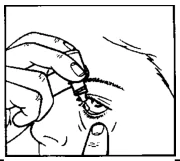
- 5. Tilt your head back. Pull down your eyelid with a clean finger, until there is a ‘pocket’ between the eyelid and your eye. The drop will go in here (picture 1).
- 6. Bring the bottle tip close to the eye. Use the mirror if it helps. Do not touch your eyelid, or any surface with the dropper. It could contaminate the drops, cause an eye infection and damage the eyes.
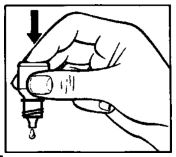
- 7. Gently press on the base of the bottle with your forefinger to release one drop at a time. Do not squeeze the bottle: it is designed so that just a gentle press on the bottom is all that is required (picture 2).
- 8. If you use drops in both eyes, repeat the steps for the other eye.
- 9. Put the bottle cap firmly back on immediately after use.
Overdose:
| If you think you, or a person you are caring for, have taken too much Med-Olopatadine, contact a healthcare professional, hospital emergency department, regional poison control centre or Health Canada’s toll-free number, 1-844 POISON-X (1-844-764-7669) immediately, even if there are no signs or symptoms. |
|---|
If you get too much in your eyes, rinse it all out with warm water. Don’t put in any more drops until it’s time for your next regular dose.
Missed dose:
If you forget to use Med-Olopatadine, use a single drop as soon as you remember, and then go back to your regular routine. Do not use a double dose to make up for the one missed.
SIDE EFFECTS AND WHAT TO DO ABOUT THEM
A small number of people who use Med-Olopatadine may get side effects. They can be unpleasant, but most of them disappear rapidly.
You can usually continue using the drops, unless the effects are serious. If you’re worried, talk to a doctor or pharmacist.
Side effects may include:
In the eye:
- eye problems such as dry, itchy, red, irritated or crusted eyes
- eye surface inflammation with out without surface damage
- eye discharge
- eye pain
- increased tear production
- eyelid redness, spasm, swelling or dryness
- sensitivity to light
- blurred vision
- staining in your eye
- burning, stinging or gritty feeling or a feeling as if something is trapped in the eye.
Other areas of your body:
- headache
- dizziness
- fatigue or tiredness
- nasal dryness
- a dry mouth
- a change in your sense of taste
- nausea
- red or itchy skin.
If you notice any side effects, other than discomfort, please inform your doctor or pharmacist.
SERIOUS SIDE EFFECTS AND WHAT TO DO ABOUT THEM
| Symptom / effect | Talk to your healthcare professional | Stop taking this drug and get immediate medical help | ||||
|---|---|---|---|---|---|---|
| Only if severe | In all cases | |||||
| Rare | Allergic reactions: swelling of the mouth and throat, shortness of breath, hives, severe itching and rash | ✓ | ||||
This is not a complete list of side effects. For any unexpected effects while taking Med-Olopatadine, contact your doctor or pharmacist.
HOW TO STORE IT
Store at 4°C-30°C. Throw away the bottle at the end of treatment or 28 days after opening, whichever happens first.
IMPORTANT: PLEASE READ
Keep out of the reach and sight of children.
Reporting Side Effects
You can report any suspected side effects associated with the use of health products to Health Canada by:
NOTE: Contact your healthcare professional if you need information about how to manage your side effects. The Canada Vigilance program does not provide medical advice. |
|---|
If you want more information about Med-Olopatadine:
- Talk to your healthcare professional
- Find the full product monograph that is prepared for healthcare professionals and includes this Consumer Information by visiting the Health Canada Drug Product Database website: (https://www.canada.ca/en/health-canada/services/drugs-health-products/drug-products/drug-product-database.html); or by calling 416-444-4467.