


Product Monograph - Metvix
Recent Major Label Changes
| 1 Indication | 2026-07 |
|---|---|
| 4 Dosage and Administration, 4.4 Administration | 2026-07 |
| 7 Warnings and Precautions | 2026-07 |
Table of Contents
Certain sections or subsections that are not applicable at the time of the preparation of the most recent authorized product monograph are not listed.
Recent Major Label Changes ................................................................................................... 2
Table of Contents ................................................................................................................... 2
Part 1: Healthcare Professional Information ........................................................................... 5
- 1.
Indications ....................................................................................................................... 5
1.1. Pediatrics ..................................................................................................................... 5
1.2. Geriatrics ..................................................................................................................... 5
- 2. Contraindications ............................................................................................................ 5
- 3. Serious Warnings and Precautions Box ............................................................................ 5
- 4.
Dosage and Administration ............................................................................................. 6
4.2. Recommended Dose and Dosage Adjustment ............................................................ 6
4.4. Administration............................................................................................................. 6
4.5. Missed Dose ................................................................................................................ 9
- 5. Overdose ......................................................................................................................... 9
- 6. Dosage Forms, Strengths, Composition, and Packaging ................................................... 9
- 7.
Warnings and Precautions ............................................................................................. 10
General ............................................................................................................................... 10
Cardiovascular .................................................................................................................... 10
Hematologic........................................................................................................................ 11
Monitoring and Laboratory Tests ....................................................................................... 11
Neurologic .......................................................................................................................... 11
Ophthalmologic .................................................................................................................. 11
Reproductive Health ........................................................................................................... 11
Sensitivity/Resistance ......................................................................................................... 11
7.1. Special Populations ................................................................................................... 12
7.1.1. Pregnancy ...................................................................................................... 12
7.1.2. Breastfeeding ................................................................................................ 12
7.1.3. Pediatrics ....................................................................................................... 12
7.1.4. Geriatrics ....................................................................................................... 12
7.1.5. Immunocompromised Patients ..................................................................... 12
- 8.
Adverse Reactions ........................................................................................................ 12
8.1. Adverse Reaction Overview ....................................................................................... 12
8.2. Clinical Trial Adverse Reactions ................................................................................. 13
8.3. Less Common Clinical Trial Adverse Reactions .......................................................... 16
8.4. Abnormal Laboratory Findings: Hematologic, Clinical Chemistry and Other Quantitative Data ...................................................................................................... 17
8.5. Post-Market Adverse Reactions ................................................................................ 17
- 9.
Drug Interactions ........................................................................................................... 17
9.2. Drug Interactions Overview ....................................................................................... 17
9.3. Drug-Behaviour Interactions ..................................................................................... 17
9.4. Drug-Drug Interactions .............................................................................................. 17
9.5. Drug-Food Interactions ............................................................................................. 18
9.6. Drug-Herb Interactions .............................................................................................. 18
9.7. Drug-Laboratory Test Interactions ............................................................................ 18
- 10.
Clinical Pharmacology .................................................................................................... 18
10.1. Mechanism of Action ................................................................................................ 18
10.2. Pharmacodynamics ................................................................................................... 18
10.3. Pharmacokinetics ...................................................................................................... 18
- 11. Storage, Stability, and Disposal ...................................................................................... 19
- 12. Special Handling Instructions ......................................................................................... 19
Part 2: Scientific Information ................................................................................................ 20
- 13. Pharmaceutical Information .......................................................................................... 20
- 14.
Clinical Trials .................................................................................................................. 20
14.1. Clinical Trials by Indication ........................................................................................ 20
Actinic Keratosis Using METVIX c-PDT ................................................................................... 20
Actinic Keratosis Using METVIX DL-PDT ................................................................................ 24
Superficial Basal Cell Carcinoma Using METVIX c-PDT ........................................................... 26
- 15. Microbiology ................................................................................................................. 29
- 16. Non-Clinical Toxicology .................................................................................................. 29
Patient Medication Information ........................................................................................... 33
Part 1: Healthcare Professional Information
1. Indications
METVIX® (methyl aminolevulinate topical cream) is indicated for:
- Actinic Keratosis
METVIX topical cream in combination with 630 nm wavelength red light illumination using conventional photodynamic therapy (c-PDT) or in combination with daylight (daylight photodynamic therapy [DL-PDT] is indicated for the treatment of thin or non-hyperkeratotic and non-pigmented actinic keratosis on the face and scalp.
- Primary superficial basal cell carcinoma
METVIX topical cream in combination with 630 nm wavelength red light illumination using conventional photodynamic therapy (c-PDT) is indicated for the treatment of biopsy-confirmed primary superficial basal cell carcinoma outside the H-zone of the face (e.g. ears, nose) when other therapies are considered less appropriate.
1.1. Pediatrics
Pediatrics (<18 years of age): Based on the data submitted and reviewed by Health Canada, the safety and efficacy of METVIX in pediatric patients has not been established; therefore, Health Canada has not authorized an indication for pediatric use. It is not recommended that METVIX cream be used in pediatric patients (see 7.1.3 Pediatrics (< 18 years of age).
1.2. Geriatrics
Geriatrics (≥ 65 years of age): Evidence from clinical studies and experience suggests that no overall differences in safety and efficacy were observed between patients aged 65 years and older and those who were younger.
2. Contraindications
- Patients who are hypersensitive to this drug or aminolevulinic acid or to any ingredient in the formulation (including peanut and almond oil) or component of the container. For a complete listing, see 6 Dosage Forms, Strengths, Composition and Packaging section of the Product Monograph.
- Patients with cutaneous photosensitivity/porphyria.
- Patients with morpheaform basal cell carcinoma.
3. Serious Warnings and Precautions Box
METVIX should be administered by trained healthcare professionals only. Avoid contact with eyes or mucous membranes. Avoid inadvertent contact with healthy skin (see 7 Warnings and Precautions, Sensitivity/Resistance section). |
|---|
4. Dosage and Administration
4.2. Recommended Dose and Dosage Adjustment
- Actinic Keratosis: For treatment of thin or non-hyperkeratotic and non-pigmented actinic keratosis lesions on the face and scalp, one treatment session with METVIX c-PDT using red LED light or daylight (DL-PDT) should be performed. The treated lesions should be evaluated after 3 months and if needed, one additional treatment session can be performed. METVIX c-PDT or DL-PDT is not recommended for treatment of Grade III hyperkeratotic lesions. A maximum of 2 g of METVIX cream per treatment session should be applied.
- Superficial Basal Cell Carcinoma (outside the H-zone of the face): One treatment session with METVIX c-PDT using red LED light should be performed with a second treatment session 7 days later. The treated lesions should be evaluated after 3 months, and if needed, two additional treatment sessions 7 days apart should be performed. A maximum of 2 g of METVIX cream per treatment session should be applied.
4.4. Administration
- Use of METVIX cream without subsequent photodynamic therapy (c-PDT or DL-PDT) is not recommended.
- All steps below are to be performed by a healthcare professional wearing nitrile gloves and universal precautions should be taken. Vinyl and latex gloves do not provide adequate protection when using this product.
METVIX c-PDT for Actinic Keratosis (AK lesions and/or field cancerization) and Superficial Basal Cell Carcinoma
One METVIX c-PDT session consists of:
- 1) Lesion debriding
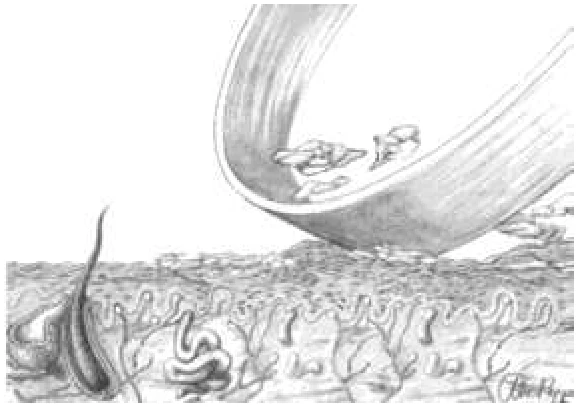
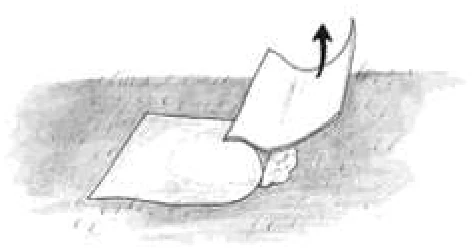
Before applying METVIX cream, the surface of the lesions for AK should be prepared with a small dermal curette to remove scales and crusts and to roughen the surface of the lesion (Fig. 1 and Fig. 2). This is to facilitate access of the cream and light to all parts of the lesion or field-directed treatment for AK.
Figure 1 Figure 2

Application of METVIX cream
Using a spatula, apply a layer of METVIX cream about 1 mm thick to the lesion or multiple lesions (field up to 20 cm2, approximately) and approximately 5-10 mm of the surrounding area. Multiple lesions may be treated during the same treatment session. Each treatment field should be limited to the size of the light field of the lamp.
- 2) Cover the lesion(s)
The area to which the cream has been applied should then be covered with an occlusive, non - absorbent dressing (Fig. 3). After cream application, patients should avoid exposure of the treatment sites to sunlight or bright indoor light (e.g., examination lamps, operating room lamps, tanning beds, or lights at close proximity) prior to red light treatment. Patients should protect treated areas from the sun by wearing a wide-brimmed hat, protective clothing or similar covering of light-opaque material.
Sunscreens will not protect against photosensitivity reactions caused by visible light. The treated site should be protected from extreme cold with adequate clothing or by remaining indoors between the application of METVIX cream and the PDT light treatment.
Figure 3
Wait for 3 hours (at least 2.5 hours, but no more than 4 hours) (see 7 Warnings and Precautions)
METVIX cream should not be applied for longer than the recommended time.
- 3) Removal of Dressing and Rinse Off Excess Cream
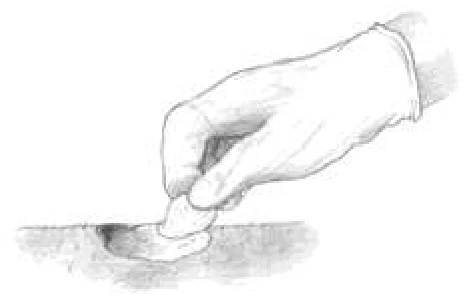
Following removal of the occlusive dressing, clean the area with saline and gauze (Fig. 4).
Figure 4
- 4) Illumination of METVIX for AK (see 7 Warnings and Precautions)
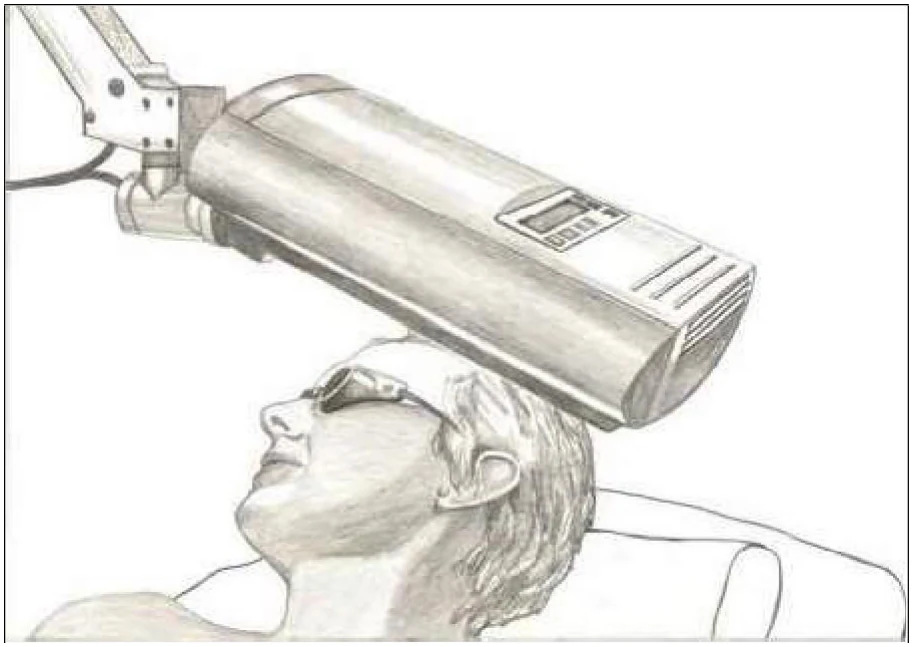
It is important to ensure that the correct light dose is administered. The light intensity for lesion-directed treatments or field-directed treatments for AK surface should not be higher than 200 mW/cm2. Patient and operator should adhere to safety instructions and precautions provided with the lamp. The patient and operator should wear protective goggles during illumination. The lamp should be carefully positioned so that dosing is accurate and immediately thereafter the lesion should be exposed to red light at 630 nm and a total light dose of 37 J/cm2 (Fig. 5).
Figure 5
Patients should be advised that transient stinging and/or burning at the target lesion sites may occur during the period of light exposure. It is not necessary to protect healthy skin surrounding the lesions during light exposure.
After illumination of METVIX cream, the area treated should be kept covered and away from light for at least 48 hours.
METVIX DL-PDT for Actinic Keratosis (treatment of AK lesions and/or field cancerization)
METVIX DL-PDT can be used if the temperature conditions (ideally >10°C and <35°C) are suitable to stay comfortably outdoors for 2 hours. Daylight conditions may not be sufficient for METVIX DL-PDT from November to March. If the weather is rainy, snowy or is likely to become so, METVIX DL-PDT should not be used.
Figure 6

One treatment session using daylight consists of:
Sunscreen Application: Sunscreen should be applied to all sun exposed areas, including the treatment areas, prior to lesion preparation. Sunscreen used should offer adequate protection (SPF30 or higher) and must not include physical filters (e.g. titanium dioxide, zinc oxide, iron oxide) as these inhibit absorption of visible light which may impact efficacy. Only sunscreens with chemical filters should be used with daylight procedure.
Lesion debriding: Once sunscreen has dried and before applying METVIX cream, the surface of the lesions should be prepared with a small dermal curette to remove scales and crusts and to roughen the surface of the lesion (Fig.1 and Fig.2). This is to facilitate access of the cream and light to all parts of the lesion or field-directed treatment.
Application of METVIX cream: Healthcare professionals should wear nitrile gloves during this step and universal precautions should be taken. Using a spatula, apply a thin layer (about 1 mm) of METVIX to the lesion or multiple lesions. There is no need to cover the lesion(s).
Daylight therapy: Patients should go outside after METVIX application or, at the latest, 30 minutes later in order to avoid excessive protoporphyrin IX accumulation which would lead to greater pain on light exposure.
In order to minimize pain and ensure maximum efficacy the patient should then stay outdoors for 2 continuous hours in full daylight and avoid going indoors. On sunny days, should the patient feel uncomfortable in direct sunlight, shelter in the shade may be taken. Patients should make sure the treated area is continuously exposed to daylight and not covered.
Rinse Off Excess Cream: Following the 2-hour exposure period, patients should be instructed to wash the METVIX off with soap and water.
4.5. Missed Dose
If the patient for any reason cannot have the red light treatment 3 hours after METVIX application, the cream should be rinsed off with saline and gauze, and treated areas should be protected from sunlight and prolonged and intense light for 2 days.
5. Overdose
METVIX cream: METVIX cream overdose has not been reported in clinical trials or in postmarketing experience.No incidences of oral ingestion of METVIX cream have been reported. In the unlikely event that the drug is ingested, monitoring and supportive care is recommended.
Red Light: There is no information on overdose of red light following METVIX cream application. If red light overexposure and a skin burn occurs, the patient should be treated according to standard practice for the treatment of cutaneous burns.
| For the most recent information in the management of a suspected drug overdose, contact your regional poison control centre or Health Canada’s toll-free number, 1-844 POISON-X (1-844-764-7669). |
|---|
- 6. Dosage Forms, Strengths, Composition, and Packaging
Table 1 – Dosage Forms, Strengths, and Composition
| Route of Administration | Dosage Form / Strength / Composition | Non-Medicinal Ingredients |
|---|---|---|
| Cutaneous use | Cream | Cetostearyl alcohol, cholesterol, edetate disodium dihydrate, glycerin, glyceryl |
| 168 mg/g methyl aminolevulinate (as methyl aminolevulinate hydrochloride) | monostearate SE, isopropyl myristate, methylparaben, oil of sweet almond, oleyl alcohol, peanut oil, PEG-40 stearate, propylparaben, water, white petrolatum | |
Description
METVIX cream is an oil-in-water emulsion. METVIX cream contains methyl aminolevulinate hydrochloride equivalent to 168 mg/g of methyl aminolevulinate.
METVIX cream is packaged in a 2 gram aluminum tube sealed with an aluminum membrane and a screw cap.
7. Warnings and Precautions
Please see 3 Serious Warnings and Precautions Box.
General
Any UV-therapy should be discontinued before treatment.
METVIX c-PDT: Exposure to light may result in a stinging and/or burning sensation and may cause erythema and/or edema of the lesions.
Photosensitivity and Device Precautions – METVIX c-PDT:
After application of METVIX cream, the treatment site will become photosensitive. Patients should avoid exposure to light as it may result in a stinging and/or burning sensation and may cause erythema and/or edema of the lesions.
The patient, operator and other persons present during red light treatment should wear protective goggles that sufficiently screen out red light with wavelengths from 570 to 670 nm.
Carcinogenesis and Genotoxicity
Carcinogenicity studies have not been performed with methyl aminolevulinate.
Genotoxicity studies did not demonstrate mutagenic or clastogenic potential in standard in vitro and in vivo assays. Cytotoxicity and phototoxic effects observed at high exposures were not associated with genotoxic findings; however, the contribution of photoactivation in vivo could not be fully assessed (See 16 Non-clinical Toxicology).
Cardiovascular
Pain during illumination may induce increased blood pressure. Acute post-procedure hypertension and hypertensive crisis associated with pain during METVIX PDT have been reported. Severe hypertension was more frequently reported in patients with baseline hypertension, with severe pain or treated with large lesion area on the head.
Hematologic
METVIX cream has not been tested on patients with inherited or acquired coagulation defects. Bleeding could occur when removing scales and crusts using dermal curette. Patients with inherited or acquired coagulation defects or those taking anticoagulants may have an increased risk of prolonged bleeding.
Monitoring and Laboratory Tests
It is recommended to measure blood pressure in patients who experience severe pain. Illumination should be interrupted (in addition to taking specific measures when needed) if these patients also present severe hypertension.
Monitor signs of confusion or disorientation. If observed, PDT must be discontinued immediately.
Neurologic
Conventional Photodynamic Therapy (PDT) with a lamp may be a precipitating factor for transient global amnesia in very rare instances. Although the exact mechanism is not known, the stress and pain associated with illumination with the lamp may increase the risk of developing transient amnesia.
Ophthalmologic
Application of METVIX cream to the eyes or to mucous membranes should be avoided.
Reproductive Health
Fertility
There are no data on human fertility (see 16 Non-Clinical Toxicology).
Function
There are no data on sexual function (see 16 Non-Clinical Toxicology).
Teratogenic Risk
There are no data on teratogenic risk (see 16 Non-Clinical Toxicology).
Sensitivity/Resistance
Methyl aminolevulinate may cause sensitization by skin contact resulting in application site eczema or allergic contact dermatitis or more severe reactions such as angioedema. The non-medicinal ingredients cetostearyl alcohol and peanut oil may elicit local skin reactions such as contact eczema in rare cases, while methylparaben and propylparaben may sometimes cause allergic reactions.
Contact sensitization (allergenicity) has been observed in 14 -52% of subjects previously exposed to METVIX on at least 4 occasions. Cases of angioedema, eyelid edema, and face edema have been reported in the post-market setting. METVIX treatment should be discontinued in patients who experienced severe hypersensitivity reactions.
Skin
The safety and efficacy of METVIX cream has not been established in patients with porphyria or pigmented or highly infiltrating lesions. Thick (hyperkeratotic) actinic keratosis should not be treated with METVIX cream.
Redness, swelling, burning and stinging are expected as a result of therapy. If these symptoms increase in severity and persist longer than 3 weeks, the patient should contact their doctor.
7.1. Special Populations
7.1.1. Pregnancy
Intravenous methyl aminolevulinate was teratogenic in rabbits at a high dose (see 16 Non-Clinical Toxicology). It is not known whether METVIX cream can cause fetal harm when administered to a pregnant woman or can affect reproduction capacity.
Treatment with METVIX cream is not recommended during pregnancy. METVIX cream should be given to pregnant women only if the benefit risk ratio is favourable.
7.1.2. Breastfeeding
It is unknown if METVIX cream is excreted in human milk. Precautions should be exercised because many drugs can be excreted in human milk.
Breast-feeding should be discontinued for 48 hours after application of METVIX.
7.1.3. Pediatrics
Pediatrics (< 18 years of age): Actinic keratosis and basal cell carcinoma are seldom observed under the age of 18 and therefore, there is no experience with the use of METVIX-PDT in this population.
Based on the data submitted and reviewed by Health Canada, the safety and efficacy of METVIX in pediatric patients has not been established; therefore, Health Canada has not authorized an indication for pediatric use. METVIX cream is not recommended for use in pediatric patients.
7.1.4. Geriatrics
Geriatrics (> 65 years of age): Evidence from clinical studies and experience suggests that no overall differences in safety and efficacy were observed between patients aged 65 years and older and those who were younger.
7.1.5. Immunocompromised Patients
A study conducted in immunocompromised organ transplant recipients did not identify any safety concern in this population, adverse events being similar to those reported in trials in immunocompetent patients. However, the efficacy of METVIX in immunocompromised patients has not been well established.
8. Adverse Reactions
8.1. Adverse Reaction Overview
Adverse drug reactions are categorized as appearing at the treatment site or non-treatment site. The common adverse drug reactions reported in all studies of METVIX-PDT were local phototoxic reactions. Phototoxic reactions corresponded to reactions localized to the treatment site that are attributable to toxic effects of the photodynamic therapy. The most frequent symptoms are painful and burning skin sensation, typically beginning during illumination or soon after, lasting for a few hours and resolving on the day of treatment. The most frequent signs of phototoxicity are erythema and scab. The majority are of mild or moderate severity, rarely require early termination of illumination when using a lamp, and persist for 1 to 2 weeks or occasionally longer.
8.2. Clinical Trial Adverse Reactions
Clinical trials are conducted under very specific conditions. Therefore, the frequencies of adverse reactions observed in the clinical trials may not reflect frequencies observed in clinical practice and should not be compared to frequencies reported in clinical trials of another drug.
Actinic Keratosis Studies Using METVIX c-PDT:
A total of 231 subjects, each with 4 - 10 actinic keratoses were enrolled in 2 double-blind, randomized, vehicle-controlled clinical trials (Studies PC T404/05 and PC T405/05). Subjects were randomized to receive c-PDT using red-light, with a narrow spectrum around 630 nm and a light dose of approximately 37 J/cm2, with METVIX cream or vehicle cream on 2 occasions 1 week apart. Cream was applied for approximately 3 hours under occlusion followed immediately by illumination using c-PDT (Aktilite CL 128 lamp), delivering red light at a dose of 37 J/cm2.
Table 1-1 shows the incidence and severity of adverse drug reactions in these two trials.
Table 1-1: Incidence of Adverse Drug Reactions in ≥1% of Subjects with Actinic Keratoses in Studies PC T404/05 and PC T405/05 (Safety Population)
| METVIX & c-PDT n = 126 | Vehicle & c-PDT n = 105 | ||||||||
|---|---|---|---|---|---|---|---|---|---|
| All Events* | Severe | All Events* | Severe | ||||||
| Any Treatment Site Adverse Drug Reaction | 113 (90%) | 28 (22%) | 48 (46%) | 0 (0%) | |||||
| Skin burning/pain/discomfort | 109 (86%) | 25 (20%) | 38 (36%) | 0 (0%) | |||||
| Erythema | 80 (63%) | 7 (6%) | 11 (10%) | 0 (0%) | |||||
| Scabbing/crusting/blister/erosions | 36 (29%) | 2 (2%) | 1 (1%) | 0 (0%) | |||||
| Pruritus | 28 (22%) | 0 (0%) | 8 (8%) | 0 (0%) | |||||
| Skin or eyelid edema | 23 (18%) | 2 (2%) | 1 (1%) | 0 (0%) | |||||
| Skin exfoliation | 17 (14%) | 4 (3%) | 3 (3%) | 0 (0%) | |||||
| Skin warm | 5 (4%) | 0 (0%) | 2 (2%) | 0 (0%) | |||||
| Application site discharge | 3 (2%) | 0 (0%) | 0 (0%) | 0 (0%) | |||||
| Skin hemorrhage | 2 (2%) | 0 (0%) | 0 (0%) | 0 (0%) | |||||
| Skin tightness | 2 (2%) | 0 (0%) | 0 (0%) | 0 (0%) | |||||
| Skin hyperpigmentation | 2 (2%) | 0 (0%) | 0 (0%) | 0 (0%) | |||||
| Non Treatment Site Adverse Drug Reaction | 13 (10%) | 2 (2%) | 0 (0%) | 0 (0%) | |||||
| Headache | 3 (2%) | 1 (1%) | 0 (0%) | 0 (0%) | |||||
*Mild, Moderate, or Severe
Another prospective, randomized, comparative, multicentre study (Study PC T311/01) included a total of 211 subjects, with 1 - 8 actinic keratosis lesions located on the face or scalp. Subjects were randomized to receive METVIX cream either once (Regimen I), or twice at one week apart (Regimen II). The cream was applied for approximately 3 hours under occlusion followed immediately by photodynamic therapy (PDT) using a light dose of 37 J/cm2.
Table 1-2 shows the incidence and severity of adverse drug reactions in this trial.
Table 1-2 - Incidence of Adverse Drug Reactions in ≥1% of Subjects with Actinic
Keratosis in Study PC T311/01 (Safety Population)
| Treatment regimen | ||||||||||||
|---|---|---|---|---|---|---|---|---|---|---|---|---|
METVIX PDT Regimen I One Treatment (n = 105) | METVIX PDT Regimen II Two Treatments One Week Apart (n = 106) | |||||||||||
| All Events* n (%) | Severe n (%) | All Events* n (%) | Severe n (%) | |||||||||
| Any Treatment Site Adverse Drug Reactions | ||||||||||||
| Burning sensation skin | 16 (15%) | 0 (0%) | 20 (19%) | 0 (0%) | ||||||||
| Pain skin | 9 (9%) | 0 (0%) | 19 (18%) | 4 (3%) | ||||||||
| Erythema | 9 (9%) | 1 (1%) | 11 (10%) | 0 (0%) | ||||||||
| Edema skin | 2 (2%) | 0 (0%) | 10 (9%) | 1 (1%) | ||||||||
| Stinging skin | 6 (6%) | 0 (0%) | 3 (3%) | 0 (0%) | ||||||||
| Pricking skin sensation | 1 (1%) | 0 (0%) | 7 (7%) | 0 (0%) | ||||||||
| Itching | 2 (2%) | 0 (0%) | 4 (4%) | 0 (0%) | ||||||||
| Crusting | 1 (1%) | 0 (0%) | 4 (4%) | 0 (0%) | ||||||||
| Photosensitivity toxic reaction | 1 (1%) | 0 (0%) | 3 (3%) | 2 (2%) | ||||||||
| Skin ulceration | 1 (1%) | 0 (0%) | 3 (3%) | 0 (0%) | ||||||||
| Erosion | 2 (2%) | 1 (1%) | 0 (0%) | 0 (0%) | ||||||||
| Skin peeling | 1 (1%) | 0 (0%) | 1 (1%) | 0 (0%) | ||||||||
| Pruritus | 0 (0%) | 0 (0%) | 3 (3%) | 0 (0%) | ||||||||
| Eczema | 0 (0%) | 0 (0%) | 2 (2%) | 1 (1%) | ||||||||
| Drug eruption | 0 (0%) | 0 (0%) | 2 (2%) | 0 (0%) | ||||||||
| Folliculitis | 0 (0%) | 0 (0%) | 1 (1%) | 0 (0%) | ||||||||
| Rash | 0 (0%) | 0 (0%) | 1 (1%) | 0 (0%) | ||||||||
| Eruption | 0 (0%) | 0 (0%) | 1 (1%) | 0 (0%) | ||||||||
| Non-treatment Site Adverse Drug Reactions | ||||||||||||
| Lip swelling | 1 (1%) | 0 (0%) | 0 (0%) | 0 (0%) | ||||||||
| Lip ulceration | 1 (1%) | 0 (0%) | 0 (0%) | 0 (0%) | ||||||||
| Allergic reaction | 0 (0%) | 0 (0%) | 1 (1%) | 0 (0%) | ||||||||
| Infection aggravated | 0 (0%) | 0 (0%) | 1 (1%) | 0 (0%) | ||||||||
| Inf lammation localized | 0 (0%) | 0 (0%) | 1 (1%) | 0 (0%) | ||||||||
*Mild, moderate, severe
** Number (%) of subjects with at least one adverse drug reaction (i.e., if a patient reported the same reaction more than once, he/she was counted only once in the table)
Actinic Keratosis Studies Using METVIX DL-PDT:
In the two Phase III studies (Studies SPR.29102 and SPR.29112), a total of 231 patients with actinic keratosis were treated with METVIX DL-PDT on one side of the face and scalp. Of these 231 patients, 208 were treated with METVIX c-PDT and 23 with vehicle cream c-PDT on the contralateral side. Patients had 5-36 and 5-23 lesions per side in Studies SPR.29102 and SPR.29112, respectively. Local adverse drug reactions were reported less frequently on METVIX DL-PDT than on c-PDT treated sides (45.0% and 60.1% of subjects, respectively) (see Table 1-3). No new local adverse drug reactions were reported. METVIX DL-PDT was associated with significantly less pain compared to METVIX c-PDT (see 14 Clinical Trials).
Table 1-3 shows the incidence rates of adverse drug reactions in ≥1% of patients in the combined safety population of these two trials.
Table 1-3 - Incidence of Adverse Drug Reactions in ≥1% of Subjects with Actinic Keratosis in European and Australian Studies (Safety Population)
METVIX DL- PDT Treated Side (N=231) | METVIX c-PDT Treated Side (N=208) | Vehicle c-PDT Treated Side (N=23) | Unspecific Treated Side (N=231) | |
|---|---|---|---|---|
| System Organ Class/Preferred Term | n (%) | n (%) | n (%) | n (%) |
| All Adverse Drug Reactions | 104 (45.0%) | 125 (60.1%) | 7 (30.4%) | 6 (2.6%) |
| Infections and Infestations | 1 (0.4%) | 2 (1.0%) | - | - |
| Rash pustular | 1 (0.4%) | 2 (1.0%) | - | - |
Skin and Subcutaneous Tissue Disorders | 104 (45.0%) | 124 (59.6%) | 7 (30.4%) | - |
| Dermatitis | 1 (0.4%) | 1 (0.5%) | 1 (4.3%) | - |
| Erythema | 33 (14.3%) | 44 (21.2%) | 4 (17.4%) | - |
| Pain of skin | 12 (5.2%) | 17 (8.2%) | - | - |
| Photosensitivity reaction | 15 (6.5%) | 18 (8.7%) | 1 (4.3%) | - |
| Pruritus | 13 (5.6%) | 17 (8.2%) | 1 (4.3%) | - |
| Scab | 21 (9.1%) | 25 (12.0%) | - | - |
| Skin burning sensation | 12 (5.2%) | 18 (8.7%) | - | - |
| Skin erosion | - | 5 (2.4%) | - | - |
| Skin exfoliation | 2 (0.9%) | 4 (1.9%) | 1 (4.3%) | - |
| Skin hemorrhage* | 7 (3.0%) | 8 (3.8%) | 1 (4.3%) | - |
| Skin irritation | 1 (0.4%) | 2 (1.0%) | - | - |
| Skin edema | 2 (0.9%) | 2 (1.0%) | - | - |
| Skin reaction | 24 (10.4%) | 30 (14.4%) | - | - |
* this term includes post-procedural hemorrhage, hemorrhage and skin hemorrhage
Superficial Basal Cell Carcinoma Study:
A total of 234 subjects were screened and 196 subjects enrolled in the pivotal superficial basal cell carcinoma study. Regarding drug adverse events, there were more events and more subjects in METVIX c-PDT group than in surgery group (37% subjects with 65 related adverse events versus 14.6% subjects with 21 related adverse events). Most related adverse events were dermatologic and more frequent in METVIX c-PDT group (34% subjects with 61 related dermatologic adverse events versus 7.3% subjects with 8 adverse events). These adverse events are summarised in Table 1-4.
Table 1-4 - Incidence of Adverse Drug Reactions in ≥1% of Subjects in Superficial Basal
Cell Carcinoma Study (Safety Population)
| METVIX (N=100) | Surgery (N=96) | ||||||||||||||||
|---|---|---|---|---|---|---|---|---|---|---|---|---|---|---|---|---|---|
| METVIX (N=100) | Surgery (N=96) | ||||||||||||||||
| Mild | Moderate | Mild | Moderate | Severe | |||||||||||||
| Mild | Moderate | Mild | Moderate | Severe | |||||||||||||
| Any Adverse Event | 26 (26.0%) | 11 (11%) | 10 (10.4%) | 3 (3.1%) | 1 (1.0%) | ||||||||||||
| Any Adverse Event | 26 (26.0%) | 11 (11%) | 10 (10.4%) | 3 (3.1%) | 1 (1.0%) | ||||||||||||
| General Disorders and Administration Site Conditions | Pain | 1 (1%) | 1 (1%) | - | - | 1 (1.0%) | |||||||||||
| Infections and Infestations | All | 1 (1%) | -- | 3 (3.1%) | 1 (1.0%) | 1 (1.0%) | |||||||||||
| Application site infection | 1 (1%) | - | - | - | - | ||||||||||||
| Wound infection | - | - | 3 (3.1%) | 1 (1.0%) | 1 (1.0%) | ||||||||||||
| Neoplasms Benign, Malignant | Basal cell | - | 1 (1%) | - | - | - | |||||||||||
and Unspecified (Including Cysts and Polyps) | carcinoma | ||||||||||||||||
| Nervous System Disorders | Headache | 1 (1%) | - | - | - | - | |||||||||||
Skin and Subcutaneous Tissue Disorders | All | 24 (24%) | 9 (9%) | 5 (5.2%) | 1 (1.0%) | - | |||||||||||
| Milia | 2 (2%) | - | - | - | - | ||||||||||||
| Photosensitivity reaction | 22 (22%) | 9 (9%) | - | - | - | ||||||||||||
| Skin | - | 1 (1%) | - | - | - | ||||||||||||
| hyperpigmentation Erythema | - | - | 3 (3.1%) | - | - | ||||||||||||
| Keloid scar Pain of skin | - | - | 1 (1.0%) | - | - | ||||||||||||
| - | - | - | 1 (1.0%) | - | |||||||||||||
| Pruritus | - | - | 1 (1.0%) | - | - | ||||||||||||
| Scar | - | - | 1 (1.0%) | - | - | ||||||||||||
Injury, Poisoning and Procedural Complications | All | - | - | 4 (4.2%) | 1 (1.0%) | - | |||||||||||
| Post procedural pain | - | - | 2 (2.1%) | 1 (1.0%) | - | ||||||||||||
| Wound dehiscence | - | - | 2 (2.1%) | - | - | ||||||||||||
Musculoskeletal and Connective Tissue Disorders | Shoulder pain | - | - | 1 (1.0%) | - | - | |||||||||||
Surgical and Medical Procedures | All | - | - | 2 (2.1%) | - | - | |||||||||||
| Skin lesion excision | - | - | 1 (1.0%) | - | - | ||||||||||||
| Suture insertion | - | - | 1 (1.0%) | - | - | ||||||||||||
Related = possibly, probably or definitely related
The most commonly reported related adverse events were expected: photosensitivity reaction for METVIX c-PDT (31% subjects with 57 adverse events), and wound infection for surgery procedure (5.2% subjects with 5 adverse events). Among these subjects, there was 1 subject
(1.7%) in surgery group who reported related adverse events of severe intensity. In the METVIX c-PDT group, the majority of related adverse events were of mild severity.
Adverse Reactions from Other Clinical Trials
In addition, there were reports of paresthesia, and, urticaria, rash, skin hypopigmentation, heat rash, and fatigue in Phase III studies in which METVIX c-PDT was performed with a different lamp (CureLight 01). There were also isolated reports of scar in a do se ranging study performed with CureLight where a relationship to treatment was uncertain.
8.3. Less Common Clinical Trial Adverse Reactions
In Actinic Keratosis Studies Using METVIX c-PDT:
Eye disorders: eye pain, lacrimation increased
Gastrointestinal disorders: nausea
General disorders and administration site conditions: chills
Injury, poisoning and procedural complications: contusion
Nervous system disorders: dizziness
Skin and subcutaneous tissue disorders: hyperhidrosis
In Actinic Keratosis Studies Using METVIX DL-PDT:
Eye disorders: eye irritation, eye pain, eye swelling, eyelid edema, lacrimation increased
General disorders and administration site conditions: fatigue
Injury, poisoning and procedural complications: procedural dizziness
Nervous system disorders: headache
Skin and subcutaneous tissue disorders: blister, purpura, skin discomfort, skin swelling, skin tightness, swelling face
8.4. Abnormal Laboratory Findings: Hematologic, Clinical Chemistry and Other Quantitative Data
Clinical Trial Findings
No abnormalities attributable to treatment with METVIX PDT have been observed. The results of repeated-dose toxicity studies indicated that the liver was the target organ for high intravenous doses of methyl aminolevulinate in rats, but examination of liver function tests from phase I trials in humans did not reveal any changes that were inconsistent with random variation.
8.5. Post-Market Adverse Reactions
Nervous system disorders: Transient global amnesia (including confusional state and disorientation).
Skin and subcutaneous tissue disorders: Application site eczema, allergic contact dermatitis, angioedema, eyelid edema, face edema (swelling face), hypertension, rash pustular (application site pustule) and urticaria have been described in post-marketing reports. Most skin reactions were localized to the treatment area and were not severe; some cases of erythema and swelling have been more extensive or serious.
9. Drug Interactions
9.2. Drug Interactions Overview
There have been no studies of the interaction of METVIX with other drugs, including local anesthetics. It is possible that concomitant use of other known photosensitizing agents might increase photosensitivity reactions when treated with METVIX cream.
The demographic of the treated population is largely elderly patients receiving a variety of concomitant systemic medications, and there is no suggestion of any interaction between METVIX PDT and these medications.
9.3. Drug-Behaviour Interactions
The interaction of METVIX with individual behavioural risks (e.g. cigarette smoking, cannabis use, and/or alcohol consumption) has not been studied.
9.4. Drug-Drug Interactions
Interactions with other drugs have not been established.
9.5. Drug-Food Interactions
Interactions with food have not been established.
9.6. Drug-Herb Interactions
Interactions with herbal products have not been established.
9.7. Drug-Laboratory Test Interactions
Interactions with laboratory tests have not been established.
10. Clinical Pharmacology
10.1. Mechanism of Action
Photosensitization occurs through the metabolic conversion of methyl aminolevulinate (prodrug) to photoactive porphyrins (PAP), which accumulates in the skin lesions where METVIX cream has been applied. When exposed to light of appropriate wavelength and energy, the accumulated photoactive porphyrins produce a photodynamic reaction, resulting in an oxy gen dependent cytotoxic process. The absorption of light causes an excited state of the porphyrin molecules, and subsequent spin transfer from photoactive porphyrins to molecular oxygen generates singlet oxygen, which can further react to form superoxide and hydroxyl radicals. Photosensitization of lesions using METVIX cream, plus illumination with a red light source (630 nm wavelength red light) at 37 J/cm2, is the basis for METVIX photodynamic therapy.
When METVIX is used with daylight, protoporphyrin IX is continuously being produced and activated within the target cells during the 2 hours of daylight exposure creating a constant micro-phototoxic effect.
10.2. Pharmacodynamics
See 10.1 Mechanism of Action above.
10.3. Pharmacokinetics
Absorption
In vitro dermal absorption of radiolabelled methyl aminolevulinate applied to human cadaver skin has been studied. After 24 hours, the mean cumulative absorption through human skin was 0.26% of the administered dose. A skin depot containing 4.9% of the dose was formed. No corresponding studies in compromised human skin (damage similar to actinic keratosis, BCC, roughened surfaces or without stratum corneum) were performed.
There is no information on the pharmacokinetics of methyl aminolevulinate in human serum due to the instability of the drug in serum.
Distribution
In humans, the levels of photoactive porphyrins in the skin were indirectly determined through a semi-quantitative method measuring the skin fluorescence following methyl aminolevulinate application. A higher degree of accumulation of photoactive porphyrins in lesions compared to normal skin has been demonstrated after topical application of methyl aminolevulinate.
Metabolism
The metabolic pathway in humans by which photoactive porphyrins are produced from methyl aminolevulinate is not fully elucidated.
Elimination
After application of methyl aminolevulinate to the skin of human subjects for 3 hours, a subsequent illumination with a narrow red light spectrum at 630 nm wavelength and a total light dose of 37 J/ cm2 reduced the fluorescence of skin lesions near pre-treatment levels immediately after illumination, but it did not result in complete photobleaching. Thereafter, an increase in fluorescence 2 hours following the illumination was observed. Complete photobleaching was observed 24 hours following the illumination.
Special populations and conditions
The pharmacokinetics of methyl aminolevulinate has not been investigated in conditions such as hepatic insufficiency, or renal insufficiency. Any systemic effects are considered to be negligible due to selective accumulation of the compound in lesions compared to normal skin and since systemic absorption is usually minimal after topical administration (see 8 Adverse Reactions).
- 11. Storage, Stability, and Disposal
Store refrigerated 2-8°C.
Use contents within 3 months after opening. The product should not be used after 24 hours without refrigeration. Any unused medicinal product or waste material should be disposed of in accordance with local requirements.
12. Special Handling Instructions
Contact sensitization (allergenicity) has been observed with the use of METVIX cream (see 8 Adverse Reactions and 14 Clinical Trials). Care should be taken by individuals handling METVIX cream to avoid inadvertent skin contact. Nitrile gloves should be worn when applying and removing the cream.
Vinyl and latex gloves do not provide adequate protection from this product.
Part 2: Scientific Information
13. Pharmaceutical Information
Drug Substance
Non-proprietary name of the drug substance(s): methyl aminolevulinate (as hydrochloride)
Chemical name:
methyl 5-aminolevulinate hydrochloride,
5-aminolevulinic acid methyl ester hydrochloride,
5-amino-4-oxopentanoic acid methyl ester hydrochloride,
methyl 5-amino -4-oxopentanoate hydrochloride,
methyl 5-amino -4-oxovaleroate hydrochloride,
5-amino-4-oxovaleric acid methyl ester hydrochloride
Molecular formula and molecular mass: C6H11NO3•HCl, 181.62
Structural formula:
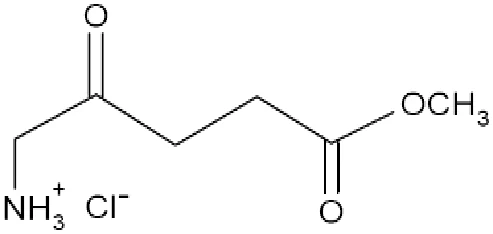
Physicochemical properties: Methyl aminolevulinate (as hydrochloride) is a cream to yellow-coloured powder that is freely soluble in water and methanol, soluble in ethanol, and practically insoluble in most organic solvents. Methyl aminolevulinate hydrochloride a weak acid; pKa = 8.1.
14. Clinical Trials
14.1. Clinical Trials by Indication
Actinic Keratosis Using METVIX c-PDT
Placebo-Controlled Studies
Study demographics and trial design
Studies PC T404/05 and PC T405/05 were placebo-controlled, double-blind, randomized, parallel-group Phase III studies designed to assess the safety and effectiveness of METVIX c-PDT for the treatment of actinic keratosis. A total of 211 randomized subjects with a total of 1555 non-hyperkeratotic actinic keratoses were studied. Patients were treated with METVIX c-PDT using a red light source (Aktilite CL128 lamp) at the recommended dose of 37 J/cm2. A second treatment session was performed 7 days later. All patients in both studies were Caucasians. Gender, age, and skin type were similar in the two studies and were well balanced in the treatment groups within each study. Their other demographic characteristics are found in Table 2-1.
The subject complete response rate was assessed 3 months after the last treatment. Lesion clinical complete response was defined as complete disappearance of a lesion upon visual inspection and palpation. If all treated lesions within a subject were in clinical complete response 3 months after treatment, the subject was assessed as a complete responder.
Table 2-1: Patient Demographics in Placebo-Controlled Studies in Actinic Keratosis
| Study PC T404/05 (Study 1) | Study PC T405/05 (Study 2) | Overall | |||||||||||||||||||||||
|---|---|---|---|---|---|---|---|---|---|---|---|---|---|---|---|---|---|---|---|---|---|---|---|---|---|
| METVIX c-PDT | Vehicle c-PDT | Total | METVIX c-PDT | Vehicle c-PDT | Total | METVIX c-PDT | Vehicle c-PDT | Total | |||||||||||||||||
| n = 49 | n = 47 | n = 96 | n = 57 | n = 58 | n = 115 | n = 106 | n = 105 | n = 211 | |||||||||||||||||
| Gender n (%) | |||||||||||||||||||||||||
| Male | 42 (86) | 37 (79) | 79 (82) | 46 (81) | 45 (78) | 91 (79) | 88 (83) | 82 (78) | 170 (81) | ||||||||||||||||
| Female | 7 (14) | 10 (21) | 17 (18) | 11 (19) | 13 (22) | 24 (21) | 18 (17) | 23 (22) | 41 (19) | ||||||||||||||||
| Age (y) | |||||||||||||||||||||||||
| Mean | 66.1 | 66.7 | 66.4 | 69.5 | 67.0 | 68.2 | 67.9 | 66.8 | 67.4 | ||||||||||||||||
| (SD) | (10.2) | (9.2) | (9.7) | (9.0) | (10.4) | (9.8) | (9.7) | (9.8) | (9.7) | ||||||||||||||||
| Range | 43 – 86 | 48 – 89 | 43 – 89 | 47 – 88 | 41 – 90 | 41 – 90 | 43 – 88 | 41 – 90 | 41 – 90 | ||||||||||||||||
| Number (%) of patients aged ≤65 and >65 years | |||||||||||||||||||||||||
| 21 (43) | 22 (47) | 43 (45) | 13 (23) | 28 (48) | 41 (36) | 34 (32) | 50 (48) | 84 (40) | ||||||||||||||||
| >65 y | 28 (57) | 25 (53) | 53 (55) | 44 (77) | 30 (52) | 74 (64) | 72 (68) | 55 (52) | 127 (60) | ||||||||||||||||
| Number (%) of patients with each skin type | |||||||||||||||||||||||||
| I | 12 (24) | 10 (21) | 22 (23) | 10 (18) | 12 (21) | 22 (19) | 22 (21) | 22 (21) | 44 (21) | ||||||||||||||||
| II | 22 (45) | 26 (55) | 48 (50) | 28 (49) | 23 (40) | 51 (44) | 50 (47) | 49 (47) | 99 (47) | ||||||||||||||||
| III | 12 (24) | 10 (21) | 22 (23) | 13 (23) | 18 (31) | 31 (27) | 25 (24) | 28 (27) | 53 (25) | ||||||||||||||||
| IV | 3 (6) | 1 (2) | 4 (4) | 6 (11) | 5 (9) | 11 (10) | 9 (8) | 6 (6) | 15 (7) | ||||||||||||||||
Study results
Table 2-2 shows patient complete response data. In all studies, METVIX-PDT was clearly superior to Vehicle-PDT in regards to patient complete response (p<0.0001).
Table 2-2: Patients with Complete Response - Placebo-Controlled Studies
| Study 1 | Study 2 | ||||||||
|---|---|---|---|---|---|---|---|---|---|
| METVIX c-PDT n = 49 | Vehicle c-PDT n = 47 | METVIX c-PDT n = 57 | Vehicle c-PDT n = 58 | ||||||
| Subjects with Complete Response | 29 59.2% | 7 14.9% | 39 68.4% | 4 6.9% | |||||
Table 2-3 shows the lesion complete response rates. In all studies, the lesion response rates were higher for METVIX-PDT than for Vehicle-PDT.
Table 2-3: Lesion Complete Response in Placebo-Controlled Studies
| Study 1 | Study 2 | ||||||||||||||||||
|---|---|---|---|---|---|---|---|---|---|---|---|---|---|---|---|---|---|---|---|
| METVIX c-PDT n = 363 | Vehicle c-PDT n = 360 | METVIX c-PDT n = 418 | Vehicle c-PDT n = 414 | ||||||||||||||||
| Lesions with Complete Response | 313 (86%) | 188 (52%) | 348 (83%) | 119 (29%) | |||||||||||||||
| Grade 1 | 259 | 267 | 182* | 161 | |||||||||||||||
| Face | Total | 191 | 201 | 99 | 88 | ||||||||||||||
| CR | 167 (87%) | 121 (60%) | 90 (91%) | 33 (38%) | |||||||||||||||
| Scalp | Total | 68 | 66 | 76 | 73 | ||||||||||||||
| CR | 63 (93%) | 29 (44%) | 66 (87%) | 31 (42%) | |||||||||||||||
| Grade 2 | 104 | 93 | 236* | 253 | |||||||||||||||
| Face | Total | 76 | 68 | 119 | 157 | ||||||||||||||
| CR | 65 (86%) | 29 (43%) | 103 (87%) | 35 (22%) | |||||||||||||||
| Scalp | Total | 28 | 25 | 115 | 96 | ||||||||||||||
| CR | 18 (64%) | 9 (36%) | 89 (77%) | 20 (21%) | |||||||||||||||
- p<0.0001
* The ITT population of Study 2 included 1 patient in the METVIX-PDT group with 9 lesions on the hands; seven grade 1 lesions (4% of all grade 1 lesions in this group) and two grade 2 lesions (1% of all grade 2 lesions). These lesions are included in the overall number of grade 1 and 2 lesions.
CR = complete response
There was no difference between response rates to METVIX c-PDT for Grade 1 lesions on the face and scalp (CR rates of 89 and 90% respectively). For Grade 2 lesions, the corresponding CR rates to METVIX c-PDT were 86% and 75% respectively.
Active-Controlled Studies
Study demographics and trial design
An open, non-inferiority, randomized study (Study PC T311/01) was conducted to compare two treatment regimens of METVIX c-PDT in patients with clinically confirmed AK lesions (average of 2 lesions/patient, range: 1-8) on the face or scalp. A total of 211 patients with 413 lesions were included in the study. METVIX cream was applied for 3 hours before illumination with a LED light source with an average wavelength of 630 nm and a light dosage of 37 J/ cm2.
Regimen I: Patients were treated once with METVIX c-PDT. Lesions with non-complete response were given a further treatment at the 3-month visit.
Regimen II: Treatment with METVIX c-PDT consisted of two treatment sessions one week apart.
All patients were clinically assessed three months after their final METVIX treatment.
All patients in this study were Caucasians. Gender, age, and skin type were similar in the two treatment groups.
Table 2-4: Patient Demographics - Study PC T311/01
Regimen I n = 105 | Regimen II n = 106 | ||||||
|---|---|---|---|---|---|---|---|
| Gender n (%) | |||||||
| Male | 41 (39) | 41 (39) | |||||
| Female | 64 (61) | 65 (61) | |||||
| Age (years) | |||||||
| Mean (SD) | 69 (10) | 68 (11) | |||||
| Range | 44-91 | 44-96 | |||||
| Skin Type n (%) | |||||||
| I | 7 (7) | 8 (8) | |||||
| II | 59 (56) | 58 (55) | |||||
| III | 27 (26) | 31 (29) | |||||
| IV | 9 (9) | 7 (7) | |||||
| V | 3 (3) | 2 (2) | |||||
Study results
Patient complete response rates (i.e., the proportion of patients where all lesions had shown complete clinical response) and lesion complete response rates for each treatment group are presented in Tables 2-5 and 2-6, respectively.
Table 2-5: Patients with Complete Response – Study PC T311/01
| Regimen I | Regimen II | ||
|---|---|---|---|
At study end PP and ITT* n = 105 | After one session only PP and ITT* n = 105 | At study end PP* n = 100 | At study end ITT* n = 106 |
| 93 (89%)1 | 77 (73%) | 80 (80%) | 83 (78%) |
*PP = Per protocol analysis; ITT = Intent-to-Treat Analysis. ITT and PP were the same for Regimen I.
1Includes 27% of patients with re-treatment at 3 months
At study end, Regimen I was found to be non-inferior to Regimen II on the primary endpoint of patient complete response rate, within less than 1%, much below the pre-defined non-inferiority margin of 15%.
Table 2-6: Lesion Complete Response– Study PC T311/01
| Regimen I | Regimen II | |||||||||||||
|---|---|---|---|---|---|---|---|---|---|---|---|---|---|---|
| At Study end PP and ITT* | After one session only PP and ITT* | At Study end PP* | At study end ITT* | |||||||||||
| Overall (face & scalp, Grade 1 & Grade 2) | 183/198 (92%) | 161/198 (81%) | 175/202 (87%) | 185/215 (86%) | ||||||||||
| Grade I | 96/99 (97%) | 92/99 (93%) | 76/85 (89%) | 85/95 (89%) | ||||||||||
| Face | 90/93 (97%) | 86/93 (92%) | 71/79 (90%) | 80/89 (90%) | ||||||||||
| Scalp | 6/6 (100%) | 6/6 (100%) | 5/6 (83%) | 5/6 (83%) | ||||||||||
| Grade 2 | 87/99 (88%) | 69/99 (70%) | 95/113 (84%) | 95/115 (83%) | ||||||||||
| Face | 81/91 (89%) | 65/91 (71%) | 79/93 (85%) | 79/95 (83%) | ||||||||||
| Scalp | 6/8 (75%) | 4/8 (50%) | 16/20 (80%) | 16/20 (80%) | ||||||||||
*PP = Per protocol population; ITT = Intent-to-treat population. ITT and PP were the same for Regimen I.
Actinic Keratosis Using METVIX DL-PDT
Study demographics and trial design
The efficacy and safety of METVIX daylight photodynamic therapy (DL-PDT) was compared to METVIX conventional photodynamic therapy (c-PDT) in two randomized, investigator-blinded, comparative, intra-individual clinical studies conducted in Europe (Study SPR.29112) and Australia (Study SPR.29102), including a total of 231 patients with actinic keratosis. Of these patients, a small group of 23 patients with actinic keratosis was included in the European study to compare METVIX DL-PDT with vehicle c-PDT.
Subjects in the European study (n=131) were predominantly male (92%), with a mean age of
73.0 years (range: 47 to 91 years) and all but 1 were Caucasian. Subjects in the Australian study (n=100) were also predominantly male (75%), with a mean age of 66.9 years (range 42 to 90 years); all subjects were Caucasian. Subjects in the European study tended to be slightly darker-skinned (predominantly skin phototype II) compared to subjects in the Australian study (predominantly skin phototype I, see Table 2-7).
Table 2-7 - Patient Demographics and Disease Characteristics – Studies SPR.29102 and SPR.29112 (ITT Population)
European study SPR.29112 (n = 131)* | Australian study SPR.29102 (n = 100) | |||||||||||||||||||||||
|---|---|---|---|---|---|---|---|---|---|---|---|---|---|---|---|---|---|---|---|---|---|---|---|---|
| Gender | ||||||||||||||||||||||||
| Male | 121 (92.4%) | 75 (75.0%) | ||||||||||||||||||||||
| Female | 10 (7.6%) | 25 (25.0%) | ||||||||||||||||||||||
| Age (years) | ||||||||||||||||||||||||
| Mean (SD) | 73.0 (9.5) | 66.9 (10.5) | ||||||||||||||||||||||
| Range | (47, 91) | (42, 90) | ||||||||||||||||||||||
| Number (%) of patients aged <65 and ≥65 years | ||||||||||||||||||||||||
| <65 y | 21 (16.0%) | 41 (41.0%) | ||||||||||||||||||||||
| 110 (84.0%) | 59 (59.0%) | ||||||||||||||||||||||
| Number (%) of patients with each skin type | ||||||||||||||||||||||||
| I | 11 (8.4%) | 56 (56.0%) | ||||||||||||||||||||||
| II | 86 (65.6%) | 33 (33.0%) | ||||||||||||||||||||||
| III | 27 (20.6%) | 11 (11.0%) | ||||||||||||||||||||||
| IV | 7 (5.3%) | 0 (0%) | ||||||||||||||||||||||
METVIX DL-PDT treated side** | METVIX c-PDT treated side** | METVIX DL-PDT treated side | METVIX c-PDT treated side | |||||||||||||||||||||
| Number of lesions treated | 957 | 960 | 1379 | 1372 | ||||||||||||||||||||
| Face | 483 (50.5%) | 500 (52.1%) | 1038 (75.3%) | 1011 (73.7%) | ||||||||||||||||||||
| Scalp | 474 (49.5%) | 460 (47.9%) | 341 (24.7%) | 361 (26.3%) | ||||||||||||||||||||
| Severity of lesions treated | ||||||||||||||||||||||||
| Mild | 554 (57.9%) | 555 (57.8%) | 1335 (96.8%) | 1322 (96.4%) | ||||||||||||||||||||
| Moderate | 403 (42.1%) | 405 (42.2%) | 44 (3.2%) | 50 (3.6%) | ||||||||||||||||||||
* Includes Group 1 (n=108): METVIX DL-PDT vs METVIX c-PDT and Group 2 (n=23): METVIX DL-PDT vs Vehicle c-PDT
** Group 1 (n=108): METVIX DL-PDT vs METVIX c-PDT patients
The actinic keratosis lesions in the European study were defined as “mild” (slightly palpable, better felt than seen) or “moderate” (moderately thick, easily felt and seen), while those in the Australian study were confined to “mild”. In the European study, there was a slightly higher percentage of total mild lesions treated overall (58% mild on both sides, compared to 42% moderate on both sides) and patients had on average 9 lesions/side (range: 5 -23). In the Australian study, most lesions were mild on both sides (approximately 96%) and patients had on average 14 lesions/side (range 5-36). For both studies, the number, localization and severity of lesions were similar between treated sides (see Table 2-7).
The primary efficacy objective in the two studies was to show the non-inferiority of METVIX DL-PDT versus METVIX c-PDT in terms of subject-lesion complete response rate (defined as the percentage change from baseline in the total number of treated lesions per side) at Week
12 after a single treatment, in patients with mild and/or moderate actinic keratosis for the European study and mild actinic keratosis for the Australian study. A co -primary safety objective of subject assessment of maximal pain during the first treatment session was also included in both studies. Subject-side complete response (defined as the complete clearance of all lesions on one treatment side) was a key secondary endpoint in both studies. Patients were treated on one side of the face or scalp with Metvix DL-PDT and on the contralateral side with Metvix c-PDT using a red light (Aktilite CL128 lamp) , with a narrow spectrum around 630 nm and a light dose of approximately 37 J/cm2, on Day 1. In the Australian study, a second treatment was allowed at Week 12 for lesions with no response or new lesions. In the European study, a comparison of METVIX DL-PDT to vehicle c-PDT was made using subject-lesion response in order to assess the sensitivity of the study to detect differences.
Study results
The results of both studies demonstrated that METVIX DL-PDT is non-inferior to METVIX c-PDT for treating actinic keratosis lesions based on the percentage change from baseline in complete response by subject-lesions at 12 weeks after one treatment (see Table 2-8).
In the European study, the mean percentage change of complete response by subject -lesion (mild and moderate) from baseline was 70.1% versus 73.6% for DL-PDT sides versus c-PDT sides respectively (95% CI of the mean treatment difference: [-9.5; 2.4], per protocol population: n=96). In the Australian study, the mean percentage change of complete response by subject - lesion (mild lesions only) from baseline was 89.2% versus 92.8% for DL-PDT sides versus c-PDT sides respectively (95% CI of the mean treatment difference: [-6.8; -0.3], per protocol population: n=90).
In both studies, complete response rates by subject-side (100% lesion clearance on one treatment side) were lower than lesion response rates due to the high number of lesions per side. In the European study, which included a higher proportion of moderate lesions compared to the Australian study, the complete response rate by subject-side was 15.7% versus 24.1% for DL-PDT sides versus c-PDT sides, respectively (ITT population: n=108). In the Australian study, the complete response rate by subject-side was 49.5% versus 62.6% for the DL-PDT sides versus c-PDT sides, respectively.
Table 2-8 - Mean Percentage Change of Complete Response by Subject-Lesion and Complete Response Rate by Subject-Side at Week 12
European study SPR.29112(1) | Australian study SPR.29102(1) | ||||||||||||||||
|---|---|---|---|---|---|---|---|---|---|---|---|---|---|---|---|---|---|
METVIX DL-PDT treated side | METVIX c-PDT treated side | METVIX DL-PDT treated side | METVIX c-PDT treated side | ||||||||||||||
| Primary endpoint: complete response by subject-lesion (1) | |||||||||||||||||
| PP* | N | 96 | 96 | 90 | 90 | ||||||||||||
| Mean (SD) | 70.1 (27.4) | 73.6 (25.5) | 89.2 (15.0) | 92.8 (14.1) | |||||||||||||
Treatment difference (SD): (METVIX DL-PDT) – (METVIX c-PDT), [95% CI] | -3.5 (29.3) [-9.5; 2.4] | -3.5 (15.6) [-6.8; -0.3] | |||||||||||||||
ITT/ Worst- case* | N | 108 | 108 | 98 | 98 | ||||||||||||
| Mean (SD) | 68.4 (27.7) | 71.5 (27.6) | 86.5 (21.3) | 89.9 (21.0) | |||||||||||||
| Secondary endpoint: complete response rate by subject-side | |||||||||||||||||
ITT/ Worst-case* | N | 108 | 108 | 99 | 99 | ||||||||||||
| Complete response (rate) | 17 (15.7%) | 26 (24.1%) | 49 (49.5%) | 62 (62.6%) | |||||||||||||
*PP=Per protocol analysis; ITT/Worst-case=Intent to Treat analysis, with missing values considered as 'Non Complete Response'
(1) Mild and moderate lesions for Study SPR.29112 and mild lesions for Study SPR.29102
Based on patient assessment of maximal treatment-related pain (on an 11-point scale ranging from 0 to 10) during the first treatment session, METVIX DL-PDT was significantly less painful compared to METVIX c-PDT, with a pain score of 0.8 (SD: 1.2) versus 5.7 (SD: 2.3) (p<0.001) in the Australian study and 0.7 (SD: 1.3) versus 4.4 (SD: 2.8) (p<0.001) in the European study.
In the European study in the small group of 23 patients included to compare METVIX DL-PDT to vehicle c-PDT, the mean percentage change of complete response by subject -lesion from baseline was 78.3% with METVIX DL-PDT and 61.2% with vehicle c-PDT (p=0.005), confirming the sensitivity of the study to detect differences. The complete response rate by subject-side was 21.7% with METVIX DL-PDT and 13.0% with Vehicle c-PDT (p=0.32).
In both studies, regardless of whether the weather was sunny or cloudy, efficacy was demonstrated.
Superficial Basal Cell Carcinoma Using METVIX c-PDT
Study demographics and trial design
One pivotal Phase III study involving patients with primary superficial basal cell carcinoma (BCC) outside the facial H-zone was performed (Study 29040). In this study, response rates in 100 patients treated with METVIX c-PDT in combination with a red light (Aktilite CL128 lamp) , with a narrow spectrum around 630 nm and a light dose of approximately 37 J/cm2, were compared with those in 96 patients treated with excision surgery.
A total of 196 subjects were enrolled in the 27 sites of whom 66 (33.7%) were female and 130 (66.3%) were male. The mean age was 63.8 years (range 31 to 92 years). All subjects were Caucasian. Of the 196 subjects comprising the Intent to Treat (ITT) and safety populations, 100 were randomized to METVIX c-PDT and 96 to excision surgery. There were no notable differences between the treatment groups with respect to demographic characteristics (see Table 2-9). Twenty three (11.7%) subjects discontinued the study and a further 14 (7.1%) subjects were excluded from the Per Protocol (PP)
analysis. The PP population comprised 96 subjects randomized to METVIX c-PDT and 86 subjects randomized to excision surgery.
Table 2-9 Patient Demographic Data for Superficial Basal Cell Carcinoma Study (ITT)
| METVIX c-PDT | Surgery | TOTAL | |||||||||||
|---|---|---|---|---|---|---|---|---|---|---|---|---|---|
| Gender | N | 100 (100%) | 96 (100%) | 196 (100%) | |||||||||
| Male | 64 (64.0%) | 66 (68.8%) | 130 (66.3%) | ||||||||||
| Female | 36 (36.0%) | 30 (31.3%) | 66 (33.7%) | ||||||||||
| Age (in Years) | N | 100 | 96 | 196 | |||||||||
| Mean (SD) | 64.5 (12.7) | 63.1 (13.9) | 63.8 (13.3) | ||||||||||
| Median | 68.5 | 66.5 | 67 | ||||||||||
| (Min, Max) | (33,85) | (31,92) | (31,92) | ||||||||||
| Race | N | 100 (100%) | 96 (100%) | 196 (100%) | |||||||||
| Caucasian | 100 (100.0%) | 96 (100.0%) | 196 (100.0%) | ||||||||||
| Lesion Diameter (mm) | N | 100 | 94 | ||||||||||
| Mean (SD) | 12.5 (3.7) | 12.6 (3.7) | |||||||||||
| Number of lesions per patient | N | 100 | 96 | ||||||||||
| Median | 1.0 | 1.0 | |||||||||||
| Lesion Distribution | 01 | 79 (79%) | 77 (80.2%) | ||||||||||
| 02 | 11 (11%) | 8 (8.3%) | |||||||||||
| 03 | 7 (7%) | 7 (7.3%) | |||||||||||
| 04 | 2 (2%) | 2 (2.1%) | |||||||||||
| 05 | 1 (1%) | 2 (2.1%) | |||||||||||
N = Number of subjects evaluable SD = standard deviation
The primary efficacy variable was the percentage reduction in lesion count per subject 3 months after last treatment. The lesion response was defined as Complete Response (CR; complete clearance of lesion) or Non Complete Response (Non CR; non complete clearance of lesion).
The secondary efficacy variables comprised:
- Cosmetic outcome assessed by the investigator 3, 6 and 12 months after last treatment.
- Percentage reduction in lesion count per subject 6 and 12 months after last treatment.
Lesion preparation, METVIX cream application, and illumination procedures were similar to those for the actinic keratosis trials described in the monograph and performed in a standardized manner in all three studies. Assessed efficacy parameters were also similar to those for the actinic keratosis trials.
Study results
Three months after treatment, the reduction in lesion count per subject was more than 90% in the PP population of the METVIX c-PDT and surgery treatment groups with rates of 92% and 99% respectively. The results for the ITT population with last observation carried forward are almost identical for the two treatment groups (87.4% and 89.4% respectively). The key results are shown in Table 2-10.
Table 2-10 - Reduction in Lesion Count Per Subject of METVIX c-PDT Compared with Surgery 3 months after Last Treatment
| Population | Percentage Reduction in Lesion Count | ||||
|---|---|---|---|---|---|
| METVIX c-PDT | Surgery | 95% CIs | |||
| PP | Ls mean ± Std err Mean ± sd | n = 96 92.2 ± 1.8 94.5 ± 21.1 | n = 86 99.2 ± 1.9 99.4 ± 5.4 | [-12.1;-1.9] | |
| ITT-LOCF | Ls mean ± Std err Mean ± sd | n = 100 87.4 ± 3.1 90.8 ± 27.8 | n = 96 89.4 ± 3.1 90.1 ± 29.6 | [-10.6;6.6] | |
PP – per protocol ITT – intent to treat
LOCF – last observation carried forward CI – confidence intervals LS – least square
Std err – standard error sd – standard deviation
With regard to secondary outcomes, the efficacy of surgery was superior to that of METVIX c-PDT from Month 6 after the last treatment onwards. For the ITT-LOCF population, the average reduction in lesion count by subject was 84% in the METVIX c-PDT versus 92% in the surgery group, 6 months after the last treatment (p=0.043) and 79% versus 92%, 12 months after the last treatment (p=0.004). For lesions in CR at 3 months, 91% remained in CR at 12 months versus 100% after surgery.
Cosmetic outcome was assessed by the investigator for each lesion that had responded completely with regard to occurrence of the following signs or symptoms: scarring, atrophy, induration, redness or change in pigmentation. Three and 6 months after the last treatment, cosmetic outcome in METVIX c-PDT group was superior to that of the surgery group (p<0.001). Please see Table 2-11 for details. Twelve months after last treatment, the investigator assessed cosmetic outcome was superior for the METVIX c-PDT group compared to that of the surgery group (p<0.001), i.e., 92.8% of the subjects were considered success in METVIX c-PDT group compared with 51.2% of the subjects in surgery group. Twelve months after the last treatment, 64.7% of lesions had an excellent cosmetic outcome with METVIX c-PDT versus 18.8% with surgery. No poor cosmetic outcomes were observed in METVIX c-PDT group whereas 5 (4.8%) were rated as poor for the surgery group.
Table 2-11: Cosmetic outcome assessed by investigator 3, 6, and 12 months after the last treatment
| METVIX c-PDT | Surgery | p-value(1) | |||
|---|---|---|---|---|---|
| Month-3 After (observed cases) | N | 92 (100.0%) | 87 (100.0%) | <0.001 | |
| Success | 78 (84.8%) | 44 (50.6%) | |||
| Failure | 14 (15.2%) | 43 (49.4%) | |||
Month-6 After (observed cases) | N | 88 (100.0%) | 87 (100.0%) | <0.001 | |
| Success | 83 (94.3%) | 45 (51.7%) | |||
| Failure | 5 (5.7%) | 42 (48.3%) | |||
| Month 12 After (observed cases) | N | 83 (100.0%) | 86 (100.0%) | <0.001 | |
| Success | 77 (92.8%) | 44 (51.2%) | |||
| Failure | 6 (7.2%) | 42 (48.8%) | |||
(1) p-values were obtained from CMH test stratified by pseudo -centre using Ridit score Success = excellent or good cosmetic outcome
Failure= fair or poor cosmetic outcome
The long-term efficacy of METVIX c-PDT for the treatment of sBCC has not been established. Data from studies performed with a different lamp showed that the sBCC lesion complete response (CR) at 12 months was similar to that observed with the red light (Aktilite CL128 lamp), with a narrow spectrum around 630 nm and a light dose of approximately 37 J/cm2, but decreased to 29-60% at 60 months post-treatment.
15. Microbiology
No microbiological information is required for this drug product.
16. Non-Clinical Toxicology
General toxicology
Single-dose Toxicity: Single dose toxicity studies with rats and mice have been performed using two alternative administration routes (Table 3-1). No particular toxicity was observed after oral administration of 2000 mg/kg. With intravenous administration, it was established that the acute minimum lethal dose level of methyl aminolevulinate in the mouse and in the rat were at approximately 925 mg/kg and 1430 - 1500 mg/kg, respectively.
Table 3-1 - Single-dose toxicity studies
| Species | Route of Administration | Dosage Form (Vehicle) | Doses (mg/kg) | No. of animals dosed & Gender |
|---|---|---|---|---|
| Mouse | Oral gavage | Cream (Purified water) | 2000 | 1M, 1F (prelimary) 5M, 5F (main study) |
| Rat | Oral gavage | Cream (Purified water) | 2000 | 2F (prelimary) 5M, 5F (main study) |
| Mouse | IV | Cream (Physiological saline) | 585 700 840 925 1000 2000 | 2M 2M 2M 5M 1M 1M, 1F |
| Rat | IV | Cream (Physiological saline) | 1000 1200 1430 1500 (main study) 2000 | 1M 2M 2M 5M 1M, 1F |
Multi-dose Toxicity: Multi-dose toxicity studies performed in the rat are shown in Table 3 -2. The No Observable Effect Level (NOEL) was >250 mg/kg in the 7 -day study and 200 mg/kg in the 14-day study.
Table 3-2 - Multi-dose toxicity studies
| Species | Route of Administration; Dosing regimen | Dosage Form (Vehicle) | Doses (mg/kg/day) | No. of animals dosed & Gender |
|---|---|---|---|---|
| Rat | IV; Daily for 7 consecutive days | Cream (Physiological saline) | 250 750 | 3M, 3F 3M, 3F |
| Rat | IV; Daily for 14 consecutive days | Cream (Physiological saline) | 50 200 800/600* | 10M, 10F 10M, 10F 10M, 10F |
* Dose level reduced from 800 to 600 mg/kg/day, from Day 3 onwards, following detection of marked clinical signs of toxicity and death of one male in this group on Day 2.
There were no deaths in the 7-day study. Clinical signs were limited to red/brown staining of the nose and mouth. Clinical pathology revealed reduced blood cell counts, haemoglobin, PCV, and increased lymphocyte and WBC counts among males. Bilirubin levels were elevated in both males and females. No notable macroscopic abnormalities were observed.
In the 14-day study, one male rat died following two doses of 800 mg/kg. Clinical signs in the high-dose group, immediately after dosing, included ataxias, salivation, and noisy respiration. Also observed were increased bilirubin, alanine transferase, and reduced alkaline phosphatase. Dose-related increase in liver weight was manifested in both sexes. The liver is clearly a target organ for toxicity. The observed cholangitis/pericholangitis indicates secretion into the bile duct of the compound or its metabolites.
Genotoxicity Methyl aminolevulinate had no genotoxic effects in the Ames assay, with and without metabolic activation. Methyl aminolevulinate did not induce chromosomal aberrations in Chinese hamster ovary cells, in the presence or absence of light. Methyl aminolevulinate was also negative in the in vivo micronucleus assay in the rat.
There was evidence of cytotoxicity in the observed trend toward dose -related reduction in cell number. In addition, phototoxic effects were observed at higher light doses. The role of photoactivation in the micronucleus test could not be investigated due to inaccessibility of the rat femur to photoactivating light. In the in vivo micronucleus study, there were no clinical signs at 250 mg/kg/day; however, the following signs emerged at the 500 and 1000 mg/kg/day doses: irregular breathing, pilo-erection, and unsteady gait. At the 1000 mg/kg/day dose, prostration, convulsion, protruding eyes, salivation, eye secretion, and hunched posture were also noted.
Table 3-3 - Genotoxicity studies
| Type of Study | Method of Administration; Dosing Regimen | Dosage Form (Vehicle) | Dose |
|---|---|---|---|
| Ames Test | In vitro; single- dose | Cream (Purified water) | In µg/plate: 8 to 5000 |
| Ames Test | In vitro with light activation; single- dose | Cream (Purified water) | In µg/plate: 5 to 5000 |
| Chromosome aberration using CHO cells | In vitro with light activation; single- dose | Cream (Purified water) | In µg/mL: 24.45 to 1816 |
| Induction of micronuclei | IV; Daily for 2 consecutive days | Cream (Purified water) | In mg/kg: 250 500 1000 |
Carcinogenicity
Long-term studies to evaluate the carcinogenic potential of methyl aminolevulinate have not been performed.
Reproductive and developmental toxicology
A Maximum Topical Human Dose (MTHD) of 2 g of METVIX cream (168 mg/g methyl aminolevulinate) containing 420 mg methyl aminolevulinate hydrochloride corresponding to 7 mg/kg or 259 mg/m2 for a 60 kg patient and an estimated maximum systemic uptake of 1% was used for the animal multiple of human systemic exposure calculations presented in this labelling.
A fertility study was performed in male and female rats with intravenous doses of methyl aminolevulinate up to 500 mg/kg/day (3000 mg/m2, 1158 times the MTHD). Males were treated for 4 weeks prior to mating and for 5 additional weeks after mating. The females were treated for 2 weeks prior to mating and then until Day 6 of gestation. There were no treatment- related effects on fertility and mating performance seen in this study.
Development toxicity studies have been performed in pregnant rats with intravenous doses of methyl aminolevulinate up to 700 mg/kg/day on Days 6 to 16 of gestation. There were no treatment-related effects on fetal body weight, sex ratio, external malformations and variations, and skeletal abnormalities and ossification extent. Only a slight, non-significant increase in early embryonic death was noted in the 700 mg/kg/day group, compared to the control group. The fetal NOAEL (No Adverse Effect Level) was 350 mg/kg/day methyl aminolevulinate in pregnant rats (2100 mg/m2, 811 times the MTHD based on mg/m2 comparisons and an estimated maximum systemic uptake of 1%).
Development toxicity studies have also been performed in pregnant rabbits with intravenous doses of methyl aminolevulinate up to 200 mg/kg/day on Days 6 to 18 of gestation. Slightly lower fetal body weights and increased incidences of fetuses with jugals connected/fused to maxilla, supernumerary ribs, incompletely ossified cranial bones and other ossification irregularities were noted in the high dose (200 mg/kg/day) group, compared to the control group. The fetal NOAEL was 100 mg/kg/day methyl aminolevulinate in pregnant rabbits (1200 mg/m2, 463 times the MTHD based on mg/m2 comparisons and an estimated maximum systemic uptake of 1%).
In the prenatal and postnatal development toxicity study in rats treated with intravenous doses of methyl aminolevulinate up to 500 mg/kg/day from Day 6 of gestation to Day 24 of lactation, there were no treatment-related effects on litter size, pup mortality, pup weights, and post weaning performance of the F1 animals including development and reproductive capacity. Only a slightly longer duration of gestation was noted in the 250 and 500 mg/kg/day groups. The NOAEL was 125 mg/kg/day methyl aminolevulinate hydrochloride (750 mg/m2, 290 times the MTHD based on mg/m2 comparisons and an estimated maximum systemic uptake of 1%).
Special toxicology
Local Tolerance:
In the local tolerance studies shown in Table 3-4, there was no indication of systemic toxicity after single or repeated dermal application of methyl aminolevulinate cream. There were no unexpected findings after investigation of the nature of the local lesions both macroscopically and by histopathology after single or repeated dermal treatment. In addition, the skin lesions appeared to heal after repeated treatments.
Pharmacokinetic samplings and analyses have shown no systemic exposure after single treatment, but possible systemic exposure after four successive repeated dermal applications. The eye irritation study results showed that accidental eye exposure does not cause severe adverse effects.
Table 3-4: Local tolerance studies
| Species | Method of Administration; Dosing Regimen | Dose (% P-1202* in cream) | Exposure time (h) | Photo-activation (J/cm2) | No. of animals dosed & Gender |
|---|---|---|---|---|---|
| Rat | Topical with light activation; Single-dose | 20 | 12 | 100 | 11M, 11F |
| 20 | 12 | 200 | 11M, 11F | ||
| 2 | 12 | 100 | 11M, 11F | ||
| 20 | 36 | 100 | 11M, 11F | ||
| Rat | Topical with light activation; Four repeated doses | 20 | 24 | 0 | 10M, 10F |
| 2 | 24 | 100 | 10M, 10F | ||
| 10 | 24 | 100 | 10M, 10F | ||
| 20 | 24 | 100 | 10M, 10F | ||
| Minipig | Topical with light activation; Four repeated doses | 20 | 3 | 75 | 4M, 4F |
| 75 | 4M, 4F | ||||
| Rabbit | Ocular; single-dose | ~7 mg/kg | - | 2M, 1F | |
| 3M | |||||
| 2M, 1F |
*P-1202 is methyl 5-aminolevulinate hydrochloride
Skin Sensitization Study: Intradermal injection of 10-60% w/v methyl aminolevulinate cream elicited a positive response, indicative of skin sensitization (delayed contact hypersensitivity) in 13 of the 20 guinea pigs tested.