


Product Monograph - Mint-Labetalol
SUMMARY PRODUCT INFORMATION
| Route of Administration | Dosage Form / Strength | Non-medicinal Ingredients |
| Oral | Tablet 100 mg, 200 mg | Colloidal silicon dioxide, corn starch, croscarmellose sodium, hydroxypropyl methylcellulose, magnesium stearate, methylcellulose, polyethylene glycol and titanium dioxide. The 100 mg tablets also contain FD&C yellow #6 aluminum lake, iron oxide yellow, polysorbate 80 and quinoline yellow aluminium lake |
INDICATIONS AND CLINICAL USE
MINT-LABETALOL (labetalol hydrochloride tablets) is indicated for the treatment of hypertension.
MINT-LABETALOL is usually used in combination with other drugs, particularly a thiazide diuretic (see DRUG INTERACTIONS and DOSAGE AND ADMINISTRATION).
However, MINT-LABETALOL may be tried alone as an initial agent in those patients in whom, in the judgement of the physician, treatment should be started with an alpha- beta- blocker rather than with a diuretic.
MINT-LABETALOL may be used in combination with diuretics and/or other antihypertensive agents to treat severe hypertension (see DRUG INTERACTIONS and DOSAGE AND ADMINISTRATION).
The combination of labetalol hydrochloride with a diuretic has been found to be compatible. Limited experience with other antihypertensive agents has not shown evidence of incompatibility with labetalol hydrochloride.
Geriatrics: Lower doses of MINT-LABETALOL are likely to be required in elderly patients (see WARNINGS AND PRECAUTIONS, Special Populations and DOSAGE AND ADMINISTRATION, Geriatric Patients).
Pediatrics (< 18 years of age): Safety and effectiveness in children have not been established (see WARNINGS AND PRECAUTIONS, Special Populations).
CONTRAINDICATIONS
MINT-LABETALOL is contraindicated in patients:
- who are hypersensitive to this drug or to any ingredient in the formulation or component of the container. For a complete listing, see the DOSAGE FORMS, COMPOSITION AND PACKAGING section of the product monograph.
- exhibiting sinus bradycardia or sick sinus syndrome.
- with uncontrolled congestive heart failure.
- with cardiogenic shock and states of hypoperfusion.
- with asthma or a history of obstructive lung disease.
- with greater than first degree atrioventricular (AV) block.
- with severe peripheral arterial circulatory disorders.
WARNINGS AND PRECAUTIONS
General
Postural hypotension and syncope may occur in patients treated with MINT-LABETALOL (labetalol hydrochloride tablets), particularly if the initial dose is too high or if dose titration is too rapid (see DOSAGE AND ADMINISTRATION). Treatment should start with small doses without additional alpha- or beta-adrenergic blocking drugs.
Cardiovascular
Abrupt Cessation of Therapy
Patients with angina should be warned against abrupt discontinuation of beta-adrenergic blocking agents. There have been reports of severe exacerbation of angina, and of myocardial infarction or ventricular arrhythmias occurring in patients with angina pectoris, following abrupt discontinuation of therapy. The last two complications may occur with or without preceding exacerbation of angina pectoris. Therefore, when discontinuation of MINT-LABETALOL is planned in patients with angina pectoris, the dosage should be gradually reduced over a period of about two weeks and the patient should be carefully observed. The same frequency of administration should be maintained. In situations of greater urgency, MINT-LABETALOL therapy should be discontinued stepwise and under conditions of closer observation.
If angina markedly worsens or acute coronary insufficiency develops, it is recommended that treatment with MINT-LABETALOL be re-instituted promptly, at least temporarily.
Cardiac Failure
Cardiac failure should be controlled with digitalis and diuretics before MINT-LABETALOL treatment is initiated. MINT-LABETALOL should not be given to patients with digitalis-resistant heart failure. Sympathetic stimulation is a vital component supporting circulatory function in congestive heart failure and inhibition with beta-blockade always carries the potential hazard of further depressing myocardial contractibility and precipitating cardiac failure. A few patients developed heart failure while on labetalol hydrochloride. Therefore, administration of MINT-LABETALOL to patients with controlled failure or those likely to develop such failure, must be carried out under careful supervision. The drug does not abolish the inotropic action of digitalis on heart muscle.
Sinus Bradycardia
Severe sinus bradycardia may occur with the use of MINT-LABETALOL from unopposed vagal activity remaining after blockade of beta1-adrenergic receptors; in such cases, dosage should be reduced.
Severe Peripheral Artery Disorders
Beta-blockers may aggravate the symptoms of severe peripheral arterial circulatory disorders, mainly due to their blood pressure lowering effect. Caution should be exercised in individuals with such disorders.
Non-dihydropyridine Calcium Channel Blockers
The combination of non-dihydropyridine calcium channel blockers of the verapamil and diltiazem type and beta-blockers warrants caution since additive effects on myocardial contractility, heart rate and AV conduction have been observed. Close medical supervision is recommended (see DRUG INTERACTIONS).
Endocrine and Metabolism
Diabetes and Hypoglycemia
MINT-LABETALOL should be used with caution in patients subject to hypoglycemic episodes since beta-receptor blocking drugs may mask some of the manifestations of hypoglycemia, particularly tachycardia and may enhance hypoglycemia in patients prone to this condition.
Also, diabetics on insulin or oral hypoglycemic medication may have an increased tendency towards hypoglycemia when treated with these drugs. Patients subject to spontaneous hypoglycemia and diabetic patients receiving insulin or oral hypoglycemic agents should be advised about these possibilities.
Thyrotoxicosis
In patients with thyrotoxicosis, possible deleterious effects from long-term use of labetalol hydrochloride have not been adequately appraised. Beta-blockade may mask the clinical signs of continuing hyperthyroidism or complications, and give a false impression of improvement. Therefore, these patients should be carefully monitored for thyroid function. Abrupt withdrawal of MINT-LABETALOL may be followed by an exacerbation of the symptoms of hyperthyroidism or may precipitate a thyroid storm.
Pheochromocytoma
While labetalol hydrochloride has been shown to be effective in lowering the blood pressure and relieving symptoms in patients with pheochromocytoma, paradoxical hypertensive responses have been reported in a few patients with this tumour. Use caution when administering MINT-LABETALOL to patients with known or suspected pheochromocytoma.
Hepatic/Biliary/Pancreatic
There have been rare reports of severe hepatocellular injury with labetalol hydrochloride therapy. Injury has occurred after both short term and long term treatment and may be slowly progressive despite minimal symptomatology. The hepatic injury is usually reversible but rare cases of hepatic necrosis and death have been reported. Appropriate laboratory testing should be performed at regular intervals during MINT-LABETALOL therapy. Tests should also be done at the first sign or symptom of liver dysfunction (e.g., pruritus, dark urine, persistent anorexia, jaundice, right upper quadrant tenderness or unexplained flu-like symptoms). If there is laboratory evidence of liver injury or the patient is jaundiced, MINT-LABETALOL should be stopped and not restarted.
In patients with chronic liver disease the oral bioavailability of labetalol is enhanced due to reduced first pass metabolism. Lower doses of MINT-LABETALOL are likely to be required in these patients (see DOSAGE AND ADMINISTRATION, Hepatic Impairment).
Immune System
Risk of Anaphylactic Reactions
While taking beta-blockers, patients with a history of severe anaphylactic reactions to a variety of allergens may be more reactive to repeated accidental, diagnostic, or therapeutic challenge. There may be increased difficulty in treating an allergic-type reaction in patients on beta- blockers. In these patients, the reaction may be more severe due to pharmacological effects of beta-blockers and problems with fluid changes. Epinephrine should be administered with caution since it may not have its usual effects in the treatment of anaphylaxis. On the one hand, larger doses of epinephrine may be needed to overcome the bronchospasm, while on the other, these doses can be associated with excessive alpha adrenergic stimulation with consequent hypertension, reflex bradycardia and heart block and possible potentiation of bronchospasm.
Alternatives to the use of large doses of epinephrine include vigorous supportive care such as fluids and the use of beta agonists including parenteral salbutamol or isoproterenol to overcome bronchospasm and norepinephrine to overcome hypotension.
Ophthalmologic
Animal studies have shown that labetalol binds to the melanin of the uveal tract. The significance of this in humans is not known but periodic ophthalmic examinations are advisable while the patient is taking MINT-LABETALOL.
Peri-Operative Considerations
In patients undergoing surgery: The management of patients being treated with beta-blockers and undergoing surgery is controversial. Although beta-adrenergic-receptor blockade impairs the ability of the heart to respond to beta-adrenergically mediated reflex stimuli, abrupt discontinuation of therapy with MINT-LABETALOL may be followed by severe complications (see WARNINGS AND PRECAUTIONS). Some patients receiving beta-adrenergic-blocking agents have been subject to protracted severe hypotension during anesthesia. Difficulty in restarting and maintaining the heartbeat has also been reported. For these reasons, in patients with angina undergoing elective surgery, MINT-LABETALOL should be withdrawn gradually following the recommendation given under “Abrupt Cessation of Therapy” (see WARNINGS AND PRECAUTIONS).
In emergency surgery, since MINT-LABETALOL is a competitive inhibitor of beta-adrenergic-receptor agonists, its effects may be reversed, if necessary, by sufficient doses of such agonists as isoproterenol.
Skin
Oculomucocutaneous Syndrome
Various skin rashes and conjunctival xerosis have been reported with beta-blockers. A severe syndrome (oculomucocutaneous syndrome) whose signs include conjunctivitis sicca and psoriasiform rashes, otitis, and sclerosing serositis has occurred with the chronic use of one beta- adrenergic blocking agent (practolol). This syndrome has not been observed in association with labetalol hydrochloride or any other such agent. However, physicians should be alert to the possibility of such reactions and should discontinue treatment in the event that they occur.
Special Populations
Pregnant Women: Although no teratogenic effects were seen in animal testing, the safety of the use of labetalol hydrochloride during pregnancy has not been established. Labetalol crosses the placental barrier in women and has been found to bind to the eyes of fetal animals. MINT-LABETALOL should be used in pregnant women only if the expected benefit to the mother justifies the potential risk to the fetus.
Nursing Women: Labetalol has been found in the breast milk of lactating women. If the use of MINT-LABETALOL is considered essential, then mothers should stop nursing.
Pediatrics (< 18 years of age): Safety and effectiveness in children have not been established.
Geriatrics: The bioavailability and half-life of labetalol hydrochloride are increased in the elderly. In addition, the hypotensive response is greater in this age group following administration.
Therefore, lower doses of MINT-LABETALOL are likely to be required in elderly patients.
Hepatic impairment: Patients with liver function impairment will likely require lower doses since metabolism of the drug will be diminished (see DOSAGE AND ADMINISTRATION section).
Monitoring and Laboratory Tests
Appropriate liver function laboratory testing should be performed at regular intervals during MINT-LABETALOL therapy (see WARNINGS AND PRECAUTIONS, Hepatic/Biliary/Pancreatic section).
ADVERSE REACTIONS
Adverse Drug Reaction Overview
The most serious reported adverse effects of labetalol (labetalol hydrochloride) are severe postural hypotension, jaundice and bronchospasm.
Clinical Trial Adverse Drug Reactions
Because clinical trials are conducted under very specific conditions the adverse reaction rates observed in the clinical trials may not reflect the rates observed in practice and should not be compared to the rates in the clinical trials of another drug. Adverse drug reaction information from clinical trials is useful for identifying drug-related adverse events and for approximating rates.
In well controlled clinical trials, the most common transient adverse reactions reported at routinely administered therapeutic doses, were postural hypotension and/or dizziness (16.9%), fatigue/malaise (13.1%), and headache (8.0%). Other transient effects include acute retention of urine and difficulty in micturition. The following summarizes the adverse effects reported.
Cardiovascular: Postural hypotension/dizziness (16.9%), angina pectoris (3.2%), Raynaud's phenomenon (3.2%), pedal edema (1.9%), palpitations (1.3%), bradycardia (<1.0%).
Gastrointestinal: Nausea/vomiting (6.1%), dyspepsia (1.9%), constipation (1.6%), dry mouth/sore throat (1.6%).
Respiratory: Dyspnea (3.8%), nasal congestion (1.3%).
Dermatological: Drug rash (3.2%), paresthesia (especially "scalp tingling") (3.8%), pruritus (0.6%) and angioedema.
Urogenital: Impotence (2.2%), failure of ejaculation (0.6%), dysuria (0.6%).
Musculoskeletal: Aches/pains (3.5%), muscle cramps (1.3%).
Central Nervous System: Fatigue/malaise (13.1%), headache (8.0%), depression (2.6%), loss of libido (1.3%), dreaming (1.3%).
Miscellaneous: Visual blurring (4.2%), epistaxis (1.6%).
In addition, in the more extensive trials, bronchospasm and severe bradycardia were reported with an incidence of less than 1%. There are rare reports of raised liver function tests, jaundice (both hepatic and cholestatic), and hepatic necrosis (see WARNINGS AND PRECAUTIONS, Hepatic/Biliary/Pancreatic).
Abnormal Hematologic and Clinical Chemistry Findings
Occasional elevations of serum transaminases and blood urea have been reported following oral administration.
Post-Market Adverse Drug Reactions
Other published or unpublished reports describe other rare, isolated adverse events in patients who were taking labetalol hydrochloride (oral or injectable), as follows: bronchospasm and reduction in peak expiratory flow rate (PEFR), difficulty in micturition including acute urinary retention, ejaculatory failure, Peyronie's disease, toxic myopathy, tremor, taste distortion, hypersensitivity, hypoesthesia, rashes of various types such as generalized maculopapular, lichenoid, urticarial, bullous lichen planus, psoriasiform, facial erythema, reversible alopecia and very rarely drug fever. A skin lesion resembling disseminated lupus erythematosus occurred rarely in one patient receiving a high dose of labetalol hydrochloride. There are rare reports of patients who developed lupus- like syndromes while on labetalol hydrochloride which cleared upon discontinuation of treatment.
Positive antinuclear factor and antimitochondrial antibodies have been reported in patients receiving the drug, but the significance of these findings is not clear.
Because these reactions are reported voluntarily from a population of uncertain size, it is not always possible to reliably estimate their frequency or establish a causal relationship to drug exposure.
DRUG INTERACTIONS
Overview
Care should be taken if MINT-LABETALOL is used concomitantly with either Class I antiarrhythmic agents or calcium antagonists of the verapamil class since these drugs may potentiate the cardiac depressant activities of labetalol hydrochloride.
When used with diuretics and/or other antihypertensive agents the dose of MINT-LABETALOL must be appropriately adjusted (see DOSAGE AND ADMINISTRATION).
Drug-Drug Interactions
Labetalol hydrochloride and halothane have additive hypotensive effects. High doses of halothane (3%) with labetalol hydrochloride predispose the patient to the myocardial depressant effects of halothane and an undesirable reduction in myocardial performance. The anaesthesiologist should be informed when a patient is receiving MINT-LABETALOL.
Labetalol hydrochloride blunts the reflex tachycardia produced by nitroglycerin without preventing its hypotensive effect. When MINT-LABETALOL is used with nitroglycerin in patients with angina pectoris, additional antihypertensive effects may occur.
Cimetidine has been shown to increase the oral bioavailability of labetalol hydrochloride. As cimetidine might be given to patients with hypertension also receiving MINT-LABETALOL, special care should be used in establishing the dose required for blood pressure control in such patients.
In one survey, 2.3% of patients taking labetalol hydrochloride in combination with tricyclic antidepressants experienced tremor as compared to 0.7% reported to occur with labetalol hydrochloride alone. The contribution of each of the treatments to this adverse reaction is unknown, but the possibility of a drug interaction cannot be excluded.
Concomitant use of fingolimod with beta blockers may potentiate bradycardic effects and is not recommended. Where such co-administration is considered necessary, appropriate monitoring at treatment initiation, i.e. at least overnight monitoring, is recommended.
Drug-Food Interactions
When taken with food, the bioavailability of unchanged drug is increased although peak plasma levels remain the same. MINT-LABETALOL should be taken preferably after food.
Drug-Herb Interactions
Interactions with herbal products have not been established.
Drug-Laboratory Test Interactions
The presence of a metabolite of labetalol hydrochloride in the urine may result in falsely elevated levels of urinary catecholamines when measured by a nonspecific trihydroxyindole (THI) reaction. In screening patients suspected of having a pheochromocytoma and being treated with MINT-LABETALOL, specific radioenzymatic or high performance liquid chromatographic assay techniques should be used to determine levels of catecholamines or their metabolites.
DOSAGE AND ADMINISTRATION
Dosing Considerations
MINT-LABETALOL (labetalol hydrochloride) should be taken preferably after food.
Recommended Dose and Dosage Adjustment
The dosage of MINT-LABETALOL must always be adjusted in accordance with the individual requirements of the patient. The recommended initial dose is 100 mg twice daily whether used alone or with a diuretic. Thereafter, the dose should be adjusted semi-weekly or weekly according to the response.
The usual maintenance dose is 200 to 400 mg twice daily. Patients may require up to 1200 mg per day, in two divided doses.
Optimal doses are usually lower in patients also receiving a diuretic and/or other antihypertensive agents since an additive antihypertensive effect can be expected.
Hepatic Impairment
Patients with liver function impairment will likely require lower doses since metabolism of the drug will be diminished.
Geriatrics Patients
Lower doses of MINT-LABETALOL are likely to be required in elderly patients (see WARNINGS AND PRECAUTIONS, Special Populations).
OVERDOSAGE
Symptoms
The signs and symptoms associated with labetalol hydrochloride overdosage are excessive hypotension which is posture-sensitive, and sometimes, excessive bradycardia.
Treatment
Patients should be laid supine and their legs raised, if necessary. Gastric lavage or pharmacologically induced emesis (using syrup of ipecac) is useful for removal of the drug shortly after ingestion. Hemodialysis removes less than 1% of circulating labetalol, and is therefore not recommended.
If overdose occurs, provide general supportive and specific symptomatic treatment. Based on expected pharmacologic actions and recommendations for other beta-blockers, the following additional measures should be employed if necessary, including stopping MINT-LABETALOL when clinically warranted;
For management of a suspected drug overdose, contact your regional Poison Control Centre.
Excessive bradycardia: Administer atropine intravenously to induce vagal blockage. If bradycardia persists, isoproterenol may be administered cautiously. In refractory cases, the use of a cardiac pacemaker may be considered.
Congestive heart failure: Conventional therapy with cardiac glycosides and diuretics.
Hypotension: Administer vasopressors, e.g. norepinephrine.
Bronchospasm: Administer a beta2-stimulating agent and/or a theophylline preparation.
Heart block (second or third degree): Monitor and treat with isoproterenol infusion. Under some circumstances, transthoracic or transvenous pacemaker placement may be necessary.
Hypoglycemia: Administer intravenous glucose. Repeated dose of intravenous glucose or possibly glucagon may be required.
Oliguric renal failure has been reported after massive overdosage of labetalol hydrochloride orally. In one case, the use of dopamine to increase blood pressure may have aggravated the renal failure.
ACTION AND CLINICAL PHARMACOLOGY
Mechanism of Action
Labetalol (labetalol hydrochloride) is an adrenergic receptor blocking agent possessing both alpha1-(post-synaptic) and beta-receptor blocking activity. Its action on beta-receptors is four times stronger than that on alpha-receptors. It antagonizes beta1- and beta2-receptors equally.
The mechanism of the antihypertensive action of labetalol has not been fully established. It is considered that labetalol lowers blood pressure by partially blocking the alpha-adrenoreceptors in the peripheral arterioles, thus causing vasodilation and a resulting reduction of peripheral resistance. At the same time, blockade of the beta-adrenoreceptors in the myocardium prevents reflex tachycardia and subsequent elevation of cardiac output. Peripheral vasodilation is achieved with incomplete blockade of alpha-adrenoreceptors in the arterioles and the barostatic reflexes remain sufficiently active to reduce the incidence of postural hypotension.
Pharmacodynamics
At rest labetalol slightly reduces the heart rate, increases the stroke volume but does not significantly affect cardiac output. It reduces exercise-induced increases in systolic pressure and heart rate, again without significantly influencing cardiac output.
Following oral administration to hypertensive patients, labetalol decreases plasma renin activity and aldosterone levels, both at rest and during exercise, particularly when these were elevated prior to treatment. Labetalol is significantly more efficacious in hypertensive patients with high baseline plasma noradrenaline levels.
Pharmacokinetics
Labetalol produces a significant fall in blood pressure in 1 to 4 hours after the first oral dose. The maximum blood pressure lowering effect at any particular dose level is usually achieved within 24 to 72 hours.
Absorption: Labetalol is well absorbed from the gastrointestinal tract with peak blood levels occurring 1 to 2 hours after oral dosing.
A single oral dose of 200 mg produced average peak plasma levels of 360 µg per 100 mL.
Distribution: Rapid and extensive distribution within tissue compartments occurs after i.v. administration. The drug is approximately 50% bound to plasma proteins.
Metabolism: The drug undergoes extensive "first pass" metabolism following oral administration. The bioavailability of oral compared to intravenous (i.v.) labetalol is approximately 25%. When taken with food, the bioavailability of unchanged drug is increased although peak plasma levels remain the same. The drug is metabolized mostly by conjugation with glucuronic acid; the resulting metabolite is inactive.
Excretion: Labetalol and its metabolites are rapidly excreted in urine, and via bile into the feces. The plasma half-life of labetalol is approximately 6 to 8 hours following oral administration.
STORAGE AND STABILITY
Store between 15 °C and 30 °C. Preserve in tight, light resistant containers.
DOSAGE FORMS, COMPOSITION AND PACKAGING
MINT-LABETALOL (labetalol hydrochloride tablets) contains either 100 mg or 200 mg of labetalol hydrochloride.
MINT-LABETALOL tablets also contain the following excipients: colloidal silicon dioxide, corn starch, croscarmellose sodium, hydroxypropyl methylcellulose, magnesium stearate, methylcellulose, polyethylene glycol and titanium dioxide.
The 100 mg tablets also contain FD&C yellow #6 aluminum lake, iron oxide yellow, polysorbate 80 and quinoline yellow aluminum lake.
MINT-LABETALOL (labetalol hydrochloride) 100 mg tablets are supplied as orange, capsule shaped, film coated tablets debossed with “100” on one side and scored on other side. The tablets are supplied in bottles of 100 tablets.
MINT-LABETALOL (labetalol hydrochloride) 200 mg tablets are supplied as white, capsule shaped, film coated tablets debossed with “200” on one side and scored on other side. The tablets are supplied in bottles of 100 tablets.
PART II: SCIENTIFIC INFORMATION
PHARMACEUTICAL INFORMATION
Drug Substance
Proper Name: Labetalol hydrochloride
Chemical Name: 2-hydroxy-5-[1-hydroxy-2-[(1-methyl-3-phenyl-
propyl)amino]ethyl] benzamidehydrochloride.
Structural Formula:
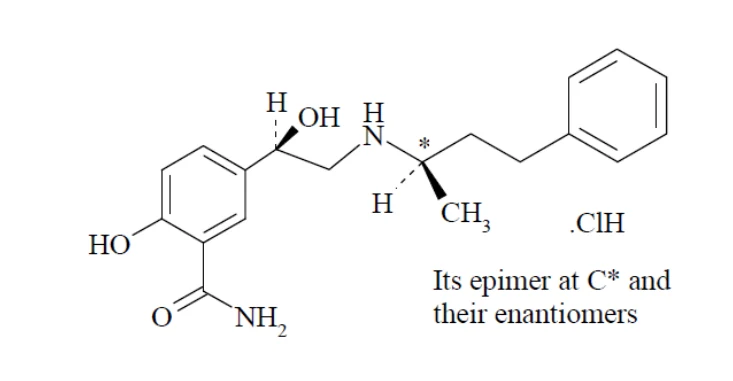
Molecular Formula: C19H24N2O3•HCl
Molecular Weight: Labetalol: 328.41 g/mol
Labetalol Hydrochloride: 364.87 g/mol
Physicochemical Labetalol hydrochloride is a white to off-white powder with a Properties: melting point around 180°C
Solubility: Labetalol hydrochloride is sparingly soluble in water and in ethanol (96%); it is practically insoluble in methylene chloride.
In water: sparingly soluble (0.1 g/ 10 mL)
In ethanol: sparingly soluble (0.1 g / 10 mL)
In chloroform = practically insoluble (10 mg / 100.0 mL)
pH: The pH of a 1% w/v solution of labetalol hydrochloride is between 4.0 - 5.0
CLINICAL TRIALS
Comparative Bioavailability Studies
A randomized, double-blinded, two-treatment, two-period, two-sequence, crossover, single-dose, oral bioequivalence study of MINT-LABETALOL (labetalol hydrochloride) 200 mg tablets (Mint Pharmaceuticals Inc.) and PrTRANDATE® (labetalol hydrochloride) 200 mg tablets (Paladin Labs Inc.) was conducted in 56 healthy adult Asian male subjects under fasting conditions. A summary of the comparative bioavailability data from the 55 subjects who completed the study is presented in the following table:
SUMMARY TABLE OF THE COMPARATIVE BIOAVAILABILITY DATA
Labetalol (1 x 200 mg) From measured data Geometric Mean Arithmetic Mean (CV %) | ||||
|---|---|---|---|---|
| Parameter | Test* | Reference† | % Ratio of Geometric Means | 90% Confidence Interval |
AUCT (ng∙hr/mL) | 780.29 830.55 (37.28) | 826.34 895.22 (42.25) | 94.4 | 90.3-98.8 |
| AUCI (ng∙hr/mL) | 856.46 908.36 (37.44) | 900.73 970.53 (41.43) | 95.1 | 91.1- 99.3 |
| Cmax (ng/mL) | 234.18 249.29 (36.56) | 219.41 244.00 (48.39) | 106.7 | 97.4-116.9 |
| Tmax§ (hr) | 0.75 (0.50-2.00) | 1.00 (0.50-2.50) | ||
| T½€ (hr) | 10.52 (28.84) | 10.88 (28.63) | ||
* MINT-LABETALOL, labetalol hydrochloride 200 mg tablets (Mint Pharmaceuticals Inc.) † PrTRANDATE®, labetalol hydrochloride 200 mg tablets (Paladin Labs Inc.) were purchased in Canada. § Expressed as the median (range) only € Expressed as the arithmetic mean (CV%) only | ||||
Study results
In a clinical pharmacologic study in severe hypertensives, an initial 0.25 mg/kg injection of labetalol administered to patients in the supine position decreased blood pressure by an average of 11/7 mm Hg. Additional injections of 0.5 mg/kg at 15 minute intervals up to a total cumulative dose of 1.75 mg/kg of labetalol caused further dose-related decreases in blood pressure. Some patients required cumulative doses of up to 3.25 mg/kg. The maximal effect of each dose level occurred within 5 minutes. Following discontinuation of i.v. treatment with labetalol, the blood pressure rose gradually and progressively, approaching pre-treatment baseline values within an average of 16 to 18 hours in the majority of patients.
Similar results were obtained in the treatment of patients with severe hypertension requiring urgent blood pressure reduction with an initial dose of 20 mg (which corresponds to 0.25 mg/kg for an 80 kg patient) followed by additional doses of either 40 mg or 80 mg at 10-minute intervals to achieve the desired effect or up to a cumulative dose of 300 mg.
REFERENCES
- 1. Adam WR, Meagher EJ, Barter CE. Labetalol, beta-blockers, and acute deterioration of chronic airway obstruction. Clin Exp Hyperten 1982; A4(8):1419-1428.
- 2. Bellamy GR, Hunyor SN, et al. Magnitude and mechanisms of the antihypertensive action of labetalol, including ambulatory assessment. Br J Clin Pharmacol 1983; 16:916.
- 3. Brogden RN, Heel RC, et al. Labetalol: a review of its pharmacology and therapeutic use in hypertension. Drugs 1978; 15(4):251-270.
- 4. Cummings AMM, Brown JJ, et al. Blood pressure reduction by incremental infusion of labetalol in patients with severe hypertension. Br J Clin Pharmacol 1979; 8:359-364.
- 5. Eisalo A, Virta P. Treatment of hypertension in the elderly with labetalol. Acta Med Scan 1982; Suppl 665:129-133.
- 6.
Farmer JB, Kennedy I, et al. Pharmacology of AH 5158: a drug which blocks both - and
- adrenoceptors. Br J Pharmacol 1972; 45:660-675.
- 7. George RB, Burford JG, et al. Effects of a new alpha and beta adrenergic antagonist in hypertensive patients with reversible chronic airways obstruction. Chest 1981; 80(3):356.
- 8. Homeida M, Jackson L, Roberts CJC. Decreased first-pass metabolism of labetalol in chronic liver disease. Br Med J 1978; 2:1048-1050.
- 9. Jackson SHD, Beevers DG. Comparison of the effects of single doses of atenolol and labetalol on airways obstruction in patient with hypertension and asthma. Br J Clin Pharmacol 1983; 15:553-556.
- 10. Kanto JH. Current status of labetalol, the first alpha- and beta-blocking agent. Int J Clin Pharmacol Ther Toxicol 1985; 23(11):617-628.
- 11. Kelly JG, McGarry K et al. Bioavailability of labetalol increases with age. Br J Clin Pharmacol 1982; 14:304-305.
- 12. Lund-Johansen P. Short- and long-term (six-year) hemodynamic effects of labetalol in essential hypertension. Am J Med 1983; 75 (Suppl 4A):24-31.
- 13. MacCarthy EP, Bloomfield SS. Labetalol: a review of its pharmacology, pharmacokinetics, clinical uses and adverse effects. Pharmacother 1983; 3(4):193-219.
- 14. Maconochie JG, Woodings EP, Richards DA. Effects of labetalol and propranolol on histamine-induced bronchoconstriction in normal subjects. Br J Clin Pharmacol 1977; 4:157-162.
- 15. Mazzola C. Guffanti E, et al. Respiratory effects of labetalol in anginous or hypertensive patients. Curr Ther Res 1982; 31(2):219-231.
- 16. Morgan T, Gilles A, et al. The effect of labetalol in the treatment of severe drug-resistant hypertension. Med J Austr 1978; 1:393-396.
- 17. Papademetriou V, Notargiacomo AV, et al. Treatment of severe hypertension with intravenous labetalol. Clin Pharmacol Ther 1982; 32(4):431-435.
- 18. Prichard BNC. Combined alpha- and beta-receptor inhibition in the treatment of hypertension. Drugs 1984; 28(Suppl 2):51-68.
- 19. Richards DA, Woodings EP, et al. The effects of oral AH5158, a combined - and - adrenoceptor antagonist, in healthy volunteers. Br J Clin Pharmacol 1974; 1:505-510.
- 20. Richards DA, Turner P (eds). Proceedings of a symposium on labetalol - April 1976. Br J Clin Pharmacol 1976; 3(Suppl 3);677-678.
- 21. Richards DA, Woodings EP, Maconochie JG. Comparison of the effects of labetalol and propranolol in healthy men at rest and during exercise. Br J Clin Pharmacol 1977; 4:15- 21.
- 22. Richards DA, Prichard BNC. Proceedings of the second symposium on labetalol - March 1979. Br J Clin Pharmacol 1979; 8(Suppl 2):85S-244S.
- 23. Richards DA, Robertson JIS, Prichard BNC. Proceedings of the third symposium on labetalol - June 1981. Br J Clin Pharmacol 1982; 13(Suppl 1):1S-141S.
- 24. Weber MA, Drayer JIM, Kaufman CA. The combined alpha- and beta-adrenergic blocker labetalol and propranolol in the treatment of high blood pressure: similarities and differences. J Clin Pharmacol 1984; 24:103-112.
- 25. Product Monograph – TRANDATE® (Labetalol hydrochloride tablets 100 mg and 200 mg) Paladin Labs Inc. Submission Control No. 190689, dated June 16, 2016.