


Product Monograph - Mint-Tizanidine
Recent Major Label Changes
| 4.2 Recommended Dose and Dosage Adjustment | 2026-07 |
|---|---|
| 7 Warnings and Precautions, General | 2026-07 |
| 7 Warnings and Precautions, Hepatic/Biliary/Pancreatic | 2026-07 |
| 7 Warnings and Precautions, Immune | 2026-07 |
| 7 Warnings and Precautions, Neurologic | 2026-07 |
| 7 Warnings and Precautions, Psychiatric | 2026-07 |
| 7 Warnings and Precautions, 7.1.4 Geriatrics | 2026-07 |
Table of Contents
Certain sections or subsections that are not applicable at the time of the preparation of the most recent authorized product monograph are not listed.
Recent Major Label Changes .................................................................................................... 2
Table of Contents .................................................................................................................... 2
Part 1: Healthcare Professional Information ............................................................................ 5
1 Indications ........................................................................................................................ 5
1.1 Pediatrics ....................................................................................................................... 5
1.2 Geriatrics ........................................................................................................................ 5
2 Contraindications ............................................................................................................. 5
4 Dosage and Administration .............................................................................................. 5
4.1 Dosing Considerations .................................................................................................... 5
4.2 Recommended Dose and Dosage Adjustment ............................................................... 6
5 Overdose .......................................................................................................................... 6
6 Dosage Forms, Strengths, Composition, and Packaging .................................................... 7
7 Warnings and Precautions ................................................................................................ 7
General .................................................................................................................................. 7
Carcinogenesis and Genotoxicity ........................................................................................... 8
Cardiovascular ....................................................................................................................... 8
Dependence, Tolerance and/or Abuse Liability ..................................................................... 9
Driving and Operating Machinery .......................................................................................... 9
Hepatic/Biliary/Pancreatic ..................................................................................................... 9
Immune ............................................................................................................................... 10
Neurologic ........................................................................................................................... 10
Ophthalmologic ................................................................................................................... 10
Psychiatric ........................................................................................................................... 10
Renal ................................................................................................................................... 11
Reproductive Health ............................................................................................................ 11
7.1 Special Populations ...................................................................................................... 11
7.1.1 Pregnancy ................................................................................................................ 11
7.1.2 Breastfeeding .......................................................................................................... 11
7.1.3 Pediatrics ................................................................................................................. 11
7.1.4 Geriatrics ................................................................................................................. 12
8 Adverse Reactions .......................................................................................................... 12
8.1 Adverse Reaction Overview ......................................................................................... 12
8.2 Clinical Trial Adverse Reactions .................................................................................... 12
8.3 Less Common Clinical Trial Adverse Reactions ............................................................. 14
8.5 Post-Market Adverse Reactions .................................................................................... 17
9 Drug Interactions ............................................................................................................ 18
9.1 Serious Drug Interactions ............................................................................................. 18
9.2 Drug Interactions Overview .......................................................................................... 18
9.3 Drug-Behaviour Interactions ........................................................................................ 18
9.4 Drug-Drug Interactions ................................................................................................. 18
9.5 Drug-Food Interactions ................................................................................................ 21
9.6 Drug-Herb Interactions ................................................................................................ 21
9.7 Drug-Laboratory Test Interactions ................................................................................ 21
10 Clinical Pharmacology .................................................................................................... 21
10.1 Mechanism of Action ................................................................................................... 21
10.2 Pharmacodynamics ...................................................................................................... 22
10.3 Pharmacokinetics ......................................................................................................... 23
11 Storage, Stability, and Disposal ...................................................................................... 24
Part 2: Scientific Information ................................................................................................. 25
13 Pharmaceutical Information ........................................................................................... 25
14 Clinical Trials .................................................................................................................. 25
14.1 Clinical Trials by Indication ........................................................................................... 25
14.2 Comparative Bioavailability Studies ............................................................................. 29
16 Non-Clinical Toxicology .................................................................................................. 29
17 Supporting Product Monographs .................................................................................... 31
Patient Medication Information ............................................................................................ 32
Part 1: Healthcare Professional Information
1 Indications
Adults:
MINT-TIZANIDINE (tizanidine tablets) is a short-acting drug indicated for:
- the management of spasticity.
1.1 Pediatrics
Pediatrics (< 18 years of age): No data are available to Health Canada; therefore, Health Canada has not authorized an indication for pediatric use.
1.2 Geriatrics
Geriatrics (≥ 65 years of age): Evidence from clinical studies and experience suggests that use in the geriatric population may be associated with differences in safety or effectiveness. See 7.1.4 Geriatrics.
2 Contraindications
MINT-TIZANIDINE is contraindicated in:
- Patients who are hypersensitive to this drug or to any ingredient in the formulation, including any non-medicinal ingredient, or component of the container. For a complete listing, see 6 Dosage Forms, Strengths, Composition, and Packaging. Symptoms have included anaphylaxis and angioedema. See 7 Warnings and Precautions, Immune.
- Co-administration of tizanidine with moderate and potent CYP1A2 inhibitors such as fluvoxamine or ciprofloxacin. See 7 Warnings and Precautions, General.
- Patients for whom spasticity is needed to maintain function, such as maintenance of upright posture and balance in locomotion.
4 Dosage and Administration
4.1 Dosing Considerations
Due to the fast onset and short duration of MINT-TIZANIDINE (see 10.3 Pharmacokinetics), dosing should be scheduled such that the peak effect coincides with activities for which relief of spasticity is most desirable.
- Tizanidine may be taken with or without food; however, there is a significant food effect, such that consistent administration with respect to food is recommended to reduce variability in tizanidine plasma exposure. Therefore, the prescriber should recommend patients to always take tizanidine the same way with regard to fed or fasted state. See 9.5 Drug-Food Interactions and 10.3 Pharmacokinetics, Absorption.
- Tizanidine may cause liver injury. Monitoring of aminotransferase levels is recommended at baseline and 1 month after maximum dose is achieved, or if hepatic injury is suspected (See 7 Warnings and Precautions, Hepatic/Biliary/Pancreatic).
4.2 Recommended Dose and Dosage Adjustment
The dose-related nature of tizanidine’s common adverse events, particularly blood pressure reduction, make it prudent to begin treatment with sub-therapeutic single oral doses of 2 mg.
Increase the dose gradually (2 to 4 mg steps) to optimum effect (satisfactory reduction of muscle tone at a tolerated dose). Single doses of less than 8 mg have not been demonstrated to be effective in controlled clinical studies.
The dose can be repeated at 6 to 8 hour intervals, as needed, to a maximum of three doses in 24 hours. The total daily dose should not exceed 36 mg.
Experience with single doses exceeding 8 mg and daily doses exceeding 24 mg is limited. There is essentially no experience with repeated, single, daytime doses greater than 12 mg or total daily doses greater than 36 mg. See 7 Warnings and Precautions, General.
Patients with Hepatic Impairment
In patients with hepatic impairment, use lower individual doses during titration. If higher doses are required, individual doses should be increased, rather than dosing frequency. See 7 Warnings and Precautions, Hepatic/Biliary/Pancreatic.
Patients with Renal Impairment
In patients with creatinine clearance < 25 mL/min, use lower individual doses during titration, as clearance is reduced by more than 50%. If higher doses are required, the individual doses should be increased, rather than dosing frequency. See 7 Warnings and Precautions, Renal.
Geriatric Patients
MINT-TIZANIDINE should be used with caution in elderly patients, as clearance of tizanidine is expected to be reduced. During titration, use lower individual doses. If higher doses are required, individual doses should be increased, rather than dosing frequency. See 7.1.4 Geriatrics
Discontinuation
When discontinuing tizanidine, particularly in patients who have been receiving high doses for long periods or who may be on concomitant narcotics, the dose should be decreased slowly (for example, by 2 to 4 mg per day), to minimize the risk of withdrawal adverse events (See 7 Warnings and Precautions, Dependence, Tolerance and/or Abuse Liability)
5 Overdose
There have been cases of tizanidine overdose reported in post-marketing experience. Most of these were intentional overdoses, about a quarter have resulted in fatality, and in at least half of these cases, other CNS depressants were involved. The majority of cases involved depressed consciousness (somnolence, stupor, or coma), depressed cardiovascular function (bradycardia, hypotension), and depressed respiratory function (respiratory depression or failure).
Should overdosage occur, basic steps to ensure the adequacy of an airway and the monitoring of cardiovascular and respiratory systems should be undertaken. Dialysis is not likely to be an efficient method of removing tizanidine from the body. For the most recent information concerning the management of overdose, contact a poison control center.
| For the most recent information in the management of a suspected drug overdose, contact your regional poison control centre or Health Canada’s toll-free number, 1-844 POISON-X (1-844-764-7669). |
|---|
6 Dosage Forms, Strengths, Composition, and Packaging
Table 1 – Dosage Forms, Strengths, and Composition
Description
MINT-TIZANIDINE 4 mg: each white to off-white, round, flat, bevel edged uncoated tablet, with “U” and “169” debossed on one side, and a quadrisecting score on the other, contains tizanidine hydrochloride equivalent to 4 mg tizanidine. Available in bottles of 100, 150, and 1000.
7 Warnings and Precautions
General
Limited Database for Chronic Use of Single Doses Above 8 mg and Multiple Doses Above 24 mg per day
Clinical experience with long-term use of tizanidine at single doses of 8 to 16 mg or total daily doses of 24 to 36 mg is limited. Approximately 75 patients have been exposed to individual doses of 12 mg or more for at least one year and approximately 80 patients have been exposed to total daily doses of 30 to 36 mg/day for at least one year. There is essentially no long-term experience with single, daytime doses of 16 mg. Because long-term clinical study experience at high doses is limited, only those adverse events with a relatively high incidence are likely to have been identified.
Patients should be advised of the limited clinical experience with tizanidine tablets both in regard to duration of use and the higher doses required to reduce muscle tone.
Drug Interaction with CYP1A2 inhibitors
Concomitant use of tizanidine and moderate or potent CYP450 1A2 inhibitors, such as fluvoxamine or ciprofloxacin, is contraindicated due to problematic increase in tizanidine exposure (33 fold and 10 fold, respectively). In both studies, clinically significant hypotension resulted along with somnolence,
| Route of Administration | Dosage Form/ Strength/Composition | Non-Medicinal Ingredients |
| Oral | Tablet / 4 mg tizanidine (4.576 mg tizanidine hydrochloride equivalent to 4 mg tizanidine base) | Anhydrous lactose, colloidal silicon dioxide, microcrystalline cellulose and stearic acid |
dizziness and decreased psychomotor performance. See 2 Contraindications, and 9.4 Drug-Drug Interactions, Fluvoxamine and other CYP1A2 inhibitors.
Co-administration of tizanidine with other inhibitors of CYP1A2 such as antiarrhythmics (amiodarone, mexiletine, propafenone), cimetidine, other fluoroquinolones (norfloxacin, moxifloxacin), and ticlopidine should be avoided or used with caution.
Lactose
MINT-TZANIDINE tablets contain lactose and are not recommended for patients with rare hereditary problems of galactose intolerance, the Lapp lactase deficiency or glucose-galactose malabsorption (see 6 Dosage Forms, Strengths, Composition, and Packaging).
Carcinogenesis and Genotoxicity
Only animal carcinogenesis data and mutagenesis data from in vitro and in vivo assays are available. See 16 Non-Clinical Toxicology, Carcinogenicity and Genotoxicity.
Cardiovascular
Prolongation of the QT interval and bradycardia were noted in chronic toxicity studies in dogs at doses equal to the maximum human dose on a mg/m2 basis. ECG evaluation was not performed in the controlled clinical studies.
There have been post-market reports of QT prolongation and a small number of reports of Torsades de Pointes, none of them fatal, during tizanidine treatment.
Caution should be exercised when MINT-TIZANIDINE is prescribed with drugs known to prolong the QT interval.
Tizanidine HCl can produce hypotension associated, at times, with bradycardia and orthostatic hypotension, dizziness and rarely syncope.
Hypotension
Tizanidine HCl is an α2-adrenergic agonist (like clonidine) and can produce hypotension. Syncope has been reported in the post-marketing setting.
In a single dose study where blood pressure was monitored closely after dosing, two thirds of patients treated with 8 mg of tizanidine had a 20% reduction in either the diastolic or systolic BP. The reduction was seen within 1 hour after dosing, peaked 2 to 3 hours after dosing and was associated, at times, with bradycardia, orthostatic hypotension, lightheadedness/dizziness and rarely syncope. The hypotensive effect is dose related and has been measured following single doses of ≥ 2 mg. The chance of significant hypotension may possibly be minimized by titration of the dose and by focusing attention on signs and symptoms of hypotension prior to dose advancement. In addition, patients moving from a supine to a fixed upright position may be at increased risk for hypotensive and orthostatic effects.
Caution is advised when MINT-TIZANIDINE is to be used in patients who have a history of orthostatic hypotension or labile blood pressure or who are receiving concurrent antihypertensive therapy. Monitor for hypotension when used in patients receiving concurrent antihypertensive therapy. MINT-TIZANIDINE should not be used with other α2-adrenergic agonists.
Because of the possibility of MINT-TIZANIDINE lowering blood pressure, patients should be warned about the risk of clinically significant orthostatic hypotension.
Dependence, Tolerance and/or Abuse Liability
Dependence/Tolerance
Tizanidine is closely related to clonidine, which is often abused in combination with narcotics and is known to cause symptoms of rebound upon abrupt withdrawal. (See 10.2 Pharmacodynamics, Dependence)
There have been cases of rebound symptoms reported on sudden withdrawal of tizanidine. Some of the case reports suggest that these patients were also misusing opioids. Withdrawal symptoms included but were not limited to: hypertension, tachycardia, hypertonia, convulsions, tremor, and anxiety. As with clonidine, withdrawal is expected to be more likely in cases where high doses are used, especially for prolonged periods. There have been also reports of tizanidine abuse and dependence, most of them with concomitant use of opioids, benzodiazepines, other hypnotics or multiple analgesics. The potential for tizanidine abuse should be monitored, especially in patients simultaneously using opioids or benzodiazepines.
Discontinuation of Treatment with MINT-TIZANIDINE
If therapy needs to be discontinued, especially in patients who have been receiving high doses for long periods, the dose should be decreased slowly to minimize the risk of withdrawal and rebound hypertension, tachycardia, and hypertonia.
Driving and Operating Machinery
Because of the possibility of sedation, patients should be warned about performing activities requiring alertness, such as driving a vehicle or operating machinery. The possibility of blurred vision also contributes to driving risks. See 7 Warnings and Precautions, Neurologic.
Hepatic/Biliary/Pancreatic
Risk of Liver Injury
Tizanidine use occasionally causes drug induced liver injury, most often hepatocellular in type.
In controlled clinical studies, approximately 5% of patients treated with tizanidine had elevations of liver function tests (ALT/SGPT, AST/SGOT) to greater than 3 times the upper limit of normal (or 2 times if baseline levels were elevated). The patients usually remain asymptomatic despite increased aminotransferases. In occasional symptomatic cases, nausea, vomiting, anorexia and jaundice have been reported. The onset of the elevated liver enzymes typically occurred within the first 6 months of treatment with tizanidine and most resolved rapidly upon drug withdrawal with no reported residual problems.
In post-marketing experience, three deaths associated with liver failure have been reported in patients treated with tizanidine, including one case of fatal fulminant hepatitis.
Monitoring of aminotransferase levels is recommended during the first 6 months of treatment (e.g., baseline, 1, 3 and 6 months) and periodically thereafter, based on clinical status.
Patients with Hepatic Impairment: Because of the potential toxic hepatic effect of tizanidine, the drug should be used only with extreme caution in patients with impaired hepatic function. Furthermore, because tizanidine is extensively metabolized in the liver, hepatic impairment would be expected to have significant effects on pharmacokinetics of tizanidine. In patients with hepatic impairment, dosage reduction is recommended. See 4.2 Recommended Dose and Dosage Adjustment and 10.3 Pharmacokinetics, Special Populations and Conditions.
Immune
Hypersensitivity Reactions
Tizanidine tablets can cause anaphylaxis. Signs and symptoms of hypersensitivity, including respiratory compromise, urticaria, and angioedema of the throat and tongue, have been reported. MINT-TIZANIDINE is contraindicated in patients with a history of hypersensitivity reactions to tizanidine. See 2 Contraindications.
Neurologic
Sedation
Tizanidine can cause sedation, including severe, which may interfere with everyday activity.
In the multiple dose, controlled clinical studies, 48% of patients receiving any dose of tizanidine reported sedation as an adverse event. In 10% of these cases, the sedation was rated as severe compared to <1% in the placebo treated patients.
The prevalence of patients with sedation peaked following the first week of titration and then remained stable for the duration of the maintenance phase of the study.
The effect appears to be dose related. In a single dose study, 92% of the patients receiving 16 mg, when asked, reported that they were drowsy during the 6-hour study. This compares to 76% of the patients on 8 mg and 35% of the patients on placebo. Patients began noting this effect 30 minutes following dosing. The effect peaked 1.5 hours following dosing. Of the patients who received a single dose of 16 mg, 51% continued to report drowsiness 6 hours following dosing compared to 13% in the patients receiving placebo or 8 mg of tizanidine.
Concomitant CNS depressants: Patients should also be instructed that the sedation may be additive when MINT-TIZANIDINE is taken in conjunction with drugs (baclofen, benzodiazepines) or substances (e.g., alcohol) that act as CNS depressants. Monitor patients who take MINT-TIZANIDINE with another CNS depressant for symptoms of excess sedation.
Ophthalmologic
Dose-related retinal degeneration and corneal opacities have been found in animal studies at doses equivalent to approximately the maximum recommended dose on a mg/m2 basis. There have been no reports of corneal opacities or retinal degeneration in the clinical studies.
Psychiatric
Hallucinations / Psychotic-Like Symptoms
Tizanidine use has been associated with hallucinations. Formed, visual hallucinations or delusions have been reported in 5 of 170 patients (3%) in two North American controlled clinical studies. Most of the patients were aware that the events were unreal. One patient developed psychoses in association with the hallucinations. One patient continued to have problems for at least 2 weeks following discontinuation of tizanidine. Hallucinations have also been reported with tizanidine use in the post-marketing setting.
Dosage reduction or discontinuation should be considered for patients who experience hallucinations while receiving MINT-TIZANIDINE. Particular caution should be observed if MINT-TIZANIDINE is administered to patients with a prior history of psychotic illness.
Renal
Renal Insufficiency
MINT-TIZANIDINE should be used with caution in patients with renal insufficiency (Clcr < 25 mL/min), as clearance is reduced by more than 50% (see 10.3 Pharmacokinetics, Special Populations and Conditions). In these patients, during titration, the individual doses should be reduced. If higher doses are required, individual doses rather than dosing frequency should be increased. These patients should be monitored closely for onset or increase in severity of the common adverse events (including dry mouth, somnolence, asthenia and dizziness) as indicators of potential overdose.
Reproductive Health
Use in Women Taking Oral Contraceptives
MINT-TIZANIDINE should be used with caution in women taking oral contraceptives; as clearance of tizanidine is reduced by approximately 50% in such patients. In these patients, during titration, the individual doses should be reduced.
Fertility
There are no adequate and well-controlled studies in humans on the effect of tizanidine tablets on female or male reproductive potential. Oral administration of tizanidine to male and female rats resulted in adverse effects on fertility. See 16 Non-Clinical Toxicology, Reproductive and developmental toxicology, Impairment of Fertility.
7.1 Special Populations
7.1.1 Pregnancy
The effect of MINT-TIZANIDINE on labor and delivery in humans is unknown.
Tizanidine tablets have not been studied in pregnant women. MINT-TIZANIDINE should be given to pregnant women only if the potential benefit clearly outweighs the potential risk to mother and child. See 16 Non-Clinical Toxicology, Reproductive and developmental toxicology.
7.1.2 Breastfeeding
It is not known whether MINT-TIZANIDINE is excreted in human milk, although as a lipid soluble drug, it might be expected to pass into breast milk.
7.1.3 Pediatrics
Pediatrics (< 18 years of age): There are no adequate and well-controlled studies to document the safety and efficacy of tizanidine tablets in children under 18 years in age.
7.1.4 Geriatrics
Geriatrics (≥ 65 years of age):
Tizanidine tablets are known to be substantially excreted by the kidney, and the risk of adverse reactions to this drug may be greater in patients with impaired renal function. Because elderly patients are more likely to have decreased renal function, care should be taken in dose selection, and it may be useful to monitor renal function.
Clinical studies of tizanidine tablets did not include sufficient numbers of subjects aged 65 and over to determine whether they respond differently than younger subjects. Pharmacokinetic data showed that elderly subjects cleared tizanidine 4x slower than younger subjects. In elderly patients with renal insufficiency (creatinine clearance < 25 mL/min), tizanidine clearance is reduced compared to healthy elderly subjects; this would be expected to lead to a longer duration of clinical effect. (See 10.3 Pharmacokinetics, Special Populations and Conditions)
During titration, the individual doses should be reduced. If higher doses are required, individual doses rather than dosing frequency should be increased. Monitor elderly patients because they may have an increased risk for adverse reactions associated with MINT-TIZANIDINE.
8 Adverse Reactions
8.1 Adverse Reaction Overview
In multiple dose, placebo-controlled clinical studies, 264 patients were treated with tizanidine and 261 with placebo. Adverse events, including severe adverse events, were more frequently reported with tizanidine than with placebo.
Common adverse events leading to discontinuation
Forty five of 264 (17%) patients receiving tizanidine and 13 of 261 (5%) patients receiving placebo in three multiple dose, placebo-controlled clinical studies discontinued treatment for adverse events. When patients withdrew from the study, they frequently had more than one reason for discontinuing.
The adverse events most frequently leading to withdrawal of tizanidine treated patients in the controlled clinical studies were asthenia (weakness, fatigue and/or tiredness) (3%), somnolence (3%), dry mouth (3%), increased spasm or tone (2%) and dizziness (2%).
Most Frequent Adverse Clinical Events Seen in Association with the Use of Tizanidine Tablets
In multiple-dose, placebo-controlled clinical studies involving 264 patients with spasticity, the most frequent adverse events were dry mouth, somnolence/sedation, asthenia (weakness, fatigue and/or tiredness) and dizziness. Three quarters of the patients rated the events as mild to moderate and one quarter of the patients rated the events as being severe. These events appeared to be dose related.
8.2 Clinical Trial Adverse Reactions
Clinical trials are conducted under very specific conditions. Therefore, the frequencies of adverse reactions observed in the clinical trials may not reflect frequencies observed in clinical practice and should not be compared to frequencies reported in clinical trials of another drug.
The events cited reflect experience gained under closely monitored conditions of clinical studies in a highly selected patient population. In actual clinical practice or in other clinical studies, these frequency estimates may not apply, as the conditions of use, reporting behavior, and the kinds of patients treated may differ. Table 2 lists treatment emergent signs and symptoms that were reported in greater than 2% of patients in three multiple dose, placebo-controlled studies who received tizanidine where the frequency in the tizanidine group was at least as common as in the placebo group. These events are not necessarily related to tizanidine treatment. For comparison purposes, the corresponding frequency of the event (per 100 patients) among placebo treated patients is also provided.
Table 2 – Multiple Dose, Placebo-Controlled Studies (Frequent (> 2%) Adverse Events Reported for Which Tizanidine Incidence is Greater Than Placebo)
| System organ class/preferred term | Tizanidine n = 264 (%) | Placebo n = 48 (%) |
| System organ class/preferred term | Tizanidine n = 264 (%) | Placebo n = 48 (%) |
| Eye disorders | ||
| Amblyopia (blurred vision) | 3 | <1 |
| Gastrointestinal disorders | ||
| Dry mouth | 49 | 10 |
| Constipation | 4 | 1 |
| Vomiting | 3 | 0 |
| General disorders and administration site conditions | ||
| Asthenia* | 41 | 16 |
| Infections and infestations | ||
| Urinary tract infection | 10 | 7 |
| Infection | 6 | 5 |
| Influenza | 3 | 2 |
| Pharyngitis | 3 | 1 |
| Rhinitis | 3 | 2 |
| Investigations | ||
| Liver function test abnormal | 3 | <1 |
| Alanine aminotransferase increased | 3 | <1 |
| Nervous system disorders | ||
| Somnolence | 48 | 10 |
| Dizziness | 16 | 4 |
| Speech disorder | 3 | 0 |
| Dyskinesia | 3 | 0 |
| Psychiatric disorders | ||
| Nervousness | 3 | <1 |
| Renal and urinary disorders | ||
| Pollakiuria | 3 | 2 |
* weakness, fatigue and/or tiredness
In a single dose, placebo-controlled study involving 142 patients with spasticity, the patients were specifically asked if they had experienced any of the four most common adverse events dry mouth, somnolence (drowsiness), asthenia (weakness, fatigue and/or tiredness), and dizziness.
In addition, hypotension and bradycardia were observed. The occurrence of these adverse events is summarized in Table 3. Other events were, in general, reported at a rate of 2% or less.
Table 3 – Adverse Events Reported in Single Dose, Placebo-Controlled Study
| System organ class/preferred term | Tizanidine tablets 8 mg n= 45 (%) | Tizanidine tablets 16 mg n= 49 (%) | placebo n= 48 (%) |
|---|---|---|---|
| Cardiac disorders | |||
| Bradycardia | 2 | 10 | 0 |
| Gastrointestinal disorders | |||
| Dry Mouth | 76 | 88 | 35 |
| General disorders and administration site conditions | |||
| Asthenia* | 67 | 78 | 40 |
| Nervous system disorders | |||
| Somnolence | 78 | 92 | 31 |
| Dizziness | 22 | 45 | 4 |
| Vascular disorders | |||
| Hypotension | 16 | 33 | 0 |
* weakness, fatigue and/or tiredness
8.3 Less Common Clinical Trial Adverse Reactions
Other Adverse Events Observed During the Evaluation of Tizanidine
Tizanidine was administered to 1187 patients in additional clinical studies where adverse event information was available. The conditions and duration of exposure varied greatly, and included (in overlapping categories) double-blind and open-label studies, uncontrolled and controlled studies, inpatient and outpatient studies, and titration studies. Untoward events associated with this exposure were recorded by clinical investigators using terminology of their own choosing.
Consequently, it is not possible to provide a meaningful estimate of the proportion of individuals experiencing adverse events without first grouping similar types of untoward events into a smaller number of standardized event categories.
In the tabulations that follow, reported adverse events were classified using a standard COSTART-based dictionary terminology. The frequencies presented, therefore, represent the proportion of the 1187 patients exposed to tizanidine who experienced an event of the type cited on at least one occasion while receiving tizanidine. All reported events are included except those already listed in Table 2. If the COSTART term for an event was so general as to be uninformative, it was replaced with a more informative term. It is important to emphasize that, although the events reported occurred during treatment with tizanidine, they were not necessarily caused by it.
Events are further categorized by body system and listed in order of decreasing frequency according to the following definitions: frequent adverse events are those occurring on one or more occasions in at least 1/100 patients (only those not already listed in the tabulated results from placebo-controlled studies appear in this listing); infrequent adverse events are those occurring in 1/100 to 1/1000 patients.
Blood and lymphatic system disorders
Infrequent: anemia, leukopenia, leukocytosis
Rare: thrombocythemia, thrombocytopenia
Cardiac disorders
Infrequent: arrhythmia
Rare: angina pectoris, coronary artery disorder, cardiac failure, myocardial infarction, ventricular extrasystoles, ventricular tachycardia
Congenital, familial and genetic disorders
Rare: congenital anomaly
Ear and labyrinth disorders
Infrequent: ear pain, tinnitus, deafness, otitis media
Eye disorders
Infrequent: glaucoma, conjunctivitis, eye pain, optic neuritis, retinal hemorrhage, visual field defect
Rare: iritis, keratitis, optic atrophy
Gastrointestinal disorders
Frequent: Abdominal pain, diarrhea, dyspepsia
Infrequent: dysphagia, fecal impaction, flatulence, gastrointestinal hemorrhage, melena
Rare: hematemesis, intestinal obstruction
General disorders and administration site conditions
Frequent: fever
Infrequent: malaise, death
Hepatobiliary disorders
Infrequent: cholelithiasis, hepatitis
Rare: Liver injury
Immune system disorders
Infrequent: allergic reaction
Infections and infestations
Infrequent: Candida infection, abscess, sepsis, cellulitis
Rare: gastroenteritis
Injury, poisoning and procedural complications
Infrequent: overdose
Investigations
Infrequent: weight loss
Metabolism and nutrition disorders
Infrequent: hypercholesteremia, hyperlipemia, edema, hypothyroidism
Rare: adrenal cortex insufficiency, hyperglycemia, hypokalemia, hyponatremia, hypoproteinemia, respiratory acidosis
Musculoskeletal and connective tissue disorders
Frequent: myasthenia, back pain
Infrequent: neck pain, pathological fracture, arthralgia, arthritis, bursitis
Neoplasms benign, malignant and unspecified (incl cysts and polyps)
Rare: carcinoma, hepatoma
Nervous system disorders
Frequent: paresthesia
Infrequent: syncope, tremor, seizure, paralysis, thinking abnormal, vertigo, abnormal dreams, agitation, migraine, stupor, dysautonomia, neuralgia
Rare: dementia, hemiplegia, neuropathy
Psychiatric disorders
Frequent: depression, anxiety
Infrequent: emotional lability, depersonalization, euphoria
Rare: suicide attempt
Renal and urinary disorders
Infrequent: urinary urgency, cystitis, pyelonephritis, urinary retention, kidney calculus
Rare: albuminuria, glycosuria, hematuria
Reproductive system and breast disorders
Infrequent: menorrhagia, uterine fibroids enlarged, vaginal moniliasis, vaginitis
Rare: metrorrhagia
Respiratory, thoracic and mediastinal disorders
Infrequent: sinusitis, pneumonia, bronchitis
Rare: pulmonary embolus, asthma
Skin and subcutaneous tissue disorders
Frequent: rash, sweating, skin ulcer
Infrequent: ecchymosis, pruritus, dry skin, acne, alopecia, urticaria
Rare: petechia, purpura, exfoliative dermatitis, herpes simplex, herpes zoster, skin carcinoma
Vascular disorders
Infrequent: vasodilatation, postural hypotension, migraine
Rare: phlebitis
8.5 Post-Market Adverse Reactions
List includes events determined to be medically significant and/or potentially life threatening and assessed as associated with the use of tizanidine or the possible relationship to tizanidine cannot be completely excluded.
Tizanidine Post-Market Spontaneous Adverse Event Reports (Frequency: <0.01%)
Blood and lymphatic system disorders
Agranulocytosis, Disseminated intravascular coagulation
Cardiac disorders
Tachycardia, Pulmonary oedema, Cardiac arrest, Torsade de pointes, Cardio-respiratory arrest, Ventricular fibrillation
General disorders and administration site conditions
Pyrexia
Hepatobiliary Disorders
Hepatic function abnormal, Hepatic disorder, Jaundice, Hepatic failure, Hepatic necrosis, Hepatitis fulminant, Hepatic fibrosis, Hepatic cirrhosis
Immune system disorders
Anaphylactic shock
Investigations
Electrocardiogram QT prolonged
Musculoskeletal and connective tissue disorders
Rhabdomyolysis
Nervous system disorders
Loss of consciousness, Cerebrovascular accident, Cerebral infarction
Psychiatric disorders
Confusional state
Renal and urinary disorders
Renal failure acute, Renal failure
Respiratory, thoracic and mediastinal disorders
Dyspnea
Skin and subcutaneous tissue disorders
Erythema multiforme
Vascular disorders
Shock, Circulatory collapse
9 Drug Interactions
9.1 Serious Drug Interactions
|
|---|
9.2 Drug Interactions Overview
There are reports of increased tizanidine exposure with drug interaction of tizanidine and CYP1A2 inhibitors, such as oral contraceptives, fluvoxamine, fluoroquinolones, and others. In vitro studies of cytochrome P450 isoenzymes using human liver microsomes indicate that neither tizanidine nor its major metabolites are likely to affect the metabolism of other drugs metabolized by cytochrome P450 isoenzymes.
9.3 Drug-Behaviour Interactions
Alcohol
Alcohol increased the AUC of tizanidine by approximately 20% while also increasing its Cmax by approximately 15%. This was associated with an increase in side effects of tizanidine. The CNS depressant effects of tizanidine tablets and alcohol are additive.
9.4 Drug-Drug Interactions
The drugs listed in this table are based on either drug interaction case reports or studies, or potential interactions due to the expected magnitude and seriousness of the interaction (i.e., those identified as contraindicated).
Table 4 – Established or Potential Drug-Drug Interactions
| Non-proprietary names of the drug products | Source of evidence | Effect | Clinical comment |
| Acetaminophen | CT | Tizanidine delayed the Tmax of acetaminophen by 16 minutes. Acetaminophen did not affect the pharmacokinetics of tizanidine. | Concomitant use with acetaminophen has impact on timing of peak effect of tizanidine. |
| α2-adrenergic agonists | T | Hypotensive effects may be cumulative. See 7 Warnings and Precautions, Cardiovascular. | Concomitant use of MINT-TIZANIDINE with other α2-adrenergic agonists is not recommended. |
| Antihypertensives | CT | In placebo-controlled clinical trials, tizanidine has been administered concomitantly with antihypertensive medications in 30 patients. The addition of tizanidine to antihypertensive therapy was associated with a 20-30% increase in the incidence of clinically significant decreases in systolic or diastolic blood pressure compared with both placebo plus antihypertensive (N=36) and tizanidine alone (N=226). Concurrent use of antihypertensive and tizanidine therapy also resulted in an increase in reports of orthostatic hypotension. | Lower initial doses and cautious dose titration should be considered when MINT-TIZANIDINE is to be administered to patients receiving antihypertensive therapy or if antihypertensive therapy is to be initiated in a patient receiving MINT-TIZANIDINE. Monitor these patients for hypotension. |
| CNS depressants | T | Concomitant use of MINT-TIZANIDINE with CNS depressants (e.g., alcohol, benzodiazepines, opioids, tricyclic antidepressants) may cause additive CNS depressant effects, including sedation. | Monitor patients who take MINT-TIZANIDINE with another CNS depressant for symptoms of excess sedation. See 7 Warnings and Precautions, Neurologic. |
| Drugs known to prolong the QT interval | CT | Prolongation of the QT interval and bradycardia were noted in chronic toxicity studies in dogs at doses equal to the maximum human dose on a mg/m2 basis. ECG evaluation was not performed in the controlled clinical studies. There have been post-market reports of QT prolongation and a small number of reports of Torsades de Pointes, none of them fatal, during tizanidine treatment. | MINT-TIZANIDINE should be used with caution in patients taking drugs known to prolong the QT interval. |
| Fluvoxamine, ciprofloxin and other CYP1A2 inhibitors | CT | Concomitant use of tizanidine with fluvoxamine, a potent CYP450 1A2 inhibitor in man, resulted in a 33-fold increase in the tizanidine AUC by fluvoxamine in 10 healthy male subjects. Concomitant use of tizanidine with ciprofloxacin resulted in a 10-fold increase in tizanidine AUC in 10 healthy male subjects. In both studies, clinically significant hypotension resulted along with somnolence, dizziness and decreased psychomotor performance. | MINT-TIZANIDINE should not be used together with moderate and potent CYP1A2 inhibitors such as fluvoxamine and ciprofloxacin. See 2 Contraindications, and 7 Warnings and Precautions, General, Drug Interaction with CYP1A2 inhibitors. Co-administration of tizanidine with other inhibitors of CYP1A2 such as antiarrhythmics (amiodarone, mexiletine, propafenone), zileuton, cimetidine, acyclovir, other fluoroquinolones (norfloxacin, moxifloxacin), oral contraceptives, and ticlopidine should be avoided or used in caution. If concomitant use is clinically necessary, and adverse reactions such as hypotension, bradycardia, or excessive drowsiness occur, reduce tizanidine dosage or discontinue. |
| Oral Contraceptives | popPK | No specific pharmacokinetic study was conducted to investigate interaction between oral contraceptives and tizanidine, but retrospective analysis of population pharmacokinetic data following single and multiple dose administration of 4 mg tizanidine showed that women concurrently taking oral contraceptives had 50% lower clearance of tizanidine than women not on oral contraceptives. | Concomitant use of MINT-TIZANIDINE with oral contraceptives is not recommended. However, if concomitant use is clinically necessary and adverse reactions such as hypotension, bradycardia, or excessive drowsiness occur, reduce or discontinue MINT-TIZANIDINE therapy. |
Legend: CT = Clinical Trial; T = Theoretical; popPK = Population pharmacokinetic modeling
9.5 Drug-Food Interactions
Administering tizanidine with food increases the Cmax, the time to peak concentration, and the extent of absorption of tizanidine. See 10.3 Pharmacokinetics, Absorption. These pharmacokinetic differences may result in clinically significant differences when switching between fed or fasted states, such as changed incidence of adverse events or delayed/more rapid onset of activity, depending on the nature of the switch. See 4.1 Dosing Considerations.
9.6 Drug-Herb Interactions
Interactions with herbal products have not been established.
9.7 Drug-Laboratory Test Interactions
Interactions with laboratory tests have not been established.
10 Clinical Pharmacology
10.1 Mechanism of Action
Tizanidine is an agonist at α2-adrenergic receptor sites and presumably reduces spasticity by increasing presynaptic inhibition of motor neurons. In animal models, tizanidine has no direct effect on skeletal muscle fibers or the neuromuscular junction, and no major effect on monosynaptic spinal reflexes. The effects of tizanidine are greatest on polysynaptic pathways. The overall effect of these actions is thought to reduce facilitation of spinal motor neurons.
The imidazoline chemical structure of tizanidine is related to that of the anti-hypertensive drug clonidine and other α2-adrenergic agonists. Pharmacological studies in animals show similarities between the two compounds, but tizanidine was found to have one-tenth to one-fiftieth (1/50) of the potency of clonidine in lowering blood pressure.
10.2 Pharmacodynamics
Principle Effects
Tizanidine at concentration of 3 nM to 1 FM exhibited α2-agonist activity in two in vitro peripheral smooth muscle tissues, rat vas deferens and guinea pig ileum. Tizanidine was demonstrated to inhibit the contractile response to electrical stimulation, an effect which was antagonized by the α2-antagonist, yohimbine, but not by the α1-antagonist, prazosin.
Unlike dantrolene, tizanidine showed little or no activity in two models for demonstration of direct effects on muscle (direct stimulation of the peroneal nerve in chloralose-anaesthetized cats and of an in vitro rat diaphragm-phrenic nerve preparation).
Tizanidine was, however, found to be active in whole animal models for effects on reflex activity. In conscious rabbits, tizanidine inhibited hind limb tonic stretch reflex activity with a potency which was 12 times greater than that of diazepam and 16 times greater than that of baclofen. The inhibitory effect of tizanidine on the extensor reflex was maximal at 5 minutes and exhibited a duration of activity with a half-life of 21 minutes. Tolerance to this effect did not develop over a 14-day course of treatment.
The flexor reflex in rats was used as a model for polysynaptic reflex. In intact, anaesthetized rats and unanaesthetized decerebrate rats, tizanidine ablated the electromyelogram response to flexor reflex stimulation, an effect which could be prevented by pretreatment with the α2-antagonist, yohimbine. However, in acutely spinalized rats, tizanidine was observed to facilitate reflex activity, an effect which was reversible in the presence of the α1-antagonist, prazosin, but not the α2- antagonist, yohimbine.
Tizanidine exhibited activity in a model of droperidol/fentanyl-induced rigidity in rats.
Tizanidine was more potent in this regard than either baclofen or diazepam (ED50 values for tizanidine, diazepam, and baclofen were 0.5, 4, and 5.2 mg/kg p.o., respectively).
Tizanidine, baclofen, and diazepam were likewise efficacious in abolishing the rigidity observed in a decerebrate model of gamma-rigidity in rats (ED50 values of 0.5 mg/kg, 1.3 mg/kg, and 3.8 mg/kg i.v.). The two major metabolites of tizanidine identified in human blood and urine, metabolites 3 and 4, were without pharmacological activity in this model.
Receptor Selectivity
In calf cerebral cortex, tizanidine exhibited a selective affinity for α2-adrenergic receptors (IC50=2.1 nM) over α1 receptors (IC50= 4,687 nM). In rat kidney membrane, tizanidine exhibited a higher affinity for imidazoline receptors (Ki= 4 nM) than for α2-adrenergic receptors (Ki= 91 nM).
The α2-adrenoreceptor sub-type specificity of tizanidine was investigated using tissues and cell lines which express only one of the three receptor sub-types, α2A-, α2B-, and α2C. The Ki values for tizanidine were 65, 167, and 107 nM at the α2A-, α2B-, and α2C-receptors, respectively.
Unintended Effects
Reduced motor activity, disturbed gait, and ataxia were observed in mice after 10 mg/kg oral doses of tizanidine and in rats after 2.5 mg/kg oral doses of tizanidine. These doses were 5 to 20 fold higher than the oral ED50 for inhibition of droperidol/fentanyl-induced muscle rigidity in rats (0.5 mg/kg).
Sedative effects were observed in rhesus monkeys at oral doses of 6 to 10 mg/kg and in baboons after oral doses of 8 to 16 mg/kg and an intravenous dose of 1 mg/kg.
Tizanidine appears to influence blood pressure through α-adrenoreceptor-mediated vasoconstriction in the peripheral vasculature and by activities on the centrally located α-adrenoreceptors regulating peripheral sympathetic activity.
In normotensive rats, 0.3 and 1.0 mg/kg oral doses of tizanidine were associated with an initial small decrease in blood pressure (maximum 12%), followed by an increase in blood pressure at 1.5 to 7 hours (maximum 12%). At an oral dose of 3.0 mg/kg, statistically significant decreases in both systemic blood pressure and heart rate were observed (approximately 13% decrease) which were sustained for 5 and 2 hours, respectively. In a hypertensive rat model, an oral dose of 5 mg/kg tizanidine was associated with a maximum 25% reduction in mean arterial blood pressure.
In both anaesthetized rats and dogs, intravenously administered tizanidine at doses of 0.03 and 0.1 mg/kg produced an initial, transient pressor response, followed by sustained hypotension and bradycardia. The α1- and α2-adrenergic antagonist, phenoxybenzamine, inhibited the initial pressor response to tizanidine in anaesthetized rats. In anaesthetized cats, tizanidine at a cumulative intravenous dose of 0.7 mg/kg, decreased blood pressure by a maximum of 35%.
Dependence
Monkeys were shown to self-administer tizanidine in a dose-dependent manner, and abrupt cessation of tizanidine produced transient signs of withdrawal at doses > 35 times the maximum recommended human dose on a mg/m2 basis. These transient withdrawal signs (increased locomotion, body twitching, and aversive behavior toward the observer) were not reversed by naloxone administration (See 7 Warnings and Precautions, Dependence, Tolerance and/or Abuse Liability).
10.3 Pharmacokinetics
A single oral dose of 8 mg of MINT-TIZANIDINE reduces muscle tone in patients with spasticity for a period of several hours. The effect peaks at approximately 1 to 2 hours and dissipates between 3 to 6 hours.
Absorption
Following oral administration, tizanidine is essentially completely absorbed and has a half-life of approximately 2 hours. Following administration of tizanidine peak plasma concentrations occurred at approximately 1 hour after dosing. Food increases the mean Cmax by approximately 30% and increases the median time to peak concentration by approximately 25 minutes, from 1 hour to 1 hour and 25 minutes. Food increases the extent of absorption of tizanidine by approximately 30%. Tizanidine has linear pharmacokinetics over a dose of 1 to 20 mg.
Distribution
Tizanidine is widely distributed throughout the body; mean steady state volume of distribution is 2.4 L/kg following intravenous administration in healthy adult volunteers. Tizanidine is approximately 30% bound to plasma proteins, independent of concentration over the therapeutic range.
Metabolism
The absolute oral bioavailability of tizanidine is approximately 40%, due to extensive first-pass metabolism in the liver; approximately 95% of an administered dose is metabolized. Tizanidine metabolites are not known to be active; their half-lives range from 20 to 40 hours.
Elimination
Following single and multiple oral dosing of 14C-tizanidine, an average of 60% and 20% of total radioactivity was recovered in the urine and feces, respectively.
Special populations and conditions
- Pediatrics: Tizanidine has not been evaluated in children. See 16 Non-Clinical Toxicology.
- Geriatrics: No specific pharmacokinetic study was conducted to investigate age effects. Cross study comparison of pharmacokinetic data, following single dose administration of 6 mg tizanidine showed that younger subjects cleared the drug four times faster than the elderly subjects. Tizanidine should be used with caution in elderly patients. See 7.1.4 Geriatrics.
Sex: No specific pharmacokinetic study was conducted to investigate gender effects.
Retrospective analysis of pharmacokinetic data, however, following single and multiple dose administration of 4 mg tizanidine showed that gender had no effect on the pharmacokinetics of tizanidine.
- Ethnic origin: Pharmacokinetic differences due to race have not been studied.
- Hepatic Insufficiency: Pharmacokinetic differences due to hepatic impairment have not been studied. Because tizanidine is extensively metabolized in the liver, hepatic impairment would be expected to have significant effects on pharmacokinetics of tizanidine. See 7 Warnings and Precautions, Hepatic/Biliary/Pancreatic.
- Renal Insufficiency: Tizanidine clearance is reduced by more than 50% in elderly patients with renal insufficiency (creatinine clearance < 25 mL/min) compared to healthy elderly subjects; this would be expected to lead to a longer duration of clinical effect. Tizanidine should be used with caution in renally impaired patients. See 7 Warnings and Precautions, Renal.
11 Storage, Stability, and Disposal
Stored at room temperature 15 - 30°C.
Part 2: Scientific Information
13 Pharmaceutical Information
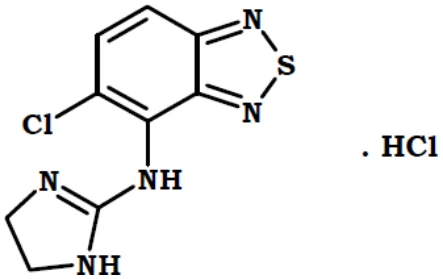
Drug Substance
Non-proprietary name of the drug substance: tizanidine hydrochloride (USAN)
Chemical name: 5-chloro-4-(2-imidazolin-2-ylamino)-2,1,3-benzothiodiazole monohydrochloride
Molecular formula and molecular mass: C9H8ClN5S·HCl and 290.17 g/mol
Structural formula:
Physicochemical properties:
Appearance: Almost white to slightly yellow crystalline powder
Solubility: Slightly soluble in water and in methanol pKa value: 7.48
pH: 4.3 – 5.3
Partition coefficient: 1.33
Melting point: 286 - 292°C
14 Clinical Trials
14.1 Clinical Trials by Indication
The capacity of tizanidine to reduce increased muscle tone associated with spasticity was demonstrated in two adequate and well controlled studies in patients with multiple sclerosis or spinal injury.
Single-Dose Study in Patients with Multiple Sclerosis with Spasticity
In one study, patients with multiple sclerosis were randomized to receive single oral doses of drug or placebo. Patients and assessors were blind to treatment assignment and efforts were made to reduce the likelihood that assessors would become aware indirectly of treatment assignment (e.g., they did not provide direct care to patients and were prohibited from asking questions about side effects). In all, 140 patients received either placebo, 8 mg or 16 mg of tizanidine.
Response was assessed by physical examination; muscle tone was rated on a 5 point scale (Ashworth score), with a score of 0 used to describe normal muscle tone. A score of 1 indicated a slight spastic catch while a score of 2 indicated more marked muscle resistance. A score of 3 was used to describe considerable increase in tone, making passive movement difficult. A muscle immobilized by spasticity was given a score of 4. Spasm counts were also collected.
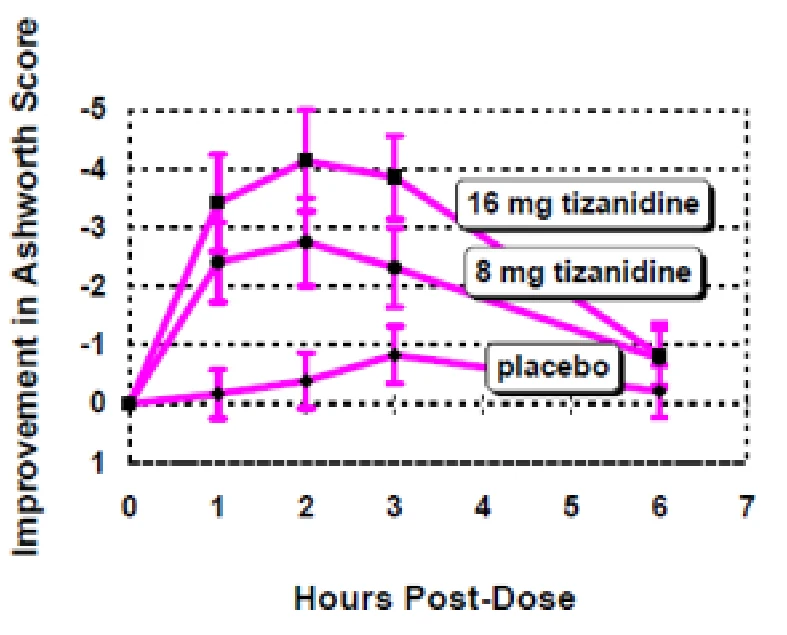
Assessments were made at 1, 2, 3 and 6 hours after treatment. A statistically significant reduction of the Ashworth score for tizanidine compared to placebo was detected at 1, 2 and 3 hours after treatment. Figure 1 below shows a comparison of the mean change in muscle tone from baseline as measured by the Ashworth scale. The greatest reduction in muscle tone was 1 to 2 hours after treatment. By 6 hours after treatment, muscle tone in the 8 and 16 mg tizanidine groups was indistinguishable from muscle tone in placebo treated patients. Within a given patient, improvement in muscle tone was correlated with plasma concentration. Plasma concentrations were variable from patient to patient at a given dose. Although 16 mg produced a larger effect, adverse events including hypotension were more common and more severe than in the 8 mg group. There were no differences in the number of spasms occurring in each group.
Figure 1: Single Dose Study - Mean Change in Muscle Tone from Baseline as Measured by the Ashworth Scale ± 95% Confidence Interval (A Negative Ashworth Score Signifies an Improvement in Muscle Tone from Baseline)
Multiple dose Study in Patients with Spinal Cord Injury with Spasticity
In a multiple dose study, 118 patients with spasticity secondary to spinal cord injury were randomized to either placebo or tizanidine. Steps similar to those taken in the first study were employed to ensure the integrity of blinding.
Patients were titrated over 3 weeks up to a maximum tolerated dose or 36 mg daily given in three unequal doses (e.g., 10 mg given in the morning and afternoon and 16 mg given at night). Patients were then maintained on their maximally tolerated dose for 4 additional weeks (i.e., maintenance phase).
Throughout the maintenance phase, muscle tone was assessed on the Ashworth scale within a period of 2.5 hours following either the morning or afternoon dose and counts of spasms were collected by patient diary.
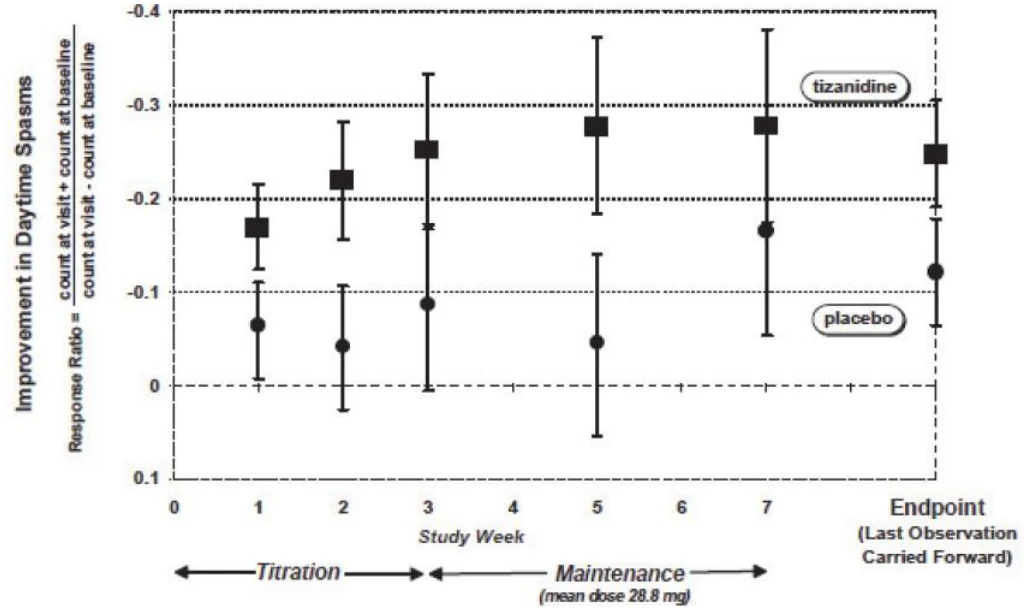
At endpoint (the protocol specified time of outcome assessment), there were statistically significant reductions in muscle tone and spasms in the tizanidine treated group compared to placebo. The reduction in muscle tone was not associated with a reduction in muscle strength (a desirable outcome) but also did not lead to any consistent advantage of tizanidine treated patients on measures of activities of daily living. Figure 2 and 3 below show a comparison of the mean change in muscle tone from baseline as measured by the Ashworth scale and a comparison of the mean change in daytime spasms as recorded in patient diaries, respectively.
Figure 2: Multiple Dose Study - Mean Change in Muscle Tone 0.5-2.5 Hours after Dosing as Measured by the Ashworth Scale ± 95% Confidence Interval (A Negative Ashworth Score Signifies an Improvement in Muscle Tone from Baseline)
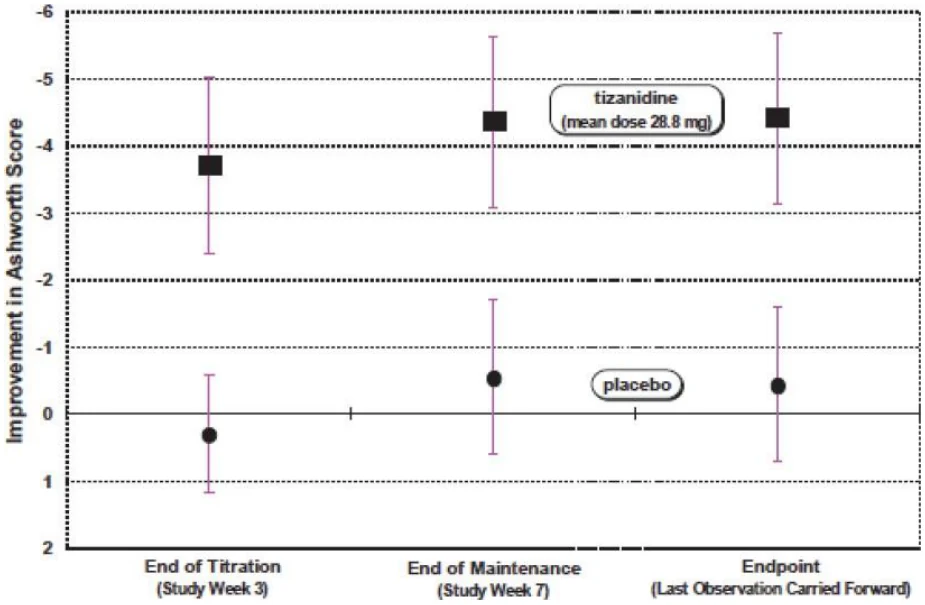
Figure 3: Multiple Dose Study - Mean Change in Response Ratio of Daytime Spasms
± 95% Confidence Interval (A Negative Response Ratio Signifies an Improvement in Spasms from Baseline)
In a second multiple dose study, 187 patients with spasticity secondary to multiple sclerosis were randomized to either placebo or tizanidine. Patients were titrated over 3 weeks up to a maximum tolerated dose or 36 mg daily given in three equal doses. Patients were then maintained on their maximally tolerated dose for 9 additional weeks (i.e., maintenance phase).
Throughout the maintenance phase, muscle tone was assessed on the Ashworth scale and global efficacy was assessed by both patient and investigator. There was a statistically significant reduction in muscle tone in the tizanidine treated group as compared to placebo at the last maintenance phase measurement of muscle tone (the protocol specified time of outcome assessment) and throughout the maintenance phase. The reduction in muscle tone was not associated with a reduction in muscle strength.
14.2 Comparative Bioavailability Studies
A randomized, two-treatment, two-period, single dose, crossover, oral comparative bioavailability study of MINT-TIZANIDINE 4 mg tablets (Mint Pharmaceuticals Inc.) and TIZANIDINE 4 mg tablets (AA Pharma Inc.) was conducted in healthy, adult, male subjects under fasting conditions. Comparative bioavailability data from 42 subjects that were included in the statistical analysis are summarized in the following table:
Table 6 – Summary Table of the Comparative Bioavailability Data
Tizanidine (1 x 4 mg) Geometric mean Arithmetic mean (CV %) | ||||
| Parameter | Test1 | Reference2 | % Ratio of geometric means | 90% Confidence Interval |
AUCT (pg·h/mL) | 7728.9 10393.6 (74.0) | 7638.5 10376.3 (79.7) | 101.2 | 90.5 – 113.1 |
AUCI (pg·h/mL) | 8157.6 10681.7 (73.0) | 7992.3 10670.2 (78.5) | 102.1 | 92.2 – 113.0 |
CMAX (pg/mL) | 3337.0 4343.5 (69.2) | 3231.1 4132.1 (68.0) | 103.3 | 92.3 – 115.6 |
| TMAX3 (h) | 0.8 (0.3 – 2.3) | 1.0 (0.5 – 2.3) | ||
| T½4 (h) | 1.5 (18.4) | 1.5 (15.2) | ||
1 MINT-TIZANIDINE (tizanidine as tizanidine hydrochloride) tablets, 4 mg (Mint Pharmaceuticals Inc.).
2 TIZANIDINE (tizanidine as tizanidine hydrochloride) tablets, 4 mg (AA Pharma Inc., Canada).
3 Expressed as the median (range) only.
4 Expressed as the arithmetic mean (CV%) only.
16 Non-Clinical Toxicology
General toxicology
Slight, reversible increases in SGPT/ALT were observed after the oral administration of tizanidine in subchronic (13 week) studies in rats and dogs and a chronic (52 week) study in dogs. Mild, reversible histopathological changes in the liver were also reported in the subchronic studies in rats and dogs at doses representing about 55 and 6 times the maximum recommended human dose, respectively. For this and all subsequent comparisons the reference weight for a small human is 50 kg.
In the 13-week subchronic toxicity studies, the maximum dose at which no toxic effect was observed was 1.7 mg/kg in rats and 0.3 mg/kg in dogs.
In dogs receiving doses of 1.5 mg/kg during the 52-week chronic toxicity study, the heart rate was reduced by 40% and the QT interval was prolonged. Slight sedation or unstable equilibrium, emesis, and salivation were also observed at this dose. The maximum dose at which no toxic effects were observed in this study was 0.45 mg/kg.
Genotoxicity
Tizanidine was not mutagenic or clastogenic in the following in vitro assays: the bacterial Ames test and the mammalian gene mutation test and chromosomal aberration test in Chinese hamster cells.
It was also negative in the following in vivo assays: the bone marrow micronucleus test in mice, the bone marrow micronucleus and cytogenicity test in Chinese hamsters, the dominant lethal mutagenicity test in mice, and the unscheduled DNA synthesis (UDS) test in mice.
Carcinogenicity
No evidence for carcinogenicity was seen in two dietary studies in rodents. Tizanidine was administered to mice for 78 weeks at doses up to 16 mg/kg, which is equivalent to 2 times the maximum recommended human dose on a mg/m2 basis. Tizanidine was also administered to rats for 104 weeks at doses up to 9 mg/kg which is equivalent to 2.5 times the maximum recommended human dose on a mg/m2 basis. There was no statistically significant increase in tumors in either species.
Reproductive and developmental toxicology
Reproduction studies in rats performed at oral doses of tizanidine up to approximately 4 times the maximum recommended human dose did not provide evidence of embryotoxic or teratogenic effects.
However, at dose levels producing exaggerated pharmacodynamic effects in rats (from 5 to over 130 times the maximum recommended human dose), the duration of pregnancy was prolonged, prenatal and perinatal pup mortality was increased, and development retardation (reduced fetal weight, increased incidence of skeletal retardation) was observed.
Reproduction studies in rabbits with tizanidine doses over 40 times the maximum recommended human dose showed no evidence of embryotoxicity or teratogenicity. Post-implantation loss was increased in rabbits at doses of 1 mg/kg or greater, equal to or greater than 0.5 times the maximum recommended human dose on a mg/m2 basis.
Tizanidine has been found to pass into the milk of nursing rats with a milk to blood concentration ratio of 1.8:1. In young nursing rats, abnormal results were obtained in tests indicative of central nervous system function. Several changes were noted in the development of the pups that may have been attributable either to the toxicity of the drug on the dams or else to direct drug effects on the offspring, following ingestion through milk.
Impairment of Fertility
Tizanidine did not affect fertility in male rats at doses of 10 mg/kg, approximately 2.7 times the maximum recommended human dose on a mg/m2 basis and in females at doses of 3 mg/kg, approximately equal to the maximum recommended human dose on a mg/m2 basis; fertility was reduced in males receiving 30 mg/kg (8 times the maximum recommended human dose on a mg/m2 basis) and in females receiving 10 mg/kg (2.7 times the maximum recommended human dose on a mg/m2 basis). At these doses, maternal behavioral effects and clinical signs were observed including marked sedation, weight loss, and ataxia.
Juvenile toxicity
Oral administration of tizanidine (0, 1, 3, and 10 mg/kg/day) to juvenile rats from postnatal day (PND) 7 through PND 70 resulted in delayed sexual maturation in males at all doses, reduced body weight gain, delayed sexual maturation in females, and bilateral corneal crystals at the mid and high doses. Corneal crystals were still observed at the mid and high doses after a three-week recovery period.
Neurobehavioral deficits were observed on a learning and memory task at the high dose. A no-effect dose for adverse effects on postnatal development not identified.
17 Supporting Product Monographs
- 1. ZANAFLEX® Tablets, 2 and 4 mg, control 131114, product monograph, Paladin Labs Inc. (2009-07-07)
- 2. APO-TIZANIDINE (Tablets, 2 and 4 mg tizanidine (as tizanidine hydrochloride)), control 298082, product monograph, APOTEX INC. (2025-12-11)