Patient Medication Information: uses, side effects, how to take - Mirena
Serious warnings and precautions box
Hormonal birth control including MIRENA DOES NOT PROTECT against Sexually Transmitted
Infections (STIs) including HIV/AIDS. To protect yourself against STIs you can use condoms with MIRENA.
- Cigarette smoking increases the risk of serious side effects on the heart and blood vessels. You should talk to your healthcare professional about the risks of smoking.
- MIRENA may become attached to (embedded) or go through the wall of the uterus. This is called perforation. If you experience severe abdominal or pelvic pain with or without vaginal bleeding contact your healthcare professional immediately.
What MIRENA is used for:
MIRENA is used:
- to prevent pregnancy for up to 8 years
to treat heavy menstrual bleeding without a known reason, for up to 5 years, in individuals who:
- are able to use a hormonal birth control method, and
- have had their first period (called menarche).
MIRENA has not been studied in individuals over the age of 65 years.
How MIRENA works:
MIRENA is an intrauterine system (IUS). It is placed in your uterus by your healthcare professional. MIRENA works by slowly releasing a low amount of a hormone called levonorgestrel directly into the uterus every day. Levonorgestrel is similar to a sex hormone produced naturally by the body. It is also used in many birth control pills (the “Pill”).
MIRENA may work to prevent pregnancy in several ways including:
- reduces the normal monthly thickening of the lining of the uterus,
- thickens the mucus in the cervix (this makes it harder for sperm to pass through the cervix), and
- impairs sperm movement and function.
Together, these actions prevent the sperm and egg from coming into contact and work together to prevent pregnancy.
These effects of levonorgestrel also decrease abnormally heavy menstrual blood loss.
MIRENA does not contain any estrogen.
Clinical trials found that there were about 2 pregnancies per year for every 1,000 individuals using MIRENA.
MIRENA is a long acting reversible contraceptive (LARC). LARCs are highly effective in preventing pregnancy. They can be used for a long period of time and are easy to use.
Other Ways to Prevent Pregnancy
Other methods of birth control are available to you. When used properly, other methods of birth control work well enough for many individuals.
The table below shows the typical pregnancy rates for different methods of birth control. It also shows the pregnancy rate when no birth control is used. The rates show the number of individuals out of 100 who would become pregnant within the first year of use.
| Reported Pregnancies per 100 Individuals Within the First Year of Use | |
|---|---|
| Hormonal Intrauterine system (IUS) | less than 1 |
| Copper Intrauterine device (IUD) | less than 1 |
| Subdermal Implant | less than 1 |
| Progesterone Injection | 6 |
| Combined hormonal contraceptive (pill, patch or ring) | 9 |
| Diaphragm | 12 |
| Male condom | 18 |
| Female condom | 21 |
| Sponge, spermicide | 12-28 |
| Withdrawal method | 22 |
| Natural family planning | 24 |
| No birth control | 85 |
The pregnancy rates listed in the table vary widely. This is because of differences in how carefully and regularly individuals use each method of birth control. Regular users may have lower pregnancy rates. Others may expect pregnancy rates in the middle ranges. This does not apply to IUSs, IUDs and hormonal implants because they are placed in the uterus or implanted in the body and do not depend on user compliance.
The ingredients in MIRENA are:
Medicinal ingredients: levonorgestrel
Non-medicinal ingredients: barium sulphate, black iron oxide, polydimethylsiloxane, polyethylene, silica
MIRENA comes in the following dosage form:
Intrauterine system (IUS): 52 mg levonorgestrel
Do not use MIRENA if:
you are:
- allergic to levonorgestrel, or to any of the other ingredients of MIRENA, or to the components of the container
- pregnant, or if you think you are pregnant
you have or had any of the following conditions:
- pelvic inflammatory disease (PID)
- an infection in your lower genital tract (vagina, vulva, cervix)
- an uterus infection after having a baby
- bleeding from the vagina that has not been explained
- a uterus condition that changes the space inside your uterus, such as large abnormal growths (fibroids)
- an infection of the cervix
- abnormal cell growth in the cervix
- a known or suspected tumour that is caused by progestogen (a hormone). This includes breast cancer
- liver disease/ problems or tumour
- an infection of your uterus after having an abortion in the past 3 months
- an infection of the heart valves or lining of the heart (bacterial endocarditis)
- immunodeficiency disorder
- cancer affecting the blood, or if you have blood cancer (leukemia)
- tumours related to pregnancy (trophoblastic disease)
- cancer of the uterus or the cervix
- any condition that increases your risk of pelvic infections
- you have an inserted intrauterine device (IUD) that has not been removed
To help avoid side effects and ensure proper use, talk to your healthcare professional before you use MIRENA. Talk about any health conditions or problems you may have, including if you:
- are breastfeeding
- have given birth in the last 36 weeks
- have ever had an ectopic pregnancy (development of a fertilized egg outside the uterus). Ectopic pregnancy is more likely if you accidentally become pregnant while using MIRENA
- have had surgery on your fallopian tubes
- have a history of ovarian cysts. There is an increased risk of cysts on the ovary
- have an unusual menstrual bleeding pattern or a history of heavy menstrual bleeding
- have an unusual or unpleasant (e.g., smelly) vaginal discharge or vaginal itching
- have or have a history of strokes, heart attacks or any heart problems
- have or have a family history of high blood pressure or abnormal blood fat levels
- have an abnormality of your heart or if you have any problem with your heart valves
- are diabetic or have a family history of diabetes
- have or had liver problems, including jaundice (a yellowing of the skin, whites of the eyes and/or nails)
- have or have a family history of blood clots (thrombosis)
- are taking any other medications
- have a history of migraine, dizziness or blurred vision
- have severe headaches
- have a history of emotional problems like depression
- wear contact lenses
- smoke
- are overweight or have a higher than normal body mass index (BMI ≥40 kg/m2)
- have Systemic Lupus Erythematosus, an autoimmune condition
Other warnings you should know about:
MIRENA was not studied in individuals less than 18 years old.
If you see a different healthcare professional, tell them that you are using MIRENA.
Tell your healthcare professional if you are scheduled for any lab tests. Certain tests may be affected by hormonal birth control. Also, tell your healthcare professional if you are scheduled for surgery requiring prolonged bed rest.
MIRENA should be used under the supervision of a healthcare professional. Visit your healthcare professional 4 to 12 weeks after you have MIRENA placed. You should have a follow-up visit at least once a year. Your visits may include a blood pressure check, a breast exam, an abdominal exam and a pelvic exam, (including a Pap smear). Carefully follow all directions given to you. Otherwise, you may become pregnant.
If you and your healthcare professional decide that, for you, the benefits of MIRENA outweigh the risks, you should be aware of the following:
Blood and heart problems (including blood clot in legs, lungs, heart, eyes, or brain)
You should talk to your healthcare professional about risk factors for blood clots and other heart problems.
Tell your healthcare professional right away if you notice the following:
- Sharp pain in the chest, coughing blood, or sudden shortness of breath. These could be signs of a blood clot in the lung.
- Leg pain and/or swelling. These could be signs of a blood clot in the leg.
- Crushing chest pain or heaviness. These could be signs of a heart attack.
- Sudden severe or worsening headache or vomiting, dizziness or fainting, eye or speech problems, or weakness or numbness in an arm or leg. These could be signs of a stroke.
- Sudden blurry of full loss of vision, eye pain or eye pressure. These could be signs of a blood clot in the eye.
Any of these conditions can cause death or disability. Blood clots also occur rarely in the eye, resulting in serious vision problems. It can also happen in a blood vessel leading to an arm or leg, resulting in damage to or loss of a limb.
Breast cancer
Cases of breast cancer have been reported in users of MIRENA. Major risk factors for breast cancer are increasing age and a strong history of breast cancer in the family (mother or sister). Other established risk factors include having your period before 12 years old, never having a child, having your first full pregnancy after 30 years old, never having breast fed a child, and drinking alcohol everyday.
Tell your healthcare professional if you see any breast lumps. Your healthcare professional should show you how to do breast self-examinations when you are using MIRENA.
Diabetes
If you have diabetes and use MIRENA, your blood sugar levels should be watched closely.
Infections
In the first 3 weeks after placement of an IUS/IUD, there is an increased risk of a serious pelvic infection called pelvic inflammatory disease (PID). Other known risk factors for PID include multiple sexual partners, frequent intercourse, and young age.
PID can cause serious problems such as difficulty getting pregnant, development of a pregnancy outside the uterus (ectopic pregnancy), or pelvic pain that does not go away. PID is usually treated with antibiotics. More serious cases of PID may require surgery.
Tell your healthcare professional right away if you have any of these signs of PID: long-lasting or heavy bleeding, unusual vaginal discharge, low abdominal (stomach area) pain, painful sex, chills or fever.
Ectopic pregnancy
While using MIRENA, the risk of pregnancy is low. However, if you accidentally become pregnant while using MIRENA, an ectopic pregnancy is more likely. This means that the pregnancy is not in the uterus. Ectopic pregnancy is a serious condition. Tell your healthcare professional if you have lower abdominal pain, especially if you have missed a period and/or have unexpected bleeding. These can be signs of an ectopic pregnancy.
Cysts on the ovary
Cysts (fluid filled sacs) on the ovary commonly occur in individuals using MIRENA. These cysts usually disappear within a few months on their own. However, cysts can sometimes cause pain and may need medical attention.
Uterine perforations
MIRENA may become attached to or go through the wall of the uterus. This is called perforation and it happens most often during placement. Perforation is uncommon. If this happens, MIRENA must be removed.
The risk of perforation is higher in individuals who are breastfeeding when MIRENA is placed. The risk is also higher when MIRENA is placed up to 36 weeks after a delivery. The risk of perforation may be increased in individuals with a differently shaped uterus or with a uterus that is fixed and leaning backward.
Use while breastfeeding
Hormonal birth control methods should not be used as a first choice for preventing pregnancy in individuals who are breast feeding. Small amounts of levonorgestrel, the hormone in MIRENA, have been found in the milk of breast-feeding individuals using MIRENA. However, it does not appear to affect the growth or health of your baby when you start using MIRENA 6 weeks after delivery. Levonorgestrel does not appear to affect the amount or the quality of breast milk. You can use MIRENA during breast feeding. However, isolated cases of decreased milk production have been reported among individuals using MIRENA.
Use in pregnancy
If you become pregnant with MIRENA in place, you should have it removed as soon as possible. If it is left in place during pregnancy, the chances of having a miscarriage or early delivery increase. It is not known if MIRENA can cause long-term effects on the baby if it stays in place during pregnancy. Removing MIRENA may cause a miscarriage. If MIRENA cannot be removed, talk to your healthcare professional about the benefits and risks of continuing the pregnancy, and possible effects to your unborn child.
Use after pregnancy and abortion
After childbirth, MIRENA should be placed only after the uterus has returned to its normal size. MIRENA should not be placed for at least 6 weeks after delivery.
MIRENA can be placed right after an abortion which took place in the first three months (first trimester) of pregnancy. If an abortion takes place in the second trimester, placement of MIRENA should be delayed for 6 weeks or until the uterus has returned to normal size.
Pregnancy after stopping MIRENA
If you wish to become pregnant, ask your healthcare professional to remove MIRENA. Your usual level of fertility should return soon after removal. Nearly 90% of individuals wishing to become pregnant conceive within 24 months after removal of the system.
Broken MIRENA
MIRENA may break, most often during a difficult removal. Broken pieces must be found and removed. Surgery may be needed to do this.
Driving or using machines
The effect of MIRENA on the ability to drive or to use machines has not been studied. Do not drive or use machines until you know how you react to MIRENA.
How MIRENA will affect my periods:
MIRENA will affect your menstrual cycle. For the first 3 to 6 months, your period may become irregular and the number of bleeding days may increase. You may also have frequent spotting or light vaginal bleeding. In some cases, you may have heavy or prolonged bleeding during this time. Contact your healthcare professional if this persists.
Overall, you are likely to have a gradual reduction in the amount and number of bleeding days each month. Some individuals using MIRENA eventually find that their periods stop altogether.
When MIRENA is removed, periods should return to normal.
I may stop having periods:
Over time, your menstrual period may gradually disappear when using MIRENA. This is because of the effect of the hormone on the lining of the uterus. The normal monthly thickening of the uterine lining with blood does not happen, therefore there is little or no bleeding, as happens during a usual menstrual period. It does not necessarily mean you have reached menopause or are pregnant.
If, however, you are having regular menstrual periods and then do not have one for 6 weeks or longer, it is possible that you may be pregnant. You should speak to your healthcare professional.
Tell your healthcare professional about all the medicines you take, including any drugs, vitamins, minerals, natural supplements or alternative medicines.
The following may interact with MIRENA:
Certain drugs may interact with MIRENA. They can make it less able to prevent pregnancy. Hormonal birth control may become less reliable if you are also taking drugs that affect the liver (such as primidone, barbiturates, phenytoin, carbamazepine, rifampicin, and griseofulvin) at the same time. MIRENA is unlikely to be affected by these drugs. This is because it releases a very small amount of hormone directly inside your uterus. If you are taking other medications, ask your healthcare professional if you need to use an additional method of birth control.
MIRENA is visible during X-ray exams.
How to use MIRENA:
What it looks like:
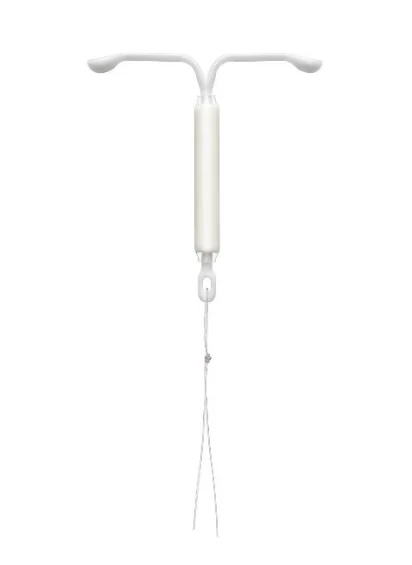
MIRENA consists of a small, white, T-shaped frame made from soft, flexible plastic. The vertical and horizontal arms of the T are approximately 3 cm in length. The vertical arm is surrounded by a narrow cylindrical shaped reservoir that contains levonorgestrel. Two brown coloured fine plastic threads are attached to the tip of the vertical arm. These threads are intended to be used for removal of MIRENA. The threads can also be used to check MIRENA once it is in place.
How MIRENA is placed:
Before MIRENA is placed, you will have a pelvic exam to determine the position and size of your uterus. You may also have a Pap smear and a breast exam. If necessary, you may also have other tests (i.e., for infections including STIs).
Your healthcare professional will place the thin flexible plastic tube of the insertion device containing MIRENA into your uterus. At this point you may feel a little discomfort.
Once MIRENA is in the correct position, your healthcare professional will withdraw the tube and leave MIRENA in your uterus. Your healthcare professional will trim the removal threads to a suitable length. This procedure will only take a few minutes.
Most individuals experience either no pain or only mild pain during placement of MIRENA. Some individuals may experience some discomfort. You may wish to discuss the need for a painkiller or local anesthetic with your healthcare professional.
Some individuals may feel faint after MIRENA is placed. This feeling goes away after a short rest. The placement procedure may precipitate a seizure in individuals with epilepsy. After placement you may feel some cramp-like menstrual pain; however, this usually stops within a few days.
It is uncommon, but part or all of MIRENA may go through the wall of the uterus during placement and come to rest outside the uterus. If this happens MIRENA must be removed.
When to place MIRENA:
MIRENA should be placed within 7 days of starting your period. In this case, no back up birth control is needed. If it is certain that you are not pregnant, MIRENA may also be placed at any other time during your cycle. Tell your healthcare professional if you have had unprotected sex since your last period. If MIRENA is placed more than 7 days since your period started, use a condom or diaphragm, or do not have sex for the next 7 days. MIRENA cannot be used as emergency birth control.
When replacing an existing MIRENA for a new one, it is not necessary to wait for your period. MIRENA can be placed at any time of the cycle.
How quickly MIRENA starts to work:
MIRENA starts to work right away if it is placed within 7 days of the start of your period. It is best to wait 24-48 hours before having intercourse in case of discomfort. If MIRENA is placed more than 7 days after the start of your period, use a condom or diaphragm for the next 7 days. Alternatively, do not have sex for the next 7 days.
A reduction in menstrual blood loss should be apparent from the first menstrual cycle.
How often I should have MIRENA checked:
You should have MIRENA checked approximately 4 to 12 weeks after it is placed, again at 12 months and then once a year until it is removed.
You should receive a reminder card from your healthcare professional after the placement of MIRENA. Keep this card until MIRENA is removed and bring it with you to every medical appointment.
How to check if MIRENA is in place:
After each menstrual period or about once a month, you should check by feeling if the two threads are still in place. Your healthcare professional will show you how to do this. Do not pull on the threads as you may accidentally pull MIRENA out.
If you cannot feel the threads, this may indicate that MIRENA has fallen out (expulsion) or gone through the uterus (perforation). See your healthcare professional and in the meantime use another method of birth control (like condoms) that does not include hormones. You should also see your healthcare professional if you can feel the lower end of MIRENA itself.
Feeling MIRENA during sexual intercourse:
After MIRENA is placed, it is recommended to wait 24 to 48 hours before having sexual intercourse. During sexual intercourse, you or your partner should not be able to feel MIRENA. If you can feel MIRENA, or any pain or discomfort, avoid having sex until your healthcare professional has checked if MIRENA is still in the correct position.
The removal threads may be felt by your partner during intercourse.
Using tampons or menstrual cups:
Use of sanitary pads is recommended. If tampons or menstrual cups are used, you should change them with care so as not to pull the threads of MIRENA.
MIRENA can fall out:
Although unlikely, MIRENA may fall out on its own. MIRENA could be pushed out either fully or partially during your period. This is called expulsion. This is more likely to occur:
- If you are overweight or have heavy periods.
- Right after the birth of a baby or after a second trimester abortion.
If MIRENA is out of place, it may not work as expected. If this happens, you are not protected against pregnancy.
Some symptoms of an expulsion are pain and abnormal bleeding. MIRENA may also come out without you noticing. An unusual increase in the amount of bleeding during your period might be a sign that this has happened.
If you think MIRENA has come out (fully or partially), avoid intercourse or use another method of non-hormonal birth control (like condoms) and talk to your healthcare professional. They might do an x-ray to confirm if MIRENA has fallen out. MIRENA should be removed if it is pushed out partially. MIRENA can be replaced with a new one once pregnancy is ruled out. Your healthcare professional will decide what is best for you.
Removal of MIRENA:
MIRENA can be easily removed by your healthcare professional at any time if you wish to become pregnant.
For prevention of pregnancy, MIRENA should be removed or replaced after 8 years.
For treatment of heavy menstrual bleeding, MIRENA should be removed or replaced after 5 years.
You may become pregnant upon removal of MIRENA if you have had sexual intercourse during the previous week. You could become pregnant as soon as MIRENA is removed, so you should use another method of birth control if you do not want to become pregnant. Talk to your healthcare professional about the best birth control methods for you, because your new method may need to be started 7 days before MIRENA is removed to prevent pregnancy.
Tell your healthcare professional if you have had sexual intercourse during the week before.
Missed dose:
Your healthcare professional can place a new system after removing the old system if you wish to continue using MIRENA:
- after 8 years (for prevention of pregnancy),
- after 5 years (for treatment of heavy menstrual bleeding).
If the same MIRENA system has been left in place for longer than 8 years, you may become pregnant. Pregnancy should be ruled out before placement of a new system.
Possible side effects from using MIRENA:
These are not all the possible side effects you may feel when taking MIRENA. If you experience any side effects not listed here, tell your healthcare professional. Please see the box called “Serious Warnings and Precautions”.
- acne/oily skin
- skin disorder, dark patches of skin
- nausea
- hair loss
- infection of the ovaries, fallopian tubes or uterus
- painful periods
- discharge from the vagina
- vaginal bleeding
- excess hair on the face, chest, stomach or legs
- breast pain and tenderness
- lower sex drive
- feeling nervous
- weight gain
- breakage of the device
- increased blood pressure
Side effects with MIRENA are more common during the first months of use; they gradually decrease over time. Differences in your menstrual bleeding are the most common side effects of MIRENA during the first months after the system is placed, but these effects should decrease over time.
Other common side effects might include abdominal pain and absence of menstruation. If these symptoms do not go away or if you think you are reacting poorly to MIRENA please tell your healthcare professional.
Few individuals using MIRENA after delivery have reported less milk production.
Serious side effects and what to do about them
| Frequency / Side Effect / Symptom | Talk with your Healthcare Professional | Get immediate medical help | |
|---|---|---|---|
| Frequency / Side Effect / Symptom | Talk with your Healthcare Professional | Get immediate medical help | |
| Frequency / Side Effect / Symptom | Talk with your Healthcare Professional | Get immediate medical help | |
| Only if severe | In all cases | ||
| Only if severe | In all cases | ||
| Only if severe | In all cases | ||
| Very common | |||
| Cysts on the ovaries: Pelvic pain, painful intercourse, abdominal bloating or swelling, pain during bowel movements. (Cysts usually disappear on their own within a few months and may not show symptoms. Serious cysts are uncommon.) | ✓ | ||
| Vaginal bleeding changes: Increased or decreased menstrual bleeding, spotting, infrequent periods or absence of bleeding | ✓ | ||
| Vaginal infection (inflammation of the vaginal or surrounding area): Itching, or unusual or increased discharge from the vagina | ✓ | ||
| Common | |||
| Abdominal pain | ✓ | ||
| Depressed Mood/Depression: Sad mood that won’t go away. If you have a history of depression, your depression may become worse | ✓ | ||
| Expulsion (MIRENA has fallen out): An unusual increase in the amount of bleeding during your period | ✓ | ||
| Headache | ✓ | ||
| Pelvic or back pain | ✓ | ||
| Uncommon | |||
| Dizziness | ✓ | ||
| Feeling of fullness or tightness in the abdomen | ✓ | ||
| Intrauterine pregnancy, miscarriage, or ectopic pregnancy: Persistent lower abdominal pain, together with nausea or breast tenderness and/or vaginal bleeding | ✓ | ||
| Migraine | ✓ | ||
| Pelvic infection: Persistent lower abdominal pain, together with fever or unusual discharge from the vagina | ✓ | ||
| Perforation of the uterus [attached to (embedded) or gone through the wall of the uterus]: Severe lower abdominal pain which may be together with bleeding | ✓ | ||
| Very rare | |||
| Allergic reaction including itchiness, rash, swelling of face and lips, cheeks, tongue and/or throat | ✓ | ||
| Sepsis and septic shock (infection of the blood): fever or dizziness, chills, high or very low body temperature, little or no urine, low blood pressure, palpitations, rapid breathing, rapid heartbeat | ✓ | ||
| Unknown | |||
| Deep vein thrombosis (blood clot in the deep veins of the leg or arm): Swelling, pain, arm or leg may be warm to the touch and may appear red | ✓ | ||
| Pulmonary embolism (blood clot in the lung): Chest pain that may increase with deep breathing, cough, coughing up bloody sputum, shortness of breath | ✓ | ||
| Stroke (bleeding or blood clot in the brain): Sudden numbness, weakness or tingling of the face, arm, or leg, particularly on one side of the body, sudden headache, blurry vision, difficulty swallowing or speaking, or lethargy, dizziness, fainting, vomiting, trouble understanding, trouble with walking and loss of balance | ✓ |
If you have a troublesome symptom or side effect that is not listed here or becomes bad enough to interfere with your daily activities, tell your healthcare professional.
Reporting side effects
You can report any suspected side effects associated with the use of health products to Health Canada by:
- Visiting the Web page on Adverse Reaction Reporting (canada.ca/drug-device-reporting) for information on how to report online, by mail or by fax; or
- Calling toll-free at 1-866-234-2345.
NOTE: Contact your healthcare professional if you need information about how to manage your side effects. The Canada Vigilance Program does not provide medical advice.
Storage
Store MIRENA at room temperature (between 15°C and 30°C).
Protect MIRENA from moisture and direct sunlight.
Keep out of reach and sight of children and pets.
Do not throw away any medicines via wastewater or household waste. Ask your healthcare professional how to throw away medicines you no longer use. These measures will help to protect the environment.
If you want more information about MIRENA:
- Talk to your healthcare professional
- Find the full product monograph that is prepared for healthcare professionals and includes the Patient Medication Information by visiting the Health Canada Drug Product Database website (https://www.canada.ca/en/health-canada/services/drugs-health-products/drug-products/drug-product-database.html); the manufacturer’s website http://www.bayer.ca or by calling Bayer at 1-800-265-7382.
Bayer Inc.
2920 Matheson Blvd East,
Mississauga, Ontario
L4W 5R6
Canada
Date of Authorization: 2025-07-30
© 2025, Bayer Inc.
® TM see www.bayer.ca/tm-mc