


Product Monograph - Mylan-Glybe
SUMMARY PRODUCT INFORMATION
| Route of Administration | Dosage Form / Strength | All Nonmedicinal Ingredients |
| Oral | Tablet 2.5 mg, 5 mg | Colloidal anhydrous silica, lactose monohydrate, magnesium stearate, starch (corn starch and pre-gelatanized corn starch) and talc. |
INDICATIONS AND CLINICAL USE
MYLAN-GLYBE (glyburide) is indicated as an adjunct to proper dietary management, exercise and weight reduction to lower blood glucose in adult patients with type 2 diabetes whose hyperglycemia cannot be controlled by diet and exercise alone or when insulin therapy is not required.
Pediatrics (<18 years of age)
Safety and effectiveness of glyburide has not been established. Use in patients under 18 years of age is not recommended (see WARNING AND PRECAUTIONS, Special Populations).
Geriatrics
Elderly with type 2 diabetes when treated with glyburide are more prone to hypoglycemia (see WARNINGS AND PRECAUTIONS, Special Populations).
CONTRAINDICATIONS
MYLAN-GLYBE (glyburide) is contraindicated in patients with
- Known hypersensitivity or allergy to glyburide, any sulfonylurea or sulfonamides or any other component of the formulation. For a complete listing, see DOSAGE FORMS, COMPOSITION AND PACKAGING.
- Patients with Type 1 diabetes (formerly known as insulin-dependent diabetes mellitus or IDDM).
- Diabetic ketoacidosis with or without coma. This condition should be treated with insulin.
- Diabetic precoma or coma.
- During stress conditions such as severe infections, trauma or surgery.
- In the presence of liver disease or frank jaundice; or renal impairment.
- Patients treated with bosentan.
Pregnancy and lactation.
During pregnancy, no oral antidiabetic agent should be given.
Due to the possible excretion in human milk, the patient should discontinue nursing or discontinue taking the drug depending on the importance of the drug to the mother. If glyburide is discontinued, the patient should be transferred to insulin therapy.
WARNINGS AND PRECAUTIONS
General
Use of glyburide must be viewed by both the physician and patient as a treatment in addition to diet and exercise and not as a substitute for proper dietary management, exercise and weight reduction or as a convenient mechanism for avoiding dietary restraint. Furthermore, loss of blood glucose control on diet and exercise alone may be transient, thus requiring only short-term administration of glyburide. As is necessary during treatment with any blood-glucose-lowering drug, the patient and the physician must be aware of the risk of hypoglycemia.
In initiating treatment for type 2 diabetes, non-pharmacologic therapy (proper dietary management, exercise and weight reduction) should be emphasized as the initial form of treatment. Caloric restriction, weight loss and exercise are essential in the obese diabetic patient.
Proper dietary management and exercise alone may be effective in controlling the blood glucose and symptoms of hyperglycemia. If non-pharmacologic therapy fails to reduce symptoms and/or blood glucose, the use of an oral sulfonylurea should be considered.
Patient Selection and Follow-Up
Careful selection of patients is important. It is recommended that response to sulfonylurea be measured as increased C-peptide. Those patients who do not respond with increased C-peptide will be less likely to show improvement.
It is imperative that there be careful ongoing attention to diet, adherence to regular exercise, reduction of body weight in obese patients, careful adjustment of dosage, instruction of the patient on hypoglycemic reactions and their control as well as regular, thorough follow-up examinations. Cardiovascular risk factors should be identified.
The effectiveness of any oral hypoglycemic drug, including glyburide, in lowering blood glucose to a desired level decreases in many patients over a period of time, which may be due to progression of the severity of the diabetes or to diminished responsiveness to the drug. This phenomenon, known as secondary failure, is distinctive of primary failure in which the drug is ineffective in an individual patient when given for the first time.
Patients should therefore be monitored with regular clinical and laboratory evaluations, including blood glucose and glycosylated hemoglobin (AlC) determinations, to determine the minimum effective dosage and to detect primary failure (inadequate lowering of blood glucose concentrations at the maximum recommended dosage) or secondary failure (progressive deterioration in blood sugar control following an initial period of effectiveness). The rate of primary failure will vary greatly depending upon patient selection and adherence to diet and exercise. The etiology of secondary failure is multifactorial and may involve progressive β-cell failure as well as exogenous diabetogenic factors such as obesity, illness, drugs, or tachyphylaxis to the sulfonylurea.
Cardiovascular
Some literature studies have suggested that when compared to treatment with metformin or gliclazide, there is an association between the use of sulfonylureas such as glyburide and the risk of cardiovascular adverse events including cardiovascular mortality, since these agents may potentially impair cardioprotective processes. This risk was especially observed in patients who were diagnosed with coronary diseases. A cautious approach is warranted. All patients on sulfonylureas, particularly high risk patients with cardiovascular disease, should be closely monitored for cardiovascular complications.
Endocrine and Metabolism
Loss of control of blood glucose
If loss of adequate blood glucose lowering response to sulfonylurea is detected, treatment must be reassessed.
When a patient stabilized on any diabetic regimen is exposed to stress such as illness during therapy, fever, trauma, infection, or surgery, a loss of glycemic control may occur. At such times, it may be necessary to adjust the dosage of MYLAN-GLYBE or consider discontinuation of MYLAN-GLYBE and administration of insulin.
Hypoglycemia
Hypoglycemia, sometimes prolonged and even life-threatening, may occur as a result of the blood-glucose-lowering action of glyburide. Proper patient selection, dosage, and instructions are important to avoid hypoglycemic episodes.
Hepatic and/or renal disease, inadequate caloric intake, malnutrition and/or irregular meals, exercise without adequate caloric supplementation, debility, advanced age, patient non-compliance, when alcohol is ingested, certain disorders of thyroid function, adrenal or pituitary insufficiency, excessive glyburide dosage, treatment with glyburide in the absence of indication or concurrent use with other agents with blood glucose lowering potential (see DRUG INTERACTIONS, Drug-Drug Interactions) may be predisposing factors. Oral hypoglycemic agents should be administered with caution to patients with Addison's disease. If such risk factors for hypoglycemia are present, it may be necessary to adjust the dosage of glyburide or the entire diabetes therapy. This also applies whenever illness occurs during therapy or the patient’s life style changes (see DOSAGE and ADMINISTRATION).
Elderly patients are particularly susceptible to the hypoglycemic action of glucose-lowering drugs. Hypoglycemia may be difficult to recognize in the elderly. The initial and maintenance dosing should be conservative to avoid hypoglycemic reactions.
The manifestations of hypoglycemia include: flushing or pallor, chilliness, excessive hunger, trembling, headache, dizziness, nausea, vomiting, restlessness, aggressiveness, depression, speech disorders, aphasia, sensory and/or visual disturbances, helplessness, lassitude, shallow respiration or bradycardia. In more severe cases, the clinical symptoms of a stroke or coma appear. However, symptoms of hypoglycemia are not necessarily as typical as described above and sulphonylureas may cause insidious development of symptoms mimicking cerebrovascular insufficiency (e.g. disordered sleep, somnolence, impaired alertness and reactions, confusion, delirium, cerebral convulsions, paralytic symptoms or loss of consciousness).
Signs of adrenergic counter-regulation to hypoglycemia include: sweating, damp skin, anxiety, tachycardia, hypertension, palpitations, angina pectoris, and cardiac arrhythmias. However, these symptoms may be milder or absent in patients who develop hypoglycemia gradually, patients with autonomic neuropathy, elderly or patients who receive concurrent treatment with sympatholytic agents (e.g. beta blockers, clonidine, reserpine, guanethidine) (see Drug-Drug Interactions).
Mild to moderate episodes of hypoglycemia can usually be treated with oral carbohydrates. Artificial sweeteners are ineffective in controlling hypoglycemia. The symptoms of hypoglycemia nearly always subside when hypoglycemia is corrected.
Despite initially successful countermeasures, hypoglycemia may recur. Patients must therefore remain under close observation.
Severe hypoglycemia, which may be prolonged and has occasionally been life-threatening, may occur and mimics acute CNS disorders. Signs of severe hypoglycemia can include disorientation, loss of consciousness, and seizures. Severe hypoglycemia, or a protracted episode, which can only be temporarily controlled by usual amounts of sugar requires in-patient hospital care.
Hematologic
Treatment of patients with glucose-6-phosphate dehydrogenase (G6PD)-deficiency with sulfonylurea agents can lead to hemolytic anemia. Since glyburide belongs to the class of sulfonylurea agents, caution should be used in patients with G6PD-deficiency and a nonsulfonylurea alternative should be considered.
Hepatic
The metabolism and excretion of sulfonylureas including glyburide may be slowed in patients with impaired hepatic function (see Monitoring and Laboratory Tests below).
Immune
Persons allergic to other sulfonamide derivatives may develop an allergic reaction to glyburide
(see CONTRAINDICATIONS).
Renal
In patients with renal insufficiency, the initial dosing, dose increments, and maintenance dosage should be conservative to avoid hypoglycemic reactions.
Special Populations
Pregnant Women:
The use of MYLAN-GLYBE is contraindicated during pregnancy or for women planning a pregnancy (see CONTRAINDICATIONS). Recent information suggests that abnormal blood glucose levels during pregnancy are associated with a higher incidence of congenital abnormalities. Experts, including the Canadian Diabetes Association and the Canadian Medical Association recommend that insulin be used during pregnancy to maintain glucose levels as close to normal as possible.
Nursing women:
The use of MYLAN-GLYBE is contraindicated in lactating women (see CONTRAINDICATIONS).
Pediatrics:
Safety and effectiveness of glyburide has not been established. Use in patients under 18 years of age is not recommended.
Geriatrics:
Elderly patients with type 2 diabetes are more susceptible to hypoglycemia and it may be difficult to recognize it.
Monitoring and Laboratory Tests
Fasting blood glucose should be monitored periodically to determine therapeutic response. Glycosylated hemoglobin (HbA1C) should also be monitored, usually every 3 to 6 months, to more precisely assess long-term glycemic control.
Hepatic function should be assessed before initiating therapy and periodically in patients with impaired hepatic function.
In patients with impaired renal function, blood and urine glucose should be regularly monitored.
Elderly patients (malnourished, with impaired hepatic, renal, or adrenal function) will require periodic monitoring and special care.
Periodic assessment of cardiovascular, ophthalmic, hematologic, renal and hepatic status is recommended.
ADVERSE REACTIONS
Adverse Drug Reaction Overview
The most commonly occurring significant adverse event of sulfonylureas (including glyburide) is hypoglycaemia.
The following serious adverse reactions have been reported with glyburide:
Cases of severe hypoglycemia that may be prolonged and even life-threatening (see WARNINGS AND PRECAUTIONS).
Impaired liver function (e.g. cholestasis and jaundice) and hepatitis which can lead to life-threatening liver failure (isolated cases).
Serious and life-threatening sensitivity reactions including dyspnea, hypotension or shock (very rare).
Potentially life-threatening cases of thrombocytopenia, leukopenia, agranulocytosis, pancytopenia, erythrocytopenia, granulocytopenia, hemolytic anemia and aplastic anemia (very rare).
Clinical Trial Adverse Drug Reactions
Because clinical trials are conducted under very specific conditions the adverse reaction rates observed in the clinical trials may not reflect the rates observed in practice and should not be compared to the rates in the clinical trials of another drug. Adverse drug reaction information from clinical trials is useful for identifying drug-related adverse events and for approximating rates.
Less Common Clinical Trial Adverse Drug Reactions (<1%)
Endocrine and Metabolism:
Reduced radioactive iodine uptake by the thyroid gland has been reported with oral hypoglycemic therapy.
Hepatic porphyria and disulfiram-like reactions have been observed in patients treated with oral hypoglycemic drugs. Elevation of liver enzyme levels has been reported very rarely in patients treated with glyburide. In isolated cases, impairment of liver function (e.g. cholestasis and jaundice) and hepatitis have been observed which can regress after withdrawal of the drug or may lead to life-threatening liver failure.
Cases of hyponatremia have been reported with sulfonylureas (including glyburide), most often in patients who are on other medications or have medical conditions known to cause hyponatremia or increased release of antidiuretic hormones. Although there have been no reports for glyburide, the syndrome of inappropriate antidiuretic hormone (SIADH) secretion has been reported with certain other sulfonylureas, and it has been suggested that these sulfonylureas may augment the peripheral (antidiuretic) action of ADH and/or increased release of ADH.
Gastrointestinal:
Nausea, epigastric fullness and heartburn are common reactions. Vomiting, diarrhea, and abdominal pain have also been reported. These tend to be dose related and may disappear when dosage is reduced.
Hematologic:
Potentially life-threatening changes in the blood picture may occur. Rare cases of mild to severe thrombocytopenia which can manifest itself as purpura have been reported. Leukopenia, agranulocytosis, pancytopenia (which may be due to myelosuppression), erythrocytopenia, granulocytopenia, hemolytic anemia and aplastic anemia have been observed very rarely with glyburide therapy. These reactions may be reversible following discontinuation of the sulfonylurea antidiabetic agent.
Sensitivity/Resistance:
Allergic and pseudoallergic skin reactions such as pruritus, erythema, rashes, urticaria, morbilliform or maculopapular eruptions have been reported in a number of patients. These may subside on continued use of glyburide, but if they persist the drug should be discontinued. Mild reactions such as urticaria may very rarely develop into serious and life-threatening reactions including dyspnea, hypotension or shock. In the event of urticaria, a physician must therefore be notified immediately. Porphyria cutanea tarda and photosensitivity reactions have been associated with the use of oral hypoglycemic drugs. Allergic vasculitis has been observed very rarely in patients receiving glyburide and in some circumstances may be life-threatening.
Cross-sensitivity to sulfonamides or their derivatives may occur in patients treated with oral sulfonylurea hypoglycemic agents (see CONTRAINDICATIONS).
Other:
Transient visual disturbances may occur at the commencement of treatment due to fluctuations in blood glucose levels.
DRUG INTERACTIONS
Overview
Weakening of the blood-glucose-lowering effect and, thus, raised blood glucose levels or potentiation of the blood-glucose lowering effect and thus hypoglycemia may occur when taking other drugs.
Glyburide is mainly metabolized by CYP2C9 and by CYP3A4. This should be taken into account when glyburide is co-administered with inducers or inhibitors of CYP2C9 and
CYP3A4. Genetic polymorphisms of CYP2C9 may decrease oral clearance of MYLAN-GLYBE (see ACTION AND CLINICAL PHARMACOLOGY, Pharmacokinetics).
Both acute and chronic alcohol intake may potentiate or weaken the blood-glucose-lowering action of glyburide in an unpredictable fashion. Intolerance to alcohol (disulfiram-like reaction: flushing, sensation of warmth, giddiness, nausea, and occasionally tachycardia) may occur in patients treated with oral hypoglycemic drugs. These reactions can be prevented by avoiding the use of alcohol.
Drug-Drug Interactions
Patients who receive or discontinue certain medications while undergoing treatment with glyburide may experience changes in blood glucose control.
Table 1. Drugs that may potentiate the hypoglycemic action
| Proper name | Reference | Effect | Clinical comment |
| ACE-inhibitors | T | The hypoglycemic action of sulfonylureas may be potentiated. | When these drugs are administered to a patient receiving MYLAN-GLYBE, the patient should be observed closely for hypoglycemia. When these drugs are withdrawn from a patient receiving |
| Anabolic steroids and androgens | T | ||
| Beta-blockers | T | ||
| Chloramphenicol | T | ||
| Clarithromycin | C | ||
| Coumarin derivatives | T | ||
| Cyclophosphamide | T | ||
| Disopyramide | T | ||
| Fenfluramide | T | ||
| Fibrates | T | MYLAN-GLYBE, the patient should be observed closely for loss of glycemic control. |
| Fluconazole | T | |
| Fluoxetine | T | |
| Guanethidine | T | |
| Ifosfamide | T | |
| Miconazole | T | |
| Monoamine oxidase inhibitors | T | |
| Nonsteroidal anti-inflammatory drugs | T | |
| Oxyphenbutazone | T | |
| Para-aminosalicylic acid | T | |
| Pentoxifylline (high dose parenteral) | T | |
| Phenylbutazone | T | |
| Probenecid | T | |
| Propranolol | T | |
| Quinolones | T | |
| Salicyclates | T | |
| Sulfonamides (e.g. sulphaphenazole) | T | |
| Sulphinpyrazone | T | |
| Sympatholytic agents (e.g. beta-blockers, guanethidine) | T | |
| Tetracyclines | T | |
| Tuberculostatics | T | |
Table 2. Drugs that may produce hyperglycemia and lead to loss of blood sugar control
| Proper name | Reference | Effect | Clinical comment |
| Acetazolamide | T | These drugs tend to produce hyperglycemia and may lead to loss of blood sugar control | When these drugs are administered to a patient receiving MYLAN-GLYBE, the patient should be observed closely for loss of glycemic control. When these drugs are withdrawn from a patient receiving MYLAN-GLYBE, the patient should be observed closely for hypoglycemia. |
| Barbiturates | T | ||
| Corticosteroids | T | ||
| Diazoxide | T | ||
| Diuretics (thiazides, furosemide) | T | ||
| Epinephrine and other sympathomimetic agents | T | ||
| Estrogen and progestrogen | T | ||
| Glucagon | T | ||
| Isoniazid | T | ||
| Laxatives (after protracted use) | T | ||
| Nicotinic acid (in pharmacologic doses) | T | ||
| Phenothiazines | T |
| Phenytoin | T |
| Rifampicin | T |
| Thyroid products | T |
Table 3. Other drugs that may interact with MYLAN-GLYBE
| Proper name | Reference | Effect | Clinical comment |
| Beta-blockers (see also table 1) | T | Concurrent use with MYLAN-GLYBE may lead to either a potentiation or an attenuation of the blood glucose-lowering effect. The signs of adrenergic counter-regulation to hypoglycemia may be reduced or absent in case of concomitant use with MYLAN-GLYBE. | |
| Bosentan | C | An increased incidence of elevated liver enzymes was observed in patients receiving MYLAN-GLYBE concomitantly with bosentan. Both MYLAN-GLYBE and bosentan inhibit the bile salt export pump, leading to intracellular accumulation of cytotoxic bile salts. | This combination should not be used. |
| Barbiturates | T | Prolonged barbiturate action. | To be used cautiously in patients receiving an oral hypoglycemic agent. |
| Clonidine | T | Concurrent use with MYLAN-GLYBE may lead to either a potentiation or an attenuation of the bloodglucose-lowering effect. |
The signs of adrenergic counter-regulation to hypoglycemia may be reduced or absent in case of concomitant use with MYLAN-GLYBE. | |||
| Colesevelam | C | Colesevelam binds to MYLAN-GLYBE and reduces MYLAN-GLYBE absorption from the gastrointestinal tract. | No interaction was observed when glyburide was taken at least 4 hours before colesevelam. Therefore, MYLAN-GLYBE should be administered at least 4 hours prior to colesevelam. |
| Coumarin derivatives | T | MYLAN-GLYBE may potentiate or weaken the effects of coumarin derivatives. | |
| Cyclosporine | C | MYLAN-GLYBE may increase cyclosporine plasma level, with potentially increased toxicity. | Monitoring and dosage adjustment of cyclosporin are recommended when both drug are coadministered. |
| Drugs containing alcohol (see also Drug-Lifestyle Interactions below) | C | Both acute and chronic alcohol intake may potentiate or weaken the bloodglucose-lowering action of MYLAN-GLYBE in an unpredictable fashion. | Intolerance to alcohol (disulfiram-like reaction; flushing, sensation of warmth, giddiness, nausea, and occasionally tachycardia) may occur in patients treated with oral hypoglycemic drugs. Caution should be exercised with the concomitant use of alcohol-containing drugs. |
| Guanethidine | T | The signs of adrenergic counter-regulation to hypoglycemia may be reduced or absent in case of concomitant use with MYLAN-GLYBE. | |
| H2-receptor antagonists | T | Concurrent use with MYLAN-GLYBE may lead to either a potentiation or an attenuation of the | |
| bloodglucose-lowering effect. | |||
| Reserpine | T | Concurrent use with MYLAN-GLYBE may lead to either a potentiation or an attenuation of the bloodglucose-lowering effect. The signs of adrenergic counter-regulation to hypoglycemia may be reduced or absent in case of concomitant use with MYLAN-GLYBE. | |
Sympatholytic drugs (such as beta-blockers, clonidine, guanethidine, and reserpine) | T | The signs of adrenergic counter-regulation to hypoglycemia may be reduced or absent in case of concomitant use with MYLAN-GLYBE. | |
Legend: C = case study; CT = Clinical Trial; T = Theoretical
In addition, the hypoglycemic action of sulfonylureas is potentiated when used with insulin and other oral antidiabetics, which is not indicated.
Drug-Food Interactions
Interactions with food have not been established.
Drug-Herb Interactions
Interactions with herbal products have not been established.
Drug-Laboratory Tests Interactions
Interactions with laboratory tests have not been established.
Drug-Lifestyle Interactions
Alertness and reactions may be impaired due to hypo- or hyperglycemia, especially when beginning or after altering treatment, or when glyburide is not taken regularly. This may, for example, affect the ability to drive or to operate machinery.
DOSAGE AND ADMINISTRATION
Dosing Considerations
In diabetic subjects, there is no fixed dosage regimen for management of blood glucose levels. Individual determination of the minimum dose that will lower the blood glucose adequately should be made, aiming for glycemic targets as close to normal as possible and, in most people, as early as possible.
Over a period of time, patients may become progressively less responsive to therapy with oral hypoglycemic agents because of deterioration of their diabetic state. Patients should therefore be monitored with regular clinical and laboratory evaluations, including blood glucose and glycosylated hemoglobin (A1C) measurements, to determine the minimum effective dosage and to detect primary failure or secondary failure (see WARNINGS AND PRECAUTIONS).
Adjustment of glyburide dosage should be considered whenever factors predisposing the patient to the development of hypo- or hyperglycemia, such as illness, weight or life-style changes, are present (see CONTRAINDICATIONS, WARNINGS AND PRECAUTIONS, and ADVERSE REACTIONS). As an improvement in control of diabetes is, in itself, associated with higher insulin sensitivity, glyburide requirements may fall as treatment proceeds. To avoid hypoglycemia, timely dose reduction or cessation of glyburide therapy must therefore be considered.
Based on published literature, genetic polymorphisms of CYP2C9 may be associated with an increased response to glyburide. A lower dose regimen in poor metaboliser (CYP2C9*3 variant) should be considered, however an appropriate dose regimen for this patient population has not been established in clinical outcome trials (see ACTION AND CLINICAL PHARMACOLOGY,
Pharmacokinetics).
Recommended Dose and Dosage Adjustment
Newly-Diagnosed Diabetics
The initial dose is 5 mg daily (2.5 mg in patients over 60 years of age) administered with breakfast or a first meal and should be continued for 5 to 7 days. Depending on the response, the dosage should then be either increased or decreased by steps of 2.5 mg. The maximum daily dose of glyburide is 20 mg (higher doses normally have no additional effect on control of metabolic state). Occasionally, control is maintained with 2.5 mg daily. The majority of cases can be controlled by 5 to 10 mg (1 to 2 tablets) daily given as a single dose during or immediately after breakfast. Patients who eat only a light breakfast should defer the first dose of the day until lunchtime. If more than 10 mg (2 tablets) daily is required, the excess should be taken with the evening meal. It is very important not to skip meals after the tablets have been taken.
Changeover from Other Oral Hypoglycemic Agents
There is no exact dosage relationship between glyburide and other oral antidiabetic agents. Discontinue previous oral medication and start MYLAN-GLYBE 5 mg daily (2.5 mg in patients over 60 years of age). This also applies to patients changed over from the maximum dose of other oral antidiabetic medication. Determine maintenance dosage as in newly diagnosed diabetics.
Consideration must be given to the potency and duration of action of the previous antidiabetic agent. A break from medication may be required to avoid any summation of effects entailing a risk of hypoglycemia.
Changeover from Insulin
If a change from insulin to MYLAN-GLYBE is contemplated in a patient with stable, mild, Type 2 diabetes, treatment with insulin should be discontinued for a period of two or three days to determine whether any therapy other than dietary regulation and exercise is needed. During this insulin-free interval, the patient's urine should be tested at least three times daily for glucose and ketone-bodies, and the results monitored carefully by a physician. The appearance of significant ketonuria accompanied by glucosuria within 12 - 24 hours after the withdrawal of insulin strongly suggests that the patient is ketosis-prone and precludes the change from insulin to glyburide.
Missed Dose
The missed dose should be taken as soon as possible, unless it is almost time for the next dose. Mistakes, e.g. forgetting to take a dose, must never be corrected by subsequently taking a larger dose.
Measures for dealing with such mistakes (in particular forgetting a dose or skipping a meal) or in the event a dose cannot be taken at the prescribed time must be discussed and agreed between physician and patient beforehand.
If it is discovered that too high a dose or an extra dose of MYLAN-GLYBE has been taken, a physician must be notified immediately.
OVERDOSAGE
Overdosage of sulfonylureas, including MYLAN-GLYBE, can produce hypoglycemia. Mild hypoglycemic symptoms without loss of consciousness or neurologic findings should be treated with oral glucose and adjustments in drug dosage and/or meal patterns. Close monitoring should continue until the physician is assured that the patient is out of danger. Severe hypoglycemic reactions with coma, seizure, or other neurological impairment occur infrequently, but constitute medical emergencies requiring immediate hospitalization. In case of overdosage, current medical intervention for the treatment of hypoglycemia should be followed according to the condition of the patient. Patients should be closely monitored for a minimum of 24 hours, because hypoglycemia may recur after apparent clinical recovery.
For management of a suspected drug overdose, contact your regional Poison Control Centre Immediately.
ACTION AND CLINICAL PHARMACOLOGY
Mechanism of Action
Glyburide appears to lower the blood glucose acutely by stimulating the release of insulin from the pancreas, an effect dependent upon functioning beta cells in the pancreatic islets. The mechanism by which glyburide lowers blood glucose during long-term administration has not been clearly established.
With chronic administration in Type II diabetic patients, the blood glucose lowering effect persists despite a gradual decline in the insulin secretory response to the drug. Extrapancreatic effects may play a part in the mechanism of action of oral sulfonylurea hypoglycemic drugs. In addition to its blood glucose lowering actions, glyburide produces a mild diuresis by enhancement of renal free water clearance. Clinical experience to date indicates an extremely low incidence of disulfiram-like reactions in patients while taking glyburide.
Pharmacokinetics
Single-dose studies with glyburide in normal subjects demonstrate significant absorption within one hour, peak drug levels at about four hours, and low but detectable levels at twenty- four hours. Mean serum levels of glyburide, as reflected by areas under the serum concentration- time curve, increase in proportion to corresponding increases in dose. Multiple-dose studies with glyburide in diabetic patients demonstrate drug level concentration-time curves similar to single dose studies, indicating no build-up of drug in tissue depots. The decrease of glyburide in the serum of normal healthy individuals is biphasic, the terminal half-life being about 10 hours. In single-dose studies in fasting normal subjects, the degree and duration of blood glucose lowering is proportional to the dose administered and to the area under the drug level concentration-time curve. The blood glucose lowering effect persists for 24 hours following single morning doses in non-fasting diabetic patients. Under conditions of repeated administration in diabetic patients, however, there is no reliable correlation between blood drug levels and fasting blood glucose levels. A one-year study of diabetic patients treated with glyburide showed no reliable correlation between administered dose and serum drug level.
Glyburide is eliminated by extensive metabolism in liver. Currently available information from published in vitro and in vivo pharmacokinetics studies suggest that glyburide is mainly metabolized by CYP2C9 and by CYP3A4. This should be taken into account when glyburide is coadministered with inducers or inhibitors of CYP2C9 and CYP3A4 to avoid potential drug-drug interactions (see DRUG INTERACTIONS). Genetic polymorphisms may reduce the metabolic capability of 2C9. Some clinical studies in a limited number of subjects have shown that genetic polymorphisms of CYP2C9 affect the pharmacokinetics of glyburide and that the carriers of CYP2C9*3 variant (3-8.5% of Caucasians) have lower (30-57%) oral clearance and 1 to 3-fold higher exposure (AUC(0-∞)) of glyburide. Individuals expressing this variant genotype may therefore be predisposed to have an increased response to glyburide. Moreover, the CYP2C9 *3/*3 and *2/*3 genotypes may have an increased risk of hypoglycemia.
The major metabolite of glyburide is the 4-trans-hydroxy derivative. A second metabolite, the 3-cis-hydroxy derivative, also occurs. These metabolites contribute no significant hypoglycemic action since they are only weakly active (1/400th and 1/40th, respectively, as glyburide) in rabbits.
Glyburide is excreted as metabolites in the bile and urine, approximately 50% by each route. This dual excretory pathway is qualitatively different from that of other sulfonylureas, which are excreted primarily in the urine.
Sulfonylurea drugs are extensively bound to serum proteins. Displacement from protein binding sites by other drugs may lead to enhanced hypoglycemic action. In vitro, the protein binding exhibited by glyburide is predominantly non-ionic, whereas that of other sulfonylureas (chlorpropamide, tolbutamide, tolazamide) is predominantly ionic. Acidic drugs such as phenylbutazone, warfarin, and salicylates displace the ionic-binding sulfonylureas from serum proteins to a far greater extent than the non-ionic binding glyburide.It has not been shown that this difference in protein binding will result in fewer drug-drug interactions with glyburide in clinical use.
STORAGE AND STABILITY
MYLAN-GLYBE tablets should be stored between 15 and 30ºC, and not beyond the expiry date indicated on the package.
DOSAGE FORMS, COMPOSITION AND PACKAGING
MYLAN-GLYBE (glyburide) tablets 2.5 mg:
White, flat, bevel edged, round tablet, scored and marked “GE” and “2.5” on one side and “G” on the reverse, in bottles of 500s, and blister pack in cartons of 30s. Tablets should be stored at 15-30°C.
MYLAN-GLYBE (glyburide) tablets 5 mg:
White oblong, biconvex tablet, marked with “GE” scoreline “5” on one side and two “G”’s on the other side, in bottles of 500s, and blister pack in cartons of 30s. Tablets should be stored at 15-30°C.
Composition: MYLAN-GLYBE tablets contain the following non-medicinal ingredients: colloidal anhydrous silica, lactose monohydrate, magnesium stearate, starch (corn starch and pre-gelatinized corn starch) and talc.
PART II: SCIENTIFIC INFORMATION
PHARMACEUTICAL INFORMATION
Drug Substance
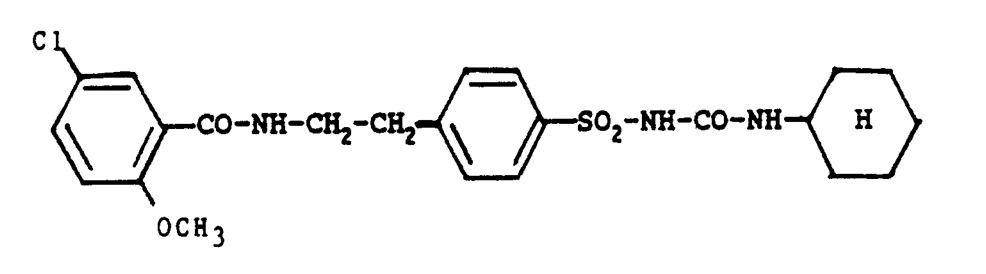
Proper name: Glyburide (as per USP), Glibenclamide (as per Ph. Eur.)
Chemical name: 1-[[4-[2-[(5-Chloro-2- methoxybenzoyl)amino]ethyl]phenyl]sulphonyl]-
3-cyclohexylurea
Molecular formula: C23H28C1N305S
Molecular mass: 494 g/mol
Structural formula:
 |
Physicochemical properties: White, crystalline, tasteless, odourless powder, practically insoluble in water and dilute acids, very sparingly soluble in ethanol and chloroform, sparingly soluble in alkali, with salt formation, and readily soluble in dimethylformamide, with a melting range of 172-174°C.
CLINICAL TRIALS
Comparative Bioavailabilitv Studies:
The relative bioavailability of MYLAN-GLYBE (Glyburide) 5 mg tablets of Mylan Pharmaceuticals ULC, Canada and Diabeta® 5 mg tablets of Hoechst Canada was compared. In this two-way crossover study, 16 healthy volunteers were randomly assigned to two groups each of 8 subjects. Following a supervised overnight fast, each subject received a single oral dose of one 5 mg tablet of each formulation of glyburide on successive occasions. Each occasion was separated by an interval of at least a week. Blood samples were collected up to 12 hours. The glyburide was assayed from the plasma using validated HPLC method. The results of this biostudy are summarized in the following table:
Glyburide (1x5mg) From measured data Uncorrected for potency Arithmetic Mean (CV %) | ||||
|---|---|---|---|---|
| Parameter | TEST* | REFERENCE† | % Ratio of Arithmetic Means | 95% Confidence Interval |
AUC0-t (ng.h/mL) | 509.6 (34.9) | 533.5 (40.3) | 95.5 | 86.45 – 107.77 |
AUC0-inf (ng.h/mL) | 560.8 (35.1) | 591.3 (39.9) | 94.8 | 86.83 – 108.14 |
| Cmax (ng/mL) | 140.6 (32.4) | 145.3 (29.9) | 96.8 | 78.08 – 114.53 |
| Tmax§(h) | 2.43 (23.5) | 2.64 (21.6) | ||
| T½§(h) | 1.74 (46.0) | 1.78 (68.5) | ||
* Mylan-Glybe 5 mg Tablets, Manufactured by Mylan Pharmaceuticals ULC, Canada
†Diabeta 5 mg Tablets, Manufactured by Hoechst, Canada
§ Expressed as the arithmetic mean (CV%) only.
DETAILED PHARMACOLOGY
Animal
In the isolated, perfused rat pancreas, glyburide produced a sustained rise in insulin output. In the presence of 0.5 mcg/mL of glyburide, isolated rat pancreatic islets released insulin continuously3. When isolated pieces of rat pancreas were repeatedly exposed to glucose or glyburide for brief periods of time at intervals of 30 minutes, they consistently released insulin3. In the presence of 300 mg% of glucose, glyburide (2.5 mcg/min) increased effectively insulin output from isolated rat pancreas3,4.
Sirek et al.13 found that the beta adrenergic blocker propranolol inhibits sulfonylurea-stimulated insulin secretion in the dog and that the hypoglycemia produced by glyburide in the presence of propranolol could be the result of extra-pancreatic effects.
TOXICOLOGY
The LD50 for white mice, rats and guinea pigs was found to be more than 15 g/kg body weight and for rabbits and beagles, more than 10 g/kg body weight when glyburide is given orally. The LD50 in rats following intraperitoneal injection is 6.3 to 8.4 g/kg body weight.
Long-term feeding experiments were carried out in rats and dogs over the course of one year. Rats were given glyburide in their food in doses of approximately 0.2, 1.0 and 5.0 mg/kg body weight daily. The highest dose is equivalent to 350 times the minimal hypoglycemic dose in man. Organ function tests were carried out continuously. Hematological examination, blood sugar tests and urinary analyses were performed every three months. None of the rats showed any abnormal findings in the function tests or the blood and urine studies. Subsequent post-mortem examination revealed no macroscopic or histological changes attributable to a toxic effect of glyburide.
Dogs were given glyburide by mouth at dose levels of 0.4, 2.0 and 10.0 mg/kg body weight daily. The highest dose is equivalent to 650 times the minimal effective hypoglycemic dose in man. Regular checks of blood cell counts, blood glucose, urine, electrolytes, electrophoresis,
BUN and serum enzyme levels (GPT, GOT, LDH, AP) showed no abnormalities. All the animals behaved normally during the period of the experiment. There was no vomiting or diarrhea, and their weights remained unchanged. Subsequent post-mortem examination and histological investigations showed no abnormality.
Teratological tests were carried out in rats and rabbits. Rats were given 0.2, 20 and 2,000 mg/kg body weight of glyburide from day 7 to 16 of gestation. For rabbits the doses were 0.035, 3.5 and 350 mg/kg given from day 7 to 17 of gestation in a starch suspension by gastric tube. Examination of the intact fetuses, followed by examination of transverse sections and of the stained skeleton, showed no evidence of teratogenic action.
REFERENCES
- 1. Blant L, Fabre J, Zahno GR. Comparison of the pharmacokinetics of Glipizide in Glipizide in Glibenclamide in man. Europ J Clin Pharmacol 1975;9:63-69.
- 2. Falko JM, K. Osei. Combination insulin/glyburide therapy in Type II diabetes mellitus. Effects on lipoprotein metabolism and glucoregulation. The American Journal of Medicine. 1985 September 20;79 Suppl 3B:92-101.
- 3. Fucella ML, Tamassia V, Valzelli G. Metabolism and kinetics of the hypoglycemic agent Glipizide in man - comparison with Glibenclamide. J Clin Pharmacol. 1973;13:68-75.
- 4. Fussgaenger RD, Goberna R, Hinz M, Jaros P, Karsten C, Pfeiffer EF, Raptis S. Comparative studies of the dynamics of insulin secretion following HB 419 and tolbutamide of the perfused isolated rat pancreas and the perfused isolated pieces and islets of rat pancreas. Hormone and Metabolic Research. 1969;1 Suppl:34.
- 5. Grodsky GM, Curry D, Landahl H, Bennet L. Further studies on the dynamic aspects of insulin release in-vitro with evidence of a two-compartmental storage system. Acta Diabetological Latina 1969;6 Suppl 1:554.
- 6. Hajdu P, Kohler KF, Schmidt FH, Spingher H. Physikalisch-chemische und analytische Unter suchungen an HB 419. Arzneim Forsch 1969;19(suppl):1381-1386.
- 7. Hirn S, Konigstein RP. HB 419, ein neues orales Antidiabetikum und sein Anwendung in hohen Alter. Weiner Medizinische Wochenschrift 1969; 111:632.
- 8. Karlander SG, Gutniak MKM, Efendic S. Effects of combination therapy with glyburide and insulin on serum lipid levels in NIDDM patients with secondary sulfonylurea failure. Diabetes Care. 1991 November; 14(11):963 –967
- 9. Mariani MM. The action of sulfonylureas on the insulin secretion of the perfused rat pancreas. Acta Diabetologica Latina 1969;6 Suppl 1:256.
- 10. Morris AD, Boyle D, McMahon AD, Pearce H, Evans J, Newton RW. ACE inhibitor use is associated with hospitalization for severe hypoglycemia in patients with diabetes. Diabetes Care. 1997 Sept; 20(9): 1363-7.
- 11. Raptis S, Rau RM, Schroeder KE, Faulhaber JD, Pfeiffer EF. Comparative study of insulin secretion following repeated administration of Glucose, Tolbutamide and Glibenclamide (HB 419) in diabetic and non-diabetic human subjects. Hormone and Metabolic Research 1969;1 Suppl:65.
- 12. Reich A, Abraira C, Lawrence AM. Combined Glyburide and insulin therapy in Type II diabetes. Diabetes Research 1987; 6: 99-104
- 13. Rupp W, Christ OE, Fuelberth W. Studies on the bioavailability of Glibenclamide. Arzneim Forsch 1972;22:47.
- 14. Rupp W. Bioequivalence study - Glyburide. (Dossier technique, Hoechst Pharmaceuticals, Département médical, Montréal, Qué.).
- 15. Rupp W. Dose-response study of the Hoechst formulation of Glyburide. (Dossier technique, Hoechst Pharmaceuticals, Département médical, Montréal, Qué.).
- 16. Schulz E, Schmidt FH. Uber den Einfluss von sulfaphenazol, phenylbutazon und phenprocumarol auf die Elimination von Glibenclamid beim Menschen. Verhandlunen deutsche Geselschaft fur innue Medizin 1970;76:435.
- 17. Sirek OV, Sirek A et Policova Z. Inhibition of sulphonylurea-stimulated insulin in secretion by beta adrenergic blockade. Diabetologia 1975;II(4):269.
- 18. UK Prospective Diabetes Study (UKPDS) Group. Intensive blood-glucose control with sulphonylureas or insulin compared with conventional treatment and risk of complications in patients with Type 2 diabetes (UKPDS 33). The Lancet. 1998;352:837-853.
- 19.
Product Monograph: PrDIAßETA® (glyburide) tablets sanofi-aventis Canada Inc., Canada.
Submission Control No.: 185547, Date of Revision: October 21, 2015.