


Product Monograph - Mylan-Valacyclovir
Recent Major Label Changes
| 2026-07 |
|---|
Table of Contents
Certain sections or subsections that are not applicable at the time of the preparation of the most recent authorized product monograph are not listed.
Recent Major Label Changes ............................................................................................... 2
Table of Contents ............................................................................................................... 2
Part 1: Healthcare Professional Information ....................................................................... 4
- 1.
Indications .................................................................................................................. 4
1.1. Pediatrics .................................................................................................................. 4
1.2. Geriatrics .................................................................................................................. 4
- 2. Contraindications ........................................................................................................ 4
- 4.
Dosage and Administration ......................................................................................... 4
4.1. Dosing Considerations .............................................................................................. 4
4.2. Recommended Dose and Dosage Adjustment ......................................................... 4
4.5. Missed Dose ............................................................................................................. 6
- 5. Overdose .................................................................................................................... 6
- 6. Dosage Forms, Strengths, Composition, and Packaging ............................................... 7
- 7.
Warnings and Precautions .......................................................................................... 7
General ................................................................................................................................ 7
Driving and Operating Machinery ........................................................................................ 8
Hematologic ......................................................................................................................... 8
Hepatic/Biliary/Pancreatic ................................................................................................... 8
Neurologic ............................................................................................................................ 8
Renal ................................................................................................................................. 8
Skin ................................................................................................................................. 9
7.1. Special Populations .................................................................................................. 9
7.1.1. Pregnancy ................................................................................................................. 9
7.1.2. Breastfeeding ......................................................................................................... 10
7.1.3. Pediatrics ................................................................................................................ 10
7.1.4. Geriatrics ................................................................................................................ 10
- 8.
Adverse Reactions .................................................................................................... 11
8.1. Adverse Reaction Overview .................................................................................... 11
8.2. Clinical Trial Adverse Reactions .............................................................................. 11
8.4. Abnormal Laboratory Findings: Hematologic, Clinical Chemistry, and Other Quantitative Data ............................................................................................................... 14
8.5. Post-Market Adverse Reactions ............................................................................. 14
- 9.
Drug Interactions ...................................................................................................... 15
9.4. Drug-Drug Interactions ........................................................................................... 15
9.5. Drug-Food Interactions .......................................................................................... 16
9.6. Drug-Herb Interactions ........................................................................................... 16
9.7. Drug-Laboratory Test Interactions ......................................................................... 16
- 10.
Clinical Pharmacology ............................................................................................... 16
10.1. Mechanism of Action ............................................................................................. 16
10.3. Pharmacokinetics ................................................................................................... 16
- 11. Storage, Stability, and Disposal ................................................................................. 19
Part 2: Scientific Information ............................................................................................ 20
- 13. Pharmaceutical Information ..................................................................................... 20
- 14.
Clinical Trials ............................................................................................................. 21
14.1. Clinical Trials by Indication ..................................................................................... 21
14.2. Comparative Bioavailability Studies ....................................................................... 24
- 15. Microbiology ............................................................................................................. 24
- 16. Non-Clinical Toxicology ............................................................................................. 25
- 17. Supporting Product Monographs .............................................................................. 26
Patient Medication Information ....................................................................................... 27
Part 1: Healthcare Professional Information
1. Indications
Mylan-Valacyclovir (Valacyclovir Tablets) is indicated:
- For the treatment of herpes zoster (shingles) in adult patients.
- For the treatment of genital herpes in immunocompetent adult patients and for the suppression of recurrent genital herpes in HIV infected adult patients.
- To reduce the risk of transmission of genital herpes in adult patients. Safer sex practices should be used.
- For the treatment of cold sores (herpes labialis) in adult patients and adolescent patients ≥ 12 years of age.
1.1. Pediatrics
Pediatrics (<12 years of age): No data are available to Health Canada; therefore, Health Canada has not authorized an indication for pediatric use.
1.2. Geriatrics
Geriatrics (>65 years of age): Use in the geriatric population may be associated with differences in safety due to age-related changes in renal function and a brief discussion can be found in the appropriate sections (see 7. Warnings and Precautions, Renal).
2. Contraindications
Mylan-Valacyclovir is contraindicated in patients with a known hypersensitivity or intolerance to valacyclovir, acyclovir, or any component of the formulation. For a complete listing of ingredients, see 6. Dosage Forms, Strengths, Composition, and Packaging.
4. Dosage and Administration
4.1. Dosing Considerations
- The dosage of Mylan-Valacyclovir should be reduced in patients with impaired renal function (see Table 1).
- Therapy should be initiated as soon as possible after a diagnosis of herpes zoster, or at the first sign or symptoms of an outbreak of oral or genital herpes.
- The recommended dose and duration of use is dependent on the indication.
- The safety and tolerability of Valacyclovir Tablets 500 mg once daily has been established for up to 20 months (see 14. Clinical Trials and 8.1. Adverse Reaction Overview).
4.2. Recommended Dose and Dosage Adjustment
Pediatrics (<12 years of age): Health Canada has not authorized an indication for pediatric use (see 1.1. Indications, Pediatrics).
Mylan-Valacyclovir tablets may be given without regard to meals.
Herpes Zoster (shingles): The recommended dosage of Mylan-Valacyclovir tablets for the treatment of herpes zoster is 1000 mg orally three times daily for 7 days. Treatment with Mylan-Valacyclovir should be initiated within 72 hours of the onset of rash.
Initial Episode of Genital Herpes: The recommended dosage of Mylan-Valacyclovir tablets for the treatment of an initial episode of genital herpes is 1000 mg orally twice daily for 10 days. There are no data on the effectiveness of treatment with Valacyclovir Tablets when initiated more than 72 hours after the onset of signs and symptoms. Therapy was most effective when administered within 48 hours of the onset of signs and symptoms.
Recurrent Episodes of Genital Herpes: The recommended dosage of Mylan-Valacyclovir tablets for the treatment of recurrent episodes of genital herpes is 500 mg orally twice daily for 3 days. Therapy should be initiated at the earliest sign or symptom of recurrence. Mylan-Valacyclovir can prevent lesion development when taken at the first signs and symptoms of a genital herpes recurrence.
Suppression of Genital Herpes: In patients with HIV infection with CD4 cell count > 100 cells/mm3, the recommended dosage of Mylan-Valacyclovir tablets for chronic suppressive therapy of recurrent genital herpes is 500 mg orally twice daily. The safety and efficacy of therapy with Valacyclovir Tablets beyond 6 months in patients with HIV infection have not been established.
Reduction of Transmission of Genital Herpes: The recommended dosage of Mylan-Valacyclovir tablets for reduction of transmission of genital herpes in patients with a history of 9 or fewer recurrences per year is 500 mg orally once daily for the source partner. The efficacy of reducing transmission beyond 8 months in couples discordant for HSV-2 infection has not been established. The safety and tolerability of Valacyclovir Tablets 500 mg once daily has been established for up to 20 months (see 14. Clinical Trials and 8.1. Adverse Reaction Overview).
Cold Sores (Herpes Labialis): The recommended dosage of Mylan-Valacyclovir for the treatment of cold sores (herpes labialis) is 2000 mg orally twice daily for 1 day (24-hour period). The second dose should be taken approximately 12 hours after the first dose, but not less than 6 hours after the first dose. Therapy should be initiated at the earliest symptom of a cold sore (e.g., tingling, itching, or burning). There are no data on the efficacy of treatment initiated after the development of clinical signs of a cold sore (e.g., papule, vesicle or ulcer).
Patients with Acute or Chronic Renal Insufficiency: Caution is advised when administering valacyclovir to patients with impaired renal function. Adequate hydration should be maintained.
Pharmacokinetic and safety evaluations following administration of oral valacyclovir hydrochloride have been performed in patients with renal impairment and volunteers with end-stage renal disease (ESRD) managed by hemodialysis. Based on these studies and extensive experience with acyclovir, the following dosage adjustments are recommended (data are not available for the use of Valacyclovir Tablets in pediatric patients with a creatinine clearance less than 50 mL/min/1.73m2):
Table 1 – Dosage Adjustments for Adults Renal Insufficiency
| Creatinine Clearance (mL/min) | |||||||||
| ≥ 50 | 30 to < 50 | 10 to < 30 | < 10 | ||||||
| Herpes Zoster | 1000 mg every 8 hours† | 1000 mg every 12 hours | 1000 mg every 24 hours | 500 mg every 24 hours | |||||
| Recurrent Episodes of Genital Herpes | 500 mg every 12 hours† | 500 mg every 12 hours† | 500 mg every 24 hours | 500 mg every 24 hours | |||||
Suppression of Genital Herpes HIV-infected patients | 500 mg every 12 hours† | 500 mg every 12 hours† | 500 mg every 24 hours | 500 mg every 24 hours | |||||
| Initial Episode of Genital Herpes | 1000 mg every 12 hours† | 1000 mg every 12 hours† | 1000 mg every 24 hours | 500 mg every 24 hours | |||||
| Cold Sores (Herpes Labialis) § | Two 2000 mg doses taken 12 hours apart† | Two 1000 mg doses taken 12 hours apart | Two 500 mg doses taken 12 hours apart | 500 mg single dose | |||||
†Standard dose - adjustment not necessary
§Do not exceed one day of treatment
Intermittent Hemodialysis: During hemodialysis, the half-life of acyclovir after administration of valacyclovir hydrochloride is approximately 4 hours. About 1/3 of acyclovir in the body is removed by dialysis during a 4-hour hemodialysis session. These patients should receive the daily dose of Mylan-Valacyclovir recommended (Table 1), the dose administered after hemodialysis on the days it is performed.
Peritoneal Dialysis: There is no information specific to administration of Valacyclovir Tablets. The effect of continuous ambulatory peritoneal dialysis (CAPD) and continuous arteriovenous hemofiltration/dialysis (CAVHD) on acyclovir pharmacokinetics has been studied. The removal of acyclovir after CAPD and CAVHD is less pronounced than with hemodialysis, and the pharmacokinetic parameters closely resemble those observed in patients with ESRD not receiving hemodialysis. Therefore, supplemental doses of Mylan-Valacyclovir should not be required following CAPD or CAVHD.
4.5. Missed Dose
If a dose of Mylan-Valacyclovir is missed, the patient should be advised to take it as soon as he/she remembers, and then continue with the next dose at the proper time interval.
5. Overdose
Activated charcoal may be administered to aid in the removal of unabsorbed drug. General supportive measures are recommended.
Acute renal failure and neurological symptoms, including confusion, hallucinations, agitation, decreased consciousness and coma, have been reported in patients receiving overdoses of Valacyclovir Tablets. Nausea and vomiting may also occur. Caution is required to prevent inadvertent overdose. Many of the reported cases involved renally impaired and geriatric patients receiving repeated overdoses, due to lack of appropriate dosage reduction (see 7. Warnings and Precautions, Renal; and 8.5. Post-Market Adverse Reactions, Renal).
Patients should be observed closely for signs of toxicity. Hemodialysis significantly enhances the removal of acyclovir from the blood and may, therefore be considered a management option in the event of symptomatic overdose. However, it is known that precipitation of acyclovir in renal tubules may occur when the solubility (2.5 mg/mL) is exceeded in the intratubular fluid. In the event of acute renal failure and anuria, the patient may benefit from hemodialysis until renal function is restored
(see 4.2. Recommended Dose and Dosage Adjustment, Patients with Acute or Chronic Renal Insufficiency).
| For the most recent information in the management of a suspected drug overdose, contact your regional poison control centre or Health Canada’s toll-free number, 1-844 POISON-X (1-844-764-7669). |
|---|
- 6. Dosage Forms, Strengths, Composition, and Packaging
Table 2 – Dosage Forms, Strengths, and Composition
| Route of Administration | Dosage Form/ Strength/Composition | Non-Medicinal Ingredients |
| Oral | Tablets / 500 mg and 1000 mg valacyclovir (as valacyclovir hydrochloride) | 500 mg: FD&C blue #2 / indigo carmine aluminum lake, hydroxypropyl methylcellulose, isopropyl alcohol, magnesium stearate, microcrystalline cellulose, n-butyl alcohol, polyethylene glycol, propylene glycol, shellac glaze, and titanium dioxide 1000 mg: ammonium hydroxide, hydroxypropyl methylcellulose, iron oxide black, isopropyl alcohol, magnesium stearate, microcrystalline cellulose, n-butyl alcohol, polyethylene glycol, propylene glycol, shellac glaze, and titanium dioxide |
Description
Mylan-Valacyclovir 500 mg tablets are blue coloured, oval shaped, biconvex film coated tablets with “M191” imprinted with White ink on one side and plain on the other side.
Mylan-Valacyclovir 1000 mg tablets are white coloured, oval shaped, biconvex film coated tablets with “M192” imprinted with black ink on one side and plain on the other side.
500 mg tablets are available in bottles of 100 tablets and blisters of 8 tablets.
1000 mg tablets are available in bottles of 100 tablets.
7. Warnings and Precautions
General
Care should be taken to ensure adequate fluid intake in patients who are at risk of dehydration particularly in geriatric patients.
The safety and efficacy of Valacyclovir Tablets have not been established for the treatment of disseminated herpes zoster.
The safety and efficacy of Valacyclovir Tablets have not been established in immunocompromised patients other than for the suppression of ano-genital herpes in HIV-infected patients. The safety and efficacy of Valacyclovir Tablets for the suppression of recurrent ano-genital herpes in patients with advanced HIV disease (CD4 cell count <100 cells/mm3) have not been established.
Patients should be informed that Mylan-Valacyclovir is not a cure for genital herpes.
Safer sex practices should be used in combination with suppressive therapy. Mylan-Valacyclovir alone should not be used for reducing the risk of transmitting genital herpes. Because genital herpes is a sexually transmitted infection, patients should, in order to further reduce the risk of infecting partners, avoid contact with lesions, damaged skin/mucosa, and also avoid intercourse when lesions and/or symptoms are present. Genital herpes is frequently transmitted in the absence of symptoms through asymptomatic viral shedding; therefore patients should be counselled to use safer sex practices. The effect of Valacyclovir Tablets on transmission of sexually transmitted infections other than herpes (including HIV, gonorrhea, syphilis and Chlamydia) is unknown.
The efficacy of Valacyclovir Tablets for reducing transmission of genital herpes has not been established in individuals with multiple partners, non-heterosexual couples, and couples not counselled to use safer sex practices.
Driving and Operating Machinery
Exercise caution when driving or operating a vehicle or potentially dangerous machinery.
Hematologic
Thrombotic Thrombocytopenic Purpura / Hemolytic Uremic Syndrome (TTP/HUS)
Thrombotic Thrombocytopenic Purpura / Hemolytic Uremic Syndrome (TTP/HUS), in some cases resulting in death, has occurred in patients with advanced HIV-1 disease, and also in allogenic bone marrow transplant and renal transplant recipients participating in clinical trials of Valacyclovir Tablets at a dose of 8000 mg per day. Treatment with Mylan-Valacyclovir should be stopped immediately if clinical signs, symptoms, and laboratory abnormalities consistent with TTP/HUS occur.
Hepatic/Biliary/Pancreatic
Dose modification is not required in patients with mild or moderate cirrhosis (hepatic synthetic function maintained). Pharmacokinetic data in patients with advanced cirrhosis (impaired hepatic synthetic function and evidence of portal-systemic shunting) do not indicate the need for dosage adjustment. There are no data available on the use of higher doses of Valacyclovir Tablets (4 g or more per day) in patients with liver disease. Caution should therefore be exercised when administering higher doses of Mylan-Valacyclovir to these patients.
Neurologic
Psychiatric and central nervous system adverse reactions (e.g., agitation, hallucinations, confusion, and encephalopathy): May occur in both adult and pediatric (≥ 12 years of age) patients (with or without reduced renal function) and in patients with underlying renal disease who receive higher than recommended doses of Mylan-Valacyclovir for their level of renal function. Elderly patients are more likely to have central nervous system adverse reactions. Use with caution in elderly patients and reduce dosage in patients with renal impairment.
Renal
Renal insufficiency or acute renal failure has been observed in patients taking Valacyclovir Tablets at the recommended dosage and/or with no previous renal conditions and may be associated with renal pain (see 8.5. Post-Market Adverse Reactions).
Acyclovir, the active metabolite of valacyclovir, is eliminated by renal clearance, therefore the dose of Mylan-Valacyclovir must be reduced in patients with renal impairment (see 4.2. Recommended Dose and Dosage Adjustment, Patients with Acute or Chronic Renal Insufficiency). Geriatric patients are likely to have reduced renal function and therefore the need for dose reduction must be considered in this group of patients. Both geriatric patients and patients with a history of renal impairment are at increased risk of developing neurological side effects and should be closely monitored for evidence of these effects. In the reported cases, these reactions were generally reversible on discontinuation of treatment (see 8.5. Post-Market Adverse Reactions, Central Nervous System Symptoms).
Cases of acute renal failure have been reported in patients without adequate hydration. Precipitation of acyclovir in renal tubules may occur when the solubility (2.5 mg/mL) is exceeded in the intratubular fluid. Adequate hydration should be maintained for all patients.
Caution should be exercised when administering Mylan-Valacyclovir to patients with significant renal impairment or those receiving potentially nephrotoxic agents, since this may increase the risk of renal dysfunction (see 4.2. Recommended Dose and Dosage Adjustment, Patients with Acute or Chronic Renal Insufficiency) and/or the risk of reversible central nervous system symptoms such as those that occur infrequently in patients treated with intravenous acyclovir.
Given the dosage recommendations for treatment of cold sores, special attention should be paid when prescribing Mylan-Valacyclovir for cold sores in patients who are geriatric or who have impaired renal function (see 4.2. Recommended Dose and Dosage Adjustment, Patients with Acute or Chronic Renal Insufficiency, Table 1). Treatment should not exceed 1 day (2 doses of 2000 mg in 24 hours). Therapy beyond 1 day does not provide additional clinical benefit.
In the event of acute renal failure and anuria, the patient may benefit from hemodialysis until renal function is restored.
Skin
Severe cutaneous adverse reactions: Severe cutaneous adverse reactions (SCARs), including acute generalized exanthematous pustulosis (AGEP), drug reaction with eosinophilia and systemic symptoms (DRESS), toxic epidermal necrolysis (TEN), Stevens-Johnson syndrome (SJS) and erythema multiforme (EM) have been reported in patients receiving valacyclovir and/or acyclovir (the principal metabolite of valacyclovir; see 10.3. Pharmacokinetics).
As SCARs can be life-threatening or fatal, if signs and symptoms suggestive of SCARs appear, treatment with valacyclovir must be discontinued immediately, and alternative treatment should be given. Patients who have developed SCARs with the use of acyclovir or valacyclovir must not receive valacyclovir (see 2. Contraindications and 8. Adverse Reactions).
7.1. Special Populations
7.1.1. Pregnancy
There are no adequate and well-controlled studies with either acyclovir or Valacyclovir Tablets in pregnant women. In a study of the pharmacokinetics of valacyclovir and acyclovir during late pregnancy, the steady-state daily acyclovir AUC (area under plasma concentration-time curve) following valacyclovir 1000 mg was approximately 2 times greater than that observed with oral acyclovir at 1200 mg daily. Mylan-Valacyclovir tablets should be used during pregnancy only if the potential benefit justifies the potential risk to the fetus.
Pregnancy registries have documented the pregnancy outcomes in women exposed to Valacyclovir Tablets or to any formulation of acyclovir (the active metabolite of valacyclovir); 111 and 1246 outcomes (29 and 756 exposed during the first trimester of pregnancy), respectively, were obtained from women prospectively registered. The findings of the acyclovir pregnancy registry have not shown an increase in the number of birth defects amongst acyclovir-exposed subjects compared with the general population, and any birth defects showed no uniqueness or consistent pattern to suggest a common cause. Given the small number of women enrolled into the valacyclovir pregnancy registry, reliable and definitive conclusions could not be reached regarding the safety of Valacyclovir Tablets in pregnancy.
Valacyclovir hydrochloride was not teratogenic in rats or rabbits given 400 mg/kg (which results in 10 and 7 times human plasma levels, respectively) during the period of major organogenesis. However, in a non-standard test in rats given three subcutaneous doses of 100 mg/kg acyclovir (20 times human plasma levels) on gestation day 10, there were fetal abnormalities, such as head and tail anomalies, and maternal toxicity.
7.1.2. Breastfeeding
Acyclovir, the principal metabolite of valacyclovir, is excreted in breast milk. Following oral administration of a 500 mg dose of valacyclovir, peak acyclovir concentrations (Cmax) in breast milk ranged from 0.5 to 2.3 (median 1.4) times the corresponding maternal acyclovir serum concentrations. The acyclovir breast milk to maternal serum AUC ratios ranged from 1.4 to 2.6 (median 2.2).
The median acyclovir concentration in breast milk was 2.24 mcg/mL (9.95 mcM). With a maternal valacyclovir dosage of 500 mg twice daily, this level would expose a nursing infant to a daily oral acyclovir dosage of about 0.61 mg/kg/day. The elimination half-life of acyclovir from breast milk was similar to that for serum.
Unchanged valacyclovir was not detected in maternal serum, breast milk, or infant urine.
Caution should be exercised when Mylan-Valacyclovir is administered to a nursing woman. Consideration should be given to temporary discontinuation of nursing, as the safety of Valacyclovir Tablets has not been established in infants.
7.1.3. Pediatrics
Pediatrics (<12 years of age): No data are available to Health Canada; therefore, Health Canada has not authorized an indication for pediatric use.
7.1.4. Geriatrics
Of the total number of patients included in clinical studies of Valacyclovir Tablets, more than 800 were age 65 or older, and more than 300 were age 75 or older. A total of 34 volunteers age 65 or older completed a pharmacokinetic trial of valacyclovir hydrochloride. The pharmacokinetics of acyclovir following single- and multiple-dose oral administration of Valacyclovir Tablets in geriatric volunteers varied with renal function. The possibility of renal impairment in geriatric patients must be considered and the dosage should be adjusted accordingly (see 7. Warnings and Precautions,
Renal, and 4.2. Recommended Dose and Dosage Adjustment, Patients with Acute or Chronic Renal Insufficiency). Adequate hydration should be maintained.
8. Adverse Reactions
8.1. Adverse Reaction Overview
The following serious adverse reactions are discussed in greater detail in 7. Warnings and Precautions:
- Thrombotic Thrombocytopenic Purpura / Hemolytic Uremic Syndrome
- Acute Renal Failure
- Central Nervous System Effects
The most frequent adverse reactions associated with the use of Valacyclovir Tablets are headache and nausea.
Neurological side effects have also been reported in rare instances. Geriatric patients and patients with a history of renal impairment are at increased risk of developing these effects. In the reported cases, these reactions were generally reversible on discontinuation of treatment (see 7. Warnings and Precautions; and 8.5. Post-Market Adverse Reactions).
8.2. Clinical Trial Adverse Reactions
Clinical trials are conducted under very specific conditions. Therefore, the frequencies of adverse reactions observed in the clinical trials may not reflect frequencies observed in clinical practice and should not be compared to frequencies reported in clinical trials of another drug.
Herpes Zoster: Adverse drug reactions were not significantly different in recipients of Valacyclovir Tablets compared to placebo or acyclovir in the two double-blind, randomized clinical trials of treatment of herpes zoster (shingles) in immunocompetent patients. The most frequent adverse drug reactions reported in recipients of Valacyclovir Tablets are listed in Table 3.
Table 3 – Incidence (%) of Drug-Related Adverse Reactions Occurring in ≥ 1% of Patients Receiving Valacyclovir Tablets in Two Clinical Trials of Treatment of Herpes Zoster
| Preferred term | Herpes Zoster | ||||||||||||
| 18-50 Years | > 50 Years | ||||||||||||
Valacyclovir Tablets n=202 (%) | Placebo n=195 (%) | Valacyclovir Tablets n=765 (%) | Acyclovir n=376 (%) | ||||||||||
| Nausea | 8 | 6 | 12 | 14 | |||||||||
| Headache | 11 | 8 | 8 | 7 | |||||||||
| Diarrhea | 4 | 4 | 4 | 4 | |||||||||
| Vomiting | 2 | 2 | 4 | 3 | |||||||||
| Asthenia | 1 | 3 | 3 | 2 | |||||||||
| Constipation | < 1 | < 1 | 3 | 3 | |||||||||
| Abdominal pain | < 1 | 1 | 2 | 1 | |||||||||
| Anorexia | < 1 | 2 | 2 | 2 | |||||||||
| Dizziness | 1 | 1 | 2 | 2 | |||||||||
| Dry Mouth | < 1 | 0 | 2 | 1 | |||||||||
| Dyspepsia | 0 | < 1 | 2 | 1 | |||||||||
| Flatulence | 0 | 0 | 1 | 1 | |||||||||
| Pruritus | 1 | 0 | < 1 | 0 | |||||||||
Genital Herpes: In two double-blind, randomized trials of treatment of recurrent genital herpes in immunocompetent patients, adverse drug reactions were not significantly different in recipients of Valacyclovir Tablets compared to placebo. The most frequent adverse reactions are listed in Table 4.
Table 4 – Incidence (%) of Drug-Related Adverse Reactions Occurring in ≥ 1% of Patients Receiving Valacyclovir Tablets in two Clinical Trials of Treatment of Recurrent Genital Herpes
| Preferred term | Valacyclovir Tablets n=1235 (%) | Placebo n=439 (%) |
| Headache | 11 | 9 |
| Nausea | 5 | 6 |
| Diarrhea | 4 | 4 |
| Dizziness | 2 | 2 |
| Abdominal pain | 2 | 1 |
| Asthenia | 1 | 3 |
In one multicenter, double-blind, randomized study of immunocompetent patients for the treatment of an initial episode of genital herpes, the frequency of adverse events, regardless of attributability to study medication, was similar in both treatment groups: Valacyclovir Tablets 1000 mg twice daily (n=318) compared to acyclovir 200 mg five times a day (n=318). The most frequent adverse events were headache (13% with Valacyclovir Tablets versus 10% with ZOVIRAX® (acyclovir)) and nausea (6% with both treatments). All other adverse events were reported by 3% or less of patients.
In a 6-month study of suppression of recurrent genital herpes in HIV-infected patients, adverse drug reactions were similar in nature and incidence in the groups receiving Valacyclovir Tablets 500 mg twice daily and placebo when duration of exposure was considered. Adverse reactions reported with an incidence ≥ 1% during the double-blind phase are detailed in Table 5.
Table 5 – Incidence (%) of Drug-Related Adverse Reactions Occurring in ≥ 1% of Patients Receiving Valacyclovir Tablets in a Clinical Trial for Suppression of Recurrent Genital Herpes in HIV-Infected Patients
| Preferred term | Valacyclovir 500 mg b.i.d. n=194 (%) | Placebo n=99 (%) |
| Headache | 5 | 3 |
| Diarrhea | 3 | 2 |
| Nausea | 2 | 5 |
| Constipation | 1 | 0 |
| Dizziness | 1 | 0 |
Adverse reactions reported by patients receiving Valacyclovir Tablets 500 mg once daily (n=743) or placebo once daily (n=741) in a clinical study for the reduction of transmission of genital herpes are listed below in Table 6.
Table 6 – Incidence (%) of Drug-Related Adverse Reactions Occurring in ≥ 1% of Patients Receiving Valacyclovir Tablets in a Clinical Trial for the Reduction of Transmission of Genital Herpes
| Preferred term | Valacyclovir Tablets n=743 (%) | Placebo n=741 (%) |
| Headache | 6 | 4 |
| Diarrhea | 2 | 1 |
| Nausea | 2 | 2 |
| Dyspepsia | 1 | 1 |
Of the 1484 patients enrolled in the reduction of transmission study, 1018 entered the open-label phase of the study (≤ 12 months), 499 from the placebo group and 519 from the Valacyclovir Tablets group. The nature and incidence of events in the open-label phase were similar to those observed during the double-blind phase of the study (Table 7).
Table 7 – Incidence (%) of Drug-Related Adverse Reactions Occurring in ≥ 1% of Patients Receiving Valacyclovir Tablets in the Double-Blind, Open-Label, and Combined Double-Blind + Open-Label Phases of a Clinical Trial for the Reduction of Transmission of Genital Herpes
Double-Blind Phase (≤ 8 months) | Open-Label Phase (≤ 12 months) | Combined Double- Blind + Open-Label Phases (≤ 20 months) | |||||||||
| Preferred term | Valacyclovir Tablets n=5191 (%) | Placebo n=4992 (%) | Valacyclovir Tablets n=10183 (%) | Valacyclovir Tablets n=5194 (%) | |||||||
| Headache | 5 | 4 | 2 | 6 | |||||||
| Diarrhea | 2 | 2 | < 1 | 2 | |||||||
| Nausea | 1 | 3 | < 1 | 1 | |||||||
| Dyspepsia | 1 | < 1 | < 1 | 2 | |||||||
| Abdominal pain, upper | 1 | 0 | < 1 | 1 | |||||||
1 Number of patients from the Valacyclovir Tablets group of the double-blind phase who entered the open-label phase of the study.
2 Number of patients from the placebo group of the double-blind phase who entered the open-label phase of the study.
3 Total number of patients (Valacyclovir Tablets + placebo groups) from the double-blind phase who entered the open-label phase of the study. All patients in the open-label phase received Valacyclovir Tablets 500 mg once daily
4 Number of patients who received Valacyclovir Tablets during the double-blind phase followed by open-label Valacyclovir Tablets suppressive therapy.
Cold Sores: Adverse drug reactions reported by patients receiving Valacyclovir Tablets 2000 mg twice daily for one day (n=609) or placebo (n=609) in clinical studies for the treatment of cold sores are listed below in Table 8.
Table 8 – Incidence (%) of Drug-Related Adverse Reactions Occurring in ≥ 1% of Patients Receiving Valacyclovir Tablets in Two Clinical Trials for the Treatment of Cold Sores
| Preferred term | Valacyclovir Tablets n=609 (%) | Placebo n=609 (%) |
| Headache | 9 | 5 |
| Nausea | 4 | 5 |
| Diarrhea | 3 | 3 |
| Dyspepsia | 1 | 1 |
8.4. Abnormal Laboratory Findings: Hematologic, Clinical Chemistry, and Other Quantitative Data
In herpes zoster trials, the frequencies of white blood cells abnormality (< 0.75 times the lower limit of normal) were 1.3% for patients receiving Valacyclovir Tablets compared with 0.6% for patients receiving placebo. This difference was not clinically or statistically significant.
In studies of suppression of genital herpes in HIV-infected patients and of reduction of transmission of genital herpes, there were no clinically significant changes from baseline in laboratory parameters in patients receiving Valacyclovir Tablets compared to placebo.
In clinical studies for the treatment of cold sores, the frequencies of abnormal ALT values (> 2 times the upper limit of normal) were 1.8% for patients receiving Valacyclovir Tablets at the recommended clinical dose and 0.8% for placebo. Other laboratory abnormalities (hemoglobin, white blood cells, alkaline phosphatase, and serum creatinine) occurred with similar frequencies in the 2 groups.
8.5. Post-Market Adverse Reactions
The following events have been reported voluntarily during post-approval use of Valacyclovir Tablets in clinical practice. These events have been chosen for inclusion due to either their seriousness, frequency of reporting, causal connection to Valacyclovir Tablets, or a combination of these factors. Post-market adverse events are reported spontaneously from a population of unknown size, thus estimates of frequency cannot be made.
Allergic: Acute hypersensitivity reactions including anaphylaxis, angioedema, dyspnea, pruritus, rash and urticaria.
Central Nervous System Symptoms: Headache. Reports of neurological reactions including dizziness, confusion, hallucinations (auditory and visual), aggressive behaviour, decreased consciousness, tremor, ataxia, dysarthria, convulsions, encephalopathy, coma, mania, and seizures. Agitation and psychotic symptoms have also been reported. These events are generally reversible and usually seen in patients with renal impairment or with other predisposing factors (see 7. Warnings and Precautions, Neurologic).
Gastrointestinal: Nausea, abdominal discomfort, vomiting and diarrhea.
General: Facial edema, hypertension, tachycardia.
Hematological: Reports of thrombocytopenia, aplastic anemia, leukocytoclastic vasculitis, thrombotic thrombocytopenic purpura / hemolytic uremic syndrome (TTP/HUS). Leukopenia, mainly reported in immunocompromised patients.
Hepatobiliary Tract and Pancreas: Reports of reversible increases in liver function test, hepatitis.
Ophthalmologic: Visual abnormalities.
Renal: Reports of renal impairment, elevated blood creatinine and blood urea nitrogen (BUN) Acute renal failure, renal pain and hematuria. Renal pain may be associated with renal failure (see 7. Warnings and Precautions, Renal).
Respiratory, thoracic and mediastinal disorders: Dyspnea.
Skin: Erythema multiforme (EM), rashes including photosensitivity, acute generalized exanthematous pustulosis (AGEP), drug reaction with eosinophilia and systemic symptoms (DRESS), toxic epidermal necrolysis (TEN), Stevens-Johnson syndrome (SJS) (see 7. Warnings and Precautions, Skin).
Other: There have been reports of renal insufficiency, microangiopathic hemolytic anemia and thrombocytopenia (sometimes in combination) in severely immunocompromised patients, particularly those with advanced HIV disease, receiving high doses (8000 mg daily) of valacyclovir for prolonged periods in clinical trials. These findings have also been observed in patients not treated with valacyclovir who have the same underlying or concurrent conditions.
9. Drug Interactions
9.4. Drug-Drug Interactions
No clinically significant interactions have been identified.
No dosage adjustment is recommended when Mylan-Valacyclovir is co-administered with digoxin, antacids, thiazide diuretics, cimetidine, or probenecid in subjects with normal renal function (see 10.3. Pharmacokinetics).
Acyclovir is eliminated primarily unchanged in the urine via active renal tubular secretion. Any drugs administered concurrently that compete with this mechanism may increase acyclovir plasma concentrations following valacyclovir administration.
Following administration of valacyclovir 1000 mg, cimetidine and probenecid increase the area under the curve (AUC) of acyclovir by this mechanism, and reduce acyclovir renal clearance. However, no dosage adjustment is necessary at this dose because of the wide therapeutic index of acyclovir (see 10.3. Pharmacokinetics).
Care is also required (with monitoring for changes in renal function) if administering higher-doses of Mylan-Valacyclovir (4 g or more/day) with drugs which affect other aspects of renal physiology (e.g. cyclosporin, tacrolimus).
9.5. Drug-Food Interactions
There is no known interaction with food (see 10.3. Pharmacokinetics).
9.6. Drug-Herb Interactions
Interactions with herbal products have not been established.
9.7. Drug-Laboratory Test Interactions
Interactions with laboratory tests have not been established.
10. Clinical Pharmacology
10.1. Mechanism of Action
Mylan-Valacyclovir is the L-valyl ester and a pro-drug of the antiviral drug acyclovir. Valacyclovir hydrochloride is rapidly converted to acyclovir, which has in vitro and in vivo inhibitory activity against human herpes viruses including herpes simplex virus types 1 (HSV-1) and 2 (HSV-2), and varicella-zoster virus (VZV).
The inhibitory activity of acyclovir is highly selective due to its unique affinity for the thymidine kinase (TK) encoded by HSV and VZV. This viral enzyme converts acyclovir into acyclovir monophosphate, a nucleotide analogue. The monophosphate is further converted into diphosphate by cellular guanylate kinase and into triphosphate by a number of cellular enzymes. In vitro, acyclovir triphosphate terminates growing chains of viral DNA. Once incorporated, acyclovir irreversibly binds to viral DNA polymerase, effectively inactivating the enzyme. Acyclovir triphosphate is a potent inhibitor of all of the human herpes virus DNA polymerases studied.
Acyclovir is virtually inactive in uninfected cells, since it is preferentially taken up and selectively converted to the active triphosphate form by herpes virus-infected cells. Additionally, the enzyme thymidine kinase of uninfected cells does not effectively use acyclovir as a substrate and cellular α-DNA polymerase is less sensitive than viral DNA polymerase to the effects of acyclovir.
A combination of the thymidine kinase specificity, competitive inhibition of DNA polymerase and incorporation and termination of the growing viral DNA chain results in inhibition of herpes virus replication. No effect on latent non-replicating virus has been demonstrated. Inhibition of viral replication reduces the period of viral shedding, limits the degree of spread and level of pathology, and thereby facilitates healing. The pain of shingles is related to viral damage to neurons which takes place during viral replication.
10.3. Pharmacokinetics
The pharmacokinetics of valacyclovir and acyclovir after oral administration of Valacyclovir Tablets have been investigated in 12 volunteer studies involving 253 adults.
Absorption
After oral administration, valacyclovir hydrochloride is rapidly absorbed from the gastrointestinal tract and nearly completely converted to acyclovir and L-valine by first-pass intestinal and/or hepatic metabolism. The absolute bioavailability of acyclovir after administration of Valacyclovir Tablets is 54.5% ± 9.1% as determined following a 1000 mg oral dose of valacyclovir hydrochloride and a 350 mg intravenous acyclovir dose to 12 healthy volunteers. Acyclovir bioavailability from the administration of valacyclovir hydrochloride is not altered by administration with food [30 minutes after an 873 Kcal (3654 Kj) breakfast, which included 51 grams of fat].
Valacyclovir Tablets pharmacokinetics are not dose-proportional. The rate and extent of absorption decreases with increasing dose, resulting in a less than proportional increase in Cmax over the therapeutic dose range and a reduced bioavailability at doses above 500 mg. After single-dose administration of 100 to 1000 mg of valacyclovir hydrochloride, in eight healthy volunteers, the mean Cmax (± S.D.) ranged from 0.83 (± 0.14) to 5.65 (± 2.37) mcg/mL, and the mean AUC (± SD) ranged from 2.28 (± 0.40) to 19.52 (± 6.04) hr•mcg/mL. After multiple-dose administration of 250 to 1000 mg of valacyclovir hydrochloride administered four times daily for 11 days in parallel groups in eight healthy volunteers, the mean Cmax (± SD) ranged from 2.11 (± 0.33) to 4.96 (± 0.64) mcg/mL, and the mean AUC (± SD) ranged from 5.66 (± 1.09) to 15.70 (± 2.27) hr•mcg/mL.
Acyclovir pharmacokinetics are unaltered after multiple-dose administration. There is no accumulation of acyclovir after the administration of valacyclovir at the recommended dosage regimens in healthy volunteers with normal renal function.
Distribution
The binding of valacyclovir to human plasma proteins ranged from 13.5% to 17.9%.
Metabolism
Following absorption by the gastrointestinal tract, valacyclovir is rapidly and nearly completely hydrolyzed to acyclovir and L-valine, an essential amino acid, by first-pass metabolism. This hydrolysis is mediated primarily by the enzyme valacyclovir hydrolase, and occurs predominantly in the liver. Acyclovir is converted to a small extent to inactive metabolites by aldehyde oxidase and by alcohol and aldehyde dehydrogenase. Neither valacyclovir nor acyclovir metabolism is associated with liver microsomal enzymes. Plasma concentrations of unconverted valacyclovir are low and transient, generally less than 0.5 mcg/mL at all doses. After single-dose administration of 1000 mg of valacyclovir hydrochloride, average plasma valacyclovir concentrations observed were 0.5, 0.4 and 0.8 mcg/mL in patients with hepatic dysfunctions, renal insufficiency, and in healthy volunteers who received concomitant cimetidine and probenecid, respectively.
Elimination
The pharmacokinetic disposition of acyclovir delivered by valacyclovir is consistent with previous experience from intravenous and oral acyclovir. Acyclovir is eliminated primarily by urinary excretion of unchanged drug. In all studies of valacyclovir hydrochloride, the half-life of acyclovir typically averages 2.5 to 3.3 hours in subjects with normal renal function. Following the oral administration of a single 1000 mg dose of radiolabeled valacyclovir to four healthy subjects, 45.6% and 47.1% of administered radioactivity was recovered in urine and feces over 96 hours, respectively. Acyclovir accounted for 88.6% of the radioactivity excreted in the urine. Renal clearance of acyclovir following the administration of a single 1000 mg dose of valacyclovir hydrochloride to 12 healthy volunteers was approximately 255 ± 86 mL/min, which represents 41.9% of the total acyclovir apparent plasma clearance.
Special populations and conditions
- Pediatrics: The pharmacokinetics of valacyclovir hydrochloride have not been evaluated in pediatric patients.
Geriatrics: The pharmacokinetics of acyclovir following single- and multiple-dose oral administration of valacyclovir hydrochloride tablets in geriatric volunteers varied with renal
- function. Dosage reduction may be required in geriatric patients with reduced renal function (see 4.2. Recommended Dose and Dosage Adjustment). Following administration of valacyclovir hydrochloride, the half-life of acyclovir in geriatric patients is slightly longer and a 35% to 50% increase in AUC is observed relative to estimates in young healthy volunteers. These differences are consistent with the age-related decline in renal function. Population pharmacokinetic results obtained in efficacy trials are consistent with these observations.
- Hepatic Insufficiency: Administration of valacyclovir hydrochloride to patients with moderate or severe liver disease indicated that the rate but not the extent of conversion of valacyclovir to acyclovir is reduced, and the acyclovir half-life is not affected.
- Renal Insufficiency: The half-life and total body clearance of acyclovir are dependent on renal function. A dosage adjustment is recommended for patients with reduced renal function (see 4.2. Recommended Dose and Dosage Adjustment, Patients with Acute or Chronic Renal Insufficiency). The elimination of acyclovir is correlated to renal function, and exposure to acyclovir will increase with increased renal impairment. In patients with end-stage renal disease, the average elimination half-life of acyclovir after valacyclovir administration is approximately 14 hours, compared with about 3 hours for normal renal function. During hemodialysis, the acyclovir half-life is approximately 4 hours. Approximately 1/3 of acyclovir in the body is removed by dialysis during a 4-hour hemodialysis session.
- HIV Disease: In patients with advanced HIV disease (CD4 cell counts < 150 cells/mm3) who received a dose of valacyclovir hydrochloride of 1000 mg or 2000 mg four times daily for 30 days, the pharmacokinetics of valacyclovir and acyclovir are not different from that observed in healthy volunteers (see 7. Warnings and Precautions, General).
Drug Interactions
Cimetidine and Probenecid: Co-administration of probenecid with intravenous acyclovir has been shown to increase the mean elimination half-life, and the AUC of acyclovir. Urinary excretion and renal clearance of acyclovir were correspondingly reduced. The administration of cimetidine and probenecid, separately or together, reduced the rate but not the extent of conversion of valacyclovir to acyclovir. Reductions in the renal clearance of acyclovir were observed, resulting in higher acyclovir plasma concentrations. In volunteers with normal renal function, the renal clearance of acyclovir was reduced by approximately 22% and 33%, respectively, with concomitant cimetidine or probenecid administration. Renal clearance of acyclovir was reduced by approximately 46% in patients receiving cimetidine, probenecid, and valacyclovir hydrochloride.
An additive increase in acyclovir AUC with concomitant administration of valacyclovir hydrochloride, cimetidine, and probenecid has also been observed. Acyclovir Cmax was increased 8.4% ± 27.8%, 22.5% ± 25.3%, and 29.6% ± 27.5% by cimetidine, probenecid, and combination treatment (concomitant cimetidine and probenecid administration), respectively. Acyclovir AUC (0 to 24 hours) was increased 31.9% ± 22.9%, 49.0% ± 27.9%, and 77.9% ± 38.6% by cimetidine, probenecid, and combination treatment, respectively.
- Digoxin: The pharmacokinetics of digoxin (two 0.75 mg doses, 12 hours apart) were not affected by multiple dose administration of Valacyclovir Tablets (1000 mg every 8 hours for 8 days beginning 12 hours before digoxin dosing) in a study with 12 volunteers. Acyclovir pharmacokinetics after single dose administration of Valacyclovir Tablets (1000 mg) remained unchanged when the same dose was administered immediately after the second of two 0.75 mg doses of digoxin given 12 hours apart.
- Antacids: The administration of an aluminum hydroxide and magnesium hydroxide containing antacid either 30 minutes before or 65 minutes after administration of Valacyclovir Tablets 1000 mg had no effect on the pharmacokinetics of acyclovir in a study with 18 volunteers.
- Thiazide diuretics: Thiazide diuretics do not affect acyclovir pharmacokinetics after administration of valacyclovir hydrochloride in a geriatric population.
- Storage, Stability, and Disposal
Mylan-Valacyclovir tablets should be stored between 15° and 30°C and protected from light.
Part 2: Scientific Information
13. Pharmaceutical Information
Drug Substance
Non-proprietary name of the drug substance: Valacyclovir hydrochloride
Chemical name: L-valine, 2-[(2-amino-1,6-dihydro-6-oxo-9H-purin-9-yl)
[USAN] methoxy]ethyl ester, monohydrochloride
Molecular formula and molecular mass: C13H20N6O4•HCl 360.80 g/mol
Structural formula:
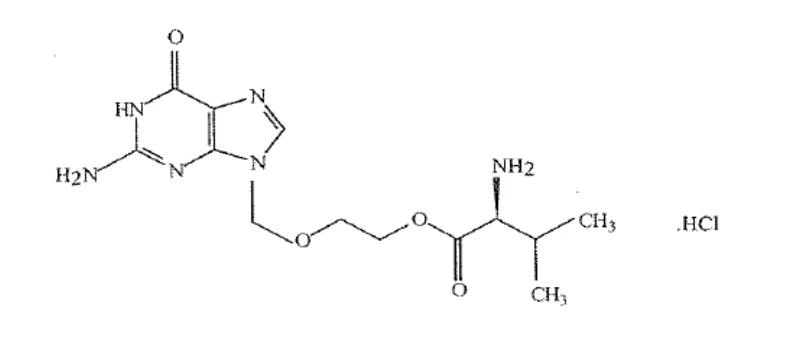
Physicochemical properties:
Valacyclovir hydrochloride is a white to almost white powder with a maximum solubility in water of 300 mg/mL at 20°C. Valacyclovir hydrochloride has no distinct melting point (Melting Range: 139.9oC to 141.8oC). 1% aqueous solution has a pH of 4.15. The pKa value of valacyclovir hydrochloride is pKa = 7.32
14. Clinical Trials
14.1. Clinical Trials by Indication
Herpes Zoster
Two randomized double-blind clinical trials in 1540 immunocompetent adult patients with localized herpes zoster were conducted. In patients less than 50 years of age, Valacyclovir Tablets 1000 mg three times daily for 7 days was compared to placebo. In patients greater than 50 years of age, Valacyclovir Tablets 1000 mg three times daily for 7 days or 14 days was compared to ZOVIRAX® (acyclovir) 800 mg five times daily for 7 days. All patients were treated within 72 hours of appearance of zoster rash.
In patients less than 50 years of age, the median time to cessation of new lesion formation was shorter for those treated with Valacyclovir Tablets (2 days) compared with those treated with placebo (3 days, p=0.03). In patients greater than 50 years of age, the median time to cessation of new lesion formation was three days in patients treated with either Valacyclovir Tablets or ZOVIRAX® (acyclovir).
In both studies, the median time to at least 50% crusting or healing was 5 days for all treatment groups.
These trials also included assessment of pain. The primary endpoint for pain was time to complete cessation of zoster-associated pain. Zoster-associated pain, as defined in these trials, combined acute pain (pain associated with zoster lesions) and post-herpetic neuralgia (pain after 100% crusting/healing of lesion rash), a definition that is not universally accepted; most experts consider each pain component to have different pathogenesis and different morbidity. The clinical trials were not designed to look specifically at post-herpetic neuralgia. However, a post-hoc analysis for post-herpetic neuralgia was requested and carried out.
In patients greater than 50 years of age, the median time to resolution of post-herpetic neuralgia for the study population (including those with zero post-herpetic neuralgia) was significantly shorter in patients treated with Valacyclovir Tablets compared with patients treated with ZOVIRAX® (acyclovir) (9 and 4 days shorter for patients treated with Valacyclovir Tablets for 7 days and 14 days respectively, p < 0.05). In patients greater than 50 years of age, the incidence of chronic pain after 100% crusting/healing of lesion rash was not significantly different among the three treatment groups (79% and 80% in patients treated with Valacyclovir Tablets for 7 or 14 days and 85% in patients treated with ZOVIRAX® (acyclovir)). In patients less than 50 years of age, there was no statistically significant difference in the median time to cessation of post-herpetic neuralgia between the recipients of Valacyclovir Tablets and placebo.
There were no significant differences in secondary endpoints, such as use of analgesics or quality of life, for patients treated with Valacyclovir Tablets compared to placebo or ZOVIRAX® (acyclovir). In addition, no significant differences were found among the three groups with respect to intensity of pain.
Initial Episode of Genital Herpes
643 immunocompetent adults with first episode of genital herpes who presented within 72 hours of symptom onset were randomized in a double-blind trial to receive 10 days of Valacyclovir Tablets 1000 mg twice daily (n=323) or ZOVIRAX® (acyclovir) 200 mg five times a day (n=320). For both treatment groups: the median time to lesion healing was 9 days, the median time to cessation of pain was 5 days, the median time to viral shedding was 3 days.
Recurrent Episodes of Genital Herpes
Three randomized, double-blind trials (2 of them placebo-controlled) in immunocompetent adult patients with recurrent genital herpes were conducted. Patients self-initiated therapy within 24 hours of the first sign or symptom of a recurrent genital herpes episode.
In one study (004), adult patients were randomized to receive five days of treatment with either Valacyclovir Tablets 1000 mg twice daily, ZOVIRAX® (acyclovir) 200 mg five times daily, or placebo. In a second study (028), adult patients were randomized to receive either Valacyclovir Tablets 1000 mg, Valacyclovir Tablets 500 mg, or placebo, administered twice daily for 5 days.
Valacyclovir Tablets significantly accelerated lesion healing and resolved episodes faster compared to placebo in both studies (p=0.0001). The median time to lesion healing was 4.8 days and 4.1 days for the groups receiving Valacyclovir Tablets versus 6.0 days and 6.0 days for the placebo groups, for studies 004 and 028 respectively. The median length of an episode was 4.8 days and 4.0 days for the groups receiving Valacyclovir Tablets versus 5.9 days and 5.9 days for the placebo groups, for studies 004 and 028, respectively (p=0.0001). There were no differences between active treatment groups in both studies.
In study 028, there was a significantly higher proportion of adult patients with aborted episodes in the groups receiving Valacyclovir Tablets 1000 mg (28%) and 500 mg (31%) compared to placebo (21%) (p=0.042 and p=0.005 respectively). In study 004, the proportion of patients with aborted episodes was higher in the group receiving Valacyclovir Tablets (25.9%) than in the placebo group (19.8%), although this was not statistically significant (p=0.097).
The duration of lesion pain/discomfort was significantly shorter in the groups receiving Valacyclovir Tablets compared to placebo (p=0.0014 for study 004 and p=0.0001 for study 028). In study 028, the median time to cessation of pain was 2.8 days in the group treated with Valacyclovir Tablets 500 mg versus 3.9 days for the placebo group. There were no differences between active treatments groups in either study.
In studies 028 and 004, Valacyclovir Tablets significantly shortened the duration of viral shedding compared to placebo (p=0.0001). The median time to cessation of viral shedding in patients with at least one positive culture was two days in the groups receiving Valacyclovir Tablets versus four days in the placebo group, for both studies. There were no differences between active treatments groups in either study.
In a third study, adult patients were randomized to receive Valacyclovir Tablets 500 mg twice daily for 5 days (n = 398) or Valacyclovir Tablets 500 mg twice daily for 3 days (and matching placebo twice daily for 2 additional days) (n = 402). The median time to lesion healing was about 4.5 days in both treatment groups. The median time to cessation of pain was about 3 days in both treatment groups.
Suppression of Genital Herpes in Subjects Infected with HIV
In a randomized, double-blind, placebo-controlled trial for the suppression of recurrent ano-genital herpes in subjects infected with Human Immunodeficiency Virus (HIV), a total of 293 adult subjects on stable antiretroviral therapy with a history of 4 or more recurrences of ano-genital herpes per year were randomized to receive either Valacyclovir Tablets 500 mg twice daily (n=194) or matching placebo (n=99) for 6 months. The median pre-study HIV-1 RNA was 2.6 log10 copies/mL (range: 2.6 - 5.9 log10 copies/mL) in both treatment groups. Among the 194 subjects who received Valacyclovir Tablets, the pre-study median CD4 cell count was 336 cells/mm3; 11% had < 100 cells/mm3, 16% had
100-199 cells/mm3, 42% had 200-499 cells/mm3, and 31% had > 500 cells/mm3. The proportions of patients who were recurrence free at 6 months were 65% in the group receiving Valacyclovir Tablets versus 26% in the placebo group. Any subject who experienced a breakthrough episode of genital herpes received Valacyclovir Tablets 1000 mg twice daily for 5 to 10 days. Ten percent (10/99) of subjects receiving placebo compared to four percent (7/194) of subjects receiving Valacyclovir Tablets reported an oral HSV outbreak during the double-blind phase of the study. Time to first oral HSV outbreak was significantly shorter in the placebo group (p < 0.001).
Reduction of Transmission of Genital Herpes
A double-blind, placebo-controlled study to assess transmission of genital herpes was conducted in 1484 monogamous, heterosexual, immunocompetent adult couples. The couples were discordant for HSV-2 infection. The source partners had a history of 9 or fewer genital herpes episodes per year. Both partners were counselled on safer sex practices and supplied with condoms for use throughout the study period. Source partners were randomized to treatment with either Valacyclovir Tablets 500 mg once daily or placebo once daily for 8 months.
In the double-blind phase of the study, transmission of genital herpes to the susceptible partner (as measured by the proportion of susceptible partners with clinical evidence of a first episode of genital herpes) was 2.2% (16/741) in the placebo group and 0.5% (4/743) in the group receiving Valacyclovir Tablets, a reduction of 75%. The proportions of susceptible partners with acquisition of genital herpes infection were 3.6% (27/741) in the placebo group and 1.9% (14/743) in the group receiving Valacyclovir Tablets, a reduction of 48%.
After successful completion of the 8 month double-blind phase of the study, 1018 patients (499 from the placebo group and 519 from the Valacyclovir Tablets group) entered into an open-label phase of the study where they were treated with Valacyclovir Tablets 500 mg once daily for up to 12 months. The 519 patients formerly in the Valacyclovir Tablets group of the double-blind study received Valacyclovir Tablets 500 mg once daily for a total of up to 20 months in the combined double-blind/open-label phases. The safety profile of Valacyclovir Tablets in the open-label suppression phase of this study (12 months) was similar to that observed during the double-blind phase of this study (8 months). The safety and tolerability of Valacyclovir Tablets 500 mg once daily has been established for up to 20 months.
Cold Sores (Herpes Labialis)
Two double-blind, placebo-controlled clinical trials were conducted in 1856 immunocompetent adults and adolescents (> 12 years old) with a history of cold sores. Patients were randomized to one of 3 treatment arms: Valacyclovir Tablets 2000 mg twice daily on Day 1 followed by placebo on Day 2; Valacyclovir Tablets 2000 mg twice daily on Day 1 followed by 1000 mg twice daily on Day 2; or, Placebo on Days 1 and 2. Patients self-initiated therapy at the earliest symptom of a cold sore (e.g., tingling, itching or burning). The majority of patients initiated treatment within two hours after onset of symptoms.
The mean duration of episode, measured as the time from initiation of treatment to the day the lesion was assessed as being healed (loss of crust in patients whose lesions progressed to the vesicular stage; return to normal skin and/or cessation of all signs and symptoms in patients whose lesions were not vesicular in nature) by the physician, was 1.1 days shorter (5.0 days vs. 6.1 days) in subjects treated with Valacyclovir Tablets 2000 mg twice daily for 1 day (n=311) compared with subjects treated with placebo (n=292) in one study, and 1.0 days shorter (5.3 days vs. 6.3 days) in subjects treated with Valacyclovir Tablets 2000 mg twice daily for 1 day (n=298) compared with subjects treated with placebo (n=317) in the second study. The 2-day regimen did not provide additional benefit overall.
There was no significant difference between subjects receiving Valacyclovir Tablets or placebo in the prevention of cold sore lesions beyond the papular stage.
For those patients whose lesions progressed to the vesicular stage (Valacyclovir Tablets 2000 mg twice daily for 1 day, 53% in one study and 54% in the second study; placebo, 59% and 61%), the mean time to lesions healing (loss of crust) was 4.8 days vs. 6.1 days in one study, and 5.1 days vs. 6.4 days in the second study in patients treated with Valacyclovir Tablets 2000 mg twice daily for 1 day (n=164 and n=161) compared with placebo (n=171 and n=192).
The mean time to cessation of pain/discomfort was 2.1 days vs. 2.9 days in one study, and 2.3 days vs. 3.1 days in the second study in patients treated with Valacyclovir Tablets 2000 mg twice daily for 1 day (n=311 and n=298) compared with placebo (n=292 and n=317).
14.2. Comparative Bioavailability Studies
A randomized, two-way, single-dose, crossover comparative bioavailability study of MYLAN-VALACYCLOVIR 1000 mg tablets (Mylan Pharmaceuticals ULC) with PrVALTREX® 1000 mg tablets (GlaxoSmithKline Inc.) was conducted in healthy, adult, male subjects under fasting conditions. Comparative bioavailability data from the 46 subjects that were included in the statistical analysis are presented in the following table:
Table 9 – Summary Table of the Comparative Bioavailability Data
Valacyclovir (1 x 1000 mg) Geometric Mean Arithmetic Mean (CV %) | ||||
| Parameter | Test1 | Reference2 | % Ratio of Geometric Means | 90% Confidence Interval |
AUCT (ng·h/mL) | 436.55 454.14 (29.32) | 384.70 395.68 (23.61) | 113.5 | 107.0 – 120.4 |
AUCI (ng·h/mL) | 443.32 460.71 (28.93) | 391.00 401.84 (23.30) | 113.4 | 107.0 – 120.2 |
CMAX (ng/mL) | 246.69 261.73 (36.40) | 204.55 214.98 (31.75) | 120.6 | 109.0 - 133.5 |
TMAX3 (h) | 1.20 (59.92) | 1.51 (38.99) | ||
T½3 (h) | 0.62 (28.83) | 0.55 (25.19) | ||
1 MYLAN-VALACYCLOVIR [valacyclovir (as valacyclovir hydrochloride)] tablets, 1000 mg (Mylan Pharmaceuticals ULC)
2 PrVALTREX® [valacyclovir (as valacyclovir hydrochloride)] tablets, 1000 mg (GlaxoSmithKline Inc.)
3 Expressed as the arithmetic mean (CV %) only
15. Microbiology
The quantitative relationship between the in vitro susceptibility of herpes viruses to antivirals and the clinical response to therapy has not been established in humans, and virus sensitivity testing has not been standardized. Sensitivity testing results, expressed as the concentration of drug required to inhibit by 50% the growth of virus in cell culture (IC50), vary greatly depending upon the particular assay used, the cell type employed, and the laboratory performing the test. Using a plaque-reduction assay, the IC50 for acyclovir against VZV ranges from 0.12 to 4.0 mcg/mL. Acyclovir also demonstrates activity against the Oka vaccine strain of VZV with a mean IC50 of 1.35 mcg/mL. The IC50 against herpes isolates ranges from 0.02 to 13.5 mcg/mL for HSV-1 and from 0.01 to 9.9 mcg/mL for HSV-2.
Resistance
Resistance of VZV to antiviral nucleosides analogues can result from qualitative or quantitative changes in the viral TK or DNA polymerase. Clinical isolates of VZV with reduced susceptibility to acyclovir have been recovered rarely from patients with AIDS. In these cases, the TK-deficient phenotype was predominantly responsible.
Resistance of HSV to antiviral nucleoside analogues occurs by the same mechanisms as resistance to VZV. While most of the acyclovir-resistant mutants isolated thus far from immunocompromised patients have been found to be TK-deficient mutants, other mutants involving the viral TK gene (TK partial and TK altered) and DNA polymerase have also been isolated. TK-negative mutants may cause severe disease in immunocompromised patients. The possibility of viral resistance to valacyclovir (and therefore acyclovir) should be considered in patients who show poor clinical response during therapy.
16. Non-Clinical Toxicology
General toxicology:
Acute toxicity
The acute toxicity of valacyclovir hydrochloride is low. Single oral doses give approximate lethal dose values > 2000 mg/kg for male mice, between 1000 and 2000 mg/kg for female mice and > 5000 mg/kg for male and female rats. All of the deaths occurred within 3 days of dose administration. The target organ in the acute studies was the kidney, as was expected. The valacyclovir hydrochloride tested produced obstructive nephropathy due to the precipitation of crystals of acyclovir in kidney tubules.
Long-Term toxicity
Male and female rats were dosed with a single daily dose of 50, 150 and 300 mg/kg of valacyclovir hydrochloride for 97 days. Obstructive nephropathy, characterized by increased values for BUN and creatinine, dilated renal tubules, cellular debris and casts in renal collecting ducts, accumulations of a mixed population of inflammatory cells in the interstitium and the presence of crystals of precipitated acyclovir, was observed in rats given 150 and 300 mg/kg/day. Additional findings consisted of reversible decreases in values for erythrocyte counts, packed cell volume and hemoglobin at 150 mg/kg/day (minimal and inconsistent) and at 300 mg/kg/day. Reversible thymic involution and inconsistent, minimal atrophy of testes were limited to high dose males where renal damage was severe and not fully reversible. No toxicological effects were seen at 50 mg/kg/day valacyclovir hydrochloride.
Monkeys given oral doses of valacyclovir hydrochloride for three months also had obstructive nephropathy. Male and female cynomolgus monkeys were dosed at 200, 400 and 600 mg/kg/day. The daily dose was divided into two equal doses given six hours apart. Reversible obstructive nephropathy was observed at 400 and 600 mg/kg/day. The no-effect level was 200 mg/kg/day.
No additional signs of toxicity occurred in rats and monkeys given daily oral doses of valacyclovir hydrochloride for 1 year. Although high-dose rats (120 mg/kg/day) had obstructive nephropathy, none of the doses of valacyclovir hydrochloride given to monkeys (125, 250 and 500 mg/kg/day) produced toxicity.
Genotoxicity: Five mutagenicity studies were performed with valacyclovir hydrochloride. An Ames test including pre-incubation was negative at concentrations up to 10,000 mcg/plate (the highest concentration tested) with and without metabolic activation. An in vitro cytogenetic study in cultured human lymphocytes was negative at 500 mcg/mL without metabolic activation and at 1000 mcg/mL with metabolic activation. A mouse lymphoma assay was negative at 5000 mcg/mL without metabolic activation and at 300 mcg/mL with metabolic activation. Weak mutagenicity consistent with that previously encountered in testing acyclovir itself, occurred at 1000 mcg/mL valacyclovir hydrochloride in the presence of metabolic activation where it was estimated that concentrations of acyclovir averaged 400 mcg/mL over the 4-hour exposure period. There were no mutagenic effects at single doses up to and including 250 mg/kg (nephrotoxic) in a mouse micronucleus assay. Weak mutagenicity encountered at 500 mg/kg in this assay was fully explained by Cmax acyclovir concentrations of 250 mcg/mL for males and 128 mcg/mL for females, as exposures in this range produced chromosomal damage when acyclovir itself was tested. These exposures also may have produced expected toxic effects on the bone marrow as there were decreased numbers of polychromatic erythrocytes in peripheral circulation. A rat cytogenetic study was negative at all doses including the highest one tested, 3000 mg/kg.
Carcinogenicity: Carcinogenicity bioassays were conducted in mice given 40, 80 and 120 mg/kg/day and in rats given 50, 75 and 100 mg/kg/day valacyclovir hydrochloride by gavage. The high doses were maximum tolerated doses and produced expected obstructive nephropathy. Both bioassays were negative for tumorigenic and carcinogenic potential. Dosing was for 20 months in female mice, 18 months in male mice, 23 months in female rats and 24 months in male rats. Except for expected effects on the kidney, there were no signs of chronic toxicity.
Reproductive and developmental toxicology: In reproductive toxicology studies, valacyclovir hydrochloride produced expected obstructive nephropathy in rats and rabbits. There were no teratogenic effects in either species. Embryotoxicity in rats consisted of post-implantation loss, decreased fetal body weight and length, and increased incidences of minor skeletal variations at the high dose. Maternal plasma levels of approximately 50 mcg/mL acyclovir were achieved. This concentration of acyclovir is intermediate between that associated with an increased incidence of skeletal variations (but no embryolethality) in previous studies with acyclovir and that of 100 mcg/mL producing overt fetal malformations in rats. Plasma levels of 50 mcg/mL acyclovir are approximately 10 times those achieved in humans given the recommended oral dose (1000 mg 3 times per day) of valacyclovir to treat herpes zoster.
At high parenteral doses of acyclovir, testicular atrophy and aspermatogenesis have been observed in rats and dogs.
17. Supporting Product Monographs
- 1. VALTREX® tablets, 500 mg and 1000 mg, control 302417, product monograph, GlaxoSmithKline Inc. (2026-03-13)