


Product Monograph - Nat-Lenalidomide
RECENT MAJOR LABEL CHANGES
| 7 Warnings and Precautions, Immune | 05/2023 |
|---|
TABLE OF CONTENTS
Sections or subsections that are not applicable at the time of authorization are not listed.
RECENT MAJOR LABEL CHANGES .......................................................................................... 2
TABLE OF CONTENTS ............................................................................................................ 2
PART I: HEALTH PROFESSIONAL INFORMATION .................................................................... 4
1 INDICATIONS ............................................................................................................. 4
1.1 Pediatrics .................................................................................................................. 4
1.2 Geriatrics .................................................................................................................. 4
2 CONTRAINDICATIONS ................................................................................................ 4
3 SERIOUS WARNINGS AND PRECAUTIONS BOX ........................................................... 5
4 DOSAGE AND ADMINISTRATION ................................................................................ 5
4.1 Dosing Considerations ............................................................................................. 5
4.2 Recommended Dose and Dosage Adjustment ........................................................ 6
4.4 Administration ....................................................................................................... 11
4.5 Missed Dose ........................................................................................................... 11
5 OVERDOSAGE .......................................................................................................... 11
6 DOSAGE FORMS, STRENGTHS, COMPOSITION AND PACKAGING .............................. 12
7 WARNINGS AND PRECAUTIONS ............................................................................... 13
7.1 Special Populations ................................................................................................ 21
7.1.1 Pregnant Women ............................................................................................. 21
7.1.2 Breast-feeding .................................................................................................. 21
7.1.3 Pediatrics .......................................................................................................... 21
7.1.4 Geriatrics .......................................................................................................... 21
8 ADVERSE REACTIONS............................................................................................... 22
8.1 Adverse Reaction Overview ................................................................................... 22
8.2 Clinical Trial Adverse Reactions ............................................................................. 23
8.3 Less Common Clinical Trial Adverse Reactions ...................................................... 37
8.5 Post-Market Adverse Reactions ............................................................................. 43
9 DRUG INTERACTIONS .............................................................................................. 44
9.2 Drug Interactions Overview ................................................................................... 44
9.3 Drug-Behavioural Interactions ............................................................................... 44
9.4 Drug-Drug Interactions .......................................................................................... 44
9.5 Drug-Food Interactions .......................................................................................... 45
9.6 Drug-Herb Interactions .......................................................................................... 45
9.7 Drug-Laboratory Test Interactions......................................................................... 45
10 CLINICAL PHARMACOLOGY ...................................................................................... 45
10.1 Mechanism of Action ....................................................................................... 45
10.2 Pharmacodynamics .......................................................................................... 45
10.3 Pharmacokinetics ............................................................................................. 46
11 STORAGE, STABILITY AND DISPOSAL ........................................................................ 49
12 SPECIAL HANDLING INSTRUCTIONS .......................................................................... 49
PART II: SCIENTIFIC INFORMATION ..................................................................................... 51
13 PHARMACEUTICAL INFORMATION .......................................................................... 51
14 CLINICAL TRIALS ...................................................................................................... 51
14.1 Clinical Trials by Indication .............................................................................. 51
14.2 Comparative Bioavailability Studies ................................................................ 65
15 MICROBIOLOGY ...................................................................................................... 65
16 NON-CLINICAL TOXICOLOGY .................................................................................... 66
17 SUPPORTING PRODUCT MONOGRAPHS ................................................................... 69
PATIENT MEDICATION INFORMATION ................................................................................ 70
PATIENT MEDICATION INFORMATION ................................................................................ 81
PART I: HEALTH PROFESSIONAL INFORMATION
1 INDICATIONS
- NAT-LENALIDOMIDE (lenalidomide) is indicated for the treatment of patients with transfusion-dependent anemia due to Low- or Intermediate-1-risk myelodysplastic syndromes associated with a deletion 5q cytogenetic abnormality with or without additional cytogenetic abnormalities. Approval for this indication is based on red blood cell transfusion independence response rates. Overall survival benefit has not been demonstrated (see 14 CLINICAL TRIALS, Myelodysplastic Syndromes)
- NAT-LENALIDOMIDE in combination with dexamethasone is indicated for the treatment of multiple myeloma patients who are not eligible for stem cell transplant.
Limitations of Use:
- NAT-LENALIDOMIDE is not indicated and is not recommended for the treatment of patients with chronic lymphocytic leukemia (CLL) (see 7 WARNINGS AND PRECAUTIONS, Increased Mortality in Patients with CLL).
Distribution restrictions:
NAT-LENALIDOMIDE is only available through a controlled distribution program called RevAid®. Under this program, only prescribers and pharmacists registered with the program are able to prescribe and dispense the product. In addition, NAT-LENALIDOMIDE can only be dispensed to patients who are registered and meet all the conditions of the RevAid® program. Please call 1-888-RevAid1 (1-888-738-2431) or log onto www.RevAid.ca.
1.1 Pediatrics
Pediatrics (< 18 years of age): No data are available to Health Canada; therefore, Health Canada has not authorized an indication for pediatric use.
1.2 Geriatrics
Geriatrics (> 65 years of age): Lenalidomide has been used in clinical trials in subjects up to 95 years of age. The majority were ≥ 65 years of age. No effect of age on the clinical efficacy was observed in the Phase 3 clinical trials. Some differences in clinical safety have been identified between the elderly and younger subjects (see 7.1.4 Geriatrics).
Because elderly patients are more likely to have decreased renal function, and lenalidomide is cleared by the kidney, starting dose adjustments based on stage of renal impairment and monitoring of renal function throughout treatment are recommended (see 7 WARNINGS AND PRECAUTIONS, Geriatrics and 4.1 Dosing Considerations).
2 CONTRAINDICATIONS
- NAT-LENALIDOMIDE (lenalidomide) is contraindicated in patients who are hypersensitive to it or to thalidomide, pomalidomide or to any ingredient in the formulation or component of the container. For a complete listing, see 6 DOSAGE FORMS, STRENGTHS, COMPOSITION AND PACKAGING.
NAT-LENALIDOMIDE is contraindicated in pregnant women and women at risk of becoming pregnant (see 7 WARNINGS AND PRECAUTIONS). Lenalidomide is structurally related to thalidomide, a known human teratogen that causes severe and life-threatening birth defects. Lenalidomide induced malformations in monkeys similar to those described with thalidomide. If lenalidomide is taken during pregnancy, it may cause severe birth defects or death to the fetus (see
7 WARNINGS AND PRECAUTIONS). Females of Child-Bearing Potential may be treated with NAT-LENALIDOMIDE provided that adequate contraception, with two simultaneous effective methods of contraception, is used to prevent fetal exposure to the drug. The choice of the two simultaneously effective contraceptive methods will necessitate a risk/benefit discussion between the patient and a qualified physician experienced in the use of contraceptive methods (see 3 SERIOUS WARNINGS AND PRECAUTIONS BOX).
- Breast feeding women.
- Male patients unable to follow or comply with the required contraceptive measures (see 7 WARNINGS AND PRECAUTIONS, Male Patients).
- NAT-LENALIDOMIDE treatment should not be started in MDS patients whose platelet levels are less than 50 x 109/L (see 8 ADVERSE REACTIONS, Clinical Trial Adverse Reactions).
3 SERIOUS WARNINGS AND PRECAUTIONS BOX
Serious Warnings and Precautions
NAT-LENALIDOMIDE (lenalidomide) should be administered under the supervision of a qualified physician experienced in the use of cancer chemotherapeutic agents.
Available only under a controlled distribution program called RevAid®. |
|---|
4 DOSAGE AND ADMINISTRATION
4.1 Dosing Considerations
Recommended Starting Dose Adjustment for Renal Impairment:
Myelodysplastic Syndromes:
Since lenalidomide is primarily excreted unchanged by the kidney, starting dose adjustment is recommended in patients with renal insufficiency in order to maintain an effective and safe level of NAT- LENALIDOMIDE. No dose adjustments are required for patients with CrCL ≥ 60 mL/min. A NAT-LENALIDOMIDE starting dose adjustment should be considered for patients with CrCL < 60 mL/min.
The recommendations for initial starting doses of NAT-LENALIDOMIDE for patients with MDS are as follows:
| Renal Function (CrCL) | Myelodysplastic Syndromes Dose |
|---|---|
| Mild Renal Impairment (90 > CrCL ≥ 60 mL/min) | 10 mg (Normal Dose) Every 24 hours |
| Moderate Renal Impairment (30 ≤ CrCL < 60 mL/min) | 5 mg Every 24 hours |
| Severe Renal Impairment (CrCL < 30 mL/min, not requiring dialysis) | 5 mg Every 48 hours |
| End Stage Renal Disease (CrCL < 30 mL/min, requiring dialysis) | 5 mg 3 times a week following each dialysis |
Multiple Myeloma:
Since lenalidomide is primarily excreted unchanged by the kidney, starting dose adjustment is recommended in patients with renal insufficiency in order to maintain an effective and safe level of lenalidomide. No dose adjustments are required for patients with CrCL ≥ 60 mL/min. A NAT-LENALIDOMIDE starting dose adjustment should be considered for patients with CrCL < 60 mL/min.
The recommendations for initial starting doses of NAT-LENALIDOMIDE for patients with MM are as follows while maintaining a 21 out of 28 day treatment cycle:
| Renal Function (CrCL) | Multiple Myeloma Dose |
|---|---|
| Mild Renal Impairment (90 > CrCL ≥ 60 mL/min) | 25 mg (Normal Dose) Every 24 hours |
| Moderate Renal Impairment (30 ≤ CrCL < 60 mL/min) | 10 mga Every 24 hours |
| Severe Renal Impairment (CrCL < 30 mL/min, not requiring dialysis) | 15 mg Every 48 hours |
| End Stage Renal Disease (CrCL < 30 mL/min, requiring dialysis) | 5 mg Once daily. On dialysis days the dose should be administered following dialysis |
aThe dose may be escalated to 15 mg every 24 hours after 2 cycles if patient is not responding to treatment and is tolerating the drug.
4.2 Recommended Dose and Dosage Adjustment
Health Canada has not authorized an indication for pediatric use (see 1 INDICATIONS).
Myelodysplastic Syndromes:
Recommended Starting Dose
The recommended starting dose of NAT-LENALIDOMIDE for MDS patients is 10 mg daily for the first 21 days of repeated 28-day cycles. Dosing is continued or modified based upon clinical and laboratory findings.
Patients without at least a minor erythroid response within 4 months of therapy initiation demonstrated by at least a 50% reduction in transfusion requirements or, if not transfused, a 1 g/dL rise in hemoglobin, should discontinue NAT-LENALIDOMIDE treatment.
After initiation of NAT-LENALIDOMIDE therapy, subsequent NAT-LENALIDOMIDE dose modification should be based on individual patient treatment tolerance, as described below.
Recommended Dosage Adjustment
The dose of lenalidomide was reduced or interrupted at least once due to an adverse event in 124 (83.8%) of the 148 patients; the median time to the first dose reduction or interruption was 22 days (mean, 48 days; range, 2-468 days), and the median duration of the first dose interruption was 22 days (mean, 31 days; range, 2-331 days). A second dose reduction or interruption due to adverse events was required in 73 (49.3%) of the 148 patients. The median interval between the first and second dose reduction or interruption was 71 days (mean, 117 days; range, 15-568 days) and the median duration of the second dose interruption was 23 days (mean, 35 days; range, 2-295 days). Among the 124 patients that had a dose reduction/interruption, the median dose per day was 4.3 mg (min=0.4, max=10.0) (see 14 CLINICAL TRIALS).
Thrombocytopenia:
MDS patients who are dosed initially at 10 mg and who experience thrombocytopenia should have their dosage adjusted as indicated in the following tables.
| If thrombocytopenia develops WITHIN 4 weeks of starting treatment at 10 mg daily | |
|---|---|
| If baseline ≥100,000/mcL | |
| When Platelets | Recommended Course |
| Fall to <50,000/mcL | Interrupt NAT-LENALIDOMIDE treatment |
| Return to ≥50,000/mcL | Resume NAT-LENALIDOMIDE at 5 mg daily |
| If baseline <100,000/mcL | |
| When Platelets | Recommended Course |
| Fall to 50% of the baseline value | Interrupt NAT-LENALIDOMIDE treatment |
| If baseline ≥60,000/mcL and returns to ≥50,000/mcL | Resume NAT-LENALIDOMIDE at 5 mg daily |
| If baseline <60,000/mcL and returns to ≥30,000/mcL | Resume NAT-LENALIDOMIDE at 5 mg daily |
| If thrombocytopenia develops AFTER 4 weeks of starting treatment at 10 mg daily | |||
|---|---|---|---|
| When Platelets | Recommended Course | ||
| <30,000/mcL or <50,000/mcL with platelet transfusions | Interrupt NAT-LENALIDOMIDE treatment | ||
| Return to ≥30,000/mcL (without hemostatic failure) | Resume NAT-LENALIDOMIDE at 5 mg daily | ||
MDS patients who experience thrombocytopenia at 5 mg daily should have their dosage adjusted as follows:
| If thrombocytopenia develops during treatment at 5 mg daily | |||
|---|---|---|---|
| When Platelets | Recommended Course | ||
| <30,000/mcL or <50,000/mcL with platelet transfusions | Interrupt NAT-LENALIDOMIDE treatment | ||
| Return to ≥30,000/mcL (without hemostatic failure) | Resume NAT-LENALIDOMIDE at 5 mg every other day | ||
Neutropenia:
MDS patients who are dosed initially at 10 mg and experience neutropenia [Absolute Neutrophil Count (ANC)] should have their dosage adjusted as indicated in the following tables.
| If neutropenia develops WITHIN 4 weeks of starting treatment at 10 mg daily | |||
|---|---|---|---|
| If baseline ANC ≥1,000/mcL | |||
| When Neutrophils | Recommended Course | ||
| Fall to <750/mcL | Interrupt NAT-LENALIDOMIDE treatment | ||
| Return to ≥1,000/mcL | Resume NAT-LENALIDOMIDE at 5 mg daily | ||
| If baseline ANC <1,000/mcL | |||
| When Neutrophils | Recommended Course | ||
| Fall to <500/mcL | Interrupt NAT-LENALIDOMIDE treatment | ||
| Return to ≥500/mcL | Resume NAT-LENALIDOMIDE at 5 mg daily | ||
| If neutropenia develops AFTER 4 weeks of starting treatment at 10 mg daily | |||
|---|---|---|---|
| When Neutrophils | Recommended Course | ||
<500/mcL for ≥7 days or <500/mcL associated with fever (≥38.5°C) | Interrupt NAT-LENALIDOMIDE treatment | ||
| Return to ≥500/mcL | Resume NAT-LENALIDOMIDE at 5 mg daily | ||
MDS patients who experience neutropenia at 5 mg daily should have their dosage adjusted as follows:
| If neutropenia develops during treatment at 5 mg daily | |||
|---|---|---|---|
| When Neutrophils | Recommended Course | ||
<500/mcL for ≥7 days or <500/mcL associated with fever (≥38.5°C) | Interrupt NAT-LENALIDOMIDE treatment | ||
| If neutropenia develops during treatment at 5 mg daily | |||
| When Neutrophils | Recommended Course | ||
| Return to ≥500/mcL | Resume NAT-LENALIDOMIDE at 5 mg every other day | ||
Other Grade 3/4 Toxicities:
For other Grade 3/4 toxicities judged to be related to NAT-LENALIDOMIDE, hold treatment and restart at a lower dose level when toxicity has resolved to ≤ Grade 2.
NAT-LENALIDOMIDE interruption or discontinuation should be considered for Grade 2-3 skin rash. NAT-LENALIDOMIDE must be discontinued for angioedema, anaphylaxis, skin rash Grade 4, exfoliative or bullous rash, or if SJS, TEN or DRESS is suspected, and should not be resumed following discontinuation from these reactions (see 7 WARNINGS AND PRECAUTIONS, Immune).
Multiple Myeloma:
Recommended Starting Dose
The recommended starting dose of NAT-LENALIDOMIDE for multiple myeloma patients is 25 mg/day administered as a single 25 mg capsule on Days 1-21 of repeated 28-day cycles in combination with dexamethasone.
In the treatment of transplant non-eligible newly diagnosed multiple myeloma (TNE NDMM) the recommended dose of dexamethasone is 40 mg orally once weekly (in patients > 75 years of age, the dexamethasone dose should be reduced to 20 mg once weekly) on days 1, 8, 15, and 22 of repeated 28-day cycles.
For previously treated multiple myeloma patients, refer to Clinical Trials for the dosing specifics of dexamethasone. Consideration should be given to the dose of dexamethasone used in combination with NAT-LENALIDOMIDE in previously treated multiple myeloma patients (see 7 WARNINGS AND PRECAUTIONS, General). In a Phase 3 clinical trial in newly diagnosed MM patients including both those that were transplant non-eligible and transplant eligible (newly diagnosed transplant-eligible is an unauthorized indication), patients randomized to the lenalidomide/standard dose dexamethasone arm received lenalidomide 25 mg/day, Days 1-21 every 28 days plus dexamethasone 40 mg/day on Days 1-4, 9-12, and 17-20 of each 28-day cycle for the first 4 cycles of therapy and then 40 mg/day orally on Days 1-4 every 28 days. Patients randomized to the lenalidomide /low dose dexamethasone arm received lenalidomide 25 mg/day, Days 1-21 every 28 days plus low dose dexamethasone 40 mg/day once weekly on Days 1, 8, 15, and 22 every 28 days.
Dosing of NAT-LENALIDOMIDE in combination with dexamethasone is continued or modified based upon clinical and laboratory findings until disease progression or intolerance.
Patients on therapy for Multiple Myeloma should have their complete blood counts monitored every 7 days (weekly) for the first 2 cycles (8 weeks), on days 1 and 15 of cycle 3, and every 28 days (4 weeks) thereafter. Patients may require dose interruption and/or reduction.
After initiation of NAT-LENALIDOMIDE therapy, subsequent NAT-LENALIDOMIDE dose modification should be based on individual patient treatment tolerance, as described below.
Recommended Dosage Adjustment
Dose modification guidelines, as summarized below are recommended to manage Grade 3 or 4 neutropenia or thrombocytopenia or other Grade 3 or 4 toxicity judged to be related to NAT-LENALIDOMIDE.
Platelet counts
Thrombocytopenia:
| Newly Diagnosed Multiple Myeloma | |
|---|---|
| When Platelets | Recommended Course |
| Fall to < 25,000/mcL | Interrupt NAT-LENALIDOMIDE treatment, follow CBC weekly |
| Return to ≥ 50,000/mcL | Restart NAT-LENALIDOMIDE at 5 mg less than the previous dose. If previous dose was 5 mg, restart NAT-LENALIDOMIDE at 2.5 mg. Do not dose below 2.5 mg daily. |
| Previously Treated Multiple Myeloma | |
| When Platelets | Recommended Course |
| Fall to <30,000/mcL | Interrupt NAT-LENALIDOMIDE treatment, follow CBC weekly |
| Return to ≥30,000/mcL | Restart NAT-LENALIDOMIDE at 15 mg daily (if starting dose was 25 mg daily), or 5 mg less than the adjusted starting dose. |
| For each subsequent drop <30,000/mcL | Interrupt NAT-LENALIDOMIDE treatment |
| Return to ≥30,000/mcL | Resume NAT-LENALIDOMIDE at 5 mg less than the previous dose. Do not dose below 5 mg daily |
Neutrophil counts (ANC) Neutropenia
| Newly Diagnosed Multiple Myeloma | |
|---|---|
| When ANC | Recommended Course |
| Fall to < 500/mcL or febrile neutropenia (ANC < 1000/mcL & fever ≥ 38.5◦ C) | Interrupt NAT-LENALIDOMIDE treatment, add G-CSF, follow CBC weekly |
| Return to ≥ 1,000/mcL and neutropenia is the only toxicity | Resume NAT-LENALIDOMIDE at starting dose |
| Return to ≥ 1,000/mcL and if other toxicity | Restart NAT-LENALIDOMIDE at 5 mg less than the previous dose. If previous dose was 5 mg, restart NAT-LENALIDOMIDE at 2.5 mg. Do not dose below 2.5 mg daily. |
| For each subsequent drop < 500/mcL or febrile neutropenia (ANC <1000/mcL &fever ≥ 38.5◦ C) | Interrupt NAT-LENALIDOMIDE treatment |
| Return to ≥1,000/mcL | Resume NAT-LENALIDOMIDE at 5 mg less than the previous dose. If previous dose was 5 mg, restart NAT-LENALIDOMIDE at 2.5 mg. Do not dose below 2.5 mg daily. |
| Previously Treated Multiple Myeloma | |
| When ANC | Recommended Course |
| Fall to <1000/mcL | Interrupt NAT-LENALIDOMIDE treatment, add G-CSF, follow CBC weekly |
| Return to ≥1,000/mcL and neutropenia is the only toxicity | Resume NAT-LENALIDOMIDE at 25 mg daily (or adjusted starting dose). |
| Return to ≥1,000/mcL and if other toxicity | Resume NAT-LENALIDOMIDE at 15 mg daily (if starting dose was 25 mg daily), or 5 mg less than the adjusted starting dose. |
| For each subsequent drop <1,000/mcL | Interrupt NAT-LENALIDOMIDE treatment |
| Return to ≥1,000/mcL | Resume NAT-LENALIDOMIDE at 5 mg less than the previous dose. Do not dose below 5 mg daily |
ANC = Absolute neutrophil count; CBC = complete blood count; GCSF= granulocyte colony stimulating factor
Other Grade 3/4 Toxicities:
For other Grade 3/4 toxicities judged to be related to NAT-LENALIDOMIDE, hold treatment and restart at a lower dose level when toxicity has resolved to ≤ Grade 2.
NAT-LENALIDOMIDE interruption or discontinuation should be considered for Grade 2-3 skin rash. NAT-LENALIDOMIDE must be discontinued for angioedema, skin rash Grade 4, exfoliative or bullous rash, or if SJS, TEN or DRESS is suspected, and should not be resumed following discontinuation from these reactions (see 7 WARNINGS AND PRECAUTIONS, Immune).
4.4 Administration
NAT-LENALIDOMIDE capsules should be taken orally at about the same time each day. The capsules should not be broken, chewed, opened or handled extensively. The capsules should be swallowed whole, preferably with water, either with or without food.
4.5 Missed Dose
If less than 12 hours has elapsed since missing a dose, the patient can take the dose. If more than 12 hours has elapsed since missing a dose at the normal time, the patient should not take the dose, but take the next dose at the normal time on the following day. Patients should not take 2 doses at the same time.
5 OVERDOSAGE
Information on overdosage of lenalidomide is limited. No cases of overdose have been reported during the clinical studies. The highest single dose of lenalidomide that has been ingested in humans in healthy volunteers is 400 mg and the highest multiple dose is 200 mg/day, administered as 100 mg twice daily for six days. There is no known specific antidote for lenalidomide overdosage and treatment must be symptomatic. In the event of an overdosage, frequent monitoring of the patient’s vital signs and blood counts over the following 2 weeks along with close patient monitoring are indicated. Appropriate supportive care should be administered.
| For management of a suspected drug overdose, contact your regional poison control centre. |
|---|
6 DOSAGE FORMS, STRENGTHS, COMPOSITION AND PACKAGING
Table 1 – Dosage Forms, Strengths, Composition and Packaging
*Imprint is in black ink
| Route of Administration | Dosage Form / Strength/Composition | Non-medicinal Ingredients | Packaging |
| Oral | Capsule 2.5 mg lenalidomide Green / white | Gelatin, FD & C blue # 1, yellow iron oxide, FD & C yellow # 6, lactose, titanium dioxide | 21 count (3x7) blister pack |
| Oral | Capsule 5 mg lenalidomide White / white | Gelatin, lactose, titanium dioxide | 21 count (3x7) blister pack and 28 count (4x7) blister pack |
| Oral | Capsule 7.5 mg lenalidomide White / white | Gelatin, lactose, titanium dioxide | 21 count (3x7) blister pack |
| Oral | Capsule 10 mg lenalidomide Green / yellow | Gelatin, FD & C blue # 1, yellow iron oxide, FD & C yellow # 6, lactose, titanium dioxide | 21 count (3x7) blister pack and 28 count (4x7) blister pack |
| Oral | Capsule 15 mg lenalidomide Blue / white | Gelatin, FD & C blue # 1, lactose, titanium dioxide | 21 count (3x7) blister pack |
| Oral | Capsule 20 mg lenalidomide Green / blue | Gelatin, FD & C blue # 1, yellow iron oxide, FD & C yellow # 6, lactose, titanium dioxide | 21 count (3x7) blister pack |
| Oral | Capsule 25 mg lenalidomide White / white | Gelatin, lactose, titanium dioxide | 21 count (3x7) blister pack |
7 WARNINGS AND PRECAUTIONS
Please see 3 SERIOUS WARNINGS AND PRECAUTIONS BOX.
General
Patients should be informed to not give blood while taking NAT-LENALIDOMIDE and for 4 weeks after stopping NAT-LENALIDOMIDE. If a woman who is pregnant received their donated blood, her baby may be exposed to lenalidomide and may be born with birth defects.
In the treatment of MDS, patients without at least a minor erythroid response within 4 months of therapy initiation demonstrated by at least a 50% reduction in transfusion requirements or, if not transfused, a 1 g/dL rise in hemoglobin, should discontinue NAT-LENALIDOMIDE treatment (see 4 DOSAGE AND ADMINISTRATION, Myelodysplastic Syndromes).
In the treatment of previously treated multiple myeloma, consideration should be given to the dose of dexamethasone used in combination with NAT-LENALIDOMIDE (see 4 DOSAGE AND ADMINISTRATION, Recommended Dose and Dosage Adjustment, Multiple Myeloma). This is based on safety data from a Phase 3 study conducted in 445 patients with newly diagnosed multiple myeloma including both transplant non-eligible, and transplant-eligible (newly diagnosed transplant-eligible is an unauthorized indication) patients. With a median follow up of 72.3 weeks, an increased mortality was observed in the lenalidomide / standard dose dexamethasone arm of 19.3% (43/223) compared to the lenalidomide /low dose dexamethasone arm of 6.8% (15/220). Considering that the patient population in the study included transplant eligible patients which differs from the authorized indication, these results should be interpreted with caution.
Increased Mortality in Patients with CLL (non approved indication)
In a prospective randomized (1:1) clinical trial in the first line treatment of patients with chronic lymphocytic leukemia, single agent lenalidomide therapy increased the risk of death as compared to single agent chlorambucil. NAT-LENALIDOMIDE is not indicated and not recommended for use in CLL.
Carcinogenesis and Mutagenesis
Carcinogenicity studies have not been conducted. Lenalidomide did not induce mutation in the Ames test, chromosome aberrations in cultured human peripheral blood lymphocytes, or mutation at the thymidine kinase (tk) locus of mouse lymphoma L5178Y cells. Lenalidomide did not increase morphological transformation in Syrian Hamster Embryo assay or induce micronuclei in the polychromatic erythrocytes of the bone marrow of male rats (see 16 NON-CLINICAL TOXICOLOGY).
Second Primary Malignancies
An increase of second primary malignancies (SPM) has been observed in clinical trials in previously treated myeloma patients receiving lenalidomide/dexamethasone (3.98 per 100 person years) compared to controls (1.38 per 100 person years). Non invasive SPM comprise basal cell or squamous cell skin cancers. Most of the invasive SPMs were solid tumor malignancies.
In clinical trials of newly diagnosed multiple myeloma patients, an increase in invasive (hematologic primarily and solid tumor) SPM has been observed in those receiving lenalidomide.
In the clinical trials of newly diagnosed multiple myeloma patients not eligible for stem cell transplantation, a 4.4-fold increase in incidence rate of hematologic SPM (cases of AML, MDS) has been observed in patients receiving lenalidomide in combination with melphalan and prednisone (1.57 per 100 person-years) compared with melphalan in combination with prednisone (0.36 per 100 person years). In patients receiving lenalidomide in combination with dexamethasone, the hematologic SPM incidence rate (0.14 per 100 person-years) was not increased as compared to thalidomide in combination with melphalan and prednisone (0.91 per 100 person-years).
In clinical trials of newly diagnosed multiple myeloma patients eligible for stem cell transplantation, an increased incidence rate of hematologic SPM has been observed in patients receiving lenalidomide as compared to placebo immediately following high-dose melphalan and autologous stem cell transplantation (ASCT) (1.27 to 1.56 versus 0.46 to 0.53 per 100 person-years, respectively). Cases of B-cell malignancies (including Hodgkin’s lymphoma) observed in the clinical trials were in patients who received lenalidomide in the post -ASCT setting.
The risk of occurrence of SPM must be taken into account before initiating treatment with NAT-LENALIDOMIDE. Physicians should carefully evaluate patients before and during treatment using standard cancer screening for occurrence of second primary malignancies and institute treatment as indicated.
Cardiovascular
In the two Phase 3 previously treated multiple myeloma studies, use of lenalidomide was associated with an increased risk of cardiac disorders. The incidence of treatment emergent cardiac disorders was 18% and 11% in the lenalidomide /dexamethasone and placebo/dexamethasone treatment groups, respectively. The rates of grade 3/4 cardiac events (9.1% versus 4.6%) and serious cardiac events (7.6% versus 3.4%) were higher in the lenalidomide /dexamethasone group as compared to the control group. Treatment with lenalidomide /dexamethasone resulted in a three-fold increase in the incidence of serious events of atrial fibrillation as compared with the placebo/dexamethasone.
In the Phase 3 transplant non-eligible newly diagnosed multiple myeloma (TNE NDMM) study, the incidence of treatment emergent cardiac disorders was 29.1%, 19.6%, and 23.8% in the lenalidomide / low dose dexamethasone given until progression (Rd), Rd for 18 cycles (Rd18) and melphalan/prednisone/thalidomide (MPT) Arms, respectively. The rates of grade 3/4 cardiac events were 11.8%, 7.2% and 8.5% and the rates of serious cardiac events were 13.2%, 9.4% and 8.1% in the Rd, Rd18 and MPT Arms, respectively (see 8.2 Clinical Trial Adverse Reactions).
Patients with risk factors for developing atrial fibrillation (e.g. existing heart disease, electrolyte abnormalities, hypertension and infections) should be closely monitored.
Venous and Arterial Thromboembolism
The combination of lenalidomide with dexamethasone is associated with an increased risk of venous thromboembolism (predominantly deep vein thrombosis (DVT) and pulmonary embolism (PE) and arterial thromboembolism (predominantly myocardial infarction and cerebrovascular events) in patients with MM. In previously treated multiple myeloma studies, which had varying use of antithrombotic prophylaxis, the number of patients experiencing a serious DVT event was higher in the lenalidomide/dexamethasone arm (7.1%; 25/353) as compared to those in the placebo/dexamethasone arm (3.1%; 11/350). In the TNE NDMM study in which nearly all patients received antithrombotic prophylaxis, the rate of serious DVT events was 3.6%, 2.0% and 1.5% in the Rd, Rd18 and MPT Arms, respectively. The rate of serious PE events was similar between the Rd, Rd18, and MPT Arms (3.8%, 2.8%, and 3.7%, respectively) (see 8 ADVERSE REACTIONS).
Myocardial infarction has been reported in patients receiving lenalidomide, particularly in those with known risk factors and within the first 6 months of use. Consequently, patients with known risk factors should be closely monitored and action should be taken to minimize risk factors (e.g. smoking, hypertension, and hyperlipidemia).
Concomitant administration of erythropoietic agents or previous history of DVT may enhance the risk of thrombotic events. Therefore, erythropoietic agents, or other agents that may increase the risk of thrombosis, such as hormone replacement therapy and hormonal contraceptives, should be used with caution in patients receiving NAT-LENALIDOMIDE in combination with dexamethasone. Patients and physicians are advised to be observant for the signs and symptoms of thromboembolism. Physicians should make the decision when to discontinue therapy of erythropoietic or other agents that may increase the risk of thrombosis based on best clinical practice. Patients should be instructed to seek medical care if they develop symptoms such as a sudden shortness of breath, chest pain, arm or leg swelling. Prophylactic antithrombotic medications, such as low dose aspirin, low molecular weight heparins or warfarin, are recommended, especially in patients with additional thrombotic risk factors. The decision to take antithrombotic prophylactic measures should be made after careful assessment of an individual patient’s underlying risk factors.
Endocrine and Metabolism
Thyroid Disorders
Both hypothyroidism and hyperthyroidism have been reported in patients treated with lenalidomide. Optimal control of co-morbid conditions that can affect thyroid function is recommended before start of NAT-LENALIDOMIDE treatment. Baseline and ongoing monitoring of thyroid function is recommended (see 7 WARNINGS AND PRECAUTIONS, Monitoring and Laboratory Tests and 8.5 Post-Market Adverse Drug Reactions).
Hematologic
Lenalidomide is associated with significant neutropenia and thrombocytopenia.
Myelodysplastic Syndromes
Grade 3/4 neutropenia (75%) and thrombocytopenia (37%) are the most common, dose-limiting adverse events associated with the administration of lenalidomide. Patients on therapy for del 5q myelodysplastic syndromes must be adequately informed of the risk of thrombocytopenia and neutropenia and should have their complete blood counts monitored weekly for the first 8 weeks of therapy and at least monthly thereafter (see 7 WARNINGS AND PRECAUTIONS, Monitoring and Laboratory Tests). Patients may require dose interruption and/or reduction. Patients may require use of blood product support and/or growth factors (see 4 DOSAGE AND ADMINISTRATION, 14 CLINICAL TRIALS).
Patients should be advised to promptly report febrile episodes as a dose reduction may be required. In cases of thrombocytopenia, patients and physicians should be observant for signs and symptoms of bleeding, including petechiae and epistaxes.
Multiple Myeloma
In previously treated multiple myeloma studies, Grade 3 and 4 hematologic toxicities including neutropenia (35.4%) and thrombocytopenia (13.0%) were more frequent in subjects treated with the combination of lenalidomide and dexamethasone than in subjects treated with dexamethasone alone. In the TNE NDMM study grade 3/4 neutropenia was reported in 27.8%, 26.5%, and 44.9% and grade 3/4 thrombocytopenia was reported in 8.3%, 8.0%, and 11.1% in the Rd, Rd18 and MPT Arms respectively (see 8 ADVERSE REACTIONS).
Complete blood counts should be monitored at baseline, every 7 days (weekly) for the first 2 cycles (8 weeks), on days 1 and 15 of cycle 3, and every 28 days (4 weeks) thereafter (see 7 WARNINGS AND PRECAUTIONS, Monitoring and Laboratory Tests).
Hepatic/Biliary/Pancreatic
Hepatic failure, including fatal cases, has occurred in patients treated with lenalidomide in combination with dexamethasone: acute hepatic failure, toxic hepatitis, cytolytic hepatitis, cholestatic hepatitis, and mixed cytolytic/cholestatic hepatitis have been reported (see 8.5 Post-Market Adverse Drug Reactions). The mechanism of severe drug-induced hepatotoxicity is unknown. Pre-existing viral liver disease, elevated baseline liver enzymes, and concomitant medications may be risk factors. Monitor liver enzymes periodically. Stop NAT-LENALIDOMIDE upon elevation of liver enzymes. After return to baseline values, treatment at a lower dose may be considered.
Immune
Angioedema, anaphylaxis and serious dermatologic reactions including Stevens-Johnson syndrome (SJS) and toxic epidermal necrolysis (TEN) have been reported as rare cases, and drug reaction with eosinophilia and systemic symptoms (DRESS) has been reported as very rare, from post-marketing experience. DRESS may present with a cutaneous reaction (such as rash or exfoliative dermatitis), eosinophilia, fever, and/or lymphadenopathy with systemic complications such as hepatitis, nephritis, pneumonitis, myocarditis, and/or pericarditis. These events have the potential to be fatal. NAT-LENALIDOMIDE interruption or discontinuation should be considered for Grade 2-3 skin rash. NAT-LENALIDOMIDE must be discontinued for angioedema, anaphylaxis, skin rash Grade 4, exfoliative or bullous rash, or if SJS, TEN or DRESS is suspected, and should not be resumed following discontinuation from these reactions. Patients with a history of severe rash associated with thalidomide treatment should not receive lenalidomide (see 4.2 Recommended Dose and Dosage Adjustment and 8.5 Post-Market Adverse Drug Reactions).
Graft versus Host Disease
Graft versus host disease (GvHD) and other immune dysregulation reactions can be a common complication of hematopoietic cell transplants (HCT) and have been reported in post-transplant patients treated with lenalidomide. Some cases of acute GvHD were fatal, in particular with allogeneic hematopoietic cell transplantation (allo-HCT). The incidence of GvHD appears more frequent and serious when lenalidomide is given shortly (e.g. within 6 months) after allo-HCT. NAT-LENALIDOMIDE is not indicated as a maintenance therapy post HCT.
Solid Organ Transplant Rejection
Cases of solid organ transplant (SOT) rejection have been reported in the post-market setting with the use of lenalidomide and, in some cases, have resulted in a fatal outcome. Onset may be acute, occurring within 1 to 3 cycles of lenalidomide treatment. Potential contributing factors for SOT rejection in the reported cases include underlying disease (e.g., amyloidosis), concurrent infections and recent discontinuation or reduction of immunosuppressive therapy. The incidence rate of SOT rejection cannot be reliably estimated due to the limitation of post-marketing safety data and that patients with SOT were generally excluded from lenalidomide clinical trials. The benefit of treatment with NAT-LENALIDOMIDE versus the risk of possible SOT rejection should be considered in patients with a history of SOT before initiating NAT-LENALIDOMIDE therapy. Clinical and laboratory signs of SOT rejection should be closely monitored and NAT-LENALIDOMIDE therapy should be discontinued in the event of SOT rejection (see 8.5 Post-Market Adverse Drug Reactions).
Tumour Lysis Syndrome
Tumor lysis syndrome (TLS) has been observed in patients with chronic lymphocytic leukemia (CLL), multiple myeloma (MM), and in non-Hodgkin’s Lymphoma [unauthorized indication] treated with lenalidomide.
Cases of TLS, including fatal cases have been reported. Patients at risk for TLS are those with high tumor burden prior to treatment. Caution should be practiced when introducing these patients to NAT-LENALIDOMIDE. These patients should be monitored closely, especially during the first cycle or dose-escalation, and appropriate precautions taken.
NAT-LENALIDOMIDE is not indicated and not recommended for use in CLL.
Tumor Flare Reaction
Tumor flare reaction (TFR) has occurred during investigational use of lenalidomide for CLL and mantle cell lymphoma (MCL) [unauthorized indication], and is characterized by tender lymph node swelling, low grade fever, pain and rash. Cases of TFR, including fatal cases have been reported. Patients at risk for TFR are those with high tumor burden prior to treatment. Caution should be practiced when introducing these patients to NAT-LENALIDOMIDE. TFR may mimic progression of disease in patients with MCL. Monitoring and evaluation for TFR is recommended in these patients, especially during the first cycle or dose-escalation, and appropriate precautions taken.
NAT-LENALIDOMIDE is not indicated and not recommended for use in CLL.
Viral Reactivation
Cases of viral reactivation have been reported in patients receiving lenalidomide, including serious cases of herpes zoster or hepatitis B virus (HBV) reactivation.
Some of the cases of viral reactivation had a fatal outcome.
Some of the cases of herpes zoster reactivation resulted in disseminated herpes zoster, meningitis herpes zoster or ophthalmic herpes zoster requiring a temporary hold or permanent discontinuation of the treatment with lenalidomide and adequate antiviral treatment.
Reactivation of hepatitis B virus (HBV) has been reported very rarely in lenalidomide treated patients who have previously been infected with HBV. Some of these cases progressed to acute hepatic failure and resulted in permanent discontinuation of lenalidomide or were fatal.
Caution should be exercised when NAT-LENALIDOMIDE is used in patients previously infected with HBV. These patients should be closely monitored for signs and symptoms of active HBV infection throughout therapy (see 8.5 Post-Market Adverse Drug Reactions).
Progressive Multifocal Leukoencephalopathy
Cases of progressive multifocal leukoencephalopathy (PML), including fatal cases, have been reported with lenalidomide in combination with immunosuppressive therapy including dexamethasone. Physicians should consider PML in the differential diagnosis in patients with new or worsening neurological, cognitive or behavioural signs or symptoms and appropriate diagnostic measures for PML are recommended. If PML is suspected, further lenalidomide dosing must be suspended until PML has been excluded. If PML is confirmed, lenalidomide must be permanently discontinued.
Monitoring and Laboratory Tests
Complete blood cell count (CBC), including white blood cell count with differential, hemoglobin, platelets, blood chemistries including SGOT/AST, SGPT/ALT, direct bilirubin, creatinine, and creatinine clearance (CrCL) should be monitored at baseline and throughout treatment with NAT-LENALIDOMIDE. Cases of hypothyroidism and hyperthyroidism have been reported with lenalidomide. Optimal control of thyroid function is recommended before start of treatment. Baseline and ongoing monitoring of thyroid function is recommended.
Twelve (12) lead ECGs were mandatory in pivotal studies. Patients with irregularly irregular heart rates at the time of follow-up should receive an additional ECG and evaluation for atrial fibrillation. If atrial fibrillation is detected, the patient should be treated in accordance with current medical practice in order to prevent potentially serious consequences.
The risk of occurrence of SPM must be taken into account before initiating treatment with NAT-LENALIDOMIDE. Physicians should carefully evaluate patients before and during treatment using standard cancer screening for occurrence of second primary malignancies and institute treatment as indicated.
Myelodysplastic Syndromes
For MDS patients, complete blood count with differential, platelet count, hemoglobin, and hematocrit should be monitored weekly for the first 8 weeks of NAT-LENALIDOMIDE treatment and monthly thereafter or when deemed necessary for cytopenias.
Multiple Myeloma
For multiple myeloma patients, monitor complete blood count with differential, platelet count, hemoglobin, and hematocrit every 7 days (weekly) for the first 2 cycles (8 weeks), on days 1 and 15 of cycle 3, and every 28 days (4 weeks) thereafter of NAT-LENALIDOMIDE treatment or when deemed necessary for cytopenias.
Geriatric patients should be closely monitored for cardiac and renal function.
Renal
Lenalidomide is primarily excreted unchanged by the kidney. Lower starting dose adjustment is recommended in patients with renal insufficiency in order to maintain an effective and safe level of lenalidomide. Based on a pharmacokinetic study in subjects with renal impairment due to a nonmalignant condition, a NAT-LENALIDOMIDE starting dose adjustment should be considered for patients with moderate or severe renal impairment and in patients on dialysis (patients with CrCL < 60 mL/min) (see 4 DOSAGE AND ADMINISTRATION and 10.3 Renal Insufficiency). There are no Phase III clinical trial experiences with End Stage Renal Disease (CrCL < 30 mL/min, requiring dialysis).
Patients with multiple myeloma, progressive disease and/or advanced age are more likely to have decreased renal function. The risk of serious renal disorders and renal failure may be greater in patients with impaired renal function. Periodic monitoring of renal function and dose adjustments are recommended based on stage of renal impairment.
Reproductive Health: Female and Male Potential
Fertility
Females of Child-Bearing Potential:
Females of Child-Bearing Potential are all females who are menstruating, amenorrheic from previous treatments, and/or perimenopausal (see 2 CONTRAINDICATIONS and 7.1.1 Pregnant Women).
For Females of Child-Bearing Potential, NAT-LENALIDOMIDE is contraindicated unless ALL of the following conditions are met:
- The patient is capable of understanding and carrying out instructions. (In some cases, the patient will need a competent support person to ensure RevAid® program compliance).
- The patient is willing and able to comply with the two mandatory, simultaneous and effective contraceptive measures or to commit to continually abstaining from heterosexual contact.
- The patient has a consultation with a health care professional, who has experience with the use of contraceptive methods, to discuss the best and most effective two simultaneous contraceptive methods to be used.
- The patient understands the cumulative risks of deep venous thrombosis, including, but not limited to, NAT-LENALIDOMIDE, dexamethasone, cancer and hormonal contraception.
- The patient knows the risk of possible contraceptive failure.
- The patient is willing and able to comply with the pregnancy testing requirements noted in detail below. This includes two negative pregnancy tests prior to the first dispense and on-going pregnancy tests throughout treatment.
- The patient is aware of the potential need for emergency contraception.
- The patient is informed of the risk of teratogenicity should a pregnancy occur.
- The patient knows and understands the need to consult her physician immediately if there is a risk of pregnancy.
- The patient acknowledges the importance of compliance with all the conditions of use.
Contraceptive Measures:
All Females of Child-Bearing Potential (including those who normally do not use contraception due to a history of infertility, and those who have amenorrhea) must use the two simultaneous, effective methods of contraception:
- For at least 4 weeks before starting NAT-LENALIDOMIDE treatment.
- During dose interruptions.
- During NAT-LENALIDOMIDE treatment.
- For at least 4 weeks following the discontinuation of NAT-LENALIDOMIDE treatment.
- The patient who chooses to abstain from heterosexual contact as a contraceptive measure, must commit to using 2 methods of contraception at the same time if abstinence is no longer practiced.
- The use of hormonal contraceptives is associated with an increased risk of thromboembolic disorders. Hormonal contraceptives are not recommended (see 7 WARNINGS AND PRECAUTIONS, Cardiovascular).
- Any method of contraception can fail. It is, therefore, critically important that Females of Child-Bearing Potential use two effective methods of contraception simultaneously.
- If pregnancy does occur during treatment, the drug should be immediately discontinued. Under these conditions, the patient should be referred to an obstetrician/gynecologist experienced in reproductive toxicity, for further evaluation and counseling.
- Any suspected embryo-fetal exposure to NAT-LENALIDOMIDE should be reported immediately by telephone to RevAid at 1-888-RevAid1 (1-888-738-2431) • Female patients with a previous hysterectomy or bilateral oophorectomy are exempt from contraception use during NAT-LENALIDOMIDE therapy.
Pregnancy Testing:
- Females of Child-Bearing Potential must not be given NAT-LENALIDOMIDE until pregnancy is excluded. The patient must have two negative pregnancy tests before starting NAT-LENALIDOMIDE therapy, as well as subsequent tests throughout the treatment.
- The first pregnancy test should be conducted seven to 14 days prior to the start of therapy.
- The second pregnancy test should be conducted 24 hours prior to dispensing and starting the drug.
- A pregnancy test should be conducted weekly during the first month of treatment, monthly thereafter during treatment (or every two weeks if menses are irregular) and 4 weeks after the discontinuation of treatment.
- The pregnancy test should be a blood test performed in a licensed laboratory. The dates and results of pregnancy tests should be documented.
- The pregnancy test should have a serum hCG sensitivity of at least 25 mIU/ml.
- Pregnancy testing and consultation with an obstetrician/gynecologist should also occur if a patient misses her period, or if there is any abnormal menstrual bleeding.
Male Patients:
Lenalidomide is present in the semen of males who take NAT-LENALIDOMIDE (see 10.3 Distribution). There is a potential risk of birth defects, still births and spontaneous abortions if a developing fetus is exposed to lenalidomide through the semen of male patients (see 7 WARNINGS AND PRECAUTIONS, Females of Child-Bearing Potential). Therefore, males receiving NAT-LENALIDOMIDE must always use a condom during any sexual contact with Females of Child-Bearing Potential even if they have undergone a successful vasectomy. The condom should be used:
- While the Male Patient is taking NAT-LENALIDOMIDE.
- During interruption of treatment.
- For at least 4 weeks after stopping NAT-LENALIDOMIDE.
Patients should not donate semen while taking NAT-LENALIDOMIDE and for at least 4 weeks after stopping NAT-LENALIDOMIDE.
Male patients must inform their female sexual partners of child-bearing potential that:
- The male patient is taking NAT-LENALIDOMIDE.
- There is a potential risk of birth defects, stillbirths and spontaneous abortions if a developing fetus is exposed to the semen of the male patient.
- A condom must be used during any sexual contact.
If a pregnancy occurs in a partner of a male patient taking lenalidomide, it is recommended to refer the female partner to a physician specialized or experienced in teratology for evaluation and advice.
Teratogenic Risk
Lenalidomide is an analogue of thalidomide, a known human teratogen that causes severe and life-threatening birth defects. An embryo-fetal development study in non-human primates indicates that lenalidomide produced malformations in the offspring of female monkeys given the drug during pregnancy, similar to birth defects observed in humans following exposure to thalidomide during pregnancy. The teratogenic effect of lenalidomide in humans cannot be ruled out. NAT-LENALIDOMIDE may cause fetal harm when administered to a pregnant female.
Sensitivity/Resistance
Lenalidomide capsules contain lactose. Patients with rare hereditary problems of glucose intolerance, the Lapp lactase deficiency or glucose-galactose malabsorption should not take this product.
7.1 Special Populations
7.1.1 Pregnant Women
- NAT-LENALIDOMIDE is contraindicated in females who are, or may become, pregnant.
- NAT-LENALIDOMIDE is contraindicated in Females of Child-Bearing Potential who are not using the two mandatory, simultaneous and effective methods of contraception or who are not continually abstaining from heterosexual sexual contact.
- If pregnancy does occur during treatment, the drug should be immediately discontinued. Under these conditions, the patient should be referred to an obstetrician/gynecologist experienced in reproductive toxicity, for further evaluation and counseling.
- Any suspected embryo-fetal exposure to NAT-LENALIDOMIDE should be reported immediately by telephone to RevAid at 1-888-RevAid1 (1-888-738-2431).
7.1.2 Breast-feeding
NAT-LENALIDOMIDE should not be used when a patient is breast-feeding (see 2 CONTRAINDICATIONS).
The safe use of lenalidomide during lactation has not been established.
7.1.3 Pediatrics
Pediatrics (< 18 years of age): No data are available to Health Canada; therefore, Health Canada has not authorized an indication for pediatric use. For ALL sexually active Females of Child-Bearing Potential the use of two simultaneous effective methods of contraception is mandatory.
7.1.4 Geriatrics
Geriatrics (> 65 years of age): Elderly patients are more likely to have decreased renal function, and the risk of adverse reactions to NAT-LENALIDOMIDE may be greater in patients with impaired renal function. Based on stage of renal impairment, lower NAT-LENALIDOMIDE starting doses are recommended (see 7 WARNINGS AND PRECAUTIONS, Renal and 4.1 Dosing Considerations).
For transplant non-eligible newly diagnosed multiple myeloma patients the concomitant dexamethasone dose should be reduced by half in patients > 75 years of age (see 4 DOSAGE AND ADMINISTRATION).
Myelodysplastic Syndromes
Lenalidomide has been used in MDS clinical trials in patients up to 95 years of age.
Of the 395 patients with MDS who were treated with 10 mg/day of lenalidomide, atrial fibrillation, constipation, confusion and dyspnea were reported in significantly more subjects > 65 than those ≤ 65 years of age. In the del 5q MDS single arm Phase 2 study, patients ≥ 65 years old experienced serious adverse events more frequently than younger patients (60.0% vs. 35.4%). Discontinuation of treatment was three-fold higher in patients ≥ 65 years of age compared to that of patients < 65 years (30.1% vs. 10.4%).
Multiple Myeloma
In the clinical trial for transplant non-eligible newly diagnosed multiple myeloma patients, lenalidomide in combination with dexamethasone has been used in patients up to age 91. The percentage of patients ≥ 65 years of age was similar across treatment arms (94-95%) as was the percentage of patients over the age of 75 years of age (34-36%). Overall, across all treatment arms, the frequency in most of the AE categories (e.g., all AEs, grade 3/4 AEs, serious AEs) was higher in older (>75 years of age) than in younger (≤ 75 years of age) patients. Grade 3 or 4 TEAEs in the General Disorders and Administration Site Conditions SOC were reported at a higher frequency (with a difference of at least 5%) in older patients than in younger patients across all treatment arms. Grade 3 or 4 TEAEs in the Infections and Infestations, Cardiac Disorders (including cardiac failure and congestive heart failure), Skin and Subcutaneous Tissue Disorders, and Renal and Urinary Disorders (including renal failure) SOC were also reported slightly, but consistently, more frequently (< 5% difference), in older patients than in younger patients across all treatment arms.
In the clinical trials for previously treated multiple myeloma, lenalidomide in combination with dexamethasone was used in patients up to 86 years of age. In the lenalidomide/dexamethasone arm (n=353), patients > 65 years of age were more likely than patients ≤ 65 years of age to experience serious events of cardiac disorders (15.8% versus 4.3%), including atrial fibrillation (6.8% versus 1.9%) as well as diarrhea (4.1% vs. 2.4%), fatigue (9.6% vs. 4.3%), pulmonary embolism (6.2% vs. 2.4%), and syncope (3.4% vs. 2.4%).
8 ADVERSE REACTIONS
8.1 Adverse Reaction Overview
Phase 2 Single Arm Open Label del 5q Myelodysplastic Syndromes Study
Phase 3 Three arm, Double-Blind, Randomized, Placebo-controlled del 5q MDS Study
The Phase 2 study enrolled 148 patients, and the Phase 3 study enrolled 205 patients
(69 each in the 10 mg lenalidomide cyclic regimen and 5 mg continuous regimen, and 67 in the placebo group).
In the Phase 2 study, all 148 patients received at least one dose of 10 mg lenalidomide and at least one adverse event was reported in all (100%) of these patients. In the Phase 3 study, a total of 194 patients received at least one dose of lenalidomide including placebo-treated patients who crossed over to lenalidomide in the open-label portion of the Phase 3 study. All lenalidomide-treated patients (100%) experienced at least one adverse event during the entire study (double-blind and open-label phases).
The most common serious adverse events reported in lenalidomide-treated patients were pneumonia (10%, 3%), neutropenia (7%, 6%), thrombocytopenia (4%, 6%), anemia (5%, 3%), and febrile neutropenia (5%, 2%). The serious adverse events are consistent with the known safety profile of lenalidomide.
Phase 3 Randomized Open-Label Study in Transplant Non-Eligible Newly Diagnosed Multiple Myeloma Patients
Data were evaluated from 1613 patients in a phase 3, randomized, open-label study who received at least one dose of lenalidomide with low dose dexamethasone (Rd) given for 2 different durations of time (i.e., until disease progression [Arm Rd; N=532] or for up to eighteen 28-day cycles [Arm Rd18; N=540]), or who received melphalan, prednisone, and thalidomide (Arm MPT; N=541) for a maximum of twelve 42-day cycles (72 weeks). The median duration of treatment differed between treatment groups and should be taken into consideration when comparing frequencies of adverse events across treatment groups. The median duration of treatment was 80.2 weeks (range 0.7-246.7) in the Arm Rd, 72 weeks (range 0.9-102.6) in the Arm Rd18, and 67.1 weeks (range 0.1 – 110.0) in the Arm MPT.
The most frequently reported adverse events were comparable in the Arm Rd and Arm Rd18, and included: diarrhea, anemia, constipation, peripheral edema, neutropenia, fatigue, back pain, nausea, asthenia, and insomnia. The most frequently reported Grade 3 or 4 events included: neutropenia, anemia, thrombocytopenia, pneumonia, asthenia, fatigue, back pain, hypokalemia, rash, cataract, lymphopenia, dyspnea, DVT, and hyperglycemia.
Infections overall were reported more frequently in Arm Rd (74.8%) compared to Arm MPT
(56.4%). Grade 3 - 4 infections, and serious infections respectively, were reported more frequently in Arm Rd (28.9%, 30.6%) than Arm MPT (17.2%, 16.5%).
Phase 3 Randomized Double-Blind Placebo-Controlled Studies in Previously Treated Multiple Myeloma Patients
Based on pooled data from two studies, all subjects experienced at least one adverse event when on lenalidomide/dexamethasone combination treatment. A greater proportion of patients in the lenalidomide/dexamethasone group than in the placebo/dexamethasone group had grade 3/4 (83.3% vs. 69.7%) and serious (57.2% vs. 46.6%) adverse events. More patients taking lenalidomide/dexamethasone had experienced an adverse event leading to dose reduction/interruption (76.5% vs. 57.7%) and drug discontinuation (24.9% vs. 18.0%). The incidences of serious cardiac and DVT events were 7.6% and 7.1% in the lenalidomide/dexamethasone group as compared to 3.4% and 3.1% in the placebo/dexamethasone group, respectively (see 7 WARNINGS AND PRECAUTIONS).
Treatment-emergent cardiac disorders of any kind were reported more frequently among subjects treated with lenalidomide/dexamethasone (18.1%; 64/353) than in subjects treated with placebo/dexamethasone (11.1%, 39/350). A total of 33 serious cardiac events were reported in 27 lenalidomide/dexamethasone subjects compared to 15 events in 12 placebo/dexamethasone subjects. Serious cardiac disorders included atrial fibrillation (12 vs. 2 subjects), cardiac failure congestive (5 vs. 0 subjects), acute myocardial infarction (3 vs. 0 subjects), coronary artery disease (3 vs. 0 subjects), atrial flutter (2 vs. 0 subjects), arteriospasm coronary (1 vs. 0 subjects), acute coronary syndrome (1 vs. 0 subjects), and pulmonary edema NOS (1 vs 4 subjects). For serious events of atrial fibrillation, the exposure adjusted incidence density was three-fold higher for the lenalidomide/dexamethasone group than for the placebo/dexamethasone group (0.033 versus 0.010 events per person per year). If atrial fibrillation is detected, the patient should be treated in accordance with current medical practice in order to prevent potentially serious consequences.
8.2 Clinical Trial Adverse Reactions
Clinical trials are conducted under very specific conditions. The adverse reaction rates observed in the clinical trials; therefore, may not reflect the rates observed in practice and should not be compared to the rates in the clinical trials of another drug. Adverse reaction information from clinical trials may be useful in identifying and approximating rates of adverse drug reactions in real-world use.
Phase 2 Single Arm Open Label del 5q Myelodysplastic Syndromes Study
Phase 3 Three arm, Double-Blind, Randomized, Placebo-controlled del 5q MDS Study
The most common adverse events reported in lenalidomide-treated patients in Phase 2 and Phase 3 studies, respectively, were: neutropenia (66% and 77%) and thrombocytopenia (65% and 46%) (see 3 SERIOUS WARNINGS AND PRECAUTIONS BOX). Severe myelosuppression generally occurred early in the course of treatment with 62% of grade 3 or 4 hematologic adverse events occurring within the initial 8 weeks of treatment. In the Phase 3 study, there were two patients with baseline platelet levels from 25 x 109/L – 50 x 109/L who were treated with lenalidomide. Both patients did not achieve 182-day RBC transfusion independence. Both patients had bleeding events and received platelet transfusions. Both patients subsequently died (> 30 days after the last dose of lenalidomide); one patient had AML progression and the other, progressive worsening of general condition (see 2 CONTRAINDICATIONS). Other most common adverse events in Phase 2 and Phase 3 studies, respectively, include diarrhea (61%, 35%), pruritus (45%, 25%), rash (40%, 18%), and fatigue (42%, 18%). These adverse events occurred most frequently during the first two cycles of treatment.
Due to adverse events, lenalidomide was discontinued in 32% and 13% of patients in the Phase 2 study and Phase 3 study, respectively. The most frequent adverse events leading to discontinuation in Phase 2 were thrombocytopenia (6.8%) and neutropenia (4.1%) followed by acute myeloid leukemia (2.7% in Phase 2 study and 2.9% in Phase 3 study). Dose interruption occurred in 72% and 38% of patients, mainly due to adverse events of neutropenia (24% and 17%) and thrombocytopenia (29% and 12%) in Phase 2 and Phase 3 studies, respectively. Approximately half of the lenalidomide-treated patients had at least one adverse event leading to dose reduction. In addition to dose modifications, granulocyte colony-stimulating factors and platelet transfusions were used to manage patients who developed neutropenia, fever in association with neutropenia, and thrombocytopenia. A total of 18% (27/148) received platelet transfusions in the Phase 2 study. Evidence of bleeding was reported in 7 (25.9%) of the 27 subjects at the time of platelet transfusion.
The entire treatment period was up to 253 weeks in Phase 2 and up to 158.7 weeks in Phase 3. There were 12 deaths in the Phase 2 study and 10 deaths in the Phase 3 study during the treatment phase of the study plus 30 days. The most commonly reported causes of death were disease progression or disease-related events (sepsis) or cardiovascular (heart failure) findings.
Table 2 summarizes the adverse reactions and grade 3/4 adverse reactions that were reported in ≥ 5% of the lenalidomide treated patients in the del 5q MDS uncontrolled and placebo-controlled clinical studies.
Table 2: Summary of adverse events reported in ≥ 5% and Grade 3/4 adverse events reported in ≥ 1% of the Lenalidomide treated patients in the del 5q MDS uncontrolled and placebo-controlled studies
| Uncontrolled Trial | Placebo-controlled Trial | ||||||||||||||
| System organ class/ Preferred term** | All AEs Lenalidomide 10mg (N=148) % | Gr 3/4 AEs Lenalidomide 10mg (N=148) % | All AEs* (Lenalidomide 10 and 5 mg QD) (N=138) % | All AEs* Placebo (N=67) % | All Gr 3/4 AEs (Lenalidomide 10 and 5 mg QD) (n=138) % | All Gr 3/4 AEs Placebo (N=67) % | |||||||||
| Patients With At Least One Adverse Event | 100.0 | 94 | 100 | 96 | 92 | 43 | |||||||||
| Blood And Lymphatic System Disorders | 86 | 82 | 86 | 31 | 82 | 27 | |||||||||
| Neutropenia | 66 | 65 | 77 | 18 | 75 | 15 | |||||||||
| Thrombocytopenia | 65 | 55 | 46 | 3 | 37 | 1 | |||||||||
| Anemia | 26 | 16 | 8 | 9 | 4 | 9 | |||||||||
| Leukopenia | 14 | 10 | 12 | 4 | 11 | 0 | |||||||||
| Febrile Neutropenia | 8 | 7 | 3 | 0 | 2 | 0 | |||||||||
| Pancytopenia | 5 | 3 | 1 | 0 | 1 | 0 | |||||||||
| Granulocytopenia | 1 | 1 | 0 | 0 | 0 | 0 | |||||||||
| Skin And Subcutaneous Tissue Disorders | 82 | 14 | 57 | 16 | 5 | 1 | |||||||||
| Pruritus | 45 | 3 | 25 | 4 | 1 | 0 | |||||||||
| Rash | 41 | 7 | 18 | 1 | 2 | 0 | |||||||||
| Dry Skin | 14 | 0 | 10 | 1 | 0 | 0 | |||||||||
| Night Sweats | 11 | 0 | 2 | 0 | 0 | 0 | |||||||||
| Hyperhidrosis | 9 | 1 | 3 | 0 | 0 | 0 | |||||||||
| Ecchymosis | 7 | 0 | 0 | 1 | 0 | 0 | |||||||||
| Erythema | 8 | 0 | 2 | 1 | 0 | 0 | |||||||||
| Skin Lesion | 5 | 0 | 1 | 0 | 0 | 0 | |||||||||
| Alopecia | 7 | 0 | 1 | 0 | 0 | 0 | |||||||||
| Gastrointestinal Disorders | 83 | 17 | 62 | 45 | 8 | 3 | |||||||||
| Diarrhea | 65 | 7 | 35 | 18 | 3 | 0 | |||||||||
| Nausea | 28 | 5 | 20 | 9 | 1 | 0 | |||||||||
| Constipation | 26 | 1 | 20 | 7 | 1 | 0 | |||||||||
| Abdominal Pain | 19 | 2 | 11 | 6 | 0 | 0 | |||||||||
| Vomiting | 14 | 2 | 9 | 6 | 1 | 0 | |||||||||
| Abdominal Pain Upper | 9 | 1 | 7 | 1 | 1 | 0 | |||||||||
| Dry Mouth | 9 | 0 | 7 | 3 | 0 | 0 | |||||||||
| Toothache | 8 | 0 | 3 | 0 | 2 | 0 | |||||||||
| Flatulence | 6 | 0 | 2 | 0 | 0 | 0 | |||||||||
| Dysphagia | 5 | 1 | 1 | 0 | 0 | 0 | |||||||||
| Dyspepsia | 4 | 0 | 6 | 1 | 0 | 0 | |||||||||
| General Disorders And Administration Site Conditions | 80 | 18 | 57 | 40 | 7 | 3 | |||||||||
| Fatigue | 42 | 6 | 18 | 7 | 1 | 1 | |||||||||
| Edema Peripheral | 32 | 3 | 15 | 7 | 1 | 0 | |||||||||
| Pyrexia | 26 | 3 | 14 | 6 | 1 | 0 | |||||||||
| Uncontrolled Trial | Placebo-controlled Trial | ||||||||||||||
| System organ class/ Preferred term** | All AEs Lenalidomide 10mg (N=148) % | Gr 3/4 AEs Lenalidomide 10mg (N=148) % | All AEs* (Lenalidomide 10 and 5 mg QD) (N=138) % | All AEs* Placebo (N=67) % | All Gr 3/4 AEs (Lenalidomide 10 and 5 mg QD) (n=138) % | All Gr 3/4 AEs Placebo (N=67) % | |||||||||
| Asthenia | 13 | 2 | 12 | 8 | 0 | 1 | |||||||||
| Edema | 13 | 0 | 4 | 0 | 0 | 0 | |||||||||
| Pain | 8 | 1 | 2 | 0 | 1 | 0 | |||||||||
| Chest Pain | 5 | 0 | 0 | 6 | 0 | 0 | |||||||||
| Chills | 6 | 2 | 1 | 0 | 0 | 0 | |||||||||
| Multi-organ failure | 1 | 1 | 0 | 0 | 0 | 0 | |||||||||
| Respiratory, Thoracic And Mediastinal Disorders | 70 | 18 | 35 | 19 | 5 | 4 | |||||||||
| Cough | 26 | 0 | 11 | 6 | 0 | 0 | |||||||||
| Dyspnea | 26 | 5 | 8 | 7 | 2 | 3 | |||||||||
| Epistaxis | 15 | 1 | 5 | 3 | 0 | 0 | |||||||||
| Dyspnea Exertional | 11 | 1 | 3 | 1 | 0 | 0 | |||||||||
| Sinus Congestion | 5 | 0 | 0 | 0 | 0 | 0 | |||||||||
| Rhinorrhea | 5 | 0 | 0 | 0 | 0 | 0 | |||||||||
| Oropharyngeal Pain | 18 | 0 | 6 | 1 | 0 | 0 | |||||||||
| Pulmonary Embolism | 4 | 3 | 4 | 0 | 3 | 0 | |||||||||
| Pleural Effusion | 3 | 2 | 1 | 4 | 0 | 1 | |||||||||
| Respiratory Distress | 2 | 2 | 0 | 0 | 0 | 0 | |||||||||
| Hypoxia | 1 | 1 | 1 | 0 | 1 | 0 | |||||||||
| Pneumonitis | 1 | 1 | 0 | 0 | 0 | 0 | |||||||||
| Pulmonary Hypertension | 1 | 1 | 0 | 0 | 0 | 0 | |||||||||
| Pulmonary Edema | 3 | 1 | 1 | 0 | 0 | 0 | |||||||||
| Musculoskeletal And Connective Tissue Disorders | 68 | 14 | 50 | 22 | 6 | 0 | |||||||||
| Arthralgia | 26 | 2 | 7 | 1 | 0 | 0 | |||||||||
| Back Pain | 27 | 6 | 9 | 6 | 2 | 0 | |||||||||
| Muscle Spasms | 24 | 2 | 17 | 9 | 0 | 0 | |||||||||
| Pain In Extremity | 20 | 3 | 7 | 1 | 1 | 0 | |||||||||
| Musculoskeletal Pain | 14 | 2 | 9 | 4 | 0 | 0 | |||||||||
| Myalgia | 13 | 0 | 5 | 3 | 0 | 0 | |||||||||
| Neck Pain | 5 | 0 | 3 | 0 | 0 | 0 | |||||||||
| Bone Pain | 5 | 0 | 1 | 0 | 0 | 0 | |||||||||
| Muscular Weakness | 5 | 0 | 1 | 0 | 0 | 0 | |||||||||
| Periarthritis | 3 | 1 | 1 | 0 | 0 | 0 | |||||||||
| Infections And Infestations | 79 | 31 | 62 | 34 | 12 | 4 | |||||||||
| Upper Respiratory Tract Infection | 33 | 2 | 11 | 6 | 1 | 0 | |||||||||
| Nasopharyngitis | 18 | 0 | 12 | 7 | 0 | 0 | |||||||||
| Uncontrolled Trial | Placebo-controlled Trial | ||||||||||||||
| System organ class/ Preferred term** | All AEs Lenalidomide 10mg (N=148) % | Gr 3/4 AEs Lenalidomide 10mg (N=148) % | All AEs* (Lenalidomide 10 and 5 mg QD) (N=138) % | All AEs* Placebo (N=67) % | All Gr 3/4 AEs (Lenalidomide 10 and 5 mg QD) (n=138) % | All Gr 3/4 AEs Placebo (N=67) % | |||||||||
| Urinary Tract Infection | 16 | 2 | 9 | 6 | 1 | 0 | |||||||||
| Bronchitis | 14 | 1 | 12 | 4 | 1 | 0 | |||||||||
| Pneumonia | 14 | 9 | 4 | 4 | 3 | 1 | |||||||||
| Sinusitis | 14 | 1 | 2 | 1 | 0 | 0 | |||||||||
| Influenza | 9 | 2 | 3 | 1 | 0 | 0 | |||||||||
| Pharyngitis | 18 | 0 | 3 | 0 | 0 | 0 | |||||||||
| Rhinitis | 9 | 1 | 3 | 0 | 0 | 0 | |||||||||
| Cellulitis | 8 | 2 | 1 | 0 | 0 | 0 | |||||||||
| Gastroenteritis | 5 | 2 | 3 | 0 | 1 | 0 | |||||||||
| Sepsis | 5 | 5 | 0 | 0 | 0 | 0 | |||||||||
| Bacteremia | 1 | 1 | 0 | 0 | 0 | 0 | |||||||||
| Fungal Infection | 3 | 1 | 0 | 0 | 0 | 0 | |||||||||
| Infection | 3 | 1 | 2 | 0 | 0 | 0 | |||||||||
| Klebsiella Sepsis | 1 | 1 | 0 | 0 | 0 | 0 | |||||||||
| Respiratory Tract Infection | 3 | 1 | 1 | 0 | 1 | 0 | |||||||||
| Nervous System Disorders | 61 | 18 | 38 | 25 | 3 | 1 | |||||||||
| Dizziness | 25 | 3 | 10 | 4 | 0 | 0 | |||||||||
| Headache | 22 | 2 | 14 | 9 | 1 | 0 | |||||||||
| Hypoesthesia | 7 | 0 | 1 | 0 | 0 | 0 | |||||||||
| Dysgeusia | 7 | 0 | 1 | 0 | 0 | 0 | |||||||||
| Peripheral Neuropathy | 8 | 0 | 1 | 0 | 1 | 0 | |||||||||
| Paresthesia | 8 | 1 | 7 | 4 | 0 | 0 | |||||||||
| Syncope | 3 | 1 | 1 | 0 | 0 | 0 | |||||||||
| Peripheral Sensory Neuropathy | 5 | 0 | 2 | 0 | 0 | 0 | |||||||||
| Transient Ischemic Attack | 2 | 2 | 0 | 0 | 0 | 0 | |||||||||
| Cerebrovascular Accident | 1 | 1 | 1 | 0 | 1 | 0 | |||||||||
| Depressed Level of Consciousness | 1 | 1 | 0 | 0 | 0 | 0 | |||||||||
| Metabolism And Nutrition Disorders | 48 | 16 | 24 | 19 | 9 | 7 | |||||||||
| Decreased Appetite | 18 | 2 | 9 | 3 | 1 | 0 | |||||||||
| Hypokalemia | 15 | 5 | 4 | 0 | 1 | 0 | |||||||||
| Hypomagnesaemia | 7 | 1 | 2 | 0 | 0 | 0 | |||||||||
| Dehydration | 7 | 1 | 1 | 0 | 0 | 0 | |||||||||
| Hypocalcemia | 5 | 0 | 1 | 0 | 0 | 0 | |||||||||
| Hyperglycemia | 5 | 1 | 1 | 3 | 1 | 0 | |||||||||
| Hyponatremia | 5 | 3 | 0 | 1 | 0 | 1 | |||||||||
| Iron Overload | 3 | 3 | 5 | 3 | 3 | 3 | |||||||||
| Investigations | 38 | 10 | 22 | 10 | 4 | 0 | |||||||||
| Alanine Aminotransferase Increased | 9 | 3 | 8 | 3 | 2 | 0 | |||||||||
| Uncontrolled Trial | Placebo-controlled Trial | ||||||||||||||
| System organ class/ Preferred term** | All AEs Lenalidomide 10mg (N=148) % | Gr 3/4 AEs Lenalidomide 10mg (N=148) % | All AEs* (Lenalidomide 10 and 5 mg QD) (N=138) % | All AEs* Placebo (N=67) % | All Gr 3/4 AEs (Lenalidomide 10 and 5 mg QD) (n=138) % | All Gr 3/4 AEs Placebo (N=67) % | |||||||||
| Aspartate Aminotransferase Increased | 4 | 1 | 1 | 0 | 1 | 0 | |||||||||
| Blood Creatinine Increased | 4 | 1 | 1 | 0 | 0 | 0 | |||||||||
| Weight Decreased | 8 | 0 | 6 | 1 | 0 | 0 | |||||||||
| Vascular Disorders | 33 | 12 | 23 | 10 | 7 | 1 | |||||||||
| Hypertension | 9 | 5 | 7 | 0 | 0 | 0 | |||||||||
| Deep Vein Thrombosis | 5 | 5 | 4 | 1 | 4 | 1 | |||||||||
| Hypotension | 5 | 1 | 1 | 1 | 1 | 0 | |||||||||
| Hematoma | 3 | 1 | 7 | 3 | 0 | 0 | |||||||||
| Psychiatric Disorders | 31 | 3 | 19 | 13 | 2 | 3 | |||||||||
| Insomnia | 13 | 0 | 9 | 7 | 1 | 0 | |||||||||
| Depression | 9 | 1 | 2 | 4 | 0 | 1 | |||||||||
| Anxiety | 5 | 0 | 4 | 3 | 0 | 0 | |||||||||
| Psychosomatic Disease | 1 | 1 | 0 | 0 | 0 | 0 | |||||||||
| Renal And Urinary Disorders | 22 | 4 | 8 | 4 | 2 | 1 | |||||||||
| Dysuria | 8 | 0 | 2 | 3 | 0 | 0 | |||||||||
| Renal Failure | 5 | 2 | 1 | 0 | 1 | 0 | |||||||||
| Cardiac Disorders | 22 | 11 | 10 | 9 | 5 | 0 | |||||||||
| Palpitations | 7 | 0 | 3 | 4 | 0 | 0 | |||||||||
| Cardiac Failure Congestive | 5 | 4 | 1 | 0 | 1 | 0 | |||||||||
| Atrial Fibrillation | 3 | 3 | 1 | 3 | 1 | 0 | |||||||||
| Cardiac Failure | 1 | 1 | 3 | 1 | 1 | 0 | |||||||||
| Myocardial Infarction | 1 | 1 | 1 | 0 | 1 | 0 | |||||||||
| Acute Myocardial Infarction | 0 | 0 | 1 | 0 | 1 | 0 | |||||||||
| Neoplasms Benign, Malignant and Unspecified (Including Cysts and Polyps) | 20 | 14 | 9 | 3 | 6 | 1 | |||||||||
| Acute Leukemia | 5 | 0 | 0 | 0 | 0 | 0 | |||||||||
| Acute Myeloid Leukemia | 3 | 3 | 4 | 3 | 2 | 1 | |||||||||
| Endocrine Disorders | 11 | 1 | 3 | 0 | 0 | 0 | |||||||||
| Hypothyroidism | 9 | 1 | 1 | 0 | 0 | 0 | |||||||||
| Hepatobiliary Disorders | 7 | 2 | 4 | 1 | 1 | 0 | |||||||||
| Cholecystitis | 1 | 1 | 1 | 0 | 0 | 0 | |||||||||
| Ear and Labyrinth Disorders | 16 | 1 | 6 | 3 | 0 | 0 | |||||||||
| Ear Pain | 5 | 0 | 0 | 0 | 0 | 0 | |||||||||
| Eye Disorders | 30 | 3 | 6 | 5 | 1 | 0 | |||||||||
| Conjunctivitis | 6 | 0 | 3 | 0 | 0 | 0 | |||||||||
| Uncontrolled Trial | Placebo-controlled Trial | ||||||||||||||
| System organ class/ Preferred term** | All AEs Lenalidomide 10mg (N=148) % | Gr 3/4 AEs Lenalidomide 10mg (N=148) % | All AEs* (Lenalidomide 10 and 5 mg QD) (N=138) % | All AEs* Placebo (N=67) % | All Gr 3/4 AEs (Lenalidomide 10 and 5 mg QD) (n=138) % | All Gr 3/4 AEs Placebo (N=67) % | |||||||||
| Vision Blurred | 5 | 0 | 1 | 0 | 0 | 0 | |||||||||
| Cataract | 3 | 1 | 2 | 1 | 0 | 0 | |||||||||
| Injury, Poisoning and Procedural Complications | 36 | 5 | 14 | 10 | 4 | 0 | |||||||||
| Contusion | 12 | 0 | 2 | 1 | 0 | 0 | |||||||||
| Fall | 10 | 2 | 4 | 0 | 2 | 0 | |||||||||
| Skin Laceration | 5 | 1 | 1 | 0 | 0 | 0 | |||||||||
| Femoral Neck Fracture | 1 | 1 | 0 | 0 | 0 | 0 | |||||||||
| Femur Fracture | 1 | 1 | 0 | 0 | 0 | 0 | |||||||||
* Adverse events with frequency ≥1% in the 10 mg. Grade 3 and 4 are based on National Cancer Institute Common Toxicity Criteria version 2. **Preferred Terms are coded using the MedDRA dictionary. A patient with multiple occurrences of an AE is counted only once in the Preferred Term category.
Phase 3 Randomized Open-Label Study in Transplant Non-Eligible Newly Diagnosed Multiple Myeloma Patients
In the Arm Rd, the most common adverse events leading to dose interruption of lenalidomide were neutropenia (21.8%), pneumonia (7.5%), and rash (6.6%); overall the median time to the first dose interruption of lenalidomide was 7 weeks. The most common adverse events leading to dose reduction of lenalidomide in the Arm Rd were neutropenia (7.5%), rash (4.5%), fatigue (3.6%), and diarrhea (3.2%); overall the median time to the first dose reduction of lenalidomide was 16 weeks. In Arm Rd, the most common adverse events leading to discontinuation of lenalidomide were infection events (3.4%).
Multiple myeloma was the most common cause of death across all three treatment arms during the study (active treatment and follow-up phases). For the lenalidomide arms, during the active treatment phase, the most common cause of death was infections (3.8%, 2.0% and 1.8% in Arms Rd, Rd18 and MPT respectively), followed by cardiac disorders (1.9%, 1.7% and 0.7% in Arms Rd, Rd18 and MPT respectively).
In both Arm Rd and Rd18, the frequencies of onset of adverse events were generally highest in the first 6 months of treatment and then the frequencies decreased over time or remained stable throughout treatment, except for cataracts. The frequency of onset of cataracts increased over time with 0.7% incidence during the first 6 months and up to 9.6% by the 2nd year of treatment with Rd.
With regard to age, the frequency in most of the AE categories (e.g., all AEs, grade 3/4 AEs, serious Aes) was higher in older (>75 years of age) than in younger (≤ 75 years of age) patients (see 7.1.4 Geriatrics).
Treatment emergent adverse events observed in patients treated with Rd and Rd18 are listed in Table 3 by system organ class and frequency for all adverse events ≥ 5% and/or for Grade 3 or 4 events ≥ 1%.
Table 3: Summary of Adverse Events Reported in ≥ 5% and Grade 3-4 Adverse Events in ≥ 1% of the Rd and Rd18 treated patients in the Transplant Non-Eligible Newly Diagnosed Multiple Myeloma Study
| System organ class / Preferred terma | Rd (N=532) | Rd18 (N=540) | MPT (N=541) | |||
All gradesb n (%) | Gradeb 3-4 n (%) | All gradesb n (%) | Gradeb 3-4 n (%) | All gradesb n (%) | Gradeb 3-4 n (%) | |
| General Disorders & Administration Site Conditions | 437 (82.1) | 132 (24.8) | 430 (79.6) | 126 (23.3) | 422 (78.0) | 106 (19.6) |
| Edema peripheral | 211 (39.7) | 18 (3.4) | 169 (31.3) | 10 (1.9) | 215 (39.7) | 16 (3.0) |
| Fatigue | 173 (32.5) | 39 (7.3) | 177 (32.8) | 46 (8.5) | 154 (28.5) | 31 (5.7) |
| Asthenia | 150 (28.2) | 41 (7.7) | 123 (22.8) | 33 (6.1) | 124 (22.9) | 32 (5.9) |
| Pyrexia | 114 (21.4) | 13 (2.4) | 102 (18.9) | 7 (1.3) | 76 (14.0) | 7 (1.3) |
| Edema | 38 (7.1) | 5 (0.9) | 28 (5.2) | 0 (0.0) | 32 (5.9) | 4 (0.7) |
| Non-cardiac chest pain | 29 (5.5) | 2 (0.4) | 31 (5.7) | 4 (0.7) | 18 (3.3) | 1 (0.2) |
| General physical health deterioration | 23 (4.3) | 16 (3.0) | 24 (4.4) | 16 (3.0) | 16 (3.0) | 12 (2.2) |
| Gastrointestinal Disorders | 434 (81.6) | 75 (14.1) | 411 (76.1) | 58 (10.7) | 412 (76.2) | 67 (12.4) |
| Diarrhea | 242 (45.5) | 21 (3.9) | 208 (38.5) | 18 (3.3) | 89 (16.5) | 8 (1.5) |
| Constipation | 229 (43.0) | 12 (2.3) | 212 (39.3) | 10 (1.9) | 285 (52.7) | 29 (5.4) |
| Nausea | 152 (28.6) | 5 (0.9) | 128 (23.7) | 4 (0.7) | 165 (30.5) | 13 (2.4) |
| Vomiting | 93 (17.5) | 4 (0.8) | 68 (12.6) | 2 (0.4) | 109 (20.1) | 10 (1.8) |
| Abdominal pain | 69 (13.0) | 7 (1.3) | 41 (7.6) | 6 (1.1) | 30 (5.5) | 3 (0.6) |
| Dyspepsia | 57 (10.7) | 2 (0.4) | 28 (5.2) | 1 (0.2) | 36 (6.7) | 0 (0.0) |
| Abdominal pain upper | 45 (8.5) | 0 (0.0) | 37 (6.9) | 2 (0.4) | 29 (5.4) | 0 (0.0) |
| Dry mouth | 37 (7.0) | 0 (0.0) | 38 (7.0) | 0 (0.0) | 62 (11.5) | 1 (0.2) |
| Musculoskeletal & Connective Tissue Disorders | 408 (76.7) | 102 (19.2) | 367 (68.0) | 91 (16.9) | 311 (57.5) | 77 (14.2) |
| Back pain | 170 (32.0) | 37 (7.0) | 145 (26.9) | 34 (6.3) | 116 (21.4) | 28 (5.2) |
| Muscle spasms | 109 (20.5) | 3 (0.6) | 102 (18.9) | 3 (0.6) | 61 (11.3) | 4 (0.7) |
| Arthralgia | 101 (19.0) | 9 (1.7) | 71 (13.1) | 8 (1.5) | 66 (12.2) | 8 (1.5) |
| Bone pain | 87 (16.4) | 16 (3.0) | 77 (14.3) | 15 (2.8) | 62 (11.5) | 14 (2.6) |
| Pain in extremity | 79 (14.8) | 8 (1.5) | 66 (12.2) | 8 (1.5) | 61 (11.3) | 7 (1.3) |
| Musculoskeletal pain | 67 (12.6) | 2 (0.4) | 59 (10.9) | 5 (0.9) | 36 (6.7) | 2 (0.4) |
| Musculoskeletal chest pain | 60 (11.3) | 6 (1.1) | 51 (9.4) | 5 (0.9) | 39 (7.2) | 3 (0.6) |
| Muscular weakness | 43 (8.1) | 5 (0.9) | 35 (6.5) | 8 (1.5) | 29 (5.4) | 5 (0.9) |
| Neck pain | 40 (7.5) | 3 (0.6) | 19 (3.5) | 1 (0.2) | 10 (1.8) | 1 (0.2) |
| Myalgia | 27 (5.1) | 1 (0.2) | 19 (3.5) | 1 (0.2) | 17 (3.1) | 0 (0.0) |
| Infections & Infestations | 398 (74.8) | 154 (28.9) | 377 (69.8) | 118 (21.9) | 305 (56.4) | 93 (17.2) |
| Bronchitis | 90 (16.9) | 9 (1.7) | 59 (10.9) | 6 (1.1) | 43 (7.9) | 3 (0.6) |
| Nasopharyngitis | 80 (15.0) | 0 (0.0) | 54 (10.0) | 0 (0.0) | 33 (6.1) | 0 (0.0) |
| Urinary tract infection | 76 (14.3) | 8 (1.5) | 63 (11.7) | 8 (1.5) | 41 (7.6) | 3 (0.6) |
| Upper respiratory tract infection | 69 (13.0) | 3 (0.6) | 53 (9.8) | 8 (1.5) | 31 (5.7) | 3 (0.6) |
| Pneumonia | 66 (12.4) | 43 (8.1) | 68 (12.6) | 45 (8.3) | 40 (7.4) | 31 (5.7) |
| Respiratory tract infection | 35 (6.6) | 7 (1.3) | 25 (4.6) | 4 (0.7) | 21 (3.9) | 1 (0.2) |
| Influenza | 33 (6.2) | 5 (0.9) | 23 (4.3) | 4 (0.7) | 15 (2.8) | 0 (0.0) |
| System organ class / Preferred terma | Rd (N=532) | Rd18 (N=540) | MPT (N=541) | |||
All gradesb n (%) | Gradeb 3-4 n (%) | All gradesb n (%) | Gradeb 3-4 n (%) | All gradesb n (%) | Gradeb 3-4 n (%) | |
| Gastroenteritis | 32 (6.0) | 0 (0.0) | 17 (3.1) | 1 (0.2) | 13 (2.4) | 2 (0.4) |
| Lower respiratory tract infection | 29 (5.5) | 10 (1.9) | 14 (2.6) | 3 (0.6) | 16 (3.0) | 3 (0.6) |
| Rhinitis | 29 (5.5) | 0 (0.0) | 24 (4.4) | 0 (0.0) | 14 (2.6) | 0 (0.0) |
| Cellulitis | 22 (4.1) | 8 (1.5) | 16 (3.0) | 3 (0.6) | 6 (1.1) | 2 (0.4) |
| Sepsis | 17 (3.2) | 14 (2.6) | 10 (1.9) | 8 (1.5) | 9 (1.7) | 7 (1.3) |
| Nervous System Disorders | 371 (69.7) | 85 (16.0) | 333 (61.7) | 58 (10.7) | 429 (79.3) | 164 (30.3) |
| Peripheral sensory neuropathy | 109 (20.5) | 6 (1.1) | 92 (17.0) | 2 (0.4) | 191 (35.3) | 51 (9.4) |
| Paraesthesia | 85 (16.0) | 0 (0.0) | 74 (13.7) | 0 (0.0) | 103 (19.0) | 14 (2.6) |
| Dizziness | 84 (15.8) | 4 (0.8) | 70 (13.0) | 4 (0.7) | 114 (21.1) | 16 (3.0) |
| Headache | 75 (14.1) | 3 (0.6) | 52 (9.6) | 2 (0.4) | 56 (10.4) | 5 (0.9) |
| Tremor | 75 (14.1) | 5 (0.9) | 73 (13.5) | 4 (0.7) | 100 (18.5) | 9 (1.7) |
| Hypoaesthesia | 44 (8.3) | 0 (0.0) | 24 (4.4) | 3 (0.6) | 41 (7.6) | 4 (0.7) |
| Dysgeusia | 39 (7.3) | 1 (0.2) | 45 (8.3) | 0 (0.0) | 22 (4.1) | 1 (0.2) |
| Neuropathy peripheral | 34 (6.4) | 12 (2.3) | 22 (4.1) | 5 (0.9) | 62 (11.5) | 21 (3.9) |
| Somnolence | 31 (5.8) | 4 (0.8) | 21 (3.9) | 1 (0.2) | 51 (9.4) | 7 (1.3) |
| Peripheral motor neuropathy | 25 (4.7) | 7 (1.3) | 15 (2.8) | 5 (0.9) | 27 (5.0) | 9 (1.7) |
| Syncope | 22 (4.1) | 10 (1.9) | 17 (3.1) | 8 (1.5) | 27 (5.0) | 21 (3.9) |
| Blood & Lymphatic System Disorders | 346 (65.0) | 224 (42.1) | 325 (60.2) | 214 (39.6) | 423 (78.2) | 315 (58.2) |
| Anemia | 233 (43.8) | 97 (18.2) | 193 (35.7) | 85 (15.7) | 229 (42.3) | 102 (18.9) |
| Neutropenia | 186 (35.0) | 148 (27.8) | 178 (33.0) | 143 (26.5) | 328 (60.6) | 243 (44.9) |
| Thrombocytopenia | 104 (19.5) | 44 (8.3) | 100 (18.5) | 43 (8.0) | 135 (25.0) | 60 (11.1) |
| Leukopenia | 63 (11.8) | 24 (4.5) | 60 (11.1) | 30 (5.6) | 94 (17.4) | 53 (9.8) |
| Lymphopenia | 59 (11.1) | 30 (5.6) | 43 (8.0) | 18 (3.3) | 71 (13.1) | 37 (6.8) |
| Febrile Neutropenia | 7 (1.3) | 6 (1.1) | 17 (3.1) | 16 (3.0) | 15 (2.8) | 14 (2.6) |
| Pancytopenia | 5 (0.9) | 1 (0.2) | 6 (1.1) | 3 (0.6) | 7 (1.3) | 5 (0.9) |
| Respiratory, Thoracic & Mediastinal Disorders | 306 (57.5) | 87 (16.4) | 259 (48) | 53 (9.8) | 246 (45.5) | 54 (10.0) |
| Cough | 121 (22.7) | 4 (0.8) | 94 (17.4) | 1 (0.2) | 68 (12.6) | 3 (0.6) |
| Dyspnoea | 117 (22.0) | 30 (5.6) | 89 (16.5) | 22 (4.1) | 113 (20.9) | 18 (3.3) |
| Productive cough | 33 (6.2) | 2 (0.4) | 24 (4.4) | 0 (0.0) | 16 (3.0) | 0 (0.0) |
| Epistaxis | 32 (6.0) | 2 (0.4) | 31 (5.7) | 2 (0.4) | 17 (3.1) | 0 (0.0) |
| Dysphonia | 30 (5.6) | 0 (0.0) | 22 (4.1) | 0 (0.0) | 9 (1.7) | 0 (0.0) |
| Oropharyngeal pain | 30 (5.6) | 0 (0.0) | 22 (4.1) | 0 (0.0) | 14 (2.6) | 0 (0.0) |
| Dyspnoea exertional | 27 (5.1) | 6 (1.1) | 29 (5.4) | 2 (0.4) | 23 (4.3) | 0 (0.0) |
| Pulmonary embolism | 21 (3.9) | 20 (3.8) | 18 (3.3) | 16 (3.0) | 23 (4.3) | 20 (3.7) |
| Pulmonary edema | 15 (2.8) | 8 (1.5) | 4 (0.7) | 0 (0.0) | 6 (1.1) | 4 (0.7) |
| Chronic obstructive pulmonary disease | 11 (2.1) | 11 (2.1) | 8 (1.5) | 4 (0.7) | 3 (0.6) | 2 (0.4) |
| Respiratory failure | 9 (1.7) | 8 (1.5) | 7 (1.3) | 4 (0.7) | 5 (0.9) | 3 (0.6) |
| Metabolism & Nutritional Disorders | 298 (56.0) | 120 (22.6) | 274 (50.7) | 87 (16.1) | 192 (35.5) | 62 (11.5) |
| Decreased appetite | 123 (23.1) | 14 (2.6) | 115 (21.3) | 7 (1.3) | 72 (13.3) | 5 (0.9) |
| Hypokalemia | 91 (17.1) | 35 (6.6) | 62 (11.5) | 20 (3.7) | 38 (7.0) | 11 (2.0) |
| Hyperglycemia | 62 (11.7) | 28 (5.3) | 52 (9.6) | 23 (4.3) | 19 (3.5) | 9 (1.7) |
| Hypocalcaemia | 57 (10.7) | 23 (4.3) | 56 (10.4) | 19 (3.5) | 31 (5.7) | 8 (1.5) |
| System organ class / Preferred terma | Rd (N=532) | Rd18 (N=540) | MPT (N=541) | |||
All gradesb n (%) | Gradeb 3-4 n (%) | All gradesb n (%) | Gradeb 3-4 n (%) | All gradesb n (%) | Gradeb 3-4 n (%) | |
| Dehydration | 25 (4.7) | 8 (1.5) | 29 (5.4) | 13 (2.4) | 17 (3.1) | 9 (1.7) |
| Gout | 18 (3.4) | 8 (1.5) | 13 (2.4) | 0 (0.0) | 9 (1.7) | 0 (0.0) |
| Diabetes mellitus | 15 (2.8) | 8 (1.5) | 8 (1.5) | 4 (0.7) | 4 (0.7) | 2 (0.4) |
| Hypophosphatemia | 15 (2.8) | 7 (1.3) | 10 (1.9) | 3 (0.6) | 1 (0.2) | 1 (0.2) |
| Hyponatremia | 13 (2.4) | 7 (1.3) | 15 (2.8) | 13 (2.4) | 11 (2.0) | 6 (1.1) |
| Skin & Subcutaneous Tissue Disorders | 285 (53.6) | 52 (9.8) | 276 (51.1) | 47 (8.7) | 217 (40.1) | 38 (7.0) |
| Rash | 114 (21.4) | 33 (6.2) | 131 (24.3) | 28 (5.2) | 93 (17.2) | 28 (5.2) |
| Pruritus | 47 (8.8) | 2 (0.4) | 49 (9.1) | 2 (0.4) | 24 (4.4) | 2 (0.4) |
| Erythema | 33 (6.2) | 0 (0.0) | 27 (5.0) | 0 (0.0) | 18 (3.3) | 0 (0.0) |
| Dry skin | 30 (5.6) | 1 (0.2) | 30 (5.6) | 0 (0.0) | 36 (6.7) | 0 (0.0) |
| Psychiatric Disorders | 255 (47.9) | 37 (7.0) | 234 (43.3) | 34 (6.3) | 167 (30.9) | 14 (2.6) |
| Insomnia | 147 (27.6) | 4 (0.8) | 127 (23.5) | 6 (1.1) | 53 (9.8) | 0 (0.0) |
| Depression | 58 (10.9) | 10 (1.9) | 46 (8.5) | 4 (0.7) | 30 (5.5) | 1 (0.2) |
| Anxiety | 41 (7.7) | 2 (0.4) | 36 (6.7) | 2 (0.4) | 41 (7.6) | 2 (0.4) |
| Confusional state | 38 (7.1) | 14 (2.6) | 29 (5.4) | 11 (2.0) | 25 (4.6) | 4 (0.7) |
| Vascular Disorders | 189 (35.5) | 58 (10.9) | 148 (27.4) | 35 (6.5) | 138 (25.5) | 35 (6.5) |
| Deep vein thrombosis | 54 (10.2) | 29 (5.5) | 36 (6.7) | 20 (3.7) | 20 (3.7) | 14 (2.6) |
| Hypotension | 51 (9.6) | 11 (2.1) | 35 (6.5) | 8 (1.5) | 36 (6.7) | 6 (1.1) |
| Hypertension | 37 (7.0) | 7 (1.3) | 27 (5.0) | 2 (0.4) | 36 (6.7) | 6 (1.1) |
| Injury Poisoning & Procedural Complications | 180 (33.8) | 43 (8.1) | 127 (23.5) | 29 (5.4) | 126 (23.3) | 30 (5.5) |
| Fall | 43 (8.1) | 5 (0.9) | 25 (4.6) | 6 (1.1) | 25 (4.6) | 6 (1.1) |
| Contusion | 33 (6.2) | 1 (0.2) | 24 (4.4) | 1 (0.2) | 15 (2.8) | 0 (0.0) |
| Spinal compression fracture | 19 (3.6) | 8 (1.5) | 10 (1.9) | 1 (0.2) | 15 (2.8) | 6 (1.1) |
| Eye Disorders | 171 (32.1) | 45 (8.5) | 126 (23.3) | 22 (4.1) | 86 (15.9) | 7 (1.3) |
| Cataract | 73 (13.7) | 31 (5.8) | 31 (5.7) | 14 (2.6) | 5 (0.9) | 3 (0.6) |
| Vision blurred | 29 (5.5) | 1 (0.2) | 20 (3.7) | 2 (0.4) | 24 (4.4) | 2 (0.4) |
| Cataract subcapsular | 11 (2.1) | 7 (1.3) | 2 (0.4) | 0 (0.0) | 0 (0.0) | 0 (0.0) |
| Investigations | 169 (31.8) | 47 (8.8) | 173 (32.0) | 36 (6.7) | 141 (26.1) | 30 (5.5) |
| Weight decreased | 72 (13.5) | 11 (2.1) | 78 (14.4) | 4 (0.7) | 48 (8.9) | 4 (0.7) |
| Blood creatinine increased | 35 (6.6) | 8 (1.5) | 25 (4.6) | 5 (0.9) | 24 (4.4) | 6 (1.1) |
| Cardiac Disorders | 155 (29.1) | 63 (11.8) | 106 (19.6) | 39 (7.2) | 129 (23.8) | 46 (8.5) |
| Atrial fibrillation | 37 (7.0) | 13 (2.4) | 25 (4.6) | 9 (1.7) | 25 (4.6) | 6 (1.1) |
| Cardiac failure | 17 (3.2) | 10 (1.9) | 16 (3.0) | 8 (1.5) | 14 (2.6) | 9 (1.7) |
| Cardiac failure congestive | 14 (2.6) | 8 (1.5) | 7 (1.3) | 6 (1.1) | 9 (1.7) | 6 (1.1) |
| Acute myocardial infarction | 6 (1.1) | 6 (1.1) | 1 (0.2) | 1 (0.2) | 4 (0.7) | 4 (0.7) |
| Renal & Urinary Disorders | 145 (27.3) | 46 (8.6) | 108 (20.0) | 39 (7.2) | 88 (16.3) | 39 (7.2) |
| Renal failure | 28 (5.3) | 12 (2.3) | 33 (6.1) | 18 (3.3) | 22 (4.1) | 16 (3.0) |
| Renal failure acute | 23 (4.3) | 18 (3.4) | 22 (4.1) | 16 (3.0) | 15 (2.8) | 13 (2.4) |
| Renal impairment | 15 (2.8) | 6 (1.1) | 6 (1.1) | 0 (0.0) | 7 (1.3) | 2 (0.4) |
| Ear & Labyrinth Disorders | 58 (10.9) | 3 (0.6) | 45 (8.3) | 2 (0.4) | 77 (14.2) | 4 (0.7) |
| Vertigo | 27 (5.1) | 2 (0.4) | 20 (3.7) | 1 (0.2) | 35 (6.5) | 1 (0.2) |
| System organ class / Preferred terma | Rd (N=532) | Rd18 (N=540) | MPT (N=541) | |||
All gradesb n (%) | Gradeb 3-4 n (%) | All gradesb n (%) | Gradeb 3-4 n (%) | All gradesb n (%) | Gradeb 3-4 n (%) | |
| Neoplasms Benign, Malignant & Unspecified (Including Cysts & Polyps) | 54 (10.2) | 26 (4.9) | 42 (7.8) | 26 (4.8) | 22 (4.1) | 9 (1.7) |
| Squamous cell carcinoma of skin | 14 (2.6) | 8 (1.5) | 5 (0.9) | 4 (0.7) | 1 (0.2) | 0 (0.0) |
aSystem Organ Class and Preferred Terms are coded using the MedDRA dictionary version 15.1 bSeverity Grades are based on US National Cancer Institute Common Toxicity Criteria version 3.0 d = low -dose dexamethasone; M = melphalan; P = prednisone; R = lenalidomide ; T = thalidomide When an adverse event was reported multiple times within a given preferred term, only one event with the worst severity was counted per subject. Data cutoff date = 24 May 2013.
Phase 3 Randomized Double Blind Placebo-Controlled Studies in Previously Treated Multiple Myeloma Patients
Data were evaluated from 703 patients who received at least one dose of lenalidomide/dexamethasone (353 patients) or placebo/dexamethasone (350 patients). Overall, the adverse event data demonstrate that the addition of lenalidomide to dexamethasone was accomplished with only a minimal increase in toxicity. The incidences of lethargy, neutropenia, thrombocytopenia, anemia NOS, leukopenia NOS, lymphopenia, diarrhea NOS, constipation, dry mouth, rash NOS, dry skin, tremor, dizziness, dysgeusia, muscle cramp, back pain, dyspnea NOS, nasopharyngitis, pharyngitis, upper respiratory tract infection NOS, pneumonia NOS, anorexia, hypokalemia, hypocalcemia, hypomagnesemia, vision blurred, and DVT were higher in the lenalidomide/dexamethasone group than in the placebo/dexamethasone group.
Cardiac adverse events leading to the discontinuation of study medication were atrial fibrillation (2/353) and acute myocardial infarction (2/353) in the lenalidomide/dexamethasone arm; and pulmonary edema NOS (3/350) in the placebo/dexamethasone arm.
Approximately 39% of subjects in the lenalidomide/dexamethasone group required a reduction in their lenalidomide dose, and approximately 31% of subjects required a reduction in their dexamethasone dose. Approximately 11% of subjects in the placebo/dexamethasone group required a reduction in their placebo dose and approximately 16% required a reduction in their dexamethasone dose.
Ten deaths were considered to be lenalidomide/dexamethasone related: 3 due to cerebrovascular accident, 1 due to pneumonia, 1 due to leukoencephalopathy, 1 due to pulmonary embolism, 1 due to cardiac arrest, 1 due to pneumonia NOS/respiratory failure, 1 due to pancytopenia/pneumonia NOS/sepsis NOS and 1 due to sudden death of unknown causes.
Four deaths were considered placebo/dexamethasone related: 1 due to brain edema/pulmonary edema NOS, 1 due to pulmonary edema NOS, 1 due to pneumonia NOS, and 1 of unknown cause.
One case of hypersensitivity pneumonitis-like syndrome was reported with lenalidomide use. The patient was dosed with lenalidomide in cycles of 25 mg/d on days 1 to 21, followed by
7 days off. Dexamethasone was cycled at 40 mg/d on days 1–4, 9–12, and 17–20, followed by 7 days off. Treatment cycles were repeated every 28 days. In the case of unexpected respiratory symptoms such as dyspnea on exertion, crackles on physical examination, radiological bilateral ground-glass opacities and non-resolving pneumonia, NAT-LENALIDOMIDE should be discontinued until further investigation excludes hypersensitivity pneumonitis-like syndrome.
Table 4 summarizes the number and percentage of subjects with Grade 1-4 adverse events reported in ≥5% of subjects in either treatment group.
Table 4: Summary of adverse events reported in ≥ 5% of the subjects in the Controlled Multiple Myeloma Studies
| System organ class/ Preferred term | Lenalidomide /dexamethasone (N=353) | PLACEBO /dexamethasone (N=350) |
|---|---|---|
| Subjects With At Least One Adverse Event | 353 (100.0) | 350 (100.0) |
| General Disorders And Administration Site Conditions | 303 (85.8) | 278 (79.4) |
| Fatigue | 161 (45.6) | 147 (42.0) |
| Asthenia | 103 (29.2) | 94 (26.9) |
| Pyrexia | 100 (28.3) | 83 (23.7) |
| Edema Peripheral | 95 (26.9) | 75 (21.4) |
| Edema NOS | 37 (10.5) | 33 (9.4) |
| Chest Pain | 30 (8.5) | 21 (6.0) |
| Lethargy | 26 (7.4) | 8 (2.3) |
| Pain NOS | 25 (7.1) | 27 (7.7) |
| Gastrointestinal Disorders | 284 (80.5) | 244 (69.7) |
| Constipation | 149 (42.2) | 77 (22.0) |
| Diarrhea NOS | 137 (38.8) | 98 (28.0) |
| Nausea | 92 (26.1) | 76 (21.7) |
| Dyspepsia | 59 (16.7) | 51 (14.6) |
| Vomiting NOS | 42 (11.9) | 32 (9.1) |
| Abdominal Pain NOS | 37 (10.5) | 22 (6.3) |
| Abdominal Pain Upper | 29 (8.2) | 20 (5.7) |
| Dry Mouth | 27 (7.6) | 13 (3.7) |
| Stomatitis | 22 (6.2) | 19 (5.4) |
| Flatulence | 20 (5.7) | 16 (4.6) |
| Abdominal Distension | 15 (4.2) | 20 (5.7) |
| Musculoskeletal And Connective Tissue Disorders | 282 (79.9) | 246 (70.3) |
| Muscle Cramp | 121 (34.3) | 76 (21.7) |
| Back Pain | 91 (25.8) | 67 (19.1) |
| Arthralgia | 63 (17.8) | 63 (18.0) |
| Muscle Weakness NOS | 56 (15.9) | 56 (16.0) |
| Bone Pain | 51 (14.4) | 40 (11.4) |
| Pain In Limb | 41 (11.6) | 33 (9.4) |
| Myalgia | 37 (10.5) | 38 (10.9) |
| Chest Wall Pain | 28 (7.9) | 21 (6.0) |
| Nervous System Disorders | 275 (77.9) | 221 (63.1) |
| Headache | 94 (26.6) | 85 (24.3) |
| Dizziness | 83 (23.5) | 59 (16.9) |
| Tremor | 75 (21.2) | 26 (7.4) |
| Dysgeusia | 54 (15.3) | 34 (9.7) |
| Paraesthesia | 51 (14.4) | 47 (13.4) |
| Hypoaesthesia | 37 (10.5) | 26 (7.4) |
| Peripheral Neuropathy NOS | 31 (8.8) | 23 (6.6) |
| System organ class/ Preferred term | Lenalidomide /dexamethasone (N=353) | PLACEBO /dexamethasone (N=350) |
| Neuropathy NOS | 23 (6.5) | 14 (4.0) |
| Respiratory, Thoracic And Mediastinal Disorders | 258 (73.1) | 213 (60.9) |
| Cough | 90 (25.5) | 86 (24.6) |
| Dyspnea NOS | 85 (24.1) | 60 (17.1) |
| Nasopharyngitis | 65 (18.4) | 31 (8.9) |
| Pharyngitis | 53 (15.0) | 34 (9.7) |
| Bronchitis NOS | 41 (11.6) | 30 (8.6) |
| Epistaxis | 28 (7.9) | 29 (8.3) |
| Hoarseness | 22 (6.2) | 17 (4.9) |
| Hiccups | 21 (5.9) | 17 (4.9) |
| Dyspnea Exertional | 18 (5.1) | 18 (5.1) |
| Infections And Infestations | 243 (68.8) | 200 (57.1) |
| Upper Respiratory Tract Infection NOS | 87 (24.6) | 55 (15.7) |
| Pneumonia NOS | 49 (13.9) | 30 (8.6) |
| Urinary Tract Infection NOS | 31 (8.8) | 19 (5.4) |
| Sinusitis NOS | 30 (8.5) | 17 (4.9) |
| Oral Candidiasis | 22 (6.2) | 19 (5.4) |
| Herpes Simplex | 21 (5.9) | 18 (5.1) |
| Respiratory Tract Infection NOS | 18 (5.1) | 11 (3.1) |
| Blood And Lymphatic System Disorders | 224 (63.5) | 120 (34.3) |
| Neutropenia | 152 (43.1) | 23 (6.6) |
| Anemia NOS | 119 (33.7) | 83 (23.7) |
| Thrombocytopenia | 80 (22.7) | 37 (10.6) |
| Leukopenia NOS | 30 (8.5) | 7 (2.0) |
| Lymphopenia | 20 (5.7) | 6 (1.7) |
| Psychiatric Disorders | 209 (59.2) | 207 (59.1) |
| Insomnia | 129 (36.5) | 133 (38.0) |
| Depression | 45 (12.7) | 37 (10.6) |
| Anxiety | 35 (9.9) | 33 (9.4) |
| Confusional State | 33 (9.3) | 24 (6.9) |
| Irritability | 24 (6.8) | 16 (4.6) |
| Mood Alteration NOS | 10 (2.8) | 28 (8.0) |
| Skin And Subcutaneous Tissue Disorders | 202 (57.2) | 158 (45.1) |
| Rash NOS | 76 (21.5) | 35 (10.0) |
| Sweating Increased | 34 (9.6) | 25 (7.1) |
| Dry Skin | 33 (9.3) | 16 (4.6) |
| Pruritus | 26 (7.4) | 18 (5.1) |
| Contusion | 21 (5.9) | 17 (4.9) |
| Night Sweats | 18 (5.1) | 17 (4.9) |
| Face Edema | 15 (4.2) | 20 (5.7) |
| Metabolism And Nutrition Disorders | 188 (53.3) | 148 (42.3) |
| Anorexia | 57 (16.1) | 36 (10.3) |
| Hyperglycemia NOS | 57 (16.1) | 50 (14.3) |
| Hypokalemia | 52 (14.7) | 21 (6.0) |
| Hypocalcaemia | 34 (9.6) | 10 (2.9) |
| Hypomagnesaemia | 27 (7.6) | 10 (2.9) |
| Appetite Decreased NOS | 25 (7.1) | 14 (4.0) |
| System organ class/ Preferred term | Lenalidomide /dexamethasone (N=353) | PLACEBO /dexamethasone (N=350) |
| Dehydration | 25 (7.1) | 14 (4.0) |
| Investigations | 156 (44.2) | 129 (36.9) |
| Weight Decreased | 68 (19.3) | 53 (15.1) |
| Weight Increased | 20 (5.7) | 29 (8.3) |
| Vascular Disorders | 127 (36.0) | 80 (22.9) |
| Deep Vein Thrombosis | 32 (9.1) | 15 (4.3) |
| Hypertension NOS | 30 (8.5) | 22 (6.3) |
| Hypotension NOS | 26 (7.4) | 16 (4.6) |
| Eye Disorders | 121 (34.3) | 91 (26.0) |
| Vision Blurred | 60 (17.0) | 40 (11.4) |
| Endocrine Disorders | 32 (9.1) | 22 (6.3) |
| Cushingoid | 21 (5.9) | 16 (4.6) |
System organ classes and preferred terms are coded using the MedDRA dictionary. System organ classes and preferred terms are listed in descending order of frequency for the Overall column. A subject with multiple occurrences of an AE is counted only once in the AE category.
Table 5 summarizes the Grade ¾ adverse events reported in ≥2% of subjects in either treatment group.
Table 5: Incidence of grade 3/4 adverse events reported in ≥2% of subjects in Either Treatment Group
| Preferred term** | Lenalidomide/ dexamethasone (N=353) | PLACEBO/ dexamethasone (N=350) |
|---|---|---|
| Subjects With At Least One Grade 3 / 4 AE | 294 | 244 |
| Neutropenia | 125 (35.4) | 12 (3.4) |
| Thrombocytopenia | 46 (13.0) | 22 (6.3) |
| Anemia NOS | 38 (10.8) | 21 (6.0) |
| Pneumonia NOS | 32 (9.1) | 19 (5.4) |
| Deep Vein Thrombosis | 28 (7.9) | 12 (3.4) |
| Hyperglycemia NOS | 27 (7.6) | 27 (7.7) |
| Fatigue | 23 (6.5) | 17 (4.9) |
| Hypokalemia | 20 (5.7) | 5 (1.4) |
| Muscle Weakness NOS | 20 (5.7) | 11 (3.1) |
| Asthenia | 17 (4.8) | 18 (5.1) |
| Hypocalcaemia | 16 (4.5) | 6 (1.7) |
| Atrial Fibrillation | 14 (4.0) | 4 (1.1) |
| Leukopenia NOS | 14 (4.0) | 1 (0.3) |
| Pulmonary Embolism | 14 (2.0) | 3 (0.9) |
| Diarrhea NOS | 11 (3.1) | 4 (1.1) |
| Lymphopenia | 11 (3.1) | 4 (1.1) |
| Depression | 10 (2.8) | 6 (1.7) |
| Dyspnea NOS | 10 (2.8) | 10 (2.9) |
| Hypophosphatemia | 10 (2.8) | 0 (0.0) |
| Syncope | 10 (2.8) | 4 (1.1) |
| Bone Pain | 8 (2.3) | 5 (1.4) |
| Confusional State | 8 (2.3) | 10 (2.9) |
| Constipation | 8 (2.3) | 2 (0.6) |
| Preferred term** | Lenalidomide/ dexamethasone (N=353) | PLACEBO/ dexamethasone (N=350) |
| Febrile Neutropenia | 8 (2.3) | 0 (0.0) |
| Dizziness | 7 (2.0) | 3 (0.9) |
| Nausea | 7 (2.0) | 2 (0.6) |
| Neuropathy NOS | 7 (2.0) | 4 (1.1) |
| Dehydration | 6 (1.7) | 8 (2.3) |
| Hypertension NOS | 6 (1.7) | 7 (2.0) |
| Pyrexia | 5 (1.4) | 12 (3.4) |
| Renal Failure NOS | 5 (1.4) | 11 (3.1) |
| Respiratory Tract Infection NOS | 4 (1.1) | 7 (2.0) |
| Hypotension NOS | 3 (0.8) | 7 (2.0) |
*Adverse events with frequency ≥ 1% in the 10 mg. Grade 3 and 4 are based on National Cancer Institute Common Toxicity Criteria version 2. **Preferred Terms are coded using the MedDRA dictionary. A patient with multiple occurrences of an AE is counted only once in the Preferred Term category.
8.3 Less Common Clinical Trial Adverse Reactions
Phase 2 Single Arm Open Label del 5q Myelodysplastic Syndromes Study
Phase 3 Three arm, Double-Blind, Randomized, Placebo-controlled del 5q MDS Study
The frequency of undesirable effects was calculated using the CIOMS IV working group recommendation criteria:
Very common ≥1/10 (≥10%)
Common (frequent) ≥1/100 and <1/10 (≥1% and < 10%)
Uncommon (infrequent) ≥1/1000 and <1/100 (≥0.1% and < 1%)
Rare ≥1/10,000 and <1/1000 (≥0.01% and < 0.1%)
Very rare < 1/10,000 (<0.01%)
The following lists all adverse events reported in under 5% of patients in the study. All reactions listed as “Uncommon” occurred in 1/148 (uncontrolled trial) and 1/138 (controlled trial) patients.
Blood and Lymphatic Systems Disorders: Common: lymphadenopathy, granulocytopenia, polycythemia, splenomegaly Uncommon: autoimmune thrombocytopenia, coagulopathy, eosinophilia, hemolytic anemia, hyperglobulinemia, leukocytosis, lymphocytosis, lymphopenia, monocytosis, myelosuppression/bone marrow failure, thrombocythemia, thrombocytosis
Cardiac Disorders: Common: tachycardia, angina pectoris, bradycardia, pericardial effusion Uncommon: cardio-respiratory arrest, cardiomyopathy, mitral valve incompetence, tachyarrhythmia
Congenital, Familial and Genetic Disorders: Uncommon: pseudoxanthoma elasticum
Ear and Labyrinth Disorders: Common: tinnitus, vertigo, ear discomfort, deafness, middle ear effusion Uncommon: hearing impaired, hypoacusis
Endocrine Disorders: Common: hyperthyroidism Uncommon: Addison’s disease, goiter
Eye Disorders: Common: eye pruritus, dry eye, macular degeneration, conjunctival hemorrhage, diplopia, eye hemorrhage, eyelid edema, visual disturbance, eye pain, eye irritation, abnormal sensation eye, chalazion, conjunctival hyperaemia, visual impairment, vitreous floaters Uncommon: acquired night blindness, blindness transient, chorioretinal atrophy, dacryocanaliculitis, diabetic retinopathy, eye discharge, eye disorder, hyphema, keratopathy, ocular hypertension, ocular icterus, photopsia, amaurosis fugax, keratoconjunctivitis sicca, lacrimation increased, visual acuity reduced
Gastrointestinal Disorders: Common: stomatitis, abdominal distension, abdominal discomfort, gingival bleeding, gastroesophageal reflux disease, hemorrhoidal hemorrhage, mouth ulceration, lower abdominal pain, colonic polyp, gastritis, gastrointestinal upset, irritable bowel syndrome, abdominal tenderness, aphthous stomatitis, dental discomfort, diverticulitis, diverticulum, frequent bowel movements, hemorrhoids, intestinal spasm, oral pain, rectal hemorrhage, gastrointestinal hemorrhage, gingival pain, glossodynia, hematochezia, melena Uncommon: abdominal mass, anal hemorrhage, aptyalism, cheilitis, colitis ischemic, feces discolored, gastric erosions, gingival disorder, gingival hyperplasia, gingivitis, intestinal perforation, lip dry, lip hemorrhage, lower gastrointestinal hemorrhage, odynophagia, esophagitis, oral mucosal blistering, oral mucosal petechiae, oral soft tissue disorder, periodontitis, perirectal abscess, pruritus ani, regurgitation of food, stomach discomfort, tooth disorder, tooth impacted, anal fissure, esophagitis, gastric disorder, gastrointestinal pain, intussusception, lip swelling, oral dysesthesia, tooth loss
General Disorders and Administration Site Conditions: Common: influenza-like illness, feeling cold, impaired healing, inflammation, lethargy, malaise, mucosal inflammation, multi-organ failure, pitting edema, mass, non-cardiac chest pain, generalised edema, tenderness. Uncommon: atrophy, chest tightness, disease progression, injection site bruising, injection site hemorrhage, injection site irritation, injection site reaction, intermittent pyrexia, mucosal dryness, sudden death, thirst, general physical health deterioration, hyperthermia, induration, injection site swelling, local swelling, necrosis, ulcer, venipuncture site thrombosis
Hepatobiliary Disorders: Common: hyperbilirubinemia, cholelithiasis Uncommon: cholecystitis, hepatic infarction, jaundice, cytolytic hepatitis, hepatic steatosis, hepatomegaly, hepatosplenomegaly, liver disorder
Immune System Disorders: Common: hypersensitivity, seasonal allergy Uncommon: hypogammaglobulinaemia
Infections and Infestations: Common: herpes simplex, oral candidiasis, skin infection, tooth abscess, candidal infection, fungal infection, sinusitis acute, abscess, bladder infection, ear infection, furuncle, hordeolum, rash pustular, skin and subcutaneous tissue abscess, skin fungal infection, vaginosis fungal, viral infection, oral herpes, herpes zoster, cystitis, laryngitis, tooth infection, eye infection, clostridial infection, erysipelas, gastroenteritis viral, onychomycosis Uncommon: bronchial infection, central line infection, encephalitis herpes, enterobactersepsis , enterococcal infection, eye infection staphylococcal, eyelid infection, fungal rash, gastrointestinal infection NOS, helicobacter gastritis, infected skin ulcer, infusion site infection, kidney infection, lobar pneumonia, pneumonia klebsiella, sialoadenitis, skin candida, soft tissue infection, staphylococcal sepsis, systemic candida, tinea, vaginal candidiasis, pyelonephritis, osteomyelitis, otitis externa, septic shock, tinea versicolour, urosepsis, uterine infection, wound infection, wound infection staphylococcal
Injury, Poisoning and Procedural Complications: Common: excoriation/abrasion, limb injury, spinal compression fracture, transfusion reaction, post procedural pain, rib fracture, wound, injury, joint injury, radius fracture, wrist fracture Uncommon: confusion postoperative, eye injury, facial bones fracture, femoral neck fracture, femur fracture, joint dislocation, joint sprain, meniscus lesion, muscle strain, nerve injury, open wound, overdose, post procedural hemorrhage, spinal fracture, tendon injury, vaccination complication, back injury, chest injury, fat embolism, head injury, wound complication
Investigations: Common: liver function tests abnormal, blood alkaline phosphatase increased, blood glucose increased, weight increased, blood bilirubin decreased, blood uric acid increased, neutrophil count decreased, blood thyroid stimulating hormone increased, blood lactate dehydrogenase increased, hemoglobin increased, transaminases increased Uncommon: alanine aminotransferase decreased, basophil count increased, blood bilirubin increased, blood cholesterol increased, blood in stool, blood estrogen decreased, blood potassium decreased, blood pressure increased, blood urea increased, body temperature increased, ejection fraction decreased, electrocardiogram abnormal, electrocardiogram QT prolonged, fecal occult blood positive, fibrinolysis increased, heart rate increased, international normalized ratio increased, intraocular pressure increased, low density lipoprotein increased, lymph node palpable, prostatic specific antigen increased, troponin I increased, urine analysis abnormal, aortic bruit, blood albumin decreased, blood folate decreased, HLA marker study positive, prothrombin level decreased, pulse pressure decreased
Metabolism and Nutrition Disorders: Common: hyperuricemia, hyponatremia, hemochromatosis, diabetes mellitus, gout, hypercholesterolemia, fluid retention, hypoalbuminemia, hypoglycemia, lactose intolerance Uncommon: diabetes mellitus non-insulin-dependent, failure to thrive, hyperkalemia, hypernatremia, hypophosphatemia, hypercalcemia, increased appetite
Musculoskeletal and Connective Tissue Disorders: Common: arthritis, flank pain, joint swelling, musculoskeletal stiffness, musculoskeletal discomfort, musculoskeletal pain, periarthritis, arthritis aggravated, chest wall pain, limb discomfort, osteopenia, osteoporosis, pain in jaw, musculoskeletal chest pain, osteoarthritis Uncommon: Dupuytren’s contracture, groin pain, intervertebral disc degeneration, joint range of motion decreased, joint stiffness, local swelling, localized osteoarthritis, muscle weakness, night cramps, nodule on extremity, rheumatoid arthritis aggravated, sensation of heaviness, tendon disorder, tendonitis, fibromyalgia, rotator cuff syndrome
Neoplasms, Benign, Malignant and Unspecified (includes Cysts and Polyps): Common: basal cell carcinoma, squamous cell carcinoma, seborrheic keratosis Uncommon: angiomyolipoma, colon cancer, keratoacanthoma, lung cancer metastatic, lymphoma cutis, thymoma, breast cancer, histiocytosis hematophagic, leukemia, myelodysplastic syndrome
Nervous System Disorders: Common: tremor, balance impaired, memory impairment, sciatica, somnolence, ageusia, burning sensation, disturbance in attention, mental impairment, neuropathy, polyneuropathy, sensory disturbance, vasovagal attack, dysesthesia, restless leg syndrome, trigeminal neuralgia, amnesia, sinus headache, presyncope, migraine Uncommon: aphasia, areflexia, ataxia, carpal tunnel syndrome, cervical radiculopathy, dementia, depressed level of consciousness, hypertensive encephalopathy, hypotonia, intracranial hemorrhage, muscle spasticity, neuropathic pain, parosmia, peripheral motor neuropathy, retinal migraine, senile dementia, sleep apnea syndrome, speech disorder, subarachnoid hemorrhage, torticollis, visual field defect, hemiparesis, hypogeusia.
Psychiatric Disorders: Common: agitation, dyssomnia, mental status changes, mood alteration, sleep disorder, depressed mood, nightmare Uncommon: abnormal dreams, confusional state, decreased interest, hallucination, mania, nervousness, restlessness, eating disorder, panic attack
Renal and Urinary Disorders: Common: micturition urgency, urinary frequency, urinary incontinence, renal impairment, pollakiuria Uncommon: azotemia, bladder disorder, hematuria, nephrolithiasis, nocturia, oliguria, proteinuria, renal failure acute, urethral caruncle, urinary retention, renal colic
Reproductive System and Breast Disorders: Common: metrorrhagia, vaginal hemorrhage, breast pain, dysmenorrhea Uncommon: amenorrhea, benign prostatic hyperplasia, female genital tract fistula, genital rash, gynacomastia, nipple exudate bloody, prostatism, erectile dysfunction, genital pain, vaginal inflammation, vulvovaginal burning sensation
Respiratory, Thoracic and Mediastinal Disorders: Common: nasal congestion, crackles lung, lung infiltration, asthma, chronic obstructive airways disease exacerbated, dyspnea exacerbated, hoarseness, productive cough, rhinitis allergic, sinus pain, dysphonia, hemoptysis, rales, dry throat, emphysema, postnasal drip Uncommon: choking, dyspnea paroxysmal nocturnal, hiccups, laryngitis NOS, nasal disorder, nasal mucosal disorder, nasal passage irritation, oropharyngeal swelling, orthopnea, paranasal sinus hypersecretion, pharyngeal ulceration, pharyngolaryngeal pain, pleurisy, pulmonary congestion, pulmonary mass, respiratory failure, rhinitis seasonal, sinus disorder, sneezing, throat tightness, diaphragmalgia, sputum discoloured, upper respiratory tract inflammation
Skin and Subcutaneous Tissue Disorders: Common: rash pruritic, urticaria, face edema, pruritus generalized, rash erythematous, rash papular , decubitus ulcer, dermatitis allergic, exanthem, periorbital edema, pigmentation disorder, rash macular, rosacea, skin discoloration, skin irritation, swelling face, skin ulcer, stasis dermatitis, acne, purpura, exfoliative rash, skin disorder, skin fissures Uncommon: acute febrile neutrophilic dermatosis, angioneurotic edema, cold sweat, dermatitis medicamentosa, eczema, epidermal cyst, folliculitis, hair disorder, ingrowing nail, skin burning sensation, skin nodule, xeroderma, blood blister, intertrigo, prurigo, pyoderma gangrenosum, rash maculo-papular, rash vesicular, scar pain, skin exfoliation
Surgical and Medical Procedures Uncommon: nasal sinus drainage
Vascular Disorders: Common: petechiae, flushing, arterial aneurysm, peripheral coldness, thrombophlebitis, thrombosis, phlebitis, pallor, varicose vein, aortic stenosis, hot flush Uncommon: hemorrhage NOS, lymphedema, peripheral ischemia, Raynaud’s phenomenon, thrombophlebitis superficial, necrosis ischemic
Phase 3 Randomized Open-Label Study in Transplant Non-Eligible Newly Diagnosed Multiple Myeloma Patients
In the study of patients with transplant non-eligible newly diagnosed multiple myeloma the following serious adverse events (considered related to study drug treatment) were reported in ≥ 1% of Rd and /or Rd18 treated patients:
Blood and Lymphatic System Disorders: anemia, neutropenia, febrile neutropenia
Cardiac Disorders: atrial fibrillation
General Disorders and Administration Site Conditions: general physical health deterioration
Infections and Infestations: pneumonia, sepsis
Neoplasms Benign, Malignant and Unspecified (including cysts and polyps): squamous cell carcinoma of skin
Respiratory, Thoracic and Mediastinal Disorders: pulmonary embolism
Vascular Disorders: deep vein thrombosis
Phase 3 Randomized Double Blind Placebo-Controlled Studies in Previously Treated Multiple Myeloma Patients
In 2 pivotal studies of patients with multiple myeloma who had been treated with 1 prior therapy, the following serious adverse events (considered related to study drug treatment) were reported:
The frequency of undesirable effects was calculated using the CIOMS IV working group recommendation criteria:
Very common ≥1/10 (≥10%)
Common (frequent) ≥1/100 and <1/10 (≥1% and < 10%)
Uncommon (infrequent) ≥1/1000 and <1/100 (≥0.1% and < 1%)
Rare ≥1/10,000 and <1/1000 (≥0.01% and < 0.1%)
Very rare < 1/10,000 (<0.01%)
Blood and Lymphatic system disorders:
Common: febrile neutropenia, neutropenia, anemia NOS, thrombocytopenia
Uncommon: pancytopenia, lymphadenopathy
Cardiac disorders:
Common: atrial fibrillation
Uncommon: cardiac failure congestive, atrial flutter
Endocrine disorders:
Uncommon: adrenal insufficiency NOS
Eye disorders:
Uncommon: blindness
Gastrointestinal disorders:
Uncommon: abdominal pain NOS, constipation, caecitis, diarrhea NOS, gastrointestinal hemorrhage NOS, peptic ulcer hemorrhage
General disorders and administration site conditions:
Common: pyrexia
Uncommon: general physical health deterioration, asthenia, edema peripheral
Infections and infestations:
Common: pneumonia NOS
Uncommon: cellulitis, sepsis NOS, bronchopneumonia NOS, herpes zoster ophthalmic, Pneumocystis carnii pneumonia, septic shock, urinary tract infection NOS, bursitis infective NOS, Clostridium difficile sepsis, Enterobacter bacteremia, Escherichia sepsis, herpes zoster, lobar pneumonia NOS, meningitis, neutropenic sepsis, pneumonia bacterial NOS, pneumonia pneumoccal, pneumonia primary atypical, respiratory tract infection NOS, sinusitis NOS, subacute endocarditis, upper respiratory tract infection NOS
Investigations:
Uncommon: international normalized ratio increased, blood creatinine increased, hemoglobin decreased, weight decreased, white blood cell count decreased
Metabolism and nutrition disorders:
Common: hyperglycemia NOS
Uncommon: dehydration, hypocalcaemia, hypokalemia
Musculoskeletal and connective tissue disorders:
Uncommon: muscle weakness NOS, myopathy steroid, back pain, spondylitis NOS
Neoplasms benign, malignant and unspecified (incl. cysts and polyps):
Uncommon: basal cell carcinoma, squamous cell carcinoma, glioblastoma multiforme, fibrous histiocytoma, breast carcinoma in situ, bronchoalveolar carcinoma, lung adenocarcinoma, prostate cancer, and transitional cell carcinoma*
* Each solid tumor listed as “Uncommon” above occurred in 1/353 patients.
Nervous system disorders:
Common: cerebrovascular accident
Uncommon: cerebral ischemia, dizziness, leukoencephalopathy, memory impairment, intracranial hemorrhage NOS, intracranial venous sinus thrombosis NOS, polyneuropathy NOS, somnolence
Psychiatric disorders:
Uncommon : depression, confusional state, delusion NOS, insomnia
Renal and urinary disorders:
Uncommon: renal failure NOS, renal failure acute, Fanconi syndrome acquired, hematuria, renal tubular necrosis, urinary retention
Respiratory, thoracic and mediastinal disorders:
Common: pulmonary embolism
Skin and subcutaneous tissue disorders:
Uncommon: skin discoloration
Vascular disorders:
Uncommon: venous thrombosis NOS limb, phlebitis NOS, hypotension NOS, peripheral ischemia, circulatory collapse, hypertension NOS, orthostatic hypotension, phlebitis superficial
8.5 Post-Market Adverse Reactions
The following adverse drug reactions have been identified from the worldwide post-marketing experience with lenalidomide. Because these reactions are reported voluntarily from a population of uncertain size, it is not always possible to reliably estimate their frequency or establish a causal relationship to drug exposure:
Allergic reactions: angioedema, anaphylaxis, Stevens-Johnson syndrome, toxic epidermal necrolysis, drug reaction with eosinophilia and systemic symptoms
Endocrine Disorders: hyperthyroidism, hypothyroidism
Gastrointestinal Disorders: pancreatitis
General Disorders and Administrative Site Conditions: drug ineffective, drug intolerance, swelling, chills, edema, gait disturbance, feeling abnormal
Hepatobiliary Disorders: hepatic failure, acute hepatic failure, toxic hepatitis, cytolytic hepatitis, hepato-renal failure, cholestasis, cholestatic hepatitis, and mixed cytolytic/cholestatic hepatitis
Immune System Disorders: acute graft versus host disease, solid organ transplant rejection
Infections and Infestations: Viral reactivation including herpes zoster virus, hepatitis B virus, progressive multifocal leukoencephalopathy
Injury, Poisoning and Procedural Complications: hip fracture, fall
Investigations: RBC count decreased, platelet count decreased, WBC count decreased, blood pressure decreased, full blood count abnormal, hematocrit decreased, transient abnormal liver laboratory tests (predominantly transaminases). Treatment should be interrupted and restarted at a lower dose once levels return to baseline. Successful re-challenge without recurrence of liver laboratory elevation was reported in some patients.
Metabolism and Nutrition Disorders: tumor lysis syndrome (TLS) and tumor flare reaction (TFR)
Musculoskeletal Disorders: pain in extremity, rhabdomyolysis
Neoplasms benign, malignant and unspecified: multiple myeloma, leukemia, acute leukemia, acute myeloid leukemia, neoplasm progression, myelodysplastic syndromes
Nervous System Disorders: balance disorder, hypoesthesia
Renal Disorders: renal impairment
Reproductive System and Breast Disorders: breast mass, breast pain, erectile dysfunction
Respiratory, Thoracic and Mediastinal Disorders: dyspnea, interstitial pneumonitis, dysphonia, cough
Skin and Subcutaneous Tissue Disorders: pruritus, rash maculo-papular, skin exfoliation, erythema, swelling face, hyperhidrosis, urticaria, rash generalized
9 DRUG INTERACTIONS
9.2 Drug Interactions Overview
In vitro lenalidomide is not a substrate, inhibitor or inducer of cytochrome P450 enzymes. Hence co-administration of cytochrome P450 substrates or inhibitors with lenalidomide is not likely to result in clinically relevant drug-drug interactions.
9.3 Drug-Behavioural Interactions
NAT-LENALIDOMIDE may be associated with dizziness and fatigue. Therefore, patients are advised to be cautious when operating machinery, or when driving.
9.4 Drug-Drug Interactions
The drugs listed in Table 6 are based on either drug interaction case reports or studies, or potential interactions due to the expected magnitude and seriousness of the interaction (i.e., those identified as contraindicated).
Table 6 – Established or Potential Drug-Drug Interactions
| [Proper/Common name] | Source of Evidence | Effect | Clinical comment |
| digoxin | CT | When co-administered with lenalidomide, the digoxin AUC was not significantly different, however, the digoxin Cmax was increased by 14%. | Periodic monitoring of digoxin plasma levels, in accordance with clinical judgment and based on standard clinical practice in patients receiving this medication, is recommended during administration of NAT-LENALIDOMIDE. |
| Warfarin | CT | Co-administration of multiple doses of 10 mg of lenalidomide had no effect on the single dose pharmacokinetics of R- and S- warfarin. Co-administration of single 25-mg dose of warfarin had no effect on the pharmacokinetics of total lenalidomide. | Expected changes in laboratory assessments of PT and INR were observed after warfarin administration, but these changes were not affected by concomitant lenalidomide administration. Periodic monitoring of warfarin plasma levels, in accordance with clinical judgment and based on standard clinical practice in patients receiving this medication, is recommended during administration of NAT-LENALIDOMIDE. |
Legend: CT = Clinical Trial; INR = International Normalized Ratio; PT = Prothrombin Time
The risk of DVT and PE may potentially be increased with the simultaneous use of erythropoietic agents or Hormone Replacement Therapy in menopause.
Hormonal contraceptives are not recommended due to the increased risk of venous thromboembolic disease.
9.5 Drug-Food Interactions
NAT-LENALIDOMIDE is absorbed equally well with or without food.
9.6 Drug-Herb Interactions
Interactions with herbal products have not been established.
9.7 Drug-Laboratory Test Interactions
Interactions with laboratory tests have not been established.
10 CLINICAL PHARMACOLOGY
10.1 Mechanism of Action
The mechanism of action of lenalidomide remains to be fully characterized; however, multiple mechanisms of action have been identified that affect cancer cells and their microenvironment. Lenalidomide increases hemoglobin expression by erythroid cells; inhibits proliferation of certain hematopoietic tumor cells (including tumor cells with or without deletions of chromosome 5 and MM tumor cells); enhances T cell and Natural Killer cell number and activity; inhibits angiogenesis by blocking the migration and adhesion of endothelial cells and the formation of microvessels; and inhibits production of pro-inflammatory cytokines (e.g., TNF-α and IL-6) by monocytes.
10.2 Pharmacodynamics
In healthy volunteers, multiple dosing with lenalidomide appeared to have an effect upon the immune response. The highest dose was 200 mg/day. Dosing occurred once on the morning of Days 1 and 8 and twice daily on Days 2 to 7 inclusive. Statistically significant dose-related decrease in both CD4 and CD8 blood counts was observed from Day 4 onwards. For CD4 counts, the magnitude of the decreases was relatively constant (approximately 300/mm3) on Days 4, 6 and 8, with values approaching 433/mm3. The decrease in mean CD8 counts were up to 242/mm3on Day 8, with levels still considerably lower than the baseline value at the post-study assessment.
Electrocardiography
A double-blind, randomised, placebo- and active-controlled, single-dose, four-period crossover study was performed to investigate the effects of lenalidomide 10 mg and 50 mg on ECG parameters in healthy male subjects (N=52). Lenalidomide at 10 mg and 50 mg single doses was not observed to affect the QTcF interval, the QRS duration, the PR interval, or heart rate in a treatment related manner.
- Myelodysplastic Syndromes
Treatment with lenalidomide in MDS patients is associated with apoptosis of dysplastic cells in the bone marrow of these patients. Whether long-term lenalidomide therapy affects the CD4 and CD8 counts in MDS patients is not yet known.
- Multiple Myeloma
Treatment with lenalidomide in MM patients is associated with the induction of antiproliferative effects and apoptosis in malignant myeloma cells due to direct antitumor activity, the alteration of the bone marrow microenvironment, and immune modulation.
10.3 Pharmacokinetics
The pharmacokinetics of lenalidomide were evaluated in a single-blind, placebo-controlled, ascending single oral-dose study (see Table 7). Single oral doses of 5, 20, 50, 100, 200 and 400 mg were administered in the fasted state. Nineteen subjects entered the study and 15 completed the study.
Table 7: Summary of Pharmacokinetic Parameters in a healthy male volunteers Geometric Mean
| Dose | Cmax (ng/mL) | t1/2 (h) | AUC(0-∞) (ng∙h/mL) | Apparent Oral Clearance (mL/min) | Apparent Volume of distribution (L) |
| 5 mg | 66.2 | 3.24 | 276 | 302 | 84.6 |
| 20 mg | 373 | 3.66 | 1391 | 240 | 76.0 |
| 50 mg | 808 | 3.46 | 2546 | 327 | 98.1 |
| 100 mg | 1735 | 4.71 | 5997 | 278 | 113 |
| 200 mg | 3519 | 5.16 | 12111 | 275 | 123 |
| 400 mg | 4586 | 8.72 | 21895 | 304 | 230 |
No formal bioavailability studies were performed in humans.
The pharmacokinetics of lenalidomide were evaluated in MDS subjects who received a single 10 mg dose of lenalidomide or multiple doses of lenalidomide (see Table 8).
Table 8: Pharmacokinetic Parameters for Lenalidomide in MDS Subjects
| Parameter | Single 10 mg Dose (N = 12) | Multiple Doses (N = 24) |
|---|---|---|
| Cmax (ng/mL) | 179 (33.6) | 185 (38.7) |
| AUC5 (ng•h/mL) | 543 (27.5) | 563 (32.5) |
| t1/2,z (h) | 3.72 (19.5) | NA |
Geometric mean (CV%) data are presented for all parameters; AUC = area under the concentration versus time curve from time zero to 5 hours; Cmax = maximum concentration; t1/2,z = terminal half-life
Absorption
Lenalidomide, in healthy volunteers, is rapidly absorbed following oral administration with maximum plasma concentrations occurring between 0.625 and 1.5 hours post-dose. Co-administration with food does not alter the extent of absorption (AUC) but does reduce the maximal plasma concentration (Cmax) by 36%. The pharmacokinetic disposition of lenalidomide is linear. Cmax and AUC increase proportionately with increases in dose. Multiple dosing at the recommended dose-regimen does not result in drug accumulation.
In patients with low- or intermediate-1-risk MDS, a single 10 mg oral dose of lenalidomide is rapidly absorbed with the Cmax observed at around 1 hour post-dose. There is no accumulation of lenalidomide in plasma with multiple doses at 10 mg per day. The mean exposure (AUC∞) in MDS patients is approximately 57% higher than healthy male subjects, possibly related to reduced renal function associated with the MDS disease state and secondary to increased age in this patient population. In two subjects with 30 ≤ CrCL < 50 mL/min, the 5-hour exposure (AUC) on Day 14 was increased by more than 70%, compared with the subjects with CrCL > 80 mL/min.
In MM patients maximum plasma concentrations occurred between 0.5 and 4.0 hours post-dose both on Days 1 and 28. AUC and Cmax values increase proportionally with dose following single and multiple doses. Exposure (AUC) in multiple myeloma patients was 57% higher than in healthy male volunteers.
Distribution:
In vitro (14C)-lenalidomide binding to plasma proteins is approximately 23-29%.
Lenalidomide is present in semen (<0.01% of the dose) after the administration of 25 mg/day. Lenalidomide is undetectable in the semen of healthy volunteers three days after discontinuation of the drug.
Metabolism:
Lenalidomide is not a substrate of hepatic metabolic enzymes in vitro. Unchanged lenalidomide is the predominant circulating component in vivo in humans. Two identified metabolites are hydroxy-lenalidomide and N-acetyl-lenalidomide; each constitutes less than 5% of parent levels in circulation.
In vitro in human liver preparations lenalidomide does not undergo oxidative (cytochrome P450) or conjugative metabolism. Non-enzymatic hydrolysis of lenalidomide occurs in aqueous media and plasma. In vitro lenalidomide does not inhibit or induce cytochrome P450 enzymes, suggesting that clinically relevant drug-drug interactions with cytochrome P450 substrates are unlikely.
Elimination
In healthy volunteers, approximately two-thirds of lenalidomide is eliminated unchanged through urinary excretion. The process exceeds the glomerular filtration rate and therefore active secretion may have some contribution in the overall renal excretion of lenalidomide. Lenalidomide is a weak substrate, but not an inhibitor of P-glycoprotein, suggesting that drug-drug interactions are unlikely with P-glycoprotein substrates and inhibitors.
In MDS patients, urinary excretion of unchanged lenalidomide in 24 hours post-dose averages approximately 65% of the administered dose.
At recommended doses (5 to 25 mg/day), half-life in plasma is approximately 3 hours in healthy volunteers and ranged from 3 to 5 hours in patients with multiple myeloma or MDS.
Special Populations and Conditions
- Pediatrics: No pharmacokinetic (PK) data are available in patients below the age of 18 years.
- Geriatrics: No dedicated clinical studies have been conducted to evaluate pharmacokinetics of lenalidomide in the elderly. Population PK analyses included patients with ages ranging from 39 to 85 years old, of which 40.8 % were older than 65 years of age and show that age does not influence the disposition of lenalidomide.
- Sex: Based on a population PK analysis of pooled PK dataset containing 147 patients (M/F, 102/45) gender has no effect on lenalidomide pharmacokinetics.
- Ethnic Origin: The pharmacokinetic profile of lenalidomide has been evaluated in Caucasian, Japanese, and Chinese patients with previously treated multiple myeloma (MM) (see Table 9).
Table 9: Single-dose Pharmacokinetic Parameters of Lenalidomide in Patients with Previously Treated MM
| Parameter | Multiple Myeloma (Lenalidomide = 25 mg, Clcr ≥ 60 mL/min) | ||
|---|---|---|---|
Caucasiana (N = 34) | Japanesea (N = 12) | Chinese (N = 9) | |
| AUC∞ (ng•h/mL) | 2124 (28.6) | 2305 (23.7) | 2202 (30.6) |
| Cmax (ng/mL) | 487 (35.0) | 572 (33.2) | 596 (30.2) |
| Tmax (h) | 1.0 (0.4-4.0) | 1.0 (0.4-2.0) | 0.93 (0.5-1.0) |
| CL/F (mL/min) | 196 (28.7) | 181 (23.7) | 184 (30.7) |
| t1/2 (h) | 3.18 (20.7) | 2.70 (19.3) | 3.18 (39.0) |
Median (minimum – maximum) data are presented for Tmax and geometric mean (CV%) data are presented for other parameters. Only patients with similar renal function (CLcr > 60 mL/min) are included.
AUC∞ = AUC from time zero extrapolated to infinity; Cmax = maximum concentration; CL/F = apparent total clearance ; t1/2 = terminal half-life; Tmax = time to reach Cmax
aAUC∞ and Cmax are normalized to the level at 25 mg.
Based on PK studies in Asian patients, there are no clinically relevant differences in the lenalidomide PK parameters when compared to PK parameters obtained in Caucasian patients.
Drug Interactions
The pharmacokinetics of lenalidomide (25 mg/day) when administered alone or in combination with dexamethasone (40 mg/day) was evaluated in Japanese and Chinese subjects with previously treated multiple myeloma (see Table 10). Dexamethasone had no effect on the pharmacokinetics of lenalidomide.
Table 10 Summary of Pharmacokinetic Parameters of Lenalidomide Alone or in Combination with Dexamethasone in Subjects with Previously Treated MM
| Parameter | Japanese Subjectsa | Chinese Subjectsb | ||
|---|---|---|---|---|
| Len 25 mg Day 1 (N=6) | Len + Dex Day 12 (N=6) | Len 25 mg Day 7 (N=11) | Len + Dex Day 8 (N=10) | |
| Cmax (ng/mL) | 474 (27.1) | 433 (46.1) | 478 (19.3) | 494 (19.9) |
| tmax (h) | 1.70 (1.00-1.97) | 2.76 (0.53-4.0) | 1.5 (0.5-3.1) | 1.00 (0.50-2.98) |
| AUCτ (ng• h/mL) | 2177 (12.6) | 1890 (17.4) | 2117 (43.7) | 2093 (41.2) |
| t1/2 (h) | 2.56 (14.0) | 2.55 (23.0) | 2.79 (32.6) | 3.08 (46.8) |
| CL/F (mL/min) | 191 (12.8) | 221 (18.3) | 195 (45.5) | 193 (42.6) |
Median (minimum-maximum) data are presented for Tmax and geometric mean (CV%) data are presented for other parameters. AUC = area under the concentration versus time curve from the time zero until the end of the dosing interval (T=24); Cmax = maximum concentration; CL/F = apparent total plasma clearance when dosed orally; t1/2 = terminal half life a Lenalidomide was administered at 25 mg daily on Days 1 and 3-12 and dexamethasone at 40 mg daily on Days 2-4 and 9-12.
b Lenalidomide was administered at 25 mg daily on Days 1-8 and dexamethasone at 40 mg on Day 8.
- Hepatic Insufficiency: Population PK analyses included patients with mild hepatic impairment (N = 16, total bilirubin >1.0 to ≤ 1.5 x ULN or AST > ULN) and show that mild hepatic impairment does not influence the disposition of lenalidomide. There are no data available for patients with moderate to severe hepatic impairment.
Renal Insufficiency: The pharmacokinetics of lenalidomide were studied in patients with renal impairment due to nonmalignant conditions. In this study, 5 patients with mild renal function impairment (CrCL 56-74 mL/min), 6 patients with moderate renal function impairment (CrCL 33-46 mL/min), 6 patients with severe renal function impairment (CrCL 17-29 mL/min), and 6 patients with end stage renal disease requiring dialysis were administered a single oral 25 mg dose of lenalidomide. As a control group comparator, 7 healthy subjects of similar age with normal renal function (CrCL 83-145 mL/min) were also administered a single oral 25 mg dose of lenalidomide. The pharmacokinetic parameters of lenalidomide were similar in patients with mild impairment and healthy subjects. Patients with moderate and severe renal impairment had a 3-fold increase in half-life and up to 75% decrease in clearance compared to healthy subjects. Patients with end stage renal disease on hemodialysis had an approximately 4.5-fold increase in half-life and an 80% decrease in clearance compared to healthy subjects. Approximately 30% of the drug in the body was removed by a 4-hour dialysis session.
Mean AUC∞ was increased by 137%, 274% and 372% in patients with moderate, severe and end stage renal disease, respectively, as compared to that of normal and mild groups combined (n=12). Renal impairment had no effect on oral absorption (Cmax and tmax).
After a single 10 mg dose of lenalidomide in MDS patients with mild renal impairment, the drug exposure (AUC∞) was increased by 55% and the apparent total clearance was reduced by 35% compared to those observed in MDS patients with normal renal function. In two MDS patients with moderate renal impairment, lenalidomide exposure after multiple doses was increased to a greater degree (Cmax increased by 41-51% and AUC5 by 74-95%) while renal clearance was decreased by 65-92%. A starting dose adjustment is recommended for MDS patients with moderate renal impairment (see 4 DOSAGE AND ADMINISTRATION, Starting Dose Adjustment for Renal Impairment, Myelodysplastic Syndromes).
11 STORAGE, STABILITY AND DISPOSAL
Store at 15-30°C.
12 SPECIAL HANDLING INSTRUCTIONS
Currently, no published data are available regarding the cutaneous absorption of lenalidomide. Most health care institutions recommend that latex gloves be worn while handling chemotherapeutic agents. Health care providers may consider wearing gloves when directly handling NAT-LENALIDOMIDE capsules, along with standard hand washing. Females who could become pregnant, or who plan to become pregnant can handle NAT-LENALIDOMIDE capsules if they are using latex gloves.
Patients should be instructed to not extensively handle or open the capsules and to maintain storage of capsules in blister packs until ingestion wherever possible. If there is contact with non-intact NAT-LENALIDOMIDE capsules or the powder contents, the exposed area should be washed with soap and water.
Repackaging of NAT-LENALIDOMIDE must only be done on exceptional circumstances. This should only be done by pharmacists.
PART II: SCIENTIFIC INFORMATION
13 PHARMACEUTICAL INFORMATION
Drug Substance
Proper name: lenalidomide
Chemical name: 3-(4-amino-1-oxo 1,3-dihydro-2H-isoindol-2-yl) piperidine-2,6-dione
Molecular formula and molecular mass: C13H13N3O3, 259.3 g/mol
Structural formula:
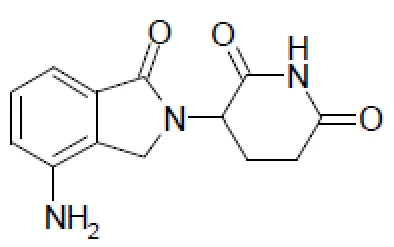
Physicochemical properties: Lenalidomide is cream to light yellow powder. It is soluble in dimethylformamide, dimethylsulfoxide; slightly soluble in methanol, acetonitrile, acetone and tetrahydrofuran; practically insoluble in water. Lenalidomide has an asymmetric carbon atom and can exist as the optically active forms S(-) and R(+), and is produced as a racemic mixture with a net optical rotation of zero.
14 CLINICAL TRIALS
14.1 Clinical Trials by Indication
Myelodysplastic Syndromes (MDS) with a Deletion 5q Cytogenetic Abnormality
Two studies were conducted in support of the efficacy and safety of lenalidomide in the treatment of transfusion dependent anemia due to Low- or Intermediate-1- risk MDS with a 5q (q31-33) cytogenetic abnormality in isolation or with additional cytogenetic abnormalities.
Study demographics and trial design
Phase 2 Single Arm Open Label del 5q Myelodysplastic Syndromes Study:
The first study was a Phase 2, multicenter, open-label, single-arm study that was conducted to confirm the efficacy and safety of lenalidomide in subjects with an International Prognostic Scoring System (IPSS) diagnosis of Low- or Intermediate-1-risk MDS associated with a 5q (q31-33) cytogenetic abnormality (del 5q) in isolation or with additional cytogenetic abnormalities, and RBC transfusion dependent anemia. Lenalidomide was dosed orally as 10 mg once daily continuously or 10 mg once daily for 21 days every 28 days. The study was not designed nor powered to prospectively compare the efficacy of the two dosing regimens. Sequential dose reductions to 5 mg daily and 5 mg every other day, as well as dose delays, were allowed for toxicity. This study enrolled 148 patients who had RBC transfusion dependent anemia. RBC-transfusion dependence was defined as having received ≥ 2 units of RBCs within 8 weeks prior to study treatment. The study enrolled patients with absolute neutrophil counts (ANC) ≥ 500/mm3, platelet counts ≥ 50,000/mm3, serum creatinine ≤ 2.5 mg/Dl, serum SGOT/AST or SGPT/ALT ≤ 3.0 x upper limit of normal (ULN), and serum direct bilirubin ≤ 2.0 mg/Dl.
Phase 3 Three arm, Double-Blind, Randomized, Placebo-controlled del 5q MDS Study:
The second study was a Phase 3, multicenter, randomized, double-blind, placebo-controlled study comparing 2 doses of oral lenalidomide versus placebo in RBC transfusion-dependent subjects with Low- or Intermediate-1-risk IPSS MDS associated with a del 5q cytogenetic abnormality with or without additional cytogenetic abnormalities. This study was conducted in 2 phases: a double-blind treatment phase (up to maximum of 52 weeks) in which 205 subjects were randomized to receive either 10 mg lenalidomide for 21 days of a 28-day cycle (cyclic), 5 mg lenalidomide continuously, or placebo; and an open-label extension phase (maximum of 105 weeks). Subjects who successfully completed the double blind phase and subjects who did not have at least a minor erythroid response (50% reduction in RBC transfusions) by week 16 of double blind treatment were unblinded and eligible to receive open label lenalidomide in either the 5 mg or 10 mg dosing regimens.
Baseline patient and disease-related characteristics for subjects in the IIT populations of the two studies are summarized in Table 11 below.
Table 11: Baseline Demographic and Disease-Related Characteristics
| Parameter | Phase 2 Study (N=148) | Phase 3 Study (n = 205) |
|---|---|---|
| Age (years) | ||
| Mean | 70.0 | 67.3 |
| SD | 10.5 | 10.66 |
| Median | 71.0 | 68.0 |
| Min, Max | 37.0, 95.0 | 36.0, 86.0 |
| Age distribution | n (%) | n (%) |
| < 65 | 48 (32.4) | 82 (40.0) |
| > 65 | 100 (67.6) | 123 (60.0) |
| Gender | n (%) | n (%) |
| Male | 51 (34.5) | 49 (23.9) |
| Female | 97 (65.5) | 156 (76.1) |
| Race | n (%) | n (%) |
| White | 143 (96.6) | 202 (98.5) |
| Other | 5 (3.4) | 3 (1.5) |
| Duration of MDS (years) | ||
| Mean | 3.4 | 3.6 |
| SD | 3.29 | 3.57 |
| Median | 2.5 | 2.6 |
| Min, Max | 0.1, 20.7 | 0.2, 29.2 |
| Del 5 (q31-33) Cytogenetic Abnormality | n (%) | n (%) |
| Yes | 148 (100.0) | 191 (93.2) |
| Other cytogenetic abnormalities | 37 (25.2) | - |
| IPSS Score [a] from central review | n (%) | n (%) |
| Low (0) | 49 (33.1) | 70 (34.1) |
| Intermediate-1 (0.5-1.0) | 69 (46.6) | 74 (36.1) |
| Intermediate-2 (1.5-2.0) | 7 (4.7) | 10 (4.9) |
| High (>=2.5) | 2 (1.4) | 1 (0.5) |
| Missing | 21 (14.2) | 50 (24.4) |
| FAB Classification [b] from central review | n (%) | n (%) |
| RA | 78 (52.7) | 107 (52.2) |
| RARS | 16 (10.8) | 24 (11.7) |
| RAEB | 30 (20.3) | 22 (10.7) |
| Parameter | Phase 2 Study (N=148) | Phase 3 Study (n = 205) |
| CMML | 3 (2.0) | 3 (1.5) |
[a] IPSS Risk Category: Low (combined score = 0), Intermediate-1 (combined score = 0.5 to 1.0), Intermediate-2 (combined score = 1.5 to 2.0), High (combined score ≥ 2.5); Combined score = (Marrow blast score + Karyotype score + Cytopenia score)
[b] French-American-British (FAB) classification of MDS.
Study results
The International Working Group (IWG) defined criteria for a major erythroid response is transfusion independence for at least 8 consecutive weeks (56 days). In the Phase 2 study, transfusion independence was defined as a period of at least 56 consecutive days during which no transfusions were given and the Hgb concentration rose by at least 1 g/dL. In the Phase 3 study, the primary efficacy endpoint extended the transfusion independence period to 6 months (182 days).
An overview of the efficacy results for the Intent to Treat (ITT) populations is presented in Table 12 below. The primary endpoint results for the phase 3 study are provided (transfusion independence at 182 days), but for comparison purposes across studies the results by IWG criteria are shown. Results for the 5mg group are not displayed.
RBC-transfusion independence rates were unaffected by age or gender.
Table 12: Efficacy results for Lenalidomide in del 5q MDS (ITT populations)
| Efficacy parameter | Phase 2 study | Phase 3 study (double-blind and open-label phases) | |
|---|---|---|---|
Lenalidomide 10 mg N = 148 | Lenalidomide 10 mg N=69 | Placebo N=67 | |
Transfusion independence Number (%) transfusion independent (56 days) a | 97 (65.5) | 42 (60.9) | 5 (7.5) |
| Number (%) transfusion independent (182 days) ^ | 86 (58.1) | 37 (53.6) | 4 (6.0) |
Median Hgb increase (g/dL)b (Min, Max) | 5.6 (2.2, 40.7) | 6.2 (1.8, 10.0) | 2.6 (1.5, 4.4) |
Median Time to transfusion independence (weeks)c (Min, Max) | 4.1 (0.3, 49.0) | 4.6 (0.3, 14.7) | 0.3 (0.3, 24.1) |
CI = Confidence interval; Cont = continuous (28 days of a 28-day cycle); Cyc = cyclic (21 days of a 28-day cycle); Hgb = Hemoglobin; ITT = Intent to treat; Max = Maximum; Min = Minimum; MITT = Modified intent to treat; RBC = Red blood cell; SD = Standard deviation; nr = not reported.
* Based on RBC-transfusion independence response for subjects in the double-blind phase who became RBC-transfusion independent for at least 56 days
^ RBC-transfusion independence response for subjects in the double-blind phase who became RBC-transfusion independent for at least 182 days (MDS-004 primary endpoint)
a The absence of the intravenous infusion of any RBC transfusion during any consecutive “rolling” 56 days during the treatment period and an increase in Hgb of at least 1 g/dL from the minimum during the screening/baseline period to the maximum during the transfusion-independent period, excluding the first 30 days after the last transfusion before the transfusion-free period.
b Change from baseline in Hgb concentration to maximum value during response period, where response period was defined as the time from 30 days after the last transfusion prior to achieving transfusion independence to the next transfusion or to the last assessment for subjects who did not receive a subsequent transfusion during the study period.
c Measured from the day of the first dose of study drug to the first day of the first 56-day RBC transfusion-free period.
Multivariate analysis reveals that, compared to baseline, either a decrease in the ANC by 75 percent (in patients not neutropenic at baseline) or a decrease in the platelet count by 50 percent (regardless of the platelet count at baseline) within the first 8 weeks of the initiation of lenalidomide is a predictor of red blood cell transfusion independence response.
Red blood cell transfusion independence correlated with decrease in platelet and/or neutrophil count (p=0.018 and p=0.005, respectively). The median decrease from baseline in absolute neutrophil counts was 1.73 x 10⁹/L (Min, Max: 1.28 x 10⁹/L, 20.35 x 10⁹/L). The median decrease in platelet levels from maximum at baseline to the minimum during the study was 171 x 109/L (Min, Max: 32 x 109/L, 1393 x 109/L). Cytopenias were seen early in treatment (before onset of response) or after treatment failure. During the transfusion independence response, white blood cell counts and platelet counts showed initial decreases in the first 2 months and then were maintained at clinically acceptable levels. In the 51 out of 81 (75%) responders, treatment related grade 4 neutropenia and/or thrombocytopenia were resolved alongside the adjustment of the dose to a lower level (see 4 DOSAGE AND ADMINISTRATION).
In the Phase 2 ITT population, major cytogenetic responses (complete resolution of all cytogenetic abnormalities compared with baseline) were observed in 44.2% (53/120) and minor cytogenetic responses (≥ 50% reduction in the proportion of hematopoietic cells with cytogenetic abnormalities compared with baseline) were observed in 24.2% (29/120) of the patients who were evaluable for cytogenetic response. Cytogenetic responses were assessed during the study at month 6, month 12 and when clinically indicated.
Among the 147 patients who had hematopoietic cells from bone marrow aspirate specimens available for cytogenetic testing, 110 (74.8%) had an MDS clone with an isolated del 5q cytogenetic abnormality, and 37 (25.2%) had an MDS clone with a del 5q abnormality and with additional cytogenetic abnormalities. Seventy-four (67%) of the 110 subjects with an isolated del 5q abnormality and 21 (57%) of the 37 subjects with a del 5q abnormality and an additional cytogenetic abnormality achieved RBC-transfusion independence.
Progression to Acute Myeloid Leukemia (AML)
In the Phase 3 study, the median duration of follow-up for all patients who received treatment with lenalidomide regardless of randomized group, dose or study phase, was 35.2 months (2.9 years; range: 0.4, 70.8 months; n=194). Overall, the incidence of progression to AML during the entire study period was 30.2%. In all subjects who received lenalidomide, the incidence of progression to AML or death was 59.8% (116/194 subjects).
The risk of progression to AML over time, taking the competing risk of death without AML into account, in the Phase 2 study (ITT population, N = 147) and Phase 3 study (subjects randomized to lenalidomide, N = 138) is 0.146 and 0.152 at 2 years, 0.1741 and 0.2151 at 3 years, and 0.2216 and 0.2974 at 5 years (cumulative incidence function, Gray’s test: p = 0.2259). In the Kaplan-Meier analysis of risk of progression to AML over time, the median time to progression to AML was 57 months in subjects randomized to placebo; the median time to progression to AML in subjects randomized to lenalidomide had not been reached by the data cutoff date (30 Jun 2011). AML was defined as the presence of ≥ 30% bone marrow blasts according to FAB classification.
Patients without at least a minor erythroid response within 4 months of therapy initiation demonstrated by at least a 50% reduction in transfusion requirements or, if not transfused, a 1 g/Dl rise in hemoglobin, should discontinue NAT-LENALIDOMIDE treatment (see 4.1 Dosing Considerations).
Multiple Myeloma
Phase 3 Randomized Open-Label Study in Transplant Non-Eligible Newly Diagnosed Multiple Myeloma
Study Demographics and Trial Design
A randomized, multicentre, open-label, 3-arm study [Study MM-020 (FIRST)] was conducted to evaluate the efficacy and safety of lenalidomide and low-dose dexamethasone (Rd) given for 2 different durations of time [i.e., until disease progression (Arm Rd) or for up to eighteen 28-day cycles (Arm Rd18)], to that of melphalan, prednisone, and thalidomide (Arm MPT) for a maximum of twelve 42-day cycles (72 weeks) in the treatment of newly diagnosed multiple myeloma patients who were not eligible for stem cell transplant (SCT). Key eligibility criteria included patients with newly diagnosed, previously untreated, symptomatic multiple myeloma based on International Myeloma Working Group (IMWG) 2003 criteria. Patients were 65 years of age or older, or were younger but not candidates for SCT because they declined to undergo SCT or SCT was not available to the patient due to cost or other reasons, and had an ECOG performance status of 0-2. Patients were stratified at randomization by age (≤ 75 versus > 75), stage (ISS Stages I and II versus Stage III), and country.
Patients in Arm Rd and Arm Rd18 received lenalidomide 25 mg once daily on days 1-21 of 28-day cycles. Dexamethasone was dosed 40 mg orally once weekly (in patients > 75 years of age, the dexamethasone dose was reduced to 20 mg once weekly) on days 1, 8, 15 and 22 of each 28-day cycle. Initial dose and regimens for Rd and Rd18 were adjusted according to age and renal function. All patients received prophylactic anticoagulation with the most commonly used being aspirin.
A total of 1623 patients were enrolled in the study. The baseline patient and disease-related characteristics of the patients were balanced among the 3 arms (see Table 13).
The primary efficacy endpoint, progression-free survival (PFS), was defined as the time from randomization to the first documentation of disease progression as determined by an Independent Response Adjudication Committee (IRAC) based on IMWG criteria or death from any cause. The primary comparison was between Arm Rd and Arm MPT.
Table 13: Baseline Demographic and Disease-Related Characteristics (ITT Population)
Arm Rd (N=535) | Arm Rd18 (N=541) | Arm MPT (N=547) | ||
|---|---|---|---|---|
| Patient Characteristic | ||||
Age (years) Median Min, Max Age Distributiona n (%) ≤ 75 n (%) > 75 n (%) | 73 44, 91 349 (65.2) 186 (34.8) | 73 40, 89 348 (64.3) 193 (35.7) | 73 51, 92 359 (65.6) 188 (34.4) | |
Sex n (%) Male Female | 294 (55.0) 241 (45.0) | 273 (50.5) 268 (49.5) | 287 (52.5) 260 (47.5) | |
Race / Ethnicity n (%) White Other | 474 (88.6) 61 (11.4) | 480 (88.7) 61 (11.3) | 491 (89.8) 56 (10.2) | |
| Disease Characteristic | ||||
ISS Stageb I or II III | 319 (59.6) 216 (40.4) | 322 (59.5) 219 (40.5) | 323 (59.0) 224 (41.0) | |
Arm Rd (N=535) | Arm Rd18 (N=541) | Arm MPT (N=547) | ||
Creatinine Clearancea < 30 mL/min ≥ 30 to 50 mL/min ≥ 50 to 80 mL/min ≥ 80 mL/min | 45 (8.4) 126 (23.6) 241 (45.0) 123 (23.0) | 47 (8.7) 120 (22.2) 252 (46.6) 122 (22.6) | 55 (10.1) 126 (23.0) 222 (40.6) 144 (26.3) | |
ECOG Performance Status Grade 0 Grade 1 Grade 2 Grade ≥ 3 Missing | 155 (29.0) 257 (48.0) 119 (22.2) 2 (0.4) 2 (0.4) | 163 (30.1) 263 (48.6) 113 (20.9) 2 (0.4) 0 (0.0) | 156 (28.5) 275 (50.3) 111 (20.3) 2 (0.4) 3 (0.5) | |
Cytogenetic Riskb Adverse risk Non-Adverse Risk Favourable hyperdiploidy Normal Uncertain Risk Not Evaluable Missing | 170 (31.8) 298 (55.7) 112 (20.9) 148 (27.7) 38 (7.1) 34 (6.4) 33 (6.2) | 185 (34.2) 290 (53.6) 103 (19.0) 131 (24.2) 56 (10.4) 35 (6.5) 31 (5.7) | 189 (34.6) 283 (51.7) 102 (18.6) 141 (25.8) 40 (7.3) 44 (8.0) 31 (5.7) | |
Β2-microglobulin > 5.5 mg/L ≤ 5.5 mg/L Missing | 224 (41.9) 309 (57.8) 2 (0.4) | 224 (41.4) 316 (58.4) 1 (0.2) | 234 (42.8) 312 (57.0) 1 (0.2) | |
aSubjects were stratified at randomization by: age, ISS stage, and renal status
bCytogenetic risk categories are mutually exclusive. Definitions: Adverse Risk category: t(4;14), t(14;16), del(13q) or monosomy 13, del(17p), 1q gain; Non-adverse Risk categories include favourable hyperdiploidy: t(11;14), gains of 5/9/15; normal: a normal result, gains other than 5/9/15, IgH deletion; and uncertain risk: probes used for analysis cannot place subject in any of the other risk categories. Not evaluable: no specimen received, test failure, or insufficient number of cells available for analysis.
Study Results
The final analysis of PFS, the primary endpoint with 24 May 2013 data cutoff, was conducted on 960 events (59% of the ITT population). The PFS was significantly longer in Arm Rd than in Arm MPT: HR 0.72 (95% CI: 0.61, 0.85 p <0.0001) (see Table 14 and Figure 1).
For the interim OS analysis with 03 March 2014 data cutoff, the median follow-up time for all surviving patients is 45.5 months with 697 death events, representing 78% of prespecified events required for the planned final OS analysis (697/896 of the final OS events). The observed OS HR was 0.75 for Arm Rd versus Arm MPT (95% CI: 0.62, 0.90) (see Table 14).
Table 14: Summary of Efficacy Results (ITT Population)
| Trial Parameter | Arm Rd (N=535) | Arm Rd18 (N=541) | Arm MPT (N=547) | ||||||||
|---|---|---|---|---|---|---|---|---|---|---|---|
| PFS – IRAC (months)f | |||||||||||
| Number of PFS events, n(%) | 278 (52.0) | 348 (64.3) | 334 (61.1) | ||||||||
| Mediana PFS time, months (95% CI)b | 25.5 (20.7, 29.4) | 20.7 (19.4, 22.0) | 21.2 (19.3, 23.2) | ||||||||
HR (95% CI)c; p-valued Rd vs. MPT Rd vs. Rd18 Rd18 vs. MPT | 0.72 (0.61, 0.85); < 0.0001 0.70 (0.60, 0.82); < 0.0001 1.03 (0.89, 1.20); 0.7035 | ||||||||||
| Overall Survival – Interim (months)g | |||||||||||
| Number of death events | 208 (38.9) | 228 (42.1) | 261 (47.7) | ||||||||
| Mediana OS time, months (95% CI)b | 58.9 (56.0, NE) | 56.7 (50.1, NE) | 48.5 (44.2, 52.0) | ||||||||
HR (95% CI) c Rd vs. MPT Rd vs. Rd18 Rd18 vs. MPT | 0.75 (0.62, 0.90) 0.91 (0.75, 1.09) 0.83 (0.69, 0.99) | ||||||||||
| Myeloma Response Ratee – IRAC, n (%)f | |||||||||||
| CR | 81 (15.1) | 77 (14.2) | 51 (9.3) | ||||||||
| VGPR | 152 (28.4) | 154 (28.5) | 102 (18.8) | ||||||||
| PR | 169 (31.6) | 166 (30.7) | 187 (34.2) | ||||||||
| Overall response: CR, VGPR, or PR | 402 (75.1) | 397 (73.4) | 341 (62.3) | ||||||||
| Duration of Response-IRAC (months)f | |||||||||||
| Mediana DOR (95% CI) b | 35.0 (27.9, 43.4) | 22.1 (20.3, 24.0) | 22.3 (20.2, 24.9) | ||||||||
CI = confidence interval; CR = complete response; d = low-dose dexamethasone; HR = hazard ratio; IRAC = Independent Response Adjudication Committee; M = melphalan; NE = not evaluable; OS = overall survival; P = prednisone; PFS = progression free survival; PR = partial response; R = Lenalidomide; Rd = Rd given until documentation of progressive disease; Rd18 = Rd given for ≤ 18 cycles; T = Thalidomide; VGPR = very good partial response; vs = versus.
a The median is based on the Kaplan-Meier estimate
b The 95% CI about the median
c Based on Cox proportional hazards model comparing the hazard functions associated with the indicated treatment arms d The p-value is based on the unstratified log-rank test of Kaplan-Meier curve differences between the indicated arms e Best assessment of response during the treatment phase of the study
f Data cutoff date = 24 May 2013
g Data cutoff date = 3 March 2014
Figure 1: Kaplan-Meier Curves of Progression-free Survival from Study MM -020a Between Arm Rd, Arm Rd18 and Arm MPT (ITT Population) Cutoff date: 24 May 2013
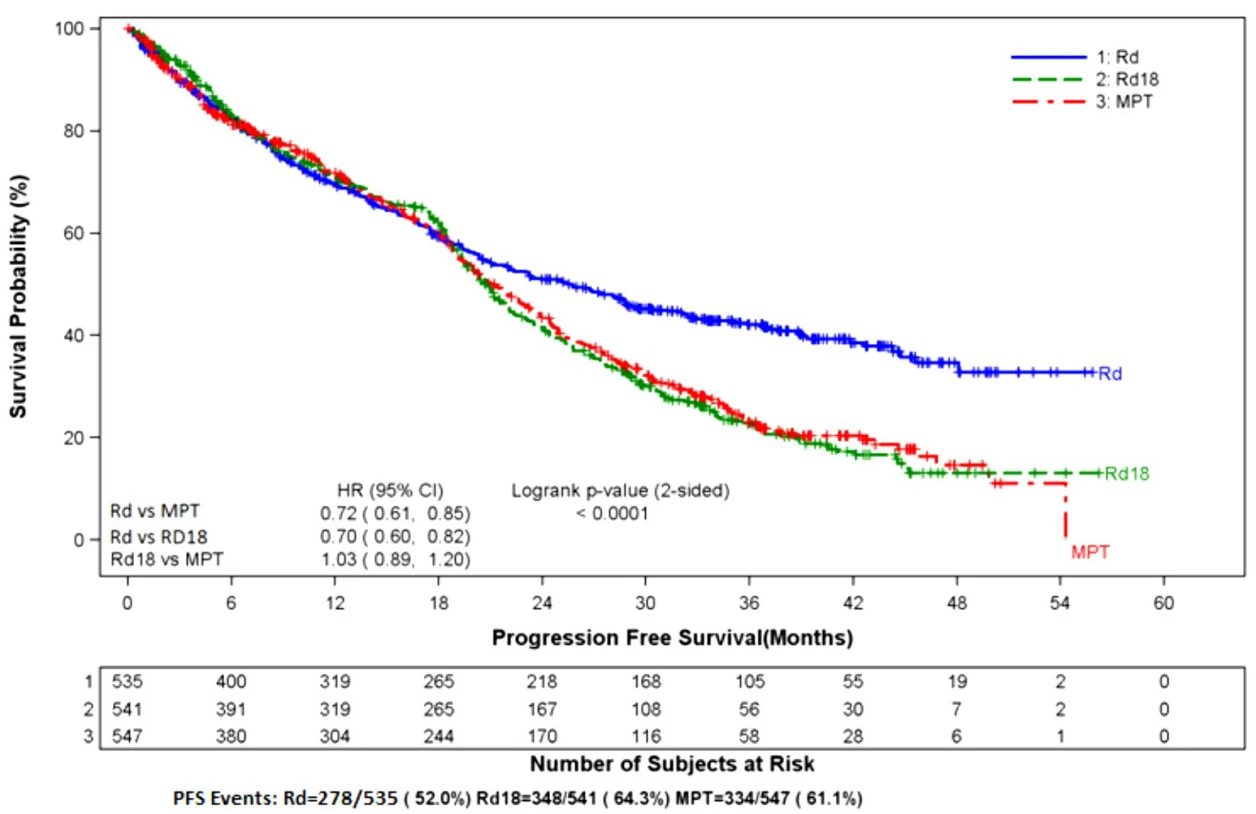
CI = confidence interval; d = low-dose dexamethasone; HR = hazard ratio; IRAC = Independent Response Adjudication Committee; M = melphalan; P = prednisone; PFS = progression free survival; R = Lenalidomide; Rd = Rd given until documentation of progressive disease; Rd18 = Rd given for ≤ 18 cycles; T = Thalidomide
a Based on IRAC Assessment
Previously Treated Multiple Myeloma Patients
Phase 3 Randomized Double Blind Placebo-Controlled Studies in Previously Treated Multiple Myeloma Patients
Study Demographics and Trial Design
Two randomized studies (Study MM-009 and MM-010) were conducted to evaluate the efficacy and safety of lenalidomide in multiple myeloma subjects who had received at least one prior therapy. These multi-center, multi-national, double-blind, placebo-controlled studies compared lenalidomide plus oral pulse high-dose dexamethasone therapy (lenalidomide/dexamethasone) to dexamethasone therapy alone (placebo/dexamethasone), in subjects with MM who had received at least one prior treatment.
In both studies, subjects in the (lenalidomide/dexamethasone) group took 25 mg of lenalidomide orally once daily on Days 1 to 21 and a matching placebo capsule once daily on Days 22 to 28 of each 28-day cycle. Subjects in the placebo/dexamethasone group took 1 placebo capsule on Days 1 to 28 of each 28-day cycle. Subjects in both treatment groups took 40 mg of dexamethasone orally once daily on Days 1 to 4, 9 to 12, and 17 to 20 of each 28-day cycle for the first 4 cycles of therapy. The dose of dexamethasone was reduced to 40 mg orally once daily on Days 1 to 4 of each 28-day cycle after the first 4 cycles of therapy. In both studies, treatment was to continue until disease progression.
Dose adjustments were allowed based on clinical and laboratory findings. Sequential dose reductions to 15 mg daily, 10 mg daily and 5 mg daily were allowed for toxicity (see 4 DOSAGE AND ADMINISTRATION).
Table 15 summarizes the baseline patient and disease characteristics in the two studies. In both studies, baseline demographic and disease-related characteristics were comparable between the lenalidomide/dexamethasone and placebo/dexamethasone groups.
Table 15: Baseline Demographic and Disease-Related Characteristics
| MM-009 (Cutoff: 28 Jun 2005) | MM-010 (Cutoff: 03 Aug 2005) | |||
|---|---|---|---|---|
| Lenalidomide/ dexamethasone (N=177) | PLACEBO/ dexamethasone (N=176) | Lenalidomide/ dexamethasone (N=176) | PLACEBO/ dexamethasone (N=175) | |
| Patient Characteristics | ||||
Age (years) Median Min, Max | 64.0 36.0, 86.0 | 62.0 37.0, 85.0 | 63.0 33.0, 84.0 | 64.0 40.0, 82.0 |
Sex Male Female | 106 (59.9%) 71 (40.1%) | 104 (59.1%) 72 (40.9%) | 104 (59.1%) 72 (40.9%) | 103 (58.9%) 72 (41.1%) |
Race/Ethnicity White Other | 141 (79.7%) 36 (20.3%) | 148 (84.1%) 28 (15.9%) | 172 (97.7%) 4 (2.3%) | 175 (100.0%) 0 (0%) |
| ECOG Performance Status 0-1 | 157 (88.7%) | 168 (95.5%) | 150 (85.2%) | 144 (82.3%) |
| Disease Characteristics Baseline Multiple Myeloma Stage [b] | PLACEBO/ dexamethasone (N=175) | |||
| 3.65 (1.1, 45.0) | 3.30 (1.3, 15.2) | 3.35 (1, 14.4) | 3.25 (1.3, 25.3) | |
| Lenalidomide/ dexamethasone (N=177) | MM-009 (Cutoff: 28 Jun 2005) PLACEBO/ dexamethasone (N=176) | MM-010 (Cutoff: 03 Aug 2005) Lenalidomide/ dexamethasone (N=176) | ||
I II III Missing Median (min, max) Baseline β2-microglobulin levels (mg/L) | 6 (3.4%) 56 (31.6%) 114 (64.4%) 1 (0.6%) | 5 (2.8%) 55 (31.3%) 116 (65.9%) 0 (0%) | 11 (6.3%) 50 (28.4%) 115 (65.3%) 0 (0%) | 8 (4.6%) 57 (32.6%) 110 (62.9%) 0 (0%) |
| Number of Prior Therapies | ||||
No. of Prior Antimyeloma Therapies 1 ≥ 2 | 68 (38.4%) 109 (61.6%) | 67 (38.1%) 109 (61.9%) | 56 (31.8%) 120 (68.2%) | 57 (32.6%) 118 (67.4%) |
| Types of Prior Therapies | ||||
| Stem Cell Transplantation | 61.0% | 60.2% | 56.3% | 53.7% |
| Thalidomide | 41.8% | 45.5% | 30.1% | 38.3% |
| Dexamethasone | 80.8% | 70.5% | 65.9% | 68.6% |
| Bortezomib | 10.7% | 11.4% | 4.5% | 4.0% |
| Melphalan | 33.3% | 30.7% | 56.3% | 52.0% |
| Doxorubicin | 54.8% | 51.1% | 55.7% | 56.6% |
[a] More than one category could be selected. Therefore, percentages may total to more than 100%.
[b] Baseline multiple myeloma stage was determined based on the Durie-Salmon staging criteria.
The efficacy and safety of the treatments were monitored at clinic visits that were scheduled at screening/baseline (within 28 days of Day 1 of Cycle 1), on Days 1, 8, and 15 of Cycle 1, on Days 1 and 15 of Cycles 2 and 3, on Day 1 of each subsequent cycle, and at treatment discontinuation. After discontinuation from the study, subjects are contacted every 6 months to obtain data on survival, the cause of death, and subsequent antimyeloma therapy.
The primary efficacy endpoint in both studies was time to progression (TTP). TTP was defined as the time from randomization to the first occurrence of progressive disease or death due to progressive disease. The secondary efficacy endpoints were the myeloma response rate; the time to the first symptomatic skeletal-related event (SRE); the time to the first decrease in the ECOG performance status; and overall survival (OS). The response to therapy was assessed using the Myeloma Response Determination Criteria. The time to SRE was not analyzed due to the small number of observations available.
The median durations of observation at the time of the pre-planned analyses were 17 months for Study MM-009 and 16.5 months for Study MM-010.
Results
Protocol-specified Analysis of TTP (Primary Endpoint)
In both studies, TTP was significantly longer in the lenalidomide/dexamethasone group than in the placebo/dexamethasone group (p < 0.001).
At the time of the preplanned interim analysis, the predetermined stopping criteria for superiority in the primary efficacy endpoint, TTP (as defined in the protocol), had been surpassed, with p<0.001 in favor of the lenalidomide/dexamethasone treatment group. Both studies showed that the combination of lenalidomide/dexamethasone was significantly superior to dexamethasone alone for TTP (see Table 16).
Subjects in the placebo/dexamethasone group were permitted to receive treatment with the lenalidomide/dexamethasone combination after unblinding.
Table 16: Summary of Time to Progression
| Statistics | MM-009 (Cutoff: 28 Jun 2005) | MM-010 (Cutoff: 03 Aug 2005) | |||||||||||||||
|---|---|---|---|---|---|---|---|---|---|---|---|---|---|---|---|---|---|
Lenalidomide / dexamethasone (N=177) | PLACEBO/ dexamethasone (N=176) | Lenalidomide/ dexamethasone (N=176) | PLACEBO/ dexamethasone (N=175) | ||||||||||||||
TTP [a] Progressed Censored | N n (%) n (%) | 177 92 (52.0) 85 (48.0) | 176 132 (75.0) 44 (25.0 | 176 82 (46.6) 94 (53.4) | 175 142 (81.1) 33 (18.9) | ||||||||||||
| Overall TTP (wk) | Median [b] [95% CI] [c] | 48.1 [36.9, 61.4] | 20.1 [16.7, 23.1] | 48.7 [40.9, 72.1] | 20.1 [18.1, 20.7] | ||||||||||||
Mean [b] SD Min, Max | 39.0 28.55 0.0, 106.9 | 20.6 19.17 0.0, 93.1 | 38.0 27.08 0.1, 93.4 | 22.9 19.03 0.3, 90.1 | |||||||||||||
| Hazard Ratio [95% CI] [d] | 0.354 [0.270, 0.466] | 0.351 [0.266, 0.463] | |||||||||||||||
| Log-rank Test p-Value [e] | < 0.001 | < 0.001 | |||||||||||||||
NE, not estimable
[a] Time to progression was calculated as the time from randomization to the first occurrence of any of the following events: 1) disease progression based on the myeloma response criteria developed by Bladé et al, 2) discontinuation from the treatment phase due to disease progression according to the investigator whether or not confirmed by the Bladé et al criteria (TTP was measured to the last date of visit), or death due to disease progression during the treatment period (TTP was measured to the date of death if death occurred on or before treatment discontinuation). The TTP was censored at the date of the last response assessment for subjects who 1) had not progressed at the time of the analysis, 2) withdrew from the treatment phase before documented progression, including those who died of causes not related to multiple myeloma, or 3) were given another antimyeloma therapy without documented progression or experienced intolerable adverse events (for these subjects, the date of their last response assessment prior to taking other antimyeloma therapy was used as the censor date).
[b] The median is based on the Kaplan-Meier estimate, and the mean is the univariate mean without adjusting for censoring (i.e., the mean values represent mean TTP documented to date as of the data cutoff date, without consideration of the fact that a substantial number of subjects who had not yet progressed were continuing in the study).
[c] Ninety-five percent confidence interval (CI) about the median overall TTP
[d] Based on a proportional hazards model comparing the hazard functions associated with the treatment groups (lenalidomide/dexamethasone:placebo/dexamethasone)
[e] The p-value is based on a 2-tailed unstratified log-rank test of survival curve differences between the treatment groups.
Superiority of lenalidomide/dexamethasone over placebo/dexamethasone was also observed regardless of gender, age (≤ 65 years and > 65 years), prior therapy (with high-dose chemotherapy and SCT or without such therapy), or the number of prior antimyeloma regimens (1 vs > 1).
Figure 2 depicts the Kaplan-Meier estimates of TTP as of the dates on which the studies were unblinded.
Figure 2: Kaplan-Meier Estimate of Time to Progression
Time to Progression, MM-009 / MM-010
Lenalidomide/Dex vs Placebo/Dex
Data Up to Unblinding (MM009: -28Jun05, MM010: -03Aug05)
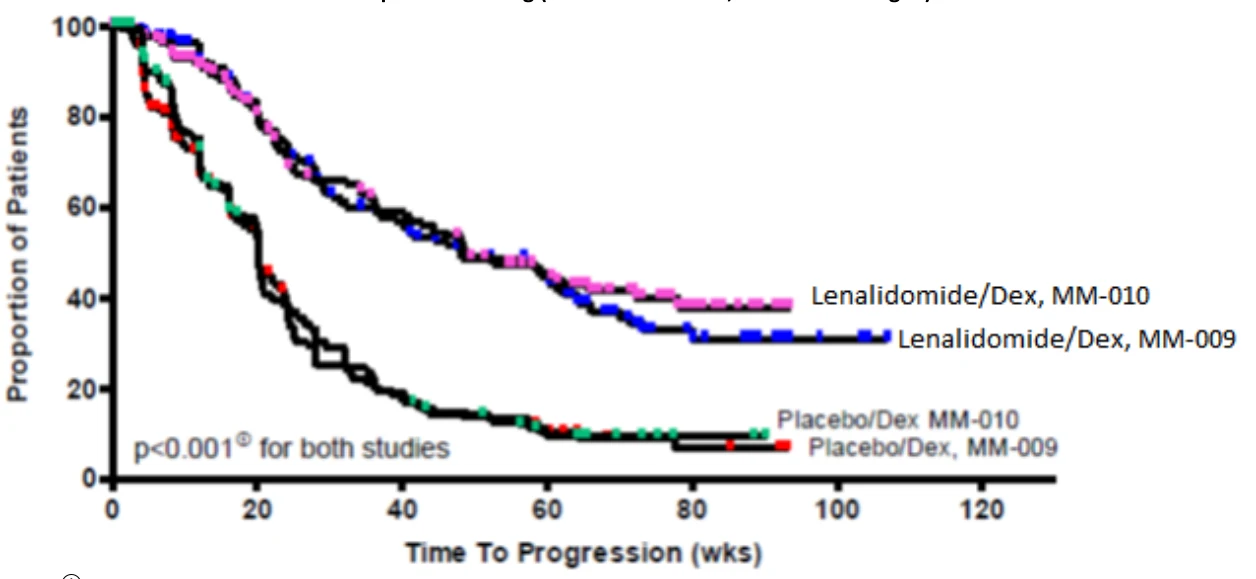
①p-value from log-rank test
Progression Free Survival (PFS) – Sensitivity Analysis)
The analysis of PFS, which differed from the protocol-specified primary TTP analysis in that all deaths, regardless of causality, were considered as events confirmed the results that were observed with the protocol-specified analysis of TTP. Highly significant differences between treatment groups (p < 0.001) in favor of the lenalidomide/dexamethasone combination, were observed in both studies (see Table 17).
Table 17: Summary of Progression-free Survival (Sensitivity Analysis)
| Statistics | MM-009 (Cutoff: 28 Jun 2005) | MM-010 (Cutoff: 03 Aug 2005) | |||||||||||||||
|---|---|---|---|---|---|---|---|---|---|---|---|---|---|---|---|---|---|
Lenalidomide /dexamethasone (N=177) | PLACEBO/ dexamethasone (N=176) | Lenalidomide/ dexamethasone (N=176) | PLACEBO/ dexamethasone (N=175) | ||||||||||||||
PFS [a] Time Progressed Censored | N n (%) n (%) | 177 93 (52.5) 84 (47.5) | 176 134 (76.1) 42 (23.9) | 176 95 (54.0) 81 (46.0) | 175 148 (84.6) 27 (15.4) | ||||||||||||
| Overall PFS (wk) | Median [b] [95% CI] [c] | 48.0 [36.9, 61.4] | 20.1 [16.4, 23.1] | 44.1 [34.3, 59.0] | 20.1 [16.1, 20.4] | ||||||||||||
Mean [b] SD Min, Max | 39.1 28.52 0.0, 106.9 | 20.6 19.16 0.0, 93.1 | 37.7 27.11 0.1, 93.4 | 22.9 19.01 0.3, 90.1 | |||||||||||||
| Hazard Ratio [95% CI] [d] | 2.820 [2.148, 3.701] | 2.459 [1.891, 3.199] | |||||||||||||||
| Log-rank Test p-Value [e] | < 0.001 | < 0.001 | |||||||||||||||
NE, not estimable
[a] Calculated as the time from randomization to documented progression or death due to any cause, whichever occurred first. If withdrawal due to adverse events or change of therapy occurred before documented progression or death, then these observations were censored at the last progression assessment date.
[b] The median is based on the Kaplan-Meier estimate, and the mean is the univariate mean without adjusting for censoring (i.e., the mean values represent mean PFS documented to date as of the data cutoff date, without consideration of the fact that a substantial number of subjects who had not yet progressed were continuing in the study).
[c] Ninety-five percent confidence interval (CI) about the median overall PFS.
[d] Based on a proportional hazards model comparing the hazard functions associated with the treatment groups (lenalidomide/dexamethasone:placebo/dexamethasone)
[e] The p-value is based on a 1-tailed unstratified log-rank test of survival curve differences between the treatment groups.
Myeloma Response Rate (Secondary Endpoint)
In both studies, the myeloma response rates were significantly higher in the lenalidomide/dexamethasone group than in the placebo/dexamethasone group both for the overall comparison of response categories (p < 0.001) and for the dichotomous comparison of Complete Response (CR) + Remission Response (RR) + Partial Response (PR)( (p < 0.001) (see Table 18). The overall response rates in Study 009 were consistent with those in Study 010, with 61.0% (108/177) of the lenalidomide/dexamethasone-treated subjects in Study 009 and 60.2% (106/176) of the lenalidomide/dexamethasone-treated subjects in Study 010 achieving a CR, RR plus PR.
Table 18: Summary of Myeloma Response Rates Based on Best Response Assessments (Studies MM-009 and MM-010)
| Response [a, b] | Study MM-009 (Cutoff: 28 Jun 2005) | Study MM-010 (Cutoff: 03 Aug 2005) | |||||||||||||||||||
|---|---|---|---|---|---|---|---|---|---|---|---|---|---|---|---|---|---|---|---|---|---|
Lenalidomide /dexamethasone (N=177) | PLACEBO/ dexamethasone (N=176) | Lenalidomide/ dexamethasone (N=176) | PLACEBO/ dexamethasone (N=175) | ||||||||||||||||||
| Complete Response (CR) | 25 (14.1%) [g] | 1 (0.6%) | 28 (15.9%) [g] | 6 (3.4%) | |||||||||||||||||
| Partial Response (PR) | 31 (17.5%) | 18 (10.2%) | 32 (18.2%) | 20 (11.4%) | |||||||||||||||||
| Stable Disease (SD) | 54 (30.5%) | 102 (58.0%) | 53 (30.1%) | 97 (55.4%) | |||||||||||||||||
| Progressive Disease (PD) | 5 (2.8%) | 25 (14.2%) | 3 (1.7%) | 25 (14.3%) | |||||||||||||||||
| Not Evaluable (NE) [c] | 10 (5.6%) | 14 (8.0%) | 14 (8.0%) | 11 (6.3%) | |||||||||||||||||
| p-value [d] | < 0.001 | < 0.001 | |||||||||||||||||||
| Dichotomized Response | |||||||||||||||||||||
| CR, RR, or PR | 108 (61.0%) | 35 (19.9%) | 106 (60.2%) | 42 (24.0%) | |||||||||||||||||
| SD, PD, or NE | 69 (39.0%) | 141 (80.1%) | 70 (39.8%) | 133 (76.0%) | |||||||||||||||||
| p-value [e] | < 0.001 | < 0.001 | |||||||||||||||||||
| Odds Ratio [f] [95% CI] | 6.31 [3.91, 10.17] | 4.80 [3.03, 7.59] | |||||||||||||||||||
[a] Response is based on the review of all myeloma assessment data using Bladé et al criteria.
[b] Response is the highest assessment of response during the treatment phase of the study.
[c] Includes subjects who did not have any response assessment data as of the data cutoff date and those whose only assessment was “response not evaluable.” This category was not included in the Wilcoxon rank sum test.
[d] Probability from Wilcoxon rank sum test
[e] Probability from continuity-corrected Pearson chi square test
[f] Odds ratio (lenalidomide:placebo)
[g] Significantly higher in the lenalidomide/dexamethasone group than in the placebo/dexamethasone group (p < 0.003, continuity-corrected Pearson chi square test)
Based on subgroup analyses, the myeloma response rate (CR + RR + PR) and CR rate were significantly higher in the lenalidomide/dexamethasone group than in the placebo/dexamethasone group regardless of gender, age (≤ 65 years or > 65 years), prior therapy (with high-dose chemotherapy and SCT or without such therapy; or number of prior antimyeloma regimens (1 vs ≥ 1). The myeloma response rate (CR + RR + PR) and the CR rate were also significantly higher in the lenalidomide/dexamethasone group than in the placebo/dexamethasone group both in subjects who had a baseline serum β2-microglobulin level of ≤ 2.5 mg/L and in those who had a baseline β2-microglobulin level of > 2.5 mg/L.
Overall Survival (Secondary endpoint)
Based on pooled data from Study 009 and Study 010 at the time of un-blinding, overall survival (OS) was significantly longer (p<0.001); among the lenalidomide/dexamethasone-treated subjects than among the placebo/dexamethasone -treated subjects. Subjects in the placebo/dexamethasone group were permitted to receive treatment with the lenalidomide/dexamethasone combination after un-blinding. As of January 2007, OS was significantly longer (p=0.015) among the lenalidomide/dexamethasone-treated subjects than among the placebo/dexamethasone -treated subjects (see Table 19), however the data are confounded by the effects of the crossover of placebo/dexamethasone subjects to lenalidomide. A total of 146 patients (96 from Study MM-009 and 50 from Study MM-010) rolled over to receive lenalidomide before study un-blinding. After study un-blinding, a total of 19 patients (5 from Study MM-009 and 14 from Study MM-010) crossed over to receive lenalidomide/dexamethasone.
Table 19: Summary of Overall Survival as of January 2007: Intent-To-Treat Population
Overall Survival (OS) Statistics | Pooled Data | |
|---|---|---|
Lenalidomide / dexamethasone N=353 | PLACEBO/ dexamethasone N=351 | |
| Died n (%) | 152 (43.1) | 180 (51.3) |
Median OS time since randomization, weeks [a] 95% CI [b] Mean ± SD Min, Max | 149.7 [141.6, NE] 101.5 ± 51.39 1.1, 183.1 | 133.3 [111.0, 151.7] 92.4 ± 53.86 0.0, 187.9 |
| Hazard rate ratio [c] | 0.765 [0.616, 0.949] | |
| p-value [d] | 0.015 | |
| 3-yr survival rate (95% CI) | 47% (40-54%) | 43% (37-49%) |
Notes: The median in this table is based on Kaplan-Meier estimate, and the mean is the univariate mean without adjusting for censoring.
NE= Not Estimable
[a] For subjects who died during the follow-up phase and whose death dates are not available, the follow-up visit dates are used as the event date.
[b] 95% confidence intervals about the median survival time.
[c] Based on a proportional hazards model comparing the hazard functions associated with the treatment groups (lenalidomide/dexamethasone: Placebo/dexamethasone)
[d] The p-value is based on a two-tailed unstratified log rank test of survival curve differences between the treatment groups.
Figure 3: Overall Survival Data from CC-5013-MM-009; January 2007
Overall Survival, MM-009
Lenalidomide/Dex vs Placebo/Dex
Data Up to January 2007
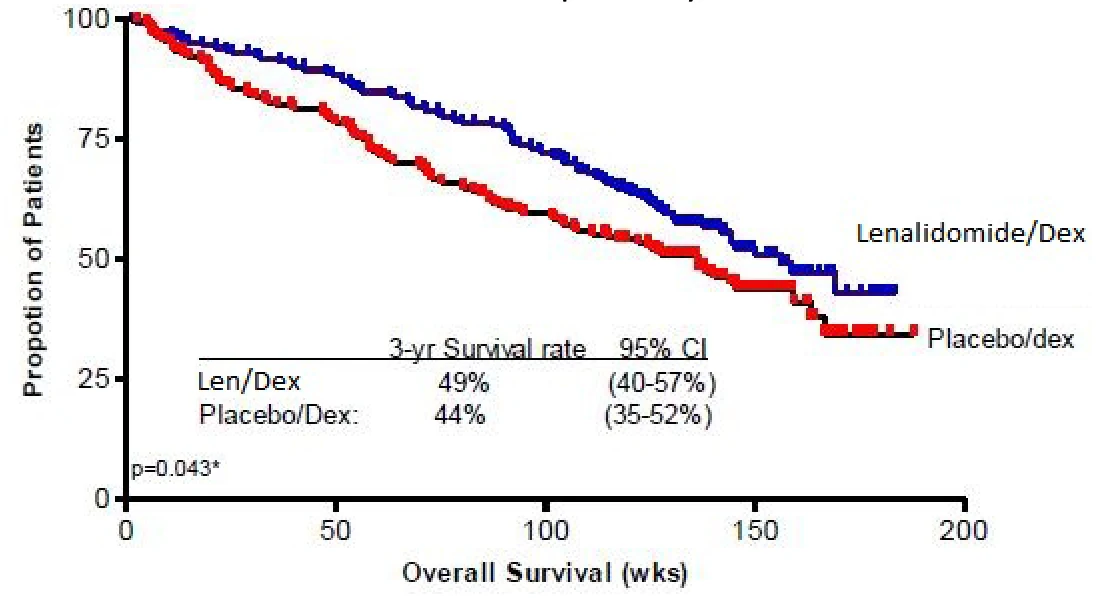
*p-value from log-rank test
Figure 4: Overall Survival Data from CC-5013-MM-010; January 2007
Overall Survival, MM-010
Lenalidomide/Dex vs Placebo/Dex
Data Up to January 2007
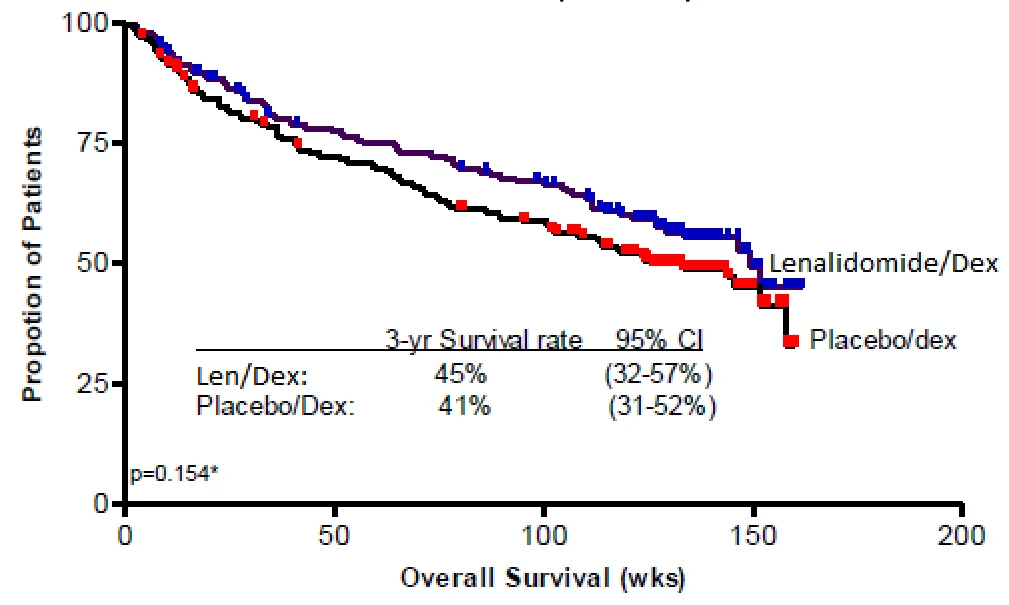
*p-value from log-rank test
Time to First Worsening of ECOG Performance Status (Secondary Endpoint)
The time to the first worsening of the ECOG performance status score was significantly longer for the lenalidomide/dexamethasone-treated subjects than for the placebo/dexamethasone-treated subjects in Study 009 (p = 0.012). No significant difference in the time to first worsening in the ECOG performance status score was observed between the lenalidomide/dexamethasone and placebo/dexamethasone groups in Study 010.
14.2 Comparative Bioavailability Studies
A blinded, balanced, randomized, two-treatment, two-period, two sequence, single dose, crossover, oral comparative bioavailability study of NAT-LENALIDOMIDE capsules, 25 mg (Natco Pharma (Canada) Inc.) and REVLIMID® (lenalidomide) capsules, 25 mg (Celgene Inc.) was conducted in 33 healthy, adult, human, male subjects under fasting conditions. The results are presented below:
Summary Table of the Comparative Bioavailability Data
Lenalidomide (1 x 25 mg) Geometric Mean Arithmetic Mean (CV %) | ||||
| Parameter | Test* | Reference† | % Ratio of Geometric Means | 90 % Confidence Interval |
| AUCT (hr*ng/Ml) | 2024.5 2052.8 (17.0) | 1987.8 2014.9 (16.4) | 102.1 | 100.4 – 103.8 |
| AUCI (hr*ng/Ml) | 2044.2 2072.8 (17.0) | 2006.7 2034.2 (16.4) | 102.1 | 100.4 – 103.8 |
| Cmax (ng/Ml) | 567.1 580.7 (22.0) | 528.7 547.3 (26.4) | 107.6 | 100.4 – 115.4 |
| Tmax§ (h) | 0.70 (0.50 – 1.75) | 0.83 (0.50 – 2.00) | ||
| T½€ (h) | 3.75 (17.26) | 3.78 (18.17) | ||
* NAT-LENALIDOMIDE capsules, 25 mg (Natco Pharma (Canada) Inc.)
† REVLIMID® (lenalidomide) capsules, 25 mg (Celgene Inc., Canada)
§ Expressed as the median (range)
€ Expressed as the arithmetic mean (CV%) only
15 MICROBIOLOGY
No microbiological information is required for this drug product.
16 NON-CLINICAL TOXICOLOGY
General Toxicology:
Table 20: Toxicity Studies
| Study Title | Findings |
|---|---|
| Single dose intravenous toxicity study in the mouse | No deaths after a single intravenous administration of 40 mg/kg were observed in mice. |
| Single dose oral toxicity study in the mouse | No deaths after a single oral dose of 2000 mg/kg were observed in mice. |
| Single dose intravenous toxicity study in the rat | No deaths after a single intravenous administration of 40 mg/kg were observed in rats. |
| Single dose oral toxicity study in the rat | No deaths after a single oral dose of 2000 mg/kg were observed in rats. |
| 7 day oral (gavage) range-finding toxicity study in the mouse | High dose females exhibited slightly elevated liver weights (p<0.05). NOAEL = 1000 mg/kg/day. |
| 7 day oral (gavage) range finding toxicity study in the rat | Decreased red blood cell indices in treated males. Increased urea and creatinine in treated males at 500 and 2000 mg/kg. Increased kidney weights in males at 500 and 2000 mg/kg. NOAEL = < 500 mg/kg/day. |
| 28 day oral (gavage) toxicity study in the rat | Bodyweight and feed consumption decreased in high dose males. Unidentified crystals were noted in the urine of treated animals. At week 4, increased incidence of proteinuria and hematuria in high dose males. White powder deposit was noted in the urine of the mid and high dose animals. Moderate to severe tubular necrosis or nephropathy noted in the high dose rats. Slight decrease in red blood cell parameters for high dose males. NOAEL = 300 mg/kg/day. |
| 13 week oral (gavage) toxicity study in the rat | Decreased body weight gains and unidentified crystals in the urine at the mid and high dose. NOAEL = 75 mg/kg/day. |
| 26 week (with a 4 week treatment-free recovery period) oral (gavage administration) toxicity study in the rat | Male and female rats were administered 0, 75, 150 or 300 mg/kg/day for 26 weeks. In this study, there were 3 non-treatment related deaths; 1 male at 300 mg/kg and 2 females from control and 150 mg/kg groups. No treatment-related clinical signs were observed during the treatment and treatment-free periods. Hematology, clinical chemistry, urinalysis, ophthalmoscopic findings were unaffected by treatment. At the end of treatment, there were slight decreases of 16% and 9% in group mean unadjusted liver weight and organ to body weight ratio in males dosed with 300 mg/kg/day. Microscopically, a treatment-related increase in the incidence of pelvic mineralization was seen in the kidney at all doses. After 4 weeks, recovery from this effect was observed in the high dose group. The NOAEL was 75 mg/kg/day. |
| 28 day oral (gavage) toxicity study in the monkey. | One animal sacrificed in moribund condition. Animal exhibited increased urea, creatinine & bilirubin. Lesions in bone marrow & lymphocytic system, kidneys, GI tract & liver. Minor atrophy of the thymus, spleen and peripheral lymph nodes and altered hematopoiesis were noted. NOAEL was not achieved. |
| 28 day oral (gavage) toxicity study in the monkey | No treatment related effects. NOAEL = 2 mg/kg/day. |
| 13 week oral (gavage) toxicity study in the monkey | The top dose of 2/mg/kg/day was the NOAEL. Evidence of pharmacodynamic activity was noted at all dose levels. |
| Study Title | Findings |
| 52 week oral (gavage administration) toxicity study in the monkey | A number of animals administered 4 and 6 mg/kg/day were terminated early due to toxicity on Day 135. In these animals, treatment-related findings consisted of severely reduced RBC, WBC, and platelet counts, hemorrhage in multiple organs, gastrointestinal tract inflammation and lymphoid and bone marrow atrophy. For animals administered 1 and 2 mg/kg/day, mild, but inconsistent, suppression of white blood cell count at 2 mg/kg/day was observed. Histology at 52 weeks showed atrophy of the thymus at both doses. After 7 weeks of recovery, platelet and WBC counts were similar to control; the effects on the thymus were partially reversed. The NOAEL in this study was 1 mg/kg/day. |
Carcinogenicity:
Carcinogenicity studies with lenalidomide have not been conducted.
Genotoxicity:
Lenalidomide did not induce mutation in the Ames test, chromosome aberrations in cultured human peripheral blood lymphocytes, or mutation at the thymidine kinase (tk) locus of mouse lymphoma L5178Y cells. Lenalidomide did not increase morphological transformation in Syrian Hamster Embryo assay or induce micronuclei in the polychromatic erythrocytes of the bone marrow of male rats.
Reproductive and Developmental Toxicology:
Table 21: Reproductive and Developmental Studies
| Study Title | Findings |
|---|---|
| Fertility and early Embryonic Development | A fertility and early embryonic development study in rats, with administration of lenalidomide up to 500 mg/kg, produced no parental toxicity and no adverse effects on fertility. |
| Embryo-fetal development studies: | Embryofetal developmental toxicity studies were conducted in rats, rabbits and monkeys. In monkeys, malformations were observed in the offspring of female monkeys who received lenalidomide doses as low as 0.5 mg/kg/day during pregnancy. Exposure in monkeys at this dose (AUC of 378 ng•hr/mL) was 0.17-times the exposure from a human clinical dose of 25 mg/day (AUC of 2215 ng•hr/mL). The observed malformations ranged from stiff and slightly malrotated hindlimbs at 0.5 mg/kg/day lenalidomide up to severe external malformations, such as bent, shortened, malformed, malrotated, and/or absent part of the extremities, oligo– or polydactyly at 4 mg/kg/day lenalidomide. These external malformations had correlated skeletal finding and were similar to those seen with the positive control thalidomide treatment. In rabbits, the maternal and developmental NOAELs for lenalidomide were 3 mg/kg/day. Exposure of rabbits at this dose (AUC of 2858 ng•hr/mL) was 2.3 fold higher than in patients administered 10 mg of lenalidomide based on AUC. Exposure in patients administered 25 mg of lenalidomide was approximately the same as in rabbits at the NOAEL dose based on AUC. Lenalidomide has been shown to have an Findings |
| Study Title | |
| embryocidal effect in rabbits at a dose of 50 mg/kg. Developmental toxicity at the 10 and 20 mg/kg/day dose levels was characterized by slightly reduced fetal body weights, increased incidences of post implantation loss, and gross external findings in the fetuses associated with morbidity and pharmacotoxic effects of lenalidomide (purple discoloration of the skin on the entire body). | |
| Pre- and Post-Natal Development: | A pre- and post-natal development study in rats revealed few adverse effects in the offspring of female rats treated with lenalidomide at doses up to 500 mg/kg (approximately 600 times and 240 times the human dose of 10 and 25 mg, respectively based on body surface area). Exposures to lenalidomide at these doses were ≥ 128-fold and 50-fold higher than in patients administered 10 mg and 25 mg, respectively based on AUC. The male offspring exhibited slightly delayed sexual maturation, and the female offspring had slightly lower body weight gains during gestation when bred to male offspring. |
Non-Clinical Pharmacology:
Lenalidomide is a potent and orally effective antineoplastic, immunomodulatory, and antiangiogenic drug. The pharmacological properties of lenalidomide were characterized in both in vitro and in vivo non-GLP studies examining the complex set of pathological conditions associated with myelodysplastic syndromes (MDS) and for the potential to produce any adverse secondary pharmacological effects. The results of these studies demonstrate that lenalidomide affects many biological processes associated with MDS. Specifically, lenalidomide induces fetal hemoglobin expression upon CD34+ hematopoietic stem cell differentiation in a model of erythroid progenitor differentiation; inhibits proliferation of various hematopoietic tumor cell lines, in particular those with cytogenetic defects of chromosome 5 and multiple myeloma (MM) plasma tumor cells; and inhibits angiogenesis in vitro by blocking the formation of microvessels and endothelial cell tubes, as well as the migration and adhesion of endothelial cells and in vivo by reducing the microvessel density in the rat mesenteric window model and in the beige-nude-xid mouse MM tumor model. In addition, lenalidomide stimulates T-cell proliferation and interleukin (IL)-2 and interferon-gamma production; and increases natural killer (NK) and NK T cell number and activity; and inhibits the secretion of pro-inflammatory cytokines including tumor necrosis factor-alpha, IL-1β, IL-6 and IL-12, and increases the secretion of anti-inflammatory cytokine IL-10 from peripheral blood mononuclear cells.
Some of the cellular effects listed above (T cell stimulation, inhibition of tumor cell proliferation, and inhibition of endothelial cell migration) are associated with modulation of the Akt pathway, suggesting that this core signaling pathway may be a key molecular target of lenalidomide.
In rats and monkeys, lenalidomide is cleared at a moderate rate from the systemic circulation, and is rapidly absorbed, with oral bioavailability of ≥ 50% in rats and monkeys. In animals, systemic exposure increased with increasing doses, with no notable accumulation on multiple dosing of lenalidomide.
The plasma protein binding of lenalidomide is low (19 to 29% bound) in nonclinical species as well as humans. 14C-Lenalidomide-derived radioactivity is extensively distributed into tissues in rats. Very limited distribution of radioactivity occurs into the central nervous system (less than 5% of levels in blood).
Lenalidomide is not subject to cytochrome P450 mediated metabolism in vitro. It undergoes hydrolysis in aqueous media, and animal and human plasma. The enantiomers of lenalidomide undergo facile interconversion in animal and human plasma in vitro.
The excretion of radioactivity following oral dosing of 14C-lenalidomide to rats and monkeys is rapid and occurs via both the urine and feces. In both rats and monkeys, the major component of the excreted radioactivity is the parent compound (50 to 58% of the dose). The remaining radioactive dose is excreted as multiple metabolites comprising isomeric forms of hydrolytic metabolites (5 to 10% of the dose), an N-acetyl conjugate (less than 3% of the dose) and isomers of a glucose conjugate (less than 13% of the dose). Thus, multiple clearance mechanisms contribute to the overall elimination of lenalidomide in animal models.
Lenalidomide does not inhibit or induce cytochrome P450 isoforms in vitro, and hence is not likely to precipitate drug-drug interactions when administered with cytochrome P450 substrates. In vivo in both rats and monkeys, chronic administration of lenalidomide did not result in the induction of cytochrome P450 enzymes. In vitro lenalidomide is a weak substrate, but is not an inhibitor of P-glycoprotein. Hence clinically relevant drug-drug interactions between lenalidomide and P-glycoprotein substrates or inhibitors are unlikely.
Non-Clinical Safety Pharmacology:
Results of safety pharmacology studies have shown that lenalidomide did not induce behavioral or autonomic changes when administered orally to male rats at doses up to 2000 mg/kg, did not produce major inhibition of the cloned human cardiac potassium channel
(hERG) (IC50 > 786.7 mcM) in vitro, and did not induce any biologically significant cardiovascular or respiratory changes when administered intravenously to anesthetized dogs at doses up to 20 mg/kg.
Special Toxicology:
No special toxicology studies have been conducted with lenalidomide.
Juvenile Toxicity:
No juvenile toxicity studies have been conducted with lenalidomide.
17 SUPPORTING PRODUCT MONOGRAPHS
- 1. REVLIMID, (capsules, 2.5 mg, 5 mg, 10 mg, 15 mg, 20 mg and 25 mg), submission control 261854, Product Monograph, Celgene Inc. (August 02, 2022)