


Product Monograph - Imuran
Recent Major Label Changes
| 09/2026 |
|---|---|
| 09/2026 |
| 09/2026 |
| 09/2026 |
| 09/2026 |
Table of Contents
Certain sections or subsections that are not applicable at the time of the preparation of the most recent authorized product monograph are not listed.
Recent Major Label Changes .................................................................................................... 2
Table of Contents .................................................................................................................... 2
Part 1: Healthcare Professional Information ............................................................................ 5
- 1.
Indications ................................................................................................................... 5
1.1. Pediatrics ............................................................................................................... 5
1.2. Geriatrics ............................................................................................................... 5
- 2. Contraindications ......................................................................................................... 5
- 3. Serious Warnings and Precautions Box ........................................................................ 5
- 4.
Dosage and Administration .......................................................................................... 6
4.1. Dosing Considerations ........................................................................................... 6
4.2. Recommended Dose and Dosage Adjustment ...................................................... 6
4.3. Reconstitution ....................................................................................................... 7
4.4. Administration ....................................................................................................... 8
- 5. Overdose...................................................................................................................... 8
- 6. Dosage Forms, Strengths, Composition, and Packaging ................................................ 8
- 7.
Warnings and Precautions ............................................................................................ 9
General .............................................................................................................................. 9
Carcinogenesis and Genotoxicity .................................................................................... 10
Driving and Operating Machinery ................................................................................... 11
Endocrine and Metabolism ............................................................................................. 11
Gastrointestinal ............................................................................................................... 11
Hematologic .................................................................................................................... 11
Hepatic/Biliary/Pancreatic .............................................................................................. 12
Immune ........................................................................................................................... 12
Monitoring and Laboratory Tests .................................................................................... 13
Reproductive Health ....................................................................................................... 13
7.1. Special Populations .............................................................................................. 13
7.1.1. Pregnancy ........................................................................................................ 13
7.1.2. Breastfeeding .................................................................................................. 14
7.1.3. Pediatrics ......................................................................................................... 14
7.1.4. Geriatrics ......................................................................................................... 14
- 8.
Adverse Reactions ...................................................................................................... 14
8.1. Adverse Reaction Overview ................................................................................. 14
8.2. Clinical Trial Adverse Reactions ........................................................................... 15
8.3. Less Common Clinical Trial Adverse Reactions .................................................... 16
8.5. Post-Market Adverse Reactions .......................................................................... 16
- 9.
Drug Interactions ....................................................................................................... 17
9.1. Serious Drug Interactions .................................................................................... 17
9.3. Drug-Behaviour Interactions ............................................................................... 17
9.4. Drug-Drug Interactions ........................................................................................ 17
9.5. Drug-Food Interactions ........................................................................................ 18
9.6. Drug-Herb Interactions ........................................................................................ 18
9.7. Drug-Laboratory Test Interactions ....................................................................... 18
- 10.
Clinical Pharmacology ................................................................................................ 19
10.1. Mechanism of Action ....................................................................................... 19
10.2. Pharmacodynamics ......................................................................................... 19
10.3. Pharmacokinetics ............................................................................................ 19
- 11. Storage, Stability, and Disposal .................................................................................. 21
- 12. Special Handling Instructions ..................................................................................... 21
Part 2: Scientific Information ................................................................................................. 22
- 13. Pharmaceutical Information ....................................................................................... 22
- 14.
Clinical Trials .............................................................................................................. 23
14.1. Clinical Trial by Indication ................................................................................ 23
- 16. Non-Clinical Toxicology .............................................................................................. 23
Patient Medication Information ............................................................................................ 27
Part 1: Healthcare Professional Information
1. Indications
IMURAN (azathioprine Tablets USP) and IMURAN for injection (azathioprine sodium for Injection, Manufacturer’s Standard) is indicated for:
Renal Homotransplantation
IMURAN is indicated as an adjunct for the prevention of rejection in renal homotransplantation.
Rheumatoid Arthritis
IMURAN is indicated only in adult patients meeting criteria for classic or definite rheumatoid arthritis as specified by the American Rheumatism Association. IMURAN should be restricted to patients with severe, active and erosive disease not responsive to conventional management including rest, acetylsalicylic acid or other non-steroidal drugs, or with disease-modifying antirheumatic drugs (DMARD’s).
1.1. Pediatrics
Pediatrics (<18 years of age): No data are available to Health Canada; therefore, Health Canada has not authorized an indication for pediatric use.
1.2. Geriatrics
Geriatrics (> 65 years of age): No data are available to Health Canada; therefore, Health Canada has not authorized an indication for geriatric use.
2. Contraindications
IMURAN is contraindicated in patients who are hypersensitive to this drug or to any ingredient in the formulation, including any non-medicinal ingredient, or component of the container. For a complete listing, see 6. Dosage Forms, Strengths, Composition, and Packaging.
3. Serious Warnings and Precautions Box
|
|---|
|
4. Dosage and Administration
4.1. Dosing Considerations
Prior to initiation of IMURAN, genotyping of NUDT15 variants, thiopurine methyl-transferase (TPMT) deficiency testing, serological testing for prior viral infections (such as varicella zoster virus (VSV) and hepatitis B), and pregnancy testing should be considered (see 7. Warnings and Precautions).
4.2. Recommended Dose and Dosage Adjustment
Renal Homotransplantation
The dose of IMURAN (azathioprine) required to prevent rejection and minimize toxicity will vary with individual patients; this necessitates careful management. The initial dose is usually 3-5 mg/kg daily, beginning at the time of transplant. IMURAN is usually given as a single daily dose on the day of, and in a minority of cases one to three days before, transplantation. IMURAN is often initiated with the intravenous administration of the sodium salt, with subsequent use of tablets (at the same dose level) after the post-operative period. Intravenous administration of the sodium salt is indicated only in patients unable to tolerate oral medications. Dose reduction to maintenance levels of 1-3 mg/kg daily is usually possible. The dose of IMURAN should not be increased to toxic levels because of threatened rejection. Discontinuation may be necessary for severe hematologic or other toxicity, even if rejection of the homograft may be a consequence of drug withdrawal.
Rheumatoid Arthritis
IMURAN is usually given on a daily basis. The initial dose should be approximately 1.0 mg/kg (50-100 mg) given as a single dose or on a twice daily schedule. The dose may be increased, beginning at six to eight weeks and thereafter by steps at four-week intervals, if there are no serious toxicities and if initial response is unsatisfactory. Dose increments should be 0.5 mg/kg daily, up to a maximum dose of 2.5 mg/kg/day. Therapeutic response occurs after several weeks of treatment, usually six to eight; an adequate trial should be a minimum of 12 weeks. Patients not improved after twelve weeks can be considered refractory. IMURAN may be continued long-term in patients with clinical response, but patients should be monitored carefully, and gradual dosage reduction should be attempted to reduce risk of toxicities. Maintenance therapy should be at the lowest effective dose, and the dose given can be lowered, with decremental changes of 0.5 mg/kg or approximately 25 mg daily every four weeks, while other therapy is kept constant. The optimum duration of maintenance IMURAN has not been determined. IMURAN can be discontinued abruptly, but delayed effects are possible.
Rest, physiotherapy and salicylates should be continued while IMURAN is given, but it may be possible to reduce the dose of corticosteroids in patients on IMURAN.
Special Populations
Patients with Renal Dysfunction
Relatively oliguric patients, especially those with tubular necrosis in the immediate post-cadaveric transplant period, may have delayed clearance of IMURAN or its metabolites, or be particularly sensitive to this drug, and are usually given lower doses.
Patients with NUDT15 variant
Patients with inherited mutated NUDT15 gene are at increased risk for severe toxicity induced by the azathioprine metabolite 6-mercaptopurine (6-MP) (See 7. Warnings and Precautions, General, and 10.3. Pharmacokinetics). These patients generally require dose reduction; particularly those being NUDT15 variant homozygotes. Genotypic testing of NUDT15 variants may be considered before initiating IMURAN. In any case, close monitoring of blood counts is necessary.
Pediatrics (<18 years of age)
Health Canada has not authorized an indication for pediatric use.
Concomitant Use with Xanthine Oxidase Inhibitors If allopurinol, oxipurinol and/or thiopurinol are given concomitantly with azathioprine, the dosage of IMURAN must be reduced to a quarter of the original dose (see 7. Warnings and Precautions, Xanthine Oxidase Inhibitors, and 9. Drug Interactions).
4.3. Reconstitution
Parenteral Products:
Table 1 - Reconstitution
| Vial Size | Volume of Diluent to be Added to Vial | Approximate Available Volume | Nominal Concentration per mL |
| 50 mg | 5 ml | 5 ml | 10 mg/ml |
SHAKE UNTIL COMPLETE DISSOLUTION.
No antimicrobial preservative is included. Therefore, reconstitution and dilution must be carried out under full aseptic conditions, preferably immediately before use. Any unused solution should be discarded (see 11. Storage, Stability, and Disposal).
Intravenous Infusion: Further dilution into sterile saline is usually made for infusion. The final volume depends on the time for the infusion, usually 30-60 minutes, but as short as five minutes and as long as eight hours for the daily dose.
As with all parenteral drug products, intravenous admixtures should be inspected visually for clarity, particulate matter, precipitate, discolouration and leakage prior to administration whenever solution and container permit. Solutions showing haziness, particulate matter, precipitate, discolouration or leakage should not be used. Discard unused portion (see 11. Storage, Stability, and Disposal).
4.4. Administration
IMURAN® tablets:
The IMURAN® tablet should not be administered with milk or dairy products since they contain xanthine oxidase, an enzyme which metabolises 6–MP and might therefore lead to reduced plasma concentrations of 6–MP (see 10.3. Pharmacokinetics).
IMURAN® for Injection ONLY:
Parenteral Administration
FOR INTRAVENOUS USE ONLY. A 50mg vial should be reconstituted with 5 to 15 mL Sterile Water for Injection, however to obtain a nominal concentration of 10mg/mL, 5mL of Sterile Water for Injection should be used. Once the Sterile Water for Injection has been added, swirl until a clear solution results. This solution has a pH of approximately 10-12. No antimicrobial preservative is included. Therefore, reconstitution and dilution must be carried out under full aseptic conditions, preferably immediately before use. Any unused solution should be discarded. Further dilution into sterile saline is usually made for infusion; the final volume depends on time for the infusion, usually 30-60 minutes but as short as five minutes and as long as eight hours for the daily dose.
5. Overdose
If overdose occurs, the patient must be monitored for toxicity. Initial symptoms of overdose are nausea and vomiting, with leukopenia, thrombocytopenia, hepatic necrosis and anorexia appearing later. Treatment of overdose with IMURAN consists of general supportive measures including monitoring of vital signs as well as observation of the clinical status of the patient.
There is no specific antidote for overdose with IMURAN. About 30% of IMURAN is bound to serum proteins, but approximately 45% is removed during an 8-hour hemodialysis. A single case has been reported of a renal transplant patient who ingested a single dose of 7500 mg IMURAN. The immediate toxic reactions were nausea, vomiting, and diarrhea, followed by mild leukopenia and mild abnormalities in liver function. The white blood cell count, AST, and bilirubin returned to normal 6 days after the overdose.
| For the most recent information in the management of a suspected drug overdose, contact your regional poison control centre or Health Canada’s toll-free number, 1-844 POISON-X (1-844-764-7669). |
|---|
- 6. Dosage Forms, Strengths, Composition, and Packaging
Table 2 – Dosage Forms, Strengths, Composition, and Packaging
| Route of Administration | Dosage Form / Strength/Composition | Non-medicinal Ingredients |
Description
IMURAN® Tablets:
Composition
In addition to azathioprine, each IMURAN tablet contains the non-medicinal ingredients lactose, magnesium stearate, microcrystalline cellulose and starch.
Packaging
IMURAN (azathioprine) 50 mg Tablets are pale yellow, peanut-shaped tablets, scored and engraved "AZ 50" on one side. IMURAN Tablets are available in bottles of 100, 250, 500 and 1000 tablets.
IMURAN® for Injection:
IMURAN for Injection is available as sterile lyophilized material. Each 17 mL single dose vial contains the equivalent of 50 mg azathioprine as sodium salt.
IMURAN for Injection vials contain 50 mg azathioprine sterile lyophilized material as the sodium salt, and sodium hydroxide to adjust pH.
7. Warnings and Precautions
See 3. Serious Warnings and Precautions Box
General
Physicians prescribing this drug should be very familiar with the mutagenic potential of the drug to both men and women and with its possible hematologic toxicities. Physicians should inform patients of the risk of malignancy with IMURAN (see 7. Warnings and Precautions, Carcinogenesis and Genotoxicity and 7. Warnings and Precautions, Hematologic). The dosage that will be tolerated or effective will vary from patient to patient. Therefore, careful management is necessary to obtain the optimum therapeutic effect while preventing toxicity. Patients must be monitored at the onset of treatment to enable detection of early signs of depression of the bone marrow which may result in leukopenia and eventually thrombocytopenia and bleeding. Since this drug may have a delayed action, it is important to withdraw the medication temporarily at the first sign of an abnormally large fall in white blood cell count or of abnormal depression of the bone marrow. Patients with impaired renal function may have slower elimination of the drug and a greater cumulative effect and the dose should be lowered in these patients (see 4.2. Recommended Dose and Dosage Adjustment). It is recommended that the drug be withheld if there is evidence of toxic hepatitis or biliary stasis.
A persistent negative nitrogen balance has been observed in some patients on continuous azathioprine dosage; if this should occur, the dose should be reduced as this has been found to correct the situation.
| Oral | Tablet / 50 mg | Lactose, magnesium stearate, microcrystalline cellulose and starch |
| Injection | Solution 50 mg | Sodium hydroxide (to adjust pH) |
Patients with a history of hypersensitivity reaction to 6-mercaptopurine should not be prescribed azathioprine (see 2. Contraindications).
Patients with NUDT15 variant
Patients with inherited mutated NUDT15 gene are at increased risk for severe 6-mercaptopurine toxicity, such as early leukopenia and alopecia, from conventional doses of thiopurine therapy. These individuals generally require dose reduction, particularly those who are NUDT15 variant homozygotes, as well as close monitoring of blood counts (see 4.2. Recommended Dose and Dosage Adjustment).
The combined use of IMURAN with DMARD’s have not been studied for either added benefit or unexpected adverse effects. The use of IMURAN with these agents cannot be recommended.
Immunisation using a live organism vaccine has the potential to cause infection in immunocompromised hosts. Therefore, it is recommended that patients do not receive live organism vaccines until at least 3 months after the end of treatment. (see 9.4. Drug-Drug Interactions).
Xanthine oxidase inhibitors
Fatalities associated with severe pancytopenia have been reported in patients treated with concomitantly with azathioprine and allopurinol. If allopurinol, oxipurinol and/or thiopurinol are given concomitantly with azathioprine, the dosage of azathioprine must be reduced to a quarter of the original dose (see 9. Drug Interactions).
Neuromuscular agents
Special care is necessary when azathioprine is given concomitantly with neuromuscular acting agents like tubocurarine or succinylcholine (see 9.4. Drug-Drug Interactions). It can also potentiate the neuromuscular block that is produced by depolarising agents such as succinylcholine (see 9.4. Drug-Drug Interactions). Patients should be advised to inform their anaesthesiologist of their treatment with azathioprine prior to surgery.
Carcinogenesis and Genotoxicity
IMURAN is carcinogenic and mutagenic in human and animal (see 16. Non-Clinical Toxicology).
Patients receiving immunosuppressive drugs, including azathioprine, particularly transplant patients receiving aggressive therapy, are known to have an increased risk of developing lymphoproliferative disorders (including the rarer, very aggressive and usually fatal hepatosplenic T-cell lymphoma [HSTCL]) and other malignancies, notably skin cancer (melanoma and non-melanoma, sarcomas (Kaposi’s and non-Kaposi’s), uterine cervical cancer in situ, and reticulum cell or lymphomatous tumors. The increased risk appears to be related to the degree and duration of immunosuppression.
It has been reported that discontinuation of immunosuppression may provide partial regression of lymphoproliferative disorders. A treatment regimen containing multiple immunosuppressants (including thiopurines) should therefore be used with caution as this could lead to lymphoproliferative disorders, some with reported fatalities. A combination of multiple immunosuppressants, given concomitantly increases the risk of Epstein-Barr virus (EBV)-associated lymphoproliferative disorders.
The degree of immunosuppression is determined not only by the immunosuppressive regimen, but also by a number of other patient factors. The number of immunosuppressive agents may not necessarily increase the risk of lymphomas. However, patients who receive multiple immunosuppressive agents may be at risk for over-immunosuppression; therefore, immunosuppressive drug therapy should be maintained at the lowest effective levels.
As is usual for patients with increased risk for skin cancer, exposure to sunlight and UV light should be limited, and patients should wear protective clothing and use a sunscreen with a high protection factor.
Information is available on the spontaneous neoplasia risk in rheumatoid arthritis, and on neoplasia following immunosuppressive therapy of other auto-immune diseases. It has not been possible to define the precise risk of neoplasia due to IMURAN. The increased risk of developing non-Hodgkin’s lymphomas in immunosuppressed rheumatoid arthritis patients compared with the general population appears to be related at least in part to the disease itself. However, acute myelogenous leukemia as well as solid tumors have been reported in patients with rheumatoid arthritis who have received azathioprine. Data on neoplasia in patients receiving IMURAN can be found under 8. Adverse Reactions.
Patients with rheumatoid arthritis previously treated with alkylating agents (cyclophosphamide, chlorambucil, melphalan or others) may have a prohibitive risk of neoplasia if treated with IMURAN.
Driving and Operating Machinery
Due caution should be exercised when driving or operating a vehicle or potentially dangerous machinery.
Endocrine and Metabolism
Administration of purine analogues (azathioprine and mercaptopurine) may interfere with the niacin pathway, potentially leading to nicotinic acid deficiency/pellagra. Few cases have been reported with the use of azathioprine, especially in patients with IBD (Crohn’s disease, colitis ulcerative). Diagnosis of pellagra should be considered in a patient presenting with localised pigmented rash (dermatitis); gastroenteritis (diarrhoea); and widespread neurologic deficits, including cognitive decline (dementia). Dose reduction or discontinuation of azathioprine treatment should be considered based on careful benefit-risk assessment and appropriate medical care with niacin/nicotinamide supplementation should be initiated.
Gastrointestinal
A gastrointestinal hypersensitivity reaction characterized by severe nausea and vomiting has been reported. These symptoms may also be accompanied by diarrhea, rash, fever, malaise, myalgias, elevations in liver enzymes, vasculitis, hepatic dysfunction, cholestatis and occasionally, hypotension. Symptoms of gastrointestinal toxicity may often develop within the first several weeks of IMURAN therapy and are reversible upon discontinuation of the drug. The reaction can recur within hours after rechallenge with a single dose of IMURAN.
Hematologic
Severe leukopenia and/or thrombocytopenia may occur in patients on IMURAN.
Macrocytic anemia and severe bone marrow depression may also occur. Hematologic toxicities are dose related and may be more severe in renal transplant patients whose homograft is undergoing rejection. It is suggested that patients on IMURAN have complete blood counts, including platelet counts, weekly during the first month, twice monthly for the second and third months of treatment, then monthly or more frequently if dosage alterations or other therapy changes are necessary. Delayed hematologic suppression may occur. Prompt reduction in dosage or temporary withdrawal of the drug may be necessary if there is a rapid fall in, or persistently low leukocyte count or other evidence of bone marrow depression. Leukopenia does not correlate with therapeutic effect; therefore, the dose should not be increased intentionally to lower the white blood cell count.
Individuals with an inherited deficiency of the enzyme thiopurine methyl-transferase (TPMT) may be unusually sensitive to the myelosuppressive effect of azathioprine and prone to developing rapid bone marrow depression following the initiation of treatment with IMURAN. This problem could be exacerbated by coadministration with drugs that inhibit TPMT, such as olsalazine, mesalazine or sulphasalazine. A possible association between decreased TPMT activity and secondary leukemias and myelodysplasia has been reported in individuals receiving 6-mercaptopurine in combination with other cytotoxics. Some laboratories offer testing for TPMT deficiency, although these tests have not been shown to identify all patients at risk of severe toxicity. Therefore close monitoring of blood counts is still necessary.
Hepatic/Biliary/Pancreatic
Cases of non-cirrhotic portal hypertension and portosinusoidal vascular disease have been reported with azathioprine use (see 8.5. Post-Market Adverse Reactions). Early clinical signs include liver enzyme abnormalities, mild jaundice, thrombocytopenia, and splenomegaly. The patient should be informed about the symptoms of liver injury and advised to contact their doctor immediately if these occur.
Cholestasis of pregnancy, including foetal death, has been reported in association with azathioprine therapy. If cholestasis of pregnancy occurs, dose reduction or discontinuation should be considered based on case by case risk-benefit profile assessment.
Immune
Patients receiving IMURAN alone or in combination with other immunosuppressants, particularly corticosteroids, have shown increased susceptibility to infections (e.g. fungal, viral and bacterial), including severe or atypical infection with varicella, herpes zoster and other infections agents (see 8. Adverse Reactions). Fungal, viral, bacterial and protozoal infections may be fatal and should be treated vigorously. Reduction of azathioprine dosage and/or use of other drugs should be considered. Infection with varicella zoster virus (VZV; chickenpox and herpes zoster) may become severe during the administration of immunosuppressants. Before beginning the administration of immunosuppressants, serological testing should be considered for conditions like varicella zoster (VZV) and hepatitis B. Patients who have no history of exposure should avoid contact with individuals with chickenpox or herpes zoster. If the patient is exposed to VZV, special care must be taken to avoid patients developing chickenpox or herpes zoster, and passive immunisation with varicella-zoster immunoglobulin (VZIG) may be considered.
If the patient is infected with VZV, appropriate measures should be taken, which may include antiviral therapy and supportive care.
Macrophage activation syndrome
Macrophage activation syndrome (MAS) is a known, life-threatening disorder that may develop in patients with autoimmune conditions, in particular with inflammatory bowel disease (IBD), and there could potentially be an increased susceptibility for developing the condition with the use of azathioprine. If MAS occurs, or is suspected, evaluation and treatment should be started as early as possible, and treatment with azathioprine should be discontinued. Physicians should be attentive to symptoms of infection with EBV and cytomegalovirus (CMV), as these are known triggers for MAS.
Monitoring and Laboratory Tests
Hepatotoxicity manifested by elevation of serum alkaline phosphatase, bilirubin and/or serum transaminases is known to occur with thiopurines including IMURAN. Liver function tests should be routinely conducted during treatment with IMURAN, with more frequent testing recommended in patients with preexisting liver disease or receiving other potentially hepatotoxic therapy.
Reproductive Health
Azathioprine is cytotoxic and genotoxic (see 16. Non-Clinical Toxicology). Therefore, male and female patients administered IMURAN should use effective and reliable contraceptive methods during the treatment and for a period of at least three and six months, respectively, following the cessation of treatment.
It is recommended to have a consultation on sperm cryopreservation and/or individual genetic counselling for male and female patients intending to have a child after treatment with azathioprine.
- Fertility
The specific effect of azathioprine therapy on human fertility is unknown. In animal studies, IMURAN has been reported to cause temporary depression in spermatogenesis and reduction in sperm viability and sperm count in mice at doses 10 times the human therapeutic dose; a reduced percentage of fertile mating occurred when animals received 5 mg/kg (see 16. Non-Clinical Toxicology).
7.1. Special Populations
7.1.1. Pregnancy
There are no adequate and well-controlled studies in pregnant women IMURAN can cause fetal harm when administered to a pregnant woman, including intra-uterine growth retardation, premature birth and low birth weight, particularly in combination with corticosteroids. There have also been reports of spontaneous abortion following either maternal or paternal exposure. IMURAN is teratogenic in rabbits and mice when given in doses equivalent to the human dose (5 mg/kg daily). Abnormalities included skeletal malformations and visceral anomalies (see 16. Non-Clinical Toxicology). Therefore IMURAN should not be given to patients who are pregnant or likely to become pregnant in the near future without careful assessment of risk versus benefit.
If this drug is used during pregnancy or if the patient becomes pregnant while taking this drug, the patient should be apprised of the potential hazard to the fetus. Women of childbearing age should be advised to avoid becoming pregnant.
Leukopenia and/or thrombocytopenia have been reported in a proportion of neonates whose mothers took azathioprine throughout their pregnancies. Additional hematological monitoring is advised if IMURAN is used during pregnancy.
Limited immunologic and other abnormalities have occurred in a few infants born of renal allograft recipients on IMURAN. In a detailed case report, documented lymphopenia, diminished IgG and IgM levels, CMV infection, and a decreased thymic shadow were noted in an infant born to a mother receiving 150 mg azathioprine and 30 mg prednisone daily throughout pregnancy. At 10 weeks most features were normalized. Pancytopenia and severe immune deficiency has been reported in a preterm infant whose mother received 125 mg azathioprine and 12.5 mg prednisone daily. There have been two published reports of abnormal physical findings. In one study an infant whose mother received azathioprine 200 mg daily and prednisone 20 mg every other day during pregnancy was born with preaxial polydactyly. The second study described an infant whose father was on long-term azathioprine therapy and who was born with a large myelomeningocele in the upper lumbar region, bilateral dislocated hips, and bilateral talipes equinovarus.
Cholestasis of pregnancy, including foetal deaths, has been reported to be associated with azathioprine therapy. Monitoring of 6-methyl mercaptopurine (6-MMP) should be considered in the presence of pruritus with elevated maternal total serum bile acids levels in the second trimester of pregnancy to establish early diagnosis and minimise impact on the foetus. If cholestasis of pregnancy occurs, dose reduction or discontinuation should be considered based on case by case risk-benefit profile assessment (see 7. Warnings and Precautions, Hepatic/Biliary/Pancreatic).
7.1.2. Breastfeeding
The use of IMURAN in nursing mothers is not recommended. Azathioprine or its metabolites are transferred at low levels, both transplacentally and in breast milk. Because of the potential for tumorigenicity shown for azathioprine, a decision should be made on whether to discontinue nursing or discontinue the drug, taking into account the importance of the drug to the mother.
7.1.3. Pediatrics
Pediatrics (< 18 years of age): No data are available to Health Canada; therefore, Health Canada has not authorized an indication for pediatric use.
7.1.4. Geriatrics
Geriatrics (> 65 years of age): Safety and efficacy of azathioprine in geriatrics have not been established.
8. Adverse Reactions
8.1. Adverse Reaction Overview
The principal and potentially serious toxic effects of IMURAN are hematologic and gastrointestinal. The risks of secondary infection and neoplasia are also significant (see 7. Warnings and Precautions).
The frequency and severity of adverse reactions depend on the dose and duration of IMURAN as well as on the patient's underlying disease or concomitant therapies. The incidence of hematologic toxicities and neoplasia encountered in groups of renal homograft recipients is significantly higher than that in studies employing IMURAN for rheumatoid arthritis.
8.2. Clinical Trial Adverse Reactions
Because clinical trials are conducted under very specific conditions, the adverse reaction rates observed in the clinical trials may not reflect the rates observed in practice and should not be compared to the rates in the clinical trials of another drug. Adverse reaction information from clinical trials is useful for identifying drug-related adverse events and for approximating rates.
The relative incidences in clinical studies are summarized below:
Table 3 – The relative incidences in clinical studies
| Toxicity | Renal Homograft | Rheumatoid Arthritis |
Leukopenia Any Degree | >50% | 28% |
| <2500 cells/mm3 blood | 16% | 5.3% |
| Infections | 20% | <1% |
Neoplasia Lymphoma Others | 0.5% 2.8% | * |
* Data on the rate and risk of neoplasia among persons with rheumatoid arthritis treated with azathioprine are limited. The incidence of lymphoproliferative disease in patients with RA appears to be significantly higher than that in the general population. In one completed study, the rate of lymphoproliferative disease in RA patients receiving higher than recommended doses of azathioprine (5 mg/kg/day) was 1.8 cases per 1000 patient years of follow-up, compared with 0.8 cases per 1000 patient years of follow-up in those not receiving azathioprine. However, the proportion of the increased risk attributable to the azathioprine dosage or to other therapies (i.e., alkylating agents) received by patients treated with azathioprine cannot be determined.
Hematologic
Leukopenia and/or thrombocytopenia and more rarer agranulocytosis, pancytopenia and aplastic anemia are dose dependent and may occur late in the course of IMURAN therapy. Dose reduction or temporary withdrawal allows reversal of these toxicities. These adverse events occur particularly in patients predisposed to myelotoxicity, such as those with TPMT deficiency (see 7. Warnings and Precautions, Hematologic) and renal or hepatic insufficiency and in patients failing to reduce the dose of IMURAN when receiving concurrent allopurinol therapy (see 7. Warnings and Precautions, Hematologic). Infection may occur as a secondary manifestation of bone marrow suppression or leukopenia, but the incidence of infection is 30 to 60 times greater in renal homotransplantation than in rheumatoid arthritis. Macrocytic anemia and/or bleeding have been reported in patients on IMURAN.
Gastrointestinal
Nausea and vomiting may occur within the first few months of IMURAN therapy, and occurred in approximately 12% of 676 rheumatoid arthritis patients. The frequency of gastric disturbance can often be reduced by administration of the drug in divided doses and/or after meals. However, in some patients, nausea and vomiting may be severe and may be accompanied by symptoms such as diarrhea, fever, malaise, vasculitis, hepatic dysfunction, cholestatis and myalgias (see 7. Warnings and Precautions, Gastrointestinal). Vomiting with abdominal pain may occur rarely with a hypersensitivity pancreatitis.
Infections and Infestations
Infections (i.e. viral, fungal and bacterial) occur very commonly in transplant patients receiving azathioprine in combination with other immunosuppressants and uncommonly in other patient populations (See 7. Warnings and Precautions).
Hepatic
Toxic hepatitis with biliary stasis is known to occur in homograft recipients. Hepatotoxicity has been uncommon in rheumatoid arthritis patients on IMURAN (less than 1%). Hepatotoxicity following transplantation most often occurs within 6 months of transplantation and is generally reversible after interruption of IMURAN.
Rare but life-threatening liver injury associated with chronic administration of azathioprine has been described primarily in transplant patients and in one patient receiving IMURAN for panuveitis. Histological findings include sinusoidal dilation, peliosis hepatis, veno-occlusive disease and nodular regenerative hyperplasia. Periodic measurement of serum transaminases, alkaline phosphatase, and bilirubin is indicated for early detection of hepatotoxicity. If hepatic veno-occlusive disease is clinically suspected, IMURAN should be permanently withdrawn. In some cases withdrawal of azathioprine has resulted in either a temporary or permanent improvement in liver histology and symptoms.
8.3. Less Common Clinical Trial Adverse Reactions
Additional side effects of low frequency have been reported. These include skin rashes, alopecia, fever, arthralgias, diarrhea, steatorrhea, negative nitrogen balance, reversible interstitial pneumonitis, bacterial and viral infections, and infections associated with neutropenia.
Neoplasms benign, malignant and unspecified (including cysts and polyps)
There have been reports of neoplasms (frequency rare ≥1/10,000 to <1/1000) including lymphoproliferative disorders, skin cancers (melanoma and non-melanoma), sarcomas (Kaposi’s and non-Kaposi’s), uterine cervical cancer in situ, acute myeloid leukemia and myelodysplastic syndrome (some in association with chromosomal abnormalities).
8.5. Post-Market Adverse Reactions
In addition to the adverse reaction reports from clinical trials, the following possible adverse reactions have been identified during post-approval use of azathioprine. Because these events have been reported voluntarily from a population of unknown size, estimates of frequency cannot be made. These events have been considered possible adverse reactions due to a combination of their seriousness, frequency of reporting or potential causal relationship with treatment.
Skin and subcutaneous tissue disorders: Sweet’s syndrome (acute febrile neutrophilic dermatosis); Stevens – Johnson syndrome; toxic epidermal necrolysis.
Neoplasms benign, malignant and unspecified (incl cysts and polyps): Cases of hepatosplenic T-cell lymphoma (HSTCL) have been reported.
Infections and infestations: Cases of progressive multifocal leukoencephalopathy (PML) have been reported with the use of azathioprine.
Immune system disorders: hypersensitivity, erythema nodosum.
Investigations: liver function test abnormal.
Nicotinic acid deficiency/pellagra and cholestasis of pregnancy.
Nervous system disorder: tremors (unknown frequency).
Gastrointestinal disorders: Sialoadenitis (unknown frequency).
Hepatobiliary disorders: Non-cirrhotic portal hypertension and portosinusoidal vascular disease (unknown frequency).
9. Drug Interactions
9.1. Serious Drug Interactions
|
|---|
9.3. Drug-Behaviour Interactions
The interaction of IMURAN with individual behavioural risks (e.g. cigarette smoking, cannabis use, and/or alcohol consumption) has not been studied.
9.4. Drug-Drug Interactions
The drugs listed below are based on either drug interaction case reports or studies, or potential interactions due to the expected magnitude and seriousness of the interaction (i.e., those identified as contraindicated).
Vaccines: The immunosuppressive activity of azathioprine could result in an atypical and potentially deleterious response to live vaccines. It is therefore recommended that patients do not receive live vaccines at least 3 months after the end of their treatment with azathioprine (see 7. Warnings and Precautions).
Allopurinol/oxipurinol/thiopurinol and other xanthine oxidase inhibitors: The principal pathway for detoxification of azathioprine is inhibited by xanthine oxidase inhibitors. If xanthine oxidase inhibitors, such as allopurinol, oxipurinol and/or thiopurinol, are given concomitantly with azathioprine, the dosage of azathioprine must be reduced to a quarter of the original dose. Subsequent adjustment of doses of azathioprine should be made on the basis of therapeutic response and any toxic effects. Fatal cases have been reported in patients treated concomitantly with azathioprine and allopurinol.
Other xanthine oxidase inhibitors, such as febuxostat may decrease the metabolism of azathioprine. Concomitant administration is not recommended as data are insufficient to determine an adequate dose reduction.
Other agents affecting myelopoesis: Drugs which may affect leukocyte production, including trimethoprim/sulfamethoxazole, may lead to exaggerated leukopenia, especially in renal transplant recipients.
Angiotensin converting enzyme inhibitors: The use of angiotensin converting enzyme inhibitors to control hypertension in patients on azathioprine has been reported to induce anemia and severe leukopenia.
Warfarin: IMURAN may inhibit the anticoagulant effect of warfarin.
Non-depolarizing muscle relaxants: There is clinical evidence that IMURAN antagonizes the effect of non-depolarizing muscle relaxants such as curare, d-tubocurarine and pancuronium. Experimental data confirm that azathioprine reverses the neuromuscular blockade caused by d-tubocurarine, and show that azathioprine potentiates the neuromuscular blockade caused by succinylcholine (see 7. Warnings and Precautions).
As there is in vitro evidence that aminosalicylate derivatives (e.g. olsalazine, mesalazine or sulphasalazine) inhibit the TPMT enzyme, they should be administered with caution to patients receiving concurrent azathioprine therapy (See 7. Warnings and Precautions).
Infliximab: An interaction has been observed between azathioprine and infliximab. Patients receiving ongoing azathioprine experienced transient increases in 6-TGN (6-thioguanine nucleotide, an active metabolite of azathioprine) levels and a decrease in the mean leukocyte count in the initial weeks following infliximab infusion, which returned to previous levels after 3 months.
9.5. Drug-Food Interactions
Interactions of azathioprine with food have not been established. Milk contains xanthine oxidase and therefore 6-MP is not stable in milk or dairy products (see 10.3. Pharmacokinetics).
9.6. Drug-Herb Interactions
Interactions of azathioprine with herbal products have not been established.
9.7. Drug-Laboratory Test Interactions
Interactions of azathioprine with laboratory tests have not been established.
10. Clinical Pharmacology
10.1. Mechanism of Action
Homograft Survival
Although the use of azathioprine for inhibition of renal homograft rejection is well established, the mechanism(s) for this action are somewhat obscure. The drug suppresses hypersensitivities of the cell-mediated type and causes variable alterations in antibody production. Suppression of T-cell effects, including ablation of T-cell suppression, is dependent on the temporal relationship to antigenic stimulus or engraftment. This agent has little effect on established graft rejections or secondary responses.
Alterations in specific immune responses or immunologic functions in transplant recipients are difficult to relate specifically to immunosuppression by azathioprine. These patients have subnormal responses to vaccines, low numbers of T-cells, and abnormal phagocytosis by peripheral blood cells, but their mitogenic responses, serum immunoglobulins and secondary antibody responses are usually normal.
Immunoinflammatory Response
Azathioprine suppresses disease manifestations as well as underlying pathology in animal models of auto-immune disease. For example, the severity of adjuvant arthritis is reduced by azathioprine.
The mechanisms whereby azathioprine affects auto-immune diseases are not known.
Azathioprine is immunosuppressive, delayed hypersensitivity and cellular cytotoxicity tests being suppressed to a greater degree than are antibody responses. In the rat model of adjuvant arthritis, azathioprine has been shown to inhibit the lymph node hyperplasia which precedes the onset of the signs of the disease. Both the immunosuppressive and therapeutic effects in animal models are dose-related. Azathioprine is considered a slow-acting drug and effects may persist after the drug has been discontinued.
10.2. Pharmacodynamics
Mercaptopurine suppresses the antibody response in rabbits injected with bovine serum albumin while both azathioprine and mercaptopurine suppress antibody formation in mice challenged with sheep red blood cells when administered as intraperitoneal injection for 4 successive days beginning at the time of the antigenic stimulus. Antibody suppression was shown to occur at 25mg/kg azathioprine but at higher doses of mercaptopurine (75mg/kg, maximum tolerated dose), indicating that the anti-immune effects of azathioprine are not due entirely to the derivation of mercaptopurine in vivo. Part of the activity of azathioprine may be due to its reaction with sulfhydryl compounds considering the potentiation of its anti-immune effects by simultaneous administration with MYLERAN (busulfan).
10.3. Pharmacokinetics
Absorption:
Azathioprine is well absorbed following oral administration. Maximum serum radioactivity occurs at one to two hours after oral 35S-azathioprine and decays with a half-life of five hours. This is not an estimate of the half-life of azathioprine itself but is the decay rate for all 35S-containing metabolites of the drug. Because of extensive metabolism, only a fraction of the radioactivity is present as azathioprine. Usual doses produce blood levels of azathioprine, and of mercaptopurine derived from it, which are low (<1 μg/mL). Blood levels are of little predictive value for therapy since the magnitude and duration of clinical effects correlate with thiopurine nucleotide levels in tissues rather than with plasma drug levels.
No food effect studies have been conducted with azathioprine. 6-MP is not stable in milk due to the presence of xanthine oxidase (30% degradation within 30 minutes) and therefore it is recommended that IMURAN tablets are not administered with milk or dairy products.
Distribution:
The volume of distribution at steady state (Vdss) of azathioprine is unknown. The mean (± SD) apparent Vdss of 6-MP is 0.9 (±0.8) L/kg, although this may be an underestimate because 6-MP is cleared throughout the body (and not just in the liver).
Azathioprine and mercaptopurine are moderately bound to serum proteins (30%) and are partially dialyzable.
Concentrations of 6-MP in cerebrospinal fluid (CSF) are low or negligible after i.v. or oral administration of 6-MP.
Metabolism:
Azathioprine is cleaved in vivo to mercaptopurine. Both compounds are rapidly eliminated from blood and are oxidized or methylated in erythrocytes and liver; no azathioprine or mercaptopurine is detectable in urine after eight hours. Conversion to inactive 6-thiouric acid by xanthine oxidase is an important degradative pathway, and the inhibition of this pathway in patients receiving ZYLOPRIM (allopurinol) is the basis for the azathioprine dosage reduction required in these patients (see 7. Warnings and Precautions, General and 9. Drug Interactions). Proportions of metabolites are different in individual patients, and this presumably accounts for variable magnitude and duration of drug effects.
NUDT15 R139C (NUDT15 c.415C>T) Variant
Recent studies indicate that a strong association exists between the NUDT15 variant NUDT15 c.415C>T [p.Arg139Cys] (also known as NUDT15 R139C [rs116855232]), which is thought to lead to a loss of function of the NUDT15 enzyme, and thiopurine-mediated toxicity such as leukopenia and alopecia. The frequency of NUDT15 c.415C>T has an ethnic variability of 9.8 % in East Asians, 3.9 % in Hispanics, 0.2 % in Europeans and 0.0 % in Africans, indicating an increased risk for the Asian population. Patients who are NUDT15 variant homozygotes (NUDT15 T risk alleles) are at an excessive risk of thiopurine toxicity compared with the C homozygotes.
Reduced thiopurine doses for patients who carry the NUDT15 variants may decrease their risk of toxicity. Therefore, genotypic analysis determining NUDT15 genotype should be determined for all patients, prior to initiating thiopurine treatment (see 4.1. Dosing Considerations). The prescribing physician is advised to establish whether dose reduction is required based on patient response to treatment as well as their genetic profile.
Patients with variants in both the NUDT15 and TPMT enzymes are significantly less tolerant of thiopurines than those with risk alleles in only one of these two genes.
The precise mechanism of NUDT15-associated thiopurine-related toxicity is not understood.
Elimination
After oral administration of 100mg 35S-azathioprine, 50% of the radioactivity was excreted in the urine over 24 hours and 12% in the faeces over 48 hours. In the urine, the major compound was the inactive oxidised metabolite thiouric acid. Less than 2% was excreted in the urine as azathioprine or 6-MP. Azathioprine has a high extraction ratio with a total clearance greater than 3L/min in normal volunteers. There are no data on the renal clearance or half-life of azathioprine. The renal clearance of 6-MP and the half-life of 6-MP are 191 mL/min/m2 and 0.9 hr respectively. Renal clearance is probably not important in predicting biological effectiveness or toxicities, although dose reduction is practiced in patients with poor renal function.
Mercaptopurine, a metabolite of azathioprine, has been identified in the colostrum and breast-milk of women receiving azathioprine treatment.
- 11. Storage, Stability, and Disposal
IMURAN® Tablets:
Store at room temperature (15-30°C), protected from light.
IMURAN® for Injection:
IMURAN for injection should be stored between 15° and 25°C and protected from light. Single dose vials. Discard unused portion.
12. Special Handling Instructions
Tablets and /or intact vials should be returned to the manufacturer for destruction. Proper precautions should be taken in packaging these materials for transport.
All materials which have come in contact with cytotoxic drugs should be segregated and incinerated at 1000°C or more. Sealed containers may explode.
Personnel regularly involved in the preparation and handling of cytotoxic agents should have bi-annual blood examinations.
Part 2: Scientific Information
13. Pharmaceutical Information
Drug Substance
Non-proprietary name of the drug substance: Azathioprine
Chemical name: 1) 1H-Purine, 6-[(1-methyl-4-nitro-1H-imidazol-5-yl)thio]-
- 2) 6-[(1-methyl-4-nitro-1H-imidazol-5-yl)thio]-1H-purine
Molecular formula and molecular mass: Base: C9H7N7O2S
Sodium salt: C9H6N7NaO2S
Base: 277.27
Sodium salt: 299.24
Structural formula:
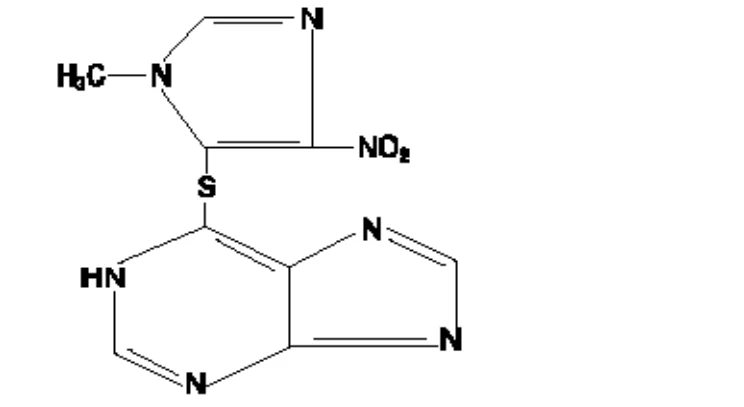
Physicochemical properties: pKa: 8.2 (25°C)
Product Characteristics:
IMURAN® Tablets:
Azathioprine is a pale yellow, odourless powder. It is insoluble in water, soluble in dilute solutions of alkali hydroxides, sparingly soluble in dilute mineral acids and very slightly soluble in alcohol and in chloroform.
IMURAN® for injection:
Azathioprine, a pale yellow, odorless powder, is insoluble in water, but may be dissolved with addition of one molar equivalent of alkali. The sodium salt of azathioprine is sufficiently soluble to make a 10 mg/mL water solution. Azathioprine is stable in solution at neutral or acid pH, but hydrolysis to mercaptopurine occurs in excess sodium hydroxide (0.1 N), especially on warming. Conversion to mercaptopurine also occurs in the presence of sulfhydryl compounds such as cysteine, glutathione and hydrogen sulfide.
14. Clinical Trials
14.1. Clinical Trial by Indication
Renal Homotransplantation
IMURAN is indicated as an adjunct for the prevention of rejection in renal homotransplantation. Experience with over 16 000 transplants shows a five-year patient survival of 35% to 55%, but this is dependent on donor, match for HLA antigens, antidonor or anti B-cell alloantigen antibody and other variables. The effect of IMURAN on these variables has not been tested in controlled trials.
Rheumatoid Arthritis
IMURAN is indicated only in adult patients meeting criteria for classic or definite rheumatoid arthritis as specified by the American Rheumatism Association. IMURAN should be restricted to patients with severe, active and erosive disease not responsive to conventional management including rest, acetylsalicylic acid or other non-steroidal drugs, or with disease-modifying antirheumatic drugs (DMARD’s). Rest, physiotherapy and salicylates should be continued while IMURAN is given, but it may be possible to reduce the dose of corticosteroids in patients on IMURAN. The combined use of IMURAN with DMARD’s have not been studied for either added benefit or unexpected adverse effects. The use of IMURAN with these agents cannot be recommended.
16. Non-Clinical Toxicology
General toxicology
Acute toxicity studies in mice and rats showed a species variation and a somewhat lower toxicity when azathioprine was administered orally than when it was given intraperitoneally. The single LD50 dose in mice is 650 mg/kg, intraperitoneally, and about 2500 mg/kg, orally. In rats, the single LD50 is 310 mg/kg, intraperitoneally, and 400 mg/kg, orally. Death after an LD50 dose, and even after an LD100 dose, was delayed two to seven days. Subacute toxicity studies also demonstrated the cumulative toxicity.
When the drug was given to mice for five successive days, the maximum tolerated daily dose was 100 mg/kg intraperitoneally and 200 mg/kg orally. In rats given five consecutive daily doses, the LD50 was 100 mg/kg whether the drug was given intraperitoneally or orally, and in these animals death occurred within a day or two of the last dose.
Chronic toxicity studies in rats revealed that all the animals that died of drug toxicity at the two highest dosage levels (60 mg/kg body weight/day and 180 mg/kg body weight/day incorporated in the diet) showed agranulocytic spleens and bone marrows and hemorrhagic lungs.
There was also some colloid depletion of the thyroid and failure of spermatogenesis. None of the animals that survived the six-month period showed blood dyscrasias or histological abnormalities.
Dogs receiving 1 or 2 mg/kg body weight/day orally for 18 weeks showed a normal weight gain and no hematologic changes. Of four dogs receiving 4 mg/kg/day orally for 18 weeks, two had episodes of fever during the last six weeks and one of these died of pneumonia and had evidence of bone marrow depression. The other two dogs maintained a normal hematologic picture. Two dogs (including the one that died) showed reduced weight gain; the other two dogs that survived the dosage of 4 mg/kg/day showed at autopsy discolored and mottled lungs but no histological abnormalities in the liver, spleen, kidneys, testes, adrenals, pancreas or myocardium. Bone marrows showed normal cellularity.
A dog given ten doses of 10 mg/kg, orally, over a 12-day period became moribund four days after the last dose and had agranulocytosis and acute ulcers of the anal and rectal region with tissue necrosis. At a dose of 7.5 mg/kg given orally for ten doses, a dog maintained its weight and showed a normal white blood cell count for several months after the study; the red blood cell count was slightly depressed to 3.7 million two weeks after the final dose, but the count gradually returned to normal. At a dose of 5 mg/kg for ten doses, a dog maintained its weight and continued to show a normal blood picture for several months. Dogs with kidney homografts generally tolerated doses of 10 mg/kg/day, orally, for two days followed by maintenance doses of 2.5 mg to 4 mg/kg/day.
The hepatotoxic potential of azathioprine was studied in 18 normal dogs Administered azathioprine for 40 days at the same dosage as used for prevention of homograft rejection. There were declines in hematocrit, weight loss and elevations of SGOT, SGPT and alkaline phosphatase that occurredearly suggesting that the liver injury was due to direct hepatotoxicity. Although there was usually a partial recovery from these biochemical abnormalities, 13 of the 18 dogs had histologic evidence of liver injury at the end of 40 days. The principal histologic alterations were usually in the centrilobular area.
Genotoxicity
Azathioprine was found to be mutagenic in a number of in vitro and in vivo genotoxicity assays.
Carcinogenicity
Rats: Azathioprine was administered orally in the diet at doses of 0, 3 or 10 mg/kg/day to groups of 70 male and 70 female Sprague-Dawley rats for 90 and 97 consecutive weeks, respectively.
A life-table analysis indicated comparable cumulative survival of the control and 3 mg/kg/day female group. Survival of the male 3 mg/kg/day group began to diverge from the control group by day 600. Reduced cumulative survival of the male and female 10 mg/kg/day groups compared to the controls began by 450 and 350 days respectively. There were no effects on food consumption. The mean weight of the 10 mg/kg group was lower than the untreated control group mean.
There was a marked depletion of body fat in the 10 mg/kg/day rats.
An increased incidence of neoplasms of the skin, ear canal (including the auditory sebaceous or Zymbal's gland) and preputial gland was associated with azathioprine administration. The presence of a few neoplasms of the nonglandular stomach in the treated males was considered potentially significant due to their rare spontaneous occurrence. Two mucinous adenocarcinomas of the duodenum, which were noted in the male 3 mg/kg/day group, were considered possibly significant.
Mice: A study was carried out to determine the carcinogenic effects of azathioprine when given orally in the diet to mice during an 18-month period. Six hundred (300 males and 300 females) clinically healthy 21-day-old mice were used in this study. Mice were randomly assigned to 1 of the 3 following dose groups of 100 males and 100 females: 0 mg/kg/day, 3 mg/kg/day and 10 mg/kg/day.
Mice in the high dose group (10 mg/kg/day) were fed a drug-free diet during dose weeks 21 through 38 because high mortality due to drug toxicity was observed. Otherwise the drug-diet mixture was fed until there was 10 to 20% survival of that sex in any treatment groups. Surviving females were sacrificed after 524 to 530 days on study and surviving males after 600 to 602 days on study.
Mice were observed daily and palpated weekly for tumors. Complete necropsies were performed on each mouse after death or sacrifice. Representative sections of all major organs and all tumors were fixed, prepared, and examined histologically from high dose (10 mg/kg/day) and control mice. Target organs and all tumors were examined from low dose (3 mg/kg/day) mice.
Azathioprine in the diet significantly reduced the survival of 3 mg/kg/ day females and 10 mg/kg/day males and females. Paleness of the mucous membranes, probably due to anemia, was observed. Significant differences in food consumption and body weights were periodically observed, but they were not consistently present throughout the study.
The number of clinically palpable nodules was similar in control and treated mice. At necropsy enlarged thymuses, lymph nodes, and spleens were observed, especially in the high dose group. Cystic endometrial hyperplasia was present in the majority of control and treated females.
Histologically, both male and female mice had a dose-related increase (p<.01) in lymphosarcomas. This increased incidence of lymphosarcoma in azathioprine-dose females was also responsible for a significant (p<.01) increase in total malignant and/or malignant plus benign tumors. In treated male mice, the incidence of malignant or malignant plus benign tumors was not significantly increased.
Synergistic immunosuppression with N-nitrosobutylurea and azathioprine induced leukemia, mean latent period of 189 days, in 14 of 24 (58%) C57BL mice. Immunosuppression with azathioprine of NZB X NZW mice that had lupus nephritis also increased the incidence of lymphosarcoma. In view of the above, lymphosarcoma as observed in this current study in treated mice may have been secondary to azathioprine immunosuppression.
An increased number of squamous cell carcinomas was observed in the preputial area of treated mice, and for purposes of statistical comparison were considered to be of preputial gland origin. Although the total number of these tumors in either treated group of male mice was not significantly greater than the number in controls, a positive dose response was detected statistically. The incidence of spontaneous preputial gland carcinomas reported in the literature is low; therefore, these tumors may have been induced by azathioprine.
Long-term carcinogenicity studies of azathioprine showed an increased incidence of lymphosarcomas, as well as epithelial tumours and carcinomas in mice and rats, respectively, at dosages of up to 2-fold the human therapeutic dose and at lower dosages in immunocompromised mice.
Reproductive and developmental toxicology
Reproductive studies have been performed in a variety of species. Studies in pregnant rats, mice and rabbits using azathioprine in dosages from 5 to 15 mg/kg bodyweight/day over the period of organogenesis have shown varying degrees of foetal abnormalities. The administration of azathioprine to pregnant rats and one strain of mice did not produce significant congenital anomalies. However, studies with pregnant rabbits and Swiss-Webster mice have shown that azathioprine has significant teratogenic potential producing resorptions and skeletal anomalies even when administered as late as the midpoint of gestation. Teratogenicity was evident in rabbits at 10 mg/kg bodyweight/day.
The specific effect of azathioprine therapy on human fertility is unknown. In animal studies, IMURAN has been reported to cause temporary depression in spermatogenesis and reduction in sperm viability and sperm count in mice at doses 10 times the human therapeutic dose; a reduced percentage of fertile mating occurred when animals received 5 mg/kg.