


Product Monograph - Natrecor
SUMMARY PRODUCT INFORMATION
Route of Administration | Dosage Form / Strength | Clinically Relevant Nonmedicinal Ingredients |
| Intravenous infusion only | Lyophilized powder for injection 1.5 mg in a 5 mL vial | None. For a complete listing see DOSAGE FORMS, COMPOSITION AND PACKAGING section. |
DESCRIPTION
NATRECOR® (nesiritide) is a sterile, purified preparation of a new drug class, human B-type natriuretic peptide (hBNP), and is manufactured from E. coli using recombinant DNA technology. Nesiritide has a molecular weight of 3464 g/mol and an empirical formula of C143H244N50O42S4. Nesiritide has the same 32 amino acid sequence as the endogenous peptide, which is produced by the ventricular myocardium.
NATRECOR® is formulated as the citrate salt of recombinant hBNP and is provided in a sterile, single-use vial. Each 1.5 mg vial contains a white to off-white lyophilized powder for intravenous (IV) administration after reconstitution.
INDICATIONS AND CLINICAL USE
NATRECOR® is indicated for the treatment of hospitalized symptomatic Acute Decompensated Heart Failure (ADHF) patients, presenting with moderate to severe dyspnea. These are patients who present with signs and symptoms of persistent heart failure despite 2 hours of treatment with intravenous loop diuretics.
For clinical data in support of this indication, see Product Monograph Part II: CLINICAL TRIALS section. Additional clinical efficacy parameters are being further assessed in a confirmatory phase III multinational study.
Geriatrics (> 65 years of age):
No dose adjustment is required in the elderly. Evidence from clinical studies suggests that when using NATRECOR® in the geriatric population, no overall differences in effectiveness were observed between these subjects and younger subjects (see WARNINGS AND PRECAUTIONS, Special Populations, Geriatrics).
Pediatrics (< 18 years of age):
The safety and effectiveness of NATRECOR® in pediatric patients have not been established.
CONTRAINDICATIONS
NATRECOR® should not be used as primary therapy for patients with cardiogenic shock or in patients with a persistent systolic blood pressure < 100 mm Hg prior to therapy because of an increased risk of symptomatic hypotension.
NATRECOR® should not be used in patients who are hypersensitive to this drug or to any ingredient in the formulation or component of the container. For a complete listing, see DOSAGE FORMS, COMPOSITION AND PACKAGING.
WARNINGS AND PRECAUTIONS
Administration of NATRECOR® should be avoided in patients suspected of having, or known to have, low cardiac filling pressures.
General
Parenteral administration of protein pharmaceuticals or E. coli-derived products should be attended by appropriate precautions in case of an allergic or untoward reaction. No serious allergic or anaphylactic reactions have been reported with NATRECOR®. NNNOOOCCC///ccc
NNNOOOCCC///ccc
NNNOOOCCC///ccc
NATRECOR® is not recommended for patients for whom vasodilating agents are not appropriate, such as patients with significant valvular stenosis, restrictive or obstructive cardiomyopathy, constrictive pericarditis, pericardial tamponade, or other conditions in which cardiac output is dependent upon venous return, or for patients suspected of having low cardiac filling pressures.
Carcinogenesis and Mutagenesis
See Product Monograph Part II: TOXICOLOGY, Carcinogenesis, Mutagenesis, Impairment of Fertility for discussions on animal data.
Cardiovascular
As expected with an agent having potent vasodilator properties, NATRECOR® may cause hypotension which is dose-dependent. In the VMAC (Vasodilation in the Management of Acute Congestive Heart Failure) trial, in patients given the recommended dose (2 μg/kg bolus followed by a 0.01 μg/kg/min infusion) or the adjustable dose, the incidence of symptomatic hypotension in the first 24 hours was similar for NATRECOR® (4%) and IV nitroglycerin (5%). When hypotension occurred, the duration of symptomatic hypotension was longer with NATRECOR® (mean duration was 2.2 hours) than with nitroglycerin (mean duration was 0.7 hours). In earlier trials, when NATRECOR® was initiated at doses higher than the recommended 2 μg/kg bolus followed by a 0.01 μg/kg/min infusion (i.e. 0.015 and 0.03 μg/kg/min preceded by a small bolus), there were more hypotensive episodes and these were of greater intensity and duration. They were also more often symptomatic and/or more likely to require medical intervention (see WARNINGS AND PRECAUTIONS, Monitoring and Laboratory Tests, and ADVERSE REACTIONS). The rate of symptomatic hypotension may be increased in patients with a blood pressure <100 mm Hg at baseline, and NATRECOR® should be used cautiously in those patients.
The potential for hypotension may be increased by combining NATRECOR® with other drugs that cause hypotension (see DRUG INTERACTIONS).
Renal
Although NATRECOR® is eliminated, in part, through renal clearance, clinical data suggest that dose adjustment is not required in patients with renal insufficiency. The effects of NATRECOR® on pulmonary capillary wedge pressure (PCWP), cardiac index (CI), and systolic blood pressure (SBP) were not significantly different in patients with chronic renal insufficiency and patients with normal renal function (see ACTION AND CLINICAL PHARMACOLOGY, Special Populations and Conditions, Renal Insufficiency).
NATRECOR® may affect renal function in susceptible individuals. In patients with severe heart failure whose renal function may depend on the activity of the renin-angiotensin-aldosterone system, treatment with NATRECOR® may be associated with azotemia.
In the 30-day follow-up period in the VMAC trial, 5 patients in the nitroglycerin group (2%) and 9 patients in the NATRECOR® group using the recommended dose (3%) required first-time dialysis.
When NATRECOR® was initiated at doses higher than the recommended dose of 0.01 μg/kg/min (0.015 and 0.03 μg/kg/min), there was an increased rate of elevated serum creatinine over baseline compared with standard therapies, although the rate of acute renal failure and need for dialysis was not increased.
Special Populations
Pregnant Women: It is not known whether NATRECOR® can cause fetal harm when administered to pregnant women or can affect reproductive capacity. NATRECOR® should be used during pregnancy only if the potential benefit to the mother outweighs the theoretical risk to the fetus.
Nursing Women: It is not known whether NATRECOR® is excreted in human milk. Therefore, caution should be exercised when NATRECOR® is administered to a nursing woman.
Pediatrics (< 18 years of age): The safety and effectiveness of NATRECOR® in pediatric patients have not been established.
Geriatrics (> 65 years of age): NATRECOR® has been shown to be well tolerated in patients with a safety profile broadly similar across a wide age range, including those 75 years or older. Of the total number of subjects in clinical trials treated with NATRECOR® (n = 941), 38% were 65 years or older and 16% were 75 years or older. No overall differences in effectiveness were observed between these subjects and younger subjects and clinical experience has not identified differences in responses between the elderly and younger patients. Some older individuals may experience a higher frequency of hypotension.
Monitoring and Laboratory Tests
NATRECOR® should be administered only in settings where blood pressure can be monitored closely, and the dose of NATRECOR® should be reduced or the drug discontinued in patients who develop hypotension (see DOSAGE AND ADMINISTRATION). Monitoring of renal function is recommended. (see WARNINGS AND PRECAUTIONS, Renal).
ADVERSE REACTIONS
Adverse Drug Reaction Overview
The overall safety database consists of 941 HF patients that enrolled in IV bolus, short infusion and long infusion studies. The nature and incidence of adverse events (AEs) that occurred during the NATRECOR® clinical trial program have been well characterized and are consistent with the expected AE profile for the acutely decompensated HF population.
Patients in these studies had typical comorbidity such as diabetes, hypertension, renal insufficiency, arrhythmia and coronary artery disease. Therefore, NATRECOR® has been evaluated in patients who are highly susceptible to adverse events and in whom a high reporting rate would be expected.
NNNOOOCCC///ccc
For the purposes of assessing the safety profile of NATRECOR®, data have been reported at 24 hours and 14 days post-initiation of study medication. Data from the first 24-hour period is considered important since this is the period when treatment is aimed at producing rapid improvements in hemodynamic status and symptoms. Also, this is the time during which NATRECOR® is actually being infused. Therefore, AEs during this period provide the clearest profile of drug treatment effect.
Clinical Trial Adverse Drug Reactions
Because clinical trials are conducted under very specific conditions the adverse reaction rates observed in the clinical trials may not reflect the rates observed in practice and should not be compared to the rates in the clinical trials of another drug. Adverse drug reaction information from clinical trials is useful for identifying drug-related adverse events and for approximating rates.
Adverse drug reactions that occurred with at least a 1% frequency during the first 24 hours of NATRECOR® infusion are shown in the following table (Table 1.1).
Table 1.1: Adverse drug reactions that occurred with ≥ 1% frequency during the first 24 hours of NATRECOR® infusion
| Undesirable Effect | VMAC Trial | Other Long Infusion Trials** | |||
IV Nitroglycerin (n = 216) | NATRECOR® Recommended Dose 0.010 :g/kg/min (n = 273) | Control* (n = 256) | NATRECOR® :g /kg/min | ||
| 0.015 (n = 253) | 0.03 (n = 246) | ||||
| Cardiovascular | |||||
| Hypotension | 12% | 11% | 8% | 22% | 35% |
| Symptomatic Hypotension | 5% | 4% | 3% | 11% | 17% |
| Asymptomatic Hypotension | 8% | 8% | 5% | 12% | 20% |
| Bradycardia | < 1% | 1% | < 1% | 3% | 5% |
| Body as a Whole | |||||
| Headache | 20% | 8% | 9% | 9% | 7% |
| Nervous | |||||
| Dizziness | 2% | 3% | 3% | 6% | 5% |
| Digestive | |||||
| Nausea | 6% | 4% | 5% | 9% | 13% |
| Vomiting | 2% | 1% | 1% | 2% | 4% |
| Urogenital | |||||
| Creatinine Increased | 0% | 0% | <1% | 2% | 2% |
| Skin and Appendages | |||||
| Sweating | 0% | <1% | <1% | 2% | 3% |
| Pruritus | <1% | 0% | <1% | 2% | 1% |
| Rash | <1% | 1% | 1% | 0% | <1% |
* Includes dobutamine, milrinone, nitroglycerin, placebo, dopamine, nitroprusside, or amrinone. ** Trials in which NATRECOR® was administered as a continuous infusion for ≥ 24 hours.
In placebo and active-controlled clinical trials, NATRECOR® has not been associated with an increase in atrial or ventricular tachyarrhythmias (VT). In placebo-controlled trials, the incidence of VT in both NATRECOR® and placebo patients was 2%. In the PRECEDENT
(Prospective Randomized Evaluation of Cardiac Ectopy with Dobutamine or NATRECOR® Therapy) trial, the effects of NATRECOR® (n = 163) and dobutamine (n = 83) on the provocation or aggravation of existing ventricular arrhythmias in patients with decompensated CHF was compared using Holter monitoring. Treatment with NATRECOR® (0.015 and 0.03 μg/kg/min without an initial bolus) for 24 hours did not aggravate pre-existing VT or the frequency of premature ventricular beats, compared to a baseline 24-hour Holter tape.
Effect on Mortality
NATRECOR® has not been studied in a trial designed or powered to assess mortality as a primary or key secondary endpoint.
A large double-blind controlled trial (VMAC) included 273 patients receiving NATRECOR® and 216 patients receiving IV nitroglycerin. The mortality rates at thirty days from any cause were 8.1% in the NATRECOR® arm and 5.1% in the nitroglycerin arm (hazard ratio of 1.56 [95% CI: 0.75–3.24]). The mortality rates at six months in patients receiving NATRECOR® or nitroglycerin were 25.1% and 20.8% respectively (hazard ratio of 1.22 [95% CI: 0.83–1.79]).
In a pooled analysis of adequate and well-controlled clinical trials (Studies 311, 325, 326, 329 [PRECEDENT], 339 [VMAC], 341 [PROACTION], and 348 [FUSION I]), mortality with NATRECOR® was compared with control treatment (30 day hazard ratio of 1.34 [95% CI: 0.85–2.11]). Of the 1059 patients treated with NATRECOR® in these 7 trials, 58 died at 30 days of any cause (Kaplan-Meier estimate, 5.5%), whereas 28 of the 658 control patients died (Kaplan-Meier estimate, 4.3%).
All-cause mortality from 5 trials (Studies 325, 326, 329 [PRECEDENT], 339 [VMAC] and 341 [PROACTION] where 180-day mortality data were collected showed a 180-day hazard ratio of 1.08 [95% CI: 0.85–1.37]. In this analysis, 178/844 patients treated with NATRECOR® (Kaplan-Meier estimate, 21.5%) and 114/560 control patients (Kaplan-Meier estimate, 20.7%) died of any cause.
There were few deaths in these studies, so the confidence limits around the hazard ratios were wide. The studies were small and some potentially important baseline imbalances existed among the treatment groups, the effects of which could not be ascertained.
Abnormal Hematologic and Clinical Chemistry Findings
In the VMAC trial, through day 30, the incidence of elevations in creatinine to > 0.5 mg/dL above baseline was 28% and 21% in the NATRECOR® (2 μg/kg bolus followed by 0.01 μg/kg/min) and nitroglycerin groups, respectively.
In the PRECEDENT trial, the incidence of elevations in serum creatinine to > 0.5 mg/dL above baseline through day 14 was higher in the NATRECOR® 0.015 μg/kg/min group (17%) and the NATRECOR® 0.03 μg/kg/min group (19%) than with standard therapy (11%).
Post-Market Adverse Drug Reactions
In addition to the previously mentioned clinical trials safety data, spontaneous adverse drug reactions (ADRs) from the worldwide post-marketing experience with NATRECOR® are listed below.
The frequency provided is a reflection of reporting rates for spontaneous adverse drug reactions and does not represent true incidence or frequency as seen with clinical trials or epidemiologic studies.
ADRs reported in the post-marketing period by System Organ Class include:
Immune System Disorders: very rare – hypersensitivity reactions
DRUG INTERACTIONS
Overview
No trials specifically examining potential drug interactions with NATRECOR® were conducted, although many concomitant drugs were used in clinical trials.
Drug-Drug Interactions
During clinical studies, NATRECOR® was administered concomitantly with other medications, including: diuretics, digoxin, oral ACE inhibitors, anticoagulants, oral nitrates, 3-hydroxy-3-methylglutaryl coenzyme A (HMG-CoA) reductase inhibitors, class III antiarrhythmics, beta-blockers, dobutamine, calcium channel blockers, angiotensin II receptor antagonists, and dopamine. Although pharmacokinetic (PK) interactions were not specifically assessed, there did not appear to be evidence suggesting any clinically significant PK interaction, except for an increase in symptomatic hypotension in patients receiving oral ACE inhibitors (see WARNINGS AND PRECAUTIONS, Cardiovascular). The co-administration of NATRECOR® with enalapril did not have significant effects on the PK of NATRECOR®. The PK effect of co-administration of NATRECOR® with other IV vasodilators such as nitroglycerin, nitroprusside, milrinone, or IV ACE inhibitors has not been evaluated.
Drug-Food Interactions
Interactions with food have not been established.
Drug-Herb Interactions
Interactions with herbal products have not been established.
Drug-Laboratory Interactions
Interactions with laboratory tests have not been established.
Chemical/Physical Interactions
NATRECOR® is physically and/or chemically incompatible with injectable formulations of heparin, insulin, ethacrynate sodium, bumetanide, enalaprilat, hydralazine, and furosemide. These drugs should not be co-administered as infusions with NATRECOR® through the same IV catheter. The preservative sodium metabisulfite is incompatible with NATRECOR®. Injectable drugs that contain sodium metabisulfite should not be administered in the same infusion line as NATRECOR® (see DOSAGE AND ADMINISTRATION, Dosing Instructions, Chemical/Physical Interactions).
DOSAGE AND ADMINISTRATION
NATRECOR® (nesiritide) is for intravenous use only.
Dosing Considerations
The dose-limiting side effect of NATRECOR® is hypotension.
NATRECOR® should not be titrated at frequent intervals as is done with other IV agents that have a shorter half-life (see Product Monograph Part II: CLINICAL TRIALS).
Recommended Dose and Dosage Adjustment
The NATRECOR® bolus must be drawn from the prepared infusion bag.
The recommended dose of NATRECOR® is an IV bolus of 2 μg/kg followed by a continuous infusion of 0.01 μg/kg/min. NATRECOR® should not be initiated at a dose that is above the recommended dose (see DOSAGE AND ADMINISTRATION, Administration).
The use of NATRECOR® at doses higher than recommended is not encouraged. However, in the few cases where, following physician assessment further optimization of clinical status may be required, the NATRECOR® infusion dose may be increased or decreased according to hemodynamic and clinical response. If an increase in dose is required, the infusion dose may be increased by 0.005 μg/kg/min (preceded by a bolus of 1 μg/kg) no more frequently than every 3 hours up to a maximum dose of 0.03 μg/kg/min.
Blood pressure should be monitored closely during NATRECOR® administration. There is limited experience with administering NATRECOR® for longer than 48 hours. If hypotension occurs during the administration of NATRECOR®, the dose should be reduced or discontinued and other measures to support blood pressure should be started (IV fluids, changes in body position).
In the VMAC trial, when symptomatic hypotension occurred, NATRECOR® was discontinued and subsequently could be restarted at a dose that was reduced by 30% (with no bolus administration) once the patient was stabilized. Because hypotension caused by NATRECOR® may be prolonged (up to hours), a period of observation may be necessary before restarting the drug.
Administration
Preparation, Reconstitution and Special Handling Instructions
The NATRECOR® bolus must be drawn from the prepared infusion bag.
- 1.
Reconstitute one 1.5 mg vial of NATRECOR® by adding 5 mL of diluent removed from a pre-filled 250 mL plastic IV bag containing the diluent of choice. After reconstitution of the vial, each mL contains 0.32 mg of nesiritide. The following preservative-free diluents are recommended for reconstitution: 5% Dextrose Injection (D5W), USP; 0.9% Sodium Chloride Injection, USP; 5% Dextrose and 0.45% Sodium Chloride Injection, USP, or 5% Dextrose NNNOOOCCC///ccc
and 0.2% Sodium Chloride Injection, USP. Aseptic technique must be used in the reconstitution procedure.
- 2.
Do not shake the vial. Rock the vial gently so that all surfaces, including the stopper, are in contact with the diluent to ensure complete reconstitution. Use only a clear, essentially colourless solution.
Reconstituted single use vials of NATRECOR® should be added to the 250 mL plastic IV bag and used immediately (within 3 hours). If the reconstituted vial is not used right away, store under refrigeration (2-8°C). Do not freeze. Protect from light. As NATRECOR® contains no antimicrobial preservative, the storage of the reconstituted vial is not recommended. However, when prepared under aseptic conditions, the chemical and physical stability of the reconstituted vial has been demonstrated for 24 hours at 25°C.
- 3.
Withdraw the entire contents of the reconstituted NATRECOR® vial and add to the
250 mL plastic IV bag. This will yield a solution with a concentration of NATRECOR® of approximately 6 μg/mL. The IV bag should be inverted several times to ensure complete mixing of the solution.
- 4.
Use the reconstituted and diluted solution, to start dosing, immediately (within 3 hours). As
NATRECOR® contains no antimicrobial preservative, storage of the reconstituted solution is not recommended. However, when prepared under aseptic conditions, the chemical and physical stability of the reconstituted and diluted solution has been demonstrated for 24 hours at 25°C. Parenteral drug products should be inspected visually for particulate matter and discoloration prior to administration, whenever solution and container permit.
Table 1.2 Reconstitution and Dilution of NATRECOR®
| Vial Size | Volume of Diluent to be Added to Vial | Approximate Available Volume | Nominal Concentration per mL | Concentration per 250 mL Bag |
| 5 mL | 5 mL | 5 mL | 0.32 mg of nesiritide | 6 µg/mL |
Dosing Instructions
Prime the IV tubing with an infusion of 5 mL prior to connecting to the patient's vascular access port and prior to administering the bolus or starting the infusion.
The administration of the recommended dose of NATRECOR® is a two-step process:
Step 1. Administration of the IV Bolus
After preparation of the infusion bag, as described previously, withdraw the bolus volume (see Table 1.3 Weight-Adjusted Bolus Volume) from the NATRECOR® infusion bag, and administer it over approximately 60 seconds through an IV port in the tubing.
Table 1.3 Weight-Adjusted Bolus Volume
Bolus Volume (mL) = Patient Weight (kg) / 3
NATRECOR® Weight-Adjusted Bolus Volume Administered Over 60 Seconds (Final Concentration = 6 μg/mL) | |
| Patient Weight (kg) | Volume of Bolus (mL = kg/3) |
| 60 | 20 |
| 70 | 23.3 |
| 80 | 26.7 |
| 90 | 30 |
| 100 | 33.3 |
| 110 | 36.7 |
Step 2. Administration of the Continuous Infusion
Immediately following the administration of the bolus, infuse NATRECOR® at a flow rate of 0.1 mL/kg/hr. This will deliver a NATRECOR® infusion dose of 0.01 μg/kg/min. To calculate the infusion flow rate to deliver a 0.01 μg/kg/min dose, use the following formula (see Table 1.4 Weight-Adjusted Infusion Flow Rate for Dosing):
Table 1.4 Weight-Adjusted Infusion Flow Rate for Dosing
Infusion Flow Rate (mL/hr) = Patient Weight (kg) x 0.1
NATRECOR® Weight-Adjusted Infusion Flow Rate for a 0.01 μg/kg/min Dose following Bolus (Final Concentration = 6 μg/mL) | |
| Patient Weight (kg) | Infusion Flow Rate (mL/hr) |
| 60 | 6 |
| 70 | 7 |
| 80 | 8 |
| 90 | 9 |
| 100 | 10 |
| 110 | 11 |
Chemical/Physical Interactions
NATRECOR® is physically and/or chemically incompatible with injectable formulations of heparin, insulin, ethacrynate sodium, bumetanide, enalaprilat, hydralazine, and furosemide. These drugs should not be co-administered as infusions with NATRECOR® through the same IV catheter. The preservative sodium metabisulfite is incompatible with NATRECOR®. Injectable
drugs that contain sodium metabisulfite should not be administered in the same infusion line as NATRECOR®. The catheter must be flushed between administration of NATRECOR® and incompatible drugs.
NATRECOR® binds to heparin and therefore could bind to the heparin lining of a heparin-coated catheter, decreasing the amount of NATRECOR® delivered to the patient for some period of time. Therefore, NATRECOR® must not be administered through a central heparin-coated catheter. Concomitant administration of a heparin infusion through a separate catheter is acceptable.
OVERDOSAGE
Overdose with NATRECOR® therapy has been reported and is primarily the result of either a miscalculated dose or a mechanical error such as an infusion pump malfunction or an infusion pump programming error. The most frequently reported adverse event with NATRECOR® overdose is hypotension, which may be asymptomatic and most often resolves with drug stoppage, although, in some cases, hypotension may persist for several hours after discontinuation (see WARNINGS AND PRECAUTIONS). Treatment of NATRECOR® overdose should include drug discontinuation and the administration of supportive measures.
For management of a suspected drug overdose, contact your regional Poison Control Centre.
ACTION AND CLINICAL PHARMACOLOGY
Mechanism of Action
Human BNP (hBNP) acts on the cardio-renal axis by exerting effects on the vasculature, the heart and the kidneys. Human BNP binds to the particulate guanylate cyclase receptor of vascular smooth muscle and endothelial cells, leading to increased intracellular concentrations of guanosine 3'5'-cyclic monophosphate (cGMP) and smooth muscle cell relaxation. Cyclic GMP serves as a second messenger to dilate veins and arteries. Nesiritide has been shown to relax isolated human arterial and venous tissue preparations that were precontracted with either endothelin-1 or the alpha-adrenergic agonist, phenylephrine. hBNP also suppresses the renin-angiotensin-aldosterone system (RAAS) and has natriuretic and diuretic effects.
In human studies, nesiritide produced dose-dependent reductions in pulmonary capillary wedge pressure (PCWP) and systemic arterial pressure in patients with heart failure.
In animals, nesiritide had no effects on cardiac contractility or on measures of cardiac electrophysiology such as atrial and ventricular effective refractory times or atrioventricular node conduction.
Pharmacodynamics
The recommended dosing regimen of NATRECOR® is a 2 μg/kg IV bolus followed by an intravenous infusion dose of 0.01 μg/kg/min. With this dosing regimen, 60% of the 3-hour effect NNNOOOCCC///ccc
on PCWP reduction is achieved within 15 minutes after the bolus, reaching 95% of the 3-hour effect within 1 hour. Approximately 70% of the 3-hour effect on SBP reduction is reached within 15 minutes. The pharmacodynamic half-life of the onset and offset of the hemodynamic effect of NATRECOR® is longer than the pharmacokinetic half-life of 18 minutes. In patients who developed symptomatic hypotension in the VMAC trial, half of the recovery of SBP toward the baseline value after discontinuation or reduction of the dose of NATRECOR® was observed in about 60 minutes. When higher doses of NATRECOR® were infused, the duration of hypotension was sometimes several hours.
Pharmacokinetics
In patients with congestive heart failure (CHF), NATRECOR® administered intravenously by infusion or bolus exhibits biphasic disposition from the plasma.
At steady state, plasma BNP levels increase from baseline endogenous levels by approximately 3-fold to 6-fold with NATRECOR® infusion doses ranging from 0.01 to 0.03 μg/kg/min. The mean terminal elimination half-life (t1/2) of nesiritide is approximately 18 minutes. The mean initial elimination phase was estimated to be approximately 2 minutes. Steady-state volume of distribution, plasma clearance, and terminal elimination half-life were not dose dependent.
Distribution: The mean volume of distribution of the central compartment (Vc) of nesiritide was estimated to be 0.073 (range 0.034 to 0.59) L/kg and the mean steady-state volume of distribution (Vss) was 0.19 (range 0.005 to 0.177) L/kg.
Excretion: Human BNP is cleared from the circulation via the following three independent mechanisms, in order of decreasing importance:
- 1) binding to cell surface clearance receptors with subsequent cellular internalization and lysosomal proteolysis;
- 2) proteolytic cleavage of the peptide by endopeptidases, such as neutral endopeptidase, which are present on the vascular lumenal surface;
- 3) renal filtration.
Nesiritide has a mean terminal elimination half-life of 18 minutes and a mean clearance of 9.2 (range 2.4 to 44.6) mL/min/kg.
Special Populations and Conditions
Pediatrics: There are no pharmacokinetic data in pediatric patients.
Geriatrics: Clearance of nesiritide is not influenced significantly by age. The safety profile in the elderly is consistent with that in the general population, further supporting no requirement for dosage adjustment in the elderly.
Gender and Race: The effects of gender and race on the pharmacokinetics of nesiritide have not been evaluated.
Hepatic Insufficiency: While hepatically impaired patients were not excluded from the clinical program, the effects of hepatic impairment on pharmacokinetic parameters of nesiritide have not been specifically assessed.
Renal Insufficiency: Although nesiritide is eliminated, in part, through renal clearance, clinical data suggest that dose adjustment is not required in patients with renal insufficiency. The effects of nesiritide on PCWP, cardiac index (CI), and systolic blood pressure (SBP) were not significantly different in patients with chronic renal insufficiency (baseline serum creatinine ranging from 2 mg/dL to 4.3 mg/dL), and patients with normal renal function. The population pharmacokinetic (PK) analyses carried out to determine the effects of demographics and clinical variables on PK parameters showed that clearance of nesiritide is proportional to body weight, supporting the administration of weight-adjusted dosing of nesiritide (i.e., administration on a μg/kg/min basis). Clearance was not influenced significantly by age, gender, race/ethnicity, baseline endogenous hBNP concentration, severity of CHF (as indicated by baseline PCWP, baseline CI, or New York Heart Association [NYHA] classification), or concomitant administration of an ACE inhibitor.
STORAGE AND STABILITY
Store NATRECOR® at 2-25°C. Do not freeze. Keep in carton until time of use, to protect from light.
For storage of reconstituted vial and reconstituted and diluted solution, see Preparation, Reconstitution and Special Handling Instructions in DOSAGE AND ADMINISTRATION.
DOSAGE FORMS, COMPOSITION AND PACKAGING
NATRECOR® (nesiritide) contains the active ingredient nesiritide and the following inactive ingredients:
mannitol, citric acid monohydrate and sodium citrate dihydrate
NATRECOR® (nesiritide) is provided as a sterile lyophilized powder in 1.5 mg, single-use 5 mL vials. Each carton contains one vial and is available in the following package:
1 vial/carton
PART II: SCIENTIFIC INFORMATION
Conditional market authorization has been issued for NATRECOR® for the treatment of hospitalized symptomatic Acute Decompensated Heart Failure (ADHF) patients, presenting with moderate to severe dyspnea. These are patients who present with signs and symptoms of persistent heart failure despite 2 hours of treatment with intravenous loop diuretics. This authorization is conditional upon further confirmation of clinical benefit. Patients should be advised of the conditional nature of the authorization.
PHARMACEUTICAL INFORMATION
Drug Substance
Proper name: Nesiritide
Molecular formula
and molecular mass:
Nesiritide has an empirical formula of C143H244N50O42S4 and a molecular weight of 3464 g/mol.
Structural formula:
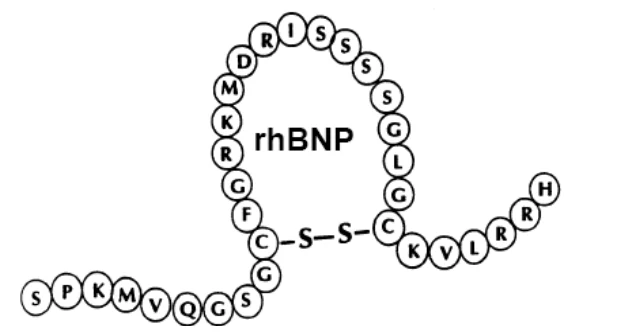
Nesiritide is a recombinant version of the recombinant human B-type natriuretic peptide (rhBNP) and has the same 32-amino acid sequence as the endogenous peptide, which is produced by the ventricular myocardium. A disulfide bridge connects the cysteines at positions 10 and 26 forming a ring of 17-amino acids with amino and carboxyl terminal extensions of 9 and 6 amino acids, respectively.
Physicochemical
properties:
Nesiritide is a white to off-white powder. Nesiritide is soluble at 52 mg per milliliter of water. The pH of a 4.0 mg/mL solution of nesiritide in water was found to be 5.1. The pH specification of nesiritide is 4.5 to 7.0. Based on the theoretical calculation, the pI of nesiritide is greater than 9.5.
Product Characteristics
NATRECOR® (nesiritide) is a sterile, purified preparation of a new drug class, human B-type natriuretic peptide (hBNP), and is manufactured from E. coli using recombinant DNA technology. NATRECOR® is formulated as the citrate salt of rhBNP and is provided in a sterile, single-use vial. Each 1.5 mg vial contains a white to off-white lyophilized powder for intravenous (IV) administration after reconstitution.
CLINICAL TRIALS
Study demographics and trial design
NATRECOR® has been studied in over 10 clinical trials including more than 900 patients with CHF (NYHA class II-III 61%, NYHA class IV 36%). Among these studies, there were five randomized, multicentre, placebo- or active-controlled studies (comparative agents included nitroglycerin, dobutamine, milrinone, nitroprusside, or dopamine) in which 772 patients with decompensated CHF received continuous infusions of NATRECOR® at doses ranging from 0.01 to 0.03 μg/kg/min. Of these patients, the majority (n = 541, 70%) received the NATRECOR® infusion for at least 24 hours; 371 (48%) received NATRECOR® for 24-48 hours, and 170 (22%) received NATRECOR® for greater than 48 hours. A summary of the pivotal and other supportive studies is found in Table 2.1.
NNNOOOCCC///ccc
Table 2.1 Summary of clinical trials for registration in acute decompensated heart failure
| Study # | Trial design | Dosage, route of administration and duration | Primary Endpoint | Total Number of Treated Patients |
| Pivotal Long Infusion Studies | ||||
| 311 | Double-Blind Placebo | Bolus: 0.25, 0.5, 1 μg/kg Followed by long infusion: 0.015, 0.03, 0.06 | Change in PCWP from baseline 3 hours after start of study drug (dose-response objective) Change in PCWP from baseline at approximately 24 hours after start of study drug (24 hour analysis) | 103 |
| 325 | Double-Blind Placebo | Bolus: 0.3, 0.6 μg/kg Followed by long infusion: 0.015, 0.03 μg/kg/min | Change in PCWP from baseline to 6 hours | 127 |
339 VMAC | Double-Blind Placebo Nitroglycerin | Bolus: 2.0 μg/kg Followed by long infusion: 0.01* μg/kg/min Nitroglycerin dose titrated at the physician’s discretion | Change from baseline in PCWP and change from baseline in dyspnea 3 hours after start of study drug | 489 |
| Other Supportive Long Infusion Studies | ||||
| 326 | Open Standard Care | Bolus: 0.3, 0.6 μg/kg Followed by long infusion: 0.015, 0.03 μg/kg/min | N/A | 305 |
329 PRECEDENT | Open (blinded endpoint) Dobutamine | Infusion: 0.015, 0.03 μg/kg/min Dobutamine at a minimum dose of 5 μg/kg/min | Average heart rate Average hourly premature ventricular beats Average hourly repetitive beats (all expressed as a change from baseline, as measured by Holter monitoring) | 246 |
* One arm in VMAC could have the NATRECOR® infusion dose increased to a maximum of 0.03 μg/kg/min
In controlled trials, NATRECOR® has been used alone or in conjunction with other standard therapies, including diuretics (79%), digoxin (62%), oral ACE inhibitors (55%), anticoagulants (38%), oral nitrates (32%), statins (18%), class III antiarrhythmic agents (16%), beta-blockers (15%), dobutamine (15%), calcium channel blockers (11%), angiotensin II receptor antagonists (6%), and dopamine (4%).
In the Long Infusion studies, NATRECOR® has been studied in a broad range of patients, including the elderly (42% > 65 years of age), women (30%), minorities (26% black), and patients with a history of significant morbidities such as hypertension (67%), previous myocardial infarction (50%), diabetes (44%), atrial fibrillation/flutter (34%), nonsustained ventricular tachycardia (25%), ventricular tachycardia/fibrillation (12%), preserved systolic
function (9%), and acute coronary syndromes less than 7 days before the start of NATRECOR® (4%).
The VMAC (Vasodilation in the Management of Acute Congestive Heart Failure) trial was a randomized, double-blind study of 489 patients (246 patients requiring a right heart catheter, 243 patients without a right heart catheter) who required hospitalization for management of shortness of breath at rest due to acutely decompensated CHF.
The VMAC study compared the effects of NATRECOR®, placebo and IV nitroglycerin when added to background therapy (intravenous and oral diuretics; non-IV cardiac medications; dobutamine and dopamine). Patients with acute coronary syndrome, preserved systolic function, arrhythmia, and renal insufficiency were not excluded. NATRECOR® was administered as a 2 μg/kg bolus over approximately 60 seconds, followed by a continuous fixed-dose infusion of 0.01 μg/kg/min. After the 3-hour placebo-controlled period, patients receiving placebo crossed over to double-blinded active therapy with either NATRECOR® or nitroglycerin. A subset of patients in the VMAC trial with central hemodynamic monitoring who were treated with NATRECOR® (62 of 124 patients) were allowed dose increases of NATRECOR® after the first 3 hours of treatment if the PCWP was ≥ 20 mm Hg and the SBP was ≥ 100 mm Hg. Dose increases of a 1 μg/kg bolus followed by an increase of the infusion dose by 0.005 μg/kg/min were allowed every 3 hours, up to a maximum dose of 0.03 μg/kg/min. Overall, 23 patients in this subset had the dose of NATRECOR® increased in the VMAC trial.
Study results
In all efficacy studies (Studies 311, 325, VMAC), PCWP was the primary endpoint and other hemodynamic measures were collected as secondary endpoints. Dyspnea was a co-primary endpoint in the largest study, VMAC, and along with other symptoms of acute decompensated HF, was a secondary endpoint in Study 325. Global Clinical Status (GCS), an overall measure of well-being, was a secondary endpoint in both VMAC and Study 325.
Effects on Symptoms
For the dyspnea analysis in the VMAC study (co-primary endpoint), subject responses were assigned a score from +3 (markedly better) to -3 (markedly worse). Patients receiving NATRECOR® in addition to standard of care reported a greater improvement in their dyspnea at 3 hours than patients receiving placebo in addition to standard of care (p = 0.034), with an improvement in dyspnea reported by 75% of NATRECOR® subjects compared with 63% of placebo subjects.
In a double-blind dose-response study (Study 325), patients receiving NATRECOR® (0.015 μg /kg/min preceded by an IV bolus of 0.3 μg /kg, and 0.03 μg /kg/min preceded by an IV bolus of 0.6 μg /kg) reported greater improvement in dyspnea at 6 hours than patients receiving placebo (p<0.001, with 57% and 53% for the two nesiritide arms and 13% for placebo).
Effects on Hemodynamics
The PCWP, right atrial pressure (RAP), CI, and other hemodynamic variables were monitored in 246 of the patients in the VMAC trial. There was a reduction in mean PCWP within 15 minutes of starting the NATRECOR® infusion, with most of the effect seen at 3 hours being achieved 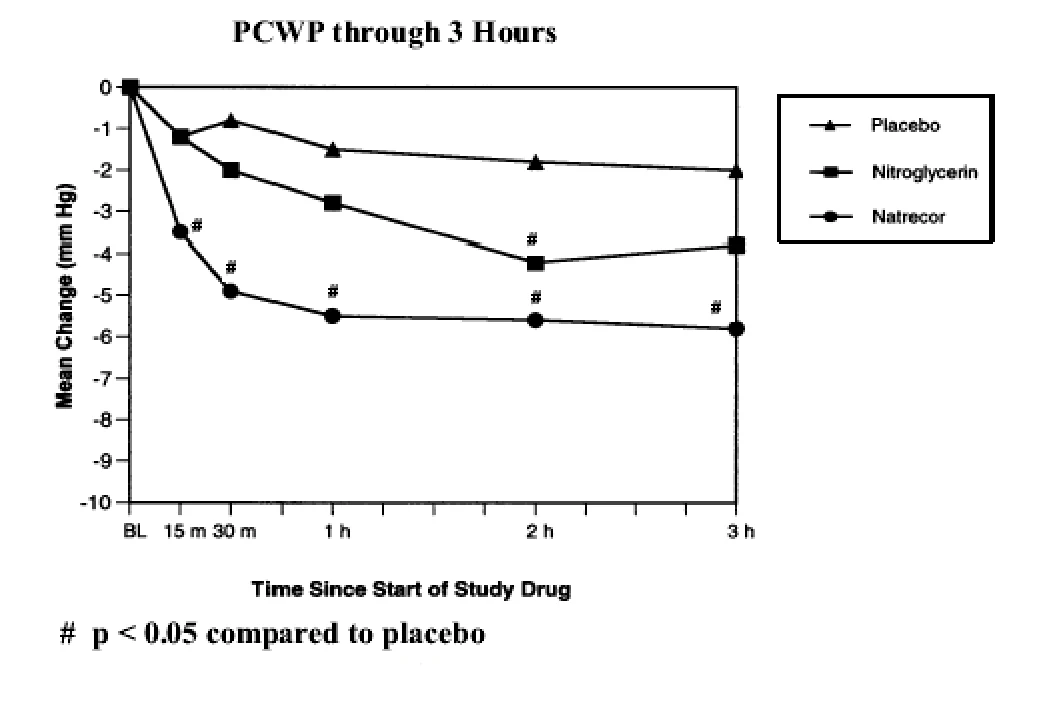
within the first 60 minutes of the infusion. A significant reduction in PCWP was sustained through 24 hours.
The following table and graph summarize the changes in the VMAC trial in PCWP and other measures during the first three hours.
Table 2.2 Mean Hemodynamic change from Baseline
| Effects at 3 Hours | Placebo (n = 62) | Nitroglycerin (n = 60) | NATRECOR® (n = 124) |
| Pulmonary capillary wedge pressure (mm Hg) | -2.0 | -3.8 | -5.8‡ |
| Right atrial pressure (mm Hg) | 0.0 | -2.6 | -3.1‡ |
| Cardiac index (L/min/M2) | 0.0 | 0.2 | 0.1 |
| Mean pulmonary artery pressure (mm Hg) | -1.1 | -2.5 | -5.4‡ |
| Systemic vascular resistance (dynes*sec*cm-5) | -44 | -105 | -144 |
| Systolic blood pressure† (mm Hg) | -2.5 | -5.7‡ | -5.6‡ |
† Based on all treated subjects: placebo n = 142, nitroglycerin n = 143, NATRECOR® n = 204
‡ p < 0.05 compared to placebo
The VMAC study does not constitute an adequate effectiveness comparison with nitroglycerin. In this trial, the nitroglycerin group provides a rough landmark using a familiar therapy and regimen.
In studies 311 and VMAC, hemodynamic parameters were measured after NATRECOR® withdrawal. Following discontinuation of NATRECOR®, PCWP returns to within 10% of baseline within 2 hours, but no rebound increase to levels above baseline state was observed.
There was also no evidence of tachyphylaxis to the hemodynamic effects of NATRECOR® in the clinical trials.
Effect on Urine Output
In the VMAC trial, in which the use of diuretics was not restricted, the mean change in volume status (output minus input) during the first 24 hours in the nitroglycerin and NATRECOR® groups was similar: 1279 ± 1455 mL and 1257 ± 1657 mL, respectively. In VMAC, although there was no overall difference seen in net urine output between groups, concomitant diuretic use was shown to be less for NATRECOR® (85% use) compared with nitroglycerin (94%).
DETAILED PHARMACOLOGY
Nonclinical Pharmacology
A series of nonclinical pharmacology studies were conducted to characterize the cardiovascular, renal and neurohormonal actions of hBNP. In vitro, hBNP is a vasodilator for both arterial and venous tissue. In animals, intravenous hBNP treatment is associated with reduced blood pressure in a manner consistent with effects on both cardiac preload and afterload. Intravenous hBNP treatment in rabbits also induced an increase in urine volume and urinary sodium excretion with no significant effect on urine potassium excretion. There were no findings from in vitro and whole animal studies to suggest an effect of hBNP upon worsening cardiac function, arrhythmias, or electrolyte abnormalities.
Nonclinical Safety Pharmacology
The principal adverse effect of nesiritide is hypotension, which is an extension of the drug’s pharmacological actions. The effect is reversible, recognizable and manageable in the clinical setting. Hypotension induced by nesiritide has been demonstrated in normotensive animals including anesthetized and conscious rabbits, dogs and monkeys. The hypotensive effect of nesiritide is mediated primarily by vasodilation and possibly reducing vascular fluid volume.
Nonclinical Pharmacokinetics
Absorption
- Following intravenous bolus dosing in the rabbit and dog, and the termination of an intravenous infusion in the rabbit and monkey, elimination of nesiritide occurred in a biexponential fashion with a short terminal half-life (12 to 33 min across species) and a moderate plasma clearance (15 to 26 mL/min/kg). This is consistent with the relatively short duration of biological effects observed after bolus dosing or the discontinuation of an infusion.
- The volume of distribution at steady-state in the rabbit, dog and monkey was low, typically less than total body water (<0.7 L/kg), indicating that nesiritide remained largely within the blood compartment.
- On continuous intravenous infusion of nesiritide in the rabbit and monkey, steady-state plasma concentrations were rapidly achieved and were generally proportional to dose.
- The pharmacokinetic parameters for recombinant and synthetic nesiritide following intravenous bolus dosing and continuous infusion in the rabbit were comparable.
Distribution
- Following intravenous bolus administration of [14C]-nesiritide to rabbits, the radioactivity was widely distributed with the highest concentrations (based on dose-normalized values) found in the kidneys, liver, lungs and adrenals. When expressed as a percentage of dose administered, other non-discrete tissues such as skeletal muscle also contained notable amounts of radioactivity.
Metabolism
Pharmacological blockade of the natriuretic clearance (NP-C) receptor with the
NP-C receptor-specific agonist C-ANP resulted in a 1.9-fold increase in plasma steady-state concentrations of nesiritide on continuous intravenous infusion, indicating that the NP-C receptor plays a role in the elimination of nesiritide from the plasma compartment.
- Pharmacological inhibition of neutral endopeptidase 24.11 (NEP 24.11) with the peptidase inhibitor phosphoramidon produced a 1.7-fold elevation of plasma steady-state nesiritide concentrations on continuous intravenous infusion, indicating that NEP 24.11 and/or related peptidases play a role in nesiritide metabolism. Degradation of nesiritide by NEP 24.11 in vitro was consistent with this hypothesis.
- Nesiritide was not degraded by ACE in vitro, nor were the pharmacokinetics of intravenously administered nesiritide altered by co-administration of the ACE inhibitor captopril. ACE does not therefore appear to be involved in nesiritide metabolism.
Excretion
- Rabbits subjected to complete restriction of kidney blood flow showed a 1.9-fold increase in plasma steady-state concentrations of nesiritide on continuous intravenous infusion and a 50% reduction in plasma clearance following intravenous bolus dosing, confirming a role for the kidney in the removal of nesiritide from the plasma compartment. This is consistent with the findings of a tissue distribution study, where approximately 5% of the radioactivity from an intravenous bolus dose of [14C]-nesiritide was recovered in the urine within 2 hours of dosing.
Pharmacokinetic Drug Interactions
- Heparin and captopril did not alter the pharmacokinetics of intravenously administered nesiritide in the rabbit and dog, respectively, at concentrations relevant to or substantially higher than those in the clinic (120 units/kg/hour and 0.25 mg/kg/hour, respectively).
Clinical Pharmacology
Pharmacodynamics
Bolus IV doses of 0.3-20 µg/kg and IV infusions of 0.003-0.1 µg/kg/min demonstrated dose-dependent reductions in PCWP and SVR accompanied by an increase in cardiac index. Reductions in SBP, without an associated increase in HR, were also seen with the higher doses of nesiritide.
The hemodynamic effects of nesiritide following bolus administration were transient in nature. Reductions in PCWP post administration were detectable up to approximately 4h but any effect on other hemodynamic variables did not appear to last longer than 2-3h. The inability of the
bolus dose to sustain hemodynamic effects of nesiritide beyond 4h was taken to indicate that intermittent bolus dosing would not provide an optimal dosing regimen. When nesiritide was administered as an infusion, the apparent clinically beneficial hemodynamic effects were maintained during the course of the infusion. On stopping, the time course of the loss of pharmacodynamic effect was similar to that following bolus administration as the hemodynamic parameters returned to baseline values. There was no evidence of adaptive tolerance following repeat bolus dosing or during infusion. The dosing regimen was refined to include the use of a small bolus dose before the infusion to reduce the time to steady-state pharmacokinetics.
Overall, the dose-ranging clinical pharmacology studies indicate that treatment via infusion at a rate of 0.01-0.03 μg/kg/min offers more advantageous and longer lasting (during infusion) hemodynamic effects of bolus dosing. The efficacy of this dose range was confirmed in Study 311. Pharmacodynamic modelling predicted that a 2 µg/kg bolus dose followed by a 0.01 µg/kg/min infusion would provide an optimal hemodynamic response. The efficacy of this dosing regimen was confirmed in the VMAC study.
Pharmacokinetics
The concentration versus time profile of hBNP after IV bolus dosing of nesiritide was best described with a two-compartment open model. Approximately two-thirds of the area under the curve was associated with the longer terminal phase of elimination. The arithmetic mean of the terminal elimination half-life (t½β) of hBNP was approximately 18 minutes and that of initial elimination phase (t½α) was approximately 2 minutes.
Mean values for volume of the central compartment (Vc) and the mean steady-state volume of distribution (Vss) were approximately 0.073 (range 0.034 to 0.59) L/kg and 0.19 (range 0.005 to 0.177) L/kg, respectively. The estimate of Vc was just less than twice plasma volume and the estimate of Vss was approximately the same as that of extracellular water. Estimates of volume of distribution did not differ significantly among dose groups, suggesting that volume of distribution is not dose dependent.
Mean estimates of plasma clearance of hBNP were approximately 9.2 (range 2.4 to 44.6) mL/min/kg. Clearance was found to vary proportionally with body weight, supporting the administration of weight-adjusted dosing of nesiritide. Clearance is not influenced significantly by age, gender, race/ethnicity, baseline endogenous hBNP concentration, severity of CHF (as indicated by baseline PCWP, baseline CI, or NYHA classification), or concomitant administration of an ACE inhibitor. Although the kidney likely plays some role in nesiritide clearance, clinical data suggest that dose adjustment is not required in the setting of renal insufficiency, presumably because clearance via other mechanisms is occurring.
Preclinical studies suggest that hBNP is likely to be cleared by several pathways including binding to the NP-C receptor, hydrolysis by neutral endopeptidase (NEP) and glomerular filtration.
TOXICOLOGY
Single-Dose Toxicity Studies
- In single-dose intravenous bolus studies, synthetic nesiritide was well tolerated and considered essentially nontoxic at doses up to 500 µg/kg in the Sprague-Dawley rat and 3,000 µg/kg in the cynomolgus monkey. There was no evidence of toxicity in either study and therefore the maximum tolerated dose was not determined. However, these studies did demonstrate a 68- and 11-fold margin of safety over the maximum potential daily clinical dose of 44.2 µg/kg, in the rat and monkey respectively.
Repeat-Dose Toxicity Studies
In a 2-week continuous intravenous infusion study, rats received doses of 5, 10 or
20 µg/kg/min synthetic nesiritide. The principal findings were alterations in serum chemistry, hematology and urinalysis parameters at dose rates of ≥5 µg/kg/min. The most pronounced changes were decreases in serum sodium and chloride, decreased urine volume and increased urine specific gravity. All changes were reversible, mild in nature and/or attributable to the pharmacological activity of nesiritide.
A reduction in absolute and relative heart weight was noted in male and female rats at
≥5 µg/kg/min. Absolute and relative kidney weights were also increased in females at ≥5 µg/kg/min and males at 20 µg/kg/min. These effects were reversible and not associated with any histopathological alterations. They are thought to be a consequence of homeostatic adaptation to the pharmacological effects of nesiritide.
- Following 2 weeks of continuous intravenous administration of either recombinant or synthetic nesiritide at doses of 0.3 to 3.0 µg/kg/min in 2 separate cynomolgus monkey studies, findings were limited to a reduction in blood pressure and a reduction in absolute and relative heart weight, which was more significant in males, at ≥0.3 µg/kg/min. Transient changes in urinalysis parameters (reduced total sodium, and reduced sodium and chloride excretion) were noted in the bridging study only. The blood pressure effects were reversible and represent an expected pharmacological response to the vasodilatory effects of nesiritide. The reduction in heart weight was reversible and is thought to reflect an indirect response of the heart to prolonged hypotension.
- There were no biologically meaningful differences in the response to synthetic and recombinant nesiritide in the monkey, indicating that the two materials are pharmacologically comparable.
- A no-effect level was not defined in either the rat or cynomolgus monkey continuous infusion studies. However, since all of these findings are considered to be either a consequence of the primary pharmacology of nesiritide or a homeostatic adaptation to these pharmacological effects, and reversible, the no observed adverse effect level (NOAEL) was considered to be above the maximum dose administered, which in the rat was 28.8 mg/kg/day and in the cynomolgus monkey was 4.32 mg/kg/day.
- The margin of safety for nesiritide defined in these studies (based on the levels of exposure in the cynomolgus monkey) was approximately 30-fold.
Genotoxicity
Nesiritide showed no mutagenic potential in the Ames test at concentrations up to
1790 µg/mL.
Local Tolerance
- Results of in vitro studies to assess the hemolytic potential and compatibility of synthetic and recombinant nesiritide indicated that neither material caused hemolysis of monkey and human erythrocytes or exhibited incompatibility with monkey or human serum and plasma.
- Gross and histopathological evaluation of the bolus intravenous injection sites of rabbits treated with up to 200 μg/kg nesiritide, daily for 5 days, showed that the formulation was well tolerated.
Antigenicity
Rabbits treated with synthetic or recombinant nesiritide, once a month for 3 months
(0.3 µg/kg/min for 8 hours), produced no measurable antibody response following treatment with either form of the peptide. Monkeys receiving doses of 0.3 to 3 μg/kg/min recombinant nesiritide or 1 µg/kg/min synthetic nesiritide by continuous intravenous infusion for 2 weeks also produced no antibody response.
Nonclinical Toxicology Studies with nesiritide
Table 2.3 Summary of Nonclinical Toxicology Studies
| Type of study | Species/Strain | Route | Dose Regimen | Observations |
| Acute toxicity | Rat/Crl:CD®BR | IV | 0, 100, 300, 1000, 3000 μg/kg | A single bolus intravenous dose up to 3000 μg/kg produced no evidence of toxicity. |
| Monkey | IV | 0, 60, 180, 500 μg/kg | A single bolus intravenous dose up to 500 μg/kg produced no evidence of toxicity. | |
| 2-week toxicity | Rat/Crl:CD®BR | IV | 0, 5, 10, 20 μg/kg/min | Continuous infusion at doses up to 20 μg/kg/min produced no meaningful effects on clinical observations. Findings were limited primarily to clinical pathology changes (observed at all dose levels) that were attributable to the known pharmacological activity of the drug. Lower heart rates (doses ≥ 10 μg/kg/min [females] and 20 μg/kg/min [females]) and increased kidney weights (females; 20 μg/kg/min) were noted. All changes were reversible following a 2-week, treatment-free recovery period. |
| Monkey | IV | 0, 0.3, 1.0, 3.0 μg/kg/min | Continuous infusion of nesiritide for 2 weeks at doses up to 3 μg/kg/min produced no evidence of toxicity as shown by a lack of effect on clinical observations, clinical pathology or histopathology. Animals given nesiritide tended to have lower blood pressures and heart weights (males only); these effects were reversible upon cessation of treatment. | |
Local Tolerance | Rabbit/NZW | IV | 0, 20, 200 μg/kg/h (1 hour infusion) | Nesiritide infused at doses of up to 200 μg/kg/h for 1 hour produced no evidence of local irritation after 1 or 5 consecutive days of dosing. |
Antibody Determination | Rabbit/NZW | IV | 0.3 μg/kg/min one dose on days 1, 28, and 56 (8 hour infusion) | There was no measurable nesiritide antibody response in any of the serum samples collected from rabbits prior to or following treatment with nesiritide. |
In vitro Hemolysis and Blood Compatibility | Human and Monkey Blood | NA | 0.5 mg/mL | No hemolysis or incompatibility with 0.5 mg/mL of nesiritide mixed with equal volumes of cynomolgus monkey and human blood, serum or plasma. |
| Ames Test | In vitro | NA | Up to 1790 μg/mL | No detectable mutagenic activity was associated with nesiritide in any of the tester strains, either in the absence or presence of microsomal activation. |
Carcinogenesis, Mutagenesis, Impairment of Fertility
Long-term studies in animals have not been performed to evaluate the carcinogenic potential or the effect on fertility of nesiritide. Nesiritide did not increase the frequency of mutations when used in an in vitro bacterial cell assay (Ames test). No other genotoxicity studies were performed.
Pregnancy
It is also not known whether nesiritide can cause fetal harm when administered to pregnant women or can affect reproductive capacity. A developmental reproductive toxicology study was conducted in pregnant rabbits using doses up to 1440 mcg/kg/day given by constant infusion for 13 days. At this level of exposure (based on AUC, approximately 70x human exposure at the recommended dose) no adverse effects on live births or fetal development were observed. NATRECOR® should be used during pregnancy only if the potential benefit to the mother outweighs the theoretical risk to the fetus.
REFERENCES
- 1. Elkayam U, Tasissa G, Binanay C, et al. Use and impact of inotropes and vasodilator therapy in hospitalized patients with severe heart failure. Am. Heart J. 2007;153:98-104.
- 2.
O'Connor CM, Gattis WA, Uretsky BF et al. Continuous intravenous dobutamine is associated with an increased risk of death in patients with advanced heart failure: insights from the Flolan International Randomized Survival Trial (FIRST). Am Heart J. 1999;138:78-
86.
- 3. Lee DS, Austin PC, Rouleau JL et al. Predicting mortality among patients hospitalized for heart failure: derivation and validation of a clinical model. JAMA. 2003;290:2581-2587.
- 4. Fonarow GC, Adams KF, Jr., Abraham WT et al. Risk stratification for in-hospital mortality in acutely decompensated heart failure: classification and regression tree analysis. JAMA. 2005;293:572-580.
- 5. Schoenfeld JR, Sehl P, Quan C, et al. Agonist selectivity for three species of natriuretic peptide receptor-A. Mol Pharmacol, 1995; 47(1):172-180.
- 6.
Colucci WS. Nesiritide for the treatment of decompensated heart failure. J Cardiac Failure.
2001; 7:92-100.
- 7. Grantham JA, Borgeson DD, and Burnett Jr JC. BNP: pathophysiological and potential therapeutic roles in acute congestive heart failure. Am J Physiol, 1997; 272:R1077-1083.
- 8.
Colucci WS, Elkayam U, Horton DP, Abraham WT, Bourge RC, Johnson AD, Wagoner LE,
Givertz MM, Liang CS, Neibaur M, Haught WH, LeJemtel TH. Intravenous nesiritide, a natriuretic peptide, in the treatment of decompensated congestive heart failure. Nesiritide Study Group. N Engl J Med, 2000; 343:246-253.
- 9. Clavell AL, Stingo AJ, Aarhus LL et al. Biological actions of brain natriuretic peptide in thoracic inferior vena caval constriction. Am J Physiol, 1993; 265: 1416-1422.
- 10. Seymour AA, Asaad MM, Abboa-Offei BE, et al. Potentiation of brain natriuretic peptides by SQ 28,603, an inhibitor of neutral endopeptidase 3.4.24.11, in monkeys and rats. J Pharmacol Exp Ther, 1992; 262(1):60-70.
- 11.
Pooled Mortality Analysis from Studies 704.311, 704.325, 704.326, 704.329, 704.339,
704.341, and 704.348", October 2006
- 12. Publication Committee for the VMAC Investigators. Intravenous nesiritide vs nitroglycerin for treatment of decompensated congestive heart failure: a randomized controlled trial. JAMA, 2002; 287:1531-40.
- 13. Burger AJ, Horton DP, LeJemtel T, et al. Effect of nesiritide (B-type natriuretic peptide) and dobutamine on ventricular arrhythmias in the treatment of patients with acutely decompensated congestive heart failure: the PRECEDENT study. Am Heart J, 2002; 144:1102-8.