


Product Monograph - Verquvo
RECENT MAJOR LABEL CHANGES
| None. |
TABLE OF CONTENTS
Sections or subsections that are not applicable at the time of authorization are not listed.
RECENT MAJOR LABEL CHANGES .................................................................................... 2
TABLE OF CONTENTS .......................................................................................................... 2
PART I: HEALTH PROFESSIONAL INFORMATION ............................................................. 4
1 INDICATIONS ....................................................................................................................... 4
1.1 Pediatrics ...................................................................................................................... 4
1.2 Geriatrics ....................................................................................................................... 4
2 CONTRAINDICATIONS ....................................................................................................... 4
3 SERIOUS WARNINGS AND PRECAUTIONS BOX ............................................................ 4
4 DOSAGE AND ADMINISTRATION ..................................................................................... 4
4.1 Dosing Considerations .................................................................................................. 4
4.2 Recommended Dose and Dosage Adjustment ............................................................. 5
4.4 Administration ............................................................................................................... 5
4.5 Missed Dose.................................................................................................................. 6
5 OVERDOSAGE .................................................................................................................... 6
6 DOSAGE FORMS, STRENGTHS, COMPOSITION AND PACKAGING ............................. 6
7 WARNINGS AND PRECAUTIONS ...................................................................................... 7
7.1 Special Populations ....................................................................................................... 7
7.1.1 Pregnant Women ....................................................................................................... 7
7.1.2 Breast-feeding ............................................................................................................ 8
7.1.3 Pediatrics.................................................................................................................... 8
7.1.4 Geriatrics .................................................................................................................... 8
8 ADVERSE REACTIONS ...................................................................................................... 8
8.1 Adverse Reaction Overview .......................................................................................... 8
8.2 Clinical Trial Adverse Reactions .................................................................................... 9
8.3 Less Common Clinical Trial Adverse Reactions ......................................................... 10
8.4 Abnormal Laboratory Findings: Hematologic, Clinical Chemistry and Other Quantitative Data ................................................................................................. 10
8.5 Post-Market Adverse Reactions .................................................................................. 11
9 DRUG INTERACTIONS ..................................................................................................... 11
9.1 Serious Drug Interactions ............................................................................................ 11
9.2 Drug Interactions Overview ......................................................................................... 11
9.3 Drug-Behavioural Interactions ..................................................................................... 11
9.4 Drug-Drug Interactions ................................................................................................ 11
9.5 Drug-Food Interactions................................................................................................ 16
9.6 Drug-Herb Interactions ................................................................................................ 16
9.7 Drug-Laboratory Test Interactions ............................................................................... 16
10 CLINICAL PHARMACOLOGY ......................................................................................... 16
10.1 Mechanism of Action ................................................................................................. 16
10.2 Pharmacodynamics ................................................................................................... 16
10.3 Pharmacokinetics ...................................................................................................... 17
11 STORAGE, STABILITY AND DISPOSAL ....................................................................... 19
12 SPECIAL HANDLING INSTRUCTIONS .......................................................................... 19
PART II: SCIENTIFIC INFORMATION .................................................................................. 20
13 PHARMACEUTICAL INFORMATION .............................................................................. 20
14 CLINICAL TRIALS ........................................................................................................... 20
14.1 Clinical Trials by Indication ........................................................................................ 20
16 NON-CLINICAL TOXICOLOGY ....................................................................................... 25
PATIENT MEDICATION INFORMATION ............................................................................. 27
PART I: HEALTH PROFESSIONAL INFORMATION
1 INDICATIONS
VERQUVO (vericiguat) is indicated for the treatment of symptomatic chronic heart failure in adult patients with reduced ejection fraction who are stabilized after a recent heart failure decompensation event requiring hospitalization and/or intravenous diuretic therapy. VERQUVO should be used in combination with standard of care therapy for heart failure.
VERQUVO should be initiated under the supervision of a healthcare professional who is experienced in the management of heart failure (see 4.1 Dosing Considerations).
1.1 Pediatrics
Pediatrics (< 18 years of age): No data are available to Health Canada; therefore, Health Canada has not authorized an indication for pediatric use.
1.2 Geriatrics
Geriatrics (≥ 65 years of age): In VICTORIA, a total of 1,596 (63%) patients treated with VERQUVO were 65 years and older and 783 (31%) patients treated with VERQUVO were 75 years and older. No overall differences in safety or efficacy of VERQUVO were observed between patients aged 65 years and older compared to younger patients, but greater sensitivity of some older individuals cannot be ruled out.
2 CONTRAINDICATIONS
VERQUVO is contraindicated in patients:
- with concomitant use of other soluble guanylate cyclase (sGC) stimulators, such as riociguat (see 9.1 Serious Drug Interactions).
- who are hypersensitive to this drug or to any ingredient in the formulation, including any non-medicinal ingredient, or component of the container. For a complete listing, see 6 DOSAGE FORMS, STRENGTHS, COMPOSITION AND PACKAGING.
3 SERIOUS WARNINGS AND PRECAUTIONS BOX
Not applicable.
4 DOSAGE AND ADMINISTRATION
4.1 Dosing Considerations
- VERQUVO should be initiated under the supervision of a healthcare professional who is experienced in the management of heart failure (HF).
- Before starting VERQUVO, patients must be clinically stabilized and managed with standard of care HF therapies after their HF decompensation event (see 14 CLINICAL TRIALS). Particularly, care should be taken to optimize volume status and diuretic therapy, and provide a sufficient stabilization period in order to maximize benefit from VERQUVO (see 7 WARNINGS AND PRECAUTIONS, General).
- Treatment should not be initiated in patients with systolic blood pressure <100 mmHg (see 7 WARNINGS AND PRECAUTIONS, Cardiovascular).
- Careful consideration should be given whether to initiate VERQUVO in patients with markedly elevated NT-proBNP levels (see 7 WARNINGS AND PRECAUTIONS, General).
- Before starting VERQUVO, pregnancy should be ruled out and breastfeeding should be discontinued (see 7.1.1 Pregnant Women and 7.1.2 Breast-feeding).
4.2 Recommended Dose and Dosage Adjustment
Adults
- The recommended starting dose of VERQUVO is 2.5 mg once daily, taken with food (see 10.3 Pharmacokinetics, Absorption).
- Double the dose of VERQUVO approximately every 2 weeks to reach the target maintenance dose of 10 mg once daily, as tolerated by the patient.
If patients experience tolerability issues (e.g., symptomatic hypotension or systolic blood pressure less than 90 mmHg), temporary down-titration or discontinuation of VERQUVO is recommended (see 7 WARNINGS AND PRECAUTIONS, Cardiovascular):
- If currently on 5 or 10 mg decrease dose;
- If currently on 2.5 mg interrupt treatment.
- The maximum recommended dose of VERQUVO is 10 mg once daily.
Pediatric Patients
Health Canada has not authorized an indication for pediatric use (see 1.1 Pediatrics).
Geriatric Patients
No dosage adjustment of VERQUVO is required in geriatric patients (see 7.1.4 Geriatrics and 10.3 Pharmacokinetics, Special Populations and Conditions).
Renal Impairment
No dose adjustment of VERQUVO is required in patients with estimated glomerular filtration rate (eGFR) ≥ 15 mL/min/1.73m2 (without dialysis). VERQUVO has not been studied in patients with eGFR < 15 mL/min/1.73m2 at treatment initiation or on dialysis and is therefore not recommended in these patients (see 7.1.5 Renal impairment and 10.3 Pharmacokinetics - Special Populations and Conditions, Renal Insufficiency).
Hepatic Impairment
No dose adjustment of VERQUVO is required in patients with mild or moderate hepatic impairment. VERQUVO has not been studied in patients with severe hepatic impairment and is therefore not recommended in these patients (see 7.1.6 Hepatic impairment and 10.3 Pharmacokinetics - Special Populations and Conditions, Hepatic Insufficiency).
4.4 Administration
For oral use, one tablet per day, at approximately the same time each day. VERQUVO should be taken with food.
For patients who are unable to swallow whole tablets, VERQUVO may be crushed and mixed with water immediately before administration (see 10.3 Pharmacokinetics, Absorption).
Information about excipients
Lactose
Patients with rare hereditary problems of galactose intolerance, total lactase deficiency or glucose-galactose malabsorption should not take VERQUVO.
Sodium
VERQUVO contains less than 25 mg of sodium per tablet, which is considered low sodium and suitable for restricted sodium diets.
4.5 Missed Dose
If a dose is missed, it should be taken as soon as the patient remembers on the same day of the missed dose. Patients should not take two doses of VERQUVO on the same day.
5 OVERDOSAGE
Limited data are available with regard to overdosage in patients treated with VERQUVO. In VICTORIA, doses up to 10 mg have been studied. In the event of an overdose, hypotension may result. Symptomatic treatment should be provided. VERQUVO is unlikely to be removed by hemodialysis because of high protein binding.
| For management of a suspected drug overdose, contact your regional poison control centre. |
6 DOSAGE FORMS, STRENGTHS, COMPOSITION AND PACKAGING
Table 1: Dosage Forms, Strengths, Composition and Packaging
VERQUVO (vericiguat) tablets are available in the strengths listed below:
VERQUVO 2.5 mg film-coated tablets
Round, biconvex, white film-coated tablet with a diameter of 7 mm, debossed with “2.5” on one side and “VC” on the other side.
VERQUVO 5 mg film-coated tablets
Round, biconvex, brown-red film-coated tablet with a diameter of 7 mm, debossed with “5” on one side and “VC” on the other side.
VERQUVO 10 mg film-coated tablets
Round, biconvex, yellow-orange film-coated tablet with a diameter of 9 mm, debossed with “10” on one side and “VC” on the other side.
VERQUVO is available in blisters of 14, 28, or 98 tablets.
| Route of Administration | Dosage Form / Strength/Composition | Non-medicinal Ingredients |
|---|---|---|
| oral | tablet: 2.5 mg, 5 mg, 10 mg | Tablets: cellulose microcrystalline, croscarmellose sodium, hypromellose, lactose monohydrate, magnesium stearate, and sodium laurilsulfate. Film coating: hypromellose, talc, and titanium dioxide (E171). The film-coat for the 5 mg tablet also contains ferric oxide red (E172). The film-coat for the 10 mg tablet also contains ferric oxide yellow (E172). |
7 WARNINGS AND PRECAUTIONS
General
Before starting treatment with VERQUVO, it should be ensured that patients are adequately stabilized (see 4.1 Dosing Considerations), particularly patients with markedly elevated NT-proBNP levels.
Among VICTORIA trial patients who were hospitalized as part of their HF worsening index event, a greater reduction of cardiovascular death risk was associated with longer stabilization periods between index event and start of VERQUVO therapy.
Patients with markedly elevated NT-proBNP
Predefined subgroup analyzes of the VICTORIA clinical trial suggest that treatment with VERQUVO increases cardiovascular mortality and the risk of hospitalization for heart failure if initiated in patients with markedly elevated NT-proBNP levels (see 14 CLINICAL TRIALS).
Cardiovascular
Symptomatic Hypotension
VERQUVO may cause symptomatic hypotension. In the VICTORIA clinical trial, cases of symptomatic hypotension have been reported at a higher frequency in patients receiving VERQUVO when compared to patients treated with placebo (see 8.2 Clinical Trial Adverse Reactions). VERQUVO has not been studied in patients with systolic blood pressure (SBP) less than 100 mmHg or symptomatic hypotension at treatment initiation.
Consider the potential for symptomatic hypotension in patients with hypovolemia, severe left ventricular outflow obstruction, resting hypotension, autonomic dysfunction, history of hypotension, or concomitant treatment with antihypertensives or organic nitrates (see 9.4 Drug-Drug Interactions). If symptomatic hypotension occurs or SBP less than 90 mmHg, temporary reduction in dose or interruption of VERQUVO should be considered until hypotension is resolved.
There is limited experience with concomitant use of VERQUVO and long-acting nitrates in patients with coronary artery disease. Patients requiring treatment with long-acting nitrates were excluded from the VICTORIA clinical trial. Concomitant use of VERQUVO and phosphodiesterase-5 (PDE-5) inhibitors, such as sildenafil, has not been studied in patients with heart failure and is therefore not recommended due to the potential increased risk for symptomatic hypotension (see 9.4 Drug-Drug Interactions).
Driving and Operating Machinery
VERQUVO has minor influence on the ability to drive or use machines. When driving vehicles or operating machines it should be taken into account that dizziness may occur occasionally.
7.1 Special Populations
7.1.1 Pregnant Women
There are no data from the use of VERQUVO in pregnant women. Pregnant women were excluded from the phase 3 clinical trial. Animal studies have shown exaggerated pharmacodynamic-mediated maternal and embryo-fetal toxicity at doses < 10 times the maximum human recommended dose (MHRD) of 10 mg. In rabbits, an increase in late spontaneous abortion was observed at maternally toxic doses ≥ 3.7 times human exposure at MHRD (based on AUC). In the pre- and post-natal development study in rats, maternally administered vericiguat caused a reduction in pup body weight at birth at maternally toxic doses
≥ 7.3 times MHRD, in terms of body surface area (see 16 NON-CLINICAL TOXICOLOGY, Reproductive and Developmental Toxicology).
Given the potential risks for the mother and the fetus due to mechanism-based pharmacodynamic effects, VERQUVO is not recommended during pregnancy and in women of childbearing potential not using contraception.
7.1.2 Breast-feeding
It is unknown if VERQUVO is excreted in human milk. Vericiguat is present in the milk of lactating rats and transfers to lactating pups. In the pre- and post-natal development study in rats, pups that were exposed during lactation to maternally administered vericiguat (at doses ≥ 7.3 times MHRD in terms of body surface area) had reduced body weight and consequently slight delayed sexual maturation (see 16 NON-CLINICAL TOXICOLOGY, Reproductive and Developmental Toxicology).
Given the potential risks to the breastfed infant, VERQUVO is not recommended during breast-feeding. A decision must be made whether to discontinue breast-feeding or to discontinue/abstain from VERQUVO therapy taking into account the benefit of breast-feeding for the child and the benefit of therapy for the woman.
7.1.3 Pediatrics
No data are available to Health Canada; therefore, Health Canada has not authorized an indication for pediatric use (see 1.1 Pediatrics).
7.1.4 Geriatrics
No dosage adjustment of VERQUVO is required in geriatric patients. In VICTORIA, a total of 1,596 (63%) patients treated with VERQUVO were 65 years and older and 783 (31%) patients treated with VERQUVO were 75 years and older. No overall differences in safety or efficacy of VERQUVO were observed between patients aged 65 years and older compared to younger patients, but greater sensitivity of some older individuals cannot be ruled out (see 10.3 Pharmacokinetics and 14.1 Clinical Trials by Indication).
7.1.5 Renal impairment
Patients with eGFR < 15 mL/min/1.73m2 at treatment initiation or on dialysis have not been studied, therefore treatment with VERQUVO is not recommended in these patients (see 4.2 Recommended Dose and Dosage Adjustment, Renal Impairment and 10.3 Pharmacokinetics - Special Populations and Conditions, Renal Insufficiency).
7.1.6 Hepatic impairment
Patients with severe hepatic impairment have not been studied, therefore treatment with VERQUVO is not recommended in these patients (see 4.2 Recommended Dose and Dosage Adjustment, Hepatic Impairment and 10.3 Pharmacokinetics - Special Populations and Conditions, Hepatic Insufficiency).
8 ADVERSE REACTIONS
8.1 Adverse Reaction Overview
The safety of VERQUVO in adult patients with symptomatic chronic heart failure and ejection fraction less than 45% following a worsening heart failure event was evaluated in one pivotal phase 3 study (VICTORIA).
Overall, serious adverse events occurred in 32.8% of patients receiving VERQUVO and in 34.8% of patients receiving placebo in the VICTORIA trial. The most frequently reported adverse reaction leading to discontinuation of treatment was hypotension (see 8.2 Clinical Trial Adverse Reactions).
The most commonly reported adverse reactions (≥ 5% of patients receiving VERQUVO and higher frequency in VERQUVO) were: hypotension (16.4% of patients receiving VERQUVO vs.14.9% of patients receiving placebo), anemia (9.6% of patients receiving VERQUVO vs. 7.4% of patients receiving placebo) and dizziness (6.7% of patients receiving VERQUVO vs. 6.0% of patients receiving placebo).
8.2 Clinical Trial Adverse Reactions
Clinical trials are conducted under very specific conditions. The adverse reaction rates observed in the clinical trials; therefore, may not reflect the rates observed in practice and should not be compared to the rates in the clinical trials of another drug. Adverse reaction information from clinical trials may be useful in identifying and approximating rates of adverse drug reactions in real-world use.
The safety population of the VICTORIA study, a phase 3 randomized, placebo-controlled, double-blind, clinical trial in adult patients with symptomatic chronic heart failure and ejection fraction less than 45% following a worsening heart failure event, included a total of 2,519 patients treated with VERQUVO (up to 10 mg once-daily) and 2,515 patients treated with matching placebo (see 14 CLINICAL TRIALS). The mean duration of VERQUVO exposure was 1 year, and the maximum duration was 2.6 years.
Table 2 lists adverse drug reactions occurring ≥ 1% in patients treated with VERQUVO and greater than placebo in VICTORIA.
Table 2: Adverse Drug Reactions Occurring in ≥ 1% of Patients Treated with VERQUVO and Greater than Placebo in VICTORIA by System Organ Class (SOC)
| Adverse Drug Reaction | VERQUVO N=2519 n (%) | Placebo N=2515 n (%) |
|---|---|---|
| Blood and lymphatic system disorders | ||
| Anemia* | 243 (9.6) | 185 (7.4) |
| Gastrointestinal disorders | ||
| Nausea | 96 (3.8) | 67 (2.7) |
| Dyspepsia | 67 (2.7) | 27 (1.1) |
| Vomiting | 56 (2.2) | 45 (1.8) |
| Gastroesophageal reflux disease | 44 (1.7) | 17 (0.7) |
| Nervous system disorders | ||
| Dizziness | 169 (6.7) | 150 (6.0) |
| Headache | 86 (3.4) | 61 (2.4) |
| Syncope | 101 (4.0) | 88 (3.5) |
| Vascular disorders | ||
| Hypotension† | 412 (16.4) | 375 (14.9) |
- * Includes: anemia, anemia macrocytic, anemia of chronic disease, autoimmune hemolytic anemia, blood loss anemia, hemolytic anemia, hypochromic anemia, iron deficiency anemia, microcytic anemia, nephrogenic anemia, normochromic anemia, normochromic normocytic anemia, normocytic anemia, pancytopenia, pernicious anemia, hematocrit decreased, hemoglobin decreased, and red blood cell count decreased
- † Includes: blood pressure decreased, blood pressure diastolic decreased, blood pressure systolic decreased, hypotension and orthostatic hypotension
Description of Selected Adverse Reactions
Anemia
In the VICTORIA study, anemia events were reported in 9.6% of VERQUVO-treated patients compared with 7.4% of patients receiving placebo, and were considered as a serious adverse event in 1.9% of VERQUVO-treated patients and 1.1% of placebo-treated patients. Events were generally manageable and rarely led to treatment discontinuation. A greater proportion of hematocrit and hemoglobin decrease was observed in patients receiving VERQUVO treatment compared to placebo (Table 3).
Hypotension
In the VICTORIA study, hypotension events were reported in 16.4% of VERQUVO-treated patients compared with 14.9% of patients receiving placebo. This includes also orthostatic hypotension that was reported in 1.3% of patients receiving VERQUVO compared with 1.0% in patients receiving placebo. Symptomatic hypotension was reported in 9.1% of VERQUVO-treated compared with 7.9% of patients receiving placebo, and was considered as a serious adverse event in 1.2% of VERQUVO-treated patients and 1.5% of placebo-treated patients. Event rates were highest during the first 4 months following treatment initiation. In patients receiving VERQUVO, hypotension events were mostly mild or moderate in intensity and generally manageable. Hypotension events led to treatment discontinuation in 1.9% of patients receiving VERQUVO and 1.3% in patients receiving placebo. Events associated with hypotension such as dizziness and syncope were more frequent in patients receiving VERQUVO in comparison to placebo. However, falls and subsequent fractures, showed no difference between the treatment groups.
8.3 Less Common Clinical Trial Adverse Reactions
In the VICTORIA study, adverse events referring to hepatic disorders (regardless of causality) were observed with a frequency of less than 1% and at a higher frequency in the VERQUVO arm compared to placebo.
Hepatic disorders (0.9% VERQUVO vs 0.5% placebo) including hepatic congestion (0.4% VERQUVO vs 0.4% placebo), ischemic hepatitis (0.3% VERQUVO vs 0.2% placebo), and liver injury (0.3% VERQUVO vs 0.1% placebo).
8.4 Abnormal Laboratory Findings: Hematologic, Clinical Chemistry and Other Quantitative Data
Table 3 shows laboratory test abnormalities reported in ≥ 1% of patients treated with VERQUVO.
Table 3: Laboratory Test Abnormalities Reported in ≥ 1% of Patients Treated with VERQUVO and Greater than Placebo in VICTORIA
| Laboratory Test Abnormalities | VERQUVO N=2057 n (%) | Placebo N=2092 n (%) |
|---|---|---|
Hematocrit (%) Decrease by 10 Percentage Points and value < LLN | 81 (3.9) | 46 (2.2) |
Hemoglobin (g/dL) Decrease ≥3.0 g/dL and value < LLN | 103 (5.0) | 66 (3.2) |
LLN = Lower limit of normal
8.5 Post-Market Adverse Reactions
Not applicable.
9 DRUG INTERACTIONS
9.1 Serious Drug Interactions
Serious Drug Interactions VERQUVO is contraindicated in patients:
|
|---|
9.2 Drug Interactions Overview
In Vitro Assessment of Drug Interactions
Vericiguat is a substrate of CYP (CYP1A1, 1A2, 2J2, 3A4 and 3A5) and UGT (UGT1A1 and 1A9) enzymes, P-glycoprotein (P-gp) and breast cancer resistance protein (BCRP) transporters (see 10.3 Pharmacokinetics, Metabolism). The effects of medications that are inhibitors or inducers of these enzymes and transporters were investigated in clinical studies (see 9.4 Drug-Drug Interactions). CYP enzymes play a minimal role in the overall clearance of vericiguat (< 5% of the dose), and thus inhibitors and inducers of CYP enzymes are not expected to have a clinically relevant effect on vericiguat pharmacokinetics. In vitro studies indicate that vericiguat is not a substrate of organic cation transporter (OCT1), or organic anion transporting polypeptides (OATP1B1 and OATP1B3).
In vitro studies indicate that vericiguat and its N-glucuronide are neither inhibitors of major CYP isoforms (CYP1A2, 2B6, 2C8, 2C9, 2C19, 2D6, and 3A4) or UGT isoforms (UGT1A1, 1A4, 1A6, 1A9, 2B4, and 2B7), nor inducers of CYP1A2, 2B6, and 3A4, at clinically relevant concentrations. In addition, vericiguat and its N-glucuronide are not inhibitors of drug transporters, including P-gp, BCRP, BSEP, OATP1B1/1B3, OAT1, OAT3, OCT1, OCT2, MATE1, and MATE2K, at clinically relevant concentrations. Overall, VERQUVO is unlikely to affect the pharmacokinetics of concurrently administered medications that are substrates of these enzymes or transporters.
Potential Pharmacodynamic Interactions
Concomitant use of medications or substances that act on the NO-sGC-cGMP pathway may increase the risk of symptomatic hypotension (see 7 WARNINGS AND PRECAUTIONS, Symptomatic Hypotension and 9.4 Drug-Drug Interactions). Concomitant use of VERQUVO with PDE-5 inhibitors is not recommended in heart failure patients due to limited clinical experience.
9.3 Drug-Behavioural Interactions
Interactions with behaviour have not been established.
9.4 Drug-Drug Interactions
Pharmacokinetic Interactions
Effects of Other Drugs on the Pharmacokinetics of Vericiguat
Co-administration of vericiguat with drugs that increase gastric pH, e.g. omeprazole (proton pump inhibitor) and aluminum/magnesium hydroxide containing antacids, in healthy subjects under fasted conditions decreased vericiguat exposure (AUC) by approximately 30%. However, population pharmacokinetic analysis showed that coadministration of vericiguat with drugs that increase gastric pH did not have a significant effect on vericiguat pharmacokinetics in heart failure patients with reduced ejection fraction (HFrEF) under fed conditions (Table 4).
There is no clinical experience with strong UGT1A9 inhibitors or combined UGT1A1 and UGT1A9 inhibitors, and therefore the effects of these inhibitors on vericiguat pharmacokinetics are unknown. Based on physiologically-based pharmacokinetics (PBPK) simulations, no clinically significant interaction with atazanavir (UGT1A1 inhibitor) is expected. However, as this has not been evaluated in a formal clinical study, caution is advised.
The effects of co-administered drugs on the pharmacokinetics of vericiguat have been assessed in clinical drug-drug interaction studies, population pharmacokinetic modeling, or PBPK simulations (Table 4), and no clinically relevant effect was observed.
The drugs listed in this table are based on either drug interaction case reports or studies, or potential interactions due to the expected magnitude and seriousness of the interaction (i.e., those identified as contraindicated).
Table 4: Effects of Other Drugs on the Pharmacokinetics of Vericiguat
| Co-administered Drug | Regimen of Co-administered Drug | Vericiguat Regimen | Geometric Mean Ratio (90% CI) of Vericiguat PK with/without Co-administered Drug (No Effect=1.00) | Dosing Recommendation | |
|---|---|---|---|---|---|
| AUC | Cmax | ||||
| Drugs Increasing Gastric pH (e.g. Proton Pump Inhibitors, H2-Receptor Antagonists, Antacids)** | 2.5-10 mg, multiple-dose | 0.99 (0.97, 1.01) | 0.99 (0.97, 1.01) | No dose adjustment of VERQUVO. | |
Ketoconazole†† (multi-CYP and transporter inhibitor) | 200 mg, twice daily, multiple-dose | 1.25 mg, single-dose | 1.13 (1.06, 1.20) | 1.11 (1.02, 1.20) | No dose adjustment of VERQUVO. |
Mefenamic Acid†† (UGT1A9 inhibitor) | Starting dose of 500 mg followed by 250 mg every 6 hours over 48 hours | 2.5 mg, single-dose | 1.20 (1.13, 1.27) | 0.97 (0.90, 1.03) | No dose adjustment of VERQUVO. |
Atazanavir‡‡ (UGT1A1 inhibitor) | 400 mg, once daily | 10 mg, single-dose | 1.12 (1.07, 1.18) | 1.04 (1.03, 1.06) | No dose adjustment of VERQUVO. |
Rifampin†† (multi-CYP, UGT1A1, UGT1A9 and P-gp inducer) | 600 mg, once daily for 8 days | 10 mg, single-dose | 0.71 (0.64, 0.80) | 0.91 (0.80, 1.05) | No dose adjustment of VERQUVO. |
| Co-administered Drug | Regimen of Co-administered Drug | Vericiguat Regimen | Geometric Mean Ratio (90% CI) of Vericiguat PK with/without Co-administered Drug (No Effect=1.00) | Dosing Recommendation | |
|---|---|---|---|---|---|
| AUC | Cmax | ||||
| Digoxin†† | 0.375 mg, multiple-dose | 10 mg, single-dose | 0.98 (0.94, 1.02) | 1.01 (0.95, 1.07) | No dose adjustment of VERQUVO. |
| Warfarin†† | 25 mg, single-dose | 10 mg, once daily for 9 days | 1.03 (1.00, 1.06) | 1.03 (0.99, 1.08) | No dose adjustment of VERQUVO. |
| Acetylsalicylic Acid†† | 500 mg, once daily for 2 days | 15 mg, single-dose | 0.95 (0.85, 1.06) | 0.93 (0.81, 1.07) | No dose adjustment of VERQUVO. |
| Sildenafil† | 25 mg, single-dose | 10 mg, once daily for 16 days | 1.01 (0.97, 1.04) | 1.01 (0.97, 1.07) | The concomitant use of VERQUVO and PDE-5 inhibitors, such as sildenafil, is not recommended. |
| Sildenafil†† | 50 mg, single-dose | 10 mg, once daily for 16 days | 0.96 (0.92, 1.00) | 0.91 (0.87, 0.96) | The concomitant use of VERQUVO and PDE-5 inhibitors, such as sildenafil, is not recommended. |
| Sildenafil | 100 mg, single-dose | 10 mg, once daily for 16 days | 0.99 (0.95, 1.03) | 0.97 (0.92, 1.02) | The concomitant use of VERQUVO and PDE-5 inhibitors, such as sildenafil, is not recommended. |
| Combination of Sacubitril/ Valsartan†† | 97/103 mg, twice daily for 14 days | 2.5 mg, single-dose | 0.93 (0.89, 0.97) | 0.91 (0.84, 0.98) | No dose adjustment of VERQUVO. |
CI: Confidence interval
|
|---|
Effects of Vericiguat on the Pharmacokinetics of Other Drugs
The effects of vericiguat on the pharmacokinetics of co-administered drugs have been assessed in clinical drug-drug interaction studies (Table 5) and no clinically relevant effect was observed.
The drugs listed in this table are based on either drug interaction case reports or studies, or potential interactions due to the expected magnitude and seriousness of the interaction (i.e., those identified as contraindicated).
Table 5: Effects of Vericiguat on the Pharmacokinetics of Other Drugs
| Co-administered Drug | Regimen of Co-administered Drug | Vericiguat Regimen | Geometric Mean Ratio (90% CI) of Co-administered Drug PK with/without Vericiguat (No Effect =1.00) | Dosing Recommendation | ||
|---|---|---|---|---|---|---|
| AUC | Cmax | Ctrough | ||||
| Midazolam* | 7.5 mg, single-dose | 10 mg, once daily for 4 days | 0.82 (0.78, 0.87) | 0.77 (0.68, 0.86) | -- | No dose adjustment of midazolam. |
| Digoxin* | 0.375 mg, multiple-dose | 10 mg, once daily, for 9 days | 1.04 (0.99, 1.09) | -- | 1.00† (0.95, 1.06) | No dose adjustment of digoxin. |
| R-Warfarin* | warfarin 25 mg, single-dose | 10 mg, once daily for 9 days | 0.98 (0.97, 1.00) | 0.99 (0.96, 1.03) | -- | No dose adjustment of warfarin. |
| S-Warfarin* | warfarin 25 mg, single-dose | 10 mg, once daily for 9 days | 0.98 (0.96, 1.00) | 0.98 (0.95, 1.02) | -- | |
| Sildenafil* | 25 mg, single-dose | 10 mg, once daily for 16 days | 1.22 (0.92, 1.63) | 1.14 (0.85, 1.53) | -- | The concomitant use of VERQUVO and PDE-5 inhibitors, such as sildenafil, is not recommended. |
| Sildenafil* | 50 mg, single-dose | 10 mg, once daily for 16 days | 1.17 (0.90, 1.52) | 1.20 (0.92, 1.58) | -- | The concomitant use of VERQUVO and PDE-5 inhibitors, such as sildenafil, is not recommended |
| Sildenafil* | 100 mg, single-dose | 10 mg, once daily for 16 days | 1.13 (0.87, 1.46) | 1.17 (0.91, 1.51) | -- | The concomitant use of VERQUVO and PDE-5 inhibitors, such as sildenafil, is not recommended |
| Co-administered Drug | Regimen of Co-administered Drug | Vericiguat Regimen | Geometric Mean Ratio (90% CI) of Co-administered Drug PK with/without Vericiguat (No Effect =1.00) | Dosing Recommendation | ||
|---|---|---|---|---|---|---|
| AUC | Cmax | Ctrough | ||||
| Sacubitril* | sacubitril/ valsartan 97/103 mg, twice daily for 14 days | 2.5 mg, once daily for 14 days | 1.08 (0.99, 1.18) | 1.18 (0.89, 1.57) | -- | No dose adjustment of the combination of sacubitril/valsartan. |
| Valsartan* | sacubitril/ valsartan 97/103 mg, twice daily for 14 days | 2.5 mg, once daily for 14 days | 1.12 (0.95, 1.31) | 1.13 (0.98, 1.30) | -- | No dose adjustment of the combination of sacubitril/valsartan. |
| LBQ657 (active metabolite of sacubitril)* | sacubitril/ valsartan 97/103 mg, twice daily for 14 days | 2.5 mg, once daily for 14 days | 1.01 (0.97, 1.06) | 1.02 (0.97, 1.06) | -- | No dose adjustment of the combination of sacubitril/valsartan. |
CI: Confidence interval
- * Based on data from healthy subjects
- † Ctrough of digoxin was calculated on Day 10
Pharmacodynamic Interactions
Acetylsalicylic Acid
Co-administration of a single-dose of vericiguat 15 mg with acetylsalicylic acid 500 mg in healthy subjects did not alter the bleeding time or platelet aggregation compared to acetylsalicylic acid 500 mg alone.
Warfarin
Administration of multiple doses of vericiguat 10 mg once daily in healthy subjects did not alter the effect of a single-dose of warfarin 25 mg on prothrombin time and the activities of Factors II, VII, and X.
Combination of Sacubitril/Valsartan
Addition of multiple doses of vericiguat 2.5 mg to multiple doses of sacubitril/valsartan 97/103 mg in healthy subjects had no additional effect on seated blood pressure (BP) compared to administration of sacubitril/valsartan alone.
Sildenafil
Addition of single doses of sildenafil (25, 50, or 100 mg) to multiple doses of vericiguat 10 mg once daily in healthy subjects was associated with additional mean seated BP reduction of less than or equal to 5.4 mmHg (systolic/diastolic BP, mean arterial pressure) compared to administration of vericiguat alone. No dose-dependent trend was observed with the different sildenafil doses (see 7 WARNINGS AND PRECAUTIONS, Symptomatic Hypotension).
Organic Nitrates
In patients with coronary artery disease, co-administration of multiple doses of vericiguat, titrated up to 10 mg once daily, did not significantly alter the seated BP effects of a short-acting nitrate (nitroglycerin spray 0.4 mg), but was associated with an additional mean seated SBP reduction of 2-5 mmHg when co-administered with a long-acting nitrate (isosorbide mononitrate modified release 60 mg).
In patients with heart failure, concomitant use of short-acting nitrates was well tolerated. There is limited experience with concomitant use of vericiguat and long-acting nitrates in patients with coronary artery disease. Patients requiring treatment with long-acting nitrates were excluded from the VICTORIA clinical trial (see 7 WARNINGS AND PRECAUTIONS, Symptomatic Hypotension).
9.5 Drug-Food Interactions
Food affects the absorption of vericiguat (see 10.3 Pharmacokinetics, Absorption). VERQUVO should be taken with food (see 4.4 Administration).
9.6 Drug-Herb Interactions
Interactions with herbal products have not been established.
9.7 Drug-Laboratory Test Interactions
Interactions with laboratory tests have not been established.
10 CLINICAL PHARMACOLOGY
10.1 Mechanism of Action
Heart failure is associated with impaired synthesis of nitric oxide (NO) and decreased cyclic guanosine monophosphate (cGMP) production. Vericiguat is a stimulator of soluble guanylate cyclase (sGC). sGC catalyzes synthesis of intracellular cyclic guanosine monophosphate (cGMP), a signaling molecule that regulates critical physiological processes such as cardiac contractility, vascular tone, and cardiac remodeling. The mechanisms of action contributing to reduction of cardiovascular events with VERQUVO are not completely understood. In vitro stimulation of sGC by vericiguat results in nitric oxide (NO)-independent production of cGMP and vasorelaxation. In experimental non-clinical and clinical settings vericiguat decreases mean arterial blood pressure and vascular resistance, accompanied by increases in heart rate and cardiac output.
10.2 Pharmacodynamics
The pharmacodynamic effects of vericiguat were evaluated after single and multiple dose administrations in healthy subjects and in patients with heart failure and are consistent with the mode of action of an sGC stimulator. Over the course of the VICTORIA study, the mean reduction in systolic blood pressure was approximately 1 to 2 mmHg greater in patients who received VERQUVO compared with placebo.
In a 12-week placebo-controlled dose-finding study (SOCRATES-REDUCED) in patients with heart failure, vericiguat demonstrated a dose-dependent reduction in NT-proBNP, a biomarker in heart failure, compared to placebo when added to standard of care. In VICTORIA, the estimated reduction from baseline NT-proBNP at week 32 was greater in patients who received VERQUVO compared with placebo [geometric mean ratio 0.90 (95% CI, 0.85-0.96)].
Cardiac Electrophysiology
A dedicated, randomized, two-arm, placebo- and positive-controlled study was performed in 72 patients with stable coronary artery disease. After a fixed up-titration period, the highest dose of vericiguat evaluated was 10 mg once a day for 14 days. Vericiguat 10 mg at steady state did not prolong the QTc interval to a clinically relevant extent, i.e., the maximum mean prolongation of the QTc interval did not exceed 6 ms (upper bound of the 90% CI <10 ms). The mean Cmax achieved with the 10 mg dose in this study was 322 μg/L after last administration of vericiguat. In heart failure patients, the mean Cmax at steady state for 10 mg was 350 μg/L.
There was no evidence of proarrhythmic risk in an in vitro assessment of vericiguat or its major N-glucuronide metabolite. Inhibition of cardiac ion channels (hERG, hNav1.5, or hKvLQT1/mink) was only observed at substantial multiples (> 150 fold) of their unbound Cmax values at the recommended target dose of 10 mg.
10.3 Pharmacokinetics
In healthy participants, vericiguat shows dose proportional, time-independent pharmacokinetics, with low to moderate variability when administered with food (Table 6). Vericiguat accumulates in plasma up to 140-157% (in Chinese healthy participants,) and reaches pharmacokinetic steady state after approximately 6 days.
Table 6: Single Dose Pharmacokinetics (PK): Linearity under High Fat/High Calorie Fed Conditions (Fed) and Food Effect in Healthy Subjects
PK Parameter | AUC0-T 1 (ng∙h/mL) | Cmax1 (ng/mL) | Tmax2 (h) | t½3 (h) |
|---|---|---|---|---|
1 x 2.5 mg Fed n=27 | 1270.0 1290.0 (18.0) | 72.0 73.1 (17.5) | 4.0 [1.5 – 5.0] | 18.7 (17.0) |
1 x 5 mg Fed n=28 | 2390.0 2440.0 (19.9) | 128.0 131.0 (20.2) | 4.0 [1.5 – 4.5] | 18.5 (17.7) |
1 x 10 mg Fed n=29 | 5210.0 5290.0 (16.7) | 274.0 277.0 (14.3) | 4.5 [3.0 – 8.0] | 18.3 (19.1) |
1 x 10 mg Fasted n=29 | 3600.0 3880.0 (37.5) | 195.0 225.0 (51.3) | 2.0 [1.0 – 4.5] | 19.4 (27.4) |
- 1 Geometric mean / Arithmetic mean (CV%)
- 2 Median [range]
- 3 Arithmetic mean (CV%)
In HFrEF patients, pharmacokinetics of vericiguat are estimated slightly less than proportional when administered with food. The mean steady-state population pharmacokinetic (PK) parameters of vericiguat in HFrEF patients are summarized in Table 7.
Table 7: Population Pharmacokinetic Model Based Steady-state (Fixed Dose Simulation) Geometric Mean (CV%) Plasma Pharmacokinetic Parameters of Vericiguat 2.5 mg, 5 mg, or 10 mg in HFrEF Patients (N=2,321)
| Cmax (ng/mL) | Tmax (h) | t½ (h) | AUCtau (ng∙h/mL) | CL/F (L/h) | Vd/F (L) | |
|---|---|---|---|---|---|---|
| 2.5 mg | 120 (29.0) | 2.12 (5.99) | 29.5 (31.5) | 2300 (33.9) | 1.09 (33.9) | 46.8 (35.5) |
| 5 mg | 201 (29.0) | 2.12 (5.99) | 29.5 (31.5) | 3850 (33.9) | 1.09 (33.9) | 46.8 (35.5) |
| 10 mg | 350 (29.0) | 2.12 (5.99) | 29.5 (31.5) | 6680 (33.9) | 1.09 (33.9) | 46.8 (35.5) |
Cmax = maximum concentration
Tmax = time to maximum concentration
t½ = half-life associated with the terminal slope
AUCtau = area under the curve for the actual dose interval
CL/F = apparent clearance
Vd/F = apparent central volume of distribution
Absorption: The absolute bioavailability of vericiguat is high (93%) when taken with food.
Effect of Food
In a pivotal food effect study, administration of vericiguat with a high-fat, high-calorie meal increased the median Tmax from about 2.0 hours (fasted) to about 4.5 hours (fed), reduced PK variability, and increased vericiguat exposure by 44% (AUC) and 41% (Cmax) for the 10 mg tablet as compared with the fasted state. When vericiguat was administered with a low-fat, high-carbohydrate meal there was a similar exposure as when vericiguat was administered with a high-fat, high-calorie meal. Therefore, VERQUVO should be taken with food (see 4.4 Administration).
Alternate Modes of Administration:
The administration of a VERQUVO tablet crushed to a powder and suspended in water resulted in similar exposure (both AUC and Cmax) compared to the administration of an intact tablet (see 4.4 Administration).
Distribution: The mean steady state volume of distribution of vericiguat in healthy subjects is approximately 44 L. Plasma protein binding of vericiguat is about 98%, with serum albumin being the main binding component. Plasma protein binding of vericiguat is not altered by renal or hepatic impairment.
Metabolism: Glucuronidation is the major biotransformation pathway of vericiguat to form an N-glucuronide, which is pharmacologically inactive and the major drug related component in plasma. N-glucuronidation is catalyzed predominantly by UGT1A9, as well as UGT1A1. CYP-mediated metabolism is a minor clearance pathway (< 5%).
Elimination: Vericiguat is a low-clearance drug (1.6 L/h in healthy subjects). The half-life is about 20 hours in healthy subjects and 30 hours in heart failure patients. Following oral administration of [14C]-vericiguat to healthy subjects, approximately 53% of the dose was excreted in urine (primarily as the N-glucuronide) and 45% of the dose was excreted in feces (primarily as vericiguat).
Special Populations and Conditions
Pediatrics: No studies with VERQUVO have been performed in pediatric patients.
Effects of Age, Sex, Ethnicity, Race, and Baseline NT-proBNP: Based on a population pharmacokinetic analysis, age, sex, ethnicity, race, and baseline NT-proBNP do not have a clinically meaningful effect on the pharmacokinetics of vericiguat.
Hepatic Insufficiency: No relevant increase in exposure (unbound AUC) was observed for subjects with mild hepatic impairment (Child Pugh A) with mean weight-normalized exposure to vericiguat 39% higher compared to healthy subjects with normal hepatic function. In subjects with moderate hepatic impairment (Child Pugh B), mean weight-normalized exposure to vericiguat was approximately 48% higher compared to their healthy subjects with normal hepatic function. Maximal exposure (Cmax) was not different from controls in either group. The pharmacokinetics of vericiguat have not been studied in patients with severe hepatic impairment (Child-Pugh C) (see 4.2 Recommended Dose and Dosage Adjustment, Hepatic Impairment).
Renal Insufficiency: No significant increase in vericiguat exposure (AUC) was estimated by a population pharmacokinetic modelling for HFrEF patients with moderate or severe renal impairment not requiring dialysis. In HFrEF patients with moderate (eGFR ≥ 30 to < 60 mL/min/1.73m2) and severe renal impairment (eGFR ≥ 15 to < 30 mL/min/1.73m2) not requiring dialysis, the mean exposure (AUC) of vericiguat was increased by 13% and 20%, respectively, compared to patients with normal renal function. The pharmacokinetics of vericiguat have not been studied in patients with eGFR < 15 mL/min/1.73m2 at treatment initiation or on dialysis (see 4.2 Recommended Dose and Dosage Adjustment, Renal Impairment).
In a dedicated clinical pharmacology study, participants with mild, moderate, and severe renal impairment, had 8%, 73%, and 143% respectively, higher mean vericiguat exposure (unbound AUC normalized for body weight) after a single dose of 2.5 mg compared to healthy controls.
Body Weight: In a population pharmacokinetic analysis of vericiguat, the steady state AUC values were approximately 27% higher in heart failure patients with a body weight < 60 kg and approximately 20% lower in heart failure patients with a body weight > 90 kg, compared to heart failure patients with a body weight between 60 and 90 kg.
11 STORAGE, STABILITY AND DISPOSAL
Store at 15°C to 30°C.
12 SPECIAL HANDLING INSTRUCTIONS
Not applicable.
PART II: SCIENTIFIC INFORMATION
13 PHARMACEUTICAL INFORMATION
Drug Substance
Common name: vericiguat
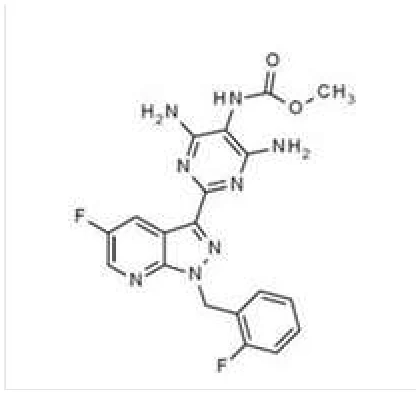
Chemical name: methyl {4,6-diamino-2-[5-fluoro-1-(2-fluorobenzyl)-1H-pyrazolo[3,4-b] pyridin-3-yl] pyrimidin-5-yl} carbamate.
Molecular formula and molecular mass: C19H16F2N8O2 and 426.39
Structural formula:
Physicochemical properties: Vericiguat is a white to yellowish powder that is freely soluble in dimethyl sulfoxide, slightly soluble in acetone, very slightly soluble in ethanol, acetonitrile, methanol, ethyl acetate, and practically insoluble in 2-propanol.
14 CLINICAL TRIALS
14.1 Clinical Trials by Indication
Symptomatic Chronic Heart Failure with Reduced Ejection Fraction
Table 8: Summary of Patient Demographics in VICTORIA Trial
Study Design | Oral Dosage (once daily) | Study Subjects (n) | Mean Age (Range) | Sex |
|---|---|---|---|---|
| Randomized parallel-group, placebo-controlled, double-blind, event-driven, multi-center | Starting dose of 2.5 mg, uptitrated in approximately 2-week intervals to 5 mg and then 10 mg, as tolerated; or placebo Maximum duration: 2.6 years | VERQUVO: n=2526 Placebo: n=2524 | 67 years (23 – 98) | Male: 76% Female: 24% |
VICTORIA was a randomized, parallel-group, placebo-controlled, double-blind, event-driven, multi-center trial comparing VERQUVO (vericiguat) and placebo in 5,050 adult patients with symptomatic chronic heart failure (New York Heart Association [NYHA) class II–IV) and left ventricular ejection fraction (LVEF) less than 45% following a worsening heart failure event. A worsening heart failure event was defined as heart failure hospitalization within 6 months before randomization or use of outpatient intravenous diuretics for heart failure within 3 months before randomization.
The primary objective of VICTORIA was to determine whether VERQUVO in combination with other heart failure therapies is superior to placebo in reducing the risk of cardiovascular (CV) death or heart failure hospitalization in adults with symptomatic chronic heart failure and ejection fraction less than 45% following a worsening heart failure event.
Patients were treated up to the target maintenance dose of VERQUVO 10 mg once daily or matching placebo, if tolerated. Therapy was initiated at VERQUVO 2.5 mg once daily and increased in approximately 2-week intervals to 5 mg once daily and then 10 mg once daily, as tolerated. A total of 74% of patients reached the 10 mg target at the end of the titration period (73% of those randomized to VERQUVO and 75% to placebo). After approximately 1 year, 90% of patients in both the VERQUVO and placebo arms were treated with the 10 mg target dose.
The primary endpoint was the time to first event of the composite of CV death or hospitalization for heart failure. The median follow-up for the primary endpoint was 11 months.
The population was 64% Caucasian, 22% Asian, and 5% Black. Regional representation was around 11% for North America. The mean age was 67 years and 76% were male. At randomization, 59% of patients were NYHA Class II, 40% were NYHA Class III, and 1% were NYHA Class IV. The mean left ventricular ejection fraction (EF) was 29% and approximately half of all patients had an EF < 30%, and 14% of patients had an EF between 40% and 45%. The most frequently reported medical history conditions other than heart failure included hypertension (79%), coronary artery disease (58%), hyperlipidemia (57%), diabetes mellitus (47%), atrial fibrillation (45%), and myocardial infarction (42%). History of tobacco use was 59% at baseline. At randomization, the mean eGFR was 62 mL/min/1.73m2; the majority of patients (88%) had an eGFR >30 mL/min/1.73m2, and 10% of patients had an eGFR ≤ 30 mL/min/1.73m2. Sixty-seven percent of the patients in VICTORIA were enrolled within 3 months of a HF-hospitalization index event; 17% were enrolled within 3 to 6 months of HF hospitalization, and 16% were enrolled within 3 months of outpatient treatment with intravenous diuretics for worsening HF. The median NT-proBNP level was 2816 pg/mL at randomization.
At baseline, more than 99% of patients were treated with other heart failure therapies; 93% of patients were on a beta blocker, 73% of patients were on an angiotensin-converting enzyme (ACE) inhibitor or angiotensin II receptor blocker (ARB), 70% of patients were on a mineralocorticoid receptor antagonist (MRA), 15% of patients were on a combination of an angiotensin receptor and neprilysin inhibitor (ARNI), 28% of patients had an implantable cardiac defibrillator (ICD), and 15% had a biventricular pacemaker. Ninety-one percent of patients were treated with 2 or more heart failure medications (beta blocker, any renin-angiotensin system [RAS] inhibitor, or MRA) and 60% of patients were treated with all 3. At baseline, 6% of patients were on ivabradine and 3% of patients were on a sodium glucose co-transporter 2 (SGLT2) inhibitor.
RESULTS
VICTORIA STUDY
In VICTORIA, VERQUVO was superior to placebo in reducing the risk of CV death or heart failure hospitalization based on a time-to-event analysis (hazard ratio [HR]: 0.90, 95% confidence interval [CI], 0.82-0.98; p=0.019). Over the course of the study, there was a 4.2% annualized absolute risk reduction (ARR) with VERQUVO compared with placebo. Therefore, 24 patients would need to be treated over an average of 1 year to prevent 1 primary endpoint event. The treatment effect for the primary endpoint was mainly driven by a reduction in heart failure hospitalization, though cardiovascular death also contributed to the treatment effect; see Table 9.
Table 9: Treatment Effect for the Primary Composite Endpoint, Its Components, and the Secondary Endpoints
VERQUVO N=2,526 | Placebo N=2,524 | Treatment Comparison | |||||||||||||||||
|---|---|---|---|---|---|---|---|---|---|---|---|---|---|---|---|---|---|---|---|
n (%) | Annual %* | n (%) | Annual %* | Hazard Ratio (95% CI)† | p-value‡ | Annualized ARR %§ | |||||||||||||
| Primary endpoint | |||||||||||||||||||
| Composite of cardiovascular death or heart failure hospitalization¶ | 897 (35.5) | 33.6 | 972 (38.5) | 37.8 | 0.90 (0.82, 0.98) | 0.019 | 4.2 | ||||||||||||
| Cardiovascular death | 206 (8.2) | 225 (8.9) | |||||||||||||||||
| Heart failure hospitalization | 691 (27.4) | 747 (29.6) | |||||||||||||||||
| Secondary endpoints | |||||||||||||||||||
| Cardiovascular death | 414 (16.4) | 12.9 | 441 (17.5) | 13.9 | 0.93 (0.81, 1.06) | ||||||||||||||
| Heart failure hospitalization | 691 (27.4) | 25.9 | 747 (29.6) | 29.1 | 0.90 (0.81, 1.00) | ||||||||||||||
| Composite of all-cause mortality or heart failure hospitalization† | 957 (37.9) | 35.9 | 1,032 (40.9) | 40.1 | 0.90 (0.83, 0.98) | ||||||||||||||
| All-cause mortality | 266 (10.5) | 285 (11.3) | |||||||||||||||||
| Heart failure hospitalization | 691 (27.4) | 747 (29.6) | |||||||||||||||||
| Total number of heart failure hospitalizations (first and recurrent) | 1,223 | 38.3 | 1,336 | 42.4 | 0.91 (0.84,0.99) | ||||||||||||||
- * Total patients with an event per 100 patient years at risk.
- † Hazard ratio (VERQUVO over Placebo) and confidence interval from a Cox proportional hazards model.
- ‡ From the log-rank test.
- § Annualized absolute risk reduction, calculated as difference (Placebo-VERQUVO) in annual %.
- ¶ For patients with multiple events, only the first event contributing to the composite endpoint is counted.
N=Number of patients in Intent-to-Treat (ITT) population; n=Number of patients with an event.
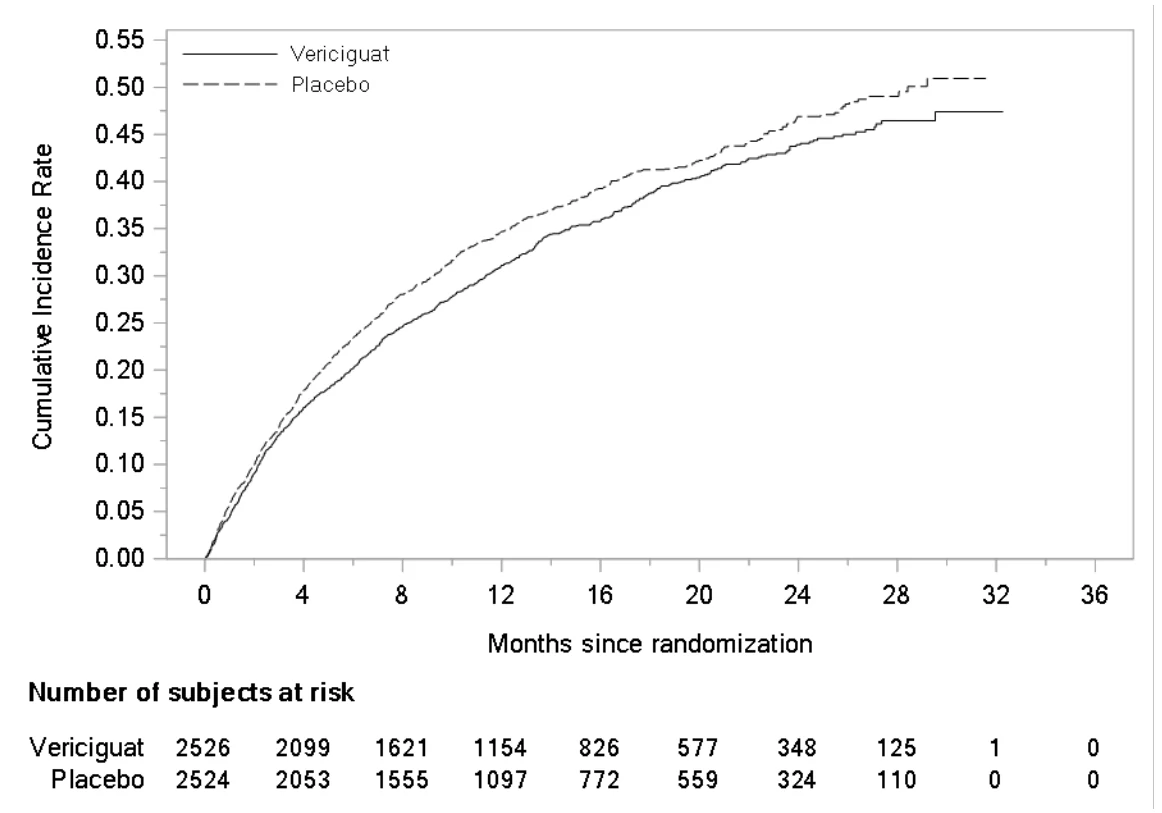
The Kaplan-Meier curve (Figure 1) shows time to first occurrence of the primary composite endpoint of cardiovascular death or heart failure hospitalization. A separation of the Kaplan-Meier curves for the primary composite endpoint began after month 4.
Figure 1: Kaplan-Meier Curve for the Primary Composite Endpoint
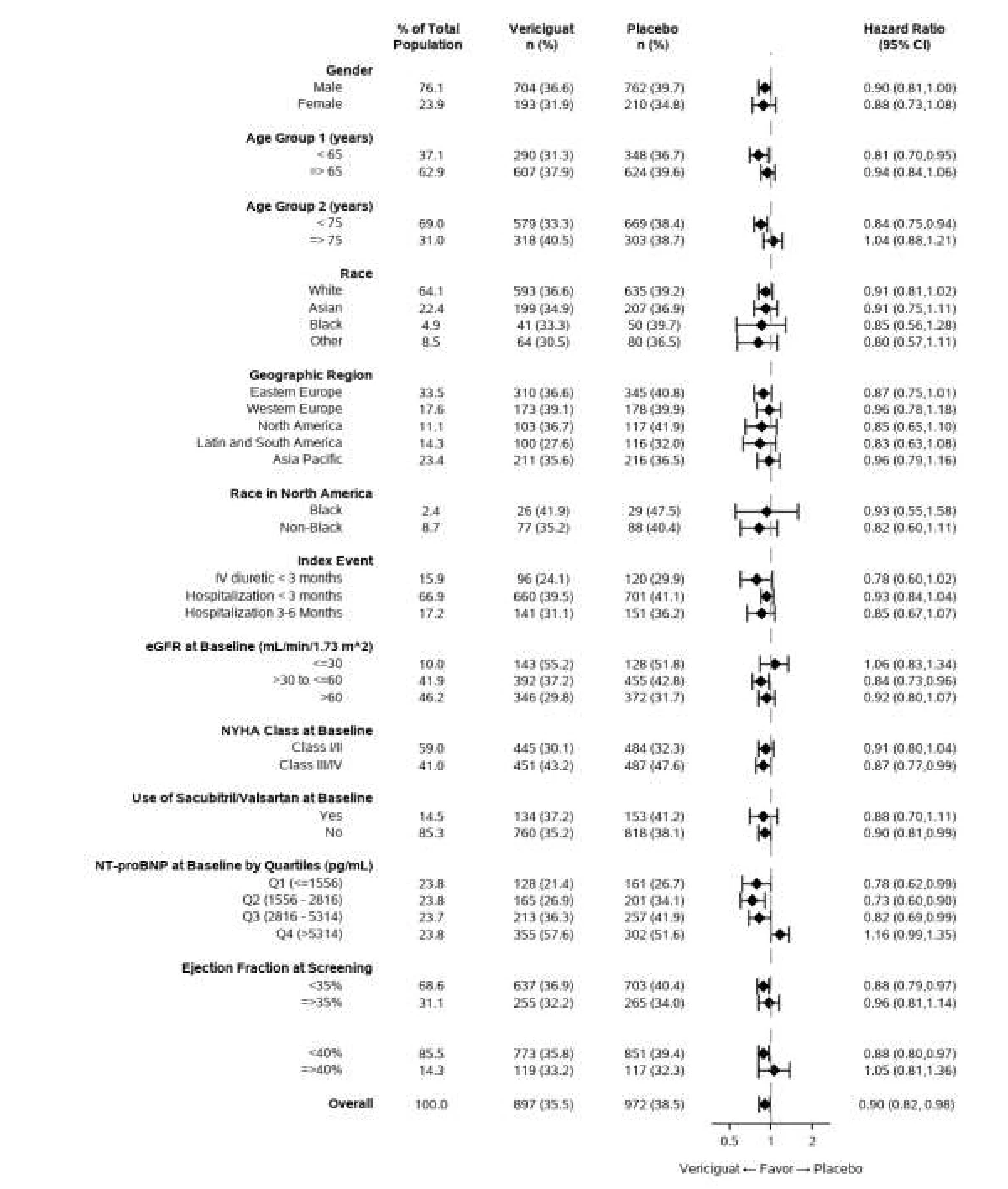
A wide range of demographic characteristics, baseline disease characteristics, and baseline concomitant medications were examined for their influence on outcomes. The results of the prespecified subgroup analysis for the primary composite endpoint are shown in Figure 2. The results of the primary composite endpoint were generally consistent across subgroups. In patients with a markedly elevated NT-proBNP (fourth quartile), the risk of CV death or HF hospitalization was increased in the vericiguat group compared to the placebo group. The estimated hazard ratio for CV death was 1.16; 95% CI: [0.95, 1.43] and for first HF hospitalization was 1.19; 95% CI: [0.9, 1.44].
Before starting VERQUVO, patients should be adequately stabilized by a healthcare professional who is experienced in the management of HF, particularly patients with high NT-proBNP levels (see 4.1 Dosing Considerations).
Figure 2: Primary Composite Endpoint (CV Death or HF Hospitalization) - Subgroup Analysis
16 NON-CLINICAL TOXICOLOGY
General Toxicology
No acute toxicity was observed in pivotal repeat-dose oral toxicity studies in rats up to 60 mg/kg/day and in dogs up to 25 mg/kg/day (approximately 36- or 2.5-times the human exposure [AUC] at the maximum recommended human dose [MRHD] of 10 mg/day).
Repeat-dose oral toxicity studies were conducted in rats and dogs for up to 26 and 39 weeks, respectively. The toxicological profile was characterized by effects secondary to exaggerated pharmacodynamics. Secondary to smooth muscle relaxation hemodynamic and gastrointestinal effects were noted in all species investigated. Adaptive hypertrophy of the adrenal glands zona glomerulosa (≥ 2 times exposure at MHRD, AUC) and prominent cardiac vasculature (≥ 11 times exposure at MHRD, AUC) were consistently observed in rat studies secondary to the hemodynamic action of vericiguat without additional degenerative or pathological findings. In the chronic toxicity studies, no adverse signs of toxicity were observed up to exposures equal to approximately 22 (rat) or 2.4 (dog) times the human exposure (AUC) at the MRHD of 10 mg/day.
In adolescent rapidly-growing rats, reversible bone effects consisting of hypertrophy of growth plate and hyperostosis and remodeling of metaphyseal and diaphyseal bone were seen at doses ≥30 mg/kg/day vericiguat (≥ 22 times exposure at MHRD, AUC) that were mediated by a mode of action-related intracellular cGMP increase. These effects were not observed after chronic administration of vericiguat to adult rats up to exposures of approximately 22 times the human exposure at the MRHD. In addition, no comparable findings were seen with dogs which were almost full-grown at start of treatment up to exposures of 2.4 times the human exposure at the MRHD.
Carcinogenicity
Carcinogenicity was evaluated in 2-year studies conducted in CD1 mice and Wistar rats. Vericiguat did not show a carcinogenic effect in mice dosed up to 150 mg/kg/day (males) or up to 250 mg/kg/day (females). These doses were associated with exposures 41 (males) or 78 (females) times the human exposure (AUC) at the MRHD of 10 mg/day.
In the carcinogenicity study in rats, no vericiguat-related tumor or hyperplastic findings were seen up to exposures of 5.7 times the human exposure at the MRHD. A non-statistical numerical increase of benign pheochromocytomas and Leydig cell tumors as well as respective hyperplasias were observed in males after administration of the high dose of 20 mg/kg/day leading to exposure of 20 times the human exposure at the MRHD. This is considered a consequence of a compensatory and recurrent activation of the renin angiotensin aldosterone and the adrenergic system due to a marked daily decrease in blood pressure over 2 years. Based on the known sensitivity of rats to develop these two tumor types in contrast to humans and a documented pharmacological-based mechanism (seen also with other antihypertensive drugs) at supratherapeutic doses as well as adequate safety margins this is considered not relevant for patients.
Non-clinical data revealed no carcinogenic risk for humans at clinical doses.
Genotoxicity
Vericiguat was not genotoxic in the in vitro microbial mutagenicity (Ames) assay, the in vitro mouse lymphoma assay, and the in vivo rat and mouse micronucleus assay.
Reproductive and Developmental Toxicology
In a 4-week repeat dose fertility and early embryonic development study in male and female rats, vericiguat when administered orally at doses of 5, 15 or 50 mg/kg/day had no effects on fertility or reproductive performance at up to the highest dose tested of 50 mg/kg/day (48 times the human exposure at the MRHD of 10 mg/day, based on body surface area).
In a prenatal developmental toxicity study in rats, vericiguat was administered orally to pregnant rats during the period of organogenesis from gestation days (GD) 6 to 17 at doses of 5, 15 or 50 mg/kg/day. Exaggerated pharmacodynamic-mediated maternal toxicity (decreased body weight gain and food consumption) was observed at ≥ 15 mg/kg/day (≥ 10 times the human exposure at the MRHD). There was no maternal toxicity at 5 mg/kg/day (4.3 times the human exposure at the MRHD).
In a prenatal developmental toxicity study in rabbits, vericiguat was administered orally to pregnant rabbits during the period of organogenesis from GD 6 to 20 at doses of 0.75, 2.50 or 7.50 mg/kg/day. Exaggerated pharmacodynamic-mediated maternal toxicity (decreased food consumption and body weight loss) was noted at ≥ 2.50 mg/kg/day (≥ 3.7 times the human exposure at the MRHD, AUC). An increase in late spontaneous abortions and resorptions were observed at ≥ 3.7 times the human exposure at MHRD (2.5 mg/kg/day).
In a pre-postnatal development study in rats, vericiguat was administered orally at doses of 7.5, 15 or 30 mg/kg/day from GD 6 through lactation day (LD) 21. Exaggerated pharmacodynamic-mediated maternal toxicity (decreases in food consumption and body weight gain) was observed at all dose levels (≥ 7.3 times at the MRHD in terms of body surface area). Decreased pup body weight at birth was observed at all doses (≥ 7.3 times at the MRHD). The decrease in body weight was maintained or worsened during the lactation phase at all doses and was accompanied by a delay in sexual maturation and development (delayed pinna unfolding, surface righting, incisor eruption). Pup mortality was observed at 30 mg/kg/day (29 times at the MHRD).
[14C]-vericiguat was administered orally to pregnant rats at a dose of 3 mg/kg (3 times the human exposure at MHRD, body surface area). Vericiguat-related material was transferred across the placenta, with fetal plasma concentrations of approximately 67% maternal concentrations on GD 19.
[14C]-vericiguat was administered intravenously to lactating rats at a dose of 1 mg/kg. Vericiguat-related material was excreted into milk resulting in whole pups vericiguat concentration of approximately 12% maternal plasma concentrations after 8 and 24 hours of administration on LD 8.
Juvenile Toxicity
In juvenile toxicity studies in rats, vericiguat was administered daily for 4 weeks (3, 10, and 30 mg/kg/day) and 4 and 13 weeks (1, 3, and 10 mg/kg/day) starting on post-natal day 10. Repeated administration of vericiguat to juvenile rats did not reveal new target organs compared to studies in adolescent or adult rats. The toxicological profile was mainly characterized by effects on the gastrointestinal tract due to the mode of action-related smooth muscle cell relaxation. Mortality was observed at 30 mg/kg/day.