


Product Monograph - Neffy
RECENT MAJOR LABEL CHANGES
| NA |
|---|
Certain sections (as indicated in section 2.1. of the PM Guidance) or subsections that are not applicable at the time of the preparation of the most recent authorized product monograph are not listed.
TABLE OF CONTENTS
RECENT MAJOR LABEL CHANGES ............................................................................................. 2
Part 1: Healthcare Professional Information ..................................................................................... 4
1 Indications .............................................................................................................................. 4
1.1 Pediatrics .............................................................................................................. 4
1.2 Geriatrics .............................................................................................................. 4
2 Contraindications ................................................................................................................... 4
4 Dosage and Administration .................................................................................................... 4
4.2 Recommended Dose and Dosage Adjustment ..................................................... 4
4.4 Administration ..................................................................................................... 4
5 Overdose ................................................................................................................................. 5
6 Dosage Forms, Strengths, Composition, and Packaging ........................................................ 6
7 Warnings and Precautions ..................................................................................................... 6
7.1 Special Populations ............................................................................................ 8
7.1.1 Pregnant Women ............................................................................................... 8
7.1.2 Breastfeeding ..................................................................................................... 8
7.1.3 Pediatrics (patients less than 30 kg) ................................................................... 8
7.1.4 Geriatrics ........................................................................................................... 8
8 Adverse Reactions .................................................................................................................. 9
8.1 Adverse Reaction Overview .............................................................................. 9
8.2 Clinical Trial Adverse Reactions ........................................................................ 9
8.2.1 Clinical Trial Adverse Reactions – Pediatrics .................................................. 10
8.3 Less Common Clinical Trial Adverse Reactions ............................................. 10
8.3.1 Less Common Clinical Trial Adverse Reactions – Pediatrics ........................... 11
8.5 Post-Market Adverse Reactions ........................................................................ 11
9 Drug Interactions ................................................................................................................. 11
9.2 Drug Interactions Overview............................................................................... 11
9.3 Drug-Behavioural Interactions .......................................................................... 11
9.4 Drug-Drug Interactions ...................................................................................... 11
9.5 Drug-Food Interactions ...................................................................................... 12
9.6 Drug-Herb Interactions ...................................................................................... 12
9.7 Drug-Laboratory Test Interactions ..................................................................... 12
10 Clinical Pharmacology ......................................................................................................... 12
10.1 Mechanism of Action ....................................................................................... 12
10.2 Pharmacodynamics ........................................................................................... 13
10.3 Pharmacokinetics .............................................................................................. 15
11 Storage, Stability, and Disposal ............................................................................................ 17
Part 2: Scientific Information ........................................................................................................... 18
13 Pharmaceutical Information ................................................................................................ 18
14 Clinical Trials ....................................................................................................................... 18
16 Non-clinical Toxicology ........................................................................................................ 19
Patient Medication Information ....................................................................................................... 20
Part 1: Healthcare Professional Information
1 Indications
neffy (epinephrine nasal spray) is indicated for:
- the emergency treatment of allergic reactions (anaphylaxis) due to insect stings or bites, foods, medicinal products and other allergens as well as idiopathic or exercise induced anaphylaxis in adult and pediatric patients who weigh 30 kg or greater.
1.1 Pediatrics
Pediatrics (<30 kg): Health Canada has not authorized an indication for patients <30 kg.
1.2 Geriatrics
Geriatrics (≥65 years of age): Evidence from clinical experience suggests that the use of epinephrine in geriatric patients is associated with differences in safety. See 7.1.4 GERIATRICS.
2 Contraindications
There are no absolute contraindications to the use of epinephrine in a life-threatening allergic situation.
4 Dosage and Administration
4.2 Recommended Dose and Dosage Adjustment
The recommended dosage of neffy is one spray (2 mg of epinephrine) administered into one nostril. In the absence of clinical improvement or if symptoms worsen after the initial treatment, a second dose of neffy may be administered in the same nostril with a second nasal spray starting 5 minutes after the first dose.
- Advise patients when to seek emergency medical assistance for close monitoring of the anaphylactic episode and in the event further treatment is required.
- It is recommended that patients are prescribed and have immediate access to two neffy nasal sprays at all times.
4.4 Administration
- neffy is for nasal use only.
- Each neffy nasal spray is for single use and delivers the entire dose upon activation.
- Do not prime or attempt to reuse neffy for more than one administration.
- Self-administration: Use the right hand to administer neffy to the right nostril and use the left hand to administer neffy to the left nostril.
- Care-giver administration: Use the right hand to administer neffy to the left nostril and use the left hand to administer neffy to the right nostril.
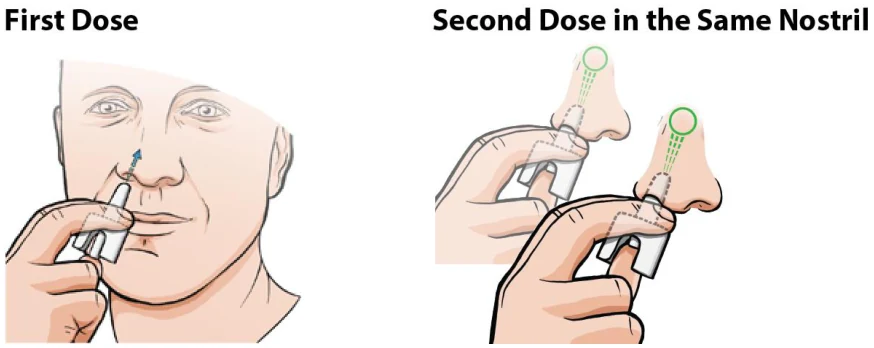
Administer neffy by inserting the nozzle of the nasal spray fully into one nostril (see Figure 1). Hold the nasal spray straight into the nose - do not angle the nasal spray to the inside septum or outer wall of the nose as some medication may be lost. Press the plunger firmly to activate. Avoid sniffing during and after administration. If a second dose of neffy is needed, administer a new nasal spray into the same nostril starting 5 minutes after the first dose. More than two sequential doses of epinephrine should be administered under direct medical supervision. Refer patients and caregivers to the Instructions for Use for detailed administration instructions.
Figure 1: Administration of neffy
If neffy is frozen and is needed in an emergency, do not wait to thaw, seek emergency medical care immediately.
5 Overdose
Symptoms
Overdose of epinephrine may cause severe headaches, chest pain, dizziness, nausea, and blurred vision. Significant overdoses or injection into a blood vessel can also cause cerebral haemorrhage resulting from a sharp rise in blood pressure. Fatalities may also result from pulmonary oedema because of peripheral vascular constriction together with cardiac stimulation.
Management
Pressor effects of epinephrine may be counteracted by rapidly acting vasodilators or alpha-adrenergic blocking medicinal products.
If an epinephrine overdose induces pulmonary oedema that interferes with respiration, treatment consists of a rapidly acting alpha-adrenergic blocking medicinal product such as phentolamine and/or intermittent positive-pressure respiration.
Epinephrine overdose can cause transient bradycardia followed by tachycardia, and these may be accompanied by potentially fatal cardiac arrhythmias. Treatment of arrhythmias may consist of administration of beta-adrenergic blocking medicinal products.
For the most recent information in the management of a suspected drug overdose, contact your regional poison control centre or Health Canada’s toll-free number, 1-844 POISON-X (1-844-764-7669).
6 Dosage Forms, Strengths, Composition, and Packaging
Table 1: Dosage Forms, Strengths, Composition and Packaging
| Route of Administration | Dosage Form / Strength/Composition | Non-medicinal Ingredients |
| Intranasal | Solution for intranasal administration, 2 mg/0.1 mL | Benzalkonium chloride, disodium edetate, n-dodecyl beta-D-maltoside, sodium chloride, sodium metabisulfite, and hydrochloric acid or sodium hydroxide to adjust pH, in water for injection |
neffy is an aqueous solution packaged in Type I glass vials and closed with a grey bromobutyl rubber stopper and then assembled into a Unit Dose Sprayer device. The device is a non-pressurized dispenser delivering a single-dose nasal spray.
Pack size: Pack of 2 single-dose nasal sprays
Pack of 1 single-dose nasal spray
7 Warnings and Precautions
Emergency Treatment
neffy is intended for immediate administration as emergency supportive therapy and is not intended as a substitute for immediate medical care. More than two sequential doses of epinephrine should only be administered under direct medical supervision. Advise patients when to seek emergency medical assistance for close monitoring of the anaphylactic episode and in the event further treatment is required.
Patients should be instructed to recognise symptoms of systemic allergic reactions and anaphylaxis that may occur within minutes after allergen exposure and which may consist of flushing, apprehension, syncope, tachycardia, thready or unobtainable pulse associated with a fall in blood pressure, convulsions, vomiting, diarrhoea and abdominal cramps, involuntary voiding, wheezing, dyspnoea due to laryngeal spasm, pruritus, rashes, urticaria, or angioedema.
General
Clinical pharmacology studies with neffy included subjects with history of allergic rhinitis, but did not include subjects with underlying structural and anatomical nasal conditions (e.g. polyps, history of nasal fractures or injuries, or history of nasal surgery). Absorption of neffy may be affected by underlying structural and anatomical nasal conditions. Consider use of other epinephrine products given by other routes of administration for patients with underlying structural or anatomical nasal conditions.
Some patients may be at greater risk for developing adverse reactions after epinephrine administration. Despite these concerns, it should be recognized that the presence of these conditions is not a contraindication to epinephrine administration in an acute, life-threatening situation. Therefore, patients with these conditions, and/or any other person who might be in a position to administer neffy to a patient experiencing anaphylaxis should be carefully instructed in regard to the circumstances under which epinephrine should be used.
For information on the neffy Education Program (Training device, Training video, Patient education brochure and Instructions for use), please refer to the website (www.alk.net/ca/neffy-materialsl) or scan the QR code on the package labels (carton and blister).
Cardiovascular
Epinephrine should be administered with caution to patients who have heart disease, including patients with cardiac arrhythmias, coronary artery disease, or hypertension. In such patients, or in patients who are on drugs that may sensitize the heart to arrhythmias, epinephrine may precipitate or aggravate angina pectoris, as well as produce ventricular arrhythmias (see 8 ADVERSE REACTIONS AND 9 DRUG INTERACTIONS).
Endocrine and Metabolism
Patients with diabetes may develop increased blood glucose levels following epinephrine administration.
Epinephrine can temporarily exacerbate the underlying condition or increase symptoms in patients with hyperthyroidism.
Neurologic
Epinephrine use should be avoided in patients with organic brain damage.
Patients with Parkinson’s disease may notice a temporary worsening of symptoms after treatment with epinephrine.
Ophthalmologic
Epinephrine use should be avoided in patients with narrow-angle glaucoma.
In patients with high intraocular pressure in angle-closure glaucoma, epinephrine dilates the pupil (mydriasis) and produces an acute episode of angle-closure. Epinephrine reduces intraocular pressure in open-angle glaucoma, decreasing aqueous formation and increasing outflow facility.
Renal
Epinephrine can temporarily exacerbate the underlying condition or increase symptoms in patients with renal impairment. Epinephrine should be administered with caution in patients with these conditions, including elderly patients and pregnant women.
Reproductive Health: Female and Male Potential
There are no data on the effect of neffy on human fertility.
Sensitivity
Epinephrine is the preferred treatment for serious allergic or other emergency situations even though neffy contains sodium metabisulfite, a sulfite that may in other products cause allergic-type reactions including anaphylactic symptoms or life-threatening or less severe asthmatic episodes in certain susceptible persons. The alternatives to using epinephrine in a life-threatening situation may not be satisfactory. The presence of a sulfite(s) in neffy should not deter administration of the drug for treatment of serious allergic or other emergency situations.
7.1 Special Populations
7.1.1 Pregnant Women
There are no data on the effect of neffy in pregnant women.
Animal studies do not indicate reproductive toxicity (see 16 NON-CLINICAL TOXICOLOGY).
The use of this medicinal product may be considered during pregnancy, if necessary.
7.1.2 Breastfeeding
There are no data on the effect of epinephrine in breast-feeding women. However, neffy should be used in the same manner in breastfeeding and non-breastfeeding women.
It is unknown whether epinephrine/metabolites are excreted in human milk.
A risk to the newborns/ infants cannot be excluded. However, due to its poor oral bioavailability and short half-life, exposure is expected to be very low in the breastfed infants.
7.1.3 Pediatrics (patients less than 30 kg)
The safety and efficacy of neffy in pediatric patients weighing less than 30 kg have not been established; therefore, Health Canada has not authorized an indication for pediatric use in this weight group.
7.1.4 Geriatrics
Clinical pharmacology studies of neffy for the emergency treatment of type I allergic reactions, including anaphylaxis, did not include a sufficient number of subjects aged 65 and over to determine whether they respond differently from younger adult subjects. However, other reported clinical experience with use of epinephrine for the treatment of anaphylaxis has identified that geriatric patients may be particularly sensitive to the effects of epinephrine (see 5 OVERDOSE AND 7 WARNINGS AND PRECAUTIONS). neffy should be administered with caution in elderly patients who are at greater risk for developing adverse reactions after epinephrine administration.
8 Adverse Reactions
8.1 Adverse Reaction Overview
The most frequently occurring adverse reactions (very common events ≥ 10%) observed in clinical studies of neffy were reported only after a second 2 mg dose (4 mg total) and include throat irritation (18.8%), headache (17.6%), nasal discomfort (12.9%) and feeling jittery (10.6%). None of the adverse drug reactions observed in the clinical studies were serious.
8.2 Clinical Trial Adverse Reactions
Clinical trials are conducted under very specific conditions. Therefore, the frequencies of adverse reactions observed in the clinical trials may not reflect the frequencies observed in clinical practice and should not be compared to the frequencies reported in clinical trials of another drug.
The safety of neffy 2 mg is primarily based on four clinical pharmacology studies in 175 healthy adults and adults with type I allergy without anaphylaxis, who did not have structural or anatomical nasal conditions (see 10 CLINICAL PHARMACOLOGY). The four clinical pharmacology studies were designed to compare the pharmacokinetic (PK) and pharmacodynamic (PD) profiles of one dose of neffy 2 mg sprayed into one nostril or two doses of neffy 2 mg sprayed into either the same or opposite nostril, administered 10 minutes apart, with PK and PD profiles of one or two dose(s) of epinephrine injection administered intramuscularly. The common adverse reactions that occurred with neffy 2 mg after one and two dose(s) are listed in Table 2.
Table 2: Adverse Reactions with One or Two Dose(s) of neffy with Incidence Greater than or Equal to 2% in Adults [Studies EPI 15, EPI 16, EPI 17, and EPI 18]
| Adverse Reaction** | neffy 2 mg One Dose n = 134*** | neffy 2 mg Two Doses* n = 85*** | ||||||
| Adverse Reaction** | neffy 2 mg One Dose n = 134*** | neffy 2 mg Two Doses* n = 85*** | ||||||
| n | % | n | % | |||||
| n | % | n | % | |||||
| Gastrointestinal disorders | ||||||||
| Abdominal pain | 1 | 1% | 3 | 4% | ||||
| Gingival pain | 0 | 0% | 3 | 4% | ||||
| Hypoesthesia Oral | 0 | 0% | 3 | 4% | ||||
| Nausea | 4 | 3% | 2 | 2% | ||||
| Vomiting | 3 | 2% | 2 | 2% | ||||
| General disorders and administration site conditions | ||||||||
| Feeling jittery | 1 | 1% | 9 | 11% | ||||
| Nervous system disorders | ||||||||
| Dizziness | 4 | 3% | 2 | 2% | ||||
| Headache | 8 | 6% | 15 | 18% | ||||
| Tremor | 0 | 0% | 7 | 8% | ||||
| Respiratory, thoracic and mediastinal disorders | ||||||||
| Nasal congestion | 0 | 0% | 2 | 2% | ||||
| Nasal discomfort | 13 | 10% | 11 | 13% | ||||
| Nasal pruritus | 0 | 0% | 3 | 4% | ||||
| Rhinorrhoea | 4 | 3% | 6 | 7% | ||||
| Sneezing | 0 | 0% | 3 | 4% | ||||
| Throat irritation | 2 | 2% | 16 | 19% | ||||
* Two nasal doses of neffy 2 mg were administered 10 minutes apart
** Data include subjects with nasal allergen challenge induced rhinitis
*** The trials used a crossover design and therefore the total number of subjects do not match the number of unique subjects (n = 175)
8.2.1 Clinical Trial Adverse Reactions – Pediatrics
A single-arm PK/PD study (EPI 10) in pediatric subjects 8 to 17 years of age who weigh 30 kg or greater with type I allergy without anaphylaxis was conducted to assess the PK/PD of neffy 2 mg. A total of 42 pediatric subjects who weigh 30 kg or greater (body weight range: 31 kg to 95 kg; age range: 8 to 17 years) were enrolled, including 21 subjects who received one nasal dose of neffy 2 mg . Common adverse reactions reported in these subjects who received one dose of neffy 2 mg include nasal discomfort (19%), intranasal paresthesia (19%), rhinorrhea (19%), sneezing (14%), paresthesia (10%), fatigue (10%), and feeling jittery (10%).
There were no clinically relevant differences in the safety between the pediatric and adult populations treated with neffy 2 mg.
8.3 Less Common Clinical Trial Adverse Reactions
Ear and labyrinth disorders: ear pain
Eye disorders: blepharospasm, eye irritation, lacrimation increased, ocular discomfort
Gastrointestinal: diarrhea, gingival discomfort, odynophagia, oral discomfort, salivary hypersecretion, toothache
General disorders and administration site conditions: chills, feeling cold, feeling hot, mucosal disorder, pyrexia, secretion discharge
Investigations: body temperature decreased, body temperature increased, heart rate decreased
Musculoskeletal and connective tissue disorders: temporomandibular joint syndrome, muscle spasms
Nervous system disorders: presyncope, somnolence, syncope
Psychiatric disorders: anxiety
Respiratory, thoracic and mediastinal disorders: dry throat, oropharyngeal pain, Increased upper airway secretion, pharyngeal hypoesthesia, pharyngeal paraesthesia, rhinalgia
Skin and subcutaneous tissue disorders: hyperhidrosis, pruritus, skin discoloration, skin lesions
Vascular disorders: hypotension, hot flush
8.3.1 Less Common Clinical Trial Adverse Reactions – Pediatrics
Eye disorders: lacrimation increased
Respiratory, thoracic and mediastinal disorders: epistaxis, nervousness, oropharyngeal pain, pharyngeal paraesthesia
8.5 Post-Market Adverse Reactions
The following adverse reactions have been identified during use of epinephrine. Because these reactions are reported voluntarily from a population of uncertain size, it is not always possible to reliably estimate their frequency or establish a causal relationship to drug exposure.
Cardiovascular: angina, arrhythmias (including fatal ventricular fibrillation), cerebral hemorrhage, hypertension, pallor, palpitations, tachyarrhythmia, tachycardia, vasoconstriction, ventricular ectopy, and stress cardiomyopathy
Metabolism and nutrition disorders: transient hyperglycemia, sweating
Neurological disorders: disorientation, impaired memory, panic, psychomotor agitation, sleepiness, tingling, weakness
Psychiatric disorders: apprehensiveness, restlessness
Respiratory disorders: respiratory difficulties
9 Drug Interactions
9.2 Drug Interactions Overview
Caution is indicated in patients receiving medicinal products that may sensitise the heart to arrhythmias, including digoxin, mercurial diuretics (e.g. chlormerodrin, merbaphen, mersalyl acid, meralluride, mercaptomerin, mercurophylline, merethoxylline procaine) or quinidine.
9.3 Drug-Behavioural Interactions
Tell your doctor if you are drinking alcohol because this can increase the effects of epinephrine.
9.4 Drug-Drug Interactions
The effects of epinephrine may be potentiated by tricyclic antidepressants (e.g. imipramine) and mono amine oxidase inhibitors (MAO-inhibitors) (e.g. isocarboxazid, phenelzine, selegiline, tranylcypromine) and catechol-O-methyl transferase inhibitors (COMT-inhibitors) (e.g. entacapone, tolcapone, carbidopa-levodopa-entacapone, opicapone), thyroid hormones, theophylline, oxytocin, parasympatholytics (e.g. atropine, cyclopentolate, homatropine, hyoscine, tropicamide), certain antihistamines (diphenhydramine, chlorpheniramine), levodopa, and alcohol.
Pressor effects of epinephrine:
Pressor effects of epinephrine may be counteracted by rapidly acting vasodilators or alpha-adrenergic-blocking medicinal products such as phentolamine.
Epinephrine and insulin:
Epinephrine inhibits the secretion of insulin, thus increasing the blood glucose level. It is unlikely if given in an acute emergency situation that epinephrine would have any persistent effect on blood glucose levels, but for diabetic patients receiving epinephrine it may be necessary to increase their dose of insulin or oral hypoglycaemic medicinal products.
Epinephrine and beta-blocking medicinal products:
The beta-stimulating effect of epinephrine may be inhibited by simultaneous treatment with beta-blocking medicinal products, e.g. propranolol.
9.5 Drug-Food Interactions
Interactions with food have not been established.
9.6 Drug-Herb Interactions
Interactions with herbal products have not been established.
9.7 Drug-Laboratory Test Interactions
Interactions with laboratory test have not been established.
10 Clinical Pharmacology
10.1 Mechanism of Action
Epinephrine is a nonselective agonist of all adrenergic receptors, including alpha- and beta-adrenergic receptors. Binding to these receptors triggers a number of actions of sympathetic nerve system.
Through its action on alpha-adrenergic receptors, epinephrine lessens histamine induced vasodilation. Epinephrine also reduces the vascular permeability induced by histamine that occurs during anaphylaxis.
Epinephrine, through its action on beta-adrenergic receptors in bronchial smooth muscle, causes bronchial smooth muscle relaxation.
Epinephrine also alleviates pruritus, urticaria, and angioedema and may be effective in relieving gastrointestinal and genitourinary symptoms associated with anaphylaxis.
10.2 Pharmacodynamics
Four clinical pharmacology studies of neffy in adults and one clinical pharmacology study in pediatric subjects who weigh 30 kg or greater are described below.
Systolic blood pressure and pulse rate in healthy adult subjects (Study EPI 15):
Study EPI 15 was conducted in healthy adult subjects (N=42) that compared the pharmacokinetics (PK) and pharmacodynamics (PD) (i.e., pulse rate (PR) and systolic blood pressure (SBP)) of epinephrine following:
- One nasal dose of neffy 2 mg to one intramuscular dose of epinephrine injection 0.3 mg (using a needle-syringe product and an auto-injector product).
- Two nasal doses of neffy 2 mg, administered 10 minutes apart, into either same naris or opposite nares to two intramuscular doses of epinephrine injection 0.3 mg (using an auto-injector) administered 10 minutes apart.
Results following one dose of all epinephrine products demonstrated an increase from baseline SBP and PR as shown in Figure 2.
Figure 2: Median pulse rate (PR) and systolic blood pressure (SBP) change from baseline following one dose of epinephrine in healthy subjects [Study EPI 15]
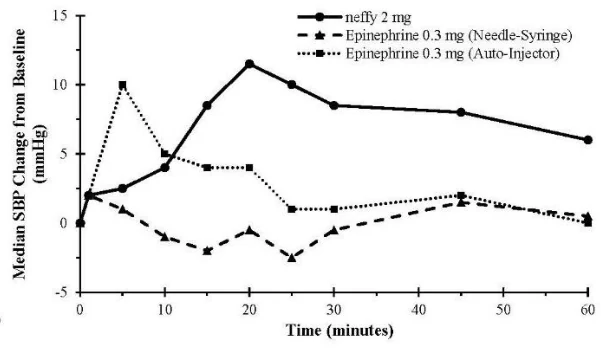
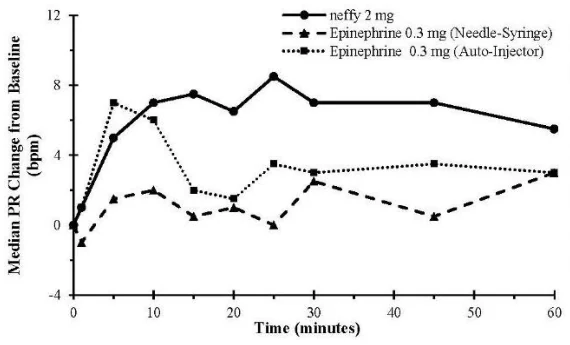
Results following two nasal doses of neffy (in the same naris or opposite nares) in comparison to two intramuscular doses of epinephrine injection (using an autoinjector) showed a similar trend in median/mean SBP and PR responses.
Systolic blood pressure and pulse rate in adult patients with Type I allergy without anaphylaxis (EPI 17):
Study EPI 17 was conducted in adult patients with type I allergy without anaphylaxis (N=42) that compared the PK and PD of epinephrine following self-administered one nasal dose of neffy 2 mg to staff-administered one intramuscular dose of epinephrine injection 0.3 mg (using a needle-syringe product). In Study EPI 17, SBP and PR responses were assessed as a change from baseline over 60 minutes. The SBP and PR responses results in Study EPI 17 were similar to Study EPI 15.
Systolic blood pressure and pulse rate in adult patients with allergic rhinitis (Study EPI 16 and EPI 18):
Study EPI 16 and Study EPI 18 were conducted in adult subjects with seasonal allergic rhinitis outside of allergy season. Subjects were required to have seasonal allergic rhinitis which was confirmed with a nasal allergen challenge (NAC) during screening and did not have any allergy symptoms prior to treatment. Allergic rhinitis symptoms were induced by spraying the known allergen into the subject’s nostrils in which a minimum Total Nasal Symptom Score (TNSS) of ≥ 5 out of 12, with a congestion component of ≥ 2 out of 3 had to be reached.
Study EPI 16 enrolled 36 subjects. In this cross-over study, subjects received epinephrine as each of the following:
- One nasal dose of neffy 2 mg without nasal allergen challenge (NAC).
- One nasal dose of neffy 2 mg after undergoing NAC to induce rhinitis/nasal congestion.
- One intramuscular dose of epinephrine injection 0.3 mg (using a needle syringe) without NAC.
- One intramuscular dose of epinephrine injection 0.5 mg (using a needle syringe) without NAC.
In Study EPI 16, SBP and PR responses were assessed as a change from baseline over 60 minutes. Results showed the following:
- Median SBP and PR for neffy with NAC initially increased from baseline, but the median responses were lower than the use of neffy without NAC after 5 to 15 minutes post-dose.
- Median SBP response for neffy with NAC was initially higher than the median SBP response for the intramuscular epinephrine injection without NAC through 20 minutes, after which the median SBP response for neffy with NAC became comparable to the epinephrine injection without NAC through 60 minutes post-dose.
- Median PR response for neffy with NAC was initially higher than epinephrine injection without NAC during the first 5 minutes post-dose, but then was numerically lower than the median PR response for epinephrine injection without NAC through 60 minutes post-dose.
Study EPI 18 enrolled 43 subjects. In this cross-over study, subjects received two doses of epinephrine administered 10 minutes apart as each of the following:
- Two nasal doses of neffy 2 mg (in the opposite nares (right(R)/left (L)) without NAC.
- Two intramuscular (IM) doses of epinephrine injections 0.3 mg (using a needle-syringe; in the opposite thigh (R/L)) without NAC.
- Two nasal doses of neffy 2 mg (either in the same naris (R/R) or opposite nares (R/L)) after NAC to induce allergic rhinitis/nasal congestion.
- Two intramuscular doses of epinephrine injections 0.3 mg (using a needle-syringe; in the opposite thigh (R/L)) after NAC to induce allergic rhinitis/nasal congestion.
In Study EPI 18, SBP and PR responses were assessed as a change from baseline over 60 minutes. Results showed the following:
Figure 3: Median change from baseline for systolic blood pressure (SBP) and pulse rate (PR) following two doses of epinephrine administered 10 minutes apart in right and left nares (R/L) or right and right nares (R/R) in subjects with allergic rhinitis with and without nasal allergen challenge (NAC) [Study EPI 18]
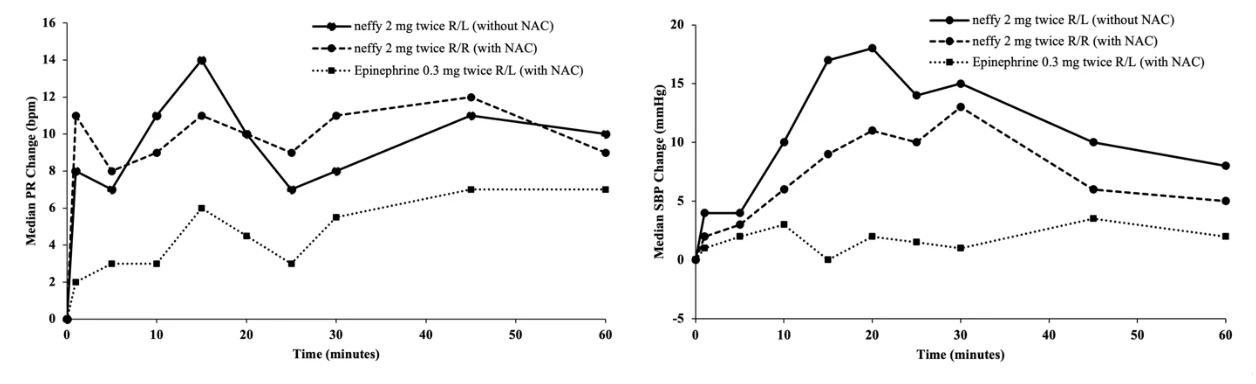
R/L: First dose administered in right naris followed by second dose administered in left naris 10 minutes apart.
R/R: First dose administered in right naris followed by second dose administered in right naris 10 minutes apart.
Epinephrine 0.3 mg was administered using needle-syringe product
Pediatric population:
Systolic blood pressure and pulse rate in pediatric patients with type I allergy without anaphylaxis (Study EPI 10)
Study EPI 10 was a single-arm study conducted in pediatric patients who weighed 30 kg or greater (age range: 8 to 17 years) with type I allergy without anaphylaxis (N=21) that assessed the PK and PD of epinephrine following one nasal dose of neffy 2 mg. The median change in SBP and PR from baseline over the 60 minutes post-dose were numerically lower than in healthy adults who received the same dose of neffy in Study EPI 15.
10.3 Pharmacokinetics
Absorption
Following one nasal dose of neffy 2 mg, the geometric mean plasma epinephrine concentration-time profile was overall within the range of that following one intramuscular dose of epinephrine injection 0.3 mg (using a needle-syringe product and an auto-injector product) 60 minutes post-dose. The integrated pharmacokinetic parameters of epinephrine are summarized in Table 3.
Table 3: Mean (CV%) and geometric mean plasma PK parameters following one or two doses of epinephrine (integrated analysis)
| Treatment | N | tmax (min) median (range) | Cmax (pg/mL) | AUClast (min*pg/mL) | ||
|---|---|---|---|---|---|---|
| Mean(%CV) | Geo.mean | Mean(%CV) | Geo.mean | |||
neffy 2 mg IN (HCP administration) | 78 | 20.5 (2 - 150) | 485 (70.6) | 361 | 40900 (67.5) | 32600 |
| neffy 2 mg IN (self-administration) | 32 | 30 (10 - 240) | 448 (67.1) | 342 | 50365 (55.5) | 41077 |
| neffy 2 mg IN (pediatrics) | 16 | 25.0 (2.5 - 120) | 540 (70.7) | 433 | 35500 (76.3) | 27800 |
| neffy 2 mg twice (L/R) | 39 | 30 (6 - 150) | 1000 (93.1) | 706 | 86000 (77) | 66700 |
| neffy 2 mg twice (R/R) | 39 | 30 (4 - 150) | 992 (75.3) | 729 | 86500 (60.5) | 69900 |
| Epinephrine 0.3 mg IM | 178 | 45 (3.9 -360) | 277 (65.4) | 234 | 27900 (38.7) | 26100 |
| Epinephrine 0.3 mg IM twice | 70 | 45 (6 - 180) | 436 (48.8) | 386 | 47500 (32.6) | 45300 |
| Epinephrine auto-injector 0.3 mg | 77 | 10 (2 - 45) | 581 (75.6) | 447 | 31600 (39.3) | 29200 |
| Epinephrine auto-injector 0.3 mg twice | 78 | 20 (4 - 360) | 754 (64.7) | 630 | 55000 (47.9) | 29200 |
IN: intranasal; IM: intramuscular
Epinephrine has a rapid onset of action after administration. Following nasal administration to healthy volunteers, epinephrine was rapidly absorbed after both single and repeat dosing, with a time to maximum plasma concentration in 20 to 30 minutes. In subjects with rhinitis (congestion and nasal oedema), epinephrine is absorbed more rapidly with the maximum concentration observed in about 10 minutes.
Biotransformation
Epinephrine is rapidly inactivated in the body, mostly in the liver by the enzymes catechol-O-methyltransferase (COMT) and monoamine oxidase (MAO).
Elimination
Much of a dose of epinephrine is excreted as metabolites in urine. Elimination is mainly via metabolism of the liver and kidneys, with a small amount excreted unchanged in the urine. The plasma half-life following nasal administration is about 2 to 3 minutes.
Special Populations and Conditions
Pediatric patients with type I allergies without anaphylaxis (Study EPI 10)
In pediatric patients with Type I allergies weighing 30 kg or greater (age range: 8 to 17 years), following a single 2 mg nasal dose of neffy, the geometric mean plasma epinephrine concentration time profile was similar to that of healthy adults receiving the same dose within about 15 minutes post-dose (in a different study) and then became slightly higher than that of healthy adults (see Table 3).
11 Storage, Stability, and Disposal
Store at 15°C to 30°C for up to 30 months. Excursions permitted up to 50°C.
Do not freeze. neffy freezes below -15°C. If neffy freezes, it will not deliver epinephrine.
Any unused medicinal product or waste material should be disposed of in accordance with local requirements.
Part 2: Scientific Information
13 Pharmaceutical Information
Drug Substance
Proper name: Epinephrine
Chemical name: (-)-3,4-dihydroxy-α-[(methylamino)methyl] benzyl alcohol
Molecular formula and molecular mass: C9H13N03 and 183.21 g/mol
Structural formula:
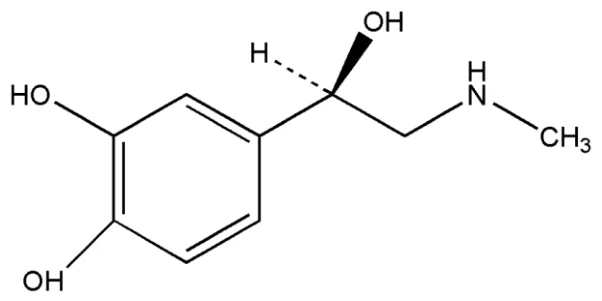
Physicochemical properties: Epinephrine is a white to practically white, odorless, microcrystalline powder or granules, gradually darkening on exposure to light and air. With acids, it forms salts that are readily soluble in water, and the base may be recovered by the addition of ammonia water or alkali carbonates. Its solutions are alkaline to litmus.
Product Characteristics
General properties of epinephrine are outlined below:
| Appearance (color, physical form) | White to almost white crystalline powder |
| Solubility | Soluble in aqueous solutions of mineral acids. Very slightly soluble in ethanol and methanol. Practically insoluble in acetone, chloroform, methylene chloride, and ether. |
| Melting range | 215°C |
| Solution pH | The pH of an aqueous solution is slightly alkaline |
| Specific Rotation |
|
14 Clinical Trials
Controlled clinical trials for treatment of the indicated condition (anaphylaxis) have not been performed with epinephrine. See 10 CLINICAL PHARMACOLOGY for clinical trial information related to the pharmacokinetics and pharmacodynamic effects of neffy.
16 Non-clinical Toxicology
General Toxicology
In a single-dose nasal toxicity study, treatment of epinephrine nasal spray solution in rats induced epinephrine-related histopathology changes in the nose, such as minimal ulceration of the exposed mucosa (at ≥2.3-fold the recommended clinical dose of neffy 2 mg based on local surface area), and nasal passages, such as minimal to mild necrosis in the nasal turbinate and parietal wall in the rostral-most level (at ≥1.2-fold the recommended clinical dose of neffy 2 mg based on local surface area) on day 2. These findings were often associated with minimal to mild neutrophilic inflammation and were reversible after 14 days post-dose.
Carcinogenicity
Long-term studies to evaluate the carcinogenic potential of epinephrine have not been conducted.
Genotoxicity
Epinephrine and other catecholamines have been shown to have mutagenic potential in vitro. Epinephrine was positive in the Salmonella bacterial reverse mutation assay, positive in the mouse lymphoma assay, and negative in the in vivo micronucleus assay. Epinephrine is an oxidative mutagen based on the E. coli WP2 Mutoxitest bacterial reverse mutation assay. This should not prevent the use of epinephrine where indicated (see 1 INDICATIONS).
Reproductive Toxicity
In an embryofetal development study with pregnant rabbits dosed during the period of organogenesis (on days 3 to 5, 6 to 7 or 7 to 9 of gestation), epinephrine caused teratogenic effects (including gastroschisis) at doses approximately 15 times the maximum recommended intramuscular, subcutaneous, or intravenous dose (on a mg/m2 basis at a maternal subcutaneous dose of 1.2 mg/kg/day for two to three days). Animals treated on days 6 to 7 had decreased number of implantations.
In an embryofetal development study, pregnant mice were administered epinephrine (0.1 to 10 mg/kg/day) on Gestation Days 6 to 15. Teratogenic effects, embryonic lethality, and delays in skeletal ossification were observed at approximately 3 times the maximum recommended intramuscular, subcutaneous, or intravenous dose (on a mg/m2 basis at maternal subcutaneous dose of 1 mg/kg/day for 10 days). These effects were not seen in mice at approximately 2 times the maximum recommended daily intramuscular or subcutaneous dose (on a mg/m2 basis at a subcutaneous maternal dose of 0.5 mg/kg/day for 10 days).
In an embryofetal development study with pregnant hamsters dosed during the period of organogenesis from gestation days 7 to 10, epinephrine produced reductions in litter size and delayed skeletal ossification at doses approximately 2 times the maximum recommended intramuscular, subcutaneous, or intravenous dose (on a mg/m2 basis at a maternal subcutaneous dose of 0.5 mg/kg/day).