


Product Monograph - Nexium 24hr
Recent Major Label Changes
| 2 Contraindications | 2025-02 |
|---|---|
| 4 Dosage and administration, 4.4 Administration | 2025-02 |
| 7 Warnings and precautions | 2025-02 |
| 7 Warnings and precautions, 7.1.2 Breast Feeding | 2025-02 |
| 9 Drug Interactions, 9.4 Drug-Drug Interactions | 2026-02 |
Table of Contents
Certain sections (as indicated in section 2.1. of the PM Guidance) or subsections that are not applicable at the time of the preparation of the most recent authorized product monograph are not listed.
Recent Major Label Changes ................................................................................. 2
Table of Contents .................................................................................................... 2
Part 1: Healthcare Professional Information ......................................................... 4
- 1.
Indications ......................................................................................................... 4
1.1 Pediatrics ................................................................................................ 4
1.2 Geriatrics ................................................................................................ 4
- 2. Contraindications .............................................................................................. 4
- 4.
Dosage and Administration .............................................................................. 4
4.1 Dosing Considerations ............................................................................ 4
4.2 Recommended Dose and Dosage Adjustment ....................................... 5
4.4 Administration ......................................................................................... 5
4.5 Missed Dose ........................................................................................... 5
- 5. Overdose ............................................................................................................ 5
- 6. Dosage Forms, Strengths, Composition, and Packaging .............................. 5
- 7.
Warnings and Precautions ............................................................................... 6
General……………………………………………………………………………....7
Carconigenesis and Genotoxicity…………………………………………………8
Hepatic/biliary/pancreatic…………………………………………………………..8
Immune………………………………………………………………………………8
Monitoring and laboratory tests………………………………………….………..8
Neurologic…………………………………………………………………………...9
Renal………………………………………………………………………………....9
Reproductive health………….……………………………………………………..9
7.1 Special Populations .................................................................................................. 9
7.1.1 Pregnant Women: .................................................................... 9
7.1.2 Breast Feeding: ........................................................................ 9
7.1.3 Pediatrics (< 18 years of age): ................................................. 9
7.1.4 Geriatrics (> 71 years of age):.................................................. 9
- 8.
Adverse Reactions ......................................................................................... 10
8.1 Adverse Reaction Overview ................................................................. 10
8.2 Clinical Trial Adverse Reactions ........................................................... 10
8.2.1 Clinical Trial Adverse reactions – Pediatrics ............................. 11
8.5 Post-Market Adverse Reactions ........................................................... 11
- 9.
Drug Interactions ............................................................................................. 12
9.2 Drug Interactions Overview .................................................................. 12
9.4 Drug-Drug Interactions ......................................................................... 12
9.5 Drug-Food Interactions ......................................................................... 15
9.6 Drug-Herb Interactions ......................................................................... 15
9.7 Drug-Laboratory Test Interactions ........................................................ 15
- 10.
Clinical Pharmacology .................................................................................. 15
10.1 Mechanism of Action .......................................................................... 15
10.2 Pharmacodynamics ............................................................................ 15
10.3 Pharmacokinetics ............................................................................... 20
- 11. Storage, Stability and Disposal .................................................................... 22
Part 2: Scientific Information ................................................................................ 23
- 13. Pharmaceutical Information ......................................................................... 23
- 14. Clinical Trials ................................................................................................. 23
- 15. Microbiology .................................................................................................. 28
- 16. Non-Clinical Toxicology ................................................................................ 29
Patient Medication Information ............................................................................ 32
Part 1: Healthcare Professional Information
1 Indications
Adults
NEXIUM 24HR (esomeprazole magnesium delayed release capsules USP) capsules are indicated for the treatment of frequent heartburn (heartburn that occurs 2 or more days a week).
NEXIUM 24HR capsules are not indicated for infrequent heartburn (i.e. one episode of heartburn a week or less) or immediate relief of heartburn.
This drug may take 1 to 4 days for full effect.
1.1 Pediatrics
Pediatrics (< 18 years of age): Based on the data submitted and reviewed by Health Canada, the safety and efficacy of NEXIUM 24HR in pediatric patients < 18 years of age has not been established. Therefore, Health Canada has not authorized an indication for children < 18 years of age (See 7 Warnings and Precautions).
1.2 Geriatrics
Geriatrics (>71 years of age): Evidence from clinical studies and experience suggests that use in the geriatric population is not associated with differences in safety or effectiveness.
2 Contraindications
Esomeprazole is contraindicated
- with co-administration of nelfinavir or rilpivirine. See 7 Warnings and Precautions and 9 Drug Interactions.
- in patients who are hypersensitive to this drug, other proton pump inhibitors or to any ingredient in the formulation, including any non-medicinal ingredient, or component of the container. For a complete listing, see 6 Dosage Forms, Strengths, Composition and Packaging.
4 Dosage and Administration
4.1 Dosing Considerations
Swallow 1 capsule with a glass of water before eating in the morning.
4.2 Recommended Dose and Dosage Adjustment
Adults ≥ 18 years of age: Take one capsule once daily for 14 days. Do not take for more than 14 days or more often than every 4 months unless directed by a doctor.
4.4 Administration
Special Populations
Patients with Renal Insufficiency: No dose adjustment is required. Due to limited experience in patients with severe renal insufficiency, such patients should seek medical advice before taking this medication. (see 7 Warnings and Precautions).
Patients with Hepatic Insufficiency: No dose adjustment is required for patients with mild to moderate hepatic impairment. The daily doses of 20 mg in patients with severe hepatic impairment should not, as a rule, be exceeded (see 7 Warnings and Precautions).
Elderly Patients: No dose adjustment is required (see 7 Warnings and Precautions).
4.5 Missed Dose
A missed dose should be taken as soon as possible within 12 hours. If more than 12 hours have passed, then the next scheduled dose should be taken at the appropriate time.
5 Overdose
Limited information is available on the effects of higher doses in man, and specific recommendations for treatment cannot be given. Experience from a patient who deliberately ingested an overdose of esomeprazole (280 mg), demonstrated symptoms that were transient, and included weakness, loose stools and nausea. Single doses of 80 mg esomeprazole have been shown to be uneventful. No specific antidote is known. Esomeprazole is extensively protein-bound and is therefore not readily dialyzable. Treatment should be symptomatic and general supportive measures should be utilized.
The maximum non-lethal oral dose in male and female rats ranged from 240 to 480 mg/kg (see 16 Non-Clinical Toxicology).
6 Dosage Forms, Strengths, Composition, and Packaging
| Route of Administration | Dosage Form / Strength / Composition | Non-medicinal ingredients |
|---|
- For the most recent information in the management of a suspected drug overdose, contact your regional poison control centre or Health Canada’s toll-free number, 1-844 POISON-X (1-844-764-7669).
| Oral | Delayed release capsule, 20mg esomeprazole (as esomeprazole magnesium trihydrate) | corn starch, D&C red no. 28, FD&C blue no. 1, FD&C red no. 40, gelatin, glyceryl monostearate, hydroxypropyl cellulose, hypromellose, magnesium stearate, methacrylic acid copolymer, pharmaceutical ink, polysorbate 80, sodium lauryl sulfate, sucrose, talc, titanium dioxide, triethyl citrate. |
|---|
NEXIUM 24HR (esomeprazole magnesium delayed release capsules USP) containing 20 mg esomeprazole (as esomeprazole magnesium trihydrate) consist of a two-piece hard gelatin capsule with opaque, amethyst body and cap. The cap is marked with two yellow stripes printed in radial format. The body is marked NEXIUM 20 mg printed in yellow in radial format.
The 20 mg capsules are provided in bottles of 14, contained in a carton with one, two (total 28 capsules) or three bottles (total 42 capsules). Bottles contain a desiccant with an induction sealed closure and child resistant caps.
7 Warnings and Precautions
General
In the presence of any alarm symptom (e.g., significant unintentional weight loss, recurrent vomiting, dysphagia, hematemesis or melena), and/or when gastric ulcer is suspected or present, malignancy should be excluded, as treatment may alleviate symptoms and delay diagnosis. Accordingly, patients should be advised to consult a physician if they have these symptoms or if symptoms get worse or persist for more than 2 weeks.
Patients should be advised to consult their doctor if they:
- had heartburn over 3 months
- have heartburn with light headedness, sweating or dizziness
- have chest pain or shoulder pain with shortness of breath; sweating; pain spreading to arms, neck or shoulders; or light headedness
- have frequent chest pain
- have frequent wheezing, particularly with heartburn
- have unexplained weight loss
- have dysphagia (trouble swallowing)
- have nausea or vomiting
- have haematemesis and melena
- have stomach pain
- had previous gastric ulcer or gastrointestinal surgery
- have jaundice, severe liver disease or severe kidney impairment
- are aged over 55 with new or recently changed symptoms
Patients should consult their doctor before taking this medicinal product if they are due to have an endoscopy or urea breath test.
PPIs may temporarily mask the etiology of certain gastro esophageal diseases during endoscopy and can cause false negative urea breath test results.
Decreased gastric acidity due to any means, including any proton pump inhibitors, increases gastric counts of bacteria normally present in the gastrointestinal tract. Treatment with proton pump inhibitors may lead to a slightly increased risk of gastrointestinal infections such as Salmonella, Campylobacter and possibly Clostridium difficile.
Concomitant administration with atazanavir is not recommended (see 9 Drug Interactions).
Results from studies in healthy subjects have shown a pharmacokinetic/pharmacodynamic interaction between clopidogrel (300 mg loading dose/75mg daily maintenance dose) and esomeprazole (40 mg once daily) resulting in decreased exposure to the active metabolite of clopidogrel by an average of 40%, and resulting in decreased maximum inhibition of (ADP induced) platelet aggregation by an average of 14%. Based on these data, concomitant use of esomeprazole and clopidogrel should be avoided (see 9 Drug Interactions).
Concomitant use of Proton Pump Inhibitors (PPIs) with Methotrexate: Literature suggests that concomitant use of PPIs with methotrexate (primarily at high dose) may elevate and prolong serum levels of methotrexate and/or its metabolite, possibly leading to methotrexate toxicities. A temporary withdrawal of the PPI may be considered in some patients receiving treatments with high dose methotrexate (see 9 Drug Interactions).
Carcinogenesis and Genotoxicity
Long-term toxicity studies of omeprazole, revealed the gastric mucosa as the target organ. The carcinogenic potential of esomeprazole was assessed using omeprazole studies. In the rat carcinogenicity study (24 months), ECL-cell carcinoids were found in some animals treated with 14-140 mg/kg/day for their normal life span. ECL-cell carcinoids were seen in a background of ECL-cell hyperplasia. No ECL-cell carcinoids were identified in the carcinogenicity study in mice or in long-term (up to 7 years) general toxicity studies in dogs.
A vast number of studies have revealed that pronounced and sustained hypergastrinemia is the mechanism behind the development of the gastric ECL-cell carcinoids in the rat. Such ECL carcinoids have been seen in rats after life-long treatment with other inhibitors of acid secretion such as H2-receptor blockers and other proton pump inhibitors. Partial fundectomy in rats results in hypergastrinemia and gastric ECL-cell carcinoids in the remaining part of the fundic mucosa, towards the end of the rats’ life span.
Treatment with esomeprazole for up to 1 year in more than 800 patients has not resulted in any significant pathological changes in the gastric oxyntic endocrine cells. Short-term treatment and long-term treatment with the racemate, omeprazole, capsules in a limited number of patients for up to 11 years have not resulted in any significant pathological changes in gastric oxyntic endocrine cells.
During treatment with all antisecretory drugs serum gastrin increases in response to the decreased acid secretion. The effect of esomeprazole on serum gastrin concentrations was evaluated in approximately 2,700 patients in clinical trials up to 8 weeks and in over 1,300 patients for up to 6-12 months (daily doses of either 20 or 40 mg). The mean fasting gastrin level increased in a dose-related manner. This increase reached a plateau (approximately 100 pg/mL) within two to three months of therapy and returned to baseline levels (approximately 30-40 pg/mL) within four weeks after discontinuation of therapy.
Hepatic/biliary/pancreatic
The metabolism of esomeprazole magnesium in patients with mild to moderate liver dysfunction (Child Pugh Class A or B), is similar to that in patients with symptoms of GERD with normal liver function. Metabolism of esomeprazole is decreased in patients with severe liver dysfunction (Child Pugh Class C) resulting in a doubling of the area under the plasma concentration-time curve of esomeprazole. The plasma elimination half-life in patients with severe liver dysfunction is still very short (3 hours) relative to the dosing interval (24 hours). Esomeprazole and its major metabolites do not show any tendency to accumulate with once-daily dosing. Dose adjustment is not required in patients with mild to moderate liver impairment. A daily dose of 20 mg in patients with severe liver disease should not, as a rule, be exceeded (see 4 Dosage and Administration).
Immune
Subacute cutaneous lupus erythematosus
Subacute cutaneous lupus erythematosus (SCLE) has been reported with the use of PPIs. If lesions occur, especially in sun-exposed areas of the skin, and if accompanied by arthralgia, the patient should seek medical help promptly and the health care professional should consider stopping NEXIUM 24HR. The occurrence of SCLE with previous PPI treatment may increase the risk of SCLE with other PPIs (see 8 Adverse Reactions, Post-Market Adverse Reactions).
Monitoring and laboratory tests
The clinical documentation for NEXIUM 24HR does not support the need for routine laboratory monitoring of response to therapy. (See 7 Warnings and Precautions, Carcinogenesis and Genotoxicity for effects of NEXIUM 24HR on serum gastrin levels).
Interference with Laboratory Tests
During treatment with antisecretory drugs, chromogranin A (CgA) increases due to the decreased gastric acidity. Increased CgA levels may interfere with investigations for neuroendocrine tumours. To avoid this interference, NEXIUM 24HR treatment should be stopped 14 days before CgA measurements (See 9 Drug Interactions).
Neurologic
Esomeprazole is unlikely to influence the ability to drive or use machines. Adverse reactions such as dizziness and visual disturbances are uncommon. If affected, patients should not drive or use machines.
Renal
Since the kidney is responsible for the excretion of metabolites of esomeprazole but not for the elimination of the parent compound, the metabolism of esomeprazole is not expected to be changed in patients with impaired renal function. Esomeprazole is extensively protein-bound and is, therefore, not expected to be readily dialyzable. Dose adjustment is not required in patients with impaired renal function (see 4 Dosage and Administration).
Reproductive health
The AUC and Cmax values were slightly higher (13%) in females than in males at steady state. Dosage adjustment based on gender is not necessary.
Poor Metabolizers: The CYP 2C19 and CYP 3A4 isozymes are responsible for metabolism of esomeprazole. CYP 2C19, which is involved in the metabolism of all available proton pump inhibitors, exhibits polymorphism. Approximately 3% of Caucasians and 15-20% of Asians lack CYP 2C19 and are termed “poor metabolizers”. At steady state, the ratio of AUC in poor metabolizers to AUC in the rest of the population is approximately 2. Dosage adjustment of NEXIUM 24HR based on CYP 2C19 status is not necessary.
7.1 Special Populations
7.1.1 Pregnant Women:
The safety of NEXIUM 24HR in pregnancy has not been established. NEXIUM 24HR is not intended for use during pregnancy unless recommended by a physician.
7.1.2 Breast Feeding:
Limited information indicates that maternal doses of esomeprazole produce low levels in breast milk. Therefore, NEXIUM 24HR should not be given to nursing mothers unless recommended by a physician.
7.1.3 Pediatrics (< 18 years of age):
Based on the data submitted and reviewed by Health Canada, the safety and efficacy of NEXIUM 24HR in pediatric patients < 18 years of age has not been established. Therefore, Health Canada has not authorized an indication for children < 18 years of age.
7.1.4 Geriatrics (> 71 years of age):
The metabolism of NEXIUM 24HR is not significantly changed in elderly subjects. Following repeated oral dosing with 40 mg NEXIUM 24HR in healthy elderly subjects (6 males, 8 females; 71 to 80 years of age), AUC and Cmax values measured were similar to those previously measured in young GERD patients (ratio of AUC values in elderly vs. GERD subjects: 1.25; ratio of Cmax values: 1.18). Therefore, dose adjustment is not required in the elderly.
8 Adverse Reactions
8.1 Adverse Reaction Overview
NEXIUM 24HR (esomeprazole magnesium delayed release capsules USP) is well-tolerated. Most adverse events have been mild and transient, showing no consistent relationship with treatment.
Adverse events have been recorded in two clinical investigations involving a total of 333 adult subjects exposed to NEXIUM 24HR (324 to placebo), in Phase III studies for non-prescription use for the treatment of frequent heartburn. Among events which occurred with a frequency of >0.5% in clinical studies, the most frequently reported adverse event for the NEXIUM 24HR treatment group was constipation. No safety concerns were identified in these 2-week trials.
8.2 Clinical Trial Adverse Reactions
Clinical trials are conducted under very specific conditions. Therefore, the frequencies of adverse reactions observed in the clinical trials may not reflect frequencies observed in clinical practice and should not be compared to frequencies reported in clinical trials of another drug.
The following adverse events, irrespective of causal relationship, were reported (at a rate of more than 0.5%) in 2 controlled short-term (14 day) clinical trials involving 681 patients:
TABLE 1. PERCENTAGE OF PATIENTS REPORTING ADVERSE REACTIONS, IRRESPECTIVE OF CAUSAL RELATIONSHIP, (AT LEAST 0.5% OF THE PATIENTS) IN SHORT TERM CLINICAL TRIALS (14 DAYS) TREATED WITH NEXIUM 24HR.
Number (%) of subjectsa
NEXIUM 24HR (N=333)
Placebo (N=324)
Adverse Reaction
Subjects with any adverse event
19 (5.7)
20 (6.2)
Constipation
3 (0.9)
2 (0.6)
Bronchitis
2 (0.6)
0 (0.0)
Haemoglobin decreased
2 (0.6)
0 (0.0)
Blood glucose decreased
2 (0.6)
1 (0.3)
Cough
2 (0.6)
1 (0.3)
Sinusitis
2 (0.6)
1 (0.3)
Upper respiratory tract infection
2 (0.6)
1 (0.3)
Blood glucose increased
2 (0.6)
3 (0.9)
Diarrhea
2 (0.6)
3 (0.9)
Nasopharyngitis
2 (0.6)
2 (0.6)
Nausea
2 (0.6)
4 (1.2)
Dry mouth
1 (0.3)
2 (0.6)
Pain
0 (0.0)
3 (0.9)
Vomiting
0 (0.0)
2 (0.6)
a. Sorting is done on decreasing frequency of NEXIUM 24HR
Adverse events experienced by at least 0.5% of the patients in any treatment group are included in this table.
Subjects with multiple adverse events were counted once for each preferred term
8.2.1 Clinical Trial Adverse reactions – pediatrics
No clinical efficacy and safety pediatric studies have been conducted for NEXIUM 24HR.
8.5 Post-Market Adverse Reactions
The following adverse reactions have been reported as events in post-marketing surveillance of patients treated with prescription doses of esomeprazole.
There have been rare reports (<0.1%) of blurred vision, hypersensitivity reactions (e.g. angioedema, anaphylactic reaction/shock), myalgia, leukopenia, thrombocytopenia, depression, alopecia, hepatitis with or without jaundice, hyponatremia, agitation, confusion, taste disturbance, bronchospasm, stomatitis, GI candidiasis, rash, dermatitis, photosensitivity, arthralgia, malaise, and hyperhidrosis.
Very rarely (<0.01%) agranulocytosis, erythema multiforme, Stevens-Johnson syndrome, toxic epidermal necrolysis, pancytopenia, aggression, hallucination, hepatic failure, hepatic encephalopathy, interstitial nephritis, muscular weakness, gynecomastia, hypomagnesaemia (severe hypomagnesaemia may result in hypocalcaemia, and hypomagnesaemia may also result in hypokalaemia) and microscopic colitis have been reported.
There have been post-marketing reports of subacute cutaneous lupus erythematosus (SCLE) (See 7 Warnings and Precautions, Immune).
9 Drug Interactions
9.2 Drug Interactions Overview
Esomeprazole magnesium is metabolized by the cytochrome P-450 system (CYP), mainly in the liver, through CYP 2C19 and CYP 3A4. There are no clinically significant interactions between esomeprazole and diazepam, phenytoin, quinidine or cisapride*. Drugs known to inhibit CYP 2C19 or CYP 3A4 or both (such as clarithromycin and voriconazole) may lead to increased esomeprazole serum levels by decreasing the rate of esomeprazole’s metabolism. Drugs known to induce CYP 2C19 or CYP 3A4 or both (such as rifampin and St. John’s Wort) may lead to decreased esomeprazole serum levels by increasing the esomeprazole metabolism. Patients should not take esomeprazole concomitantly with another Proton Pump Inhibitor (PPI) or with a Histaminergic (H2) receptor antagonist. Concomitantly taking two or more PPIs may increase the risk of side effects. The clinical effect of esomeprazole decreases when it is given concomitantly with an H2 receptor antagonist.
* not marketed in Canada
9.4 Drug-Drug Interactions
Medicinal products metabolized by CYP2C19: Esomeprazole inhibits CYP2C19, the major esomeprazole metabolizing enzyme. Thus, when esomeprazole is combined with medicinal products metabolized by CYP2C19, such as warfarin, phenytoin, diazepam, and SSRIs (e.g. citalopram), etc., the plasma concentrations of these medicinal products may be increased. In the case of clopidogrel, a prodrug which is transformed into its active metabolite via CYP2C19, the plasma concentrations of the active metabolite may be decreased.
Diazepam: Concomitant administration of esomeprazole (30 mg once daily for 5 days) resulted in a 45% decrease in the clearance of diazepam in healthy male volunteers. Studies in females have not been conducted. Increased levels of diazepam were seen some 12 hours after dosing and later when the plasma levels of diazepam were below its therapeutic range. Therefore, this interaction is unlikely to be of clinical significance.
Warfarin: Concomitant administration of 40 mg esomeprazole (once daily for 3 weeks) to male and female patients on stable anticoagulation therapy with warfarin, resulted in a 13% increase in trough plasma levels of R-warfarin (the less potent enantiomer) while that of S-warfarin was unchanged. Coagulation times were stable throughout the entire study period. No clinically significant interaction was observed. However, from post marketed use, cases of elevated international normalized ratio (INR) of clinical significance have been reported during concomitant treatment with warfarin. Close monitoring is recommended when initiating and ending treatment with warfarin or other coumarin derivatives (please refer to approved Product Monograph for warfarin or relevant coumarin derivative).
Cilostazol*: Omeprazole as well as esomeprazole act as inhibitors of CYP 2C19. Omeprazole, given in doses of 40 mg to healthy subjects in a cross-over study, increased Cmax and AUC for cilostazol by 18% and 26% respectively, and one of its active metabolites, 3,4-dihydrocilostazol, by 29% and 69% respectively.
* not marketed in Canada
Clopidogrel: Results from studies in healthy subjects have shown a pharmacokinetic/pharmacodynamic interaction between clopidogrel (300 mg loading dose/75mg daily maintenance dose) and esomeprazole (40 mg once daily) resulting in decreased exposure to the active metabolite of clopidogrel by an average of 40%, and resulting in decreased maximum inhibition of (ADP induced) platelet aggregation by an average of 14%.
It is, however, uncertain to what extent this interaction is clinically important. One prospective, randomized (but incomplete) study (in over 3 760 patients comparing placebo with omeprazole 20 mg in patients treated with clopidogrel and ASA) and non-randomized, post-hoc analyses of data from large, prospective, randomized clinical outcome studies (in over 47 000 patients) did not show any evidence of an increased risk for adverse cardiovascular outcome when clopidogrel and PPIs, including esomeprazole, were given concomitantly.
Results from a number of observational studies are inconsistent with regard to increased risk or no increased risk for CV thromboembolic events when clopidogrel is given together with a PPI.
When clopidogrel was given together with a fixed dose combination of esomeprazole 20 mg + ASA 81 mg compared to clopidogrel alone in a study in healthy subjects there was a decreased exposure by almost 40% of the active metabolite of clopidogrel. However, the maximum levels of inhibition of (ADP induced) platelet aggregation in these subjects were the same in the clopidogrel and the clopidogrel + the combined (esomeprazole + ASA) product groups, likely due to the concomitant administration of low dose ASA (see 7 Warnings and Precautions, General).
Tacrolimus: Concomitant administration of esomeprazole has been reported to increase the serum levels of tacrolimus.
Phenytoin: Concomitant administration of 40 mg esomeprazole (once daily for 2 weeks) to male and female epileptic patients stabilized on phenytoin, resulted in a 13% increase in trough plasma levels of phenytoin. This minor interaction is unlikely to be of clinical relevance as dose reduction was not required in any patient nor was the profile and frequency of adverse events affected.
Results from a range of interaction studies with esomeprazole versus other drugs indicate that daily doses of 40 mg esomeprazole, given for 5 to 21 days in male and/or female subjects, has no clinically relevant interactions with CYP 1A2 (caffeine), CYP 2C9 (S-warfarin), and CYP 3A (quinidine, estradiol and cisapride*).
Monitoring plasma concentrations of phenytoin when treatment with esomeprazole is introduced or withdrawn, may be required.
* not marketed in Canada
Methotrexate: Case reports, published population pharmacokinetic studies, and retrospective analyses suggest that concomitant administration of PPIs and methotrexate (primarily at high dose) may elevate and prolong serum levels of methotrexate and/or its metabolite hydroxymethotrexate. However, no formal drug interaction studies of methotrexate with PPIs have been conducted (see 7 Warnings and Precautions, General).
Antiretroviral Drugs: Omeprazole, like other acid-reducing agents, has been reported to interact with some antiretroviral drugs. The clinical importance and the mechanisms behind these interactions are not always known. A change in gastric pH may change the absorption of the antiretroviral drug. Other possible interaction mechanisms are via CYP 2C19. Due to the similar pharmacodynamic effects and pharmacokinetic properties of omeprazole and esomeprazole, concomitant administration with esomeprazole and antiretroviral drugs is not recommended.
Rilpivirine: Co-administration is contraindicated due to significant decrease in rilpivirine exposure and loss of therapeutic effect (see 2 Contraindications).
Atazanavir: Co-administration of NEXIUM 24HR with atazanavir is not recommended due to decreased atazanavir exposure (see the REYATAZ AND VIRACEPT Product Monographs). If the combination of NEXIUM 24HR with atazanavir is judged unavoidable, close clinical monitoring is recommended in combination with the use of 400 mg atazanavir/100 mg ritonavir dose; the dose of Nexium should not exceed an equivalent dose omeprazole of 20 mg daily (see REYATAZ Product Monograph). Concomitant administration of omeprazole (20 or 40 mg once daily) substantially reduced plasma Cmax and AUC of atazanavir in healthy volunteers administered atazanavir or atazanavir/ritonavir (see REYATAZ Product Monograph).
Nelfinavir: Co-administration of NEXIUM 24HR with nelfinavir is contraindicated due to decreased nelfinavir exposure (see the REYATAZ AND VIRACEPT Product Monographs). Concomitant administration of omeprazole (40 mg once daily) with nelfinavir (1250 mg twice daily) markedly reduced the AUC and Cmax for nelfinavir (by 36% and 37%, respectively and its active metabolite M8 (by 92% and 89%, respectively) (see VIRACEPT Product Monograph).
Saquinavir: If NEXIUM 24HR is co-administered with saquinavir/ritonavir, caution and monitoring for potential saquinavir toxicities, including gastrointestinal symptoms, increased triglycerides, deep vein thrombosis and QT prolongation are recommended. Dose reduction of saquinavir should be considered from the safety perspective for individual patients (see INVIRASE Product Monograph).Co-administration of saquinavir requires caution and monitoring, along with potential dose reduction of saquinavir, due to increased saquinavir exposure and thus the risk of saquinavir-related toxicities (see the INVIRASE Product Monograph).
Concomitant administration of omeprazole (40 mg daily) with saquinavir/ritonavir (1000/100 mg twice daily) increased saquinavir AUC by 82% and Cmax by 75%.
Voriconazole: Concomitant administration of esomeprazole with a combined inhibitor of CYP 2C19 and CYP 3A4 may result in more than double the levels of esomeprazole exposure.
As with all drugs that reduce gastric acidity, changes in plasma levels of other drugs whose absorption is pH dependent (e.g. ketoconazole, itraconazole, erlotinib or levothyroxine) must be taken into account when co-administered with esomeprazole. The absorption of ketoconazole, itraconazole, erlotinib or levothyroxine can decrease during treatment with esomeprazole and dose adjustments may be required.
Digoxin: The absorption of digoxin can increase during treatment with esomeprazole and other drugs that reduce gastric acidity. Concomitant treatment with omeprazole (20 mg daily) and digoxin in ten healthy subjects increased the bioavailability of digoxin by an average of 10% (up to 30% in two out of ten subjects).
SSRIs: Serum levels of SSRIs may be increased with co-administration of esomeprazole.
9.5 Drug-Food Interactions
Food intake delays and decreases the absorption of esomeprazole although this has no significant influence on the effect of esomeprazole on intragastric acidity.
9.6 Drug-Herb Interactions
Interactions with herbal products have not been established.
9.7 Drug-Laboratory Test Interactions
During treatment with antisecretory drugs, chromogranin A (CgA) increases due to decreased gastric acidity. Increased CgA levels may interfere with investigations for neuroendocrine tumours. To avoid this interference, NEXIUM 24HR treatment should be stopped 14 days before CgA measurements (See 10 Clinical Pharmacology).
10 Clinical Pharmacology
10.1 Mechanism of Action
NEXIUM 24HR (esomeprazole magnesium delayed release capsules USP) delayed release capsules contain esomeprazole (the S-isomer of omeprazole). Esomeprazole is acid labile and therefore is administered orally as enteric-coated granules in a capsule.
Esomeprazole magnesium (a substituted benzimidazole), reduces gastric acid secretion through a highly targeted mechanism of action. It is a specific inhibitor of the gastric enzyme H+,K+-ATPase (the proton pump) which is responsible for acid secretion by the parietal cells of the stomach.
10.2 Pharmacodynamics
Esomeprazole accumulates in the acidic environment of the parietal cells after absorption, where it is converted into the active form. This active sulphenamide specifically binds the H+, K+-ATPase (proton pump), to block the final step in acid production, thus reducing gastric acidity. Esomeprazole is effective in the inhibition of both basal acid secretion and stimulated acid secretion.
Animal Pharmacology
Pharmacodynamic Data Supporting Oral Clinical Use of Esomeprazole
Primary Pharmacological Effects
Esomeprazole inhibits the gastric H+, K+-ATPase, the enzyme identified as the proton pump of the parietal cell. The effect of esomeprazole on acid formation has been compared to that of the racemate, omeprazole, and the other enantiomer (R-omeprazole) in vitro, in isolated rabbit gastric glands and in vivo in rats and dog. Esomeprazole was shown to inhibit acid secretion to a similar extent as omeprazole, without any significant differences between the 2 compounds in vitro. In in vivo studies in rats, the R-enantiomer showed a statistically significantly greater inhibition of acid output than the racemate omeprazole, which in turn had a statistically significantly greater effect than esomeprazole. This pharmacodynamic (PD) difference reflected a corresponding difference in total systemic exposure, in that the AUC for the R-enantiomer>omeprazole>esomeprazole. No differences were noted in either the PD or the pharmacokinetic (PK) in vivo data in dogs. Thus, the pharmacodynamic effects of esomeprazole and omeprazole are similar at equivalent systemic exposure, and therefore, the PD studies performed with omeprazole can also be considered relevant for esomeprazole.
Omeprazole had a long duration of action in all species studied. Repeated daily doses resulted in a progressive increase in the antisecretory effect during the first 3-5 days of administration. In dogs, a dose of 0.5 µmol/kg (given as enteric coated granules) inhibited histamine-stimulated gastric acid secretion by about 20% when measured 24 hours after the first dose, and by 60-65% when measured 24 hours after dosing at steady state. Once steady-state conditions were reached (after 3-5 days), acid inhibition remained unchanged, as established in dogs treated for periods of up to one year.
Acid secretion recovers after discontinuation of long-term treatment at the same rate as after a single dose of omeprazole, in parallel with the recovery of H+, K+-ATPase activity in the oxyntic mucosa. Whether this recovery reflects de novo synthesis of the H+, K+-ATPase molecules or the dissociation of the inhibitor from the enzyme has not yet been established.
Due to the potency and long duration of action of esomeprazole, repeated administrations of high doses in the rat resulted in a marked decrease of acid secretion and a secondary hypergastrinemia and hyperplasia of G-cells. In rats, administration of esomeprazole 14-140 mg/kg/day resulted in plasma gastrin levels of 140-2400 pg/mL as compared to 75-100 pg/mL in controls. In dogs, high doses of esomeprazole (28 mg/kg/day) produced hypergastrinemia (170-700 pg/mL after food intake), as compared to 53±16 pg/mL in controls. However, no hyperplasia of G-cells was evident in this species.
Human Pharmacology
Pharmacodynamics
In healthy male subjects (n=12), repeated administration with 20 mg NEXIUM once daily for 5 days, decreased mean peak acid output after pentagastrin stimulation by 90% when measured 6 to 7 hours after dosing.
The effect of antisecretory therapy can be predicted from the duration of suppression of intragastric acidity to above pH 4.0 achieved by each drug regimen, and the length of treatment.
The antisecretory activity of esomeprazole magnesium was studied in patients with nonerosive reflux disease. NEXIUM 20 and 40 mg tablets were administered over 5 days and the proportion of time when intragastric pH was >4 over a 24 hour period was assessed on Day 5, as shown in the following table:
Table 2. Effect on Intragastric pH on Day 5 (n=36)
Parameter
NEXIUM 40 mg
NEXIUM 20 mg
% time gastric pH >4* (hours)
70% ** (16.8 hours)
53% (12.7 hours)
coefficient of variation
26%
37%
Median 24 hour pH
4.9 **
4.1
coefficient of variation
16%
27%
* Gastric pH was measured over a 24-hour period
** p<0.01 NEXIUM 40 mg vs. NEXIUM 20 mg
During treatment with antisecretory medicinal products, serum gastrin increases in response to the decreased acid secretion. Also CgA increases due to decreased gastric acidity. The increased CgA level may interfere with investigations for neuroendocrine tumours.
Available published evidence suggests that proton pump inhibitors should be discontinued 14 days prior to CgA measurements. This is to allow CgA levels that might be spuriously elevated following PPI treatment to return to reference range (See 7 Warnings and Precautions, Interference with Laboratory Tests).
When administered once daily for 7 days to healthy subjects defined as extensive metabolizers of omeprazole, 15 mg esomeprazole produced a more pronounced reduction in pentagastrin-stimulated acid output (PAO) compared to a dose of 15 mg omeprazole. The median reduction achieved with esomeprazole treatment was 91% as compared to 64% for omeprazole treatment.
Oral dosing with 5 to 20 mg esomeprazole once daily for 5 days resulted in a rapid and dose-dependent reduction in stimulated gastric acid secretion in healthy subjects.
Table 3. Percent Inhibition (Estimates and 95% CIs) Following Single and Repeated Doses of NEXIUM or Omeprazole.
Mean % Inhibition of PAO Estimate (95% CI)
Single Dose
Repeated Doses esomeprazole, 5 mg
14.6
27.8 esomeprazole, 10 mg
29.2
62.1 esomeprazole, 20 mg
45.7
89.9 omeprazole, 20 mg
35.4
78.7
In a three-way cross-over study of 36 male and female patients with heartburn and acid regurgitation (symptoms of GERD), NEXIUM (esomeprazole) 20 and 40 mg had a dose-dependent effect on intragastric acidity that was significantly greater than that seen with treatment with 20 mg omeprazole, following daily dosing for 5 days (see table below).
Table 4. Percentage of Patients With Intragastric pH >4 Following Repeated Dosing (5 days) With NEXIUM or Omeprazole (n=36).
Treatment
Percentage of Patients with Intragastric pH >4
At Least 12 h
At Least 16 h
NEXIUM 40 mg
92%
56%
NEXIUM 20 mg
54%
24% omeprazole 20 mg
45%
14%
A similar study (two-way cross-over design) was also undertaken in 115 male and female patients with symptoms of GERD to compare the effects of daily doses of NEXIUM 40 mg versus omeprazole 40 mg on intragastric acidity. The results of this study demonstrated that NEXIUM 40 mg resulted in a significantly greater proportion of time with intragastric pH>4 than omeprazole 40 mg after both one and five days (p<0.001).
Table 5. Percentage of Patients With Intragastric pH >4 Following Repeated Dosing (5 days) With NEXIUM or Omeprazole (n=115).
Treatment
Percentage of Patients with Intragastric pH >4
At Least 12 h
At Least 16 h
NEXIUM 40 mg
88%
56% omeprazole 40 mg
77%
45%
In a two-way cross-over study of 31 male and female patients with heartburn and acid regurgitation (symptoms of GERD), daily doses of NEXIUM 40 mg resulted in a significantly greater proportion of time with intragastric pH>4 than daily pantoprazole 40 mg after both one and five days (p<0.001).
Table 6. Percentage of Patients With Intragastric pH >4 Following Repeated Dosing (5 days) With NEXIUM or Pantoprazole (n=31).
Treatment
Percentage of Patients with Intragastric pH >4
At Least 12 h
At Least 16 h
NEXIUM 40 mg
90%
50% pantoprazole 40 mg
30%
10%
In a two-way cross-over study of 30 male and female healthy volunteers, daily doses of NEXIUM 40 mg resulted in a significantly greater proportion of time with intragastric pH>4 than daily 30 mg lansoprazole after five days (p<0.001).
Table 7. Percentage of Subjects With Intragastric pH >4 Following Repeated Dosing (5 days) With NEXIUM or Lansoprazole (n=30).
Treatment
Percentage of Subjects with Intragastric pH >4
At Least 12 h
At Least 16 h
NEXIUM 40 mg
90%
38% lansoprazole 30 mg
57%
5%
Other Pharmacodynamic Effects
Due to the unique mechanism and specific effect on acid secretion, omeprazole has no significant pharmacodynamic effects unrelated to the inhibition of acid secretion. This property is expected to be shared with esomeprazole.
Mean arterial blood pressure and heart rate in the anesthetized dog were not affected by omeprazole under various challenges. Circulatory and respiratory functions in the dog were not affected by omeprazole, either at rest or during exercise. Omeprazole had no anticholinergic and no antihistamine (H2-receptor) activity. In the rat, no effect on basal locomotor activity nor on exploratory activity was recorded, suggesting that omeprazole is devoid of sedative or neuroleptic effects.
The effect of esomeprazole on various organ systems has not been investigated in human studies. Data taken from clinical studies using omeprazole capsules show that no clinically significant effects attributable to the drug could be found for the following parameters: Endocrine: plasma levels of insulin, C-peptide, glucagon, PTH, thyroid hormones or sex hormones, basal levels of cortisol; Cardiovascular: blood pressure, heart rate, electrocardiogram; Renal: renal handling of acid and electrolytes; Hepatic: liver enzymes. However, in some patients receiving esomeprazole, elevated concentrations of alkaline phosphatase, S-ASAT and S-ALAT have been reported.
An increased number of ECL cells possibly related to the increased serum gastrin levels, have been observed in both children and adults during long term treatment with esomeprazole. The findings are considered to be of no clinical significance.
No clinically significant CNS effects have been recorded.
No clinically significant effects on other organ systems have been noted.
10.3 Pharmacokinetics
Pharmacokinetic Data Supporting Oral Clinical Use of Esomeprazole
Absorption and Distribution
Absorption of esomeprazole is rapid. Peak plasma levels were found within 5 minutes in the rat following duodenal administration, and within 15 minutes in the dog following oral administration. The bioavailability of esomeprazole (34%) was not significantly different from that of omeprazole (38%) in rats. In dogs, the bioavailability of esomeprazole was higher than that of the other enantiomer. Esomeprazole showed enantiomeric stability, with a maximum of 2% of the other enantiomer detected in blood following a single intraduodenal administration of esomeprazole in rats.
In rats, the AUC for the R-enantiomer>omeprazole>esomeprazole at pharmacologically relevant dose levels. However, the difference was less clear at the high dose levels used in the toxicology studies. Higher plasma concentrations of both esomeprazole and omeprazole were consistently noted in female rats compared to males. Values seen in pregnant rats were of the same order of magnitude as those noted in non-pregnant females. However, exposure in pregnant rabbits after oral administration was relatively low, and thus this species was considered to be less relevant for reproduction toxicity studies on esomeprazole than the rat.
Overall, PK and toxicokinetic (TK) evaluations did not reveal any major differences between esomeprazole and omeprazole with regards to the systemic exposure in dogs. No differences were noted in the Cmax and AUC values for esomeprazole and omeprazole in dogs at pharmacologically effective doses. At the higher dose levels used in the toxicity studies, the Cmax of esomeprazole tended to be somewhat higher after administration of the same oral dose, but the exposure (AUC) was equivalent. No differences were seen between male and female dogs.
After absorption, omeprazole and esomeprazole are rapidly distributed to extravascular sites, and about 85%-90% is bound to plasma proteins. The distribution of 14C-labelled omeprazole in the mouse was investigated by autoradiography. Radioactivity was initially found in the blood and most organs. Sixteen hours after administration, the drug was confined predominantly to the stomach wall. At 48 hours, the radioactivity was eliminated.
Penetration of omeprazole and/or its metabolites across the blood-brain and placental barriers was low.
Absorption of esomeprazole in healthy subjects results in peak plasma levels occurring 1 to 2 hours after dosing. The systemic bioavailability is 64% after a single 40 mg dose and 89% after repeated once daily oral administration (40 mg for 5 days). The apparent volume of distribution at steady state in healthy subjects is approximately 0.22 L/kg body weight. Esomeprazole is 97% protein bound and optically stable in vivo, with negligible inversion to the other isomer.
A pharmacokinetic profile of esomeprazole was studied in 36 patients with NERD after repeated once daily administration of 20 mg and 40 mg.
Table 8. Pharmacokinetic Parameters of Esomeprazole After Oral Administration for 5 days. Mean (% CV)
Parameters
NEXIUM 40 mg
NEXIUM 20 mg
AUC(tot) (µmol*h/L)
12.6 (42%)
4.2 (59%)
Cmax (µmol/L)
4.7 (37%)
2.1 (45%)
Tmax (h)
1.6 (50%)
1.6 (86%)
t1/2 (h)
1.5 (32%)
1.2 (37%)
Values represent geometric mean except the Tmax, which is the arithmetic mean.
Food intake delays and decreases the absorption of esomeprazole although this has no significant influence on the effect of esomeprazole on intragastric acidity.
Metabolism and Excretion
The in vitro metabolic disposition of esomeprazole was compared with that of omeprazole in liver microsomal preparations from adult mice, rats, rabbits, dogs and humans. The main metabolites formed did not indicate major differences in the qualitative metabolic disposition between esomeprazole and omeprazole, with respect to species, sex or the structure of metabolites formed.
The excretion and metabolism of esomeprazole was compared to that of omeprazole in vivo, in dogs, following oral administration. Extensive metabolism was confirmed with similar excretion patterns in the urine and feces and with the same pattern of metabolites. All the major metabolites identified following the administration of omeprazole were also found after administration of esomeprazole. Identifiable metabolites constituted about 54% of the total metabolite excretion in 10 hours, and about 12% of the administered dose. There are no differences in excretion routes and recovery between esomeprazole and omeprazole after oral administration to dogs.
Esomeprazole undergoes first-pass metabolism and is completely metabolized by the cytochrome P-450 system, mainly in the liver (via CYP 2C19 and CYP 3A4). Its metabolism is dependent upon the polymorphically expressed, specific isoform, CYP 2C19 (S-mephenytoin hydroxylase) and CYP 3A4. Less individual variability is seen in the pharmacokinetics of esomeprazole as compared to omeprazole. The influence of CYP 2C19 polymorphism is also less pronounced for esomeprazole than for omeprazole. The CYP 2C19 isozyme, which is involved in the metabolism of all available proton pump inhibitors, exhibits polymorphism. Some 3% of Caucasians and 15-20% of Asians lack CYP 2C19 and are termed “poor metabolizers”. At steady state (40 mg for 5 days), the ratio of AUC in poor metabolizers to AUC in the rest of the population is approximately 2. Dosage adjustment of NEXIUM 24HR based on CYP 2C19 status is not necessary. The major metabolites of esomeprazole (hydroxy and desmethyl metabolites) have no effect on gastric acid secretion. Nine major urinary metabolites have been detected. The two main metabolites have been identified as hydroxyesomeprazole and the corresponding carboxylic acid. Three major metabolites have been identified in plasma: the 5-O-desmethyl- and sulphone derivatives and hydroxyesomeprazole.
Almost 80% of an oral dose of esomeprazole is excreted as metabolites in urine with the remainder recovered in feces. Less than 1% of the parent drug is found in urine. Total recovery from urine and feces is 92 to 96% within 48 hours of a single oral dose.
Please refer to 10 Clinical Pharmacology, Mechanism of Action, 7 Warnings and Precautions, Special Populations and 9 Drug Interactions for the results of pharmacokinetic studies in special populations and drug interaction studies
11 Storage, Stability and Disposal
Temperature: Store at room temperature (15-30°C).
Others: Keep out of reach and sight of children.
Part 2: Scientific Information
13 Pharmaceutical Information
Drug Substance
Common Name:
esomeprazole magnesium trihydrate
Chemical Name:
Di-(S)-5-methoxy-2-[[(4-methoxy-3,5-dimethyl-2-pyridinyl)methyl]-sulfinyl]-1H-benzimidazole magnesium trihydrate
OR
5-Methoxy-2-[(S)-[(4-methoxy-3,5-dimethyl-2-pyridyl)methyl]sulfinyl]benzimidazole, magnesium salt (2:1), trihydrate
Molecular Formula:
C34H36N6O6S2 Mg·3H2O
Molecular Mass:
767.2 g/mol (trihydrate) 713.1 g/mol (anhydrous basis)
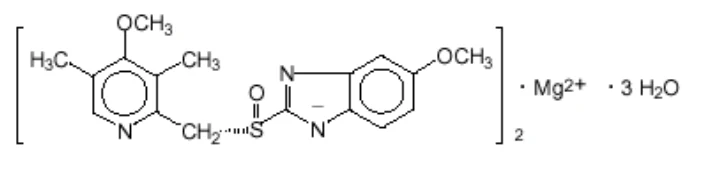
Structural Formula:
Physicochemical Properties:
Esomeprazole magnesium trihydrate is a white to slightly coloured crystalline powder, containing 3 water molecules of hydration. The solubility in water is 0.3 mg/mL, and the solubility in methanol is initially high, but followed by precipitation of a crystalline dihydrate. The pKa of the benzimidazole (omeprazole base) is 8.8, and that of the pyridinium ion, 4.0.
14 Clinical Trials
14.1. Clinical Trials by Indication
The clinical development program for NEXIUM 24HR (esomeprazole magnesium delayed release capsules USP) includes two randomized placebo-controlled studies with identical study designs (studies D961RC00001and D961RC00002). The studies were designed to demonstrate the efficacy of NEXIUM 24HR 20 mg once daily for the treatment of frequent heartburn. The primary efficacy endpoint was the percentage of heartburn free 24-hour days during 14 days of double-blind treatment. The treatment groups were well balanced for demographic characteristics such as gender, age, race and ethnicity.
Table 9 Summary of patient demographics for clinical trials
| Study # | Study design | Dosage, route of administration and duration | Study subjects (n) | Mean age (Range) | Sex |
| D961RC 00001 | Multi-Center, Randomized, Double-Blind, Placebo-Controlled, Parallel Group Subjects with Frequent Heartburn | 20 mg orally once daily for 14 days | n = 331 subjects n = 168 Esomeprazole 20 mg oral once daily n = 163 placebo | Esomperazole 20 mg oral once daily: 43.6 (19-73) Placebo: 45.9 (19-85) | Male NEXIUM 24HR (esomeprazole magnesium delayed release tablet): 64 Placebo: 68 Female NEXIUM 24HR (esomeprazole magnesium delayed release tablet): 104 Placebo: 95 |
| D961RC 00002 | Multi-Center, Randomized, Double-Blind, Placebo-Controlled, Parallel Group Subjects with Frequent Heartburn | 20 mg orally once daily for 14 days | n = 320 subjects n = 162 Esomeprazole 20 mg oral once daily n = 158 placebo | Esomperazole 20 mg oral once daily: 41.6 (19-90) Placebo: 42.8 (18-84) | Male NEXIUM 24HR (esomeprazole magnesium delayed release tablet): 76 Placebo: 76 Female NEXIUM 24HR (esomeprazole magnesium delayed release tablet): 86 Placebo: 82 |
14.2. Comparative Bioavailability Studies
Primary Efficacy Variable
The primary efficacy endpoint was the percentage of heartburn free 24-hour days during 14 days of double-blind treatment. In both studies, separately and combined, the percentage of heartburn-free 24 hour days over 14 days of randomized treatment was statistically significantly higher in subjects receiving NEXIUM 24HR 20 mg once daily compared to subjects receiving placebo (Table 10). For the combined data the percentage of heartburn free 24-hour days was 46.98% during 14 days of treatment for subjects using Nexium 24HR compared to 32.82% for subjects using placebo. The difference was 14.16% (p<0.0001). Percentage of heartburn-free 24-hour days over 14 days.
Table 10. D961RC00001, D961RC00002 and Combined Data - Comparison of Percentage of Heartburn-Free 24-Hour Days During 14 Days of Treatment by ANCOVA Between Esomeprazole 20 mg and Placebo (Full Analysis Set)
Esomeprazole 20 mg
Placebo
Difference between groupsa
Study/Variable
N
LS Mean (SE)
N
LS Mean (SE)
LS Mean (SE)
95% CI
p-value
D961RC00001
Percentage heartburn-free 24 hour day
168
46.13 (2.24)
163
33.07 (2.26)
13.06 (2.86)
(7.44,18.68)
<0.0001
D961RC00002
Percentage heartburn-free 24 hour day
162
48.00 (1.96)
158
32.75 (1.99)
15.25 (2.73)
(9.88,20.62)
<0.0001
Combined data
Percentage heartburn free 24 hour day
330
46.98 (1.49)
321
32.82 (1.50)
14.16 (1.98)
(10.28,18.05)
<0.0001 a. For individual studies: Obtained from analysis of covariance with centers and treatment as fixed effects and frequency of heartburn during the run-in phase as a covariate.
Missing values for the treatment phase were handled as stated in the Protocol, ie, values are imputed based on the run-in phase data.
ANCOVA = Analysis of covariance; CI = Confidence interval; LS = Least square; SE = Standard error.
N = number of subjects included in the analysis.
For combined analysis: Obtained from analysis of covariance with study, centers and treatment as fixed effects and frequency of heartburn during the run-in phase as a covariate.
Secondary Efficacy Variables
Resolution of frequent heartburn for a given period of time
The results of the secondary variables, (resolution of heartburn for the entire 14-day randomized treatment period, during the final week of treatment, during the second week of treatment as well as during the first week of treatment), are shown in Table 11.
Table 11. D961RC00001, D961RC00002 and Combined Data - Percentage of Subjects with Resolution of Frequent Heartburn (Full Analysis Set)
D961RC00001
% of subjects
Comparison between groups
Time
Period
Esomeprazole 20 mg
N=168
Placebo
N=163
Relative risk (95%CI)c
Entire 14a day treatment period
16.07
4.29
3.74
(1.68, 8.35)
p=0.0004
Finalb week of treatment
25.60
10.43
2.45
(1.46, 4.12)
p=0.0003
Secondb week of treatment
25.60
9.82
2.61
(1.53, 4.44)
p=0.0002
Firstb week of treatment
15.48
6.13
2.52
(1.26, 5.06)
p=0.0064
D961RC00002
% of subjects
Comparison between groups
Time
Period
Esomeprazole 20 mg
N=162
Placebo
N=158
Relative risk (95%CI)c
Entire 14a day treatment period
16.67
1.27
13.17
(3.18, 54.44)
p<0.0001
Finalb week of treatment
24.69
10.76
2.29
(1.36, 3.87)
p=0.0011
Secondb week of treatment
23.46
8.23
2.85
(1.58, 5.15)
p=0.0002
Firstb week of treatment
19.75
4.43
4.46
(2.03, 9.80)
p<0.0001
| Combined Data | |||
| % of subjects | Comparison between groups | ||
Time Period | Esomeprazole 20 mg N=330 | Placebo N=321 | Relative risk (95%CI)c |
| Entire 14a day treatment period | 16.36 | 2.80 | 5.84 (2.93, 11.62) p<0.0001 |
| Finalb week of treatment | 25.15 | 10.59 | 2.37 (1.64, 3.43) p<0.0001 |
| Secondb week of treatment | 24.55 | 9.03 | 2.72 (1.83, 4.03) p<0.0001 |
| Firstb week of treatment | 17.58 | 5.30 | 3.32 (1.98, 5.57) p<0.0001 |
a. Resolution = 2 days or less of heartburn b. Resolution = 1 day or less of heartburn c. The proportion of subjects with resolution of frequent heartburn by treatment compared by using a chi-square test. Missing values were handled as stated in the study protocol, ie assumed days with heartburn. A relative risk >1 shows treatment esomeprazole 20 mg to have a favorable outcome compared to placebo. N = number of subjects, CI = Confidence intervals The final week of treatment was defined as the last 7 consecutive days when subjects were on randomized study medication. The second week of treatment was defined as the second 7 calendar days when subjects were on randomized study medication. | |||
Resolution of frequent heartburn during the 14 days randomized treatment period (both weeks 1 and 2)
For all parameters in both studies, the proportion of subjects with resolution of frequent heartburn was significantly higher in subjects receiving esomeprazole 20 mg compared to placebo. For the combined data, for the 14 day treatment period 16.36% (54 of 330) subjects using Nexium 24HR experienced heartburn on 2 days or less, compared to 2.80% (9 of 321) subjects using placebo. During the final week of treatment, 25.15% (83 of 330) subjects using Nexium 24HR experienced heartburn on 1 day or less, compared to 10.59% (34 of 321) subjects using placebo (Table 11).
Percentage of heartburn-free 24-hour days over Days 1 to 4
Table 12 presents the comparison for each study and pooled data of the proportion of subjects having 0, 1, 2, 3, or 4 heartburn-free 24-hour days during the first 4 days on treatment between the 2 treatment groups using proportional odds model. Both studies showed a statistically significant difference between the esomeprazole 20 mg and placebo groups.
For the combined data, over the first four days of treatment 10.30% (34 of 330) of subjects taking Nexium 24HR group had not experienced heartburn compared to 4.36% (14 of 321) of subjects taking the placebo.
Table 12. D961RC00001, D961RC00002 and Combined Data - Comparison of Proportion of Subjects with 0, 1, 2, 3 or 4 Days with no Heartburn Over Days 1-4 Between Esomeprazole 20 mg and Placebo Using Proportional Odds Model (Full Analysis Set)
Study/Group
N
Number (%) of subjects
Comparison between groupsa
0 Day
1 Day
2 Days
3 Days
4 Days
Odds ratio (95% CI)
p-value
D961RC00001
Esomeprazole 20 mg
168
64 (38.10)
25 (14.88)
36 (21.43)
25 (14.88)
18 (10.71)
1.81 (1.19,2.74)
0.0053
Placebo
163
76 (46.63)
36 (22.09)
18 (11.04)
21 (12.88)
12
(7.36)
D961RC00002
Esomeprazole 20 mg
162
55 (33.95)
32 (19.75)
22 (13.58)
37 (22.84)
16
(9.88)
2.54 (1.66,3.88)
<0.000 1
Placebo
158
77 (48.73)
34 (21.52)
29 (18.35)
16 (10.13)
2
(1.27)
Combined data
Esomeprazole 20 mg
330
119 (36.06)
57 (17.27)
58 (17.58)
62 (18.79)
34 (10.30)
2.11 (1.57,2.84)
<0.000 1
Placebo
321
153 (47.66)
70 (21.81)
47 (14.64)
37 (11.53)
14
(4.36)
a. Proportional odds model with treatment as a factor and frequency of heartburn during the run-in phase as a covariate.
The probability for heartburn-free days in treatment esomeprazole 20 mg was modeled.
An odds ratio >1.00 shows treatment esomeprazole 20 mg to have a favorable outcome compared to placebo.
N = Number of subjects, CI = Confidence intervals
Both studies had statistically significant improvements for all secondary objectives evaluating resolution of frequent heartburn. The results of the secondary variables supported the outcome of the primary variable.
15. Microbiology
No microbiological information is required for this drug product.
16 Non-Clinical Toxicology
General Toxicology:
Toxicology Data Supporting the Oral Use of Esomeprazole
Single-dose Toxicity
Table 13 Single-dose Toxicity Studies of Esomeprazole.
Species
Sex
Route
Min. Lethal Dose (mg/kg)
Max. Non-Lethal Dose (mg/kg)
Rat
M
p.o.1
930
480
F
p.o.1
480
240
Rat
M
i.v.2
290
170
F
i.v.2
290
170
1 aqueous solution, 2 solution in physiological saline
The single dose toxicity of esomeprazole was studied in Wistar rats following oral and i.v. administration and compared to that of omeprazole. The effects of esomeprazole, administered either intravenously or orally, were similar to those previously reported for omeprazole. A small but clear difference in response between the sexes was seen.
The main signs of acute toxicity were reduced motor activity, coupled with changes in respiratory frequency and abdominal respiration. Intermittent clonic convulsions, sometimes associated with dyspnea, increased salivation, cyanosis, tremor, ataxia and/or very reduced motor activity were also seen. Death occurred within 23 hours of oral treatment or 2 hours of i.v. administration.
Repeat-dose Toxicity
The repeat-dose toxicity of esomeprazole was studied in rats (Wistar and Sprague-Dawley) and dogs after oral administration. Rats received oral doses of 14-280 mg/kg, and dogs 0.66-28 mg/kg, for up to 3 months. Esomeprazole has a low systemic toxicity. Some slight haematological changes indicating a mild microcytic, hypochromic anaemia (possibly due to an iron deficiency) were observed in adult rats, following repeat-dose oral treatment with high doses of esomeprazole or omeprazole. Similar slight changes were seen in pregnant rabbits, but no such changes were noted in esomeprazole-treated dogs. In both rats and dogs, histopathological changes in the stomach at the intermediate and high dose levels (rats: 69 and 280 mg/kg; dogs: 5.5 and 28 mg/kg) consisting of dose-dependent chief cell atrophy, mucosal hyperplasia, and/or focal necrosis of gastric glands, were accompanied by a dose-dependent increase in stomach weight and serum gastrin levels. These changes were expected and consistent with previous observations following treatment with high doses of omeprazole. These effects are the results of gastrin stimulation and/or inhibition of gastric acid secretion.
Carcinogenicity:
An 18-month oral study was conducted in mice at doses of 14, 44 and 140 mg/kg/day of omeprazole. No evidence of carcinogenic potential was seen. A 24-month oral study was conducted in rats at doses of 14, 44 and 140 mg/kg/day. No increase in carcinomas was observed in any organ. However, there were dose- and time-dependent increases of tumour-like proliferations in the stomach. Histology showed a continuum from diffuse ECL-cell hyperplasia in the basal region of the gastric glands to less frequent micronoduli and occasional tumour-like proliferations, some extending into the sub-mucosa. The proliferations were classified as gastric carcinoids. The proliferation of ECL-cells and development of carcinoids were more frequent in female rats. No metastases were identified in any of the animals. Carcinoids have not been observed after long-term administration of omeprazole to mice and dogs.
Mutagenicity
Esomeprazole was not mutagenic in an in vitro Ames Salmonella test, but was clastogenic in an in vitro chromosome aberration test in peripheral human lymphocytes. When compared head to head in another study in peripheral human lymphocytes, esomeprazole, omeprazole, the R-enantiomer of omeprazole and lansoprazole induced the same type and degree of chromosome aberrations. Esomeprazole did not show any evidence of mutagenic potential in vivo in a mouse micronucleus test or in a chromosome aberration test in rat bone marrow in spite of extensive exposure.
Reproductive and Developmental Toxicology:
Slight maternal toxicity was noted in pregnant rats treated orally with esomeprazole or omeprazole at doses of up to 280 mg/kg/day, but no adverse effects could be detected on embryo-foetal survival or development. The systemic exposure to esomeprazole in these animals was substantially higher than that seen in the clinical situation, indicating an adequate margin of safety.
Neither did treatment of pregnant rabbits with esomeprazole or omeprazole indicate any potential for disturbance of embryo-foetal development. However, severe and dose-related maternal toxicity was noted at relatively low doses and exposure of esomeprazole/omeprazole, resulting in some minor litter effects (a slight reduction in fetal weight and a small increase in the incidence of minor skeletal defects at doses of 26 and 86 mg/kg/day). Although exposure to esomeprazole was relatively low in many of the does, the highest dose level used could not be increased due to this maternal toxicity.
Gastric ECL-Cell Carcinoids
Extensive investigations have been carried out to explain the ECL-cell hyperplasia and the gastric carcinoid findings in rats. In one series of experiments, the antrum of rats was surgically excluded from the rest of the stomach. The removal of acid from the antrum in this way led to pronounced hypergastrinemia and, secondary to this, gastric ECL-cell proliferation. Antrectomy, which removes the source of gastrin, led to hypogastrinemia and a decrease in gastric ECL-cell density. These experiments indicated that gastrin has a direct trophic effect on gastric ECL-cells. In another series of experiments, high doses of omeprazole and a histamine H2-receptor blocker caused hypergastrinemia and increased ECL-cell density. In antrectomized rats given a high dose of omeprazole, plasma gastrin levels remained normal, and consequently there was no increase in ECL-cell density. It has therefore been concluded that (i) inhibition of gastric acid secretion by large doses of omeprazole or a histamine H2-receptor blocker evokes a natural feedback response leading to hypergastrinemia, (ii) long-standing hypergastrinemia leads to gastric ECL-cell proliferation, and (iii) there is no direct trophic effect of omeprazole on gastric ECL-cells.
An additional long-term (24 months) toxicity study of omeprazole in female rats (1.8-14 mg/kg/day) confirmed that the ECL-cell carcinoids were extreme end-life tumours and that there was a linear correlation between carcinoid incidence and dose of omeprazole (1.8-140 mg/kg/day). In rats given omeprazole 14 mg/kg/day for 12 months, no carcinoids were found, and the ECL-cell hyperplasia seen after 12 months recovered to normal during the next 12 months of no treatment.
No carcinoids were found in the mice carcinogenicity study over 18 months, in a 6-month carcinogenicity bioassay conducted with omeprazole in p53± heterozygous and C57BL/6 (background strain) mice at dose levels of up to 830 mg/kg/day, or in dogs following administration of 0.17 mg/kg/day omeprazole for 7 years.
Treatment with NEXIUM (esomeprazole) for up to 1 year in more than 800 patients resulted in moderate increases in serum gastrin levels. However, no significant pathological changes in the gastric oxyntic endocrine cells were observed.