


Patient Medication Information: uses, side effects, how to take - Nitrolingual Pumpspray
ABOUT THIS MEDICATION
What the medication is used for:
NITROLINGUAL PUMPSPRAY is used in adults for the treatment of acute attacks of angina pectoris – chest pain which occurs when the heart muscle does not get as much blood (hence as much oxygen) as it needs.
What it does:
NITROLINGUAL PUMPSPRAY belongs to a group of drugs, which reduce the oxygen demand of the heart.
When it should not be used:
Do not use NITROLINGUAL PUMPSPRAY if you:
Are allergic to nitroglycerin or any of the non-
medicinal ingredients in the formulation or to any other medication of the same group of medicines called nitrates
- Have an eye disease called closed angle glaucoma
- Are having a heart attack (myocardial infarction)
Have low iron levels in your blood or low red blood
cell count (severe anemia)
Have low blood pressure (hypotension) or a
diagnosis of heart failure
Have a condition caused by an increase in normal
brain pressure (increased intracranial pressure)
Are taking CIALIS®(tadalafil),
LEVITRA®(vardenafil), VIAGRA®(sildenafil citrate) or any similar medication for impotence (erectile dysfunction)
Are taking ADEMPAS® (riociguat) for high blood
pressure in your lungs (chronic thromboembolic pulmonary hypertension (CTEPH) or pulmonary arterial hypertension (PAH))
What the medicinal ingredient is:
Nitroglycerin
What the nonmedicinal ingredients are:
Ethanol anhydrous, medium chain partial glycerides, medium chain triglycerides, peppermint oil, sodium lactate, lactic acid
What dosage forms it comes in:
Spray bottles delivering 75 or 200 metered doses of 0.4 mg nitroglycerin per spray emission.
WARNINGS AND PRECAUTIONS
Serious Warnings and Precautions
Headaches or symptoms of low blood pressure, such as weakness or dizziness, especially when you go from lying/sitting to standing up, may be due to taking too much NITROLINGUAL PUMPSPRAY. You may also notice a bluish discolouration to your skin, especially around your lips and mouth. If these symptoms occur, talk to your doctor, nurse, or pharmacists as your dose of NITROLINGUAL PUPMSPRAY may need to be reduced.
BEFORE you use NITROLINGUAL PUMPSPRAY talk to your doctor, nurse or pharmacist if you:
- are currently taking any other medications, whether on prescription or otherwise (see Interactions with this Medication section below).
- have headaches, weakness or dizziness especially when getting up suddenly from a laying down or sitting position, or symptoms of low blood pressure (hypotension).
are breast feeding, pregnant, or think you might be pregnant.
- had a heart attack.
- are less than 18 years old.
Tolerance to NITROLINGUAL PUMPSPRAY and similar drugs can occur after long periods of use. Chronic use can lead to angina attacks being brought on more easily. Do not suddenly stop using NITROLINGUAL PUMPSPRAY. Talk to your doctor if you wish to discontinue using NITROLINGUAL PUMPSPRAY.
Driving and using machines: Temporary dizziness may be associated with the use of NITROLINGUAL PUMPSPRAY. Make sure you know how you react to this medicine before you drive, operate machinery, or do anything requiring you to be alert.
Avoid alcoholic beverages until you have discussed their use with your doctor.
The spray should be kept away from the eyes and it should not be inhaled.
INTERACTIONS WITH THIS MEDICATION
As with most medicines, interactions with other drugs are possible. Tell your doctor, nurse, or pharmacist about all the medicines you take, including drugs prescribed by other doctors, vitamins, minerals, natural supplements, or alternative medicines.
Serious Drug Interactions
If you are currently taking medication for the treatment of impotence (erectile dysfunction) such as CIALIS® (tadalafil), LEVITRA® (vardenafil), VIAGRA® (sildenafil citrate) or any other similar medication (PDE5 inhibitors), the use of NITROLINGUAL PUMPSPRAY may lead to extreme low blood pressure resulting in fainting, heart attack and death.
If you are being treated with any of these drugs and need NITROLINGUAL PUMPSPSRAY (e.g. in case of chest pain caused by an acute attack of angina pectoris) please seek emergency medical assistance immediately.
The following may interact with NITROLINGUAL PUMPSPRAY:
Medications used to treat hypertension (high blood
pressure) such as:
- Diuretics (“water pills”)
Calcium Channel Blockers [medications used to
treat conditions such as high blood pressure, angina (chest pain), and other heart conditions (e.g. diltiazem, nifedipine, verapamil)]
Tricyclic antidepressants (e.g.: imipramine,
amitriptyline, desipramine, nortriptyline)
Antipsychotics (medications used to treat
schizophrenia or bipolar depression)
Medications used to relieve muscle spasms including
tizanidine (e.g. Zanaflex)
Alcoholic beverages (when combined with
NITROLINGUAL PUMPSPRAY it may cause your blood pressure to drop too low)
- Topical aesthetics prilocaine/lidocaine (e.g. EMLA®)
Medication used to treat pulmonary hypertension
such as riociguat (e.g. Adempas)
Sapropterin (a medication used to treat a disease
called hyperphenylalaninemia)
Dihydroergotamine (a medication used to treat
migraine)
PROPER USE OF THIS MEDICATION
Ideally, you should sit and rest while taking this medication.
- 1.
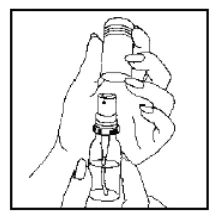
Holding container in upright
position, remove the plastic cover.
DO NOT SHAKE.
- 2.
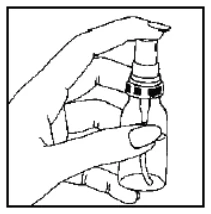
The container must be primed prior to the first use. To prime, point away from face, press the button firmly with the forefinger to release one spray. Repeat this 3 times. Now your container is primed and ready for use.
Repriming is only necessary when the container has not been used for more than 14 days. To reprime, release 1 spray as directed
previously. There is no need to reprime the container between more frequent usage.
- 3. Hold the container upright with forefinger on top of the grooved button. There is no need to shake the container.
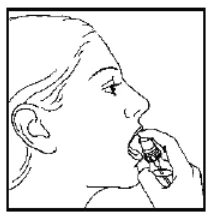
- 4. Open your mouth and bring the container as close to it as possible.
- 5.
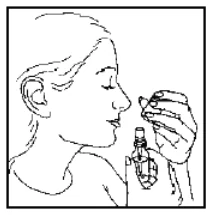
Press the button firmly with the forefinger to release the spray onto or under the tongue.
DO NOT INHALE THE SPRAY.
KEEP THE SPRAY
AWAY FROM EYES.
- 6. Release button and close mouth.
- 7. If you require a second dose, repeat steps 4, 5 and 6.
- 8. Replace the plastic cover.
- 2.
When using this product for the first time, familiarize yourself with how to use it by testing the spray into the air (away from yourself and others). Get the feel of the finger resting on the groove button so that you can use the spray in the dark.
Usual adult dose:
NITROLINGUAL PUMPSPRAY should be taken as prescribed by your doctor.
During an anginal attack, one or two doses should be sprayed onto or under the tongue, without inhaling. Your doctor can help you to discover the exact dose which will be best for you. Administer at rest, ideally in the sitting position. A dose may be repeated twice at 5-10 minute intervals. If the pain persists, seek emergency medical assistance.
MAKE SURE THAT YOU HAVE A SPARE PUMPSPRAY READILY AVAILABLE (TO PREVENT RUNNING OUT WHEN NEEDED).
Overdose:
Symptoms of overdosage may include: flushing, headache, nausea, dizziness, and hypotension.
If you think you have taken too much
NITROLINGUAL PUMPSPRAY contact your doctor, nurse, pharmacist, hospital emergency department or regional Poison control Centre immediately, even if there are no symptoms.
SIDE EFFECTS AND WHAT TO DO ABOUT
THEM
Along with its intended action, any medication, including NITROLINGUAL PUMPSPRAY, may cause side effects. After you have started taking NITROLINGUAL PUMPSPRAY, it is important that you tell your doctor at once about any unexplained symptom you might experience.
Side effects may include:
- Headache
- Sore throat and/or mouth, runny nose
- Restlessness
If any of these affects you severely, tell your doctor, nurse or pharmacist.
| SERIOUS SIDE EFFECTS, HOW OFTEN THEY HAPPEN AND WHAT TO DO ABOUT THEM | ||||
| Symptom / effect | Talk with your doctor, nurse or pharmacist | Stop taking drug and seek immediate emergency medical attention | ||
Only if severe | In all cases | |||
| Allergic reaction involving skin rash or swelling of the face, lips and/or tongue accompanied by difficulty breathing | ✓ | |||
| Common | Severe, persistent headache | ✓ | ||
| Dizziness | ✓ | |||
| Weakness | ✓ | |||
| SERIOUS SIDE EFFECTS, HOW OFTEN THEY HAPPEN AND WHAT TO DO ABOUT THEM | |||||
Symptom / effect Abdominal pain Swelling of the ankles Tingling or pins and needles of a limb Shortness of breath | Talk with your doctor, nurse or pharmacist | Stop taking drug and seek immediate emergency medical attention | |||
Only if severe | In all cases | ||||
| ✓ | |||||
| ✓ | |||||
| ✓ | |||||
| ✓ | |||||
| Uncommon | Nausea | ✓ | |||
| Sweating | ✓ | ||||
| Rash | ✓ | ||||
| Flushing | ✓ | ||||
| Chest pain | ✓ | ||||
| Racing heart rate and/or palpitations (irregular heartbeat) | ✓ | ||||
| Pallor | ✓ | ||||
| Vomiting | ✓ | ||||
Low blood pressure (hypotension). This can be severe, leading to slow or fast heartbeat, fainting or dizziness when you change from lying/sitting to standing up. | ✓ | ||||
| Fainting | ✓ | ||||
This is not a complete list of side effects. For any unexpected effects while taking NITROLINGUAL PUMPSPRAY, contact your doctor, nurse or pharmacist.
HOW TO STORE IT
Contains alcohol. Do not open container forcefully or burn after use. Do not spray toward flames. Do not place NITROLINGUAL PUMPSPRAY in hot water or near radiators, stoves or other sources of heat. Do not expose to temperature over 40°C. Store at room temperature (15ºC to 30ºC).
Keep in a safe place and out of the reach and sight of children.
Reporting Side Effects
You can report any suspected side effects associated with the use of health products to Health Canada by:
Visiting the Web page on Adverse Reaction
Reporting (https://www.canada.ca/en/health-canada/services/drugs-health-
products/medeffect-canada/adverse-reaction-reporting.html) for information on how to report online, by mail or by fax; or • Calling toll-free at 1-866-234-2345. NOTE: Contact your health professional if you need information about how to manage your side effects. The Canada Vigilance Program does not provide medical advice.
MORE INFORMATION
This document plus the full product monograph, prepared for health professionals, can be found at
www.medexus.com or by contacting the
importer/distributor, Medexus Pharmaceuticals Inc. at: 1-877-630-5674.
Imported / Distributed by: Medexus Pharmaceuticals Inc., Bolton, Ontario, Canada L7E 1K1
Last revised: JUL 10, 2026
CIALIS® is a registered trade-mark of ELI LILLY AND COMPANY.
LEVITRA® is a registered trade-mark of BAYER AG VIAGRA® is a registered trade-mark of PFIZER PRODUCTS INC.
EMLA® is a registered trade-mark of the
ASTRAZENECA group of companies.
ADEMPAS® is a registered trade-mark of BAYER AG.