


Patient Medication Information: uses, side effects, how to take - Nivestym
What is Nivestym used for?
Nivestym is used to treat neutropenia (nu-tro-peen-ee-ah), a condition where the body makes too few neutrophils. Neutropenia predisposes your body to infections and prevents you from fighting them. Your doctor has decided to prescribe Nivestym for you to increase the number of neutrophils (nu-tro-fils), which will fight infections.
Neutropenia may be a long-standing condition where your body does not make enough neutrophils, or it may be caused by drugs used to treat cancer. In some cases, your body may make enough neutrophils, but as part of your treatment for cancer, your doctor may want to increase the number of certain blood cells (CD34 cells) and collect them. The cells are collected using a process called apheresis (ay-fer-ree-sis). These collected cells are given back to you after you receive very high doses of treatment for cancer to make your blood counts get back to normal more quickly.
How does Nivestym work?
Nivestym is a man-made form of granulocyte colony-stimulating factor (G-CSF), which is made using a type of E coli bacteria. G-CSF is a substance naturally produced by the body. It stimulates the growth of neutrophils (nu-tro-fils), which are a type of white blood cell important in the body’s fight against infection. Nivestym works by helping your body make more neutrophils. To make sure Nivestym is working, your doctor will ask that you have regular blood tests to count the number of neutrophils you have. It is important that you follow your doctor’s instructions about getting these tests.
Serious Warnings and Precautions
- The spleen may become enlarged and can rupture while taking Nivestym. A ruptured spleen can cause death. Call your doctor right away if there is pain in the left upper stomach area or left shoulder tip area.
- If you have sickle cell trait or sickle cell disease, make sure that you tell your doctor before you start taking Nivestym so that the potential risks and benefits can be discussed. In patients with sickle cell trait or sickle cell disease, severe sickle cell crises have been associated with the use of Nivestym, resulting in death in some cases.
What are the ingredients in Nivestym?
Medicinal ingredients: filgrastim
Non-medicinal ingredients: acetate, polysorbate 80, sodium, sorbitol, and water
Nivestym comes in the following dosage forms:
Prefilled Syringes (600 mcg/mL)
- 300 mcg/0.5 mL in a single-use graduated prefilled syringe with a BD Ultrasafe PlusTM Passive Needle Guard
- 480 mcg/0.8 mL in a single-use graduated prefilled syringe with a BD Ultrasafe PlusTM Passive Needle Guard
The Nivestym syringe plunger stopper and needle cover are not made with natural rubber latex.
Vials (300 mcg/mL)
- 300 mcg/1 mL in a single-use vial
- 480 mcg/1.6 mL in a single-use vial
The vial stopper is not made with natural rubber latex.
Do not use Nivestym if:
- You are allergic (hypersensitive) to filgrastim or any of the other ingredients. For a detailed list of medicinal and non-medicinal ingredients, see above “What are the ingredients in Nivestym?”.
- You are allergic to other medicines made using the bacteria E.coli. Ask your doctor if you are not sure.
To help avoid side effects and ensure proper use, talk to your healthcare professional before you take Nivestym. Talk about any health conditions or problems you may have, including if you:
- Get left upper abdominal pain or pain at the tip of your shoulder.
- Have osteoporosis (loss of calcium from the bones which leads to the bones becoming weak and fragile).
- Are suffering from any other illness (especially if you think you may have an infection).
- Experience a cough, fever, and difficulty breathing.
- Have sickle cell trait or sickle cell disease (an inherited blood disorder that affects red blood cells).
- Are taking or have recently taken any other medicines, including medicines obtained without a prescription,
- Are breast-feeding.
- Are pregnant, or think you may be pregnant or plan to get pregnant.
Other warnings you should know about:
Nivestym may reduce your chance of getting an infection,but does not prevent all infections. An infection can still happen during the short time when you/your child's neutrophil levels are low. You must be alert and look for some of the common signs or symptoms of infection, such as fever, chills, rash, sore throat, diarrhea, or redness, swelling, or pain around a cut or sore. If you/your child has any of these signs or symptoms during treatment with Nivestym, tell your doctor or nurse immediately.
There is a possibility that you could have a reaction at an injection site. If there is a lump, swelling, or bruising at an injection site that does not go away, call your doctor.
If you have a sickle cell trait or sickle cell disease, make sure that you tell your doctor before you start taking Nivestym. If you have a sickle cell crisis after getting Nivestym, tell your doctor right away.
Make sure your doctor knows about all medicines, and herbal or vitamin supplements you are taking before starting Nivestym. If you are taking lithium you may need more frequent blood tests.
If you/your child are receiving Nivestym because you are also receiving chemotherapy, the last dose of Nivestym should be injected at least 24 hours before your next dose of chemotherapy.
Talk to your doctor if you experience unusual bleeding or bruising while taking Nivestym following chemotherapy, as this could mean a decrease of platelets which reduces the ability of blood to clot.
If you have any questions, you should talk to your doctor.
What about pregnancy or breastfeeding?
Nivestym has not been studied in pregnant women, and its effects on unborn babies are not known. If you take Nivestym while you are pregnant, it is possible that small amounts of it may get into your baby’s blood. It is not known if Nivestym can get into human breast milk. If you are pregnant, plan to become pregnant, think you may be pregnant, or are breastfeeding, you should tell your doctor before using Nivestym.
Tell your healthcare professional about all the medicines you take, including any drugs, vitamins, minerals, natural supplements or alternative medicines.
The following may interact with Nivestym:
Interactions between Nivestym and other drugs have not been studied. Drugs such as lithium may affect the release of neutrophils into the blood stream. You should discuss your treatment with your doctor before using Nivestym if you are currently on lithium treatment.
How to take Nivestym:
If you or your child are/is receiving Nivestym while receiving chemotherapy, the first dose should be given at least 24 hours after the chemotherapy and the last dose of Nivestym should be injected at least 24 hours before your next dose of chemotherapy.
If you are giving someone else Nivestym injections, it is important that you know how to inject Nivestym, how much to inject, and how often to inject Nivestym.
Nivestym is available as a liquid in vials or in prefilled syringes. Instructions for use for each presentation is detailed separately. Make sure you read the section that applies to the presentation you are using.
Prefilled Syringe
Before you use a Nivestym prefilled syringe, read this important information.
Storing your Nivestym prefilled syringe
- Store the Nivestym prefilled syringe in the refrigerator between 2°C to 8°C.
- Do not freeze.
- Keep the Nivestym prefilled syringe in the original carton to protect from light or physical damage.
- Take the Nivestym prefilled syringe out of the refrigerator 30 minutes before use and allow it to reach room temperature before preparing an injection.
- The Nivestym prefilled syringe may be allowed to reach room temperature for up to 15 days. Throw away (dispose of) any Nivestym prefilled syringe that has been left at room temperature for longer than 15 days.
- After you inject your dose, throw away (dispose of) any unused Nivestym left in the prefilled syringe. Do not save unused Nivestym in the prefilled syringe for later use.
- Keep the Nivestym prefilled syringe and all medicines out of the reach of children.
Using your Nivestym prefilled syringe
- It is important that you do not try to give the injection unless you or your caregiver has received training from health care provider.
- Make sure the name Nivestym appears on the carton and prefilled syringe label.
- Do not use a Nivestym prefilled syringe after the expiration date on the label.
- Do not shake the Nivestym prefilled syringe.
- Do not use the prefilled syringe if the medicine is cloudy or discolored or contains flakes or particles.
- The prefilled syringe has a needle guard that needs to be activated to cover the needle after the injection is given. The needle guard will help prevent needle stick injuries to anyone who handles the prefilled syringe.
- Do not remove the needle cover from the prefilled syringe until you are ready to inject.
- Do not use a Nivestym prefilled syringe if the needle cover is missing.
- Do not use the prefilled syringe if the carton is open or damaged.
- Do not use a prefilled syringe if it has been dropped on a hard surface. The prefilled syringe may be broken even if you cannot see the break. Use a new prefilled syringe.
Call your healthcare provider if you have any questions.
About the Nivestym prefilled syringe
- Nivestym prefilled syringes come in two strengths. Depending on your prescription, you will receive Nivestym prefilled syringes that contain 300 mcg/0.5mL or 480 mcg/0.8mL of medicine. Your healthcare provider will determine the dose in milliliters (mL) that you will need to give based on your body weight.
- You should not inject a dose of Nivestym less than 0.3 mL (180 mcg) from a Nivestym prefilled syringe. A dose less than 0.3 mL cannot be accurately measured using the Nivestym prefilled syringe.
When you receive your Nivestym prefilled syringes, always check to see that the:
- name Nivestym appears on the carton and prefilled syringe label.
- expiration date on the prefilled syringe label has not passed. You should not use a prefilled syringe after the date on the label.
- strength of Nivestym (number of micrograms on the carton containing the Nivestym prefilled syringe) is the same as what your healthcare provider prescribed.
Nivestym prefilled syringe parts (see Figure A).
Nivestym 300 mcg/0.5mL prefilled syringe is shown as an example.
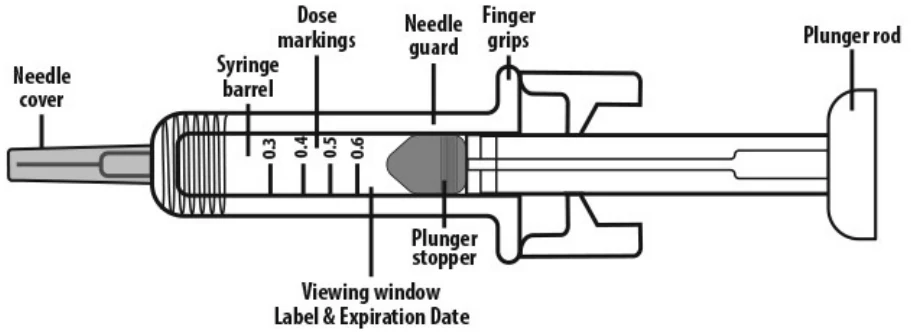
Figure A
What you need for your injection
Included in the carton:
- 1 new Nivestym prefilled syringe
Not included in the carton (see Figure B)
- 1 adhesive bandage
1 alcohol wipe
- 1 cotton ball or gauze
- sharps disposal container
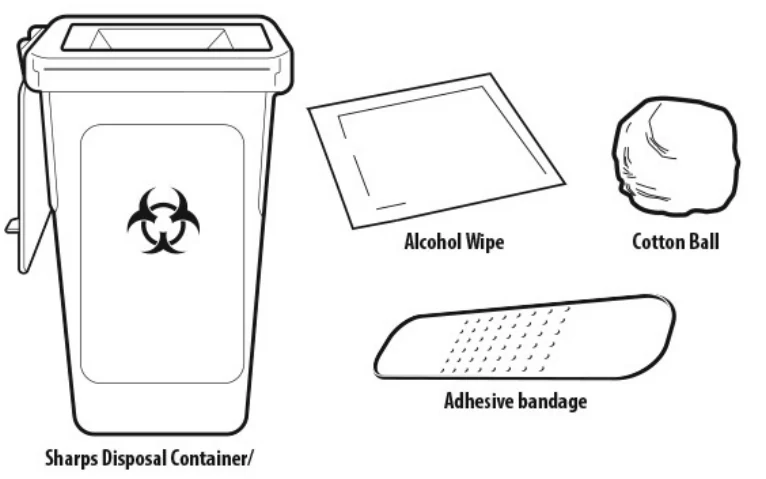
Figure B
Figure C shows a needle guard that has not yet been activated. The prefilled syringe is ready for use. This is what the prefilled syringe looks like before use.
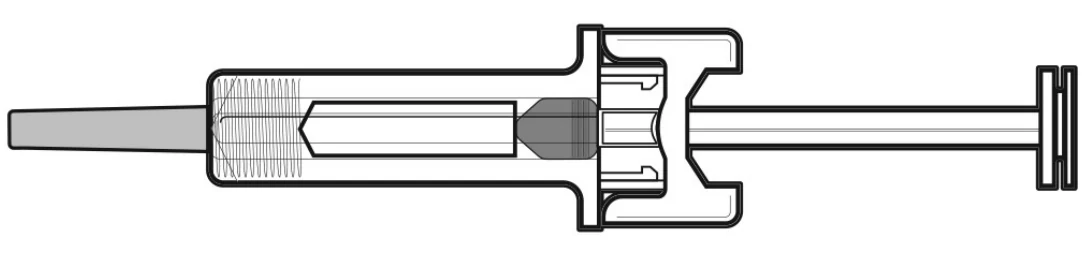
Figure C
Figure D shows a needle guard that has been activated. This is what the prefilled syringe looks like after use.
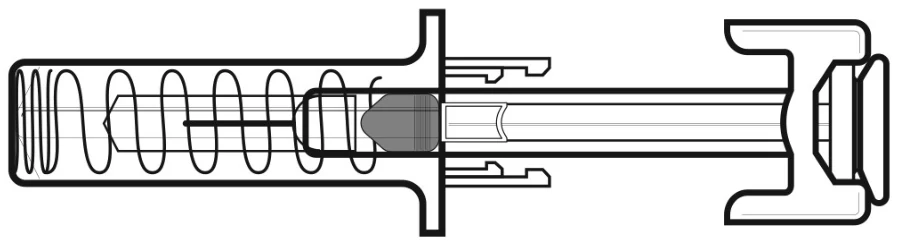
Figure D
Preparing the Nivestym prefilled syringe
Step 1: Find a clean, well-lit flat work surface.
Step 2: Take the carton containing the Nivestym prefilled syringe out of the refrigerator and leave it unopened on your work surface for at least 30 minutes so that it reaches room temperature. Put the original carton with any unused prefilled syringes back in the refrigerator.
- Do not shake the prefilled syringe.
- Do not leave the prefilled syringe in direct sunlight.
Step 3: Wash your hands with soap and water.
Step 4: Remove the prefilled syringe from the carton. Check to make sure that the needle guard is covering the barrel of the syringe. Do not push the needle guard over the needle cover before the injection. This may activate or lock the needle guard. See Figure C above that shows how the prefilled syringe looks before use.
If the needle guard is covering the needle that means it has been activated. See Figure D above that shows how the prefilled syringe looks after use. Do not use the Nivestym prefilled syringe. Get another prefilled syringe that has not been activated and is ready to use.
Step 5: Check the expiration date on the Nivestym prefilled syringe. Do not use the Nivestym prefilled syringe if the expiration date has passed.
Step 6: Inspect the medicine and prefilled syringe. Turn the prefilled syringe so you can see the medicine and markings in the window. Look through the window on the Nivestym prefilled syringe. Make sure the medicine in the prefilled syringe is clear and colorless.
Do not use the Nivestym prefilled syringe if:
- The medicine is cloudy or discolored, or contains flakes or particles.
- Any part of the prefilled syringe appears cracked or broken.
- The prefilled syringe has been dropped.
- The needle cover is missing or not securely attached.
- The expiration date printed on the label has passed.
- In all cases, use a new prefilled syringe and call your healthcare provider.
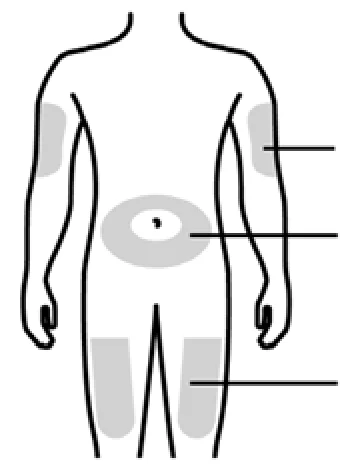
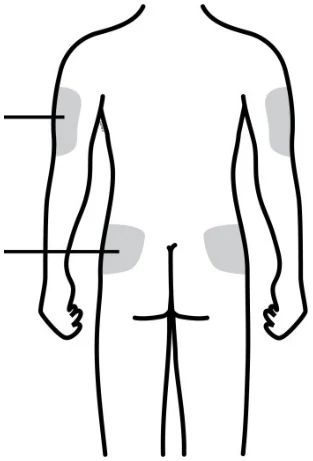
Step 7: Choose the injection site.
When giving your injections, follow your healthcare provider’s instructions about changing the site for each injection. Areas of your body that you may use as injection sites include (See Figure E):
- front of your thighs
- stomach area (abdomen), except for a 2-inch area around your navel (belly button)
- outer upper arms, only if a caregiver is giving you the injection.
- upper outer areas of the buttocks, only if a caregiver is giving you the injection.
Upper arm Stomach area (abdomen) Thigh | Upper arm Buttock |
|---|
Figure E
- Choose a different site for each injection of Nivestym.
- Do not inject into areas where the skin is tender, red, bruised, or hard. Avoid injecting into areas with scars or stretch marks.
Step 8: Clean your injection site with an alcohol wipe. See Figure F.
- Let your skin dry.
- Do not touch this area again before injecting.
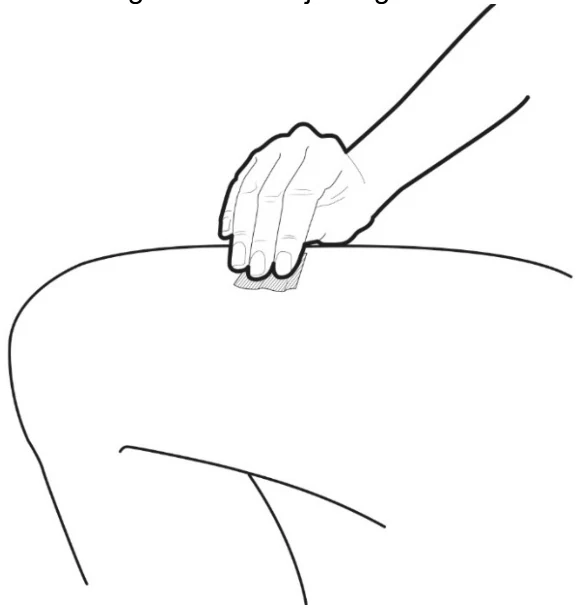
Figure F
 |  |
|---|
Step 9: Hold the prefilled syringe by the needle guard with the needle cover pointing up. Carefully pull the needle cover straight off and away from your body. Throw away the needle cover. Do not recap the needle. See Figure G.
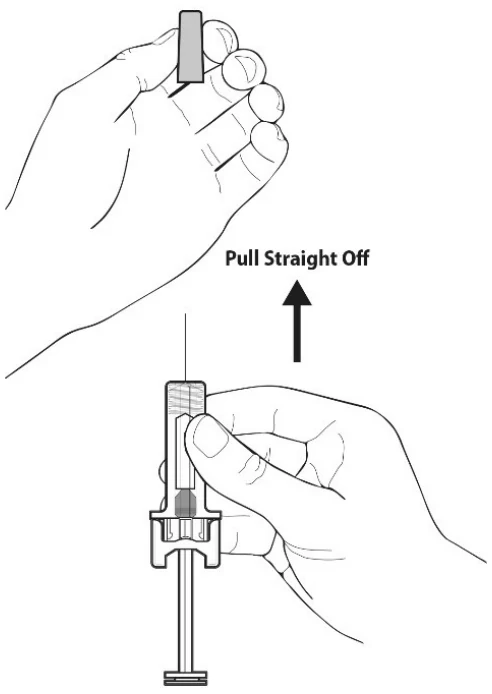
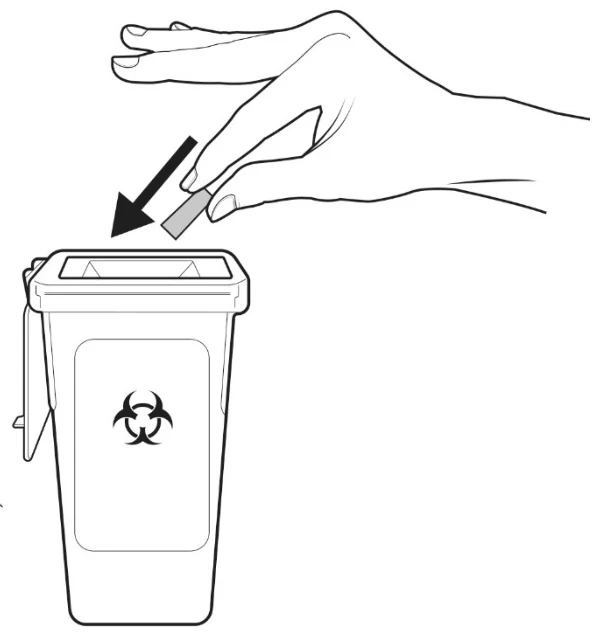
Figure G
Your healthcare provider has prescribed either a “full” syringe dose or a “partial” syringe dose.
- If you are prescribed a partial dose of Nivestym, follow Steps 10 through 18.
- If you are prescribed a full dose, you will inject all of the medicine from your prefilled syringe. For a full dose, skip Steps 10 and 11, and follow Steps 12 through 18.
Partial dosing
Step 10: Point the needle up and tap gently until the air rises to the top. See Figure H.
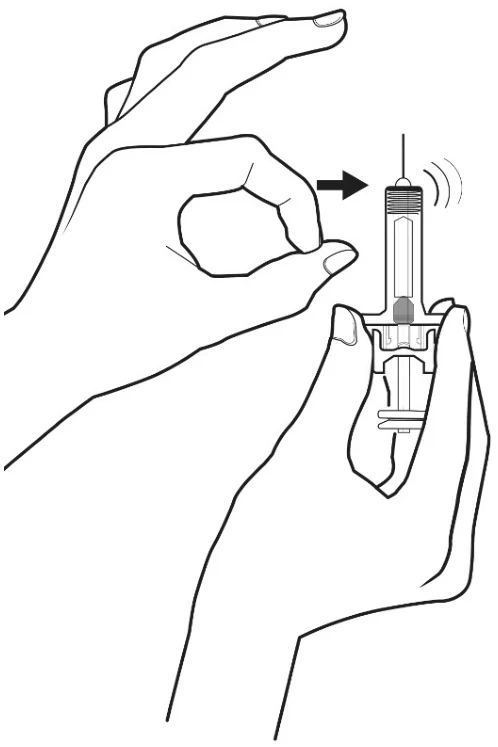
Figure H
Step 11: Holding the prefilled syringe as shown, slowly push up on the plunger rod to push out the extra air and medicine until the end of the conical base (edge) of the plunger stopper lines up with the syringe marking for your prescribed dose. See Figure I for an example of a dose of 0.3 mL. Your dose may be different than the example shown here.
Be careful not to activate the needle guard before use. Do not use a Nivestym prefilled syringe that has been activated.
Check again to make sure the correct dose of Nivestym is in the prefilled syringe.
You should not inject a dose of Nivestym less than 0.3 mL (180 mcg) from a Nivestym prefilled syringe. A dose less than 0.3 mL cannot be accurately measured using the Nivestym prefilled syringe.
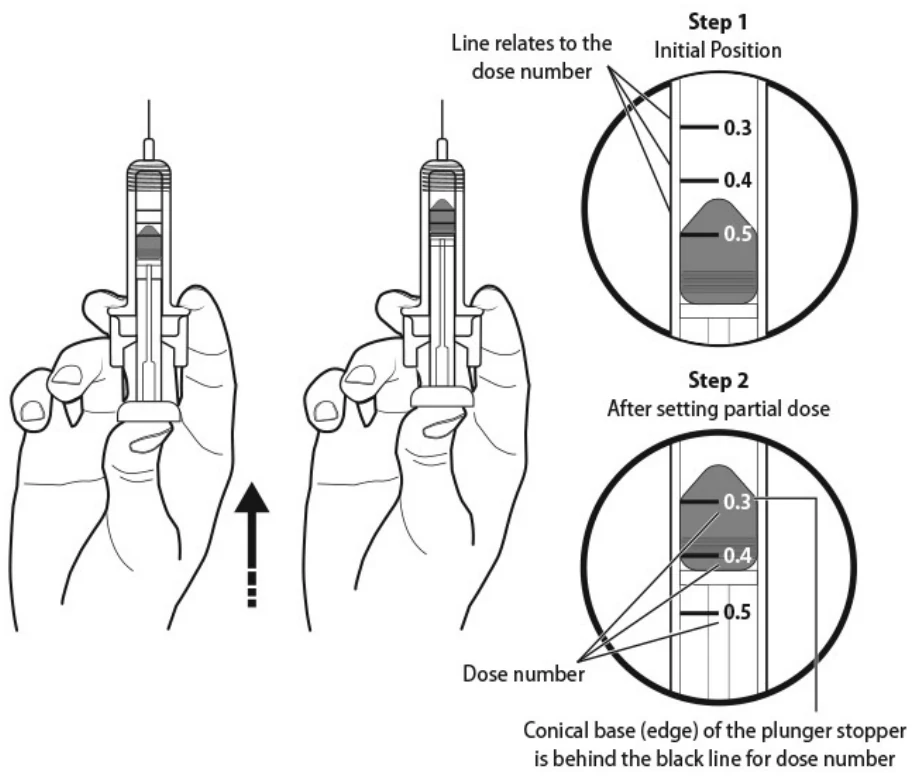
Figure I
Administering the Nivestym prefilled syringe
Step 12: With one hand, gently pinch a fold of skin at the injection site. Hold the pinch. See Figure J.
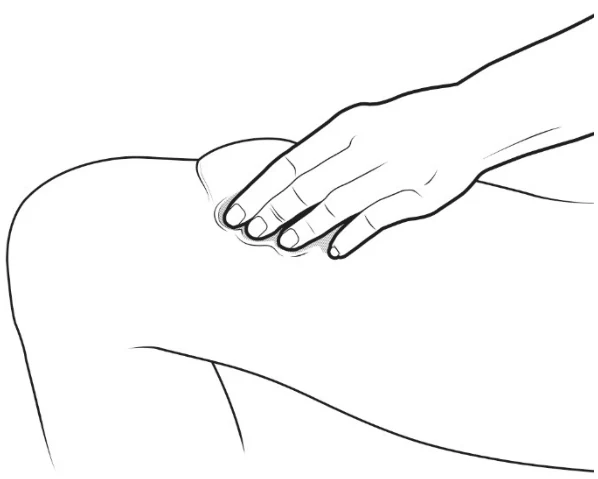
Figure J
Step 13: With your other hand, hold the prefilled syringe like you would hold a pencil. Use a quick “dart-like” motion to insert the needle into the skin at a 45 to 90 degree angle as shown. See Figure K.
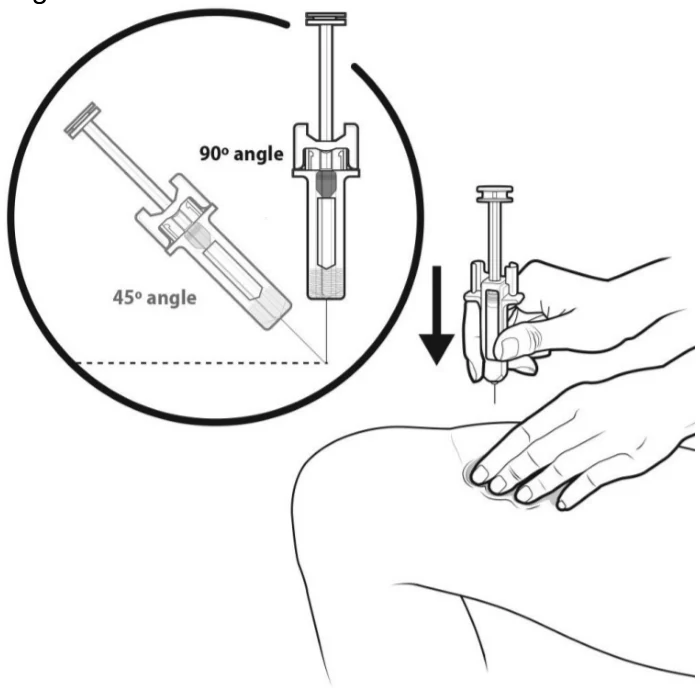
Figure K
Step 14: Using a slow and constant pressure, press down on the plunger rod as far as it will go. Keep the plunger rod fully pressed down while you hold the syringe in place for 5 seconds. See Figure L.
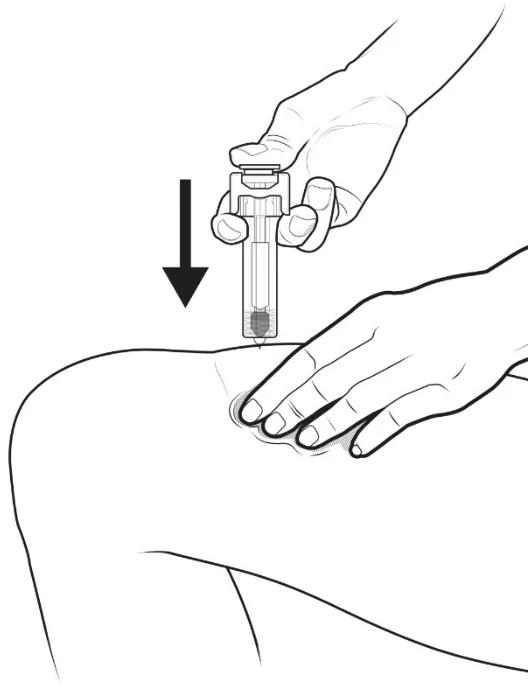
Figure L
Step 15: Keep the plunger rod fully pressed down while you carefully pull the needle straight out from the injection site. See Figure M.
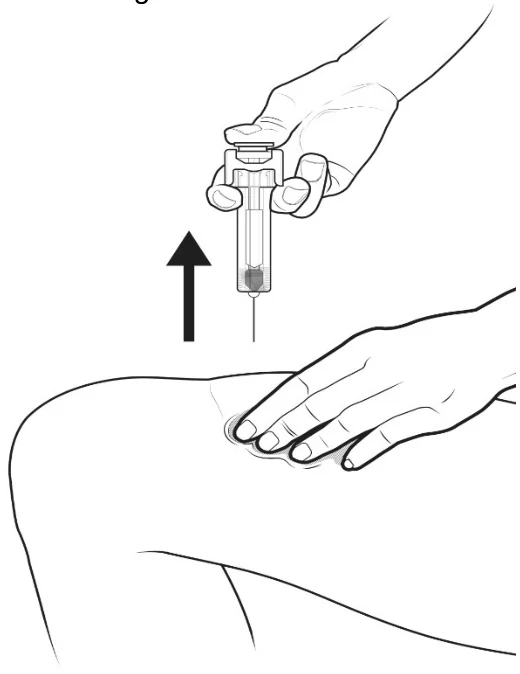
Figure M
Step 16: As you let go of the plunger rod, the needle guard will automatically slide over the needle until the needle is completely covered and the needle guard locks into place. Do not recap the needle. See Figure N.
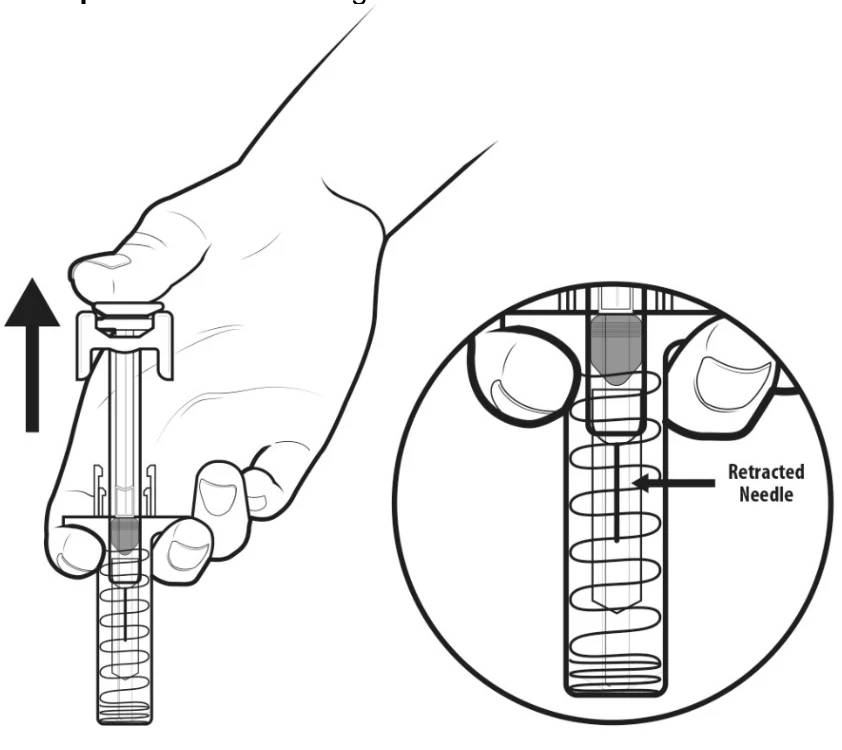
Figure N
Step 17: There may be a small amount of blood at the injection site. You can press a cotton ball or gauze over the injection site and hold it for 10 seconds. Do not rub the injection site. You may cover the injection site with a small adhesive bandage, if needed. See Figure O.
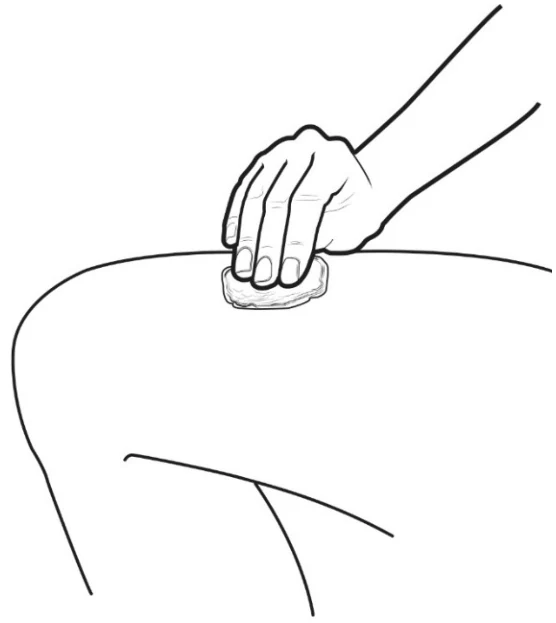
Figure O
Step 18: Throw away (dispose of) the syringe as instructed by your healthcare provider or by following the instructions below. There may be special provincial or local laws for disposal of used needles and syringes. See Figure P.
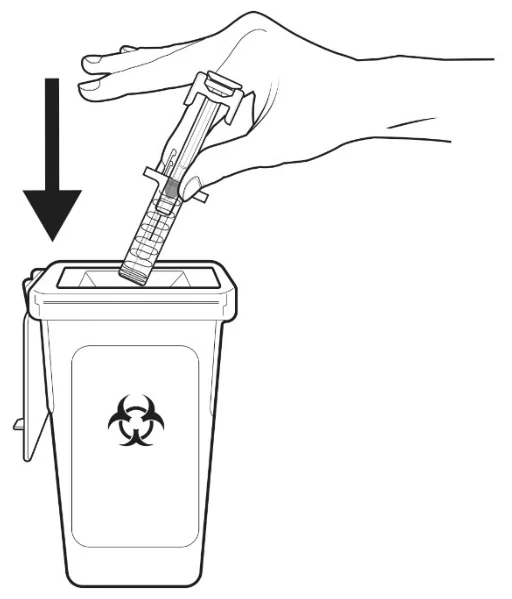
Figure P
How should I dispose (throw away) used Nivestym prefilled syringes?
- Put your used prefilled syringe in a sharps disposal container right away after use. Do not throw away (dispose of) syringes in your household trash.
- Always keep the sharps disposal container out of the reach of children.
If you do not have a sharps disposal container, you may use a household container that is:
- made of a heavy-duty plastic,
- can be closed with a tight-fitting, puncture-resistant lid, without sharps being able to come out,
- upright and stable during use,
- leak-resistant and,
- properly labeled to warn of hazardous waste inside the container.
- When your sharps disposal container is almost full, you will need to follow your community guidelines for the right way to dispose of your sharps disposal container. There may be special provincial or local laws for disposal of used needles and syringes.
- Do not dispose of your used sharps container in your household trash unless your community guidelines permit this. Do not recycle your used sharps disposal container.
If not using the vial presentation, continue reading the Patient Medication Information on page 59, from the “Usual dose” section.
Single-use Vial
Before you use a Nivestym vial, read this important information.
Storing your Nivestym vial
- Store the Nivestym vial in the refrigerator between 2˚C to 8˚C.
- Do not freeze.
- Keep the Nivestym vial in the original carton to protect from light or physical damage.
- Take the Nivestym vial out of the refrigerator 30 minutes before use and allow it to reach room temperature before preparing an injection.
- The Nivestym vial may be allowed to reach room temperature for up to 15 days. Throw away (dispose of) any Nivestym vial that has been left at room temperature for longer than 15 days.
- After you inject your dose, throw away (dispose of) any unused Nivestym left in the vial. Do not save unused Nivestym in the vial for later use.
- Keep Nivestym vial and all medicines out of the reach of children.
Using your Nivestym vial
- It is important that you do not try to give the injection unless you or your caregiver has received training from your healthcare provider.
- Make sure the name Nivestym appears on the carton and vial label.
- Only use the vial 1 time. Discard (throw away) the vial with any remaining Nivestym liquid.
- Do not use a Nivestym vial after the expiration date on the label.
- Do not shake the Nivestym vial.
- Do not use the vial if the medicine is cloudy or discolored or contains flakes or particles.
Call your healthcare provider if you have any questions.
About the Nivestym vial
- Nivestym single-use vials come in two strengths. Depending on your prescription, you will receive Nivestym single-use vial that contain 300 mcg/1 mL or 480 mcg/1.6 mL of medicine. Your doctor will determine the dose in milliliters (mL) that you will need to give based on your body weight.
When you receive your Nivestym vials, always check to see that the:
- name Nivestym appears on the carton and Nivestym vial label.
- expiration date on the Nivestym vial label has not passed. You should not use a Nivestym vial after the date on the label.
- strength of Nivestym (number of micrograms on the carton containing the Nivestym vial) is the same as what your doctor prescribed.
What you need for your injection
Included in the carton:
- 1 new Nivestym single-use vial
Not included in the carton:
- 1 disposable syringe and needle
- 2 alcohol wipes
- 1 cotton ball or gauze pad
- 1 adhesive bandage
- Sharps disposal container
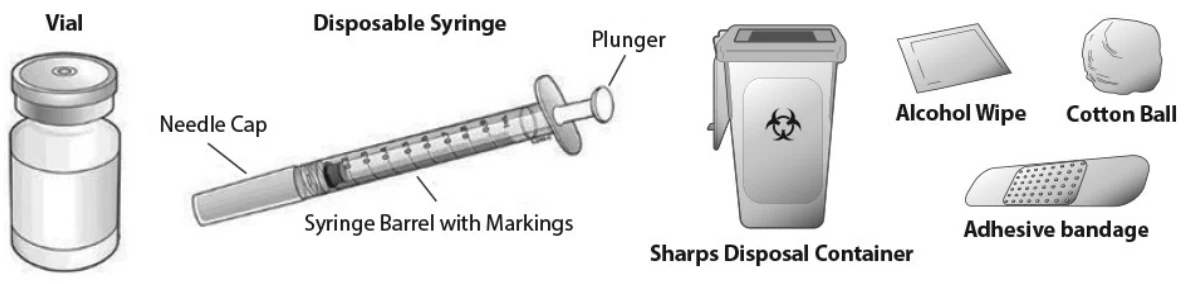
- Only use the disposable syringes and needles that your healthcare provider prescribes.
- Only use the syringes and needles 1 time. Throw away (dispose of) any used syringes and needles. See Step 9 - Finish, for instructions about how to properly dispose of used syringes and needles.
- You should only use a syringe that is marked in tenths of milliliters (mL).
- Your healthcare provider will show you how to measure the correct dose of Nivestym. This dose will be measured in milliliters (mL).
Preparing the Nivestym vial
Step 1: Remove the vial from the refrigerator. Find a clean, well-lit flat work surface.
Step 2: Place the vial on your clean work surface for 30 minutes and allow it to reach room temperature before you give an injection.
- Do not try to warm the vial by using a heat source such as hot water or microwave.
- Do not leave the vial in direct sunlight.
- Do not shake the vial.
- Use the vial only 1 time.
Step 3: Wash your hands thoroughly with soap and water.
Step 4: Inspect the vial
Make sure the medicine in the vial is clear and colorless.
Do not use the vial if:
- The medicine is cloudy or discolored or contains flakes or particles.
- The expiration date printed on the label has passed.
- In all cases, use a new vial and call your healthcare provider.
Step 5: Get Ready
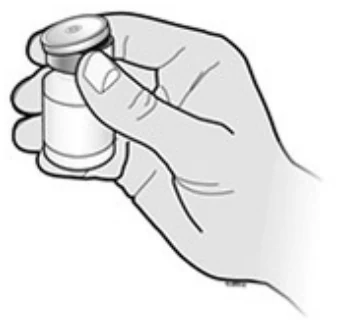
- A Take the cap off the vial. Clean the rubber stopper with 1 alcohol wipe.
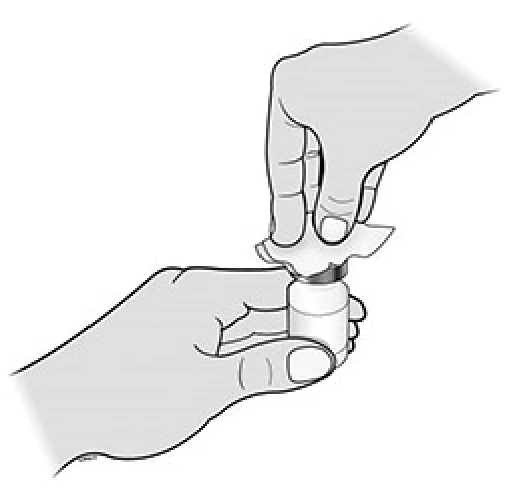
- B Check the carton containing the needle and syringe. If the carton has been opened or damaged, do not use that needle and syringe. Dispose of (throw away) that needle and syringe in the sharps disposal container.
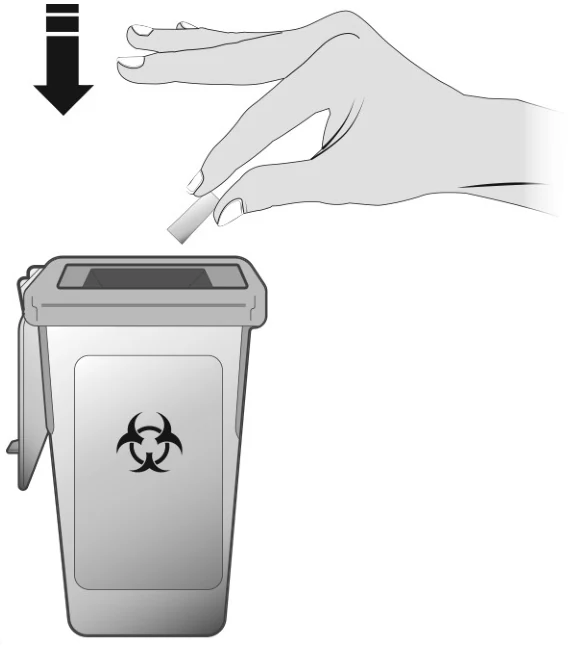
- C Hold the syringe by the barrel with the needle cap pointing up. Carefully pull the needle cap straight off and away from your body.
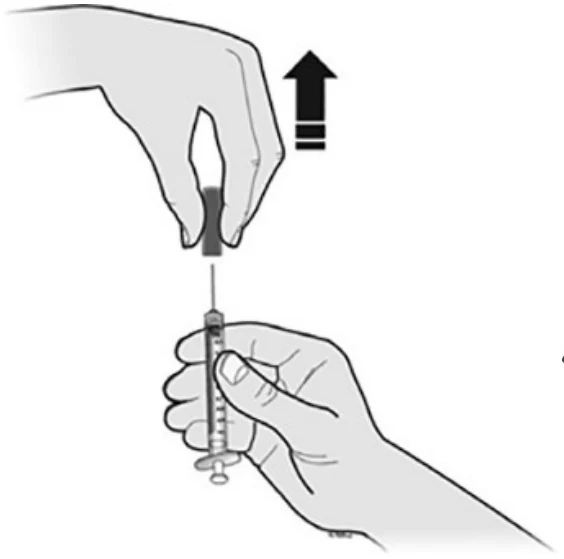
Pull back on the plunger and draw air into the syringe that is the same amount (mL) as the dose of Nivestym that your healthcare provider prescribed.
Important: Throw away the needle cap into the sharps disposal container. Do not recap the needle.
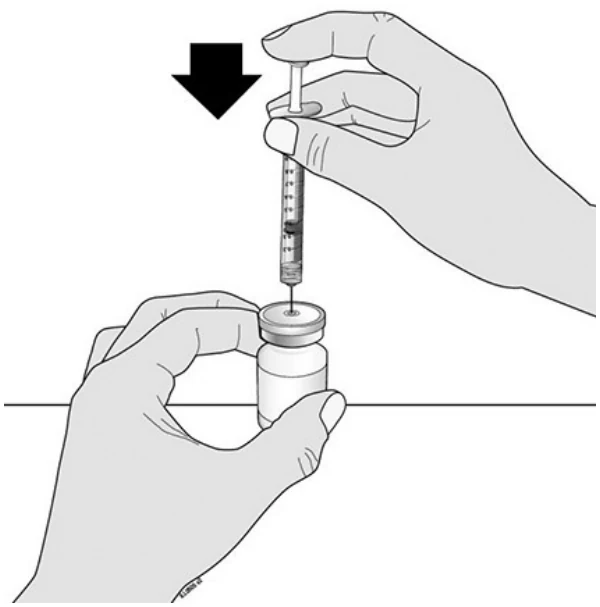
- D Keep the vial on the flat work surface and insert the needle straight down through the rubber stopper. Do not insert the needle through the rubber stopper more than 1 time.
- E Push the plunger down and inject all the air from the syringe into the vial of Nivestym.
- F Keep the needle in the vial and turn the vial upside down. Make sure that the Nivestym liquid is covering the tip of the needle.
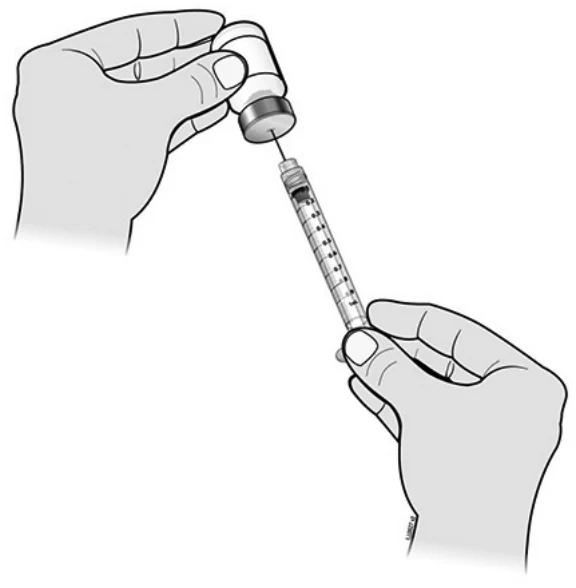
- G Keep the vial upside down and slowly pull back on the plunger to fill the syringe barrel with Nivestym to the correct marking amount (mL) of medicine that matches the dose your healthcare provider prescribed.
- H Keep the needle in the vial and check for air bubbles in the syringe. If there are air bubbles, gently tap the syringe barrel with your finger until the air bubbles rise to the top. Slowly push the plunger up to push the air bubbles out of the syringe.
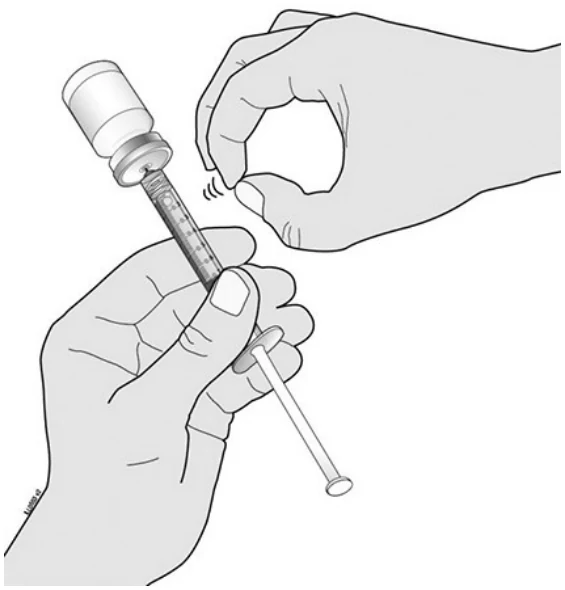
- I Keep the tip of the needle in the liquid and again pull the plunger back to the number on the syringe barrel that matches your dose. Check again for air bubbles. The air in the syringe will not hurt you, but too large an air bubble can reduce your dose of Nivestym. If there are still air bubbles, repeat the steps above to remove them.
- J Check again to make sure that you have the correct dose in the syringe. It is important that you use the exact dose prescribed by your healthcare provider. Do not remove the needle from the vial. Lay the vial down on its side with the needle still in the vial.
Step 6: Select and Prepare the Injection Site
- K Choose the injection site:
- • Thigh
- • Stomach area (abdomen), except for a 2-inch area right around your navel (belly button)
- • Upper outer area of your buttocks (only if someone else is giving you the injection)
- • Outer area of upper arm (only if someone else is giving you the injection)
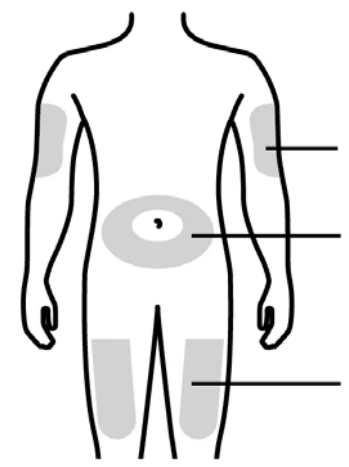 | Upper arm Stomach area (abdomen) Thigh | Upper arm Buttocks | 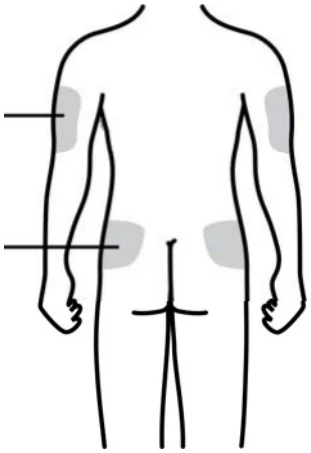 |
|---|
- L Prepare and clean your injection site.
Administering the Nivestym vial
Step 7: Clean your injection site with a clean alcohol wipe.
- Let your skin dry.
- Do not touch this area again before injecting.
- If you want to use the same injection site, make sure it is not the same spot on the injection site area you used for a previous injection.
- Do not inject into areas where the skin is tender, bruised, red, or hard. Avoid injecting into areas with scars or stretch marks.
Step 8: Subcutaneous (under the skin) injection
- Remove the prepared syringe and needle from the vial.
- Pinch your injection site to create a firm surface.
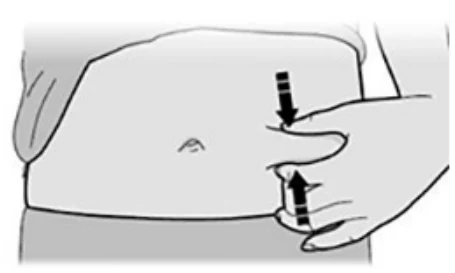
Important: Keep skin pinched while injecting.
- Hold the pinch. Insert the needle into the skin at a 45 to 90 degree angle.
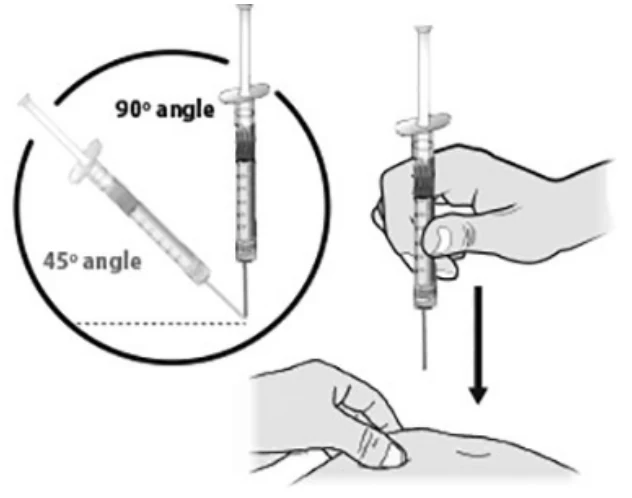
- Using slow and constant pressure, push the plunger until it reaches the bottom.
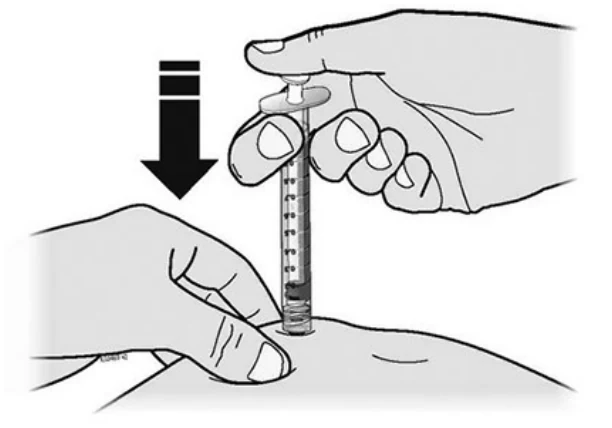
- When done gently pull the syringe out of the injection site at the same 45 to 90 degree angle used to insert it.
How should I dispose (throw away) used Nivestym vial?
Step 9: Finish
- Discard (throw away) the used needle, syringe, and vial.
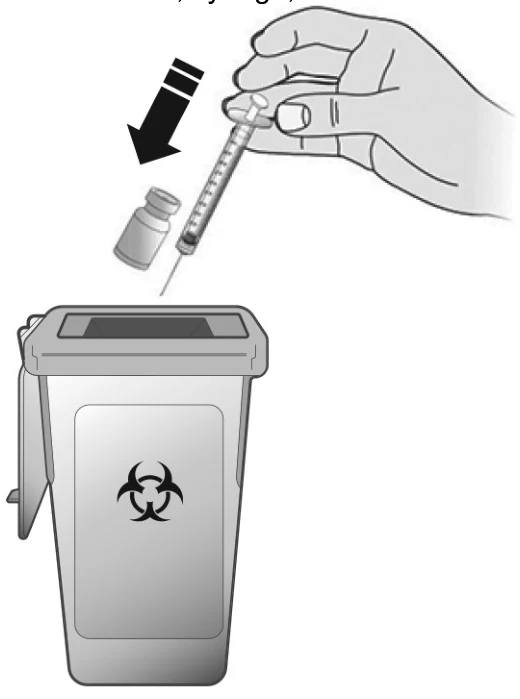
- Put your used syringes, needles, and vials in a sharps disposal container right away after use. Do not throw away (dispose of) needles, syringes and vials in your household trash.
If you do not have an sharps disposal container, you may use a household container that:
- is made of a heavy-duty plastic,
can be closed with a tight-fitting, puncture-resistant lid, without sharps being able to
- come out,
- is upright and stable during use,
- is leak-resistant, and
- is properly labeled to warn of hazardous waste inside the container.
- When your sharps disposal container is almost full, you will need to follow your community guidelines for the right way to dispose of your sharps disposal container. There may be special or local laws for disposal of used syringes and needles.
Important: Always keep the sharps disposal container out of the reach of children.
Examine the injection site.
If there is blood, press a cotton ball or gauze pad on your injection site. Do not rub the injection site. Apply an adhesive bandage if needed.
Usual dose:
Your doctor will determine your/your child’s correct dose based on you/your child's body weight.
Overdose:
You must always use the correct dose of Nivestym. Too little Nivestym may not protect against infections, and too much Nivestym may cause too many neutrophils to be produced and be found in blood.
| If you think you or your child have/has received too much Nivestym, contact your healthcare professional, hospital emergency department or regional poison control centre immediately, even if there are no symptoms. |
|---|
Missed Dose:
Nivestym should be injected at the same time each day. If a dose is missed, contact your doctor or nurse.
Information on How to Inject Nivestym:
Detailed instructions on how to inject Nivestym are provided in “Instructions for Use”. It is important that you do not try to give the injection unless you have received training from your doctor or nurse.
You should not inject a dose of Nivestym of less than 0.3 mL from a Nivestym graduated prefilled single-use syringe. A dose of less than 0.3 mL cannot be accurately measured using the Nivestym prefilled single-use syringe.
What are possible serious side effects from using Nivestym?
These are not all the possible side effects you or your child may experience when taking Nivestym. If you or your child experience any side effects not listed here, contact your healthcare professional.
- Spleen Rupture. The spleen may become enlarged and can rupture while taking Nivestym. A ruptured spleen can cause death. The spleen is located in the upper left section of the belly or stomach area. Call your doctor right away if you or your child has pain in the left upper stomach area or left shoulder tip area. This pain could mean you or your child’s spleen is enlarged or ruptured.
- Serious Allergic Reactions. Nivestym can cause serious allergic reactions. These reactions can cause a rash over the whole body, shortness of breath, wheezing, dizziness, swelling around the mouth or eyes, fast pulse, and sweating. If you or your child starts to have any of these symptoms, stop using Nivestym and call your doctor or seek emergency care right away. If you or your child has an allergic reaction during the injection of Nivestym, stop the injection right away.
- A serious lung problem called acute respiratory distress syndrome (ARDS). Call your doctor or seek emergency care right away if you or your child has shortness of breath, trouble breathing or a fast rate of breathing.
- Sickle Cell Crisis. Call your doctor or seek emergency care right away if you or your child experiences severe pain in bones, chest, gut or joints.
- Kidney injury (glomerulonephritis) Call your doctor right away if you or your child experience puffiness of the face or ankles, blood in the urine or brown colored urine, or if you notice that you or your child urinate less often than usual.
What are the most common side effects of Nivestym?
The most common side effect you or your child may experience is bone, joint and/or muscle pain. This pain can usually be relieved by taking a non-acetylsalicylic acid (non-aspirin) pain reliever such as acetaminophen.
In addition, other common side effects can be fatigue, headache, loss of appetite, diarrhea, cough, sore throat, elevation in liver enzymes, reduction in platelets (cells involved in clotting), which increases the risk of bleeding or bruising.
Some people experience a lump, redness, swelling, bruising or itching at the site of injection. This may be an allergy to the ingredients in Nivestym or it may be a local reaction. If you notice any signs of a local reaction, call your doctor. If at any time a serious allergic reaction occurs, immediately call a doctor or emergency services (for example, call 911).
If any of the side effects gets serious, or if you notice any side effects not listed in this leaflet, please tell your doctor or pharmacist.
Serious side effects and what to do about them
| Symptom / effect | Talk to your healthcare professional | Stop taking drug and get immediate medical help | |
|---|---|---|---|
| Only if severe | In all cases | ||
| UNCOMMON ≥ 0.1% and < 1% | |||
| Bone Pain | √ | ||
| Acute respiratory distress syndrome (including the symptoms: fever, shortness of breath, cough, or congestion in your lungs) | √ | √ | |
| Alveolar hemorrhage and hemoptysis (including the following symptoms: bleeding from the lungs and coughing of blood) | √ | √ | |
| Low platelet count (thrombocytopenia) (including the following symptoms: easy bruising and increased bleeding). | √ | ||
| Capillary Leak Syndrome (including the following symptoms: swelling or puffiness, which may be associated with passing water less frequently, difficulty breathing, abdominal swelling and feeling of fullness, and a general feeling of tiredness) | √ | ||
| RARE: ≥ 0.01 and < 0.1% | |||
Serious side effects and what to do about them
| Symptom / effect | Talk to your healthcare professional | Stop taking drug and get immediate medical help | |
|---|---|---|---|
| Only if severe | In all cases | ||
| Extramedullary hematopoiesis (production of blood cell components [red blood cells, white blood cells, and/or platelets] outside of the typical site of production [bone marrow]). This may result in an enlarged spleen, liver, or pink, red, or blue/purple spots or bumps on the skin. | √ | ||
| VERY RARE: < 0.01% | |||
| Splenomegaly (including the following symptoms: pain in the left upper stomach area or left shoulder tip area) | √ | ||
| Osteoporosis in children with severe chronic neutropenia (including decreased bone density, making them weak, more brittle and likely to break) | √ | ||
| Allergic reactions [body rash, shortness of breath, a drop in blood pressure (usually causing dizziness or light headedness), swelling around the mouth or eyes, fast pulse, weakness, sweating, severe redness or swelling or itching at injection site] | √ | √ | |
| Cutaneous Vasculitis (including the following signs: inflammation of the blood vessels in the skin) | √ | ||
| Sweet’s Syndrome (including the following symptoms: plum-colored, raised, painful sores on the limbs and sometimes the face and neck with a fever) | √ | ||
| Kidney Injury (glomerulonephritis) (including the following symptoms: puffiness in the face or ankles, blood in urine or brown coloured urine, or urinating less often than usual) | √ | √ | |
| *FREQUENCY NOT KNOWN | |||
| Splenic rupture (including the following symptoms: left upper abdominal pain or pain at the tip of your shoulder) | √ | ||
Serious side effects and what to do about them
| Symptom / effect | Talk to your healthcare professional | Stop taking drug and get immediate medical help | |
|---|---|---|---|
| Only if severe | In all cases | ||
| Pseudogout (including the following symptoms in patients treated for cancer: pain and swelling of the joints, similar to gout) | √ | ||
| **Abnormal number of immature bone marrow cells (myelodysplastic syndrome) that could lead to a type of cancer (acute myeloid leukemia) (including the following symptoms: fever, bone pain, bruising, difficulty breathing, bleeding and a general feeling of tiredness). | √ | √ | |
If you or your child have/has a troublesome symptom or side effect that is not listed here or becomes bad enough to interfere with your daily activities, talk to your healthcare professional.
*Reported in the post-marketing setting where the incidence is not known.
**Adverse events in breast and lung cancer patients receiving chemotherapy and/or radiotherapy
Reporting Side Effects
You can report any suspected side effects associated with the use of health products to Health Canada by:
NOTE: Contact your health professional if you need information about how to manage your side effects. The Canada Vigilance Program does not provide medical advice. |
Storage:
Do not use Nivestym after the expiry date which is stated on the outer carton and the label of the prefilled syringe and the vial.
- Nivestym should be stored in the refrigerator between 2˚C to 8˚C but not in the freezer. Avoid shaking.
- If Nivestym is accidentally frozen, allow it to thaw in the refrigerator before giving the next dose. However, if it is frozen for a second time, do not use it and contact your doctor or nurse for further instructions.
- Nivestym can be left out at room temperature (not above 25ºC) for a single period of up to 15 days that ends within the labeled expiry date. Once Nivestym has been out at room temperature, it should not be place back into the refrigerator. Any Nivestym syringes or vials that have been out of the refrigerator for longer than 15 days should not be used and should be disposed of in accordance with local requirements.
- Keep Nivestym in the outer carton to protect from light or physical damage. Do not leave Nivestym in direct sunlight. Do not use if you notice it is cloudy or there are particles in it.
- If you have any questions about storage or how to carry Nivestym when you travel, contact your doctor, nurse, or pharmacist.
Medicines should not be disposed via wastewater or household waste. Ask your pharmacist how to dispose medicines no longer required. These measures will help to protect the environment.
Keep out of reach and sight of children.
If you want more information about Nivestym:
- Talk to your healthcare professional
- Find the full product monograph that is prepared for healthcare professionals and includes this Patient Medication Information by visiting the Health Canada website (http://hc-sc.gc.ca/index-eng.php); the manufacturer’s website at www.pfizer.ca or by calling Pfizer Canada ULC at: 1-800-463-6001.
Pfizer Canada ULC
Kirkland, Québec H9J 2M5