


Product Monograph - Norlevo (Laboratoire Hra Pharma, 1.5 mg)
SUMMARY PRODUCT INFORMATION
Route of Administration | Dosage Form / Strength | Clinically Relevant Nonmedicinal Ingredients |
| Oral | Tablet1.5 mg | Lactose monohydrate, maize starch, povidone For a complete listing see Dosage Forms, Composition and Packaging section. |
INDICATIONS AND CLINICAL USE
NorLevo® (levonorgestrel 1.5 mg tablet) is an emergency contraceptive intended to be used within 72 hours following known or suspected contraceptive failure or unprotected intercourse, such as:
- ruptured or forgotten condom;
- missed oral contraceptive pill;
- expelled intrauterine device;
- early removal or dislodgment of a vaginal diaphragm or of a contraceptive cap;
- failure of the coitus interruptus method;
- sexual intercourse during the supposedly fertile period when relying on periodic abstinence (temperature method);
- rape.
Treatment should not be delayed as efficacy declines with an increased interval between intercourse and the start of the treatment. When initiated within 24 hours of unprotected intercourse NorLevo® prevents 95% of expected pregnancies. When initiated within 24-48 h or 48-72 hours, it prevents 85 % and 58% of expected pregnancies, respectively. Efficacy after 72 hours is unknown.
The pregnancy rate of levonorgestrel 0.75 mg tablets is calculated for a single use. If NorLevo® is used on more than one occasion, the cumulative pregnancy rate may be higher. NorLevo® is not recommended for routine use as a contraceptive.
NorLevo® will not prevent pregnancy from future acts of unprotected intercourse. Following use of this product, the woman should either abstain or use an alternative contraceptive method until her next menstrual cycle.
Note to Pharmacist: If you judge that a woman is a repeat user of Emergency Contraception (defined as use more than once a month on a regular basis) or that NorLevo® has been used within the past cycle, you should consider discussing other, more effective contraceptive methods with the woman, as well as encouraging her to see her physician or other health care provider for contraceptive counselling services and advise on other methods of contraception and prevention of sexually transmitted infections. NorLevo® should be dispensed if indicated.
Geriatrics: NorLevo® has not been studied in this population
Pediatrics: NorLevo® has not been studied in this population
CONTRAINDICATIONS
- NorLevo® is contraindicated in women with hypersensitivity to the active substance levonorgestrel or any of the excipients. For a complete listing, see the Dosage Forms, Composition and Packaging section of the product monograph.
- NorLevo® (levonorgestrel tablet) 1.5 mg is contraindicated in women with known or suspected pregnancy. If there is a doubt regarding pregnancy following a previous act of intercourse, especially if there is recent abnormal bleeding, a pregnancy test should be performed before taking NorLevo®.
Progestin-only oral contraceptives are used as a routine method of birth control over longer periods of time, and are contraindicated in some conditions (acute liver disease or history of or actual benign or malignant liver tumors, known or suspected carcinoma of the breast and undiagnosed abnormal vaginal bleeding). It is not known whether these same conditions apply to the NorLevo® regimen consisting of the emergency use of two progestin pills, but these risks should be considered if NorLevo® needs to be administered several times.
WARNINGS AND PRECAUTIONS
General
NorLevo® is not effective in terminating an existing pregnancy.
Emergency contraception is an occasional method. It should in no instance replace a regular contraceptive method. Repeated administration within a menstrual cycle is not advisable, because of an undesirable high load of hormones for the patient and the possibility of severe disturbances of the cycle. Emergency contraception does not prevent a pregnancy from occurring in every instance, especially if uncertain about the timing of the unprotected intercourse.
The use of NorLevo® does not protect against HIV infections (AIDS) and other sexually transmitted diseases.
The use of cyclic combination oral contraceptives containing estrogen and progestin is associated with increased risks of several serious conditions including hepatic neoplasia and gallbladder disease. NorLevo® does not contain estrogen. While these conditions have not been associated with the routine use of progestin-only oral contraceptives, it is unknown if the use of short-term high-dose progestin-only contraceptives (a single 1.5 mg dose of levonorgestrel) would accentuate the risk.
Cardiovascular
The use of cyclic combination oral contraceptives containing estrogen and progestin is also associated with increased risks of thromboembolic and cardiovascular disorders (e.g. thrombophlebitis, pulmonary embolism, cerebrovascular disorders, myocardial ischemia, mesenteric thrombosis, and retinal thrombosis.
NorLevo® does not contain estrogen. These conditions have not been associated with the routine use of progestin-only oral contraceptives, but whether short-term use of high-dose progestin-only contraceptives (1 dose of 1.5 mg levonorgestrel) would accentuate the risk is unknown. Controlled clinical trials using levonorgestrel for postcoital and emergency contraception have not identified any serious cardiovascular adverse reactions. There have been reports of thrombotic events during the postmarketing period, however a causal relationship with NorLevo® treatment has not been determined.
Sexual Function/Reproduction
Effects on Menses: Some women may experience spotting a few days after taking levonorgestrel as an emergency contraceptive. At the time of expected menses, approximately 75% of women using levonorgestrel had vaginal bleeding similar to their normal menses, 12-13% bled more than usual, and 12% bled less than usual. Approximately 75 % of women had their next menstrual period earlier than expected, on time, or just slightly later than expected. However, in 19.9 % of women, menses was delayed by more than 7 days. If there is a delay in the onset of menses beyond 5-7 days, a pregnancy test is recommended.
Ectopic Pregnancy: Ectopic pregnancies account for approximately 2% of reported pregnancies. It is not known to what extent NorLevo® prevents implantation of an ectopic pregnancy and one cannot exclude that an ectopic pregnancy continues to develop despite the occurrence of uterine bleeding. Therefore, NorLevo® is not recommended for patients who are at risk of ectopic pregnancy (previous history of salpingitis or of ectopic pregnancy). Physicians should be alert to the possibility of an ectopic pregnancy in women who become pregnant or complain of lower abdominal pain after taking NorLevo®.
Suspected Pregnancy: A pregnancy test and/or a physical examination are warranted if pregnancy is suspected (see Effect on Menses). Women should be counselled to abstain from sexual intercourse or use an alternative contraceptive method until the onset of their next normal menstrual period after NorLevo® intake. If a normal menstrual period is delayed by more than 5-7 days of its expected date, after NorLevo® has been used, a pregnancy test should be performed. Counseling on routine contraception for future use should be provided as appropriate.
Special Populations
Pregnant Women: This medicinal product is not indicated in case of pre-existing pregnancy and cannot interrupt it. Several epidemiological studies have shown no increase in congenital malformation risk after failure of regular contraceptive pills, some of which contained levonorgestrel. In case of failure of this treatment with persisting pregnancy, only few pregnancies brought to term and documented were available and no increased risk of congenital abnormalities was observed.
Nursing Women: Levonorgestrel is secreted into breast milk. Therefore, it is suggested to breastfeed immediately before taking the NorLevo® tablet and to skip the nursing following NorLevo® administration for at least 8 hours. Discard the extracted milk during this period.
Pediatrics: NorLevo® has not been studies in this population.
Geriatrics: NorLevo® has not been studies in this population.
Monitoring and Laboratory Tests
Pathologists should be advised about recent oral contraceptive therapy when specimens obtained from Pap smears are submitted for examination.
ADVERSE REACTIONS
Adverse Drug Reaction Overview
The most frequent undesirable effects are nausea, low abdominal pain, headache, fatigue and dizziness. Vomiting is reported in less than 8 percent of women. These effects usually disappear within 48 hours after levonorgestrel intake. Breast tenderness is reported in 5 to 21 percent of the patients, bleeding (including spotting) is reported in 28 to 31 percent of patients, both can last until the next menstrual period. Delayed menses (greater than 7 days) is reported in up to 24 % of patients.
Cutaneous hypersensitivity revealed by common rash (urticaria, erythema, scaling irritation), pruritus or rare severe allergic reactions (acute angioedema, extensive urticaria, mouth oedema) have been reported after the intake of NorLevo®.
Clinical Trial Adverse Drug Reactions
Because clinical trials are conducted under very specific conditions the adverse reaction rates observed in the clinical trials may not reflect the rates observed in practice and should not be compared to the rates in the clinical trials of another drug. Adverse drug reaction information from clinical trials is useful for identifying drug-related adverse events and for approximating rates.
The following table gives the frequency of undesirable effects reported in two clinical trials and two post-marketing observational (Actual Use) studies.
Table 1: Percent of women with undesirable effects after the intake of 1.5 mg of levonorgestrel in a single administration
| Clinical Trials | Post-marketing observational studies | |||
| Effect | Trial 1 (1) n=5441 | Trial 2 (2) n=13592 | Observational Study 1 (3) n= 2423 | Observational Study 2 (4) n=2994 |
| Nausea | 24.3 % | 14 % | 19 % | 13 % |
| Low abdominal pain | 15.6 % | 14% | 29 % | 17 % |
| Fatigue | NR | 14 % | 28 % | 20 % |
| Headache | 21.3 % | 10 % | 22 % | 25 % |
| Dizziness | 12.6 % | 10 % | NR | NR |
| Breast tenderness | 12.9 % | 8 % | 21 % | 5 % |
| Vomiting | 7.8 % | 1 % | NR | 2 % |
| Heavy menses | 15.5 % | NR | NR | NR |
| Diarrhea | NR | 4 % | NR | 7 % |
| Bleeding | NR | 31 % | 28 % | 28 % |
| Delay of menses | 19.91 % | 5 % | 18 % | 24 % |
| Sun sensitivity | NR | NR | 3 % | NR |
| Paresthesia of the lower limbs | NR | NR | 4 % | 5 % |
1 Delay defined as more than 7 days
NR= Not Record
1 1062 women have been evaluated for the adverse events, of these 1062 women, only 544 received a single dose of 1.5 mg of levonorgestrel.
2 4071 women participated in the study, of these 4071 women, only 1359 women received a single dose of 1.5 mg of levonorgestrel.
3 528 women were interviewed (data from pharmacies), of these 528 women, only 242 women received a single dose of 1.5 mg of levonorgestrel.
4 409 women were interviewed (data from family planning organisations), of these 409 women, only 299 women received a single dose of 1.5 mg of levonorgestrel.
The safety data analysis of reported side effects from the efficacy studies indicates that levonorgestrel is safe with an acceptable number of mild to moderate undesirable experiences. The most frequent adverse experiences were nausea, vomiting, dizziness, fatigue and headache. The incidence of adverse events was lower in the levonorgestrel groups than in the Yuzpe regimen groups. However, some adverse events such as breast tenderness and inter-menstrual bleeding or spotting were found with similar incidence in both groups. In the Grimes 1998 WHO study (5), one case of fatal meningitis was reported without any relationship to levonorgestrel.
In the WHO study (6) comparing the two regimens of levonorgestrel (second intake 12 hours and 24 hours after the first intake), the occurrence of diarrhoea and breast tenderness was more frequent in the 12-hour group (p<0.05). The incidence of the other side effects was otherwise similar between the two groups.
An open labelled study was performed in Edinburg (UK) (7). The primary end-point was the tolerance to NorLevo® when used in regular clinical settings. Women were eligible as long as they requested an Emergency Contraception, and were not pregnant. After treatment with NorLevo® (one 0.75 mg tablet to be repeated 12 hours later) women were asked to fill a diary card during the 7 days post treatment. They were asked to attend a control visit after the expected date of the next menstrual periods.
Of the 400 enrolled, 286 women accepted to fill the diary card (7). The frequency range of the reported symptoms during the first 4 days were: nausea (4.2-21%), fatigue (6.6-17.5%), headache (4.9-11.5%), tender breast (4.9-7.3%), dizziness (0.7-5.9%) and spotting (2.4-4.2%). The incidence of vomiting was very low. The mean length of the cycle was 28 days. In only 15 percent of the women, the onset of menstrual periods was delayed by more than 5 days. No other specific side effect was reported during this study.
In a double-blind study (1), the two-dose regimen levonorgestrel 0.75 mg taken 12 h apart (group A) and levonorgestrel 1.5 mg taken in a single dose administration (group B) were studied in 1118 volunteers for emergency contraception. From the 1118 women analyzed, only 1062 subjects (518 in group A and 544 in group B) provided enough information to be assessed for side effects and timing of next menses. The side effects observed after treatment were nausea, vomiting, headache, breast tenderness, lower abdominal pain, and menorrhagia. Women in group A had more frequent vomiting, dizziness and lower abdominal pain and less nausea, headache, breast tenderness, and increased menstrual flow than those in group B.
In a double-blind WHO study (2) compared the efficacy and safety of a single 10 mg dose of mifepristone (group A), two 0.75 mg doses of levonorgestrel 12 hours apart (group B) and a single dose of 1.5 mg levonorgestrel (group C) in 4136 healthy women. There are no significant difference between the side-effects observed in group B and C.
From all of these studies, no embryo or fetal disorders were reported in the women who continued their pregnancy and for whom follow-up information was available.
Post-Market Adverse Drug Reactions
The safety profile of Norlevo®, based on the post-marketing spontaneous reports, does not differ from the one observed in the clinical trials. In the last periodic safety update report (April 17, 2005- April 16, 2008), the most commonly spontaneously reported adverse drug reactions were: unintended pregnancy, metrorrhagia, nausea, fatigue, menstruation delayed, dizziness, abdominal pain and headache.
There have been reports of thrombotic events (e.g. venous thromboembolism, pulmonary embolism) during the postmarketing period, however a causal relationship with NorLevo® treatment has not been determined.
DRUG INTERACTIONS
Overview
The metabolism of levonorgestrel is enhanced by the concomitant use of liver enzyme inducers: anticonvulsant (phenobarbital, phenytoin, primidone, carbamazepine); rifabutin; rifampicin; griseofulvin; ritonavir; Hypericum perforatum (St. John’s wort). As the efficacy of NorLevo® may be decreased in cases of concomitant intake of these drugs, it is recommended that patients perform a pregnancy test 2 to 3 weeks after NorLevo® intake.
Drug-Drug Interactions
As mentioned in the overview above, the metabolism of levonorgestrel is enhanced by the concomitant use of certain drugs such as anticonvulsant (phenobarbital, phenytoin, primidone, carbamazepine), rifabutin, rifampicin (8), griseofulvin and ritonavir. Acetaminophen was tested for potential interactions but none were observed with levonorgestrel (9).
As the efficacy of NorLevo® may be decreased in case of concomitant intake of these drugs, it is recommended that patients perform a pregnancy test 2 to 3 weeks after NorLevo® intake.
Drug-Food Interactions
No formal pharmacokinetic studies of the effects of food have been performed. Efficacy is presumed to be independent of the timing of meals.
Drug-Herb Interactions
The concomitant use of Hypericum perforatum (St. John’s wort) can decrease the efficacy of NorLevo®.
As the efficacy of NorLevo® may be decreased in case of concomitant intake of these drugs, it is
recommended that patients perform a pregnancy test if there is a delay in the onset of menses beyond 5-7 days.
Drug-Laboratory Interactions
Interactions between laboratory tests and levonorgestrel have not been established.
Use of oral contraceptives can modify the results of laboratory tests. Laboratory test should therefore be done prior to dosing or more than 3 days after dosing to avoid misinterpretation of the results. Pathologists should be advised about oral contraceptive therapy when specimens obtained from Pap smears are submitted for examination.
DOSAGE AND ADMINISTRATION
Dosing Considerations
NorLevo® can be taken at any moment during the menstrual cycle.
Recommended Dose and Dosage Adjustment
One tablet of NorLevo® (1.5 mg levonorgestrel) should be taken as soon as possible, preferably within 12 hours after the unprotected intercourse and no longer than 72 hours (3 days) after the unprotected intercourse. The efficacy of the treatment is higher the sooner after the unprotected intercourse it is initiated.
In case of vomiting taking place within three hours after intake of NorLevo®, the patient should make sure that the tablet is found in the content of the vomit. If this is the case, and only then, it is recommended that another tablet be taken immediately.
After using an emergency contraception, it is recommended to use a barrier contraceptive method (condom, spermicide, cervical cap) until the next menstrual period resumes (See Warnings and Precautions). The use of NorLevo® does not contraindicate the continuation of regular hormonal contraception.
OVERDOSAGE
Serious effects have not been reported following acute ingestion of large doses of oral contraceptives. Overdose may cause nausea and withdrawal bleeding may occur. There are no specific antidotes and treatment should be symptomatic.
ACTION AND CLINICAL PHARMACOLOGY
Mechanism of Action
The precise mode of action of levonorgestrel is not fully understood. Published studies suggest that at the regimen of 1.5 mg tablet, levonorgestrel acts mainly by suppressing or delaying ovulation thus preventing fertilization if the intercourse has taken place in the preovulatory phase when the likelihood of fertilization is the highest. It is not effective once the process of implantation has begun. Other mechanisms may also be involved.
Pharmacokinetics
The absolute bioavailability of levonorgestrel in humans has not been specifically investigated. However, levonorgestrel is reported in the literature to be rapidly and completely absorbed following oral administration and does not undergo first pass metabolism. In the plasma, it is strongly bound to SHBG. Levonorgestrel is hydroxylated in the liver, and its metabolites are excreted as glucuronide and sulphate conjugates eliminated mostly in urine and, to a lesser extent, in feces.
A pharmacokinetic study with levonorgestrel (10) was performed to compare its plasma profile relative to different dosing regimen. This open observer-blind randomized study was performed on 24 healthy Caucasian female volunteers. The latter were randomized into three groups of eight women taking either a single 0.75 mg levonorgestrel tablet (Group B) or two 0.75 mg levonorgestrel tablets 12 hours (Group A) or 24 hours apart (Group C). Plasma levels of levonorgestrel were measured from the time of intake up to 36 hours after this initial intake. Plasma sampling began at the time of intake.
After oral administration of 1.5 mg tablet of NorLevo® in normal women, the plasma half-life of levonorgestrel is estimated to be 20 to 22 hours. The maximal plasma concentration of a 1.5 mg intake of levonorgestrel (mean 39.3, range 33.9-45.7 nmol/L) is reached within 2.6 hours.
In another pharmacokinetic study (11), five healthy women received NorLevo® tablets in a cross-over fashion according to different schemes. Each woman participated in the three arms of the study with a washout period between treatments of 27-28 days. The treatments were:
A: two doses of 0.75 mg levonorgestrel given 12 hours apart;
B: two doses of 0.75 mg levonorgestrel given 24 hours apart;
C: a single dose of 1.5 mg levonorgestrel (two 0.75 mg tablets).
Maximum concentration levels of approximately 27 nmol/L (for group A and B) and 40 nmol/L (for group C) of levonorgestrel were reached between 1.45 and 1.8 hours (for group A and B) and 2.6 hours (group C). The peak plasma concentration observed following the second dose, 12 or 24 hours later, was slightly higher than that following first dose (32.8 vs 29.5 nmol/L and 30.0
vs 27.2 nmol/L respectively). By 48 hours, all treatment arms had very similar levonorgestrel levels (6.2-7.4 nmol/L).
The total area under the curve (AUCtotal) was similar for treatment A and B (443.6 vs 432.5 nmol/h) and significantly higher for the treatment C (925.0 nmol/h) (p=0.0003).
Lactation
In order to obtain data upon which to base clinical recommendations for nursing mothers who present for emergency contraception, a pharmacokinetic study was performed in healthy lactating women volunteers which consisted of assaying levonorgestrel (LNG) concentrations in plasma and milk following the intake of Norlevo (single tablet containing 1.5 mg levonorgestrel) (12).
Twelve healthy lactating women volunteers on average 25 years old and 11 weeks post-partum participated in the study. Following a screening visit, they pumped breast milk (450 ml per kilogram infant bodyweight) and conserved it frozen to use to feed their babies during the first 72 hours after dosing. Women reported to the clinic with their infants at 08.00 – 10.00 am the day of the scheduled treatment phase. After collection of pre-dose blood and milk samples, women received one tablet of Norlevo (1.5 mg LNG) with 240 ml water. Milk and plasma LNG levels were measured at 1 (plasma only), 2, 4, 6, 8, 24, 48, 72, 96 and 120 hours after dosing. Plasma sex hormone binding globulin (SHBG) was performed prior to dosing and at 1, 24, 48, 72, 96 and 120 hours post-dosing.
LNG milk concentrations paralleled those of plasma but were lower than plasma concentrations, with an overall mean milk-to-plasma ratio of 0.23±0.09. LNG concentrations increased after dosing to reach a peak between 1 and 4h in plasma and between 2 and 4h in milk. The mean LNG concentrations were 15.4 and 6.9 ng/mL in plasma and milk, respectively. The mean terminal half-life of LNG was 29h in plasma and 26h in milk. At 120h after dosing, plasma concentrations (mean ± SD) of LNG were still above the lower limit of quantification for all subjects (0.23 ± 0.07 ng/mL), while milk concentrations were very low (0.06 ± 0.4 ng/mL) and reached undetectable levels for two subjects out of twelve.
The amount of LNG excreted in milk over the first 24h was 0.09% of the dose administered. This amount decreased rapidly with time, with only 0.01% of the given dose recovered in milk over the 49 -72h interval. The concentration of LNG (mean ± SD) measured in pooled milk samples was 1.56 ± 0.41 ng/mL on the first day, decreasing to 0.34 ± 0.20 ng/mL on the second day and to 0.20 ± 0.13 ng/mL on the third day. Based on AUC per 24-hour interval, the estimated mean amount of progestin potentially absorbed by an infant suckling about 800 mL of milk per day was 1.6 µg in the 0-24 h interval after dosing (1.0 µg in the first eight hours and 0.6 µg in the interval 8 to 24 hours after dosing), 0.3 µg in the 24-48h interval and 0.2 µg in the 48-72h interval. The mean total amount of LNG excreted in milk was 1830 ± 522 ng over the three days following the administration of 1.5 mg LNG.
On average, plasma SHBG concentrations remained essentially unchanged 1h after LNG dosing (56.3±21.5 nmol/L to 57.5±23.0 nmol/L) and then decreased consistently for all subjects over the 120h sampling time period to a mean of 35.9±12.8 nmol/L at the 120h time-point, which corresponds to a mean of 64% of pre-dose values.
These suggest that to limit infant exposure to the period of maximum levonorgestrel excretion in milk, mothers should discontinue nursing for at least 8 h, but not more than 24h, after emergency contraception.
Special Populations and Conditions
Pediatrics: Due to the nature of the product, no studies have been performed on pediatrics population.
Geriatrics: Due to the nature of the product, no studies have been performed on geriatrics population.
Gender: Pharmacokinetics studies have been performed on women only.
Race: No differences in safety or efficacy relative to ethnicity have been observed.
Hepatic and Renal Insufficiency: No formal studies have been conducted in patients with hepatic or renal insufficiency. Due to the sporadic administration of NorLevo® there are no concerns about the potential accumulation that may occur in patient with hepatic or renal insufficiency.
STORAGE AND STABILITY
NorLevo® is stable at room temperature (15-30°C) for the period indicates on the label. Protect from light.
DOSAGE FORMS, COMPOSITION AND PACKAGING
NorLevo® tablet are white, round, biconvex, with one face embossed “NL 1.5”. Each tablet contains 1.5 mg levonorgestrel and the following non-medicinal ingredients: Lactose monohydrate, maize starch, povidone, anhydrous colloidal silica, magnesium stearate.
NorLevo® is packaged in PVC/PE/PVDC/Aluminum blisters of 1 tablet. 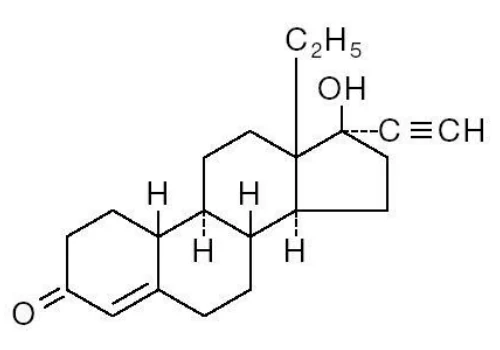
PART II: SCIENTIFIC INFORMATION
PHARMACEUTICAL INFORMATION
Drug Substance
Proper name: Levonorgestrel
Chemical name: (-)-13b-ethyl-17b-hydroxy-18, 19-dinor-17a-pregn-4-en-20-yn-3-one.
Molecular formula and molecular mass: C21H28O2, 312.45 g/mol
Structural formula:
Physicochemical properties
Description: White to almost white crystalline powder, odorless.
Solubilities: Water: Practically insoluble
Ethanol: Slightly soluble Methylene Chloride: Sparingly soluble Chloroform: Sparingly soluble Dimethylformamide: Soluble
Dimethylsulfoxide: Soluble
Melting point: 235°C
Particle size distribution: 100 % inferior to 30μm 80 % minimum inferior to 5μm 35 % maximum inferior to 1μm
CLINICAL TRIALS
Study demographics and trial design
Table 2- Summary of patient demographics for clinical trials in specific indication
| Study Identifier; | Study Design | Test Product(s); Dosage Regimen; | Number of Subjects; Age and sex | Healthy Subjects or Diagnosis of Patients | Duration of Treatment |
| Arowojolu A.O. et al, 2002 (1) | Double-blind, placebo controlled trial | A: two dose of 0.75 mg levonorgestrel 12 h apart. B: single dose of 1.5 mg levonorgestrel; | 1160 women, mean age: 27 years of age | Healthy noncontracepting women | Two doses treatment, 12 hours apart (Group A) One treatment (Group B) |
| WHO study Von Hertzen H. et al, 2002 (2) | Randomized, double-blind trial. | A: single dose of 10 mg of mifepristone B: single dose of 1.5 mg levonorgestrel C: two separate doses of 0.75 mg levonorgestrel given 12 h apart; | 4136 women, mean 27.23 years old | Healthy women needed emergency contraception | One treatment (Group A and B); Two doses treatment, 12 hours apart (Group C) |
| WHO Study Ho. PC and al. 1993 (13) | Prospective, Randomized trial | A: two separate doses of 0.75 mg levonorgestrel given 12 hours apart; B: two separate doses of Yuzpe regimen given 12 hours apart | 834 women, mean 26.8 years old. | Healthy women needed emergency contraception | Two doses treatment, 12 hours apart |
| WHO Study Grimes D. et al. 1998 (5) | Double- blind, Randomized, controlled trial. | A: two separate doses of 0.75 mg LNG given 12 hours apart; B: two separate doses of Yuzpe regimen given 12 hours apart | 1955 women, mean 27.25 years old | Healthy women needed emergency contraception | Two doses treatment, 12 hours apart |
| Study Identifier; | Study Design | Test Product(s); Dosage Regimen; | Number of Subjects; Age and sex | Healthy Subjects or Diagnosis of Patients | Duration of Treatment |
WHO Study Ngai et al. 2005 6) | Double- blind, Randomized trial | A: two doses of 0.75 mg levonorgestrel given 12 hours apart; B: two doses of 0.75 mg levonorgestrel given 24 hours apart | 2071 women; mean 27 years old. | Healthy women needed emergency contraception | Two dose treatment, 12 or 24 hours apart |
Efficacy:
Divided Dose Regimen
Two major studies, sponsored by the World Health Organization (5, 13), have shown that levonorgestrel alone, orally administered at the dose of 0.75 mg twice, 12 hours apart, within 72 hours following a supposedly fertilizing intercourse, is at least as efficient and better tolerated than the Yuzpe regimen (combined high dose estrogen and progestin). A third study, also sponsored by the WHO (6) compared a 24-hour versus a 12-hour interval between the two levonorgestrel intakes for emergency contraception and allowed to conclude that the 24-hour interval is as effective as the 12-hour interval up to 120 hours after unprotected intercourse.
The first WHO study (13) was conducted on 834 evaluable women, between 18 and 45 years old, with cycle lengths ranging from 21 to 35 days and who had a single act of intercourse 48 hours before the study entry. The subjects were randomised in two groups with no difference in baseline characteristics: The Yuzpe regimen group, n = 424 and the levonorgestrel group, n = 410 women. Regarding the primary efficacy results, this study showed an overall crude pregnancy rate (i.e. failure rate) of 3.5% in the Yuzpe regimen group and 2.9% in the levonorgestrel group. After excluding the patients who had further acts of intercourse, the crude pregnancy rates were 2.7 % (95% CI: 1.0 – 4.1%) in the Yuzpe regimen group and 2.4% (95% CI: 0.8 – 4.1%) in the levonorgestrel group. The difference observed was not statistically significant. In both groups, pregnancy rates were lower in women who took the study drug within 24 hours than in subjects who took it later, although this difference was not statistically significant. The study showed that post-treatment menstrual periods occurred in most women at the expected time or slightly earlier (88.5% of women in the Yuzpe regimen group versus 85.1% in the levonorgestrel group, difference not significant).
The second WHO study (5) was a large-scale double-blind randomized trial, conducted in 14 countries which compared the Yuzpe regimen and levonorgestrel for emergency
contraception. A total of 1,998 women were found eligible, i.e. had regular menstrual cycles (24 – 42 days) and had a single unprotected intercourse 72 hours before taking the study medication. The eligible women were randomly given the Yuzpe regimen (4 tablets) or levonorgestrel (0.75 mg twice) in a double-blind fashion.
Efficacy was measured by assessing the number of unintended pregnancies, expressed as both crude and adjusted rates as well as the estimated reduction in expected pregnancies. The primary analysis was done in all randomised women with outcome information (n = 979 in the Yuzpe regimen group and n = 976 in the levonorgestrel group). The results showed that in both groups the earlier the treatment was started, the higher was the efficacy. When initiated within 24 hours of unprotected intercourse NorLevo® prevents 95% of expected pregnancies. When initiated within 24-48 or 48-72 hours, it prevents 85 % and 58% of expected pregnancies, respectively. At each time point, the efficacy of levonorgestrel was higher than in the Yuzpe regimen, but the difference was not statistically significant (p = 0.58).
The secondary analysis was performed in all subjects who used the assigned method correctly, as follows:
- first dose of treatment within 72 hours of unprotected intercourse,
- the interval to the second dose of less than 24 hours,
- no further acts of coitus and,
- no hormonal contraception during the rest of the cycle.
In this subgroup of 1,157 women, the crude pregnancy rates were found to be 1.9% (1.0 – 3.4) and 0.9% (0.3 – 2.0) with the Yuzpe regimen and levonorgestrel, respectively. In addition, the time of resumption of menses was similar in both groups (p = 0.67): in 13% of women menses returned later than 7 days after the expected date; in 15% menses was delayed by 3 to 7 days; in 57% menses was delayed by less than 3 days and in 15% menses returned earlier than expected.
In the third and most recent double-blind, randomized trial sponsored by the WHO (6), conducted from 1997 to 2003 in China, a total of 2,071 women were enrolled for emergency contraception within 120 hours of unprotected intercourse. The study compared women in whom the first levonorgestrel dose (0.75 mg) was given up to 120 hours and the second dose (0.75 mg) was administered 12 hours after the first dose (group 1), to women in whom the first levonorgestrel dose (0.75 mg) was given up to 120 hours and the second dose (0.75 mg) was administered 24 hours after the first dose (group 2). The analysis of the 2,018 subjects, who completed the follow-up, showed a crude pregnancy rate of 2.0% in group 1 (95% CI: 1.19 – 2.99) and of 1.9% in group 2 (95% CI: 1.17 – 2.94); the proportion of pregnancies prevented was estimated to be 75% in group 1 (95% CI: 59.0 – 83.7) and to 72% in group 2 (95% CI: 56.7 – 82.7).
Single Dose Regimen
In a double-blind WHO study (2) the efficacy of 1.5 mg levonorgestrel was evaluated when given as two 0.75 mg tablets in a single intake, or given as two 0.75 mg tablets separated by 12 hours and compared to a single 10 mg dose of another product (mifepristone) on 4136 healthy women. Of the 3897 evaluable women enrolled in the trial (after exclusion), 1.5 % became pregnant in the single dose levonorgestrel group (20/1356) compared to 1.7% in the two-dose levonorgestrel group (24/1356; p = 0.83). In comparison with the estimated number of expected pregnancies in the absence of treatment, single dose levonorgestrel prevented 82% of expected pregnancies. For the three regimen combined, women who were treated after 72 hours had higher pregnancy rates, 2.4 % than those treated within 72 hours, 1.5 %, but the difference was not significant (p = 0.16).
In a double-blind study (1), the efficacy and safety of two-dose regimen of levonorgestrel 0.75 mg taken 12 h apart (group A) and levonorgestrel 1.5 mg taken in a single administration (group B) were studied in 1062 evaluable women. Eleven pregnancies (1.0 %) were reported (7 in group A and 4 in group B). The crude relative risk of pregnancies was similar within the two groups (RR= 0.71 (0.32-1.55) (95 % C.I.); p>0.05). The estimated effectiveness rate of 86.80 % in group A was significantly lower than the 92.99 % for group B (p < 0.05).
DETAILED PHARMACOLOGY
Animal:
Pharmacodynamics:
Levonorgestrel is the active enantiomer of the racemate mixture of which norgestrel is constituted, the dextrorotatory enantiomer being essentially inactive. Jones et al, 1979 (14) provides a comparison of the activity of levonorgestrel and the norgestrel racemate in a number of test systems which shows that levonorgestrel is consistently twice as active as the racemate.
Levonorgestrel was active in the Clauberg test in the rabbit (dose: 5-150 µg/day) and in maintaining pregnancy in the spayed rat (dose: 100-1000 µg/day). It inhibited the compensatory growth of the left ovary in rats following removal of the right ovary (dose: 500-1000 µg/day). Whilst having no uterotrophic effect in the immature mouse (dose: 5-500 µg/day), levonorgestrel did increase uterine weight in the ovariectomised adult rat (500-5000 µg/day). Levonorgestrel also inhibited estrone-induced vaginal cornification in the ovariectomised rat, which confirms its anti-estrogenic activity (15-500 µg/day). In general, levonorgestrel was active at lower doses in the tests of its progestational activity (Clauberg, pregnancy maintenance) than those of its estrogen-like activity (uterotrophic effects). Levonorgestrel was also shown to be devoid of androgenic activity by a lack of effect on the weights of prostate, seminal vesicles or levator ani in castrated male rats administered oral doses up to 1500 µg/day for 7 days.
Van der Vies and de Visser (15) show comparative data on the activity of levonorgestrel. The data shows levonorgestrel to be more active than norethisterone but less active than progesterone in the one Clauberg test, in which the two compounds were compared (oral dose: 15-125 µg; intra-uterine dose: 5-20 µg). Comparison of these data with those reported by Jones et al (14) for the Clauberg test show similar activity for levonorgestrel, despite the different dosing regimens employed in the two studies. Although it is difficult to compare the anti-estrogenic activity of levonorgestrel and norethisterone because of the different dose ranges at which the two were administered by van der Vies and de Visser (15), levonorgestrel does again appear to be the more active.
The studies of Van der Vies and de Visser (15) also investigated potential effects on fertility. When orally administered to rats twice daily for 5 days at dose levels of 2000, 4000 and 8000 µg/day, levonorgestrel did not suppress ovulation. Ovulation in rabbits was also investigated. All control animals ovulated, but levonorgestrel inhibited ovulation (100 % ovulation at 125 µg, 50% at 250 µg and 0% at 1000 µg).
Levonorgestrel slightly decreased the total number of ova and was also shown to decrease the number of fertilised ova in artificially inseminated rabbits, presumably through inhibition of sperm migration through the uterine cervix. The percentages of fertilised ova are summarized as follows: control 96%, 250 µg 94 %, 1000 µg 59% (15).
Oettel et al (16) also investigated the effect on deciduoma formation in rats (in combination with progesterone) and in maintaining pregnancy in ovariectomised rats, confirming the results of Van der Vies and de Visser (15) and Jones et al (14). In addition, the activity of levonorgestrel in blocking pregnancy was investigated in the mouse, rat and baboon when given immediately or shortly after mating. Table 3 summarises the results obtained in mice and rats.
Table 3: Effect of levonorgestrel on pregnancy in the mouse and rat when administered after mating (Oettel 1980)
| Species | Treatment (mg/day) | Group size | Number pregnant | Average number of implantations |
| Mouse | Control Levo, 0.0125 0.125 1.25 | 13 13 12 13 | 13 12 10 9 | 9.3 9.2 7.9 3.4 |
| Rat | Control Levo, 0.125 1.25 12.5 | 12 12 12 11 | 12 12 12 11 | 13.2 12.2 12.5 8.1 |
Subcutaneous dosing started on the first day of pregnancy (defined as the presence of sperm in vaginal smears) and continued daily for a total of four doses; animals were sacrificed on day 10 (rats) or 14 (mice) to determine the number of pregnant animals and the number of implant sites - animals with at least one normal implantation site were assessed as pregnant.
Dasgupta et al, 1973 (17) studied the contraceptive effect of norgestrel, the racemate, in rats administering 2 µg orally on days 1-7 of gestation, on days 6-8 or as single doses on day 6, 7 or
- 8. Seven days administration terminated 100% of pregnancies; a single dose was effective only when given on day 6, terminating 57 % of pregnancies, whilst dosing on days 6-8 terminated 50%.
In contrast to the only weak activity in blocking pregnancy in mice and rats reported by Oettel et al (16), they showed levonorgestrel to be very effective in the baboon. A single oral administration of 400 µg of levonorgestrel within 6 hours of mating blocked pregnancies in 2 of 13 animals, as compared to pregnancies in 11 of 12 control animals.
Pharmacokinetics:
Dusterberg and coworkers (18, 19) studied the pharmacokinetics of levonorgestrel after oral, intravenous and subcutaneous administration in the rat, dog and rhesus monkey. Dusterberg et al, (18) provides data only on bioavailability after oral administration and terminal half-life after intravenous administration which is summarized in Table 4.
Table 4: Oral bioavailability and intravenous terminal half-life of levonorgestrel in the rat, dog and rhesus monkey
| Species | Oral bioavailability (%) | Intravenous terminal half-life (h) | Oral dose (mg/kg) | Intravenous dose (mg/kg) |
| Rat | 9 | 0.5 (0.17 - 7)1 | 6.7 | 0.07 |
| Dog | 22 ± 6 | 1.2 ± 0.3 (3 - 9)1 | 0.8 | 0.008 |
| Rhesus monkey | 9 ± 4 | 4.4 ± 0.5 (2 - 30)1 | 1.5 | 0.015 |
1 range of values determined
A study in rhesus monkeys by Sisenwine et al (20) provided a half-life of 7 hours after oral administration of 0.5 mg/kg of levonorgestrel. More complete pharmacokinetic data are available after subcutaneous administration of levonorgestrel, as summarised in Table 5 (18).
Table 5: Pharmacokinetics of levonorgestrel after subcutaneous administration in the rat, dog and rhesus monkey
| Species | Dose (mg/kg) | Cmax (µg/mL)1 | tmax (hours) | t1/2 (hours) | AUC (ng.d/mL)1 |
| Rat | 6.7 | 6.3 ± 2 | 1 | 24 (1 - 120)2 | 5.3 |
| Dog | 0.08 | 58 ± 20 | 4 - 24 | 16 ± 3 (24 - 96)2 | 94 |
| Rhesus monkey | 0.15 | 246 ± 20 | 4 - 12 | 22 ± 2 (8 - 96)2 | 444 |
1 values normalised to a dose of 1 mg/kg 2 range of values determined
Naqvi et al (21) analysed the pharmacokinetics of levonorgestrel after intravenous administration in the rat for fit to two- or three-compartment models and concluded that a tri-exponential equation provided a better fit to the data. Half-lives for the ∀, ∃ and ( phases were, respectively, 10.1 minutes, 42.7 minutes and 23.1 hours. Corresponding values determined after intravenous dosing in the rabbit are 1.0, 3.8 and 37.5 hours for the ∀, ∃ and ( phases respectively (21).
Protein binding:
Serum or plasma protein binding in rat, rabbit, dog, monkey and man has been studied by Qi-Gui and Humpel (22); human samples were of plasma whilst serum was obtained for the animal species. Protein binding was high in all species, 92 to 98%, when binding to undiluted plasma/serum was assessed. With human plasma diluted 1 in 30, it was possible to observe a contribution of sex hormone binding globulin (SHBG) to the binding. Total binding capacity was measured across species with a concentration of 100 ng/mL of levonorgestrel; capacity was lowest in the monkey and highest in rat - values were 58, 76, 76, 116 and 291 pmol/mg of protein for monkey, dog, human, rabbit and rat, respectively.
Tissue distribution:
A study in rabbits with 14C-norgestrel (23) showed that up to 5 hours after intravenous dosing, large amounts of radioactivity were found in liver, kidney, intestine and bile. Although the concentration in fat and muscle was relatively low, because of the quantity of these tissues present in the body, the total amount found in these tissues may approach 5% of the dose. The uterus contained a high concentration of radioactivity. By 24 hours after dosing, the amount of radioactivity in the tissues had markedly decreased. Small amounts of radioactivity crossed the placenta of near-term pregnant animals and small amounts were found in the foetus and amniotic fluid.
Metabolism:
Levonorgestrel and its dextrorotatory enantiomer are metabolised differently in the African green monkey with the principal metabolite of levonorgestrel being 3∀, 5∃-tetrahydro-d-norgestrel (24), the same as found in women (25), where it occurs mainly as glucuronide and sulphate conjugates, and in the rhesus monkey (20).
Excretion:
Data on norgestrel are available after intravenous injection of 14C-labelled compound in the rabbit are available; over the 7-day period following dosing 57.4% of administered radioactivity was excreted in the urine, the majority within the first 24 hours (23). Following oral dosing of 0.5 mg/kg of 14C-levonorgestrel to female rhesus monkeys, 29.5 and 57.1%, respectively, of administered radioactivity was excreted in urine and faeces; for norgestrel, the urinary route was confirmed as more important (20).
TOXICOLOGY
Single dose toxicity
Levonorgestrel was not acutely toxic in mice or rats after oral or subcutaneous dosing, with the highest dose administered, 5000 mg/kg, failing to cause any deaths. After intraperitoneal dosing, LD50 values were >5000 and 2500-5000 mg/kg in male and female mice respectively with corresponding figures in rats of 2880 and 1470 mg/kg. Only slightly decreased physical activity was observed in animals dosed orally or subcutaneously whilst decreased activity, abnormal gait, lacrimation and sustained prone posture were observed after intraperitoneal dosing (26). The racemate, norgestrel, is similarly non-toxic in mice, rats and dogs with LD50 values >5000 mg/kg after oral dosing (26, 27).
Repeated-dose toxicity
A one-year repeated-dose toxicity study of levonorgestrel was conducted in rats and monkeys. Levonorgestrel was given at doses of: 0, 0.0005, 0.01, 0.5 and 25.0 mg/kg/day in rats and 0, 0.00025, 0.025, 0.25 and 2.5 mg/kg/day in monkeys. The findings of this study were basically the consequences of the pharmacological activity of levonorgestrel and, apart from the alterations in neutrophils and clotting time seen only at the end of dosing in the rat and of questionable relation to treatment, were reversible during the recovery periods at the end of dosing. The no effect levels were concluded to be 0.01 and 0.00025 mg/kg/day in the rat and monkey, respectively (28, 29).
Hillesheim et al (30) investigated the toxicity of a novel progestagen, STS 557, in a 6-month oral study in the dog and included a single dose level of levonorgestrel, 1.0 mg/kg/day, as a comparator. Four male and four female animals received levonorgestrel for six months, at the end of which time one animal of each sex was observed for a 2-month recovery period. Ovulation was completely suppressed and circulating estradiol levels tended to be lower than in control animals. Levonorgestrel did not affect circulating levels of testosterone in female animals but did so in male animals. Androgenic signs were however seen in females, the authors suggesting that this may have been due to displacement of testosterone from SHBG. Total cholesterol was lowered in male dogs.
The World Health Organisation (27) reviewed the toxicity data on levonorgestrel as part of an analysis of the risk associated with an implantable contraceptive releasing levonorgestrel. In this, they refer to long-term studies in the dog and monkey conducted by Wyeth Laboratories and submitted by them to regulatory authorities. These involved cyclic administration of levonorgestrel (regimen not specified) to dogs for 7 years at dose levels up to 0.125 and 0.5 mg/kg/day (two studies) and a 10-year study in monkeys at doses up to 1.0 mg/kg/day. The WHO panel concluded that the dog studies did not show any adverse events relevant to human use, although emphasising the now-recognised opinion that the dog is not a suitable model; no toxic effects attributable to treatment were seen in the monkey.
Reproductive toxicity
As discussed in the pharmacodynamics section, levonorgestrel administered soon after mating prevents pregnancy. Three publications address the reproductive toxicity during pregnancy.
In the study by Klaus (31), pregnant mice were treated with either 0.1, 1 or 10 mg/kg/day of levonorgestrel on days 3 to 7 post-coitum, or 1, 10 or 100 mg/kg/day on days 8 to 12 or 13 to 17 post-coitum; each dosing period had a contemporary control group. Foetuses were examined following hysterectomy on day 18; in order to assess possible effects on the fertility of offspring, some animals treated on days 3 to 7 and 8 to 12 with 1 and 10 mg/kg/day were allowed to deliver normally and the 11-week old pups were mated.
Levonorgestrel administration on days 8 to 12 at the highest dose level of 100 mg/kg/day increased foetal mortality and slightly reduced mean foetal body weight; a slight effect on foetal body weight was also apparent at 10 mg/kg/day on days 3 to 7. There was no effect on the fertility of pups.
Table 6 summarises the data on malformations from this study.
Table 6: Malformations and skeletal retardations observed in an embryotoxicity study of levonorgestrel in the mouse
Treatment Total foetuses % gross % skeletal Type of Examined malformation retardation malformation Days 3 to 7
Control 78 1.3 2.2 IM ectopia (liver & intestine) 0.1 mg/kg/day 29 0.0 0.0 - 1.0 66 1.8 0.0 IF dwarf + excencephalia 10.0 107 8.4 20.7 6M + IF skeletal delay + small body mass + haemorrhage; IF hernia unbilica; IM dwarf Days 8 to 12
Control 76 0.0 2.6 - 1.0 mg/kg/day 68 1.5 0.0 IF dwarf 10.0 92 3.3 0.0 IM missing vertebra 100.0 31 3.2 6.7 IM dwarf Days 13 to 17
Control 83 1.2 2.1 IM dwarf 1.0 mg/kg/day 112 0.9 0.0 IF dwarf 10.0 86 3.5 0.0 IM + IF dwarf; IM hernia unbilica 100.0 24 0.0 0.0 -
A preliminary embryotoxicity study in the rabbit (32) studied a single dose level of 0.5 mg/kg/day of levonorgestrel in 10 rabbits, as compared to a control group of 12 animals. Treatment with levonorgestrel had no effect on litter parameters and did not increase the number of malformations.
A more recent study has examined the quality of oocytes recovered from mice implanted subdermally with levonorgestrel-releasing implants (33). The implants released 25 or 50 µg/day for 2 months or 55 µg/day for 3 months. After this time, mice were injected with gonadotropin to
stimulate ovulation and oocytes were recovered, inseminated and cultivated, some in medium supplemented with levonorgestrel. Levonorgestrel had no adverse effect on fertilisation or development to the preimplantation stage.
Genotoxicity:
Lang and Reimann (34) studied the mutagenic potential of a series of hormonally active steroids, including levonorgestrel, in the Ames test. It was evaluated in five strains of Salmonella typhimurium - TA 1535, TA 100, TA 1537, TA 1538, TA 98 - at concentrations in the range 5 to 2500 µg per plate. No increase in mutagenic response was seen in any strain, in the absence or presence of metabolic activation.
Carcinogenicity:
The potential carcinogenic effect of levonorgestrel has been reviewed by the IARC (17), based partly on data submitted to the United Kingdom Committee on Safety of Medicines (CSM). On the basis of the information submitted to the CSM, the IARC review concludes that there was no alteration in the incidence of tumours in CF-LP (MTV-) mice after administration of doses of norgestrel described as low dose (2-5 times human contraceptive dose), mid dose (50-150 times human contraceptive dose) and high dose (200-400 times human contraceptive dose) for 80 weeks. In the rat, administration of norgestrel in the diet (doses not described) for 104 weeks had no effect on the incidence of tumours.
Also reviewed by IARC (17) is a study in which castrated C3HxRIII (MTV+) mice were fed norgestrel, 1.0 mg/kg/day, or levonorgestrel, 0.5 mg/kg/day, in the diet. The duration of dosing is not given. Both agents slightly raised the incidence of mammary tumours (females: control 17/29 mice, norgestrel 22/31, levonorgestrel 27/34; males: control 10/61, norgestrel 9/32, levonorgestrel 10/32); latencies were unchanged.
REFERENCES
- 1. AROWOJOLU A.O., OKEWOLE I.A, ADEKUNLE A.O. Comparative evaluation of the effectiveness and safety of two regimens of levonorgestrel for emergency contraception in Nigerians. Contraception 2002; 66: 269-273
- 2. VON HERTZEN H., PIAGGIO G., DING J., CHEN J., SONG S., BARTFAI G., NG E. Low dose mifepristone and two regimens of levonorgestrel for emergency contraception: a WHO multicenter renadomised trial. The Lancet 2002, 360; 1803-1810
- 3.
Gainer E., Monange G. Utilisation et Efficacité de la Contraception d’Urgence en France:
Étude Prospective Observationnelle en Pharmacies. Report NO-EPI-001 ; 3 January 2008
- 4.
Gainer E., Monange G. Utilisation et Efficacité de la Contraception d’Urgence en France:
Étude Prospective Observationnelle dans les Centres de Planification et d’Éducation Familiale du val de Marne en pharmacies. Report NO-EPI-002 ; 3 January 2008
- 5.
GRIMES D., VON HERTZEN H., PIAGGIO G., et al. Randomised controlled trial of
Levonorgestrel versus the Yuzpe regimen of combined for emergency contraception. The Lancet 1998; 352: 428- 438.
- 6. NGAI S.W., FAN S., LI S. and al. Randomized trial to compare 24h versus 12 h double dose regimen of levonorgestrel for emergency contraception. Human Reproduction, January 2005; 20 (1): 307-11.
- 7. Study UK/Norlevo/98/001, HRA Pharma Internal Report
- 8.
McCANN M.F., POTTER L.S. Progestin-only oral contraception: a comprehensive review.
Contraception 1994; 50 (suppl.1): S9-S196.
- 9. ROGERS SM, BACK DJ, STEVENSON PJ and al. Paracetamol interaction with oral contraceptive steroids: increased plasma concentrations of ethinyloestradiol. Br J. Clin. Pharmacol 987; 23: 721 25
- 10.
TREMBLAY D., GAINER E., ULMANN A. The Pharmacokinetics of 750 µg
Levonorgestrel Following Administration of One Single Dose or Two Doses at 12- or 24-Hours Interval. Contraception 2001; 64: 327-331
- 11. JOHANSSON E., BRACHE V., ALVAREZ F, FAUNDES A., and al. Pharmacokinetic study of different dosing regimens of levonorgestrel for emergency contraception in healthy women. Human Reproduction 2002, 17 (6); 1472-1476.
- 12. GAINER E., MASSAI R., LILLO S. and al. Levonorgestrel pharmacokinetics in plasma and milk of lacting women who take 1.5 mg for emergency contraception. Human Reproduction 2007; 6 (22); 1578-1584
- 13. HO P.C. and KWAN M.S.W. A prospective randomized comparison of levonorgestrel with the Yuzpe regimen in post-coital contraception. Human Reproduction 1993; 8: 389-392
- 14.
JONES R.C., SINGER A.C., EDGREN R.A. The Biological Activities of Norgestrel and Its
Enantiomers. Int. J. Fertil. 1979; 24; 39-43.
- 15.
VAN DER VIES J., DE VISSER J. Endocrinological Studies with Desogestrel. Arzeim
Forsch/Drug Res 1983; 33(1) N°2; 231-236.
- 16. OETTEL M., KOMOR A., GONCHAROV NP., and al. STS 557 as an interceptive in rodent and baboons. Contraception 1980; 21 (5); 537-549
- 17.
IARC Monographs on the evaluation of the carcinogenic risk of chemicals to humans 1979;
21: 479-490.
- 18. DUSTERBERG B., HUMPEL M., SPECK U. Terminal half-lives in plasma and bioavailability of norethisterone, levonorgestrel, cyproterone acetate and gestodene in rats, beagles and rhesus monkeys.
- 19. DUSTERBERG B. Plasma levels of levonorgestrel, gestodene, norethisterone and cyproterone acetate on single-dose subcutaneous administration in oily solution in the ra, beagle and cynomolgus monkey. Steroids 1984; 43(1); 43-55.
- 20. SISENWINE SF, KIMMEL HB, LIU.AL, and al. The metabolic disposition of norgestrel in female rhesus monkeys. Drug Metab Dispos 1979; 7 (1) 1-6.
- 21. NAQVI R.H., MITRA S.B., SAKSEVA I.F., and al. Pharmacokinetics of levonorgestrel in the rat. Contraception 1984; 30 (1); 81-88.
- 22. QI-GUI L, HUMPEL M. Serum protein binding characteristics of cyproterone acetate, gestodene, levonorgestrel and norethisterone in rat, rabbit, dog, monkey and man. J Steroid Biochem 1990; 35 (2): 319-326
- 23. KAMYAB S., LITTLETON P., FOTHERBY K. Metabolism and tissue distribution of norethisterone and norgestrel in rabbits. J. Endocrinol. 1967: 39; 423-435
- 24. SISENWINE S.F., KIMMEL H.B., LIU AL., and al. The presence of d, l-, d- and l-norgestrel and its enantiomers in the African green monkey. Drug Metab. Dispo. 1974: 2; 65-70.
- 25. SISENWINE S.F., KIMMEL H.B., LIU AL., and al. The presence of d, l-, d- and l-norgestrel and their metabolites in the plasma of women. Contraception 1975: 12 (3); 339-353.
- 26.
BARNES TB, GREEN MA, HITE M. Acute toxicity studies of a triphasic oral contraceptive
(LOC-31: combination of levonorgestrel (LNG) and ethinylestradiol (EE)), LNG and norgestrel (NG) in mice and rats. Japanese Journal 1991; 41: 295-304.
- 27.
WHO Facts about an implantable contraceptive: memorandum from a WHO Meeting.
Bulletin of the World Health Organisation 1985: 63 (3); 435-494.
- 28. HITE M., BLAIR M., NAKAYAMA T. et al. One year oral toxicity of Levonorgestrel in female rats. Oyo Yakuri/Pharmacometrics 1991; 42 (3); 291-99
- 29. HITE M., BLAIR M., NAKAYAMA T. et al. One year oral toxicity of Levonorgestrel in female cynomolgus monkeys. Oyo Yakuri/Pharmacometrics 1991; 42 (3); 301-12.
- 30.
HILLESHEIM H.G., HOFFMANN H., GUTTNER J. and al. Toxicity of the progestagen
STS 557 compared to levonorgestrel in beagles after oral administration for 6 months. Arch Toxicol, 1982: Suppl 5; 221-224.
- 31.
KLAUS S. Prenatal toxic effects of STS 557. I Investigations in mice. Exper Clin Endocrinol
1983: 81 (2); 197-205.
- 32. HEINECKE H., KOHLER D. Prenatal toxic effects of STS 557. II Investigation in rabbits-preliminary results. Exper Clin Endocrinol 1983: 81 (2); 206-209.
- 33. SHIRLEY B. AND BUNDREN J.C. Effects of Levonorgestrel on capacity of mouse oocytes for fertilization and development. Contraception 1995; 51: 209-14
- 34. LANG R. and REIMANN R. Studies for a genotoxic poteintial of some endogenous and exogenous sex steroids. Environmental and Molecular Mutagenesis 1993; 21: 272-304.