


Product Monograph - Novo-Cefaclor
INDICATIONS AND CLINICAL USES
NOVO-CEFACLOR (cefaclor): may be used in the treatment of the following infections caused by Streptococcus pyogenes and Streptococcus pneumoniae, Staphylococci, including coagulase-positive, coagulase-negative, and penicillinase-producing strains, Escherichia coli, Proteus mirabilis, Klebsiella pneumoniae, Haemophilus influenzae, including ampicillin-resistant strains:
- 1. Otitis media,
- 2. Lower Respiratory Tract Infections, including pneumonia, bronchitis, and pulmonary complications resulting from cystic fibrosis,
- 3. Upper Respiratory Tract Infections, including pharyngitis and tonsillitis,
- 4. Skin and Soft-Tissue Infections,
- 5.
Urinary Tract Infections.
Appropriate culture and susceptibility studies should be performed.
CONTRAINDICATIONS
NOVO-CEFACLOR (cefaclor) is contraindicated in persons who have shown hypersensitivity to the cephalosporin antibiotics.
WARNINGS
BEFORE THERAPY WITH NOVO-CEFACLOR (CEFACLOR) IS INSTITUTED, CAREFUL INQUIRY SHOULD BE MADE CONCERNING PREVIOUS HYPERSENSITIVITY REACTIONS TO CEFACLOR, CEPHALOSPORINS, PENICILLINS OR OTHER DRUGS. IF THIS PRODUCT IS TO BE GIVEN TO PENICILLIN-SENSITIVE PATIENTS, CAUTION SHOULD BE EXERCISED BECAUSE CROSS-HYPERSENSITIVITY, INCLUDING ANAPHYLAXIS, AMONG β-LACTAM ANTIBIOTICS HAS BEEN CLEARLY DOCUMENTED.
Antibiotics including cefaclor should be administered with caution, and then only when absolutely necessary, to any patient who has demonstrated some form of allergy, particularly to drugs.
As is the case with all new drugs, patients should be followed carefully so that adverse reactions or unusual manifestations of drug idiosyncrasy may be detected. If an allergic reaction to cefaclor occurs, the drug should be discontinued and the patient treated with the usual agents (e.g. epinephrine, antihistamines, pressor amines or corticosteroids).
Pseudomembranous colitis has been reported with virtually all broad-spectrum antibiotics, including cefaclor; therefore, it is important to consider its diagnosis in patients who develop diarrhea in association with the use of antibiotics. Such colitis may range in severity from mild to life-threatening. Treatment with broad-spectrum antibiotics alters the normal flora of the colon and may permit overgrowth of clostridia. Studies indicate that a toxin produced by Clostridium difficile is one primary cause of antibiotic-associated colitis. Mild cases of pseudomembranous colitis usually respond to drug discontinuance alone. In moderate to severe cases, management should include sigmoidoscopy, appropriate bacteriologic studies, and fluid, electrolyte, and protein supplementation. When the colitis does not improve after the drug has been discontinued, or when it is severe, oral vancomycin is the drug of choice for antibiotic-associated pseudomembranous colitis produced by C. difficile. Other causes of colitis should be ruled out.
PRECAUTIONS
If an allergic reaction to NOVO-CEFACLOR (cefaclor) occurs, the drug should be discontinued and the patient treated appropriately.
The safety of NOVO-CEFACLOR in the treatment of infections during pregnancy has not been established. Reproduction studies in rats have revealed no evidence of impaired fertility.
Small amounts of cefaclor, up to 0.21 mg/L, have been detected in mother's milk following administration of single 500 mg doses of cefaclor. The effect on nursing infants is not known. Caution should be exercised when cefaclor is administered to a nursing woman.
Prolonged use of cefaclor may result in the overgrowth of non-susceptible organisms. Careful observation of the patient is essential. If super-infection occurs during therapy, administration of cefaclor should cease and appropriate measures should be taken.
Positive direct Coombs’ tests have been reported during treatment with cephalosporin antibiotics. In hematologic studies or in transfusion cross-matching procedures, when antiglobulin tests are performed or in Coombs’ testing of newborns whose mothers have received cephalosporin antibiotics before parturition, it should be recognized that a positive Coomb's test may be due to the drug.
NOVO-CEFACLOR should be administered with caution in the presence of markedly impaired renal function. Since the half-life of cefaclor in anuria is 2.3 to 2.8 hours, dosage adjustments for patients with moderate or severe renal impairment are not usually required. Clinical experience with cefaclor under such conditions is limited; therefore, careful clinical observation and laboratory studies should be made.
In patients treated with cefaclor, a false-positive reaction for glucose in the urine may occur with Benedict's or Fehling's solution or with Clinitest tablets but not with Tes-Tape (Glucose Enzymatic Test Strip, USP).
There have been rare reports of increased prothrombin time with or without clinical bleeding in patients receiving cefaclor with warfarin concomitantly.
As with many other β-lactam antibiotics, the renal excretion of cefaclor is inhibited by probenecid.
ADVERSE REACTIONS
During clinical trials in 8,346 patients (4,626 adults and 3,720 children under the age of 16) treated with cefaclor, the adverse reactions listed below were observed. The majority of these adverse reactions were mild and transient. The incidence rates were less than 1 in 100 (less than 1%), except as otherwise noted.
Gastrointestinal:  ≤1.5%). It was rarely severe enough to warrant cessation of therapy. Nausea, vomiting and dyspepsia have been reported. As with some penicillins and some other cephalosporins, transient hepatitis and cholestatic jaundice have been reported. Colitis, including rare instances of pseudomembranous colitis, has been reported in conjunction with or after therapy with cefaclor has stopped.
Hypersensitivity: Allergic reactions, such as urticaria and morbilliform eruptions (1%), have been observed, as have pruritus, rash and positive Coombs' tests. These reactions usually subsided upon discontinuation of the drug. Eosinophilia (2%), genital pruritus or vaginitis, and rarely, thrombocytopenia or reversible interstitial nephritis have also occurred.
Cases of serum sickness-like reactions have been reported. In contrast to classic serum sickness, signs and symptoms of serum sickness-like reactions involving cefaclor appear to be primarily confined to findings including erythema multiforme or other skin manifestations accompanied by arthritis/arthralgia, with or without fever. Serum sickness-like reactions are apparently due to hypersensitivity and more often occur during or following a second (or subsequent) course of therapy with cefaclor. Such reactions have been reported more frequently in children than in adults with an overall occurrence ranging from 1 in 200 (0.5%) in one focused trial to 2 in 8,346 (0.024%) in overall clinical trials (with an incidence in children in clinical trials of 0.055%) to 1 in 38,000 (0.003%) in spontaneous event reports. Signs and symptoms usually occur a few days after initiation of therapy and subside within a few days after cessation of therapy; occasionally these reactions have resulted in hospitalization, usually of short duration (median hospitalization = 2 to 3 days, based on postmarketing surveillance studies). In those requiring hospitalization, the symptoms have ranged from mild to severe at the time of admission with more of the severe reactions occurring in children. Antihistamines and glucocorticoids appear to enhance resolution of the signs and symptoms. No serious sequelae have been reported.
More severe hypersensitivity reactions, including Stevens-Johnson syndrome, toxic epidermal necrolysis, angioedema and anaphylaxis have been reported rarely. Anaphylaxis may be more common in patients with a history of penicillin allergy.
Central Nervous System: Rarely, reversible hyperactivity, nervousness, insomnia, confusion, hypertonia, headache, dizziness, or somnolence have been reported.
Genitourinary: Vaginal moniliasis and vaginitis have been reported with cefaclor (≤1%).
Other: Transitory abnormalities in clinical laboratory test results have been reported. Although they were of uncertain etiology, they are listed here to serve as alerting information for the physician.
Hepatic: Slight elevations of AST, ALT, or alkaline phosphatase values have been reported.
Hematopoietic: Transient lymphocytosis, leukopenia, eosinophilia and, rarely, hemolytic anemia, aplastic anemia, agranulocytosis, and reversible neutropenia of possible clinical significance were observed.
There have been rare reports of increased prothrombin time with or without clinical bleeding in patients receiving cefaclor and warfarin concomitantly.
Renal: Slight and transient elevations in BUN or serum creatinine or abnormal urinalysis have been observed with cefaclor.
In addition to the adverse reactions listed above, renal dysfunction and toxic nephropathy have been reported in patients treated with β-lactam antibiotics.
Several β-lactam antibiotics have been implicated in triggering seizures, particularly in patients with renal impairment when the dosage was not reduced. If seizures associated with drug therapy should occur, the drug should be discontinued. Anticonvulsant therapy can be given if clinically indicated.
SYMPTOMS AND TREATMENT OF OVERDOSAGE
Signs and Symptoms: The toxic symptoms following an overdose of cefaclor may include nausea, vomiting, epigastric distress, and diarrhea. The severity of the epigastric distress and the diarrhea are dose related. If other symptoms are present, it is probable that they are secondary to an underlying disease state, an allergic reaction, or the effects of other intoxication.
Treatment: In managing overdosage, consider the possibility of multiple drug overdoses, interaction among drugs, and unusual drug kinetics in your patient. Unless 5 times the normal dose of cefaclor has been ingested, gastrointestinal decontamination will not be necessary.
Protect the patient's airway and support ventilation and perfusion. Meticulously monitor and maintain, within acceptable limits, the patient's vital signs, blood gases, serum electrolytes, etc. Absorption of drugs from the gastrointestinal tract may be decreased by giving activated charcoal, which, in many cases, is more effective than emesis or lavage; consider charcoal instead of or in addition to gastric emptying. Repeated doses of charcoal over time may hasten elimination of some drugs that have been absorbed. Safeguard the patient's airway when employing gastric emptying or charcoal.
Forced diuresis, peritoneal dialysis, hemodialysis, or charcoal hemoperfusion have not been established as beneficial for an overdose of cefaclor.
| In case of suspected drug overdose, consult your doctor, hospital emergency department or regional poison control centre. |
DOSAGE AND ADMINISTRATION
NOVO-CEFACLOR (cefaclor) is administered orally. NOVO-CEFACLOR is administered without regard to meals.
Adult: The usual adult dosage is 250 mg every 8 to 12 hours. For more severe infections or those caused by less susceptible organisms, larger doses may be needed. The maximum recommended dosage is 2 g per day, although doses of 4 g per day have been administered safely for 28 days.
For lower respiratory tract infections, the dosage should be administered three times daily.
For skin and soft-tissue infections, the dosage is 250 mg administered 2 or 3 times daily.
Children: The usual recommended daily dosage for children is 20 mg/kg/day in divided doses every 8 to 12 hours. For streptococcal pharyngitis or tonsillitis and soft-tissue infections, the total daily dosage may be divided and administered every 12 hours.
In more serious infections, otitis media, and those infections caused by less susceptible organisms, 40 mg/kg/day is recommended, up to 1 g per day.
For otitis media, the total daily dosage may be divided and administered every 12 hours. For lower respiratory tract infections, the total daily dosage should be divided and administered 3 times daily.
In the treatment of β-hemolytic streptococcal infections, a therapeutic dosage of NOVO-CEFACLOR should be administered for at least ten days. Most clinical studies were performed with a duration of therapy between five and fourteen days.
PHARMACEUTICAL INFORMATION
Drug Substance:
Trade Name: NOVO-CEFACLOR
Proper Name: Cefaclor
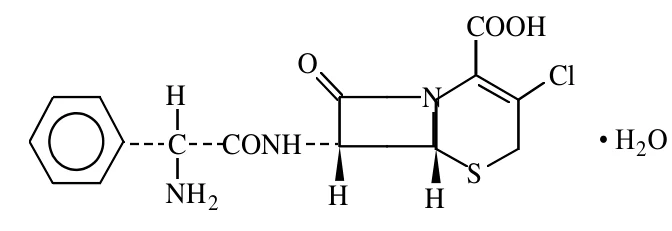
Chemical Name: 3-Chloro-7-D (2-phenylglycinamido)-3-cephem-4-carboxylic acid monohydrate
Structural Formula:
Molecular Formula: C15H14ClN3O4S•H2O
Molecular Weight: 385.82
Description: Cefaclor is an odourless, white to off-white crystalline powder, soluble in water and practically insoluble in methanol, chloroform and benzene. The pH ranges between 3 and 4, determined potentiometrically on a saturated aqueous solution.
COMPOSITION:
NOVO-CEFACLOR 250 mg and 500 mg capsules contain the following non-medicinal ingredients: colloidal silicon dioxide, magnesium stearate, pregelatinized starch (250 mg capsule shell: gelatine, titanium dioxide, FD&C Blue #1, FD&C Green #3, D&C Red #28) (500 mg capsule shell: gelatine, red iron oxide, sicomet black oxide, titanium dioxide, FD&C Blue #1, FD&C Yellow #6, D&C Red #28).
STABILITY AND STORAGE RECOMMENDATIONS:
Store capsules between 15°C - 30°C.
AVAILABILITY OF DOSAGE FORMS
NOVO-CEFACLOR (cefaclor) capsules:
250 mg: Each capsule has a white opaque body with purple opaque cap, imprinted in black ink novo 250 and contains 250 mg of cefaclor. Available in bottles of 100, 500, and 1000.
500 mg: Each capsule has a gray opaque body with purple opaque cap, imprinted in black ink novo 500 and contains 500 mg of cefaclor. Available in bottles of 100, 500, and 1000.
MICROBIOLOGY
The following table illustrates cefaclor’s spectrum of antibacterial activity.
Table 1: In-vitro Susceptibility of Clinical Isolates to Cefaclor
| ORGANISM | NO. OF ISOLATES | MINIMUM INHIBITORY CONCENTRATION (mg/ml) | ||||||||||||||
| 1 | 2 | 4 | 8 | 16 | 32 | 64 | ||||||||||
| Staphylococcus aureus | 420 | 21 | 50 | 78 | 93 | 96 | 98 | 99.7 | ||||||||
| Staph. epidermidis | 92 | 51 | 66 | 73 | 78 | 86 | 95 | 97 | ||||||||
| Streptococcus pneumoniae | 174 | 95 | 99 | 100 | ||||||||||||
| Streptococcus pyogenes | 262 | 94 | 99 | 100 | ||||||||||||
| Enterococcus faecalis | 282 | 3 | 4 | 7 | 8 | 10 | 15 | 84 | ||||||||
| Escherichia coli | 694 | 23 | 33 | 70 | 83 | 89 | 91 | 95 | ||||||||
| Klebsiella pneumoniae | 293 | 56 | 78 | 85 | 90 | 92 | 94 | 96 | ||||||||
| Proteus mirabilis | 236 | 33 | 54 | 78 | 86 | 89 | 93 | 93 | ||||||||
| H. influenzae* | 69 | 38 | 51 | 86 | 100 | |||||||||||
H. influenzae (ampicillin resistant) | 31 | 81 | 100 | |||||||||||||
| (ampicillin-susceptible) | 44 | 93 | 100 | |||||||||||||
| Neisseria gonorrhoeae | 79 | 100 | ||||||||||||||
| Neisseria meningitidis | 7 | 100 | ||||||||||||||
| Salmonella sp. | 65 | 78 | 92 | 94 | 97 | 97 | 97 | 97 | ||||||||
| Shigella sp. | 20 | 20 | 75 | 85 | 95 | 95 | 95 | 95 | ||||||||
| Bacteroides fragilis | 81 | 6 | 19 | |||||||||||||
| Bacteroides melaninogenicus | 36 | 50 | 58 | 75 | 81 | 89 | 100 | |||||||||
| Bacteroides sp. (other) | 42 | 50 | 52 | 60 | 67 | 71 | 76 | 86 | ||||||||
| Clostridium sp. | 7 | 14 | 43 | 86 | 100 | |||||||||||
| Eubacterium sp. | 22 | 45 | 55 | 82 | 82 | 91 | 100 | |||||||||
| Peptococcus sp. | 57 | 61 | 72 | 77 | 82 | 89 | 96 | 100 | ||||||||
| Peptostreptococcus sp. | 27 | 37 | 56 | 59 | 67 | 74 | 85 | 89 | ||||||||
| *Susceptibility to ampicillin not determined. | ||||||||||||||||
In addition to the above spectrum of activity, cefaclor has also shown activity against both β-Lactamase Negative and $-Lactamase Positive Moraxella catarrhalis.
The following table lists a number of studies that demonstrate the activity of cefaclor against M. catarrhalis and H. influenzae β-Lactamase Negative and β-Lactamase Positive.
Table 2: Activity of cefaclor against Moraxella catarrhalis
| # Strains | Range (mg/L) | MIC 90 | |
M. catarrhalis β-Lactamase Negative β-Lactamase Positive H. influenzae β-Lactamase Negative β-Lactamase Positive | 191 175 1,209 479 | ≤ 0.25 - 4.0 ≤ 0.25 - 16.0 0.06 - 16.0 0.50 - 32.0 | 0.5 2.0 4.0 4.0 |
Note: Cefaclor has no activity against Pseudomonas sp. and is not active against most strains of enterococci, Enterobacter sp., indole-positive Proteus and Serratia. Some rare strains of staphylococci are resistant to cefaclor. When tested by in-vitro methods, staphylococci exhibit cross-resistance between cefaclor and methicillin-type antibiotics.
Susceptibility Testing
Diffusion Techniques: For estimation of bacterial susceptibility to cefaclor, a standardized procedure using a 30 µg cefaclor disk is considered appropriate (see Reference 14). Laboratory reports providing results of the standard single-disk susceptibility test with a 30 µg cefaclor disk should be interpreted according to the following criteria:
| Zone diameter (mm) | Interpretation |
≥ 18 15-17 ≤ 14 | (S) Susceptible (I) Intermediate (R) Resistant |
A report of "Susceptible" indicates that the pathogen is likely to be inhibited by usually achievable concentrations of the antimicrobial compound in blood. A report of "intermediate" indicates that the result should be considered equivocal, and if the microorganism is not fully susceptible to alternative, clinically feasible drugs, the test should be repeated. This category implies possible clinical applicability in body sites where the drug is physiologically concentrated or in situations where high dosage of drug can be used. This category also provides a buffer zone that prevents small uncontrolled technical factors from causing major discrepancies in interpretation. A report of "Resistant" indicates that usually achievable concentrations of the antimicrobial compound in the blood are unlikely to be inhibitory and that other therapy should be selected. Standardized susceptibility test procedures require the use of laboratory control microorganisms. The 30 µg cefaclor disk should provide the following zone diameters in these laboratory test quality control strains:
| Microorganism | Zone Diameter (mm) |
E. coli ATCC 25922 S. aureus ATCC 25923 | 23-27 27-31 |
H. influenzae should be tested on Haemophilus Test Medium (HTM) with cefaclor 30 µg disks using the following interpretive criteria:
| Zone diameter (mm) | Interpretation |
≥ 20 17-19 ≤ 16 | (S) Susceptible (I) Intermediate (R) Resistant |
The use of H. influenzae ATCC 49766 (on HTM Media) as a laboratory control organism should give a zone diameter of 25-31 mm with a 30 µg cefaclor disk.
Dilution Susceptibility Tests: Quantitative methods that are used to determine minimal inhibitory concentrations (MIC) provide reproducible estimates of the susceptibility of bacteria to antimicrobial compounds. Standardized dilution methods (broth, agar, or microdilution) using cefaclor powder should be interpreted according to the following criteria (see Reference #15).
| MIC (µg/mL) | Interpretation |
≤ 8 16 ≥ 32 | (S) Susceptible (I) Intermediate (R) Resistant |
Standard cefaclor powder should give the following MIC values for these laboratory test quality control strains:
| Microorganism | MIC range (mg/L) |
E. coli ATCC 25922 E. faecalis ATCC 29212 S. aureus ATCC 29213 | 1-4 > 32 1-4 |
When testing H. influenzae on Haemophilus Test Medium (HTM) the MIC criteria listed above should be followed. The following MIC range for cefaclor powder should be obtained for the listed laboratory control microorganism:
| Microorganism | MIC range (mg/L) |
| H. influenzae ATCC 49766 | 1-4 |
PHARMACOLOGY
Animal Pharmacology: Cefaclor was absorbed as intact antibiotic from the gastrointestinal tract of rats, mice, and dogs. In rodents, the antibiotic was excreted unchanged in the urine, but in dogs a much smaller portion of the administered dose was eliminated unaltered drug.
During drug elimination tests conducted on rats, the recovery of unaltered cefaclor, determined by microbiologic assay, was 38.6 percent after two hours, 53.5 percent after six hours, and 54.5 percent after 24 hours. In dogs, recovery of unaltered cefaclor was considerably below these figures, with 15 percent being recovered unchanged after two hours, 21 percent in six hours, and 21.5 percent in 24 hours.
Radiocarbon levels and unaltered antibiotic levels were determined in various tissues and fluids of dogs 90 minutes after a single oral dose of 46 μmol of radioactive cefaclor per kg. Table 3 shows the levels of radiocarbon and unchanged labeled cefaclor in the various tissues and fluids.
Table 3: Total Radiocarbon and Unaltered (14C) Cefaclor Tissue and Fluid Levels in Dogs After Oral Administration of a Single Dose of (14C) Cefaclor (46 μmol/kg).
| Tissues or Fluids | Radiocarbon Levels (μg equivalents of cefaclor/g) | Unaltered Antibiotic (mg/ml) |
| Blood | 9.1 | 10.0 |
| Liver | 31.9 | ND |
| Kidney | 138.7 | ND |
| Spleen | 4.4 | ND |
| Adrenal | 5.3 | ND |
| Bone Marrow | 4.1 | ND |
| Hard Bone | 9.3 | ND |
| Urine | 2082.0 | 1275.0 |
| Bile | 127.3 | 25.0 |
| Synovial | 14.9 | 8.9 |
| Cerebrospinal | 0.2 | 0.3 |
| Aqueous humour | 0.7 | 0.8 |
Note: ND = not determined
The only tissues having significantly higher radiocarbon levels than those found in blood were liver and kidney. Hard bone, however, was found to possess radiocarbon levels comparable to the blood concentration. High levels of radiocarbon and of unchanged antibiotic were found in urine. The bile was not an important route of elimination of radiocarbon or of unchanged antibiotic. Of the fluids examined other than the urine and bile, only the synovial fluid possessed concentrations comparable to those in the blood.
Human Pharmacology:
Cefaclor is well absorbed after oral administration, whether taken after food or in the fasted state (unfed). In fasted subjects, following single doses of 250 mg, 500 mg, and 1 g, average peak serum levels of approximately 7, 13, and 23 mg/L respectively were obtained at 0.5 to 1 hour. The presence of food in the stomach delayed absorption by another 0.8 to 1 hour and lowered peak serum levels by 25 to 50%, but did not alter the total amount of cefaclor absorbed (Table 4). Approximately 25 percent of cefaclor is bound to human plasma.
Table 4: Mean Bioavailability Variables for cefaclor Administered to 9 Healthy Adult Male Volunteers under Fed and Fasted Conditions*.
| Parameter | (A) FED | (B) FASTED | Statistics |
Cmax (mg/L) | 11.32 (2.65)** | 16.63 (4.56) | B > A |
Tmax (hours) | 2.06 (0.39) | 0.92 (0.28) | A > B |
AUC(0-,) (mg•hr/L) | 23.33 (2.63) | 25.39 (7.24) | A = B |
* Each subject receiving a single dose of 500 mg cefaclor capsules while fed or fasted overnight.
** Numbers in parentheses represent (+/-) standard deviation.
Approximately 60% to 85% of the drug is excreted unchanged in the urine within 8 hours. From 38 to 54 percent has been detected in the urine in the first two hours. Urine concentrations of the intact drug following 250 mg, 500 mg, and 1 g doses were approximately 600, 900, and 1900 mg/L respectively at 2 hours after oral administration.
The mean serum half-life of cefaclor in normal adult volunteers as determined by several investigators using various methods ranged from 0.6 to 0.9 hours. In one study, after administration for one week of 250 mg or 500 mg doses four times daily, the half-lives were 0.77 and 0.75 hours respectively. No evidence of accumulation was demonstrated in multiple-dose studies.
The pharmacokinetics of cefaclor in children under fed and fasted conditions are illustrated in Table 5. The maximal plasma concentrations of cefaclor are slightly higher in the fasted state as compared to fed subjects. The bioavailability of cefaclor is not substantially affected by the presence of food in the stomach (AUCs of 18 vs 20 mgChr/L for fed and fasted respectively).
Table 5: Mean Bioavailability Variables for cefaclor Administered to 24 Pediatric Outpatients under Fed or Fasted Conditions13*.
| Parameter | FED (n=14, mean age 14 months) | FASTED (n=10, mean age 21 months) | Statistics |
| serum concentration at 30 minutes (mg/L) | 10.9 (1.5)** | 13.1 (1.8) | NS |
serum concentration at 6 hours (mg/L) | 0.2 (0.04) | 0.06 (0.04) | NS |
AUC(0-6h) (mg•hr/L) | 18 | 20 | NS |
* Patients ranging in age from 4 to 63 months received 3 or 4 doses of 15 mg/kg CECLOR® oral suspension either with milk or fasted for 2 hours before and after administration. Serum samples taken at 30 minutes and then hourly for 6 hours.
** Numbers in parentheses represent (+/-) standard errors of the mean.
Probenecid administered with a 500 mg dose of cefaclor in fasted adult male volunteers increased the peak serum concentration only slightly, from 12.4 to 13.9 mg/L, and urine levels were predictably diminished. The mean half-life among five fasted adult male volunteers with normal renal function was 0.8 hours, and probenecid significantly prolonged the half-life to a mean of 1.3 hours.
Pharmacokinetics in Renal Impairment: Plasma and urine concentrations of cefaclor were measured in normal adult subjects and in patients with varying degrees of renal impairment.
In one study of healthy adult male volunteers with normal renal function, after ingestion of 500 mg cefaclor in a fasted state, the mean peak plasma concentration achieved was 12.4 mg/L (Table 6). The mean urine concentration was 1533 mg/L, and about 50 percent of the dose was excreted in four hours.
These observations were compared with those of seven patients with creatinine clearances ranging from 6.8 to 37.7 mL/min who received 500 mg of cefaclor in a fasted state. Peak plasma concentrations ranged from 12.1 to 23.2 mg/L (Table 6) and were usually delayed for two to four hours after administration. Because of severely impaired renal function, high levels of cefaclor were still found in six-hour urine collections and ranged from 67 to 847 mg/L. Plasma half-life was prolonged in these patients, with the t1/2 ranging from 1.5 to 3.5 hours. Four studies of cefaclor pharmacokinetics in patients in a state of complete renal failure determined that average half-lives for the intact molecule ranged from 2.3 to 2.8 hours.
Table 6: Pharmacokinetics of Cefaclor in Normal Volunteers and in Patients with Renal Impairment Receiving 500 mg doses of Cefaclor capsules in the Fasted State.
| Renal Function | Creatinine Clearance (mL/min/1.73m2) | Peak Plasma Level (mg/L) | Time to Peak (hr) | Urine Conc (mg/mL)* | Plasma Half-Life (hr) |
Normal (5 Adult male subjects) | 107 | 12.4 ± 1.3** | 0.5-1 | 1533 ± 391** | 0.8 ± 0.1** |
| Impaired*** | 37.7 | 20.5 | 2 | 847 | 1.5 |
| 16 | 18.0 | 4 | 189 | 2.1 | |
| 16 | 22.1 | 3 | 77 | 2.8 | |
| 12.5 | 12.1 | 4 | 312 | 3.0 | |
| 12 | 19.9 | 2 | 67 | 3.5 | |
| 8.6 | 15.4 | 2 | 152 | 2.4 | |
| 6.8 | 23.2 | 1 | 258 | 3.3 | |
Anephric21 (4 studies)† | 0.0 | 24 | 0.5-4 | 2.3 -2.8 |
* Urine collection for six hours in renal failure and for four hours in patients with normal renal function.
** Mean ± standard error.
*** Individual values in seven patients.
† > 40 patients total.
Effect of Hemodialysis: In adult patients with stable and end-stage renal disease whose creatinine clearances were less than 5 mL/min, a single 1 g dose of cefaclor produced a mean peak serum concentration of 48.3 ± 19.8 mg/L. The mean half-life was 2.3 ± 0.3 hours and hemodialysis shortened this by 25% - 30%. Only about one-third (340 mg) of the administered drug was recovered in the dialysate. Multiple doses of 500 mg every six hours between hemodialysis sessions produced a mean four-hour serum concentration of 16 mg/L and a mean trough concentration of 10.6 mg/L. There was no evidence of drug accumulation.
Body Fluid Concentrations: Distribution of cefaclor in body fluids following a therapeutic range of cefaclor doses has been determined by several investigators. Results are shown in Table 7.
Table 7: Body Fluid Concentrations of Cefaclor Following Administration of Cefaclor.
| Fluid | Concentration of Cefaclor (mg/L) | Corresponding Serum Level (mg/L) | Dose |
| Interstitial Fluid* | 1 hr: 0.625 - 0.74 2 hr: 0.625 - 1.7 3 hr: 0.625 - 1.1 4 hr: 0.625 - 0.94 | 0.625 - 8.5 2.6 - 6.4 1.1 - 3.95 0.625 - 2.9 | 500 mg |
1 hr: 0.625 - 2.4 2 hr: 1.45 - 3.3 3 hr: 0.98 - 2.4 4 hr: 0.625 - 1.0 | 4.9 - 21.0 7.8 - 13.6 1.55 - 8.8 0.625 - 2.4 | 1 g | |
| Comments - Values given are ranges in 6 volunteers. Procedure - Skin-window technique. | |||
| Middle-ear Aspirate** | 0.01 - 5.0 | Not done | 14 mg/kg |
| Comments - All 25 patients were children with acute otitis media. | |||
| Saliva*** | 2 hr: 1.4 - 1.7 4 hr: 0.6 - 0.9 6 hr: 0.2 - 0.3 | 1.2 - 7.8 † 0.1 - 2.1 0.0 - 0.5 | 15 mg/kg |
| Comment - Subjects were 14 pediatric outpatients with impetigo, pharyngitis, or otitis media. | |||
| Sputum**** | 1 hr: 0.29 2 hr: 0.28 3 hr: 0.36 | 8.7 6.2 4.5 | 500 mg, single doses |
1 hr: 0.37 2 hr: 0.42 3 hr: 0.30 | 7.5 8.1 4.3 | On third day, 500 mg 4 times daily | |
| Comment - Mean values in 15 adults with bronchial carcinoma and secondary bronchitis or pneumonia. | |||
* a single dose of cefaclor capsules administered to fasted subjects.
** 3 doses of 14 mg/kg/dose of cefaclor oral suspension administered without regard to food.
*** a single dose of 15 mg/kg cefaclor oral suspension administered to fasted subjects.
**** a single dose of 500 mg cefaclor capsules administered one hour after a standard breakfast.
† Values are mean range in 14 pediatric patients given cefaclor and milk concomitantly.
TOXICOLOGY
Acute Toxicity:
The effects of single oral doses of cefaclor were examined in both sexes of the following species: Harlan ICR mice, 3 to 4 weeks of age; Harlan Wistar-derived rats, 4 to 5 weeks of age; beagle dogs (adult); and adult Rhesus monkeys. Mice and rats were also given cefaclor by the intraperitoneal route. Studies were also conducted to investigate the acute toxicity (p.o.) of cefaclor in unweaned newborn rats (3 to 4 days post-partum) and in weanling rats (3 to 4 weeks). Rodents and monkeys were given cefaclor as a suspension in an aqueous vehicle containing 5 or 10% (w/v) acacia. Dogs were given cefaclor in capsules.
The animals were dosed and observed for signs of toxicity for 7 days (monkeys, and neonatal and weanling rats) or for 14 days (adult rodents and dogs).
Table 8: Acute Toxicity of Cefaclor in Laboratory Animals
| Species | Route | Sex | LD50 ± s.e (g/kg) |
| Mouse | p.o. | M, F | 10.0 |
Rat Adult Weanling Neonate | p.o. p.o. p.o. | M, F M, F M, F | 10.0 LD0 5.0 LD0 3.0 |
| Mouse | i.p. | M F | 1.50 ± 0.14 1.26 ± 0.13 |
| Rat | i.p. | M F | 1.57 ± 0.13 2.07 ± 0.12 |
| Dog | p.o. | M, F | LD0 1.0* |
| Monkey (Rhesus) | p.o. | M, F | LD0 1.0** |
* Emesis.
** Diarrhea and/or soft stools during first 3 days.
One male weanling rat given 5 g/kg showed signs of toxicity manifested as a weakness in both front and hind legs. Dogs given single oral doses of 500 mg/kg vomited within one to two hours after dosing, but showed no other ill effects. Rhesus monkeys given single oral doses of 861 or 1000 mg/kg showed no signs of toxicity except a transient diarrhea and/or soft stools during the first three days of observation. One male mouse died one day after the administration of a single intraperitoneal injection of 3650 mg/kg.
Subacute Toxicity: The results of a subacute toxicity test in which rats were fed dietary mixtures containing 0.25%, 0.50% or 1.00% of cefaclor (i.e., approximate mean daily doses of 230, 460 or 950 mg/kg respectively) are summarized in Table 9. All cefaclor-treated rats survived. Five males fed the 0.50% diet and two males fed the 1.00% diet excreted soft stools daily during the last two weeks of the test. Necropsy findings in cefaclor-treated rats were limited to caecal dilatation in animals maintained on the 0.50% and 1.00% dietary mixtures. All other parameters examined were not adversely affected by cefaclor.
Table 9: Subacute Toxicity Test of Oral Cefaclor in Harlan Wistar Rats
(N = 10/sex/dose over 27-28 days)
| % (w/w) in diet | 0 | 0.25% | 0.50% | 1.00% | ||||||
Approximate mean daily dose (mg/kg) | 0 | 230 | 460 | 950 | ||||||
| Survival: | No treatment-related deaths | |||||||||
Final body weight: (% of control) | 101 | 102 | 103 | 106 | ||||||
| Observations: | Soft stools during last 2 weeks of test period in males fed the 0.50% or 1.00% diets. | |||||||||
| No treatment-related adverse effects on haematology, clinical chemistry or organ weight measurements. | ||||||||||
| Pathology | Caecal enlargement | |||||||||
Dogs were given daily administrations of cefaclor doses of 50, 100, or 200 mg/kg and survived a thirty-day test period. No sign of toxicity due to treatment was evident. Clinical chemistry, urinalysis, organ weight, and pathological parameters used to evaluate the safety of this cephalosporin were not adversely affected by cefaclor treatment. Blood hemoglobin concentration was observed to decrease by 4 g/100 mL in male dogs at 200 mg/kg when measured 2 weeks after dosing was initiated, but returned to normal values when measured at the end of the fourth week of treatment. All other hematologic parameters in these and other treated animals were within normal limits.
Chronic Toxicity:
Chronic toxicity studies, approximately one year in duration, were performed to examine the effects of daily oral cefaclor treatment on rats and dogs. Rats (15/sex/dose) tolerated dietary levels of cefaclor for one year equivalent to average daily doses of 160, 330, or 665 mg/kg with no treatment-related deaths. Treated rats showed small decreases in terminal body weights.
All dogs (2/sex/dose) given daily oral doses of cefaclor 100, 200 or 400 mg/kg for one year survived treatment. Treated animals produced soft stools during approximately 60 percent of the test period. One dog at the highest dose developed moderate reversible thrombocytopenia. All other parameters examined indicated no treatment-related effects.
Fertility and Reproduction Studies:
The fertility and reproductive performance of female rats was unaffected by diets containing 0 percent, 0.5 percent, or 1 percent cefaclor during all stages of the reproduction cycle.
Perinatal-Postnatal Studies:
The oral (gavage) administration of cefaclor to pregnant rats at doses of 500 or 1000 mg/kg on gestation day 14 through post-partum day 20 had no effect on the reproductive capacity of the females or survival of the offspring. Offspring of treated females were slightly smaller than control offspring during the first week of parturition. No external or internal abnormalities were found in the progeny.
Teratology Studies:
Administration of daily oral (gavage) doses of cefaclor at 250, 500, or 1000 mg/kg to pregnant rats and mice during the period of organogenesis produced no teratogenic effect.
The intolerance of gravid rabbits to oral cefaclor treatment (500 mg/kg/day) precluded the use of this species for teratology studies.
BIBLIOGRAPHY
- 1. Berman SJ, Boughton WH, Sugihara JG, Wong EGC, Sato MM, and Siemsen AW. Pharmacokinetics of cefaclor in patients with end stage renal disease and during hemodialysis. Antimicrob. Agents Chemother. 1978;14:281.
- 2. Bloch R, Szwed JJ, Sloan RS, and Luft FC. Pharmacokinetics of cefaclor in normal subjects and patients with chronic renal failure. Antimicrob. Agents Chemother. 1977;12:730.
- 3. Bluestone CD, Beery QC, Michaels RH, Zanotti ML, Stool SE, Grundfast KM, Wright C M, and Mandel EM. Cefaclor compared with amoxycillin in acute otitis media with effusion: A Preliminary Report. Postgrad. Med. J., 1979;55(Supplement No. 4):42-49.
- 4. Bryan JP, Waters C, Sheffield J, Wagner KF. In vitro activity (A-60969) and clarithromycin (A-56268, TE-031) against resistant haemophilus influenzae, streptococcus pneumoniae and branhamella catarrhalis isolates. New Antimicrobial Agents 1990;361.
- 5. Dillon HC Jr., Gray Barry M. and Ware Janice C. Clinical and laboratory studies with cefaclor: efficacy in skin and soft tissue infections. Postgrad. Med. J., 1979;55(suppl. 4):77-81.
- 6. Doern GV. In vitro activity of ceftibuten against Haemophilus influenzae and Branhamela catarrhalis. Diagn Microbiol Infect Dis 1991;14:75-77.
- 7. Hyslop DL. Cefaclor safety profile: a ten-year review. Clin. Ther. 1988;11:83-94.
- 8. James NC, Donn KH, Collins JJ, et al. Pharmacokinetics of cefuroxime axetil and cefaclor: relationship of concentrations in serum to MICs for common respiratory pathogens. Antimicrob Agents Chemother 1991:34(9):1860-1863.
- 9. Kallings I, Bengtsson S, Christensen P, Holm SE, Lind L and Kalin M. Antibiotic sensitivity of haemophilus influenzae, streptococcus pneumoniae, streptococcus pyogenes and branhamella catarrhalis isolated from upper respiratory tract infections in Sweden. Scand J Infect Dis. Suppl. 1983;39:100-105.
- 10. Kammer RB and Short LJ. Cefaclor - Summary of clinical experience. Postgrad. Med. J. 1979;55(Supplement No. 4):93-99.
- 11. Low DE and Canadian Haemophilus Study Group. Across Canada surveillance of in vitro susceptibility of several antimicrobials against M. catarrhalis , S. pneumoniae and H. influenzae. Abstract 1990 CACMID.
- 12. Mandel EM, et al. Duration of effusion after antibiotic treatment for acute otitis media: Comparison of cefaclor and amoxicillin. Ped. Infect. Dis. 1982;1(5):310-316.
- 13. McCracken GH, Ginsburg CM, Clahsen JC and Thomas ML. Pharmacokinetics of cefaclor in infants and children. J. Antimicrobial Chemother. 1978;4:515-521.
- 14. National Committee for Clinical Laboratory Standards (NCCLS): M2-A5, Performance Standards For Antimicrobial Disk Susceptibility Tests - Fifth Edition. Villanova, PA; December 1993.
- 15. National Committee for Clinical Laboratory Standards (NCCLS): M7-A3, Methods For Dilution Antimicrobial Susceptibility Tests For Bacteria That Grow Aerobically - Third Edition. Villanova, PA; December 1993.
- 16. Oberlin JA, Hyslop DL. Cefaclor treatment of upper and lower respiratory tract infections caused by Moraxella catarrhalis. Pediatr Infect Dis J 1990;9:41-44.
- 17. Preston DA. In-vitro evaluation of cefaclor activity from 1979 to 1990. Cefaclor: Into the next decade, edited by Peter Cole, 1992: Royal Society of Medicine Services International Congress and Symposium Series No. 188, published by Royal Society of Medicine Services Limited.
- 18. Preston DA. Summary of laboratory studies on the antibacterial activity of cefaclor. Postgrad. Med. J. 1979;55(Supplement No. 4):22-29.
- 19. Santoro J, Agarwal BN, Martinelli R, Wenger N, and Levison ME. Pharmacology of cefaclor in normal volunteers and patients with renal failure. Antimicrob. Agents Chemother. 1978;13:951.
- 20. Scriver SR, Walmsley SL, Kau CL, Hoban DJ, Brunton J, McGeer A, Moore TC, Witwicki E, Canadian Haemophilus Study Group, and Low DE. Determination of antimicrobial susceptibilities of Canadian isolates of Haemophilus influenzae and chacterization of their β-lactamases. Antimicrob. Agents Chemother. 1994;38:1678-1680.
- 21. Sides GD, Franson TR, DeSante KA, Black HR. A comprehensive review of the clinical pharmacology and pharmacokinetics of cefaclor. Clin. Ther. 1988; 11:5-19.
- 22. Smialowicz CR. Clinical and bacteriological evaluation of cefaclor and tetracycline in acute episodes of bacterial bronchitis. Clin. Ther. 1982;5(2):113-119.
- 23. Spyker DA, Thomas BL, Sande MA, and Bolton WK. Pharmacokinetics of cefaclor and cephalexin: Dosage Nomograms for Impaired Renal Function. Antimicrob. Agents Chemother. 1978;14:172.
- 24. Tarpay M, Marks MI, Hopkins C, Ng K, San Joaquin, Venusto H. Cefaclor therapy twice daily for acute otitis media. Am. J. Dis. Child 1982;136:33-35.
- 25. Tremblay LD, L'Ecuyer J, Provencher P, and Bergeron MG. Susceptibility of Haemophilus influenzae to antimicrobial agents used in Canada. Can Med Assoc J 1990;143:9.
- 26. Yangco VB, Lowe J, Nolen M, Schleupner C, Tan JS, Anthony W. A multicentre trial comparing the efficacy and safety of cefuroxime axetil and cefaclor in pneumonia of adults. Clin Ther 1990;12:440-446.
- 27. Ceclor® Product Monograph, Pendopharm, Division of Pharmascience Inc., Control No. 153365, Date of Preparation: February 20, 2012
- 28. A two-way, single-dose, fasting bioavailability study of cefaclor 500 mg capsules in normal, healthy, non-smoking, male volunteers. Completed July 12, 1994.