


Patient Medication Information: uses, side effects, how to take - Nuvaring
What is NUVARING used for?
NUVARING (NEW-vah-ring) is a flexible contraceptive vaginal ring used to prevent pregnancy in women who have had their first menstrual period (menarche).
How does NUVARING work?
NUVARING is considered to be a combination hormonal contraceptive (CHC). This is because it contains two female sex hormones, etonogestrel (a progestin) and ethinyl estradiol (an estrogen). NUVARING has been shown to be effective in preventing pregnancy when used as prescribed by your healthcare professional.
CHCs, like NUVARING works in two ways:
- 1. To stop the monthly release of an egg by the ovaries.
- 2. To change the mucus produced by your cervix. This slows the movement of the sperm through the mucus and through the uterus.
Effectiveness of NUVARING:
NUVARING is 98 to 99% effective at preventing pregnancy. This means that, for every 100 women who use NUVARING for a year, about one or two will become pregnant. Your chance of becoming pregnant increases if NUVARING is not used correctly.
Other ways to prevent pregnancy:
There are other methods of birth control available. These are usually less effective than contraceptive vaginal rings. If used properly, the other methods of birth control are effective enough for many women. The following table lists pregnancy rates for different types of birth control, including no birth control. A pregnancy rate is the number of women out of 100 who would become pregnant in one year.
Reported Pregnancies per 100 Women per Year
| Subdermal implant | less than 1 |
|---|
Serious Warnings and Precautions
|
| Combination pill | less than 1 to 2 |
|---|---|
| Contraceptive vaginal ring | between 1 and 2 |
| Intrauterine device (IUD) | less than 1 to 6 |
| Condom with spermicidal foam or gel | 1 to 6 |
| Mini-pill | 3 to 6 |
| Condom | 2 to 12 |
| Diaphragm with spermicidal foam or gel | 3 to 18 |
| Spermicide | 3 to 21 |
| Sponge with spermicide | 3 to 28 |
| Cervical cap with spermicide | 5 to 18 |
| Periodic abstinence (rhythm), all types | 2 to 20 |
| No birth control | 60 to 85 |
There are differences in these pregnancy rates. This is because not all people use birth control as carefully or as regularly as they should. This does not apply to subdermal implants or IUDs since these are implanted under the skin or in the uterus, respectively. If you are careful and use your birth control regularly, pregnancy rates should be lower. Some types of birth control will require more effort that inserting a vaginal ring once a month. Hormonal birth control (such as NUVARING) has advantages over other methods of birth control. They also have certain risks that other methods do not. Talk to your healthcare professional about the advantages and risks.
What are the ingredients in NUVARING?
Medicinal ingredients: etonogestrel and ethinyl estradiol
Non-medicinal ingredients: ethylene vinylacetate copolymers and magnesium stearate. NUVARING is not made with natural rubber latex.
NUVARING comes in the following dosage forms:
Slow-release vaginal ring – 11.4 mg etonogestrel / 2.6 mg ethinyl estradiol to deliver 120 mcg etonogestrel / 15 mcg ethinyl estradiol per day.
Do not use NUVARING if:
- you are allergic to any ingredients in this drug.
- you have or have had a blood clot in the legs (deep vein thrombosis), lung (pulmonary embolism), eyes, or somewhere else in your body.
you have the following risk factors for blood clots:
- severe high blood pressure or high blood pressure that is not under control (hypertension)
blood clot disorders such as:
- Abnormal Factor V Leiden mutation
- Activated protein C (APC) resistance
- Antithrombin-III-deficiency
- Protein C deficiency
- Protein S deficiency
- hyperhomocysteinemia
- Antiphospholipid-antibodies
- you have an unusual amount of lipoproteins in your blood
- you have diabetes with complications
- you have too much body fat (you are obese)
- you have a family history of blood clot disorders
- you had or will have major surgery (including to the legs, pelvis or nervous system)
- you cannot stand or move for longer periods of time, including prolonged bed rest
- you are a woman over age 35 and smoke
- you have had a stroke or heart attack.
- you have or had coronary artery disease (including angina) or a condition that may be a first sign of stroke (such as mini stroke, small reversible stroke, chest pains).
- you have a disease of the heart valves with complications.
- you might have breast cancer.
- you have a cancer of the uterus, or a cancer that is sensitive to hormones.
- you have or had a history of liver tumors (cancerous or non-cancerous).
- you have or had jaundice. This is when the skin or whites of the eyes turn yellow. This may have been related to other medicines you were taking or may have happened during pregnancy.
- you have liver disease
- you have hepatitis C virus (HCV) and are taking the combination drug regimen ombitasvir/paritaprevir/ritonavir with or without dasabuvir, or some other Hepatitis C drug combinations (such as glecaprevir/ pibrentasvir).
- you have a blood vessel disease of the eye that has caused loss of vision.
- you are or think you might be pregnant.
- you have or have had migraine headaches with or without focal aura (flashes of light, blind spots and other vision changes).
- you have unusual vaginal bleeding without a known reason.
- you have or have had inflammation of the pancreas (pancreatitis) and high levels of fat in your blood (triglycerides).
To help avoid side effects and ensure proper use, talk to your healthcare professional before you take NUVARING. Talk about any health conditions or problems you may have, including if you:
- have had or will be having major surgery
- have a family history of blood clot disorders, heart attacks or strokes
- have or had a family history of diabetes
- are obese
- have high blood pressure
- have abnormal levels of fats in the bloodstream (high cholesterol or triglycerides)
- are a cigarette smoker
- have migraine headaches
- have a history of kidney problems
- have problems with the valves in your heart and/or irregular heartbeat
- have a history of seizures or have epilepsy
- have a history of depression
- have uterine fibroids. These are benign tumors of the uterus.
- have gallbladder or pancreatic disease
- have a history of liver problems
- have a condition called hereditary or acquired angioedema or if you have had episodes of swelling in body parts such as hands, feet, face, eyes or airway passages
- have inflammatory bowel disease including Crohn’s disease or ulcerative colitis
- have sickle cell disease. This is a disease that affects hemoglobin, a molecule in red blood cells that delivers oxygen throughout the body.
- have hemolytic uremic syndrome. This is when there is an abnormal breakdown of blood cells, which clog the kidney.
- have systemic lupus erythematosus. This is a disease of the immune system that affects your joints, skin, kidneys, blood cells, brain, heart and lungs.
- have cholestasis. This is a condition where the bile flow from the liver is decreased.
- have porphyria. This is a disease of blood pigment that is passed down in families (inherited).
- have a skin condition called chloasma (hyperpigmentation)
Other warnings you should know about:
Growth of vaginal tissue over NUVARING
NUVARING may not be suitable for you if you have a condition that makes the vagina more susceptible to irritation or ulceration. Very rarely, vaginal tissue may grow over the ring. If this happens, it will need to be removed by your healthcare professional. In some cases where tissue had grown over the ring, NUVARING was removed by cutting the ring and not the overlying vaginal tissue.
Blood clot in legs, lungs, heart, eyes or brain
Women who use birth control that contains hormones are more likely to develop blood clots. Blood clots are the most common serious side effect of CHCs like NUVARING. The risk for blood clots is highest during the first year a woman uses hormonal birth control. The risk is also high if a woman restarts the same or new hormonal birth control. Clots can occur in many areas of the body and can lead to blindness or impaired vision as well as damage to or loss of a limb and death.
While you are using NUVARING, if you have any of the below symptoms, talk to your healthcare professional right away. These are signs of blood clots.
- sharp pain in your chest
- coughing up blood
- sudden shortness of breath
- crushing chest pain or chest heaviness
- irregular heartbeat
- sudden severe or worsening headache
- feeling full
- vomiting
- dizziness, trouble walking
- fainting, seizures
- anxiety, confusion
- changes in vision
- changes in speech
- pain and / or swelling in your calf
- weakness or numbness in your face, arm or leg
- sudden pain, swelling and slight blue or red discolouration of an arm or leg
- discomfort radiating to your back, jaw, throat or stomach
Blood clots can develop whether or not you are using hormones for birth control. They can also happen if you are pregnant. The risk is higher in users of CHCs, including NUVARING than in non-users, but it is not as high as the risk during pregnancy. You should talk to your healthcare professional about the available options.
Cancer
Using hormonal birth control may increase the risk of certain cancers including cancer of the breast, cervix and liver.
Breast cancer: The risk of breast cancer in women increases as you get older. It also increases if there is family history of breast cancer, meaning if your mother or sister have or had breast cancer. Other factors that increase your risk for breast cancer are being obese, never having children, or having your first full-term pregnancy at a late age.
If you have breast cancer now, or had it in the past do not use NUVARING. The hormones in NUVARING can affect some cancers.
Some women who use CHCs may have a higher risk of developing breast cancer before menopause. These women may have used hormonal birth control for a long time (more than eight years), or may have started using hormonal birth control at an early age.
In a few women, using hormonal birth control can speed up the growth of a breast cancer that has not yet been found. Finding breast cancer early can reduce the effect of the cancer on a woman’s life expectancy. The risks for breast cancer related to using hormonal birth control seems to be small. You should, however, have a healthcare professional check your breasts at least once per year.
While you are using NUVARING, check your breasts often. See your healthcare professional if you notice any changes, such as:
- dimpling or sinking of the skin
- changes in the nipple
- any lumps you can see or feel
Cervical cancer: Women who use hormonal birth control may have a higher chance of getting cervical cancer. However, this may be due to other reasons including infection with the Human Papilloma Virus (HPV). HPV is an important risk factor for cervical cancer. However, it is possible that hormonal birth control may also cause such cancers.
Liver cancer: Liver cancer (hepatocellular carcinomoa) and liver tumors may be linked to hormonal birth control. The risk for liver cancer increases the longer you use hormonal birth control. However liver tumours are extremely rare. If you feel severe abdominal pain or find a lump in your abdomen, talk to your healthcare professional right away.
Do not use NUVARING if you have a history of liver tumours (cancerous or non-cancerous).
Gallbladder disease
The risk for gallbladder disease that needs surgery is higher in women using hormonal birth control. The risk is highest in the first year of use and increases the longer the hormonal birth control is used.
Vaginal bleeding
Breakthrough bleeding or spotting sometimes happens in women using CHCs including NUVARING. This is blood coming from the vagina between periods. It is most likely to happen in the first months of starting NUVARING. If the bleeding is heavy or does not stop, talk to your healthcare professional.
While you are using NUVARING you may not get your period each month. If you were not using NUVARING as directed by your healthcare professional, you should have a pregnancy test. This will rule out if the missed period is because you are pregnant.
Pregnancy, Breastfeeding, Miscarriage and Abortions
Use in pregnancy: Hormonal birth control should not be used by pregnant women. Stop using NUVARING if you get pregnant. You should check with your healthcare professional about risks to your unborn child from any medication taken during pregnancy.
Use after pregnancy, miscarriage or an abortion: Your healthcare professional will tell you when to start using NUVARING after childbirth, miscarriage or an abortion.
Use while breastfeeding: if you are breastfeeding, talk to your healthcare professional before staring to use NUVARING. Other types of birth control that do not contain hormones are recommended until your baby has stopped breastfeeding. The hormones in NUVARING may lower the amount and quality of your breast milk. This may not happen however, if you wait until after breastfeeding is established.
Pregnancy after stopping NUVARING: You will have a menstrual period when you stop using NUVARING. Wait until after your next period before getting pregnant. This will help to better date the pregnancy. Talk to your healthcare professional about other forms of birth control you can use during this time.
NUVARING Disconnection/Breakage
Very rarely, NUVARING may break. A broken ring is unlikely to cause an overdose because the ring will not release a higher amount of hormones. There have been reports that the broken ring has caused vaginal injury. If NUVARING breaks, it is more likely to be expelled (fall out) of your vagina (see ‘What should I do if NUVARING disconnects?’). If you notice that your NUVARING has broken, remove that ring and discard it. Replace it with a new ring as soon as possible.
Risk to your Partner
The effects of hormones released by NUVARING on male partners during sexual intercourse have not been studied. There have been reports of male partners experiencing penis discomfort such as pain, rash, bruising, rubbing or scraping. Talk to your healthcare professional if you or your male partner have any concerns.
Skin conditions
Chloasma may develop while you are using NUVARING. This appears as yellowish-brown patches on the skin, particularly of the face. It is more likely to happen if you have previously had chloasma gravidarum. This is when these patches appear on the skin of the face during pregnancy. This is commonly known as “the mask of pregnancy”. If you have or had chloasma, avoid too much exposure to the sun while using NUVARING.
Surgery
Tell your healthcare professional if you are scheduled for surgery. You may need to stop using NUVARING one month before surgery and during prolonged bedrest. You may need to wait until you get your first menstrual period after surgery before restarting NUVARING.
Check-ups and tests
Before you start using NUVARING, you will need to have examinations and tests. Your healthcare professional will conduct a physical exam. They will examine your breasts, liver, arms and legs. They will conduct a pelvic exam which includes a PAP smear. Your healthcare professional will also ask you some questions about your personal health history and that of your close relatives. They will also measure your blood pressure and do blood tests.
While you are using NUVARING, you will need to have regular check-ups with your healthcare professional. Your first check up should be about three months after you start using NUVARING. Afterward, you will see your healthcare professional about once per year. At these visits, your healthcare professional will conduct physical and internal exams. They will also measure your blood pressure and do blood tests.
If you are scheduled for any laboratory tests, be sure to tell your healthcare professional that you are using NUVARING. This is because hormonal birth control can affect some blood tests.
Tell your healthcare professional about all the medicines you take, including any drugs, vitamins, minerals, natural supplements or alternative medicines.
Certain drugs may interact with hormonal birth control (including NUVARING) and prevent NUVARING from working properly. This can make them less effective in preventing pregnancy or cause unexpected bleeding (spotting or breakthrough bleeding). Hormonal birth control may also interfere with how other drugs work.
The following may interact with NUVARING:
- drugs used to treat epilepsy including lamotrigine, primidone, phenytoin, barbiturates, phenobarbital, carbamazepine, oxcarbazepine, topiramate, felbamate;
- drugs used to treat tuberculosis including rifampicin, rifabutin;
- drugs used to treat of HIV infections or AIDS including ritonavir, nelfinavir, nevirapine, efavirenz;
- drugs for Hepatitis C Virus infections including ombitasvir, paritaprevir, ritonavir, with or without dasabuvir, boceprevir, telaprevir, and some other Hepatitis C drug combinations (such as glecaprevir/ pibrentasvir);
- alpha-II adrenoreceptor agents including clonidine;
- drugs used to treat bacterial infections including nitrofurantoin, erythromycin, clarithromycin, chloramphenicol, neomycin, sulfonamides, troleandomycin;
- drugs used to treat fungal infections including griseofulvin, fluconazole, itraconazole, ketoconazole;
- drugs used to prevent blood clots (blood thinners);
- St. John’s wort, an herbal product used to treat depression and other conditions;
- drugs used to treat high blood pressure including guanethidine, methyldopa, beta blockers, diltiazem;
- drugs used to treat high blood pressure in the blood vessels between the heart and lungs (pulmonary hypertension) including bosentan;
- drugs used to treat diabetes including insulin and oral drugs that lower blood sugar;
- drugs used to help you relax or sleep including barbiturates, glutethimide, meprobamate, lorazepam, oxazepam, diazepam, phenothiazines, reserpine;
- drugs used to treat depression including clomipramine;
- antacids used to treat indigestion;
- drugs used to treat fever, pain or inflammation including ASA, acetaminophen, meperidine, prednisone, phenylbutazone;
- drugs used to treat migraine headaches;
- drugs used to treat allergies;
- drugs used to lower cholesterol levels including clofibrate;
- drugs used to help prevent organ rejection including cyclosporine;
- folic acid, Vitamin E and Vitamin B12;
- a drug used to help treat bleeding called aminocaproic acid;
- drugs used to treat lung diseases such as asthma and COPD (bronchitis, emphysema) including betamimetic agents (e.g., isoproterenol), theophylline.
The effects of caffeine and alcohol may be increased. This is because hormonal birth control affects how they are metabolized.
If you are taking medicines or herbal products that might make NUVARING less effective, a barrier method of birth control should also be used. Since the effect of other medicines on NUVARING may last up to 28 days after stopping the medicine, you must use the additional barrier method of birth control for that long.
Do not use NUVARING if you have Hepatitis C and are being treated with ombitasvir / paritaprevir / ritonavir, with or without dasabuvir, or some other Hepatitis C drug combinations (such as glecaprevir/ pibrentasvir). Using these drugs at the same time as NUVARING can cause problems with your liver, such as an increase in the ALT liver enzyme. You can usually start using NUVARING about 2 weeks after finishing treatment with these combination drugs used for Hepatitis C, but talk to your healthcare professional before using NUVARING.
Can I use tampons when using NUVARING?
The blood levels of the hormones released by NUVARING were not changed when women used tampons along with NUVARING. It is unknown how this affects the safety and the pregnancy protection of NUVARING. Insert NUVARING before inserting a tampon. You should pay particular attention when removing a tampon to be sure that the ring is not accidentally pulled out. If this happens, simply rinse the ring in cool to lukewarm (not hot) water and immediately reinsert it.
Regularly check that NUVARING is in your vagina to ensure that you are protected from pregnancy.
Can I use vaginal medications?
The blood levels of the hormones released by NUVARING were not changed when women used vaginal, water-based spermicides (nonoxynol or N-9 products) along with NUVARING.
The blood levels of the hormones released by NUVARING were increased when women used either an oil-based or water-based vaginal medication (miconazole nitrate) for a yeast infection while NUVARING was in place. Therefore, this may also happen with other yeast infection medications. The clinical relevance of this increase is unknown. It is unknown how long-term use of spermicide or yeast infection medication with NUVARING affects the safety and the pregnancy protection of NUVARING.
Ring breakage has occurred when also using a vaginal product such as a lubricant or treatment for infection. If you notice that your NUVARING has broken, remove that ring and discard it. Replace it with a new ring as soon as possible.
How to use NUVARING:
Be sure to read these instructions:
- before you insert NUVARING for the first time, and
- anytime you are not sure what to do.
- For the best protection from pregnancy, use NUVARING exactly as directed by your healthcare professional.
- Do not use NUVARING for a condition for which it was not prescribed. Do not give NUVARING to anyone else who may want to use it.
- You should not use a NUVARING if it was dispensed to you more than 4 months before or if the expiry date has passed. The dispensing date and expiry date are both shown on the carton and sachet.
- Do not use the ring if you notice a color change in the ring or any visible signs of deterioration.
- While using NUVARING, you should not use certain female barrier methods of birth control such as vaginal diaphragm, cervical cap or female condom as your back-up method of birth control. NUVARING may interfere with the correct placement and position of a diaphragm, cervical cap or female condom.
When should I start NUVARING?
Decide with your healthcare professional on the best day for you to start using NUVARING then follow the instructions in the section below:
If you did not use a hormonal birth control in the preceding cycle
Insert NUVARING within the first five days of your cycle (i.e., Day 1-5 of the menstrual bleeding). Make sure you also use an extra method of birth control (barrier method), such as male condoms or spermicides during the first seven days of NUVARING use in your first cycle.
If you are switching from a combined hormonal contraceptive containing both progestin and estrogen
Switch from your previous CHC by inserting NUVARING on any day, but at the latest on the day you would have started a new cycle. If you have been using your hormonal method of birth control consistently and correctly, no extra birth control method should be needed.
If you are switching from a progestin-only contraceptive (mini-pill, implant, injection, or from a progestogen-releasing intra-uterine system {IUS})
- When switching from a mini-pill, you can stop using the pill on any day of the month and switch to NUVARING. Insert NUVARING on the day immediately after your last pill.
- When switching from an implant, progestin-containing IUS or injectable contraceptive, start using NUVARING on the same day you have your implant or IUS removed or on the day your next injection is due.
When you are switching from a progestin-only contraceptive, use an extra method of birth control, such as a male condom and/or spermicide, for the first seven days after inserting NUVARING.
How do I insert NUVARING?
- 1. After washing and drying your hands, remove NUVARING from its foil pouch. Keep the foil pouch for proper disposal of the ring after use. Choose a position that is most comfortable for you (e.g., Figure 1).
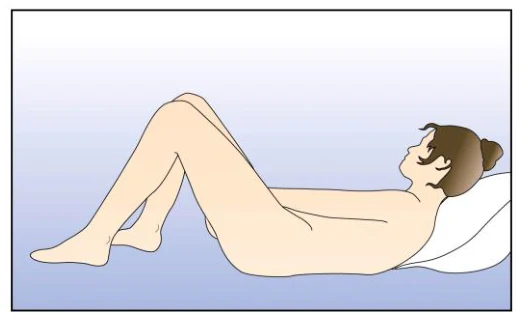
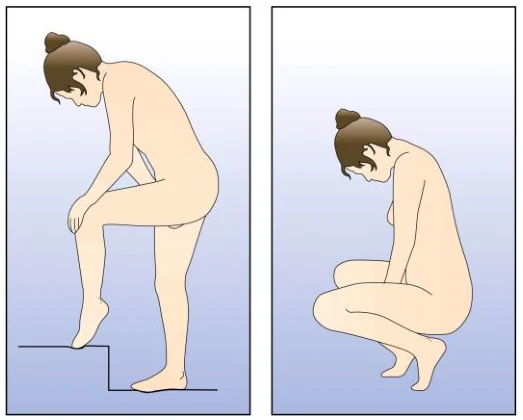
Figure 1: Positions for NUVARING insertion
- 2. Press the sides of NUVARING together between your thumb and index finger (Figure 2) and gently push the folded ring into your vagina (Figure 3). The exact position of NUVARING in the vagina is not important for it to work.
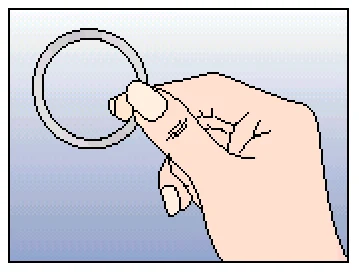
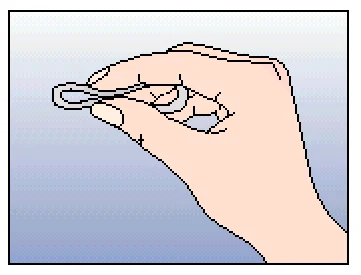
Figure 2: Holding NUVARING and pressing the sides together.
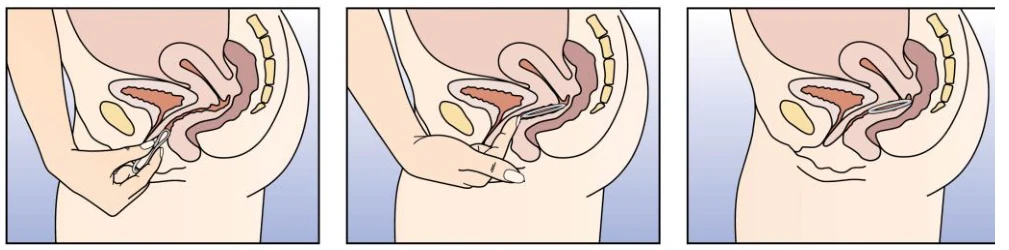
Figure 3: Inserting NUVARING.
Although some women may be aware of NUVARING in the vagina, most women do not feel it once it is in place. If you feel discomfort, change the position of the NUVARING (i.e., use your finger to gently push NUVARING further into your vagina) until it is comfortable. There is no danger of NUVARING being pushed too far up in the vagina or getting lost.
- 3. Once inserted, keep NUVARING in place for three weeks in a row.
How do I remove NUVARING?
- 1.
Remove the ring three weeks after insertion on the same day of the week as it was inserted, at about the same time. For example, when NUVARING is inserted on a Sunday at about 10:00 PM, the ring should be removed on the Sunday three weeks later at about 10:00 PM.
Remove NUVARING by hooking the index finger under the forward rim or by holding the rim between the index and middle finger and pulling it out (Figure 4).
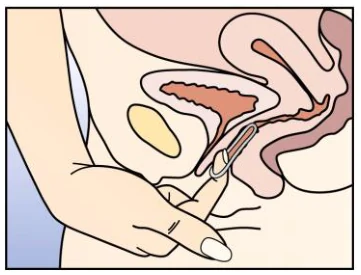
Figure 4
- 2. Place the used ring in the reclosable foil pouch and properly dispose of it in a waste receptacle, out of the reach of children and pets. Do not throw it in the toilet.
If you are unable to remove NUVARING, please contact your healthcare professional.
Your menstrual period will usually start two to three days after the ring is removed and may not have finished before the next ring is inserted. To continue to have pregnancy protection, you must insert the new ring one week after the last one was removed, even if your menstrual period has not stopped.
When do I insert a new ring?
After a one-week ring-free break, insert a new ring on the same day, at the same time of the week as it was removed in the last cycle. For example, if NUVARING was removed on a Sunday at about 10:00 PM, after the one-week break you should insert a new ring on a Sunday at about 10:00 PM.
If NUVARING is in your vagina too long:
If NUVARING has been left in your vagina for an extra week or less (up to four weeks total), you will remain protected. Remove NUVARING and insert a new ring after a one-week ring-free break.
If NUVARING has been left in place for more than four weeks total, there is a possibility that you could become pregnant. You must rule out pregnancy before inserting a new NUVARING. You must use an extra method of birth control, such as male condom and/or spermicide, until the new NUVARING has been in place for seven days in a row.
What should I do if NUVARING disconnects?
On rare occasions, NUVARING may disconnect at the weld joint during use. Since the ring’s core is solid its contents will remain intact and release of hormones will not be significantly affected. Vaginal injury associated with ring breakage has been reported. If NUVARING does disconnect, expulsion (slipping out) is likely to occur (see If NUVARING slips out). If you discover the ring has disconnected you should discard the ring and replace it with a new ring.
How to change the NUVARING start day to another day of the week:
If you wish to change the day on which you start a new NUVARING cycle to another day of the week, complete the current cycle, removing NUVARING on the same day of the week as the one on which you started. During the ring-free period, a new start day may be selected by inserting the new NUVARING on the first occurrence of the desired day. This will be your new Day 1. In no case should there be more than 7 consecutive ring-free days.
The shorter the ring-free interval, the higher the risk that you do not have a period from your previous cycle. However, spotting or bleeding may occur during the use of the next ring. This practice is for a one-time only change and should not to be used as a standard dosing regimen, as there are no long-term safety data available on the continuous use of NUVARING.
If you miss a menstrual period:
You must check to be sure that you are not pregnant if:
- 1. you miss a period and NUVARING was out of the vagina for more than three hours during the three weeks of ring use
- 2. you miss a period and you had waited longer than one week to insert a new ring
- 3. you have followed the instructions and you miss two periods in a row
- 4. you have left NUVARING in place for longer than four weeks
Usual dose:
Insert one NUVARING in the vagina and keep it in place for three weeks in a row. Remove it for a one-week break and then insert a new ring. During the one-week break, you will usually have your menstrual period.
Overdose:
Overdose of CHCs may cause nausea, vomiting, vaginal bleeding, or other menstrual irregularities. Given the nature and design of NUVARING it is unlikely that overdose will occur. If NUVARING is broken, it does not release a higher dose of hormones.
| If you think you, or a person you are caring for, have taken too much NUVARING, contact a healthcare professional, hospital emergency department, or regional poison control centre immediately, even if there are no symptoms. |
|---|
Missed Dose:
If NUVARING slips out:
NUVARING can slip out of the vagina if it has not been inserted properly, or while removing a tampon, during intercourse or straining during a bowel movement. Women with conditions affecting the vagina, such as a prolapsed uterus, may be more likely to have NUVARING slip out of the vagina. Therefore, it is a good habit to regularly check whether the ring is still in your vagina (for example, before and after intercourse).
If NUVARING was out of the vagina for:
- less than three hours, you should still be protected from pregnancy. NUVARING can be rinsed with cool to lukewarm (not hot) water and should be re-inserted as soon as possible, and at the latest within three hours of expulsion (slipping out). If you have lost NUVARING, you must insert a new NUVARING and use it on the same schedule as you would have used the lost ring.
- more than three hours during the 1st or 2nd week, you may not be adequately protected from pregnancy. You should rinse the ring with cool to lukewarm (not hot) water. Re-insert the ring as soon as you remember and use an extra method of birth control, such as male condoms or spermicides, until the NUVARING has been in place continuously for seven days in a row.
more than 3 hours during the 3rd week, you may not be adequately protected from pregnancy. Throw the ring away and choose one of the following two options:
- 1. Insert a new ring immediately. Note: Inserting a new ring will start the next three-week use period. You may not experience a period from your previous cycle. However, breakthrough spotting or bleeding may occur.
- 2. Have your period and insert a new ring no later than 7 days from the time the previous ring was removed or expelled. Note: This option should only be chosen if the ring was used continuously for the preceding 7 days.
In addition, a barrier method of birth control such as a male condom and/or spermicides must be used until the new ring has been used continuously for seven days.
If NUVARING was out of the vagina for:
- unknown amount of time, you may not be protected from pregnancy. Perform a pregnancy test and talk to your healthcare professional before inserting a new ring.
If the ring-free period is extended:
If the ring-free interval has been extended beyond one week, the possibility of pregnancy should be considered and an extra method of birth control, such as male condoms or spermicide MUST be used until NUVARING has been used continuously for seven days.
Talk to your healthcare professional immediately. The longer the ring-free interval, the higher the risk that you have become pregnant.
What are possible side effects from using NUVARING?
These are not all the possible side effects you may have when using NUVARING. If you experience any side effects not listed here, tell your healthcare professional.
The following side effects may occur:
- headache
- vaginal discomfort (e.g., vaginal secretion)
- weight increase
- nausea
- breast pain
- painful menstruation
- acne
- decreased libido
- abdominal pain
- migraine
- expulsion of the ring
- problems during intercourse and feeling of the ring
- itching in the genital area
- rash
- inflammation of the cervix
- urinary tract infection
- dizziness
- anxiety
- diarrhea and vomiting
- breast discharge
- back pain
- enlarged abdomen
- fatigue
- vaginal injury associated with broken rings
Serious side effects and what to do about them
| Symptom / effect | Talk to your healthcare professional | Remove the ring and get immediate medical help | ||
|---|---|---|---|---|
| Only if severe | In all cases | |||
| UNCOMMON | ||||
| Arterial thromboembolism, Myocardial infarction (blood clot in the artery, heart attack): sudden pain, discomfort, pressure, heaviness, sensation of squeezing or fullness in the shoulder, chest, arm, or below the breastbone; discomfort radiating to the back, jaw, throat, arm, stomach, feeling of being full, having indigestion or choking; sweating, nausea, vomiting or dizziness; extreme weakness, anxiety, or shortness of breath; rapid or irregular heartbeats | √ | |||
| Blood clot in the eye: sudden partial or complete loss of vision | √ | |||
Serious side effects and what to do about them
| Symptom / effect | Talk to your healthcare professional | Remove the ring and get immediate medical help | |||
|---|---|---|---|---|---|
| Only if severe | In all cases | ||||
| Breast lumps, breast tumors, breast cancer | √ | ||||
| Deep vein thrombosis (blood clot in the leg): swelling of one leg or one foot, pain or tenderness in the leg, difficulty standing or walking, feeling of warmth in the leg, red or discolored skin on the leg, sudden pain, swelling and slight blue discolouration of an extremity | √ | ||||
| Depression: persistent sad mood accompanied by difficulty sleeping, weakness, lack of energy, fatigue | √ | ||||
| Edema: unusual swelling of the extremities | √ | ||||
| Gallbladder disease: pain on the upper right side of the abdomen, especially after meals, loss of appetite, nausea, vomiting, fever | √ | ||||
| High blood pressure: chest pain, headaches, vision problems, nosebleeds, irregular heartbeat | √ | ||||
| Inadvertent insertion of NUVARING into the urinary bladder: burning and/or painful urination, urinary urgency and/or frequency, and cannot locate the ring in the vagina | √ | ||||
| Jaundice: yellowing of the skin or eyeballs, accompanied frequently by fever, fatigue, loss of appetite, dark-coloured urine or light-coloured bowel movements | √ | ||||
| Liver tumor: lump in the abdomen or severe pain | √ | ||||
| Pulmonary embolism (blood clot in the lung): coughing blood, sharp pain in chest, or sudden shortness of breath | √ | ||||
| Stroke: sudden severe headache or vomiting, dizziness or fainting, disturbances of vision of speech, | √ | ||||
Serious side effects and what to do about them
| Symptom / effect | Talk to your healthcare professional | Remove the ring and get immediate medical help | |||
|---|---|---|---|---|---|
| Only if severe | In all cases | ||||
| weakness or numbness in an arm or leg | |||||
| UNKNOWN | |||||
| Allergic reaction (hypersensitivity, angioedema): rash or hives, swelling of the face, lips, tongue and/or throat, difficulty swallowing or breathing, feeling sick to your stomach and throwing up | √ | ||||
| Vaginal bleeding changes: increased or decreased menstrual bleeding, spotting or bleeding between periods, infrequent periods or absence of bleeding | √ | ||||
| Vaginal infection: itching or unusual or increased vaginal discharge | √ | ||||
If you have a troublesome symptom or side effect that is not listed here or becomes bad enough to interfere with your daily activities, tell your healthcare professional.
Reporting Side Effects
You can report any suspected side effects associated with the use of health products to Health Canada by:
NOTE: Contact your health professional if you need information about how to manage your side effects. The Canada Vigilance Program does not provide medical advice. |
Storage:
Store NUVARING at room temperature (2–30°C). Protect from light.
Do not use a NUVARING if it was dispensed to you more than 4 months ago. The dispensing date is shown on the box.
Do not use NUVARING after the expiry date which is shown on the box.
Do not use NUVARING if you notice a color change in the ring or any visible signs of deterioration.
Keep out of reach and sight of children and pets.
If you discover that a child has been exposed to the hormones from NUVARING, talk to your healthcare professional.
If you want more information about NUVARING:
- Talk to your healthcare professional
- Find the full product monograph that is prepared for healthcare professionals and includes this Patient Medication Information by visiting the Health Canada website: https://www.canada.ca/en/health-canada/services/drugs-health-products/drug-products/drug-product-database.html; the manufacturer’s website www.organon.ca, or by calling 1-844-820-5468.
Last Revised: NOV 15, 2024
® N.V. Organon. Used under license.
© 2024 Organon group of companies. All rights reserved.