


Patient Medication Information: uses, side effects, how to take - Ringza
What is RINGZA used for?
RINGZA is a vaginal system used to prevent pregnancy in women for up to 1 year.
How does RINGZA work?
RINGZA is a vaginal system made of silicone. It slowly releases two female hormones (ethinyl estradiol and segesterone acetate). This prevents the release of the egg from the ovary (ovulation).
Clinical trials found that RINGZA is 97.5 % effective at preventing pregnancy. This means that about 2 to 4 women out of 100 women may become pregnant during the first year they use RINGZA.
Other Ways to Prevent Pregnancy
Other methods of birth control are available to you. These are usually less effective than contraceptive vaginal systems. When used properly, other methods of birth control work well enough for many women.
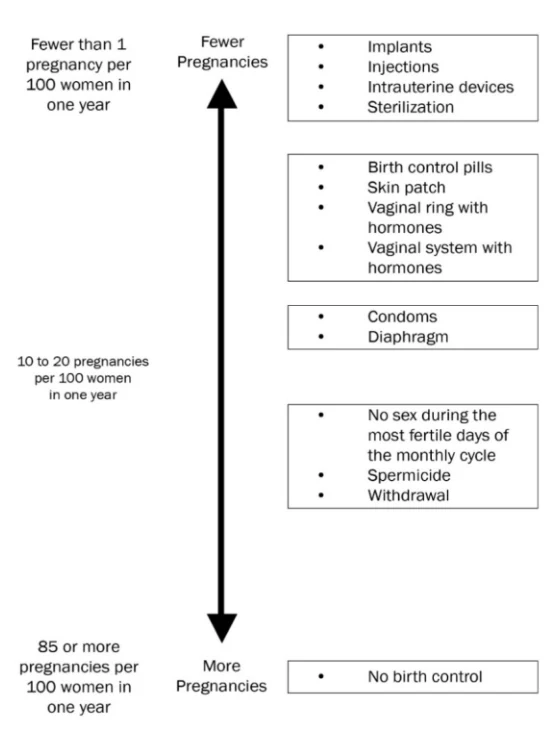
The following chart shows the typical pregnancy rates for different methods of birth control. It also shows the pregnancy rate when no birth control is used. Each box on the chart contains a list of birth control methods that are similar in how well they work to prevent pregnancy.
Serious Warnings and Precautions
|
What are the ingredients in RINGZA?
Medicinal ingredients: segesterone acetate and ethinyl estradiol
Non-medicinal ingredients: dibutyltin dilaurate, silicone elastomers, silicone medical adhesive and titanium dioxide.
RINGZA comes in the following dosage forms:
Vaginal System (slow-release ring): contains 103 mg of segesterone acetate and 17.4 mg of ethinyl estradiol to deliver 0.15 mg of segesterone acetate and 0.013 mg of ethinyl estradiol per day.
Do not use RINGZA if you:
have the following high-risk factors for blood clots:
- have or have a history of blood clots in your arms, legs, lungs, or eyes;
- are over 35 years old and smoke;
- have reduced blood flow to your brain (cerebrovascular disease);
- have reduced blood flow or blocked heart arteries (coronary artery disease);
- have heart rhythm or heart valve problems;
- have a problem with your blood that makes it clot more than normal;
- have high blood pressure that is not controlled with medicine or have high blood pressure with blood vessel damage;
have diabetes and
- you are over 35 years old; or
- have high blood pressure; or
- have problems with your kidneys, blood vessels, eyes, or nerves; or
- have had diabetes for longer than 20 years.
- have had a stroke or heart attack;
- have headaches with changes in vision, numbness, or weakness;
- have or have had migraine headaches with or without focal aura (flashes of light, blind spots and other vision changes);
- are over age 35 years old and have any type of migraine headaches;
- have or have a history of breast cancer or any cancer that is sensitive to the female hormones;
- have liver disease, liver tumors, severe liver cirrhosis;
- have unusual vaginal bleeding without a known reason;
- are pregnant or think you are pregnant;
- have or have a history of blood vessel disease of the eye that has caused loss of vision;
- have hepatitis C and are taking a drug combination medicine such as ombitasvir/paritaprevir/ritonavir, with or without dasabuvir;
- are allergic to any ingredients in RINGZA or component of the packaging.
To help avoid side effects and ensure proper use, talk to your healthcare professional before you take RINGZA. Talk about any health conditions or problems you may have, including if you:
- are obese;
- have abnormal levels of fats in the bloodstream (high cholesterol or triglycerides);
- have high blood pressure;
- are a cigarette smoker;
- have migraine headaches;
- have a history of depression;
- have a history of seizures;
- have or have a family history of diabetes;
- have a history of liver problems;
- have a history of kidney problems;
- have breast problems such as an abnormal mammogram or breast x-ray, breast nodules, fibrocystic breast disease, or a family history of breast cancer;
- have cervical cancer;
- have a family history of blood clots or stroke;
- have a condition that causes vagina irritation or ulcers;
- have a history of toxic shock syndrome;
- have yellowing of the skin or eyes (jaundice);
- have a history of gallbladder problems;
- have a condition called hereditary angioedema or if you have had episodes of swelling in body parts such as hands, feet, face, eyes or airway passages;
- are scheduled for any laboratory tests. Certain blood tests may be affected by hormonal birth control methods;
- are scheduled for surgery;
- are breastfeeding or plan to breastfeed.
Other warnings you should know about:
Blood clot in legs, lungs, heart, eyes or brain
Women who use birth control that contains hormones are more likely to develop blood clots. Blood clots are the most common serious side effects of hormonal birth control. The risk for clots is highest during the first year a woman uses a hormonal birth control. The risk is also high if a woman restarts the same or new hormonal birth control. Clots can occur in many areas of the body and can lead to blindness or impaired vision as well as damage to or loss of a limb and death.
While you are using RINGZA, if you have any of the below symptoms, talk to your healthcare professional right away. These are signs of blood clots:
- sharp pain in your chest
- coughing up blood
- sudden shortness of breath
- crushing chest pain or chest heaviness
- irregular heartbeat
- sudden severe or worsening headache
- feeling full
- vomiting
- dizziness, trouble walking
- fainting, seizures
- anxiety, confusion
- changes in vision
- changes in speech
- pain and/or swelling in your calf
- weakness or numbness in your face, arm or leg
- sudden pain, swelling and slight blue or red discoloration of an arm or leg
- discomfort radiating to your back, jaw, throat or stomach
Cancer
Using hormonal birth control may increase the risk of certain cancers including cancer of the breast, cervix and liver.
Breast cancer: The risk of breast cancer in women increases as you get older. It also increases if there is family history of breast cancer, meaning if your mother or sister have or had breast cancer. Other factors that increase your risk for breast cancer are being obese, never having children, or having your first full-term pregnancy at a late age.
If you have breast cancer now or had it in the past, do not use RINGZA. The hormones in RINGZA can affect some cancers.
Some women who use combination hormonal contraceptives (CHCs) may have a higher risk of developing breast cancer before menopause. These women may have used hormonal birth control for a long time (more than eight years) or may have started using hormonal birth control at an early age.
In a few women, using hormonal birth control can speed up the growth of a breast cancer that has not yet been found. Finding breast cancer early can reduce the effect of the cancer on a woman’s life expectancy. The risks for breast cancer related to using hormonal birth control seems to be small. You should, however, have a healthcare professional check your breasts at least once per year.
While you are using RINGZA, check your breasts often. See your healthcare professional if you notice any changes, such as:
- dimpling or sinking of the skin
- changes in the nipple
- any lumps you can see or feel
Cervical cancer: Women who use hormonal birth control may have a higher chance of getting cervical cancer. However, this may be due to other reasons including infection with the Human Papilloma Virus (HPV). HPV is an important risk factor for cervical cancer. However, it is possible that hormonal birth control may also cause such cancers.
Liver cancer: Liver cancer (hepatocellular carcinoma) and liver tumors may be linked to hormonal birth control. The risk for liver cancer increases the longer you use hormonal birth control. However liver tumours are extremely rare. If you feel severe abdominal pain or find a lump in your abdomen, talk to your healthcare professional right away.
Do not use RINGZA if you have a history of liver tumours (cancerous or non-cancerous).
Gallbladder disease: If you have gallbladder problems, it might get worse with CHC use. You may have an increased risk of gallbladder problems if you had gallbladder problems when you were pregnant.
Vaginal bleeding: Breakthrough bleeding or spotting sometimes happens in women using hormonal birth control including RINGZA. This is blood coming from the vagina between periods. It usually happens in the first months of starting hormonal birth control. If the bleeding is heavy or does not stop, contact your healthcare professional.
While you are using RINGZA you may not get your period each month. If you were not taking RINGZA as directed by your healthcare professional, you should have a pregnancy test. This will rule out if the missed period is because you are pregnant.
Lubricant and Condom Use: Do not use any vaginal lubricant that have silicone or oil in them. Use water-based lubricant only. Male condoms made with natural rubber latex, polyisoprene, and polyurethane can be used.
Pregnancy, Breastfeeding, Miscarriage and Abortions:
Use in pregnancy: Hormonal birth control should not be taken by pregnant women. Stop using RINGZA if you get pregnant.
Use after pregnancy, miscarriage or an abortion: Your healthcare professional will tell you when to start using RINGZA after childbirth, miscarriage or an abortion.
Pregnancy after stopping RINGZA: You will have a menstrual period when you stop using RINGZA. Wait until after your next period before getting pregnant. This will help to better date the pregnancy. Speak to your healthcare professional about other forms of birth control you can use during this time.
Breast feeding: If you are breastfeeding, talk to your healthcare professional before starting to use RINGZA. You should use other types of birth control, that do not have hormones, until your baby has stopped breastfeeding.
Skin problems: Chloasma (dark skin patches) may develop while you are using RINGZA. This appears as yellowish-brown patches on the skin, particularly of the face. The risk is higher if you had chloasma during pregnancy. If you have or had chloasma, avoid spending a long time in the sun or ultraviolet light while using RINGZA.
Growth of vaginal tissue over RINGZA: Vaginal tissue may grow over RINGZA. If this happens, it will need to be removed by your healthcare professional.
Surgery: Tell your healthcare professional if you are scheduled for surgery. You may need to stop using RINGZA at least 4 weeks before surgery and during prolonged bedrest. You may need to wait for at least two weeks after surgery before restarting RINGZA.
Check-ups and tests: Before you start using RINGZA, you will need to have examinations and tests. Your healthcare professional will conduct a physical exam. They will examine your breasts, liver, arms and legs. They will conduct a pelvic exam which includes a Papanicolaou (PAP) smear. Your healthcare professional will also ask you some questions about your personal health history and that of your close relatives. They will also measure your blood pressure and do blood tests.
While you are using RINGZA, you will need to have regular check-ups with your healthcare professional. Your first check up should be about three months after you start using RINGZA. Afterward, you will see your healthcare professional about once per year. At these visits, your healthcare professional will conduct physical and internal exams. They will also measure your blood pressure and do blood tests.
If you are scheduled for any laboratory tests, be sure to tell your healthcare professional that you are using RINGZA. This is because hormonal birth control can affect some blood tests.
Tell your healthcare professional about all the medicines you take, including any drugs, vitamins, minerals, natural supplements or alternative medicines.
The following may interact with RINGZA:
- medicines used to treat epilepsy including rufinamide, topiramate, lamotrigine, phenytoin, barbiturates, carbamazepine, oxcarbazepine, felbamate;
- medicines used to treat fungal infections including griseofulvin, fluconazole, itraconazole, ketoconazole, voriconazole;
- medicines used to treat HIV infections or AIDS including ritonavir (with or without darunavir, fosamprenavir, lopinavir, tipranavir, or atazanavir), nelfinavir, indinavir, etravirine, nevirapine, efavirenz;
- medicines used to treat Hepatitis C Virus infections including ombitasvir, paritaprevir, ritonavir, with or without dasabuvir, boceprevir, telaprevir;
- medicines used to treat bacterial infections including rifampicin, rifabutin;
- medicines used to treat high blood pressure in the blood vessels between the heart and lungs (pulmonary hypertension) including bosentan;
- medicines used to treat chemotherapy-induced nausea and vomiting like aprepitant;
- medicines used to treat fever, pain or inflammation including acetaminophen, acetylsalicylic acid (ASA), prednisolone;
- medicines used to treat pain like morphine;
- medicines to lower cholesterol including atorvastatin, rosuvastatin;
- medicines used to treat insomnia like temazepam;
- medicines used to help prevent organ rejection including cyclosporine;
- medicines used to treat lung diseases such as asthma and COPD (bronchitis, emphysema) including betamimetic agents, theophylline;
- medicines used to treat muscle spasms including tizanidine;
- thyroid hormone replacement medicines or corticosteroid replacement medicines;
- St. John’s wort, used to treat depression;
- vitamin C;
grapefruit juice;
- oil-based suppositories, oil-based creams, or oil-based gels.
If you use a medicine that may affect how hormonal birth control works, use a back-up birth control method. Keep using the back-up birth control method for 28 days after stopping the medicine.
How to use RINGZA:
- Read these instructions about the right way to insert, remove, clean, store, and dispose of (throw away) RINGZA.
- Use RINGZA exactly as your healthcare professional tells you to use it.
- Do not use RINGZA if you see any signs of damage.
- You must insert RINGZA for the first time before the expiry date and continue to use it for 1 year (13 cycles).
- When using RINGZA for the first time, fill in the discard date on the storage case sticker to avoid using RINGZA for more than 1 year (13 cycles).
When should I start RINGZA?
Decide with your healthcare professional on the best day for you to start using RINGZA then follow the instructions in the section below:
If you are not currently using hormonal birth control
- Start using RINGZA between Days 2 and 5 of your periods.
You should use a back-up barrier birth control method, such as a male condom or spermicide, for the first 7 days you use RINGZA, if:
- your periods are not regular, or
- you start using RINGZA more than 5 days from when you started your periods.
If you are changing from a combination hormonal contraceptive (CHC) to RINGZA
- Examples of CHCs include: birth control pill, patch or monthly disposable contraceptive vaginal ring.
- If you have been using your birth control method correctly and are sure that you are not pregnant, you can change to RINGZA any day of your birth control cycle. Do not start RINGZA any later than the day you would start a new cycle of your birth control method.
If you are changing from a progestin-only birth control method to RINGZA
- Examples include: progestin-only minipill, injection, implant or intrauterine system (IUS).
- You should use a back-up barrier birth control method, such as a male condom or spermicide, for the first 7 days you use RINGZA.
- You may switch from a progestin-only minipill on any day. Start using RINGZA on the day that you would have taken your next minipill.
- You may switch from an injectable and start using RINGZA on the day when your next injection would be due.
- You may switch from an implant or an IUS and start using RINGZA at the time the implant or IUS is removed.
Inserting RINGZA:
- Day 1: Insert RINGZA on your vaginal system-in day (called “Day 1”). Leave RINGZA inside your vagina for 3 weeks (21 full days in a row).
How do I insert RINGZA?
Step 1. Open the package or storage case and remove RINGZA
- Wash your hands with unscented mild soap and water. Dry them well.
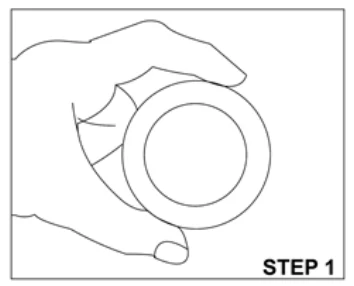
- Take RINGZA out of its package or storage case (See Figure, Step 1).
- Wash RINGZA with unscented mild soap and water, rinse and pat dry with a clean cloth towel or paper towel.
Step 2. Prepare to insert RINGZA
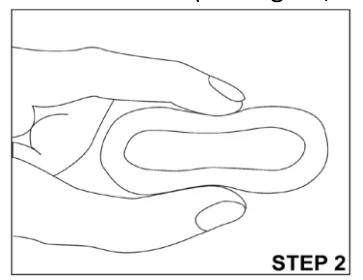
- Hold RINGZA between your thumb and first (index) finger. Press the sides of RINGZA together to make it narrow (See Figure, Step 2).
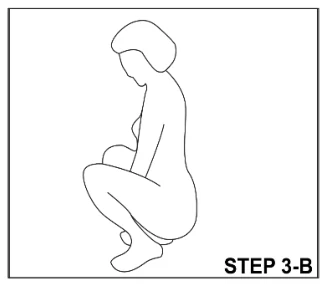
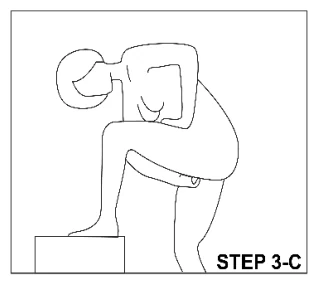
Step 3. Choose a position for insertion of RINGZA
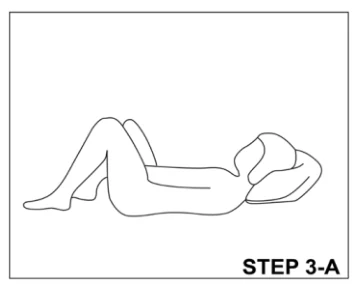
- Choose the position that is comfortable for you. For example, lying down, squatting, or standing with 1 leg up (See Figures, Steps 3-A, 3-B, 3-C).
Step 4. Insert RINGZA into your vagina
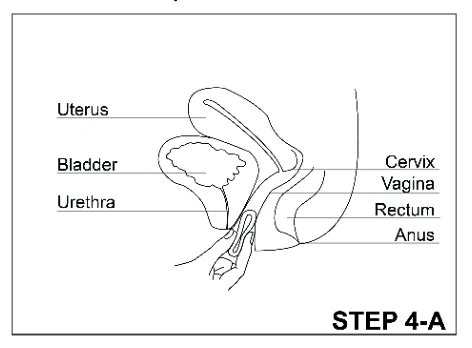
- Gently insert the folded RINGZA into your vagina (See Figure, Step 4-A).
- Push RINGZA further up into your vagina using your index finger. Push it in as far as you can to place it in your upper vagina.
- Mark the day and time of insertion as your vaginal system “in day” on your calendar.
Note:
- When you insert RINGZA, it may be in different positions in your vagina, but RINGZA does not have to be in an exact position for it to work.
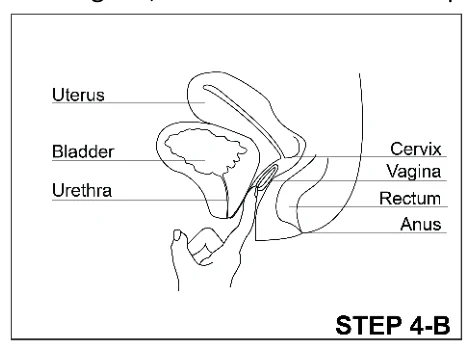
- If you feel RINGZA in your vagina or if it feels uncomfortable, you may not have pushed RINGZA into your vagina far enough. RINGZA should be fully in the vagina. Use your index finger to gently push RINGZA as far as you can into your vagina (See Figure, Step 4-B).
- You should not feel RINGZA after you have placed it into your vagina.
- During sex, some women and their partners may be aware of RINGZA in the vagina.
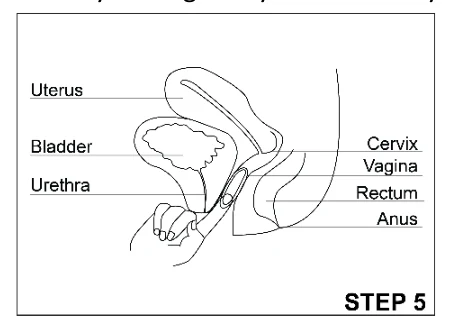
Step 5. Remove RINGZA
- Day 22: Take RINGZA out on your vaginal system-out day (called “Day 22”). Leave RINGZA out for 1 week (7 full days in a row). You will have your withdrawal bleeding during this time.
- Always remove RINGZA on your vaginal system-out day at about the same time of the day as it was inserted. For example, if you put RINGZA in on Monday at 9:00 in the morning, always take it out on the Monday 3 weeks later at about 9:00 in the morning.
How do I remove RINGZA?
- Wash and dry your hands.
- Choose the position that is most comfortable for you (See Step 3).
- Put your index finger into your vagina and hook it through RINGZA. Gently pull downward and forward to remove RINGZA and pull it out (See Figure, Step 5).
- Wash RINGZA with unscented mild soap and lukewarm water, pat it dry, and store in the case provided.
- Mark your vaginal system “out day” on your calendar.
If you are unable to remove RINGZA, please contact your healthcare professional.
Step 6. Reinsert RINGZA
- After 1 week of RINGZA being out, you reinsert RINGZA and start a new cycle for another 4 weeks (3 weeks in, 1 week out).
- Always reinsert RINGZA on your vaginal system-in day at about the same time of the day it was removed. For example, if you removed RINGZA in on Monday at 9:00 in the morning, always put it back in on the Monday 1 week later at about 9:00 in the morning.
How do I reinsert RINGZA?
- Follow steps 1-5 for inserting and removing RINGZA for another cycle.
- Repeat the 4-week cycle for up to 13 cycles (1 year).
What is the dosing schedule of RINGZA?
The table below shows the timing for putting RINGZA in and taking it out for 2 cycles.
| Schedule | |||
|---|---|---|---|
| Cycle 1 | Put RINGZA in (vaginal system-in day) | Day 1 | Weeks 1, 2 and 3 Days 1-21 |
Take RINGZA out (vaginal system-out day) | Day 22 | Week 4 Days 22-28 | |
| Cycle 2 (repeat for Cycles 3-13) | Put RINGZA in (vaginal system-in day) | Day 1 | Weeks 1, 2 and 3 Days 1-21 |
Take RINGZA out (vaginal system-out day) | Day 22 | Week 4 Days 22-28 | |
- RINGZA was designed to be reused for 1 year. Do not use RINGZA for more than 13 cycles (1 year). When you take RINGZA out of your vagina at the end of the 13 cycles, dispose of it.
- It is very important to follow the schedule every cycle and remove and insert RINGZA on your in and out days at about the same time. If you take RINGZA out too soon or put it back in too late, your chance of becoming pregnant is higher.
Your chance of becoming pregnant depends on how well you follow the directions for using RINGZA. The more carefully you follow the directions, the less chance you have of becoming
pregnant.
Will RINGZA interfere during sexual intercourse?
If RINGZA is placed as high as possible in your vagina, it should not interfere with sexual intercourse.
Will RINGZA cause vaginal infection?
The use of RINGZA as directed should not increase the chance of getting vaginal infections.
How do I clean RINGZA?
Wash RINGZA before inserting and after removing from your vagina.
- Wash RINGZA with unscented mild soap and warm water, rinse and pat it dry with a clean cloth towel or paper towel.
- Do not use bleach or other cleaning products.
- Store RINGZA in the case provided when not in use.
What should I know about my period when using RINGZA?
- You should expect to have regular 28-day cycles. Each period is likely to last about 5 days.
- You may have bleeding or spotting between your scheduled periods especially during the first cycle. This bleeding or spotting tends to decrease after the first cycle. Do not stop using RINGZA because of this bleeding or spotting. If the spotting continues for more than 7 days in a row or if the bleeding is unusually heavy, talk to your healthcare professional.
What if I miss my menstrual period or if I think I am pregnant?
- You may be pregnant if you miss your scheduled period (no bleeding on the 7 days that RINGZA is out). Tell your healthcare professional right away if you missed your period.
- Tell your healthcare professional if you have symptoms of pregnancy such as morning sickness or unusual breast tenderness. You may need a pregnancy test to see if you are pregnant.
- Do not remove RINGZA until you are certain you are pregnant. Stop using RINGZA if your healthcare professional tells you that you are pregnant.
Usual dose:
- Insert one RINGZA in your vagina and leave it in for 3 weeks (21 days in a row).
- Remove RINGZA after 3 weeks and store it in the provided case for a 1 week break (7 days in a row).
- Reinsert RINGZA in your vagina after the 1 week break. You will repeat this pattern with RINGZA for up to 13 cycles.
Overdose:
Overdose of RINGZA may cause nausea and vaginal bleeding. No serious problems have been reported from a combined hormonal birth control overdose.
| If you think you, or a person you are caring for, have taken too much RINGZA, contact a healthcare professional, hospital emergency department, or regional poison control centre immediately, even if there are no symptoms. |
|---|
Missed Dose:
- If you are more than 1 or 2 days off schedule for your RINGZA insertion, you will need to use new vaginal system-in days and vaginal system-out days for the remaining cycles of use. You will also need to use a back-up barrier birth control method, such as condoms or spermicide, for the first 7 days of the new schedule if you have sex.
| If you put RINGZA back in: | Action: |
|---|---|
Too early (after it had been out for only 5 or 6 days) | Keep RINGZA in for at least 3 weeks (21 days). You may keep it in up to your normal vaginal system-out day. |
Too late (after it had been out for more than 7 days) | Put RINGZA back in right away. You will now have a new vaginal system-in day. You must use condoms or spermicide as back-up barrier birth control for the next 7 days when you have sex. |
| If you took RINGZA out: | Action: |
Too early (after it had been in for only 19 or 20 days) | Leave RINGZA out for 1 week. Put it back in after the week is over, as you would normally do. You may then keep it in up to your normal vaginal system-out day, 22 or 23 days after you put the vaginal system in. |
Too late (after it had been in for 22 or 23 days) | Remove RINGZA as soon as you realize this. Reinsert RINGZA 7 days later. |
If RINGZA was out of the vagina:
- For less than 2 hours: wash RINGZA with unscented mild soap and warm water, rinse and pat dry with a clean cloth towel or paper towel. Put it back in your vagina right away.
- For more than 2 hours at one time: wash RINGZA with unscented mild soap and warm water, rinse and pat dry with a clean cloth towel or paper towel. Put it back in your vagina right away. Use a back-up barrier birth control, such as male condoms or spermicides, until RINGZA has been in your vagina for 7 days in a row.
- For more than a total of 2 hours, at different times, over the first 21 days of your cycle: wash RINGZA with unscented mild soap and warm water, rinse and pat dry with a clean cloth towel or paper towel. Put it back in your vagina right away. Use a back-up barrier birth control, such as male condoms or spermicides, until RINGZA has been in your vagina for 7 days in a row.
RINGZA can slip or accidentally come out of your vagina. This can happen during sex, bowel movements, or use of tampons.
RINGZA can move around and become visible at the opening of your vagina. If this happens follow “Step 4-B” above for directions on how to push RINGZA back.
You should not take RINGZA out when you have sex. If you decide to remove it, remember to reinsert it within 2 hours after removing it or you may not be protected from pregnancy.
What are possible side effects from using RINGZA?
These are not all the possible side effects you may have when using RINGZA. If you experience any side effects not listed here, tell your healthcare professional.
- headache, migraine
- dizziness
- nausea, vomiting
- diarrhea
- abdomen pain
- feeling bloated
- urinary tract infection, painful urination
- breast tenderness, pain
- pain during sexual intercourse
- vaginal problems: discomfort; discharge; irregular, heavy or prolonged bleeding
- genital itching
- painful periods
- spasm in pelvis area
- weight gain
- dryness of the genital area
- mood changes
- fatigue
- lower sex drive
- acne
- chloasma (dark skin patches): darker patches of skin on the forehead, temples, cheeks, or above the upper lip
RINGZA can cause abnormal blood test results. Your healthcare professional will decide when these are necessary and will interpret the results. They will tell you if your test results are abnormal and if you need treatment.
Serious side effects and what to do about them
| Symptom / effect | Talk to your healthcare professional | Stop taking drug and get immediate medical help | |
|---|---|---|---|
| Only if severe | In all cases | ||
| COMMON | |||
| Vaginal bleeding changes: increased or decreased menstrual bleeding, spotting, infrequent periods, delayed or absence of bleeding especially during the first month of use | ✓ | ||
Serious side effects and what to do about them
| Symptom / effect | Talk to your healthcare professional | Stop taking drug and get immediate medical help | |
|---|---|---|---|
| Only if severe | In all cases | ||
| Vaginal infections: itching, burning or unusual or increased vaginal discharge | ✓ | ||
| UNCOMMON | |||
| Allergic reaction, including hypersensitivity, angioedema (swelling of tissue under skin): swelling of the face, lips, mouth, tongue, eyes, or throat as this may lead to difficulty swallowing or breathing | ✓ | ||
| Arterial thromboembolism, myocardial infarction (blood clot in the artery, heart attack): severe pain or pressure in the chest; discomfort radiating to the back, jaw, throat, arm, stomach, feeling of being full, having indigestion or choking; sweating, nausea, vomiting or dizziness; extreme weakness, anxiety, or shortness of breath; rapid or irregular heartbeats as these could be sign of blood clot forming in the arteries or sign of a heart attack | ✓ | ||
| Blood clot in the eye: sudden change in vision or blindness | ✓ | ||
| Breast abnormalities (including lumps, tumors, cancer): painless lump in breast; skin over lump may be warm, red and swollen; skin over lump may appear dimpled or have a texture like the skin of an orange | ✓ | ||
| Deep vein thrombosis (blood clot in the deep veins of the leg or arm): Leg pain or swelling that does not go away, sudden unusually severe headache unlike your usual headaches, sudden severe shortness of breath, chest pain as these could be a sign of blood clot forming in blood vessels | ✓ | ||
Serious side effects and what to do about them
| Symptom / effect | Talk to your healthcare professional | Stop taking drug and get immediate medical help | |
|---|---|---|---|
| Only if severe | In all cases | ||
| Depression: Persistent feeling of sadness, difficulty sleeping or sleeping too much, weakness, lack of energy, fatigue | ✓ | ||
| Gallbladder problems: pain on the upper right side of the abdomen, especially after meals, loss of appetite, nausea, vomiting, fever | ✓ | ||
| High blood pressure: chest pain, headaches, vision problems, nosebleeds, irregular heartbeat | ✓ | ||
| Liver problems, including liver tumors: yellowing of your skin and eyes (jaundice), right upper stomach area pain or swelling, lump in the abdomen, nausea or vomiting, unusual dark urine, unusual tiredness | ✓ | ||
| Pulmonary embolism (blood clot in the lung): coughing blood, sharp pain in chest, or sudden shortness of breath | ✓ | ||
| Stroke (bleeding or blood clot in the brain): sudden unusually severe headache unlike your usual headaches, vomiting, dizziness or fainting, trouble speaking, weakness or numbness in an arm or leg, blurry vision, trouble walking and loss of balance | ✓ | ||
| Toxic shock syndrome (TSS, life threatening infection): sudden high fever, vomiting, diarrhea, fainting or feeling faint when standing up, sunburn-like rash, muscle aches, dizziness, low blood pressure, confusion, seizures, redness of eyes, mouth and throat | ✓ | ||
If you have a troublesome symptom or side effect that is not listed here or becomes bad enough to interfere with your daily activities, tell your healthcare professional.
Reporting Side Effects
You can report any suspected side effects associated with the use of health products to Health Canada by:
NOTE: Contact your health professional if you need information about how to manage your side effects. The Canada Vigilance Program does not provide medical advice. |
Storage:
- Store RINGZA in the provided black storage case at room temperature (15 to 30°C).
- Do not refrigerate or freeze. Avoid storing in extreme heat.
- Protect from direct sunlight.
- Keep out of reach and sight of children.
How should I throw away RINGZA?
- Place RINGZA in the case that comes with it. Give it to your healthcare professional or properly throw it away into the garbage. Keep out of reach of children and pets.
- Do not throw away RINGZA in the toilet.
If you want more information about RINGZA:
- Talk to your healthcare professional.
- Find the full product monograph that is prepared for healthcare professionals and includes this Patient Medication Information by visiting the Health Canada website: (https://www.canada.ca/en/health-canada/services/drugs-health-products/drug-products/drug-product-database.html); the manufacturer’s website (http://www.duchesnay.com/en/), or by calling 1-888-666-0611.